


Collections
Library
Type
Region
Coverage:
-
Published:
-

Boston Union Teacher, Joseph P. Healey Library
Boston Union Teacher (1963-2023): Digitized issues of the BTU newspaper, the Boston Union Teacher from 1963 to 2010. There are 377 digitized issues of the publication from this time period, which is not quite a complete run.
Union Teacher is a publication of the Boston Teachers Union, American Federation of Labor.
There is a fairly complete run of the union's newspaper digitally available at this site.
Boston artisans
The 1830s and 1840s saw a major movement arise for the restriction of labor hours -- limiting the working day to 10 hours. Boston artisans were in the forefront of this movement. Below is an excerpt from a circular they issued.
A primary source document that can be used to teach about the 10 hour day movement of the early 1800s
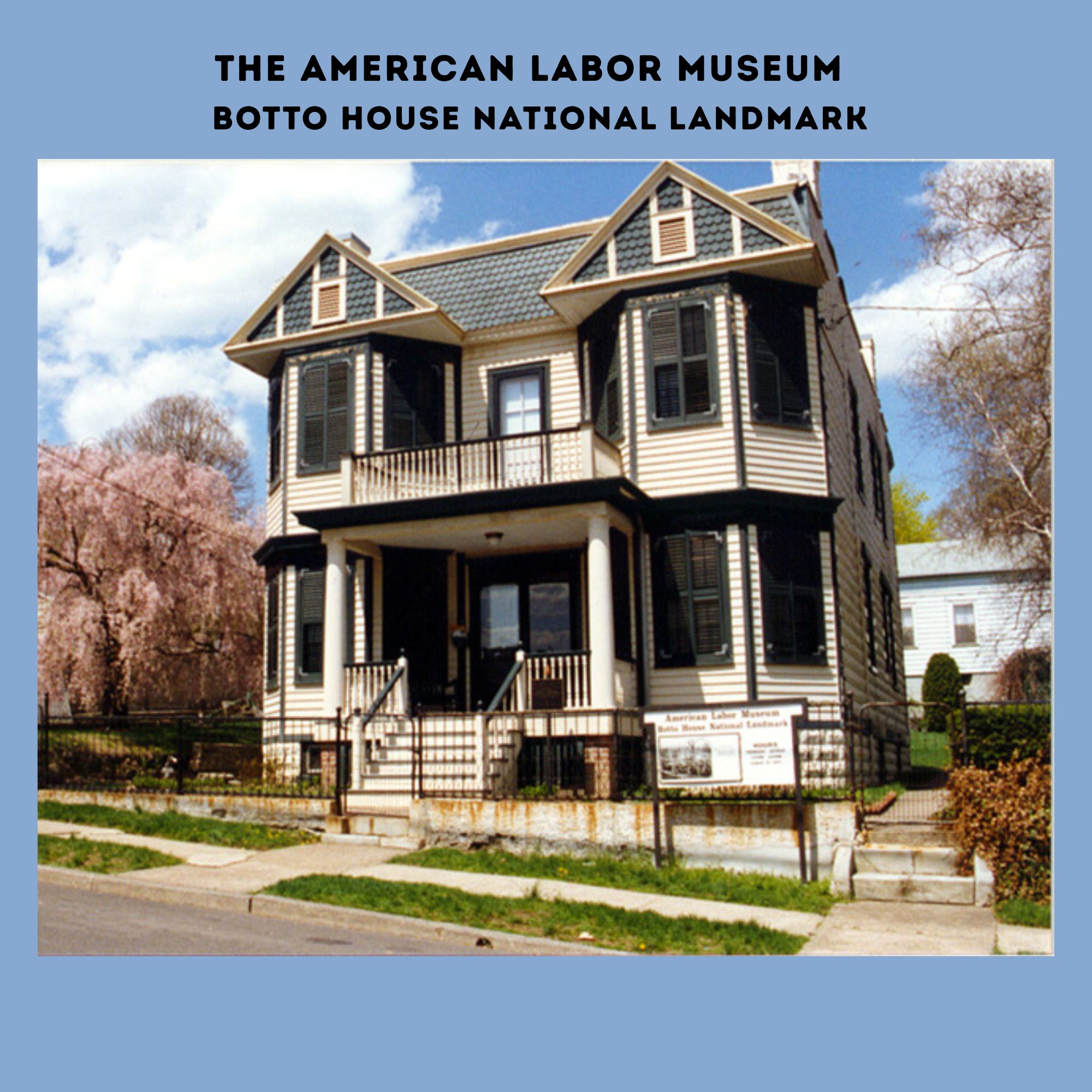
Botto House- American Labor Museum
The American Labor Museum is housed in the Botto House National Landmark, a 1908 Victorian home, which belonged to Italian immigrant and silk mill worker, Pietro Botto and his wife Maria.
It was the meeting place for over 20,000 silk mill workers during the 1913 Paterson Silk Strike. The strikers called for safe working conditions, an end to child labor, and an eight-hour day.
One of the first labor history museums in the nation, at the site of a Paterson 1914 IWW strike. Explores a wide variety of topics about the history of labor
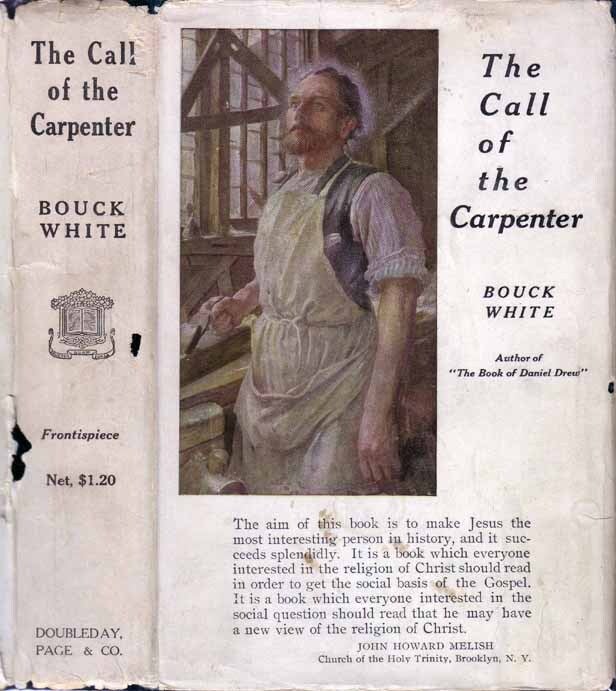
Bouck White
Bouck White's 1911 book The Call of the Carpenter, which presents Jesus Christ as a working-class revolutionary socialist who agitated his fellow workers for change. Bouck was a famous Congregational (Protestant) minister in his time whose publications and sermons earned him widespread acclaim from fellow socialists like Eugene V. Debs. He also drew the ire of others, such as when The Call of the Carpenter's publication and relative success earned Bouck a dismissal from Brooklyn's Holy Trinity Episcopal Church in 1913.
"Google Books (full text):
presents Jesus Christ as a working-class revolutionary socialist who agitated his fellow workers for change.
Bracero History Archive
For middle- and high-school history teachers, the teaching section includes a short historical overview of the Bracero Program, as well as a collection of teaching activities. The lesson plans, each available in English and Spanish, use items from the archive to teach students how to analyze historical photographs, evaluate historical documents, and use maps to follow a bracero as he worked in several U.S. states. The lessons were developed by staff at the National Museum of American History and provide a wealth of assistance for teachers. National History Standards are included for each activity, along with Historical Thinking Standards. Each activity includes an assessment rubric to assist teachers as they evaluate their students’ work. The activities are usable as Web pages with included links, or are downloadable for use without an Internet connection in the classroom. For those interested in doing additional research on the Bracero Program, the site also offers a comprehensive bibliography of current scholarship. --Sharon Leon, Oxford Research Encyclopedia description
Includes: 6th grade through 12th grade learning activities to teach about Bracero program critically
Activity-Learning from Photos
Best for students in grades six through twelve
Students will discuss their thoughts on immigration, learn about the Bracero labor program, and use…
Activity-Tracing the Route of a Bracero
Best for students in grades six through eightStudents will examine an oral history related to the Bracero worker program and present their research on…
Activity-Learning from Documents
Best for students in grades six through twelve Students will examine two public laws and other primary resources related to the Bracero worker program…
Teaching portion of Bracero archive
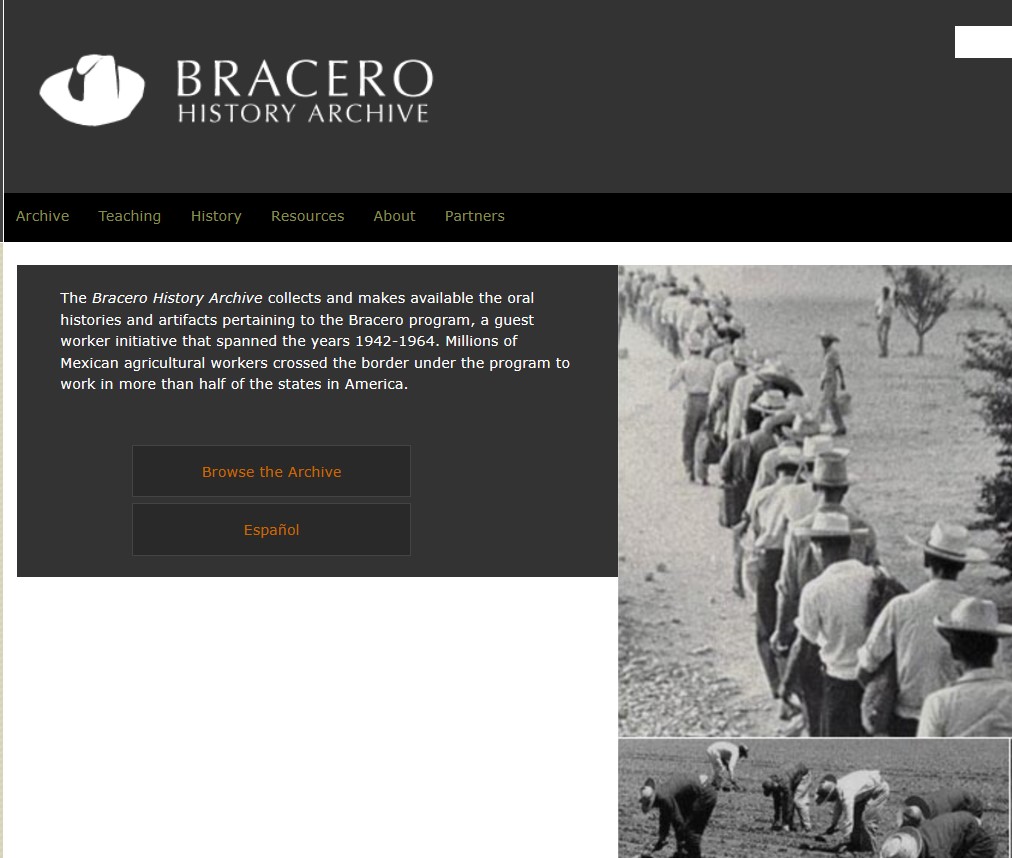
Bracero History Archive
"The Bracero History Archive collects and makes available the oral histories and artifacts pertaining to the Bracero program, a guest worker initiative that spanned the years 1942-1964. Millions of Mexican agricultural workers crossed the border under the program to work in more than half of the states in America."
Between 1942 and 1964 millions of Mexicans came to the United States as guest workers, authorized by a set of bilateral agreements. . . .This unprecedented project resulted in the collection of oral histories, documents, and images over the course of five years. It involved not only scholars but also a host of local community groups that enabled the partners to surface previously hidden materials that were unlikely to make it into traditional archival collections. The collection and dissemination process was facilitated by the creation of the Bracero History Archive<http://braceroarchive.org>, an open-access website that allowed the project partners to simultaneously build the collection from widely dispersed locations..."
The core of the Bracero History Archive (BHA) collections centers on the more than six hundred remarkable oral histories collected by the project partners.. . .The staff at UTEP created transcriptions for 235 of the oral histories, and description summaries in English of 386 oral histories. These plain-text transcripts and descriptions are stored alongside associated digital audio files in the site and associated metadata for quick searching.
In addition to the oral histories, the BHA holds significant collections of images and documents related to the braceros’ experience of life and labor during the program. The National Museum of American History, Division of Work and Industry, made available the Leonard Nadel Collection, which includes sixty-four photographic prints, 1,730 original 35 mm negatives, original contact sheets, and a small archive of captions, letters, speeches, etc. The images document the journeys of many braceros, from recruitment in Central Mexico, to processing in Northern Mexico and at the Texas border, to working and living on farms in California.
Late in the course of the project, the “Tell Your Story” feature was introduced on the site’s home page, which takes visitors to a form where they can contribute their own item to the archive--Sharon Leon, Oxford Research Enclyclopedia
Over 3000 items in a oral history archive preserving the experiences of migrant workers in the U.S.' Bracero Program of the mid-twentieth century.
Brian D. Behnken
Behnken examines the history of both the African American and Mexican American civil rights struggles in Texas, exploring the racial prejudices, cultural dissimilarities, class tensions, organizational differences, and geographical distance that all worked to create two separate civil rights movements
A comparative analysis of the Black and Mexican civil rights movements in Texas
Brian Greenberg
A concise history of labor and work in America from the birth of the Republic to the Industrial Age and beyond From the days of Thomas Jefferson, Americans believed that they could sustain a capitalist industrial economy without the class conflict or negative socioeconomic consequences experienced in Europe. This dream came crashing down in 1877 when the Great Strike, one of the most militant labor disputes in US history, convulsed the nation's railroads. In The Dawning of American Labor a leading scholar of American labor history draws upon first-hand accounts and the latest scholarship to offer a fascinating look at how Americans perceived and adapted to the shift from a largely agrarian economy to one dominated by manufacturing. For the generations following the Great Strike, "the Labor Problem" and the idea of class relations became a critical issue facing the nation. As Professor Greenberg makes clear in this lively, highly accessible historical exploration, the 1877 strike forever cast a shadow across one of the most deeply rooted articles of national faith-the belief in American exceptionalism. What conditions produced the faith in a classless society? What went wrong? These questions lie at the heart of The Dawning of American Labor. * Provides a concise, comprehensive, and completely up-to-date synthesis of the latest scholarship on the early development of industrialization in the United States * Considers how working people reacted, both in the workplace and in their communities, as the nation's economy made its shift from an agrarian to an industrial base * Includes a formal Bibliographical Essay-a handy tool for student research * Works as a stand-alone text or an ideal supplement to core curricula in US History, US Labor, and 19th-Century America Accessible introductory text for students in American history classes and beyond, The Dawning of American Labor is an excellent introduction to the history of labor in the United States for students and general readers of history alike
A concise history of labor and work in America from the birth of the Republic to the Industrial Age and beyond, focusing on the Great strike of 1877.
Brian Greenberg
Worker and Community focuses on the social and cultural impact of industrialization in Albany, New York during the middle decades of the nineteenth century. More than a local study, it uses Albany as a laboratory in which to examine this important force in social history. The study looks first at the full range of economic actions in which the city's workers participated between 1850 and 1884-organized strikes, labor riots, public demonstrations, and reform movements. It also examines community influences as workers defined themselves in part through affiliation with a particular ethnic group, church, fraternal society, and political party. The worker's struggle against prison contract labor, as discussed in Greenberg's text, reveals acceptance of the free labor tradition along with an emerging interest-group consciousness.
focuses on the social and cultural impact of industrialization in Albany, New York during the middle decades of the nineteenth century.
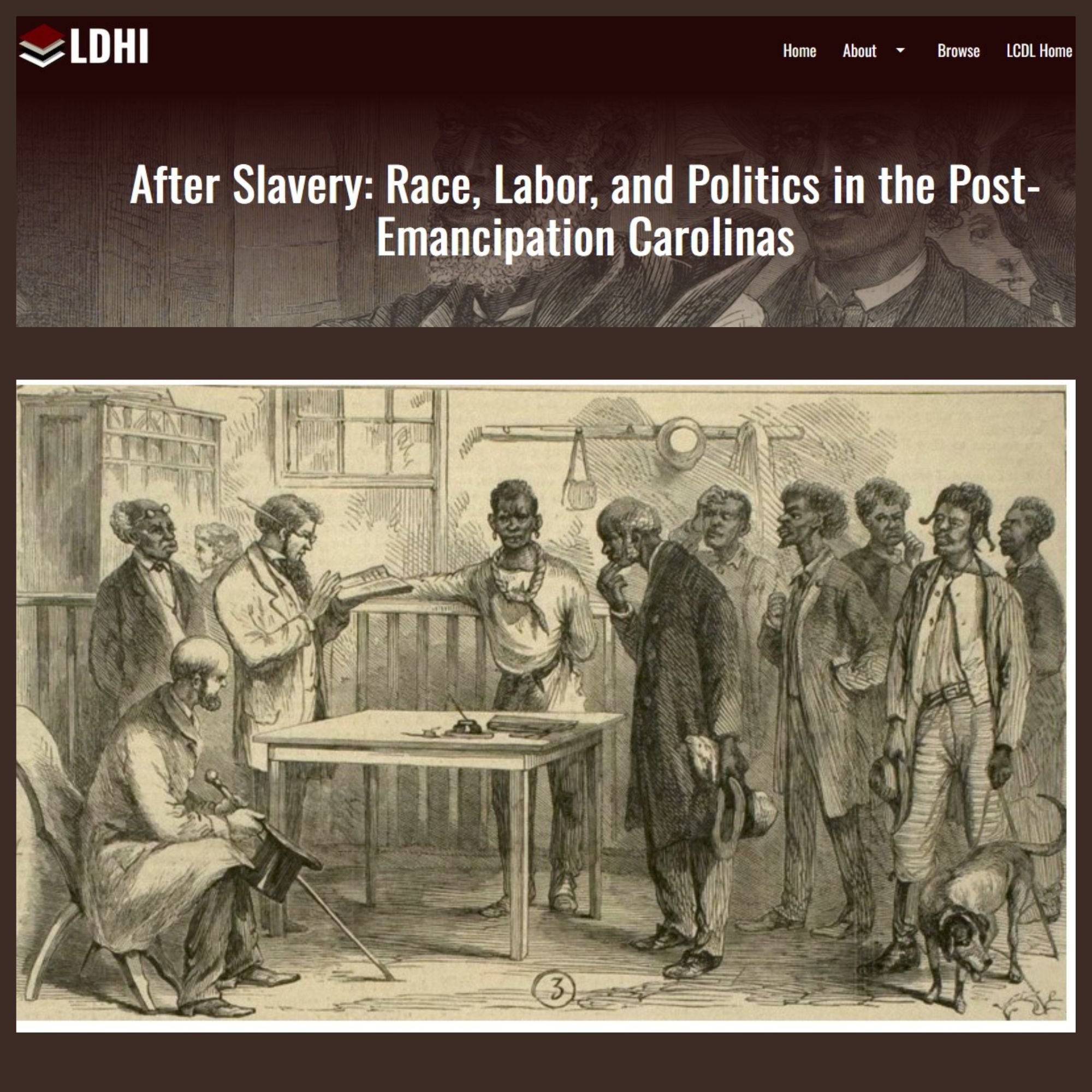
Brian Kelly, Lowcountry Digital History Initiative
After Slavery: Educator Resources links to exhibition units within the After Slavery online exhibition. The primary source document transcriptions featured here include excerpts from diaries and letters, government reports, memoirs, handbills, court transcripts, census materials, and newspaper accounts. Each educational document provides insight into different issues and events from the post-Emancipation period in the Carolinas. We encourage educators to employ these resources and the accompanying questions featured with each document in their classroom instruction, to help students engage this complex history through archival materials. These resources are adaptable to a variety of classroom settings. A curriculum guide is also available for South Carolina Social Studies Academic Standards.
Lesson Plans and Teaching Activities for Teaching Reconstruction Era
Brian Kelly, Lowcountry Digital History Initiative
After Slavery: Race, Labor, and Politics in the Post-Emancipation Carolinas is an online exhibition and educator resource that provides insight into the ground-level tensions that shaped the struggle to define freedom for former slaves on a national level, and within the distinctive historical contexts of North and South Carolina. This project grew out of a research collaboration aimed at developing a range of high-quality primary source materials for exploring one of the most tumultuous and critically important periods in the history of the United States. Brian Kelly of Queen’s University Belfast directs the After Slavery project in partnership with a team of U.S.-based and international scholars. Launched in 2006 with startup funding from the (UK) Arts & Humanities Research Council, After Slavery has been hosted by the Lowcountry Digital Library (LCDL) and the Program in the Carolina Lowcountry and Atlantic World (CLAW) at the College of Charleston since 2010. In 2014, After Slavery was redesigned and published in the Lowcountry Digital History Initiative (LDHI).
An online exhibit and educator resource series focusing on emancipation and Reconstruction in the post-Civil War Carolinas.
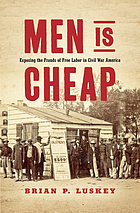
Brian P. Luskey
Men Is Cheap shows how the concepts of military and domestic necessity were connected in white northerners' minds and clarifies what they thought the war was fought over. In the process of winning the war, white northerners were forced to grapple with the frauds of free labor. Labor brokers, by helping to staff the Union military and Yankee households, did indispensable work that helped the northern state and northern employers emerge victorious"-- Provided by publisher
shows internal contradicitons during the civil war when union labor contractors utilized coercive labor agreements.
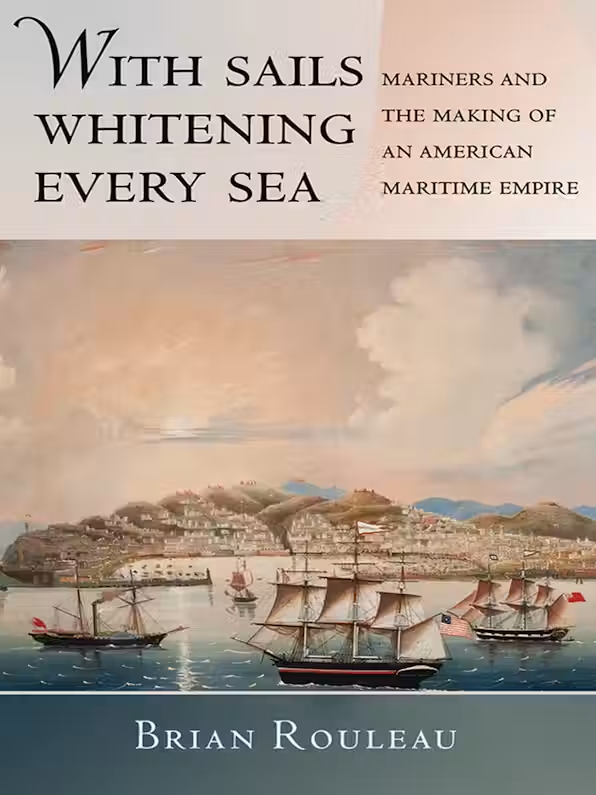
Brian Rouleau
Many Americans in the Early Republic era saw the seas as another field for national aggrandizement. With a merchant marine that competed against Britain for commercial supremacy and a whaling fleet that circled the globe, the United States sought a maritime empire to complement its territorial ambitions in North America.
In With Sails Whitening Every Sea, Brian Rouleau argues that because of their ubiquity in foreign ports, American sailors were the principal agents of overseas foreign relations in the early republic. Their everyday encounters and more problematic interactions--barroom brawling, sexual escapades in port-city bordellos, and the performance of blackface minstrel shows--shaped how the United States was perceived overseas.
Rouleau details both the mariners' "working-class diplomacy" and the anxieties such interactions inspired among federal authorities and missionary communities, who saw the behavior of American sailors as mere debauchery.
Indiscriminate violence and licentious conduct, they feared, threatened both mercantile profit margins and the nation's reputation overseas. As Rouleau chronicles, the world's oceans and seaport spaces soon became a battleground over the terms by which American citizens would introduce themselves to the world. But by the end of the Civil War, seamen were no longer the nation's principal ambassadors. Hordes of wealthy tourists had replaced seafarers, and those privileged travelers moved through a world characterized by consolidated state and corporate authority.
Born to rule the seas
-- Schoolhouses afloat
-- Jim Crow girdles the globe -- Maritime destiny as manifest destiny
-- A maritime empire of moral depravity
-- An intimate history of maritime empire
-- Making do at the margins of maritime empire
-- Epilogue: out of the sailor's den, into the tourist trap.
"working-class diplomacy" and the anxieties such interactions inspire
Bridgeport History Center
Oral histories of workers conducted by Bridgeport library The following oral histories are the stories of the people who worked in Bridgeport, Connecticut, over the past century. Every decade is represented. We have included an audio portion for some of those interviewed and will continue to add audio as more becomes available. All oral histories have full written transcripts. Just click on a name to listen and read the histories of Bridgeport's workers over the past century!
Oral histories of workers from Bridgeport, CT featuring testimonies from every decade of the 20th century

Brigid O'Farrell
Rocking the Boat is a celebration of strong, committed women who helped to build the American labor movement. Through the stories of eleven women from a wide range of backgrounds, we experience the turmoil, hardships, and accomplishments of thousands of other union women activists through the period spanning the Great Depression, the New Deal, World War II, the McCarthy era, the civil rights movement, and the women's movement. These women tell powerful stories that highlight and detail women's many roles as workers, trade unionists, and family members. They all faced difficulties in their personal lives, overcame challenges in their unions, and individually and collectively helped improve women's everyday working lives.
Maida Springer-Kemp came from New York City's Harlem, Local 22 of the International Ladies' Garment Workers' Union, to represent the AFL-CIO in Africa. In Chicago, Alice Peurala fought for her job in the steel mill and her place in the steel workers' union. Jessie De La Cruz organized farm workers in California. Esther Peterson, organizer, educator, and lobbyist, became an advisor to four U.S. presidents. In chapters based on oral history interviews, these women and others provide new perspectives and practical advice for today's working women. They share an idealistic and practical commitment to the labor movement. As Dorothy Haener of the United Auto Workers and a founding member of the National Organization of Women said, "You have to take a look at how to rock the boat. You don't want to spill yourself out if you can avoid it, but sometimes you have to rock the boat." From these women we, too, learn how to rock the boat.
Ch. 1. An Overview: And Not Falling Out
Ch. 2. Equal Is Equal, Brothers: Lilian Herstein, American Federation of Teachers (1886-1983)
Ch. 3. First a Troublemaker, Then a Troubleshooter: Carmen Lucia, United Hatters, Cap and Millinery Workers International Union (1902-1985)
Ch. 4. You Can't Giddyup by Saying Whoa: Esther Peterson, Amalgamated Clothing Workers of America (1906- )
Ch. 5. We Did Change Some Attitudes: Maida Springer-Kemp, International Ladies' Garment Workers' Union (1910- )
Ch. 6. Forty Years I'm Secretary-Treasurer of the Local: Mary Callahan, International Union of Electrical Workers (1914-1981)
Ch. 7. The Challenge Is Still There: Ah Quon McElrath, International Longshoremen's and Warehousemen's Union (1915- )
Ch. 8. Sometimes You Have to Rock the Boat: Dorothy Haener, United Auto Workers (1918- )
Ch. 9. The Vote Does Make a Difference: Fannie Allen Neal, Amalgamated Clothing Workers of America (1919-1990)
Eleven women tell powerful stories that highlight and detail women's many roles as workers, trade unionists, and family members. They all faced difficulties in their personal lives, overcame challenges in their unions, and individually and collectively helped improve women's everyday working lives.
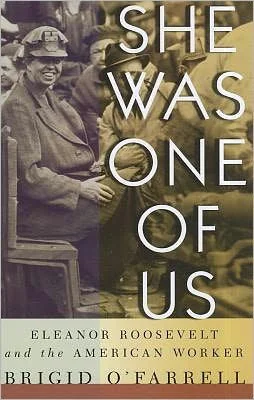
Brigid O'Farrell
Although born to a life of privilege and married to the President of the United States, Eleanor Roosevelt was a staunch and lifelong advocate for workers and, for more than twenty-five years, a proud member of the AFL-CIO's Newspaper Guild. She Was One of Us tells for the first time the story of her deep and lasting ties to the American labor movement. Brigid O'Farrell follows Roosevelt-one of the most admired and, in her time, controversial women in the world-from the tenements of New York City to the White House, from local union halls to the convention floor of the AFL-CIO, from coal mines to political rallies to the United Nations. Roosevelt worked with activists around the world to develop a shared vision of labor rights as human rights, which are central to democracy. In her view, everyone had the right to a decent job, fair working conditions, a living wage, and a voice at work. She Was One of Us provides a fresh and compelling account of her activities on behalf of workers, her guiding principles, her circle of friends-including Rose Schneiderman of the Women's Trade Union League and the garment unions and Walter Reuther, "the most dangerous man in Detroit"-and her adversaries, such as the influential journalist Westbrook Pegler, who attacked her as a dilettante and her labor allies as "thugs and extortioners." As O'Farrell makes clear, Roosevelt was not afraid to take on opponents of workers' rights or to criticize labor leaders if they abused their power; she never wavered in her support for the rank and file. Today, union membership has declined to levels not seen since the Great Depression, and the silencing of American workers has contributed to rising inequality. In She Was One of Us, Eleanor Roosevelt's voice can once again be heard by those still working for social justice and human rights
tells for the first time the story of Eleanor Roosevelt's deep and lasting ties to the American labor movement.
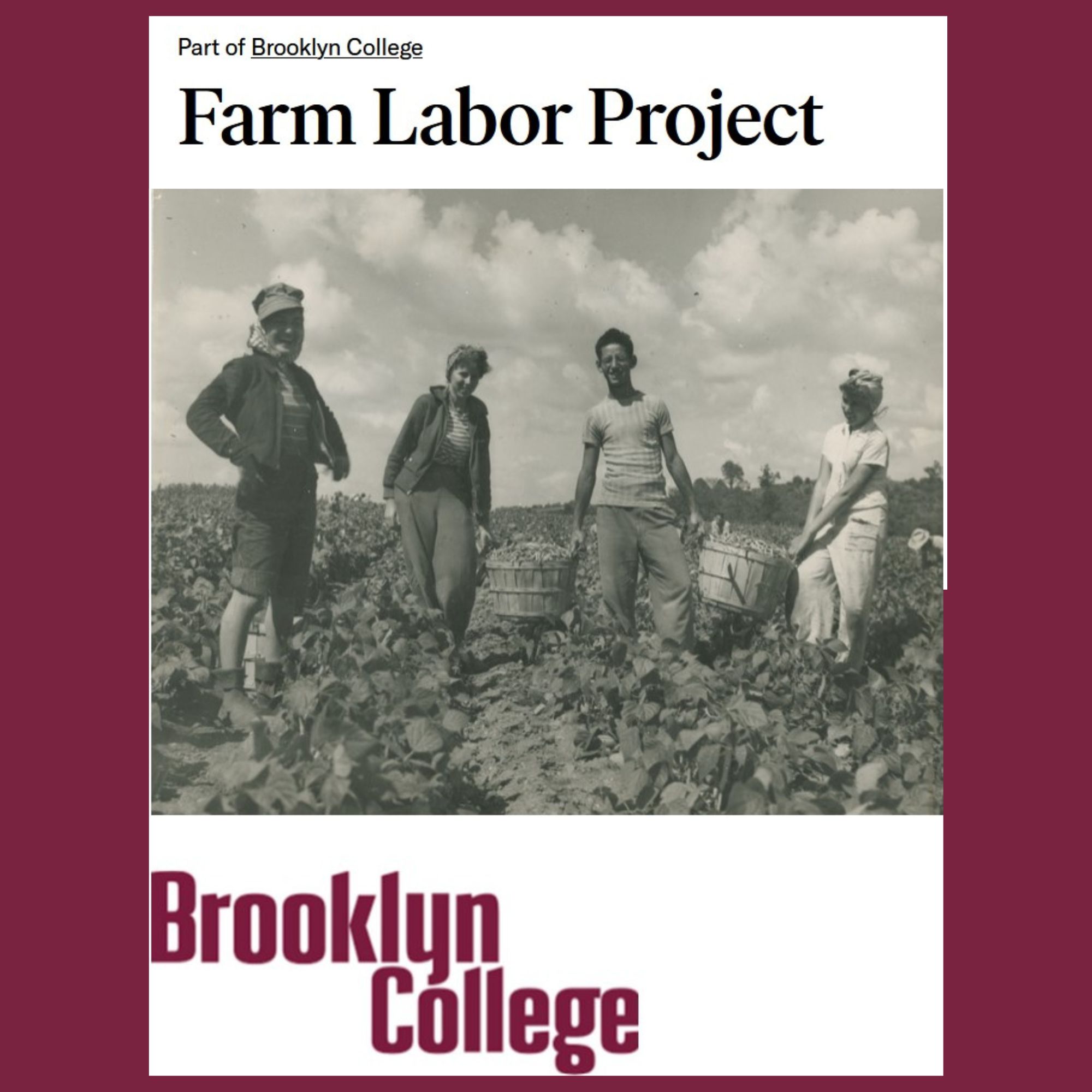
Brooklyn College, JSTOR
Brooklyn College along with several other City Universities began to recruit students for the Farm Labor Project in Spring of 1942 to help with the war effort by picking fruits and vegetables at farms in upstate New York.The program ran for three years from 1942-1944, the duration of America's involvement in the war. During three years there were over 300 students, both men and women, who traveled to Red Hook, New York (1942), and Morrisville, New York (1943-1944), to work on those farms.
The 1943 Farm Labor Project was modeled after the success of the 1942 program that took place in Red Hook. The project took eight months of planning. Public recognition, approval from the Board of Higher Education, recruiting students and various other processes were just some of the things that needed to be met to have the program go into effect. The students also attended several classes that were offered during the program such as geology, sociology, political science, math and English. Roughly, over 700,000 pounds of peas and beans were harvested by the 150 Brooklyn College Students in 1943.
digital archive of college students who participated in the New York-based Farm Labor Project
Brotherhood of Locomotive Firemen
Magazine of The Brotherhood of Locomotive Firemen initially emphasized insurance, but by the late nineteenth century had branched out into bargaining.
At 1900, the name changed to the Brotherhood of Locomotive Firemen and Enginemen (BLFE) when it admitted engineers. Merged with Order of Railway Conductors and Brakemen , the Brotherhood of Railroad Trainmen, and the Switchmen's Union of North America to form the United Transportation Union.
Not affiliated to the American Federation of Labor.
Organized at Port Jervis, N. Y., December 1, 1873. The Brotherhood of Locomotive Firemen and Enginemen grew out of a meeting of nine firemen in an old shed in Port Jervis, N. Y., at which Deer Park Lodge No. 1, Brotherhood of Locomotive Firemen, was organized. A constitution and by-laws covering the craft was adopted. Organization of other local lodges followed rapidly,
and two years after the first gathering a convention held at Indianapolis represented 31 lodges. This convention established the official organ of the brotherhood. In 1906 the name was changed to Brotherhood of Locomotive Firemen and Enginemen.
The development of the firemen’s organization parallels closely that of the conductors and the engineers, starting out as a fraternal benefit society and
growing into a craft union with virtual control over the working conditions and trade relations of its members. Objects.—“ For the purpose of uniting locomotive enginemen and hostlers,
elevating their social, moral, and intellectual standing, for the protection of
their interests and the promotion of their general welfare, the Brotherhood of
Locomotive Firemen and Enginemen has been instituted as an international
organization, having as one of its aims the desire to cultivate a spirit of
harmony between employer and employee. Realizing that our vocation involves
ceaseless peril, the necessity of making suitable provisions for ourselves, our
families, and those we feel obliged to aid, against those disasters which almost
daily overtake us, and of extending to each other the hand of charity, becomes
self-evident, and hence the brotherhood has adopted as its motto: Protection,
charity, sobriety, and industry.”
Territorial, jurisdiction.—United States, Canada, Newfoundland, and Mexico.
Trade jurisdiction.—Locomotive enginemen, engine hostlers, hostler helpers,
engine dispatchers employed handling engines in or about roundhouse or ash
pit, in shop yards, locomotive works, industrial plants, motormen or helpers on
electric engines, motor or gas cars on roads where electric energy is used or
has been substituted for steam. Engine hostlers or engine dispatchers are
persons who actually handle and are responsible for the care of locomotives.
Hostler helpers are persons who are assigned and required to assist outside
or main-line hostlers.
Railroad brotherhood journal. Most issues available from 1901-1906
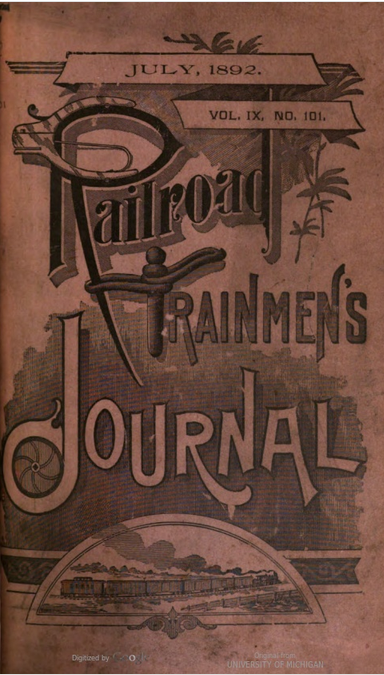
Brotherhood of Railroad Trainmen.
Originally named the Brotherhood of Railroad Brakemen started as an insurance for much-injured workers, grew into a craft union with a conciliatory approach.
became the largest brotherhood of operating railroad employees. Became part of the United Transportation Union in a merger in 1969.
Brotherhood of Railroad Trainmen Official Journal; originally named Railroad Brakemen's Journal

Brown University
Educating Change: Latina Activism and the Struggle for Educational Equity remembers the victorious struggle for bilingual education and educational equity for Mexican Americans. Parents, teachers, and youth dared to challenge child abuse and educational neglect in their schools. Powerfully illustrated through the lives of three Mexican/Chicana women—Ramona Medina, Socorro Gómez-Potter, and Yolanda Almaraz-Esquivel—Educating Change documents a history of Mexican women’s migration and activism, and considers its relevance for today’s US Latino communities, including Providence.
Introduction to the topic of Latina activism in the United States, includes the stories of prominent activists
Bruce A. Glasrud, James C. Maroney
Too often, observers and writers of Texas history have accepted assumptions about labor movements in the state - both organized and not - that do not bear up under the light of careful scrutiny. Offering a scholarly corrective to such misplaced suppositions, the studies in this book provide a helpful source for scholars and teachers who wish to fill in some of the missing pieces.
Tackling a number of such presumptions - that a viable labor movement never existed in the Lone Star State; that Black, brown, and white laborers, both male and female, were unable to achieve even short-term solidarity; that labor unions in Texas were ineffective because of laborers’ inability to confront employers - the editors and contributors to this volume lay the foundation for establishing the importance of labor to a fuller understanding of Texas history. They show, for example, that despite differing working conditions and places in society, many workers managed to unite, sometimes in multi-racial efforts, to overturn the top-down strategy utilized by Texas employers.
This collection also facilitates an understanding of how the state’s history relates to, reflects, and differs from national patterns and movements
Introduction : the neglected heritage of Texas labor / James C. Maroney and Bruce A. Glasrud
The early history of labor organizations in Texas, 1838-1876 / James V. Reese
On empire's shore : free and unfree workers in Galveston, Texas, 1840-1860 / Robert S. Shelton
The cowboy strike of 1883 : its causes and meaning / Robert E. Zeigler
The radical potential of the Knights' biracialism : the 1885-1886 Gould system strikes and their aftermath / Theresa A. Case
"Underground patriots" : Thurber coal miners and the struggle for industrial freedom, 1888-1903 / Marilyn D. Rhinehart
The gospel of wealth goes south : John Henry Kirby and labor's struggle for self-determination, 1901-1916 / George T. Morgan Jr
Tenant farmer discontent and socialist protest in Texas, 1901-1917 / James R. Green
The Texas-Louisiana oil field strike of 1917 / James C. Maroney
Opening the closed shop : the Galveston longshoremen's strike of 1920-1921 / Joseph Abel
Tejana radical : Emma Tenayuca and the San Antonio labor movement during the Great Depression / Zaragosa Vargas
Unionizing the Trinity Portland Cement Company in Dallas, Texas, 1934-1939 / Gregg Andrews
Discord in Dallas : auto workers, city fathers, and the Ford Motor Company, 1937-1941 / George N. Green
Texas homeworkers in the Depression / Julia Kirk Blackwelder
Black Texans and theater craft unionism : the struggle for racial equality / Ernest Obadele-Starks
The failed promise of wartime opportunity for Mexicans in the Texas oil industry / Emilio Zamora
No gold watch for Jim Crow's retirement : the abolition of segregated unionism at Houston's Hughes Tool Company / Michael R. Botson Jr
"Better to die on our feet than to live on our knees" : United Farm Workers and strikes in the Lower Rio Grande Valley, 1966-1967 / Mary Margaret McAllen Amberson
Adelante compañeros : the sanitation worker's struggle in Lubbock, Texas, 1968-1972 / Yolanda G. Romero
Yes, Texas has a labor history, too! Offering a scholarly corrective to such misplaced suppositions, the studies in Texas Labor History provide a helpful new source for scholars and teachers who wish to fill in some of the missing pieces.
Bruce C. Levine
In this major new history of the Civil War, Bruce Levine tells the riveting story of how that conflict upended the economic, political, and social life of the old South, utterly destroying the Confederacy and the society it represented and defended. Told through the words of the people who lived it, The Fall of the House of Dixie illuminates the way a war undertaken to preserve the status quo became a second American Revolution whose impact on the country was as strong and lasting as that of our first. In 1860 the American South was a vast, wealthy, imposing region where a small minority had amassed great political power and enormous fortunes through a system of forced labor. The South's large population of slaveless whites almost universally supported the basic interests of plantation owners, despite the huge wealth gap that separated them. By the end of 1865 these structures of wealth and power had been shattered. Millions of black people had gained their freedom, many poorer whites had ceased following their wealthy neighbors, and plantation owners were brought to their knees, losing not only their slaves but their political power, their worldview, their very way of life. This sea change was felt nationwide, as the balance of power in Congress, the judiciary, and the presidency shifted dramatically and lastingly toward the North, and the country embarked on a course toward equal rights. Levine captures the many-sided human drama of this story using a huge trove of diaries, letters, newspaper articles, government documents, and more. In The Fall of the House of Dixie, the true stakes of the Civil War become clearer than ever before, as slaves battle for their freedom in the face of brutal reprisals; Abraham Lincoln and his party turn what began as a limited war for the Union into a crusade against slavery by issuing the Emancipation Proclamation; poor southern whites grow increasingly disillusioned with fighting what they have come to see as the plantation owners' war; and the slave owners grow ever more desperate as their beloved social order is destroyed, not just by the Union Army, but also from within. When the smoke clears, not only Dixie but all of American society is changed forever. Brilliantly argued and engrossing, The Fall of the House of Dixie is a sweeping account of the destruction of the old South during the Civil War, offering a fresh perspective on the most colossal struggle in our history and the new world it brought into being." -- Publisher's description
how Civil War upended the economic, political, and social life of the old South, utterly destroying the Confederacy and the society it represented and defended.
Bruce Laurie
In the only modern study synthesizing nineteenth-century American labor history, Bruce Laurie examines the character of working-class factionalism, plebian expectations of government, and relations between the organized few and the unorganized many. Laurie also examines the republican tradition and the movements that drew on it, from the General Trades Unions in the age of Jackson to the Knights of Labor later in the century.
Contents
Introduction
1 Household to Factory
2 Free Labor and Radical Labor
3 Movement Culture and Received Culture
4 Coming Apart
5 The Rise and Fall of the Knights of Labor
6 The Prudential Unionism of the American Federation of Labor
Epilogue: Radicalism, Unionism, and the State
Bibliographie Essay
Integrates the findings of the 'new' labor history into the established framework of nineteenth-century American labor history.
Bruce Nelson
"Divided We Stand is a study of how class and race have intersected in American society - above all, in the "making" and remaking of the American working class in the nineteenth and twentieth centuries. Focusing mainly on longshoremen in the ports of New York, New Orleans, and Los Angeles, and on steelworkers in many of the nation's steel towns, it examines how European immigrants became American and "white" in the crucible of the industrial workplace and the ethnic working-class neighborhood. As workers organized on the job, especially during the overlapping CIO and Civil Rights eras in the middle third of the twentieth century, trade unions became a vital arena in which "old" and "new" immigrants and black migrants forged new alliances and identities and tested the limits not only of class solidarity but of American democracy. The most volatile force in this regard was the Civil Rights Movement. As it crested in the 1950s and '60s, "the Movement" confronted unions anew with the question, "Which side are you on?" This book demonstrates the complex ways in which labor organizations answered that question and the complex relationships that developed between union leaders and diverse rank-and-file constituencies in addressing it. Divide We Stand includes vivid examples of white working-class "agency" in the construction of racially discriminatory employment structures. But Nelson is less concerned with racism, as such, than with the concrete historical circumstances in which racialized class identities emerged and developed. This leads him to a detailed and often fascinating consideration of white working-class ethnicity, but also to a careful analysis of black workers - their conditions of work, their aspirations and identities, their struggles for equality. Making its case with passion and clarity, Divided We Stand will be a compelling and controversial book." -- Dust Jacket
demonstrates the complex ways in which labor organizations answered the question of Civil Rights and the complex relationships that developed between union leaders and diverse rank-and-file constituencies in addressing it.
Bryan D. Palmer
Focusing on the ways in which literary or critical theory is being promoted within the field of social history, this book argues that the reliance on poststructuralism with its reification of discourse and avoidance of the structures of oppression and struggles of resistance obscures the origins and consequences of historical events and processes
The discovery/deconstruction of the word/sign
Historical materialism
Politics
Class
Gender
Conclusion: Theory and the politics of historical interpretation
Focuses on the ways in which literary or critical theory is being promoted within the field of social history. Contesting academic approaches, a book for those well acquainted with academic language
Museum/Exhibits
Tours
Maps
Digital Projects
Organizations
Sites
Film/Video
Audio/Interview
Podcast/Program
Text/Document
Image
Graphs/Data
Timeline
Southwest
West
Midwest
Southeast
Northeast
Mexico
Canada
Global
Books
Teaching
Lectures
Digital Archives
Journals
Bibliographies
Topic Intro