


Explore thousands of items. Use clickable links under collections and library for broad categories. Search by keyword (including topic,city, state.) Limit by time period, type of item, region. See our search tips page for more assistance.
Collections
Library
Type
Region
Coverage:
-
Published:
-

Steve Fraser
Free Press (1993)
Fraser has written the definitive study of the public career of Sidney Hillman (1887-1946), which supersedes Matthew Josephson's Sidney Hillman: Statesman of American Labor ( LJ 11/15/52) and all other earlier biographies. Hillman, a founder in 1914 and lifetime President of the Amalgamated Clothing Workers of America, went on to become a major force in the American labor movement, a founder of the Congress of Industrial Organizations (CIO), and a recognized spokesman for working people in the corridors of power in Washington. He also was a confidant of President Franklin D. Roosevelt; a major player in mobilizing labor for the industrial and military build-up before Pearl Harbor and during World War II; an originator of labor's political action committees (PAC); and a power broker in the Democratic party in the 1944 presidential election. Fraser tells Hillman's story skillfully and perceptively in a book that is highly recommended for current American history and labor collections.
the definitive study of the public career of Sidney Hillman, lifetime President of the Amalgamated Clothing Workers of America

Steve Fraser
Verso (2019)
Stories about American history, its origins and unfolding, do not, conventionally, feature capitalism. Other tales about the country's history usually take priority. If capitalism figures in at all, it is to forefront opportunity, entrepreneurial vigor, material abundance and the seven league boots of manifest destiny. Conflict may rear its unseemly face but only episodically, as a kind of alien or aberrant detour off the main road of America's exceptional career through the world. Instances of serious social discord, when they draw notice, get transcended, a course correction allowing the utopian project to resume. In this collection, Steve Fraser corrects the record, rewriting the arc of the American saga with capitalism and the class conflict centerstage, mounting a serious challenge to the consoling fantasy of American exceptionalism. Working through the central concepts of political economics - unemployment and risk, unfree labor and household debt - he demonstrates that class is a deeply structuring feature of American political life, and an invaluable heuristic for reading American politics in the longue durée"-- Provided by publisher
A sweeping history of the United States which focuses on how the evolution of capitalism affected the nation's development

Steve Fraser
Little, Brown and Company (2015)
A groundbreaking investigation of how and why, from the 18th century to the present day, American resistance to our ruling elites has vanished. From the American Revolution through the Civil Rights movement, Americans have long mobilized against political, social, and economic privilege. Hierarchies based on inheritance, wealth, and political preferment were treated as obnoxious and a threat to democracy. Mass movements envisioned a new world supplanting dog-eat-dog capitalism. But over the last half-century that political will and cultural imagination have vanished. Why? THE AGE OF ACQUIESCENCE seeks to solve that mystery. Steve Fraser's account of national transformation brilliantly examines the rise of American capitalism, the visionary attempts to protect the democratic commonwealth, and the great surrender to today's delusional fables of freedom and the politics of fear.
Pt. I: Class warfare in America: the long nineteenth century : Progress ; Progress, poverty, and primitive accumulation ; Premonitions ; The second civil war: in the countryside ; The second civil war: on the industrial frontier ; Myth and history ; The end of socialism
pt. II: Desire and fear in the second Gilded Age : Back to the future: the political economy of auto-cannibalism ; Fables of acquiescence: the businessman as populist hero ; Fables of freedom: Brand X ; Wages of freedom: the fable of the free agent ; Journey to nowhere: the eclipse of the labor movement ; Improbable rebels: the folklore of limousine liberalism ; Conclusion: Exit by the rear doors
A groundbreaking investigation of how and why, from the 18th century to the present day, American resistance to our ruling elites has vanished.

Steve Lehto
Momentum Books (2013)
Uses historical documents to conclude that at a party in 1913 for the children of copper miners who were on strike, someone supporting the mine owners yelled "fire" and fled, causing a rush that left seventy-three children dead
Italian Hall Disaster of 1913 revisited

Steve Nelson
University of Pittsburgh Press (1981)
As the immigrant teenage son of a Croatian miller, Steve Nelson arrived in the United States after World War I and entered a world of chronic unemployment, low wages, dangerous work, and discrimination. Following the path taken by many fellow immigrant workers, he joined the Communist Party. He became a full-time organizer and ultimately a major leader, only to resign in 1957 after unsuccessful attempts to democratize the American party. This remarkable oral biography, recounted in collaboration with two historians, describes day-to-day life in the party and traces Nelson's career from his beginnings in the Pennsylvania coalfields to his secret work as party courier in the Far East; form the battlefields of Civil War Spain to the jails of Cold War Pittsburgh; and from a small group of Communist autoworkers in Detroit to the upper reaches of a party leadership in New York. It is the frank and analytical account of a leading American working-class activist.
oral biography describes day-to-day life in the party and traces Nelson's career from his beginnings to his secret work as party courier in the Far East

Steven A. Reich
Rowman et Littlefield (2013)
"Examines the economical, political and cultural forces that have beaten, built, and broken America's Black workforce for centuries since Emancipation. From the abolition of slavery through the civil rights movement and Great Recession, African Americans have been singularly disadvantaged members of the workforce, repeatedly denied access to the opportunities all Americans are to be afforded under the Constitution. They have faced a unique set of obstacles and prejudices on their way to becoming a productive and indispensable portion of the American workforce.
African Americans have combined decades of collective action and community mobilization with the trailblazing heroism of a select few to pave their own way to prosperity. This latest installment of the African American History Series challenges the notion that racial prejudices are buried in our nation's history, and instead provides a narrative connecting the struggles of many generations of African American workers to those felt in the present day. The author provides an account of what being an African American worker has meant since the 1860s, alluding to ways in which we can and must learn from our past, for the betterment of all workers, however marginalized they may be. This history is as factually astute as it is accessibly written, a tapestry of over 150 years of troubled yet triumphant African American labor history that we still weave today."--Publisher information
frican Americans have combined decades of collective action and community mobilization with the trailblazing heroism of a select few to pave their own way to prosperity.

Steven Attewell
University of Pennsylvania Press (2018)
In People Must Live by Work, Steven Attewell presents the history of an idea—direct job creation—that transformed the role of government in ameliorating unemployment by hiring the unemployed en masse to prevent widespread destitution in economic crises. For ten years, between 1933 and 1943, direct job creation was put into practice, employing more than eight million Americans and making the federal government the largest single employer in the country. Yet in 2008, when the most dramatic economic crisis since the Depression occurred, the idea of direct job creation was nowhere to be found on the list of policies deemed feasible or advisable for government at any level.
People Must Live by Work traces the rise and fall of direct job creation policy—how it was put into practice, how it came within a hairbreadth of becoming a permanent feature of American economic and social administration, and why it has been largely forgotten or discounted today. Contrary to more conventional arguments, Attewell reveals that the New Deal ended the Great Depression before the United States entered World War II and its jobs programs continued to influence policy debates over the Employment Act of 1946. He examines the deliberations surrounding the Humphrey-Hawkins Full Employment Act that was signed into law in 1978 and demonstrates the ways in which direct job creation played a significant and polarizing role in dividing the economic establishment and the Democratic party in the 1970s. People Must Live by Work not only chronicles the ambition, constraints, and achievements of direct job creation policy in the past but also proposes a framework for understanding its enduring significance and promise for today.
the rise and fall of the New Deal era policy of creating jobs through government intervention

Steven C. Beda
University of Illinois Press (2022)
Often cast as villains in the Northwest's environmental battles, timber workers in fact have a connection to the forest that goes far beyond jobs and economic issues.
Steven C. Beda explores the complex true story of how and why timber- working communities have concerned themselves with the health and future of the woods surrounding them. Life experiences like hunting, fishing, foraging, and hiking imbued timber country with meanings and values that nurtured a deep sense of place in workers, their families, and their communities. This sense of place in turn shaped ideas about protection that sometimes clashed with the views of environmentalists--or the desires of employers.
Beda's sympathetic, in-depth look at the human beings whose lives are embedded in the woods helps us understand that timber communities fought not just to protect their livelihood, but because they saw the forest as a vital part of themselves"-- Provided by publisher
explores the complex true story of how and why timber- working communities have concerned themselves with the health and future of the woods surrounding them.

Steven Conn
University of Chicago Press (2023)
There's no such thing as rural America. Or, rather, as Steven Conn argues, "rural America" is a phrase that has been made to mean so many things that it doesn't mean anything. In fact, he maintains, rural America--so often characterized as in crisis or in danger of being left behind--has been shaped by the same major forces as the rest of the country since at least the end of the Civil War: militarization, industrialization, corporatization, and suburbanization. Conn calls for us to dispense with the fantasies and visions that are often imposed on rural America, in the hopes of more productively addressing the real challenges facing all of America"--Provided by publisher
how militarization, industrialization, corporatization, and suburbanization shapes rural US

Steven Greenhouse
Alfred A. Knopf (2019)
Wage stagnation, low-wage work, and blighted blue-collar communities have become an all-too-common part of modern-day America. Behind these trends is a little-discussed problem: the decades-long decline in worker power. Greenhouse rebuts the often-stated view that labor unions are outmoded or harmful, by recounting some of labor's victories, and the efforts of several of today's most innovative and successful worker groups. He also proposes concrete, feasible ways in which workers' collective power can be rekindled and reimagined in the twenty-first century. Adapted from the book jacket and Amazon.com
rebuts the often-stated view that labor unions are outmoded or harmful, by recounting some of labor's victories, and the efforts of several of today's most innovative and successful worker groups.
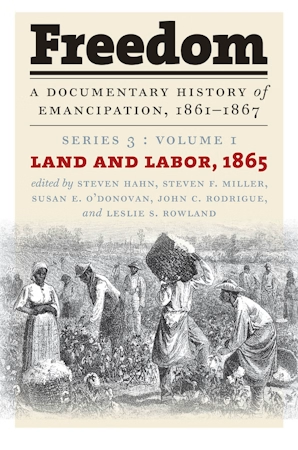
Steven Hahn, Steven F. Miller, Susan E. O'Donovan, John C. Rodrigue and Leslie S. Rowland
The University of North Carolina Press (2013)
Land and Labor, 1865 examines the transition from slavery to free labor during the tumultuous first months after the Civil War. Letters and testimony by the participants — former slaves, former slaveholders, Freedmen’s Bureau agents, and others — reveal the connection between developments in workplaces across the South and an intensifying political contest over the meaning of freedom and the terms of national reunification. Essays by the editors place the documents in interpretive context and illuminate the major themes.
In the tense and often violent aftermath of emancipation, former slaves seeking to ground their liberty in economic independence came into conflict with former owners determined to keep them dependent and subordinate. Overseeing that conflict were northern officials with their own notions of freedom, labor, and social order. This volume of Freedom depicts the dramatic events that ensued — the eradication of bondage and the contest over restoring land to ex-Confederates; the introduction of labor contracts and the day-to-day struggles that engulfed the region’s plantations, farms, and other workplaces; the achievements of those freedpeople who attained a measure of independence; and rumors of a year-end insurrection in which ex-slaves would seize the land they had been denied and exact revenge for past oppression.
examines the remaking of the South's labor system in the tumultuous aftermath of emancipation

Steven K. Ashby, Robert Bruno
ILR Press (2016)
In reaction to the changes imposed on public schools across the country in the name of "education reform," the Chicago Teachers Union redefined its traditional role and waged a multidimensional fight that produced a community-wide school strike and transformed the scope of collective bargaining into arenas that few labor relations experts thought possible. Using interviews, first-person accounts, participant observation, union documents, and media reports, Steven K. Ashby and Robert Bruno tell the story of the 2012 strike that shut down the Chicago school system for seven days. A Fight for the Soul of Public Education takes into account two overlapping, parallel, and equally important stories. One is a grassroots story of worker activism told from the perspective of rank-and-file union members and their community supporters. Ashby and Bruno provide a detailed account of how the strike became an international cause when other teachers unions had largely surrendered to corporate-driven education reform. The second story describes the role of state and national politics in imposing educational governance changes on public schools and draconian limitations on union bargaining rights. It includes a detailed account of the actual bargaining process revealing the mundane and the transcendental strategies of both school board and union representatives. -- Provided by publisher
story of the 2012 strike that shut down the Chicago school system for seven day

Steven Piott
Lexington Books (2014)
Americans in Dissent is designed as a collection of biographical essays written for general readers and undergraduates that focuses on the topic of American dissent during the period from 1830 to 1890. Centered on influential nineteenth-century social critics, this volume shifts the focus of American reform away from “romantic” attempts at reforming the individual to more pragmatic efforts aimed at confronting social, economic, and political problems. Coexisting with what seemed to be a preponderance of romantic idealism during much of the period was an undercurrent of genuine realism. Instead of looking through the prism of a pre-modern society, many of these dissenters focused on how society was becoming increasingly acquisitive and entrepreneurial. They were among the first to question laissez-faire individualism and unrestrained industrial capitalism and anticipated the critiques of later Progressive Era reformers. Representing a wide range of interests, each of the selections features a fascinating and provocative man or woman who offered a fundamental critique of American society and made a significant contribution to the development of the reform ethos that characterized the period.
selection of radical and labor critiques
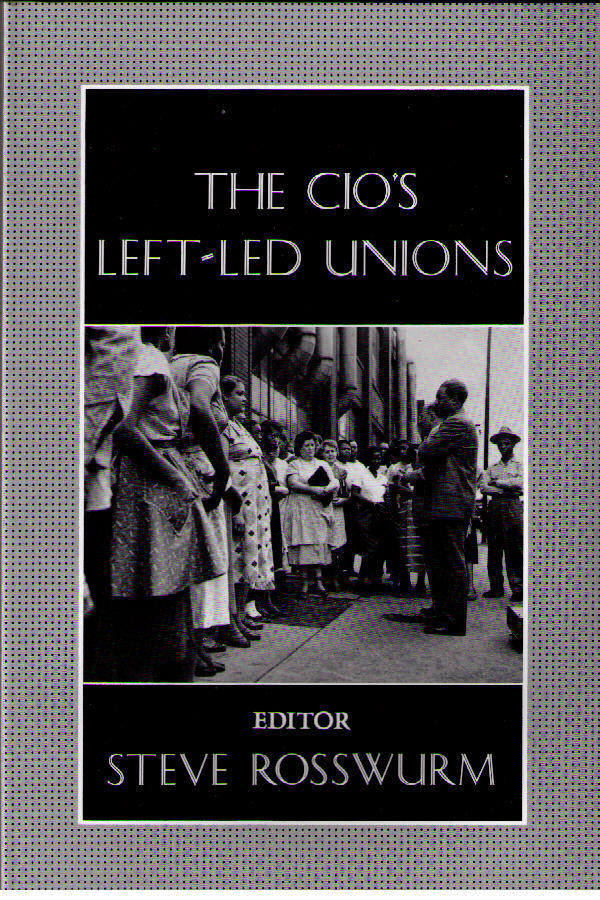
Steven Rosswurm, ed.
University of Illinois Press (1992)
Essay collection; In 1949 and 1950, the CIO expelled many left-wing unions, representing 750,000 workers, because they were supposedly Communist-dominated. This collection explores the history of those eleven left-led unions. Some essays consider specific aspects of several unions—the Longshoremen, United Electric (UE), the Fur Workers, and the Food and Tobacco Workers—while others take up the impact of the federal government’s and the Catholic church’s anticommunism upon the unions as a whole.
This collection also addresses central domestic issues of twentieth-century America: race and government policy in the shaping of trade unionism; the impact of anticommunism and the cold war on race relations and working conditions; and the short- and long-range impact of the expulsions on the labor movement. With groundbreaking essays that also concern the post-World War II period, Southern workers, and workers in non-basic industries, this book will appeal to students of radicalism, race relations, anticommunism, and labor history.
Introduction:An Overview and Preliminary Assessment of the CIO's Expelled Unions 1
STEVE ROSSWURM
Class and Race in the Crescent City:The ILWU, from San Francisco to New Orleans 19
BRUCE NELSON
Who Controls the Hiring Hall?The Struggle for Job Control in the ILWU During World War II 47
NANCY QUAM-WICKHAM
Black and White Together: Organizing in the South with the Food, Tobacco,Agricultural & Allied Workers Union (FTA-CIO),1946-1952 69
KARL KORSTAD
William Sentner, the UE, and Civic Unionism in St. Louis
ROSEMARY FEURER
The Catholic Church and the Left-Led Unions:Labor Priests, Labor Schools, and the ACTU 119
STEVE ROSSWURM
McCarthyism and the Labor Movement:The Role of the State 139
ELLEN W. SCHRECKER
Fighting Left-Wing Unionism:Voices from the Opposition to the IFLWU in Fulton County New York 159
GERALD ZAHAVI
The Shop-Floor Dimension of Union Rivalry: The Case of Westinghouse in the 1950s 183
MARK MCCOLLOCH
"An Old Soldier"
TOM JURAVICH
anthology of essays on the CIO's left led unions, which were expelled in 1949.

Steven Stoll
Hill and Wang (2017)
Stoll offers a fresh, provocative account of Appalachia, from the earliest European settlers. He covers crucial episodes such as the Whiskey Rebellion and the founding of West Virginia, and the arrival of timber and coal companies that set off a devastating "scramble for Appalachia." Along the way Stoll questions our assumptions about progress and development, and exposes the devastating legacy of dispossession and its repercussions today.-- Adapted from book jacket
From the publisher:
In Ramp Hollow, Steven Stoll offers a fresh, provocative account of Appalachia, and why it matters. He begins with the earliest European settlers, whose desire for vast forests to hunt in was frustrated by absentee owners—including George Washington and other founders—who laid claim to the region. Even as Daniel Boone became famous as a backwoods hunter and guide, the economy he represented was already in peril. Within just a few decades, Appalachian hunters and farmers went from pioneers to pariahs, from heroes to hillbillies, in the national imagination, and the area was locked into an enduring association with poverty and backwardness. Stoll traces these developments with empathy and precision, examining crucial episodes such as the Whiskey Rebellion, the founding of West Virginia, and the arrival of timber and coal companies that set off a devastating “scramble for Appalachia.”
At the center of Ramp Hollow is Stoll’s sensitive portrayal of Appalachian homesteads. Perched upon ridges and tucked into hollows, they combined small-scale farming and gardening with expansive foraging and hunting, along with distilling and trading, to achieve self-sufficiency and resist the dependence on cash and credit arising elsewhere in the United States. But the industrialization of the mountains shattered the ecological balance that sustained the households. Ramp Hollow recasts the story of Appalachia as a complex struggle between mountaineers and profit-seeking forces from outside the region. Drawing powerful connections between Appalachia and other agrarian societies around the world, Stoll demonstrates the vitality of a peasant way of life that mixes farming with commerce but is not dominated by a market mind-set. His original investigation, ranging widely from history to literature, art, and economics, questions our assumptions about progress and development, and exposes the devastating legacy of dispossession and its repercussions today.
questions our assumptions about progress and development, and exposes the devastating legacy of dispossession and its repercussions today

Steven Tolliday
Cambridge University Press (1985)
First published in 1985, this multi-author volume discusses the contentious issue of the relationship between shop floor bargaining and the state. The seven essays in this text offer rigorous analysis of historically particular circumstances and events, and show that the state is not always the defender of managerial centralisation.
Acknowledgments;
1. Shop floor bargaining and the state: a contradictory relationship Jonathan Zeitlin;
2. Dilution, trade unionism and the state in Britain during the First World War Alastair Reid;
3. Public policy and port labour reform: the dock decasualisation issue, 1910–50 Noel Whiteside;
4. Government, employers and shop floor organisation in the British motor industry, 1939–69 Steven Tolliday;
5. The snares of liberalism? Politicians, bureaucrats, and the shaping of federal labour relations policy in the United States, ca. 1915–47 Howell Harris;
6. Politics, law and shop floor bargaining in postwar Italy Giovanni Contini;
7. Controlling production on the shop floor: the role of state administration and regulation in the British and American aerospace industries Bryn Jones; Index.
discusses the contentious issue of the relationship between shop floor bargaining and the state.

Stokely Carmichael, History Matters
In June 1966, the national chairman of the Student Nonviolent Coordinating Committee (SNCC), Stokely Carmichael, first voiced the slogan “Black Power” during a march in Mississippi. James Meredith initiated the march to protest white resistance, in defiance of the Voting Rights Act of 1965, to black voter registration. Meredith was shot and wounded, but other black leaders, including Martin Luther King, Jr., and Carmichael, continued the march. In conflict with King’s nonviolent philosophy, Carmichael told marchers in Greenwood, Mississippi, “We have got to get us some black power.” He later explained that the slogan was “a call for black people in this country to begin to define their own goals, to lead their own organizations.” Carmichael’s rhetoric, influenced by Malcolm X, signified a growing divide in the civil rights movement between those who encouraged interracial collaboration and those who advocated black separatism. Carmichael himself left SNCC in 1967 and joined the Black Panther Party. The following testimony by Carmichael before a Senate subcommittee investigating internal security includes an interview Carmichael recorded during a visit to Cuba in 1967. Although he advocated an international struggle to end capitalism, the following year Carmichael announced that “Communism is not an ideology suited for black people.” Carmichael moved to Guinea in 1969, where he changed his name to Kwame Ture and formed the Pan-Africanist All-African People’s Party. He died in 1998.
The 1966 Senate testimony of Stokely Carmichael, chairman of the Student Nonviolent Coordinating Committee.
Stokely Carmichael, History Matters
In June 1966, the national chairman of the Student Nonviolent Coordinating Committee (SNCC), Stokely Carmichael, first voiced the slogan “Black Power” during a march in Mississippi. James Meredith initiated the march to protest white resistance, in defiance of the Voting Rights Act of 1965, to black voter registration. Meredith was shot and wounded, but other black leaders, including Martin Luther King, Jr., and Carmichael, continued the march. In conflict with King’s nonviolent philosophy, Carmichael told marchers in Greenwood, Mississippi, “We have got to get us some black power.” He later explained that the slogan was “a call for black people in this country to begin to define their own goals, to lead their own organizations.” Carmichael’s rhetoric, influenced by Malcolm X, signified a growing divide in the civil rights movement between those who encouraged interracial collaboration and those who advocated black separatism. Carmichael himself left SNCC in 1967 and joined the Black Panther Party. The following testimony by Carmichael before a Senate subcommittee investigating internal security includes an interview Carmichael recorded during a visit to Cuba in 1967. Although he advocated an international struggle to end capitalism, the following year Carmichael announced that “Communism is not an ideology suited for black people.” Carmichael moved to Guinea in 1969, where he changed his name to Kwame Ture and formed the Pan-Africanist All-African People’s Party. He died in 1998.
signified a growing divide in the civil rights movement between those who encouraged interracial collaboration and those who advocated black separatism.
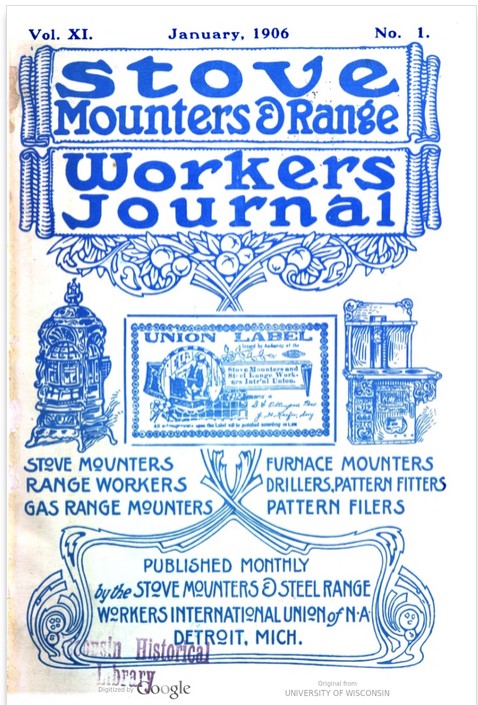
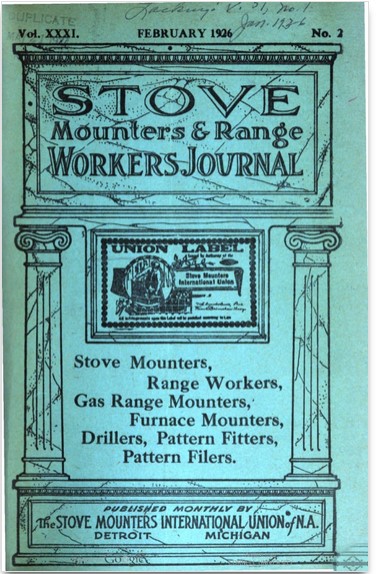
Stove mounters' & range workers international
Detroit, Mich. : Stove Mounters' & Steel Range Workers' International Union of N.A., published from 1905-1963
Craft union of the AFL journal; see another listing for later issues
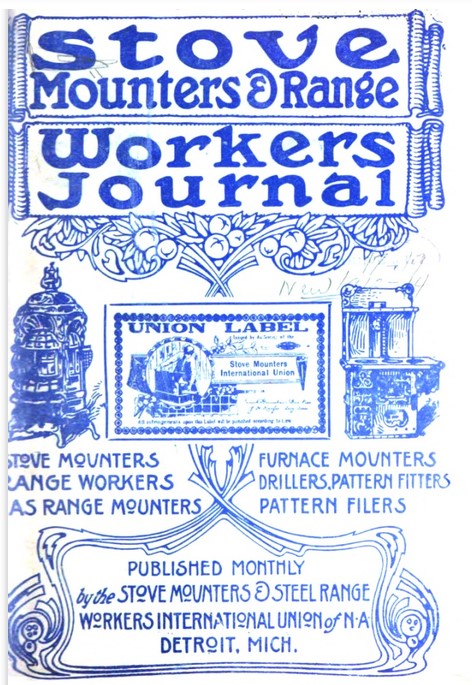
Stove mounters' & range workers international
Detroit, Mich. : Stove Mounters' & Steel Range Workers' International Union of N.A., published from 1905-1962
Craft union of the AFL journal, digitized; see another listing for earlier issues
Stove, Furnace & Allied Appliance Workers ̓International Union
Stove, Furnace & Allied Appliance Workers ̓International Union, headquartered St. Louis Missouri; other years available to subscribers
Journal of the stove mounters, digitized

Studs Terkel Mediaburn
Studs' speeches on Haymarket and May Day, and the continuing relevance of Labor Day
the famous Studs Terkel archive of interviews on workers experiences

Studs Terkel, WFMT
For over forty years, Studs Terkel explored a variety of themes, from architecture to rock music, from poetry to the intricacies of the labor movement. Explore the archive by topic, people, date, or keyword. There are over 400 interviews with the topic "labor," from leaders to everyday workers. "Today, most Americans have a pretty narrow definition of the labor movement and what it means to be working class. If you ask, they might mention steelworkers, miners, and construction workers, which implicitly presumes that only white men (generally assumed to be conservative) were and are the only ones to be found in the country’s blue-collar jobs and trade unions. Studs certainly talked to his share of steelworkers and miners. He even interviewed truckers, like Paul Dietsch, who had no interest in joining unions, disdained government regulations, and loved open roads as much as free enterprise."-from the site
--There are also compilations such as the Terkel comments and presents "Hard Times: an Oral History of the Great Depression"; chapter 6, where you hear from "Dr. Lewis Andreas talks about being at the 1937 Memorial Day massacre and providing medical care during the Depression. Justin McCarthy discusses his job conditions at Ford Assembly Plant prior to the unions implementation. Mike Widman remembers heading up union negotiations and the strike at the Ford Plant in 1940-41. Bob Stinson discusses working at General Motors and how the sit-down strike began. Union songs performed by the Almanac Singers are played throughout the episode.
Around 400 of the 2,000 radio programs from WFMT host Studs Terkel, containing interviews of working-class people and histories of the working class

Sturla Gunnarson, Robert Collison
The filmmakers were given remarkable freedom to record the historic 1984 contract negotiations between the United Auto Workers and General Motors Corporation. Bob White, labour leader of the Canadian branch of the UAW, must also confront his American counterpart from Detroit and succeeds in arriving at a contract that is significantly Canadian. His members had already given him a mandate to fight for independence from the American union. This is an invaluable document for anyone interested in the complexities of United States-Canada relations. It's an extraordinary film about revolutionary events.
A film based around footage of the actual 1984 contract negotiations between the United Auto Workers and General Motors Corporation, as well as the conflicts between the Canadian negotiator and his U.S. counterpart.

Sue Fawn Chung
University of Illinois Press (2015)
Building on her path-breaking work on Chinese in mining areas of the American West, Sue Fawn Chung takes up the topic of Chinese in the nineteenth century lumber industry in this new book. Chinese immigrants were key participants in logging and lumbering, in some cases constituting as much as 90 percent of the lumbering workforce. Chung sets out the background of interest in logging in China and examines the Chinese and American labor contractors, the community organizations and networks that supported them, and some of the reasons Chinese were attracted to logging in the west. She explicates their work, lifestyle, and wages, the lumber companies that employed them, their relationship with other ethnic groups, and the reasons for their departure from this occupation, including tightening immigration restrictions. Among other findings, Chung shows that Chinese performed most of the tasks that Euro-American lumbermen did, that their salaries for the same type of work in some places were not necessarily lower than the prevailing wage for non-Asian workers and in some cases even higher, that although some were separated in their work from other ethnic groups, some developed close relationships with their fellow workers and employers, and that Chinese camp cooks were valued and paid equal or better wages than their Euro-American counterparts. When they were treated unfairly, Chinese often brought their cases before the American courts and through the legal system won the right to buy and sell timberland and to obtain equal wages in logging. Based on exhaustive archival work, this project will expand understandings of the Chinese in the West and in working class history"--Provided by publisher
An analysis of Chinese immigrant labor in the nineteenth century lumber industry
Museum/Exhibits
Tours
Maps
Digital Projects
Organizations
Sites
Film/Video
Audio/Interview
Podcast/Program
Text/Document
Image
Graphs/Data
Timeline
Southwest
West
Midwest
Southeast
Northeast
Mexico
Canada
Global
Books
Teaching
Lectures
Digital Archives
Journals
Bibliographies
Topic Intro