


Explore thousands of items. Use clickable links under collections and library for broad categories. Search by keyword (including topic,city, state.) Limit by time period, type of item, region. See our search tips page for more assistance.
Collections
Library
Type
Region
Coverage:
-
Published:
-
Tamiment Library, New York University
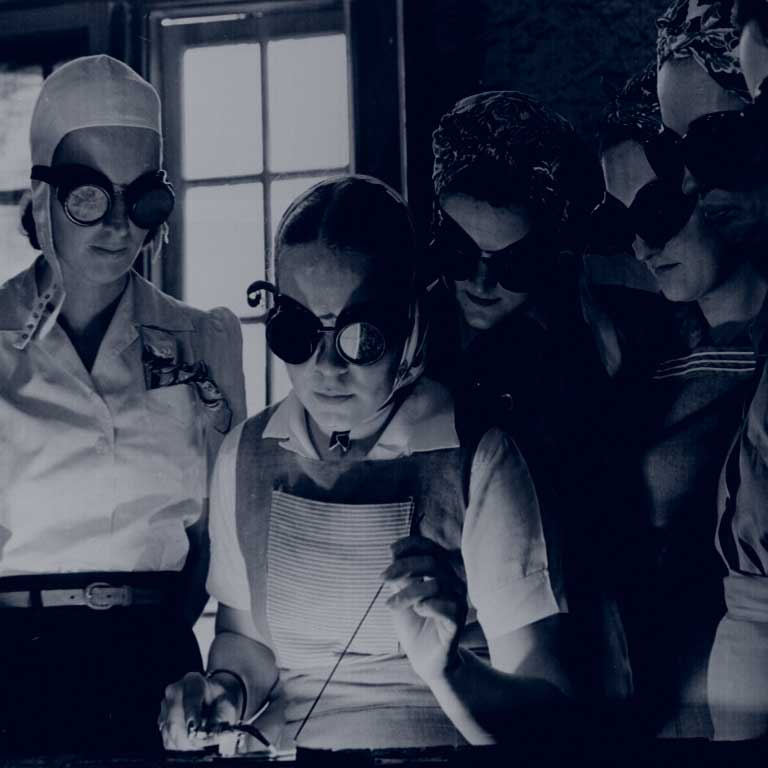
These photographs that depict more than 150 World War II women workers were drawn from the archives of the Daily Worker and Women's Bureau Bulletin published by the United States Department of Labor in the collections of the Tamiment Library.
The photos depict Rosies in a variety of work places: shipyards, jeep and tank assembly lines, aircraft factories, machine shops, electrical shops, and railroad yards. Woman are shown riveting bombers, doing electrical wiring, enforcing quality control, serving as flight mechanics, assembling torpedoes painting destroyers, inspecting hoses, operating drill presses, and assembling machine guns.
photos of real Rosies at work during WWII
Tamiment Library, New York University
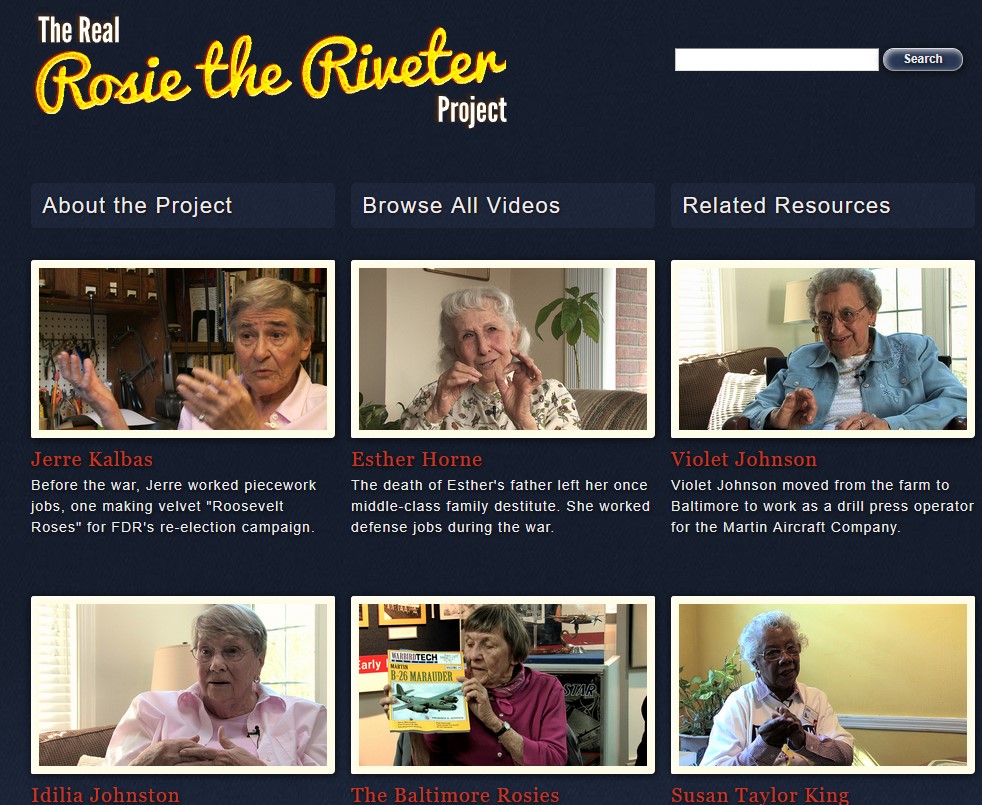
This archive of filmed oral histories was created by filmmakers Anne de Mare, Kirsten Kelly and Elizabeth Hemmerdinger under the guidance of the irreplaceable Dr. Michael Nash. The 48 women represented here provide a complex portrait of Rosie the Riveter, taking the viewer beyond the iconic "We Can Do It" poster girl and deep into the experiences real Rosies from diverse backgrounds, challenging the popular perception of women in American History. The filmmakers were inspired by the extraordinary women of The Real Rosie The Riveter Project to develop this material into an animated documentary project using new media technologies called The Girl With The Rivet Gun. See the flickr album: https://www.flickr.com/photos/tamiment/albums/72157624283760580/
filmed interviews with 48 women who worked in WWII
Tanan Valley Socialist
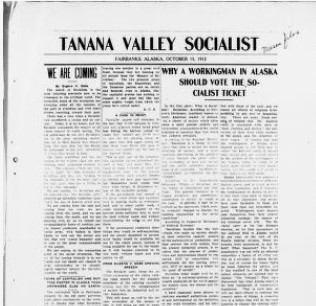
only one issue available on-line
Alaska socialist paper

Tania M. Ríos Marrero
What began as a rather small body of 42 unions and syndicalist organizations quickly grew to become one of the largest, most democratic union federations in Puerto Rico's history. And while the C.G.T. was composed of transportation, dockyard and needlework industry workers, among others – it was a mass mobilization of sugar industry workers in 1942 that escalated and cemented the power and influence of the C.G.T.
strike of one of the largest, most democratic union federations in Puerto Rico's history.

Tara M. McCarthy
Syracuse University Press (2018)
In the late nineteenth century, an era in which women were expanding the influence outside the home, Irish American women carved out unique opportunities to serve the needs of their communities. For many women, this began with a commitment to Irish nationalism. In Respectability and Reform, McCarthy explores the contributions of a small group of Irish American women in the Gilded Age and Progressive Era who emerged as leaders, organizers, and activists. Profiles of these women suggest not only that Irish American women had a political tradition of their own but also that the diversity of the Irish American community fostered a range of priorities and approaches to activism.
McCarthy focuses on three movements—the Irish nationalist movement, the labor movement, and the suffrage movement—to trace the development of women’s political roles. Highlighting familiar activists such as Fanny and Anna Parnell, as well as many lesser-known suffragists, McCarthy sheds light on the range of economic and social backgrounds found among the activists. She also shows that Irish American women’s commitment to social justice persisted from the Land War through the World War I era. In unearthing the rich and varied stories of these Irish American women, Respectablity and Reform deepens our understanding of their intersection with and contribution to the larger context of American women’s activism.
This project offers a national study of the different agendas and strategies pursued by Irish American women in the Gilded Age and Progressive Era, focusing on their roles in diaspora nationalism, the labor movement, and the suffrage movement.

Tariq Khan
University of Illinois Press (2023)
The colonizing wars against Native Americans created the template for anticommunist repression in the United States. Tariq D. Khan's analysis reveals bloodshed and class war as foundational aspects of capitalist domination and vital elements of the nation's long history of internal repression and social control. Khan shows how the state wielded the tactics, weapons, myths, and ideology refined in America's colonizing wars to repress anarchists, labor unions, and a host of others labeled as alien, multi-racial, multi-ethnic urban rabble. The ruling classes considered radicals of all stripes to be anticolonial insurgents. As Khan charts the decades of red scares that began in the 1840s, he reveals how capitalists and government used much-practiced counterinsurgency rhetoric and tactics against the movements they perceived and vilified as "anarchist." Original and boldly argued, The Republic Shall Be Kept Clean offers an enlightening new history with relevance for our own time"-- Provided by publisher
Acknowledgments Author’s Note on Terminology
Introduction Class, Race, Gender, and Empire “Civilization” versus “Savagery”
“The Republic Shall be Kept Clean” The Guns of 1877
Republicans and Anarchists The Respectable Mob Aliens and Mobs
Conclusion: “The Problem of the Proletariat and the Colonial Problem” Notes Libraries and Archives Utilized Index
Attempt to apply settler coloinal framework to labor repression, argues state wielded the tactics, weapons, myths, and ideology to attack radicals
Teach With Movies
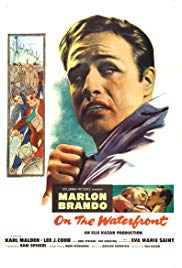
This movie is about organized crime’s penetration of a longshoreman’s union in New York during the 1950s. Several men break the community’s code of silence to stand up to the gangsters and expose the murder of a friend. The script was adapted from “Crime on the Waterfront,” a Pulitzer prize-winning newspaper expose written by Malcolm Johnson and published in the New York Sun.
A teaching guide that pairs with the 1954 film On the Waterfront, which introduces students to topics like labor unions, organized crime, union corruption, and labor extortion.
Teaching Labor's Story, LAWCHA, Nikki Mandell
Teaching Labor’s Story is a sourcebook of primary sources with supporting teaching guides (textual, visual, audio) and contextualizing essays. Resources in Teaching Labor’s Story are designed to be readily incorporated into existing curriculum so that experts and non-experts alike can re-infuse labor’s story into the historical narrative — grades 9-16 and beyond. Each primary source is linked to one of ten commonly taught eras in American/United States history and to one or more thematic topics. TLS sources are selected to reveal significant perspectives on essential historical questions. Each source is accompanied by a guide that includes essential historical context, a glossary, discussion questions, curricular connections, and additional sources.
A sourcebook of primary sources with supporting teaching guides (textual, visual, audio) and contextualizing essays covering all of labor history.
Teamsters, Marxists.org
Official Organ of the Northwest Labor Unity Conference (1935-36), Minneapolis Teamsters Joint Council (1936-41) and Local 544-CIO (1941)
The Northwest* Organizer was a tabloid and later broadsheet initiated by Teamsters Local 574 from April 1935 through the early July 1941. The Trotskyist lead Local (later Local 544-AFL) was the main force behind The Northwest Organizer and the Teamsters union throughout the upper-midwest during this period. The Local had gone an organizing drive for the entire upper Missisippi/Missouri valley and the paper was launched in the main as the tribune of this organizing drive. The paper was published weekly and was recognized as the main labor and working class journal for the entire region. From April 1935 through August 5, 1936, The Northwest Organizer was published under the auspices of the Northwest Labor Unity Conference. After that date it was published under the auspices of the Minneapolis Teamsters Joint Council (also lead by Local 544). In August of 1941, with the attack on the Local 544 by Daniel Tobin, national boss of the Teamsters and the government lead by FDR, the Local left the AFL and affiliated with the CIO as Motor Transport and Allied Workers Industrial Union Local 544-CIO. At this point the paper resumed as the Industrial Organizer under that Local’s sponsorship.
The Northwest Organizer, lead, arguably, by the most dynamic union in the Upper-Midwest, Local 574/544 Teamsters, became the effective tribune for the growing class struggle militancy of the working class for this region of the U.S. It’s pages chronical in minute detail the individual strikes in all industries, the massive organizing that resulted in the formation of the Central Conference of Teamsters and fights and organizing that resulted in the formation of the Congress of Industrial Organizations.
Continues The Organizer; Minneapolis, Minnesota Teamster publication
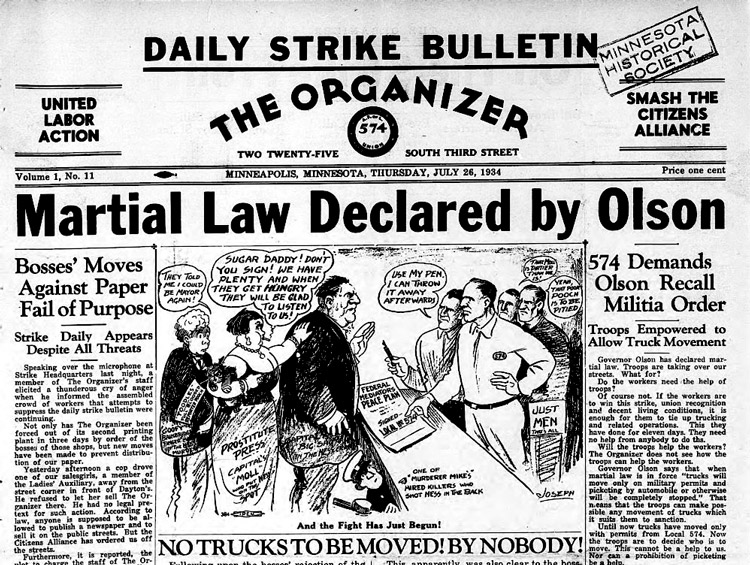
Teamsters, Marxists.org
Newspaper of the fighting Teamsters local 574 during the Minneapolis Teamsters Strikes in the summer of 1934. It was produced, varyingly, daily and weekly and bi-weekly depending on the class struggle during the summer months that year. The Organizer chronicled the the 3 large strikes that turned Minneapolis around from being a non-union open shop town to a completely union town. The paper was edited by James P. Cannon.
The Organizer chronicled the the 3 large strikes that turned Minneapolis around from being a non-union open shop town to a completely union town. DIgitized.

Ted Reed, John J Yurechko
McFarland (2020)
"Their ancestors may have been cargo in the slave ships that arrived in the Port of Charleston, S.C. Today, the scale has been rebalanced: black longshoremen run the port's cargo operation. They are members of the International Longshoremen's Association, a powerful labor union, and Kenny Riley is the charismatic leader of the Charleston local. Riley combines commitment to the civil rights movement with the practicality to ensure that Charleston remains a principal East Coast port. He emerged on the international stage in 2000, when he rallied union members around the world to the defense of "The Charleston Five," longshoremen who were arrested after a confrontation with police turned violent. This is Riley's story as well as a behind-the-scenes look at organized black labor in a Deep South port."--Provided by publisher"-- Provided by publisher
Riley combines commitment to the civil rights movement with the practicality to ensure that Charleston remains a principal East Coast port.

Teixeira Alexandre Fortes da Silva, Thomas D Rogers, Gillian McGillivray, Thomas D Rogers, Gillian McGillivray
Lexington Books (2023)
This edited volume provides comparative and transnational histories of the working people of Brazil and the United States. The international group of historians' methodologically innovative chapters explore links, resonances, and divergences between US and Brazilian labor history"-- Provided by publisher
Comparative and transnational histories of the working people of Brazil and the United States

Temple University Libraries
Hundreds of documents a variety of collections, including numerically images of picketing, PATCO strike, May Day events, civil rights and labor issues. Try other search terms for more specific parameters. Includes mostly photographs, but also periodicals, pamhlets, clippings, transcripts, minutes, etc.
A variety of digitized photos and printed material digitally available from 1860-1980, mostly from Philadelphia, but also national and global events.

Tenement Museum
Guided walking tours of NYC’s Lower East Side at the Tenement Museum offer locals and visitors the opportunity to rediscover the city. Explore the often-forgotten places, unexplored spaces, and the many histories of migration over centuries on daily walking tours of the storied Lower East Side neighborhood. Visit historical sites and learn about the people and neighborhoods that made New York City what it is today.
Our neighborhood walking tours are available for both individual ticket holders and private groups
Explore the often-forgotten places, unexplored spaces, and the many histories of migration over centuries on daily walking tours of the storied Lower East Side neighborhood. Visit historical sites and learn about the people and neighborhoods that made New York City what it is today.

Tenement Museum
With Tenement Museum resources, students become historians. Using our teacher-designed, teacher-tested lesson plans, students engage in inquiry and learn to use critical thinking to interpret objects, oral histories, and primary sources, while making history relevant to today. Our classroom resources support multi-state History-Social Studies and English Language Arts curricula and can be used with or without a museum visit.
We currently offer three kinds of resources for teachers, including unit plans, lesson plans, and family stories. Whichever resource you select, you will find primary sources such as video stories, oral histories, documents, and photos in each. Educators can sort by grade level, unit plan, lesson plan, family stories, or primary source type below.
Be sure to check out our new comprehensive suite of virtual field trips and sign up for our monthly teacher’s newsletter for tips from other teachers, event and webinar information, new resources, and more!
Educators can sort by grade level, unit plan, lesson plan, family stories, or primary source type below.
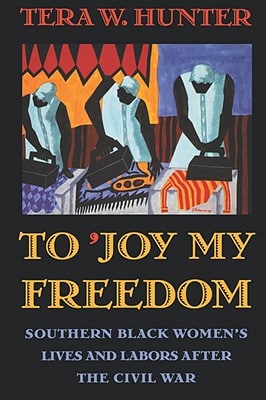
Tera W. Hunter
Harvard University Press (2021)
Black washerwomen strikes of the late 19th century and those women's lives, labors, leisure, and legacy. Interview for Zinn Education Project
Hunter discusses key points from book

Tera W. Hunter
Harvard University Press (1997)
In an original and dramatic work of scholarship, Tera Hunter weaves a rich tapestry of the culture and experience of black women workers in the post-Civil War South. Using a variety of sources, Hunter follows African-American working women from their newfound optimism and hope at the end of the Civil War to their struggles as free domestic laborers in the homes of their former masters
As the Civil War drew to a close, newly emancipated black women workers made their way to Atlanta—the economic hub of the newly emerging urban and industrial south—in order to build an independent and free life on the rubble of their enslaved past. In an original and dramatic work of scholarship, Tera Hunter traces their lives in the postbellum era and reveals the centrality of their labors to the African-American struggle for freedom and justice. Household laborers and washerwomen were constrained by their employers’ domestic worlds but constructed their own world of work, play, negotiation, resistance, and community organization.
Hunter follows African-American working women from their newfound optimism and hope at the end of the Civil War to their struggles as free domestic laborers in the homes of their former masters. We witness their drive as they build neighborhoods and networks and their energy as they enjoy leisure hours in dance halls and clubs. We learn of their militance and the way they resisted efforts to keep them economically depressed and medically victimized. Finally, we understand the despair and defeat provoked by Jim Crow laws and segregation and how they spurred large numbers of black laboring women to migrate north.
Hunter weaves a rich and diverse tapestry of the culture and experience of black women workers in the post–Civil War south. Through anecdote and data, analysis and interpretation, she manages to penetrate African-American life and labor and to reveal the centrality of women at the inception—and at the heart—of the new south. --trom the Publisher
weaves a rich tapestry of the culture and experience of black women workers in the post-Civil War South.
Terence Powderly
Excelsior Publishing House ()
full text of Terrance V. Powderly's 1890 book Thiry Years of Labor, 1859-1889, which discusses the founding and development of labor organizations like the National Labor Union of 1866, the Industrial Brotherhood of 1874, and the Knights of Labor.
"Google Books (full text): https://www.google.com/books/edition/Thirty_Years_of_Labor_1859_1889/W9cJAAAAIAAJ?hl=en&gbpv=1&dq=inauthor:Powderly&printsec=frontcover#v=onepage&q&f=false
full text of Terence V. Powderly's Thirty Years of Labor, 1859-1889, his tale of the early labor movement and Knights of Labor

Terence Powderly, History Matters
The Haymarket Affair, as it is known today, began on May 1, 1886 when a labor protester threw a bomb at police, killing one officer, and ended with the arrest of eight anarchist leaders, three of whom were executed and none of whom was ever linked to the bombing. Some labor organizations saw the executed men as martyrs and tried to rally support but in the end, the hanging of the Haymarket anarchists not only emboldened capitalists, it undercut labor unity. Knights of Labor leader Terence V. Powderly was desperate to distance his organization from the accused anarchists and maintain the order’s respectability. In this excerpt from his 1890 autobiography Powderly explained his decision three years earlier to keep mainstream labor out of the furor that surrounded the Haymarket Affair.
Powderly sought to remove charges of anarchism from the Knights, in reaction to Haymarket
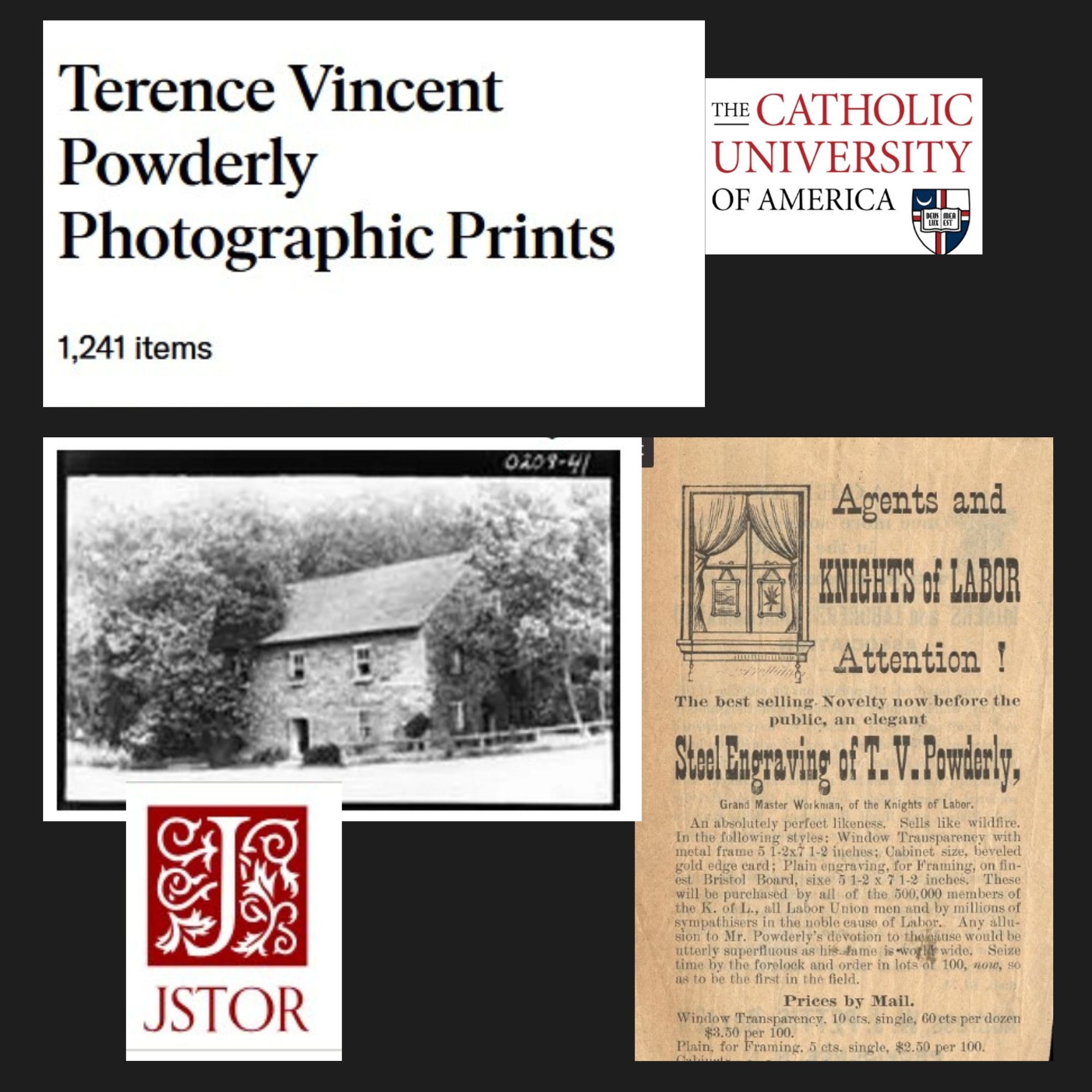
Terence V. Powderly, Catholic University, JSTOR
1300 items Terence Vincent Powderly, the son of Irish immigrants, was born in 1849 in Carbondale, Pennsylvania. Employed at a young age as a railroad switchman, he later apprenticed as a machinist. Powderly joined the International Union of Machinists and Blacksmiths in 1871, eventually becoming local president, then joined a local Scranton, Pennsylvania, Knights of Labor in 1876 and rose steadily until assuming the national leadership from 1879-1893. In addition to his labor connections, Powderly served as a progressive mayor of Scranton from 1878-1884, practiced law, and became a political operative with the Republican Party. From 1897-1901, he served as Commissioner General of Immigration, following these duties with a position as Chief of the Immigration Division of Information, 1907-1921, then Labor Department Commissioner of Conciliation, 1921-1924. Beyond these professional positions, Powderly was a world traveler, photographer, and author of Thirty Years Of Labor (1889) and his memoirs, The Path I Trod (1921). In 1999, Powderly was honored as the newest inductee into the U.S. Department of Labor's Hall of Fame, joining figures such as Samuel Gompers, Mary Harris "Mother" Jones, and Philip Murray. Powderly, a photography enthusiast, took and collected thousands of photographs, nearly 1300 of which are reproduced in this digital collection.
Search Within
Search within by entering a keyword
Refine Results
This is the search filters section. Skip to search results section.
Primary source content:
Images (1,237)
Serials (4)
Everything
See all results, including content you cannot download or read online
Content I can access
This is the search results section. Skip to search filters section.
1,241 items
1300 items of Knights of Labor leader

Teresita A. Levy
Rutgers University Press (2014)
Covers 1898-1940Most studies of Puerto Rico’s relations with the United States have focused on the sugar industry, recounting a tale of victimization and imperial abuse driven by the interests of U.S. sugar companies. But in Puerto Ricans in the Empire, Teresita A. Levy looks at a different agricultural sector, tobacco growing, and tells a story in which Puerto Ricans challenged U.S. officials and fought successfully for legislation that benefited the island.
Levy describes how small-scale, politically involved, independent landowners grew most of the tobacco in Puerto Rico. She shows how, to gain access to political power, tobacco farmers joined local agricultural leagues and the leading farmers’ association, the Asociación de Agricultores Puertorriqueños (AAP). Through their affiliation with the AAP, they successfully lobbied U.S. administrators in San Juan and Washington, participated in government-sponsored agricultural programs, solicited agricultural credit from governmental sources, and sought scientific education in a variety of public programs, all to boost their share of the tobacco-leaf market in the United States. By their own efforts, Levy argues, Puerto Ricans demanded and won inclusion in the empire, in terms that were defined not only by the colonial power, but also by the colonized.
The relationship between Puerto Rico and the United States was undoubtedly colonial in nature, but, as Puerto Ricans in the Empire shows, it was not unilateral. It was a dynamic, elastic, and ever-changing interaction, where Puerto Ricans actively participated in the economic and political processes of a negotiated empire.
ntroduction
1 The Development of the Tobacco Economy
2 Life in the Tobacco Regions
3 Politics: Tobacco Growers and Agricultural Organizations
4 Law: The Extension of Federal Agricultural Credit Legislation to Puerto Rico
5 Technology: The Science of Tobacco
introduction to Puerto Rico’s crucial tobacco industry, with fascinating material on farmer organizations and agricultural research
Terrence V. Powderly, History Matters
In 1889, Knights of Labor General Investigator Leonora Barry surprised the union by recommending that the Woman’s Department, which she headed, be disbanded. “There can be no separation or distinction of wage workers on account of sex,” she argued, “and a separate department for the interests of women is a direct contradiction of this.” The Knights rejected her recommendations, and Barry continued her organizing work. What finally halted Barry’s organizing efforts—and the work of the union’s Woman’s Department—was her marriage in 1890 to Obadiah Read Lake, a St. Louis Knight and printer. Terrence V. Powderly, the head of the Knights, had not always fully supported Barry’s efforts and his readiness to see her marriage as the equivalent of her death (as this letter to a fellow Knight revealed) showed the limitations of the Knights’ commitment to women’s full participation. Although Barry’s labor organizing ended, she remained active in temperance, women’s suffrage, and other progressive causes.
Excerpt detailing Leonora Barry's fall from grace from the Knights of Labor

Terri L. Snyder
University Of Chicago Press (2015)
The history of slavery in early America is a history of suicide. On ships crossing the Atlantic, enslaved men and women refused to eat or leaped into the ocean. They strangled or hanged themselves. They tore open their own throats. In America, they jumped into rivers or out of windows, or even ran into burning buildings. Faced with the reality of enslavement, countless Africans chose death instead. In The Power to Die, Terri L. Snyder excavates the history of slave suicide, returning it to its central place in early American history. How did people-traders, plantation owners, and, most importantly, enslaved men and women themselves-view and understand these deaths, and how did they affect understandings of the institution of slavery then and now? Snyder draws on ships' logs, surgeons' journals, judicial and legislative records, newspaper accounts, abolitionist propaganda and slave narratives, and many other sources to build a grim picture of slavery's toll and detail the ways in which suicide exposed the contradictions of slavery, serving as a powerful indictment that resonated throughout the Anglo-Atlantic world and continues to speak to historians today
suicide exposed the contradictions of slavery
Texas General Land Office
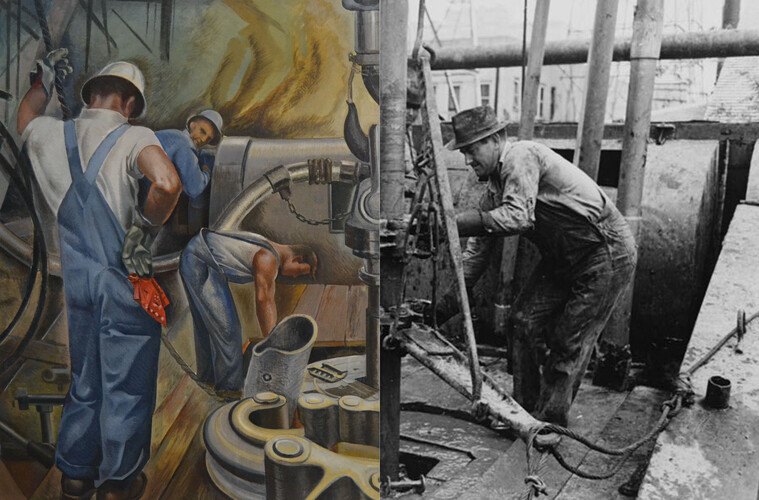
This StoryMap explores the first fifteen years of the East Texas Oil Field's tumultuous history, from 1930 to 1945, and highlights the significant impact the oil boom had on regional, state, and national affairs. Using maps held by the Texas General Land Office (GLO) Archives, and photographs and other print material from the era, it showcases the dramatic economic, demographic, social, and cultural transformations that took place in this corner of East Texas.
A storymap of work and life in East Texas during the early years of the development of the fields in texas
Texas Labor Archives, University of Texas
The Texas Labor Archives contain records of Texas labor unions and their officials, as well as oral histories with union members and leaders.
Publicly available via the UTA Libraries Digital Gallery
Charlotte Graham Papers-- A collection of photographs documenting Charlotte Smith Graham, dressmaker and labor organizer, who was born in Dallas in 1912. One of twelve founders of a Dallas "sewing circle" that affiliated with the International Ladies' Garment Workers' Union in 1935, she remained active in union affairs for more than forty years.
Clyde Johnson Papers= A collection of photographs documenting Clyde Johnson (1908-1994). He was a labor organizer and writer involved in several different labor unions throughout his life. A communist early in his life, he was committed to social justice and the plight of the worker. Johnson worked most often in an organizing capacity, at various times, with students, foundry workers, iron workers, coal workers, agricultural workers, oil workers, electrical workers, sharecroppers, dairy workers, pecan shellers, and carpenters. One such effort was from 1942 to 1943, when he served as the Southern Director for the CIO Oil Workers Organizing Campaign to actively organize Texas oil workers.
Dallas Moving Picture Machine Operators Union, Local 249-A Records This link opens in a new window A collection of photographs documenting the Dallas Moving Picture Machine Operators Union, Local 249-A. It was a local affiliate of the International Alliance of Theatrical Stage Employees and Moving Picture Operators of the United States and Canada. Local 249-A was chartered on November 1, 1949 and was comprised of African American motion picture operators in Dallas, Texas. On February 11, 1969, Local 249-A merged with Local 249, which had previously been an all-white local.
Dato Papers A collection of photographs documenting Edward L. Dato. Born in 1890, he joined the Brotherhood of Boilermakers, Iron Ship Builders, Blacksmiths, Forgers and Helpers, Local 96, Fort Worth, Texas, as an apprentice in 1910. He was elected President of Local 96 in 1914, and held every office in the lodge during his lifetime. He died in 1976.
George and Latane Lambert Papers A collection of photographs documenting George and Latane Lambert. George Lambert was an organizer for the United Cannery, Agricultural, Packing, and Allied Workers, the Amalgamated Clothing Workers of America, and the International Ladies' Garment Workers' Union. Latane Lambert was a representative for the Amalgamated Clothing Workers of America and the CIO as well as a leader in the Democratic Party of Texas.
Howard Broyles Collection A collection of photographs documenting Howard and Elizabeth Broyles. Howard Broyles was an active member of the Brotherhood of Painters, Decorators and Paperhangers of America, Local 53, Dallas, Texas. His wife, Elizabeth Broyles, was a member of the local's Ladies Auxiliary 1.
International Brotherhood of Electrical Workers, Local 20 Records A collection of photographs documenting the International Brotherhood of Electrical Workers, Local 20. The Electrical Wiremen and Linemen's Union No. 5221, founded in St. Louis, Missouri, in 1890. Sufficient interest was shown in a national union, and the National Brotherhood of Electrical Workers (NBEW) was officially formed in 1891. The American Federation of Labor chartered the NBEW as an AFL affiliate that same year. At the 1899 convention in Pittsburgh, Pennsylvania, the union's name was officially changed to the International Brotherhood of Electrical Workers (IBEW). Today the labor union represents nearly 750,000 workers and retirees. The IBEW, Local 20, Dallas, Texas, is a current and longstanding union local.
International Ladies' Garment Workers' Union, Local 180 (San Antonio, TX) Records A collection of photographs documenting the International Ladies' Garment Workers' Union, Local 180 (San Antonio, TX) Records. The International Ladies' Garment Workers' Union (ILGWU) was founded, June 3, 1900, in New York and was chartered by the American Federation of Labor on June 23, 1900. The labor union represented workers in the women and children's apparel industries and was mostly comprised of female workers. The ILGWU established its first Texas local in Dallas in 1934, and successful organization efforts in Houston and San Antonio followed shortly thereafter. Notable strikes were carried out by the Dallas and San Antonio locals in the 1930's and the San Antonio local in the 1950s and 1960s.
J. W. Jackson Papers A collection of photographs documenting J. W. Jackson. He was born on November 17, 1923 in Lubbock County. He served in the Navy during WWII. He joined the United Brotherhood of Carpenters and Joiners of America in June 1950, and became the official business representative of Local 977 in 1960. In 1975 he was named the president of Wichita Falls Trades and Labor Council, AFL-CIO. He formally retired in 1984.
James D. Wright Papers A collection of photographs documenting James D. Wright. He was born on July 19, 1936. He was an air traffic controller and member of PATCO. He participated in both the 1970 PATCO sick-out and the 1981 PATCO strike.
Mexican-American Farm Workers Movement Collection A collection of photographs documenting the United Farm Workers and the organizations that supported its efforts to alleviate the plight of the farm workers, including the Farm Worker Emergency Relief Fund, Friends of the Farm Workers, National Student Committee for Farmworkers, and Tarrant County Friends of the Farm Workers.
Pancho Medrano Papers A collection of photographs documenting Francisco F. Medrano (1920-2002), better known as Pancho Medrano. He was a prominent figure in local labor and civil rights movements beginning in 1960. Medrano's papers document his labor, civil rights, and political activities.
PATCO Records A collection of photographs documenting the Professional Air Traffic Controllers Organization (PATCO). It was organized in Chicago, Illinois, on July 1, 1968. Washington, D.C. became the headquarters. The 1981 controllers strike began on August 3 and initiated what was to become one of the worst defeats ever for organized labor.
Preacher Hays Papers A collection of photographs documenting John W. Hays. He was born in Rusk County, Texas, in 1908. He grew up in Dallas where he worked as a newsboy, circulation salesman, pressman, and press operator for the four Dallas newspapers with most of his career being with the Dallas Times-Herald. He joined the Dallas Newspaper Printing Pressmen’s Union Local No. 21 in 1928 and served as secretary, vice-president, and president. He was active in Dallas and Texas politics and the labor movement on the local, state, and national levels. He ran unsuccessfully for president of the International Printing Pressmen and Assistants’ Union of North America. He often used the nickname Preacher.
Samuel A. Twedell Papers A collection of photographs documenting Samuel A. Twedell. He was a union organizer, 1933-1948. In 1948, he was the first organizer elected as an International Vice-President of the Amalgamated Meat Cutters and Butcher Workmen of North America. Also in 1948, he assumed directorship of its District 5. Twedell retired in July, 1968.
Texas AFL-CIO Executive Board Office Records A collection of photographs documenting the Texas AFL-CIO Executive Board. The Texas AFL-CIO was formed on July 29, 1957 when the Texas State Federation of Labor and the Texas State CIO Council merged. The organization, a federation of local unions and central labor councils in Texas, is a central body that represents labor interests and acts as the policy-making, educational, and legislative arm of AFL-CIO labor at the state level.
Texas State Federation of Labor Photographs A collection of photographs documenting the Texas State Federation of Labor. It was formed in 1900 in Cleburne, Texas as a statewide organization to represent the interests of Texas union members and labor movements.
UAW Local 276 Collection A collection of photographs documenting Local 276 of the United Automobile, Aerospace and Agricultural Implement Workers of America, also known as the UAW. The local was organized for workers at the General Motors Corporation assembly plant in Arlington, Texas and was chartered on March 11, 1954. The headquarters of Local 276 was located in neighboring Grand Prairie, Texas.
United Farm Workers Organizing Committee, Fort Worth Boycott Records A collection of photographs documenting the United Farm Workers Organizing Committee, Fort Worth Boycott Records. A group of Tarrant County citizens that organized in 1969 to support and aid farm workers on strike in California and Texas initially called itself the Tarrant County Grape Boycott Committee. In August 1969 the group began publishing the newsletter, Boycott Voice, and, in November of the same year, hosted a visit to Fort Worth by Cesar Chavez. In December 1969, the organization changed its name to the Friends of the Farm Workers and then, in late 1970 or early 1971, to the United Farm Workers Organizing Committee (UFWOC).
The Texas Labor Archives contain records of Texas labor unions and their officials, as well as oral histories with union members and leaders.
Museum/Exhibits
Tours
Maps
Digital Projects
Organizations
Sites
Film/Video
Audio/Interview
Podcast/Program
Text/Document
Image
Graphs/Data
Timeline
Southwest
West
Midwest
Southeast
Northeast
Mexico
Canada
Global
Books
Teaching
Lectures
Digital Archives
Journals
Bibliographies
Topic Intro