


Explore thousands of items. Use clickable links under collections and library for broad categories. Search by keyword (including topic,city, state.) Limit by time period, type of item, region. See our search tips page for more assistance.
Collections
Library
Type
Region
Coverage:
-
Published:
-
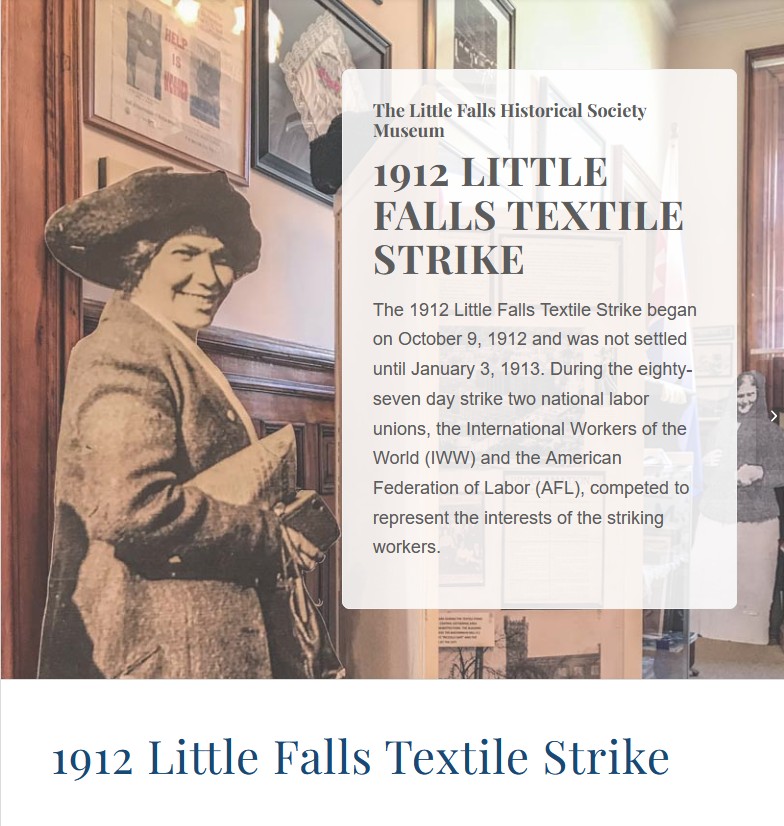
The Little Falls Historical Society Museum
The 1912 Little Falls Textile Strike began on October 9, 1912 and was not settled until January 3, 1913. During the eighty-seven day strike two national labor unions, the International Workers of the World (IWW) and the American Federation of Labor (AFL), competed to represent the interests of the striking workers.
The local and national newspaper media of the day covered the strike-related events in great detail, particularly several confrontations between law enforcement and strikers.
Most of the striking workers were recent immigrants from southern and Eastern European countries who lived on the south side of Little Falls in densely crowded tenement apartment houses. The strike divided the Little Falls community along socioeconomic and ethnic lines.
The pictures on display are photographic images of Little Falls around the time of the strike. The posters include both pictures and quotations of important individuals connected to the strike and other time period appropriate labor movement images.
A small exhibit in Little Falls Museum and an online exhibit profiles this IWW strike; includes 4 maps of the area and the activism

The Lumberjack, Covington Hall
The Lumberjack was founded in January 1913 in the midst of a protracted labor strike by the Brotherhood of Timber Workers (B.T.W.) in Merryville, Louisiana. Published by the Southern District of the National Industrial Union of Forest and Lumber Workers, the weekly paper was edited by Covington Hall (1871-1952), a member of the radical wing of the Socialist Party in New Orleans.
Hall had previously served as assistant editor of Oscar Ameringer’s Labor World, which Ameringer moved from Columbus, Ohio, to New Orleans in 1907. As editor of the Lumberjack, Hall called for the formation of timber workers’ unions in western Louisiana and east Texas and reported at length on the activities of the International Workers of the World (I.W.W.), with which the B.T.W. had affiliated itself at its annual convention in Alexandria, Louisiana, in 1912. In addition to news of local strikes and the labor movement, the paper carried news of timber workers’ strikes elsewhere in the United States together with editorials on general topics such as child labor and the Ku Klux Klan, which Hall commented on from a socialist viewpoint. Also of interest is Hall’s original poetry on labor-related subjects.
In July 1913, timber industry leaders persuaded the Lumberjack’s printer in Alexandria to stop printing the paper. Publication resumed in New Orleans under a new title, the Voice of the People. The Lumberjack’s motto, “An Injury To One Is An Injury To All,” was retained, as was its four-page, three-column format. The focus of reporting initially remained the same; by 1914, however, having grown frustrated with largely unsuccessful efforts to organize southern timber workers, Hall was devoting greater attention to the logging industry in the Pacific Northwest and Montana, as well as to labor disputes associated with the United Fruit Company in Central America and the Caribbean.
Vol. 2, no. 46 was published concurrently, but with completely different contents, in New Orleans and Portland, Oregon. In July 1914, lack of support in the South finally led Hall to transfer publication of the paper in full to Portland, where he served as editor for two months before turning the job over to B. E. Nilsson and returning to New Orleans. The Voice of the People appears to have found no more of an audience in the Northwest than in the South, and its last issue was published on December 3, 1914.
digitized Radical paper edited by Covington Hall of the Socialist Party
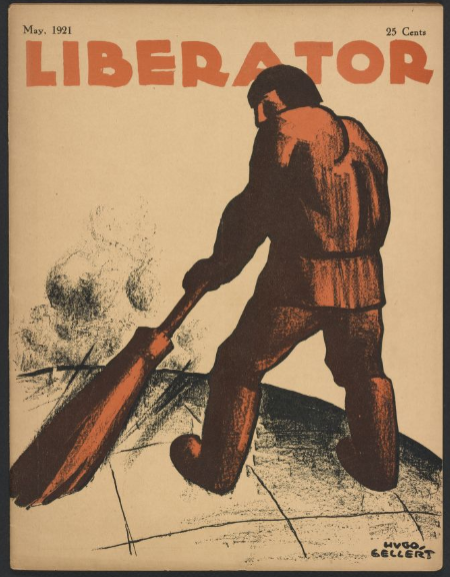
The Masses, New York University
Started in 1918 by Max Eastman and his sister Crystal Eastman to continue the work of The Masses and provide a platform for publishing John Reed's reporting on the Bolshevik Revolution, The Liberator continued the political and labor writing of its predecessor, as well as its emphasis on art, poetry, and fiction.
In fall 1922 the Communist Party took over publication of the magazine, and two years later it merged with other Party periodicals, becoming the Workers' Monthly. This digital edition reproduces the holdings of the Tamiment Library & Robert F. Wagner Labor Archives at New York University. To contact the library, please email special.collections@nyu.edu.
illustrated left-wing magazine

The Mechanics’, Operatives’, and Laborers’ Advocate
The Mechanics’, Operatives’, and Laborers’ Advocate, was published weekly in Norwich, Connecticut, by J. Holcomb in 1836 and 1837. It identified its audience as the producing class and held as its maxim: “united we stand, divided we fall.” An advertisement for a meeting of the Mechanics’, Operatives’, and Laborers’ Association of Norwich suggests that the newspaper served as an organ of this worker group. As such, the Advocate stated that it “will be the medium of advertising only as far as the advertisements concern that portion of the community among whom it is expected to circulate.” For example, want ads were carried for persons who can lecture on “subjects concerned with the welfare and happiness of the inmates of Factories.” Also in demand were “Good workmen with steady habits,” including “an honest and steady boy from 14 to 16 years of age as an apprentice to the Book and Job Printing business,” another young apprentice willing “to learn the Tailoring Business,” and “good families” with carding and spinning room skills.”
In its editorials, the Advocate appealed to both young farmers and young mechanics to educate themselves not only in the skills of their trade but in “the knowledge of man and men,” in order to protect themselves from the “wiles and oppressions of others.” The campaign of the National Trades Union for a ten-hour day at all government works, including naval shipyards, was featured prominently in the paper as news and opinion. Extant issues contained a series on the evils of the factory system in Connecticut and New England. The Advocate also freely reprinted commentary on world affairs from other American and British newspapers with whose views it sympathized.
paper advocating for "producing classes," ten hour day, evils of the facgory system in Connecticut and New England
The Milwaukee County Historical Society
Contains historical information, clippings, programs, dictionaries, interpreters, and other
miscellaneous material relating to Slovak-Americans in Milwaukee and in the United States. Also includes information pertaining to Czechoslovakia.
A two-box collection at the Milwaukee Historical Society relating to the experiences of Slovak-Americans in Milwaukee, the Midwest, and the United States.
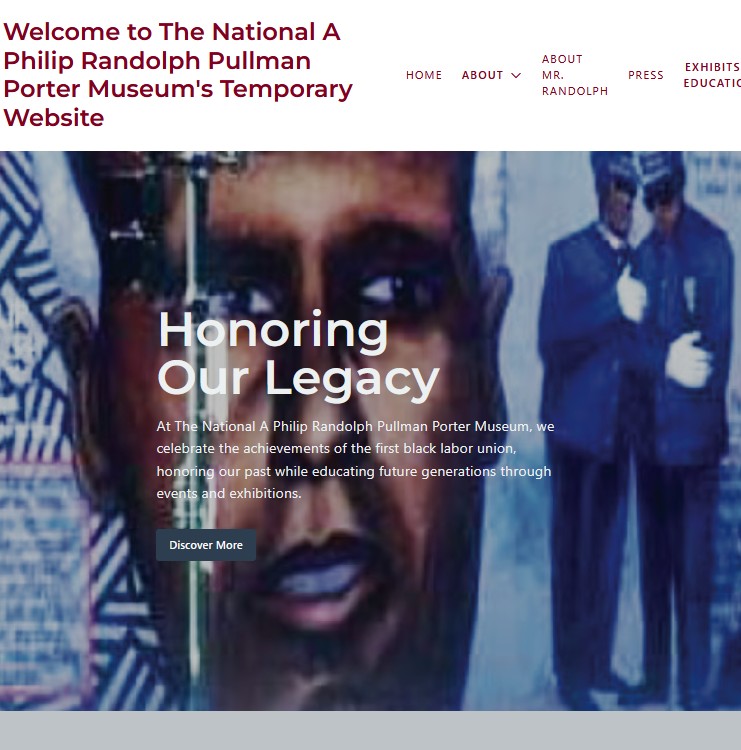
The National A Philip Randolph Pullman Porter Museum
At The National A Philip Randolph Pullman Porter Museum, located at 10406 S Maryland Ave, Chicago, Illinois 60628, our mission is to promote, honor and celebrate the legacy of A. Philip Randolph and the Brotherhood of Sleeping Car Porters (BSCP), creators of the first black labor union to be chartered under the AFL, and the contributions made by African Americans to America's labor movement; with a significant focus on the African American Railroad Employee. As we educate the public about their historic legacy and the contributions they made through the study, preservation, and interpretation of their stories that are inextricably intertwined.
Inspired by that legacy we celebrate significant events such as Black History Month, the Annual Gentle Warrior Awards, Women's History Month in March, Black Music Month in June, and the labor movement from August 25 through Labor Day with back-to-school giveaways and holiday giveaways around Thanksgiving and Christmas. Our goal is to educate the public on these important contributions using cultural events, under the umbrella of cultural economic development (CED) activities.
A museum dedicated to promoting, honoring and celebrating the legacy of A. Philip Randolph and the Brotherhood of Sleeping Car Porters (BSCP), the first Black labor union to be chartered under the AFL
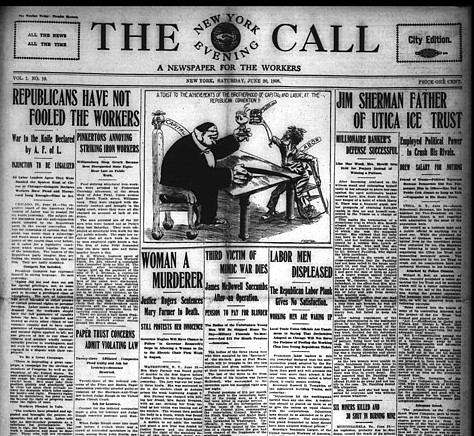
The New York Call
The New York Call was a socialist daily newspaper published in New York City from 1908 through 1923. The Call was the second of three English-language dailies affiliated with the Socialist Party of America, following the Chicago Daily Socialist (1906–1912) and preceding the Milwaukee Leader (1911–1938).
From Marxist.org: In 1899 a bitter factional fight swept the Socialist Labor Party of America (SLP), pitting loyalists to the party’s English-language newspaper, The People, and its intense and autocratic editor, Daniel DeLeon, against a dissident faction organized around the party’s German-language paper, the New Yorker Volkszeitung. In addition to personal antipathy, the two sides differed on the fundamental question of trade union policy, with the DeLeon faction favoring a continuation of the party’s policy of establishing an explicitly socialist union organization and the dissidents seeking to abandon the course of dual unionism so that closer relations to the established unions of the American Federation of Labor could be forged.
A bitter split had ensued, with the dissident wing — pejoratively called “Kangaroos” by the DeLeonist SLP Regulars — attempting to appropriate the name of the organization and its English-language newspaper for themselves. The matter ended up in the courts, with SLP Executive Secretary Henry Kuhn, Daniel DeLeon, and the Regulars victorious in the legal battle. The losers were forced by the court to change their name and the name of their publication so that no electoral or commercial confusion would result from the factional dualism.
On April 28, 1901, the losing side in the litigation, the so-called “Socialist Labor Party” headquartered in Rochester, New York, headed by Henry Slobodin, relaunched their weekly New York City newspaper with a new name — The Worker. Old numbering used previously for their version of The People was carried forward, with the first issued under the new banner designated “Volume 11, Number 4.” The paper was edited by Algernon Lee, assisted by Horace Traubel, Joshua Wanhope, and others.
The New York Call was a socialist daily newspaper published in New York City from 1908 through 1923. The Call was the second of three English-language dailies affiliated with the Socialist Party of America, following the Chicago Daily Socialist (1906–1912) and preceding the Milwaukee Leader (1911–1938).

The Northwest Worker
Successor Paper to the Washington Socialist, this was a left-wing labor paper
Everett Washington labor paper
The Online Archive of California
oral histories, more than 200, from California depositories that are available as digitized. From subjects in 19th and 20th century, with most concentrated in mid-20th century and labor movement
over 200 available on labor subjects
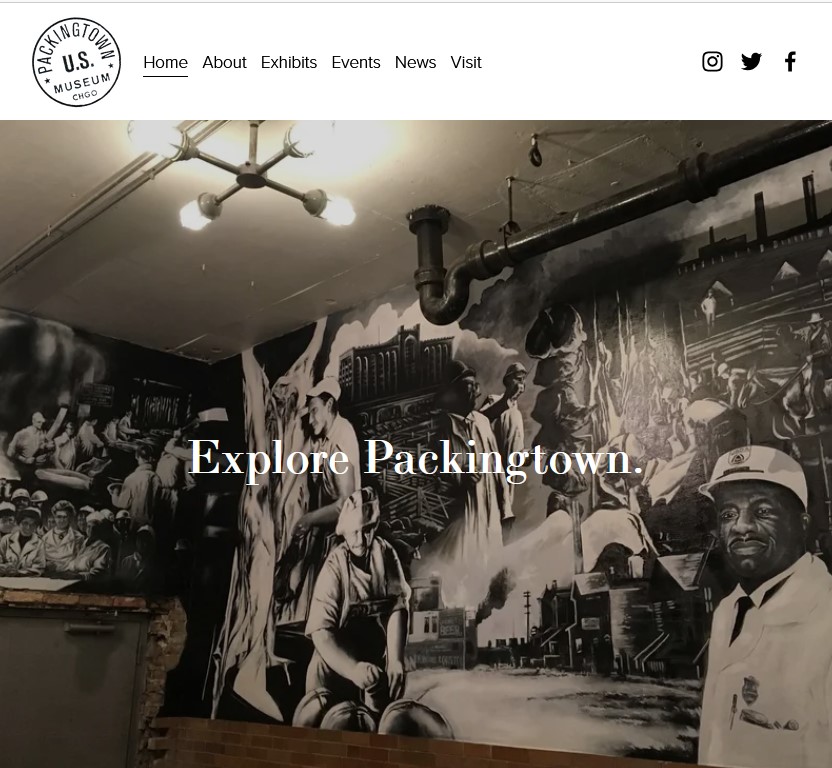
The Packingtown Museum
Located on the second floor of The Plant, in the Back of the Yards neighborhood of Chicago at 1400 W. 46th St.1400 W. 46th Street, Chicago, Illinois, 60609. Hours listed at the links.
"The mission of the Packingtown Museum is to preserve, interpret and present the industrial history and cultural heritage of Chicago's Union Stock Yard and surrounding neighborhoods."
See especially Online exhibits on Immigration and Diversity, Industrial and Economic History, and the Food System Labor History Development of the Union Stock Yard + the Central Manufacturing District https://www.packingtownmuseum.org/exhibits Includes: Jesse Vaughn, an African American Worker and Organizer; Polish Family Stories; A Lituanian Jewish Spotlight; Irish Immigrant Stories;
A New Museum that profiles the people and experiences of working in the great meatpacking processing plants of Chicago

The Pennsylvania Gazette, History Matters
In the American South, slaves were typically dispersed among large populations of armed and vigilant whites. As a result, American slave rebellions failed to achieve their goals. This was not the case in the West Indies, where plantation owners remained at home in Europe and left overseers in charge of large populations of slaves. In 1791, a revolution began on the island of St. Domingo (Hispaniola, the home of Haiti and the Dominican Republic). In 1804, after years of fighting, the Republic of Haiti, a black republic composed of former slaves, freed itself from France. News of the Haitian revolution was an inspiration for American slaves but a source of severe anxiety for their masters. The arrival of Haitian refugees—black, white, and mulatto—in American port cities, including Charleston, increased masters’ fear that the black revolution would spread to the United States. Slaveowners cracked down, jumpily interpreting every transgression as an uprising in the making.
1797 extracts from a Charleston letter, the Charleston State Gazette newspaper, and the Pennsylvania Gazette that each show the fears of white slaveowners that the recent Haitian Revolution and the arrival of refugees would bring similar instability to their own slave societies.

The Portland Rising Steering Committee
Portland has a rich labor history that deserves to be better known. This Portland Labor History Tour puts you in touch with some of that history; helping you discover significant sites, and learn some of our city’s important stories of working-class activism.
Working people in Portland have fought for living wages, sustainable work hours, safe working conditions, and public policies for the common good. Occasionally Portland workers have been at the forefront of national struggles. More frequently, they’ve acted on local or regional fronts, often supported by the wider community. And, more often than not, they’ve faced fierce resistance from employers and local authorities.
Today’s world of work reflects those struggles — sometimes successful, sometimes not. Knowing this history, and linking it to the streets we travel and the buildings we pass, brings the city to life in a new way. That’s not all. Knowing the history around us can inspire us to keep working for change even when signs of progress are hard to see. Learning about the choices people made in the past, and the strategies they pursued, can help us better confront the challenges of the present.
There are many lessons to be learned, and more tour sites to add (so check back often). We hope this Portland Labor History Tour inspires you to see labor’s story in the everyday world around you, and motivates you to learn more.
More than a dozen sites with brief narratives located on a google map
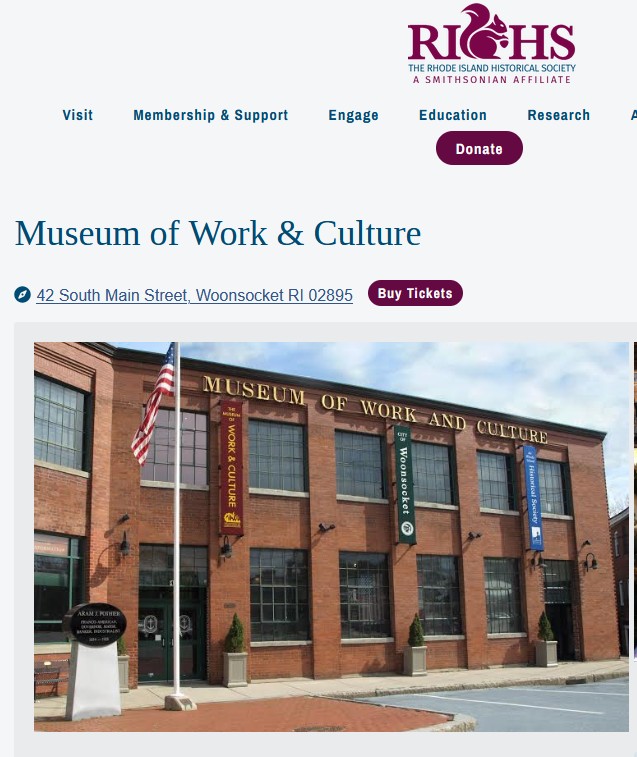
The Rhode Island Historical Society
The Museum of Work & Culture presents the compelling story of immigrants who came to find a better life in the mill towns along the Blackstone River. Visitors recreate this journey, beginning in a Quebecois farmhouse before making their way to the workday world of Woonsocket at the turn of the century. Guests explore the lives of immigrants at home, work, and school through nine immersive exhibits.
a beautifully restored mill in historic Market Square Woonsocket, regional history museum devoted to the history of northern Rhode Island.
The Saint Paul Historical Team
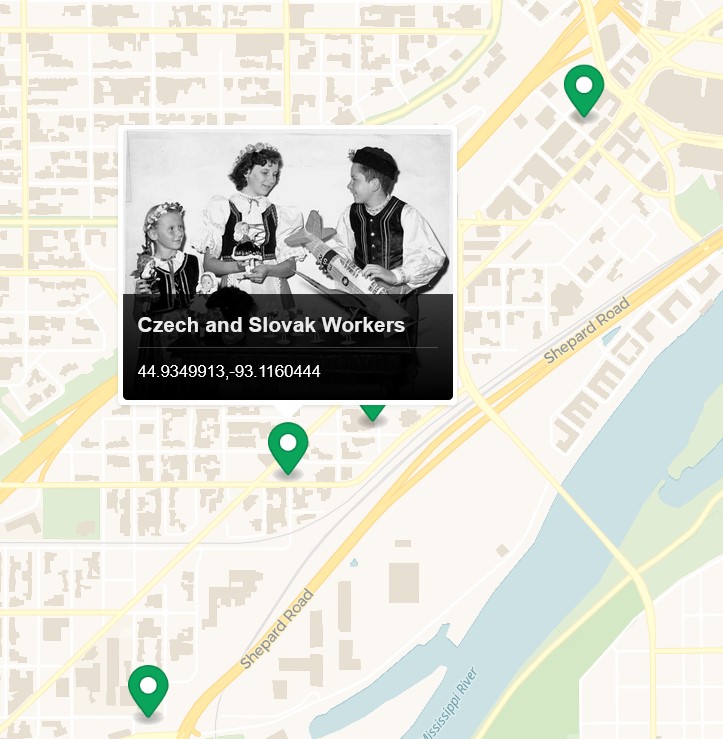
St Paul’s “West End” is on an intermediate plateau, located between the bluffs rising on the north side of the neighborhood and the bluffs on the south side that descend to the Mississippi. The original mix of immigrants populating the West End contained Germans, Czechs, Poles and Italians, many retaining their own languages and customs for generations, such as the Czech and Slovak Protective Society, still going strong after 125 years. More transitory settlements, such as St Paul’s “Bohemian Flats,” the Italian “Upper Landing” and the shanty town on the river banks near the Omaha shops have been removed decades ago for riverfront development.
Tour a working class neighborhood with a better understanding of immigrants and their industrial and post-industrial experiences

The Socialist and Labor Star
Begun in 1912, the Socialist and Labor Star (later just Labor Star) was published in Huntington, West Virginia as “the official organ of the Socialist Party and of the Huntington Trades & Labor Assembly” and edited by Wyatt Thompson, West Virginian and former coal miner then printer’s apprentice. Labor issues, including the UMWA strike in Paint and Cabin Creeks, as well as US , religion, and local political affair were features of the paper. It was often at odds with both the leadership of the Socialist party and of the UMWA. In the beginning of 1915, the Socialist and Labor Star merged with the Charleston Labor Argus to form the Argus Star, Thompson continued to serve as editor of the Argus Star. --Revolution Newstand
West Virginia socialist and labor paper

The Steelworkers’ Archives
The Steelworkers’ Archives was founded in 2001 with one goal: to make sure the voices of Bethlehem’s steelworkers are never forgotten.
As the Bethlehem Steel mills shut down, a group of community members, educators, and local institutions came together with a powerful idea—to document and preserve the personal stories of the men and women who built America’s industrial backbone. These stories didn’t belong in history books—they belonged to the families, friends, and future generations who would one day ask: “What was it like to work at the Steel?”
The project was launched in partnership with the Bethlehem Area Public Library, Moravian College, and Lehigh University. Local union leadership and steelworker retirees helped shape the direction of the Archives. In the early days, interviews took place at churches, senior centers, and community halls—anywhere steelworkers gathered to share memories.
What began as a small oral history project quickly grew into something much larger. Today, the Archives continues to collect interviews, photos, and memorabilia to ensure this rich history remains accessible and alive.
Document Oral Histories — Preserve the voices of steelworkers through recorded interviews and storytelling.
Educate the Public — Offer programs, tours, and exhibits that share the legacy of Bethlehem Steel.
Strengthen Community — Create space for connection between generations and across cultures.
The Steelworkers’ Archives was founded in 2001 with one goal: to make sure the voices of Bethlehem’s steelworkers are never forgotten.

The Steelworkers’ Archives
The Steeples and Steel mini-bus tours explore the history of immigration to South Bethlehem, work at the South Bethlehem mill, and the churches that connect life in the community to working life. These two-hour tours, followed by an Eastern European goulash lunch, are led by South Bethlehem Historical Society guides and ex-steelworkers from the Steelworkers’ Archives and are held once a month July through November.
The Steeples and Steel mini-bus tours explore the history of immigration to South Bethlehem, work at the South Bethlehem mill, and the churches that connect life in the community to working life.
The Syndicalist, Marxists.org
The Syndicalist was the expression of pre-WWI revolutionary syndicalism in the U.S. Organized by Earl Ford, J.W. Johnstone, William Z. Foster, they formed various syndicalist organizations inspired by the revolutionary syndicalism of the French CGT.
Failing to win over the IWW to this brand of unionism, his followers set up the Syndicalist Militant Minority League in Chicago. Soon afterwards renaming the paper The Syndicalist as the organ of the Syndicalist League of North America.
Unlike the IWW which attempted to compete with the AFL head on, the SLNA attempted to “Bore from within” the AFL.
digitized radical labor newspaper

The Toiler
The Toiler, published in Cleveland, Ohio, the seat of Cuyahoga County, was the “Official Organ of the Communist Labor Party of Ohio.” Printed in 1919 as a weekly, the Toiler was the successor to the popular Lakewood newspaper the Ohio Socialist and was established after the Socialist Party of Ohio joined the Communist Labor Party (CLP). When the CLP decided to go “underground” after the Palmer Raids of January 1920, the Toiler became the “aboveground” voice of the party, containing news reports, editorials and other items that supported the viewpoint of the Communist Party. Elmer T. Allison, one of the founding members of the CLP, served as the paper’s first editor until 1920 when James P. Cannon, a future leader of the Socialist Workers Party, took over. In 1921, the Toiler moved from Cleveland to New York City, along with the party headquarters, to reach a wider audience.
As Communist Party membership grew, theToiler continued to gain popularity. In 1922, the Communist Labor Party merged with the new Workers Party of America and combined their two New York City newspapers, the Toiler and the biweekly Workers’ Council, to form the Worker, which was published in New York and Chicago. Even though these two papers had merged into a “new” publication, the Worker had the same feel as the Toiler, retaining the latter’s numbering string and layout.
In 1924, the Worker became the Daily Worker. Adhering to Stalinist politics, the paper was published in Chicago until January 1927, when it moved back to New York City. In the 1930s, in an effort to broaden the paper’s highly political coverage, the Worker began to cover arts and entertainment and even established a sports page. Following World War II, membership in the American Communist Party fell dramatically, and many places refused to carry the paper due to the intense anticommunist sentiment. Struggling financially and under heavy watch from the government, the party ceased publication of a daily paper in 1958. The Daily Worker was absorbed by the Worker, which was published as a weekend paper from 1958 to 1968.
The Communist Party resumed a more frequent publication in 1968 with the Daily World in New York. This publication merged with San Francisco’s People’s World in 1986 to form the People’s Daily World. This New York paper became the People’s Weekly World in 1990. Though print publication ceased in 2010, the People’s Weekly World appears in digital form and remains the official paper of the Communist Party in the United States.
digitized Cleveland Ohio Communist Labor Party paper, weekly, successor to Ohio Socialist
The Toiler
The Toiler was a privately owned tabloid newspaper published every Friday in Terre Haute, Indiana — home town of socialist leader Eugene V. Debs. The paper was one of two English-language weekly closely associated with the Social Democratic Party with headquarters in Chicago, the other being the official organ of the party, the Social Democratic Herald. It is believed to have been first launched early in the spring of 1899.
digitized radical labor newspaper
The United Mine Workers of America
The United Mine Workers of America is a diverse union with a membership that includes coal miners, manufacturing workers, clean coal technicians, health care workers, corrections officers, and public employees throughout the United States and Canada.
The UMWA is achieving significant success in providing workers with a voice on the job and financial security at home.
Because of the union’s long-term emphasis on safety, UMWA members work in the safest environments in their respective industries.
The UMWA continues the fight we began in 1890 for safe workplaces, good wages and benefits, and strong representation for working families throughout North America.
The main website for the United Mineworkers of America (UMWA), a historically significant union founded in 1890 that continues to work toward improved labor conditions for North American working families.

The Washington Socialist
The Commonwealth, an Everett, Washington, Socialist weekly, found itself deep in debt after only three years of publication. Business manager Katherine Hodgins was able to make the paper economically viable enough to pay its current bills and retire some of its debt after she took over leadership in January 1914, but debt collectors confiscated the Commonwealth's assets at the end of March. Encouraged by Hodgins' ultimately unsuccessful efforts, the Socialists of Snohomish County decided to launch a new paper, the Washington Socialist. This paper lasted until June 1915, when it was renamed the Northwest Worker. Frequent name changes reflected continued financial pressures and the attempt to broaden the geographic reach of the paper, thereby increasing subscription income. Maynard Shipley served as editor until April 1916 when Henry W. Watts took over his duties. To reflect the new interest in cooperatives, the paper changed its name to Co-operative News in October 1917. The leadership, ownership, and content of the papers were generally consistent from title to title. They served as promotional and educational instruments for the Socialist Party, reporting on national, state and local party events and issues. Peter Husby, an attorney who had previously contributed the "Free Legal Advice" column, was the last person to serve as editor.
Important events covered by these papers include wars in Mexico and Europe, labor strife in the West, and elections. In August 1914 a Socialist (James M. Salter) was elected Commissioner of Public Works, the highest office ever held by a Socialist in Everett. The “Everett Massacre,” an armed confrontation between local authorities and members of the Industrial Workers of the World, took place on November 5, 1916, and was covered in the Northwest Worker. Notably absent from the paper were reports of internal strife within the Socialist Party, which editor Shipley felt would divide the radical community.
The Co-operative News was published until at least June 1918. The last surviving issues are filled with predictions of newspaper’s impending doom based on the government’s suppression of Socialist and radical publications taking place throughout the nation under the authority of the federal Espionage Act of 1917, as amended in April 1918.
Alaska socialist paper
The Weekly Pelican, HIstory Matters
Describes one account of the massacre of sugarcane workers who had joined the Knights of Labor. The Weekly Pelican was an African American newspaper published in New Orleans from 1886 to 1889 that proclaimed itself as “A Republican Journal Abreast of the Times.” The paper covered labor organizing in New Orleans and the 1887 sugarcane workers’ strike.
a primary source describing the massacre against Knights of Labor members in Louisiana, 1887
The Workers Arts and Heritage Centre
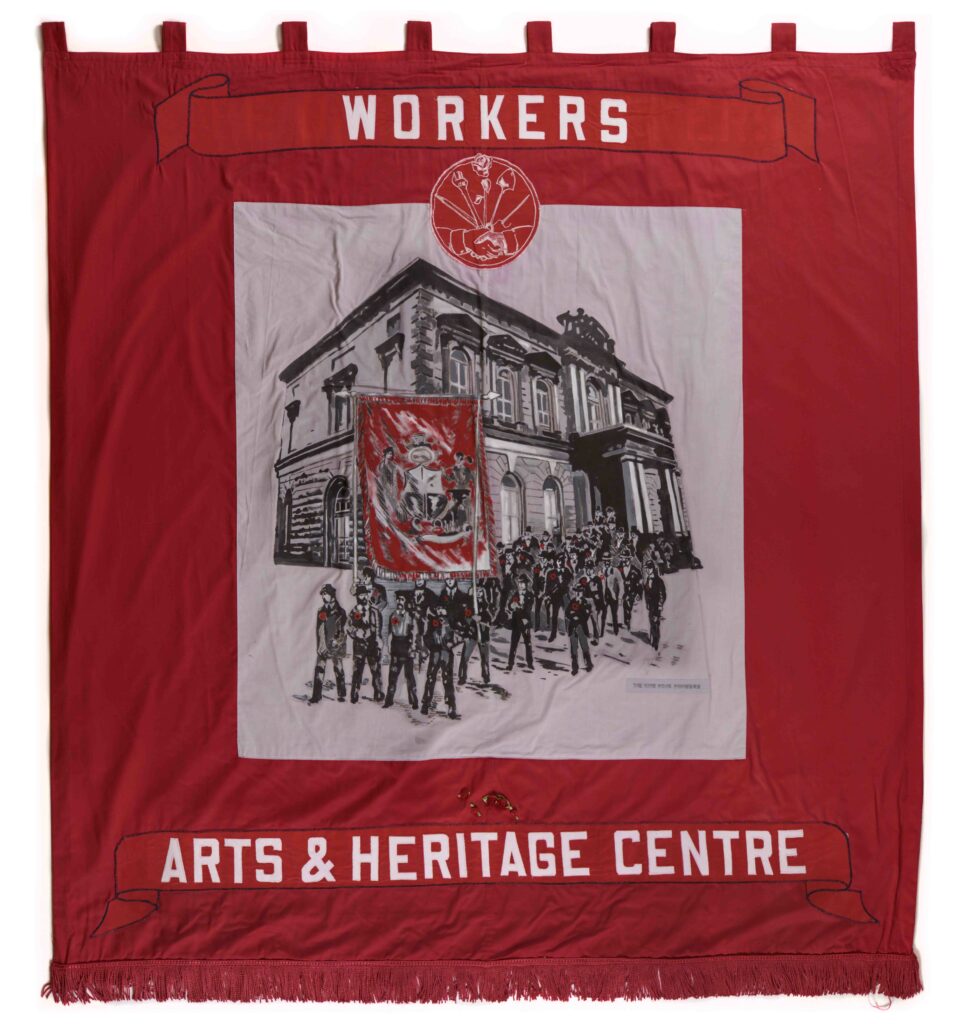
Labour union banners demonstrate collective strength. Carried in parades, brandished at protests, and hung in union halls, they convey messages of common purpose, pride, unity, and the dignity of work. This exhibit of 25 union banners in high resolution shows the banners and presents the stories behind them in an effective exhibit.
The earliest labour banners were used to identify groups of workers who did the same job. Recurring images such as shaking hands symbolizing unity and solidarity have appeared on banners across time, and around the world. More recently, banners have demonstrated solidarity with broader social justice issues and struggles, including those of fellow workers.
The virtual digital exhibition All Together Now! aims to share the importance of labour union banners to the material culture of the labour movement over time. The beauty and utility of the banners highlighted here allowed workers to represent their union while fostering collective pride and purpose.
The Workers Arts and Heritage Centre is a community museum and arts centre, which offers exhibitions, educational programs, digital projects, and community events that explore perspectives in labour history, social justice, and contemporary labour issues. WAHC also has a permanent collection of thousands of artifacts, which relate to labour history and workers’ experiences.
WAHC’s collection includes 25 labour union banners and flags from the early 20th century to the turn of the 21st century. A large proportion of these banners represent garment and textile workers in Ontario and Quebec. They were donated to WAHC in 2003 by the UNITE (formerly the Union of Needletrades, Industrial and Textile Employees) Ontario Council.
All Together Now! expands on the exhibition of the same name, mounted in 2019 at WAHC. This virtual exhibition was developed between 2022 and 2023 with generous support from the Museums Assistance Program of Canadian Heritage.
All together now! Discover Canada’s labour arts and heritage by exploring 25 union & labor banners, and the inspiring stories of working people, collected into this online exhibition.
The Workers Museum, Elise Thing
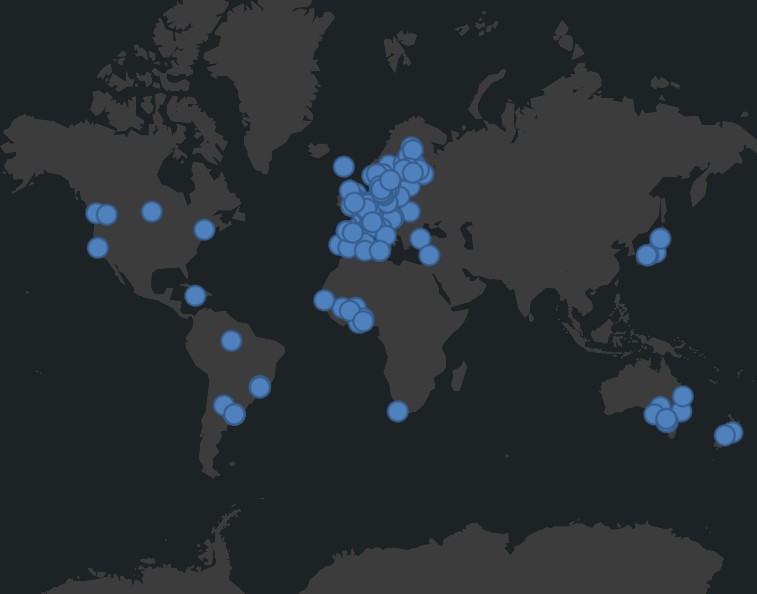
This map has been developed as part of a research project to locate and document buildings of the labour movement worldwide. It is designed to create an overview of where these gathering spaces used by the working-class are located and were located around the world. The map provides accurate or approximate location depending on what information is available, as well as photos and descriptions. Some buildings have been demolished and others still stand. There are also some where the current state is unknown. Built to be a living storymap, we will continuously add buildings and correct information as we learn more. Feel free to engage and share knowledge with us . See contact information below.
map showing workers’ assembly halls and workers’ gathering spaces from around the world
Welcome to this story map where you can explore workers' assembly spaces around the world
Museum/Exhibits
Tours
Maps
Digital Projects
Organizations
Sites
Film/Video
Audio/Interview
Podcast/Program
Text/Document
Image
Graphs/Data
Timeline
Southwest
West
Midwest
Southeast
Northeast
Mexico
Canada
Global
Books
Teaching
Lectures
Digital Archives
Journals
Bibliographies
Topic Intro