


Explore thousands of items. Use clickable links under collections and library for broad categories. Search by keyword (including topic,city, state.) Limit by time period, type of item, region. See our search tips page for more assistance.
Collections
Library
Type
Region
Coverage:
-
Published:
-

The Workingman's Advocate
"Historians consider the Workingman’s Advocate to be one of the most important labor newspapers of the 1860s and 1870s, both in terms of its influence on the labor movement, and also as a source of information on that movement....The Workingman’s Advocate was established in the fall of 1864 by members of the Chicago Typographical Union. At the time, the union was striking against the Chicago Times, and the union felt the strike was receiving unfair coverage in the local press. Even newspapers traditionally hostile to the Times, like the Chicago Tribune, opposed the strike, because a strike at any newspaper might foment discontent among workers at all newspapers. The union responded by publishing its own newspaper, a move the Typographical Union was uniquely positioned to make since it drew its membership from the very trades that specialized in printing newspapers. The earliest issues of the Workingman’s Advocate therefore reported most heavily on the union’s conflict with the Times."
Chicago labor paper

ThePlayer
This actors union newspaper was published weekly from 1907-1913. Official Organ of the White Rats of America
Actors union newspaper from the early 20th century

Theodore Kornweibel
Indiana University Press (1998)
From 1918 into the early Twenties, any African Americans who spoke out for their race - editors, union organizers, civil rights advocates, radical political activists, and Pan-Africanists - were likely to be investigated by a network of federal intelligence agencies. This book presents an account in the history of American political intelligence.
presents an account in the history of American political surveilance of African American publications.

Theresa A. Case
Texas A&M University Press (2010)
Focusing on a story largely untold until now, Theresa A. Case studies the "Great Southwest Strike of 1886," which pitted entrepreneurial freedom against the freedom of employees to have a collective voice in their workplace. This series of local actions involved a historic labor agreement followed by the most massive sympathy strike the nation had ever seen. It attracted western railroaders across lines of race and skill, contributed to the rise and decline of the first mass industrial union in U.S. history (the Knights of Labor), and brought new levels of federal intervention in railway strikes.
Case takes a fresh look at the labor unrest that shook Jay Gould's railroad empire in Texas, Arkansas, Missouri, Kansas, and Illinois. In Texas towns and cities like Marshall, Dallas, Fort Worth, Palestine, Texarkana, Denison, and Sherman, union recognition was the crucial issue of the day. Case also powerfully portrays the human facets of this strike, reconstructing the story of Martin Irons, a Scottish immigrant who came to adopt the union cause as his own.
Irons committed himself wholly to the failed strike of 1886,nbsp;continuing to urge violence even as courts handed down injunctions protecting the railroads, national union leaders publicly chastised him, the press demonized him, and former strikers began returning to work. Irons individual saga is set against the backdrop of social, political, and economic changes that transformed the region in the post Civil War era. -Description from the publisher
Case takes a fresh look at the labor unrest that shook Jay Gould's railroad empire in Texas, Arkansas, Missouri, Kansas, and Illinois.

Thomas A. Castillo
University of Illinois Press (2022)
In the early twentieth century, Miami cultivated an image of itself as a destination for leisure and sunshine free from labor strife. Thomas A. Castillo unpacks this idea of class harmony and the language that articulated its presence by delving into the conflicts, repression, and progressive grassroots politics of the time. Castillo pays particular attention to how class and race relations reflected and reinforced the nature of power in Miami. Class harmony argued against the existence of labor conflict, but in reality obscured how workers struggled within the city's service-oriented seasonal economy. Castillo shows how and why such an ideal thrived in Miami's atmosphere of growth and boosterism and amidst the political economy of tourism. His analysis also presents class harmony as a theoretical framework that broadens our definitions of class conflict and class consciousness"-- Provided by publisher
Miami cultivated the image as a place for leisure and sunshine free from labor strife, but in reality obscured how workers struggled within Miami's service-oriented seasonal economy.

Thomas Alter
Urbana: University of Illinois Press (2022)
The farmer-labor bloc from 1860-1930. Agrarian radicalism's challenge to capitalism played a central role in working-class ideology while making third parties and protest movements a potent force in politics.
Thomas Alter II follows three generations of German immigrants in Texas to examine the evolution of agrarian radicalism and the American and transnational ideas that influenced it. Otto Meitzen left Prussia for Texas in the wake of the failed 1848 Revolution. His son and grandson took part in decades-long activism with organizations from the Greenback Labor Party and the Grange to the Populist movement and Texas Socialist Party.
As Alter tells their stories, he analyzes the southern wing of the era's farmer-labor bloc and the parallel history of African American political struggle in Texas. Alliances with Mexican revolutionaries, Irish militants, and others shaped an international legacy of working-class radicalism that moved U.S. politics to the left. That legacy, in turn, pushed forward economic reform during the Progressive and New Deal eras. A rare look at the German roots of radicalism in Texas,
Toward a Cooperative Commonwealth illuminates the labor movements and populist ideas that changed the nation's course at a pivotal time in its history"-- Provided by publisher
A rare look at the German roots of radicalism in Texas, Toward a Cooperative Commonwealth illuminates the labor movements and populist ideas that changed the nation's course at a pivotal time in its history

Thomas Bias, Paul Le Blanc, Bryan D. Palmer
Haymarket Books (2019)
U.S. Trotskyism 1928-1965 Part I: Emergence is the first of a documentary trilogy on a revolutionary socialist split-off from the U.S. Communist Party, reflecting Leon Trotsky's confrontation with Stalinism in the global communist movement.
Spanning 1928 to 1940, this volume surveys important U.S. labor struggles in the 1930s, early efforts to comprehend the so-called "Negro Question," and substantial contributions to the study of history and the development of Marxist theory. Also covered are confrontations and convergences with other currents on the left, internal debates and splits among Trotskyists themselves, and US government attempts to suppress their activities.
Scholars and activists will find much of interest in these primary sources. U.S. Trotskyism 1928-1965 Part II:
Endurance is the second volume in a documentary trilogy on a revolutionary socialist split-off from the U.S. Communist Party, reflecting Leon Trotsky's confrontation with Stalinism in the global communist movement. Spanning 1941 to 1956, this volume surveys the Second World War (internationally and on the "homefront"), the momentous post-war strike wave, ongoing efforts to comprehend and struggle against racism, as well as the early years of the Cold War and anti-communist repression in the United States. Also covered are internal debates and splits among Trotskyists themselves, including a far-reaching split in the international Trotskyist movement (the Fourth International) in the face of a persistent and expanding Stalinism. Scholars and activists will find much of interest in these primary sources.
U.S. Trotskyism 1928-1965 Part III:
Resurgence is the third volume in a documentary trilogy on a revolutionary socialist split-off from the U.S. Communist Party, reflecting Leon Trotsky's confrontation with Stalinism in the global communist movement. Spanning 1954 to 1965, this volume surveys the Cold War era, the civil rights and Black liberation movements, the "third wave" of feminism, and other social and cultural developments of the 1950s and 1960s. Documenting responses to a variety of anti-colonial and revolutionary insurgencies, the content of this volume is also shaped by the crisis and decline of Stalinism. Attention is given to internal debates and splits, but also to the partial reunification of the international Trotskyist movement (the Fourth International), as well as substantial contributions to the study of history and the development of Marxist theory. Scholars and activists will find much of interest in these primary sources.
A multivolume history of Trotskyism contrasted with Stalinist communist politics in the United States.

Thomas C. Hubka
University of Minnesota Press (2020)
The transformation of average Americans’ domestic lives, revealed through the mechanical innovations and physical improvements of their homes
At the turn of the nineteenth century, the average American family still lived by kerosene light, ate in the kitchen, and used an outhouse. By 1940, electric lights, dining rooms, and bathrooms were the norm as the traditional working-class home was fast becoming modern—a fact largely missing from the story of domestic innovation and improvement in twentieth-century America, where such benefits seem to count primarily among the upper classes and the post–World War II denizens of suburbia. Examining the physical evidence of America’s working-class houses, Thomas C. Hubka revises our understanding of how widespread domestic improvement transformed the lives of Americans in the modern era. His work, focused on the broad central portion of the housing population, recalibrates longstanding ideas about the nature and development of the “middle class” and its new measure of improvement, “standards of living.”
TOC:
Headwinds to researching common houses : eleven prevailing themes
Two worlds apart : domestic conditions at the turn of the twentieth century
Modern houses for a new middle class : new standards of living
The dwellings of modern domestic reform : cottages, duplexes, multi-units, and remodeled houses
Domestic life transformed : how the working class became middle-class in housing
Epilogue : response to working-class improvement
The transformation of average Americans’ domestic lives, revealed through the mechanical innovations and physical improvements of their homes

Thomas C. Leonard
Princeton University Press. (2016)
In Illiberal Reformers, Thomas Leonard reexamines the economic progressives whose ideas and reform agenda underwrote the Progressive Era dismantling of laissez-faire and the creation of the regulatory welfare state, which, they believed, would humanize and rationalize industrial capitalism. But not for all. Academic social scientists such as Richard T. Ely, John R. Commons, and Edward A. Ross, together with their reform allies in social work, charity, journalism, and law, played a pivotal role in establishing minimum-wage and maximum-hours laws, workmen's compensation, progressive income taxes, antitrust regulation, and other hallmarks of the regulatory welfare state. But even as they offered uplift to some, economic progressives advocated exclusion for others, and did both in the name of progress. Leonard meticulously reconstructs the influence of Darwinism, racial science, and eugenics on scholars and activists of the late nineteenth and early twentieth centuries, revealing a reform community deeply ambivalent about America's poor. Economic progressives championed labor legislation because it would lift up the deserving poor while excluding immigrants, African Americans, women, and 'mental defectives, ' whom they vilified as low-wage threats to the American workingman and to Anglo-Saxon race integrity. Economic progressives rejected property and contract rights as illegitimate barriers to needed reforms. But their disregard for civil liberties extended much further. Illiberal Reformers shows that the intellectual champions of the regulatory welfare state proposed using it not to help those they portrayed as hereditary inferiors, but to exclude them. -- Provided by publisher
social scientists such as Richard T. Ely, John R. Commons, and Edward A. Ross critically examined

Thomas Dublin
Cornell University Press (1994)
From diaries, letters, account books, and censuses, Dublin reconstructs employment patterns across the century as he shows how wage work increasingly came to serve the needs of families, rather than of individual women.
He first examines the case of rural women engaged in the cottage industries of weaving and palm-leaf hatmaking between 1820 and 1850. Next, he compares the employment experiences of women in the textile mills of Lowell and the shoe factories of Lynn. Following a discussion of Boston workingwomen in the middle decades of the century - particularly domestic servants and garment workers - Dublin turns his attention to the lives of women teachers in three New Hampshire towns
reconstructs employment patterns across the century as it shows how wage work increasingly came to serve the needs of families, rather than of individual women.

Thomas Ferguson
Hill and Wang (1986)
A critical assessment of the 1984 election analyzes the decay of the Democratic party and the rise of a business-oriented political coalition in the GOP
Revisionist democrats, the myth of the American public's turn to the right
Life of the party, from the New Deal to Nixon
Right turn, the dismal 1970s
Reaganism
Democrats' response, 1981-82
Campaign
Aftermath, the legacy of 1984
analyzes the decay of the Democratic party and the rise of a business-oriented political coalition in the GOP.

Thomas G. Andrews
Harvard University Press (2010)
"Killing for Coal offers a bold and original perspective on the Ludlow Massacre and the Great Coalfield War. In a sweeping story that begins in the coal beds and culminates with the deadliest strike in American history, Thomas Andrews examines the causes and consequences of the militancy that erupted in colliers' strikes over the course of nearly half a century."--Back cover
A history of the origins of the 1914 Colorado Coalfield War spanning from the founding of the Colorado Fuel and Iron Co. to the aftermath of the eventual gunfight

Thomas J. Adams, Steve Striffler
Univ of Louisiana Press (2014)
Working in the Big Easy not only provides rich accounts of discrete cases in the city's labor history; it is also a significant call for further research as well as a substantive argument that study of New Orleans offers distinctive potential for integrating the fields of urban, labor, political, and ethnic history. Contributors include Eric Arnesen who updates his work on Waterfront Workers, but here we have service workers, streetcar workers, restaurant workers, Voodoo economics, gas utility workers.
--The Peculiar Waterfront: the Crescent City and the Rewriting of the History of Race and Labor in the United States / Eric Arnesen
--La Nouvelle Orleans: Rebuilding a Nascent City from the 1719 Flood to the 1794 Fire / Celine Ugolini
--Mobility is Built in the Market: Black Women and Markets in New Orleans Before 1820 / Demetri Debe--
--Interracial Unionism Meets the Open Shop Drive: African American Membership in the Carmen's Union, 1918-1926 / Michael Mizell-Nelson
--"Brother, I guess this is a world of money": Centrality of Economics and Employment to New Orleans Voodoo during the Great Depression / Kodi Roberts
--"Cream with Our Coffee": Preservation Hall, Organized Labor, and New Orleans's Musical Color Line, 1957-1969 / Elizabeth Manley
--"Just Like Ole' Mammy Used to Make": the History of the New Orleans Praline Woman / Chanda M. Nunez
--Sex, Drugs, and Violence, Just Another Night on Bourbon Street in Joe Longo's "S.I.N.ners" / Nancy Dixon
--Organizing and Rebuilding a Nuevo New Orleans: Day Labor Organizing in the Big Easy / Lorena Murga Aurelia
--Ascriptive Segmentation Between Good and Bad Jobs: New Orleans Restaurants and Construction Workers / Aaron Schneider, Saru Jayaraman
An anthology of essays on the history of labor in New Orleans; Raises several new historiographical issues in the fields of New Orleans and Labor history.

Thomas J. Gorman
Palgrave Macmillan (2017)
Focuses on Brooklyn-Queens New York City, an answer to Richard Sennett's the Hidden Injuries of Class, a classic work.
This ethnography "examines how social class (and other social institutions and structures) affect how people grow up. Primarily, the book investigates how American children and young adults are impacted by the "hidden injuries" of class, and offers a rich description of how these injuries manifest and curdle later in life. Gorman provides sociological explanations for the phenomenon of the so-called "angry white man," and engages with this phenomenon as it relates to the rise of recent populist political figures such as Donald J. Trump. He also examines how and why white working class people tend to lash out at the wrong social forces and support political action that works against their own interests. Finally, the book demonstrates the connections between working-class attitudes toward schooling, sports, politics, and economics
how social class (and other social institutions and structures) affect how people grow up

Thomas J. Sugrue
Princeton University Press (1996)
In this provocative revision of postwar American history, Sugrue finds cities already fiercely divided by race and devastated by the exodus of industries. He focuses on urban neighborhoods, where white working-class homeowners mobilized to prevent integration as blacks tried to move out of the crumbling and overcrowded inner city. Weaving together the history of workplaces, unions, civil rights groups, political organizations, and real estate agencies, Sugrue finds the roots of today's urban poverty in a hidden history of racial violence, discrimination, and deindustrialization that reshaped the American urban landscape after World War II. [publisher]
finds the roots of today's urban poverty in a hidden history of racial violence, discrimination, and deindustrialization that reshaped the American urban landscape after World War II.

Thomas J. Suhrbur
University of Illinois Press (2025)
Founded in 1853, the Illinois Education Association (IEA) and its predecessors have played a vital role in shaping the Illinois public school system. Thomas J. Suhrbur’s history covers the lifespan of the IEA within the larger story of state public education as a battleground for contentious social and economic issues.
Suhrbur pays particular attention to the impact of race, gender, religion, and tax policy on the IEA and public schools. He also examines the IEA’s evolution from a professional organization controlled by administrations and officials through its radical transformation into a teacher-led independent labor union. As a workers’ organization, the IEA successfully fought for collective bargaining and organized K–12 and higher education while continually standing against right-wing efforts to privatize education and undermine public schools with vouchers, for-profit institutions, and tax credits.
Multifaceted and up to date, Public Education and Social Reform tells the story of the organization and figures dedicated to sustaining and advancing Illinois public education.
IEA’s evolution from a professional organization controlled by administrations and officials through its radical transformation into a teacher-led independent labor union.

Thomas L. Monniger
Kansas State Teachers' College (1946)
A short biographical sketch of this leader of the Kansas miners is used as a background for the study of the situation that developed after the enactment of the Kansas Industrial Court Law; Master's Essay overseen by Kansas State Teacher's College
A master's essay containing a biographical sketch of Kansas UMWA leader Alexander Howat

Thomas Mackaman
McFarland (2016)
Millions of immigrants from eastern and southern Europe were by 1914 doing the dirtiest, most dangerous jobs in America’s mines, mills and factories. The next decade saw major economic and demographic changes and the growing influence of radicalism over immigrant populations. From the bottom rungs of the industrial hierarchy, immigrants pushed forward the greatest wave of strikes in U.S. labor history—lasting from 1916 until 1922—while nurturing new forms of labor radicalism. In response, government and industry, supported by deputized nationalist organizations, launched a campaign of “100 percent Americanism.” Together they developed new labor and immigration policies that led to the 1924 National Origins Act, which brought to an end mass European immigration. American industrial society would be forever changed.
-- Preface 1
Abbreviations 3
Introduction: “Got a match?” 5
1. “Our lives, our thoughts and our allegiance”: New Immigrants in 1914 23
2. “A war of coal and iron”: 1914–1917 59
3. Securing “the industrial forts of America”: 1917–1918 87
4. “The Revolt of the Rank and File”: 1919 115
5. Reaction in New Country and Old: 1920–1924 142
Epilogue: The Nation-State, Immigration Restriction and Fordism 169
Chapter Notes 175
Bibliography 199
Index 209
radical contributions of new immigrants in early 20th century, and the repression that followed
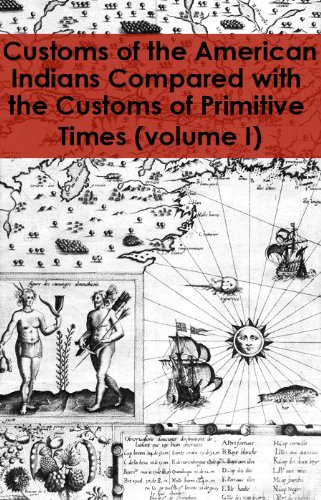
Thomas Morton
Cambridge [Mass.] : Press of J. Wilson ()
This extract highlights Morton's views on Native Americans, but particularly his plans to "civilize" them by converting them to Christianity and teaching them to avoid nomadism in favor of permanent settlement. He speaks extensively on their hunting methods, their religious views, of his distaste for "their Houses and Habitations" (comparing them to the "wild Irish"), their clothing, their "Reverence, and Respect to Age," their determination to maintain "their Reputation," their trading practices, and several other aspects of indigenous lifestyles.
activities of runaway indentured servants in early America between 1733 and 1742

Tim Bailey, Kevin Boyle, The Gilder Lehrman Institute of American History
5 day unit for grades 7-12 The five lessons in this unit explore a series of accounts sent by on-scene reporters to the Daily Republican of Decatur, Illinois. These reports were published as a set on May 5, 1886, together providing an account of the Haymarket Riot in Chicago. You will assess students’ understanding through their work identifying keywords, creating summaries of selections from these news accounts, and writing a persuasive (argumentative) essay. Introductory Essay By Kevin Boyle, historian at Northwestern University
using a Decatur, Illinois newspaper, a short essay by historian Kevin Boyle, uses strategies for helping students engage with an Illinois newspaper reports on the 1886 Haymarket "riot" and reaction to it.

Tim Bailey, The Gilder Lehrman Institute of American History
The three lessons in this unit for grades 5-8 focus on labor contracts and what was required of the people who signed them. The three primary sources include a 1742 contract for an apprentice in New York, a 1784 contract for an indentured servant emigrating from Northern Ireland, and a German traveler’s 1750 report on conditions for indentured servants in Pennsylvania. You will assess students’ understanding through their narrative illustrations of Gottlieb Mittelberger’s journey. Reid Jr., November 1, 1742, The Gilder Lehrman Institute of American History,
Lesson plan grades 5-8, with historian introduction, uses sources to build knowledge about what it meant to be a contractedvlaborer—an apprentice or an indenturedservant— in colonial America. They will demonstrate their understanding through Lresponses to critical thinking questions and class discussion.

Tim Davenport
Haymarket Books (2019)
An extensive compilation of articles, speeches, press statements, and open letters by American socialist Eugene V. Debs
An extensive compilation of articles, speeches, press statements, and open letters by American socialist Eugene V. Debs

Tim Robbins
Touchstone Pictures (1999)
A Tim Robbins film based on the 1937 musical The Crade Will Rock by Marc Blitzstein which both operate as commentaries on the labor movement, socialism, communism, and the transformative social roles of artists and intellectuals in the 1930s.
A true story of politics and art in the 1930s U.S., focusing on a leftist musical drama and attempts to stop its production.

Timothy B. Neary
University Of Chicago Press (2016)
Controversy erupted in spring 2001 when Chicago's mostly white Southside Catholic Conference youth sports league rejected the application of the predominantly black St. Sabina grade school. Fifty years after Brown v. Board of Education, interracialism seemed stubbornly unattainable, and the national spotlight once again turned to the history of racial conflict in Catholic parishes. It's widely understood that midcentury, working class, white ethnic Catholics were among the most virulent racists, but, as Crossing Parish Boundaries shows, that's not the whole story. In this book, Timothy B. Neary reveals the history of Bishop Bernard Sheil's Catholic Youth Organization (CYO), which brought together thousands of young people of all races and religions from Chicago's racially segregated neighborhoods to take part in sports and educational programming. Tens of thousands of boys and girls participated in basketball, track and field, and, the most popular sport of all, boxing, which regularly filled Chicago Stadium with roaring crowds. The history of Bishop Sheil and the CYO shows a cosmopolitan version of American Catholicism, one that is usually overshadowed by accounts of white ethnic Catholics aggressively resisting the racial integration of their working-class neighborhoods. By telling the story of Catholic-sponsored interracial cooperation within Chicago, Crossing Parish Boundaries complicates our understanding of northern urban race relations in the mid-twentieth century
Catholic Youth Organization (CYO), which brought together thousands of young people of all races and religions from Chicago's racially segregated neighborhoods to take part in sports and educational programming

Timothy Helwig
University of Massachusetts Press (2020)
Historians have long claimed that the antebellum white working class viewed blacks, both free and slave, not as allies but enemies. While it is true that racial and ethnic strife among northern workers prevented an effective labor movement from materializing in America prior to the Civil War, Cross-Racial Class Protest in Antebellum American Literature demonstrates that a considerable subset of white and black writers were able to imagine cross-racial solidarity in the sensation novels and serial fiction, slave narratives, autobiographies, speeches, and newspaper editorials that they penned.
Timothy Helwig analyzes the shared strategies of class protest in popular and canonical texts from a range of antebellum white and black American authors, including George Lippard, Ned Buntline, Harry Hazel, Frederick Douglass, William Wells Brown, and Frank J. Webb. This pathbreaking study offers original perspectives on racial representations in antebellum American print culture and provides a new understanding of black and white authors' strivings for socioeconomic justice across racial lines in the years leading up to the Civil War"-- Provided by publisher
original perspectives on racial representations in antebellum American print culture
Museum/Exhibits
Tours
Maps
Digital Projects
Organizations
Sites
Film/Video
Audio/Interview
Podcast/Program
Text/Document
Image
Graphs/Data
Timeline
Southwest
West
Midwest
Southeast
Northeast
Mexico
Canada
Global
Books
Teaching
Lectures
Digital Archives
Journals
Bibliographies
Topic Intro