


Collections
Library
Type
Region
Coverage:
-
Published:
-
California Federation of Teachers
A long documentary film on the history of labor in California. Consider pairing this teaching film with the CFT's free resources for educators, which can be found and perused at this link: https://www.cft.org/curricula .
The second disc of a highly awarded CFT-produced film introducing students, union members, and members of the public to the basics of California Labor History from the Gold Rush to now.
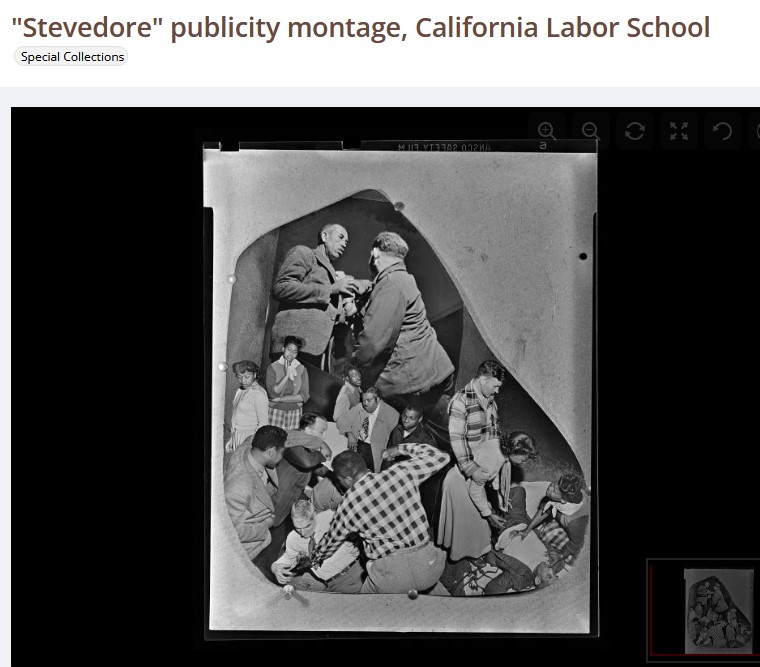
California Labor School
This collection consists primarily of 100s of digitized negatives highlights scenes from the California Labor School from 1944 to 1957 through images of lectures, performances, workshops, symposia, festivals, and portraits of administrators, faculty, and students. Also present are course catalogs listing the classes and faculty of each school term.
The purpose of the progressive California Labor School was to train the influx of new workers into a wartime economy in trades, the humanities, and in various aspects of labor relations.
scenes from the California Labor School from 1944 to 1957
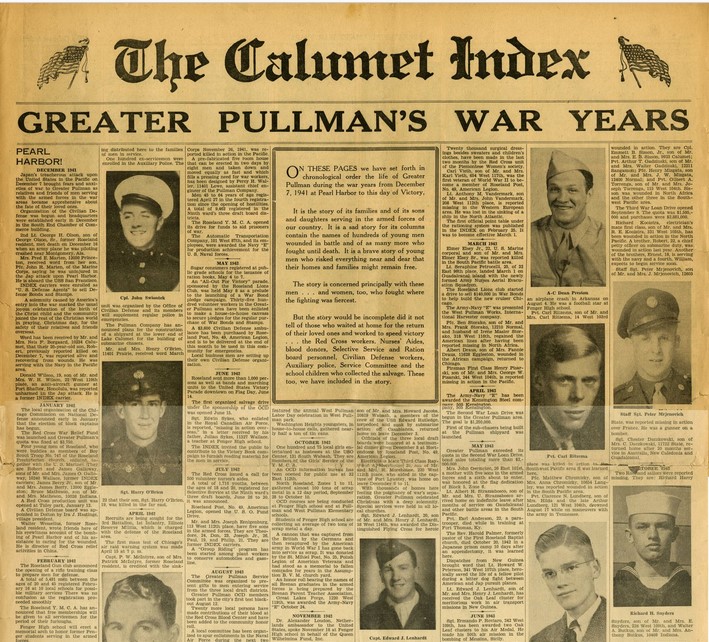
Calumet Index
The Calumet Index, a community newspaper, published a ten-page section Greater Pullman's War Years on August 15, 1945 which listed the names of local men and women who gave so much for our country's freedom - those who were captured, missing in action and/or deceased. Much of this relates to working class experience in World War II
A working class community newspaper documenting life during WWII
Calvin Schermerhorn
Calvin Schermerhorn’s provocative study views the development of modern American capitalism through the window of the nineteenth-century interstate slave trade. This eye-opening history follows money and ships as well as enslaved human beings to demonstrate how slavery was a national business supported by far-flung monetary and credit systems reaching across the Atlantic Ocean. The author details the anatomy of slave supply chains and the chains of credit and commodities that intersected with them in virtually every corner of the pre–Civil War United States, and explores how an institution that destroyed lives and families contributed greatly to the growth of the expanding republic’s capitalist economy
modern American capitalism through the window of the nineteenth-century interstate slave trade
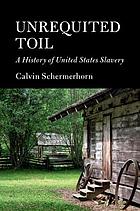
Calvin Schermerhorn
Written as a narrative history of slavery within the United States, Unrequited Toil details how an institution that seemed to be disappearing at the end of the American Revolution rose to become the most contested and valuable economic interest in the nation by 1850. Calvin Schermerhorn charts changes in the family lives of enslaved Americans, exploring the broader processes of nation-building in the United States, growth and intensification of national and international markets, the institutionalization of chattel slavery, and the growing relevance of race in the politics and society of the republic. In chapters organized chronologically, Schermerhorn argues that American economic development relied upon African Americans' social reproduction while simultaneously destroying their intergenerational cultural continuity. He explores the personal narratives of enslaved people and develops themes such as politics, economics, labor, literature, rebellion, and social conditions.
argues that American economic development relied upon African Americans' social reproduction while simultaneously destroying their intergenerational cultural continuity.
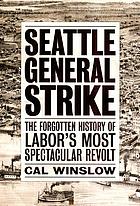
Calvin Winslow
The book is the first, complete account of the General Strike of Seattle, when in February 1919, 110 local unions shut down the entire city of Seattle, Washington. For five days, workers from all trades and sectors - streetcar drivers, telephone operators, musicians, miners, loggers, shipyard workers - fed the people, ensured that babies had milk, that the sick were cared for. This had never happened before in the United States and has not happened since. Cal Winslow explains why.
the first, complete account of the General Strike of Seattle.

Camella Teoli
When 30,000 largely immigrant workers walked out of the Lawrence, Massachusetts, textile mills in January 1912, they launched one of the epic confrontations between capital and labor. The strike began in part because of unsafe working conditions in the mills, which were described in graphic detail in the testimony that fourteen-year-old millworker Camella Teoli delivered before a U.S. Congressional hearing in March 1912. Her testimony (a portion of which was included here) about losing her hair when it got caught in a textile machine she was operating gained national headlines in 1912—in part because Helen Herron Taft, the wife of the president, was in the audience when Teoli testified. The resulting publicity helped secure a strike victory.
Dramatic testimony that changed the course of history
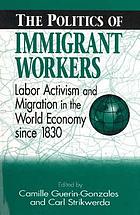
Camille Guerin-Gonzales
anthology
Labor, migration, and politics / Carl Strikwerda and Camille Guerin-Gonzales
The German bakers of New York City : between ethnic particularism and working-class consciousness / Dorothee Schneider
Labour party, labor lobbying, or direct action? : coal miners, immigrants, and radical politics in Scotland and the American midwest, 1880-1924 / John H.M. Laslett
France and the Belgian immigration of the nineteenth century / Carl Strikwerda
Scapegoating the foreign worker : job turnover, accidents, and diseases among Polish coal miners in the German Ruhr, 1871-1914 / John J. Kulczycki
The international migration of workers and segmented labor : Mexican immigrant workers in California industrial agriculture, 1900-1940 / Camille Guerin-Gonzales
Class, ethnicity, and the transformation of Hawaii's sugar workers, 1920-1946 / Ruth Akamine
Indentured labor migration : Indian migrants to Natal, South Africa, 1860-1902 / Surendra Bhana
Popular sources of Chinese labor militancy in colonial Malaya, 1900-1941 / Donald M. Nonini
The politics of immigrant workers in twentieth-century France / Donald Reid
Foreigners in the fatherland : Turkish immigrant workers in Germany / Ruth Mandel
Insiders and outsiders : the political economy of international migration during the nineteenth and twentieth centuries / James Foreman-Peck
A collection of essays with a comparative analysis of native and immigrant laborers across the world.

Campbell F. Scribner
Throughout the twentieth century, local control of school districts was one of the most contentious issues in American politics. As state and federal regulation attempted to standardize public schools, conservatives defended local prerogative as a bulwark of democratic values. Yet their commitment to those values was shifting and selective.
In The Fight for Local Control, Campbell F. Scribner demonstrates how, in the decades after World War II, suburban communities appropriated legacies of rural education to assert their political autonomy and in the process radically changed educational law. Scribner's account unfolds on the metropolitan fringe, where rapid suburbanization overlapped with the consolidation of thousands of small rural schools. Rural residents initially clashed with their new neighbors, but by the 1960s the groups had rallied to resist government oversight.
What began as residual opposition to school consolidation would transform into campaigns against race-based busing, unionized teachers, tax equalization, and secular curriculum. In case after case, suburban conservatives carved out new rights for local autonomy, stifling equal educational opportunity. Yet Scribner also provides insight into why many conservatives have since abandoned localism for policies that stress school choice and federal accountability.
In the 1970s, as new battles arose over unions, textbooks, and taxes, districts on the rural-suburban fringe became the first to assert individual choice in the form of school vouchers, religious exemptions, and a marketplace model of education. At the same time, they began to embrace tax limitation and standardized testing, policies that checked educational bureaucracy but bypassed local school boards. The effect, Scribner concludes, has been to reinforce inequalities between districts while weakening participatory government within them, keeping the worst aspects of local control in place while forfeiting its virtues
In the 1970s, as new battles arose over unions, textbooks, and taxes, districts on the rural-suburban fringe became the first to assert individual choice

Canadian Committee on Labour History
The Canadian Committee on Labour History is open to anybody interested in studying and promoting all aspects of working-class and labour history. The Committee defines working-class and labour history in the broadest terms and encourages study of working-class communities, culture, ethnicity, family life, gender, sexuality, migration, ideology, politics and organization.
It recognizes the value of a diversity of disciplinary and theoretical approaches to the study of history and encourages open and active discussion and debate. As well, it aims to encourage the inclusion of working-class history in school curricula, through institutions of public history, and within the educational programs of labour and community organizations.
We invite you to explore decades of innovative scholarship in the pages our journal Labour/Le Travail and the CCLH Books Series. You can also find information on our prizes, events, as well as news about labour history and current labour issues.
The Canadian Committee on Labour History is open to anybody interested in studying and promoting all aspects of working-class and labour history. The Committee defines working-class and labour history in the broadest terms and encourages study of working-class communities, culture, ethnicity, family life, gender, sexuality, migration, ideology, politics and organization.
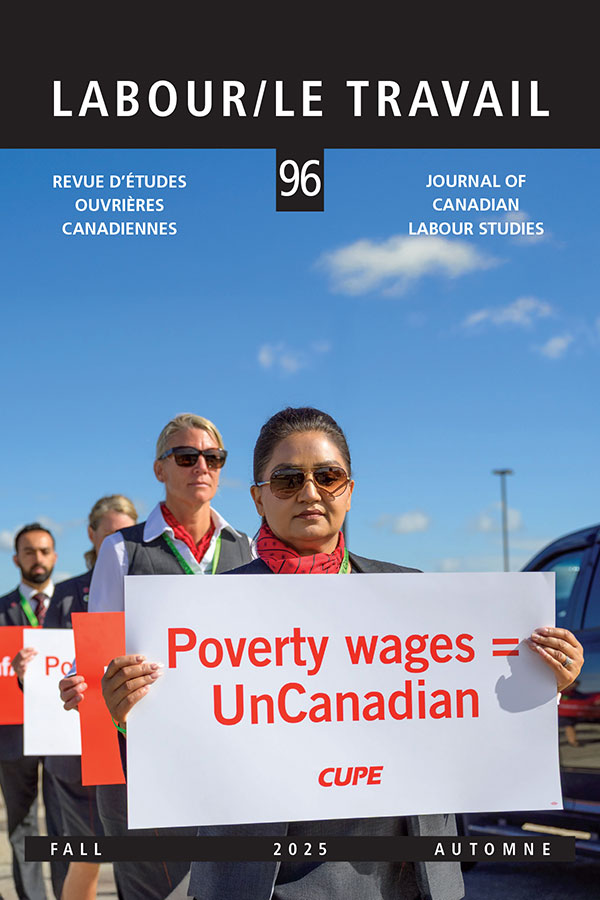
Canadian Committee on Labour History
Open access e-journal, where all but the two most recent issues of Labour/Le Travail are available to all readers at no charge. If you are interested in accessing the most recent publications of L/LT, please subscribe here.
Labour/Le Travail is the official, semi-annual publication of the Canadian Committee on Labour History. Since it began publishing in 1976, it has carried many important articles in the field of working-class history, industrial sociology, labour economics, and labour relations. Although primarily interested in a historical perspective on Canadian workers, the journal is interdisciplinary in scope. In addition to articles, the journal features documents, conference reports, an annual bibliography of materials in Canadian labour studies, review essays, and reviews. While the main focus of the journal's articles is Canadian, the review essays and reviews consider international work of interest to Canadian labour studies. Many of Labour's articles are illustrated and each issue is book length, averaging 350 pages an issue. L/LT is a co-publication of CCLH and Athabasca University Press, in affiliation with the Canadian Association for Work and Labour Studies (CAWLS).
Publiée par le comité canadien sur l'histoire du travail deux fois par année, la revue Labour/Le Travail a fait paraitre depuis 1976 plusieurs articles marquants dans le domaine de l'histoire de la classe ouvrière, de la sociologie industrielle, de l'économie du travail et des relations industrielles. Bien qu'elle se propose d'abord d'étudier les travailleurs et les travailleuses du Canada dans une perspective historique, la revue est aussi ouverte aux spécialistes d'autres disciplines. En plus des articles, la revue publie des documents, des rapports de conférences, une bibliographie annuelle, des notes critiques et des comptes rendus de volumes. Si la plupart des articles touchent le Canada, les notes critiques et les comptes rendus portent sur des travaux d'envergure internationale pouvant intéresser les chercheurs canadiens. Des illustrations accompagnent plusieurs articles de Labour/Le Travail et chaque numéro compte en moyenne 350 pages. L/LT est une publication conjointe du CCLH et de l'Athabasca University Press, en collaboration avec l'Association canadienne d' études du travail et du syndicalisme (ACETS).
Although primarily interested in a historical perspective on Canadian workers, the journal is interdisciplinary in scope. In addition to articles, the journal features documents, conference reports, an annual bibliography of materials in Canadian labour studies, review essays, and reviews.
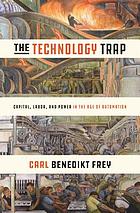
Carl Benedikt Frey
How the history of technological revolutions can help us better understand economic and political polarization in the age of automation From the Industrial Revolution to the age of artificial intelligence, The Technology Trap takes a sweeping look at the history of technological progress and how it has radically shifted the distribution of economic and political power among society's members. As Carl Benedikt Frey shows, the Industrial Revolution created unprecedented wealth and prosperity over the long run, but the immediate consequences of mechanization were devastating for large swaths of the population. Middle-income jobs withered, wages stagnated, the labor share of income fell, profits surged, and economic inequality skyrocketed. These trends, Frey documents, broadly mirror those in our current age of automation, which began with the Computer Revolution.Just as the Industrial Revolution eventually brought about extraordinary benefits for society, artificial intelligence systems have the potential to do the same. But Frey argues that this depends on how the short term is managed. In the nineteenth century, workers violently expressed their concerns over machines taking their jobs. The Luddite uprisings joined a long wave of machinery riots that swept across Europe and China. Today's despairing middle class has not resorted to physical force, but their frustration has led to rising populism and the increasing fragmentation of society. As middle-class jobs continue to come under pressure, there's no assurance that positive attitudes to technology will persist.The Industrial Revolution was a defining moment in history, but few grasped its enormous consequences at the time. The Technology Trap demonstrates that in the midst of another technological revolution, the lessons of the past can help us to more effectively face the present
demonstrates that in the midst of another technological revolution, the lessons of the past can help us to more effectively face the present

Carl Marzani, Union Films, United Electrical
This film, made by the United Electrical workers Union of the CIO in the late 1940s, gives the counter to pro-business films also made during that time. It criticizes big companies like GE for cutting paychecks after the war, ostensibly because they could no longer afford to pay wartime wages. The union's research showed that production and labor costs to the company had actually gone down, and that the pay cuts were done to increase profits. But it also goes further to point out how American big business is growing and becoming ever more powerful. It also shows connections between big American companies and Axis companies during WWII, and equates big businesses dream of an American Century with the Nazi goal of world domination. The solution is shown to be participating in strikes and voting the union ticket, and showcases Roosevelt's (really, labor's) proposal for an Economic Bill of Rights, which was promoted in the 1944 CIO platform.
A documentary by Carl Marzani about America's role in the Cold War, increasing contemporary attacks on labor unions, and post-WWII struggles of the U.S. working class.
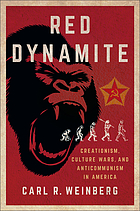
Carl R. Weinberg
In Red Dynamite, Carl R. Weinberg argues that creationism's tenacious hold on American public life depended on culture-war politics inextricably embedded in religion. Many Christian conservatives were convinced that evolutionary thought promoted immoral social, sexual, and political behavior. The "fruits" of subscribing to Darwinism were, in their minds, a dangerous rearrangement of God-given standards and the unsettling of traditional hierarchies of power. Despite claiming to focus exclusively on science and religion, creationists were practicing politics. Their anticommunist campaign, often infused with conspiracy theory, gained power from the fact that the Marxist founders, early Bolshevik leaders, and their American allies were staunch evolutionists. Using the Scopes "Monkey" Trial as a starting point, Red Dynamite traces the politically explosive union of Darwinism and communism over the next century. Across those years, social evolution was creationists' primary target, and their "ideas have consequences" strategy instilled fear that shaped the contours of America's culture wars. By taking the anti-communist arguments of creationists seriously, Weinberg reveals a neglected dimension of antievolutionism and illuminates a source of the creationist movement's continuing strength
Red Dynamite examines how opponents of teaching evolutionary science in the United States over the course of the twentieth century used anticommunist politics to demonize Darwinism"-- Provided by publisher
Carlos Sanabria
Puerto Rican Labor History 1898–1934 presents a history of the organized labor movement in Puerto Rico from the United States’ colonial domination of the island in 1898 to the Great Depression in the early 1930s. Although the most prominent Puerto Rican labor leaders in the early twentieth century were strongly influenced by revolutionary European socialist and anarchist ideology,
The organized labor movement as represented by the Federación Libre de los Trabajadores de Puerto Rico and the Partido Socialista became a fundamentally reformist trade unionist campaign that relied heavily on the democratic rights guaranteed by the United States government and the support of the American Federation of Labor.
Rather than advocating for the overthrow of capitalism, the abolition of private property and the wage labor system, and its replacement by a socialist egalitarian cooperative society free of centralized government authority, the organized workers’ movement focused on the immediate struggle for higher wages and better working conditions by means of the organization of labor and participation in electoral politics.
Introduction
List of Organizations Referred to in the Text
List of Tables
Acknowledgments & Dedication
Chapter One: The Dire Conditions of the Working Class
Chapter Two: Visions of a Better Future
Chapter Three: Dramatizing Revolutionary Ideals
Chapter Four: Reformist Politics
Chapter Five: The Influence of the American Federation of Labor
Conclusion
Bibliography
Aruges the influence of radicalism but the organized workers’ movement focused on the immediate struggle for higher wages and better working conditions by means of the organization of labor and participation in electoral politics

Carol Greenwald, Dorie Krauss
A documentary film examining the closing of three major steel plants in Youngstown, Ohio, between 1976 and 1980. The film portrays the consequences of de-industrialization through interviews with steelworkers, their families and friends, labor attorneys, local union leaders and community activists.
A blogsite that makes all five parts of the Shout Youngstown documentary available, along with several other resources related to the film and its main themes.

Carol Quirke
"In the twentieth century's first decades, U.S. workers waged an epic struggle to achieve security through unions; simultaneously Americans came to interpret current events through newspaper photographs. Eyes on Labor brings these two revolutions together, revealing how news photography brought workers into the nation's mainstream. Carol Quirke focuses on images ignored by scholars but seen by millions of Americans in the news of the day. Part visual analysis, part labor and cultural history, Quirke analyzes over one hundred photographs: stereographs of the Uprising of 1877, tabloid photos of the 1919 strike wave, photo-essays in the nationally popular Life Magazine, and even photos taken by a union camera club. Quirke anchors her interpretations in a lively historical narrative that takes readers from Washington D.C. hearings, to small towns in Indiana and Pennsylvania, to local union halls and to New York City boardrooms. Illuminating why unions, employers, and news publishers vied to represent workers with the camera's eye, Eyes on Labor explores how Americans understood the complex and contradictory portrait of labor they produced."
Table of Contents: "The quick nervousness of pictures is a new language:" organized labor before photojournalism
Consuming labor: LIFE Magazine and mass production unionism, 1936-1942
Bitter kisses: pictures of the Hershey Chocolate sit-down strike, April 1937
"Strike photos are star witnesses:" photographs and newsreels of Chicago's Memorial Day Massacre, May 1937
Steel labor and the United Steelworkers of America's culture of constraint, 1936-1950
"This picture shows what we are fighting for:" Local 65 distributive workers' rank-and-file photography, 1933-1953
how the working class has been depicted in leading newspapers and their own press

Carol Williams
These essays create a transnational and comparative dialogue on the history of the productive and reproductive lives and circumstances of Indigenous women from the late nineteenth century to the present in the United States, Australia, New Zealand/Aotearoa, and Canada. Surveying the spectrum of Indigenous women's lives and circumstances as workers, both waged and unwaged, the contributors offer varied perspectives on the ways women's work has contributed to the survival of communities in the face of ongoing tensions between assimilation and colonization.
Contributors are Tracey Banivanua Mar, Marlene Brant Castellano, Cathleen D. Cahill, Brenda J. Child, Sherry Farrell Racette, Chris Friday, Aroha Harris, Faye HeavyShield, Heather A. Howard, Margaret D. Jacobs, Alice Littlefield, Cybèle Locke, Mary Jane Logan McCallum, Kathy M'Closkey, Colleen O'Neill, Beth H. Piatote, Melissa Rohde, Susan Roy, Lynette Russell, Joan Sangster, Ruth Taylor, and Carol Williams.
The working lives of Indigenous women
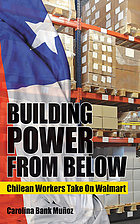
Carolina Bank Muñoz
A story that involves as its main players'workers'and'Walmart'does not usually have a happy ending for labor, so the counternarrative offered by Building Power from Below is must reading for activists and union personnel as well as scholars. In 2008 Walmart acquired a controlling share in a large supermarket chain in Santiago, Chile. As part of the deal Walmart had to accept the unions that were already in place. Since then, Chilean retail and warehouse workers have done something that has seemed impossible for labor in the United States: they have organized even more successful unions and negotiated unprecedented contracts with Walmart. In Building Power from Below, Carolina Bank Muñoz attributes Chilean workers'success in challenging the world's largest corporation to their organizations'commitment to union democracy and building strategic capacity. Chilean workers have spent years building grassroots organizations committed to principles of union democracy. Retail workers'unions have less structural power, but have significant associational and symbolic power. Their most notable successes have been in fighting for respect and dignity on the job. Warehouse workers by contrast have substantial structural power and have achieved significant economic gains. While the model in Chile cannot necessarily be reproduced in different countries, we can gain insights from the Chilean workers'approaches, tactics, and strategies
Chilean retail and warehouse workers have done something that has seemed impossible for labor in the United States: they have organized even more successful unions and negotiated unprecedented contracts
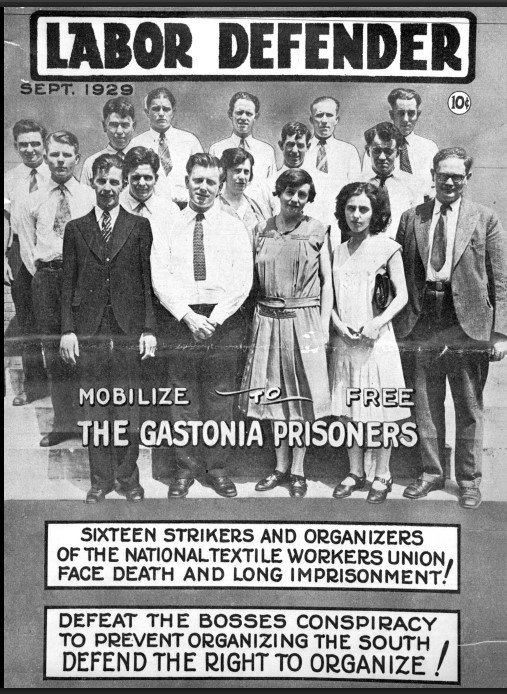
Carolina K-12
Ella May (also known by her married name, Ella May-Wiggins) was part of a generation of hopeful Appalachians who left the mountains for the North Carolina mills in search of a better life. Yet, despite her persistence, fortitude and strong work ethic, she struggled to provide for herself and her family due to low wages, long hours, and excruciating working conditions. By 1929, twenty-eight-year-old Ella was a single mother who had lost four of her nine children to poverty. After settling in a predominately African American community called Stumptown in Gaston County, and working seventy-two hours a week on the night shift at American Mill No. 2 in Bessemer City, Ella turned to the National Textile Workers’ Union, who were organizing a strike at the nearby Loray Mill, as her last hope for survival.
In this installment of the William Friday Virtual Education Initiative by Carolina K-12 (sponsored by the North Caroliniana Society), Christie Norris (Director, Carolina K-12) and Dr. David Zonderman (NCCU) discuss the tenacious life of Ella May, the conditions she fought against, and her subsequent murder at only age 29 for organizing Black and white millworkers in fighting for a 40-hour week and living wages. We will also discuss the role Ella’s music played in the resistance, as well as North Carolina’s long history of complicated labor laws and anti-unionization. They are joined by special guest Katie Hayes, artist and musician, who performs two of Ella May's ballads.
Ella May (Wiggins) lecture by scholar David Zonderman on the life of this dynamic textile worker who was a central figure the strike of 1929 in Gastonia, North Carolina. Lecture intended as accompanying teacher guide, documents, lesson plan for k-12.
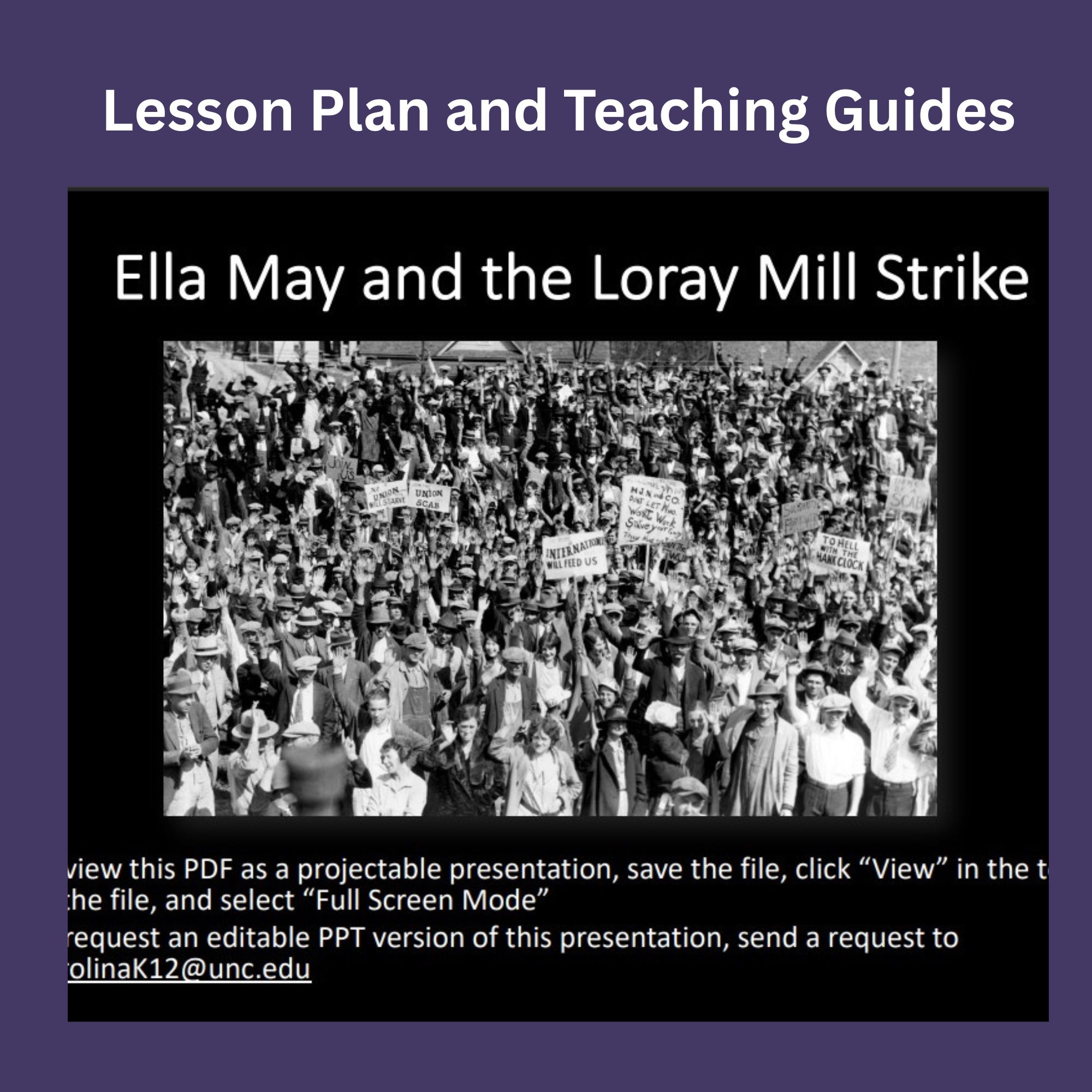
Carolina K-12
Lesson Plan and resources for teaching Ella May Wiggins https://drive.google.com/file/d/1pvqthj61jTxAmYYLx8ocFcxXKc8-SCwV/view Ella May (also known by her married name, Ella May-Wiggins) was part of a generation of hopeful Appalachians who left the mountains for the North Carolina mills in search of a better life. Yet, despite her persistence, fortitude and strong work ethic, she struggled to provide for herself and her family due
to low wages, long hours, and excruciating working conditions. By 1929, twenty-eight-year-old Ella was a single mother who had lost four of her nine children to poverty. After settling in a predominately African American community called Stumptown in Gaston County, and working seventy-two hours a week on the night shift at American Mill No. 2 in Bessemer City, Ella turned to the National Textile Workers’ Union, who were organizing a strike at the nearby Loray Mill, as her last hope for survival. This lesson explores the tenacious life of Ella May, the conditions she fought against, and her subsequent murder at only age 29 for organizing Black and white millworkers in fighting for a 40-hour week and living wages. Students will examine this history through primary source documents, reading and discussion, ultimately gaining an understanding of this history, its impact, and its relevance today.
a teaching plan and materials, connected to a lecture on the subject, for high school level courses
Caroline H. Yang
The Peculiar Afterlife of Slavery explores how anti-black racism was recalibrated and perpetuated through the figure of the non-black Chinese worker in US literature after emancipation.
By drawing connections between the form of blackface minstrelsy and the figure of the Chinese worker in Reconstruction-era and late 19th-century US literature, Caroline Yang reveals the ways in which antiblackness structured US cultural production, particularly at a crucial moment of reconstructing and re-narrating US empire after the Civil War.
Drawing on early writings by Bret Harte, Mark Twain, Ambrose Bierce, Edith Eaton (Sui Sin Far), and Charles Chesnutt, writers who remain among the most celebrated from the Reconstruction period, Yang reassesses these authors' complex and often contradictory positions on race and labor. This study suggests that the figure of the Chinese worker allows us to see an inextricable link between not just US literature and US empire, but also the indispensable role of antiblackness as a cultural form in the United States
suggests that the figure of the Chinese worker allows us to see an inextricable link between not just US literature and US empire, but also the indispensable role of antiblackness as a cultural form in the United States.
Cathal Brennan
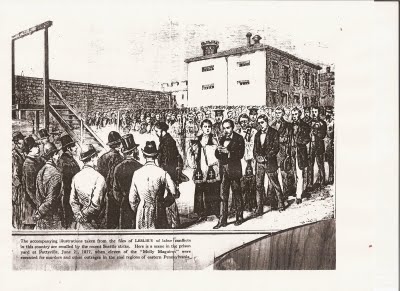
The Molly Maguires story is a fascinating insight into both Irish – American culture in the 19th century and America’s often troubled and brutal labour history. The Mollies were a secret society based among the Irish coal miners in the anthracite fields of northern Pennsylvania in the 1860s and 1870s.
An edition of the Irish History Show, where John Dorney and Cathal Brennan are joined by historian John Kearns to discuss the history of the Molly Maguires over the course of 50 minutes.

Catherine Collomp
Rescue, Relief, and Resistance: The Jewish Labor Committee's Anti-Nazi Operations, 1934–1945 is the English translation of Catherine Collomp’s award-winning book on the Jewish Labor Committee (JLC). Formed in New York City in 1934 by the leaders of the Jewish Labor Movement, the JLC came to the forefront of American labor’s reaction to Nazism and antisemitism. Situated at the crossroads of several fields of inquiry—Jewish history, immigration and exile studies, American and international labor history, World War II in France and in Poland—the history of the JLC is by nature transnational. It brings to the fore the strength of ties between the Yiddish-speaking Jewish worlds across the globe.
How American labor leaders came to the rescue of political and Jewish victims of Nazi persecution
Catherine L. Fisk
Required to sign away their legal rights as authors as a condition of employment, professional writers may earn a tidy living for their work, but they seldom own their writing. Writing for Hire traces the history of labor relations that defined authorship in film, TV, and advertising in the mid-twentieth century. Catherine L. Fisk examines why strikingly different norms of attribution emerged in these overlapping industries, and she shows how unionizing enabled Hollywood writers to win many authorial rights, while Madison Avenue writers achieved no equivalent recognition
"As the agencies created radio programming in the 1930s and 1940s for soaps and dramatic programs, the writer emerged as an employee who deserved to be credited for his or her contribution, although initially there was some reluctance to identify soap opera writers for fear of destroying “the illusion that the stories were real” (105). Then there was the matter of repeating a show or adapting it for another medium like film....Fisk ends Writing for Hire with a discussion of the blacklist that arose when the House Un-American Activities Committee (HUAC) began its investigation of communist subversion of the movie industry in 1947, specifically targeting screenwriters who had supposedly injected communist propaganda into their scripts. "-Labor
history of labor relations that defined authorship in film, TV, and advertising in the mid-twentieth centur
Museum/Exhibits
Tours
Maps
Digital Projects
Organizations
Sites
Film/Video
Audio/Interview
Podcast/Program
Text/Document
Image
Graphs/Data
Timeline
Southwest
West
Midwest
Southeast
Northeast
Mexico
Canada
Global
Books
Teaching
Lectures
Digital Archives
Journals
Bibliographies
Topic Intro