


Explore thousands of items. Use clickable links under collections and library for broad categories. Search by keyword (including topic,city, state.) Limit by time period, type of item, region. See our search tips page for more assistance.
Collections
Library
Type
Region
Coverage:
-
Published:
-

Wendy Z. Goldman
Routledge (2018)
The Ghetto in Global History explores the stubborn tenacity of the "ghetto" over time. As a concept, policy, and experience, the ghetto has served to maintain social, religious, and racial hierarchies over the past five centuries. Transnational in scope, this book allows readers to draw thought-provoking comparisons across time and space among ghettos that are not usually studied alongside one another. The volume is structured around four main case studies, covering the first ghettos created for Jews in early modern Europe, the Nazis' use of ghettos, the enclosure of African Americans in segregated areas in the United States, and the extreme segregation of blacks in South Africa. The contributors explore issues of discourse, power, and control; examine the internal structures of authority that prevailed; and document the lived experiences of ghetto inhabitants. By discussing ghettos as both tools of control and as sites of resistance, this book offers an unprecedented and fascinating range of interpretations of the meanings of the "ghetto" throughout history. It allows us to trace the circulation of the idea and practice over time and across continents, revealing new linkages between widely disparate settings. Geographically and chronologically wide-ranging, The Ghetto in Global History will prove indispensable reading for all those interested in the history of spatial segregation, power dynamics, and racial and religious relations across the globe. Book jacket
offers an unprecedented and fascinating range of interpretations of the meanings of the "ghetto" throughout history, revealing new linkages between widely disparate settings.

West Virginia & Regional History Center
only the photos of this collection have been digitized, mostly documenting miners lives and strikes; UMWA international representative and organizer, member of the Steel Workers Organizing Committee, director of the CIO Organizing Committee, and vice-chairman of the CIO Political Action Committee Correspondence, legal papers, diaries, clippings, and other papers relate to Bittner's early career in the western Pennsylvania coal fields; his presidency of District 5, UMWA, 1911-1916; and his organizational activities in southeastern Kentucky, Tennessee, Alabama, northern West Virginia, Oklahoma, and Kansas, 1916-1928. Subjects include labor strife and strikes in West Virginia, 1912-1913, 1924-1928, Alabama, 1920-1921, Westmoreland County, Pennsylvania, 1911, and Oklahoma and Kansas, 1922;
100 or more photos

West Virginia Folklife
The West Virginia Folk Music Digital Collection features over two thousand historic field recordings of West Virginia folk music from the Louis Watson Chappell Archive. The recordings are from aluminum and lacquer discs made with a portable disc recorder. Performers were logged with a name, place of recording, and a list of pieces performed. Sometimes a detail like age or occupation of the performers was included, but not always.
West Virginia, coal, coalmining, coalminers, music, folk music,

West Virginia Folklife
322 items of oral history, audio transcripts, videos, performance, letters related to working class songs
322 items of oral history, audio transcripts, videos, performance, letters related to working class songs
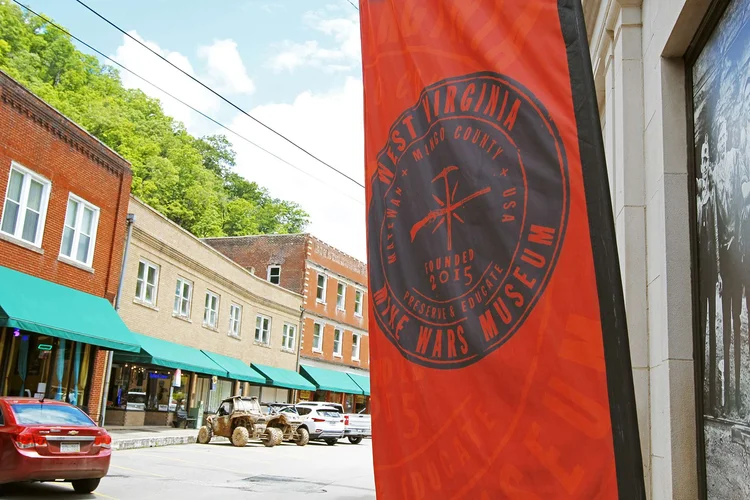
West Virginia Mine Wars Museum
Small Museum in Matewan, West Virginia that packs well above its size focuses on the coal mine wars incuding Cabin Creek, Paint Creek of 1912-1913, and the 1921 Battle of Blair Mountain and their meaning for today
Small Museum in Matewan, West Virginia, covers Paint Creek, Cabin Creek and Blair Mountain events of 1912-1921
West Virginia University
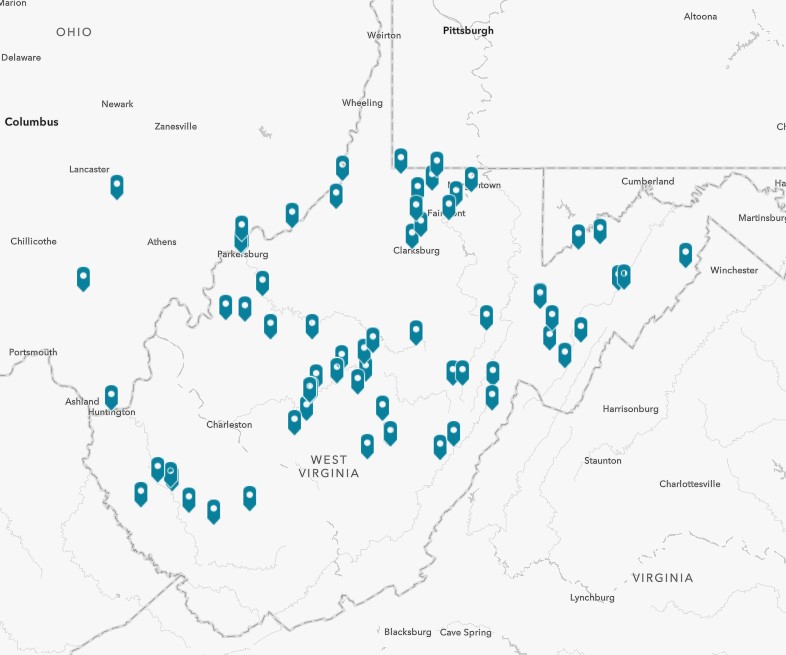
In 1922, Louis Watson Chappell received a faculty appointment at West Virginia University and embarked on his career to document and preserve West Virginia’s folk music. His first major contribution to West Virginia folklore study involved the controversy surrounding the basis of the ballad “John Henry” and its distinction from “John Hardy”, which led to his 1933 publication of a full-length study called, John Henry: A Folk-Lore Study.
This map showcases Chappell’s journey around the state and the location of each performer. It is in chronological order of his journey and includes information about the dates the recordings were made, the location, one linked performance, and a link to the performers' full digital collection. Chappell’s recordings contain a total of 88 collections. Read more here: . https://omekas.lib.wvu.edu/home/s/folkmusic/page/About
Tracing the first scholar who attempted to explore the basis of the song "John Henry"

Western Federation of Miners, Mine Owners Association, History Matters, American Social History Project
Some of the sharpest and most violent class struggles in American history were fought in the hard rock mining towns of the nineteenth-century West. In Cripple Creek, Colorado, for example, violent conflict broke out in 1903 between members of the Western Federation of Miners (WFM) and corporate mining interests determined to crush the union. Before it was over, thirty men had been killed in numerous gun battles. The civil war was not only fought with fists, bullets, and dynamite in the streets and mines of Cripple Creek; it also was a war of words waged in the press. In June, 1904, the Mine Owners’ Association and the WFM submitted these statements to eastern newspapers, expressing opposing viewpoints on the purpose of the strike.
In 1904, the Mine Owners’ Association and the WFM submitted these statements to newspapers, expressing opposing viewpoints on the purpose of the strike.

Western Maryland Industrial Union Council
Founded in 1937 during a time of great upheaval in the American labor movement, the Voice became the Voice of Labor in November 1938. It was published weekly by the Western Maryland Industrial Union Council of the Congress of Industrial Organizations (CIO) in Cumberland, Maryland and founded by two labor activists: James Blackwell and Clyde D. Lucas. Blackwell was a veteran labor organizer and left-wing agitator who had previously led the People’s Unemployment League in Baltimore and the United Auto Workers local in that city. Lucas was a native of western Maryland and leader of the textile workers at the massive Celanese plant in Cumberland. ...The Voice reported on work stoppages and other labor issues in the western Maryland coal mines, the Kelly-Springfield tire plant, and Celanese. It also took a strong stand in support of pro-labor candidates to state and local office, advocated for more labor education (health, union organizing, workers’ rights), and dutifully reported on union sporting events. The CIO was vocal in its support for civil rights for African-Americans, whose membership in industrial unions was growing. With the storm clouds of world war looming in 1941, the Voice of Labor closely chronicled the success of the CIO in leveraging concessions from company owners while also emphasizing the patriotism of the American worker. Its coverage of Labor Day in September 1941 quoted Raymond Burkhart, the president of the United Rubber Workers local at the Kelly- Springfield plant, who said a strong union was the foundation of a strong national defense.
Maryland labor paper

Western Michigan University
Records of this agency, description: When the Great Depression hit communities in 1929, local governments provided some level of relief to their citizens. Before 1929, the City of Kalamazoo appropriated funds and utilized the Civic Improvement League, a private organization, to help deliver food, clothing, rent, and fuel, which for many years came to around $20,000. By 1932, the City spent close to ten times that amount giving help to 20% of the population. In addition to direct relief, the City and the Kalamazoo Federation of Labor opened that same year the Welfare Relief Restaurant and Dormitory for homeless and transient men feeding close to five hundred men a day with food donated by the community.
Relief changed after the inauguration of President Franklin Delano Roosevelt in March of 1933 as the federal government took the primary role in creating and funding programs. Almost all of these programs, part of the New Deal, included some facet of employment for those who participated. One of the major goals of one of the early programs, the Federal Emergency Relief Agency (FERA), created in July of 1933, was to put men to work. Part of this Agency was the Transient Division, providing aid for men age seventeen and older, defined as either homeless, meaning those from within a state; or transient, defined as those from out-of-state. Located in an industrial building north of downtown, the Kalamazoo Bureau, opened in 1933, provided food, clothing, lodging, medical care, education and employment, along with a gymnasium for recreation. In addition, residents could take advantage of dental care, laundry services and barbering. Also available was a library filled with magazines, newspapers and books.
The average age was forty although men much younger and much older utilized the Bureau’s services. Projects for those able to work centered on local civic improvements like roads, parks and sewers. There were time limits for how long one could stay at the Bureau although that could change. Men came from all over the United States, Canada and Mexico. Five other cities in Michigan had Transient Bureaus: Grand Rapids, Lansing, Detroit, Flint and Mackinaw City.
By 1940, over 21,000 men received service in Kalamazoo at the Transient Bureau with over half from Michigan. The County closed the facility in August due to losing the building’s lease and facing a change in funding putting more of the costs on Kalamazoo County. The other five sites in the State remained open. Kalamazoo County’s Social Welfare Department would now handle local cases. It is unknown what happened to out-of-state cases; however, the overall economy in the United States had improved to provide more jobs for those who needed them.
From the beginning, the Kalamazoo County Transient Bureau collected statistical information about those who participated in the program. Even though they established a Relief Research Bureau a few months after its opening, every Transient Bureau, no matter where, would have been required by the federal government to collect information. Fortunately, Kalamazoo’s records live on telling the story of the thousands who received the help they needed to survive.
registration cards from the Kalamazoo Bureau of the Federal Emergency Relief Administration (FERPA) program that provided food, lodging, employment and more for transient men, started in 1933 as part of the New Deal.

Western Michigan University Collections
The lighthouse journals from South Haven, Michigan, span from 1872 to 1889. James Donahue served as the keeper of the South Haven station for most of the period from 1872 to 1889. An earlier keeper, Captain William P. Bryan completed the first entries. The logs have been photographed to provide access to an insight into the daily duties of the light keeper.
Keeper's logs of James S. Donahue (and some early entries his predecessor) for the South Pierhead Light Station, South Haven, Michigan.

Western Michigan University Collections
Southwest Michigan Images from 1939-1980. A collection of commercial photographs showing mid-20th century culture in the Kalamazoo, Michigan, area. These photographs reflect the people, industries, built environment, and commercial activities of the Kalamazoo area. This represents a selection of the 27,000 item negative collection, and is a unique individual's view of a "typical" mid-western community.
Western Michigan University's collection from the photography of Ward Morgan, who spent decades documenting southwestern Michigan between 1939 and 1980.
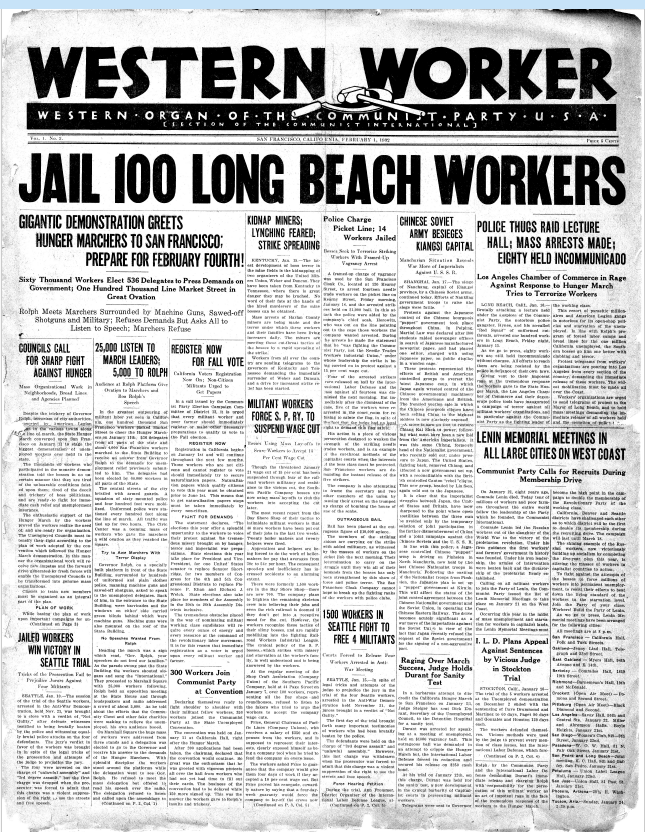
Western Worker
Western Worker was the west coast periodical of the Communist Party, founded in 1932. The publication continued through 1937 until it was merged wth the Daily Worker (on the West Coast only) to form the People's Daily World.
Newspaper of the Communist Party in the West

Westinghouse Works Collection
The Westinghouse Works Collection contains 21 actuality films showing various views of Westinghouse companies. Most prominently featured are the Westinghouse Air Brake Company, the Westinghouse Electric and Manufacturing Company, and the Westinghouse Machine Company. The films were intended to showcase the company's operations. Exterior and interior shots of the factories are shown along with scenes of male and female workers performing their duties at the plants.
A Library of Congress Collection containing 21 "actuality films" of work in various Westinghouse companies.
Who Built America?, American Social History Project
How did popular images of poor people wandering the country in search of work during the 1870s depression contribute to public fear of the unemployed? This module uses a series of images and the contextual essay by a leading historian with guiding questions.
In a country where a large proportion of the workforce relied on industrialized employment, the 1870s depression was the greatest crisis that industrial capitalism faced up to that time. By the winter of 1873–1874, one in four workers in New York were unemployed, while nationally one million were out of work. As the economic disaster extended over sixty-five months, many people—for the most part men—moved from city to city along the nation’s railroad lines in search of work. A visible reminder of a society that offered no public programs to alleviate poverty while viewing such hardship as a result of moral and personal failings, these traveling poor were labeled “tramps.”
A teaching module investigating how media photos of the poor contributed to hostility toward them.
Who Built America?, American Social History Project
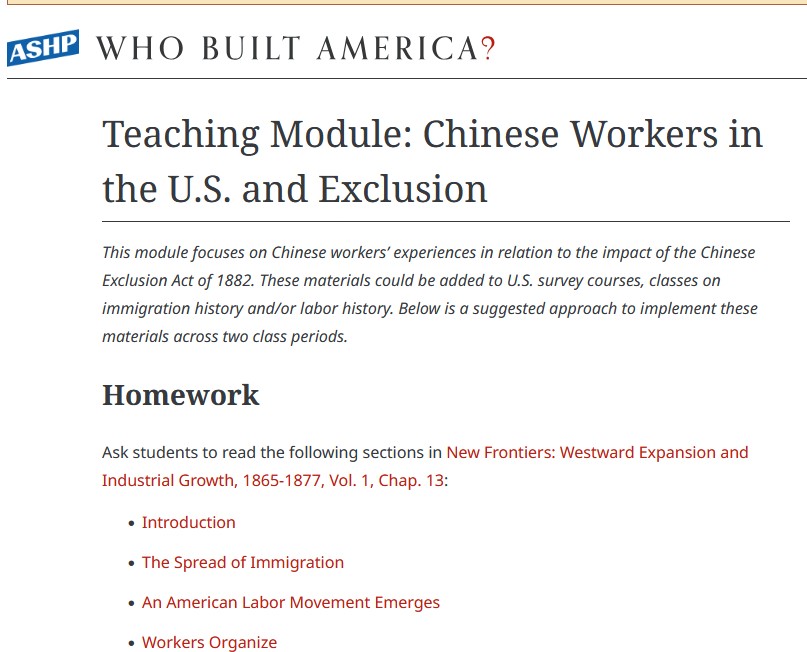
This module focuses on Chinese workers’ experiences in relation to the impact of the Chinese Exclusion Act of 1882. These materials could be added to U.S. survey courses, classes on immigration history and/or labor history. Below is a suggested approach to implement these materials across two class periods.
Eye on the East: Labor Calls for Ban on Chinese Immigration
"To This We Dissented": The Rock Springs Riot
"We Chinese Are Viewed Like Thieves and Enemies": Pun Chi Appeals to Congress to Protect the Rights of Chinese, ca. 1860
"We Are Not the Degraded Race You Would Make Us": Norman Asing Challenges Chinese Immigration Restrictions
“Narrow and Unjust”: Joseph McDonnell Argues for Acceptance of Chinese Immigrants
This module focuses on Chinese workers’ experiences in relation to the impact of the Chinese Exclusion Act of 1882. These materials could be added to U.S. survey courses, classes on immigration history and/or labor history.
Who Built America?, American Social History Project
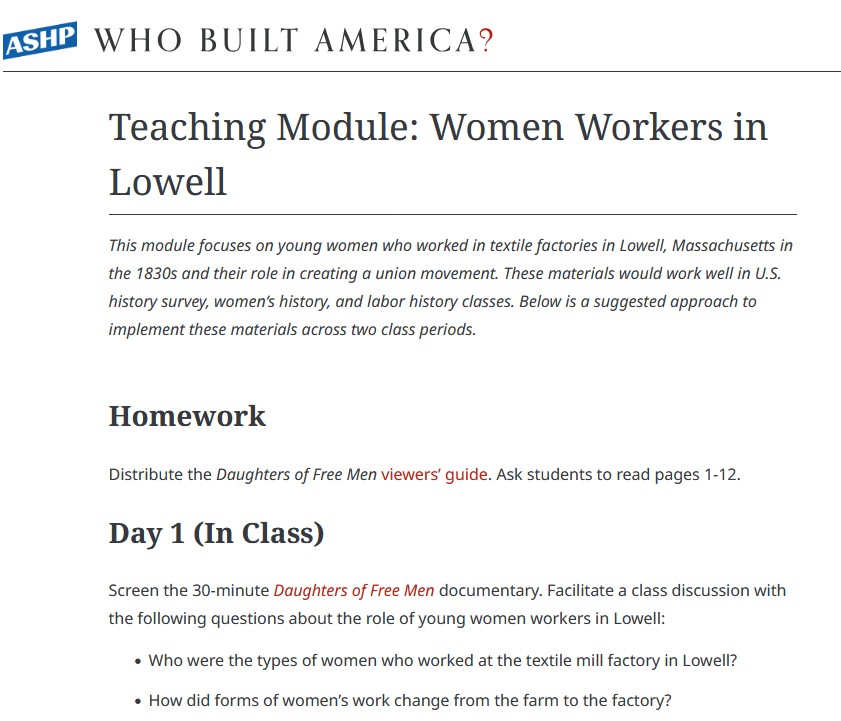
This module (lesson plan) focuses on young women who worked in textile factories in Lowell, Massachusetts in the 1830s and their role in creating a union movement. These materials would work well in U.S. history survey, women’s history, and labor history classes. Below is a suggested approach to implement these materials across two class periods. Uses the following documents:
A Mill Worker Describes Factory Life
The Lowell Mill Girls Go on Strike, 1836
Remembering the 1836 Lowell Mill Strike
This module focuses on young women who worked in textile factories in Lowell, Massachusetts in the 1830s and their role in creating a union movement. These materials would work well in U.S. history survey, women’s history, and labor history classes.
Will Crittendon, History Matters
The cowboy of Western mythology rode the range during the heyday of the long cattle drives in the l860s and 1870s. Despite the individualism emphasized in myth, most cowhands were employees of Eastern and European capitalists who raised cattle as a corporate enterprise to serve a growing appetite for beef in the U.S. Cowboys were overworked hired hands who rode in freezing wind and rain or roasted in the Texas sun; searched for lost cattle; mended fences; ate monotonous and bad food; and suffered stampedes, quicksand, blizzards, floods, and drought. The work was hard, dangerous, and often lonely; pay averaged from $25 to $40 a month. Many became cowboys for lack of other job opportunities; one of every three cowboys was an African American or Mexican. Black cowboy Will Crittendon recounted his experiences as a cowboy in Texas in this interview conducted by the Federal Writers Project in the 1930s.
Black cowboy Will Crittendon recounted his experiences as a cowboy in Texas in this interview conducted by the Federal Writers Project in the 1930s.

Will Maupin
Over the course of his sixty-year newspaper career, Will M. Maupin (1863-1948) contributed stories, opinions, and humor to papers like the eastern Nebraska newspaper, Falls City Journal, to the Gering Midwest, published about 500 miles west. He preferred being considered a “newspaperman” rather than a “journalist” or “author.”
One remarkable period for Maupin was 1901-1913. Advocating for labor, Populism and the Democratic ticket, he was editor of a column for William Jennings Bryan’s The Commoner from 1901-1913, as well as the sole editor and publisher of the Wageworker, 1904-1911, and its succeeding title, Will Maupin’s Weekly, 1911-1912. The Commoner had a national audience, while the latter two papers were largely addressed to Nebraskans. Wageworker’s motto was “a newspaper with a mission and without a muzzle” and as a Labor paper, defended the working man and woman, attacked monopolies such as Standard Oil, and decried imperialism. Some have described the paper as more “caustic” than the Commoner. Will Maupin’s Weekly had a broader scope and although short-lived, met its goal of being “a snappy progressive weekly journal of news and comment.” =from https://nebnewspapers.unl.edu/lccn/sn86063459/
Will M. Maupin
Will M. Maupin's Nebraska newspaper career spanned more than sixty years and included work at a number of newspapers across the state. Born in Missouri in 1863, Maupin began his Nebraska newspaper career in 1886 at the Falls City Journal. Maupin wrote the popular "Limnings" column — a series of anecdotes, editorials and poems — for the Omaha World-Herald and later published a book of the same name. Maupin was a friend and supporter of William Jennings Bryan and began working on Bryan's The Commoner in 1901. Maupin served as State Labor Commissioner from 1909 to 1911. By 1918, Maupin had moved to Gering, where he established the Gering Midwest and served as director of the Bureau of Publicity under the Nebraska Conservation and Welfare Commission. He served as the first custodian of the Scotts Bluff National Monument in the 1920s. He then returned to Omaha to work for the Omaha Bee, writing a column similar to "Limnings" called "Sunny Side Up." In 1934, Maupin ran successfully for the State Railway Commission. After his six-year term expired, Maupin returned to newspapering, editing the Clay County Sun until his death in 1948.
Lincoln Nebraska labor newspaper

Will Maupin
Successor to The Wageworker, 1904-1911. A dedicated member of the International Typographical Union, Maupin was strongly commitment to the interests of labor, helping found the Nebraska Federation of Labor. According to Patricia Gaster’s article on the newspaperman in Nebraska History, Maupin was appointed deputy commissioner of the Nebraska Bureau of Labor and Industrial Statistics in 1909, and he used his position to organize a convention that pushed for a wage earners’ organization in the state. Delegates, including Maupin, drafted a platform that included “an eight-hour work day, enforcement of child labor laws, and equal pay for equal work by men and women.” This position gave Maupin a taste for public life and fueled his newspaper writing. Although Maupin was on ballots for governor and state representative, he won only one public election, serving as a State Railway Commissioner from 1935 to 1941. The job provided some financial stability for his family, for whom money was always a concern. A practical idealist, Maupin worked hard on issues relating to wage earners when he could afford to do so, which is to say intermittently.
Lincoln Nebraska labor newspaper

William A. Mirola
University of Illinois Press (2015)
During the struggle for the eight-hour workday and a shorter workweek, Chicago emerged as an important battleground for workers in "the entire civilized world" to redeem time from the workplace in order to devote it to education, civic duty, health, family, and leisure. William A. Mirola explores how the city's eight-hour movement intersected with a Protestant religious culture that supported long hours to keep workers from idleness, intemperance, and secular leisure activities. Analyzing how both workers and clergy rewove working-class religious cultures and ideologies into strategic and rhetorical frames, Mirola shows how every faith-based appeal contested whose religious meanings would define labor conditions and conflicts. As he notes, the ongoing worker-employer tension transformed both how clergy spoke about the eight-hour movement and what they were willing to do, until intensified worker protest and employer intransigence spurred Protestant clergy to support the eight-hour movement even as political and economic arguments eclipsed religious framing. A revealing study of an era and a movement, Redeeming Time illustrates the potential--and the limitations--of religious culture and religious leaders as forces in industrial reform"
how the city's eight-hour movement intersected with a Protestant religious culture that supported long hours to keep workers from idleness, intemperance, and secular leisure activities.

William Boyd
Johns Hopkins University Press (2015)
When the paper industry moved into the South in the 1930s, it confronted a region in the midst of an economic and environmental crisis. Entrenched poverty, stunted labor markets, vast stretches of cutover lands, and severe soil erosion prevailed across the southern states. By the middle of the twentieth century, however, pine trees had become the region's number one cash crop, and the South dominated national and international production of pulp and paper based on the intensive cultivation of timber. In The Slain Wood, William Boyd chronicles the dramatic growth of the pulp and paper industry in the American South during the twentieth century and the social and environmental changes that accompanied it. Drawing on extensive interviews and historical research, he tells the fascinating story of one of the region's most important but understudied industries. [This book] reveals how a thoroughly industrialized forest was created out of a degraded landscape, uncovers the ways in which firms tapped into informal labor markets and existing inequalities of race and class to fashion a system for delivering wood to the mills, investigates the challenges of managing large papermaking complexes, and details the ways in which mill managers and unions discriminated against black workers. It also shows how the industry's massive pollution loads significantly disrupted local environments and communities, leading to a long struggle to regulate and control that pollution. -- Inside jacket flap
Chronicles the dramatic growth of the pulp and paper industry in the American South during the twentieth century and the social and environmental changes that accompanied it.

William C. Pratt
South Dakota Historical Society Press (2022)
"Populism, a farmer-led movement that called for sweeping economic reforms, became a major political force in the 1890s. Though short-lived, Populism's heyday has received ample attention from historians of the Northern Great Plains. But how did agrarian radicals and left-of-center farmers' groups in the region respond to the massive political changes of the twentieth century?
This collection of essays by historian William C. Pratt sheds light on this period by tracking the evolution of farmer activism and its impact across space and time. This broad, analytical history of rural movements on the northern plains pays close attention to local particularities and variations from broader national, and even international, trends.
After Populism explores farmers' relationships to Socialist groups; the persistence of radicalism in isolated plains communities; agrarian radicals' involvement in local affairs; women's roles in radical farm groups; the importance of the Farmers Union in regional and national politics; repeated, unsuccessful attempts at third-party organizing; and the gradual decline of progressive farm protest in the late twentieth century. Pratt's work builds on research in collections from throughout the Great Plains, as well as documents from the Russian State Archive in Moscow and Federal Bureau of Investigation records. In addition, he pulls from decades of personal interviews and site visits, allowing him to add colorful anecdotes that help bring his subjects to life on the page"-- Provided by publisher
A collection of essays that sheds light on this period by tracking the evolution of farmer activism and its impact across space and time.

William D. Riddell
University of Illinois Press (2023)
"In the aftermath of the Spanish-American War, the United States' acquisition of an overseas empire compelled the nation to reconsider the boundary between domestic and foreign--and between nation and empire. William D. Riddell looks at the experiences of merchant sailors and labor organizations to illuminate how domestic class conflict influenced America's emerging imperial system. Maritime workers crossed ever-shifting boundaries that forced them to reckon with the collision of different labor systems and markets. Formed into labor organizations like the Sailor's Union of the Pacific and the International Seaman's Union of America, they contested the U.S.'s relationship to its empire while capitalists in the shipping industry sought to impose their own ideas. Sophisticated and innovative, On the Waves of Empire reveals how maritime labor and shipping capital stitched together, tore apart, and re-stitched the seams of empire"-- Provided by publisher
looks at the experiences of merchant sailors and labor organizations to illuminate how domestic class conflict influenced America's emerging imperial system.

William E.B. DuBois
Routledge (1935)
After four centuries of bondage, the nineteenth century marked the long-awaited release of millions of black slaves.
tells and interprets the story of the twenty years of Reconstruction from the point of view of newly liberated African Americans.

William Hal Gorby
West Virginia University Press (2020)
William Hal Gorby’s study of Wheeling’s Polish community weaves together stories of immigrating, working, and creating a distinctly Polish American community, or Polonia, in the heart of the upper Ohio Valley steel industry. It addresses major topics in the history of the United States in the first half of the twentieth century, while shifting from urban historians’ traditional focus on large cities to a case study in a smaller Appalachian setting.
Wheeling was a center of West Virginia’s labor movement, and Polish immigrants became a crucial element within the city’s active working-class culture. Arriving at what was also the center of the state’s Roman Catholic Diocese, Poles built religious and fraternal institutions to support new arrivals and to seek solace in times of economic strain and family hardship. The city’s history of crime and organized vice also affected new immigrants, who often lived in neighborhoods targeted for selective enforcement of Prohibition.
At once a deeply textured evocation of the city’s ethnic institutions and an engagement with larger questions about belonging, change, and justice, Wheeling’s Polonia is an inspiring account of a diverse working-class culture and the immigrants who built it.
Introduction
1. "Wheeling Might Appropriately Be Called a Polish City": A Local Look at the Polish Migration, 1870-1915
2. "There Has Always Been a Tough Element in That Section": Work, Culture, and Society in South Wheeling and Benwood
3. The Heart of the Community: Polish Catholics at St. Ladislaus Parish, 1890-1917
4. Finding a Good Job and a Good Union for Polonia: Polish Workers within Wheeling's Labor Movement, 1890-1915 5. Proving Their Loyalty: Wheeling's Polish Immigrants during World War I
6. Struggling for Economic Security: Polonia during the 1919 Steel Strike and the Roaring Twenties
7. Polonia Adapts to the "New Era" of the 1920s
8. Moonshiners and Bootleggers: New Immigrants and the Selective Enforcement of Prohibition in Wheeling
9. Polonia in the Great Depression and the Rise of the CIO at Wheeling Steel
Conclusion
stories of immigrating, working, and creating a distinctly Polish-American community
Museum/Exhibits
Tours
Maps
Digital Projects
Organizations
Sites
Film/Video
Audio/Interview
Podcast/Program
Text/Document
Image
Graphs/Data
Timeline
Southwest
West
Midwest
Southeast
Northeast
Mexico
Canada
Global
Books
Teaching
Lectures
Digital Archives
Journals
Bibliographies
Topic Intro