


Explore thousands of items. Use clickable links under collections and library for broad categories. Search by keyword (including topic,city, state.) Limit by time period, type of item, region. See our search tips page for more assistance.
Collections
Library
Type
Region
Coverage:
-
Published:
-

William Hamilton Harris
Oxford University Press (1982)
Written clearly and passionately, employing both anecdotes and statistics, this comprehensive narrative traces the position of blacks in the American economy from the Civil War to the present. - From publisher description. Also includes sections on the legacy of slavery, northward migration, the brotherhood of Sleeping Car Porters, black workers during the depression and war
traces the position of blacks in the American economy from the Civil War to the present.

William J Mello
University Press of Florida (2011)
New York Longshoremen reveals how labor relations on the docks were driven from below by radical and reform rank-and-file movements led by communists, Catholics, and local union leaders. William Mello uncovers this little-known history that depicts the impact of state and local politics and political institutions on the labor movement in postwar America
Beginning in 1945 and for almost thirty years thereafter, the Port of New York was the site of intense class conflict. During this era, dockworkers fought an ongoing battle against shipping companies, local police, federal and state political authorities, and their own corrupt union leadership simultaneously. William Mello uncovers this little-known history that depicts the impact of state and local politics and political institutions on the labor movement in postwar America.
This rich historical account illustrates how ordinary workers defied the combined powers of elites and sporadically imposed their will on labor relations. Interviews, meticulous examinations of newspaper accounts, official reports, rank-and-file newsletters, and oral histories establish the contours of Mello’s work as he focuses his attention on the story of longshoremen’s lives and struggles.
1 History as Class Politics on the Docks
2 Who Controls the Waterfront?
3 Who Speaks for New York's Dockworkers?
4 Port Automation and Control of the Dock Labor Process
5 “The Health and Safety of the Nation”
Conclusion Class and Power: A View from the Docks
Book chronicles how labor relations on the New York docks were driven from below by radical and reform rank-and-file movements led by communists, Catholics, and local union leaders.

William J. Bauer Jr
University of Washington Press (2016)
Most California histories begin with the arrival of the Spanish missionaries in the late eighteenth century and conveniently skip to the Gold Rush of 1849. Noticeably absent from these stories are the perspectives and experiences of the people who lived on the land long before European settlers arrived. Historian William Bauer seeks to correct that oversight through an approach that tells California history strictly through Native perspectives. Using oral histories of Concow, Pomo, and Paiute workers, taken as part of a New Deal federal works project, Bauer reveals how Native peoples have experienced and interpreted the history of the land we now call California. Combining these histories with creation myths and other oral traditions, he demonstrates the importance of sacred landscapes and animals and other nonhuman actors to the formation of place and identity. He also examines tribal stories of ancestors who prophesied the coming of white settlers and uses their recollections of the California Indian Wars to push back against popular narratives that seek to downplay Native resistance. The result both challenges the "California story" and enriches it with new voices and important points of view."--Provided by publisher
importance of sacred landscapes and animals and other nonhuman actors to the formation of place and identity

William J. Brown, History Matters
After the War for Independence, the northern states slowly abolished slavery. However, the rising population of northern free blacks still faced significant obstacles in their struggle to achieve economic and social liberty. African Americans in New England remained concentrated in the seaport cities, often clustered in low-paying jobs. Successful entrepreneurs and skilled traders still faced discrimination as well as opposition from white wageworkers. William J. Brown had been born in 1814 into a free black family in Providence, Rhode Island. His father was a sailor and laborer and his mother was the daughter of an African-American slave and Narragansett Indian woman. William became an artisan and leader in Providence’s African-American community. But he described his uphill struggle to find work and obtain respect from his fellow New Englanders in his autobiography Life of William J. Brown of Providence (1883).
Excerpts from William J. Brown's autobiographical Life of William J. Brown of Providence (1883), which describes the struggles of a free black laborer to attain work, a living, and social respect in New England's working-class communities.

William M. Adler
Simon & Schuster (2001)
In this absorbing and affecting narrative history, investigative journalist William M. Adler traces the migration of one factory job as it passes from the cradle of American industry, Paterson, New Jersey, to rural Mississippi during the turmoil of the civil rights movement, to the burgeoning border city of Matamoros, Mexico. The story of Mollie James, Dorothy Carter, and Balbina Duque, their company, and their communities provides an ideal prism through which to explore the larger issues at the heart of the new economy: the decline of unions and the middle class, the growing gap between rich and poor, public policies rewarding US companies for transferring jobs abroad, and the ways in which "free trade" undermines stable businesses and communities. This is a history of capitalism, so much better in its understanding of the forces at work than Jefferson Cowie's Capital Moves
traces the migration of one factory job as it passes from the cradle of American industry, Paterson, New Jersey, to Mississipppi and then to the burgeoning border city of Matamoros, Mexico.
William M. Adler
Bloomsbury Press (2011)
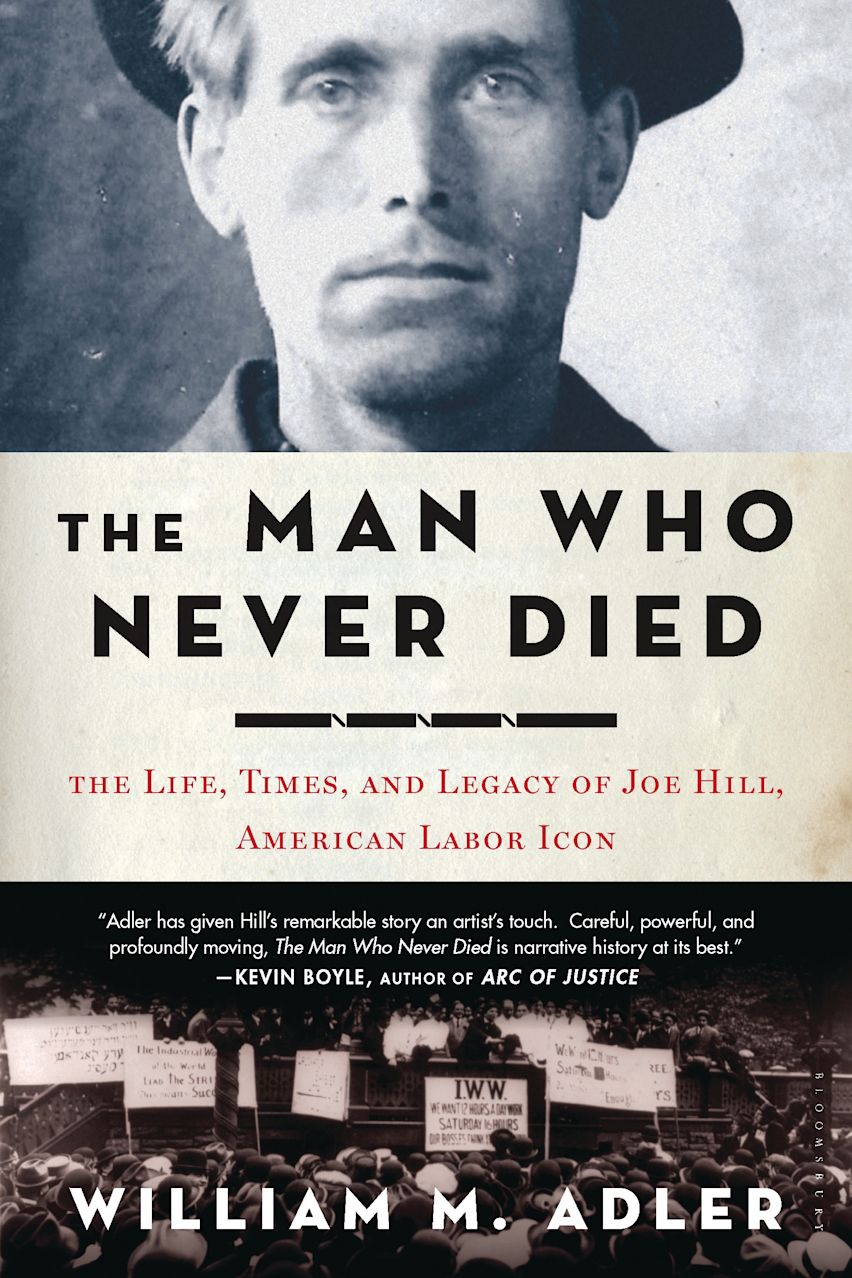
In 1914, Joe Hill was convicted of murder in Utah and sentenced to death by firing squad, igniting international controversy.
Many believed Hill was innocent, condemned for his association with the Industrial Workers of the World, the radical Wobblies.
Now, following four years of intensive investigation, the author gives us a biography of Joe Hill, and presents never before published documentary evidence that comes as close as one can to definitively exonerating him. Joe Hill's gripping tale is set against a brief but electrifying moment in American history, between the century's turn and World War I, when the call for industrial unionism struck a deep chord among disenfranchised workers; when class warfare raged and capitalism was on the run.
Hill was the union's preeminent songwriter, and in death, he became organized labor's most venerated martyr, celebrated by Woody Guthrie and Bob Dylan, and immortalized in the ballad "I Dreamed I Saw Joe Hill Last Night."
Drawing on extensive new evidence, the author deconstructs the case against his subject and argues convincingly for the guilt of another man. This book does justice to Joe Hill's extraordinary life and its controversial end. Set against the background of the raw, turn-of-the-century West, this American story exposes the roots of critical contemporary issues
A biography of IWW songster Joe Hill with new, groundbreaking, primary source analysis that argues he was not guilty of a murder he was convicted for.
William Makepeace Thackeray, History Matters
In 1852–53, the popular British writer William Makepeace Thackeray toured the United States. While he lectured to enthralled American audiences, his secretary Eyre Crowe meticulously recorded the trip in words and pictures. Crowe, who studied painting in France, later published an illustrated memoir of the U.S. trip called With Thackeray in America. Crowe included in his account a visit to the Richmond, Virginia, slave market where he witnessed and sketched a slave auction. As this excerpt demonstrates, his simple act of drawing the harsh circumstances of the slave trade was viewed by the auctioneer and planters as a threat. After his return to England, Crowe turned his sketches into a series of paintings that starkly depicted the auction and the subsequent forced separation of family members and friends.
Eyre Crowe's (William Makepeace Thackeray's secretary) recordings of the horrific experiences faced by enslaved people in the slave trade, but specifically what life was like for those sold in Richmond's slave markets.
William Manning, History Matters
Many ordinary Americans entered into political debates in the revolutionary era and its republican aftermath. While the innovative political ideas that appeared during the constitutional debates in Philadelphia are well known, creative thinking at the grassroots level is harder to locate. William Manning, a farmer, revolutionary foot soldier, and political theorist, became agitated during the postwar political debates and economic crisis. In 1798, he completed a treatise called “The Key of Liberty.” Manning hoped to take advantage of the growing availability of newspapers and pamphlets during the post-revolutionary period to distribute his ideas. “The Key of Liberty” outlined a plan for a national association of American laboring men and their political allies, and also offered a broader historical commentary on the social origins of American politics. The Billerica, Massachusetts, farmer wrote several drafts but failed in his efforts at publication. Family members later deposited his papers in the Harvard University library.
- "The Sentiments of a Labourer": William Manning Inquires in the Key of Liberty, 1798: Many ordinary Americans entered into political debates in the revolutionary era and its republican aftermath. While the innovative political ideas that appeared during the constitutional debates in Philadelphia are well known, creative thinking at the grassroots level is harder to locate. William Manning, a farmer, revolutionary foot soldier, and political theorist, became agitated during the postwar political debates and economic crisis. In 1798, he completed a treatise called “The Key of Liberty.” Manning hoped to take advantage of the growing availability of newspapers and pamphlets during the post-revolutionary period to distribute his ideas. “The Key of Liberty” outlined a plan for a national association of American laboring men and their political allies, and also offered a broader historical commentary on the social origins of American politics. The Billerica, Massachusetts, farmer wrote several drafts but failed in his efforts at publication. Family members later deposited his papers in the Harvard University library.
When the The Key of Liberty was published in 1798, Manning was a veteran of the Revolutionary War and was becoming increasingly disillusioned with American political elites. Having served during the Revolution as a soldier, he often wrote of the abuses suffered by "the Many" at the hands of the "Few," with a particular emphasis on wealth inequality between the two classes. As a Democratic-Republican, Manning hoped that reducing the size of the U.S. governement and its power over average Americans' daily lives would prevent political elites from continuing to abuse and widen the gap between them. In this way, The Key of Liberty is not just a call for reduced government and increased personal liberties - it is an early anti-capitalist critique of U.S. economics and politics.
Revolutionary working class sentiments on equality and liberty
William Manning, History Matters
- William Manning, “A Laborer,” Explains Shays Rebellion in Massachusetts: “In as Plain a Manner as I Am Capable”: The end of the War of Independence in 1783 curtailed wartime loss of life and destruction of property. However, peace also brought economic distress through cycles of depression and glut. These cycles were exacerbated when Massachusetts authorities pursued strict policies on money and debt and British creditors called in their debts during the post-Revolutionary depression. When merchants turned to already pressured farmers and rural traders who had no cash to pay their debts or taxes, courts and jails filled with debtors. In protest, Daniel Shays, a former captain in the revolutionary militia, led an uprising in western and central Massachusetts to close the courts and prevent the seizure of property for unpaid debts. Massachusetts Governor Bowdoin sent a military force that scattered the rebels. In his 1799 treatise to his fellow working men and women, William Manning offered a history of Shay’s Rebellion along with his prescription for avoiding such insurrections in the future by an organization of working people.
When the The Key of Liberty was published in 1798, Manning was a veteran of the Revolutionary War and was becoming increasingly disillusioned with American political elites. Having served during the Revolution as a soldier, he often wrote of the abuses suffered by "the Many" at the hands of the "Few," with a particular emphasis on wealth inequality between the two classes. As a Democratic-Republican, Manning hoped that reducing the size of the U.S. governement and its power over average Americans' daily lives would prevent political elites from continuing to abuse and widen the gap between them. In this way, The Key of Liberty is not just a call for reduced government and increased personal liberties - it is an early anti-capitalist critique of U.S. economics and politics.
Excerpt II - "The Sentiments of a Labourer": William Manning Inquires in the Key of Liberty, 1798: Many ordinary Americans entered into political debates in the revolutionary era and its republican aftermath. While the innovative political ideas that appeared during the constitutional debates in Philadelphia are well known, creative thinking at the grassroots level is harder to locate. William Manning, a farmer, revolutionary foot soldier, and political theorist, became agitated during the postwar political debates and economic crisis. In 1798, he completed a treatise called “The Key of Liberty.” Manning hoped to take advantage of the growing availability of newspapers and pamphlets during the post-revolutionary period to distribute his ideas. “The Key of Liberty” outlined a plan for a national association of American laboring men and their political allies, and also offered a broader historical commentary on the social origins of American politics. The Billerica, Massachusetts, farmer wrote several drafts but failed in his efforts at publication. Family members later deposited his papers in the Harvard University library.
Author William Manning's most famous work elaborating his theory of "The Few and the Many."

William Millikan
Minnesota Historical Society Press (2001)
"The Minneapolis Citizens Alliance (CA) organized local employers with the goal of protecting member businesses from demands made by organized labor. Its story is a dramatic tale of the passionate, bitter struggle for control of the American workplace - and the lives of American workers." "This book offers a detailed portrait of the Minneapolis CA, which employed any means necessary to squelch the power of organized labor. The association blacklisted union workers, ran a spy network to ferret out union activity, and, when necessary, raised a private army to crush its opposition with brute force. The influence of the CA also reached across the state to battle socialists, labor unions, the Nonpartisan League, and the Industrial Workers of the World." "In this work, William Millikan explores the philosophies and tactics of the Citizens Alliance from its inception in 1903 to the passage of the Labor Management Relations Act of 1947, legislation that effectively inhibited the power of unions. Based on meticulous archival research, this book delves into such subjects as the founding of the William Hood Dunwoody Industrial Institute; the 1917 Streetcar Strike and the 1934 Teamsters' Strike; and the CA's collaboration with the Commission of Public Safety, Northwest Bancorporation, the courts, and the military. Both a business history and a labor history, A Union Against Unions offers a comprehensive picture of the CA's campaign against organized labor and a view of Minneapolis history during the first half of the twentieth century."--Jacket
offers a detailed portrait of the Minneapolis Citizens Alliance, which employed any means necessary to squelch the power of organized labor.
William Moraley, History Matters
Many travelers made their way to Philadelphia and the Mid-Atlantic colonies in the eighteenth century in search of economic opportunity, but not all experienced the fabulous success of Benjamin Franklin. William Moraley, born in 1699 into a modest artisanal family, was more typical. Economic cycles were often critical in determining migration patterns; approximately 73,000 people left for the British colonies in the 1730s, twice the average of earlier in the century (17,000 arrived in Philadelphia). Like half of all European emigrants to North America in the eighteenth century, Moraley faced grim conditions at home. After the death of his father, a journeyman clockmaker, Moraley possessed scarce resources and was imprisoned for debt. The thirty-year-old Moraley bound himself for five years as a servant in the British North American colonies. He titled his picaresque account of life in Britain and America The Infortunate: The Voyage and Adventures of William Moraley, an Indentured Servant.
Indentured servant William Moraley's account of life and work in Britain and America, generally casting his experiences in a positive, if not "picturesque" light.

William P. Jones
University of Illinois (2005)
William P. Jones merges interviews with archival sources to explore black men and women's changing relationship to industrial work in the southern sawmill communities of Elizabethtown, North Carolina; Chapman, Alabama; and Bogalusa, Louisiana. By placing black lumber workers within the history of southern industrialization, Jones reveals that industrial employment was another facet of the racial segregation and political disfranchisement that defined black life in the Jim Crow South. He also examines an older tradition of southern sociology that viewed industrialization as socially disruptive and morally corrupting to African American social and cultural traditions rooted in agriculture.
Table of Contents:Remaking a southern lumber mill world -- Black families between farm and factory -- Race, class and leisure in the industrial South -- The New Deal and the new tradition -- Race, Region, and the limits of Industrial Unionism -- Black working-class politics in the postwar South.
Case study of 3 sawmill lumber towns in the South and the racial order across the early 20th century to the postwar

William Powell Jones
W.W. Norton & Company (2013)
A. Philip Randolph as originator of March on Washington; the fight for equal economic and social citizenship began in 1941. He first called for a march on Washington in 1941 to press for equal opportunity in employment and the armed forces. He called for an end to segregation and a living wage for every American. Randolph's egalitarian vision of economic and social citizenship is the strong thread running through the full history of the March on Washington Movement. It was a movement of sustained grassroots organizing linked locally to women's groups, unions, and churches across the country. This work delivers a new understanding of this emblematic event and the broader civil rights movement it propelled.--Publisher information
Randolph's egalitarian vision of economic and social citizenship

William Stanley Hoole Special Collections Library University of Alabama
Funded by an NEH grant, this project focuses on black working class social history of Birmingham, Alabama prior to World War II. Over 70 transcried interviews conducted in mid 1980s. It explores the implications of the immigration of blacks from the rural Deep South to urban metropolitan areas and for understanding the social history of first and second generation black wage earners within the context of urban-industrial development and social change in one New South city.
focuses on black working class social history of Birmingham, Alabama prior to World War II
William Tsutsui
Princeton University Press (2001)
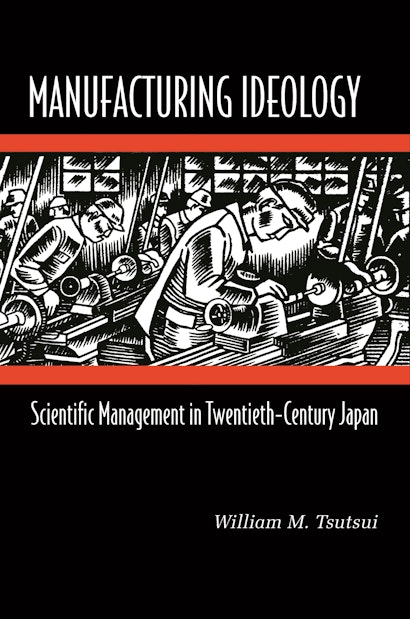
Tsutsui traces the roots of Japanese management practices to Scientific Management, or Taylorism, an American concept that arrived in Japan at the turn of the century. During subsequent decades, this imported model was embraced—and ultimately transformed—in Japan’s industrial workshops. Imitation gave rise to innovation as Japanese managers sought a “revised” Taylorism that combined mechanistic efficiency with respect for the humanity of labor. Tsutsui’s groundbreaking study charts Taylorism’s Japanese incarnation, from the “efficiency movement” of the 1920s, through Depression-era “rationalization” and wartime mobilization, up to postwar “productivity” drives and quality-control campaigns. Taylorism became more than a management tool; its spread beyond the factory was a potent intellectual template in debates over economic growth, social policy, and political authority in modern Japan. Tsutsui’s historical and comparative perspectives reveal the centrality of Japanese Taylorism to ongoing discussions of Japan’s government-industry relations and the evolution of Fordist mass production. He compels us to rethink what implications Japanese-style management has for Western industries, as well as the future of Japan itself.
This history links the roots of Japanese management practices to American Scientific Management
Wilson J. Warren
University of Iowa Press (2007)
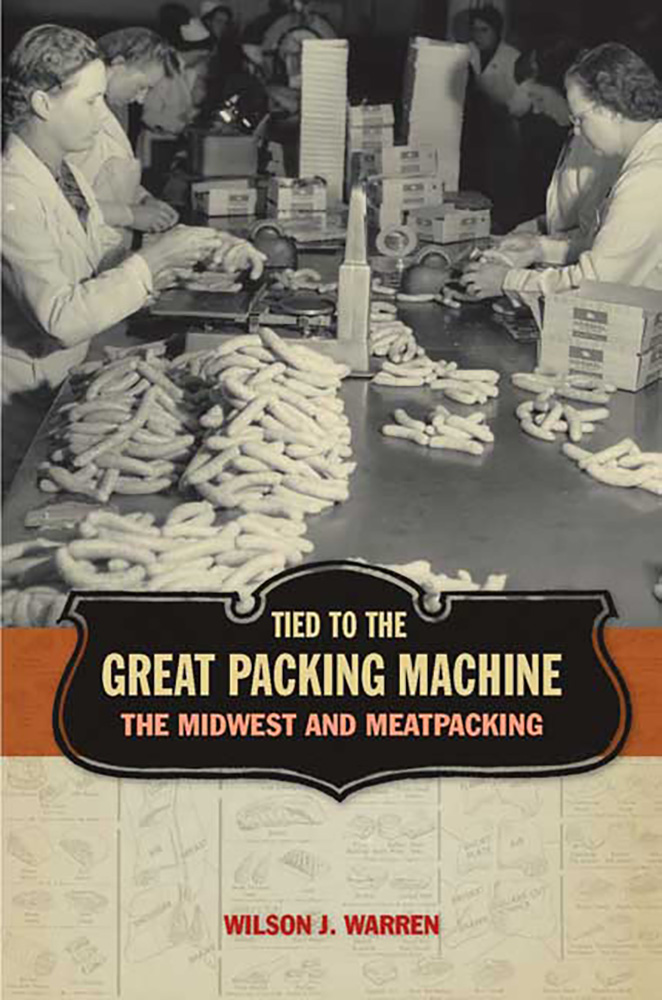
Meatpacking’s enormous effects on the economics, culture, and environment of the Midwest over the past century and a half. Telling the story from the stockyards in Chicago, Kansas City, and Omaha to plants near small towns, particularly in the Great Plains, where cattle and hogs arrive via trucks rather than railroad cars.
The industrial center of the country: the Midwest and meatpacking
pt. 1. Economics
It was all so very businesslike: industrial evolution
A thing as tremendous as the universe: economic impacts
pt. 2. Culture
The families had all been of different nationalities: social dynamics
Benefits of a more substantial nature: workplace rights and quality of community life
With all her soul upon her work: women and packing employment
I'm glad I'm not a hog: a killing industry's ethics
Fresh meats must be had: U.S. meat consumption
pt. 3. Environment
That smelt like the craters of hell: site-point pollution and other public health threats
The cost of fodder: reshaping the agro-industrial environment
To fix his hopes upon a future life: the future of Midwestern meatpacking
tells the dramatic story of meatpacking’s enormous effects on the economics, culture, and environment of the Midwest

Wisconsin Historical Society
Oral histories (1999-2000) conducted by David Giffey, a photojournalist and activist, entitled “People's Stories of South Madison” in which twenty individuals from various walks of life describe their experiences growing up in South Madison, Wisconsin. The majority interviewed are African American and discuss the struggles encountered in school, employment, and housing. Asian, Hispanic, and European experiences in South Madison are also represented. The collection consists of sound recordings of the interviews as well as transcripts. In addition, there are digital copies of photographs (1966-1971) from a separate project entitled “Struggle for Justice: the Migrant Farmworker Labor Movement in Wisconsin,” documenting the living and working conditions of migrant farm workers in Wisconsin. Here, you will find two links: one to the University of Wisconsin-Madison's finding aid for the collection, and another to the collection itself. Each link is numbered and labeled to match a description below.
Link I - South Madison Oral History Project and Migrant Farmworker Photographs Finding Aid (University of Wisconsin-Madison): https://digicoll.library.wisc.edu/cgi/f/findaid/findaid-idx?c=wiarchives;cc=wiarchives;view=text;rgn=main;didno=uw-whs-mss01171
Link II - South Madison Oral History Project and Migrant Farmworker Photographs (Wisconsin Historical Society): https://wisconsinhistory.org/Records?&facets=CATEGORIES%3a%22Wisconsin%20Historical%20Images%22%2cCOLLECTION_NAME%3a%22South%20Madison%20oral%20history%20project%20and%20migrant%20farmworker%20photographs,%201966-1971,%201999-2000%22
A Wisconsin Historical Society Collection gathering photojournalist David Giffey's images and oral histories (24 tape recordings and 97 photographs).
Wisconsin Historical Society
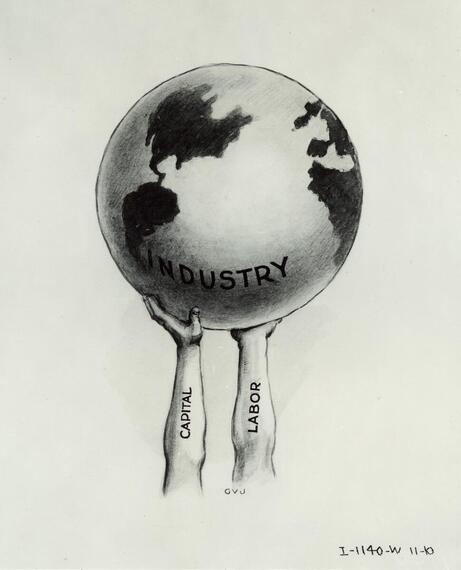
The McCormick-International Harvester Collection contains documents, publications, photographs and films related to Cyrus Hall McCormick and the International Harvester Company. The collection includes more than 12 million pages or items dating from 1753 to 1985. These items document the history of the agricultural equipment industry, the McCormick family and many other topics in fields as diverse as the history of advertising, technology, labor, business, rural life, philanthropy, architecture, Virginia and Chicago.Over 30,000 original documents and publications about the history of Cyrus Hall McCormick and the International Harvester Company are available online.
A vast, Wisconsin Historical Society-held collection gathering material relevant to histories of farming, migrant farm labor, techonology, and ectera in Virginia and Chicago.
Wisconsin Historical Society
The Vel Phillips papers, 1951-2009, document the life and career of Milwaukee’s Vel Phillips, whose work as a lawyer, city alder, civil rights leader, judge, and Secretary of State profoundly influenced Wisconsin’s civil rights history throughout the latter half of the 20th century. Of particular prominence is Ms. Phillips years-long campaign to pass an open housing ordinance in Milwaukee in the 1960s.
A Wisconsin Historical Society collection containing thirty records from the life of Vel Phillips, who was a politician, judge, and prominent historical figure.
Wisconsin Labor History Society
The Wisconsin Labor History Society is a volunteer-based organization working to record and catalogue the historical labor events of Wisconsin. Mission:
Telling the public of the contributions of labor to Wisconsin.
Getting labor’s story in the schools and colleges.
Preserving documents and records of workers and their unions.
Site includes some great resources, including
An Historical Overview of Labor Unions in the United States,” a six-part video series made available by the Wisconsin Labor History Society, takes us through the struggle to organize from centuries past to the present day. Each segment is heavily illustrated.
Local unions, labor councils, school classes and other groups will find the segments, each from nine to eighteen minutes in length, ideal for showing as part of a meeting. The series was produced by James Brown, of Waukesha, a veteran videographer. Narration by Jim Cavanaugh, retired president of the South Central Federation of Labor. Written by Waylon Hedegaard, Jim Cavanaugh and James Brown. Script consultants, Michael Gordon and Dexter Arnold. Partial support was provided by the Wisconsin Labor History Society.
Resources for Wisconsin labor history; essay contest

Womankind
From Womankind (1971) The intensely sexist world of clerical work as told by an insider.
The intensely sexist world of clerical work as told by an insider

Workers Arts and Heritage Centre
The Workers Arts and Heritage Centre was started over 25 years ago by an ambitious and dynamic group of labour historians, artists, and union and community activists who saw a need for a community museum that could celebrate the history of workers and labour. Over the years, we have expanded our vision of work to include both paid and unpaid work, and to be as inclusive as possible of the experiences and histories of the least visible work and workers. WAHC is housed in the heritage-listed Custom House building. In 1995, after intense work by a volunteer board of directors, the (Ontario) Workers Arts and Heritage Centre purchased the historic Custom House in the north end of Hamilton. The building stood deserted until WAHC was able to purchase it. Over $1.5 million went into the restoration of this majestic historic building. As a community museum and arts centre, we offer a diverse array of exhibitions, workshops, educational programs, digital projects, and community events that explore perspectives in labour history, social justice, and contemporary labour issues. WAHC also has a permanent collection of artifacts that relate to labour history and workers’ experiences. We bring together members of our community, unions, local arts organizations, workers’ groups, and artists to share and celebrate the stories of working people. Ours our collaborative ventures.
A community museum based in Hamilton, Ontario which features exhibits, workshops, and more on historical and contemporary labor issues

Working Class History
"This is a map containing our always-growing archive of Stories of our collective struggles to build a better world. To see more information about any of the stories, like Sources, click the "Learn more" link at the bottom of each entry"
selected sites of labor history across the globe

Working Class Studies
Most scholarly study and artistic representation in the world have been about the great and powerful. Working-Class Studies aims to focus both broadly and intimately on working-class lives, cultures, politics, economics, and social movements. The Working-Class Studies Association formed in 2003 to further this goal. We are an international group dedicated to developing working-class studies as a field within higher education and public discourse.
As captured in the “Studies” part of our title, the WCSA’s core is in the academy and the teaching professions where members come from a variety of roles and disciplines. But since our founding, we have fostered connections with our communities, especially activists and independent artists and scholars.
Aspiring to work alongside other fields like Women & Gender, Race & Ethnic, and Labor Studies, we entertain a wide variety of definitions and perspectives on working-class lives with an insistent focus on actual lived experience. We also value interdisciplinarity and the connections that can arise when working across boundaries.
The WCSA is a non-profit organization with 501(c)(3) status and a board elected by our members. Members operate and publish the open access, peer-reviewed Journal of Working-Class Studies twice a year. We post quarterly updates on new books through “Book Notes,” send a newsletter to members, and share news on upcoming events on this website.
Our Working-Class Academics section of WCSA works toward greater class equity within colleges, universities, and communities, and includes scholars at the forefront articulating this experience. The Working-Class Creatives section snapshots working-class artistic production with multimedia profiles, archives our living history, and announces upcoming events.
Many members are active in diversity, equity, and inclusion efforts on their campuses as first-generation, working-class college-goers or graduates. Members encourage each other through informal support systems, mentoring, networking, and sharing syllabi and pedagogical practices that integrate working-class content and epistemologies through an intersectional lens.
We hold an annual WCSA Conference on-ground and online with panels, plenaries, and exhibits on all aspects of working-class life and on occasion, symposiums. A highlight of the Conference includes the WCSA Awards ceremony that recognizes and celebrates new work in the field.
established in 2003, focuess on woring-clas lives, cultures, politics, economics and social movmeents. Published Journal of Working-Class Studies

Working Class Studies Association
This is an open access journal -- all content is freely available without charge to the user or their institution.
The Journal is co-edited by Sarah Attfield and Liz Giuffre (University of Technology Sydney), and operates as an independent, adjudicated, open-acess, scholarly publication alongside WCSA.
Goals:
Promote awareness, growth, and legitimacy of working-class studies internationally
Promote models of working-class studies that actively involve and serve the interests of working-class people
Promote critical discussions of the relationships among class, race, gender, sexuality, nationality, and other structures of inequality
Promote interdisciplinary, multi-disciplinary, and disciplinary approaches to studying and teaching about the lived experience of working-class people
Provide opportunities for academics, artists, activists, workers, independent scholars, students, and others to share their work, make connections with colleagues and professional organizations, and learn about resources
Facilitate conversations and critical debate engaging diverse intellectual and political approaches to scholarship, teaching, and outreach in working-class studies
Create partnerships that link scholarship with activism in labor, community, and other working-class social justice organizations
For more information about the organization, including membership details, please visit the Working-Class Studies Association
The organization also has a regularly updated and widely read blog,
Open source academic journal of Working Class Studies Association
Museum/Exhibits
Tours
Maps
Digital Projects
Organizations
Sites
Film/Video
Audio/Interview
Podcast/Program
Text/Document
Image
Graphs/Data
Timeline
Southwest
West
Midwest
Southeast
Northeast
Mexico
Canada
Global
Books
Teaching
Lectures
Digital Archives
Journals
Bibliographies
Topic Intro