


Collections
Library
Type
Region
Coverage:
-
Published:
-
Charles H. McCormick
During World War I, fear that a network of German spies was operating on American soil justified the rapid growth of federal intelligence agencies. When that threat proved illusory, these agencies, heavily staffed by corporate managers and anti-union private detectives, targeted antiwar and radical labor groups, particularly the Socialist party and the Industrial Workers of the World
traces the activities of L. M. Wendell, a Bureau of Investigation employee who infiltrated the IWWs Pittsburgh recruiting branch and the inner circle of anarchist agitator and lawyer Jacob Margolis.

Charles Hardy, History Matters
The harsh brutality of race relations in the late nineteenth-century South was sometimes best expressed through small incidents. For William Robinson, the story that best encapsulated his own experience growing up African-American in rural Georgia in the 1880s involved three peaches. He was interviewed by oral historian Charles Hardy in 1983 when Robinson was 103 years old. Apparently, some ninety-five years earlier when he was eight years old, three black boys sneaked into a peach orchard on the way home from church and stole some peaches, three of which they gave to young Robinson. The white orchard owner caught Robinson and threatened him with the chain gang. He forced Robinson’s father to pay $21 for the three peaches—a sum that could well have been a year’s cash income for a sharecropping family in this period.
An audio clip from 1983 interview of William Robinson tells a story that reveals the exploitative and unequal nature of race relations in post-Civil War America.

Charles McCollester
video tour of Pittsburgh-area labor history sites hosted by historian Charles McCollester
short videos about labor history
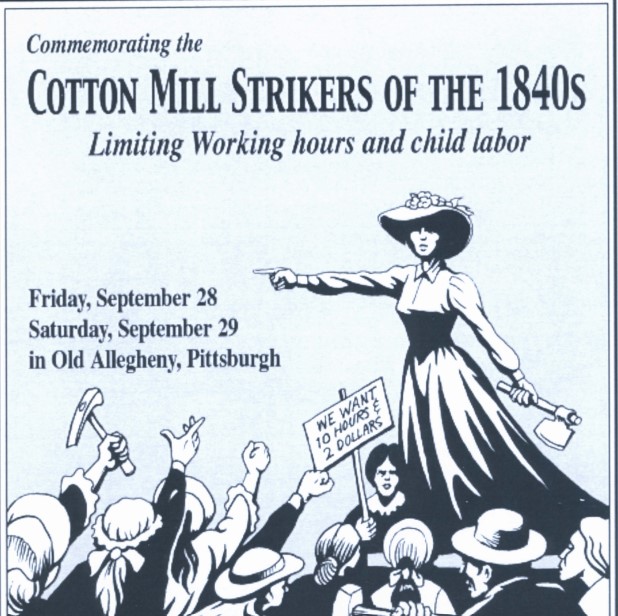
Charles McCollester, Battle of Homestead
The Charles McCollester Collection contains both physical items and textual items spanning from 1877 to 2018 with an emphasis on the 1980's into the 2000's. The collection's subjects vary from Pittsburgh steel and union history, the founding of the Battle of Homestead Foundation, Monsignor Rice (a famous labor priest) and Pennsylvania historical markers. Though the collection focuses primarily on the state of Pennsylvania, much of the collection has national significance as well.
The Charles McCollester Collection digital collection contains photos,
Charles Post
This book synthesizes Marxian theory with the existing historical literature to produce a new analysis of the origins of capitalism in the US and the social roots of the US Civil War
the origins of capitalism in the US and the social roots of the US Civil War
Charles Postel
The Civil War unleashed a torrent of claims for equality—in the chaotic years following the war, former slaves, women’s rights activists, farmhands, and factory workers all engaged in the pursuit of the meaning of equality in America. This contest resulted in experiments in collective action, as millions joined leagues and unions. In Equality: An American Dilemma, 1866-1896, Charles Postel demonstrates how taking stock of these movements forces us to rethink some of the central myths of American history.
Despite a nationwide push for equality, egalitarian impulses oftentimes clashed with one another. These dynamics get to the heart of the great paradox of the fifty years following the Civil War and of American history at large: Waves of agricultural, labor, and women’s rights movements were accompanied by the deepening of racial discrimination and oppression. Herculean efforts to overcome the economic inequality of the first Gilded Age and the sexual inequality of the late-Victorian social order emerged alongside Native American dispossession, Chinese exclusion, Jim Crow segregation, and lynch law.
Now, as Postel argues, the twenty-first century has ushered in a second Gilded Age of savage socioeconomic inequalities. Convincing and learned, Equality explores the roots of these social fissures and speaks urgently to the need for expansive strides toward equality to meet our contemporary crisis.
ormer slaves, women's rights activists, farmhands, and factory workers all engaged in the pursuit of the meaning of equality in America
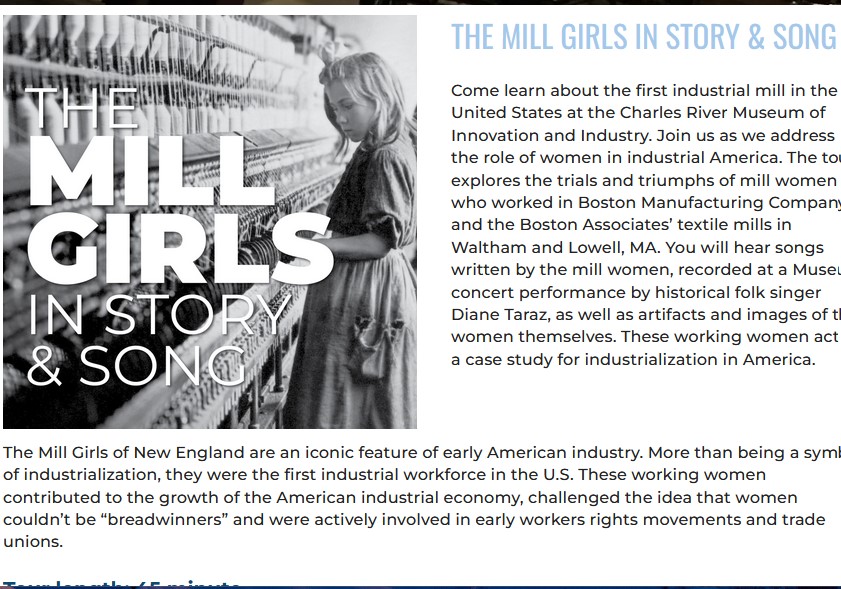
Charles RIver Museum
Walking Tours: From Bale to Bolt: The First Integrated Factory
The Mill Girls: In Story and Song
Walking tours that focus on labor including the Mill Girls Story in Lowell
Charles RIver Museum
Located in the Francis Cabot Lowell Mill, an icon of the American Industrial Revolution, the Charles River Museum of Industry & Innovation brings together intriguing artifacts, cultural insights, and inspiring stories to delight people of all ages, enabling them to see the past and envision the future. Includes Blue Collar 101, highlighting the trades and their role in innovation: Each session spotlights a different trade or type of industrial work, including those that keep our electrical grid powered, water flowing, transit systems running on time, and our modern world functioning.
Museum that covers labor issues as part of the focus and purpose
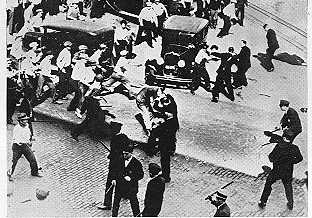
Charles Rumford Walker
This is a book about the rank-and-file and leadership of Teamsters Local 574 during their three strikes in 1934. These strikes turned what was once the open shop, or non-union city of Minneapolis, Minnesota into what became one of the strongest union bastions in the United States. This is their story.
Chapters 6-10 of a book and several photos of the 1934 Minneapolis Truckers' Strike.
Charles S. Isaacs
The story of an Ocean Hill-Brownsville teacher who crossed picket lines during the racially charged New York City teachers' strike of 1968. In 1968 the conflict that erupted over community control of the New York City public schools was centered in the black and Puerto Rican community of Ocean Hill-Brownsville. It triggered what remains the longest teachers' strike in US history. That clash, between the city's communities of color and the white, predominantly Jewish teachers' union, paralyzed the nation's largest school system, undermined the city's economy, and heightened racial tensions, ultimately transforming the national conversation about race relations. At age twenty-two, when the strike was imminent, Charles S. Isaacs abandoned his full scholarship to a prestigious law school to teach mathematics in Ocean Hill-Brownsville. Despite his Jewish background and pro-union leanings, Isaacs crossed picket lines manned by teachers who looked like him, and took the side of parents and children who did not. He now tells the story of this conflict, not only from inside the experimental, community-controlled Ocean Hill-Brownsville district, its focal point, but from within ground zero itself: Junior High School 271, which became the nation's most famous, or infamous, public school. Isaacs brings to life the innovative teaching practices that community control made possible, and the relationships that developed in the district among its white teachers and its black and Puerto Rican parents, teachers, and community activists
The story of an Ocean Hill-Brownsville teacher who crossed picket lines during the racially charged New York City teachers' strike of 1968.
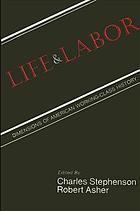
Charles Stephenson
Fifteen essays explore the impact of industrialization and technology on the lives of working people and their responses to the changes in society over the past one-hundred-fifty years. Focusing on the everyday life of working-class Americans, it discusses such topics as production technology, occupational mobility, industrial violence, working women, resistance to exploitation, fraternal organizations, and social and leisure-time activities.
The essays are written in a lively manner accessible to an undergraduate audience and also provide insights and a solid background for graduate students and scholars in the field of American labor and social history. The book presents the work of members of the generation of labor and social historians who matured in the 1970s and who are now establishing themselves as leaders in their fields.
Acknowledgments
CHAPTER 1. Dimensions of American Working-Class History CHARLES STEPHENSON AND ROBERT ASHER
CHAPTER 2. From Artisan to Proletarian: The Family and the Vocational Education of the Shoemaker in the Handicraft Era WILLIAM MULLIGAN
CHAPTER 3. Industrial Ecology and the Labor Process: The Redefinition of Craft in New England Textile Machinery Shops, 1820-1860 THOMAS LEARY
CHAPTER 4. Worker and Community: Fraternal Orders in Albany, New York, 1845-1885 BRIAN GREENBERG
CHAPTER 5. "There's Plenty Waitin' at the Gates": Mobility, Opportunity, and the American Worker CHARLES STEPHENSON
CHAPTER 6.The Dialectics of Bureaucratization: The Case of Nineteenth-Century American Railway Workers WALTER LICHT
CHAPTER 7. Industrial Safety and Labor Relations in the United States, 1865-1917 ROBERT ASHER
CHAPTER 8. The Boycott and Working-Class Solidarity in Toledo, Ohio in the 1890s GREGORY ZIEREN
CHAPTER 9. Reforming Working-Class Play: Workers, Parks, and Playgrounds in an Industrial City, 1870-1920 ROY ROSENZWEIG
CHAPTER 10. Dance Madness: New York City Dance Halls and Working-Class Sexuality, 1900-1920 KATHY PEISS
CHAPTER 11. Women Workers, Work Culture, and Collective Action in The American Cigar Industry, 1900-1919 PATRICIA COOPER
CHAPTER 12. Not So "Turbulent Years": A New Look at the 1930s MELVYN DUBOFSKY CHAPTER.13 Fighting on the Domestic Front: Black Steelworkers During World War II DENNIS DICKERSON
CHAPTER 14. Life at the Rouge: A Cycle of Workers' Control NELSON LICHTENSTEIN
CHAPTER 15. Office Workers and Machines: Oral Histories of Rhode Island Working Women VALERIE QUINNEY
explores the impact of industrialization and technology on the lives of working people and their responses to the changes in society.
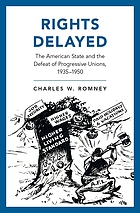
Charles W. Romney
Progressive unions flourished in the 1930s by working alongside federal agencies created during the New Deal. Yet by 1950, few progressive unions remained. Why? Most scholars point to domestic anticommunism and southern conservatives in Congress as the forces that diminished the New Deal state, eliminated progressive unions, and destroyed the radical potential of American liberalism. In Rights Delayed, Charles W. Romney argues that anti-communism and Congressional conservatism merely intensified the main reason for the decline of progressive unions: the New Deal state's focus on legal procedure.
Concentrating on the west coast cannery industry, Romney shows how progressive unions initially thrived by embracing the procedural culture of New Deal agencies and the wartime American state. Between 1935 and 1945, unions mastered the complex rules of the National Labor Relations Board (NLRB) and other federal entities by working with government officials. In 1946 and 1947, however, the emphasis on legal procedure made the federal state too slow to combat potentially illegal cooperation between employers and conservative unions, particularly the Teamsters.
Workers who supported progressive unions rallied around procedural language to stop what they considered Teamster collusion but found themselves dependent on an ineffective federal state. The state became even less able to protect employees belonging to left-led unions after the Taft-Hartley Act's anticommunist provisions - and decisions by union leaders - limited access to the NLRB's procedures. From 1946 until 19150, progressive unions withered and eventually disappeared from the Pacific canneries as the unions failed to pay the cost of legal representation before the NLRB. Workers supporting progressive unions had embraced procedural language to claim their rights, but by 1950 those workers discovered that their rights had vanished in an endless legal discourse"--Unedited summary from book jacket
argues that anti-communism and Congressional conservatism merely intensified the main reason for the decline of progressive unions: the New Deal state's focus on legal procedure
Charles Woodmason, History Matters
Charles Woodmason, a newly ordained Anglican minister, left the comforts of Charleston, South Carolina, in 1761 to travel for six years in the Carolina backcountry as an itinerant minister, seeking to bring the established church to areas where it had not taken hold.
He also became a fierce partisan of the Regulator movement, a frontier rebellion attempting to obtain a greater voice and fairer claims for backcountry residents who resented the monopolization of power by the coastal leaders.
Although Woodmason was hostile toward the colony’s elite for their lack of concern over the political and especially religious life of the frontier, the British migrant held traditional beliefs about morality and social order. He was appalled by the immoral and irreligious behavior rampant on the frontier, as he made clear in this selection from his journal of 1768.
Charleston, South Carolina, experiences in regulator movement, a rebellion against monopoly
Charlie Chaplin
Charlie Chaplin's classic silent film where he stars as the famed "Little Tramp" character, whose struggles as a factory worker illustrate subtle commentaries on class struggle, modernity, and industrialization in the early-twentieth century. THis is a link to a version with Spanish subtitles. Only version available unpaywalled.
A classic film commenting on mundane industrial work experienced by workers during the Great Depression
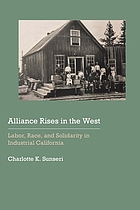
Charlotte K Sunseri
This volume explores how pluralistic communities thrived in California's mining hinterland as well as how immigrants and California Natives mobilized or mitigated power inequalities through their daily experiences of identity expression, community cohesion, and labor relations.
explores how pluralistic communities thrived in California's mining hinterland.
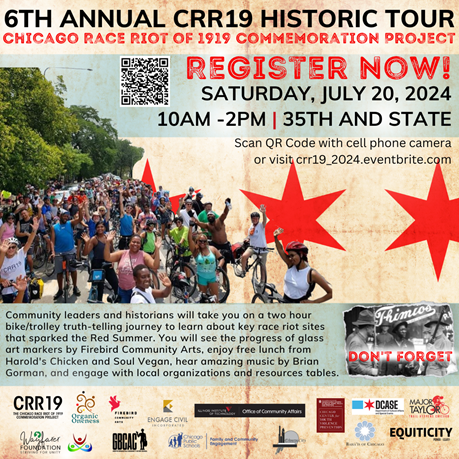
Chicago 1919 project
Guided tours of varying lengths
An annual bike an bus tour that featurs geographical markers of those killed in the 1919 Chicago Race Riots
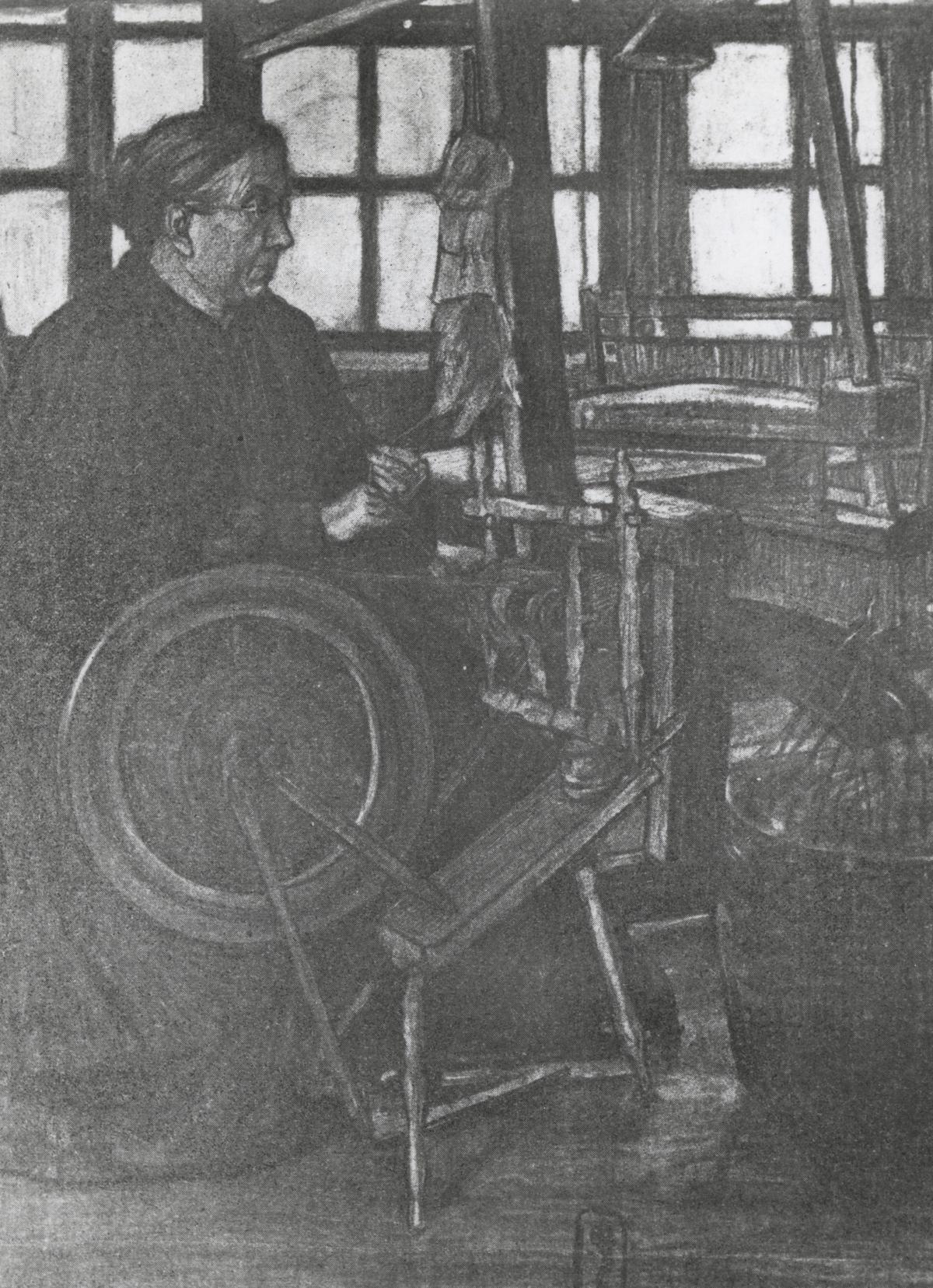
Chicago Collections Consortium
results when the word labor is entered. Try garment workers, Industrial Workers of the World, etc.
Search for labor-related items from this database of materials
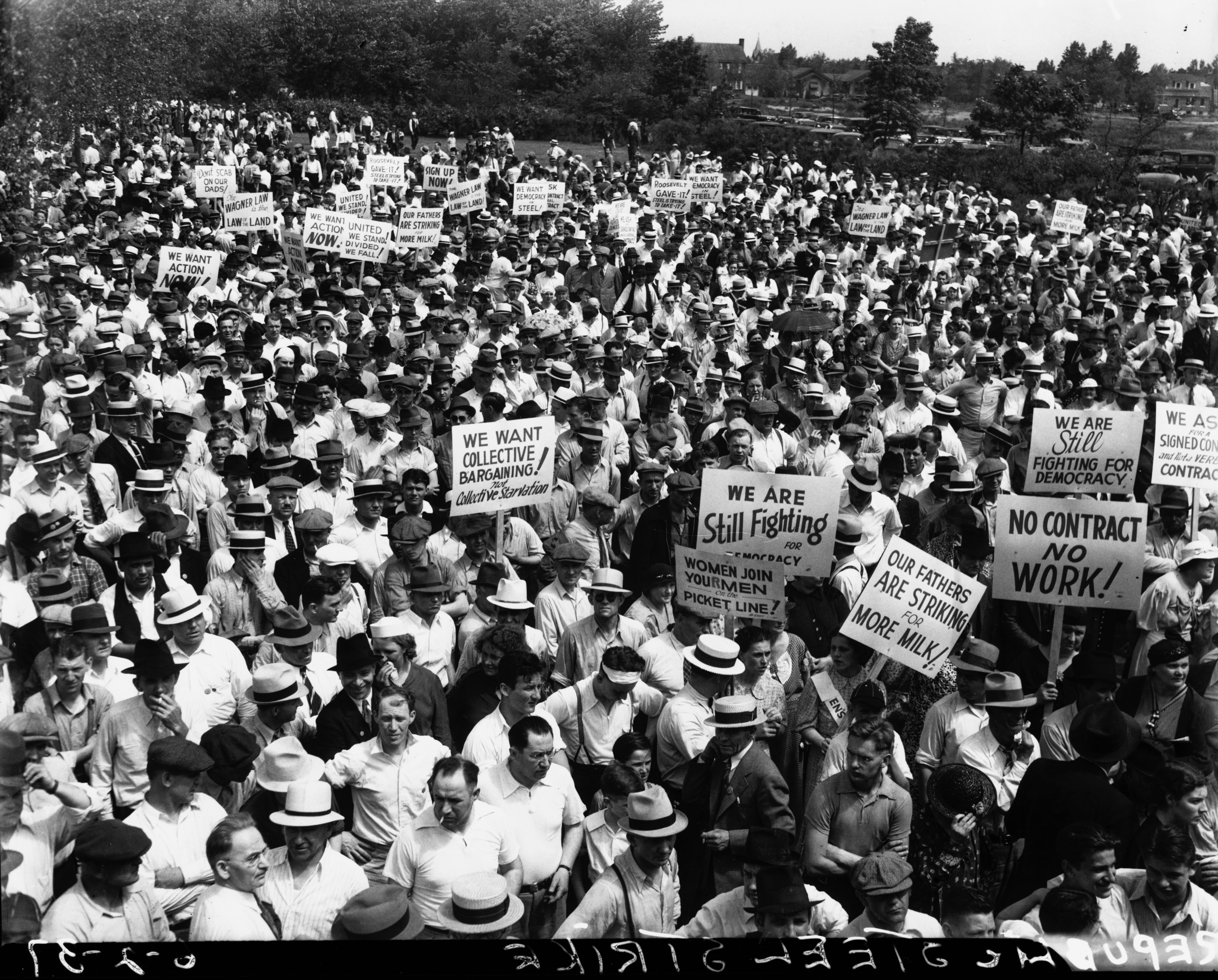
Chicago Collections Consortium
Explore the deep collections of the Chicago Collections
Searchable database of materialson Chicago, including labor and work history
Chicago Daily Socialist, Marxists.org
Chicago, Illinois. (1906 - 1912) Preceded by Wokrers Call, a Socialist Labor Party paper, published Springfield, Illinois; began; The Chicago Daily Socialist was begun late in October 1906, initially envisioned as a temporary side-project of the weekly Chicago Socialist. Published by Local Cook County, Socialist Party, the paper was created for a special run as a daily for a two week duration, culminating with the November 1906 general election.
The paper seems to have been very warmly received from the outset, however, selling well enough that the Executive Committee of Local Cook County made a quick decision to keep the paper as a permanent publication, with the costly 12-page Sunday editions abandoned after the initial two week run. The paper was the second English-language socialist daily in America, following into the field The Daily People of New York City, published from 1902 by the rival Socialist Labor Party. (This fact was rudely overlooked in an editorial in the ninth issue of the paper, which wrongly claimed for itself the mantle of “first permanent daily socialist newspaper in the English-speaking world.”)
The Daily Socialist was funded by the issuance of 5,000 shares of stock, which were to be sold to supporters for $10 each. Cover price of each issue was 1 cent, with subscriptions available at the rate of $2 per year.
Edited by A.M. Simons of the International Socialist Review, the Daily Socialist is most noteworthy for the vast number of cartoons which it published, frequently running two per day. The paper began with a largely volunteer staff, with one notable contribution made by radical novelist Jack London, who wrote a short analysis of the sensational Moyer-Haywood murder frame-up in the issue of November 4, 1906.
The publication deals largely with Chicago-area political events and is particularly interesting as an early venue for the editorial cartoons of artist Ryan Walker.
The paper terminated in 1912 for financial reasons.
--by Tim Davenport
Chicago-based daily Socialist Paper; much labor news
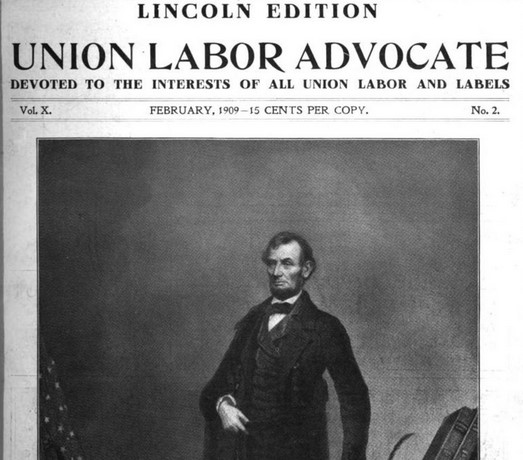
Chicago Federation of Labor
"devoted to the Interests of All Union Labor and Labels
published in Chicago, by CHicago Federation of Labor; essays by John Fitzpatrick, the advance guard of the AFL, reports of the Women's Trade Union League
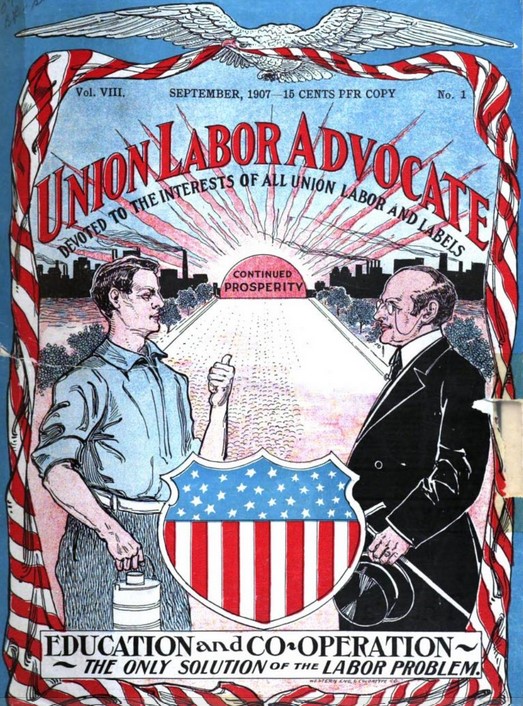
Chicago Federation of Labor
"devoted to the Interests of All Union Labor and Labels
published in Chicago, by CHicago Federation of Labor; essays by John Fitzpatrick, the advance guard of the AFL, reports of the Women's Trade Union League
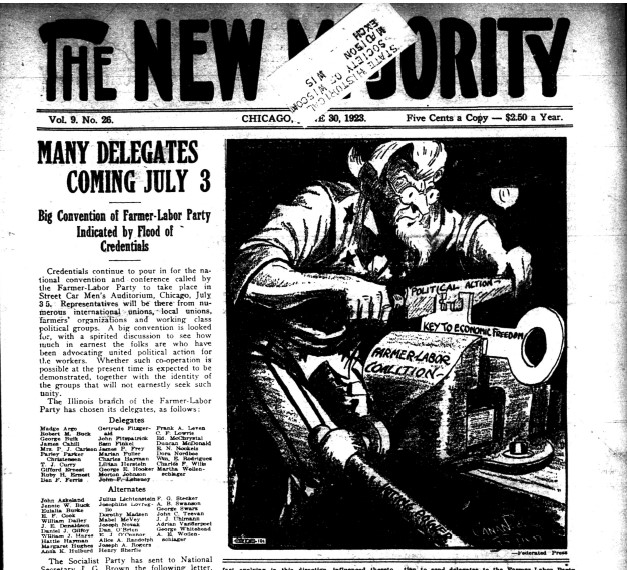
Chicago Federation of Labor, Hathi Trust
The New Majority was one published by the Chicago Federation of Labor as the organ of the Federated Farmer-Labor Party in the United States. The target of a takeover by the new Workers (Communist) Party it was basically destroyed by this internecine battle between the unionists of the CFL and the WP. Published between 1919 and 1924 it remained an important publication documenting the non-Communist left in the American workers movement. Our listing here however is only a sampling of the issues from 1923, from the time of the founding convention of the Federated Farmer-Labor Party. These particular issues scanned were chosen because they contained articles that document the sentiments toward the Workers Party held by Robert LaFolette and others around him during the time immediately before, during, and after the hijacking by the Workers Party of the Farmer Labor Party founding convention held in the first week of July 1923.
Chicago Federation of Labor newspaper, 1922 volumes
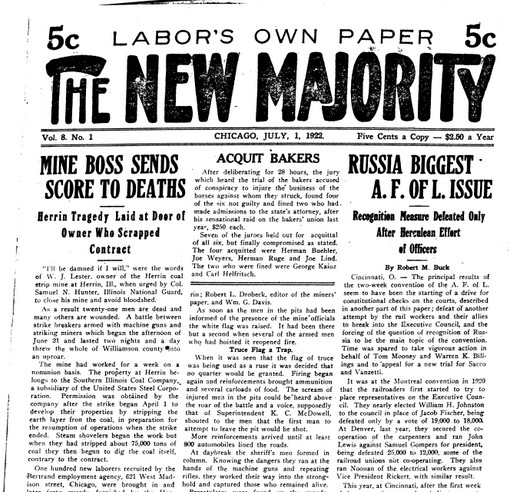
Chicago Federation of Labor, Marxist.org
"Owned and controlled by the Chicago Federation of Labor and its affiliated unions in the interests of organized labor. Official organ of the Labor Party of Illinois and the Labor Party of Cook County and national official organ of the Labor Party." The New Majority was one published by the Chicago Federation of Labor as the organ of the Federated Farmer-Labor Party in the United States. The target of a takeover by the new Workers (Communist) Party it was basically destroyed by this internecine battle between the unionists of the CFL and the WP. Published between 1919 and 1924 it remained an important publication documenting the non-Communist left in the American workers movement. Our listing here however is only a sampling of the issues from 1923, from the time of the founding convention of the Federated Farmer-Labor Party. These particular issues scanned were chosen because they contained articles that document the sentiments toward the Workers Party held by Robert LaFolette and others around him during the time immediately before, during, and after the hijacking by the Workers Party of the Farmer Labor Party founding convention held in the first week of July 1923.
Chicago Federation of Labor newspaper, 1922 volumes

Chicago Historical Society, Northwestern University
The Haymarket Affair Digital Collection. The Chicago Historical Society \created this digital collection to provide on-line access to its primary source materials relating to the Haymarket Affair, a controversial moment in Chicago's past and a pivotal event in the early history of the American labor movement. This is all that remains of the rather famous digital exhibit, the Dramas of Haymarket, which has been taken down. The digital collection presents images of key documents and artifacts in their historical context with a minimum of interpretive information. Much like the witness testimony and exhibits introduced during the Haymarket trial, these primary sources are pieces of evidence which enable the user to reconstruct and interpret the historical events to which they relate.
The Trial Documents
Outline of Proceedings
Examination of Jurors - Selections
Witness Testimony
Exhibits
Illinois Supreme Court Decision
Published Materials
The accused the accusers. The famous speeches of the eight Chicago anarchists in court...October 7th, 8th and 9th, 1886
An Appeal to the People of America
In the Supreme Court of Illinois...The anarchists' cases: Synopsis of Mr. Swett's oral argument
In the Supreme Court of Illinois...Oral Argument of W.P. Black for the Plaintiffs
Reasons for Pardoning Fielden, Neebe, and Schwab
Additional Manuscripts
Chicago Police Department Reports
Verdict of Guilty and Sentence of Imprisonment against Oscar Neebe
Verdict of Guilty and Sentence of Death against August Spies et al.
Address of Judge Joseph E. Gary.
Autobiographies of August Spies and Albert Parsons
Article of agreement for Anarchist Publishing Association.
Assorted letters and telegrams
George Engel letter to Governor Richard Oglesby.
Signature cards
Certification of Execution of Albert R. Parsons
Certification of delivery of Michael Scwhab and Samuel Fielden to Joliet Penitentiary.
Artifacts
Police paraphenalia
Labor banners and socialist organization flags
Artifacts of destruction
Broadsides
National Eight Hour Proclamation
"Declaration of Principles and County Platform of the Socialist Part of America"
"Preamble and Declaration of Principles of the Knights of Labor of America"
"Proclamation"
"Arrest for Murder and Inciting Riot"
"Grand Raffle!"
Photographs & Prints
Photographs of the defendants
Photographs of the attorneys and members of the court
Images of Haymarket Square, McCormick Reaper Works and the County Jail and Courthouse
Wood engravings - The Haymarket Affair as depicted in the press
Harper's Weekly
Frank Leslie's Illustrated Newspaper
The Graphic News
The Pictorial West
on-line access to its primary source materials relating to the Haymarket Affair, a controversial moment in Chicago's past and a pivotal event in the early history of the American labor movement.
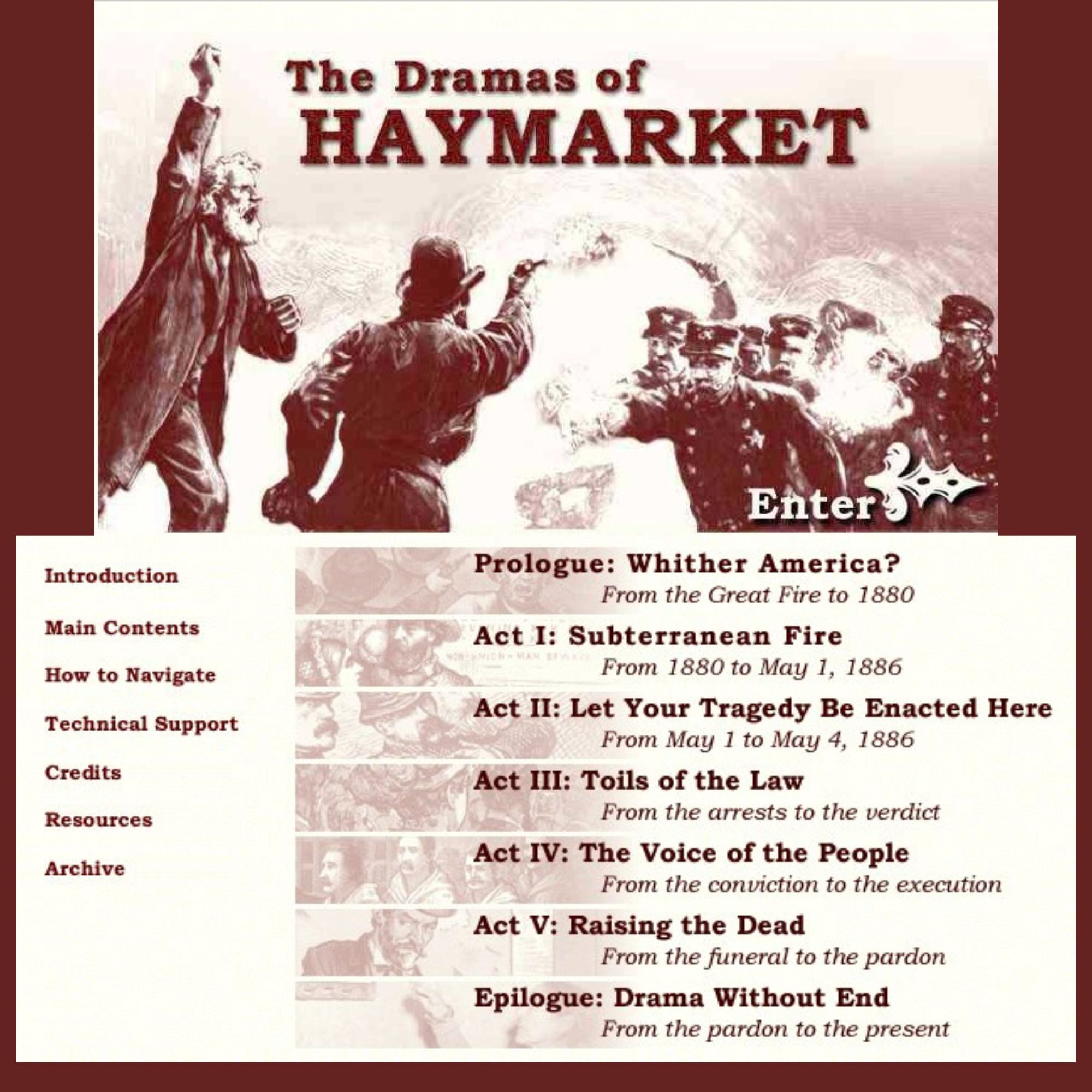
Chicago Historical Society, Northwestern University
The Dramas of Haymarket itself is organized in the form of a drama, a tragedy in five Acts with a Prologue and an Epilogue. The seven major parts of the site–the Prologue, the five Acts, and the Epilogue–are arranged chronologically. While the site devotes considerable attention to the Haymarket protest meeting on the evening of May 4, 1886, at which several policemen were killed by a dynamite bomb attributed to political radicals, it encompasses a great deal more.
The Prologue is titled "Whither America?" and deals with the period between the Great Chicago Fire of 1871 and around 1880, devoting considerable attention to the importance of the national railroad strike of 1877 and other developments in the radicalization of many American workers. Act I, "Subterranean Fire," traces the widening class divisions in American society and the rising level of violence in word and deed from the early 1880s to the time of the Haymarket meeting. Act II, "Let Your Tragedy Be Enacted Here," focuses on the meeting itself, though it first discusses the national eight-hour demonstrations of May 1 1886, that centered in Chicago. Act III, "Toils of the Law," is the largest Act. It covers the legal proceedings that began with the "red scare" and police "witch hunt" immediately following the bombing and extended through the sentencing of the convicted anarchists in October 1886. Act IV, "The Voice of the People," examines the legal and public appeals that ended with the executions in November 1887; Act V, "Raising the Dead," opens with the funeral of the executed men and concludes with Illinois Governor John Peter Altgeld's absolute pardon of the surviving defendants in 1893. The Epilogue, which is titled "Drama without End," surveys the contested heritage of Haymarket up to the present, including centennial events in Chicago in 1986.
Digital project on the haymarket affair, arranged in 7 dramatic acts
Museum/Exhibits
Tours
Maps
Digital Projects
Organizations
Sites
Film/Video
Audio/Interview
Podcast/Program
Text/Document
Image
Graphs/Data
Timeline
Southwest
West
Midwest
Southeast
Northeast
Mexico
Canada
Global
Books
Teaching
Lectures
Digital Archives
Journals
Bibliographies
Topic Intro