


Collections
Library
Type
Region
Coverage:
-
Published:
-

Chicago History Museum
Face-to-Face with the Great Depression: Whose History Is It Anyway?: Patterns in History uses evidence frfom primary soruces ad a simple debate format, asking students to present positions concerning the lessons of the Great Depression; geared to Middle school and High school, and is best used in conjunction with the Studs Terkel website f of interviews; It is also recommended to use copies of Terke's books Hard Times and WOrking .
Arduous times result in “national conversations” in the media and the political arena, within organizations
and institutions, and among friends and family. Today we continue to debate, discuss, and evaluate the
causes, lasting effects, remedies, and legacy of the Great Depression
Key questions
1. Do historic patterns from the Depression repeat themselves today?
2. What current events are hotly debated? What opposing viewpoints are expressed?
3. What conditions produce scapegoats? Are scapegoats the product of historical cause-effect
thinking gone awry?
Goal of this lesson
To enhance students’ abilities to analyze, synthesize, and debate information and data about the
Great Depression through the reading of primary source material.
Objectives
This lesson aims to help students:
1. Strengthen their research skills.
2. Understand the value of primary sources.
3. Apply their critical thinking and listening skills.
4. Gain formal debate experience.
5. See opposing views reasonably.
6. Identify fallacious reasoning.
Chicago History Museum Middle School Lesson plan about the Great Depression, Grades 6-8 using Studs Terkel interviews
Chicago History Museum
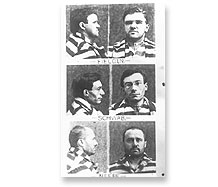
"Haymarket Affair" is a convenient term of reference for a controversial series of events that occurred in Chicago during the years 1886 and 1887. Some of the events and the circumstances surrounding them are disputed or not fully understood. The identity of the bomber has never been established for certain. The events that are generally agreed to belong to the narrative of Haymarket are:
a quick timeline of the leadup and aftermath of the Haymarket Affair, 1886

Chicago Women's Liberation Union
Editors Note: "Mary Blake" (her name changed for this article to avoid retaliation), talks about growing up in Chicago and facing racial and gender discrimination. She was a City Hall janitress and active in the campaign to end job discrimination there.
Mary Blake talks about growing up in Chicago and facing racial and gender discrimination
Chicago Women's Liberation Union
An experienced waitress explains what it is like to serve your food. Not always an appetizing job. (Editors Note: A true life adventure about real life in food service work. The author was a community college student on Chicago's Southwest Side.)"
An experienced waitress explains what it is like to serve your food
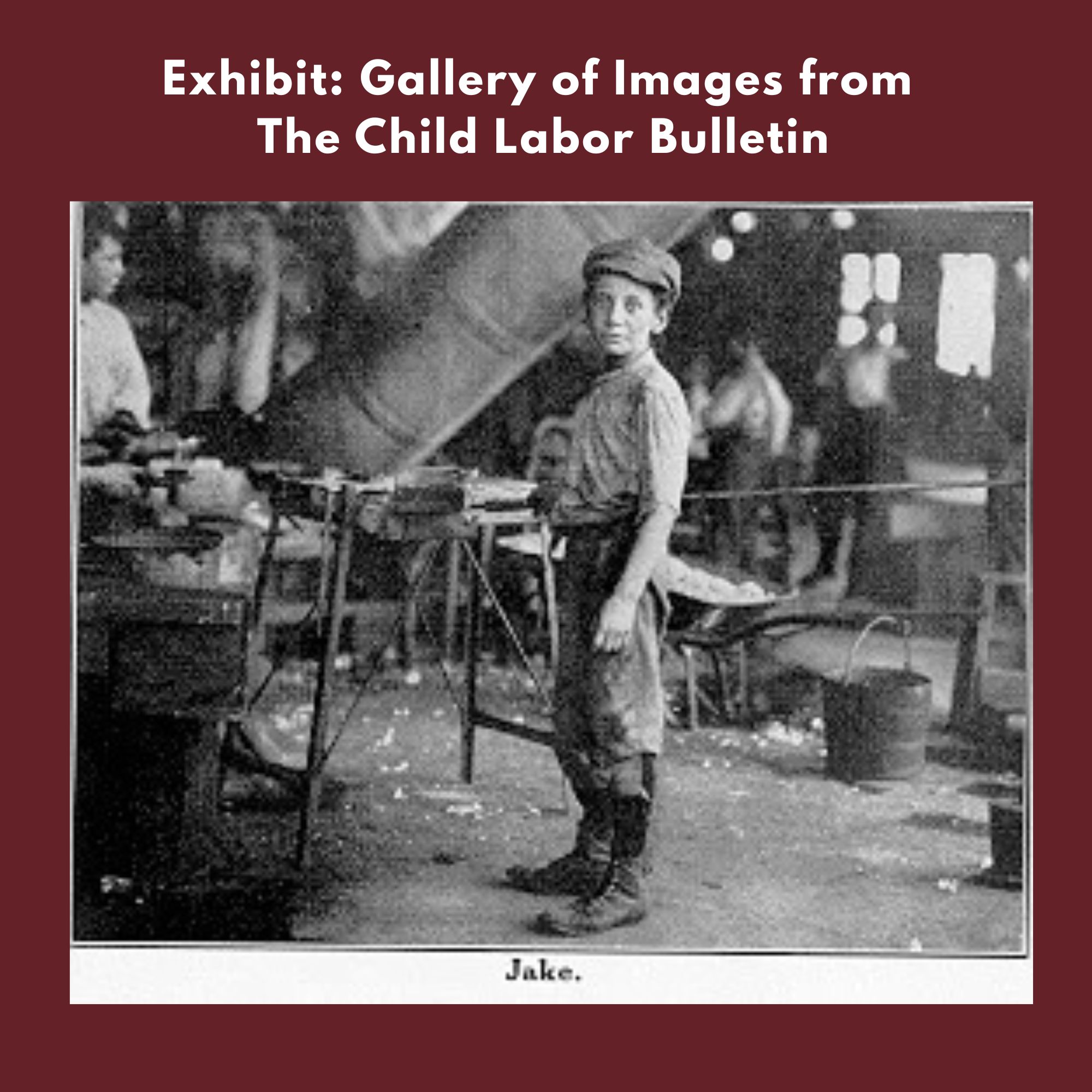
Child Labor Bulletin, Ohio State Univerity
The Child Labor Bulletin (7 volumes published between June 1912 to Feb 1919 by the National Child Labor Committee). Part of The Ohio State University Library collections, also available online on archive.org.
photos published during the early 20th century

Chinese Laborers, History Matters
Even in the late nineteenth-century American West, a notably violent region, the violence directed against Chinese immigrants was shocking. The Union Pacific railroad employed 331 Chinese and 150 whites in their coal mine in Rock Springs, Wyoming. On September 2, 1885, Chinese and white miners, who were paid by the ton, had a dispute over who had the right to work in a particularly desirable area of the mine. White miners, members of the Knights of Labor, beat two Chinese miners and walked off their jobs. That evening the white miners, armed with rifles, rioted and burned down the Chinese quarter. No whites were prosecuted for the murder of twenty-eight Chinese and $150,000 in property damage, even though the identities of those responsible were widely known. Although U.S. Army troops had to provide protection before some of the Chinese could finally return to their burned-out homes in Rock Springs, some defiantly continued to work in the Union Pacific mines into the next century. The grim story of the riot was given in the Chinese workers’ own words in this “memorial” that they presented to the Chinese Consul at New York.
Chinese workers’ own words in this “memorial” that they presented to the Chinese Consul at New York.
Chloe E. Taft
Bethlehem, Pennsylvania, the world headquarters of the Bethlehem Steel Corporation for most of the twentieth century, is now home to an industrial-themed casino. Based on extensive fieldwork and dozens of interviews, From Steel to Slots explores how the global transitions of "casino capitalism" and a shift towards economies based on service, entertainment, and financial speculation are lived, legitimated, and contested in and through the local landscape of a former industrial city. As legalized gambling spreads in the United States and around the world to drive economic revitalization, create jobs, and generate tax revenues, multinational casino corporations are increasingly acting as urban planners."--Provided by publisher
multinational casino corporations are increasingly acting as urban planners
Chrestian LeClerq, History Matters
From the start of colonization, Indians and Europeans viewed each other across a wide cultural gulf. Sure about the superiority of their civilization, European missionaries and teachers tried to convert Indians to Christianity and the European way of life.
Some Indians did adopt new ways after disease and violence had decimated their communities; others rejected the European entreaties and pointed out the arrogance of these claims of cultural superiority.
French priest Chrestien LeClerq traveled among the eastern Algonquian people who lived in what are now the Maritime Provinces of Canada. He recorded a Micmac leader’s eloquent response to these attempts at “reform” that pointed out how difficult Europeans found it to live in Indian country. If France was such a terrestrial paradise, he asked, why were colonists making their way across the Atlantic to live in the forests of North America?
Source: William F. Ganong, trans. and ed., New Relation of Gaspesia, with the Customs and Religion of the Gaspesian Indians,by Chrestien LeClerq (Toronto: Champlain Society, 1910), 103–06.
Algonquian (Gaspesian) critique of colonizers
Chris Carlson
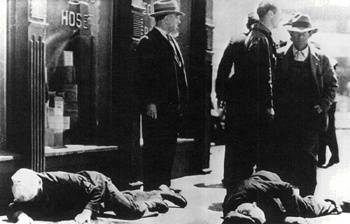
A short essay giving general information on the 1934 General Strike.
After Bloody Thursday (July 5, 1934), when police killed two strikers, twenty-one unions representing Teamsters, longshoremen and seamen voted to organize a general strike. They hoped to win higher wages, shorter hours, and union control of hiring halls.
Despite exceptions from conservative union leadership in the Central Labor Committee keeping many workers at their jobs, vitriolic attacks from San Francisco’s newspapers, police and vigilante violence and break-ins against labor organizations, and threats of university student scab workers, over 150,000 workers around the Bay Area officially went on strike by July 16, 1934.
Ultimately, the opposition weakened the strike and by July 20th, all unions involved had voted to return to work. Maritime workers gained partial victories on wages, hours, and hiring halls from an arbitrator's decision handed down months after the July strike, and the impetus towards worker organizing led to a major wave of unionization throughout San Francisco during the 1930s.
A short essay giving general information on the 1934 General Strike, San Francisco
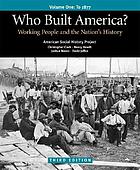
Chris Clark, Nancy Hewitt, Stephen Brier,Joshua Brown, David Jaffee, Ellen Noonan
textbook in 2 volumes, now online with accompanying lesson plans
Roy Rosenzweig, George Mason University
Nelson Lichtenstein, University of California, Santa Barbara
Annelise Orleck, Dartmouth College
Stephen Brier, The Graduate Center, CUNY
Pennee Bender, The Graduate Center, CUNY
Joshua Brown, The Graduate Center, CUNY
David Jaffee, Bard Graduate Center
Ellen Noonan, New York University
Paul Ortiz, University of Florida
Anne Valk, The Graduate Center, CUNY
Elizabeth Shermer, Loyola University
2 volume textbook that explores fundamental conflicts in United States history by placing working peoples’ struggle for social and economic justice at center stage.
Chris Garlock
This list of classic labor films is drawn from recommendations by experienced labor film festival organizers;
From those who put on labor film festivals, a list of favorites , which each film having a review from labor activists and historians.

Chris Garlock
Labor Films by genre,industry covered, years, and other categories The Labor Film Database lists thousands of films and videos, searchable by title, director, actors, keywords (see search window at right) or category (at right, below “Categories”) to make it easier to find films and videos about the topics you’re interested in. Many of the entries also include trailers, film stills and distributor contact info.
Categories include: Highly Recommended Labor Films; Labor Film Festivals; New/Just Added; Available Online; Genre; Occupation/Type of Work; Themes.
over a thousand films categorized with descriptions
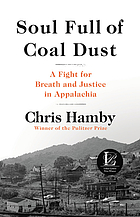
Chris Hamby
Uncovers the sobering resurgence of black lung disease in Appalachia, the cover-up activities of the coal mining industry, and the awareness activities of regional mining communities Prologue: January 10, 2007
Part One. Gary ; The mines ; John ; Wildcat ; Footer
Part Two. "Go jump" ; "The great coal dust scam" ; The new coalition ; "Outlaw" ; Cotton ; The firm ; Discovery ; "Superior credentials" ; "No bad samples" ; Window ; Crooked rafter ; "All of the evidence"
Part Three. "Creative approaches" ; "Go get 'em" ; Lost time ; Fraud on the court
Part Four. "An affront to justice" ; "Lack of scientific independence" ; Making good
Epilogue: December 2016
the sobering resurgence of black lung disease in Appalachia, and coal operators cover-up
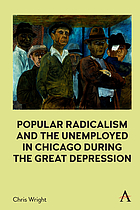
Chris Wright
In a time when mass joblessness and precarious employment are becoming issues of national concern, it is useful to reconsider the experiences of the unemployed in an earlier period of economic hardship, the Great Depression. Focusing on the bellwether city of Chicago, this book reevaluates those struggles, revealing the kernel of political radicalism and class resistance in practices that are usually thought of as apolitical and un-ideological. From communal sharing to 'eviction riots', from Unemployed Councils to the nationwide movement behind the remarkable Workers' Unemployment Insurance Bill, millions of people fought to end the reign of capitalist values and usher in a new, more socialistic society. Today, their legacy is their resilience, their resourcefulness, and their proof that the unemployed can organize themselves to renew the struggle for a more just worldAcknowledgments; Introduction;
Chapter One - Overview;
Chapter Two - Hardship;
Chapter Three - Coping;
Chapter Four - Relief;
Part I: “Shelter Men”, Chapter Five - Relief; Part II: Governments, Unions, and Churches, Chapter Six - Collective Action; Conclusion; Index
reevaluates Great Depression struggles, revealing the kernel of political radicalism and class resistance in practices that are usually thought of as apolitical and un-ideological.
Christian Giuseppe De Vito, Alex Lichtenstein
Anthology of essays with a 30 page bibliography of sources
Global Convict Labour offers a global history of convict labour across many of the regimes of punishment that have appeared from Antiquity to the present, including transportation, prisons, workhouses and labour camps. The editors' essay surveys the available literature, and sets the theoretical basis to approach the issue. The fifteen chapters explore the genealogies of convict labour and its relationships with coloniality and governmentality.
The volume re-establishes convict labour firmly within labour history, as one of the entangled, multiple labour relations that have punctuated human history. Similarly, it places convictism back within migration history at large, bridging the gap between the growing literature on convict transportation and research on slavery and other forms of free and bonded migration.
Writing a Global History of Convict Labour 1 Christian G. De Vito and Alex Lichtenstein
PART 1
Genealogies of Convict Labour
1 Contextualising Condemnation to Hard Labour in the RomanbEmpire 49 Miriam J. Groen-Vallinga and Laurens E. Tacoma
2 Penal Enslavement in the Early Middle Ages 79 Alice Rio
3 Prison and Convict Labour in Early Modern Europe 108 Pieter Spierenburg
4 “ An Austrian Cayenne”: Convict Labour and Deportation in the Habsburg Empire of the Early Modern Period 126 Stephan Steiner
5 The Long View of Convict Labour in the Portuguese Empire,1415–1932 144 Timothy J. Coates
6 Convict Labour Extraction and Transportation from Britain and Ireland, 1615–1870 168 Hamish Maxwell-Stewart
PART 2
Coloniality, Ethnicity, Racialism and Convict Labour
7 Labouring for the Raj: Convict Work Regimes in Colonial India, 1836–1939 199 David Arnold
8 The Relegation of Recidivists in French Guiana in the Nineteenth and Twentieth Centuries 222 Jean-Lucien Sanchez
9 “… a Weapon of Immense Value”? Convict labour in British Colonial Africa, c. 1850–1950s 249 Stacey Hynd
10 Colonies of Settlement or Places of Banishment and Torment? Penal Colonies and Convict Labour in Latin America, c. 1800–1940 273 Ricardo D. Salvatore and Carlos Aguirre
PART 3
Convict Labour and Governmentality
11 Gender and Convict Labour: The Italian Case in Global Context 313 Mary Gibson
12 Forced Labour in Nazi Concentration Camps 333 Marc Buggeln
13 Historicising the Gulag 361 Lynne Viola
14 “A Parade of Trick Horses”: Work and Physical Experience in the Political Prison 380 Padraic Kenney
15 Rethinking Working Class Struggle through the Lens of the Carceral State: Toward a Labour History of Inmates and Guards 400 Heather Ann Thompson
Bibliography 439
Index of Places 490
edited collection, from the Roman empire to modern era
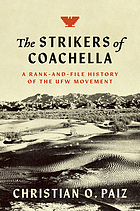
Christian O. Paiz
The past decades have borne witness to the United Farm Workers' (UFW) tenacious hold on the country's imagination. Since 2008, the UFW has lent its rallying cry to a presidential campaign and been the subject of no less than nine books, two documentaries, and one motion picture. Yet the full story of the women, men, and children who powered this social movement has not yet been told. Based on more than 250 hours of original oral history interviews conducted with Coachella Valley residents who participated in the UFW and Chicano Movement, Filipino farm workers, bracero workers, and UFW volunteers throughout the United States, this stirring history spans from the 1960s and 1970s through the union's decline in the early 1980s"-- Provided by publisher
Coachella Valley residents who participated in the UFW and Chicano Movement, Filipino farm workers, bracero workers, and UFW volunteers throughout the United State

Christian Wright
Whither the union movement? is a question of old enough relevance in the U.S. to now seem almost anachronistic. Although unions are by no means entirely gone or lacking in political power, they and their potency are certainly diminished.
With growing concerns about the direction of national politics, increasing income and power inequities, and signs of a receding middle class and increasing social division into haves and have nots, one can hear murmurs of union revival, but polls continue to show that many Americans distrust unions or consider them irrelevant to a modern service economy.
Christian Wright digests what happened to one important American union, the United Mine Workers of America, over a fifty-year period, with particular focus on the coal miners of Carbon and Emery counties in Utah.
. It draws on a variety of primary sources, including original research in the UMWA archives at Penn State and multiple oral history collections"--Provided by publisher
digests what happened to one important American union, the United Mine Workers of America, over a fifty-year period, with particular focus on the coal miners of Carbon and Emery counties in Utah.

Christin Marie Taylor
From the 1930s to the 1960s, the Popular Front produced a significant era in African American literary radicalism. While scholars have long associated the black radicalism of the Popular Front with the literary Left and the working class, Christin Marie Taylor considers how black radicalism influenced southern fiction about black workers, offering a new view of work and labor.
At the height of the New Deal era and its legacies, Taylor examines how southern literature of the Popular Front not only addressed the familiar stakes of race and labor but also called upon an imagined black folk to explore questions of feeling and desire. By poring over tropes of black workers across genres of southern literature in the works of George Wylie Henderson, William Attaway, Eudora Welty, and Sarah Elizabeth Wright, Taylor reveals the broad reach of black radicalism into experiments with portraying human feelings.
These writers grounded interrelationships and stoked emotions to present the social issues of their times in deeply human terms. Taylor emphasizes the multidimensional use of the sensual and the sexual, which many protest writers of the period, such as Richard Wright, avoided. She suggests Henderson and company used feeling to touch readers while also questioning and reimagining the political contexts and apparent victories of their times.
Taylor shows how these fictions adopted the aesthetics and politics of feeling as a response to New Deal–era policy reforms, both in their successes and their failures. In effect, these writers, some who are not considered a part of an African American protest tradition, illuminated an alternative form of protest through poignant paradigms.
A fresh consideration of the impact of black radicalism on black characters in southern modernism
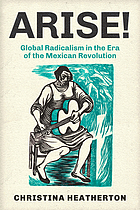
Christina Heatherton
Arise! uncovers a social history of global radicalism. Christina Heatherton considers how early twentieth-century radicals like Black American artist Elizabeth Catlett, Mexican revolutionary leader Ricardo Flores Magón, and Soviet feminist Alexandra Kollontai found inspiration, refuge, and solidarity in the actual and imagined spaces of Revolutionary Mexico. From farm worker strikes in California's Imperial Valley and internationalist art collectives in Mexico City to Kansas's Leavenworth Federal Penitentiary, where radicals built a "university" behind bars, she argues that internationalism was forged across space and through unanticipated alliances.
feminist, feminism,
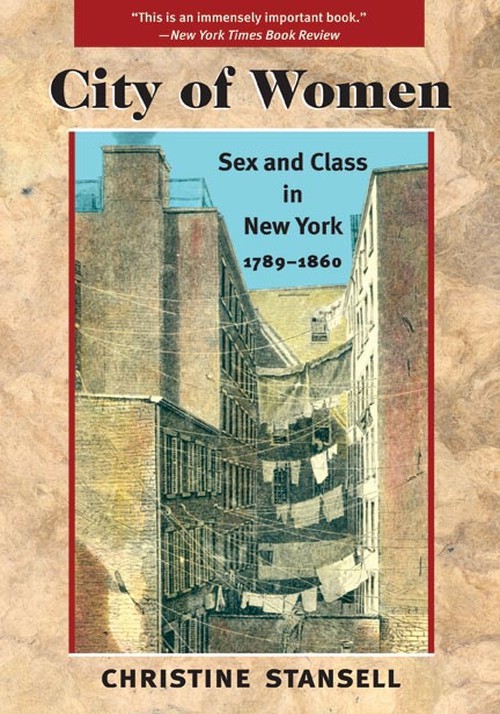
Christine Stansell
City of Women delves into the misfortunes that New York City's laboring women suffered and the problems that resulted.Precarious dependencies : women in the republican city, 1789-1820.
Before the Civil War, a new idea of womanhood took shape in America in general and in the Northeast in particular. Women of the propertied classes assumed the mantle of moral guardians of their families and the nation. Laboring women, by contrast, continued to suffer from the oppressions of sex and class. In fact, their very existence troubled their more prosperous sisters, for the impoverished female worker violated dearly held genteel precepts of 'woman's nature' and 'woman's place.'City of Women delves into the misfortunes that New York City's laboring women suffered and the problems that resulted. Looking at how and why a community of women workers came into existence, Christine Stansell analyzes the social conflicts surrounding laboring women and they social pressure these conflicts brought to bear on others. The result is a fascinating journey into economic relations and cultural forms that influenced working women's lives—one that reveals at last the female city concealed within America's first great metropolis.Female work and poverty
The problem of dependency : men and women, rich and poor
The politics of sociability, 1820-1850. Women in the neighborhoods
Places of vice : views of the neighborhoods
Women and men
Wage work. Harrowing truths : manufacturing work
Women and the labor movement
Domestic service
The politics of the streets, 1850-1860. Women on the town : sexual exchange and prostitution
The uses of the streets
delves into the misfortunes that New York City's laboring women suffered and the problems that resulted.
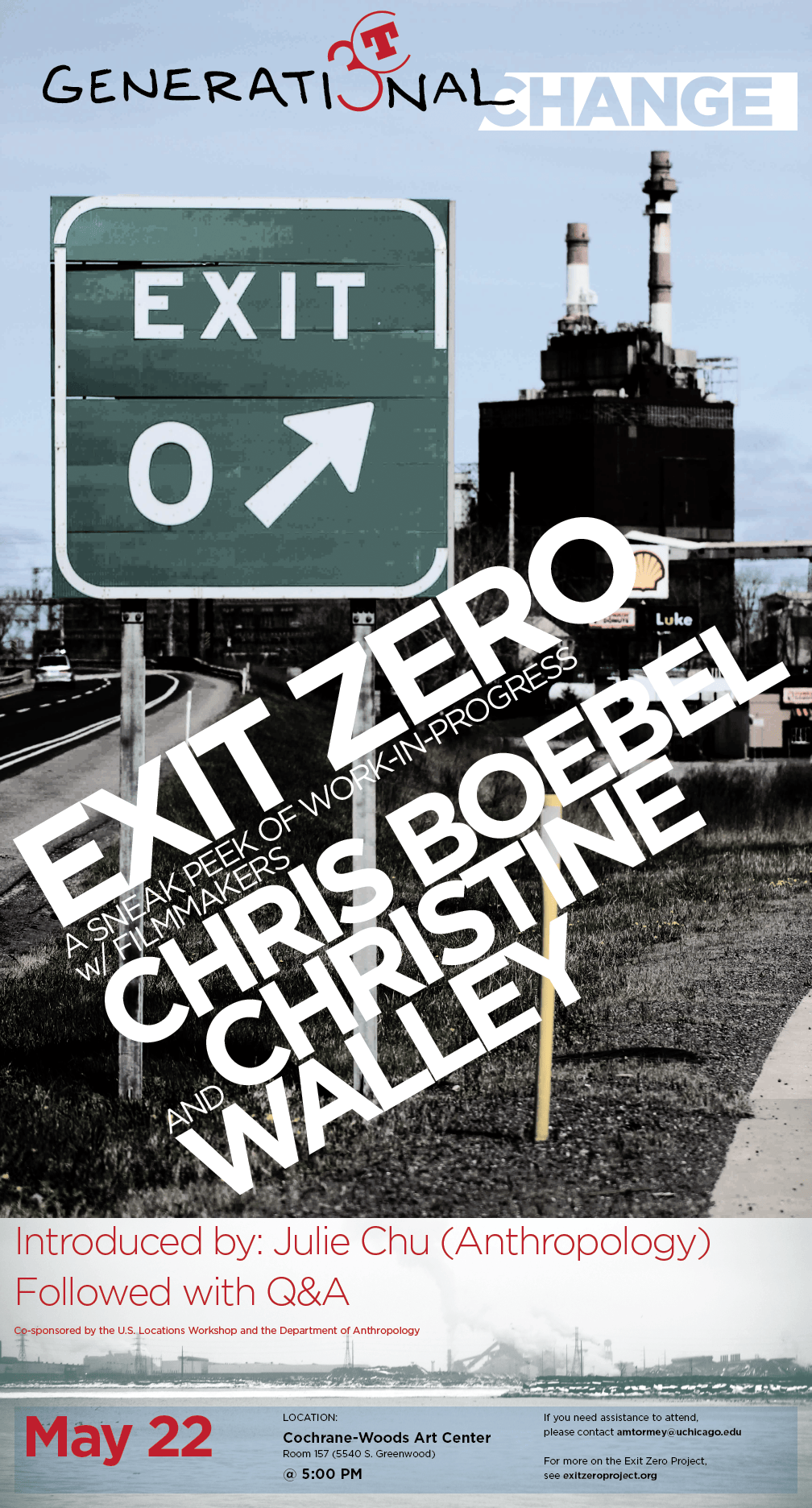
Christine Walley, Chris Boebe
Story of the closing of Wisconsin Steel and its impact on a family and the larger community. Looks at the effects of deindustrialization
on a working class community
How long does the impact of deindustrialization last? Exit Zero uses family stories to offer an intimate portrait of the former steel mill community of Southeast Chicago and the lasting effects that the loss of heavy industry has had on the region. Interweaving home movies, found footage, and a first person narrative, the film traces the stories of multiple generations of filmmaker Christine Walley’s family in this once-thriving steel mill community. From the turn-of-the-century arrival of immigrants to work in Chicago’s mammoth industries to the labor struggles of the 1930s to the seemingly unfathomable closure of the steel mills in the 1980s and 90s, these family stories convey a history that serves as a microcosm of the nation.
Following Walley’s father, a former steelworker, as he wanders aimlessly through a transformed Calumet region now made up of industrial brownfields, toxic landfills, and gambling casinos, the film suggests the social and environmental stakes of such transformations. Although the film is personal, it tells a story that resonates across some of the crucial disjunctures of our time: the ever-widening gap between rich and poor, the collapse of the American Dream for working people, and the toxic legacy of a vanished industrial past
"After the steel mills closed in Southeast Chicago, residents could feel the American Dream slipping away. “Exit Zero” is an intimate family story about dealing with job loss in the industrial heartland."
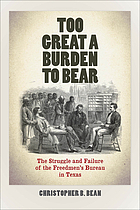
Christopher B. Bean
In its brief seven-year existence, the Freedmen's Bureau became the epicenter of the debate about Reconstruction. Historians have only recently begun to focus on the Bureau's personnel in Texas, the individual agents termed the 'hearts of Reconstruction.' Specifically addressing the historiographical debates concerning the character of the Bureau and its sub-assistant commissioners (SACs), Too Great a Burden to Bear sheds new light on the work and reputation of these agents. Focusing on the agents on a personal level, author Christopher B. Bean reveals the type of man Bureau officials believed qualified to oversee the Freedpeople's transition to freedom. This work shows that each agent, moved by his sense of fairness and ideas of citizenship, gender, and labor, represented the agency's policy in his subdistrict. These men further ensured the former slaves' right to an education and right of mobility, something they never had while in bondage"-- Provided by publisher
Investigates the character of the Freedmen's Bureau through its individual agents
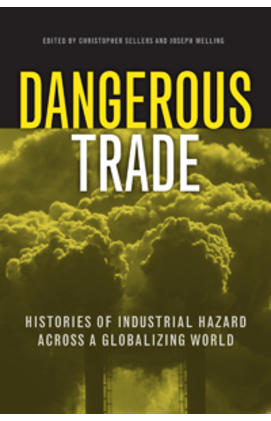
Christopher C. Sellers
From anthrax to asbestos to pesticides, industrial toxins and pollutants have troubled the world for the past century and longer. Environmental hazards from industry remain one of the world's foremost killers. Dangerous Trade establishes historical groundwork for a better understanding of how and why these hazards continue to threaten our shrinking world. In this timely collection, an international group of scholars casts a rigorous eye toward efforts to combat these ailments. Dangerous Trade contains a wide range of case studies that illuminate transnational movements of riskofrom the colonial plantations of Indonesia to compensation laws in late nineteenth century Britain, and from the occupational medicine clinics of 1960s New York City to the burning of electronic waste in early twenty-first century Uruguay. The essays in Dangerous Trade provide an unprecedented broad perspective of the dangers stirred up by industrial activity across the globe, as well as the voices raised to remedy them
From dangerous trades to trade in danger: toward an industrial hazard history of the present / Christopher Sellers and Joseph Melling
Rubber plantation workers, work hazards, and health in colonial Malaya, 1900-1940 / Amarjit Kaur
Work, home, and natural environments: health and safety in the Mexican oil industry, 1900-1938 / Myrna Santiago
Global markets and local conflicts in mercury mining: industrial restructuring and workplace hazards at the Almaden mines in the early twentieth century / Alfredo Menéndez-Navarro
Trade, spores, and the culture of disease: attempts to regulate anthrax in Britain and its international trade, 1875-1930 / Tim Carter and Joseph Melling
Rayon, carbon disulfide, and the emergence of the multinational corporation in occupational disease / Paul D. Blanc
Shipping the next prize: the trade in liquefied natural gas from Nigeria to Mexico / Anna Zalik
New hazards and old disease: lead contamination in the Uruguayan battery industry / Daniel E. Renfrew
Objective collectives?: transnationalism and "invisible colleges" in occupational and environmental health from Collins to Selikoff / Joseph Melling and Christopher Sellers
Bread and poison: the story of labor environmentalism in Italy, 1968-1998 / Stefania Barca
A new environmental turn?: how the environment came to the rescue of occupational health: asbestos in France, c 1970-1995 / Emmanuel Henry
A tale of two lawsuits: making policy-relevant environmental health knowledge in Italian and U.S. chemical regions / Barbara Allen
Pesticide regulation, citizen action, and toxic trade: the role of the nation-state in the transnational history of DBCP / Susanna Rankin Bohme
Turning the tide: the struggle for compensation for asbestos-related diseases and the banning of asbestos / Barry Castleman and Geoffery Tweedale
establishes historical groundwork for a better understanding of how and why industrial toxins continue to threaten our shrinking world.
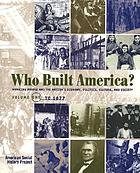
Christopher Clark
Based on the original edition authored by Joshua Freeman [and others] published in 1981
2 volume textbook that explores fundamental conflicts in United States history by placing working peoples’ struggle for social and economic justice at center stage.
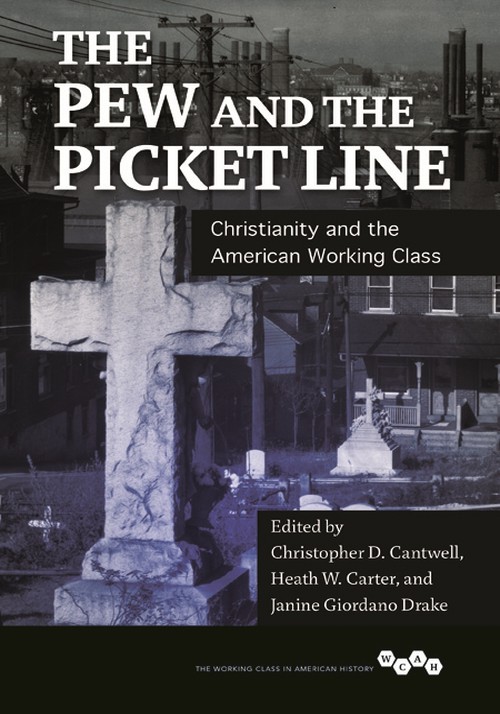
Christopher D. Cantwell, Heath W. Carter, Janine Giordano Drake
The Pew and the Picket Line collects works from scholars working at the crossroads of religious history and working-class history. Focusing on Christianity's unique purchase in America, the contributors use in-depth local histories to illustrate how Americans male and female, rural and urban, and from a variety of ethnic backgrounds dwelt in spaces between the church and the shop floor. Vivid essays show Pentecostal miners preaching prosperity while seeking miracles in the depths of the earth, while aboveground, black sharecroppers and white Protestants establish credit unions in order to pursue their joint vision of cooperative capitalism.
Foreword: A Spiritual Turn? viiKen Fones-Wolf Acknowledgments xiii
Introduction: Between the Pew and the Picket Line 1 Christopher D. Cantwell, Heath W. Carter, and Janine Giordano Drake
PArT i: Manufacturing Christianity
1 George Lippard, Ignatius Donnelly, and the Esoteric Theology of American Labor 23 Dan McKanan
2 Catholicism and Working-Class Activism in Providence 51 Evelyn Sterne
3 Faith Powers and Gambling Spirits in Late Gilded Age Metal Mining 74 Jarod Roll
4 Discovering Working-Class Religion in a 1950s Auto Plant 96 Matthew Pehl
5 Black Power and Black Theology in Cairo, Illinois 115 Kerry L. Pimblott
PArT ii: ChrisTiAnizing CAPiTALism 6 Emma Tenayuca, Religious Elites, and the 1938Pecan-Shellers’ Strike 145 Arlene Sánchez-Walsh
7 Radical Christianity and Cooperative Economics in the Postwar South 167 Alison Collis Greene
8 Catholic Social Policy and Resistance
to the Bracero Program 192 Brett Hendrickson
9 Black Freedom Struggles and Ecumenical Activism
in 1960s Chicago 211 Erik S. Gellman
Contributors 239
Index 243
Innovative essays on how faith and capitalism have shaped one-another in the United States
Museum/Exhibits
Tours
Maps
Digital Projects
Organizations
Sites
Film/Video
Audio/Interview
Podcast/Program
Text/Document
Image
Graphs/Data
Timeline
Southwest
West
Midwest
Southeast
Northeast
Mexico
Canada
Global
Books
Teaching
Lectures
Digital Archives
Journals
Bibliographies
Topic Intro