


Collections
Library
Type
Region
Coverage:
-
Published:
-

Cornell University Library, JSTOR
This bilingual project conserves, digitizes, and curates a portion of Cornell's International Workers Order (IWO) archives and most especially those of its Jewish division, known as the Jewish People's Fraternal Order (JPFO).
1739 images & documents of International Workers Order, 1921-1967; Access with free registration for JSTOR account

Covington Hall, editor
The Lumberjack was founded in January 1913 in the midst of a protracted labor strike by the Brotherhood of Timber Workers (B.T.W.) in Merryville, Louisiana. Published by the Southern District of the National Industrial Union of Forest and Lumber Workers, the weekly paper was edited by Covington Hall (1871-1952), a member of the radical wing of the Socialist Party in New Orleans.
Hall had previously served as assistant editor of Oscar Ameringer’s Labor World, which Ameringer moved from Columbus, Ohio, to New Orleans in 1907. As editor of the Lumberjack, Hall called for the formation of timber workers’ unions in western Louisiana and east Texas and reported at length on the activities of the International Workers of the World (I.W.W.), with which the B.T.W. had affiliated itself at its annual convention in Alexandria, Louisiana, in 1912. In addition to news of local strikes and the labor movement, the paper carried news of timber workers’ strikes elsewhere in the United States together with editorials on general topics such as child labor and the Ku Klux Klan, which Hall commented on from a socialist viewpoint. Also of interest is Hall’s original poetry on labor-related subjects.
In July 1913, timber industry leaders persuaded the Lumberjack’s printer in Alexandria to stop printing the paper. Publication resumed in New Orleans under a new title, the Voice of the People. The Lumberjack’s motto, “An Injury To One Is An Injury To All,” was retained, as was its four-page, three-column format. The focus of reporting initially remained the same; by 1914, however, having grown frustrated with largely unsuccessful efforts to organize southern timber workers, Hall was devoting greater attention to the logging industry in the Pacific Northwest and Montana, as well as to labor disputes associated with the United Fruit Company in Central America and the Caribbean.
Vol. 2, no. 46 was published concurrently, but with completely different contents, in New Orleans and Portland, Oregon. In July 1914, lack of support in the South finally led Hall to transfer publication of the paper in full to Portland, where he served as editor for two months before turning the job over to B. E. Nilsson and returning to New Orleans. The Voice of the People appears to have found no more of an audience in the Northwest than in the South, and its last issue was published on December 3, 1914.
Radical paper edited by Covington Hall of the Socialist Party

Craig Heron
Lunch-Bucket Lives takes the reader on a bumpy ride through the history of Hamilton's working people from the 1890s to the 1930s. It ambles along city streets, peers through kitchen doors and factory windows, marches up the steps of churches and fraternal halls, slips into saloons and dance halls, pauses to hear political speeches, and, above all, listens for the stories of men, women, youths, and children from families where people relied mainly on wages to survive. Heron takes wage-earning as a central element in working-class life, but also looks beyond the workplace into the households and neighbourhoods--settlement patterns and housing, marriage, child care, domestic labour, public health, schooling, charity and social work, popular culture, gender identities, ethnicity and ethnic conflict, and politics in various forms--presenting a comprehensive view of working-class life in the first half of the twentieth century."--Publisher's website
Hamilton's working people from the 1890s to the 1930s
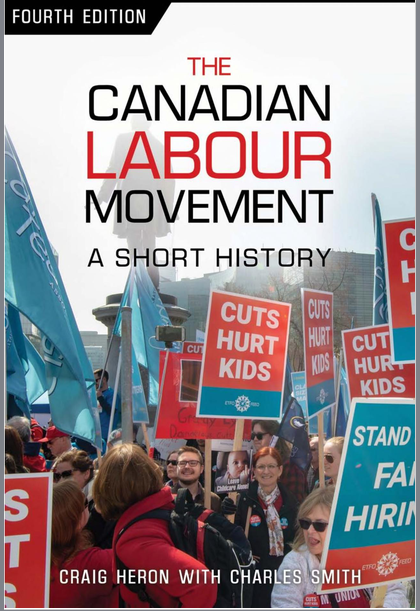
Craig Heron, Charles Smith
Tells the story of Canada's workers from the mid-nineteenth century through to today. Describes the rise of globalization and the restructuring of the private sector that began in the nineties and continues today. The results have been catastrophic for Canadian working people as plants closed and union activities were curtailed. As the political right succeeded in dominating public debate during this period, workers suffered ever greater losses: fewer and more precarious jobs, rising unemployment, stagnating wages, and increases in poverty. Only with the crash of 2008 and the Occupy Wall Street movement has space for the political left and labour begun to open up once again
The craftworkers' challenge
The workers' revolt
The giant tamed
The new resistance
Counterattack
Rebuilding the house of labour
A new agenda for labour
Labour at the dawn of the twenty-first century
Glossary of labour centrals
Further reading
Index
the story of Canada's workers from the mid-nineteenth century through to today.
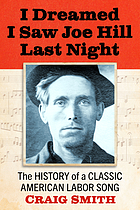
Craig Smith
"Joe Hill emigrated to the United States in 1902 where he joined the Industrial Workers of the World and became the most celebrated labor songwriter in the country. In 1915, he was executed for a crime that is widely believed he did not commit, and in the 1930s, the song "Joe Hill" was created to honor this legendary labor martyr. This book, the first to tell the story of the song "Joe Hill," follows the song's national and international diaspora as it developed from a labor union ballad into an international anti-war anthem and rallying cry for all people to rise up against their oppressors. The story is told in the historical contexts of the times through which it traveled and includes the champions of the song who ensured its continued relevance, including Paul Robeson, Joan Baez, Pete Seeger, and Utah Phillips."-Provided by publisher"-- Provided by publisher
follows the song's national and international diaspora as it developed from a labor union ballad into an international anti-war anthem

Cristina Viviana Groeger
For generations, Americans have looked to education as the solution to economic disadvantage. Yet, although more people are earning degrees, the gap between rich and poor is widening. Cristina Groeger delves into the history of this seeming contradiction, explaining how education came to be seen as a panacea even as it paved the way for deepening inequality."-- Provided by publisher
Topic is the rise of vocational education in early 20th century Boston and how "skills" was not a particularly effective method of getting people out of poverty. Vocational education, apprenticeships. Trade schools undermined unions, and caused a backlash from elite educational institutions, primarily Harvard, which spearheaded new forms of education, new professional associations, and other methods for maintaining stratification. All of this rings extremely true to me from my own work life.
Introduction : Education and social inequality
Nineteenth-century networks
Uplifting the "unskilled"
Craft power in the industrial workplace
Becoming pink collar
Professional ladders
Placement in corporate America
Conclusion : Schools, inequality, and worker power
how education came to be seen as a panacea even as it paved the way for deepening inequality
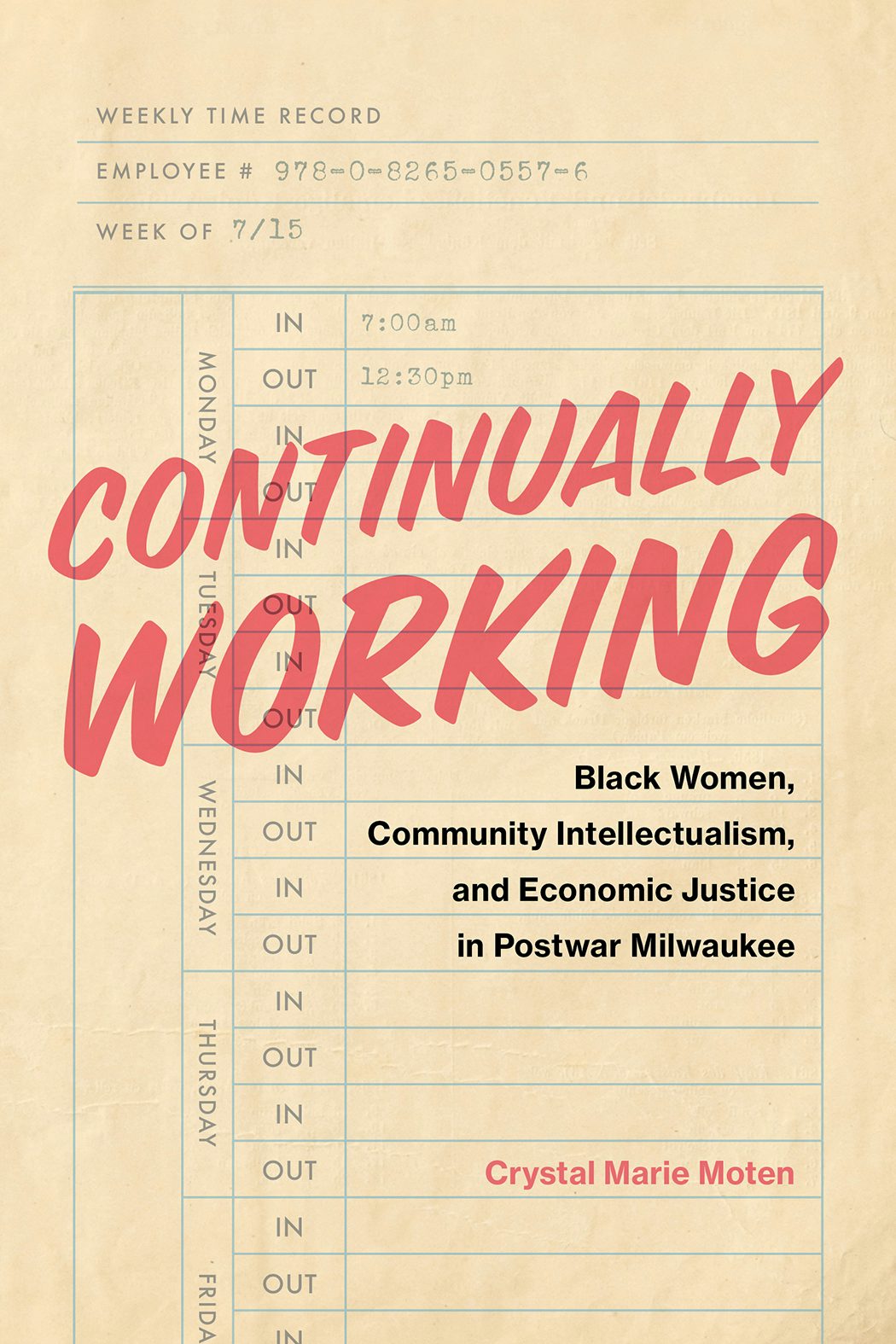
Crystal Marie Moten
Continually Working tells the stories of Black working women who resisted employment inequality in Milwaukee, Wisconsin from the 1940s to the 1970s"-- Provided by publisher
stories of Black working women who resisted employment inequality in Milwaukee

Curtis Marez
When we think of literature and film about farm workers, The Grapes of Wrath may come to mind, but Farm Worker Futurism reveals that the historical role of technology, especially new media, has in fact had much more to do with depicting the lives of farm laborers--Mexican migrants in particular--in the United States. From the late 1940s, when Ernesto Galarza led a strike in the San Joaquin Valley, to the early 1990s, when the United Farm Workers (UFW) helped organize a fast in solidarity with janitors at Apple Computers in the Santa Clara Valley, this book explores the friction between agribusiness and farm workers through the lens of visual culture. Marez looks at how the appropriation of photography, film, video, and other media technologies expressed a "farm worker futurism," a set of farm worker social formations that faced off against corporate capitalism and government policies. In addition to drawing fascinating links between the worlds envisioned in UFW videos on the one hand and visions of Cold War geopolitics on the other, he demonstrates how union cameras and computer screens put the farm worker movement in dialogue with futurist thinking and speculative fictions of all sorts, including the films of George Lucas and the art of Ester Hernandez. Finally Marez examines the legacy of farm worker futurism in recent cinema and literature, contemporary struggles for immigrant rights, management-labor conflicts in computer hardware production, and the antiprison movement. In contrast with cultural histories of technology that take a top-down perspective, Farm Worker Futurism tells the story from below, showing how working-class people of color have often been early adopters and imaginative users of new media. In doing so, it presents a completely novel analysis of speculative fiction's engagements with the farm worker movement in ways that illuminate both
friction between agribusiness and farm workers through the lens of visual culture

Curtis Seltzer
Throughout the coal industry's two-hundred-year history, labor issues have dominated its economics and politics. Curtis Seltzer has written a comprehensive historical- analysis of labor relations in the American coal industry-the first since the 1930s.
Seltzer examines the economics and politics of coal to explain the historical relationship between mine workers and mine managers. Surveys chronic overproduction as the critical problem. As energy demands in the twentieth century shifted from coal to other fuels, market forces made victims of both workers and managers. The industry as a whole suffered from attempting to operate too many mines and employ too many miners.
Overcapacity,oversupply, and ruinous competition led coal producers to poverty and anguish in mining communities and created turmoil in the coal fields.
The Lewis in Seltzer's account appears not as the heroic voice ofthe downtrodden miner nor as the militant leader spearheading the CIO's organizing drives. His Lewis is a conservative Republican and a free-market capitalist who was willing to sacrifice his political philosophyto acquire and exercise power. Seltzer finds Lewis ready to sacrifice union miners' jobs by allowing certain major coal operators to mechanize their mines and reduce the work force.
From 1950 to 1972, the major coal operators and the union formed an industrial partnership whose purpose was to survive a protracted slump in demand by controlling labor costs, increasing productivity, and limiting competition. This partnership eventually led to a rebellion within the UMWA that demanded democratic reform, better contracts, and improved health and safety in the workplace. For the last decade, the UMWA has been reworking its relationship with management, a process marked by conflict and stress.
Seltzer's Lewis is also responsible for transforming a democratic, decentralized, and politically pluralistic union into an autocracy that tolerated no dissidents. The absence of democracy within the UMWA led to a multitudeof abuses.
The greater portion of Seltzer's study is devoted to examining theUMWA in the years following Lewis's retirement from the union'spresidency in 1960. These years witnessed a growing militancy in the union's rank and file.
One of the early manifestations of that militancywas the formation of the Black Lung Association in the late 1960s. Thisdeveloped into a demand for a more democratic union, which in 1970 took the name. Miners for Democracy. By 1972 reformers within theUMWA were able to capture the union's presidency from Tony Boyle, Lewis's hand-picked successor. The growth of militancy and democracy within the UMWA has forced a reworking of the union's relationship with management, a process marked by conflict in the coal fields.
The tortuous history of the industry and the UMWA since World War II with a sober approach to John L. Lewis as president is the best yet published.

Cyril Robinson
This book shows how a Jewish lawyer utilized his philosophy of prophetic Judaism (a belief in social justice) and his training as a lawyer to become the head of a trade union that formulated policies embodying these social beliefs, bringing many benefits to its members.
In 1946, Ralph Helstein was the general counsel for the United Packinghouse Workers Union (UPWA), which had become a predominantly black worker organization. At the time there was a divisive left-right split in the union. As the only individual both sides trusted, Helstein was elected president of the union, thus beginning an era of positive change for the UPWA and its workers.
Beyond Helstein's efforts for the UPWA, Marching with Dr. King: Ralph Helstein and the United Packinghouse Workers of America also examines the involvement of Helstein in the civil rights movement, his personal association with Martin Luther King, Jr., and how his actions as union president championed the rights of African Americans, women, and even an immigrant group outside the United States—the sugar workers in Puerto Rico. This text presents a unique perspective on the life of a labor leader, revealing the connection between Helstein's religious and philosophical ideas with his leadership of the UPWA union.
Helstein's efforts in the Packinghouse CIO union, and involvement of Helstein in the civil rights movement,
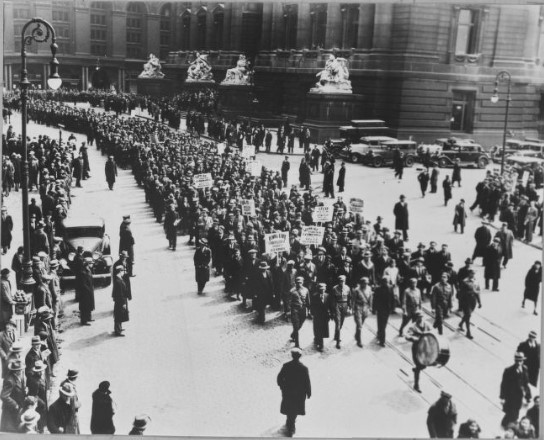
Daily Worker
Contains just over 1,600 groups (5444 items) of large-format 4x5 inch negatives, as well as medium-format 120 and 127 negatives, dating mostly from 1930 to 1948. Most of these images are of people and events based in New York City, and include a large number of images of labor union strikes, demonstrations and other activities. Of particular significance are photos of May Day celebrations and demonstrations in New York City, activities supporting the Spanish Republican cause, Communist Party of the United States of America candidates for election to local, state, and federal offices, and pictures of daily life in New York City from the early to mid-20th century.
Contains 5444 negatives, dating mostly from 1930 to 1948, from the Communist-affiliated Daily Worker newspaper
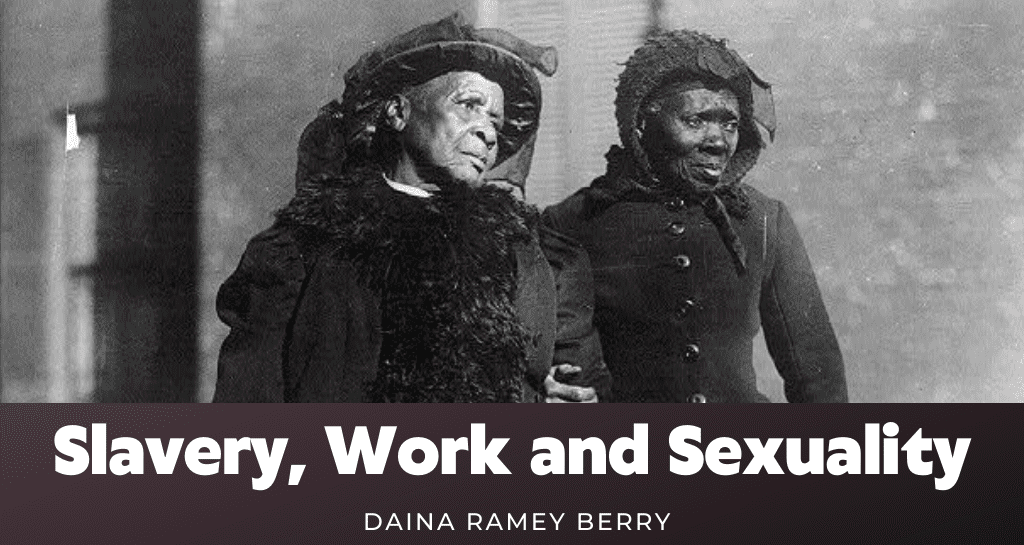
Daina Ramey Berry
American slavery was a dynamic institution. And though slavery was mainly a system of labor, those who toiled in the fields and catered to the most private needs and desires of slaveholders were more than just workers. Although utterly obvious, it must be reiterated that the enslaved were indeed people. In fact, the nature and diversity of the institution of slavery ensured that bondpeople would experience enslavement quite differently. Aiming to highlight the variety of conditions that affected a bondperson’s life as a laborer, Swing the Sickle examines the workaday and interior lives of the enslaved in two plantation communities in Georgia—Glynn County in the lowcountry and Wilkes in the piedmont east of Athens.
12 minute interview with leading historian on violence of slavery
Daina Ramey Berry
Classic studies, the newest works, and a few novels on labor and gender and the institutions of slavery in the United States.
A list of important books written on gender, labor, and race in relation to slavery
Daina Ramey Berry
Groundbreaking look at slaves as commodities through every phase of life, from birth to death and beyond, in early America The Price for Their Pound of Flesh is the first book to explore the economic value of enslaved people through every phase of their lives--including from before birth to after death--in the American domestic slave trades.
Covering the full "life cycle" (including preconception, infancy, childhood, adolescence, adulthood, the senior years, and death), historian Daina Berry shows the lengths to which slaveholders would go to maximize profits. She draws from over ten years of research to explore how enslaved people responded to being appraised, bartered, and sold. By illuminating their lives, Berry ensures that the individuals she studies are regarded as people, not merely commodities. Analyzing the depth of this monetization of human property will change the way we think about slavery, reparations, capitalism, and nineteenth-century medical education"-- Provided by publisher
explores the life phases of commodified human beings through their percieved economic value, and the lengths slave owners went through to maximize value

Daisy Pitkin
The story of two dedicated women, a labor organizer and an immigrant laundry worker, coming together to spearhead an audacious campaign to unionize one of the most dangerous industries in one of the most anti-union states--Arizona--and offering a nuanced look at the modern-day labor movement and the future of workers' rights"-- Provided by publisher
story of an Arizona union organizing campaign told through two women
Damian Alan Pargas
American slavery in the antebellum period was characterized by a massive wave of forced migration as millions of slaves were moved across state lines to the expanding Southwest, scattered locally, and sold or hired out in towns and cities across the South. This book sheds new light on domestic forced migration by examining the experiences of American-born slave migrants from a comparative perspective. Juxtaposing and contrasting the experiences of long-distance, local, and urban slave migrants, it analyzes how different migrant groups anticipated, reacted to, and experienced forced removal, as well as how they adapted to their new homes"
Introduction --
Part I. Migration --
Valuable Bodies --
The Gathering Storm --
Changing Places --
Part II. Assimilation --
Cogs in the Wheel --
Managing Newcomers --
Slave Crucibles --
Conclusion.
ow different migrant groups anticipated, reacted to, and experienced forced removal, as well as how they adapted

Dan Berger
"In this pathbreaking book, Dan Berger offers a bold reconsideration of twentieth century black activism, the prison system, and the origins of mass incarceration. Throughout the civil rights era, black activists thrust the prison into public view, turning prisoners into symbols of racial oppression while arguing that confinement was an inescapable part of black life in the United States. Black prisoners became global political icons at a time when notions of race and nation were in flux. Showing that the prison was a central focus of the black radical imagination from the 1950s through the 1980s, Berger traces the dynamic and dramatic history of this political struggle. The prison shaped the rise and spread of black activism, from civil rights demonstrators willfully risking arrests to the many current and former prisoners that built or joined organizations such as the Black Panther Party. Grounded in extensive research, Berger engagingly demonstrates that such organizing made prison walls porous and influenced generations of activists that followed"--from the publisher
a bold reconsideration of twentieth century black activism, the prison system, and the origins of mass incarceration.
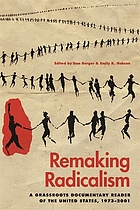
Dan Berger
"This book brings together documents from multiple radical movements in the recent United States from 1973 through 2001. These years are typically viewed as an era of neoliberalism, dominated by conservative retrenchment, the intensified programs of privatization and incarceration, dramatic cuts to social welfare, and the undermining of labor, antiracist, and feminist advances.
Yet activists from the period proved tenacious in the face of upheaval, resourceful in creating new tactics, and dedicated to learning from one another. Persistent and resolute, activists did more than just keep radical legacies alive. They remade radicalism-bridging differences of identity and ideology often assumed to cleave movements, grappling with the eradication of liberal promises, and turning to movement cultures as the source of a just future. Remaking Radicalism is the first anthology of U.S. radicalisms that reveals the depth, diversity, and staying power of social movements after the close of the long 1960s.
Editors Dan Berger and Emily Hobson track the history of popular struggles during a time that spans the presidencies of Richard Nixon and George W. Bush and bring to readers the political upheavals that shaped the end of the century and that continue to define the present"-- Provided by publisher
Note: There is little in this book that tracks labor radicalism, making this book a marker of the neoliberal perspective that labor is not an agent of history
the first anthology of U.S. radicalisms that reveals the depth, diversity, and staying power of social movements after the close of the long 1960s.

Dan Golodner, Johanna Russ, Reuther Library
Digital Exhibit on 1968 Memphis Sanitation strike holds many items and extensive narrative, produced at Reuther Library. In 1968, in Memphis, Tennessee, the labor movement and the civil rights movement came together in a monumental struggle for human and public employee rights. On February 11, over 1,300 sanitation workers — nearly all were African American — went on strike demanding their basic rights to organize a union, to gain a living wage and to receive the respect and dignity due all working men and women. During the strike Dr. Martin Luther King, Jr. came to Memphis to support the workers but was tragically assassinated. This exhibit explores the drama of this historic strike where marchers wore signs simply stating: I AM a Man.
Multiple parts contain embedded videos, photos and documents. Includes linked resources
Exhibit on 1968 Sanitation strike holds many items and extensive narrative, produced at Reuther Library
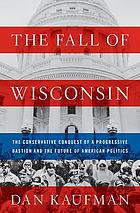
Dan Kaufman
The untold story behind the most shocking political upheaval in the country. For more than a century, Wisconsin has been known nationwide for its progressive ideas and government. It famously served as a 'laboratory of democracy,' a cradle of the labor and environmental movements, and birthplace of the Wisconsin Idea, which championed expertise in the service of the common good. But following a Republican sweep of the state's government in 2010, Wisconsin's political heritage was overturned, and the state went Republican for the first time in three decades in the 2016 presidential election, elevating Donald J. Trump to the presidency.
The Fall of Wisconsin is a deeply reported, searing account of how the state's progressive tradition was undone and turned into a model for national conservatives bent on remaking the country. Dan Kaufman, a Wisconsin native who has been covering the story for several years, traces the history of progressivism that made Wisconsin so widely admired, from the work of celebrated politicians like Robert 'Fighting Bob' La Follette and Gaylord Nelson, to local traditions like Milwaukee's 'sewer socialism,' to the conservationist ideas of Aldo Leopold and the state's Native American tribes.
Kaufman reveals how the 'divide-and-conquer' strategy of Governor Scott Walker and his allies pitted Wisconsin's citizens against one another so powerful corporations and wealthy donors could effectively take control of state government. As a result, laws protecting voting rights, labor unions, the environment, and public education were rapidly dismantled. Neither sentimental nor despairing, Kaufman also chronicles the remarkable efforts of citizens who are fighting to reclaim Wisconsin's progressive legacy against tremendous odds: Chris Taylor, a Democratic assemblywoman exposing the national conservative infrastructure; Mike Wiggins, the head of a Chippewa tribe battling an out-of-state mining company; and Randy Bryce, the ironworker whose long-shot challenge to Speaker of the House Paul Ryan has galvanized national resistance to Trump."--Provided by publisher
he untold story behind the most shocking political upheaval in the country.

Dana Frank
Four stories of resilience, mutual aid, and radical rebellion that will transform how we understand the Great Depression"
Four stories of resilience, mutual aid, and radical rebellion that will transform how we understand the Great Depression

Dana Goldstein
A brilliant young scholar's history of 175 years of teaching in America shows that teachers have always borne the brunt of shifting, often impossible expectations. In other nations, public schools are one thread in a quilt that includes free universal child care, health care, and job training. Here, schools are the whole cloth. Today we look around the world at countries like Finland and South Korea, whose students consistently outscore Americans on standardized tests, and wonder what we are doing wrong. Dana Goldstein first asks the often-forgotten question: "How did we get here?" She argues that we must take the historical perspective, understanding the political and cultural baggage that is tied to teaching, if we have any hope of positive change. In her lively, character-driven history of public teaching, Goldstein guides us through American education's many passages, including the feminization of teaching in the 1800s and the fateful growth of unions, and shows that the battles fought over nearly two centuries echo the very dilemmas we cope with today. Goldstein shows that recent innovations like Teach for America, merit pay, and teacher evaluation via student testing are actually as old as public schools themselves. Goldstein argues that long-festering ambivalence about teachers--are they civil servants or academic professionals?--and unrealistic expectations that the schools alone should compensate for poverty's ills have driven the most ambitious people from becoming teachers and sticking with it. In America's past, and in local innovations that promote the professionalization of the teaching corps, Goldstein finds answers to an age-old problem"
This history of 175 years of teaching in America shows that teachers have always borne the brunt of shifting, often impossible expectations, harming their ability to educate students effectively
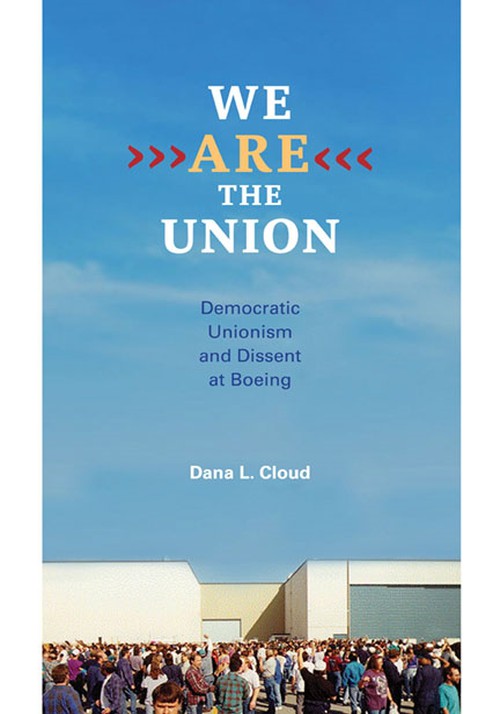
Dana L. Cloud
Shows how ordinary workers attempted to take command of their futures by chipping away at the cosy partnership between union leadership & corporate management. Focusing on the 1995 strike at Boeing, Cloud renders a multi-layered account of the battles between company & the union & within the union led by Unionists for Democratic Change Introduction: “To Get to Boeing,
We First Had to Take on the Union” 1
1. Business Unionism and Rank-and-File
Unionism at the Turn of the Millennium 11
2. Not a Smooth Flight for Boeing and the Union 30
3. Enter the Dissidents 51
4. The Problem with “Jointness” 80
5. The 1995 Strike and the Rejection of the Second Contract 100
6. “The Feeble Strength of One” 118
7. Carrying the Memory of Agitation:
A Dialogue between Keith Thomas and Dana Cloud 153
8. Communication and Clout 175
Conclusion: The Beginnings and Ends of Union Democracy 183
Notes 197
Interviews and Archival Sources
Focusing on the 1995 strike at Boeing, Cloud renders a multi-layered account of the battles between company & the union, as well as the internal battles within the union
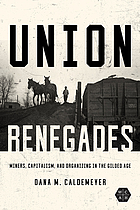
Dana M. Caldemeyer
In the late nineteenth century, Midwestern miners often had to decide if joining a union was in their interest. Arguing that these workers were neither pro-union nor anti-union, the author shows that they acted according to what they believed would benefit them and their families. As corporations moved to control coal markets and unions sought to centralize their organizations to check corporate control, workers were often caught between these institutions and sided with whichever one offered the best advantage in the moment. Workers chased profits while paying union dues, rejected national unions while forming local orders, and broke strikes while claiming to be union members. This pragmatic form of unionism differed from what union leaders expected of rank-and-file members, but for many workers, the choice to follow or reject union orders was a path to better pay, stability, and independence in an otherwise unstable age. Nuanced and eye-opening, this book challenges popular notions of workers' attitudes during the Gilded Age. -- Provided by publisher
Arguing that these workers were neither pro-union nor anti-union, the author shows that they acted according to what they believed would benefit them and their families
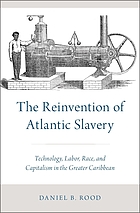
Daniel B. Rood
The Reinvention of Atlantic Slavery explores how, in an age of industry and abolition, ambitious planters in the Upper US South, Cuba, and Brazil expanded slavery by collaborating with a transnational group of chemists, engineers, and other ""plantation experts"" to assist them in adapting the technologies of the Industrial Revolution to suit ""tropical"" needs
how ambitious planters in the Upper US South, Cuba, and Brazil expanded slavery
Museum/Exhibits
Tours
Maps
Digital Projects
Organizations
Sites
Film/Video
Audio/Interview
Podcast/Program
Text/Document
Image
Graphs/Data
Timeline
Southwest
West
Midwest
Southeast
Northeast
Mexico
Canada
Global
Books
Teaching
Lectures
Digital Archives
Journals
Bibliographies
Topic Intro