


Collections
Library
Type
Region
Coverage:
-
Published:
-
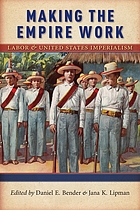
Daniel E. Bender, Jana K. Lipman
Millions of laborers, from the Philippines to the Caribbean, performed the work of the United States empire. Forging a global economy connecting the tropics to the industrial center, workers harvested sugar, cleaned hotel rooms, provided sexual favors, and filled military ranks. Placing working men and women at the center of the long history of the U.S. empire, these essays offer new stories of empire that intersect with the “grand narratives” of diplomatic affairs at the national and international levels. Missile defense, Cold War showdowns, development politics, military combat, tourism, and banana economics share something in common—they all have labor histories. This collection challenges historians to consider the labor that formed, worked, confronted, and rendered the U.S. empire visible. The U.S. empire is a project of global labor mobilization, coercive management, military presence, and forced cultural encounter.
Together, the essays in this volume recognize the United States as a global imperial player whose systems of labor mobilization and migration stretched from Central America to West Africa to the United States itself. Workers are also the key actors in this volume. Their stories are multi-vocal, as workers sometimes defied the U.S. empire’s rhetoric of civilization, peace, and stability and at other times navigated its networks or benefited from its profits. Their experiences reveal the gulf between the American ‘denial of empire’ and the lived practice of management, resource exploitation, and military exigency. When historians place labor and working people at the center, empire appears as a central dynamic of U.S. history.
Introduction --
1. The Wages of Empire --
2. Revolutionary Currents --
3. The Secret Soldiers’ Union --
4. The Photos That We Don’t Get to See --
5. Sexual Labor and the U.S. Military Empire --
6. Making Aloha --
7. The Advantages of Empire --
8. Empire and the Moving Body --
9. Slavery’s Stale Soil --
10. The Colonization of Antislavery and the Americanization of Empires --
11. Progressive Empire --
12. What Is Imperial about Coffee? --
13. Home Land (In)security --
Placing working men and women at the center of the long history of the U.S. empire,
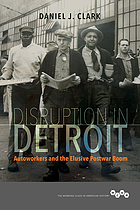
Daniel J. Clark
It is a bedrock American belief: the 1950s were a golden age of prosperity for autoworkers. Flush with high wages and enjoying the benefits of generous union contracts, these workers became the backbone of a thriving blue-collar middle class. It is also a myth. Daniel J. Clark began by interviewing dozens of former autoworkers in the Detroit area and found a different story - one of economic insecurity caused by frequent layoffs, unrealised contract provisions, and indispensable second jobs. 'Disruption in Detroit' is a vivid portrait of workers and an industry that experienced anything but stable prosperity
economic insecurity caused by frequent layoffs, unrealised contract provisions, and indispensable second jobs
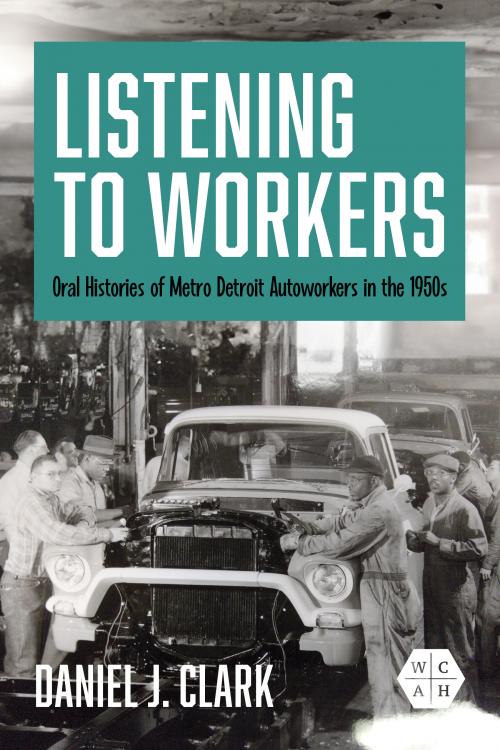
Daniel J. Clark
Historians and readers alike often overlook the everyday experiences of workers. Drawing on years of interviews and archival research, Daniel J. Clark presents the rich, interesting, and sometimes confounding lives of men and women who worked in Detroit-area automotive plants in the 1950s. In their own words, the interviewees frankly discuss personal matters like divorce and poverty alongside recollections of childhood and first jobs, marriage and working women, church and hobbies, and support systems and workplace dangers. Their frequent struggles with unstable jobs and economic insecurity upend notions of the 1950s as a golden age of prosperity while stories of domestic violence and infidelity open a door to intimate aspects of their lives. Taken together, the narratives offer seldom-seen accounts of autoworkers as complex and multidimensional human beings. Compelling and surprising, Listening to Workers foregoes the union-focused strain of labor history to provide ground-level snapshots of a blue-collar world
Listening to Workers foregoes the union-focused strain of labor history to provide ground-level snapshots of a blue-collar world
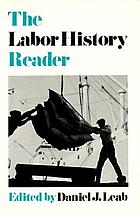
Daniel J. Leab
Anthology of essays from the early days of the labor history field, compiled from the journal Labor History
-The old labor history and the new : in search of the American working class -- David Brody
-The study of social mobility : ideological assumptions and conceptual bias -- James A. Henretta
-The failure of female factory labor in colonial Boston --Gary B. Nash
-The mechanics and the Jeffersonians : New York, 1789-1801 -- Alfred Young
-Should labor have supported Jackson? ; or questions the quantitative studies do not answer--Edward Pessen
-Workers' control of machine production in the nineteenth century--David Montgomery
Trouble on the railroads in 1873-1874 : prelude to the 1877 crisis? --Herbert G. Gutman
- Adolph Strasser and the origins of pure and simple trade unionism-- H.M. Gitelman
-Trade unionism in the British and U.S. steel industries, 1888-1914 : a comparative study--James Holt
-Black workers and labor unions in Birmingham, Alabama, 1897-1904--Paul B. Worthman
-The origins of western working-class radicalism, 1890-1905--Melvyn Dubofsky
-The Passaic strike of 1912 and the two I.W.W.s --Michael H. Ebner
-Organizing the unorganizable : three Jewish women and their union--Alice Kessler-Harris
-Affluence for whom? : another look at prosperity and the working classes in the 1920s -- Frank Stricker
- "United we eat" : the creation and organization of the unemployed councils in 1930--Daniel J. Leab
-Origins of the sit-down era : worker militancy and innovation in the rubber industry, 1934-1938 --Daniel Nelson
-Frank Murphy, the Thornhill decision, and picketing as free speech--Sidney Fine
-Delivering the goods : industrial unionism during World War II --Joshua Freeman
-Women workers and the UAW in the post-World War II period : 1945-1954 --Nancy Gabin
-Work and community life in a southern textile town --Dale Newman
A collection of important labor history texts.

Daniel J. Leab, Dorothy Swanson
state of the field circa 1983
Bibliography compiled in 1983; books & articles
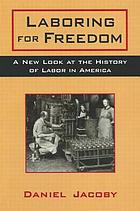
Daniel Jacoby
This text examines the concept of freedom in the context of American labour history. Nine essays develop themes in this history which show that liberty of contract and inalienable rights form two contradictory traditions concerning freedom
Part I: Independence or Contract ; 1. Republican Soil ; 2. Contracting Liberties ;
Part II: Illusory Freedoms ; 3. The Properties of Labor ; 4. A Skillful Control: Managing the Labor Process ; 5. Incorporating Paternalism ; 6. Free Education ;
Part III: New Deals and Old Ideals ; 7. Union Compromise ; 8. ""Rights"" of Passage ; 9. Playing the Global Piano ; Epilogue: Memories and Challenges ; Notes ; Bibliography ; Index ; About the Author
examines the concept of freedom in the context of American labour history through 9 essays.
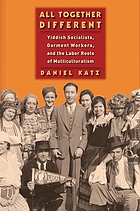
Daniel Katz
In the early 1930's, the International Ladies' Garment Workers' Union (ILGWU) organized large numbers of Black and Hispanic workers through a broadly conceived program of education, culture, and community involvement.
The ILGWU admitted these new members, the overwhelming majority of whom were women, into racially integrated local unions and created structures to celebrate ethnic differences.
All Together Different revolves around this phenomenon of interracial union building and worker education during the Great Depression. Traces this tendency to Russia revolutionary experiences of Russian Jewish women.
Multi-culturalism in the 1930s labor movement
Daniel Katz, Richard A. Greenwald
"When Wisconsin Governor Scott Walker threatened the collective bargaining rights of the state's public-sector employees in early 2011, the huge protests that erupted in response put the labor movement back on the nation's front pages. It was a fleeting reminder of a not-so-distant past when the "labor question"--And the power of organized labor-was part and parcel of a century-long struggle for justice and equality in America. Now, on the heels of the expansive "Occupy Wall Street" movement, the lessons of history-in seemingly short supply-are a vital handhold for the thousands of activists and citizens everywhere who sense that something has gone terribly wrong. This pithy but accessible volume provides readers with an understanding of the history that is directly relevant to the economic and political crises working people face today, and points the way to a revitalized twenty-first-century labor movement. With original contributions from leading labor historians, social critics, and activists, Labor Rising makes crucial connections between the past and present, and then looks forward, asking how we might imagine a different future for all Americans"-- Provided by publisher
Community and Coalitions. Building a new working-class politics from below / Shelton Stromquist
Learning from the right: a new operation Dixie? / Bethany Moreton and Pamela Voekel
Reimagining a multicultural labor movement through education / Daniel Katz
What labor looks like: from Wisconsin to Cairo, youth hold a mirror to history of workers' struggles / Michelle Chen
Bringing the organizing tradition home: campus-labor-community partnerships for regional power / Nancy Maclean
Place Matters. Placing labor / Andrew Herod
Home as work / Eileen Boris
Contingent, transient, and at risk: modern workers in a gig economy / Richard A. Greenwald
State and Policy. Postmortem: yellow dogs and company-dominated elections / David Brody
Solidarity, citizenship, and the opportunities of disasters / Jacob A.C. Remes
The hour when the ship comes in / Leon Fink
Getting over the New Deal / Jefferson Cowie
Your American dream, my American nightmare / Kimberley L. Phillips.
Political Economy. Organized labor: Declining source of hope? / Bill Fletcher Jr
Eco-Keynesianism, green jobs, and labor's need to embrace climate justice / Andrew Ross
On economics and labor solidarity / Marcellus Andrews
Ghost marks and rising spirits in an industrial landscape: communication and imagination in the rebirth of labor / Elizabeth Faue
Beyond Borders. Immigrant workers and labor's future / Ruth Milkman
The foundations of modern farm worker unionism: from UFW to PCUN / Matthew Garcia and Mario Sifuentez
Supply-chain tourist: or how Wal-Mart has transformed the contemporary labor question / Nelson Lichtenstein
Forgetting and remembering: workers, the U.S. empire, and the post-9/11 era / Dorothy Fujita-Rony
Bananas, elephants, and a coup: learning international solidarity the hard way / Dana Frank
Labor rising? / Frances Fox Piven
provides readers with an understanding of the history that is directly relevant to the economic and political crises working people face today, and points the way to a revitalized twenty-first-century labor movement.
Daniel Letwin
This study explores a tradition of interracial unionism that persisted in the coal fields of Alabama from the dawn of the New South through the turbulent era of World War I. Daniel Letwin focuses on the forces that prompted black and white miners to collaborate in the labor movement even as racial segregation divided them in nearly every other aspect of their lives. Letwin examines a series of labor campaigns - conducted under the banners of the Greenback-Labor Party, the Knights of Labor, and, most extensively, the United Mine Workers - whose interracial character came into growing conflict with the southern racial order
explores a tradition of interracial unionism that persisted in the coal fields of Alabama from the dawn of the New South through the turbulent era of World War I.
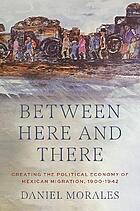
Daniel Morales
Between Here and There is the first history of the creation of modern US-Mexico migration patterns narrated from multiple geographic and institutional sites. This book analyzes the interplay between the US and Mexican governments, civic organizations, and migrants on both sides of the border and offers a revisionist and comprehensive view of Mexican migration as it was established in the early twentieth century and reproduced throughout the century as a socioeconomic system that reached from Texas borderlands to western agricultural regions like California as well as to Midwestern farming and industrial areas. The book illustrates how large-scale migration became entrenched in the socioeconomic fabric of the United States and Mexico. Mexican migration operates through an interconnected transnational migrant economy made up of self-reinforcing local economic logics, information diffusion, and locally based transnational social networks. From central Mexico, the book expands across the United States and back to Mexico to show how the migrant economy spread and reacted to the political and economic crisis in the 1930s. In the 1930s, migrants fought for recognition in both societies. Those who returned to Mexico used an expansive vision to lay claim to citizenship and land there. Those who stayed in the United States joined efforts to lay claim to better pay, working conditions, and rights from the New Deal state, creating a base for later organizing. These dynamics shaped the establishment of the Bracero Program that brought in more than four million workers and has continued to frame large-scale Mexican migration until today"-- Provided by publisher
The first history of the creation of modern US-Mexico migration patterns narrated from multiple geographic and institutional sites.
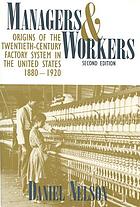
Daniel Nelson
During the early years of this century, the classic factory system of the industrial revolution evolved rapidly into a new, identifiable form that would characterize American and world industry for most of the twentieth century. This transformation, as important for industrial managers, workers, and consumers as the initial creation of the factory, is the subject of Daniel Nelson's illuminating synthesis, updated and expanded to include the scholarship of the last twenty years.
This edition of Managers and Workers describes the interrelations between technological and organizational innovation, including such familiar developments as the spread of mass production and the emergence of scientific management, and other developments that were little known when the first edition of this book appeared, such as the revolution in factory architecture, the changing role of the foreman, and the spread of personnel work.
The volume also incorporates the best scholarship of the 1970s, 1980s, and 1990s, some of it stimulated by Managers and Workers, and includes a new chapter on the role of organized labor in the early-twentieth-century factory. The focus of the work, however, remains the individual managers and workers who created the twentieth-century factory system
describes the interrelations between technological and organizational innovation, including the spread of mass production and the emergence of scientific management.
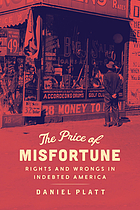
Daniel Platt
Daniel Platt's intriguing book details how American culture engaged the moral implications of debt from the Gilded Age to the New Deal era. Debt was once an unequivocal marker of failure and untrustworthiness, and those who carried debt were seen as spendthrifts, unable to control their finances or themselves. Yet later, debt became a marker of the responsible capitalist: evidence of mutual relations and responsibilities in the marketplace and the community. Platt shows that these characterizations of the moral qualities of debt and the debtor were often weaponized in support of racism, classism, sexism, and other kinds of discrimination"-- Provided by publisher
the moral implications of debt from the Gilded Age to the New Deal era
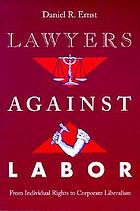
Daniel R. Ernst
A major revision of the history of labor law in the United States in the early twentieth century, "Lawyers against Labor" goes beyond legal issues to consider cultural, political, and industrial history as well. In the first full treatment of the turn-of-the-century American Anti-Boycott Association(AABA), Daniel Ernst ably leads the reader through a compelling story of business and politics. The AABA was an organization of small- to medium-sized employers whose staff litigated and lobbied against organized labor. Ernst captures in depth the characters involved, bringing them to life with a writer's eye and a touch of wit. As he examines the AABA at work to combat trade unions through the courts, he introduces its most notable leaders, Daniel Davenport and Walter Gordon Merritt - who personified the opposing points of view - and shows how pluralism had won itself a place in the legal, academic, political, corporate, and even trade-union worlds long before the New Deal
the first full treatment of the turn-of-the-century American Anti-Boycott Association(AABA), a social history of labor law which examines how law limits the workers' autonomy
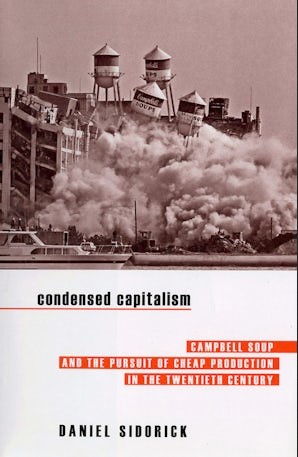
Daniel Sidorick
Corporations often move factories to areas where production costs, notably labor, taxes, and regulations, are sharply lower than in the original company hometowns. Not every company, however, followed this trend. One of America's most iconic firms, the Campbell Soup Company, was one such exception: it found ways to achieve low-cost production while staying in its original location, Camden, New Jersey, until 1990.The first in-depth history of the Campbell Soup Company and its workers, Condensed Capitalism is also a broader exploration of strategies that companies have used to keep costs down besides relocating to cheap labor havens: lean production, flexible labor sourcing, and uncompromising antiunionism. Daniel Sidorick's study of a classic firm that used these methods for over a century has, therefore, special relevance in current debates about capital mobility and the shifting powers of capital and labor. Sidorick focuses on the engine of the Campbell empire: the soup plants in Camden where millions of cans of food products rolled off the production line daily. It was here that management undertook massive efforts to drive down costs so that the marketing and distribution functions of the company could rely on a limitless supply of products to sell at rock-bottom prices. It was also here that thousands of soup makers struggled to gain some control over their working lives and livelihoods, countering company power with their own strong union local. Campbell's low-cost strategies and the remarkable responses these elicited from its workers tell a story vital to understanding today's global economy. Condensed Capitalism reveals these strategies and their consequences through a narrative that shows the mark of great economic and social forces on the very human stories of the people who spent their lives filling those familiar red-and-white cans
Introduction: Global Strategies, Hometown Factories
1. Making Campbell's Soup: Camden, 1869–1935
2. Bedaux, Discipline, and Radical Unions3. World War II and the Transformation of the Workforce
4. The Fight to Save Local 80, 1946–1953
5. The UPWA's Social Unionism versus William Beverly Murphy
6. 1968: The Strike for Unity
7. Waiting for the End
8. Legacies
The first in-depth history of the Campbell Soup Company and its workers, also a broader exploration of strategies that companies have used to keep costs down.
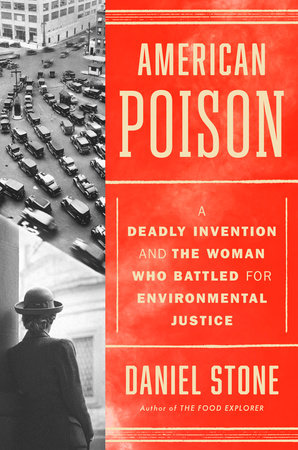
Daniel Stone
Story of Alice Hamilton, a trailblazing doctor and public health activist who took on the booming auto industry--and the deadly invention of leaded gasoline, which would poison millions of people across America. At noon on October 27, 1924, a factory worker was admitted to a hospital in New York City, suffering from hallucinations and convulsions. Before breakfast the next day, he was dead. Alice Hamilton was determined to prevent such a tragedy from happening again.
By the time of the accident, Hamilton had pioneered the field of industrial medicine in the United States. She specialized in workplace safety years before the Occupational Safety and Health Administration was created. She was the first female professor at Harvard. She spent decades inspecting factories and mines.
American Poison is the gripping story of Hamilton's unsung battle for a healthy planet-and the ramifications that continue to echo today"-- Provided by publisher
Hamilton had pioneered the field of industrial medicine in the United States. She specialized in workplace safety years before the Occupational Safety and Health Administration was created. She was the first female professor at Harvard. She spent decades inspecting factories and mines.

Daniel Wolff
When thirteen-year-old Daniel Wolff first heard Bob Dylan's "Like a Rolling Stone," it ignited a life-long interest in understanding the rock poet's anger. When he later discovered "Song to Woody," Dylan's tribute to his hero, Woody Guthrie, Wolff believed he'd uncovered one source of Dylan's rage. Sifting through Guthrie's recordings, Wolff found "1913 Massacre"--A song which told the story of a union Christmas party during a strike in Calumet, Michigan, in 1913 that ended in horrific tragedy. Following the trail from Dylan to Guthrie to an event that claimed the lives of seventy-four men, women, and children a century ago, Wolff found himself tracing the history of an anger that has been passed down for decades. From America's early industrialized days, an epic battle to determine the country's direction has been waged, pitting bosses against workers and big business against the labor movement. In Guthrie's eyes, the owners ultimately won; the 1913 Michigan tragedy was just one example of a larger lost history purposely distorted and buried in time. In this cultural study, Wolff braids three disparate strands--Calumet, Guthrie, and Dylan--together to create a revisionist history of twentieth-century America. Grown-Up Anger chronicles the struggles between the haves and have-nots, the impact changing labor relations had on industrial America, and the way two musicians used their fury to illuminate economic injustice and inspire change [Publisher description]
chronicles the struggles between the haves and have-nots, the impact changing labor relations had on industrial America, and the way two musicians used their fury to illuminate economic injustice and inspire change
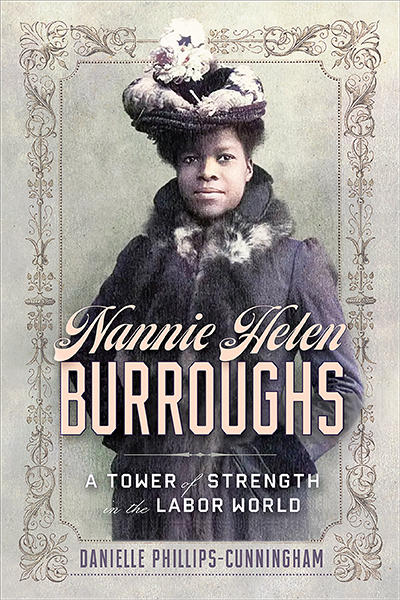
Danielle T. Phillips-Cunningham
The story of one of the most influential labor leaders of the twentieth century reveals powerful lessons that still resonate
At the dawn of the twentieth century, Black girls and women faced a harsh career landscape. Domestic labor and sharecropping—which were the least regulated and lowest paying occupations for women in the US economy—were the few available ways for Black women and girls to make a living in Jane Crow America. In response to these circumstances, Nannie Helen Burroughs, the pioneering Black American educator and civil rights leader, established the National Training School for Women and Girls (NTS) in Washington, DC. Nannie Helen Burroughs tells the story of the powerful labor movement that resulted from Burroughs's work at the NTS and in the National Association of Colored Women's Clubs. The NTS proved to be a revolutionary labor and educational initiative that redefined household employment as a profession where social justice for the Black community could be achieved. The NTS was integral to a Black clubwomen's labor movement that paved the way for a broader transformation of the economic landscape for Black women and girls. Nannie Helen Burroughs establishes Burroughs as one of America's most influential labor leaders in the twentieth century and reveals the powerful lessons her work and ideas still offer for America's laborers, labor organizers, scholars, and women's rights and racial justice activists today. It also establishes Burroughs and her colleagues in the National Association of Colored Women as the architects of an unprecedented labor movement.
Introduction Black Women's Organized Anxiety in Jane Crow America
Part I. An Emerging Labor Leader
1. Burroughs's Burgeoning Labor Consciousness: A Precursor to the National Training School, 1879–1896
2. "Dying to Be and to Do": Burroughs as a Working-Class Laborer and Rising Leader, 1896–1909
Part II. "The Only School Ever Founded by an Organization of Negro Women"
3. "The National Training School for Women and Girls Will Materialize": A Timeline of Patriarchy, Land, and Ambition
4. "To Command Respect and Good Living": Curriculum Building to Organize Women of the Race, 1909–1961
Part III. The Energy of Ten Hands and a Radical Vision
5. "Show the World What Negro Women Can Do in a Labor Movement": Black Women's Organizing against Jane Crow Unionism, 1917–1928
6. "We Are in Politics to Stay": Securing Labor Protections and Legislation, 1913–1955
7. "Interested in Making a Life": Beginning Anew through the Arts and Entrepreneurship, 1929–1940
8. The Worker: A Literary Vehicle for Change, 1912–1961
Epilogue: "Greedy" and Generous Women as Historical Guides
Acknowledgments
Notes
Bibliography
establishes Burroughs and her colleagues in the National Association of Colored Women as the architects of an unprecedented labor movement.
Danielle T. Phillips-Cunningham
Putting Their Hands on Race is an intersectional and comparative labor history of Southern African American and Irish immigrant women who labored as domestic workers after migrating to Northeastern cities during the nineteenth and twentieth centuries"-- Provided by publisher
labor history of Southern African American and Irish immigrant women who labored as domestic workers

Dara Orenstein
In Out of Stock, Dara Orenstein delivers a nuanced, ambitious, and engrossing account of that most generic and underappreciated site in the history of American commerce and industry: the warehouse, and all its many permutations. She traces the progression from the bonded warehouse of the nineteenth century to today's foreign-trade zones, enclaves where goods are processed while simultaneously inside the United States and outside US customs territory.
Foreign-trade zones channel jobs to American workers by converting American cities into international ports, and to understand them, Orenstein tells us, we should look at them in the simplest of terms: as warehouses. Going further, Orenstein contends that these zones--nearly 800 of which are scattered across the United States--are emblematic of how warehouses have begun to supplant factories on the terrain of logistics.
In the age of Amazon and Walmart, circulation is so crucial to how and where goods are produced that it is increasingly inseparable from production, such that warehouses rank as some of the most pivotal spaces of global capitalism. Drawing from cultural geography, cultural history, and political economy, and vividly documented with photos, ads, maps, and other ephemera, Out of Stock nimbly demonstrates the centrality of warehouses for corporations, workers, cities, and empires
the warehouse, and all its many permutations
Dario Azzellini, Michael G. Kraft, eds
The class strikes back' examines a number of radical, twenty-first-century workers' struggles. These struggles are characterised by a different kind of unionism and solidarity, arising out of new kinds of labour conditions and responsive to new kinds of social and economic marginalisation. The essays in the collection demonstrate the dramatic growth of syndicalist and autonomist formations and argue for their historical necessity. They show how workers seek to form and join democratic and independent unions that are fundamentally opposed to bureaucratic leadership, compromise, and concessions.
"Specific case studies dealing with both the Global South and Global North assess the context of local histories and the spatially and temporally located balance of power, while embedding the struggle in a broader picture of resistance and the fight for emancipation rings together a wide spectrum of case studies focused on direct action, horizontal forms of decision-making, independent unionism, and anticapitalist and antiauthoritarian struggles originating from shop-floor grievances. The thirteen chapters span Turkey to Indonesia, the United States to Italy, and the United Kingdom to South Africa. Many contributors, including Broumas (Greece), Dinler (Turkey), Olaya (Colombia), Wigand (Germany), and Azzellini combine, or have combined at some point, a scholarly role with an activist one."
1 Introduction: A Return to the Shop Floor or How to Confront Neoliberal Capitalism Dario Azzellini and Michael G. Kraft
Workers’ Self-Organisation beyond and against Corporative Unions and the State
2 Workers’ Struggles and Autonomy: Strategic and Tactical Considerations Mithilesh Kumar and Ranabir Samaddar
3 Autonomous Worker Committees in Marikana, South Africa: Journey to the Mountain Luke Sinwell
4 Greece: Grassroots Labour Struggles in a Crisis-Ridden Country Antonios Broumas, Elias Ioakimoglou and Kostas Haritakis
5 Fighting Against Capitalist Ownership and State Bureaucracy – Labour Struggles in Venezuela Dario Azzellini
Non-Corporate Unionism and Social Movements
6 Revolts on Goose Island: A Long Fight Pays Off for Chicago Window Factory Workers Kari Lydersen
7 The Egyptian Workers’ Movement: Revolt, Revolution and Counter-Revolution Anne Alexander and Mostafa Bassiouny
8 Bosnia and Herzegovina: From Workers’ Strike to Social Uprising Chiara Milan
9 Sinaltrainal: Transforming the Workers’ Movement in Colombia Carlos Olaya
10 A Fistful of Dollars? The Labour Dispute in the Babylon Cinema Hansi Oostinga
Renewed Forms of Struggle and Workers’ Self-Management
11 New Workers’ Struggles in Turkey since the 2000s: Possibilities and Limits Demet Ş. Dinler
12 Recovered Imaginaries: Workers’ Self-Organisation and Radical Unionism in Indonesia Felix Hauf
13 The Revolution in Logistics Anna Curcio
Showcases historical syndicalist and autonomist worker's organizations fundamentally opposed to bureaucratic leadership, compromise, and concessions.
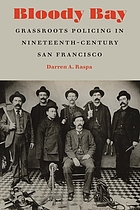
Darren A. Raspa
Bloody Bay follows the history of policing in nineteenth-century San Francisco, exploring the city's culture of popular justice, its multi-ethnic environment, and how the unique relationships formed between informal and formal policing created a more progressive policing environment than anywhere else in the nation"-- Provided by publisher
follows the history of policing in nineteenth-century San Francisco.
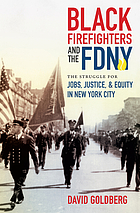
David A. Goldberg
For many African Americans, getting a public sector job has historically been one of the few paths to the financial stability of the middle class, and in New York City, few such jobs were as sought-after as positions in the fire department (FDNY). For over a century, generations of Black New Yorkers have fought to gain access to and equal opportunity within the FDNY. Tracing this struggle for jobs and justice from 1898 to the present, David Goldberg details the ways each generation of firefighters confronted overt and institutionalized racism. An important chapter in the histories of both Black social movements and independent workplace organizing, this book demonstrates how Black firefighters in New York helped to create affirmative action from the "bottom up," while simultaneously revealing how white resistance to these efforts shaped white working-class conservatism and myths of American meritocracy. Full of colorful characters and rousing stories drawn from oral histories, discrimination suits, and the archives of the Vulcan Society (the fraternal society of Black firefighters in New York), this book sheds new light on the impact of Black firefighters in the fight for civil rights
demonstrates how Black firefighters in New York helped to create affirmative action from the "bottom up," while simultaneously revealing how white resistance to these efforts shaped white working-class conservatism and myths of American meritocracy.
David A. Gray
In the United States, a strong work ethic has long been upheld as a necessity, and tributes to motivation abound-from the motivational posters that line the walls of the workplace to the self-help gurus who draw in millions of viewers online. Americans are repeatedly told they can achieve financial success and personal well-being by adopting a motivated attitude toward work. But where did this obsession come from? And whose interests does it serve?
Work Better, Live Better traces the rise of motivational rhetoric in the workplace across the expanse of two world wars, the Great Depression, and the Cold War. Beginning in the early twentieth century, managers recognized that force and coercion-the traditional tools of workplace discipline-inflamed industrial tensions, so they sought more subtle means of enlisting workers' cooperation. David Gray demonstrates how this "motivational project" became a highly orchestrated affair as managers and their allies deployed films, posters, and other media, and drew on the ideas of industrial psychologists and advertising specialists to advance their quests for power at the expense of worker and union interests"-- Provided by publisher
r traces the rise of motivational rhetoric in the workplace across the expanse of two world wars, the Great Depression, and the Cold War

David Abdulah, History Matters
The power, global reach, and flexibility of multi-national corporations increased dramatically during the 1980s and 1990s as a revolution in communications technology and the increasing adoption of free trade agreements between countries allowed companies to shift production easily from one part of the globe to another. Many companies could now pressure labor unions by negotiating favorable contracts wherever labor costs and local tax laws suited them. However, the increasingly interwoven global economy, along with the technology that facilitated it, also gave rise to international labor organizing. As David Abdulah, education director of the Oilfield Workers Trade Union of Trinidad and Tobago, relates, union organizing and activism has become global, as workers in different countries develop networks across borders to keep up with and combat the unfair labor practices of the multi-nationals.
An 1990 audio recording of Oilfield Workers Trade Union of Trinidad and Tobago education director David Abdulah as he describes how workers might counter the growing power of multi-national corporations.
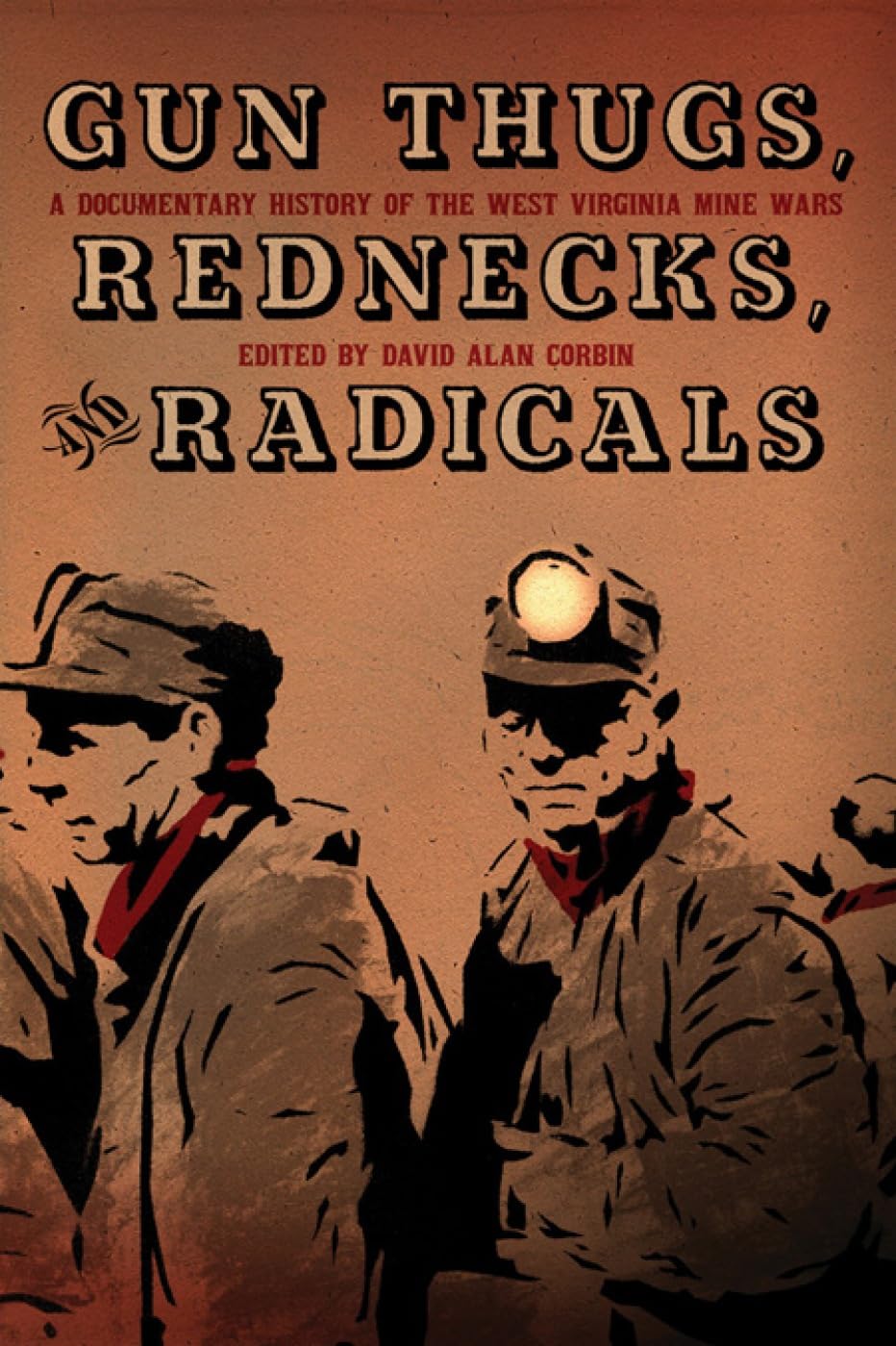
David Alan Corbin
Telling the powerful story of the West Virginia coal mining rebellions of the early 20th century, this book collects material from the leaders, the miners, and the journalists sent to report on the 1912 and 1921 West Virginia mine warsexplosive examples of strikes and union battles.
Featured in the text are articles, speeches, and discussions between union leaders such as Samuel Gompers, Frank Keeney, Fred Mooney, Bill Blizzard, and Mother Jones. Also included are U.S. Senate committee testimonies from miners and their family members describing life and work in the coal camps and explaining their participation in the violence. These facts clearly portray the human cost of industry and present the hard choices of arebellious and often politically radical populace who refuses to be beleaguered under any circumstances
Material from the leaders, the miners, and the journalists sent to report on the 1912 and 1921 West Virginia mine wars