


Collections
Library
Type
Region
Coverage:
-
Published:
-

David Appleby, Allison Graham, Steven Ross
Consider pairing this film with the "Lessons in Solidarity: Grady Hospital Workers United" Lesson Plan developed by Larry Miller of the Zinn Education Project.
A film documenting the 1968 Memphis sanitation workers’ strike and the historical forces which came together with the death of Dr. Martin Luther King.
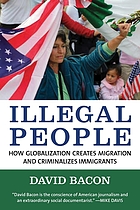
David Bacon
This volume explores the human side of globalization (the international integration of world views, ideas and other aspects of culture, and economies); exposing the many ways it uproots people in Latin America and Asia, driving them to migrate. The author explains why U.S. national policy in regard to globalization produces even more displacement, more migration, more immigration raids, and a more divided, polarized society. Through interviews and on-the-spot reporting from both impoverished communities abroad and American immigrant workplaces and neighborhoods, the author shows how the United States' trade and economic policy abroad, in seeking to create a favorable investment climate for large corporations, creates conditions to displace communities and set migration into motion. He maintains that trade policy and immigration are intimately linked and are elements of a single economic system. He traces the development of illegal status back to slavery and shows the human cost of treating the indispensable labor of millions as illegal. The author urges for change in the way we think, debate, and legislate around issues of migration and globalization, making a case for why we need to consider immigration and migration from a globalized human rights perspective
explores the human side of globalization; exposing the many ways it uproots people in Latin America and Asia, driving them to migrate.
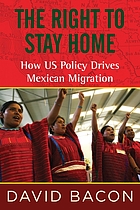
David Bacon
People across Mexico are being forced into migration, and while 11 percent of that country's population lives north of the US border, the decision to migrate is rarely voluntary. Free trade agreements and economic policies that exacerbate and reinforce extreme wealth disparities make it impossible for Mexicans to make a living at home. And yet when they migrate to the United States, they must grapple with criminalization, low wages, and exploitation.
In The Right to Stay Home, journalist David Bacon tells the story of the growing resistance of Mexican communities. Bacon shows how immigrant communities are fighting back--envisioning a world in which migration isn't forced by poverty or environmental destruction and people are guaranteed the "right to stay home." This richly detailed and comprehensive portrait of immigration reveals how the interconnected web of labor, migration, and the global economy unites farmers, migrant workers, and union organizers across borders. In addition to incisive reporting, eleven narratives are included, giving readers the chance to hear the voices of activists themselves as they reflect on their experiences, analyze the complexities of their realities, and affirm their vision for a better world. -- Publisher website
Tells the story of modern Mexican migrant communities in the US as well as their frustration with socioeconomic factors which forced them to migrate
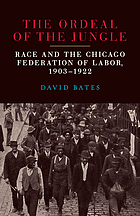
David Bates
"The Ordeal of the Jungle" boldly revises previous scholarship regarding Chicago's labor movement in the World war I era. It examines the failures of the Chicago Federation of Labor to build a progressive, interracial organization. Following failed strikes and a tumultuous time, the Chicago Race Riot of 1919 shattered the CFL's tenuous interracial alliance.
"Between 1910 and 1920, the Chicago Federation of Labor (CFL) inaugurated a massive organizing drive in the city’s meatpacking and steel industries. Although the CFL sought legitimately progressive goals, worked earnestly to organize an interracial union, and made major inroads among both black and white workers, their efforts resulted in a bitter defeat. David Bates provides a clear picture of how even the most progressive of intentions can be ground to a halt.
By organizing workers into neighborhood locals, which connected workplace struggles to ethnic and religious identities, the CFL facilitated a surge in the organization’s membership, particularly among African American workers, and afforded the federation the opportunity to aggressively confront employers. The CFL’s innovative structure, however, was ultimately its demise. Linking union locals to neighborhoods proved to be a form of de facto segregation. Over time union structures, rank-and-file conflicts, and employer resistance combined to turn the union’s hopeful calls for solidarity into animosity and estrangement. Tensions were exacerbated by violent shop floor confrontations and exploded in the bloody 1919 Chicago Race Riot. By the early 1920s, the CFL had collapsed.
The Ordeal of the Jungle explores the choices of a variety of people while showing a complex, overarching interplay of black and white workers and their employers. In addition to analyzing union structures and on-the-ground relations between workers, Bates synthesizes and challenges previous scholarship on interracial organizing to explain the failure of progressive unionism in Chicago.
examines the failures of the Chicago Federation of Labor to build a progressive, interracial organization in both the meatpacking and steel industries
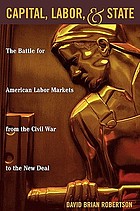
David Brian Robertson
This examination of American labour policy demonstrates that although most industrializing nations began to limit employer freedom and regulate labour conditions in the 1900's, the US continued to allow total employer discretion in decisions concerning hiring, firing, and workplace conditions.
demonstrates that although most industrializing nations began to limit employer freedom and regulate labour conditions in the 1900's, the US continued to allow total employer discretion in important decisions.
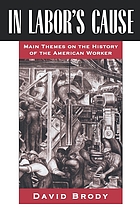
David Brody
These extended essays by one of the preeminent scholars in U.S. labor history discuss central questions in the field, from the colonial period to the present: What do the first demands for a fixed workday tell us about how early American workers experienced the beginnings of the industrial revolution? Why did American labor politics never manage to break the grip of the two-party system? What was the impact of ideology, career leadership, and ethnicity on the American labor movement? How did American trade unionism cope with the market-drive forces of American capitalism? Why did so great a national crisis as World War II have so modest an impact on labor-capital-state relations in America? And finally, how did the struggle for industrial unionism produce the highly formalized "adversarial" system of workplace representation that many observers today see as one of the prime obstacles to American competitiveness in the new global economy? Like Brody's Workers in Industrial America (Second Edition, Oxford, 1993), In Labor's Cause makes an important contribution toward a comprehensive interpretation of the history of workers in America, and will be a fundamental component of any U.S. survey course, as well as courses in American labor or economic history.
1. Work and Time During Early American Industrialism
2. The Course of American Labor Politics
3. Shaping a Labor Movement
Ideology
Career Leadership
Ethnicity
4. Market Unionism in America: The Case of Coal
5. The New Deal, Labor, and World War II
6. Workplace Contractualism: A Historical/Comparative Analysis
These essays discuss central questions in the field of labor history from the colonial period to the present
David Brody
Explores recent developments affecting American workers in light of labor's past. Of special concern is the erosion of the rights of workers under the modern labor law, which Brody argues is rooted in the original formulation of the Wagner Act. Brody explains how the ideals of free labor, free speech, freedom of association, and freedom of contract have been interpreted and canonized in ways that unfailingly reduce the capacity for workers' collective action while silently removing impediments to employers coercion of workers. He combines legal and labor history to reveal how laws designed to undergird workers' rights now essentially hamstring them.
Responsibilities of the labor historian
The future of the labor movement in historical perspective
Labor's institutional sources of expansion and contraction
Section 8a(2) and the origins of the Wagner act
World War I and industrial democracy; or, why we have no works councils in America
Reforming the American workplace?
On the representation election
Freedom and solidarity in American labor law
Workers' rights: finding a way
Explores recent developments affecting American workers in relation to past labor law, organization, and the development of capitalist systems of production
David Brody
Conceived as a prologue to the 1930s industrial-union triumph in steel, Labor in Crisis explains the failure of unionization before the New Deal era and the reasons for mass-production unionism's eventual success.
Widely regarded as a failure, the great 1919 steel strike had both immediate and far-reaching consequences that are important to the history of American labor. It helped end the twelve-hour day, dramatized the issues of the rights to organize and to engage in collective bargaining, and forwarded progress toward the passage of the Wagner Act, which, in turn, helped trigger John L. Lewis's decision to launch the CIO.
explains the failure of unionization before the New Deal era and the reasons for mass-production unionism's eventual success.
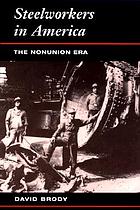
David Brody
One of the seminal books in the new labor history, David Brody's watershed study marked a critical shift from the study of unions to the study of workers. Brody explains why pre-WWI steelworkers acquiesced to the oppressive terms of work and then in 1919 rebelled and mounted the greatest strike for recognition in US history. Brody's analysis broke new ground in merging labor history with explorations of ethnicity, community, ideology, politics, and workplace. He also offered a pioneering study of management control that documented steel magnates' reliance on repression, paternalism, and ultimately state power to put down their employees' demand for a collective voice. Recognized as a classic since its original publication, Steelworkers in America now include a symposium in which seven prominent historians discuss the book's significance and place in the study of labor.
An extremely important history of the steel industry in America, blending labor and cultural history
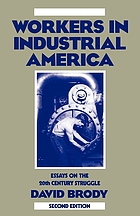
David Brody
Brody confronts central questions, both substantive and historiographical, focusing primarily on the efforts of laboring people to assert some control over their working lives, and on the equal determination of American business to conserve the prerogatives of management. Long a classic in the field of American labor history, valued by general readers and specialists alike for its brilliance of argument and clarity of style, Workers in Industrial America is now more timely than ever. The American worker in the progressive age: a comprehensive analysis
The rise and decline of welfare capitalism
The emergence of mass-production unionism
Thinking about industrial unionism, the new deal and the labor movement, John L. Lewis, the CIO after 50 years: a historical reckoning
The uses of power I: Industrial battleground
The uses of power II: political action
A movement in crisis
confronts central questions, focusing primarily on the efforts of laboring people to assert some control over their working lives, and on the determination of American business to conserve the prerogatives of management.
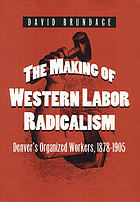
David Brundage
"Labor radicalism was a phenomenon of tremendous importance in early twentieth-century America, and nowhere was this more true than in the American West. Here the Industrial Workers of the World constituted a dramatic presence, capturing the imagination of immigrant workers and left-wing intellectuals alike with its practice of what has been called a "trade unionism of the dispossessed.""
The Making of Western Labor Radicalism breaks with standard interpretations to maintain that the IWW's emergence was a logical extension of late nineteenth-century labor traditions and not a sharp break with the past.
David Brundage focuses on Denver's organized workers, showing that all of the IWW's key features - its syndicalism, its internationalism and racial egalitarianism, its commitment to organizing unskilled workers, and its effort to construct a movement culture - had deep roots in the city's craft union and labor reform movements. He relates ideological change to the social history of the city's working people." "In developing his interpretation, Brundage also provides new information and fresh insights on a variety of topics: the role of Irish nationalism in the Knights of Labor, the meanings of working-class temperance, the origins of syndicalist theory, the impact of populism on the working class, and the roots of the trade union-Democratic party alliance that came to dominate the twentieth-century labor movement."--BOOK JACKET
Part of a multivolume series, this volume covers the aftereffects of WWI.
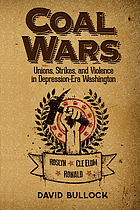
David Bullock
Strikes were a way of life for central Washington coal miners and their families, but Tuesday, April 3, 1934, was different. This time, people were afraid. Wives and mothers pelted cars with rocks, rotten eggs, and cow pies. They cursed and assaulted anyone who dared to cross their picket line. On a normal shift, the striking laborers spent ten or more hours at the workplace. Dressing, preparing lights and equipment, and traveling into the mine shaft--as much as an hour each way--were all done on their own time. The miners and their families wanted safer working conditions, fair wages, and a six-hour workday. So when leaders of their national union, the United Mine Workers of America, seemed indifferent to their concerns, some local members created a new organization, the Western Miners Union of America, and decided to strike. But this time, conflicting union alliances turned residents of Roslyn, Cle Elem, and Ronald against each other, and the heated, violent battle left deep and lasting scars. A refreshingly balanced account, Coal Wars captures the drama surrounding a dual union movement in the 1930s American West while portraying the region's melting pot of working families and the sociopolitical impacts of New Deal policies. Author David Bullock witnessed the bitter emotions first hand. His grandfather, a Roslyn miner, lived through the events depicted in Coal Wars.
captures the drama surrounding a dual union movement while portraying the region's melting pot of working families and the sociopolitical impacts of New Deal policies.

David Burns
This book contends that the influence of biblical criticism in America was more widespread than previously thought. It proves this point by uncovering the hidden history of the radical historical Jesus, a construct created and sustained by freethinkers, feminists, socialists, and anarchists during the Gilded Age and Progressive Era. This exploration provides a new narrative revealing that Cyrenus Osborne Ward, Caroline Bartlett, George Herron, Bouck White, and other radical religionists had an impact on the history of religion in America rivaling that of recognized religious intellectuals such as Shailer Mathews, Charles Briggs, Francis Peabody, and Walter Rauschenbusch. The methods and approaches utilized by radical religionists were different than those employed by elite liberal divines, however, and part of a larger struggle over the relationship between religion and civilization. There were numerous reasons for this conflict, but the primary one was that radicals used Ernest Renan’s The Life of Jesus to create an imaginative brand of biblical criticism that struck a balance between the demands of reason and the doctrines of religion. Thus, while radical religionists like Robert Ingersoll, Elizabeth Cady Stanton, and Eugene Debs were secular-minded thinkers who sought to purge Christianity of its supernatural dimensions, they believed the religious imagination that enabled modern-day radicals to make common cause with an ancient peasant from Galilee was something wonderful.
uncovers the hidden history of the radical historical Jesus, a construct created and sustained by freethinkers, feminists, socialists, and anarchists during the Gilded Age and Progressive Era.
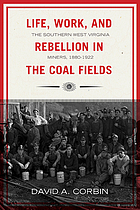
David Corbin
Between 1880 and 1922, the coal fields of southern West Virginia witnessed two bloody and protracted strikes, the formation of two competing unions, and the largest armed conflict in American labor history--a week-long battle between 20,000 coal miners and 5,000 state police, deputy sheriffs, and mine guards. These events resulted in an untold number of deaths, indictments of over 550 coal miners for insurrection and treason, and four declarations of martial law. Corbin argues that these violent events were collective and militant acts of aggression interconnected and conditioned by decades of oppression. His study goes a long way toward breaking down the old stereotypes of Appalachian and coal mining culture. This second edition contains a new preface and afterword by author David A. Corbin
A history of militancy among miners, argues that these events were collective and militant acts of aggression interconnected and conditioned by decades of oppression.

David Correia
"An eye-opening account of the Great Anthracite Coal Strike of 1902, showing how the strike—and the violent backlash that ensued—reveal the genesis of modern policing. In the early years of the twentieth century, in the coalfields of eastern Pennsylvania, nearly 150,000 miners took part in one of the most critical events in the history of US labor organizing. The brutal response by the state of Pennsylvania—as well as the federal government—inaugurated the structure and power of policing that we know today. In this gripping account of the Great Anthracite Coal Strike of 1902, scholar and activist David Correia takes readers through the story of the United Mine Workers of America, their struggle against systems of private policing—which were present in practically every industry in the US—and the development of public, professionalized, state-sanctioned, and state-serving police. The demands of their strike included shorter work days, higher wages, and safer conditions in the deadly mines. However, their labor was crucial to westward expansion, colonial occupations in the Caribbean and the Philippines, and many burgeoning industries in the US. To keep the fires of capitalism burning, industrialists prodded state and federal governments to intervene. Together, they established the first uniformed police force of its kind—a model soon emulated in other states
account of the Great Anthracite Coal Strike of 1902, argues it presaged a new kind of policing
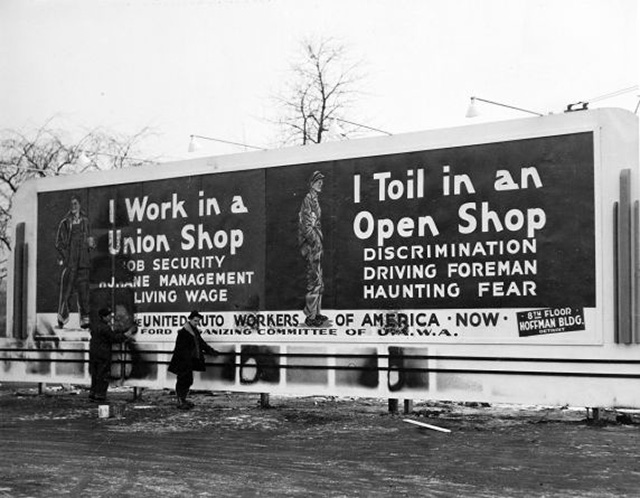
David Elsila
Sections: Fighting for the Eight Hour Day - A Michigan Labor History Society newsletter feature highlighting the 1886 campaign to win the Eight Hour Day at American Car Foundry
Henry Leland - A discussion of employer resistance to unions at the turn of the 20th century
Woodmere Cemetery - An exploration of the hardships of the Great Depression of the 1930s
Ford Hunger March - The excerpt from the Guide’s Woodmere Cemetery post traces the hardship of the Great Depression of the 1930s and commemorates the Ford Hunger March
The Rise of the United Auto Workers Union - This post highlights the explosive growth of the UAW’s early years 1936 – 1938
Kelsey-Hayes Sit Down Strike - A Michigan Labor History Society newsletter tribute to the Kelsey Hayes sit down strike that preceded the campaign to win the 1937 General Motors contract
Ternstedt Women Organize - This Michigan Labor History Society newsletter article focuses on the 1937 organizing efforts of women workers at Ternstedt
Battle of the Overpass - This Michigan Labor History Society newsletter article recounts the attack by Ford security men on UAW leafleteers
West Side Local #174 Holds the Fort - An account of the 1938 Federal Screw Works strike that protected labor’s gains during the 1938 recession
Autoworkers and their Industry - The Guide team’s overview of the advances and challenges autoworkers confronted in the years following World War II to the present
"Right to Work" Comes to Michigan - A summary of the 2012 legislative effort that established Michigan as a “Right to Work” state
Ghost Hunting at Local 174 - A personal reflection on the meaning of the union, as told by one who was charged with reviewing its records
A site featuring links to webpages dedicated to different aspects of Detroit labor history
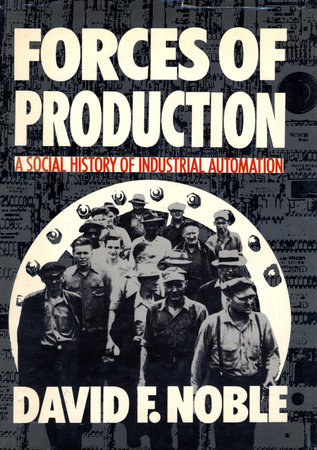
David F. Noble
Argues that technology is not a neutral, autonomous force but a social and political process shaped by institutions like corporations, the military, and universities. Focusing on the automation of the American metalworking industry, Noble contends that the choice of "numerical control" over other systems was driven by a desire for managerial control, not technical superiority, challenging the idea that technology has a life of its own.
One: Command and Control; One: The Setting; Two: The Setting: The War at Home; Three: Power and the Power of Ideas; Four: Toward the Automatic Factory; Two: Social Choice in Machine Design; Five: By the Numbers I; Six: By the Numbers II; Seven: The Road Not Taken; Three: A New Industrial Revolution; Eight: Development; Nine: Diffusion:; Ten: Deployment; Eleven: Who’s Running the Shop?; Epilogue: Another Look at Progress
Focusing on the automation of the American metalworking industry, Noble contends that the choice of "numerical control" over other systems was driven by a desire for managerial control, not technical superiority, challenging the idea that technology has a life of its own. Classic work
David Gibbs
This book is a history of how the political influence of the very wealthy and corporations in the postwar era. The historian David Gibbs locates this influence it in the rightward shift in US politics in the 1970s, driven by business groups and the wealthy elite. After the realignment of the Republican party in the 1960s, driven mostly by racial appeals to white Southern Democrats, the historian David Gibbs argues that business and conservative elites emphasized crises like inflation and security threats from the Soviet Union as pretexts to sell a conservative policy transformation to the public. Business interests ran campaigns that reduced living standards and compromised economic security for the majority while advancing the interests of the already wealthy. Wealth and resources were redistributed upward. The stable growth rates associated with the postwar era came to an end with the 1973 recession, the worst downturn to date. The even more severe recession that followed in 1980 and continued well into the Reagan presidency coincided with deindustrialization, whereby whole categories of high-paying blue-collar jobs were permanently eliminated or outsourced overseas. The postwar economic security was gone, and inflation, which began during the late 1960s and gradually accelerated, reached double digits by the end of the 1970s. The inflationary spurt was exacerbated by massive worldwide increases in oil prices, orchestrated by the Organization of Petroleum Exporting Countries. The combination of persistent unemployment and inflation-"stagflation"-defied traditional fiscal and monetary remedies, which were no longer effective. And the Cold War brought a new crisis of and the fear of resurgent Soviet aggression. The effects of this shift were considerable. By the end of the decade, public policy emphasized reduced spending on social programs, deregulation of multiple economic sectors, and an unprecedented willingness to tolerate high unemployment, and a that emphasized military spending and use of force, often at the expense of a wide social safety net.
How the political influence of the very wealthy created America's 20th century rightward shift

David Granskog
Documentary project that tells the story of a marginalized former steel-mill community in South Chicago through the eyes of community residents, and give voice to the concerns and solutions surrounding a planned large-scale development that directly borders their neighborhood.
Documentary of South Chicago steel-mill community
David Griffith
The H-2 program, originally based in Florida, is a labor-importation program in the country. This book examines the socioeconomic effects of the H-2 program on both the areas where the laborers work and the areas they are from, and, taking a humanitarian stance, considers the effects of the program on the laborers themselves.
the story of the original H-2 program

David Griscom
In blood-red states such as Texas, politics operates under the fallacy that these places were always conservative, so that it would be foolish, even utopian, to propose a progressive alternative. The Myth of Red Texas, David Griscom’s debut book, reassesses this misconception, arguing that the Lone Star Left must embrace its hidden past to reach a brighter future.
Cowboys on strike, socialists on the ballot, farmers fighting tooth and claw for what they termed the “cooperative commonwealth”—Texas was once a wellspring of radicals hell-bent on taking power from the robber barons who ruled the day. With a careful eye for history, Griscom demonstrates how Texans’ left-wing parties, from the populists to the socialists, organized against the Right and often won—and how reclaiming that tradition can help today’s Left break the political deadlock in Texas and beyond.
demonstrates how Texans’ left-wing parties, from the populists to the socialists, organized against the Right and often won—and how reclaiming that tradition can help today’s Left break the political deadlock in Texas and beyond.
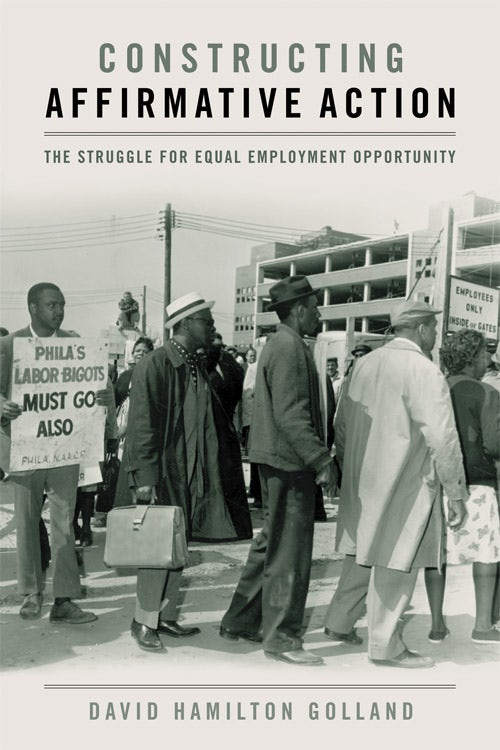
David Hamilton Golland
Between 1965, when President Lyndon B. Johnson defined affirmative action as a legitimate federal goal, and 1972, when President Richard M. Nixon named one of affirmative action's chief antagonists the head of the Department of Labor, government officials at all levels addressed racial economic inequality in earnest
The policies and origins of affirmative action
David Huyssen
Huyssen interweaves dramatic stories of wealthy and poor New Yorkers at the turn of the twentieth century, uncovering how initiatives in charity, labor struggles, and housing reform chafed against social, economic, and cultural differences. A major contribution to the history of American capitalism, Progressive Inequality makes tangible the abstract dynamics of class relations and opens a rare window ontocurrenteconomic and social debates
Contents
Fault Lines of Rich and Poor 1
1 Invading the Tenements 11
2 Bank on the Bowery 31
3 Prescribing Reform 49
4 Loving the Poor with Severity 63
5 The Business of Godly Charity 89
6 Reaching Out to the Rich 107
7 Between Empathy and Prejudice 123
8 The Limits of Private Philanthropy 135
9 Killing Workers for Profit 151
10 The Primacy of Property 165
11 Sisters in Struggle 181
12 To Cooperate or Condescend 201
13 Sisters at Odds 213
14 Hard Fists Short Fuses on the City Rails 227
15 Making the World Safe for Inequality 245
Recognizing Class in Ourselves 273
Abbreviations 281
Notes 285
Challenges interpretations of Progressive Era, weaving workers stories into New York progressive era history

David Johnson, History Matters
Traditional craft production centered around an independent master artisan, his journeymen, and the apprentice helpers who worked together in small shops. Apprentices worked alongside masters and received training in the “mysteries of the craft” in exchange for their labor. Journeymen looked forward to becoming proprietors when they accumulated sufficient capital and skill. In his Sketches of Lynn (1880), David Johnson recalled the masculine work culture and small-scale setting of the shoe industry in early-19th century Lynn, Massachusetts. With transportation improvements and growing commercial activity, manufacturing moved from small shops engaged in custom work to larger-scale production of ready-made goods. No area experienced greater dislocation than Lynn, where shops multiplied, the division of labor increased, and some masters opened larger central shops. Less skilled workers, including women and children, replaced journeymen, apprenticeship declined, and the world that Johnson described faded.
David Johnson's recollections of work in the shoemaking industry of Lynn, Massachusetts, which initially favored the traditional master-apprentice structure but increasingly favored larger, centralized workplaces and divided labor practices from the early-nineteenth century on.
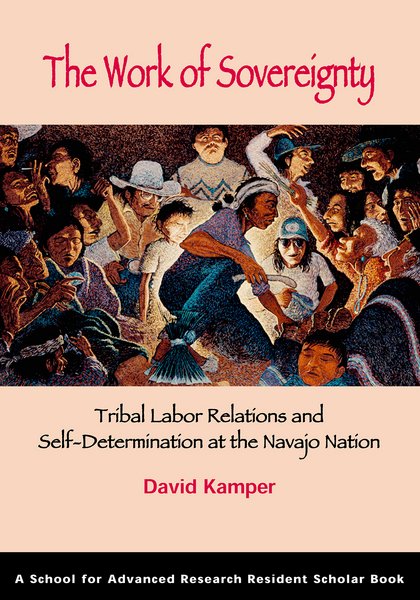
David Kamper
The Work of Sovereignty is a study of organizing campaigns and grassroots, ad hoc collective political actions carried out by employees trying to increase control over their workplaces and their say in the political life of their communities in Indian Country. By studying them, the author takes an on-the-ground approach to tribal labor relations that puts tribal workers at the center of the action. Attending to indigenous peoples as both economic and political members of their community in this way also sheds light on processes of indigenous self-determination that are not always as readily visible as those in courtrooms and tribal council chambers.
The legal, political, and sociall contexts
Tribal structuring of labor relations
Navajo Nation politics and pragmatic unionism
The campaign for union recognition
Grassroots expressions of tribal labor relations
Epilogue : the uncertain future of tribal labor relations
explores the forces that structure and influence indigenous economic development, giving special attention to the perspectives and priorities of the indigenous working people who build tribal futures with their everyday labor.
Museum/Exhibits
Tours
Maps
Digital Projects
Organizations
Sites
Film/Video
Audio/Interview
Podcast/Program
Text/Document
Image
Graphs/Data
Timeline
Southwest
West
Midwest
Southeast
Northeast
Mexico
Canada
Global
Books
Teaching
Lectures
Digital Archives
Journals
Bibliographies
Topic Intro