


Collections
Library
Type
Region
Coverage:
-
Published:
-

David Koistinen
Focusing on Massachusetts especially, this challenges many popular ideas that deindustrialization occurred in the late 20th century. Focuses on workers,community leaders and capitalist transitions.
from the publisher: The rise of the United States to a position of global leadership and power rested initially on the outcome of the Industrial Revolution. Yet as early as the 1920s, important American industries were in decline in the places where they had originally flourished. The decline of traditional manufacturing--deindustrialization--has been one of the most significant aspects of the restructuring of the American economy.
In this volume, David Koistinen examines the demise of the textile industry in New England from the 1920s through the 1980s to better understand the impact of industrial decline. Focusing on policy responses to deindustrialization at the state, regional, and federal levels, he offers an in-depth look at the process of industrial decline over time and shows how this pattern repeats itself throughout the country and the world
textile industry's decline in New England, especially Massachusetts, from the 1920s through the 1980s, exploring reasons, impact, policy issues
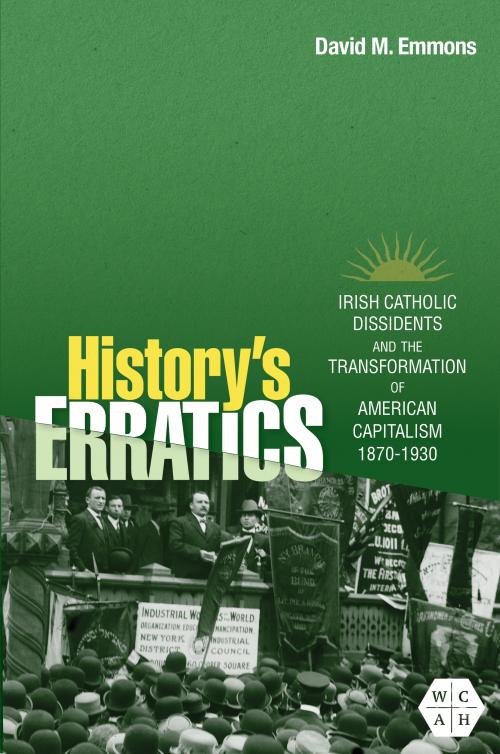
David M. Emmons
As Ice Age glaciers left behind erratics, so the external forces of history tumbled the Irish into America. Existing both out of time and out of space, a diverse range of these Roman-Catholic immigrants saw their new country in a much different way than did the Protestants who settled and claimed it. These erratics chose backward looking tradition and independence over assimilation and embraced a quintessentially Irish form of subversiveness that arose from their culture, faith, and working-class outlook. David M. Emmons draws on decades of research and thought to plumb the mismatch of values between Protestant Americans hostile to Roman Catholicism and the Catholic Irish strangers among them. Joining ethnicity and faith to social class, Emmons explores the unique form of dissidence that arose when Catholic Irish workers and their sympathizers rejected the beliefs and symbols of American capitalism. A vibrant and original tour de force, History's Erratics explores the ancestral roots of Irish nonconformity and defiance in America.
explores the unique form of dissidence that arose when Catholic Irish workers and their sympathizers rejected the beliefs and symbols of American capitalism.
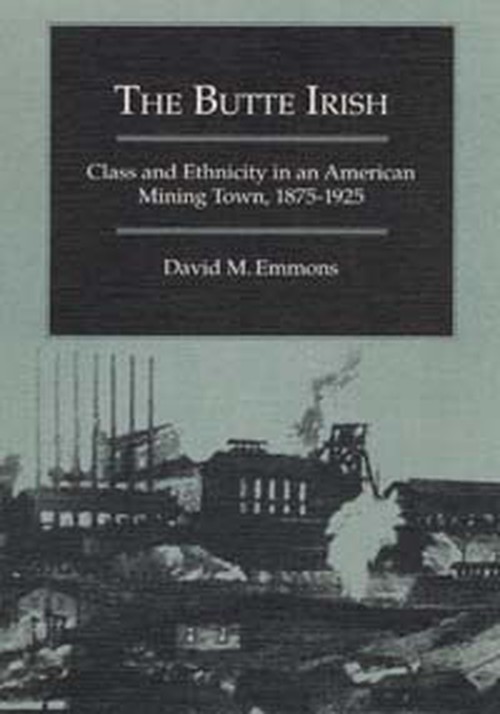
David M. Emmons
The copper mines of Butte, Montana, attracted a flood of Irish immigrants who soon coalesced into a large and assertive community. David Emmons’ pioneering study of Irishness in America follows these people from their backgrounds in Ireland to their creation of a powerful ethnic community in Buttle. As he shows, the complex interplay of Irish nationalism with worker consciousness and the nature and hazards of work in the mines influenced Irish community building. Emmons shows how the stalwart supporters of groups like the Ancient Order of Hiberians marched and drilled for Irish freedom and identity. As Irish immigrants ran the town, the miners' union, and the largest mining companies, they had the power to use a tradition of ethnic cooperation to ensure safe and steady work--Irish mines taking care of Irish miners. Emmons’ analysis uses this backdrop to illuminate how Butte’s unique setting tested the seam between class consciousness and ethnicity.
A study of how Irish immigrants built a mining community in Butte, Montana
David M. Gordon
Segmented Work, Divided Workers presents a restatement and expansion of the theory of labor segmentation by three of its founding scholars. The authors argue that divisions with the US working class are rooted in a segmentation of jobs since World War II. They explain the origins of job segmentation through a careful and systematic historical analysis of changes in the labor process and the structure of labor markets since the early 1800s. this analysis builds, in turn, upon hypotheses about successive stages in the history of capitalist development. Segmented Work, Divided Workers integrates this economics analysis with a careful historial appreciation of the complexity of working-class experience in the United States
presents a restatement and expansion of the theory of labor segmentation by three of its founding scholars.
David M. Struthers
A massive population shift transformed Los Angeles in the first decades of the twentieth century. Americans from across the country relocated to the city even as an unprecedented transnational migration brought people from Asia, Europe, and Mexico. Together, these newcomers forged a multiethnic alliance of anarchists, labor unions, and leftists dedicated to challenging capitalism, racism, and often the state.
David M. Struthers draws on the anarchist concept of affinity to explore the radicalism of Los Angeles's interracial working class from 1900 to 1930. Uneven economic development created precarious employment and living conditions for laborers. The resulting worker mobility led to coalitions that, inevitably, remained short lived.
As Struthers shows, affinity helps us understand how individual cooperative actions shaped and reshaped these alliances. It also reveals social practices of resistance that are often too unstructured or episodic for historians to capture. What emerges is an untold history of Los Angeles and a revolutionary movement that, through myriad successes and failures, produced powerful examples of racial cooperation"-- Provided by publisher
multiethnic alliance of anarchists, labor unions, and leftists dedicated to challenging capitalism, racism, and often the state
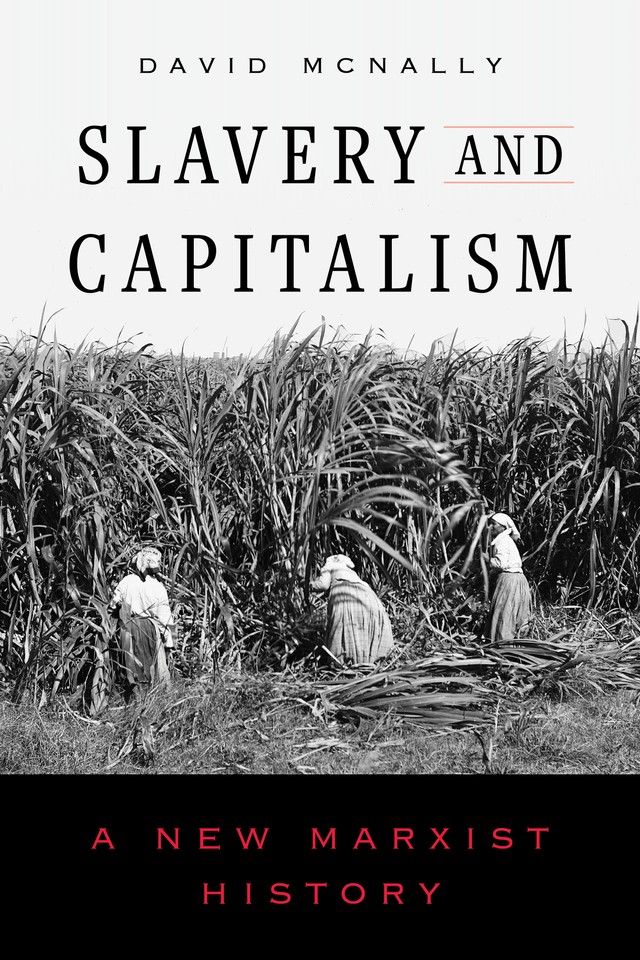
David McNally
The first systematic Marxist account of the capitalist character of Atlantic slavery.
Karl Marx’s writings on enslavement and labor have fallen out of favor among historians, but David McNally injects new life into them. Slavery and Capitalism gives the first systematic Marxist account of the capitalist character of Atlantic slavery—using colonial travel literature, planter records and diaries, and slave narratives—to support the provocative claim for enslaved labor in the plantation system as capitalist commodity production.
Weaving together history, political economy, and radical abolitionism, McNally demonstrates that plantation slaves formed a modern working class. Unlike those scholars who insist that enslaved people were too sensible to set their sights on liberty, he highlights the self-activity of enslaved people fighting for their freedom and reframes their resistance as labor struggles over production and reproduction, with significant implications for US and Atlantic history and for understanding the roots of racial capitalism.
Introduction: Whisperings of Freedom
Part One. The Planter, The President, and the Political Economist: Foundations of Capitalist Slavery
1. Planting and Profit: Richard Ligon and the Birth of Capitalist Slavery
2. George Washington: Land Grabber, Slave Hunter, Bourgeois Planter
3. "Without a Servant to Make His Bed": Labor and Race in Colonial Capitalism
Part Two. The Political Economy of the Plantation System
4. Living Labor and Planter Profits
5. The Wages of Slavery
6. Steal Away: Capital on Legs
Part Three. The Making of a Chattel Proletariat
7. Bonded Proletarians
8. Life-Making and Enslaved Reproduction
9. Cultures of Freedom
10. Empires of Capital, Worlds of Revolt
Concluding Thoughts: Ghostly Hauntings, Dreams of Freedom
The first systematic Marxist account of the capitalist character of Atlantic slavery.

David Michael Smith
An argument against the myth of 'American exceptionalism' Endless Holocausts: Mass Death in the History of the United States Empire helps us to come to terms with what we have long suspected: the rise of the U.S. Empire has relied upon an almost unimaginable loss of life, from its inception during the European colonial period, to the present. And yet, in the face of a series of endless holocausts at home and abroad, the doctrine of American exceptionalism has plagued the globe for over a century. However much the ruling class insists on U.S. superiority, we find ourselves in the midst of a sea change. Perpetual wars, deteriorating economic conditions, the resurgence of white supremacy, and the rise of the Far Right have led millions of people to abandon their illusions about this country. Never before have so many people rejected or questioned traditional platitudes about the United States. In Endless Holocausts author David Michael Smith demolishes the myth of exceptionalism by demonstrating that manifold forms of mass death, far from being unfortunate exceptions to an otherwise benign historical record, have been indispensable in the rise of the wealthiest and most powerful imperium in the history of the world. At the same time, Smith points to an extraordinary history of resistance by Indigenous peoples, people of African descent, people in other nations brutalized by U.S. imperialism, workers, and democratic-minded people around the world determined to fight for common dignity and the sake of the greater good."
The Indigenous peoples holocaust
The African American holocaust
The workers holocaust
From colonial wars to global holocausts
The holocausts of pax Americana I
The holocausts of pax Americana II
Other holocausts at home and abroad
he rise of the U.S. Empire has relied upon an almost unimaginable loss of life
David Montgomery
"For anyone who believes that there was no important labor movement before Roosevelt, or before Gompers, or before the Knights of Labor, this well-documented work should prove a shocker. And for those who look to the past for enlightenment to guide us through our troubled tomorrows, this book is a reservoir of historic information and insights."
-- New Leader
"Beyond Equality is a masterpiece. . . . A book of bold and brilliant originality, it is now shaping the perspective of a new generation of graduate students."
-- David Brion Davis, author of The Problem of Slavery in Western Culture
A history connecting the later labor movement to the abolitionist Republican party.
David Montgomery
"In the 1990s democracy and market freedom are often discussed as though they were either synonymous or interchangeable. The experience of workers in the United States reveals that as government became more democratic, what it could do to shape daily life became more restricted. The extent and failures of workers' efforts to exercise power through the political parties provide insights and warnings from the nineteenth century to guide our thinking about the twenty-first." "When industrialization began in the United States, both free and bound labor supplied commodities whose flow was dominated by merchant capital, while the legacy of the Revolution made possible the inclusion of white males from society's lower strata in the active citizenry. The voting rights and freedom of association enjoyed by working-men hastened the dismantling of personal forms of subordination, most dramatically in the brief moment when African Americans claimed those rights after the destruction of slavery. Nevertheless, neither white nor black workers fashioned the new rules for a society based on wage labor. Both the shaping of economic development and the allocation of poor relief were effectively insulated from democratic control, while new forms of social domination disguised as freely contracted market and familial relationships were sanctioned by the courts, by the newly restructured police and military forces, and by the criminalization of unemployment. Workers' use of their access to political power on behalf of their visions of the commonweal challenged, but never defeated, the new style of class rule, which both strengthened government and limited its sphere of action."--Jacket
Acknowledgements; Introduction;
Part I. Wage-Labor, Bondage and Citizenship:
1. The Right to Quit;
2. Free Labor in the Shadow of Slavery;
3. Quitting and Getting Paid;
4. Citizenship and the Terms of Employment;
Part II. Policing People for the Free Market:
5. The Definition and Prosecution of Crime;
6. The Privatization of Poor Relief;
7. The Crime of Idleness;
8. Arms and the Man;
9. Police Powers and Workers' Homes;
Part III. Political Parties:
10. Black Workers and Republicans in the South;
11. Industrial Workers and Party Politics;
12. Workers and Tammany Hall;
13. Labor Reform and Electoral Politics;
14. Citizenship and the Unseen Hand; Bibliography.
examines the relationship between workers and government by focusing not on the legal regulations of unions and strikes, but on popular struggles for citizens' rights.

David Montgomery
an off-the-cuff discussion with a leading labor historian
1997 discussion of labor history with David Montgomery, a leading labor historian
David Montgomery
This book studies the changing ways in which American industrial workers mobilised concerted action in their own interests between the abolition of slavery and the end of open immigration from Europe and Asia. Sustained class conflict between 1916 and 1922 reshaped governmental and business policies, but left labour largely unorganised and in retreat. The House of Labor, so arduously erected by working-class activists during the preceeding generation, did not collapse, but ossified, so that when labour activism was reinvigorated after 1933, the movement split in two. These developments are analysed here in ways which stress the links between migration, neighbourhood life, racial subjugation, business reform, the state, and the daily experience of work itself.
Reviews
"David Montgomery...both exemplifies and transcends the recent trend toward painstakingly detailed social history...he has undertaken a far vaster project than most contemporary labor historians would attempt: American labor activism of all varieties and locales, from the time when American workers organized the first tentative but recognizable trade unions, in the mid-nineteenth century, to the emergence of the working class as an insurrectionary force during the first two decades of the twentieth century, to its humiliating defeat in the years following the First World War...the closest thing we have...to E.P. Thompson's monumental book, The Making of the English Working Class." Barbara Ehrenreich, in The Atlantic
"...the most sweeping portrait of working-class life to emerge from the new labor history...a subtle, complex, often brilliant study..." Alan Brinkley in the New Republic
studies the changing ways in which American industrial workers mobilised concerted action in their own interests between the abolition of slavery and the end of open immigration from Europe and Asia.
David Montgomery
A collection of essays on workers' efforts in the 19th and 20th centuries to assert control over the processes of production in US. It describes the development of management techniques and includes discussions of various worker and union responses to unemployment.
Preface (page ix)
Introduction (page 1)
1 Workers' control of machine production in the nineteenth century (page 9)
2 Immigrant workers and managerial reform (page 32)
3 Machinists, the Civic Federation, and the Socialist Party (page 48)
4 The "new unionism" and the transformation of workers' consciousness in America, 1909-22 (page 91)
5 Whose standards? Workers and the reorganization of production in the United States, 1900-20 (page 113)
6 Facing layoffs (co-author, Ronald Schatz) (page 139)
7 American workers and the New Deal Formula (page 153)
Bibliographical essay (page 181)
A collection of essays on workers' efforts in the 19th and 20th centuries to assert control over the processes of production in US.
David O. Stowell
Collected essays
Introduction
1. The "Industrial Revolution Incarnate"
2. The Contested Terrain of the Streets
3. Striking against the Railroads
4. Who Was in the Crowd?
5. The Aftermath
Conclusion: The Great Strike as Urban History
Notes
Selected Bibliography
Index
examines America's predicament more broadly to uncover the roots of this rebellion and studies the urban origins of the Strike in three upstate New York cities.
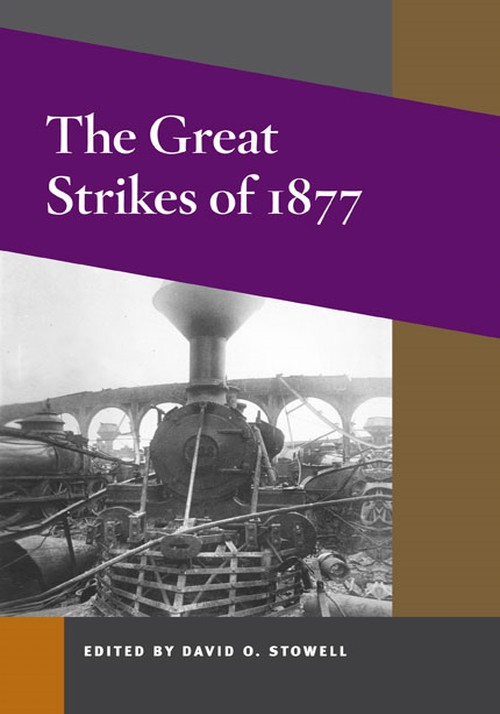
David O. Stowell
"A spectacular example of collective protest, the Great Strike of 1877 - actually a sequence of related strikes - was the first national strike and the first major strike against the railroad industry."--Back cover
The great uprising and pictorial order in Gilded Age America / Joshua Brown
"Our rights as workingmen" : class traditions and collective action in a nineteenth-century railroad town, Hornellsville, N.Y., 1869-82 / Shelton Stromquist
Chicago's great upheaval of 1877 : class polarization and Democratic politics / Richard Schneirov
Looking north : a mid-south perspective on the Great Strike / Steven J. Hoffman
The July days in San Francisco, 1877 : prelude to Kearneyism / Michael Kazin
California's changing society and Mexican American conceptions of the Great Strike / David Miller
essays that explore the social, political, regional, and ethnic landscape of the Great Strikes of 1877
David P. Demarest
The violence that erupted at Carnegie Steel's giant Homestead mill near Pittsburgh on July 6, 1892, caused a congressional investigation and trials for treason, motivated a nearly successful assassination attempt on Frick, contributed to the defeat of President Benjamin Harrison for a second term, and changed the course of the American labor movement. "The River Ran Red" commemorates the one-hundredth anniversary of the Homestead strike of 1892. Instead of retelling the story of the strike, it recreates the events of that summer in excerpts from contemporary newspapers and magazines, reproductions of pen-and-ink sketches and photographs made on the scene, passages from the congressional investigation that resulted from the strike, first-hand accounts by observers and participants, and poems, songs, and sermons from across the country. Contributions by outstanding scholars provide the context for understanding the social and cultural aspects of the strike, as well as its violence. "The River Ran Red" is the collaboration of a team of writers, archivists, and historians, including Joseph Frazier Wall, who writes of the role of Andrew Carnegie at Homestead, and David Montgomery, who considers the significance of the Homestead Strike for the present. The book is both readable and richly illustrated. It recalls public and personal reactions to an event in our history whose reverberations can still be felt today
Recreates the events of the homestead strike through excerpts from primary sources.
David P. Thelen
This book looks at economic development and social change in one specific state, Missouri, between the Civil War and the First World War.
The Integration of Life in the Old Order p. 9
Traditional Values and the Old Order p. 11
The Land, the Rivers, and the People p. 11
The Traditional Unity of Life and Work p. 13
Family, Community, and the Variations of Culture p. 17
Politics and Government p. 21
Creation of the New Order p. 25
The Engine of Growth p. 27
Expanding the Market p. 29
The Developers of Agriculture p. 35
The New Insecurities p. 44
The Invisible Hand p. 45
The New Tools p. 47
The New Competitors p. 51
The New Authorities and Secularism p. 55
Primitive Resistance to the New Order p. 57
The Law, Outlaws, and Railroads p. 59
The Civil War and the Crisis of Law and Authority p. 59
The Battle over Railroad Bonds p. 62
Jesse James, America's Classic Social Bandit p. 70
The Great Strike of 1877 and Ownership of Law p. 77
Communities, Economic Development, and Vigilantes p. 86
The Bald Knobbers of the 1880s p. 87
Race and Class War in the Bootheel p. 92
The Cultural War p. 101
Discipline and Self-Discipline p. 103
Economic and Military Compulsions p. 103
The Battle for the Hearts and Minds of the Children p. 108
The Democratic Culture of Escape and Ragtime p. 117
Mutual Aid p. 131
The Protections of Church, Race, and Language p. 133
Immigrant Cultures and Mutual Aid p. 134
Segregation, Racial Control, and Mutual Aid p. 139
White Protestants and the Crises of Conduct and Control p. 146
The Fraternal and Cooperative Ethic of Mutual Aid p. 156
The Search for Security in the New Workplaces p. 173
The Economic Organization of the New Order p. 175
The Organization of Business p. 175
The Organization of the Professions p. 182
The Organization of Labor p. 189
Political Resistance in the New Order p. 201
Traditional Resistance, Populism, and the Limits of Politics p. 205
Traditional Resistance and the Limits of Politics p. 205
Populism and the Limits of Politics p. 211
The Consumer Revolt and the Grass-Roots Origins of the Missouri Idea p. 217
The Consumer Revolt p. 219
Bribery and the Local Origins of the Missouri Idea p. 231
The Missouri Idea and State Politics p. 238
The Folk Administration and the Flowering of the Missouri Idea p. 238
The Changing Context of Popular Control p. 251
The Decline of the Missouri Idea and the Rise of Regulation p. 254
Epilogue p. 266
The Problem of Cutting Distance: Structure p. 268
The Problem of Cutting Distance: Participation p. 270
Winning, Losing, and Democracy
looks at economic development and social change in one specific state, Missouri, between the Civil War and the First World War.

David Paul Kuhn
In May 1970, four days after Kent State, construction workers chased students through downtown Manhattan, beating scores of protesters bloody. As hardhats clashed with hippies, it soon became clear that something larger was underway- Democrats were at war with themselves.
In The Hardhat Riot, David Paul Kuhn tells the fateful story of when the white working class first turned against liberalism, when Richard Nixon seized the breach, and America was forever changed. It was unthinkable one generation before: FDR's "forgotten man" siding with the party of Big Business and, ultimately, paving the way for presidencies from Ronald Reagan to Donald Trump. This is the story of the schism that tore liberalism apart. In this riveting story- rooted in meticulous research, including thousands of pages of never-before-seen records- we go back to a harrowing day that explains the politics of today. We experience an emerging class conflict between two newly polarized Americas, and how it all boiled over on one brutal day, when the Democratic Party's future was bludgeoned by its past."-- book jacket
tells the fateful story of when the white working class first turned against liberalism, when Richard Nixon seized the breach, and America was forever changed
David R M. Beck
Unfair Labor? breaks new ground by telling the stories of individual laborers, naming names, and uncovering the untold story of the roles that Native Americans involved in the 1893 World’s Fair played in the changing economic conditions of tribal peoples and redefining their place in the American socioeconomic landscape.
Part 1. Overview: American Indians and Ethnology at the Fair
1. Fair Representation?
2. Evolution of the American Indian Displays at the Fair
Part 2. Before the Fair: Making Money at Home
3. Native People Collecting for the Fair
4. The Department of Ethnology Collecting for the Fair
5. Government Agencies Collecting for the Fair
Part 3. During the Fair: Working in Chicago
6. Working the Anthropological and Education Displays
7. Working the Commercial Displays
8. Those Left Out
Afterword/Afterward: American Indians and Their New World Appendix Notes Bibliography Index
uncovering the untold story of the roles that Native Americans involved in the 1893 World’s Fair played in the changing economic conditions of tribal peoples and redefining their place in the American socioeconomic landscape.
David R Roediger
How did America recover after its years of civil war? How did freed men and women, former slaves, respond to their newly won freedom? David Roediger's radical new history redefines the idea of freedom after the jubilee, using fresh sources and texts to build on the leading historical accounts of Emancipation and Reconstruction. Reinstating ex-slaves' own "freedom dreams" in constructing these histories, Roediger creates a masterful account of the emancipation and its ramifications on a whole host of day-to-day concerns for Whites and Blacks alike, such as property relations, gender roles, and labor
emancipation and its ramifications on a whole host of day-to-day concerns for Whites and Blacks alike, such as property relations, gender roles, and labor

David R. Roediger
"Written by the author of the landmark book The Wages of Whiteness and one of the key figures in the critical study of race and racism in America, An Ordinary White is the life story of the historian and radical American writer, David Roediger. With wry wit and keen observation, Roediger chronicles his intellectual and political evolution from growing up in his southern Midwest sundown town to becoming a leading figure in working-class history and Whiteness studies. A latecomer to the New Left, a longtime figure in the Chicago Surrealist Group, and part of the collective reviving of the Charles Kerr Company--the world's oldest socialist publisher--Roediger captures events and characters absent from standard histories of the left as well as such icons of resistance as Studs Terkel, Noel Ignatiev, Angela Davis, Toni Morrison, and C. L. R. James. A direct response to the venom, effectiveness, and durability of white nationalist attacks on Critical Race Theory, this memoir describes Roediger's youth as "ordinary," both in its unfolding in a lower-middle-class family of southern Illinois workers and in the depth of white racism he was taught. He considers himself "saved" by social movements of his time, including those of labor, against empire, and, above all, the Black Freedom struggle. Public education, dissenting currents in Catholicism, knowledge of the importance of good union jobs, and generative impulses in sports and music helped make his salvation stick. Roediger's knowledge of white advantage came from his personal everyday experiences, but among people ordinary enough to guard against the mistaken notion that poor and working-class whites are uniquely the culprits of white nationalism. Importantly he argues against the characterization of them as intractably racist or incapable of understanding the advantages of whiteness. A teacher in state universities for forty years, Roediger has tirelessly fought against their being hollowed out by corporate values and austerity. In An Ordinary White, he writes movingly of these experiences and what we have lost in our institutions whose soaring rhetoric outstrips any ability to defend education or racial justice."-- Provided by publisher
memoir of the historian and radical American writer
David R. Roediger
Our Own Time retells the story of American labor by focusing on the politics of time and the movements for a shorter working day. It argues that the length of the working day has been the central issue for the American labor movement during its most vigorous periods of activity, uniting workers along lines of craft, gender and ethnicity. The authors hold that the workweek is likely again to take on increased significance as workers face the choice between a society based on free time and one based on alienated work and unemployment.
retells the story of American labor by focusing on the politics of time and the movements for a shorter working day.
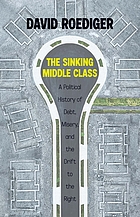
David R. Roediger
Roediger challenges the "save the middle class" rhetoric that dominates our political imagination. The slogan misleads us regarding class, nation, and race. Talk of middle class salvation reinforces myths holding that the US is a providentially middle class nation. Implicitly white, the middle class becomes viewed as unheard amidst supposed concerns for racial justice and for the poor. Roediger shows how little the US has been a middle class nation. Resurrecting radical historical critiques of the middle class, Roediger argues that middle class identities have so long been shaped by debt, anxiety about falling, and having to sell one's personality at work that misery defines a middle class existence as much as fulfillment. --From publisher's description
argues that middle class identities have so long been shaped by debt, anxiety about falling, and having to sell one's personality at work that misery defines a middle class existence as much as fulfillment.
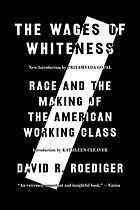
David R. Roediger
Combining classical Marxism, psychoanalysis, and the new labor history pioneered by E.P. Thompson and Herbert Gutman, David Roediger's widely acclaimed book provides an original study of the formative years of working-class racism in the United States. This, he argues, cannot be explained simply with reference to economic advantage; rather, white working-class racism is underpinned by a complex series of psychological and ideological mechanisms that reinforce racial stereotypes, and thus help to forge the identities of white workers in opposition to Blacks
"An original study of the formative years of working-class racism in the United States. Combining classical Marxism, psychoanalysis, and the new labor history pioneered by E. P. Thompson and Herbert Gutman, David Roediger’s widely acclaimed book provides an original study of the formative years of working-class racism in the United States. This, he argues, cannot be explained simply with reference to economic advantage; rather, white working-class racism is underpinned by a complex series of psychological and ideological mechanisms that reinforce racial stereotypes, and thus help to forge the identities of white workers in opposition to Blacks. In a new preface, Roediger reflects on the reception, influence, and critical response to The Wages of Whiteness, while Kathleen Cleaver’s insightful introduction hails the importance of a work that has become a classic."
Traces the history of racism within the labor movement, arguing that White laborers defined themselves against their Black counterparts.
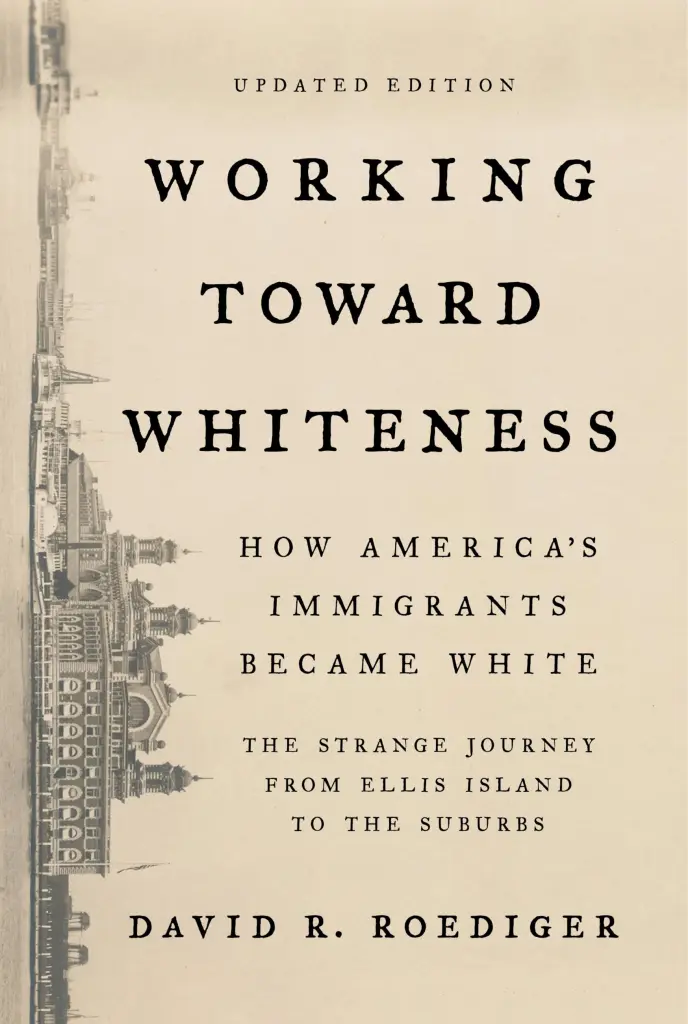
David R. Roediger
"David R. Roediger has been in the vanguard of the study of race and labor in American history for decades. He first came to prominence as the author of The Wages of Whiteness, a classic study of racism in the development of a white working class in nineteenth-century America.
In Working Toward Whiteness, Roediger continues that history into the twentieth century. He recounts how ethnic groups considered white today--including Jewish-, Italian-, and Polish-Americans--were initially viewed as undesirables by the WASP establishment. They eventually became part of white America, through the nascent labor movement, New Deal reforms, and a rise in home-buying. Once assimilated as fully white, many of them adopted the racism of those whites who formerly looked down on them. From ethnic slurs to restrictive covenants, Roediger explores the mechanisms by which immigrants came to enjoy the advantages of being white in America. A disturbing, necessary history, Working Toward Whiteness uses the past to illuminate the present. In an introduction to the 2018 edition, Roediger considers the resonance of his analysis in an era when most migrants to the United States no longer come from Europe"--Back cover
recounts how ethnic groups considered white today were initially viewed as undesirables by the WASP establishment, eventually becoming part of white America.
David Roediger
The Sinking Middle Class challenges the "save the middle class" rhetoric that dominates our political imagination. The slogan misleads us regarding class, nation, and race.
Talk of middle class salvation reinforces myths holding that the US is a providentially middle class nation. Implicitly white, the middle class becomes viewed as unheard amidst supposed concerns for racial justice and for the poor. Roediger shows how little the US has been a middle class nation. The term seldom appeared in US writing before 1900. Many white Americans were self-employed, but this social experience separated them from the contemporary middle class of today, overwhelmingly employed and surveilled. Today's highly unequal US hardly qualifies as sustaining the middle class.
The idea of the US as a middle class place required nurturing. Those doing that ideological work--from the business press, to pollsters, to intellectuals celebrating the results of free enterprise--gained little traction until the Depression and Cold War expanded the middle class brand. Much later, the book's sections on liberal strategist Stanley Greenberg detail, "saving the middle class" entered presidential politics. Both parties soon defined the middle class to include over 90% of the population, precluding intelligent attention to the poor and the very rich. Resurrecting radical historical critiques of the middle class, Roediger argues that middle class identities have so long been shaped by debt, anxiety about falling, and having to sell one's personality at work that misery defines a middle class existence as much as fulfillment
argues that middle class identities have so long been shaped by debt, anxiety about falling, and having to sell one's personality at work that misery defines a middle class existence as much as fulfillment.
Museum/Exhibits
Tours
Maps
Digital Projects
Organizations
Sites
Film/Video
Audio/Interview
Podcast/Program
Text/Document
Image
Graphs/Data
Timeline
Southwest
West
Midwest
Southeast
Northeast
Mexico
Canada
Global
Books
Teaching
Lectures
Digital Archives
Journals
Bibliographies
Topic Intro