


Collections
Library
Type
Region
Coverage:
-
Published:
-
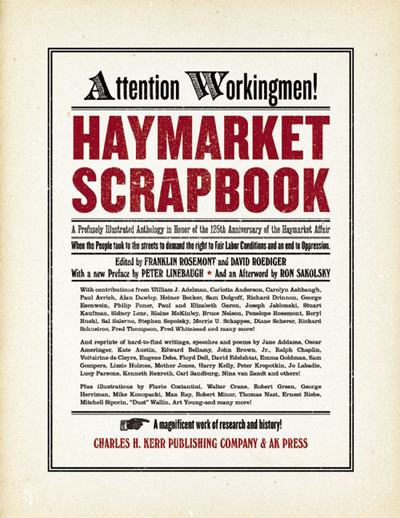
David Roediger, Franklin Rosemont
A truly immense, staggering, and wonderful anthology - profusely illustrated - focussing on the most world-reverberating vent in American labor history: the Haymarket Affair of 1886-67, and on the vast, incredibly varied and enduring influence it has exerted in the United States and across the globe. Divided into three massive sections - The Martyrs & Their Movements, Defense & Amnesty and The Heritage, contributors include William J Adelman, Carlotta Anderson, Paul Avrich, Sam Dolgoff, Richard Drinnon, Philip Foner, Joseph Jablonski, Bruce Nelson, Fred Thompson and many more. It features reprints of hard-to-find speeches and writings from the likes of the Haymarket martyrs themselves, Oscar Ameringer, Edward Bellamy, Ralph Chaplin, Voltaiarine de Cleyre, Eugene Debs, Emma Goldman, Sam Gompers, Mother Jones, Peter Kropotkin, Jo Labadie, Lucy Parsons, Kenneth Rexroth, Carl Sandburg and a whole lot more. Also included are an abundance of cartoons and other illustrations from the likes of Flavio Constantini, Walter Crane, Robert Green, Mike Konopacki, Ernest Riebe, Art Young, and numerous others. Truly a comprehensive, engaging, and enlightening work. 250 massive pages, oversize and abundant.
Focuses on the most world-reverberating event in American labor history: the 1886 Haymarket Affair, and on the vast influence it has exerted in the United States and across the globe.
David Rolf
The fight for a higher minimum wage has become the biggest national labor story in decades. Beginning in November 2012, strikes by fast food workers spread across the country, landing in Seattle in May 2013. Within a year, Seattle had adopted a $15 minimum wage--the highest in the United States--without a bloody political battle. Combining history, economics, and commonsense political wisdom, The Fight for Fifteen makes a deeply informed case for a national $15/hour minimum wage as the only practical solution to reversing America's decades-long slide toward becoming a low-wage nation. Drawing both on new scholarship and on his extensive practical experiences organizing workers and grappling with inequality across the United States, David Rolf, president of SEIU 775--which waged the successful Seattle campaign--offers an accessible explanation of "middle out" economics, an emerging popular economic theory that suggests that the origins of prosperity in capitalist economies lie with workers and consumers, not investors and employers. A blueprint for a different and hopeful American future, The Fight for Fifteen offers concrete tools, ideas, and inspiration for anyone interested in real change in our lifetimes"-- Provided by publisher
fight for a higher minimum wage has become the biggest national labor story in decades
David Rosner, Gerald Markowitz
From colonialism to industrialism, plastics to pollution, the authors chart the development of new diseases and occupational afflictions as they keep pace with an advancing America over four hundred years."Building the Worlds that Kill Us traces the historical development of health as a 'product' of industry, economic advance, globalization, and social inequality.
Diseases of the past are emblematic of the changing physical, economic, and ideological realities of American culture at any moment. For example, the conventional wisdom holds that the classic infectious and communicable diseases of the nineteenth century-typhoid, cholera, smallpox, tuberculosis-were products of an urbanizing, industrializing society that jammed people into tenements, left them with outdoor plumbing, and polluted the water supply.
But rather than products of an unavoidable physical environment created by an urbanizing, industrializing world, Rosner and Markowitz argue they are emblematic of American culture and its ideological and social values. How did these values determine that conditions for some could be sacrificed for the wealth of others?
Inevitably, Americans were making social decision about who shall live and who shall die. Popular ideas of personal or community 'worthiness'-who were the 'truly' needy and who were 'unworthy' or 'undeserving'-shaped our ideas that disease was linked to morality, which in turn created institutions that served the wealthy and the poor, the immigrant and the native born American, the black and the white, indigenous populations and those of European backgrounds unequally. Health and disease are a lens through which to see our changing social order and the intellectual and physical landscape.
charts the development of new diseases and occupational afflictions as they keep pace with an advancing America over four hundred years.
David Scott Witwer
Historical study of the forces that have contributed to the Teamsters' troubled past as well as the various mechanisms the union has employed
Historical study of the forces that have contributed to the Teamsters' troubled past as well as the various mechanisms the union has employed.
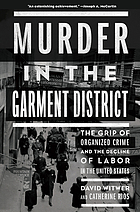
David Scott Witwer
"The thrilling and true account of racketeering and union corruption in mid-century New York, when unions and the mob were locked in a power struggle that reverberates to this day"-- Provided by publisher
In 1949, in New York City’s crowded Garment District, a union organizer named William Lurye was stabbed to death by a mob assassin. Through the lens of this murder case, prize-winning authors David Witwer and Catherine Rios explore American labor history at its critical turning point, drawing on FBI case files and the private papers of investigative journalists who first broke the story. A narrative that originates in the garment industry of mid-century New York, which produced over 80 percent of the nation’s dresses at the time, Murder in the Garment District quickly moves to a national stage, where congressional anti-corruption hearings gripped the nation and forever tainted the reputation of American unions.
Replete with elements of a true-crime thriller, Murder in the Garment District includes a riveting cast of characters, from wheeling and dealing union president David Dubinsky to the notorious gangster Abe Chait and the crusading Robert F. Kennedy, whose public duel with Jimmy Hoffa became front-page news.
Deeply researched and grounded in the street-level events that put people’s lives and livelihoods at stake, Murder in the Garment District is destined to become a classic work of history—one that also explains the current troubled state of unions in America.
A history of organized crime's influnece on and battles with union officials in New York, connects itself to union issues today.
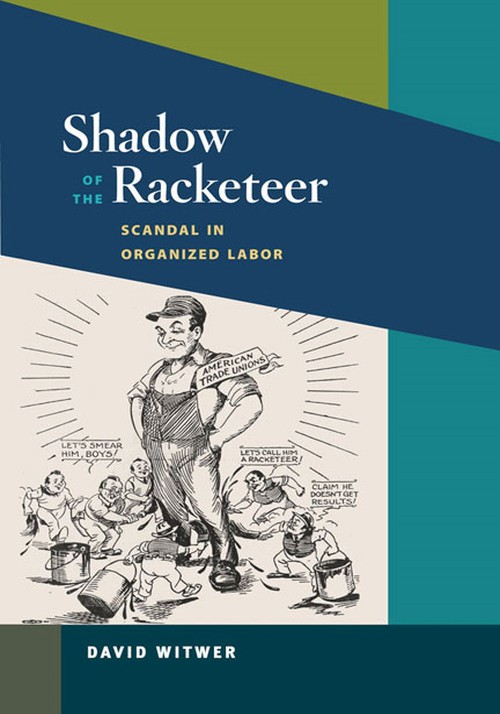
David Scott Witwer
A detailed account of labor corruption in the 1930s and the zealous journalist who railed against it
The outfit : organized crime and labor racketeering
Browne, Bioff, and Scalise : the dynamics of union corruption
The Hollywood case : racketeering in the 1930s from a business perspective
Union members and corruption : exploitation and disillusionment
Union members and corruption : the potential for reform
The newsmen : "molders of public opinion"
The scandal's political impact : Pegler and antiunionism
"Labor must clean house": the challenge of responding to Pegler
Conclusion : opportunities lost and opportunities taken
A detailed account of labor corruption in the 1930s and the zealous journalist who railed against it
David Stebenne
A timely work of groundbreaking history explains how the American middle class ballooned at mid-century until it dominated the nation, showing who benefited and what brought the expansion to an end.
explains how the American middle class ballooned at mid-century until it dominated the nation, showing who benefited and what brought the expansion to an end.

David T. Burbank
While working at Washington University, Burbank completed work on a book entitled City of Little Bread: The St. Louis General Strike of 1877, which was originally published in 1957. Nine years later, in 1966, he republished an abridged version of City of Little Bread, and renamed it Reign of the Rabble: The St. Louis General Strike of 1877. The book documented the events occurring in St. Louis during St. Louis’s 1877 week-long general strike from July 22 to July 28, which grew out of the series of railroad strikes occurring throughout the United States at the time. The book asserted that the St. Louis strike was the first true American general strike. It alsobexamined the character of the labor and socialist movements of the 1870s, the emergence of bAfrican Americans as an element of industrial society, and the social attitudes of the St. Louis
upper-class and the press. Burbank’s knowledge of locale as a St. Louis native and his experience as a labor organizer contribute to the book’s importance as a chronicle of the 1877 general strike.
A complete and classic history of the St. Louis General Strike of 1877.

David T. Wieck
Agnes Burns Wieck was a crusading labor organizer, an activist known as "the Mother Jones of Illinois." This first book-length biography is a unique portrait of her energy and unremitting dedication to social justice. Wieck organized miners’ wives and led a movement of Illinois coalfield women. She used her talents as a journalist and a public speaker to campaign for a decent standard of living, for good schools and working conditions in communities free of corporate domination, and for union democracy, racial equality, and acceptance of women in political life.
a unique portrait of a coal mining activist unremitting dedication to social justice.
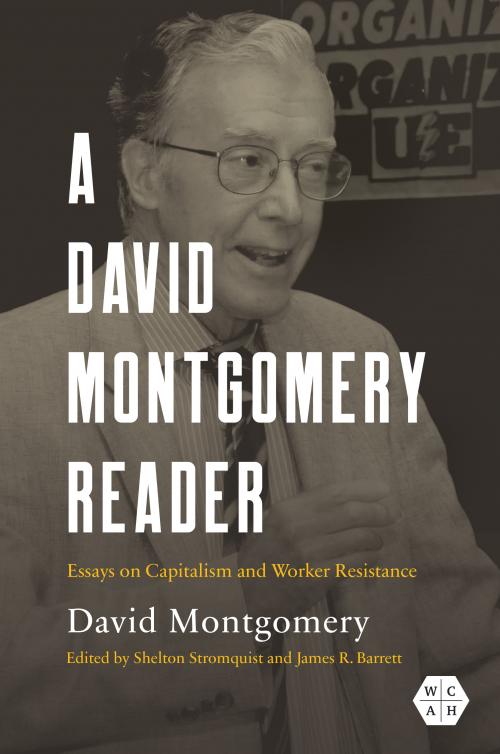
David W. Montgomery, James R. Barrett, ed., Shelton Stromquest, ed.
A foundational figure in modern labor history, David Montgomery both redefined and reoriented the field. This collection of Montgomery's most important published and unpublished articles and essays draws from the historian's entire five-decade career. Taken together, the writings trace the development of Montgomery's distinct voice and approach while providing a crucial window into an era that changed the ways scholars and the public understood working people's place in American history.
Three overarching themes and methods emerge from these essays: that class provided a rich reservoir of ideas and strategies for workers to build movements aimed at claiming their democratic rights; that capital endured with the power to manage the contours of economic life and the capacities of the state but that workers repeatedly and creatively mounted challenges to the terms of life and work dictated by capital; and that Montgomery's method grounded his gritty empiricism and the conceptual richness of his analysis in the intimate social relations of production and of community, neighborhood, and family life"-- Provided by publisher
anthology of essays by the leading labor historian of the late 20th century
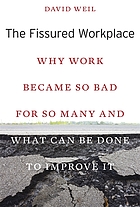
David Weil
For much of the twentieth century, large companies employing many workers formed the bedrock of the U.S. economy. Today, on the list of big business's priorities, sustaining the employer-worker relationship ranks far below building a devoted customer base and delivering value to investors. As David Weil's groundbreaking analysis shows, large corporations have shed their role as direct employers of the people responsible for their products, in favor of outsourcing work to small companies that compete fiercely with one another. The result has been declining wages, eroding benefits, inadequate health and safety conditions, and ever-widening income inequality. From the perspectives of CEOs and investors, fissuring - splitting off functions that were once managed internally - has been a phenomenally successful business strategy, allowing companies to become more streamlined and drive down costs. Despite giving up direct control to subcontractors, vendors, and franchises, these large companies have figured out how to maintain quality standards and protect the reputation of the brand. They produce brand-name products and services without the cost of maintaining an expensive workforce. But from the perspective of workers, this lucrative strategy has meant stagnation in wages and benefits and a lower standard of living - if they are fortunate enough to have a job at all. Weil proposes ways to modernize regulatory policies and laws so that employers can meet their obligations to workers while allowing companies to keep the beneficial aspects of this innovative business strategy. -- Publisher
Contents
Part I: Vignettes from the Modern Workplace
1. The Fissured Workplace and Its Consequences
2. Employment in a Pre-fissured World
3. Why Fissure?
4. Wage Determination in a Fissured Workplace
Part II: The Forms and Consequences of the Fissured Workplace
5. The Subcontracted Workplace
6. Fissuring and Franchising
7. Supply Chains and the Fissured Workplace
Part III: Mending the Fissured Workplace
8. Rethinking Responsibility
9. Rethinking Enforcement
10. Fixing Broken Windows
11. The Fissured Economy
12. A Path Forward
fissuring - splitting off functions that were once managed internally - as a business strategy
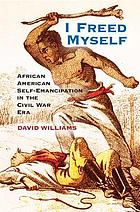
David Williams
African Americans' Struggle for Freedom in the Civil War Era For a century and a half, Abraham Lincoln's signing of the Emancipation Proclamation has been the dominant narrative of African American freedom in the Civil War era. However, David Williams suggests that this portrayal marginalizes the role that African American slaves played in freeing themselves. At the Civil War's outset, Lincoln made clear his intent was to save the Union rather than free slaves - despite his personal distaste for slavery, he claimed no authority to interfere with the institution. By the second year of the war, though, when the Union army was in desperate need of black support, former slaves who escaped to Union lines struck a bargain: they would fight for the Union only if they were granted their freedom. Williams importantly demonstrates that freedom was not simply the absence of slavery but rather a dynamic process enacted by self-emancipated African American refugees, which compelled Lincoln to modify his war aims and place black freedom at the center of his wartime policies"-- Provided by publisher Introduction: Following the footsteps of the slaves : They are freeing themselves ; A story too long in the shadows --
1. "Yes, we all shall be free": pressing the nation toward freedom : Slavery without submission ; Contesting northern slavery ; Preparing to meet the crisis ; More cases of insubordination than ever ; Insurrection and the knell of slavery --
2. "Shedding the first blood": forcing a war for freedom : The enemy at home ; Blind, unreasoning prejudice ; Impossible to keep them outside our lines ; They say they are free ; What shall we do with the contrabands? ; A new departure for the president ; A half-way measure --
3. "Ready to die for liberty": expanding the boundaries of freedom : They know everything that happens ; Unoffending Negroes brutally assailed ; We will fight for our rights and liberty ; Entering the army by hundreds and thousands ; We did our duty as men ; They treat the men like dogs ; Little aid from the government --
4. "Full equality before the law": claiming the rights of freedom : The "faithful slave" is about played out ; Ready to help anybody opposed to the rebels ; We has a right to the land ; Southern Negroes must stay where they are ; It is enough to free them ; A partial emancipation unworthy of the name --
5. "All we ask is justice": continuing struggles for freedom : Demanding absolute legal equality ; The old slave laws remain unrepealed ; Every man who voted was watched ; Rebel rule is now nearly complete ; But I kept on.
he role that African American slaves played in freeing themselves.
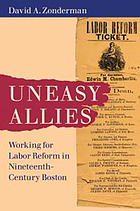
David Zonderman
Throughout the nineteenth century, working-class activists and middle-class reformers in Boston strived to build alliances in the campaign for labor reform. Though some of these organizations have been familiar to historians for more than a century, this is the first study to trace these cross-class groups from their origins in the early 1830s to the dawn of the Progressive Era.
In addition to analyzing what motivated these workers and reformers to work together, David Zonderman examines the internal tactical debates and external political pressures that fractured them, even as new alliances were formed, and shows how these influences changed over time. He describes what workers and reformers learned about politics and social change within these complex and volatile alliances, and speculates as to whether those lessons have relevance for activists and reformers today
what workers and reformers learned about politics and social change
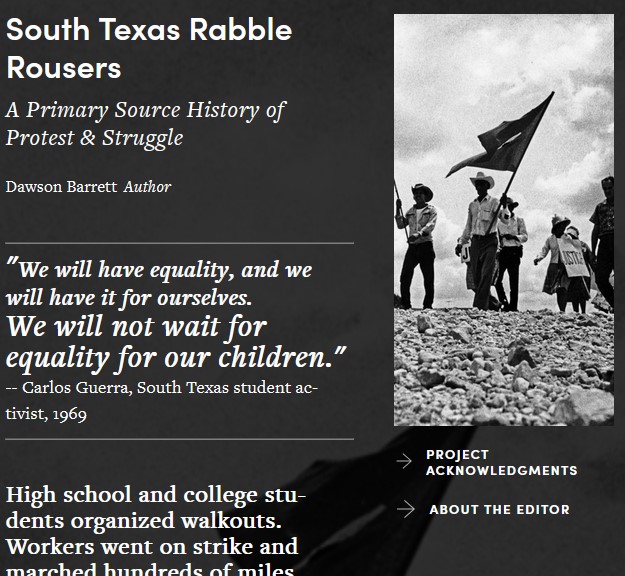
Dawson Barrett
This educational project features curated collections of historical documents related to some of the key events, organizations, and people whose willingness to go against the grain changed the trajectory of the region's history. Each DOCUMENT COLLECTION below includes several primary sources, as well as historical context, related to its respective topic.Poster projects by Del Mar College history students follow.
1929: The League of United Latin American Citizens (LULAC)Founded in Corpus Christi in 1929, LULAC is now the largest and oldest Mexican American civil rights organization in the United States
1935: The Dockworkers' Strike at the Port of Corpus ChristiDuring the Great Depression, longshoremen in Corpus Christi -- and at eight other Southern ports, from Texas to Florida -- went on strike, leading to a series of clashes
1948: Hector P. Garcia and the American GI ForumUniting veterans in Corpus Christi and in dozens of chapters nationwide, the American GI Forum fought for veterans' rights and against discrimination, segregation, and police violence Del Mar College in Corpus Christi, Texas
1952: The Desegregation of Del Mar CollegeUnder pressure from African American students, Del Mar College desegregated two years before the landmark Brown v. Board Supreme Court case demanded it -- and became a national news story in the process
1966: The Starr County Melon Strike and MarchFarm workers in the Valley, facing brutal working conditions and wages far below minimum wage, went on strike and marched nearly 500 miles to Austin in the Texas summer heat
1969: The Corpus Christi Sanitation Workers' StrikeCity garbage collectors walked off the job to demand better working conditions, drawing support from community members and state labor leaders
1970: The Cisneros v. CCISD CaseCorpus Christi parents and students launched what would become a decades-long legal battle to force the school district to end the segregation of Mexican American students
1968-1972: The Chicano Student WalkoutsAt grade schools, high schools, and colleges all over South Texas, Mexican American students went on strike to demand better opportunities and input into their education
The project also highlights the work of high school and college students (in the present), who have created posters, zines, blogs, and StoryMaps in order to share these stories with their friends, classmates, and neighbors. These POSTERS can be viewed by scrolling to the bottom of this page.
A Primary Source History of Protest & Struggle

Deaf Printers Pages Project
From the outset, the Deaf Printers Pages has been participant-driven. An advisory team of retired Deaf printers initiated the project with the Schuchman Deaf Documentary Center in 2019. That year the Center hosted a reunion of retired Washington Post printers at Gallaudet University. Eighteen Deaf printers shared stories and developed a plan for an online exhibit. From 1970-2000 more than 125 Deaf people found employment at The Washington Post. The composing room and advertising departments of the newspaper became spaces where Deaf and hearing printers interacted daily, creating a uniquely accessible work environment.
In 2019, eighteen Deaf retirees from The Washington Post came to Gallaudet University to envision how their story might look in an online exhibition. The last of many generations of Deaf people who learned printing in school, the group wanted to record and share their history. Deaf Printers Pages is an expression of that goal.
Deaf printers tell their story of innovation and employment in the typographical industry
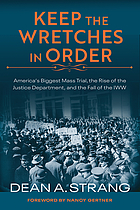
Dean A. Strang
first comprehensive account of the 1917 federal prosecution of leaders of the IWW for violating the Espionage and the Selective Service Acts In this sharp legal history of the largest mass trial in U.S. history (United States v. Haywood et al.), Dean Strang analyzes the fragility of the American criminal justice system and details the fascinating case that had a major role in shaping the modern Justice Department
first comprehensive account of the 1917 federal prosecution of leaders of the IWW for violating the Espionage and the Selective Service Acts
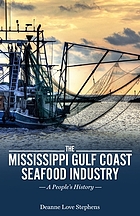
Deanne Love Stephens
The first complete history of Mississippi's seafood and those who harvested and proceesed this coastal bounty.The seafood industry on the coast of Mississippi has attracted waves of immigrants and other workers—oftentimes folks who were either already acquainted with maritime livelihoods or those who quickly adapted to the resources of the region. For generations the industry has provided employment and sustenance to Coast peoples. Deanne Love Stephens tells their stories and identifies key populations who have worked this harvest. Oyster and shrimp processing were the most significant of these trades, and much of the Gulf Coast's history follows these two delicacies. Harvesting, processing, and marketing oyster and shrimp products built the Mississippi seafood industry and powered the growth of the entire coastal region.
This book is the first to offer a broad view of the many ethnic groups and distinct populations who toiled in the oyster and shrimp industries. Relying heavily upon contemporary newspapers, oral histories, and interviews to create a rich picture of the industry and its workers, the author presents the history of laboring people who daily toiled in factories and often went unheard and unrecognized.
Stephens provides an overview of significant early developments and the beginnings of the industry, considering the development of railroad expansion, lighthouse construction, and ice technology. She covers significant state and federal legislation that both defined and protected marine resources, illustrating the depth of the industry’s importance as Mississippians wrestled with adequate protective measures to preserve oyster and shrimp resources throughout the nineteenth and twentieth centuries.
The first complete history of Mississippi's seafood and those who harvested and proceesed this coastal bounty.
Debbie J. Goldman
Call center employees once blended skill and emotional intelligence to solve customer problems while the workplace itself encouraged camaraderie and job satisfaction.
Ten years after telecom industry deregulation, management had isolated the largely female workforce in cubicles, imposed quotas to sell products, and installed surveillance systems that tracked every call and keystroke.
Debbie J. Goldman explores how call center employees and their union fought for good, humane jobs in the face of degraded working conditions and lowered wages. As the workforce coalesced to resist the changes, it demanded the Communications Workers of America (CWA) fight for safe and secure good-paying jobs. But trends in technology, capitalism, and corporate governance-combined with the decline of unions-narrowed the negotiating options for workers. Goldman describes how the actions of workers, management, and policymakers shaped the social impact of the new digital technologies and gave new form to the telecommunications industry in a time of momentous change.
describes how the actions of workers, management, and policymakers shaped the social impact of the new digital technologies and gave new form to the telecommunications industry in a time of momentous change.
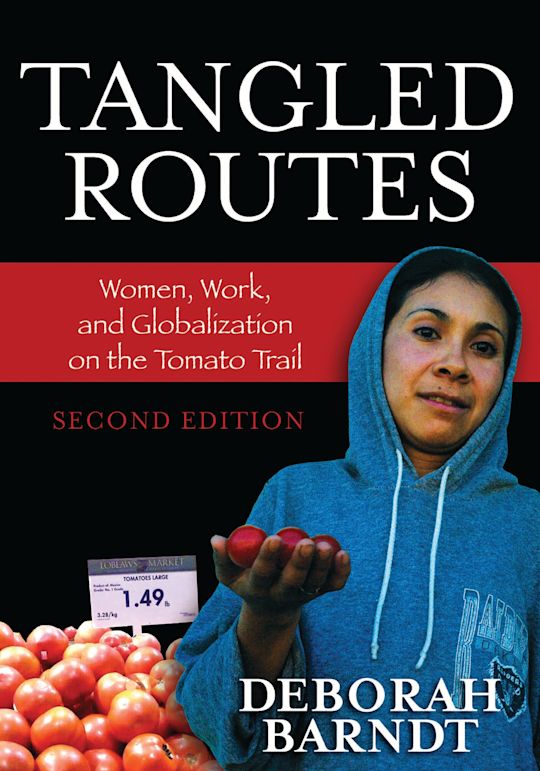
Deborah Barndt
"Now in a thoroughly revised and updated edition, Tangled Routes offers a vivid interdisciplinary examination of the global food system through the journey of a corporate tomato. Through case studies in the three NAFTA countries - Mexico, the United States, and Canada - Deborah Barndt examines the dynamic relationships between production and consumption, work and technology, biodiversity and cultural diversity, and health and environment. The compelling stories of women workers along the tomato trail humanize her analysis of globalization, taking into account the intersections of gender, race, class, family status, and north-south relations."--Jacket
offers a vivid interdisciplinary examination of the global food system through the journey of a corporate tomato.

Deborah Cohen
At the beginning of World War II, the United States and Mexico launched the bracero program, a series of labor agreements that brought Mexican men to work temporarily in U.S. agricultural fields.
In Braceros, Deborah Cohen asks why these migrants provoked so much concern and anxiety in the United States and what the Mexican government expected to gain in participating in the program.
Cohen creatively links the often-unconnected themes of exploitation, development, the rise of consumer cultures, and gendered class and race formation to show why those with connections beyond the nation have historically provoked suspicion, anxiety, and retaliatory political policies
The story of Braceros told from a global perspective, with race, gender and class at the center of the study
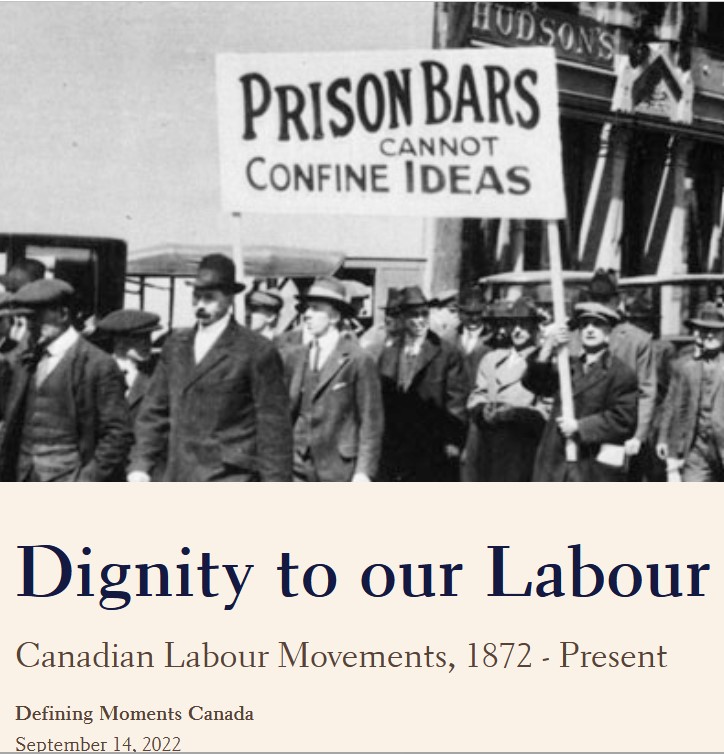
Defining Moments Canada
The history of Canadian labour is filled with experiences of activism, turmoil, rebellion, and progress. Dignity to our Labour offers a snapshot view of examples in each Canadian province and territory where workers have banded together to fight for improved working conditions against the adversities of poverty, poor healthcare, severe gender pay gaps, racism, and overly strenuous work hours.
Canada-Wide: 1872 The Nine Hour Movement and the Adoption of the Trade Unions Act
The Nine Hour Movement showcases the changing nature of work in the late 19th century, and the emerging activism of Canada’s various labour forces, including newspaper printers, railway workers, shipbuilders, metalworkers, carpenters, and general labourers in response to rapid industrialization. Many see the Nine Hour Movement as the 'catalyst' that began labour activism in Canada. Dignity to our Labour concludes with direct links to resources made available by the All for 9 and 9 for All project.
British Columbia: 1918 Vancouver General Strike
On July 27, 1918, labour activist Albert “Ginger” Goodwin was killed by a police constable after calling for a general strike to protest workers being drafted against their will. In response, leaders of the Vancouver Trades and Labour Council called for a 24-hour general strike on Friday August 2, coinciding with Goodwin’s funeral. At 12pm, workers across Vancouver walked off their jobs in support. The strike was met with violent opposition with hundreds of ex-soldiers ransacking the Labour Temple and assaulting those they found inside. In 2018, British Columbia’s provincial government proclaimed July 27 as “Ginger Goodwin Day” to mark his untimely death.
Manitoba: 1919 Winnipeg General Strike
Canada's most famous labour dispute began more than 100 years ago on May 15, 1919 when more than 30,000 workers took to the streets of Winnipeg in a general strike, shutting down factories, shops, and transit. The strike reached a violent climax on June 21 when the mayor requested assistance from members of the North-West Mounted Police, who rode into the crowd, beating the protesters with clubs, and firing their weapons. Two men were killed and 30 others were injured by the police. Fearing additional violence, the strike was called off on June 25. In the following months, seven of the strike leaders were charged and found guilty of seditious conspiracy.
Nova Scotia 1925 Miners’ Memorial
The early 1920s in Cape Breton was marked by many small coal mine strikes. The longest and most impactful strike began on March 6, 1925, when 12,000 coal miners walked off the job after the British Empire Steel Corporation announced a 20% wage reduction and cut off credit at the company store. The strike reached a bloody climax on June 11 at New Waterford when company police charged into a crowd of strikers, firing more than 300 shots, injuring many, and killing miner William Davis. In August, the government stepped in to negotiate an end to the strike and passed legislation recognizing the miners’ right to unionize. Davis is remembered every year in Nova Scotia on June 11, which is officially marked as "William Davis Miners' Memorial Day."
Saskatchewan: 1931 Estevan Riot
In early September, 1931, coal mine workers in Bienfait, Sask., began a strike seeking improved conditions and wages. However, the mine owners refused of recognize the workers’ union and their demands. In response, the workers organized a solidarity parade where they were joined by their families. On September 29, the parade marchers were met in Estevan by a line of armed RCMP constables who fired upon them, leaving 3 men dead and many others injured. In the following days, RCMP arrested strikers and union leaders for rioting. On October 6, the mine owners finally agreed to an 8-hour workday, a $4/day minimum wage, reduced rent, and ending the company store monopoly. The violent confrontation in Estevan became known as the “Black Tuesday Riot”.
New Brunswick: 1937 Miramichi Sawmill
In mid-August 1937, workers belonging to the New Brunswick Farmer-Labour Union walked out of a Miramichi sawmill, demanding increased wages, shorter working hours, and for their employer to recognize and negotiate with their union. A week later, union president Gregory McEachreon led a parade from 14 sawmills, encouraging 1,500 millworkers and longshoremen to join the strike. The dispute ended on August 31 after a settlement was reached that included a minimum wage of $0.28/hour and a nine-hour work day. However, the most significant accomplishment of the strike was that it prompted New Brunswick to introduce the Labour and Industrial Relations Act in 1938, solidifying the right to organize and bargain collectively.
Prince Edward Island: 1966 Rail Strike
A Canada-wide strike by 118,000 Canadian National Railway (CNR) workers began on August 26, 1966. This strike shut down all ferry service to and from Prince Edward Island (PEI), effectively isolating the province from mainland Canada. 300 PEI ferry workers represented by the Canadian Brotherhood of Railway Transportation and General Workers had voted to join the strike, seeking significant wage increases. Premier Alex Campbell declared a state of emergency, which gave the government power to take over operation of the ferries if necessary. The union agreed to resume limited service to Nova Scotia on August 30, which accommodated most passenger traffic until September 1 when CNR resumed service under an agreement between the union and the federal government.
Quebec: 1972 Quebec General Strike
On April 11, 1972, over 200,000 Quebec public service workers, including employees in public schools, colleges, hospitals, the Liquor Control Board, and Hydro-Quebec, began a province-wide strike, demanding wage increases, pay equity, job security, and better working conditions. At the time, this action was the largest strike in Canadian history. The strike had its roots in a 1971 strike by workers at the newspaper La Presse which led to three unions forming an alliance called the Front Commun (Common Front). The Quebec government responded by passing legislation outlawing public sector strikes and arresting three Common Front leaders. While the strike officially ended on April 21, work stoppages continued into May. The government eventually backed down and agreed to many Common Front demands and released the leaders after four months in jail.
Ontario: 1978 Sudbury Inco Strike
In September 1978, 11,600 workers at Inco’s Sudbury plant began a 234-day strike, which at the time was the longest walk-out in Canada’s history, both in the number of days and the total number of lost man hours (approximately 2.2 million). Low global nickel prices gave Inco little incentive to find a quick resolution to the dispute as the company was sitting on large stockpiles of nickel. The strike directly and indirectly impacted more the 25% of Sudbury residents, devastating the local economy. However, the workers held out until June 7, 1979, and accepted a contract that included substantial hourly wage increases, settlement pay, improved benefits, and a 30-and-out pension which allowed workers to retire after 30 years of service, regardless of their age.
Alberta: 1988 Nurses strike
On January 25, 1988, 11,400 nurses represented by the United Nurses of Alberta risked jail time, termination, and fines when they began an illegal strike that forced most of Alberta’s hospitals to severely restrict services. The nurses faced an employer demanding they accept rollbacks of gains made during past strikes, a cease-and-desist order from the Alberta Labour Relations Board, and brutally cold weather. The nurses returned to work on February 13 after an agreement was reached without rollbacks or substantial gains. In the long run, the strike set a tone that the nurses were willing to fight for fair treatment.
Newfoundland: 1992 Cod Fishery Collapse
In July, 1992, John Crosbie, the federal Minister of Fisheries and Oceans, announced a two-year ban on commercial cod fishing on the east coast. In what is still Canada’s single largest industrial layoff, more than 30,000 fishermen, cannery workers, and ship builders found themselves out of work and expected to survive on a government compensation package of $225 a week. Newfoundland’s economy had been devastated overnight. Cod stocks had been steadily declining since the 1950s when new technology allowed fishers to catch more fish than ever before. By 1992, northern cod populations had fallen by 93% in only 30 years. Today, while the government now allows a very small commercial cod fishery, the stocks have never rebounded to the level they once were.
Northwest Territories: 1992 Giant Mine Bombing
On the morning of September 18, 1992, an explosion ripped through Yellowknife’s Giant Gold Mine. When the smoke cleared, nine men were dead as the result of a bomb placed on railcar tracks 230 metres underground. At the time, the mine owner, Royal Oak Mines, was in the midst of a bitter labour dispute with the workers’ union. The men who were killed were all replacement workers or employees who had crossed the striking workers’ picket line. Mine worker Roger Warren was later convicted of second-degree murder for placing the bomb. During testimony, Warren blamed poor security, the union, and the company for provoking his actions.
Yukon: 2000 Bus Drivers' Strike
On October 11, 2000, Whitehorse’s 20 bus drivers, represented by the Public Service Alliance of Canada, began a strike that would halt public transportation service in the city for 16 weeks. The strike was centred around the city’s proposal to cut back hours for drivers and to eliminate a 30-minute paid meal break. A mediator was brought in to assist in late December but after 7 days, the city broke off discussions. The city finally reached a deal with the drivers in early February when they agreed to a new contract that included a paid mid-day break, a 2% wage increase, and increased benefits. However, the deal also included a small reduction in work hours that would result in one driver being laid off.
Nunavut: 2001 Government Workers First Contract
After Nunavut became Canada’s third territory in 1999, responsibility for government programs and services had to be transferred to the new Nunavut Government, leaving employees without a collective agreement. After nearly two years of negotiation, the territory faced its first large-scale strike in early 2001 when the workers voted 89% in favour of a strike.
14 stories of strikes, campaigns for shorter hours, public sector workers struggles, with maps and extensive imagery, oral histories
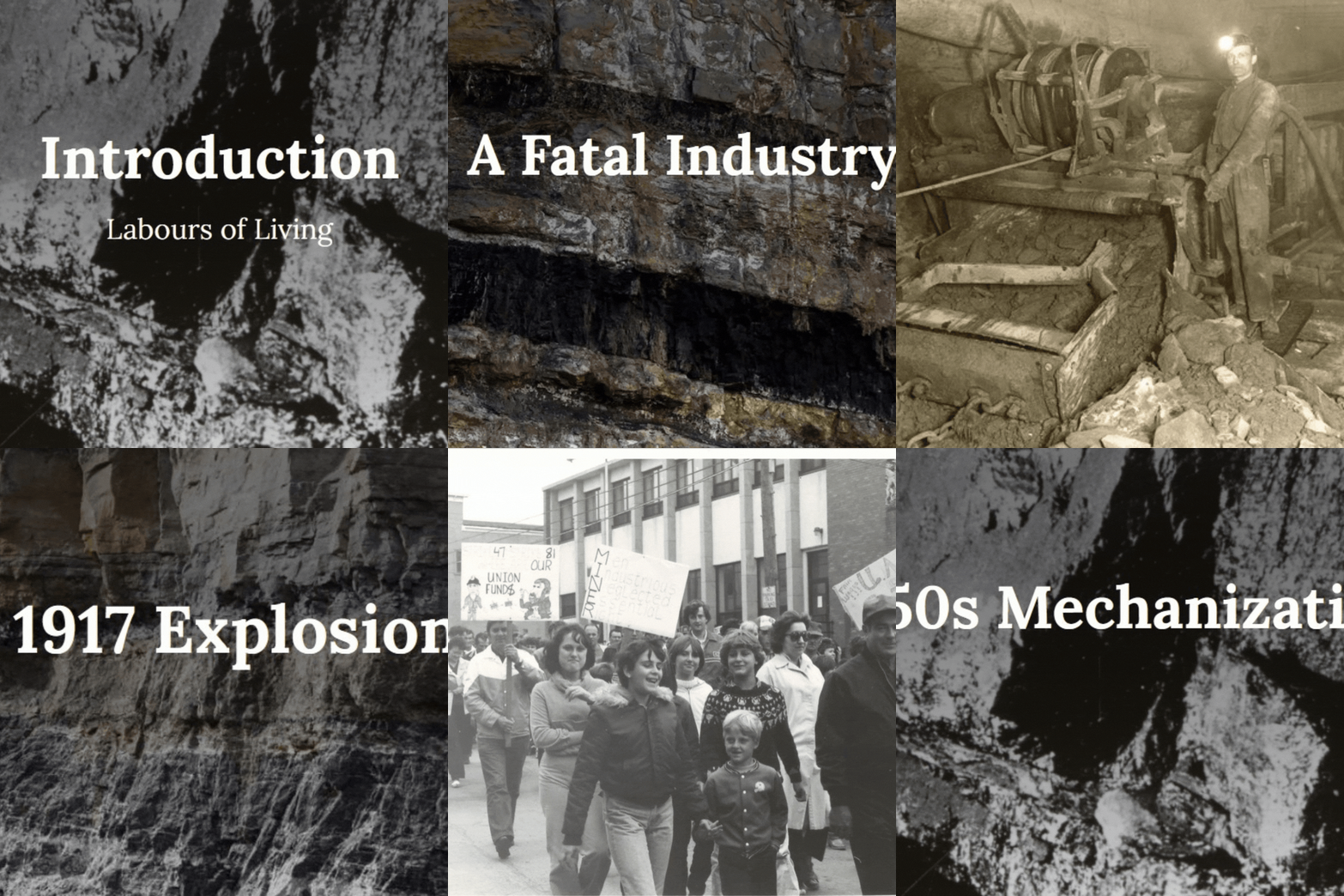
Defining Moments Canada
Wishie, Jerry, Eric, Sheldon, Kenny, and Terry are all ex coal miners, having worked in the Sydney coalfields of Cape Breton in the later half of the 20th century. This is a collection of their stories in the industry; stories which are sometimes particular to their experiences and at other times retellings of the crucial events which have become touchstones in the area’s collective memory.
A Storymap, with oral histories, and lots of images and documents
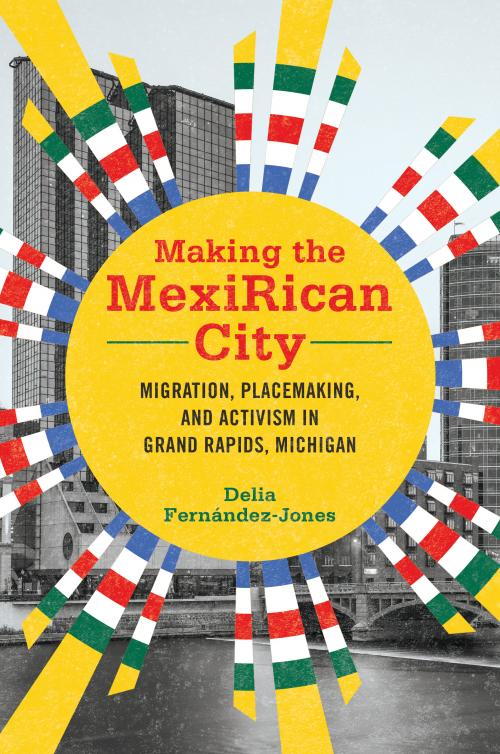
Delia Fernández-Jones
Large numbers of Latino migrants began to arrive in Grand Rapids, Michigan, in the 1950s. They joined a small but established Spanish-speaking community of people from Texas, Mexico, and Puerto Rico.
Delia Fernández-Jones merges storytelling with historical analysis to recapture the placemaking practices that these Mexicans, Tejanos, and Puerto Ricans used to create a new home for themselves. Faced with entrenched white racism and hostility,
Latinos of different backgrounds formed powerful relationships to better secure material needs like houses and jobs and to recreate community cultural practices. Their pan-Latino solidarity crossed ethnic and racial boundaries and shaped activist efforts that emphasized working within the system to advocate for social change. In time, this interethnic Latino alliance exploited cracks in both overt and structural racism and attracted white and Black partners to fight for equality in social welfare programs, policing, and education.
Groundbreaking and revelatory, Making the MexiRican City details how disparate Latino communities came together to respond to social, racial, and economic challenges.
How Mexicans, Tejanos, and Puerto Ricans became part of the Upper Midwest
Dennis Deslippe
"Although the most visible banners of feminism were carried by educated, white-collar, professional women, in fact, working-class women were a powerful force in the campaign for gender equality.
'Rights, Not Roses' explores how unionized wage-earning women led the struggle to place women's employment rights on the national agenda, decisively influencing both the contemporary labor movement and second-wave feminism. Drawing on union records, oral histories, and legislative hearings and debates, Dennis A. Deslippe unravels a complex history of how labor leaders accommodated and resisted working women's demands for change.
Through case studies of unions representing packinghouse and electrical workers, Deslippe explains why gender equality emerged as an issue in the 1960s and how the activities of wage-earning women in and outside of their unions shaped the content of the debate. He also traces the faultlines between working-class women, who sought gender equality within the parameters of unionist principles such as seniority, and middle-class women, who sought an equal rights amendment that would guarantee an abstract equality for all women.
A thoughtful and thorough study of working-class feminism, 'Rights, Not Roses' raises important questions about the meaning of equality for working women, the connections of women to their unions, the gendered nature of equal rights, and more."--Back cover
explores how unionized wage-earning women led the struggle to place women's employment rights on the national agenda, influencing both the labor movement and second-wave feminism.
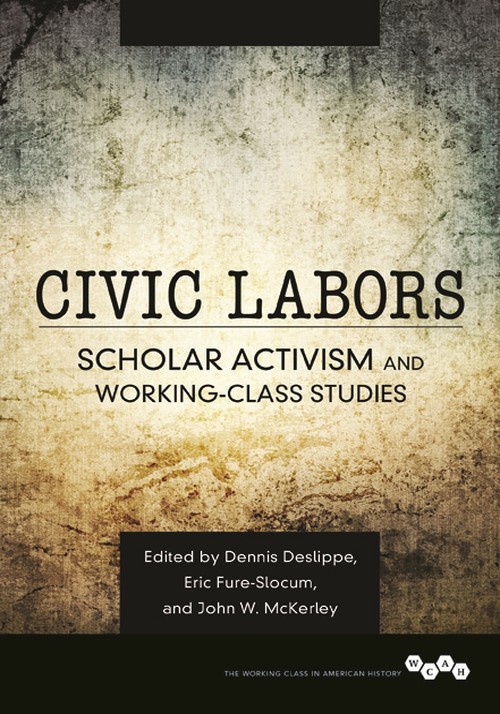
Dennis Deslippe, Eric Fure-Slocum, John W. McKerley
Labor studies scholars and working-class historians have long worked at the crossroads of academia and activism. The essays in this collection examine the challenges and opportunities for engaged scholarship in the United States and abroad. A diverse roster of contributors discuss how participation in current labor and social struggles guides their campus and community organizing, public history initiatives, teaching, mentoring, and other activities. They also explore the role of research and scholarship in social change, while acknowledging that intellectual labor complements but never replaces collective action and movement building. Contributors: Kristen Anderson, Daniel E. Atkinson, James R. Barrett, Susan Roth Breitzer, Susan Chandler, Sam Davies, Dennis Deslippe, Eric Fure-Slocum, Colin Gordon, Michael Innis-Jiménez, Stephanie Luce, Joseph A. McCartin, John W. McKerley, Matthew M. Mettler, Stephen Meyer, David Montgomery, Kim E. Nielsen, Peter Rachleff, Ralph Scharnau, Jennifer Sherer, Shelton Stromquist, Emily E. LB. Twarog, and John Williams-Searle"-- Provided by publisher
Introduction: Challenges of Engaged Scholarship and Teaching 1
Dennis Deslippe, Eric Fure-Slocum, and John W. McKerley
1 Labor Historians and Traditions of Engaged Scholarship: Progressives, Insurgents, and the Making of a New Labor History 11 Shelton Stromquist
Part I. Encountering Conflict, Power, and Hope: On the Front Line
Introduction 37 John Williams-Searle
2 Beyond Yeshiva: The Struggle for Faculty Power at the University of Dubuque 41 Ralph Scharnau
3 “Feets Don’t Fail Me Now”: Navigating an Unpaved, Rocky Road to, through, and from the Last Slave Plantation 54 Daniel E. Atkinson
4 Wandering through the Wisconsin Uprising 66 Stephen Meyer
5 Immigrants in a Disaster Zone: Teaching, Learning, and Advocating Alabama’s New Civil Rights Movement 85 Michael Innis-Jiménez
6 Remembering the 1911 General Transport Strike in Liverpool 93 Sam Davies
Part II. Connecting Classrooms and Communities:Education, Outreach, and Engagement
Introduction 109 Matthew M. Mettler
7 The Great Unspoken: Teaching and Learning Working-Class History from the Seminar Room to the Union Hall 113 James R. Barrett
8 Teaching Labor History on the Middle Ground: Connecting the Campus, the Union Hall, and the Community 129 Peter Rachleff
9 The Difference a Union Makes: Graduate Employee Activists’ Engaged Scholarship and Their Working Lives 144 Susan Roth Breitzer
10 Making History Every Day: The Iowa Labor History Oral Project and Popular Education 159 Jennifer Sherer
11 The Polk School: Intersections of Women’s Labor Leadership Education and the Public Sphere 177 Emily E. LB. Twarog
Part III. Bridging Scholarship and Activism:Paths of Engagement
Introduction 193 Kristen Anderson
12 Launching the Kalmanovitz Initiative: A Labor Historian’s Labor History 197 Joseph A. McCartin
13 My Life as a Wonk 217 Colin Gordon
14 “The Soul Puts Together Its Pieces”: Lessons from the Casino Floor 226 Susan Chandler
15 Disability and Labor Activism: The Pains and Joys of Coalitions 237 Kim E. Nielsen
16 Engaged Scholarship and the Living-Wage Movement 246 Stephanie Luce
Epilogue. Carry It On!: Creative Research and Social Action 265 David Montgomery
At the crossroads of writing, teaching, and living the struggle
Museum/Exhibits
Tours
Maps
Digital Projects
Organizations
Sites
Film/Video
Audio/Interview
Podcast/Program
Text/Document
Image
Graphs/Data
Timeline
Southwest
West
Midwest
Southeast
Northeast
Mexico
Canada
Global
Books
Teaching
Lectures
Digital Archives
Journals
Bibliographies
Topic Intro