


Collections
Library
Type
Region
Coverage:
-
Published:
-
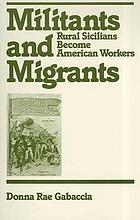
Donna R. Gabaccia
An in depth study of several Sicilian-American communities contrasted with their counterparts in Sicily.
Of militants and migrants
A mobile and unruly countryside
The genesis of a red town
From fasci to emigration
Links in the migration chain
Immigrant workers: Louisiana and Chicago
Immigrant workers: Tampa and Brooklyn
Rural conflict in Sicily after 1900
An in depth study of several Sicilian-American communities contrasted with their counterparts in Sicily.
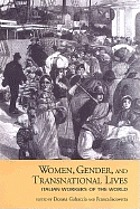
Donna R. Gabaccia
In this transnational analysis of women and gender in Italy’s world-wide migration, Franca Iacovetta and Donna Gabaccia challenge the stereotype of the Italian immigrant woman as silent and submissive; a woman who stays 'in the shadows.'
challenges the stereotype of the Italian immigrant woman as silent and submissive; a woman who stays 'in the shadows.'
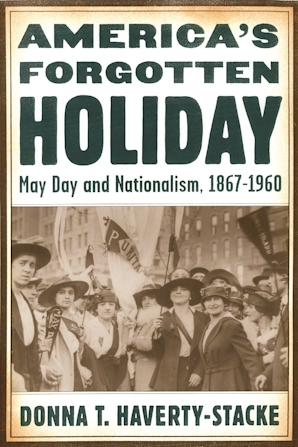
Donna T. Haverty-Stacke
"Though now a largely forgotten holiday in the United States, May Day was founded here in 1886 by an energized labor movement as a part of its struggle for the eight-hour day. In ensuing years, May Day took on new meaning, and by the early 1900s had become an annual rallying point for anarchists, socialists, and communists around the world. Yet, American workers and radicals also used May Day to advance alternative definitions of what it meant to be an American and what America should be as a nation." "Mining contemporary newspapers, party and union records, oral histories, photographs, and rare film footage, America's Forgotten Holiday explains how May Day's celebrants, through their colorful parades and mass meetings, both contributed to the construction of their own radical American identities and publicized alternative social and political models for the nation."--Jacket
explains how May Day's celebrants, both contributed to the construction of their own radical American identities and publicized alternative social and political models for the nation.
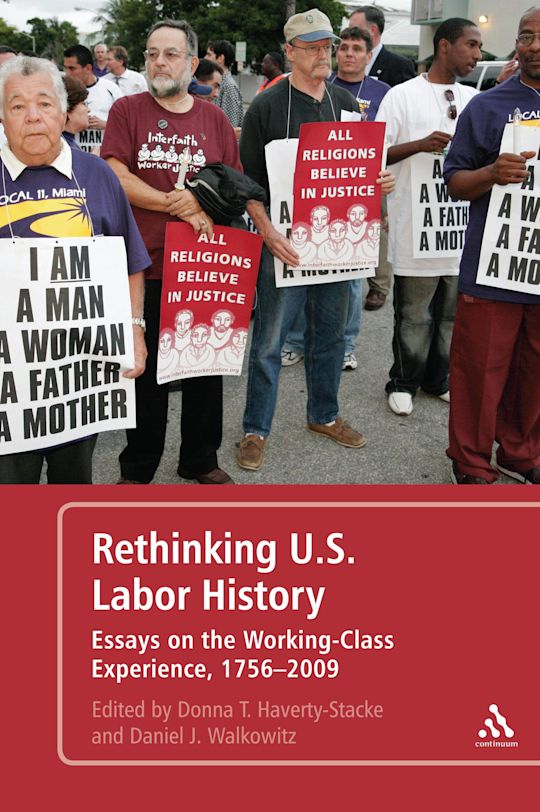
Donna T. Haverty-Stacke
Provides a reassessment of the growth and the various directions in US labor history. This title focuses on: the relationship of class and culture; the link between worker's experience and the changing political economy; the role that gender and race have played in America's labor history; and, the transnational turn.
1. Introduction
Donna Haverty-Stacke and Daniel J. Walkowitz.
PART I. CURRENT RESEARCH
2. Memoirs of an Invalid: James Miller and the Making of the British-American Empire during the Seven Years' War Peter Way
3. Losing the Middle Ground: Strikebreakers and Labor Protest on the Southwestern Railroads Theresa Case
4. Rethinking Working-Class Politics in Comparative-Transnational Contexts Shelton Stromquist
5. No Common Creed: White Working-Class Protestantisms and the CIO's Operation Dixie Ken Fones-Wolf and Elizabeth Fones-Wolf
6. A. Philip Randolph, Black Anticommunism, and the Race Question Eric Arnesen
7. The Contextualization of a Moment in CIO History: The Mine-Mill Battle in the Connecticut Brass Valley During World War II Steve Rosswurm
8. Organizing the Carework Economy: When the Private Becomes Public Eileen Boris and Jennifer Klein
9. Solvents of Solidarity: Political Economy, Collective Action, and the Crisis of Organized Labor, 1968-2005 Joseph McCartin
PART II. NEW DIRECTIONS IN U.S. LABOR HISTORY
10. Sensing Labor: The Stinking Working-Class after the Cultural Turn Dan Bender
11. Re-imagining Labor: Gender and New Directions in Labor and Working Class History Liz Faue
12. The Limits of Work And The Subject of Labor History Zach Schwartz-Weinstein
PART III. RESOURCES
Chronology
Resources
Further Reading
Index
Provides a reassessment of the growth and the various intersectional forces in US labor history.
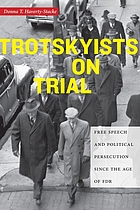
Donna T. Haverty-Stacke
The Smith Act was a peacetime anti-sedition law that marked a dramatic shift in the legal definition of free speech protection in America by criminalizing the advocacy of disloyalty to the government by force. It also criminalized the acts of printing, publishing, or distributing anything advocating such sedition and made it illegal to organize or belong to any association that did the same. It was first brought to trial in July 1941, when a federal grand jury in Minneapolis indicted 29 Socialist Workers Party members, 15 of whom also belonged to the militant Teamsters Local 544. 18 of the defendants were convicted of conspiring to overthrow the government. Examining the social, political, and legal history of the first Smith Act case, this book focuses on the tension between the nation's cherished principle of free political expression and the demands of national security
New York City's expansive informal economy.
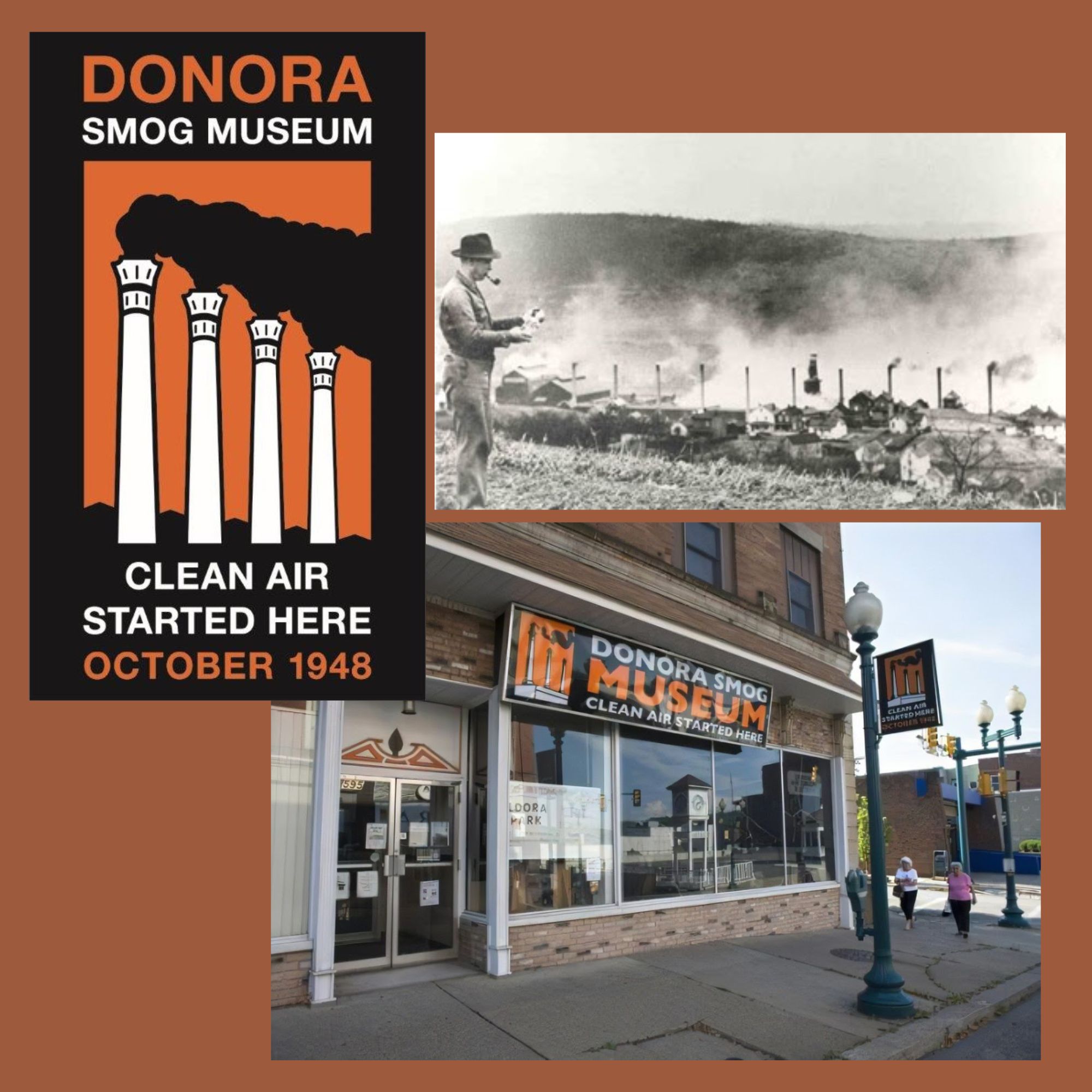
Donora History Museum
Donora Smog Incident: was a deathly chemical toxicity from the steel and zinc works in the area. The site and museum highlights how the human and environmental costs of capitalist industrialization Donora Historical Society and Smog Museum was opened in 2008 and has been flourishing ever since.
Located in the heart of Donora, Pennsylvania, the museum has permanent exhibits related to the founding of the town, town life, steel mills, the 1948 Smog tragedy, Donora schools and sports, social clubs and organizations, and a 1948-time capsule room. There are also a couple of rotating exhibits whose content changes three to four times a year.
The museum has permanent exhibits related to the founding of the Donora, town life, steel mills, the 1948 Smog tragedy, and a 1948-time capsule room.
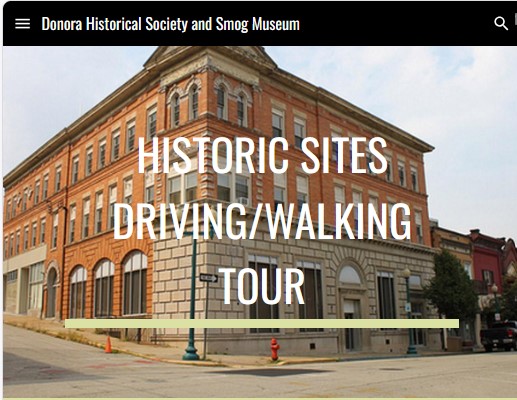
Donora History Museum
This page is an attempt to document most of the historic buildings, homes, signs and sites throughout Donora. There are 1948 Smog, Stan Musial, Ken Griffey, Original Buildings/Homes and General Historical points of interest which when followed will give you a tour of Donora.
Portions of the tour can be walked depending on your interest, but it’s recommended that you drive your car and then possibly get out and walk wherever you’d like. The driving tour could take 30-60 minutes, but possibly even longer if you were to get out of your car, walk around and even take a few pictures.
Various tours linked to the industrial and post-industrial town that highlights the intersection of environmental hazard and working class life

Dorothy Schwieder, Joseph Hraba, Elmer Schwieder
From 1900 until the early 1920s, an unusual community existed in America's heartland-Buxton, Iowa. Originally established by the Consolidation Coal Company, Buxton was the largest unincorporated coal mining community in Iowa. What made Buxton unique, however, is the fact that the majority of its 5,000 residents were African Americans—a highly unusual racial composition for a state which was over 90 percent white.
At a time when both southern and northern blacks were disadvantaged and oppressed, blacks in Buxton enjoyed true racial integration—steady employment, above-average wages, decent housing, and minimal discrimination. For such reasons, Buxton was commonly known as “the black man's utopia in Iowa.” Containing documentary evidence—including newspapers, census records, photographs, and state mining reports—along with interviews of 75 former residents, Buxton: Work and Racial Equality in a Coal Mining Community (originally published in 1987 and winner of the 1988 Benjamin Shambaugh Award) explored the Buxton experience from a variety of perspectives.
The authors—an American historian, a family sociologist, and a race relations sociologist—provided a truly interdisciplinary history of one Iowa's most unique communities. Now, eighty years after the town's demise and fifteen years after Buxton's original publication, the history of this Iowa town remains a compelling story that continues to capture people's imaginations. In Buxton: A Black Utopia in the Heartland, the authors offer further reflections upon their original study and the many former Buxton residents who shared their memories. In the new essay, “A Buxton Perspective,” issues such as social class and the town's continuing legacy are addressed. The voices captured inBuxton, although recorded over twenty years ago, still resonate with exuberance, affection, and poignancy; this expanded edition will bring their amazing stories back to the forefront of Iowa and American history.
The coal mining town of Buxton was commonly known as "the black man's utopia in Iowa"
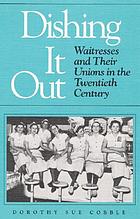
Dorothy Sue Cobble
Dorothy Sue Cobble shows how sexual and racial segregation persisted in wait work, but she rejects the idea that this was caused by employers' actions or the exclusionary policies of male trade unionists.Dishing It Out contends that the success of waitress unionism was due to several factors: waitresses, for the most part, had nontraditional family backgrounds, and most were primary wage-earners. Their close-knit occupational community and sex-separate union encouraged female assertiveness and a decidedly unromantic view of men and marriage. Cobble skillfully combines oral interviews and extensive archival records to show how waitresses adopted the basic tenets of male-dominated craft unions but rejected other aspects of male union culture. The result is a book that will expand our understanding of feminism and unionism by including the gender consciousperspectives of working women.
shows how sexual and racial segregation persisted in wait work, but rejects the idea that this was caused by employers or the exclusionary policies of unions.
Dorothy Sue Cobble
A history of the twentieth-century feminists who fought for the rights of women, workers, and the poor, both in the United States and abroad. Focus on influencers associated with Women's Trade Union League.
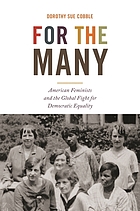
For the Many is intended as "an inspiring look at how US women and their global allies pushed the nation and the world toward justice and greater equality for all." Here feminists are heroic figures with few flaws.
Reclaiming social democracy as one of the central threads of American feminism, Dorothy Sue Cobble offers a bold rewriting of twentieth-century feminist history and documents how forces, peoples, and ideas worldwide shaped American politics. Cobble follows egalitarian women's activism from the explosion of democracy movements before World War I to the establishment of the New Deal, through the upheavals in rights and social citizenship at midcentury, to the reassertion of conservatism and the revival of female-led movements today.
Cobble brings to life the women who crossed borders of class, race, and nation to build grassroots campaigns, found international institutions, and enact policies dedicated to raising standards of life for everyone. Readers encounter famous figures, including Eleanor Roosevelt, Frances Perkins, and Mary McLeod Bethune, together with less well-known leaders, such as Rose Schneiderman, Maida Springer Kemp, and Esther Peterson. Multiple generations partnered to expand social and economic rights, and despite setbacks, the fight for the many persists, as twenty-first-century activists urgently demand a more caring, inclusive world. Putting women at the center of US political history, For the Many reveals the powerful currents of democratic equality that spurred American feminists to seek a better life for all"-- Provided by publisher
offers a bold rewriting of twentieth-century feminist history and documents how forces, peoples, and ideas worldwide shaped American politics.
Dorothy Sue Cobble
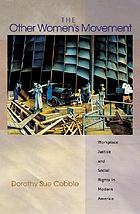
In this book, Dorothy Sue Cobble retrieves the forgotten feminism of the previous generations of working women, illuminating the ideas that inspired them and the reforms they secured from employers and the state. This socially and ethnically diverse movement for change emerged first from union halls and factory floors and spread to the "pink collar" domain of telephone operators, secretaries, and airline hostesses. From the 1930s to the 1980s, these women pursued answers to problems that are increasingly pressing today: how to balance work and family and how to address the growing economic inequalities that confront us. The other women's movement traces their impact from the 1940s into the feminist movement of the present. The labor reformers whose stories are told in this book wanted equality and "special benefits," and they did not see the two as incompatible. They argued that gender differences must be accommodated and that "equality" could not always be achieved by applying an identical standard of treatment to men and women. The reform agenda they championed--an end to unfair sex discrimination, just compensation for their waged labor, and the right to care for their families and communities--launched a revolution in employment practices that carries on today
The missing wave
The other labor movement
Social feminism remade
Women's job rights
Wage justice
The politics of the "double day"
Labor feminism at high tide
The torch passes
An unfinished agenda
The next wave
retrieves the forgotten feminism of the previous generations of working women, illuminating the ideas that inspired them and the reforms they secured from employers and the state.

Dorothy Sue Cobble, ed.
Women now comprise the majority of the working class. Yet this fundamental transformation has gone largely unnoticed. This book is about how the sex of workers matters in understanding the jobs they do, the problems they face at work, and the new labor movements they are creating in the United States and globally. In The Sex of Class, twenty prominent scholars, labor leaders, and policy analysts look at the implication of this "sexual revolution" for labor policy and practice.
In clear, crisp prose, The Sex of Class introduces readers to some of the most vibrant and forward-thinking social movements of our era: the clerical worker protests of the 1970s; the emergence of gay rights on the auto shop floor; the upsurge of union organizing in service jobs; worker centers and community unions of immigrant women; successful campaigns for paid family leave and work redesign; and innovative labor NGOs, cross-border alliances, and global labor federations. The Sex of Class reveals the animating ideas and the innovative strategies put into practice by the female leaders of the twenty-first-century social justice movement.
The contributors to this book offer new ideas for how government can help reduce class and sex inequalities; they assess the status of women and sexual minorities within the traditional labor movement; and they provide inspiring case studies of how women workers and their allies are inventing new forms of worker representation and power.
twenty prominent scholars, labor leaders, and policy analysts look at the implication of a "sexual revolution" for labor policy and practice.
Douglas Bristol
The previously overlooked story of how the labor of Black GIs helped win the war and advanced racial integration in the US armed forces.
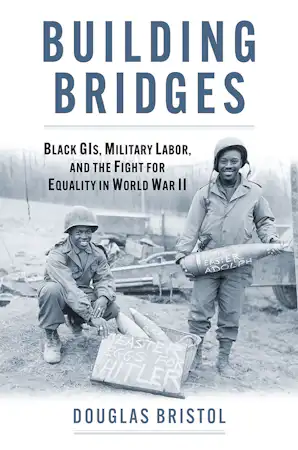
More than 80 percent of Black GIs in World War II served behind the front lines. At the beginning of the war, segregation policies maintained physical separation of Black and White GIs and only allowed Black soldiers to do simple, menial work, maintaining a false sense of racial inferiority. But the mechanization of armed forces during World War II demanded more skilled laborers behind the front lines. The Army Service Forces, created in March 1942, turned to Black GIs to solve the serious manpower shortage and trained them for jobs previously done only by White GIs. In Building Bridges, author Douglas Bristol tells the story of how military necessity led to unprecedented changes in the employment of Black troops. These changes had unanticipated consequences. American military leaders adopted a new racial discourse that emphasized the rights and potential of Black GIs. The new opportunities also exposed racial discrimination, giving Black GIs and their allies more leverage to demand better treatment.
Black GIs built bridges, roads, and runways. They repaired engines and radios. They transported bombs, bullets, food, gasoline, and water to hard-pressed soldiers on the front lines. Their numbers, skills, and necessity only grew as the war continued. By the end of the World War II, Black GIs had cracked the glass ceiling in the racialized military hierarchy behind the front lines and became indispensable to keeping the American war machine running around the globe.Introduction: War as Labor
1. Separate but Equal? This Mobilization of Black Men before Pearl Harbor
2. The Opportunity Gap: Black GIs and Black Civilians in the United States
3. The “Conservative Revolution”: Transforming Roles for Black GIs in the Army Service Forces
4. Multiple New Roles for Black GIs: The Caribbean Africa, and Middle East
5. Black GIs Become a Critical Lifeline for Allies: Transforming Logistics and Supply in Asia
6. Ending the Distinction between “White Jobs” vesus “Black Jobs”: The Pacific Theater
7. Participating in the Army and in Civilian Life: The European Theater
Conclusion: Transnational Comparisons of Military Workplaces
Notes
Selected Bibliography
Index
The previously overlooked story of how the labor of Black GIs helped win the war and advanced racial integration in the US armed forces.
Douglas Tirola, Robert Greene
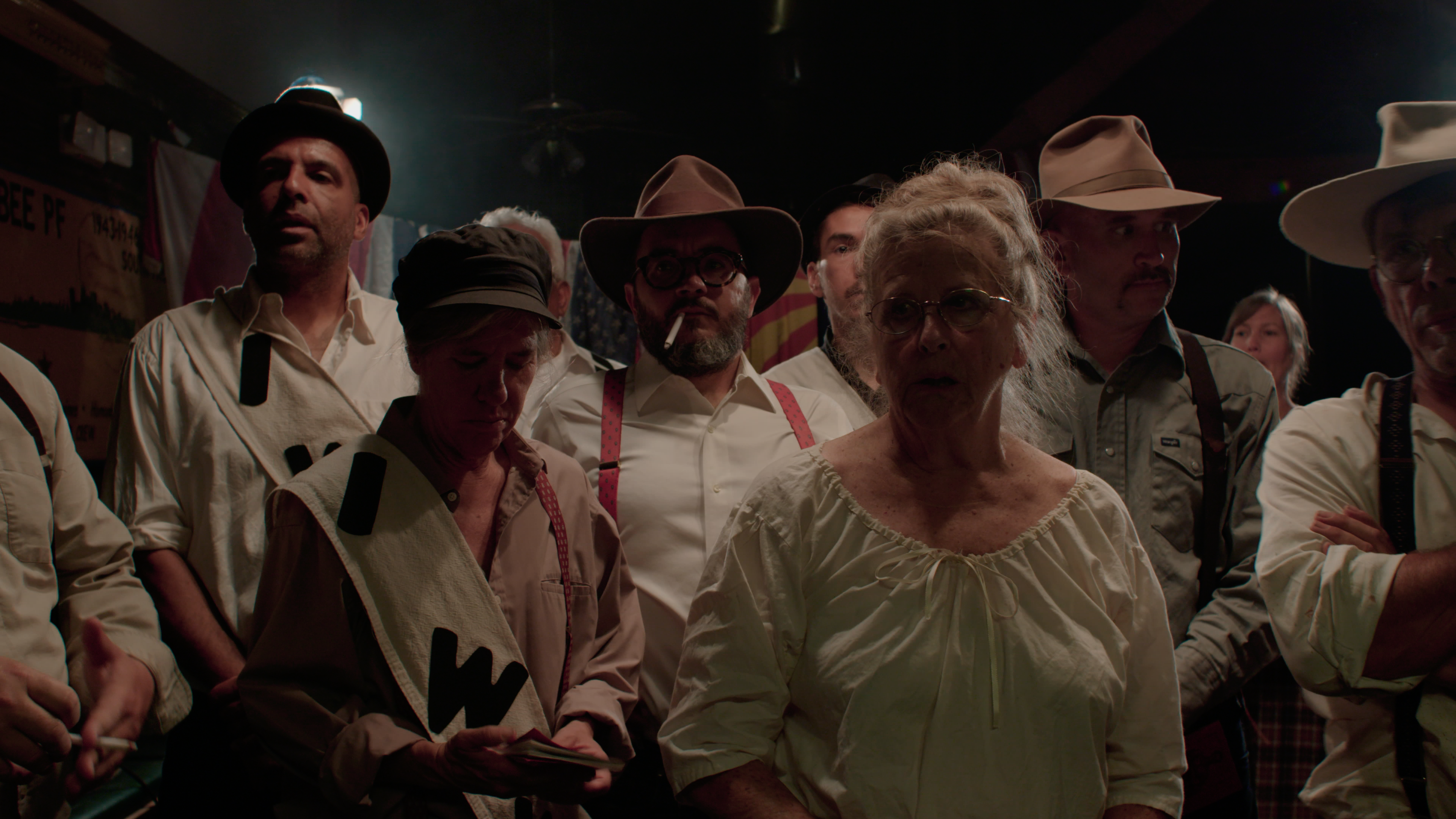
Radically combining documentary and narrative elements, Bisbee '17 follows several members of the close-knit community in Bisbee, Arizona, a former mining town, as they commemorate the 100th anniversary of the Bisbee Deportation, when 1,200 immigrant miners were violently taken from their homes by a deputized force, shipped to the desert on cattle cars and left to die. Official Selection, 2018 Sundance Film Festival. For those who care about the actual history of the strike and its demands, this needs supplementation because it gets much wrong. But as a conversation about memory and strategies of public history, it's a great example.
follows several members of the close-knit community in Bisbee, Arizona, a former mining town, as they commemorate the 100th anniversary of the Bisbee Deportation, when 1,200 immigrant miners were violently taken from their homes by a deputized force,
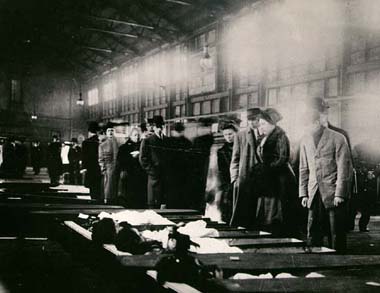
Douglass O. Linder, Famous Trials
UMKC Professor Douglass O. Linder's Famous Trials account of the court proceedings, containing an extensive essay and numerous visuals. Sections include
The Triangle Shirtwaist Factory Fire Trial: An Account
The Triangle Shirtwaist Fire Trial: A Chronology
The Triangle Shirtwaist Fire Trial: Selected Maps
Preliminary Report of the New York Factory Investigating Commission, 1912
The Triangle Shirtwaist Fire Trial: Building and Safety Laws
Key Testimony Before the Fire Investigating Commission Concerning the Triangle Shirtwaist Factory Fire
New York Times Accounts of Fire, Investigation, and Trial
List of Victims of the Triangle Shirtwaist Factory Fire
Excerpts from Trial Testimony in the Triangle Shirtwaist Fire Trial
Summations in the Triangle Shirtwaist Fire Trial
The Judge's Instructions in the Triangle Shirtwaist Fire Trial
The Triangle Shirtwaist Fire Trial: Selected Images
Triangle Shirtwaist Factory Fire Trial (1911): Selected Links
Famous Trials account of the court proceedings, containing an extensive essay and numerous visuals.
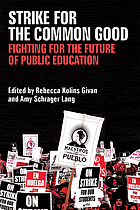
Dr Rebecca Kolins Givan, Amy Schrager Lang
Recent teacher walkouts affirm public education as a crucial public benefit and understand the rampant disinvestment in public education not simply as a local issue affecting teacher paychecks but also as a danger to communities and to democracy. In February 2018, 35,000 public school educators and staff walked off the job in West Virginia. More than 100,000 teachers in other states--both right-to-work states, like West Virginia, and those with a unionized workforce--followed them over the next year. From Arizona, Kentucky, and Oklahoma to Colorado and California, teachers announced to state legislators that not only their abysmal wages but the deplorable conditions of their work and the increasingly straitened circumstances of public education were unacceptable"-- Provided by publisher
A book discussing the 2018 teachers' strike waves with historical context

Dr. James Leloudis, Dr. Kathryn Walbert
Resources used for the book, Like A Family, including teaching module. https://www.ibiblio.org/sohp/laf/protestteaching.htmlTextile mills built the New South. Beginning in the 1880s, as the South emerged from the wreckage of the Civil War, business and professional men tied their hopes for prosperity to the whirring of spindles and the beating of looms. Agriculture continued to dominate the southern economy until well into the twentieth century. But in the Piedmont, a region of gentle hills and rushing rivers that stretches from southern Virginia through the central Carolinas and into northern Georgia and Alabama, a new society rapidly took shape. By the mid 1920s this land of farms and farmers had been crisscrossed by railroad tracks and dotted with mill villages, and the Piedmont had eclipsed New England as the world's leading producer of yarn and cloth. World War I marked a turning point in this regional transformation, setting the stage for two decades of modernization and rebellion that culminated in the General Textile Strike of 1934. In the aftermath of that conflict, manufacturers began to abandon the mill village system, and a distinctive form of working-class community gradually disappeared. Through the words of Piedmont millhands like Hoyle McCorkle and Nell Sigmon, Like a Family tells the story of the making and unmaking of this cotton mill world.
A website based on the acclaimed book Like A Family that includes some primary documents, oral histories, teaching ideas, and photos of the Piedmont mill world from the late-nineteenth century through the 1930s.
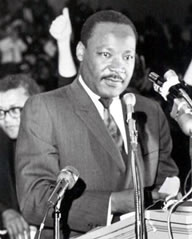
Dr. Martin Luther King, Jr.
Dr. Martin Luther King, Jr. delivered this speech in support of the striking sanitation workers at Mason Temple in Memphis, TN on April 3, 1968 — the day before he was assassinated. License to reproduce this speech granted by Intellectual Properties Management, 1579-F Monroe Drive, Suite 235, Atlanta, Georgia 30324, as manager for the King Estate. Write to IPM re: copyright permission for use of words and images of Martin Luther King, Jr.
An article remembering Dr. Martin Luther King, Jr.'s "Mountaintop Speech" in 1968.
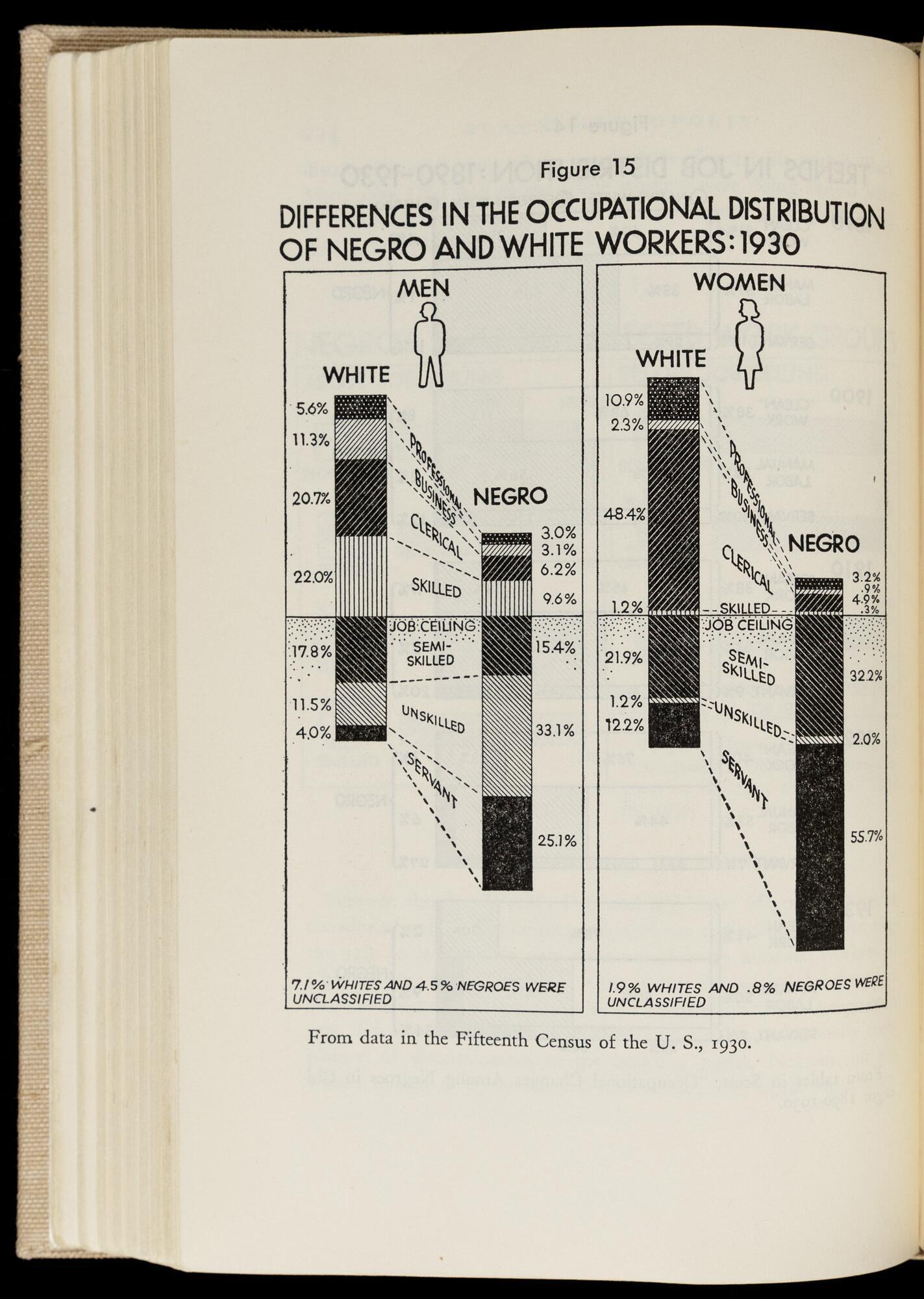
Dr. Michael Hines, Alexandrea Henry
Middle school lesson plan on Black Labor and theh Great Migration within Illinois state standards.
In this lesson, students will engage with a variety of sources, which include charts, graphs, pamphlets, and interview responses from a large study to analyze the relationship between the Great Migration and the experiences of Black workers. By the end of this lesson, students will analyze these sources to evaluate whether the north was a “Promised Land” for Black migrants.
Uses
The poem “The Great Migration” (high-resolution version)
“The Pullman Porter” pamphlet (high-resolution version)
A. Philip Randolph letter (high-resolution version)
Charts and interviews from The Black Metropolis (high-resolution versions)
Source analysis and reflection handouts
Optional: vocabulary list
A lesson plans cued to standards for middle school students using documents and chats.

Dr. Pauli Murray, History Matters
During World War II, a number of states passed legislation to combat salary inequities suffered by female workers. Many unions also adopted standards to insure that female employees received the same salaries as males who performed similar jobs. The Equal Pay Act of 1963, the first Federal legislation guaranteeing equal pay for equal work, prohibited firms engaged in interstate commerce from paying workers according to wage rates determined by sex. It did not, however, prevent companies from hiring only men for higher paying jobs. Despite the fact that Title VII of the landmark Civil Rights Act of 1964 further prevented sex discrimination in employment, African-American women as a class remained “at the bottom of the economic totem pole” because of “their dual victimization by race and sex-based discrimination,” in the words of Dr. Pauli Murray, whose testimony to Congress appears below. Dr. Murray, an African-American professor of American studies specializing in law and social change expressed concern that despite previous antidiscrimination legislation, “we are holding on very definitely to the patriarchal aspect of white America.” Murray advocated the position that all antidiscrimination legislation should explicitly prohibit sex descrimination.
Dr. Pauli Murray's 1970 testimony to Congress on the status of Black women in the workplace.
Dr. Rachel Boyle
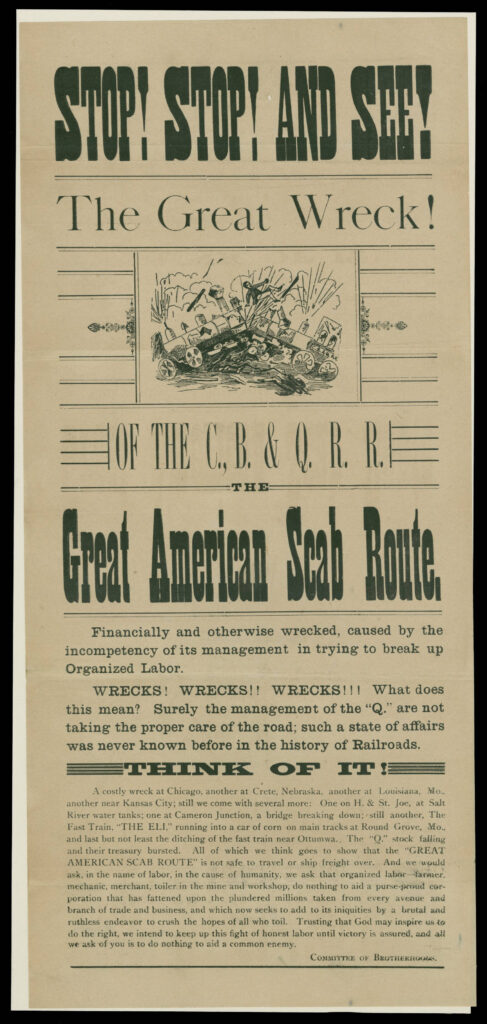
“Riots and Protest: Chicago’s Legacy of Conflict” explores Chicago’s past through one of its defining characteristics: conflict. This Digital Collection for the Classroom examines five different eras of conflict spanning more than 150 years of the city’s history.
Includes unit with guiding questions on Ethnic and Labor Conflict in Nineteenth-Century Chicago
Radical Protest in the Early Twentieth Century, which focuses on IWW, Industrial Workers of the World Founding
A classroom-oriented digital collection created by the Newberry Library, with an emphasis on Chicago's history of conflict.

Dr. Tikia K. Hamilton
In this lesson students will examine artwork, poetry, letters, and photographs in order
to determine the “push and pull” factors associated with the Great Migration of black
Americans in the early 20th century. Part of DIgital Collections for the Classroom
A lesson plan for using the history of the Great Migration (1910-1970) in the classroom.
Duke University Libraries
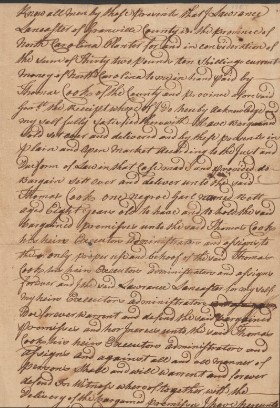
Collection of manuscript items relating to American slavery assembled over a number of decades by the staff of the David M. Rubenstein Rare Book and Manuscript Library at Duke University.
Collection contains items documenting the sales, escapes, and emancipations of enslaved people from colonial times through the Civil War, and to a lesser extent, materials relating to slavery in the United States dating from the post-emancipation period.
Items documenting the sales, escapes, and emancipations of enslaved people from colonial times through the Civil War, and to a lesser extent, materials relating to slavery in the United States dating from the post-emancipation period.

Duke University’s Center for Documentary Studies
The Behind the Veil Oral History Project was undertaken by Duke University’s Center for Documentary Studies from 1993 to 1995. Funded by the National Endowment for the Humanities, the primary purpose of this documentary project was to record and preserve the living memory of African American life during the age of legal segregation in the American South, from the 1890s to the 1950s. Over the span of three summers, teams of researchers conducted oral history interviews with more than one thousand elderly black southerners who remembered that period of legal segregation. The tapes and selected transcripts of the interviews in this collection capture the vivid personalities, poignant personal stories, and behind-the-scenes decision-making that bring to life the African American experience in the South during the late-19th to mid-20th century. It is the largest single collection of Jim Crow oral histories in the world.
Over three hundred of the interviews in the digital collection were conducted with North Carolina residents. The Charlotte and Enfield regions of North Carolina are especially represented in the collection; there are also many recordings from the Durham, James City, New Bern and Wilmington regions. The North Carolina recordings were all digitized as part of the Triangle Research Libraries Network’s project “Content, Context and Capacity: A Collaborative Large-Scale Digitization Project on the Long Civil Rights Movement in North Carolina.” Other collections from that project are also accessible as Duke digital collections.
The original interviews were recorded on audio-cassettes and the entire collection is housed in the John Hope Franklin Research Center for African and African American History and Culture, in the David M. Rubenstein Rare Book & Manuscript Library at Duke University. See Inventory of the Behind the Veil: Documenting African American Life in the Jim Crow South Records, 1940-1997 and undated (bulk 1993-1997).
A selection of recorded oral history interviews chronicling African-American life during the age of legal segregation in the American South, from the 1890s to the 1950s.
Dukesang Wong
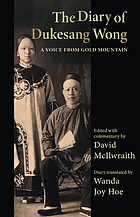
Here is the only known first-person account from a Chinese worker on the famously treacherous parts of transcontinental railways that spanned the North American continent in the nineteenth century.
The story of those Chinese workers has been told before, but never in a voice from among their number, never in a voice that lived through the experience. Here is that missing voice, a voice that changes our understanding of the history it tells and that so many believed was lost forever. Dukesang Wong's written account of life working on the Canadian Pacific Railway, a Gold Mountain life, tells of the punishing work, the comradery, the sickness and starvation, the encounters with Indigenous Peoples, and the dark and shameful history of racism and exploitation that prevailed up and down the North American continent. The Diary of Dukesang Wong includes all the selected entries translated in the mid-1960s by his granddaughter, Wanda Joy Hoe, for an undergraduate sociology paper. Background history and explanations for the diary's unexplained references are provided by David McIlwraith, the book's editor, who also considers why the diarist's voice and other Chinese voices have been silenced for so long."-- Provided by publisher
the only known first-person account from a Chinese worker on the famously treacherous parts of transcontinental railways that spanned the North American continent in the nineteenth century.
Museum/Exhibits
Tours
Maps
Digital Projects
Organizations
Sites
Film/Video
Audio/Interview
Podcast/Program
Text/Document
Image
Graphs/Data
Timeline
Southwest
West
Midwest
Southeast
Northeast
Mexico
Canada
Global
Books
Teaching
Lectures
Digital Archives
Journals
Bibliographies
Topic Intro