


Collections
Library
Type
Region
Coverage:
-
Published:
-
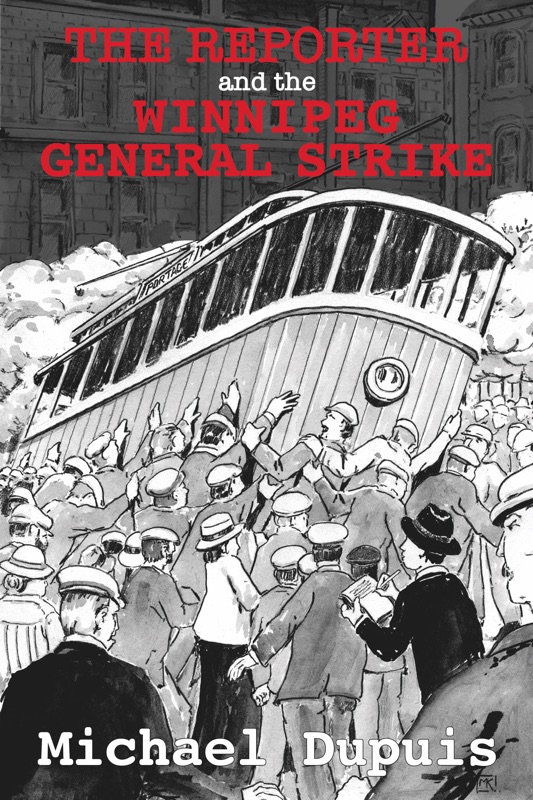
Dupuis Michael
In 2019, the Co-op Refinery Complex of the Federated Co-op. of Canada locked out its workers, represented by Unifor Local 594, after negotiations failed. Underlying the bargaining issues was CRC's use of the transition to a "low carbon" future as the justification for cutting wages, demanding concessions on work conditions and reducing the workers' pension plan. This book focuses on the lockout to understand the prospects for a "just transition" away from Canada's dependence on oil and gas; as well as important worker rights--the right to strike and picket; the role of government during strikes and lockouts; occupational health and safety; the need for labour journalism; the state of pensions in collective bargaining; and the state of co-operatives and co-operative values in Canada. But unlike UNIFOR National's calls for a just transition for fossil fuel workers, the CRC lockout provides a case study in the rollback of collective bargaining, worker rights, cooperative spirit and environmental justice. Solidarity between unions and community movements will be absolutely necessary to win a just transition--corporations and governments are poised to make a transition that will be detrimental to workers and communities.
the CRC lockout provides a case study in the rollback of collective bargaining, worker rights, cooperative spirit and environmental justice.
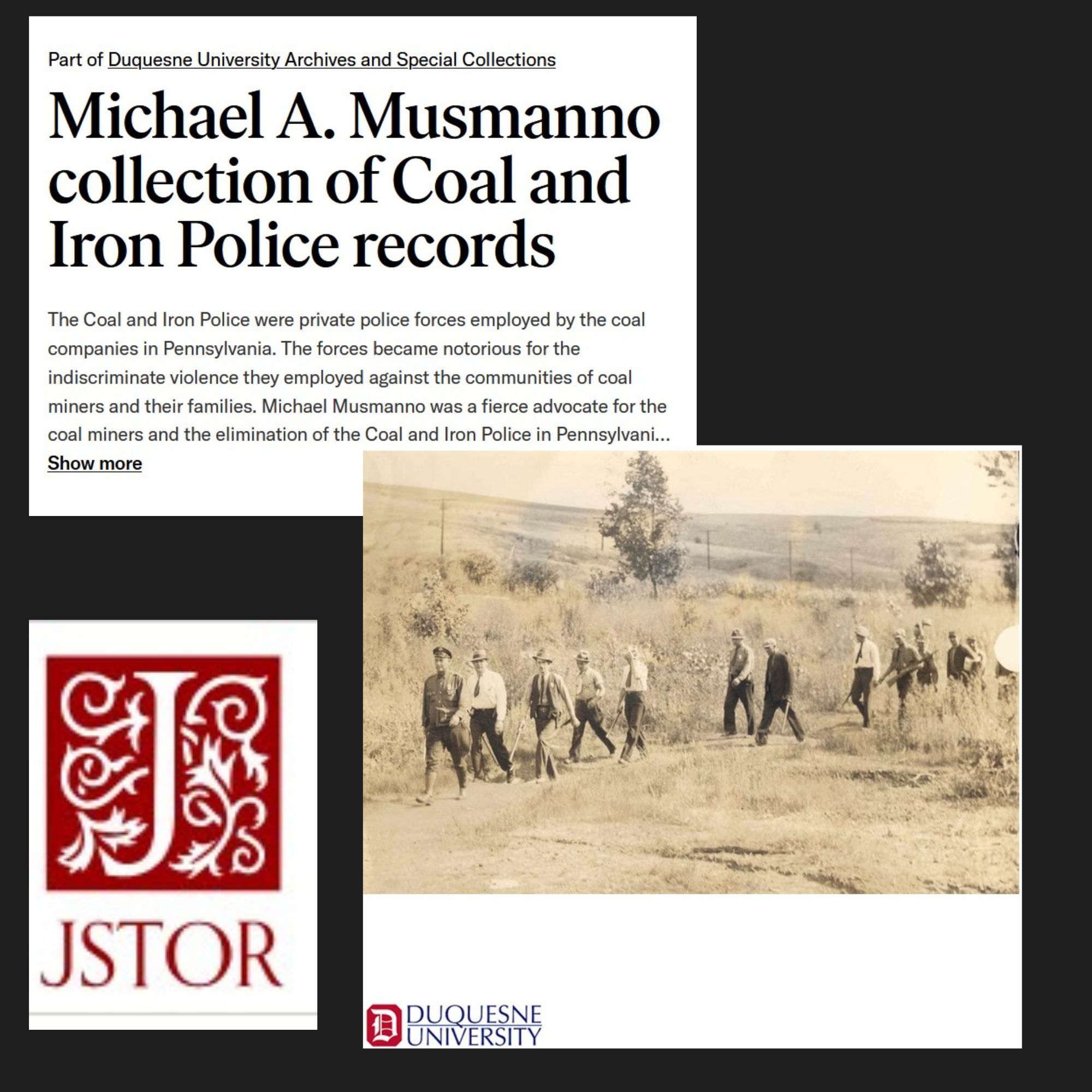
Duquesne University Archives, JSTOR
59 items. The Coal and Iron Police were private police forces employed by the coal companies in Pennsylvania. The forces became notorious for the indiscriminate violence they employed against the communities of coal miners and their families. Michael Musmanno was a fierce advocate for the coal miners and the elimination of the Coal and Iron Police in Pennsylvania. In 1929, mine worker John Barkowski was detained without cause and brutally beaten to death by members of the Coal and Iron Police. His death inspired outrage and motivated Musmanno who was then serving as a state legislator to draft a bill to abolish the private police forces. The bill was vetoed by Governor John Stuchell Fisher and Musmanno soon resigned from the legislature. Following his resignation, Musmanno remained a staunch advocate for coal miners and the dismantling of Coal and Iron Police forces. He wrote a story based on the events surrounding John Barkowski’s death which was later turned into the 1935 movie Black Fury. The Coal and Iron Police were officially dismantled in 1935, which some attribute to the success of Black Fury. In 1966, Musmanno released a novel of the same name based on his script for the movie. Materials in this collection reflect Musmanno’s activities fighting the Coal and Iron Police and his involvement with the production of the Black Fury movie. Individual items in the collection include correspondence, legal documents, speeches, and more.
A small digitized dollection of activist and author, Michael Musmanno, who fought for the abolition of privatized police forces
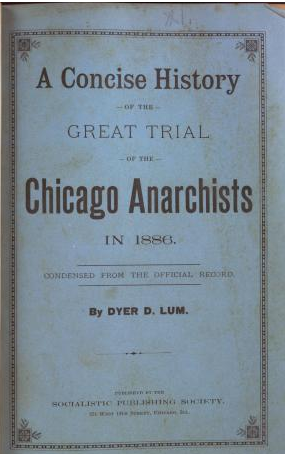
Dyer Lum
This document is accompanied by questions, so can be considered teaching activity
Original account of the trial of the Chicago Haymarket accused
E. F. Doree, History Matters
Farmers in the years before World War I faced thoroughly modern economic stresses and labor conflicts as the scale of their enterprises increased. By World War I, Midwestern and Great Plains farmers had come to rely on large pools of seasonal migrant labor, mostly unemployed urban workers from Chicago and other Midwestern cities, to harvest wheat or corn. Workers faced long hours and low wages, isolated in temporary camps without permanent homes or meeting places. The Industrial Workers of the World (IWW) union attempted to organize these “harvest stiffs.” The radical “Wobblies” argued that wheat farmers were businessmen in a protected industry who, thanks to wartime government price supports, reaped large profits and returned none of that wealth to those who actually harvested their crop. E. F. Doree, an IWW organizer, described in detail the difficult conditions migrants faced and mocked the idea of rural work as wholesome and benevolent with the famous joke that in the wheat states, the “eight-hour work day” prevailed—“eight hours in the forenoon, eight hours in the afternoon.”
IWW organizer E.F. Doree's description of the working and living conditions faced by migrant farmers working in the U.S. wheat industry during World War I.
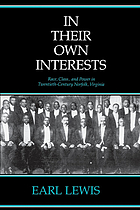
Earl Lewis
"Since the Civil War, African Americans have made great efforts to empower themselves. Focusing on Norfolk, Virginia, Earl Lewis shows how blacks have had to balance competing inclinations for consCIOus inaction and purposeful agitation as they sought to promote their own interests at home and in the workplace. In Their Own Interests presents a cross-section of southern urban blacks--the power-brokers and lesser-knowns, Garvey followers and communist enthusiasts--who came to live in Norfolk between the Civil War and the Civil Rights Movement. Lewis seeks to recreate the texture of African-American life by examining the lives of the people after they moved to the city--the jobs and assistance they secured, the houses, families, and institutions they built, the battles they waged, and the culture they shared. In Their Own Interests moves African-American urban and social history beyond the current intellectual crossroads. Drawing on a variety of sources, Lewis tells the interconnected story of race, class, and power in twentieth-century Norfolk. His study has far-reaching implications and should be of wide interest."--Publisher's description
presents a cross-section of southern urban blacks who came to live in Norfolk between the Civil War and the Civil Rights Movement.
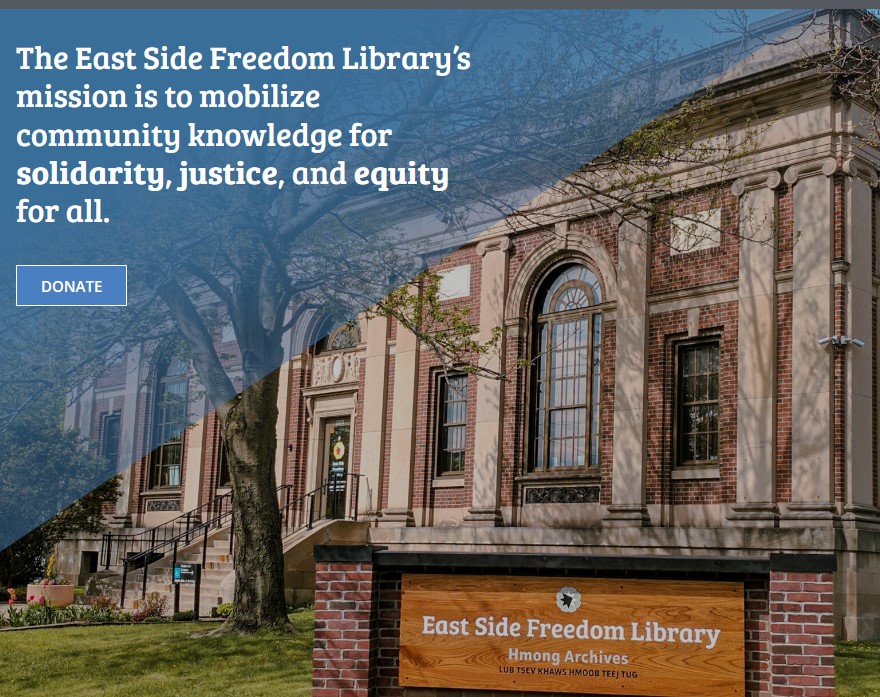
East Side Freedom Library
The East Side Freedom Library (ESFL) in Saint Paul’s Payne-Phalen neighborhood has amassed a collection of over 35,000 items centered on labor, immigration, and social justice histories. Beyond archiving, ESFL fosters community connections and education through storytelling, exhibits, performances, and public programs, exploring themes of arts and humanities.
More than a repository, ESFL is a hub for dialogue, community-building, and collaboration. It brings together individuals and organizations to address shared concerns, promoting leadership and advancing a movement for equity and justice. The library serves as a space where marginalized voices are amplified, bridging local and global conversations. Through partnerships, ESFL connects artists and community leaders to spark empathy, understanding, and solidarity, strengthening the commitment to social change.
The East Side Freedom Library’s mission is to mobilize community knowledge for solidarity, justice, and equity for all

Eberly Family Special Collections Library, Pennsylvania State University
This collection consists primarily of a special report by the Pinkerton National Detective Agency from its investigation of the Scranton, Pennsylvania general strike of 1877. In response to increasing labor unrest in the post-Civil War period, several corporations in the mining, railroad, and steel industries hired the Pinkerton agency, which Allan Pinkerton had founded in 1850, to surveil, infiltrate, and undermine labor organizations and break strikes. In 1877, in the midst of a crippling national depression that saw significant wage and price deflation, railway workers initiated a nationwide strike. Laborers in several related industries, including mining, also struck in solidarity with the railroad workers, resulting in the first nationwide strike in the country’s history.
In Scranton, Pennsylvania a general strike began on July 23. On August 1, a deadly confrontation erupted between strikers, townspeople, and the Scranton militia. Sporadic violence continued into the Fall. In response, the Pinkerton Agency used paid informants to infiltrate the Molly Maguires, a secretive Irish-American labor organization, and the Ancient Order of Hiberians, an Irish-American fraternal and benevolent organization that formed in New York City in 1836 and subsequently founded chapters, or “divisions”, in other states. The Molly Maguires operated independently within the A.O.H., though the latter eventually disavowed any connection with the so-called Mollies. Business owners and Scranton’s political leaders believed these organizations led the strike efforts and were responsible for the violence. The Pinkerton investigation ultimately led to the arrest and execution by hanging of 19 Mollies. Ten of them were hanged on a single day, June 21, 1877, in Pottsville, Pennsylvania.
Pinkerton reports 1877
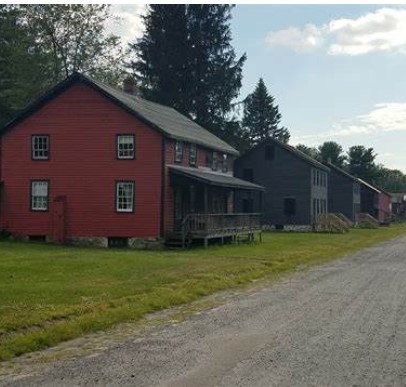
Eckley Miners Village
Founded in 1854, Eckley is an example of a planned nineteenth century coal mining town. It is a community, or coal “patch town,” which provided mining families with the basic necessities such as housing and medical care, as well as basic amenities like a store, a school and churches. Companies often designed and constructed industrial communities to house their employees in close proximity to the collieries, or mining operations, for which they worked. Such mining towns were built to attract other mining families to live and work among the coal fields of northeastern Pennsylvania. The company greatly influenced the lives of its village residents and each family member faced challenges every day. The way in which they faced these challenges is the history of the region that is studied, preserved and interpreted. Today, Eckley is a museum representing the lives of the immigrant anthracite coal miners and their families. Come for a visit and experience life in northeastern Pennsylvania coal patch towns during the time when coal was an essential industrial fuel. Visit the Visitors’ Center exhibitions, take a guided tour, plan a trip around a living history event, and learn more about housing and daily lives within the village. Museum is open on a limited schedule. Check website
A museum covering the history of a small coal mining town and its predominantly immigrant population

Economic Policy Institute
A number of factors—historical, economic, demographic, and political—have shaped patterns of racial disparity and race relations in the Midwest. Of the eight most segregated cities in 2010’s Census data, six (Milwaukee, Chicago, Detroit, Cleveland, St. Louis, and Cincinnati) are in the Midwest. And despite some pockets of Latino growth in the last generation, fully 91.4% of midwesterners identify as white alone or black alone. This report looks at racial disparities in education, employment, wages, income, poverty, homeownership, incarceration, access to health care, wealth, and voting access. It includes a comprehensive slate of policy recommendations to achieve racial equity in the Midwest including investing in public education, raising wages for all workers, addressing labor market discrimination, adopting paid family leave and low-cost child care, and improving our social safety net.
This report is a joint project of Policy Matters Ohio, the Iowa Policy Project, COWS, and EARN.
A report by historian Colin Gordon for the Economic Policy Institute, focusing on the relationship between economic inequality and shaping factors like racial disparity and race relations.
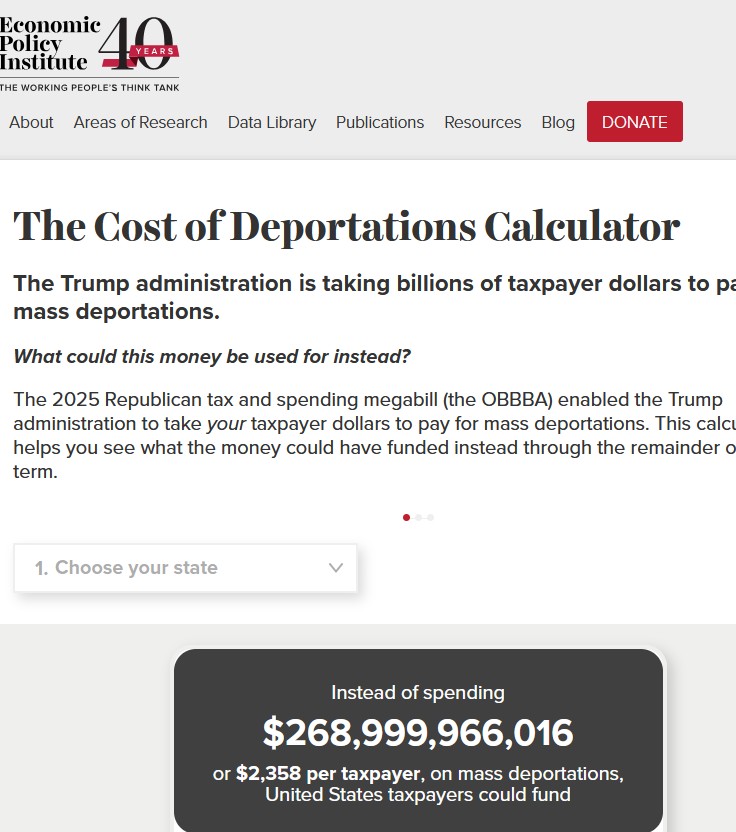
Economic Policy Institute
The Trump administration is taking billions of taxpayer dollars to pay for mass deportations.
What could this money be used for instead?
The 2025 Republican tax and spending megabill (the OBBBA) enabled the Trump administration to take your taxpayer dollars to pay for mass deportations. This calculator helps you see what the money could have funded instead through the remainder of Trump’s term.
The 2025 Republican tax and spending megabill (the OBBBA) enabled the Trump administration to take your taxpayer dollars to pay for mass deportations. This calculator helps you see what the money could have funded instead through the remainder of Trump’s term.

Editor
This pathbreaking volume explores the history of occupational safety and health in America from the late nineteenth century to the 1950s. Thirteen essays tell a story of the exploitation of workers as measured by shortened lives, high disease rates, and painful injuries. Scholars from a variety of disciplines examine the history of protection and compensation for injured workers, state and federal involvement, controversies over the dangers of lead, and the three emblematic industrial diseases of this century―radium poisoning, asbestos-related diseases, and brown lung.
explores the history of occupational safety and health in America from the late nineteenth century to the 1950s.
Edna Y. Hargett, James Leloudis History Matters
The southern textile mills, which had expanded dramatically during World War I, faced serious decline in the 1920s. New tariffs, the growth of textile manufacturing in other parts of the world and the shorter skirt lengths of the 1920s, which required less fabric, exacerbated the problems brought on by wartime overexpansion. Textile manufacturers responded by trying to cut wages and increase workloads. Nevertheless, textile workers often look back at the 1920s with genuine affection and nostalgia. In this 1979 interview with historian James Leloudis, Edna Y. Hargett, a former textile worker, described the closeness of the mill village and the “love offering”: a collection for sick workers to replace lost wages in an era when there was no sick leave. Edna Y. Hargett/James Leloudis
Edna Y. Hargett, a former textile worker, described the closeness of the mill village
Edsitement
Site appears to have been taken down by Trump administration.Will reserve this in case it resumes. About a century has passed since the events at the center of this lesson—the Haymarket Affair, the Homestead Strike, and the Triangle Shirtwaist Factory Fire. For some people in our nation, these incidents illustrated the unfair conditions faced by workers as the United States assumed its position as the most highly industrialized nation in the world. For others, they demonstrated the difficulty of managing industries. Such disagreements continue to this day. Where do we draw the line between acceptable business practices and unacceptable working conditions? Can an industrial—and indeed a post-industrial—economy succeed without taking advantage of those who do the work?
Guiding questions:
What were working conditions like during the Age of Industrialization?
How did workers respond to these conditions?
Where do we draw the line between acceptable business practices and unacceptable working conditions?
To what extent do issues and arguments regarding early industrialization remain relevant today?
Note: This lesson may be taught either as a stand-alone lesson or as a complement to another EDSITEment lesson The Industrial Age in America: Robber Barons and Captains of Industry.
Learning Objectives
Evaluate the actions taken by the managers and workers involved in the incidents studied.
Analyze the working conditions that led to the Haymarket Affair, the Homestead Strike, and the Triangle Shirtwaist Factory Fire.
Evaluate the significance of the featured events to the labor movement, the industrialists involved, and the attitude of the American people toward working conditions in the United States.
Construct an argument regarding working conditions today using evidence drawn from primary and secondary source materials.
Lesson Plan Details
Content Standards
NCSS.D1.2.9-12. Explain points of agreement and disagreement experts have about interpretations and applications of disciplinary concepts and ideas associated with a compelling question.
NCSS.D2.His.1.9-12. Evaluate how historical events and developments were shaped by unique circumstances of time and place as well as broader historical contexts.
NCSS.D2.His.2.9-12. Analyze change and continuity in historical eras.
NCSS.D2.His.3.9-12. Use questions generated about individuals and groups to assess how the significance of their actions changes over time and is shaped by the historical context.
NCSS.D2.His.4.9-12. Analyze complex and interacting factors that influenced the perspectives of people during different historical eras.
NCSS.D2.His.5.9-12. Analyze how historical contexts shaped and continue to shape people’s perspectives.
NCSS.D2.His.12.9-12. Use questions generated about multiple historical sources to pursue further inquiry and investigate additional sources.
NCSS.D2.His.14.9-12. Analyze multiple and complex causes and effects of events in the past.
NCSS.D2.His.15.9-12. Distinguish between long-term causes and triggering events in developing a historical argument.
NCSS.D2.His.16.9-12. Integrate evidence from multiple relevant historical sources and interpretations into a reasoned argument about the past.
Preparation
Review the lesson plan. Locate and bookmark suggested materials and other useful websites. Download and print out selected documents and duplicate copies as necessary for student viewing.
Download the Labor Events Chart, available as a PDF. Print out and make an appropriate number of copies of any handouts you plan to use in class.
For concise background information on the featured labor actions, consult the following resources:
General Summary of Major Events (1876-1925): Timeline: Events of 1876-1999 on the EDSITEment resource Learner.org
Haymarket Affair (from The Dramas of Haymarket on the website of The Chicago Historical Society, the source for the material on the EDSITEment resource American Memory and a direct link from the home page of Chicago Anarchists on Trial):
Haymarket Affair Chronology
Haymarket Affair Narrative
The Homestead Strike (from Andrew Carnegie: The Richest Man in the World on the PBS website The American Experience, a link from the EDSITEment resource Internet Public Library):
Strike at Homestead Mill
The Homestead Strike
The Triangle Shirtwaist Factory Fire: Triangle Shirtwaist Fire from Between a Rock and a Hard Place: A History of American Sweatshops, 1820 to the Present on the Smithsonian National Museum of American History, a link from EDSITEment resource American Studies at the University of Virginia
Lesson Activities
Activity 1. Background on the Industrial Age
If necessary, review with your class the historical context in which the labor actions at the center of this lesson occurred. Use your class text or other classroom resources, or refer to either or both of the following interactive timelines available on the EDSITEment-reviewed website Learner.org:
Events of 1876–1999 (but focus on 1876–1925)
Interactive Timeline: Inventions 1868–1898
Read with—or to—your class Riis the Reformer and The Gilded Age on the PBS website Big Apple History and, if possible, share some of the images and the video. Discuss the income and lifestyle disparities illustrated by these two articles. What were some of the indications of poverty Riis noted? What specifics does "The Gilded Age" article offer as evidence of the wealth of the industrialists? As they continue to learn more about the Age of Industrialization, ask students to think about the following:
Was the income disparity noted in the two articles the norm? Is great income disparity part of the process when a nation is undergoing rapid economic growth?
Is there sufficient evidence to dispel the notion that "the poor were lazy and deserved their fate?"
Did the enormous wealth earned by the "captains of industry" eventually benefit everyone through their investments in new factories and their charitable donations?
Were workers better off in the Industrial Age than they had been before? Did the benefits of industrialization eventually improve the lot of workers? Did benefits come to workers through the actions of the industrialists or through the efforts of the workers themselves or both?
Though not the specific focus of this lesson, students might also have an interest in viewing archival photos of children at work, an unregulated practice before 1906--and one that was not completely outlawed until 1938. The photographs below offer an opportunity for students to consider how the growth of documentary photography affected reform efforts at the end of the nineteenth and beginning of the twentieth century. One of the greatest crusaders against child labor was Lewis Hine. Just as Riis had used compelling and sometimes shocking photographs to provoke a public response to the conditions of tenement dwellers, Hine used mages to make a vivid case against the use of child labor:
"The National Child Labor Committee campaigned for tougher state and federal laws against the abuses of industrial child labor, and Lewis Hine was its greatest publicist. A teacher who left his profession to work full-time as investigator for the committee, Hine prepared a number of the Committee's reports and took some of the most powerful images in the history of documentary photography"
—From American Treasures of the Library of Congress, a link from the EDSITEment resource American Memory
In his report "Child Labor in the Cotton Mills of Mississippi" (1911), Hines noted that he had taken pictures of "most of the youngest workers," as well as older workers under sixteen who worked 60 hours a week instead of 63 1/2, "reduced hours" compared to adults. Hine's colleague, Edward F. Brown, in his report "Child Labor in the Gulf Coast" (1913), identified 26 children from ages 7 to 14 (including, for example, six 10-year-olds and five 12-year-olds) working at one oyster factory at 4:45 a.m.
Share with the class some of Hine's photos, including the following, available on the EDSITEment reviewed website American Memory:
Shrimp and Oyster Worker 1911
Workers at a Glass Factory
How old are the workers in the pictures? Do the students believe they were able to put in a good day's work? Were they likely paid a fair wage? Why do you think these children and young people were working or allowed to work?
Now share with the class both Hine's and Brown's comments regarding these documentary photos, and consider how Hine and Brown might have answered the questions above.
Child Labor in the Cotton Mills of Mississippi
Child Labor in the Gulf Coast
After they have read and discussed these comments, ask students to think about their earlier response to Hine's photographs and to consider the following questions: How might Brown and Hine have responded to the same pictures? Why might their responses differ from yours? How does the effect of Hine's photographs compare with that of Riis the Reformer's?
Activity 2. Workers Respond
Divide the class into three student groups (or six, if you'd like each labor incident to be covered by two groups). Assign one of the historical incidents below to each group. Distribute to the groups the "Labor Events Chart" on page 1 of the PDF. Using the following resources and/or any other approved sources available in your classroom or online, each group should fill in the chart for their assigned individual.
Note: The Haymarket Affair and the Homestead Strike were violent and the language from both sides was inflammatory. Teachers should review all websites below before sharing with students.)
Haymarket Affair, 1886–87 (NOTE: The specific documents listed below are particularly useful but are by no means the only useful documents.)
From the EDSITEment resource American Memory
Chicago Anarchists on Trial (If desired, share this definition of an anarchist with the students: An anarchist is someone who rejects completely the need for a government and wants to abolish it.)
Proclamation Granting Eight-Hour Day for federal workers, 1869 (Includes text. Click on the image for larger versions.)
From The Dramas of Haymarket on The Chicago Historical Society, a link from the EDSITEment resource American Memory
Haymarket Affair Chronology
Haymarket Affair Narrative
Highlights of the Collection
Broadside: Revenge!
Haymarket Affair Digital Collection: Table of Contents
Act I: Subterranean Fire (The last few paragraphs starting with the words, "On May 4, exactly a year…")
Who Threw The Bomb?
From Haymarket Riot (Chicago Public Library), a link from the EDSITEment resource American Memory
Another Summary of Events
Haymarket Photo Library (NOTE: "Photo" is a misnomer here. This page contains digitized images of various graphics related to the Haymarket Affair such as posters and editorial cartoons.)
From The Haymarket Tragedy, a link from the EDSITEment resource American Memory
May Day Remembered, a recent poem commemorating the May Day event
Narrative About the Eventual Pardon
From Haymarket Trial on Famous Trials, a link from the EDSITEment resource Internet Public Library
Timeline of the American Labor Movement
Summary of Trial (Includes a brief discussion of anarchism.)
Homestead Strike, 1892 (NOTE: The specific documents listed below are particularly useful but are by no means the only useful documents.)
"It shall be the rule for the workman to be Partner with Capital, the man of affairs giving his business experience, the working man in the mill his mechanical skill, to the company, both owners of the shares and so far equally interested in the success of their joint efforts."
—Andrew Carnegie
From Andrew Carnegie, the Richest Man in the World on The American Experience, a link from the EDSITEment resource Internet Public Library
The Steel Business (Discusses what a steel mill is like.)
Strike at Homestead Mill
Homestead Letters
The Homestead Strike
From the EDSITEment resource History Matters
The Musical Saga of Homestead "Workers sang during strikes not only to state their beliefs and goals, but because singing helped bind workers together. The Homestead strike of 1892 even had its own Homestead Strike Songster, and the story of the strike can be traced in the lyrics of the following four songs."
"I Will Kill Frick": Emma Goldman Recounts the Attempt to Assassinate the Chairman of the Carnegie Steel Company During the: Homestead Strike in 1892 "Known for his uncompromising and cruel tactics, Frick became an obvious target for labor activists looking to make a statement during the protracted strike."
Frick's Fracas: Henry Frick Makes His Case "During the 1892 strike at the Homestead Steel Works, plant manager Henry Clay Frick attempted to defeat the strikers forcibly by hiring three hundred armed agents of the notorious Pinkerton Detective Agency. The strikers fought back, and, after casualties and deaths on both sides, the Pinkertons surrendered. In the aftermath of the Pinkerton debacle, Frick spoke with a reporter for the Pittsburgh Post. He laid out his implacable opposition to dealing with the union, his belief that the Pennsylvania governor should send in troops, and his goal of reducing wages at the plant, the central issue in the conflict. Frick argued that the Homestead owners were not allowed to reap the fruits of their investment because of workers' inordinately high wage scales. The union, on the other hand, claimed that the cost of producing steel at Homestead was well below the industry standard, in large measure because the Homestead workers had cooperated in the recent mechanization of the plant."
Sweatshops and the Triangle Shirtwaist Fire, 1911 (NOTE: The specific documents listed below are particularly useful but are by no means the only useful documents.)
From Between a Rock and a Hard Place: A History of American Sweatshops, 1820 to the Present on the Smithsonian National Museum of American History, a link from the EDSITEment resource American Studies at the University of Virginia
Tenement Sweatshops
Triangle Shirtwaist Fire
From The Triangle Factory Fire, a link from the EDSITEment resource Women and Social Movements
Introduction
Sweatshops and Strikes Before 1911 (Gives background information.)
My First Job (Tells about working conditions.)
New York Times Account of the Fire (March 26, 1911)
Stories of Survivors (from the New York Times, March 26, 1911)
Triangle Fire on the EDSITEment resource New Deal Network
Obituary of the Last Survivor of the Triangle Shirtwaist Fire on National Public Radio, a link from the EDSITEment resource Internet Public Library
When the groups are finished with their research, have each present its findings to the class. Do students think workers were justified in their actions? Were owners/managers? What lessons can be gleaned from the situations studied?
Activity 3. Sweatshops Today
"Contrary to what you have heard, sweatshops in third-world countries are a good deal for the people who work in them. Why? Because work, other than slave labor, is an exchange. A worker chooses a particular job because she thinks herself better off in that job than at her next-best alternative. Most of us would regard a low-paying job in Nicaragua or Honduras as a lousy job. But we're not being asked to take those jobs. Those jobs are the best options those workers have, or else they would quit and work elsewhere… sweatshops are a normal step in economic development."
—From "The Case for Sweatshops" by David R. Henderson, Hoover Institution, a link from the Hoover Presidential Library, administered by the National Archives
"As part of the Clinton/Gore Administration's ongoing commitment to the improvement of working standards around the world, the Departments of Treasury and State will announce two new initiatives to protect workers, children, and families from abusive and unfair labor practices. These two new initiatives represent important milestones in the President's leadership on anti-child labor and sweatshop efforts …"
—The White House, January 16th, 2001, housed at the National Archives
Read with—or to—your class the essay The Case for Sweatshops, available via a link from the EDSITEment-reviewed website National Archives. Make sure the students understand the argument offered. Does that argument echo ideas that were stated during any of the labor controversies studied in Activity 2.
Share with your class the following two documents available through the EDSITEment-reviewed CongressLink: the Washington Post article about sweatshops on U.S. territory and the companies that use them (one of many informative documents from U.S. Congressman George Miller's Information on Sweatshops); and the Garment Enforcement Report October 1995 – March 1996 from the Department of Labor. Students can also read Is It Getting Better? on the Smithsonian National Museum of American History, a link from the EDSITEment resource American Studies at the University of Virginia. Do these documents echo any ideas that were stated during the labor controversies studied in Activity 2.
Would students recommend that sweatshops be abolished or supported? Have individuals or student groups compose position papers, stating
Assessment
Socratic Seminar
Organized around the compelling question Was the industrial revolution a blessing or a curse?, have students analyze the primary sources included within this lesson and organize their notes before participating in a discussion about the ongoing process that is industrialization. Discussion questions can include:
What were short and long term benefits and problems that emerged during the early period of industrialization in the U.S?
What is the proper role of government when regulating working conditions?
What is needed to ensure worker's rights and an owner's right to make a profit coexist?
How did men, women, and children differently experience industrialization in the U.S?
What were the cultural and environmental ramifications of industrialization?
Who benefited economically as a result of industrialization?
To what extent are issues present at the start of industrialization still relevant today?
Is the industrial revolution an event or a process?
Lesson Extensions
A lesson plan with many elements for the Gilded Age issues of labor and unionization
Edvige Giunta, Mary Anne Trasciatti
Candid and intimate accounts of the factory-worker tragedy that shaped American labor rights. On March 25, 1911, a fire broke out on the eighth floor of the Asch Building in Greenwich Village, New York. The top three floors housed the Triangle Waist Company, a factory where approximately 500 workers, mostly young immigrant women and girls, labored to produce fashionable cotton blouses, known as "waists." The fire killed 146 workers in a mere 15 minutes but pierced the perpetual conscience of citizens everywhere. The Asch Building had been considered a modern fireproof structure, but inadequate fire safety regulations left the workers inside unprotected. The tragedy of the fire, and the resulting movements for change, were pivotal in shaping workers' rights and unions. A powerful collection of diverse voices, Talking to the Girls: Intimate and Political Essays on the Triangle Fire brings together stories from writers, artists, activists, scholars, and family members of the Triangle workers. Nineteen contributors from across the globe speak of a singular event with remarkable impact. One hundred and eleven years after the tragic incident, Talking to the Girls articulates a story of contemporary global relevance and stands as an act of collective testimony: a written memorial to the Triangle victims"-- Provided by publisher
Introduction : Talking to the Girls / Edvige Giunta and Mary Anne Trasciatti
Another Spring / Annie Rachele Lanzillotto
The New Deal Began with My Grandmother Frances Perkins / Tomlin Perkins Coggeshall and the Reverend Charles Hoffacker
The Triangle Factory Fire and the City of Two Who Survived / Ellen Gruber Garvey
Girl Talk / Paola Corso
A Legacy of Grief : In Search of Rosie Weiner / Suzanne Pred Bass
My Father, Isidore Abramowitz / Martin Abramowitz
The Two Roses : A Great-Niece Remembers / Annie Schneiderman Valliere
Triangle in Two Acts : From Bubbe Mayses to Bangladesh / Annelise Orleck
Teaching the Triangle Fire to Middle School Students / Kimberly Schiller
Remembering the Triangle Fire in California / Laura E. Ruberto
Teaching the Girls : The Triangle Fire as Affective History / Jacqueline Ellis
Solidarity Forever! / May Y. Chen
Remembering Family : Labor Activism and the Triangle Fire / Michele Fazio
They Were Not There : A Rumination on the Meaning of the Triangle Shirtwaist Fire to Black Garment Workers in Early-Twentieth-Century New York City / Janette Gayle
Chalk and Smoke, Fabric and Thread : Reflections on Feminist Commemoration and the Triangle Fire / Ellen Wiley Todd
And They Returned Home : Italy Remembers the Triangle Fire Women / Ester Rizzo Licata (Translated by Edvige Giunta)
The Fabric of Memory / Richard Joon Yoo
Epilogue : Listening to Kalpona / Kalpona Akter (Interviewed Edvige Giunta Mary Anne Trasciatti)
brings together stories from writers, artists, activists, scholars, and family members of the Triangle workers.
Edward C. Panenfuse, Dr. M. Mercer Neale
The Archives of Maryland Documents for the Classroom series of the Maryland State Archives was designed and developed by Dr. Edward C. Papenfuse and Dr. M. Mercer Neale. This packet was prepared and introduced by Dr. Papenfuse with production assistance from R. J. Rockefeller, Lynne MacAdam, Paula Brown, Chris Haley, and other members of the Archives staff. MSA SC 2221-09. Publication no. 1797.
Document based questions and exercises for 1877 strike
Edward Caldwell, University of Illinois
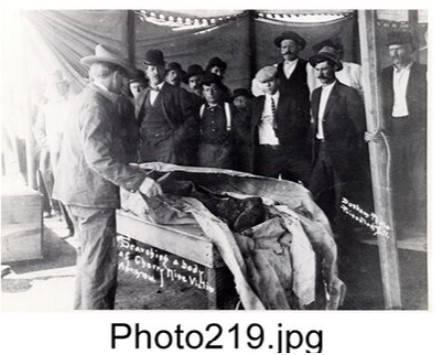
This collection consists of research and source materials collected by Edward Caldwell related to the 1909 mining disaster in Cherry, Illinois, its victims, and the aftermath of the incident. Materials date from 1903 to 2007 and include publications, letters and diaries, compilations of newspaper articles, reports, photographs, and indexes of victims' names. The indexes of victims' names reveal that a majority of them were migrant miners from a wide variety of European countries.
The University of Illinois' collection on the 1909 Cherry Mine Disaster which took place in Cherry, Illinois.
Edward Dunsworth
In recent decades an increasing share of Canada's agricultural workforce has been made up of temporary foreign workers from the Global South. These labourers work difficult and dangerous jobs with limited legal protections and are effectively barred from permanent settlement in Canada. In Harvesting Labour, Edward Dunsworth examines the history of farm work in one of Canada's underrecognized but most important crop sectors--Ontario tobacco. Dunsworth takes aim at the idea that temporary foreign worker programs emerged in response to labour shortages or the unwillingness of Canadians to work in agriculture. To the contrary, Ontario's tobacco sector was extremely popular with workers for much of the twentieth century, with high wages attracting a diverse workforce and enabling thousands to establish themselves as small farm owners. By the end of the century, however, the sector had become something entirely different: a handful of mega-farms relying on foreign guest workers to produce their crops. Taking readers from the leafy fields of Ontario's tobacco belt to rural Jamaica, Barbados, and North Carolina and on to the halls of government, Dunsworth demonstrates how the ultimate transformation of tobacco--and Canadian agriculture writ large--was fundamentally a function of the capitalist restructuring of farming. Harvesting Labour brings together the fields of labour, migration, and business history to reinterpret of the historical origins of contemporary Canadian agriculture and its workforce."-- Provided by publisher
examines the history of farm work in one of Canada's underrecognized but most important crop sectors--Ontario tobacco.
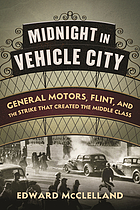
Edward McClelland
The story of the forty-four-day Flint Sit Down Strike of 1936-37, which led to the recognition of the United Auto Workers, the union whose wages and benefits set the standard for the 20th Century American middle class.
The story of the forty-four-day Flint Sit Down Strike of 1936-37.
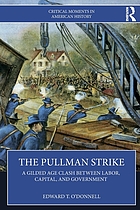
Edward T. O’Donnell
This book examines the 1894 Pullman Strike, one of the most consequential clashes between labor and capital that paralyzed America’s railroad system.
The Gilded Age saw rapid economic growth, expansion of industrialization, and real wage growth. Yet between 1800 and 1900 there were nearly 37,000 strikes, and the Pullman Strike reflected the broad dissatisfaction and unrest among American workers. The book consists of an engaging narrative, analysis of existing scholarship, sidebars, and primary source documents which collectively answer why the Pullman Strike is so critical to the American Experience: it exposed the limits of paternalistic capitalism, revealed the extraordinary power of big business, introduced the use of injunctions to stop strikes, and launched the career of the iconic labor leader Eugene Debs. Overall, it reveals what struggles workers encountered when forming unions, the changing role of government regarding the economy, and the threat that unchecked big business posed to democracy.
The Pullman Strike is useful for all undergraduate students who study the Gilded Age, industrial relations, and labor, urban, and economic history in the United States.
Introduction 1. The Stupendous Results of American Enterprise 2. Millions Born to Suffering and Poverty 3. Striking to Avert Slavery and Degradation 4. To Battle Such an Extended Evil 5. Rioters Will Be Fired Upon 6. The Strong Arm of the National Government 7. Epilogue
one of the most consequential clashes between labor and capital
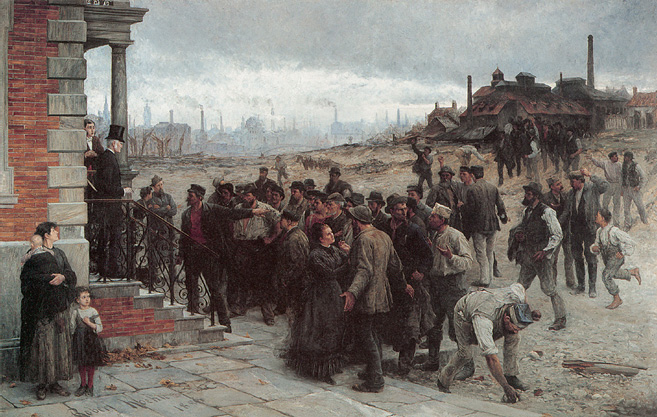
Edward T. O'Donnell
Completed in 1886, most agree Koehler drew from the Great 1877 strikes. Unlike most scenes of labor unrest painted or drawn in the late nineteenth century, Koehler presented these workers as sympathetic characters, painting each as an individual rather than as nondescript members of a mob.
The painting suggests a work environment so deplorable that even the skilled, sober-minded, American-born workers have walked out.
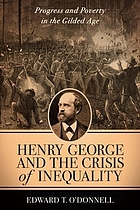
Edward T. O’Donnell
America's remarkable explosion of industrial output and national wealth at the end of the nineteenth century was matched by a troubling rise in poverty and worker unrest. As politicians and intellectuals fought over the causes of this crisis, Henry George (1839-1897) published a radical critique of laissez-faire capitalism and its threat to the nation's republican traditions. Progress and Poverty (1879), which became a surprise best-seller, offered a provocative solution for preserving these traditions while preventing the amassing of wealth in the hands of the few: a single tax on land values. George's writings and years of social activism almost won him the mayor's seat in New York City in 1886. Though he lost the election, his ideas proved instrumental to shaping a popular progressivism that remains essential to tackling inequality today. Edward T. O'Donnell's exploration of George's life and times merges labor, ethnic, intellectual, and political history to illuminate the early militant labor movement in New York during the Gilded Age. He locates in George's rise to prominence the beginning of a larger effort by American workers to regain control of the workplace and obtain economic security and opportunity. The Gilded Age was the first but by no means the last era in which Americans confronted the mixed outcomes of modern capitalism. George's accessible, forward-thinking ideas on democracy, equality, and freedom have tremendous value for contemporary debates over the future of unions, corporate power, Wall Street recklessness, government regulation, and political polarization today Part I: The Making of a Radical, 1839-1879
1. "To Be Something and Somebody in the World"
2. "Poverty Enslaves Men We Boast Are Political Sovereigns": Progress and Poverty and Henry George's Republicanism
Part II: The Emergence of "New Political Forces," 1880-1885
3. "New York Is an Immense City": The Empire City in the Early 1880s
4. "Radically and Essentially the Same": Irish-American Nationalism and American Labor
5. "Labor Built This Republic, Labor Shall Rule It"
Part III: The Great Upheaval, 1886-1887
6. "The Country Is Drifting into Danger"
7. "To Save Ourselves from Ruin"
8. "Your Party Will Go Into Pieces."
illuminate the early militant labor movement in New York during the Gilded Age

Edward Willis Scripps
Chicago newspaper had signfiicant labor coverage Vol. 5, no. 36 (Nov. 6, 1915) issue called also "Garment Workers' Special Edition." Conceived by newspaper mogul Edward Willis Scripps as an experiment in advertisement-free newspaper publishing, the Chicago Day Book was published for a working-class readership Monday through Saturday from September 28, 1911 to July 6, 1917. Scripps chose Chicago, with its large working-class population, as the venue for the first of what he hoped would become a chain of ad-free newspapers. Free from commercial influence, the Day Book would report on issues of concern to what Scripps called the “95 percent” of the population.
"Newspaper for the 95%" -lots of labor content
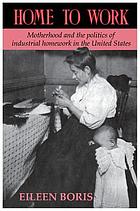
Eileen Boris
Examines the history of industrial homework in the United States. Focuses on representative examples and major turning points in the emergence of homework as a social and political problem. Covers the period from the 1870s to the 1980s
Focuses on representative examples and major turning points in the emergence of homework as a social and political problem.

Eileen Boris
First archivally based and fullest history of women's work and global labor standards under the ILO from 1919 to 2019. Places the formulation of global labor standards in the context of the Cold War and the rise of new nations in the ILO and UN system. Re-evaluates the use of labor standards to allocate women's labor between the family and employment. Illuminates how organized domestic workers and their allies challenged the formal rules of the ILO's convention-making process to win decent work for domestic workers in 2011.
Links that recent recognition of care work, unpaid as well as paid, and the fight against gender violence at work to the centrality of women's labor to the world economy. Founded in 1919 along with the League of Nations, the International Labour Organization (ILO) establishes labor standards and produces knowledge about the world of work, serving as a forum for nations, unions, and employer associations. Before WWII, it focused on enhancing conditions for male industrial workers in Western, often imperial, economies, while restricting the circumstances of women's labors. Over time, the ILO embraced non-discrimination and equal treatment. It now promotes fair globalization, standardized employment and decent work for women in the developing world. In Making the Woman Worker, Eileen Boris illuminates the ILO's transformation in the context of the long fight for social justice. Boris analyzes three ways in which the ILO has classified the division of labor: between women and men from 1919 to 1958; between women in the global south and the west from 1955 to 1996; and between the earning and care needs of all workers from 1990s to today. Before 1945, the ILO focused on distinguishing feminized labor from male workers, whom the organization prioritized. But when the world needed more women workers, the ILO (a UN agency after WWII) highlighted the global differences in women's work, began to combat sexism in the workplace, and declared care work essential to women's labor participation. Today, the ILO enters its second century with a mission to protect the interests of all workers in the face of increasingly globalized supply chains, the digitization of homework, and cross-border labor trafficking. As Boris shows, the ILO's treatment of women is a window into the modern history of labor. The historic relegation of feminized labor to the part-time, short-term, and low-waged prefigures the future organization of work. The labor force is increasingly self-employed and working as long as possible--a steep price for flexibility--with minimal governmental oversight. How we treat workers in the next century will inevitably build upon evolving ideas of the woman worker, shaped significantly through the ILO.
Table of Contents:
Introduction: Making Women, Defining Work
I. Difference: The Problem of the Woman Worker, 1919-1958
1. Protection
2. Equality
II. Difference's Other: Women in "Developing" Countries, 1944-1996
3. Development
4. Reproduction
5. Outwork
III. Difference All: Centering Care, 1990s-2010s
First archivally based and fullest history of women's work and global labor standards under the UN created International Labour Organization from 1919 to 2019.
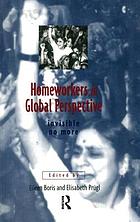
Eileen Boris, Elisabeth Prügl
Illustrates the diversity of home based work and homeworker organizing.
PART ONE: Overview,
1. Introduction, 2. Sexual Divisions, Gender Constructions, 3. Home-Based Producers in Development Discourse,
PART TWO: The Homework Experience, 4. Space, Gender, and Work, 5. Within the Walls, 6. Good Housewives, 7. Bibi Khanum, 8. Home-Based Work as a Rural Survival Strategy, 9. Finland Is Another World, Illustrations,
PART THREE: Divergent Responses, 10. Making Cadillacs and Buicks for General Motors, 11. Biases in Labor Law, 12. Feminization Through Flexible Labor, 13. Organizing Homeworkers into Unions, 14. Women's Empowerment in the Making, 15. Making Links, Bibliography, Index, Contributors
PART One Overview
Introduction Elisabeth Prugl and d Eileen Boris 3
2 Sexual Divisions, Gender Constructions The Historical Meaning of Homework in Western Europe and the United States Eileen Boris 19
3 Home-Based Producers in Development Discourse Elisabeth Prugl 39
PART Two The Homework Experience Housewives, Mothers, and Workers
4 Space, Gender, and Work Home-Based Workers in Mexico Faranak :MIraftabb 63
5 Within the Walls Home-Based Work in Lahore Anita H. Weiss 81
6 "Good Housewives" Seamstresses in the Brazilian Garment Industry Alice Rangel de Paiva Abreu and Bila Sorj 93
7 "Bibi Khanum" Carpet Weavers and Gender Ideology in Iran Zohreh Ghavarnshahidi 111
8 Home-Based Work as a Rural Survival Strategy A Central Javanese Perspective Dewi Haryani Susilastuti 129
9 Finland Is Another World: The Gendered Time of Homework Minna Salmi 143
Illustrations 167
PART Three
10. Making Cadillacs and Buicks for General Motors Homework as Rural Development in the Midwestern United States Christina Gringeri 179
11 Biases in Labor Law A Critique from the Standpoint of Home-Based Workers Elisabeth Prugl 203
12 "Feminization Through Flexible Labor" The Political Economy of Home-Based Work in India Jeanne Hahn 219
13 Organizing Homeworkers into Unions The Homeworkers' Association ofToronto, Canada Alexandra Dagg 239
14 Women's Empowerment in the Making The Philippine Bid for Social Protection Lucita Lazo 259
15 Making Links The Growth of Homeworker Networks Jane Tate 273
Illustrates the diversity of home based work and homeworker organizing.
Museum/Exhibits
Tours
Maps
Digital Projects
Organizations
Sites
Film/Video
Audio/Interview
Podcast/Program
Text/Document
Image
Graphs/Data
Timeline
Southwest
West
Midwest
Southeast
Northeast
Mexico
Canada
Global
Books
Teaching
Lectures
Digital Archives
Journals
Bibliographies
Topic Intro