


Collections
Library
Type
Region
Coverage:
-
Published:
-
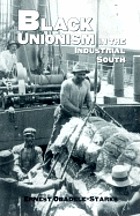
Ernest Obadele-Starks
"Black Unionism in the Industrial South presents the struggles of black workers who fought for equality and unionization in the heyday of Gulf Coast industry. Ernest Obadele-Starks examines the workers' responses to racial and class domination and their creative strategies to reach their goals. Facing public and corporate policies that typically deferred to white workers, blacks banded together to achieve representation in the workplace, form union auxiliaries, charter their own local unions, seal alliances with members of the black middle class, and manipulate the media to benefit their cause."--Jacket
IN THE EARLY twentieth century, the Upper Texas Gulf Coast was one of the fastest-growing industrial areas in the country. The cotton trade had attracted railroad and ship labor to the banks of the Gulf of Mexico, numerous oil refineries sprouted up in response to the Spindletop gusher of 1901, and the shipbuilding and steel trades were also prospering as a result of the oil boom. Such economic promise attracted thousands of black laborers from across the South who hoped to find a good job and a better life. They were instead kept in low-wage jobs, refused union memberships, and restricted in their mobility.
Black Unionism in the Industrial South presents the struggles of black workers who fought for equality and unionization in the heyday of Gulf Coast industry. Ernest Obadele-Starks examines the workers' responses to racial and class domination and their creative strategies to reach their goals. Facing public and corporate policies that typically deferred to white workers, blacks banded together to achieve representation in the workplace, form union auxiliaries, charter their own local unions, seal alliances with members of the black middle class, and manipulate the media to benefit their cause.
Although workers supported each other and their cause, activists did debate the best course of action, whether to attempt to penetrate the white-dominated unions, create new black unions, or seek new employment with sympathetic members of the black middle class. All of these tools were eventually used to mobilize the workforce and to earn recognition for the contribution black laborers made to industry and the community.
Obadele-Starks eloquently captures these workers' fight anddiscusses the implications of their struggle on the industrial society of the Upper Texas Gulf Coast today. Students and scholars of American labor history, race relations, and Texas history will find Black Unionism in the Industrial South a valuable and compelling scholarly work.
examines the Black workers' responses to racial and class domination and their creative strategies to reach their goals.

The Deportation Express: A History of America through Forced Removal
Ethan Blue
"The book explores the regional, national, and global dimensions of early twentieth-century migration and deportation via a “composite Deportation Special train journey” (p. 17) that takes the reader along the path that tens of thousands of deportees endured from Seattle to Ellis Island, with many stops along the way to load up additional unwilling passengers, then back to San Francisco’s Angel Island by way of New Orleans, San Antonio, and El Paso. In its variety of passengers, according to Blue, the deportation train became “a hybrid of the poorhouse, the prison, the hospital, and the asylum, and moreover, it was on wheels” (p. 20). At each leg of its journey, the book focuses on the stories of one or a few deportees, each chosen to represent a key component of immigrant exclusion based on class,race, gender, sexuality, or disability.
Threading together these “entangled stories” (p. 21) produces a somewhat surreal but nevertheless rewarding break from conventional chronological historical
narrative, as some of the individuals profiled literally rode together, while others made the journey a decade or more apart from each other. Along this kaleidoscopic journey we are introduced to Sikh migrants accused of illegal entry, a French prostitute, a queer Englishman (deported as “Likely to Become a Public Charge” due to his sexuality), a member of the Industrial Workers of the World expelled during the First Red Scare on the basis of his radical beliefs, an allegedly insane Mexican, Korean immigrants caught working for wages on student visas, and several other unfortunates caught in America’s rapidly expanding deportation infrastructure.
Unlike several recent histories of mass deportation, The Deportation Express is a decidedly bottom-up study that centers the stories and agency of both deportees and on-the-ground immigration officials. Its focus is on ordinary people, most of whose experiences and voices are chronicled here for the first time, as “[h]uman actors, making complex decisions in circumstances beyond their control” (p. 19).
As the book recounts and contextualizes deportees’ individual circumstances, however, it also tells a larger, transnational story of capitalist expansion, settler colonialism, migration, labor, and eugenics. Deportation trains, Blue compellingly argues, “were the culmination of a century’s worth of immigration law, materialized in the steel of its rail networks and forces of its engines, expanded in its complex links of public administrative bureaucracies and private corporate power” (p. 4), and without these triumphs of modernity, the mass expulsion of “undesirables” would not have been logistically possible. The book’s analysis draws on a heady constellation of theory-heavy concepts to make sense of its topic, including settler colonialism, racial capitalism, and Foucauldian “biopolitics.” But to the author’s immense credit, his text is never weighed down by theory or jargon, and it communicates these seemingly abstract and impenetrable concepts in clear and simple language. Fueled by a settler colonial and eugenicist desire to regulate “who might be permitted as a settler and eventually, perhaps, a full citizen” (p. 12), he argues, the deportation train became “an ingenious machine for making white Americans” (p. 183) through the elimination of non-white immigrants and “defective” Europeans and Canadians.--review by Kenyon Zimmer, Journal of American Ethnic Studies
Ethel Tungohan
Tungohan's project traces the arrival of migrant care workers in Canada beginning in the early twentieth century through to the contemporary age in which Filipina migrant care workers constitute nearly 95% of all live-in caregivers in the country. Within that timeline, the project concentrates more fully on the emergent migrant care worker activism which has led to institutional policy changes with both the Foreign Domestics Movement (FDM) and the Live-in Caregiver Program (LCP) -- programs that have placed strict terms on workers. Unlike other migrant worker groups, migrant care workers have been inordinately successful with their activism; besides policy changes, migrant care worker activism has created greater public awareness regarding the rights of migrant care workers, and has formed new organizations that meet the needs of migrant care workers in ways that sending and receiving states cannot or will not. Incorporating seven years of primary and archival research, Tungohan's project examines the types of organizing currently taking place among migrant care workers, the internal dynamics of such organizing, as well as the different activist sites, strategies, and short- and long-term goals that define migrant care worker activism. Through this specified focus on Canadian migrant care workers, Tungohan's project makes greater connections to the role migrant workers play in Western societies. Care activism challenges the stereotype of downtrodden migrant caregivers by showing that care workers have distinct ways of caring for themselves, for each other, and for the larger transnational community of care workers and their families. Ethel Tungohan illuminates how the goals and desires of migrant care worker activists goes beyond political considerations like policy changes and overturning power structures. Through practices of subversive friendships and being there for each other, care activism acts as an extension of the daily work that caregivers do, oftentimes also instilling practices of resistance and critical hope among care workers. At the same time, the communities created by care activism help migrant caregivers survive and even thrive in the face of arduous working and living conditions and the pains surrounding family separation. As Tungohan shows, care activism also unifies caregivers to resist society's legal and economic devaluations of care and domestic work by reaffirming a belief that they, and what they do, are important and necessary"-- Provided by publisher
arrival of migrant care workers in Canada beginning in the early twentieth century through to the contemporary age
Ettie West, History Matters
Religious concepts and metaphors suffused the words and ideas of many late nineteenth-century American workers. The New and Old Testaments provided not only personal succor to many working people but also a set of allusions and parables they applied directly to their lives and struggles in industrial America. Working-class ideas and writing often were cast in stark millenarian terms, with prophesies of imminent doom predicted for capitalists who worshipped at Mammon’s temple and imminent redemption for hard-working, long-suffering, and God-fearing laboring men and women. Christ was uniformly depicted in workers' writing as a poor workingman put on Earth to teach the simple principles of brotherhood and unionism. Indiana coal miner’s wife Ettie West pined for the “good and religious” ways of her mother’s time in this letter to the editor, published in 1900 in The United Mine Workers Journal.
(teaching document) Ettie West's 1900 letter to the editor of The United Mine Workers Journal, which shows some of the ways that some working-class folks historically used religion to contextualize their labor conditions.
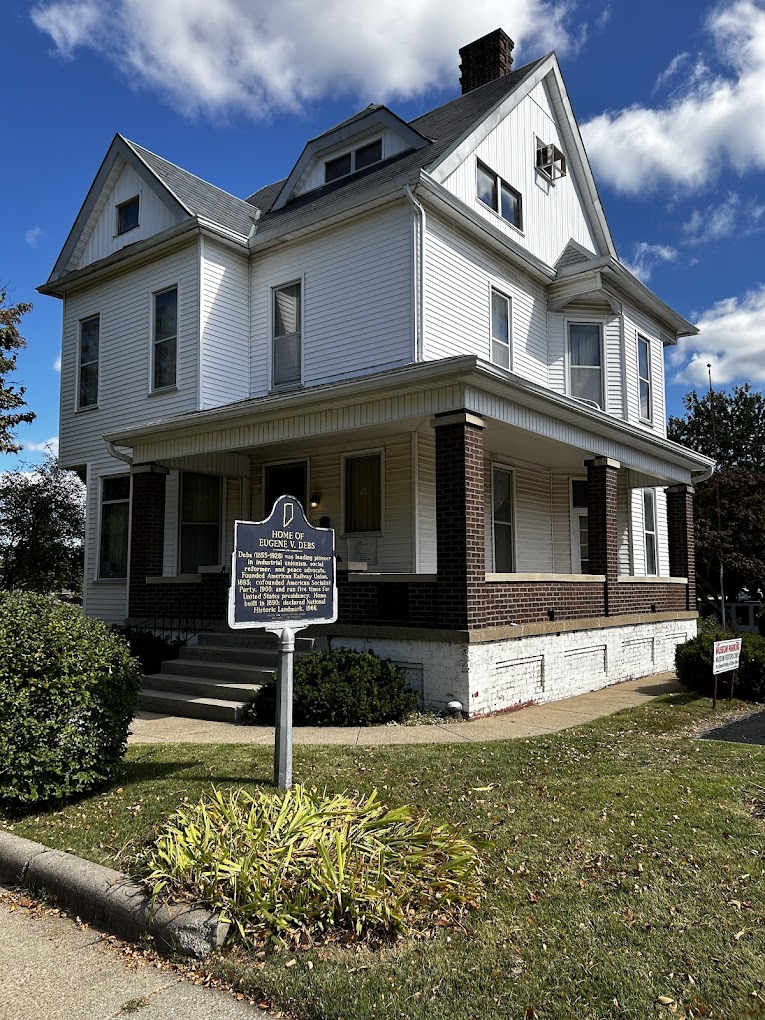
Eugene V. Debs Foundation
"The purpose of the Foundation shall be to own, maintain and operate the Eugene V. Debs home at 451 North Eighth Street, Terre Haute, Indiana, on a non-profit basis, in order to:
- be a memorial to Eugene V. Debs and Theodore Debs and receive, hold and administer such gifts of money, property, works of art, historical papers and documents, museum specimens and other material having educational, artistic or historical value;
- serve as an archive and resource for research and education in the social sciences and in labor and political history.”
From the by-laws of the foundation, (founded 1962)
The main website of the Debs Foundation, which is dedicated to maintaing Eugene V. Debs' home as a museum, and commemorating his life and career.
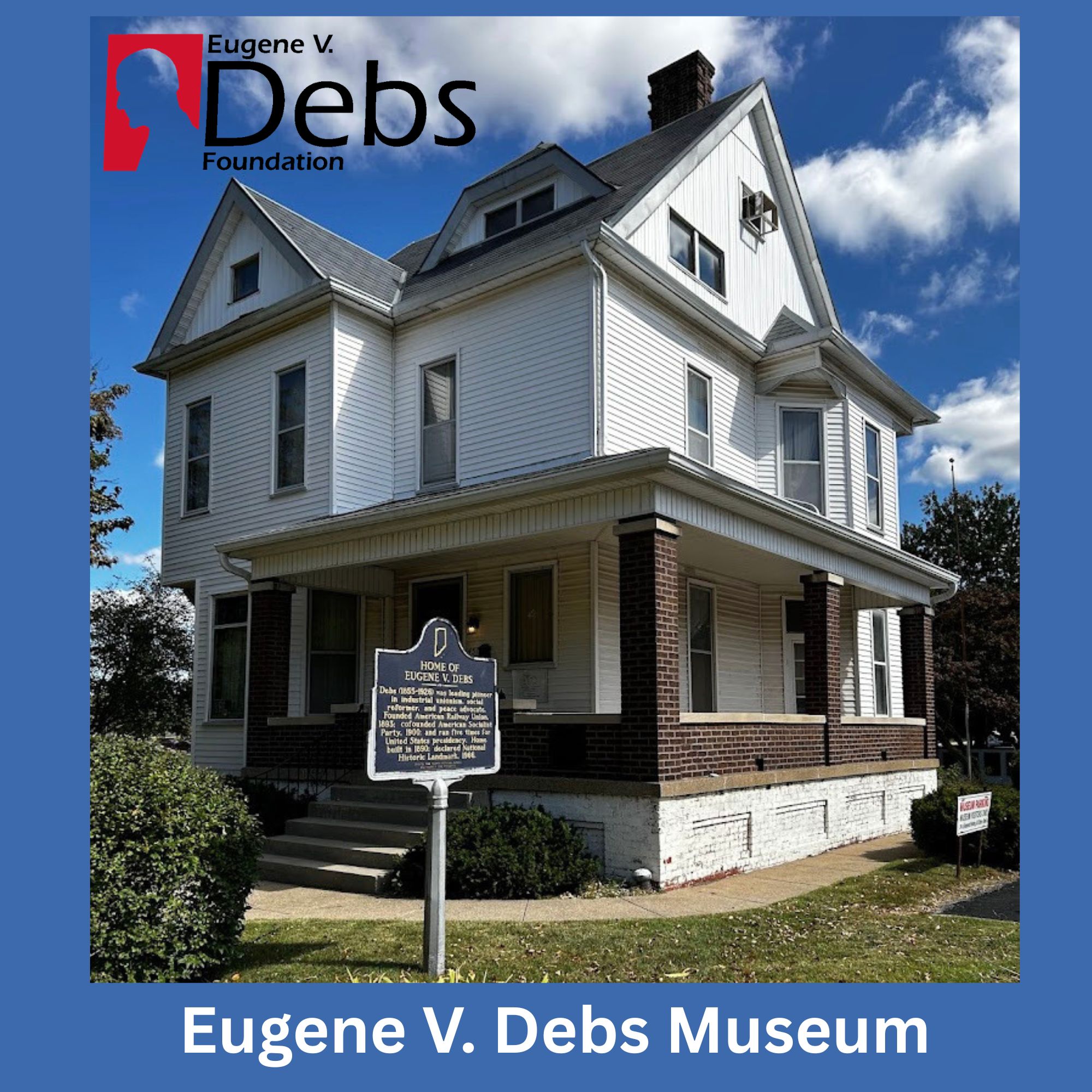
Eugene V. Debs Foundation
The Eugene V. Debs Museum is the former house of Eugene V. Debs and Katherine Metzel Debs. After changing hands for many years, it was purchased in 1962 by a small group of Terre Hautians who had a strong admiration for Debs. It is now owned and operated by the Debs Foundation as a free museum. The interior of the museum features many of Debs’ possessions and other artifacts from his lifetime. We count on our guests’ respectful treatment of the collections.
The museum is open to the public and admission is free.Following the example of Kate and Eugene Debs, we strive to create a welcoming environment.
A trained museum guide will offer each guest a 30-90 minute guided tour, depending on visitor preference and staff availability. Abbreviated tours are available upon request. Amenities include a gift shop, guest seating in each room, and a first-floor single-occupancy restroom. Photography (minus flash) is encouraged. Advance permission from the museum director is required for videography.
Museum focusing on socialist leader and politician Eugene V. Debs, on the site of Debs' former house
Dubbing Debs: An Actor Records A Speech By Eugene Debs (Teaching Document) 1904
Eugene V. DebsHistory Matters
A speech by Debs, 1904, recorded by an actor, Socialist leader and four-time presidential candidate Eugene V. Debs was known as one of the most gifted orators of his generation. One listener recalled his impact as “something more powerful, penetrating, and articulate than mere words.” Although Debs apparently never entered a sound studio, a recording of a Debs speech was widely circulated in the first decade of the 20th century. For many years, the speech was believed to have been in Debs' voice, and it was catalogued as such in libraries and record collections. In fact, the speech was written by Debs but recorded by actor Leonard Spencer, who was famous for his recorded versions of comic and dramatic monologues. It was not uncommon in the early days of recording to have actors read the words of politicians. (This was before actors became politicians.) Even if this recording does not give us Debs‘ actual voice, its circulation indicates his popularity. Faithful socialists wanted to be able to listen at home to Debs’ attacks on the rapacious nature of capitalism and his argument that socialism was the only answer to human problems. Here is an address, which has been attributed to an actor (Len Spencer) at the time, recorded shortly after he originally gave it in 1904.
An audio recording of Eugene V. Debs' speech, Monstrous System of Capitalism, recorded by actor Leonard Spencer.
Evan Lampe
This book traces the history of working people who helped established the foundation of the American empire in the Pacific from its origins after the American Revolution to its coming of age in the 1840s and 1850s. Beginning with the expeditions of the Columbia and the Lady Washington, Lampe argues that the early American Pacific can best be considered through the interaction of four major locations, connected through the networks of trade: the merchant ship, the Northwest Coast, Honolulu, and Canton (Guangzhou). In each of these locations,
This book traces the history of working people who helped established the foundation of the American empire in the Pacific from its origins after the American Revolution to its coming of age in the 1840s and 1850s. Beginning with the expeditions of the Columbia and the Lady Washington, Lampe argues that the early American Pacific can best be considered through the interaction of four major locations, connected through the networks of trade: the merchant ship, the Northwest Coast, Honolulu, and Canton (Guangzhou). In each of these locations, the labors of a diverse population of working people was harnessed in the critical labors of empire building, including the transportation of goods. The central question that the consideration of working people in the Pacific economy during this period is, Lampe argues, the role of power applied on these laborers by an international capitalist class, emerging alongside the Pacific commercial empires. Lampe also finds that this power was not uncontested and emerged in response to the activities of labor. Working people, on the ship and in the port cities, found ways to secure their piece of the profitable trade, often through illicit means.
, including the transportation of goods. The central question that the consideration of working people in the Pacific economy during this period is, Lampe argues, the role of power applied on these laborers by an international capitalist class, emerging alongside the Pacific commercial empires. Lampe also finds that this power was not uncontested and emerged in response to the activities of labor. Working people, on the ship and in the port cities, found ways to secure their piece of the profitable trade, often through illicit means.
Chapter 1: Introduction: looking at the China trade from above and below -- Chapter 2: Power, resistance, and culture on the American merchant ship -- Chapter 3: The sea otter fur trade on the Northwest Coast of America: global capitalism, work, and power -- Chapter 4: Stephen Reynolds in Honolulu: community and class in a Pacific Port -- Chapter 5: The Canton gated community: workers, elite, and the China Trade Chapter 6: Conclusion
how the labors of a diverse population of working people was harnessed in the critical labors of empire building,

Evan P. Bennett
Evan Bennett explores the history of tobacco agriculture in the Piedmont region of Virginia and North Carolina since Emancipation in 1865. Focussing on the transformations in labour - the tasks of growing tobacco; the arrangement of workers; and the cultural meaning of labour - the book argues that the predominance of family labour in tobacco agriculture in the Piedmont in the twentieth century was an accident of the arrangement of labour following emancipation that was then reified in federal policy
explores the history of tobacco agriculture in the Piedmont region of Virginia and North Carolina, focussing on the transformations in labor culture, management, and practices

Evelyn Hu-DeHart, Dongfang Shao
Project introduction: Between 1864 and 1869, thousands of Chinese migrants toiled at a grueling pace and in perilous working conditions to help construct America’s first Transcontinental Railroad. The Chinese Railroad Workers in North America Project seeks to give a voice to the Chinese migrants whose labor on the Transcontinental Railroad helped to shape the physical and social landscape of the American West. The Project coordinates research in North America and Asia in order to publish new findings in print and digital formats, support new and scholarly informed school curriculum, and participate in conferences and public events.
2019 marks the 150th anniversary of the introduction of large numbers of Chinese workers on the construction of the first transcontinental railway across North America. May 10, 2019 is the 150th anniversary of Leland Stanford’s driving the famous “golden spike” to connect the Central Pacific and Union Pacific at Promontory Summit, Utah, to complete the line. The labor of these Chinese workers (who eventually numbered between 10-12,000 at any one moment) was central to creating the wealth that Leland Stanford used to found Stanford University. But these workers have never received the attention they deserve. We know relatively little about their lives. What led them to come to the United States? What experiences did they have in their arduous work? How did they live their daily lives? What kinds of communities did they create? How did their work on the railroad change the lives of their families in China and how did it change the lives of the workers themselves, both those who returned to China or went elsewhere after the railroad’s completion and those who stayed in the U.S.?
We are producing new analysis of how they contributed to shaping the physical and social landscapes of the American West. The sesquicentennial anniversaries of the railroad’s construction and completion provide an unprecedented opportunity to launch a major evaluation of their experiences. We have brought together historians and other scholars in a range of disciplines in North America and in Asia to locate new historical materials and developing a multi-disciplinary approach to understanding and appreciating this long neglected history. While the focus of the project is the Chinese railroad workers, the Project also includes research on the lives that these individuals lived during the decades after the railroad was completed. In addition to recovering an unjustly neglected chapter of history of special significance for Stanford University, this transnational, collaborative, multi-year research project has pioneered new ways of exploring the shared past of China and the United States.
The Chinese Railroad Workers Project has produced a body of scholarship based on new materials and in-depth analysis of the Chinese railroad worker experience in America. The history of the Chinese in the U.S. from the nineteenth to early twentieth century is a transnational story that should be told from both U.S. and Chinese perspectives. This project’s unprecedented international team of scholars in multiple disciplines in North America and Asia enables new research and publications on the Chinese in America from both U.S. and Chinese vantage points.
The co-directors of the project are Gordon H. Chang, the Olive H. Palmer Professor of Humanities, Professor of History, and former Director of Stanford’s Center for East Asian Studies, and Shelley Fisher Fishkin, the Joseph S. Atha Professor of Humanities, Professor of English, and Director, Stanford’s Program in American Studies.
The project’s original co-organizers were Evelyn Hu-DeHart, Professor of History, Brown University & Stanford alumna, and Dongfang Shao, former Director of Stanford’s East Asia Library and now chief of the Asian Division, Library of Congress.The Chinese Railroad Workers in North America Project at Stanford University has successfully completed its study, research, and writing. In 2012 when we began our work, we knew we faced formidable research challenges, but the dedicated and determined work of hundreds of scholars, students, and volunteers from around the world helped us recover Chinese railroad worker history unprecedented in richness and comprehensiveness. Our interpretations of culture and scholarship provided original insights into that central experience in Chinese American history and our efforts continue to attract international attention and inspire further efforts to see that the workers receive their due recognition. We are enormously gratified by the warm reception we have received. Though we recognize that much remains to be learned about the Chinese Railroad workers who built the first transcontinental railroad across the United States and other rail lines throughout North America, the further recovery of their histories now falls to others. As of September 1, 2020, the Project will no longer be active. We will also not regularly maintain this website, though we will continue to make it available as a resource for scholars, the public, and students.
Links on our site of popular interest include:
Oral Histories and Interviews iew video and read transcripts of interviews of people who have descended from the Chinese laborers who worked on the first transcontinental railroad. The interviews seek to discover as much as possible about the workers as transmitted through family lore. The amount that we can learn is limited and dimmed by time, of course, but at least names, home villages, and other material can be added to our understanding of these workers. We can also learn the dynamic histories of the families who, despite cruel discrimination, struggled and flourished in the United States.
Digital Visualization --mapping, geological obstacles; In this visualization, we briefly recount the story of the Chinese workers in the context of engrossing topographic contour maps. We also include a few of the photographs taken by Alfred A. Hart, the official photographer for the CPRR, and others, to convey how the Sierra Nevada summit or the Nevada desert looked – and felt. This is an introduction, a way to begin to convey a bit of what the Chinese workers encountered and what they achieved.
Publications -see list after Timeline, below
Resources for Teachers, Downloadable: Lesson 1: Chinese Railroad Workers in North America Project /Lesson 2: Challenges to Chinese Immigration and Assimilation Lesson 3: Human-Environment Interaction Lesson 4: San Francisco's Chinatown
Timeline is at https://web.stanford.edu/group/chineserailroad/cgi-bin/website/timeline-2/
Web Exclusive Essays
Yong Chen (University of California, Irvine), “Uncovering and Understanding the Experiences of Chinese Railroad Workers in Broader Socioeconomic Context”
This essay examines how the Chinese work on the first transcontinental railroad spurred the rapid growth of the American economy, and also provided the foundation for a transpacific cultural and socioeconomic network of migration, labor, and commerce.
Pin-chia Feng (National Chiao Tung University), “Remembering the Railroad Grandfather in China Men“
This essay gives a brief overview of selected critical writing on China Men, especially from the past two decades, to generate a critical framework for reading this seminal text, then offers a reading of Ah Goong’s story as a literary memorialization of Chinese American railroad workers.
Shelley Fisher Fishkin (Stanford): “Bibliographic Essay for “The Chinese as Railroad Workers after Promontory”
This bibliographic essay supplements the references cited in the print essay in The Chinese and the Iron Road: Building the Transcontinental Railroad. After briefly summarizing “The Chinese as Railroad Workers after Promontory,” it extends and complements—but does not replicate—the citations in the print essay.
Shelley Fisher Fishkin (Stanford): “A New Look at Russell H. Conwell’s Why and How: Why the Chinese Emigrate and The Means They Adopt for Reaching America [1871]”
Russel H. Conwell’s first book, Why and How, offers a unique glimpse into the lives of the workers whose labors had done so much to transform both their own country and the United States.
Laura Hall: “Debt and Death in British Guiana: The Fortunes of Jacob Fung-A-Pan & Abigail Yung She”
This is the story of two Chinese immigrants, Jacob Fung-A-Pan and Abigail Yung She, who migrated from South China to the colony of British Guiana to start new lives on the sugar plantations.
Roland Hsu (Stanford University), “On Migration: Rethinking the benefits brought by the Chinese railroad workers”
Today’s news is filled with anxiety about migration. In the U.S., policy makers and analysts, scholars and journalists alike characterize the flow of immigration as a crisis, and frame migrants as a threat to the national economy, social cohesion and cultural tradition. The Chinese Railroad Workers in North America Project at Stanford has tested such assumptions by unveiling our best evidence of one of the most momentous flows of migrants into the U.S.
Jack Leong (University of Toronto): “The Hong Kong Connection for the Chinese Railroad Workers in North America”
Based on archives, historical records and personal testimonies about Hong Kong’s nineteenth-century, this essay illustrates the port city that migrants from Guangdong would have had encountered when they were there and en-route to North America.
Calvin Miaw (Stanford), “Three Interpretations of the Role of Chinese Railroad Workers in the Construction of the Central Pacific Railroad”
All the accounts of building the first transcontinental railroad interpret the role of the Chinese in its construction, and those interpretations are often highly contested, reflecting different assumptions and attitudes, as well as data.
Hilton Obenzinger, “Historiography of Recovery and Interpretation of the Experience of Chinese Railroad Workers in North America”
This survey draws from the research for The Chinese and the Iron Road: Building the Transcontinental Railroad, eds. Gordon H. Chang and Shelley Fisher Fishkin with Hilton Obenzinger and Roland Hsu and Ghosts of Gold Mountain: The Epic Story of the Chinese Who Built the Transcontinental Railroad, by Gordon H. Chang.
Hilton Obenzinger, “One More Spike in Utah: Commemorating the 150th Anniversary of the Completion of the Transcontinental Railroad at Promontory Summit”
The Chinese workers were not forgotten in 2019. Thousands of participants gathered in the high desert where we witnessed the re-enactment of the “Golden Spike” ceremony that marked the completion of the nation’s first transcontinental railroad.
Michael R. Polk (Aspen Ridge Consultants), Christopher W. Merritt (Utah State Historic Preservation Office), Kenneth P. Cannon (Utah State University), Chinese Workers at Central Pacific Railroad Section Station Camps, 1870−1900
In this essay we describe maintenance camps on the CPRR in Box Elder County, Utah, as well as other stations further west in Nevada and compare them with known ethnic Chinese workers’ construction camps on the CPRR from the 1860s, as well as with camps in Montana dating to the late nineteenth and early twentieth centuries. We draw on archaeological site information, railroad company documents, and census data from 1870, 1880, and 1900.
Li Ju and Linda Ye, “A Photo Comparative Essay of the Central Pacific Railroad”
Over the course of five years, we conducted field visits using modern technology to trace the original railroad route, and pinpoint the geographical coordinates of the locations featured in historical photographs of the work on the railroad line. We compare historical photos with our contemporary images taken at the identical locations. We document new findings about the locations of the sites, the evolution of these sites over time, and the daily lives of the railroad construction workers.
Connie Young Yu, “History from Descendants: An Introduction to Oral History Interviews”
Key to closing the gap in this American narrative is the testimony of descendants. As coordinators of the oral history component of the project, Barre Fong and I conducted close to fifty interviews from early 2013 through spring 2018. Finding information on nineteenth-century railroad workers from descendants three, four, or five generations removed seemed a long shot, but we uncovered surprising revelations from descendants dedicated to the legacy of their forebears.
Oral Histories and Interviews, Digital Visualization, Publications, Resources for Teachers
Frequently Asked Questions
Everett Public Library
Sunday, November 5, 1916 marked the bloodiest battle in Pacific Northwest labor history. On that day, about 300 members of the Industrial Workers of the World (the I.W.W.) boarded the steamers Verona and Calista from Seattle and headed north toward Port Gardner Bay. The I.W.W. (or Wobblies) planned a public demonstration in Everett that afternoon, to be held on the corner of Hewitt and Wetmore, a spot commonly used by street speakers. Hoping to gain converts to their dream of One Big Union, the Wobblies began street speaking in Everett during a local shingle weavers' strike, encountering brutal suppression by local law officers. Free speech soon became the dominant issue. The number of demonstrators and the violence of the response from law enforcement grew as the weeks wore on."
A webpage featuring basic information pertaining to the Everett Massacre.
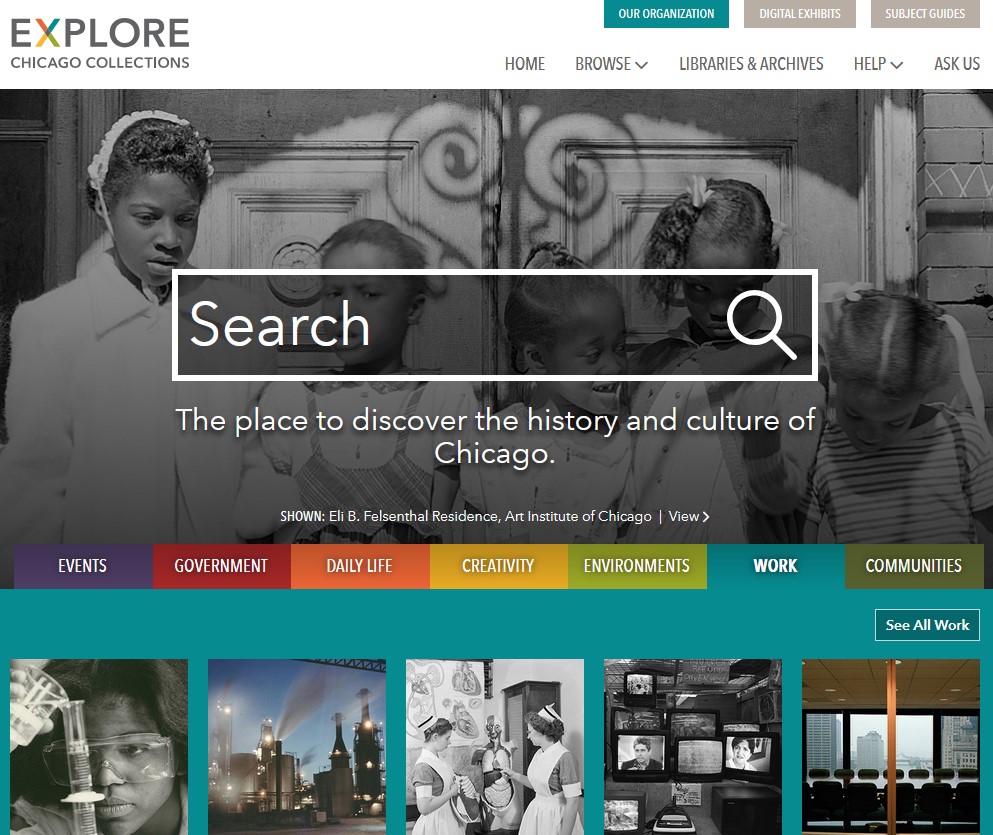
Explore Chicago Collections
Explore digitally available materials on work across multiple Chicago Collections with this single gateway to Chicago resources. With over 100,000 digitized images available, you can explore fascinating imagery from Chicago-area archives covering the city's architecture, people, politics, history, culture and more.
331 digitally available items in collections under the heading/search term work, for example. By searching Explore Chicago Collections, you can easily tell which archives you'll need to consult to research your subject, and you may even discover resources in unexpected places. Chicago is home to a diverse range of organizations with extensive resources about the city's history and culture. Researchers often have to visit more than one archive to do in-depth research about Chicago. Most libraries and museums provide detailed guides to their archives that researchers can consult on the web prior to visiting in person. Until now, researchers had to know (or guess) in advance which libraries were likely to have relevant materials.
Explore Chicago Collections allows you to search for information in the physical and digital archives of a growing number of libraries and museums. At the portal, click work then search terms
Eyewitness to History
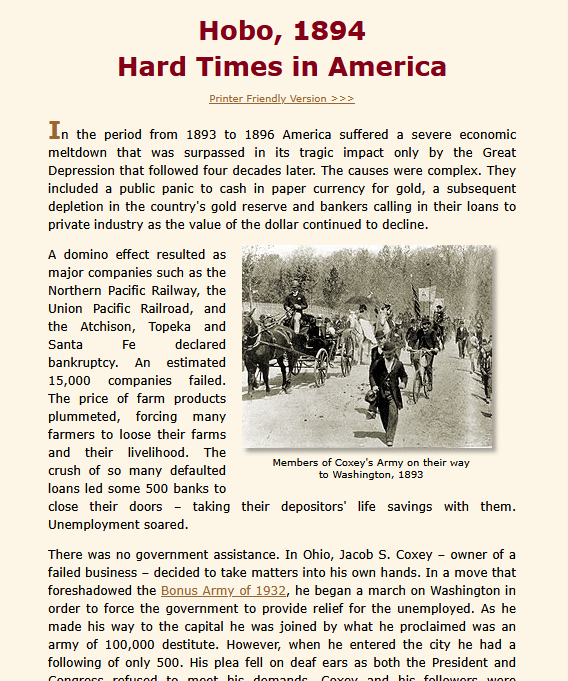
In the period from 1893 to 1896 America suffered a severe economic meltdown that was surpassed in its tragic impact only by the Great Depression that followed four decades later. The causes were complex. They included a public panic to cash in paper currency for gold, a subsequent depletion in the country's gold reserve and bankers calling in their loans to private industry as the value of the dollar continued to decline.
Members of Coxey's Army on their way to Washington, 1893
A domino effect resulted as major companies such as the Northern Pacific Railway, the Union Pacific Railroad, and the Atchison, Topeka and Santa Fe declared bankruptcy. An estimated 15,000 companies failed. The price of farm products plummeted, forcing many farmers to loose their farms and their livelihood. The crush of so many defaulted loans led some 500 banks to close their doors – taking their depositors' life savings with them. Unemployment soared.
There was no government assistance. In Ohio, Jacob S. Coxey – owner of a failed business – decided to take matters into his own hands. In a move that foreshadowed the Bonus Army of 1932, he began a march on Washington in order to force the government to provide relief for the unemployed. As he made his way to the capital he was joined by what he proclaimed was an army of 100,000 destitute. However, when he entered the city he had a following of only 500. His plea fell on deaf ears as both the President and Congress refused to meet his demands. Coxey and his followers were subsequently arrested for trespassing.
The nation’s roads and railways were filled with the unemployed searching for a better life. They became hoboes, panhandling their way across the country in search of a job. Among them was eighteen-year-old Jack London, future author of Call of the Wild (1903).
A webpage exploring the history of American poverty and unemployment in the 1890s from the perspective of Jack London (John Griffith Chaney), who describes his experiences as a "hobo" in the 1894 book The Road.

Facing History
Participants of 'The Great Migration' discuss their lives and their reasons for migrating.
A Facing History & Ourselves video showing the experiences of participants in the Great Migration.
Faith Robinson, History Matters
The women's movement of the 1970s had a far-reaching impact that was felt in every recess of American society. Working class women began to enter non-traditional jobs in trades and craft unions, and lesbians found a larger community in which to express their sexuality. In both cases, women faced resistance and sometimes violence as they charted new gender territory.
Faith Robinson, one of those brave enough to break the gender barrier in the predominantly male telephone technician field, was also a lesbian - she faced a particularly difficult challenge. Robinson remembered one incident in 1979 in which anti-gay talk escalated to violence on the job site.
Faith Robinson remembers one incident in 1979 in which anti-gay talk escalated to violence on the job site.
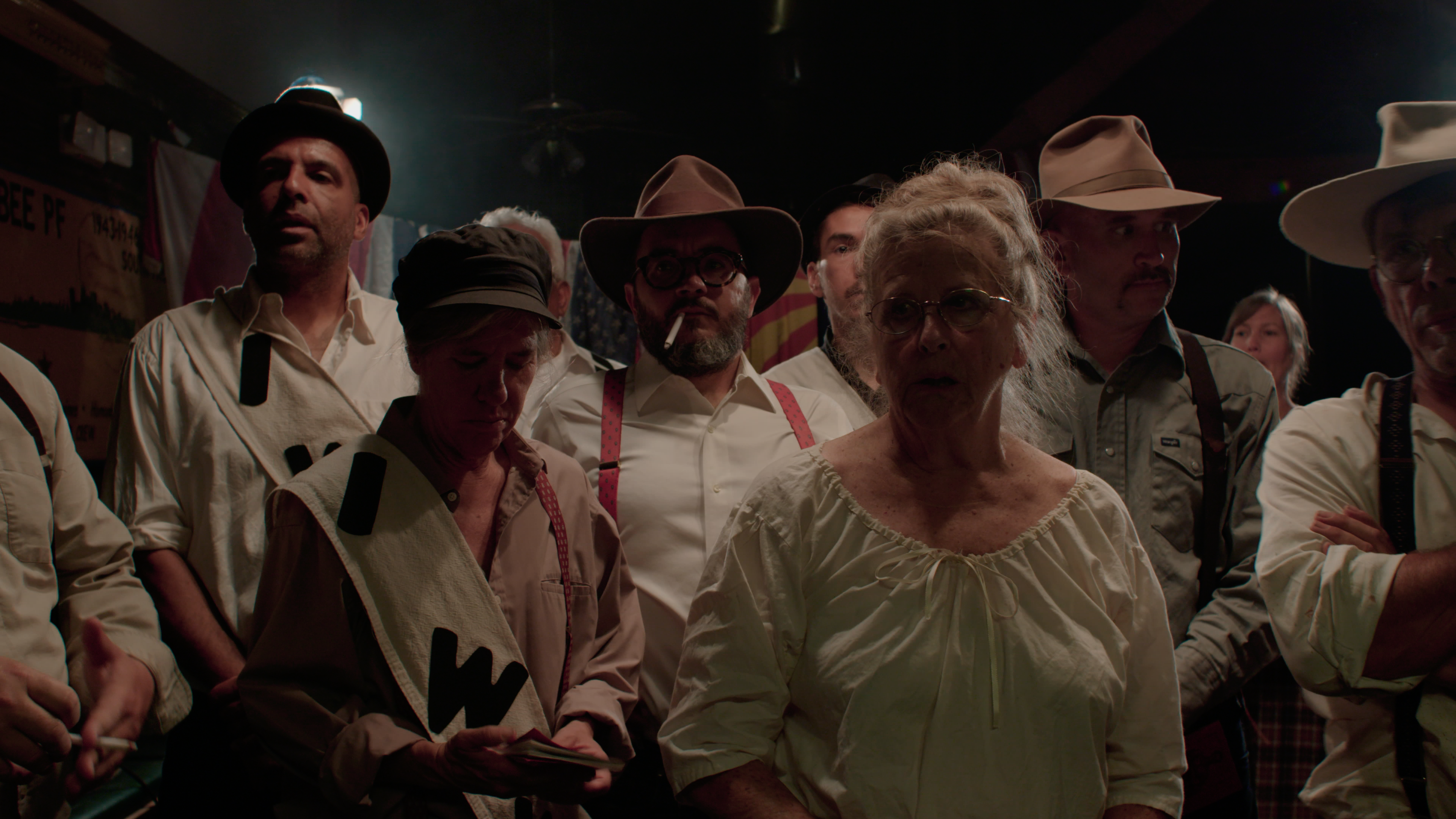
Faith Rogow
This guide is an invitation to dialogue. It is based on a belief in the power of human connection and designed for people who want to use Bisbee ‘17 to engage family, friends, classmates, colleagues and communities. In contrast to initiatives that foster debates in which participants try to convince others that they are right, this document envisions conversations undertaken in a spirit of openness in which people try to understand one another and expand their thinking by sharing viewpoints and listening actively.
The discussion prompts are intentionally crafted to help a wide range of audiences think more deeply about the issues in the film. Rather than attempting to address them all, choose one or two that best meet your needs and interests. And be sure to leave time to consider taking action. Planning next steps can help people leave the room feeling energized and optimistic, even in instances when conversations have been difficult.
Discussion guide designed for people who want to use Bisbee ‘17 film to engage family, friends, classmates, colleagues and communities.
Fall River Museum of Contemporary Art
The Fall River Museum of Contemporary Art connects the global contemporary art world to the working class community of Fall River, MA through exhibitions, educational outreach and artistic research. FR MoCA views the role of art in society as a crucial social science at the forefront of new ideas. We work to preserve space for the artistic process and its outputs as a means of creating discourse in relation to place and the community, as well as gain new insights into pedagogy, ecology, technology and conflict as they relate to local industrial and lived realities.
connects the global contemporary art world to the working class community of Fall River, MA through exhibitions, educational outreach and artistic research
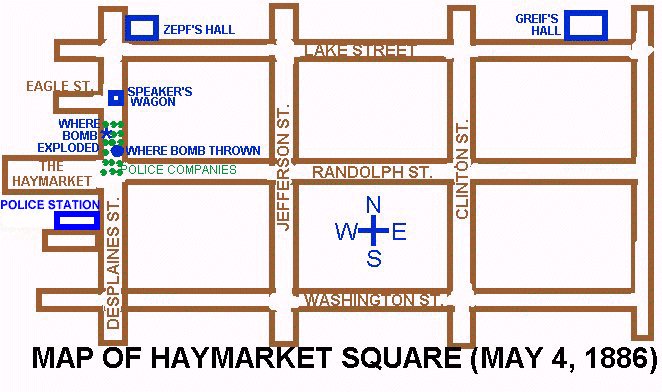
Famous Trials
Map Showing Key Locations Concerning the Haymarket Bomb event of 1886
Basic map of bomb that exploded in Chicago's Haymarket Square, 1886

Famous Trials, Douglas O. Linder, UMKC School of Law.
When an anarchist--whose identity remains a mystery even today--tossed a homemade bomb into a great company of Chicago police at 10:20 P.M. on the night of May 4, 1886, he could not have appreciated the far reaching consequences his reckless action would have. His bomb, thrown in a light drizzle as the last speaker at a labor rally climbed down from the speaker's wagon, set off a frenzy of fire from police pistols that would leave eight officers and an unknown number of civilians dead, and scores more injured. It led to the nation's first "Red Scare," refocused national labor and immigration policy, and set the stage for one of the most infamous trials in the history of American jurisprudence. The Haymarket Trial, the cause celebre for American radicals in the 1880s, produced death sentences for seven of Chicago's most prominent labor leaders--convicted more for their words than deeds at a time when the First Amendment provided scant protection against an outraged public.
Trial Transcripts and other materials related to the Haymarket Affair
Farah Stockman
"Shannon, Wally, and John built their lives around their place of work. Shannon, a white single mother, became the first woman to run the factory's dangerous furnaces at the Rexnord manufacturing plant in Indianapolis and was proud of producing one of the world's top brands of steel bearings. Wally, a black man known for his initiative and kindness, was promoted to become chairman of efficiency, one of the most coveted posts on the factory floor, and dreamed of starting his own barbecue business one day. John, a white machine operator, came from a multigenerational union family and clashed with a work environment that was increasingly hostile to organized labor.
The Rexnord factory had served as one of the economic engines for the surrounding community. When the factory closed, hundreds of people lost their jobs. What had life been like for Shannon, Wally, and John, before the factory closed? And what became of them after the factory moved to Mexico and Texas?
American Made is a story about people and a community struggling to reinvent itself. It is also a story about race, class, and American values, and how jobs serve as a bedrock of people's lives and drive powerful social justice movements. This revealing book is also about this political moment, when joblessness and uncertainty about the future of work have made themselves heard at a national level. Most of all it is a story about people: who we consider to be one of us, and how the dignity of work lies at the heart of who we are"-- Provided by publisher
A story about a local community, and how the displacement of a local factory affected it.
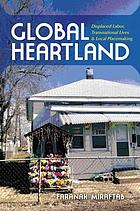
Faranak Miraftab
Global Heartland is the account of diverse, dispossessed, and displaced people brought together in a former sundown town in Illinois. Recruited to work in the local meat-processing plant, African Americans, Mexicans, and West Africans re-create the town in unexpected ways. Drawing on ethnographic research conducted in the US, Mexico, and Togo, Faranak Miraftab shows how this workforce is produced for the global labor market; how the displaced workers' transnational lives help them stay in these jobs; and how they negotiate their relationships with each other across the lines of ethnicity, race, language, and nationality as they make a new home. Beardstown is not an exception but an example of local-global connections that make for local development. Focusing on a locality in a non-metropolitan region, this work contributes to urban scholarship on globalization by offering a fresh perspective on politics and materialities of placemaking
Introduction
Part I. Beardstown: A Place in the World
1. Welcome to Porkopolis
2. It All Changed Overnight
Part II. Displaced Labor
3. "Michoacán's Largest Export is People"
4. "Winning the Lotto in Togo"
5. Detroit: "The First Third World City of the U.S."
Part III. Outsourced Lives
6. Global Restructuring of Social Reproduction
Part IV. We Wanted Workers, We Got People
7. We Wanted Workers
8. We Got People
Conclusion: The Global in my Backyard
Beardstown, Illinois: a suprising story of global migration

Farmers' and Laborers' Union in Missouri
The Farmers’ Union was a weekly newspaper published on Thursdays in Memphis, Scotland County, Missouri. The Union was a Populist journal that supported the Farmers’ and Laborers’ Union in northeast Missouri. The Farmers’ Union Publication Company was created to publish the paper while Carey D. Baxter was its editor. The first edition of the Farmers’ Union appeared on February 5, 1891. Baxter and company expressed their excitement about the new paper in their salutatory greeting, as they hoped to see the Union become the official organ of the Populist Party in northeast Missouri. At the same time, the publishers stated that “the Farmers’ Union will be to a large extent a local paper, and we hope all will take advantage of its columns in this direction and make it second to none.” Items of political and local interest were not always mutually exclusive, and on May 21, 1891, Baxter published a notice encouraging the local farmers to trade only with merchants who supported the paper, as many local businesses had boycotted the Farmers’ Union for advocating Populist principles.
The tension between farmers and merchants was at the heart of why the Farmers’ and Laborers’ Union was created. After the Civil War, many farmers went bankrupt and were forced to rely on a credit and mortgage system. Tradesmen took advantage of this process and overcharged farmers on supplies while undercharging farmers on the goods they sold. In The Mission, History and Times of the Farmers’ Union (1909), Charles Simon Barrett discusses why the Farmers’ Alliance was formed:
[Farmers] wanted a change. They wanted to pay off the mortgages, but did not have the means to do so. They wanted better schools and better teachers, but did not know how to secure them. They knew that they were paying their proportion of the taxes, but did not know how to get their share. The muttering of the people became more apparent and the sentiment that they were not rightly treated grew day by day. They understood what they needed and what they wanted, but did not know how to get it. As individuals they were powerless….The sentiment among the farmers, due to some extent to prejudices, drew them in great numbers into the Alliance, and when politics became a factor they joined even more rapidly than when the slogan was, “In things essential, unity and in all things, charity.”
The ambitions that Baxter and company expressed in the first issue of the Farmers’ Union appeared to become reality when the State Alliance decided in September 1891 to make any paper that supported the Populist cause an official organ of the party. The Union was able to report increasing circulation, and on December 20, 1894, John H. Watkins was hired to supervise its business department because of the paper’s increased popularity. However, there was trouble on the horizon. On January 24, 1895, the Farmers’ Union published its last issue, as there was not enough money for the paper to continue. Baxter blamed the Farmers’ Union Publication Company and the stockholders for the paper’s demise. In his final editorial, Baxter wrote:
When arrangements were being perfected for the establishment of the Union, we were promised that a strong company would be formed to publish the paper and whether the venture would be a success or not, the writer would not lose a cent but get a fair salary, etc. These promises were never kept and we have been forced to keep the paper going at a loss of several hundred dollars to us. Not only this, but when we could not further pay bills and the stockholders were asked to help the matter out, some abused us, thereby showing that littleness and ungratefulness.
The Farmers’ Union was sold to Joe Ingalls who published the paper under a new name, the Herald.
Populist journal that supported the Farmers’ and Laborers’ Union in northeast Missouri.
Farmer’s Register, History Matters
These two pieces appeared in the Farmer’s Register, a periodical of practical information for farmers, in 1837. Yet they go far beyond the simply practical to convey a great deal about the culture of slavery in the antebellum south—perhaps more than the authors intended. Two unnamed Virginia slaveholders debated the advantages and disadvantages of employing overseers; opined about the best types of food, housing, and clothing for slaves; and weighed the relative benefits of kindness and severity in their treatment of slaves. They also speculated about the characters of the enslaved African Americans they compelled to work for them. While these slaveholders confidently related their methods of control over their enslaved work force, their own words told quite another story about slaves' resistance through trickery and theft. And their insistence that slavery was a humane and necessary system was belied by their own descriptions of slaves who were ill, exhausted, and undernourished. Such innate contradictions weakened and ultimately damaged the institution of southern slavery.
Articles from the Farmer's Register where two Virginia slaveowners debate how best to control the enslaved, their living conditions, and the best labor practices to enforce on them.
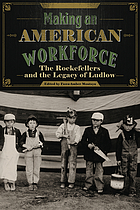
Fawn-Amber Montoya
Taking an interdisciplinary approach to the policies of the early years of the Colorado Fuel and Iron Company, Making an American Workforce explores John D. Rockefeller Jr.'s welfare capitalist programs and their effects on the company's diverse workforce. Focusing on the workers themselves--men, women, and children representative of a variety of immigrant and ethnic groups--contributors trace the emergence of the Employee Representation Plan, the work of the company's Sociology Department, and CF & I's interactions with the YMCA in the early twentieth century. They examine CF & I's early commitment to Americanize its immigrant employees and shape worker behavior, the development of policies that constructed the workforce it envisioned while simultaneously laying the groundwork for the strike that eventually led to the Ludlow Massacre, and the impact of the massacre on the employees, the company, and beyond. Making an American Workforce provides greater insight into the repercussions of the Industrial Representation Plan and the Ludlow Massacre, revealing the long-term consequences of Colorado Fuel and Iron Company policies on the American worker, the state of Colorado, and the creation of corporate culture. Making an American Workforce will be of interest to Western, labor, and business historians."-- Provided by publisher
John D. Rockefeller Jr.'s welfare capitalist programs and their effects on the company's diverse workforce
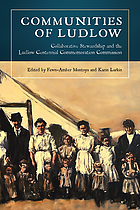
Fawn-Amber Montoya, Karin Larkin
For years, people have come to the Ludlow Massacre Memorial site to remember, to place themselves within a narrative of labor history, and to learn what occurred there. Reveals the perseverance, memory, and work done to share the narratives of the Ludlow people and the experiences of those who commemorate it"-- Provided by publisher
doing public history with labor communities
Museum/Exhibits
Tours
Maps
Digital Projects
Organizations
Sites
Film/Video
Audio/Interview
Podcast/Program
Text/Document
Image
Graphs/Data
Timeline
Southwest
West
Midwest
Southeast
Northeast
Mexico
Canada
Global
Books
Teaching
Lectures
Digital Archives
Journals
Bibliographies
Topic Intro