


Collections
Library
Type
Region
Coverage:
-
Published:
-

Federal Bureau of Investigation
7 files on Chavez and United Farm Workers
Records from the FBI site, showing their obsession with Chavez and the United Farm Workers

Federal Writers Project, History Matters
Born in Slavery: Slave Narratives from the Federal Writers' Project, 1936-1938 contains more than 2,300 first-person accounts of slavery and 500 black-and-white photographs of former slaves. These narratives were collected in the 1930s as part of the Federal Writers' Project (FWP) of the Works Progress Administration, later renamed Work Projects Administration (WPA). At the conclusion of the Slave Narrative project, a set of edited transcripts was assembled and microfilmed in 1941 as the seventeen-volume Slave Narratives: A Folk History of Slavery in the United States from Interviews with Former Slaves. In 2000-2001, with major support from the Citigroup Foundation, the Library digitized the narratives from the microfilm edition and scanned from the originals 500 photographs, including more than 200 that had never been microfilmed or made publicly available. This online collection is a joint presentation of the Manuscript and Prints and Photographs divisions of the Library of Congress.
A Library of Congress Collection containing thousands of first-person slave narratives and hundreds of photographs in the 1930s.
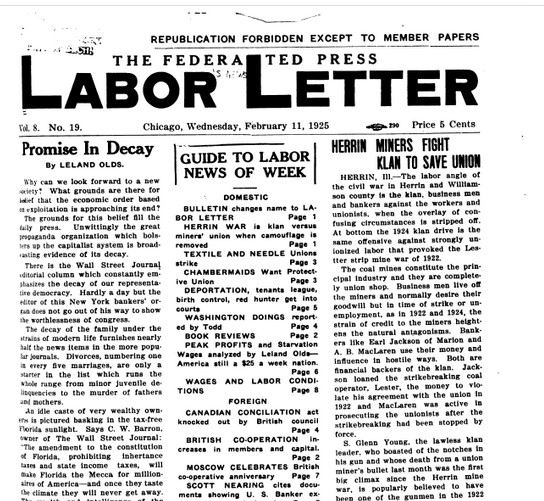
Federated Press
Digitized volumes of Federated press bulletin and Federated press labor letter published in Chicago, but covering news from across the US and some international labor. The Federated Press was a news service created as an alternative to mainstream news services such as the Associated Press. It was left-wing, established in 1920, and its entire records are at Columbia University and Wayne State University. But this published version gives a nice element
Federated Press news magazine, digitized volumes 1925-1929
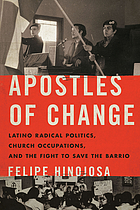
Felipe Hinojosa
In the late 1960s, the American city found itself in steep decline. An urban crisis fueled by federal policy wreaked destruction and displacement on poor and working-class families. The urban drama included religious institutions, themselves undergoing fundamental change, that debated whether to stay in the city or move to the suburbs. Against the backdrop of the Black and Brown Power movements, which challenged economic inequality and white supremacy, young Latino radicals began occupying churches and disrupting services to compel church communities to join their protests against urban renewal, poverty, police brutality, and racism. Apostles of Change tells the story of these occupations and establishes their context within the urban crisis; relates the tensions they created; and articulates the activists' bold, new vision for the church and the world. Through case studies from Chicago, Los Angeles, New York City, and Houston, Felipe Hinojosa reveals how Latino freedom movements frequently crossed boundaries between faith and politics and argues that understanding the history of these radical politics is essential to understanding the dynamic changes in Latino religious groups from the late 1960s to the early 1980s.
reveals how Latino freedom movements frequently crossed boundaries between faith and politics and argues that understanding the history of these radical politics is essential to understanding the dynamic changes in Latino religious groups from the late 1960s to the early 1980s.
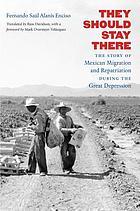
Fernando Saúl Alanís Enciso, Mark Overmyer-Velazquez
Here, for the first time in English—and from the Mexican perspective—is the story of Mexican migration to the United States and the astonishing forced repatriation of hundreds of thousands of people to Mexico during the worldwide economic crisis of the Great Depression. While Mexicans were hopeful for economic reform following the Mexican revolution, by the 1930s, large numbers of Mexican nationals had already moved north and were living in the United States in one of the twentieth century’s most massive movements of migratory workers. Fernando Saúl Alanís Enciso provides an illuminating backstory that demonstrates how fluid and controversial the immigration and labor situation between Mexico and the United States was in the twentieth century and continues to be in the twenty-first.
When the Great Depression took hold, the United States stepped up its enforcement of immigration laws and forced more than 350,000 Mexicans, including their U.S.-born children, to return to their home country. While the Mexican government was fearful of the resulting economic implications, President Lázaro Cárdenas fostered the repatriation effort for mostly symbolic reasons relating to domestic politics. In clarifying the repatriation episode through the larger history of Mexican domestic and foreign policy, Alanís connects the dots between the aftermath of the Mexican revolution and the relentless political tumult surrounding today’s borderlands immigration issues.
An accessible story of Mexican migration to the United States and the forced repatriation of hundreds of thousands of people to Mexico during the Great Depression.
Ferter Nunn, History Matters
Blocking Farm Auctions in Iowa : Some may think of farmers as conservative, but that view ignores a long tradition of rural radicalism in the United States. In the early years of the Great Depression, that radicalism found powerful expression in the subverting of farm foreclosures and tax sales.
The technique was simple—when a farm was foreclosed for overdue taxes or failure to meet mortgage payments, neighbors would show up at the auction and intimidate any potential buyers. Then the farm and equipment would be purchased at a token price and returned to the original owner.
Nation magazine reporter Ferner Nuhn witnessed such an auction sale in Iowa and described this practice in March 1933. These efforts saved the livelihood of many South Dakota and Iowa farmers who were devastated by the depression, but they were not enough. Between 1930 and 1935, about 750,000 farms were lost through foreclosure and bankruptcy sales.
Source: Ferner Nuhn, “The Farmer Learns Direct Action,” Nation 136 (March 8, 1933): 254–256.
Description of local farmers intimidating would-be buyers of lost land

Film Preservation
This collection consists of documents by the board of trustees of the University of Illinois and their agreements regarding labor. The records pertain to Chicago, Springfield and Urbana Campuses of the University of Illinois.
A collection of the University of Illinois' labor agreements running up to the present.

Florida Labor Advocate
Only 1950 available at this link. The Florida Labor Advocate was a union newspaper published by the American Federation of Labor (AFL) in Tampa, Florida. The weekly paper was the “Official Organ of Tampa Central Trades & Labor Assembly” and claimed to be the oldest official labor paper with the largest paid circulation in southwest Florida. The paper began publishing in summer 1930 and ceased publication on May 30, 1958.
The weekly newspaper covered state and national labor news from a clearly pro-union, pro-labor perspective. According to the Advocate, Tampa had the largest per capita union membership of any city in America. The Advocate published meeting information, event calendars, personal news, and editorials concerning many local unions and associated ladies’ auxiliaries in Tampa, most frequently those for electricians, typographers, sign painters, carpenters, postal workers, and cigar workers. Less frequently, the Advocate also published news from state, national, and international AFL-affiliated unions including the AFL Seafarers International Union and the United Textile Workers. -from https://ufndnp.domains.uflib.ufl.edu/introducing-the-florida-labor-advocate/
Florida Labor Advocate was a union newspaper published by the American Federation of Labor (AFL) in Tampa, Florida.
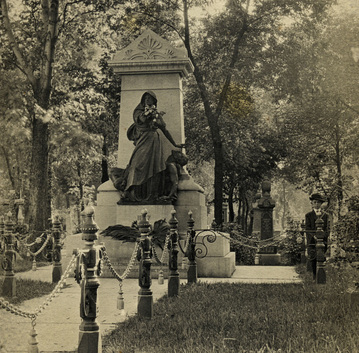
Forest Home Cemetery
The site is great for telling stories behind the monument. It incorporates high-definition images and close-ups of numerous grave sites and detailed depiction in what grave Lot some specific historic labor figures are in. For example, <a href="http://foresthomecemeteryoverview.weebly.com/radical-row.html"><u>Radical Row</u></a> provides in what section specific individuals of the labor movement are buried, including Emma Goldman and Lucy Parsons.
The beautiful memorial to the 8 hour day radicals, built in 1893, and more.
Fountain Hughes, History Matters
Fountain Hughes was born a slave in 1848 in Charlottesville, Virginia. In 1944 (or 1949) he was interviewed in Baltimore by Hermond Norwood, a representative of the Library of Congress’s Archive of Folk Song. The Federal Writer’s Project, a Depression-era program, had initiated the government’s effort to capture the memories of the, by then, very elderly former slaves. Hughes recalled not only life under slavery but also the difficulties many slaves faced in making the transition to freedom in an antagonistic white society that worked hard to impede their efforts. Conditions for the Hughes family under freedom were materially not much better than they had been under slavery. In this interview Hughes recalled how his widowed mother supported her family by binding, or contracting, her children out to work. Still, Hughes asserted, he far preferred freedom to slavery.
A 1944 interview by Hermond Norwood of former slave Fountain Hughes, focusing mainly on Hughes' life as slave and how emancipation impacted him.
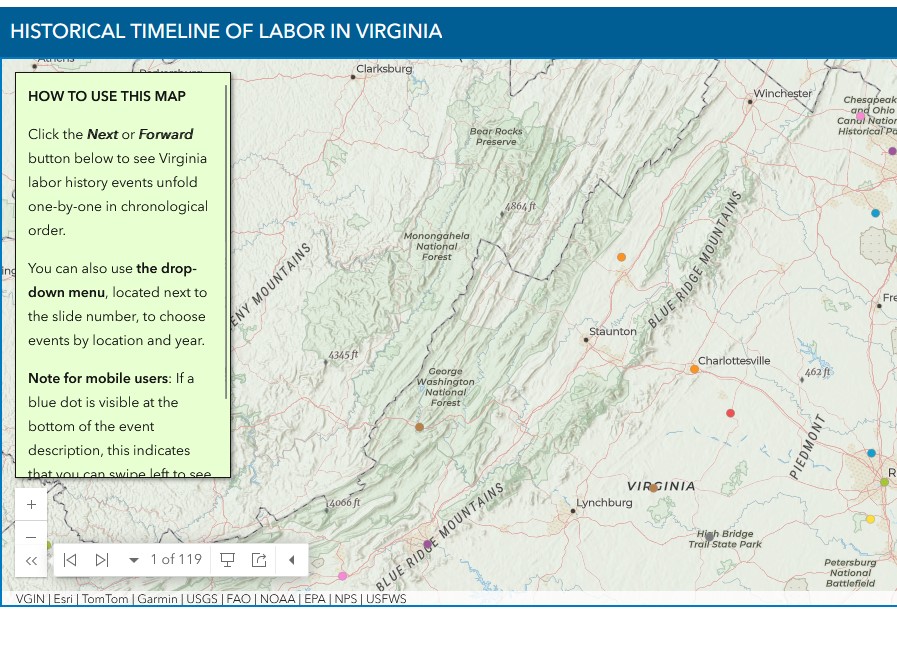
Fowota Mortoo
A nice effott to map and create timeline of labor unions in Virginia through a storymap platform
Historical timeline of union organizing efforts in Virginia -170 entries
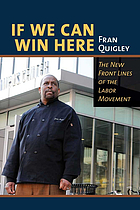
Fran Quigley
Do service-sector workers represent the future of the U.S. labor movement? Mid-twentieth-century union activism transformed manufacturing jobs from backbreaking, low-wage work into careers that allowed workers to buy homes and send their kids to college. Some union activists insist that there is no reason why service-sector workers cannot follow that same path. In If We Can Win Here, Fran Quigley tells the stories of janitors, fry cooks, and health care aides trying to fight their way to middle-class incomes in Indianapolis. He also chronicles the struggles of the union organizers with whom the workers have made common cause. The service-sector workers of Indianapolis mirror the city's demographics: they are white, African American, and Latino. In contrast, the union organizers are mostly white and younger than the workers they help rally. Quigley chronicles these allies' setbacks, victories, bonds, and conflicts while placing their journey in the broader context of the global economy and labor history. As one Indiana-based organizer says of the struggle being waged in a state that has earned a reputation as antiunion: "If we can win here, we can win anywhere." The outcome of the battle of Indianapolis may foretell the fate of workers across the United States
Introduction : why can't I do that as a housekeeper?
A campus union
We can win here
Dreaming of one good job
Alt-labor hits Indianapolis
The Fight for 15
Legal problems
UNITE HERE
Struggling for contracts
Wonderful field, awful pay
Trying to secure a union
Prayers for citizenship
Advocacy for citizenship
Contracts on campus
Turned away at the hotels
Back to the Hyatt
Bring Lisa back!
That is what the union does for me
stories of janitors, fry cooks, and health care aides trying to fight their way to middle-class incomes in Indianapolis
Frances Perkins, History Matters
In April 1940 Secretary of Labor Frances Perkins convened a conference in Missouri concerning the silicosis crisis that had emerged in the late 1930s. The differing perspectives on the disease and workers’ health are apparent in these excerpts from the Tristate Silicosis Conference. Evan Just, representing industry, claimed that silicosis is a social, not an industrial, problem. Ex-miner Tony McTeer disputed Just’s analysis, arguing that he, himself, contracted silicosis even though he had worked only in mines that employed the improved “wet drilling” method. The legendary public health advocate Dr. Alice Hamilton, representing the Public Health Service, spoke on the medical aspects of industrial hygiene and showed that, despite industry’s claims, little had improved over the past twenty-five years.
Excerpts from the Tristate Silicosis Conference.
Francis E. Willard, History Matters
Frances Willard Meets Elizabeth Rodgers in the 1880s (History Matters): The commitment of the Knights of Labor to equality for women was more than rhetorical, as seen in the career of Elizabeth Rodgers, the Master Workman, or head, of the organization’s giant Chicago District No. 24. This 1889 portrait of Rodgers, offered by leading national anti-liquor activist Frances Willard, underscored the desire on the part of many Knights, both men and women, to connect the struggle for labor reform with a broader vision that included vehement opposition to liquor. It also showed the complex ways in which the Knights managed to simultaneously advocate equal rights for women at the same time they upheld the Victorian ideal of domesticity for women. Thus, although Rodgers presided over a Local Assembly with 50,000 male and female members, she was still listed as a “housewife” when she attended the 1886 Richmond convention.
Source: Frances E. Willard, Glimpses of Fifty Years: The Autobiography of an American Woman (Chicago: H. J. Smith & Co., 1889), 522–525.
Writing detailing the role of women in the Knights of Labor
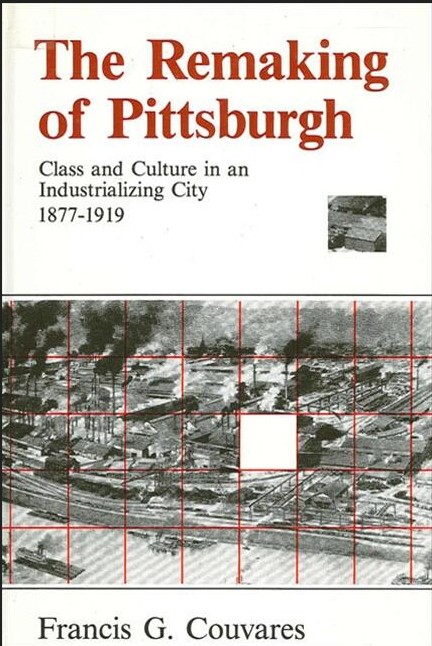
Francis G. Couvares
What forces transformed a community in which industrial workers and other citizens exercised a real measure of power over their lives into a metropolis whose inhabitants were utterly dependent on Big Steel? How did a city that fervidly embraced the labor struggle of 1877 turn into the city which so fiercely repudiated the labor struggle of 1919?
The Remaking of Pittsburgh is the history of this transformation. The cultural dimensions of industrialization come to life as Couvares calls upon labor history, urban history, and the history of popular culture to depict the demise of the "craftsman's empire" and the birth of a cosmopolitan bourgeois society. The book explores the impact of immigration on the shaping of modern Pittsburgh and the emergence of mass culture within the community. In the midst of these processes of transformation, the giant steel corporations were continually reshaping the life of the city.Chapter 1. 1877
Chapter 2. The Craftsmen's Empire
Chapter 3. Plebian Culture
Chapter 4. Sober Citizens
Chapter 5. Politicians and Professionals
Chapter 6. Steel City
Chapter 7. Leisure Class, Ruling Class
Chapter 8. The Triumph of Commerce
Chapter 9. Epilogue: 1919 and Beyond
Notes
Bibliography
Index
impact of immigration on the shaping of modern Pittsburgh and the emergence of mass culture

Francis Ryan
Beginning in the 1920s and ending in the 2000s, AFSCME's Philadelphia Story provides a comprehensive account of the development of what is today the largest and most powerful union in the AFL-CIO, the American Federation of State, County and Municipal Employees. Author Francis Ryan shows how sanitation workers and other blue-collar municipal employees formed an organization that successfully challenged the power dynamics of one of the nation’s largest cities, to become the model for successful municipal collective bargaining in the United States.
Ryan’s engaging story describes how AFSCME emerged out of Philadelphia’s notorious Republican political machine and how ordinary workers forged what would become the city’s most enduring interracial, working-class organization of the twentieth century. He provides new insight into the working-class origins of African American political power, as well as a thorough overview of the role the municipal state played in the Quaker City’s urban economy.
Ryan’s study offers a compelling, long-term analysis of the growth of a single union in a major American city and—by grounding his narrative in the experiences of municipal workers, from sanitation workers and crossing guards to clerical staff and administrative professionals—recasts how the history of government sector unionism is understood.
In this video clip, Francis Ryan discuss his book AFSCME's Philadelphia Story.
experiences of municipal workers, from sanitation workers and crossing guards to clerical staff and administrative professionals
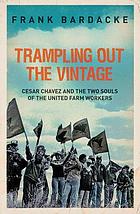
Frank Bardacke
This book is both the most devastating portrayal of Cesar Chavez and the rise and fall of the United Farm Workers, and the most inspiring. You will come away thinking that an entirely different labor movement was possible, and that structures of unions matter critically for transformative possiblities.
From the publisher: The UFW was once a transformative political force of a kind now largely lost in contemporary America.
Trampling Out the Vintage is the authoritative account of the rise and fall of the United Farm Workers and its most famous and controversial leader, Cesar Chavez. Based on many years of interviews--with farm workers, organizers, and the opponents and friends of the UFW--the book tells a story of collective action and empowerment rich in evocative detail and stirring human interest.
Beginning with the influence of the ideas of Saul Alinsky and Catholic Social Action at the union's founding, through the UFW's thrilling triumphs in the California fields, the drama concludes with the debilitating internal struggles that left the union a shadow of its former self. A vivid rendering of farm work and the world of the farm worker,
Trampling Out the Vintage is a dramatic reappraisal of the political trajectory of Cesar Chavez and the United Farm Workers and an essential re-evaluation of their most tumultuous years"--Publisher's website
Contents
Prologue. The car pool.
pt. 1. The founding. The territory -- The work itself -- Childhood as destiny -- The lay catholic activist -- The alchemist -- The organizer in Oxnard -- Climbing the fence -- A family affair -- New wings -- The grape strike.
pt. 2. The boycott. Moral jujitsu -- "Boycott baby, boycott": the Civil Rights Coalition regroups -- Battle theater -- The spring pilgrimage -- Democratic Delano -- Cutting back and rooting out -- The fast -- Boycott heroics.
pt. 3. Farmworkers win a new deal. Salinas before the storm -- "Reds lettuce alone": farmworkers stun Salinas -- Up on the mountain, out in the fields, back in the cities -- "Fighting for our lives" -- Forcing the great concession -- The wet line, victory in hand, confusion at heart -- Living with the law -- "The game" -- "That wall is black": the La Paz makeover -- Imperial strike -- "Esta huelga está́ ganada" -- The good, the bad, the unlikely -- Civil war -- Exeunt omnes.
The most in-depth critical look at Cesar Chavez and the farmworker labor movement. A thorough investigation of top-down vs. bottom-up unionism.

Frank Leslie’s Illustrated Newspaper, History Matters
The massive growth in unemployment during the depression of the 1870s forced many urban workers to wander from town to town, looking for work. These wanderers often used the railroads to travel, which gave rise to the popular image of the rail-riding “tramp.” To some Americans, the unemployed who wandered the country in this manner posed a threat to order and safety. The “tramp menace,” many argued, required a repressive response—and advertisements like this exploited the pervasive fear.
(teaching document/illustration) advertisement exploiting the pervasive fear of the tramp.

Frank Smith, History Matters
): In his testimony before the U.S. Senate, Hungarian-born Frank Smith, a Clairton worker, used his support for the war effort as evidence of his Americanism. “This is the United States,” he argued, “and we ought to have the right to belong to the union.”
Transcribed testimoney of a steel worker over his right to join a union during the 1919 Steel Strike.
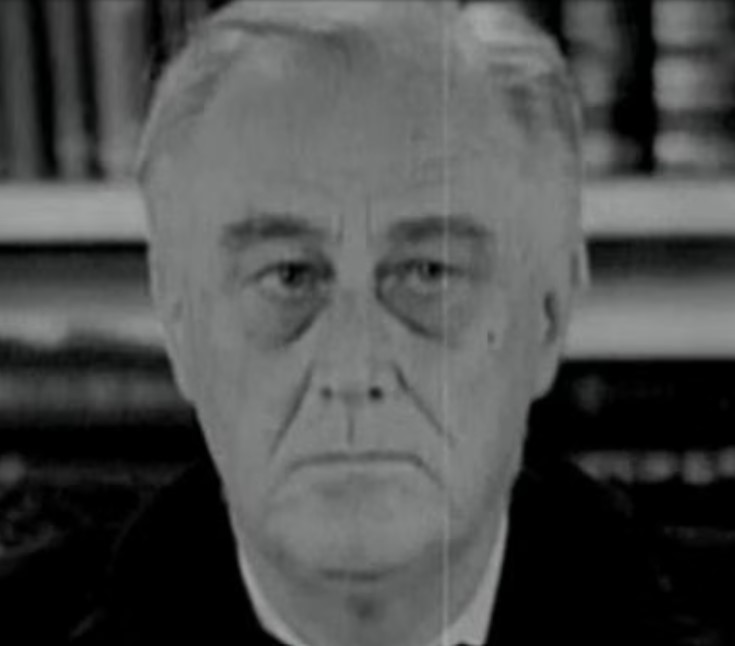
Franklin Delano Roosevelt
In 1944, Pres. Roosevelt issued his call for a 2nd bill of rights, and economic bill of rights. This is the filmed message.
The right to a useful and remunerative job in the industries or shops or farms or mines of the Nation;
The right to earn enough to provide adequate food and clothing and recreation;
The right of every farmer to raise and sell his products at a return which will give him and his family a decent living;
The right of every businessman, large and small, to trade in an atmosphere of freedom from unfair competition and domination by monopolies at home or abroad;
The right of every family to a decent home;
The right to adequate medical care and the opportunity to achieve and enjoy good health;
The right to adequate protection from the economic fears of old age, sickness, accident, and unemployment;
The right to a good education.
Filmed address for an economic bill of rights, 1944, by FDR

Franklin Folsom
Behind the unemployment benefits and social security cheques that millions of Americans receive today lies a long series of dramatic actions. This book tells the very human story of these actions and reveals the jobless of past depressions as creators of many important features of today's social landscape. The result of more than fifty years of research, this is the definitive study of the activities of America's unemployed throughout US history up to the outbreak of World War 2.
Generously illustrated with rare or hitherto unknown photos, drawings, and cartoon, this is a poignant story about triumph in the face of great obstacles, or creative response to hardships by those who had suddenly been cut loose from society, or penniless human beings who have made history. Franklin Folsom, an active participant in the stirring events of the 1930s, presents a moving tribute to the heroism of obscure workers who solved some of the basic social problems they did not create but had to overcome in order to survive and live in dignity. Folsom's smooth and intimate style, coupled with his own perspective of the last half-century, pulls the reader into the very heart of US labour and social history. The result is a work full of compassion as well as information that should become a standard for all interested readers of our long and tumultuous history of organised labour.
tells the very human story of unemployed action and reveals the jobless of past depressions as creators of many important features of today's social landscape.
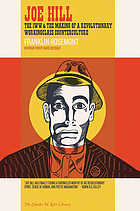
Franklin Rosemont
Joe Hill : the IWW & the Making of A Revolutionary Workingclass Counterculture
A history of Wobblie artist Joe Hill, argues he still lives on today through songs and art in rebel circles.
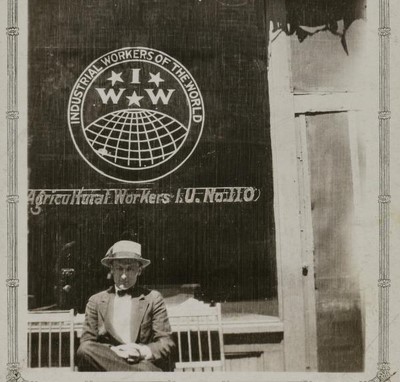
Franklin Rosemont, Penelope Rosemont
The collection contains many of the IWW’s essential documents from its most crucial years, 1905 through 1935, as well as some of its later literature.
Included are classic IWW pamphlets and magazines, volumes of convention minutes, and several editions of the IWW’s famous “Little Red Song Book.” Many of the publications are by well known labor authors such as Eugene Debs, Mary Marcy, Ralph Chaplin, Elizabeth Gurley Flynn and William Trautman. In addition to the publications printed in Chicago, many of the pamphlets are in foreign languages such as Finnish, Hungarian, and Spanish, printed in IWW print shops in Duluth, Minnesota and Cleveland.
The collection also contains several of the union’s numerous, varied and colorful dues and assessment stamps, buttons, stickers knows as "silent agitators," along with a wide range of other Wobbly paraphernalia. Materials pertaining to notable IWW members such as Joe Hill and Carlos Cortez and IWW related organizations round out the picture of the labor environment of the first half of the 20th century. Scroll down to "Inventory" to see what materials are digitized.
Pamphlets, fliers, periodicals, books, convention minutes and proceedings, stickers, song books, official documents, and other ephemera created by the IWW and other related organizations and members.
Franky Abbott, Digital Public Library of America
This primary source set uses illustrations, documents, and photographs to tell the story of the Homestead Strike.
In the summer of 1892, at the Homestead Steel Works in Homestead, Pennsylvania, a dispute between a labor union and the Carnegie Steel Company led to violent conflict. Henry Frick, Carnegie’s chief executive officer and a staunch opponent of unions, offered the Amalgamated Association of Iron and Steel Workers (AAISW) a new contract with substantial pay reductions over an extended term. When the union refused the contract, attempted to negotiate, and then threatened to strike, Frick refused to back down. He constructed a fence around the steel mill at Homestead, shut down operations, and laid off hundreds of workers, leading to an official lockout by June 30. Workers became aware that Frick was recruiting scabs, or non-union workers, to replace them, and they overtook the mill several days after the lockout. To protect the scab workers and regain control of the property, Frick engaged the services of the Pinkerton Detective Agency—a private security agency notorious for violent conflicts with labor unions.
On July 6, 1892, Pinkerton agents arrived in Homestead on barges along the Monongahela River. Strikers resisted their advance and violence quickly escalated. To prevent the Pinkertons from entering the mill, strikers fired shots—killing one agent and wounding five others. The Pinkertons then opened fire on strikers, killing or wounding more than thirty men. Strikers retaliated by attacking the Pinkertons on their barges in a thirteen-hour battle. Finally, the union agreed to let Pinkerton agents surrender in exchange for their guaranteed safety, although once the Pinkertons came ashore, they were attacked by angry Homestead townspeople. Strikers then set the barges on fire.
By July 10, the sheriff of Homestead succeeded in getting the Pennsylvania governor to send an armed militia to Homestead to quell the violence. In the months that followed, the union continued the strike, but Frick successfully reopened the mill with scab workers. Union leaders faced legal charges for the violence of July 6, and by November, they were running out of money and supplies to keep the strike going. Most union workers never regained their jobs at Homestead and the Homestead works remained free of union organization—along with all of the Carnegie companies' steel mills. Although the Homestead Strike failed as a bargaining tactic for the union, it gained national attention for the cause of labor organizing, sparked public outrage with industry giants and their use of force, and set precedent in US labor history for decades to come. This primary source set uses illustrations, documents, and photographs to tell the story of the Homestead Strike.
discussion questions, classroom activities, and primary source analysis tool

Franky Abbott, Digital Public Library of America
On September 8, 1965, Filipino farm workers organized as the Agricultural Workers Organizing Committee (AWOC) decided to strike against grape growers in Delano, California, to protest years of poor pay and working conditions. The Delano Grape Strike grew from a long history of labor organizing and protest by Filipino workers in agriculture and canning on the West Coast. AWOC leaders asked the National Farm Workers Association (NFWA), a mostly Latino farm workers union led by Cesar Chavez, to join their strike. The Delano Grape Strike was the first major collaboration between Filipino and Mexican workers, who had traditionally been recruited to work during the other group’s protest actions. In August 1966, the two organizations merged to form the United Farm Workers (UFW), a union committed to nonviolent protest that sought to organize migrant farm laborers to improve their wages, education, housing, and legal protections.
The protest that began in the fields in Delano grew into a broader boycott that asked for help from consumers in urban areas. By 1970, the UFW grape boycott was a success. Table grape growers signed their first union contracts, granting workers better pay, benefits, and protections. In the decades that followed, Chavez and the UFW continued to use nonviolent strikes, boycotts, marches, and fasts to help farm workers stand up for their rights and gather support from ordinary Americans to aid them in their efforts. This primary source set uses documents, photographs, and promotional materials to explore the events of the Delano Grape Strike and the formation of the United Farm Workers.
Teaching guides, guided activities for teaching the Bracero worker experience
Museum/Exhibits
Tours
Maps
Digital Projects
Organizations
Sites
Film/Video
Audio/Interview
Podcast/Program
Text/Document
Image
Graphs/Data
Timeline
Southwest
West
Midwest
Southeast
Northeast
Mexico
Canada
Global
Books
Teaching
Lectures
Digital Archives
Journals
Bibliographies
Topic Intro