


Collections
Library
Type
Region
Coverage:
-
Published:
-

Gilder Lehrman Center
documents and teaching guide, with an extended activity suggestedThe Transcendentalist reformer Orestes Brownson first published “The Laboring Classes” in his
journal, the Boston Quarterly Review, in July 1840. It is an attack on the entire wage system but particularly focuses on how factory jobs affect the mill girls: “‘She has worked in a Factory,’”
Brownson argues, “is almost enough to damn to infamy the most worthy and virtuous girl.”
Inre sponse, “A Factory Girl” published a defense of the mill girls in the December 1840 issue of the Lowell Offering, a journal of articles, fiction, and poetry written by and for the Lowell
factory operatives. The author was probably Harriet Jane Farley, a mill girl who eventually became editor of the Lowell Offering
A teaching document set for college and advanced high school
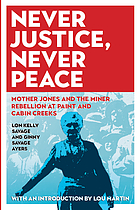
Ginny Savage Ayers, Lon Kelly Savage, Lou Martin
In 1986 Lon Savage published Thunder in the Mountains, a popular history now considered a classic. When Savage passed away, he left behind an incomplete book manuscript about a lesser-known Mother Jones crusade in Kanawha County. His daughter Ginny drew on his notes and files, and her own research, to complete this book-length account of the Paint Creek-Cabin Creek Strike of 1912-13.
A book-length account of the Paint Creek-Cabin Creek Coal Strike of 1912-13 and Mother Jones' role within it.
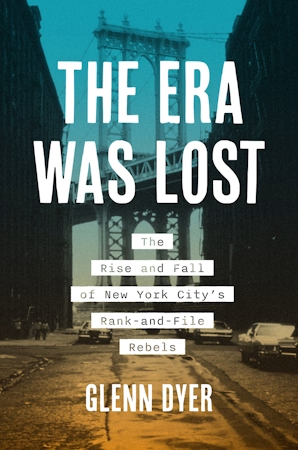
Glenn Dyer
An exciting yet relatively unknown episode in American labor history took place in New York City between 1965 and 1975. Rank-and-file members of numerous unions caught a "strike fever" as they challenged the entrenched power of some of the country's most powerful politicians, employers, and union leaders in a wave of contract rejections, wildcat strikes, and electoral campaigns. Workers in unions across New York wanted more than better contracts: they contested control of the work process, racism on the job, and workers' place in America's socioeconomic hierarchy while implicitly and explicitly demanding greater democratic control of their representative organizations. Some initial challenges were effective and succeeded in delivering better contracts and unseating undemocratic leaders. However, those early successes were short-lived. Glenn Dyer traces the way workers were met with employer recalcitrance and union attacks that proved too powerful to organize against. In the face of this resistance, workers retreated into a survivalist attitude of accommodation and resignation, contributing to the decline of social democratic New York and working-class power in the city. Ultimately, Dyer argues, the failures of the rank-and-file organizing efforts in New York City, which was the biggest center of organized labor in the country, shows how stunted workers' aspirations and numerous defeats not only uprooted the foundations of New York's uniquely social democratic polity but also ushered in a national era of increased working-class subservience that has resonance today
traces the way New York workers were met with employer recalcitrance and union attacks that proved too powerful to organize against.
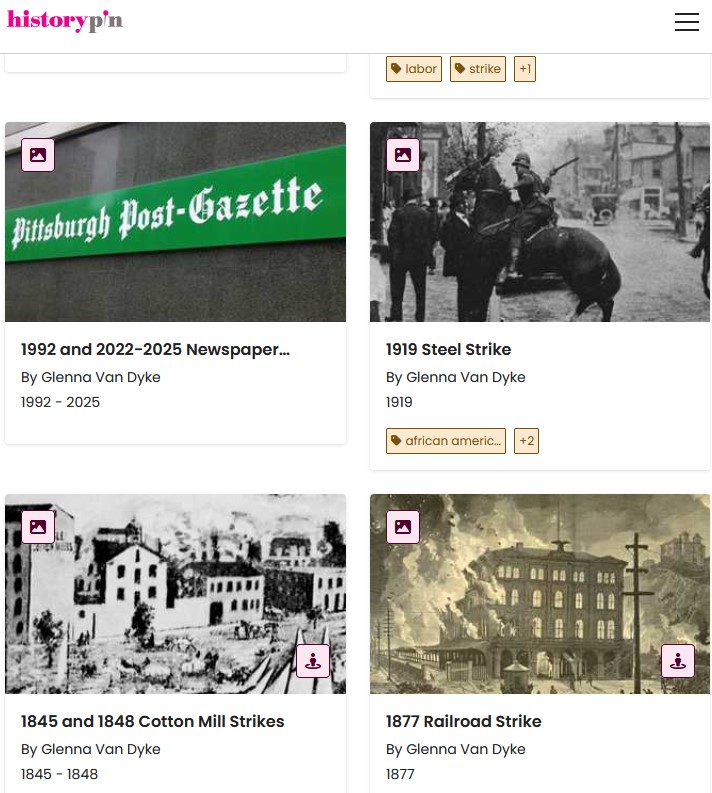
Glenna Van Dyke
Bridging Solidarity is a digital map that fosters exploration of Pittsburgh’s long labor history. This project introduces audiences to fourteen strikes or strike-related conflicts across Allegheny County from the early nineteenth century to today, by combining secondary literature, newspapers, digital and physical archival material, visual media, and historic maps. Hosted in the platform HistoryPin, Bridging Solidarity promotes engagement with strikes across time and space, inspires an appreciation for local places, and highlights many diverging experiences within Pittsburgh’s labor movement. The article contextualizes this work within three historic subfields: digital humanities, place-based public labor history, and diverse local labor history. This project’s digital inception influenced its design, preservation, and writing, as informed by the insights of digital historians. Place-based history helps audiences better understand local labor history, grounding its interpretation in relevant sites that are publicly accessible and likely familiar to audiences. Additionally, this project centers marginalized people and the ambiguities of strikes past, presenting a complicated narrative that increases public awareness of how women and African Americans have influenced and experienced Pittsburgh’s history. Last, future expansions of this project will prompt further engagement with these historical subfields.
A digital map of 6 strikes across history in Pittsburgh based on the HistoryPin Platform
Gloria Steinem, History Matters
In the years following the 1920 ratification of the 19th Amendment extending voting rights to women, the National Woman’s Party, the radical wing of the suffrage movement, advocated passage of a constitutional amendment to make discrimination based on gender illegal. The first Congressional hearing on the equal rights amendment (ERA) was held in 1923.
Many female reformers opposed the amendment in fear that it would end protective labor and health legislation designed to aid female workers and poverty-stricken mothers. A major divide, often class-based, emerged among women’s groups. While the National Woman’s Party and groups representing business and professional women continued to push for an ERA, passage was unlikely until the 1960s, when the revived women’s movement, especially the National Organization for Women (NOW), made the ERA priority.
The 1960s and 1970s saw important legislation enacted to address sex discrimination in employment and education—most prominently, the Equal Pay Act of 1963, Title VII of the Civil Rights Act of 1964, and Title IX of the 1972 Higher Education Act—and on March 22, 1972, Congress passed the ERA. The proposed amendment expired in 1982, however, with support from only 35 states - three short of the required 38 necessary for ratification.
Strong grassroots opposition emerged in the southern and western sections of the country, led by anti-feminist activist Phyllis Schafly. Schlafly charged that the amendment would create a “unisex society” while weakening the family, maligning the homemaker, legitimizing homosexuality, and exposing girls to the military draft.
In the following 1970 Senate hearing, author and editor Gloria Steinem argued that opposition to the ERA was supported by deep-seated societal myths about gender that exaggerated difference, ignored factual evidence of inequitable treatment, denied the importance of the women’s movement, and promoted male domination.
argues that opposition to the ERA was supported by deep-seated societal myths about gender
Godfrey Irwin, History Matters
The labor struggles of the early 20th century, many of which ended in violence and death, engendered deep concern at all levels of society and led to a series of governmental investigations. The most important—the Commission on Industrial Relations—was appointed by newly elected Democratic president Woodrow Wilson early in 1913. The commission was in the midst of taking testimony from owners, workers, and reformers in dozens of industrial communities around the country when a coal strike erupted in southern Colorado. On Easter night, 1914, three women and eleven children were killed at a mining encampment in Ludlow, Colorado. One of the most famous accounts of what came to be called the “Ludlow massacre” was the statement of a young electrical engineer, Godfrey Irwin, who was traveling through southern Colorado and provided an eyewitness account to a New York World reporter, reproduced here.
Ludlow Massacre
Good Housekeeping, History Matters
With U.S. entry into World War I, President Woodrow Wilson appointed Herbert Hoover to head the newly created U.S. Food Administration. A mining engineer who had successfully organized the massive effort to get food to Belgium’s citizens after the German army’s sweep through that country in 1914, Hoover was now charged with managing domestic agriculture and conservation in order to feed the U.S. Army and assist Allied armies and civilians. “Food Will Win the War,” declared the Food Administration through its ubiquitous posters and publicity efforts.
Planting gardens, observing voluntary rationing, avoiding waste—these efforts at food conservation all came to be known as “Hooverizing.” Women’s magazines also took up the home conservation crusade, some employing military analogies to promote the recommendations of the Food Administration. Presenting domestic work as patriotic effort, this U.S. Food Administration campaign in Good Housekeeping offered women a membership shield and even provided instructions for sewing a “patriotic” housekeeping uniform.
Presenting domestic work as patriotic effort for World War I
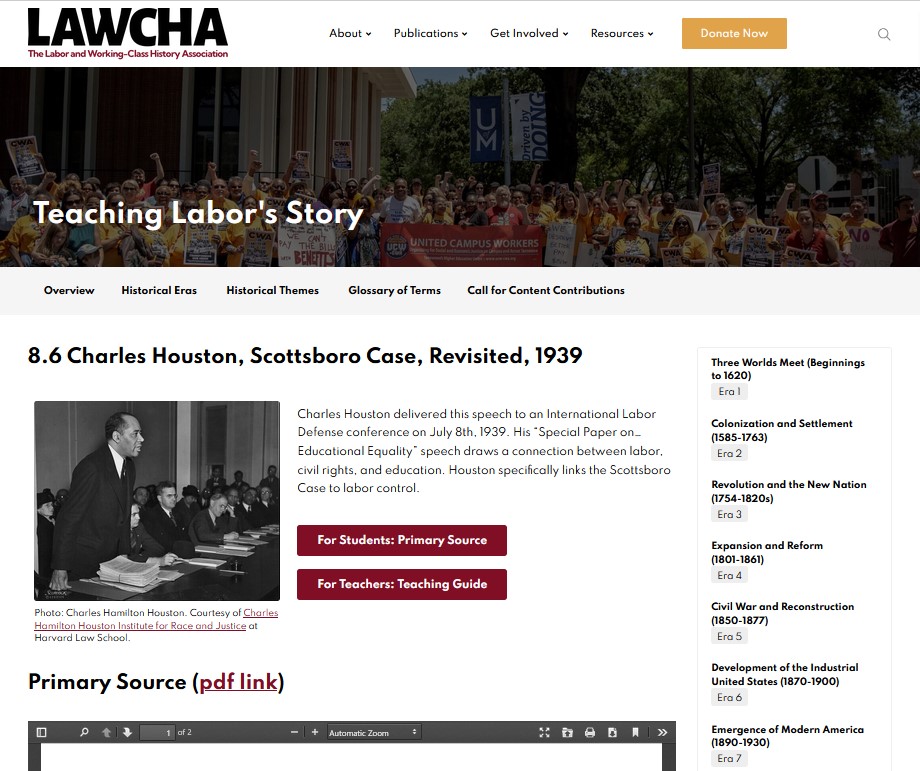
Gordon Andrews, Teaching Labor's Story
This is a speech by Charles Hamilton Houston at the International Labor Defense[ILD]Conference, July 15, 1939. Houston was a civil rights lawyer. At the time he made this speech he was the Chief Legal Counsel for the National Association for the Advancement of Colored People (NAACP).The Scottsboro Case refers to the arrest and trial of twelveyoung African American men in Scottsboro, Alabama in 1931, charged on suspiciously false testimony (later proved false) of rape.Both the NAACP and the ILD providedlegaladvice andservices, challenging the false charges.The legal battle for justicelasted for many years, and was widely coveredin the media
Charles Houston delivered this speech to an International Labor Defense conference on July 8th, 1939. His “Special Paper on…Educational Equality” speech draws a connection between labor, civil rights, and education. Houston specifically links the Scottsboro Case to labor contr
Gordon Keith Mantler
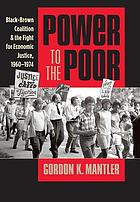
The Poor People's Campaign of 1968 has long been overshadowed by the assassination of its architect, Dr. Martin Luther King Jr., and the political turmoil of that year.
In a major reinterpretation of civil rights and Chicano movement history, the author demonstrates how King's unfinished crusade became the era's most high-profile attempt at multiracial collaboration and sheds light on the interdependent relationship between racial identity and political coalition among African Americans and Mexican Americans.
The author argues that while the fight against poverty held great potential for Black-brown cooperation, such efforts also exposed the complex dynamics between the nation's two largest minority groups
a major reinterpretation of civil rights and Chicano movement history
Gottlieb Mittelberger, History Matters
William Penn’s colony of Pennsylvania, founded in 1681, attracted many poor European migrants. Many colonists financed their migration by arriving as indentured servants. Indentured servants were an important source of labor in the colonies; those arriving in the 17th century usually signed contracts (known as indentures) for a fixed term and upon completion received their freedom and a suit of clothes, a similar practice to apprenticeship. However, the Germans whom Gottlieb Mittelberger observed in the mid-18th century had no formal contracts; instead they were auctioned off to he highest bidder upon arrival, a practice that Mittelberger labeled as barbaric, and “a sale in human beings.” Mittelberger, an organist and schoolmaster, found much in North America not to his taste, and returned to Germany in a few years where he wrote a book warning Germans of the dangers of emigration to the New World.
primary source --an account of being auctioned off to he highest bidder upon arrival
Gottlieb Mittelberger, History Matters
In the seventeenth and early eighteenth centuries, many colonists arrived as indentured servants or bondsmen who served a term of service before receiving their freedom. This practice meant that impoverished Germans and other Europeans financed their passage across the Atlantic. Between 1749 and 1754 more than 30,000 Germans came to Pennsylvania, and by mid-century they constituted about one third of the colony’s population. Gottlieb Mittelberger arrived in Philadelphia in late 1750 aboard the Osgood, along with 500 of his fellow countrymen. With fortunes better than most, he settled as an organist and schoolmaster in New Providence, a German farming community outside Philadelphia. He found much distasteful about his new home and returned in 1754 to write an expose warning Germans about fraudulent accounts of ideal conditions in America.
account of exploited German indentured servants in Pennsylvania in 18th century
Gray Fitzsimons
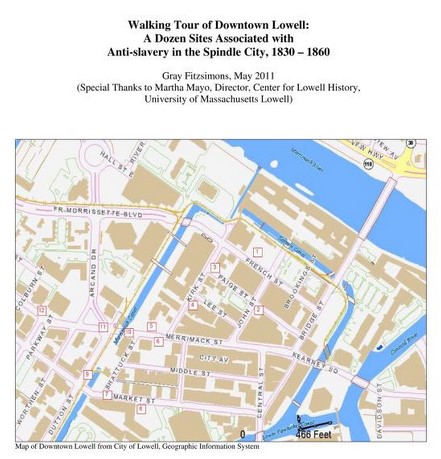
Tour #1: Boott Cotton Mills Boardinghouses
#2: John Street Congregational Church
#3: Kirk Street Agent’s House
#4: Lowell High School
printed 15 page guide and map of sites, many of them overlapping with other points of labor history
Greg Boozell
Deaths shootings, marches, route of the Mulkeytown march
Locations and photos of important events from the Illinois Mine Wars
Greg Boozell
Site documents the Illinois mine wars, including images, interviews, and locations where events occurred. In March 1932, the wage contract between Illinois coal operators and United Mine Workers District 12 miners expired. With coal demand and prices waning, operators sought to substantially reduce miner’s pay. District leadership negotiated a reduction from $6.10 per day to $5.00. However, the contract was subject to rank and file approval.
A vote was held in July 1932, and the union membership soundly rejected the agreement. District President John Walker called on UMWA President John L. Lewis to come to Illinois to convince miners accept the deal. However, when Lewis or Walker spoke publicly in support of the new agreement, they were often met with catcalls and organized protests from the rank and file.
On August 6, a new election was held. Before the tallies could be made public, the ballots were stolen. Instead of retrieving the ballots or holding a new election, John L. Lewis immediately declared an emergency and imposed the $5.00 per day agreement on the workers. (Later, the license plate number of the robbery get-away car was traced to District 12 Vice President, Fox Hughes.)
In protest, miners organized mass pickets in a number of coal towns in Central Illinois. On August 24, a mass march was organized to win the support of workers in the Southern part of the state. The huge caravan was met by scores of deputies and thugs at Mulkeytown, Illinois. Vehicles were upended and workers were shot at and beaten.
Eight days later, delegates representing tens of thousands of miners assembled in Gillespie, Illinois. They voted to break from the UMWA and form a new union, the Progressive Miners of America (PMA).
Site documents the Illinois mine wars, including images, interviews, and locations where events occurred.

Greg Boozell
The audio documentary, We Were Not Ladies. We Were Women. is a feature-length audio documentary that chronicles the story of Agnes Burns Wieck and her tumultuous year as president of the Illinois Women’s Auxiliary of the Progressive Miners of America 1932-1933
In September, 1932 thousands of Illinois miners split from the United Mine Workers of America to form a dissident union, the Progressive Miners of America. More than a factional dispute, the Illinois mine war would determine whether a union’s power could be wielded autocratically by its leaders, or if the miner’s union would be governed democratically by its members. And under Agnes Burns Wieck’s leadership, the women of the coal fields would assert themselves as equal partners in the struggle.
Narrated by Kim Holmes, this story is told through first-person accounts, many taken from the Oral History Collection of the University of Illinois Springfield, interviews with scholars, and historical reenactments featuring Diane Pritchard as Agnes Burns Wieck.
An audio documentary of the Illinois mine wars of the 1930s and the critical role of radical women like Agnes Burns Wieck
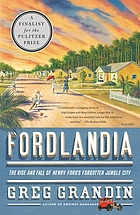
Greg Grandin
"In 1927, Henry Ford, the richest man in the world, bought a tract of land twice the size of Delaware in the Brazilian Amazon. His intention was to grow rubber, but the project rapidly evolved into a more ambitious bid to export America itself. Fordlandia, as the settlement was called, soon became the site of an epic clash. On one side was the lean, austere car magnate; on the other, the Amazon, the most complex ecological system on the planet. Indigenous workers rejected Ford's midwestern Puritanism, turning the place into a ribald tropical boomtown. And his efforts to apply a system of regimented mass production to the Amazon's diversity resulted in a rash environmental assault that foreshadowed many of the threats laying waste to the rain forest today."--Publisher description
More than a parable of one man's arrogant attempt to force his will on the natural world, it depicts a desperate quest to salvage the bygone America that the Ford factory system did much to dispatch.
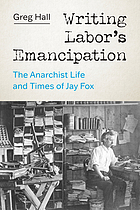
Greg Hall
Jay Fox (1870-1961) was a journalist, intellectual, and labor militant, whose influence rippled across the country. In Writing Labor's Emancipation, historian Greg Hall traces Fox's unorthodox life to shed light on the shifting dynamics in US labor radicalism from the late nineteenth to the early twentieth century. Radicalized as a teenager after witnessing the Haymarket tragedy, Fox embarked on a lifetime of organizing for labor unions, helping build anarchist communities (including Home, Washington), and, perhaps most notably, working as a writer. Thanks to his accessible writing style, insightful working-class perspective, and sharp wit, he became a popular and influential voice, often in dialogue with fellow anarchists such as Emma Goldman and Lucy Parsons. Drawing on previously unused sources, Hall both explores Fox's life and shines a light on the utopians, revolutionaries, and union men and women with whom Fox associated and debated. Hall's research ultimately provides valuable knowledge of the lived experiences of working-class Americans and brings to light alternative visions for activism and social change"-- Provided by publisher
traces Jay Fox's unorthodox life to shed light on the shifting dynamics in US labor radicalism from the late nineteenth to the early twentieth century.

Greg Mitchell, Democracy Now
Democracy Now's interview with Greg Mitchell on the movie produced about the 1937 Memorial Day Massacre, when police in Chicago shot at and gassed a peaceful gathering of striking steelworkers and their supporters, killing 10 people, most of them shot in the back. Most of the interview uses scenes from the documentary. It was a time like today, when unions were growing stronger. The workers were on strike against Republic Steel, and the police attacked them with weapons supplied by the company. The tragic story is told in a new PBS documentary. "The mass media, right up to _The New York Times_, was supporting the police story that they had no choice but to open fire on this mob," says Greg Mitchell, who directed the new PBS documentary, _Memorial Day Massacre: Workers Die, Film Buried_, and edited a companion book that is the first oral history on the tragedy.
Interview with Greg Mitchell by Amy Goodwin about the film "Memorial Day Massacre: Workers Die, Film Buried"
Greg Mitchell, Lyn Goldfarb
The first film to fully explore the 1937 tragedy in Chicago, when police shot and killed ten pro-labor marchers--and the shocking film cover-up that followed. This haunting episode transformed union organizing in the U.S. while revealing the dangers of official secrets and media suppression, with profound lessons for Americans today. Directed by Greg Mitchell and Produced by Lyn Goldfarb.Film and book explore the tragic, but largely forgotten, 1937 incident in Chicago when police shot 40 steel workers and supporters (mainly in the back) and killed ten of them. Then Paramount suppressed the only footage of the murders, until a famed investigative reporter and crusading U.S. senator brought it to light.
The first film to fully explore the 1937 tragedy in Chicago, when police shot and killed ten pro-labor marchers--and the shocking film cover-up that followed.
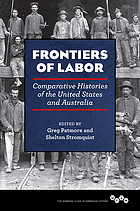
Greg Patmore, Shelton Stromquist
Alike in many aspects of their histories, Australia and the United States diverge in striking ways when it comes to their working classes, labour relations, and politics. Greg Patmore and Shelton Stromquist curate innovative essays that use transnational and comparative analysis to explore the two nations' differences. The contributors examine five major areas: World War I's impact on labor and socialist movements; the history of coerced labour; patterns of ethnic and class identification; forms of working-class collective action; and the struggles related to trade union democracy and independent working-class politics. Throughout, many essays highlight how hard-won transnational ties allowed Australians and Americans to influence each other's trade union and political cultures
Table of Contents:
Quite Like Ourselves: Opposition to Military Compulsion during the Great War in the United States and Australia / Robin Archer
Workers against Warfare: The American and Australian Experiences before and during World War I / Verity Burgmann and Jeffrey A. Johnson
Domestic "Dogs of War" Unleashed: The Comparative Fates of Municipal Labor and Socialist Politics in the United States and Australia during the Great War / Shelton Stromquist
In Not a Few Respects, a Common History: Women, Wartime Lawmaking, and the Prosecution of Dissenters / Diane Kirkby
From Whips to Wages: From Coercive to Incentive-Driven Labor / Jennie Jeppesen
Union-Avoidance Strategies in the Meat Industry in Australia and the United States / Marjorie A. Jerrard and Patrick O'Leary
Catholic Irish Australia and the labor movement: race in Australia and nationalism in Ireland, 1880s-1920s / Elizabeth Malcolm and Dianne Hall
Gatekeepers and "Americanizers": Irish Americans and the Creation of a Multicultural Labor Movement in the United States, 1880s-1920s / James R. Barrett
Causes of Railroad Labor Conflict: The Case of Queensland, Australia, and the Northern US Plains, 1880-1900 / Bradley Bowden and Peta Stevenson-Clarke
Comparative Mutinies: Case Studies of Working-Class Agency in the 2nd Maine Volunteer Infantry Regiment, 1863, and the Australian Imperial Force, 1918 / Nathan Wise
How to Build a Trade Union Oligarchy: Guidance from the United States and Australia, 1886-1970 / Scott Stephenson
Experience of Labor in the Age of Reform: Workers' Subjectivity, Welfare Legislation, and Liberal Hegemony in 1930s Australia and the United States / Benjamin Huf
Controlling Consumption: A Comparative History of Rochdale Consumer Cooperatives in Australia and the United States / Greg Patmore and Nikola Balnave
Anarchy at the Antipodes: Australian Anarchists and Their American Connections, 1885-1914 / Tom Goyens
An Agitator Abroad: P.H. Hickey, Industrial Unionism, and Socialism in the United States, New Zealand, and Australia, 1900-1930 / Peter Clayworth
Harry Bridges's Australia, Australia's Harry Bridges / Robert Cherny
Conclusion: Harvesting the Fruits of Transnational and Comparative History / Shelton Stromquist and Greg Patmore
innovative essays that use transnational and comparative analysis to explore the two nations' differences
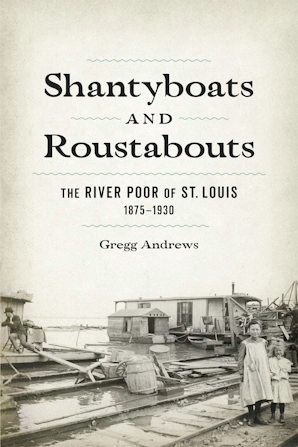
Gregg Andrews
Shantyboat dwellers and steamboat roustabouts formed an organic part of the cultural landscape of the Mississippi River bottoms during the rise of industrial America and the twilight of steamboat packets from 1875 to 1930. Nevertheless, both groups remain understudied by scholars of the era. Most of what we know about these laborers on the river comes not from the work of historians but from travel accounts, novelists, songwriters, and early film producers. As a result, images of these men and women are laden with nostalgia and minstrelsy.
Gregg Andrews's Shantyboats and Roustabouts uses the waterfront squatter settlements and Black entertainment district near the levee in St. Louis as a window into the world of the river poor in the Mississippi Valley, exploring their daily struggles and experiences and vividly describing people heretofore obscured by classist and racist caricatures"-- Provided by publisher
a window into the world of the river poor in the Mississippi Valley, exploring their daily struggles and experiences and vividly describing people heretofore obscured by classist and racist caricatures
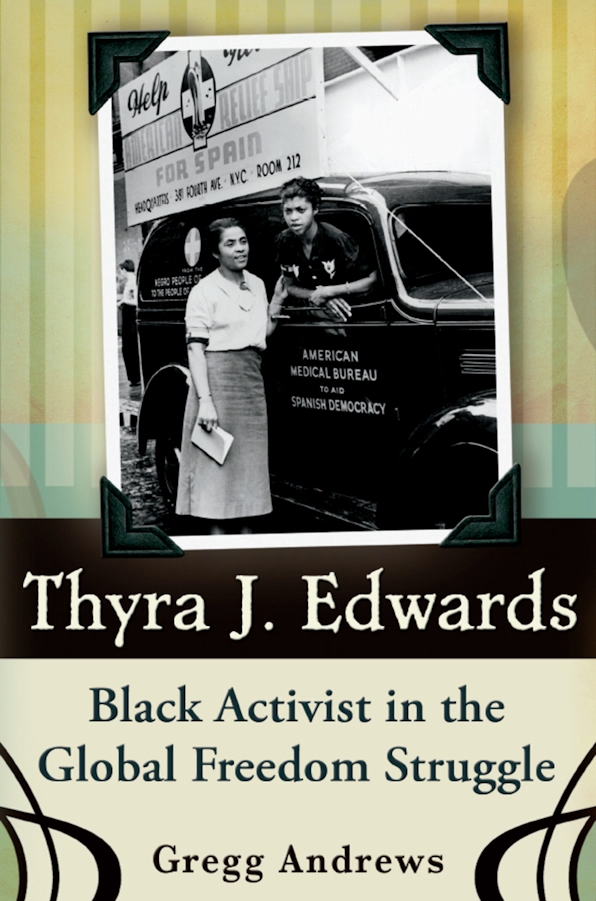
Gregg Andrews
Edwards was a world lecturer, journalist, social worker, labor organizer, womens rights advocate, and civil rights activist, an undeniably important figure in the social struggles of the first half of the twentieth century. This the first book-length biographical study of this remarkable, historically significant woman.
Edwards, granddaughter of runaway slaves, grew up in Jim Crow era Houston and started her career there as a teacher. She moved to Gary, Indiana, and Chicago as a social worker, then to New York as a journalist, and later became involved with the Communist Party, attracted by its stance on race and labor.
She was mentored by famed civil rights leader A. Philip Randolph, who became her special friend and led her to pursue her education. She obtained scholarships to college, and after several years of study in the U.S. and then in Denmark, she became a womens labor organizer and a union publicist.
In the 1930s and 1940s, she wrote about international events for black newspapers, traveling to Europe, Mexico, and the Soviet Union and presenting an anti-imperialist critique of world affairs to her readers. Edwards's involvement with the Loyalists in the Spanish Civil War, her work in a Jewish refugee settlement in Italy, and her activities with U.S. communists drew the attention of the FBI.
Edwards was a world lecturer, journalist, social worker, labor organizer, womens rights advocate, and civil rights activist, an undeniably important figure in the social struggles of the first half of the twentieth century.
Gregory D Smithers
An exploration of the idea of selective and forced slave breeding in the U.S. based on the collective memory and folktales of the descendants of enslaved people
exploration of the idea of selective and forced slave breeding in the U.S.
Gregory S. Kealey
This book examines the rise and fall of the Noble and Holy Order of the Knights of Labor, an organisation which embodied a late nineteenth-century working-class vision of an alternative to the developing industrial-capitalist society. Case studies of Toronto and Hamilton chronicle the movement's impact across Ontario.List of tables, figures, and maps; Preface; List of abbreviations; Introduction; Part I. Overview: 1. The working class and industrial capitalist development in Ontario to 1890; 2. 'Warp, woof, and web': the structure of the Knights of Labor in Ontario; Part II. The Local Setting: 3. Toronto and the organization of all workers; 4. Hamilton and the home club; Part III. The Wider Experience: Taking the Bad with the Good: 5. 'Unscrupulous rascals and the most infamous damn liars and tricksters at large': the underside of the Knights of Labor; 6. The order in politics: the challenge of 1883-1887; 7. 'Politicians in the order': the conflicts of decline, 1887-1894; 8. 'spread the light': forging a culture; 9. The people's strike: class conflict and the Knights of Labor; Part IV. Conclusion: 10. Accomplishment and failure; Appendix; Notes; Selected bibliography; Index
examines the rise and fall of the Noble and Holy Order of the Knights of Labor.

Gregory S. Kealey
Workers and Canadian History is a collection of twelve essays by Gregory Kealey, the recognized Canadian leader in the growing field of working-class history. Available for the first time in a single volume, the essays provide an extensive study of various trends and themes in Canadian labour and working-class history, covering debates, major developments in historiography, and key events in the nineteenth and twentieth centuries.
Kealey provides an overview of the study of workers in Canada as well as in-depth examinations of two of the field's leading scholars, political economist Clare Pentland and Marxist historian Stanley Bréhaut Ryerson. He analyses the development of Canadian labour history in particular and social history in general, and provides detailed empirical studies of the Orange Order in Toronto, printers and their unions, the Knights of Labor, and the Canadian labour revolt of 1919. The collection concludes with three synthetic views of Canadian working-class history focusing on the labour movement, the role of strikes, and attempts by the state to manage class conflict.
Workers and Canadian History will be of great interest to students and scholars of Canadian history, labour history, Marxist and socialist theory and history, and political science.
Antecedents
-- Writing about Labour
-- H.C. Pentland and Working-Class Studies
-- Stanley Bréhaut Ryerson: Canadian Revolutionary and Marxist Historian
Debates
-- Labour and Working-Class History in Canada: Prospects in the 19805
-- The Writing of Social History in English Canada, 1970-84
Studies Of Class And Class Conflict
-- Orangemen and the Corporation: The Politics of Class in Toronto during the Union of the Canadas
-- Work Control, the Labour Process, and Nineteenth-Century Canadian Printers
-- The Bonds of Unity: The Knights of Labor in Ontario, 1880-1900
-- 1919: The Canadian Labour Revolt
Overviews -- The Structure of Canadian Working-Class History
-- Strikes in Canada, 1891-1950
-- The Canadian State’s Attempt to Manage Class Conflict, 1900-48 --
A collection of 12 essays by Kealey covering diverse themes and events in Canadian labor history
Museum/Exhibits
Tours
Maps
Digital Projects
Organizations
Sites
Film/Video
Audio/Interview
Podcast/Program
Text/Document
Image
Graphs/Data
Timeline
Southwest
West
Midwest
Southeast
Northeast
Mexico
Canada
Global
Books
Teaching
Lectures
Digital Archives
Journals
Bibliographies
Topic Intro