


Collections
Library
Type
Region
Coverage:
-
Published:
-
Herbert G. Gutman
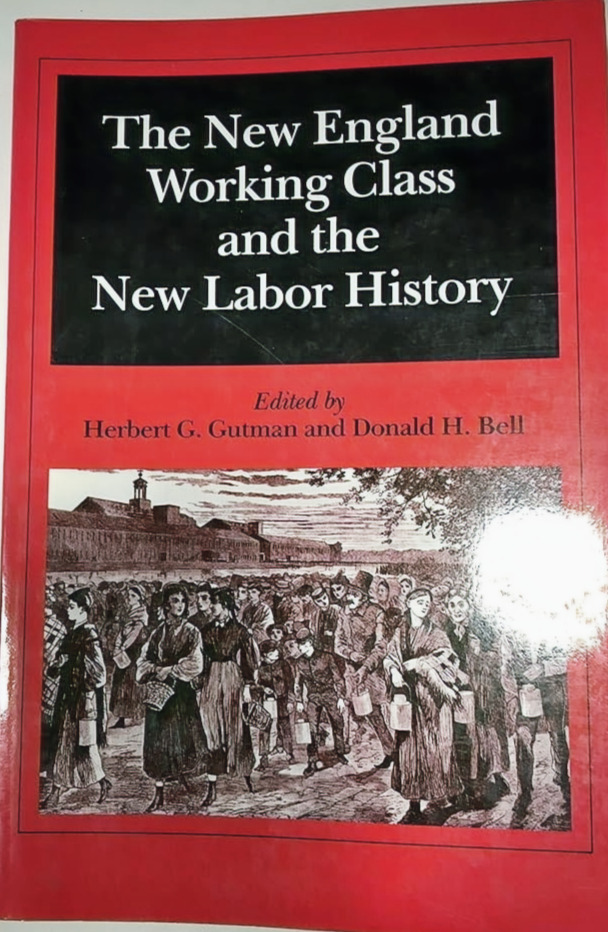
Studies the ways in which American industrial workers mobilised concerted action in their own interests. Sustained class conflict between 1916 and 1922 reshaped governmental and business policies, but left labour largely unorganised and in retreat. When labour activism was reinvigorated after 1933, the movement split in two.
A cultural history of the New England working class and the effects of its early 20th century militancy
Herbert G. Gutman
These essays in American working-class and social history, in the words of their author "all share a common theme -- a concern to explain the beliefs and behavior of American working people in the several decades that saw this nation transformed into a powerful industrial capitalist society." The subjects range widely-from the Lowell, Massachusetts, mill girls to the patterns of violence in scattered railroad strikes prior to 1877 to the neglected role black coal miners played in the formative years of the UMW to the difficulties encountered by capitalists in imposing decisions upon workers. In his discussions of each of these, Gutman offers penetrating new interpretations of the signficance of class and race, religion and ideology in the American labor movement. available from : https://www.google.com/url?sa=t&source=web&rct=j&opi=89978449&url=https://files.commons.gc.cuny.edu/wp-content/blogs.dir/13230/files/2020/08/Gutman_Work-Culture-and-Society-in-Industrializing-America.pdf&ved=2ahUKEwjj78yjg9CRAxVI8MkDHQpBI_oQFnoECCUQAQ&usg=AOvVaw3ke43eT6htpb5_5a7mGzn7
Table of contents:
An overview -- Work, culture, and society in industrializing America, 1815-1919
-- Protestantism and the American labor movement: the Christian spirit in the Gilded Age
-- Black coal miners and the American labor movement -- The Negro and the United Mine Workers of America: the career and letters of Richard L. Davis and something of their meaning: 1890-1900
-- The industrial city -- The reality of the rags-to-riches "myth": the case of the Paterson, New Jersey, locomotive, iron, and machinery manufacturers, 1830-1880
-- Class, status, and community power in nineteenth-century American industrial cities: Paterson, New Jersey: a case study
-- A brief postscript: class, status, and the gilded age radical: a reconsideration
-- Local behavior and patterns of labor discontent in Gilded Age American
-- Trouble on the railroads in 1873-1874: prelude to the 1877 crisis?
-- Two lockouts in Pennsylvania, 1873-1874.
Now classic series of essays from a founder of the field of labor historyexplains the beliefs and behavior of American working people in the several decades that saw this nation transformed into a powerful industrial capitalist society.
Herbert G. Gutman, Ira Berlin, ed.
Includes essays from throughout Gutman's career as well as works from journals and periodicals, an interview with Gutman and a bibliography of his works. The book features essays on the lives of workers and the formation of class and on the lives of African-American slaves and freed men.
The worker's search for power : labor in the gilded age
Joseph P. McDonnell and the workers' struggle in Paterson, New Jersey
Labor in the land of Lincoln : coal miners on the prairie
The labor policies of the large corporation in the gulded age : the case of the Standard Oil company
A note on immigration history, "Breakdown models," and the rewriting of the history of immigrant working-class peoples
Schools for freedom : the post-emancipation origins of Aro-American education
Enslaved Afro-Americans and the "protestant" work ethic
Labor history and the "Sartre" question
Interview with Herbert Gutman
The Black family in slavery and freedom : a revised perspective
Class composition and the development of the American working class, 1840-1890
Historical consciousness in contemporary America
features essays on the lives of workers and the formation of class and on the lives of African-American slaves and freed men.
Herbert J. Biberman; Paul Jarrico; Michael Wilson
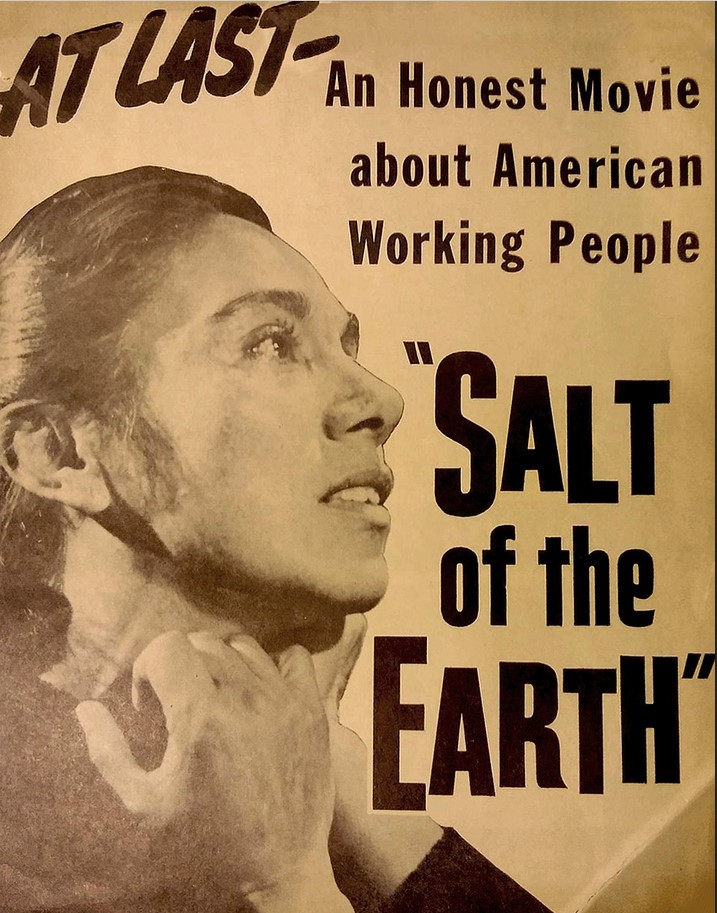
Salt of the Earth is a 1954 American drama film written by Michael Wilson, directed by Herbert J. Biberman, and produced by Paul Jarrico. All had been blacklisted by the Hollywood establishment due to their alleged involvement in communist politics. Its plot centers on a long and difficult strike, based on the 1951 strike against the Empire Zinc Company in Grant County, New Mexico. In the film, the company is identified as "Delaware Zinc," and the setting is "Zinctown, New Mexico." The film shows how the miners, the company, and the police react during the strike. The producers and director used actual miners and their families as actors in the film.
summary from John Bodnar, Working Class Hollywood:
This film was based on an actual strike of a local of the International
Union of Mine, Mill, and Smelter Workers against a zinc company in
Hanover, New Mexico, but centered much attention on the relationship
between a married couple: Ramon and Esperanza. In so doing, it sustained
the tendency of film to frame larger issues of class, violence, or national
politics in the stream of an ongoing debate on gender. Ramon and the men
go on strike over issues of safety, seniority, and wages. They are insensitive,
however, to female concerns for better homes, clean water, and consumer
comforts such as a radio.
The progress of the strike is hampered by tension between the men and
the women. The men are unwilling to allow the females to join in the
protest and are slow to recognize their concerns as legitimate issues of
protest. One woman complains at a union meeting that the men might
as well put a sign outside the hall indicating “no dogs, no women allowed.”
Eventually the females, including a pregnant Esperanza, force their way
into the strike action by bringing coffee to the men on the picket lines.
Capitalist managers are ruthless rather than reasonable in this tale.
Ramon is beaten by police—an action that was considerably more frequent
in real labor history than in films—and company doctors deny
Esperanza their services when she delivers her child. When a court injunc-
tion ordering the men back to work makes it appear that their cause is
lost, it is the women who find a solution. Recognizing that the injunction
only restricts striking miners, they decide to carry pickets themselves.
In this single moment they are able to contest not only capitalism
but traditional gender thinking as well. These women are shown clearly
ignoring both the resistance of their own men to their public actions and
the police who try to intimidate them. Meanwhile, Ramon and many of
his colleagues are dissatisfied because they are now forced to stay at home
and assume traditional domestic duties.
The resolution of the story represents a victory for the ideals of worker
protest and female equality. Esperanza tells Ramon that he should not
fear having a spouse as a friend and insists that she wants “to rise and to
push everything up with me if I go.” When he attempts to strike her, she
stands defiantly, admonishes him never to hit her again, and insists that
he sleep elsewhere that evening. The fact that the mine owners also
capitulate to worker demands reaffirms the value of strike action and
worker (and gender) solidarity in capitalist America. Although the film
was not seen widely by the Cold War public, its rhetorical appeal certainly
challenged fundamental pillars of containment ideology.
A classic film that portrays the importance of female participation in labor strikes, based on the real "Salt of the Earth" strike of Hanover, NM

Herman Husband, History Matters
In the decade preceding the American Revolution, settlers spilling into new inland settlements created increased social conflict along with economic opportunity. Those living in the backcountry demanded better political representation in the colonial government, as well as government action to remove Indians from those inland areas. The North Carolina Regulator movement of farmers, tenants, and laborers challenged the government in the 1760s; they accused the coastal elite of corruption and monopolization of government offices. Often settlers found land speculators had already claimed the best lands. Herman Husband, the author of this tract, was the most prominent agitator in the regulator movement. A man of great contradictions, he held land grants of over 8000 acres yet also advanced new democratic ideas in his writings. In this pamphlet he challenged the undemocratic basis of Carolina’s government and urged his fellow backcountry residents to vote out their corrupt representatives.
A piece of writing from North Carolina Regulator Herman Husband urging North Carolinians to vote out corrupt representatives in favor of those who would ensure democratic representation in the state.
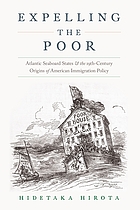
Hidetaka Hirota
Expelling the Poor examines the origins of immigration restriction in the United States, especially deportation policy. Based on an analysis of immigration policies in major American coastal states, including New York, Massachusetts, Pennsylvania, Maryland, Louisiana, and California, it provides the first sustained study of immigration control conducted by states prior to the introduction of federal immigration law in the late nineteenth century.
The influx of impoverished Irish immigrants over the first half of the nineteenth century led nativists in New York and Massachusetts to develop policies for prohibiting the landing of destitute foreigners and deporting those already resident in the states to Europe, Canada, or other American states. No other coastal state engaged in immigration regulation with the same level of legislative effort and success as the two states.
By locating the roots of American immigration control in cultural prejudice against the Irish and, more essentially, economic concerns about their poverty in nineteenth-century New York and Massachusetts, this book fundamentally revises the history of American immigration policy, which has largely focused on anti-Asian racism on the West Coast.
By investigating state officials' practices of illegal removal, such as the overseas deportation of those who held American citizenship, this book reveals how the state-level treatment of destitute immigrants set precedents for the assertion by American officers of unrestricted power against undesirable aliens, which characterized later federal control, and demonstrates how American deportation policy operated as part of a broader legal culture of excluding non-producing members from societies in the north Atlantic world"-- Provided by publisher
examines the origins of immigration restriction in the United States, especially deportation policy, focuses primarily on the Irish

Hilary Mac Austin
This guided teaching plan explores slavery and freedom for African Americans in Illinois using excerpts from two municipal record books from the territorial period of Illinois history: the Madison County (IL) Book of Records & Indentures 1813-1826 and the Gallatin County, Illinois, Slave Register, 1815-1839.
The lesson is for a teacher-controlled class and is designed for teachers to help students compare and contrast legal documents through a step-by-step inquiry process. Most students will have no or only the barest background knowledge of the subject, so context and background information is provided as part of the lesson flow.
This is a complex lesson for one or even multiple class periods. Alternatively, a quicker introduction to the topic could be given using just the first two sources.
This guided teaching plan explores slavery and freedom for African Americans in Illinois using excerpts from two municipal record books from the territorial period of Illinois history

Hilary Mac Austin, Kathleen Thompson
Teaching Guide for K6
Curriculum Connection: Child Labor, Community, Labor movement, Progressive Era, Women’s History, Work
From the Charles H. Kerr Publishing Company records at the Newberry Library.
Materials – Available for Download in the Downloads Tab:
A copy of the “Who Was Mother Jones?” activity
Copies of the photographs used in the activity
Show your students these photographs of social activist Mary “Mother” Jones. Use the background material at the end of this activity whenever you think it will encourage students to ask more questions and think more about Mother Jones.
Guided teaching for K6 on the renowned labor activist

Historic Pullman Foundation
The Historic Pullman Foundation was the natural outgrowth of efforts initiated by the Pullman Civic Organization and its Beman Committee. Pullman residents and other interested individuals developed a growing awareness that Pullman’s historic significance and unique architecture needed to be preserved and protected. Through their efforts, the Town of Pullman was designated an Illinois Historic District in 1969 and a National Landmark District in 1970. In 1972, the southern part of the District became one of the first landmark districts created by the City of Chicago. More recently the City of Chicago amended the historic district boundaries to include both the north and southern parts of the district.The Pullman story is an American one, steeped in the resiliency and ingenuity of its people and its built landscape. Its history is dotted with rail movement and civic movements that have shaped the course of American history.
The Foundation is committed to telling the stories of Pullman’s past—of industrial innovation, immigration, labor rights, social justice, urban planning, and preservation—all while creating a new forward-looking story. One of creativity, renewal, inclusivity, and physical and social connections. One that pulls the past into the present and ensures that every time someone visits, they will see so many of America’s stories, including their own, in Pullman.
An organization committed to preserving and informing on the history of Pullman, IL
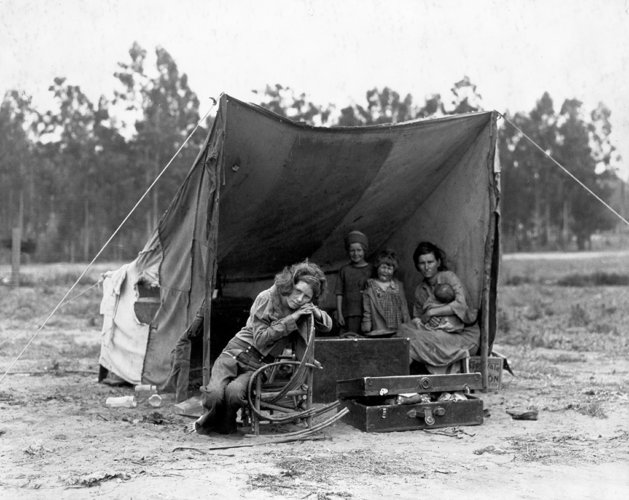
Historical Research Center, Bakersfield California
53 interviews of Dust Bowl Migrants, conducted in 1980 and 1981 in Kern County, California. Has guide, index, and includes some photos
oral histories of migrants conducted in 1980s
Historical Research Center, Bakersfield California
dozens of photos of migrant life, conditions, squatter camps, including union activity
photos including union activity among migrants
History Matters
An article from the Pennsylvania-based Farmer's Register newspaper, which sheds light on slaveholder methods of controlling enslaved people. (site down, excerpt below)
”Notions on the Management of Negroes,” Farmer’s Register 4 (December 1836):495
I have a nurse appointed to superintend all my little negroes, and a nursery built for
them. If they are left to be protected by their parents, they will most assuredly be
neglected. I have known parents take out an allowance for their children and actually
steal it from them, to purchase articles at some shop. Besides, when they would be
honest to their offspring, from their other occupations, they have not the time to attend to
them properly. The children get their food irregularly, and when they do get it, it is only
half done. They are suffered, by not having one to attend to them, to expose
themselves; and hence many of the deaths which occur on our plantations. I have just
stated that I have a nursery for my little negroes, with an old woman or nurse to
superintend and cook for them, and to see that their clothes and bedding are well
attended to. She makes the little ones, generally speaking, both girls and boys, mend
and wash their own clothes, and do many other little matters, such as collecting litter for
manure, &c. In this they take great pleasure, and it has the tendency to bring them up to
industrious habits. The nurse also cooks for them three times a day; and she always has
some little meat to dress for them, or the clabber or sour milk from the diary to mix their
food. In sickness she sees that they are well attended to; and from having many of them
together, one is taught to wait upon the other. My little negroes are consequently very
healthy; and from pursuing the plan I have laid down, I am confident that I raise more of
them, than where a different system is followed.
file:///
An 1836 article from the Pennsylvania-based Farmer's Register newspaper, which sheds light on slaveholder methods of controlling enslaved people.
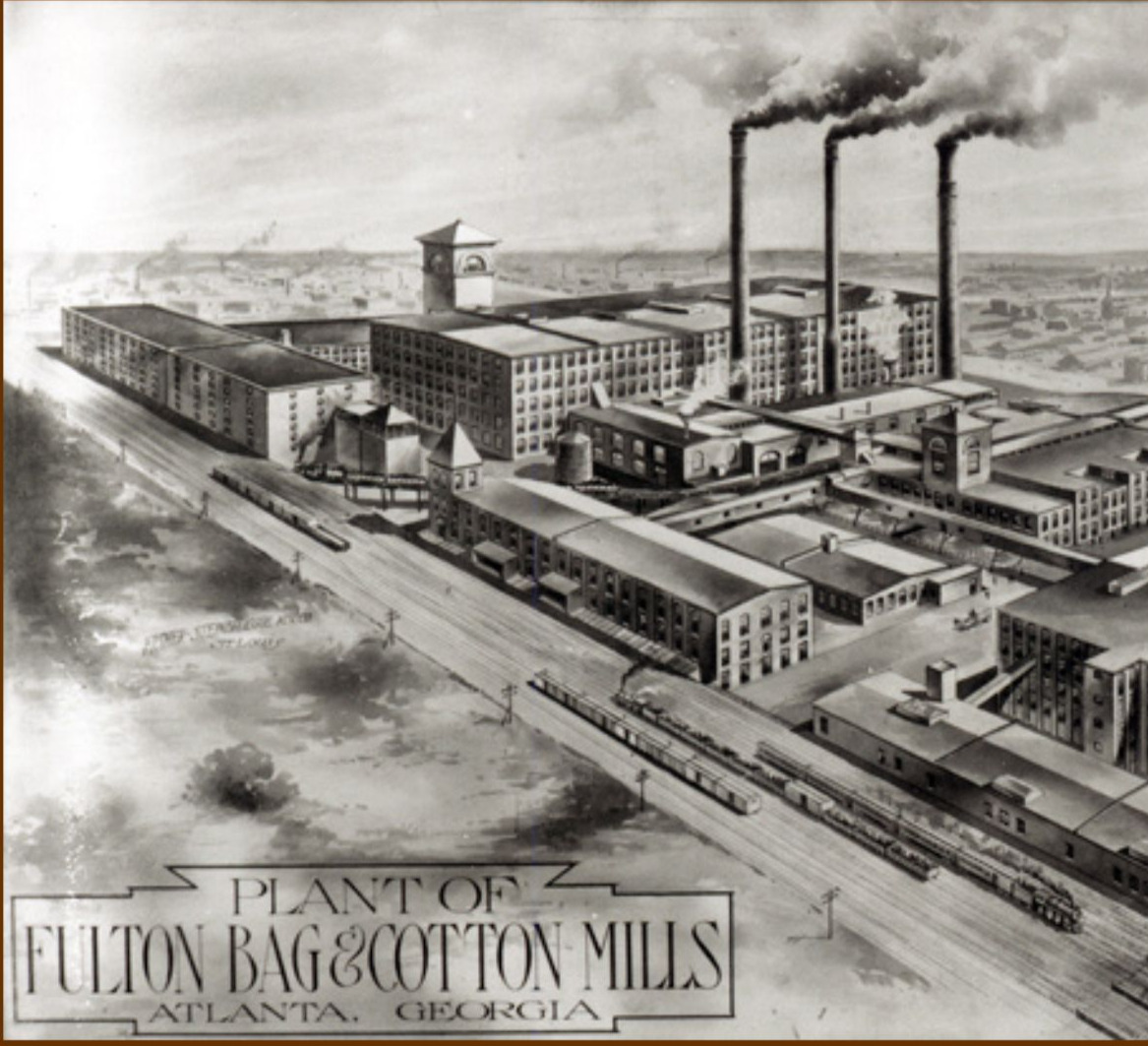
History Matters
Before the Civil War, some enslaved African Americans labored in Southern textile mills, especially in the spinning and weaving rooms. But with the jump in the price of slaves in the 1850s, manufacturers decided that poor white farmers provided a cheaper labor force. After the Civil War, the textile mill workforce remained entirely white for a number of reasons: landlords wanted African Americans to work in cotton fields; white leaders promoted industrialization as the salvation of poor whites; and the dominant racial ideology forbade the mixing of white women and black men in the workplace. Although planters and manufacturers had the most to gain from a segregated work force, white workers—as this 1898 protest from the women of Atlanta’s Fulton Mills indicated—accepted the idea that factory work was the privilege of “loyal white citizens.” There were few opportunities for white women to earn cash wages in this period, and family farms yielded little cash. The only jobs open to black women—domestic service—paid even less.
An 1898 letter written in protest by a woman working in Atlanta's Fulton Bag and Cotton Mills, stating the idea that racially integrated workspaces were an affront to both black women and "loyal white citizens."
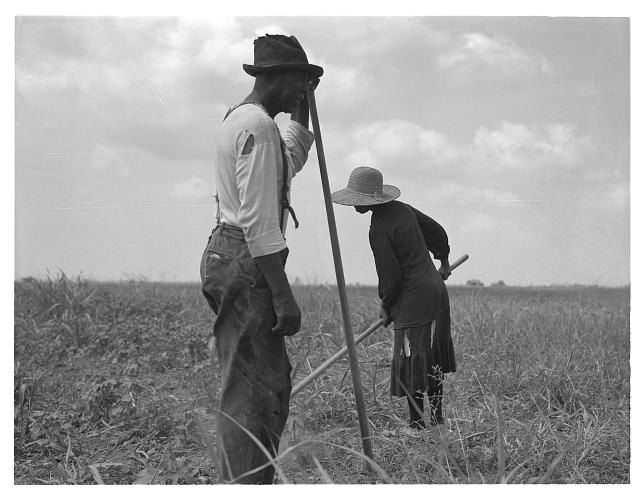
History Matters
At the turn of the century the group of black women most subject to sexual exploitation and abuse were those who lived under the system of quasi-slavery known as “peonage.”Under contract labor laws, which existed in almost every southern state, a laborer who signed a contract and then quit his or her job could be arrested. The horrors of this system of forced labor (as well as the equally horrific system of convict labor) are detailed in this stark, turn-of-the-century personal account of life under the “peonage” system in the South, published in the Independent magazine in 1904. Although this account by an African-American man did not focus especially on the sexual exploitation suffered by his wife and others, his report described how his wife was forced to become a mistress to the plantation’s owner.
A black man's account of forced labor and peonage that was published in a 1904 edition of the Independent magazine; details forced labor, sexual exploitation, and other atrocities.
History Matters
In his essay “Wealth,” published in the North American Review in 1889, industrialist Andrew Carnegie argued that individual capitalists were bound by duty to play a broader cultural and social role and thus improve the world. (The essay later became famous under the title “The Gospel of Wealth.”) But not everyone agreed with Carnegie’s perspective. This 1894 “prayer” by “A Workman” (an anonymous contributor to the National Labor Tribune) was a sarcastic critique of Carnegie’s paternalism and philanthropy.
This 1894 “prayer” by “A Workman” was a sarcastic critique of Carnegie’s paternalism and philanthropy.
History Matters
Overview: Spirituals and work songs, rooted in both the slavery era and the West African societies from which most African-American slaves were originally taken, provided cultural sustenance to African Americans in the midst of intense racial oppression. They first came to be valued by northern white audiences in the late-19th century. Later, folklorists began collecting (and eventually recording) traditional southern music. John and Alan Lomax recorded southern musicians (African-American, white, and Mexican-American) for the Library of Congress.
"It’s a long John": A work song sung by a man identified as “Lightning” and a group of his fellow black convicts at Darrington State Prison Farm in Texas in 1934. Black prisoners working in gangs to break rocks and clear swamps relied on the repeated rhythms and chants of work songs (originating in the forced gang labor of slavery) to set the pace for their collective labor. “Long John” mixed religious and secular concerns, including the notion of successful escape from bondage, a deeply felt desire of both slaves and prisoners.
“Run Old Jeremiah”: “Run, Old Jeremiah,” sung by Joe Washington Brown and Austin Coleman in Jennings, Louisiana, in 1934, was a ring-shout, a religious song using a West African dance pattern, where the performers shuffled single file, clapping out a complex counter-rhythm. The ring-shout was common during slavery and remained popular well into the 20th century as a means of emotional and physical release during religious worship. The lyrics of the ring-shout spoke of escape from the travails of the present.
“Trouble So Hard”: “Trouble So Hard,” sung by Dock Reed, Henry Reed, and Vera Hall in Livingston, Alabama, in 1937, was reminiscent in style of the slavery era, when the congregation sang without hymnbooks or musical accompaniment. The style of singing—the lead singer’s call and the congregation’s increasingly loud and forceful response—had its roots in African religious practice.
Here you can find several traditional African-American work songs recorded in the 1920s and 1930s by John Lomax on behalf of the Library of Congress; each description matches the link it is named for.
History Matters
A developing sense of working-class community paved the way for a string of boycotts in the mid-1880s. Boycotts were a way to win concessions from an employer by convincing other workers not to patronize his business. The movement peaked in 1886 with campaigns across the country; that year, there were 150 boycotts in New York State alone. This 1887 cartoon in the satirical weekly Life commented on the ubiquity of the boycott. “Whereas,” reads one boy, representing a committee of disgruntled candy-cart customers, “we find we don’t git red color enough in our strawberry cream, nor enough yaller in our wanilla, . . . to say nothin‘ o’ the small measure of peanuts we gits for a cent; therefore, be it resolved . . . that all the stands in the city is boycotted until these things is righted.”
An 1887 satirical cartoon from the weekly Life periodical.
History Matters
The idea of free labor was important to political debates in the mid-nineteenth century, as northern abolitionists and southern slaveowners argued over the nature of slavery and the growth of industrial wage labor. These conflicting notions about race, the nature of work, and citizenship contributed to growing political and social schisms in the 1850s that ultimately led to the Civil War. This activity asks students to consider the working conditions of African-American slaves and white northern factory workers by examining a range of primary documents from the Smithsonian, including mill regulations; excerpts from DeBow’s, a magazine for slaveowners, and a southern plantation owner’s work rules.
A classroom activity developed by the American Social History Project that is focused on helping students understand working conditions in the antebellum U.S. through primary source comparisons between white factory workers and enslaved African Americans.
History Matters
Although we sometimes think of farm and factory as antithetical, many people moved easily between the two. Icy Norman grew up in North Carolina, the daughter of a miner. As a young woman she worked long hours in a textile mill, but she also helped with the farm chores, especially seasonal chores like the corn shucking described here. In this excerpt from a 1979 interview conducted by the Southern Oral History Program at the University of North Carolina, she recalled family and friends rolling up the rug for dances and parties when the day’s work was done.
A Southern Oral History Program (UNC) audio clip of Icy Norman recalling what life was like both a textile millworker and farmworker, two experiences which were not always mutually exclusive.
History Matters
Statistics on women’s work in the early 20th century were invariably misleading: most women worked but only a minority were formally in the wage labor force. Nowhere was the discrepancy between the domestic ideal and the reality of women’s work lives wider than in rural America. In 1913 the U. S. Department of Agriculture decided to investigate and document the lives of farm woman they discovered a vast reservoir of discontent. The report, reproduced here, was culled from letters responding to a questionnaire sent to the wives of farmers and commented on all aspects of rural life, especially the enormous burden of labor that these officially non-working women were expected to carry out.
A reproduced report from the U.S. Department of Agriculture on officially non-working women in rural America, based on letter questionnaires that were sent directly to the wives of farmers.
History Matters
Many working people responded to industrial capitalism with strategies that were neither purely individualistic nor collective. On the one hand, the quest for home ownership, which absorbed so many working-class families, was an individual—or family-based—effort. On the other hand, working people often employed their own community-based institutions such as savings and loan associations to achieve the goal of owning their own homes. Outsiders, like the authors of this 1889 Pennsylvania government report on building and loans associations, might celebrate the ways that these associations served as an “antidote against anarchism.” But for working people themselves, the building and loan associations were simply vehicles for attaining independence and security.
An 1889 Pennsylvania government report on how building and loan associations variously acted as sources of social order on the one hand, but also as working-class methods for attaining socioeconomic freedom.
History Matters
The twenty-three slaves advertised on this poster belonged to a Kentucky planter, John Carter, who decided to “liquidate his assets” before moving to the free state of Indiana. With the westward extension of slavery, planters in older states such as Virginia, Maryland, and North Carolina found they could make up for declining profits by selling slaves to newer areas of cultivation, such as Alabama, Mississippi, Louisiana, and Texas. The internal slave trade destroyed families and brought misery to both individuals and the larger communities in which they lived. Between a fifth and a third of all slave marriages were broken through sale or forced migration, and the expansion of slavery meant that relatives forced to relocate were more likely to end up hundreds of miles away from their families.
A poster advertising the sale of 21 enslaved people on behalf of Kentucky slaveowner John Carter.
History Matters
In his essay “Wealth,” published in the North American Review in 1889, industrialist Andrew Carnegie argued that individual capitalists were bound by duty to play a broader cultural and social role and thus improve the world. (The essay later became famous under the title “The Gospel of Wealth.”) But not everyone agreed with Carnegie’s perspective. As shown by this newspaper article from 1901, the philanthropic gestures of such captains of industry as Andrew Carnegie were not always greeted with enthusiasm by the workers whose low-paid toil effectively underwrote such extravagant "gifts."
A sarcastic critique of Andrew Carnegie in workers refusal to accept a gift of a library from the great philanthropist
History Matters
Large factories such as the Lowell textile mills, with their thousands of employees and imposing structures, were the exception in the United States’ early industrial development. More commonly, small manufactories sprang up throughout the northeastern United States wherever a fast moving stream was available to provide water power. N. B. Gordon was the general manager as well as the chief mechanic and mill agent at the Union Cotton and Woolen Manufactory, a small textile company in the southeastern Massachusetts town of Mansfield. His work diary chronicled the everyday difficulties he faced in keeping the mill operating, including such problems as broken machines and too little water to power the mill. Highly independent employees caused him headaches, too.
The 1829 work diary of N.B. Gordon, general manager and chief mechanic of the Union Cotton and Wollen Manufactory, which demonstrates a management-centric perspective on worker self-sufficiency, workplace organization, and general issues at work.
History Matters
The back of a Louisiana slave named Gordon, photographed in 1863 after he escaped to the Union forces. Whipping was the most common form of punishment on plantations, and slaveowners and overseers whipped slaves with frightening regularity. Slaves could be whipped for almost any pretext: for “not picking cotton,” “or not picking as well as he can,” for picking “very trashy cotton,” and so forth. One overseer gave twelve lashes to eight women for “hoeing bad corn.” While punishments were often work related, whipping was also used to humiliate slaves and instill deference, obedience, and servility. Slaves could be whipped for answering back to overseers or appearing in any way “insolent.”
A graphic photo of an ex-slave named Gordon showing their back, almost entirely covered in large scars from whipping, indicating how overseers maintained "servitude," but also showing clear signs of slave resistance.
Museum/Exhibits
Tours
Maps
Digital Projects
Organizations
Sites