


Collections
Library
Type
Region
Coverage:
-
Published:
-
Howard County History Labs Program, University of Maryland
Archival documents in a document-question- teaching unit for High School, advanced.
Using the Item: The question assesses students’ ability to synthesize information by reading
critically and contextualizing. In this item, students will have to deduce that the source
describes a railroad strike by noting that the location of each event is at a rail station. They may
also use prior knowledge of the time period, realizing that 1877 was a time of great economic
instability and labor unrest.
Background: This source is from a larger damage assessment of a labor strike that was
conducted against the Baltimore and Ohio (B&O) Railroad in several locations in Maryland and
West Virginia in 1877. The strike was precipitated by an overinvestment in railroads and the
poor economic conditions for most of the previous decade. In July 1877, workers, angered by a
ten percent reduction in wages, began to strike, with some of the protests becoming violent.
State militias and even federal troops were used to help restore order
Teaching unit on Baltimore railroad strike, part of the great strikes of 1877
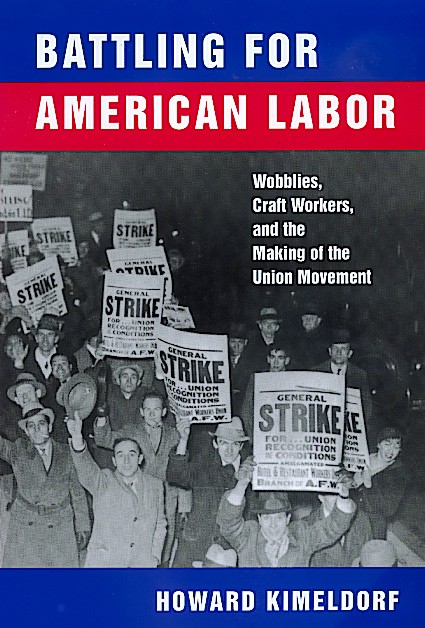
Howard Kimeldorf
In this incisive reinterpretation of the history of the American labor movement Howard Kimeldorf challenges received thinking about rank-and-file workers and the character of their unions. Battling for American Labor answers the baffling question of how while mounting some of the most aggressive challenges to employing classes anywhere in the world organized labor in the United States has warmly embraced the capitalist system of which they are a part.
Rejecting conventional understandings of American unionism Kimeldorf argues that what has long been the hallmark of organized labor in the United States—its distinctive reliance on worker self-organization and direct economic action—can be seen as a particular kind of syndicalism. Kimeldorf brings this syndicalism to life through two rich and compelling case studies of unionization efforts by Philadelphia longshoremen and New York City culinary workers during the opening decades of the twentieth century. He shows how these workers initially affiliated with the radical IWW and later the conservative AFL pursued a common logic of collective action at the point of production that largely dictated their choice of unions. Elegantly written and deeply engaging Battling for American Labor offers insights not only into how the American labor movement got to where it is today but how it might possibly reinvent itself in the years ahead.-from the publisher
This book argues that American labor radicalism is based in a unique brand of syndicalism rather than Marxism
Howard Kimeldorf
Why is the American working class different? For generations scholars and activists alike have wrestled with this question with an eye to explaining why workers in the United States are not more like their radicalized European counterparts. Approaching the question from a different angle Reds or Rackets? provides a fascinating examination of the American labor movement from the inside out as it were by analyzing the divergent sources of radicalism and conservatism within it. Kimeldorf focuses on the political contrast between East and West Coast longshoremen from World War I through the early years of the Cold War when the difference between the two unions was greatest. He explores the politics of the West Coast union that developed into a hot bed of working class insurgency and contrasts it with the conservative and racket-ridden East Coast longshoreman's union.
Two unions based in the same industry—as different as night and day. The question posed by Kimeldorf is why? Why "reds" on one coast and racketeers on the other? To answer this question Kimeldorf provides a systematic comparison of the two unions illuminating the political consequences of occupational recruitment industry structure mobilization strategies and industrial conflict during this period. In doing so Reds orRackets? sheds new light on the structural and historical bases of radical and conservative unionism.
More than a comparative study of two unions Reds or Rackets? is an exploration of the dynamics of trade unionism sources of membership loyalty and neglected aspects of working class consciousness. It is an incisive and valuable study that will appeal to historians social scientists and anyone interested in understanding the political trajectory of twentieth-century American labor.
This book examines the differences in organizing, politics, and philosophy between West and East coast longshoremen
Howard Zinn, Dana Frank, Robin D. G. Kelley
"Howard Zinn recounts the dramatic tale of the great coal mine strike in Colorado that culminated in the Ludlow Massacre. The story pits immigrant workers against the National Guard, Mother Jones against the Rockefellers, and corporate power against union organizing, a story that is all too familiar today."
"With Dana Frank we join a sit-in strike in a Detroit Woolworth's during the Great Depression where young women slept on the floor, played games and sang songs together, and enjoyed the attention of an amused and curious public that vilified the "chain-store threat" long before Wal-Mart."
"Robin D.G. Kelley's tale of a movie theater musician strike in New York gets at the heart of what defines a worker. Facing the inevitable dominance of sound movies, the musicians failed even to agree on demands, and could not prevent members of other unions from crossing their picket lines. What happens when jobs are lost to new technologies, and how can labor help?"--Jacket
Three strike stories by three different authors, including Ludlow, a Detroit Woolworth's sit-in, and a musician strike in New York.
Howell John Harris
"This book examines how a group of manufacturers of metal products - "everything from buttonhooks to battleships"--In America's third biggest city helped each other to meet the challenges of organized labor (and sometimes an interventionist state) in the half-century between the "second industrial revolution" and the Second World War. After thirty years of success, the employers were finally overwhelmed by a resurgent labor movement backed by New Deal politicians and administrators. Their story offers the broadest and most detailed account available of the industrial relations problems and policies of small and mid-sized firms in this period
examines how a group of manufacturers of metal products in America's third biggest city helped each other to meet the challenges of organized labor.
Howell John Harris
A history of American business and the labor movement in the 1930s and 1940s. It focuses on industrial relations within companies, such as those between managers and workers.
focuses on industrial relations within companies, such as those between managers and workers.
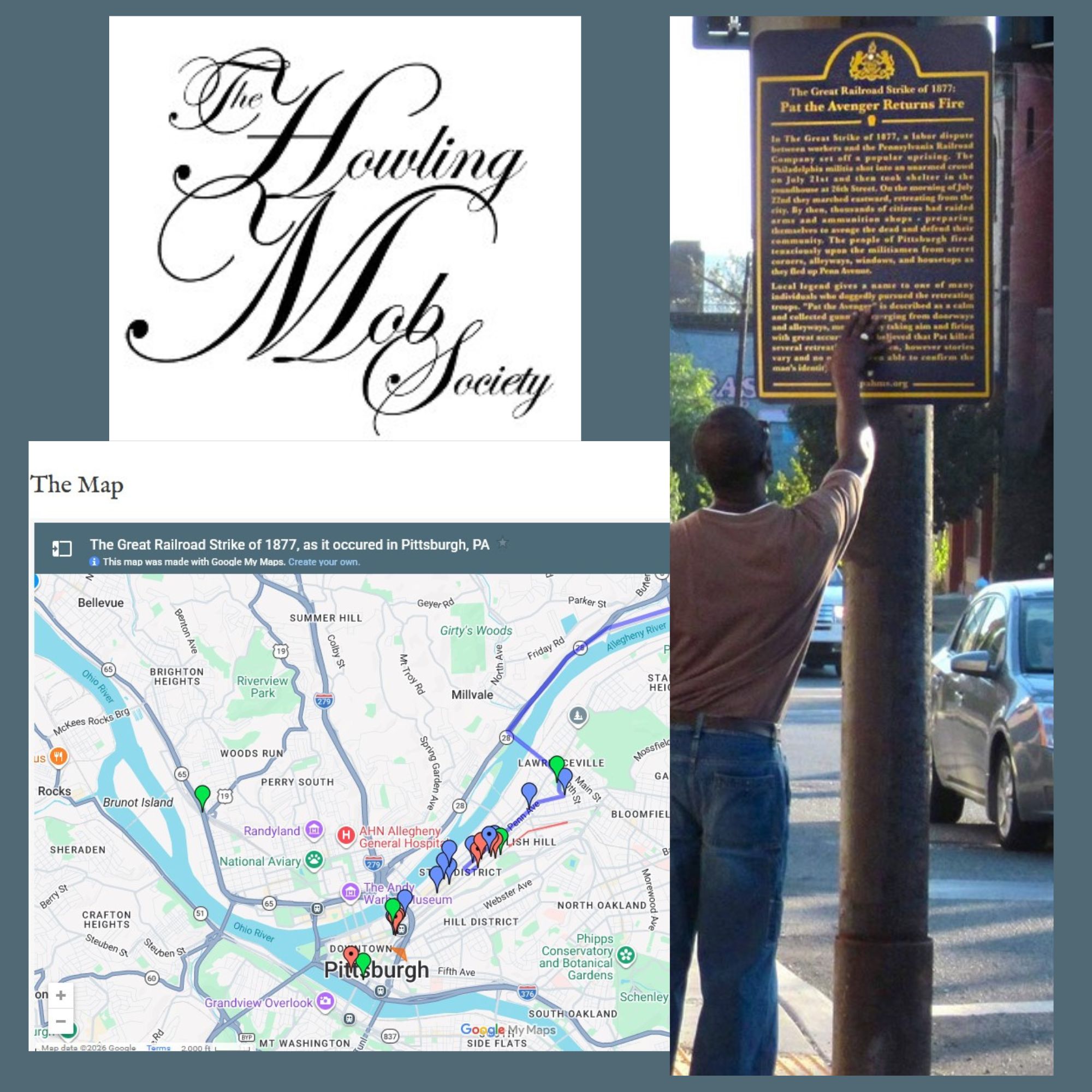
Howling Mob Society
This interactive map will guide you to the locations of each of the historical markers in our series, and includes significant additional events and locations which our markers do not cover.
On mobile, this map operates best when launched in the Google Maps app. To do this, click on this icon on the top right hand corner of the map:
a googlemaps story-based introduction to the markers of the Pittsburgh events
Howling Mob Society
The Howling Mob Society was a Pittsburgh-based group of anonymous artists, activists, and citizen historians with an interest in the oft-buried radical peoples’ history of the United States. We worked as a team throughout 2007-08 to research, fabricate, and install a series of ten historical markers which detail the events of the Great Railroad Strike of 1877 as they unfolded in Pittsburgh, PA.
The Railroad Strike of 1877 was not a strike alone, and the title itself is less than accurate. Although the insurrection was rooted in the grievances of railroad workers in the Eastern United States, it was by no means limited to the railroad industry. This was not a clearly announced action or strike. It was not originally condoned by any union or political organization. The actions from railroad workers were met with immediate support from coal miners and other industrial workers who saw a clear distinction between themselves and the wealthy magnates they labored under. Workers struck in solidarity across trades, and these frustrations were not limited to the largely male workforce: railroad companies were carving up the land as well as the interior of major cities across the country. Often driving straight through the middle of major pedestrian areas, the railroad disrupted and endangered the lives of the women and children as well. Railroad companies were the first major corporations in America, and they operated largely above the law – the events of 1877 were a broad-based and spontaneous attack against the largest industrial monopolies of the time, and the wealth and power that they wielded. Some historians consider these events to have been the first mass anti-corporate protest in the history of the United States.
a website dedicated to 1877 Pittsburgh railroad strike and markers placed by Howling Mob Society
Hugh Aitken
The book is a balanced analysis of the strengths and weaknesses of Taylorism, including the naiveté that led its proponents to ignore the emotional side of the complex roles and patterns that govern the world of work.
A balanced analysis of the strengths and weaknesses of Taylorism through a history of its application in the public sector
Hugh Jones, History Matters
Slavery and a society based on slave labor were well established in the Chesapeake region by the third decade of the 18th century. Hugh Jones described the beginnings of African-American culture as slavery spread in the Chesapeake. Virginia’s slave population grew from 3,000 in 1680 to 13,000 in 1700. It further expanded to 27,000 by 1720. Despite Jones’s rosy picture, he effectively depicted the enslaved population’s contact with whites, the growth of a smaller group that spoke English, and the emergence of strong kinship bonds facilitated by a naturally increasing population, a first in the New World. Hugh Jones arrived from England and served as a minister in Jamestown and professor of mathematics at William and Mary. He authored The Present State of Virginia (1724) where he described the distinctive form of society emerging in Virginia of large and small landowners, poor white laborers, and enslaved Africans.
A first-hand, detailed description of life in colonial Virginia's slave society written by professor of mathematics and minister Hugh Jones, taken from his 1724 book The Present State of Virginia.
Hughes, Langston, History Matters
The relationship between African Americans and Franklin D. Roosevelt presents something of a paradox. On the one hand, Roosevelt never endorsed anti-lynching legislation; he accepted segregation and disenfranchisement; and he condoned discrimination against blacks in federally funded relief programs. On the other hand, Roosevelt won the hearts and the votes of African Americans in unprecedented numbers. African Americans who supported left-wing parties, however, were more likely to be critical. Langston Hughes, a playwright, poet, and novelist, became a socialist in the 1930s. Although he did not join the Communist Party, he spent a year in the Soviet Union and published his works in magazines sympathetic to liberal, socialist, and Communist causes. In Hughes’s “Ballad of Roosevelt,” which appeared in the New Republic in 1934, the poet criticized the unfulfilled promises that FDR had made to the poor. Hughes’s style in this poem showed his distinctive merging of traditional verse with black artistic forms like blues and jazz.
A poem containing criticisms of Franklin D. Roosevelt from an African American perspective.
Hughsey Childes, Charles Hardy, History Matters
The sharecropping system that emerged in the South in the last three decades of the 19th century afforded southern black families a certain measure of control over their daily lives and labor. But the white landowners were able to use the legal mechanisms of sharecropping to assure control over the largely African-American workforce that toiled on the farms. Here Hughsey Childes, interviewed by historian Charles Hardy in 1984, described what seems like a matter of fact exchange in which the white landowner cheated the black sharecropper. But when the sharecropper got a little wise and withheld some of the crop from the landlord, the punishment was swift and final.
An oral history of Hughsey Childes by Charles Hardy, covering Childes' recollections of sharecropping.

Hull-House Museum
Jane Addams Hull-House Museum is Chicago’s dynamic monument to democracy. The museum draws on the legacy of international peace activist, feminist and Nobel Peace Prize Laureate Jane Addams and the other social reformers who lived and worked alongside their immigrant neighbors to create social change and expand access to democracy. The museum is located on the campus of the University of Illinois Chicago and is a National Historic Landmark that connects histories of the Hull-House Settlement to present-day social justice issues. Exhibitions and public programs highlight histories of activism, progressive education, and democratic principles of participation and exchange.
The main webpage of the Jane Addams Hull-House Museum, which is dedicated to Jane Addams and Ellen Gates Star's Hull-House social settlement in Chicago's Near West Side.

IBEW, International Brotherhood of Electrical Workers
The IBEW has a list of each year of their journal from 1893 to the present, which was published under different names. It is not searchable, but if there are any gaps in the other listings of IBEW newspapers posted here, it is possible to see the journal there at their site.
Journal of the Electrical Workers IBEW union, from 1893-present
IBEW, International Brotherhood of Electrical Workers
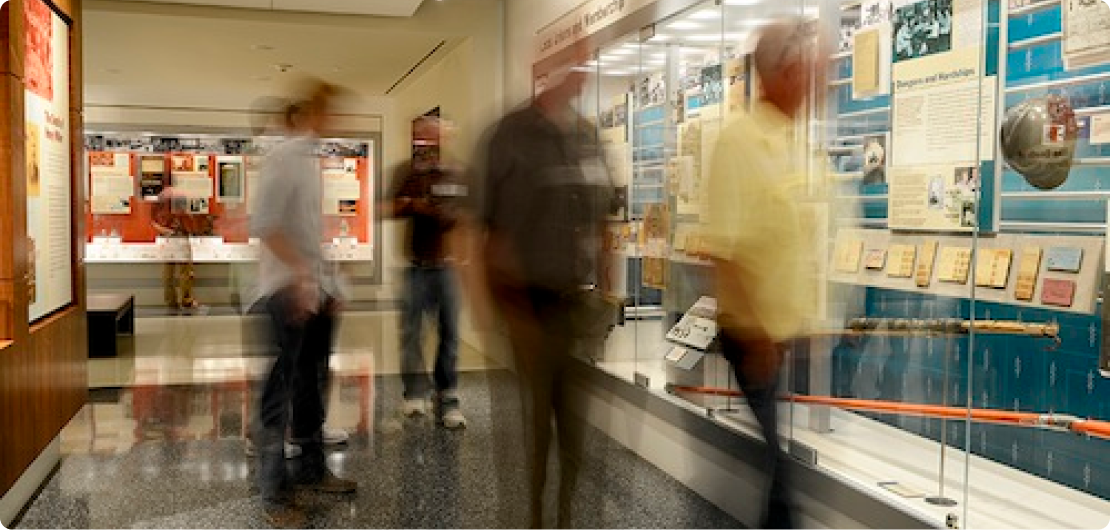
The IBEW is proud to celebrate its history through its unique museum at the union’s headquarters in Washington, D.C. Through text, graphics, artifacts, interactive displays and video, the museum tells the story of the workers in the electrical trade.You can tour the museum as a part of our regular tours from Monday–Friday at 9 a.m., 11 a.m., 1:30 p.m., or 3:30 p.m. We also welcome walk-ins.
Through text, graphics, artifacts, interactive displays and video, this museum tells the story of the IBEW and electrical workers-at-large
IBEW, International Brotherhood of Electrical Workers
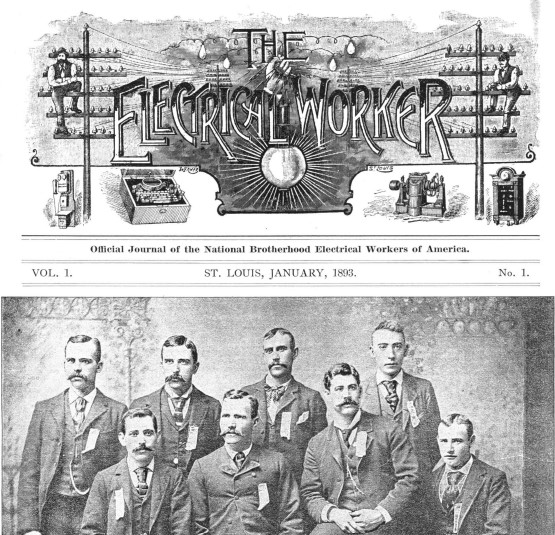
The Electrical Worker was the name of the first official publication of the National Brotherhood of Electrical Workers in 1893 (the NBEW became the IBEW in 1899 with the expansion of the union into Canada). The name and format of the publication have changed over the years. This newspaper is the official publication of the IBEW and seeks to capture the courage and spirit that motivated the founders of the Brotherhood and continue to inspire the union’s members today. The masthead of this newspaper is an adaptation of that of the first edition in 1893
The Electrical Worker was the name of the first official publication of the National Brotherhood of Electrical Workers in 1893
IBEW, International Brotherhood of Electrical Workers
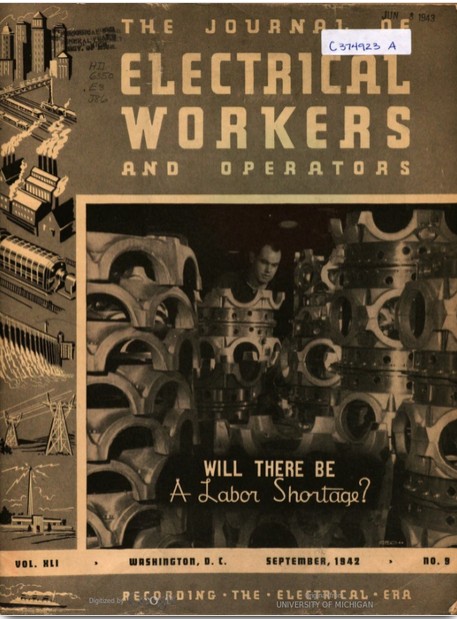
Official publication of the International Brotherhood of Electrical Workers.
The Journal of Electrical Workers and Operators
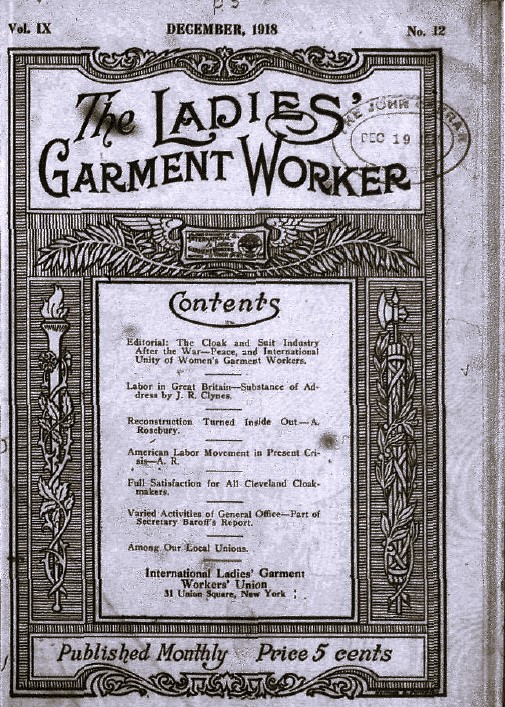
ILGWU, Kheel Center, Cornell University Library
International Ladies' Garment Workers' Union (ILGWU)
104 issues of this journal of the International Ladies' Garment Workers' Union
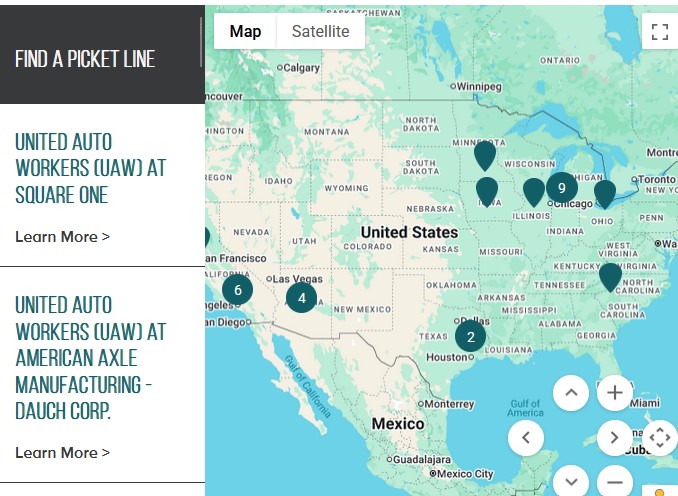
ILR School, Cornell, University of Illinois School of Employment Relations
This is a map of strikes authorized by affiliates of the AFL-CIO. To view a map of all strikes in the United States, please visit the Labor Action Tracker, a joint project of the Cornell ILR School and the University of Illinois School of Labor and Employment Relations.
A map of current strikes by unions associated with the AFL-CIO

ILWU
The ILWU International began publishing The Dispatcher in late 1942 when it became clear that the union needed its own newspaper. Prior to that, general ILWU news was published in the Voice of the Federation, the organ of the Maritime Federation of the Pacific. Warehouse Division news was published as a special section to the Labor Herald, the publication of the Congress of Industrial Organizations (CIO) in California.
Still a young union at the time of the paper’s inaugural edition, the ILWU was faced with a number of challenges that were more effectively communicated through a paper of its own. The expanding waterfront workforce of World War II was rapidly changing the union, growing its numbers and expanding its demographics; meanwhile, the ILWU’s leadership was under continued attack, and its leader, Harry Bridges, faced ongoing deportation threats. The Dispatcher provided members with a trustworthy and worker-focused source of reporting of these and other issues of importance.
Throughout the years, news from the locals, stories on national and international affairs of interest to Labor, and regular columns from officers helped ensure that the democratic ILWU maintained an informed rank and file. Though it has gone through many changes throughout the years, The Dispatcher remains a vital central source of news and commentary of importance to ILWU members.
The ILWU Library has a complete index of articles from The Dispatcher through 1985.
A digitized labor newspaper from the International Longshoremen and Warehouse Union

ILWU
Browse or search through the Voice of the Federation digital archive, 1935-1941. The Voice of the Federation was the newspaper for the Maritime Federation of the Pacific, a consortium of unions that formed in the wake of the 1934 Pacific Coast waterfront and maritime strikes. The paper briefly served as the official communications organ for West Coast longshoremen
Formed in 1935, the Maritime Federation of the Pacific (MFP) joined together longshoremen and seamen to expand the gains longshoremen won in the 1934 strike to all maritime workers on the West Coast. The MFP succeeded in these goals in subsequent labor actions, notably the 1936-7 strike. The Voice of the Federation, the official publication of the MFP, was vital for communicating the organization’s message and a place for the MFP member unions of different trades to express their viewpoints and publicize their interests. In the years following the 1934 strike, the Voice of the Federation served as the main organ for the Pacific Coast District of the International Longshoremen’s Association (later, the ILWU).
Due to internal conflicts, the Maritime Federation’s promise of unity was short lived. With the demise of the Maritime Federation, the ILWU began publishing its own paper, The Dispatcher, in 1942.
A digitized labor newspaper from the International Longshoremen and Warehouse Union
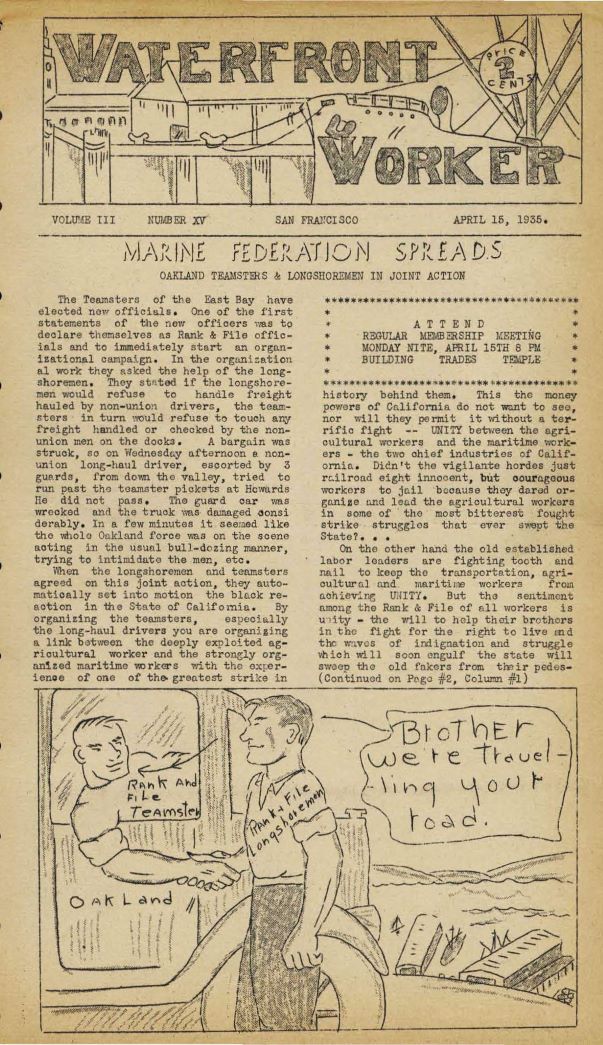
ILWU, Waterfront Worker, University of Washington
DIgitized newspaper The Waterfront Worker was an important communications tool for rank and file longshoremen during the 1934 strike.The Waterfront Worker, 1932-1936
The Waterfront Worker was a newsletter published by an anonymous group of rank and file longshoremen, closely associated with Harry Bridges and what became known as the Albion Hall Group, which galvanized support for the new militant unionism on the waterfront. Distributed by hand to workers on the docks and hidden on ships to reach people throughout West Coast ports, the paper served a vital role in organizing longshoremen throughout the Pacific Coast in the months before the 1934 strike. During the strike, it helped strike organizers disseminate information on strike issues and key events, helping inform workers on unionization efforts. With its frank language and simple line drawings, the paper looked inelegant, but its message was clear: the time was rife for organizing for real union representation on the waterfront.
The ILWU Library holds one of the only sets of this rare publication. Through a cooperative effort between the ILWU and the Harry Bridges Center for Labor Studies at the University of Washington, the full collection of The Waterfront Worker was digitized in 2008.
A digitized labor newspaper from the International Longshoremen and Warehouse Union

IWW History Project
It was perhaps the deadliest day in the turbulent history of the IWW. At least five Wobblies (and perhaps as many as twelve) died along with two deputies on the afternoon of November 5, 1916 when Sheriff McRea and 200 armed and hastilly deputized men met the steamer Verona at the Everett dock. Vowing to continue a free speech fight in support of striking Everett shingle mill workers, Wobblies had been twice attacked, beaten, and driven out of town. Now they were back in force, 260 aboard the Verona and another 40 following on the Calista, vessels that had been chartered by the Seattle IWW local. No one knows who fired the first shot, but it triggered a raging gun battle that lasted ten minutes and left dozens wounded along with the seven confirmed dead.
Authorities immediately blamed the IWW and 74 Wobblies were charged with conspiracy to murder the deputies. The trial of first defendant, Thomas Tracy, began five months later and was closely followed in newspapers across the country. When the Seattle jury found him not guilty because of the probability that the deputies had been killed by friendly fire, the other defendents were released.
A research portal linking visitors to primary sources from the 1916 Everett Massacre, including photographs, essays, and documentary collections.
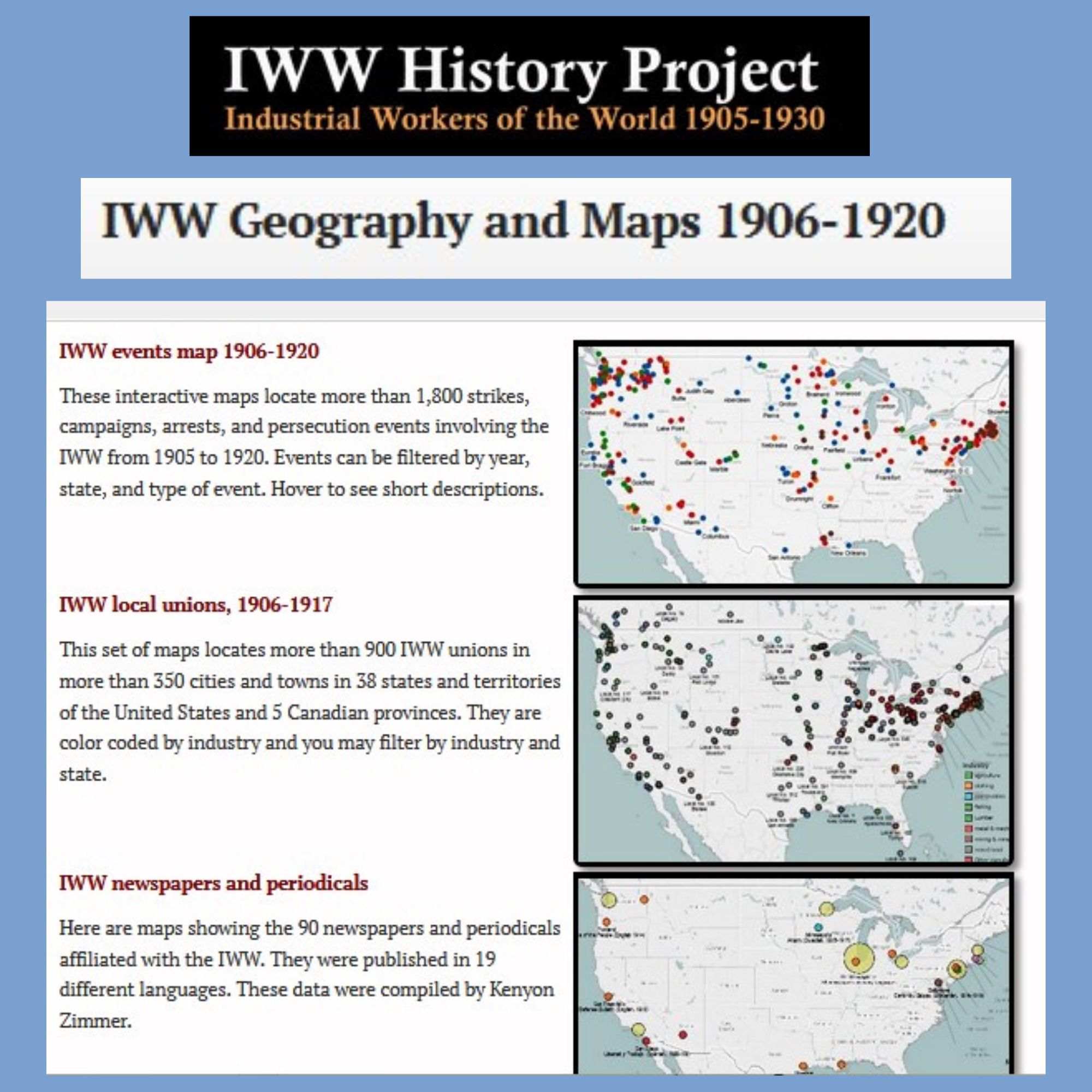
IWW History Project
These maps and tables detail the ninety known American periodicals officially affiliated with the Industrial Workers of the World in the early decades of the 20th century (excluding single-issue publications). Newspapers were published in 19 different languages and, although many were short-lived and claimed tiny circulations, key newspapers lasted into the 1930s, and the Industrial Worker continues today. Other maps and charts track deaths and strikes to the extent that they have been documented
Guide to a wealth of materials, maps and graphs and charts about the IWW
IWW History Project
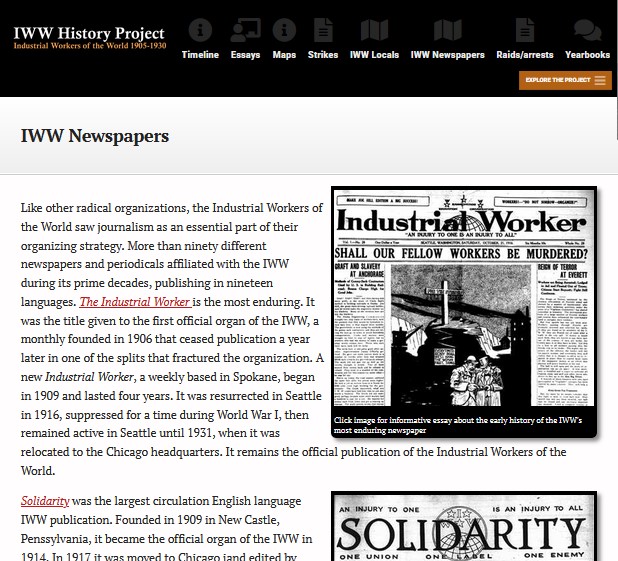
Like other radical organizations, the Industrial Workers of the World saw journalism as an essential part of their organizing strategy. More than ninety different newspapers and periodicals affiliated with the IWW during its prime decades, publishing in nineteen languages. The Industrial Worker is the most enduring. It was the title given to the first official organ of the IWW, a monthly founded in 1906 that ceased publication a year later in one of the splits that fractured the organization. A new Industrial Worker, a weekly based in Spokane, began in 1909 and lasted four years. It was resurrected in Seattle in 1916, suppressed for a time during World War I, then remained active in Seattle until 1931, when it was relocated to the Chicago headquarters. It remains the official publication of the Industrial Workers of the World.
A brief introductory essay, photographs, and a database explaining and showing the extent of IWW-affiliated newpapers, mostly from the early-1900s to the 1940s. Additionally, a few of these press outlets were active in other decades or are still active today.