


Collections
Library
Type
Region
Coverage:
-
Published:
-

International Association of Machinists, Georgia State University
About this collection - 7,811 items print and oral history collection digitially available
The brothers at Local Lodge 1, Atlanta, Georgia, transferred the first collection of IAM records to the Southern Labor Archives at Georgia State University in 1972. Since then, headquarters, regions, districts and locals have continued to place their records in care of the Southern Labor Archives which now houses over 40 Machinists collections. In 1992, the IAM made the Southern Labor Archives the official repository for its records, based upon the Southern Labor Archives’ proven stewardship over the years
The IAM collections contain a wide variety of material documenting the history of the union and the American Labor movement.
Grand Lodge Publications: This collection includes the Machinists Monthly Journal (1889-1956) and the Machinists Newspaper (1946-2004), both of which are organs of the International Association of Machinists and Aerospace Workers.
District and Local Lodge Publications: This collection includes newspapers, newsletters, and other periodicals produced by District and Local Lodges of the International Association of Machinists and Aerospace Workers.
IAM Canada: The items in this collection represent the work of IAM members across Canada and their contributions to the labor movement. The IAM represents more than 40,000 Canadian workers in air transport and a wide range of manufacturing as well as a growing number of workers in health care, hospitality, office, technical and other white-collar workers. They are the largest airport security screeners union in Canada.
Oral Histories: The International Association of Machinists and Aerospace Workers Oral History Project records and preserves the life histories of officers, staff, members, and retirees.
There is no regular schedule of interviews - the project is open ended and will continue to grow. Please contact Special Collections and Archives if you would like to recommend an interviewee or if you are interested in being interviewed yourself.
Copyright to items in this collection is owned by the International Association of Machinists and Aerospace Workers. Images may be used for scholarship, educational, and personal use. Additional uses will require permission of the rights holder.
7800 digitized items from the INternational Association of Machinists

International Brotherhood of Teamsters
Films (over 200) about politics, legislation, womens conference, WTO, womens rights, Diana Kilmury, mexican tracking
A range of films about and produced by Teamsters
International Brotherhood of Teamsters
International Brotherhood of Teamsters records, 1905-1952 (GW ScholarSpace) -270,000 pages of Digitized Records of the International Brotherhood of Teamsters, Chauffeurs, Warehousemen, and Helpers of America records, including correspondence files of the executive office from 1904-1952, with the majority the material originating in the 1940s. Included with the correspondence are reports, minutes, clippings, transcripts of government hearings and decisions, legal briefs, and copies of local union by-laws. The material details the union's initial struggles for existence and unity, its jurisdictional disputes, growth in membership and influence, changes in organizing and bargaining techniques and in the trucking and transportation industries, and the increasing strength and political involvement of the labor movement nationally.
Official union records of one of Teamsters Union

International Brotherhood of Teamsters
digitized copies from 1917-1981
Teamster member newspaper/magazine from 1917-1981
International Labor Defense
International Labor Defense (ILD) was the consolidated legal defense mass organization headed by the Workers Party of America from 1925. It replaced the Labor Defense Council, the WPA's previous mass organization formed for purposes of legal defense. The ILD began with a discussion between James P. Cannon and "Big Bill" Haywood in Haywood's room in Moscow in 1925. Cannon recalls that "the old fighter, who was exiled from America with a 20-year old sentence handing over him was deeply concerned about the persecution of workers in America. He wanted to have something done for the almost forgotten men lying in jail all over the country." [fn. James P. Cannon, The First Ten Years of American Communism. (NY: Lyle Stuart, 1960), pg. 162.] A plan was arrived at for a non-partisan body that would defend any member of the working class movement, without regard to personal political views. Any working class activist who came under the thumb of persecution by the capitalist legal system would be supported legally, morally, and financially. After preliminary negotiations in Moscow, an agreement was reached outlining the procedure for organizing the ILD and outlining its relationship to two Comintern-related international aid organizations, International Red Aid (MOPR) and International Worlers' Relief (WIR).
Radical newspaper against labor repression, digitized
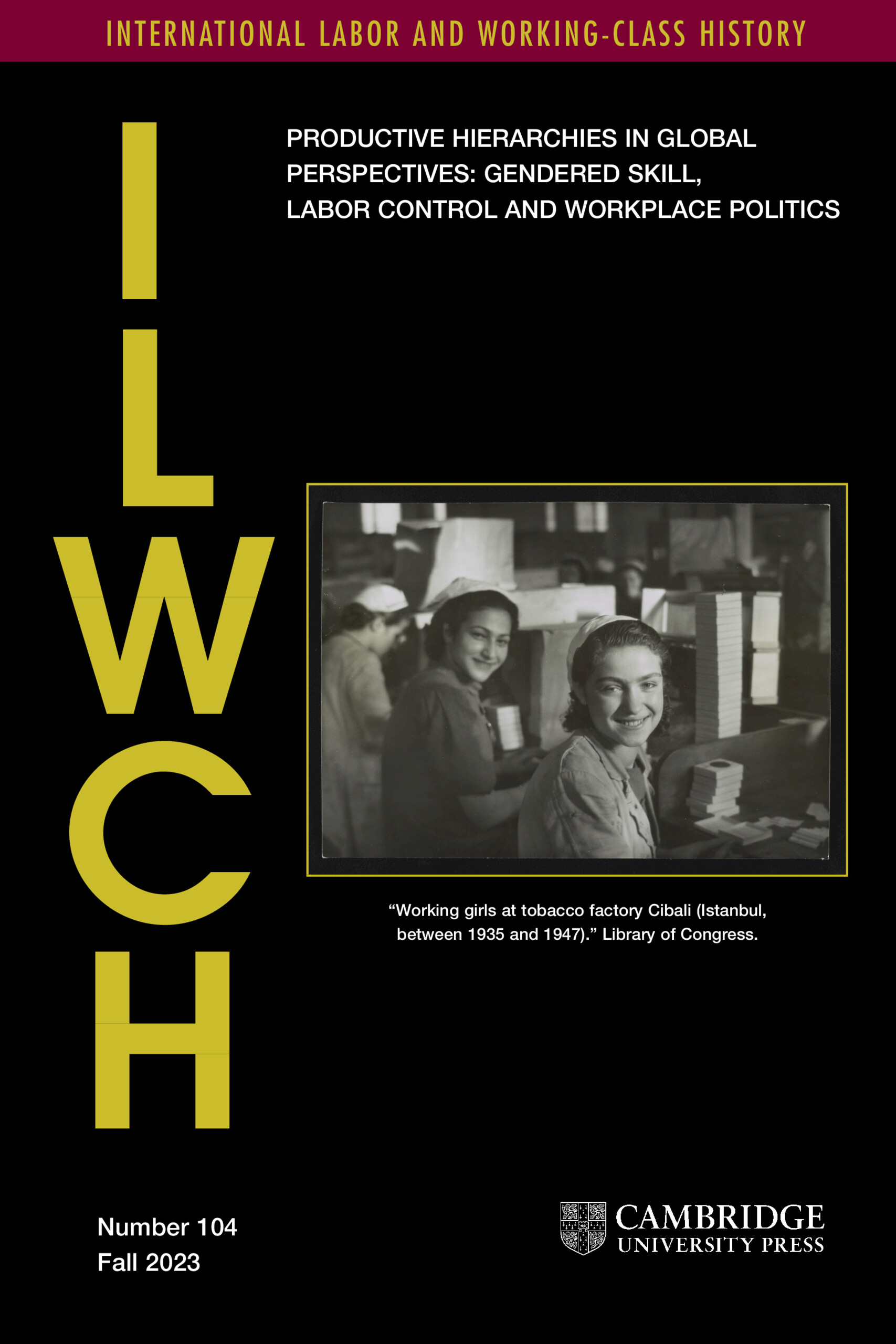
International Labor and Working Class History
A leading journal in the field of labor history; many recent essays are open access.
"ILWCH has an international reputation for scholarly innovation and quality. It explores diverse topics from globalisation and workers’ rights to class and consumption, labor movements, class identities and cultures, unions, and working-class politics. ILWCH publishes original research, review essays, conference reports from around the world, and an acclaimed scholarly controversy section. Comparative and cross-disciplinary, the journal is of interest to scholars in history, sociology, political science, labor studies, global studies, and a wide r"ange of other fields and disciplines. Originally known as Newsletter, European Labor and WOrking Class History from 1972-1975
ILWCH publishes original research, review essays, conference reports from around the world. Recently most essays are not paywalled
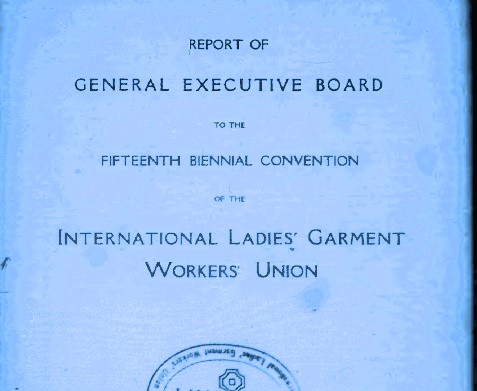
International Ladies Garment Workers Union
The International Ladies’ Garment Workers’ Union founding convention in 1900 included 11 local delegates representing roughly 2000 members. Reports and Proceedings of the Conventions of the International Ladies’ Garment Workers’ Union was published annually from 1900-1908, biennially from 1908-1924, then sporadically until 1937 from which time the convention was held every three years until the union’s merger with the Amalgamated Clothing and Textile Workers Union in 1995 to form UNITE, the Union of Needletrades, Industrial and Textile Employees. In addition to election of officers and committee reports, topics discussed include the working conditions, sweatshops, labor unity, organizing, wages and hours, union labels, boycotts, strikes, women’s garment industry, labor relations, internationalism, labor legislation, labor education, women’s rights, member benefits, and union health centers. The best available original was selected for digitization. Occasionally the original is difficult to read, missing pages, or partially cut off.
Garment union convention reports searchable by author, title, subject, type, date
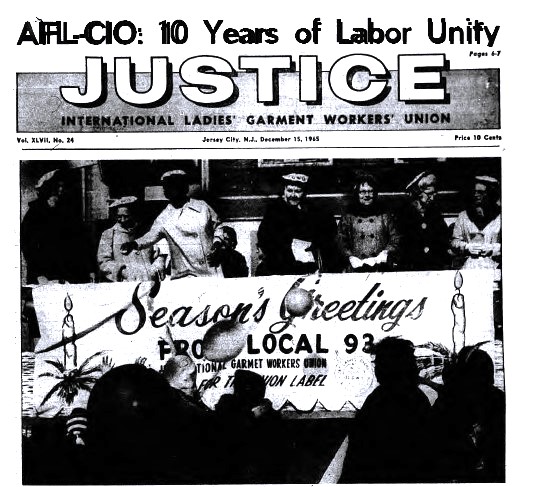
Justice ( International Ladies Garment Workers Union) 1919-1995
International Ladies Garment Workers Union
Justice was the official publication of the International Ladies’ Garment Workers’ Union ILGWU from 1919 to 1995. Editions of Justice were published in English, Italian, Spanish, and Yiddish. When compared side by side, the content of some of these different editions of Justice shows significant differences. This is the English-language edition of Justice. Searchable by issue date, author, title, subject
Justice was the official publication of the International Ladies’ Garment Workers’ Union ILGWU from 1919 to 1995.
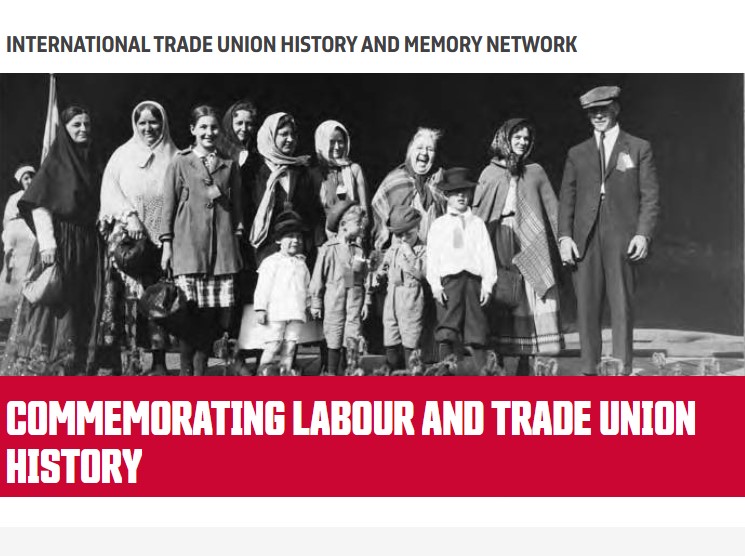
International Trade Union and Labour Memory Network
"a collaborative international project at Simon Fraser University, a group of historians and labour activists. We aim to examine the commemoriation of labour history by highlighting what kind of labour and trade union memory work is undertaken across the globe, how trade unions use history and memory as a resource, and discuss the problems and challenges involved in commemoration."
trade union memory work is undertaken across the globe
International Workers Order, Cornell University
The digital files represented here are a curated subset including ~1,700 documents found in the Kheel Center’s IWO Records (#5276). They include but are not limited to memos, minutes, correspondence, convention proceedings, flyers and other ephemera, Jubilee (anniversary) journals, educational materials, political pamphlets and the occasional magazine. The total 5276 International Workers' Order collection is 42.4 linear feet. The curated selection is 5 linear feet, including a few bound volumes.
This bilingual project conserves, digitizes, and curates* a portion of Cornell’s International Workers Order (IWO) archives and most especially those of its Jewish division, known as the Jewish People’s Fraternal Order (JPFO). The IWO was founded in 1930 as an immigrant fraternal order that provided high-quality, low-cost health and burial insurance and other benefits for members. The origins of the IWO / JPFO arose from a decade of splits (1920-1930) concerning the U.S.S.R., the Bolshevik Revolution and Communism that consumed the Jewish Federation of Socialists and the Arbeter Ring (Workmen’s Circle) groups associated with Eugene V. Debs’ Socialist Party. While the vast majority of the IWO’s members—~200,000 at its peak right after World War II—did not belong to the Communist Party of the United States of America, the IWO’s politics and leadership were largely aligned with those of the Party. For those familiar with the Yiddish speaking immigrant Left, this group was often referred to as "Di Linke" or the Left. The IWO was legally disbanded in 1953 due to the Cold War “Red Scare.” This closure followed on a famous and unprecedented court case, in connection with which the organization’s insurance funds and records were seized by New York State’s Insurance Department. The presence of a substantial portion of the IWO Records (#5276) in the Kheel Center at Cornell’s ILR School is a direct result of that seizure.
a portion of the archive of an important immigrant fraternal order providing low-cost health and burial insurance and other benefits.
Iowa Digital Archives
digital collections of labor and civil rights history, Iowa's African American Museum
a few dozen items and oral histories of the Black Iowan labor experience
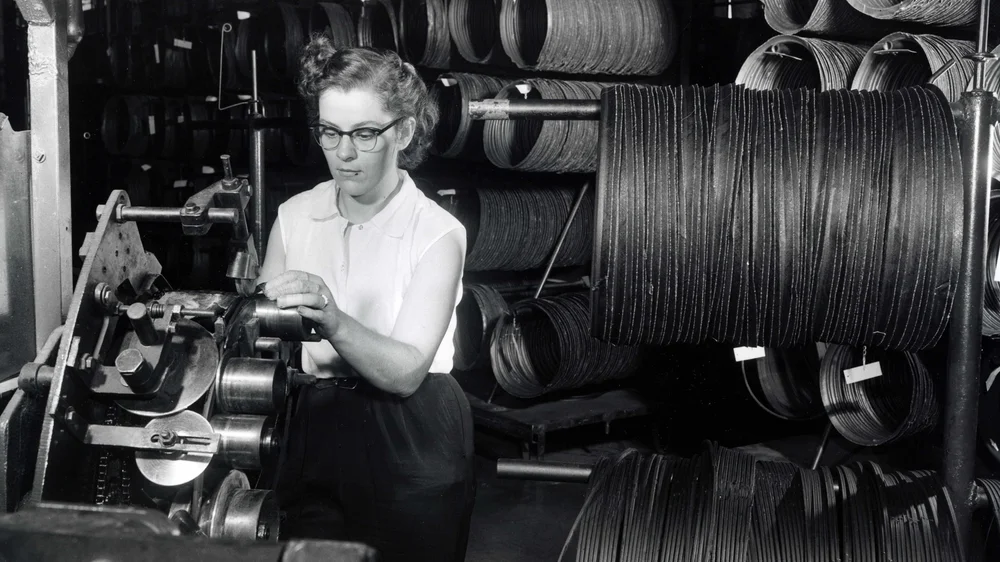
Iowa Digitial Library, University of Iowa
800 labor cartoons, speeches, over 1000 interviews and more in this digital collection
800 labor cartoons, speeches, over 1000 interviews and more in this digital collection. This overlaps with the Iowa Labor History Oral Project link.
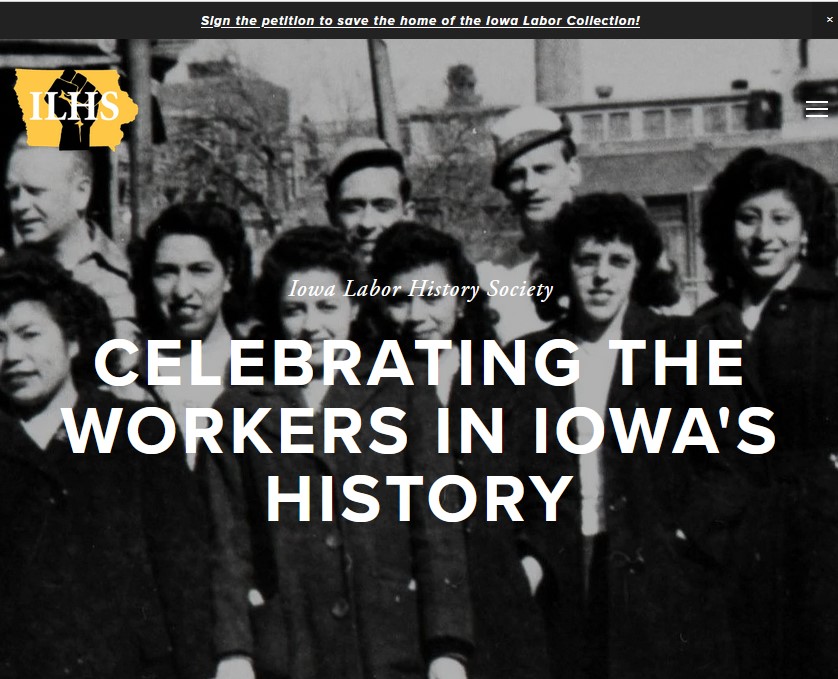
Iowa Labor HIstory Oral Project
For nearly five decades, the Labor Center has coordinated the Iowa Labor History Oral Project (ILHOP), an innovative statewide initiative to document Iowa’s rich labor and working class history through the collection and preservation of oral histories and other historical materials. Launched in the 1970s by the Iowa Federation of Labor (AFL-CIO), the project has also been sustained and expanded with support from the Labor Center, the State Historical Society of Iowa, the UI Libraries, and the Iowa Labor History Society. ILHOP is widely recognized as a model for long-standing university-community engagement and as one of the most comprehensive labor oral history collections in the world.
An oral history project with over 1000 interviews, searchable by topic, including entries that offer insight into the experiences of immigrants to the Midwest and their involvement in the Iowa Federation of Labor.
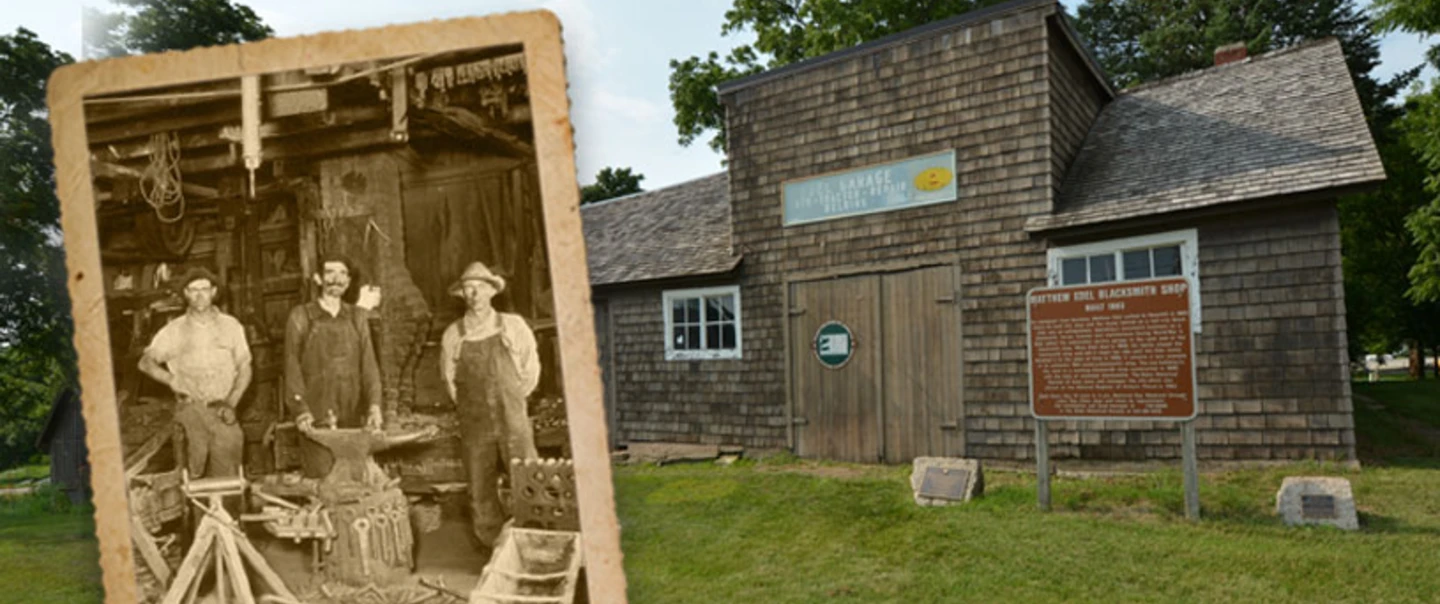
Iowa Labor History Society
For nearly five decades, the Labor Center has coordinated the Iowa Labor History Oral Project (ILHOP), an innovative statewide initiative to document Iowa’s rich labor and working class history through the collection and preservation of oral histories and other historical materials. Launched in the 1970s by the Iowa Federation of Labor (AFL-CIO), the project has also been sustained and expanded with support from the Labor Center, the State Historical Society of Iowa, the UI Libraries, and the Iowa Labor History Society. ILHOP is widely recognized as a model for long-standing university-community engagement and as one of the most comprehensive labor oral history collections in the world.
An oral history project searchable by topic, including entries that offer insight into the experiences of immigrants to the Midwest and their involvement in the Iowa Federation of Labor.
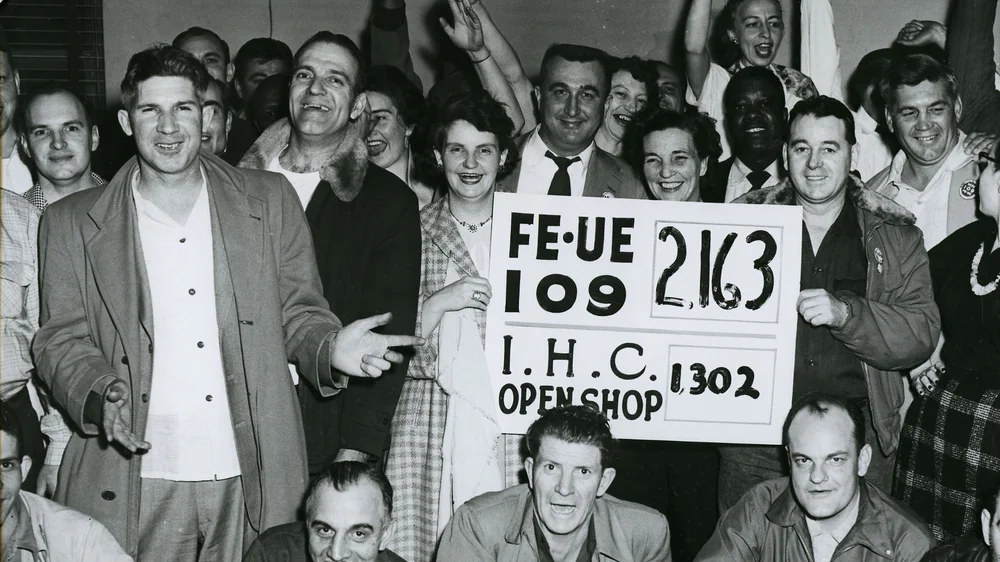
Iowa Labor History Society
The Iowa Labor History Society is a non-profit made up of individuals and affiliate organizations that have joined together to preserve and promote the rich history of Iowa's workers—the lives, labors, and struggles that shaped the history of our state.
Our activities include free film screenings, live theater events, student awards at National History Day, exhibitions, a podcast, oral history interviews, and support for the collection of documents and artifacts related to Iowa’s labor and working-class history and culture.
Iowa Labor History organization
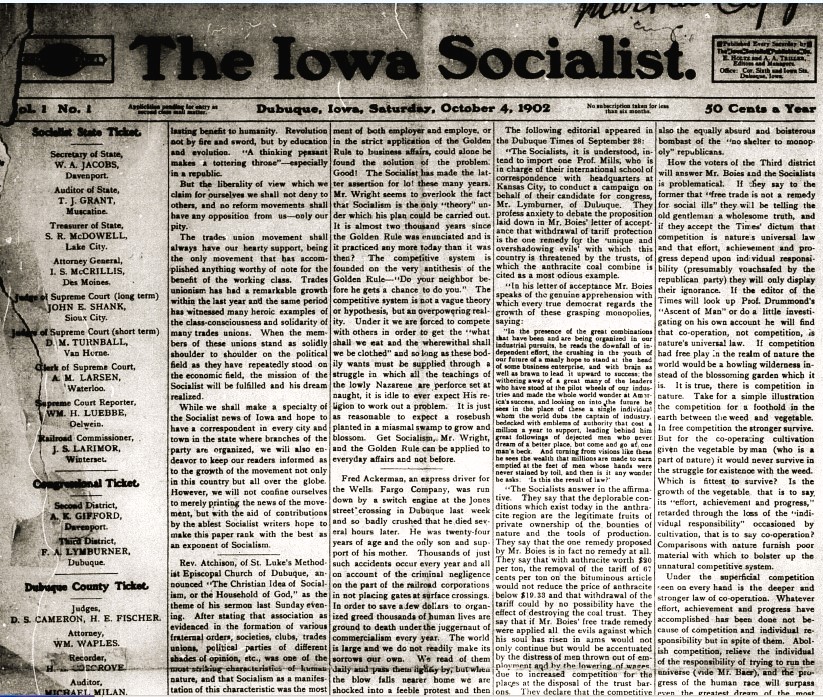
Iowa Socialist, Marxist.org
The first socialist publication in the state of Iowa was the short-lived tabloid, The Iowa Socialist, published from Dubuque. The paper was started in the fall of 1902, doubtlessly in conjunction with the November general election campaign of that year. The paper formally launched on October 4, 1902 and published continuously every Saturday until its termination on December 17, 1904. All issues have survived and are presented for free download in digital form here.
Strongly in the camp of the Socialist Party of America, the paper was owned and published by the Iowa Socialist Publishing Company, lead by two primary trustees — journalist and occasional cartoonist A.A. Triller and Secretary of Local Dubuque, Ernest Holtz. Triller seems to have handled the content aspect, while Holtz acted as business manager and self-described “all around man.”
The Iowa Socialist is important not only as a reflection of the early socialist movement in rural middle America but as an initial literary vehicle for John M. Work, an Iowa farm boy-turned lawyer-turned socialist activist who would go on to author one of the most reprinted pamphlets of the Debsian era, What’s So and What Isn’t (1905).
a reflection of the early socialist movement in rural middle America

Iowa Women's Archives, Mujeres Latinas Project
In 2005, the Iowa Women’s Archives initiated the Mujeres Latinas Project to preserve the history of Iowa Latinas, their families, and their communities. This project built on the pioneering work of Grace Nuñez who, under the guidance of Ernest Rodriguez and Rusty Barceló in the 1990s, researched, wrote, and conducted oral histories about the early history of Mexicans in Davenport and Bettendorf.
Oral history interviews were a major component of the Mujeres Latinas Project. The bulk of the interviews were conducted between 2005 and 2007 by IWA graduate assistant Teresa García; UI librarian Rachel Garza Carreón; Columbus Junction educational liaison Georgina Buendía Cruz; UI graduate student Iskra Núñez; and the curators of the Iowa Women’s Archives, Kären Mason and Janet Weaver. During this period, interviewers recorded 112 oral histories. Communities represented include Fort Madison, Des Moines, Mason City, the Quad Cities, Muscatine, Williamsburg, Conesville, and Sioux City.
Once the initial thrust of the project was over, IWA hired several undergraduate students to transcribe the English and Spanish-language interviews. Some of the interviewees donated photographs, correspondence, and additional family materials to accompany their oral histories. The Iowa Women’s Archives is the repository for the records of the Muscatine Migrant Committee and the League of United Latin American Citizens – LULAC Council 10 in Davenport.
A grant from the State Historical Society of Iowa's Resource Enhancement and Protection--Historical Resource Development Program funded the Mujeres Latinas Project. Additional funding was provided by the State Historical Society of Iowa, Inc., the University of Iowa Libraries, the University of Iowa's Year of Public Engagement and Year of the Arts and Humanities, and the Friends of the UI Libraries.
An oral history project focused on the experiences of Iowa Latinas.
Ira Katznelson
Applying a theoretical framework, this work explores how class, rather than other social bonds, became central to the ideologies, dispositions, and actions of working people, and how this process was translated into diverse institutional legacies and political outcomes.
Working-class formation: constructing cases and comparisons / Ira Katznelson
Artisans, factory workers, and the formation of the French working class, 1789-1848 / Wiliam H. Sewell, Jr
On the formation of the French working class / Michelle Perrot
The distinctiveness of working-class cultures in France, 1848-1900 / Alain Cottereau
Becoming American: the working classes in the United States before the Civil War / Amy Bridges
Trade unions and political machines: the organization and disorganization of the American working class in the late nineteenth century / Martin Shefter
Problems of working-class formation in Germany: the early years, 1800-1875 / Jürgen Kocka
Economic crisis, state policy, and working-class formation in Germany, 1870-1900 / Mary Nolan
How many exceptionalisms? / Aristide R. Zolberg
explores how class, rather than other social bonds, became central to the ideologies, dispositions, and actions of working people.

Irene Mata
The traditional immigrant narrative that gained popularity in the nineteenth and twentieth centuries continues to be used today in describing the process of the “Americanization” of immigrants. Yet rather than acting as an accurate representation of immigrant experiences, this common narrative of the “American Dream” attempts to ideologically contain those experiences within a story line that promotes the idea of achieving success through hard work and perseverance.
Irene Mata dispels the myth of the “shining city on the hill” and reveals the central truth of hidden exploitation that underlies the great majority of Chicana/Latina immigrant stories. Influenced by the works of Latina cultural producers and the growing interdisciplinary field of scholarship on gender, immigration, and labor, Domestic Disturbances suggests a new framework for looking at these immigrant and migrant stories, not as a continuation of a literary tradition, but instead as a specific Latina genealogy of immigrant narratives that more closely engage with the contemporary conditions of immigration. Through examination of multiple genres including film, theatre, and art, as well as current civil rights movements such as the mobilization around the DREAM Act, Mata illustrates the prevalence of the immigrant narrative in popular culture and the oppositional possibilities of alternative stories.
examination of multiple genres including film, theater, and art, as well as current civil rights movements
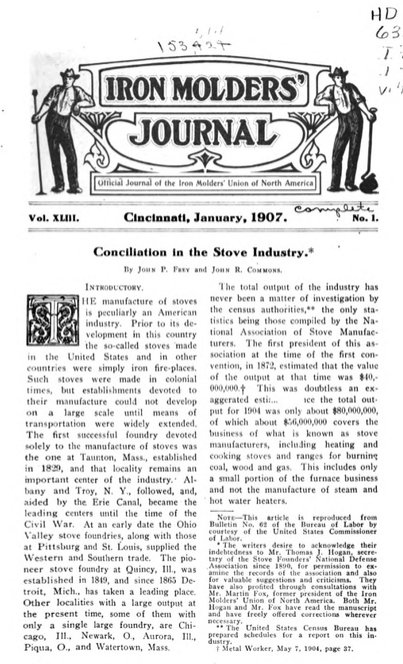
Iron Molders Union
Official journal of the Iron Molders' Union of North America; in 1861, and in 1863 the name of the body was changed to Iron Molders’
International Union the International Molders’ Union were affiliated to the American Federation of Labor, and the molders protested against the encroachment of the new
organization on their jurisdiction over brass. Disagreements and difficulties lasted until 1911 when they terminated in the transfer of the brass workers to
the molders’ organization.
magazine of one of the oldest labor organizations in the US
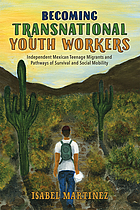
Isabel Martinez
Becoming Transnational Youth Workers contests mainstream notions of adolescence with its study of a previously under-documented cross-section of Mexican immigrant youth. Preceding the latest wave of Central American children and teenagers now fleeing violence in their homelands, Isabel Martinez examines a group of unaccompanied Mexican teenage minors who emigrated to New York City in the early 2000s. As one of the consequences of intractable poverty in their homeland, these emigrant youth exhibit levels of agency and competence not usually assigned to children and teenage minors, and disrupt mainstream notions of what practices are appropriate at their ages. Leaving school and family in Mexico and financially supporting not only themselves through their work in New York City, but also their families back home, these youths are independent teenage migrants who, upon migration, wish to assume or resume autonomy and agency rather than dependence. This book also explores community and family understandings about survival and social mobility in an era of extreme global economic inequality
explores community and family understandings about survival and social mobility in an era of extreme global economic inequality
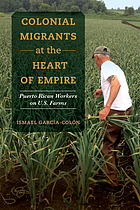
Ismael García-Colón
Colonial Migrants at the Heart of Empire is the first comprehensive look at the experiences of Puerto Rican migrant workers in mainland US agriculture in the twentieth century. Ismael García-Colón investigates the origins, establishment, and development of the Puerto Rico Farm Labor Program by the government of Puerto Rico in 1947, which placed hundreds of thousands of migrant workers on US farms and fostered the emergence of many stateside Puerto Rican communities. Colonial Migrants is both a labor history and an ethnography of the experience of migrant farm workers in US rural communities, evoking the violence, fieldwork, food, lodging, surveillance, and coercion that Puerto Ricans encountered on farms. One of the first books to explore the particular prejudice and racism faced by island farmworkers as they interacted with US rural communities, it reveals the dual status of Puerto Ricans as both US citizens and racialized "foreign others." Despite the complexities of navigating this dual status, many workers ultimately stayed in these communities and contributed to the demographic and ethnic changes of rural America"-- Provided by publisher
first comprehensive look at the experiences of Puerto Rican migrant workers in mainland US agriculture in the twentieth century.
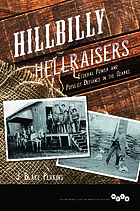
J Blake Perkins
Long a bastion of antigovernment feeling, the Ozark region today is home to fervent strains of conservative-influenced sentiment. Does rural heritage play an exceptional role in the perpetuation of these attitudes? Have such outlooks been continuous? J. Blake Perkins searches for the roots of rural defiance in the Ozarks--and discovers how it changed over time.
Eschewing generalities, Perkins focuses on the experiences and attitudes of rural people themselves as they interacted with government from the late nineteenth century through the twentieth century.He uncovers the reasons local disputes and uneven access to government power fostered markedly different reactions by hill people as time went by. Resistance in the earlier period sprang from upland small farmers' conflicts with capitalist elites who held the local levers of federal power. But as industry and agribusiness displaced family farms after World War II, a conservative cohort of town business elites, local political officials, and midwestern immigrants arose from the region's new low-wage, union-averse economy. As Perkins argues, this modern antigovernment conservatism bore little resemblance to the backcountry populism of an earlier age but had much in common with the movement elsewhere
roots of rural defiance in the Ozarks
J R Martin Media Inc
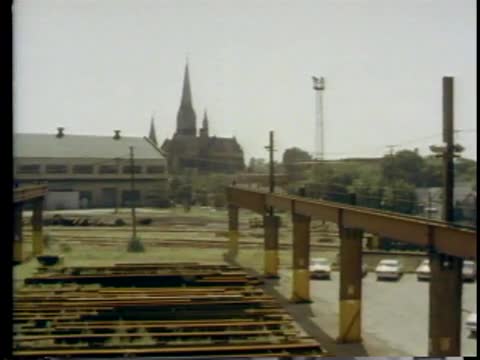
Wrapped In Steel is the documentary story of the neighborhoods of South East Chicago. Produced and Directed by James R (Jim) Martin. Cinematography Michael Goi. Wrapped In Steel looks at this ethnically and racially diverse area composed of four neighborhoods situated next the the steel mills that have begun to be shut down by corporate interests.Produced as part of the
Southeast Chicago Historical Project, a community-based historical project in conjunction with Columbia College. Documentary tells the story of Southeast Chicago’s ethnically and racially diverse neighborhoods in the period when area steel mills were beginning to close.
-"'Everybody says he's going to work in the steel mill for no more than two weeks--then they stay for twenty or thirty years.' remarks a veteran steelworker in this documentary about Chicago's Southeast Side. For over 100 years, steel has been a way of life for the residents of South Chicago, the East Side, South Dearing and Hegewisch. "Wrapped in Steel chronicles this tradition that is becoming a thing of the past as the American steel industry continues to decline. When plants such as the neighborhood's Southworks close, residents are shaken, and look to their leaders for help. As the documentary (filmed during the heated 1983 Chicago Mayoral race) demonstrates, the officials have few answers for them. "Three years in the making, Wrapped in Steel explores the history, values, religions and politics of the Southeast Side's working class residents who represent every major ethnic and racial group to settle in America. Parades, weddings, funerals, political rallies and everyday conversations combine to form a moving tribute to a neighborhood with a reputation for hard work and the determination to go on."--1985 Peabody Awards entry form. The documentary includes a look at Chicago's Mayoral election of 1983, where the candidates were campaigning to steel workers and promising to better their financial situation. The winning candidate was Chicago's first African American mayor, Harold Lee Washington.
explores the history, values, religions and politics of the Southeast Side's working class residents
J. Albert Mann
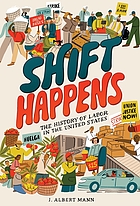
This eye-opening and engaging history of the worker actions that brought us weekends, pay equality, desegregation, an end to child labor and more documents how the labor movement has shaped America and how it intersects with many of the major issues facing modern teens
Young Adult book--the worker actions that brought us weekends, pay equality, desegregation, an end to child labor and more
Museum/Exhibits
Tours
Maps
Digital Projects
Organizations
Sites
Film/Video
Audio/Interview
Podcast/Program
Text/Document
Image
Graphs/Data
Timeline
Southwest
West
Midwest
Southeast
Northeast
Mexico
Canada
Global
Books
Teaching
Lectures
Digital Archives
Journals
Bibliographies
Topic Intro