


Collections
Library
Type
Region
Coverage:
-
Published:
-
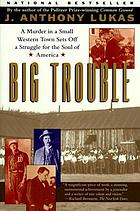
J. Anthony Lukas
Hailed as "toweringly important" (Baltimore Sun), "a work of scrupulous and significant reportage" (E.L. Doctorow), and "an unforgettable historical drama" (Chicago Sun-Times), Big Trouble brings to life the astonishing case that ultimately engaged President Theodore Roosevelt, Supreme Court justice Oliver Wendell Holmes, and the politics and passions of an entire nation at century's turn. After Idaho's former governor is blown up by a bomb at his garden gate at Christmastime 1905, America's most celebrated detective, Pinkerton James McParland, takes over the investigation. His daringly executed plan to kidnap the radical union leader "Big Bill" Haywood from Colorado to stand trial in Idaho sets the stage for a memorable courtroom confrontation between the flamboyant prosecutor, progressive senator William Borah, and the young defender of the dispossessed, Clarence Darrow. Big Trouble captures the tumultuous first decade of the twentieth century, when capital and labor, particularly in the raw, acquisitive West, were pitted against each other in something close to class war. Lukas paints a vivid portrait of a time and place in which actress Ethel Barrymore, baseball phenom Walter Johnson, and editor William Allen White jostled with railroad magnate E.H. Harriman, socialist Eugene V. Debs, gunslinger Charlie Siringo, and Operative 21, the intrepid Pinkerton agent who infiltrated Darrow's defense team. This is a grand narrative of the United States as it charged, full of hope and trepidation, into the twentieth century
captures the tumultuous first decade of the twentieth century, when capital and labor were pitted against each other through an infamous court case.

J. J. Flournoy, History Matters
While the numbers of free blacks remained small in the South through the mid-nineteenth century, their presence aroused great anxiety among whites. Legislatures passed laws limiting African-American political and social rights. Non-slaveholding whites often viewed free black labor as competition, especially in urban areas where tensions between the two groups sometimes ran high. In 1838, J. J. Flournoy, a white Georgian artisan, wrote this letter to the Athens Southern Banner complaining about the competition posed by black workers. While he noted in passing that the white majority of the poor should band together to elect representatives to ensure laws that would privilege white labor over black, he more forcefully appealed to a common “whiteness” among contractors and carpenters, proprietors and workers.
An 1838 letter from white Georgian artisan J.J. Flournoy to the Southern Banner newspaper that complains of the competition black labor posed to white workers like himself.

J. Murrey Atkins Library
Several lesson ideas, including
Activity (Grade levels 6-8): Tracing the Route of Bracero
Activity (Grade levels 6-12): Learning from Documents
Activity (Grade levels 6-12): Learning from Photos
using Bracero History Archive
Collection of oral histories, photos, and objects documenting the history of the Bracero program, a little-known chapter of American history in which an estimated two million Mexican men came to the United States between 1942 and 1964 on short-term labor contracts. Browse more than 600 oral histories and numerous objects, use social bookmarking tools to share resources, add notes, make a poster using items from the archive, and contribute to the archive by adding personal stories about the Bracero program. Targets grades 6-12.
Lesson plans ranging from elementary to high school for Harvest of Loneliness
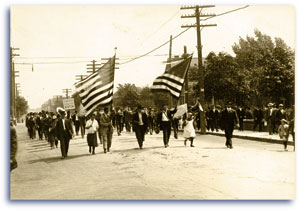
J. W. Nara
Powerful photos from 1913 Michigan copper strike . History is a matter for memory and reminiscence. Rather than a series of documented events and facts, what we know of history often comes to us through the few clues retained in diaries, newspaper accounts, and public records. It was recorded that John William Nara was born in 1874 in the Tornio region of Finland. It is known that by 1892 he had established a photographic studio in Calumet, Michigan, in the heart of America’s most productive copper mining region. Where he learned his darkroom skills is unknown and, like millions of immigrant stories, the specific reasons for his move from Northern Finland to Northern Michigan are not clear. Few historical facts survive for most people’s lives; a birth certificate, a marriage license, perhaps an obituary tucked away on the inside pages of a defunct newspaper.
Michigan Technological University's online exhibition about the life and career of Finnisi immigrant and photographer J.W. Nara (1874-1934), whose work documented the social and political aspects of life in Michigan's Copper Country.
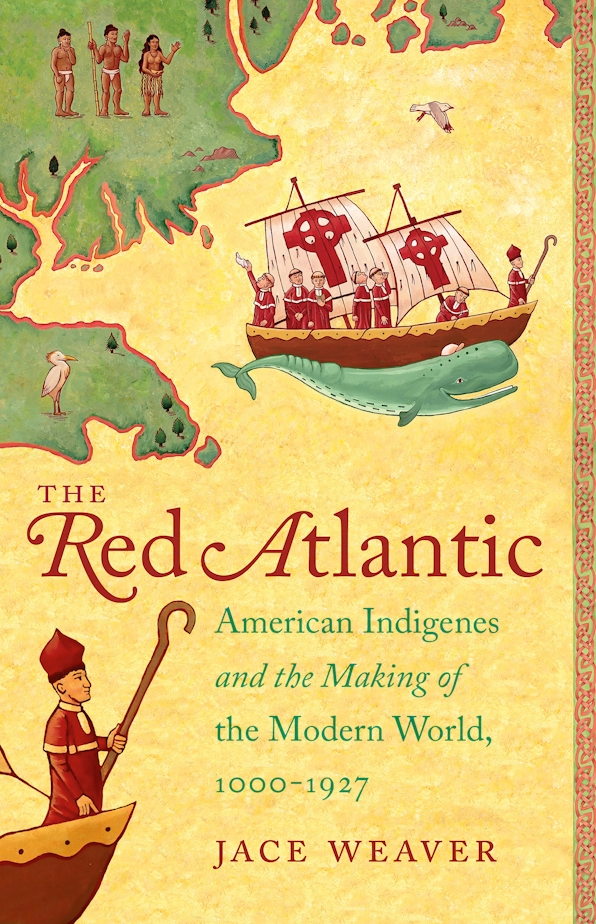
Jace Weaver
From the earliest moments of European contact, Native Americans have played a pivotal role in the Atlantic experience, yet they often have been relegated to the margins of the region's historical record. The Red Atlantic, Jace Weaver's sweeping and highly readable survey of history and literature, synthesizes scholarship to place indigenous people of the Americas at the center of our understanding of the Atlantic world. Weaver illuminates their willing and unwilling travels through the region, revealing how they changed the course of world history.
Indigenous Americans, Weaver shows, crossed the Atlantic as royal dignitaries, diplomats, slaves, laborers, soldiers, performers, and tourists. And they carried resources and knowledge that shaped world civilization--from chocolate, tobacco, and potatoes to terrace farming and suspension bridges. Weaver makes clear that indigenous travelers were cosmopolitan agents of international change whose engagement with other societies gave them the tools to advocate for their own sovereignty even as it was challenged by colonialism.
places indigenous people of the Americas at the center of our understanding of the Atlantic world

Jack Delano, Edwin, Louise Rosskam
over 2000 photos of Puerto Rican sugar industry and its workers
Between 1935 and 1944, photographers working for the U.S. government's Farm Security Administration (FSA) and later the Office of War Information (OWI) created approximately 1,600 color photographs and 175,000 black-and-white film negatives to depict every-day life in the United States, including Puerto Rico and the Virgin Islands. These efforts helped document how the shift in Puerto Rico's economy from a plantation to an industrial model affected family structures, public health, education and work. This guide highlights key photographic collections from two couples, Jack Delano and his wife, Irene; and Edwin Rosskam and his wife Louise. These couples documented these everyday impacts in their photographs of Puerto Rico.
Delano recounts his experiences as a FSA photographer in the book Puerto Rico Mio: Four Decades of Change - Cuatro Decadas de Cambio.
Our travel took us through every one of the seventy-six municipalities of the island, photographing coffee haciendas, tobacco farms, sugarcane fields, and grinding mills. We recorded the misery of tiempo muerto, the dead season, when the breathtaking, silvery fields of guajana, the sugarcane flower, obscured the ugly brutality of unemployment and want. And we witnessed the zafra, the sugar harvest, when men and oxen strained every muscle under the broiling sun and forty-three sugar mills spouted black smoke into the sky day and night.
over 2000 photos of sugar plantation life circa WWII
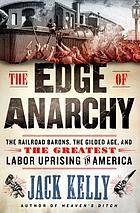
Jack Kelly
A vivid account of the greatest uprising of working people in American history. At the pinnacle of the Gilded Age, a boycott of Pullman sleeping cars by hundreds of thousands of railroad employees brought commerce to a standstill across much of the country. Famine threatened, riots broke out along the rail lines. Soon the U.S. Army was on the march and gunfire rang from the streets of major cities.
This epochal tale offers fascinating portraits of two iconic characters of the age: George Pullman, who amassed a fortune by making train travel a pleasure, thought the model town that he built for his workers would erase urban squalor. Eugene Debs, founder of the nation's first industrial union, was determined to wrench power away from the reigning plutocrats. The clash between the two men's conflicting ideals pushed the country to what the U.S. Attorney General called "the ragged edge of anarchy." Many of the themes of The Edge of Anarchy could be taken from today's headlines--upheaval in America's industrial heartland, wage stagnation, breakneck technological change, and festering conflict over race, immigration, and inequality. With the country now in a New Gilded Age, this look back at the violent conflict of an earlier era offers illuminating perspectives along with a breathtaking story of a nation on the edge."--Jacket
A vivid account of the greatest uprising of working people in American history.
Jack Metzgar
In Bridging the Divide, Jack Metzgar attempts to determine the differences between working-class and middle-class cultures in the United States. Drawing on a wide range of multidisciplinary sources, Metzgar writes as a now middle-class professional with a working-class upbringing, explaining the various ways the two cultures conflict and complement each other, illustrated by his own lived experiences.
Set in a historical framework that reflects on how both class cultures developed, adapted, and survived through decades of historical circumstances, Metzgar challenges professional middle-class views of both the working-class and themselves. In the end, he argues for the creation of a cross-class coalition of what he calls "standard-issue professionals" with both hard-living and settled-living working people and outlines some policies that could help promote such a unification if the two groups had a better understanding of their differences and how to use those differences to their advantage.
Bridging the Divide mixes personal stories and theoretical concepts to give us a compelling look inside the current complex position of the working-class in American culture and a view of what it could be in the future.
An interpretation of the differences between working-class and professional-middle-class cultures in the U.S. since World War II, exploring how these class cultures both conflict with and complement each other"--
Jack Ross
At a time when the word “socialist” is but one of numerous political epithets that are generally divorced from the historical context of America’s political history, The Socialist Party of America presents a new, mature understanding of America’s most important minor political party of the twentieth century. From the party’s origins in the labor and populist movements at the end of the nineteenth century, to its heyday with the charismatic Eugene V. Debs, and to its persistence through the Depression and the Second World War under the steady leadership of “America’s conscience,” Norman Thomas, The Socialist Party of America guides readers through the party’s twilight, ultimate demise, and the successor groups that arose following its collapse.
Based on archival research, Jack Ross’s study challenges the orthodoxies of both sides of the historiographical debate as well as assumptions about the Socialist Party in historical memory. Ross similarly covers the related emergence of neoconservatism and other facets of contemporary American politics and assesses some of the more sensational charges from the right about contemporary liberalism and the “radicalism” of Barack Obama.
A complete history of the Socialist Party of America, beginning with the roots of American Marxism in the nineteenth century"
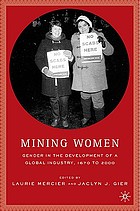
Jaclyn J. Gier
This book explores gender relations and women's work and activism in different parts of the world. It also explores the subject from multiple perspectives and links each of these not only to cultural and domestic arrangements but also to an emerging industrial and capitalist system from the Eighteenth through the Twentieth centuries.
Pt. I. The indigenous, colonial, and imperial legacy
1. Mining women, royal slaves : copper mining in colonial Cuba, 1670-1780 / Maria Elena Diaz
2. Making a difference in colonial interventionism in gold mining in Wassa Fiase, Gold Coast (Ghana) : the activism of two women, 1874-1893 / Kwabena O. Akurang-Parry
3. Lifting the layers of the mountain's petticoats : mining and gender in Potosi's Pachamama / Pascale Absi
4. Kamins building the empire : class, caste, and gender interface in Indian collieries / Kuntala Lahiri-Dutt
Pt. II. Engendered bodies and the masculinization of the mining industry : separate spheres and the role of women in mining, the mining household, and community, 1800-1940
5. Sociability, solidarity, and social exclusion : women's activism in the South Wales coalfield, ca. 1830 to 1939 / Rosemary Jones
6. Gender relations in iron mining communities in Sweden, 1900-1940 / Eva Blomberg
7. Invisible labor : a comparative oral history of women in coal mining communities of Hokkaido, Japan, and Montana, USA, 1890-1940 / Kayoko Yoshida and Reiko Miyauchi
8. Coal mining women speak out : economic change and women miners of Chikuho, Japan / Sachiko Sone
Pt. III. Gender, mining communities, and labor protests, 1900-1960
9. "I'm a Johnny Mitchell man" : gender and labor protest in the Pennsylvania hard coal uprising, 1900-1902 / Bonnie Stepenoff
10. Violence and the Colorado National Guard : masculinity, race, class, and identity in the 1913-1914 Southern Colorado coal strike / Anthony DeStefanis
11. "I hate to be calling her a wife now" : women and men in the salt of the earth strike, 1950-1952 / Ellen Baker
12. Godless communists and faithful wives, gender relations and the Cold War : mine mill and the 1958 strike against the International Nickel Company / Mercedes Steedman
Pt. IV. The division of mining labour revisited : cultures of solidarity, deindustrialization, and the globalized economy, 1945-2005
13. Just a housewife? : miners' wives between household and work in postwar Germany / Yong-Sook Jung
14. Women into mining jobs at Inco : challenging the gender division of labor / Jennifer Keck and Mary Powell
15. From Ludlow to camp solidarity : women, men, and cultures of solidarity in U.S. coal communities, 1912-1990 / Camille Guerin-Gonzales
Epilogue : mining women find a voice : working class and environment feminism in the twenty-first century / Jaclyn J. Gier
Explores gender relations and women's work and activism in mines across the world.
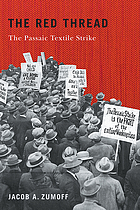
Jacob A. Zumoff
This book tells the story of 15,000 wool workers who went on strike for more than a year, defying police violence and hunger. The strikers were mainly immigrants and half were women. The Passaic textile strike, the first time that the Communist Party led a mass workers' struggle in the United States, captured the nation's imagination and came to symbolize the struggle of workers throughout the country when the labor movement as a whole was in decline during the conservative, pro-business 1920s. Although the strike was defeated, many of the methods and tactics of the Passaic strike presaged the struggles for industrial unions a decade later in the Great Depression"-- Provided by publisher
story of 15,000 wool workers who went on strike for more than a year, defying police violence and hunger.

Jacob AC Remes
A century ago, governments buoyed by Progressive Era-beliefs began to assume greater responsibility for protecting and rescuing citizens. Yet the aftermath of two disasters in the United States-Canada borderlands--the Salem Fire of 1914 and the Halifax Explosion of 1917--saw working class survivors instead turn to friends, neighbors, coworkers, and family members for succor and aid. Both official and unofficial responses, meanwhile, showed how the United States and Canada were linked by experts, workers, and money. In Disaster Citizenship, Jacob A.C. Remes draws on histories of the Salem and Halifax events to explore the institutions--both formal and informal--that ordinary people relied upon in times of crisis. He explores patterns and traditions of self-help, informal order, and solidarity and details how people adapted these traditions when necessary. Yet, as he shows, these methods--though often quick and effective--remained illegible to reformers. Indeed, soldiers, social workers, and reformers wielding extraordinary emergency powers challenged these grassroots practices to impose progressive 'solutions' on what they wrongly imagined to be a fractured social landscape. Innovative and engaging, Disaster Citizenship excavates the forgotten networks of solidarity and obligation in an earlier time while simultaneously suggesting new frameworks in the emerging field of critical disaster studies"=
excavates the forgotten networks of solidarity and obligation in an earlier time
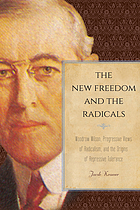
Jacob Kramer
Contends that ideas concerning radicalism were always an important part of progressivism, showing that acceptable limits established by progressives regarding radical propaganda, organization, and strike behavior became established law and policy.Radicals such as socialists, syndicalists, and anarchists are often thought of as marginal in American history. However, in the early decades of the twentieth century, progressives—those who sought to regulate big business, reduce class conflict, and ameliorate urban poverty—took the radicals’ ideas very seriously.Kramer explores Jane Addams, Randolph Bourne, Louis Brandeis, George Creel, Herbert Croly, John Dewey, W. E. B. Du Bois, Felix Frankfurter, Oliver Wendell Holmes, Helen Keller, Florence Kelley, Walter Lippman, Carleton Parker, Upton Sinclair, Frank Walsh, and Woodrow Wilson. Kramer notes that progressives "tended to favor associations with workers or cross-class alliances that would reduce class conflict rather than remove the distinction between the classes"
ideas concerning radicalism were always an important part of progressivism

Jacob Riis
113 photos by Jacob Riis, documenting the poverty
113 photos from Jacob Riis documenting work and poverty, housing in New York

Jacob Riis, David Leviatin
51 photos and original text addressed the problems of tenement housing, immigration, and urban life and work at the beginning of the Progressive era.
David Leviatin edited this complete edition of How the Other Half Lives to be as faithful to Riiss original text and photography as possible.
Uncropped prints of Riis original photographs replace the faded halftones and drawings from photographs that were included in the 1890 edition.
Related documents added to the second edition include a stenographic report of one of Riiss lantern-slide lectures that demonstrates Riis melodramatic techniques and the reaction of his audience, and five drawings that reveal the subtle but important ways Riiss photographs were edited when they were reinterpreted as illustrations in the 1890 edition. The books provocative introduction now addresses Riiss ethnic and racial stereotyping and includes a map of New Yorks Lower East Side in the 1890s. A new list of illustrations and expanded chronology, questions for consideration, and selected bibliography provide additional support.
A hypertext version of Jacob Riis' classic 1890 work of photojournalism, entitled How the Other Half Lives: Studies among the Tenements of New York.
Jacob Riis, History Matters
Jacob Riis—a journalist and photographer of industrial America and himself a Danish immigrant—exposed the deplorable conditions of late nineteenth-century urban life in his widely-read book, How the Other Half Lives, published in 1890. He also presented slide shows to reform-minded, middle-class audiences. Despite his own immigrant background, Riis‘ attitudes mirrored the prejudices of the dominant culture toward “foreigners,” as revealed in this stereotyped description of an immigrant neighborhood on New York’s Lower East Side. Riis’ reports on immigrant life—and his equally famous photographs—were important documents of urban conditions in late nineteenth-century urban America. But they were equally revealing as documents that showed how outsiders often reacted in horror to the lives of "the other half."
(teaching document) Journalist Jacob Riis' description of an immigrant neighborhood in New York's Lower East Side, which offers insight into the ways reform-minded Americans might still harbor racial and ethnic stereotypes.
Jacobus Hermanus Antonius van der Velden
Historical Dictionary of Organized Labor: Fourth Edition makes the history of this important feature of life easily accessible. The reader is guided through a chronology, an introductory essay, 600 entries on the subject, appendixes with statistical material, and an extensive bibliography including Internet sites. This book gives a thorough introduction into past and present for historians, economists, sociologists, journalists, activists, labor union leaders, and anyone interested in the development of this important issue. From the start of its existence organized labor has been the voice of workers to improve their economic, social, and political positions. Beginning with small and very often illegal groups of involved workers it grew to the million member organizations that now exist around the globe. It is studied from many different perspectives – historical, economic, sociological, and legal – but it fundamentally involves the struggle for workers’ rights, human rights and social justice. In an often hostile environment, organized labor has tried to make the world a fairer place. Even though it has only ever covered a minority of employees in most countries, its effects on their political, economic, and social systems have been generally positive. Despite growing repression of organized labor in recent years, membership numbers are still growing for the benefit of all employees, including the non-members.
gives a thorough introduction into past and present for historians, economists, sociologists, journalists, activists, labor union leaders, and anyone interested in the development of this important issue.
Jacqueline Jones
A Social History of the Laboring Classes is an introduction used in classrooms. It provides a sweeping account of the most significant aspect of nearly every American's life: work. Beginning with the seventeenth century, Jacqueline Jones examines the experiences of different groups of American workers - waged and unwaged, urban and countrysidewithin a framework of the economic transformations that have occurred at regular intervals throughout American history. This concise synthesis by an award-winning historian provides an account of the social history of work for students of American history and general readers alike
* Addresses black, white, native American, male, female, adult and child labor into a single volume.
Contents:
"Strangers" and other workers in the seventeenth-century colonies
"Be sure to come free": workers in the eighteenth century
Crosscurrents of slavery and freedom in the antebellum South
The northern laboring classes at odds with one another, before and during the civil war
Idealogies of race in a modernizing economy: the cases of African-American and Chinese workers
The laboring classes in turn-of-the-century America
The rise of the state in depression and war: the American workforce, 1916-1945
American workers and the new world order in the second half of the twentieth century
examines the experiences of different groups of American workers within a framework of the economic transformations that have occurred at regular intervals throughout American history.
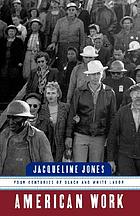
Jacqueline Jones
This sweeping social history of over four centuries of competition, co-operation and exclusion demonstrates how black people were excluded from significant social transformations in American history
Part I: Insubordinates: servants and slaves in a militarized age. Places of labor's "hard usage" in the South before slavery
Memory and misery: white servants and the origins of slavery in the South
The work of insurrection: black and white labor in the eighteenth-century South
"Domestik enemies": bound laborers in New England and the Middle Colonies, 1620-1776
The emergence of free labor, fettered, in the North
American work: a photo essay
Part II: Workers and overworkers: black and white labor in the era of slavery.
Black and white hands in a slaveholders' republic, 1790-1860
The racial politics of Southern labor in peacetime and war, 1820-1870
White men "in a tight place": black poverty and black protest in the antebellum North
White citizens and black denizens: workers in the North during the era of the Civil War.
Part III: The rise and decline of the racialized machine: technological and political change in the workplace.
The modernization of prejudice: economic change and the social division of labor, 1870-1930
Can you see a tomorrow there? industrial transformation and Federal civil rights legislation, 1929-1978
Industrial devolution and the persistence of the "race watch" at the end of the twentieth century
Families, fraternities, and sites of diversity: affirmative action in historical perspective
demonstrates how black people were excluded from significant social transformations in American history.
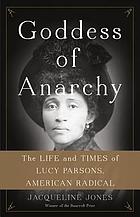
Jacqueline Jones
A "new portrait of an extraordinary activist and the turbulent age in which she lived Goddess of Anarchy recounts the formidable life of the militant writer, orator, and agitator Lucy Parsons.
Born to an enslaved woman in Virginia in 1851 and raised in Texas-where she met her husband, the Haymarket "martyr" Albert Parsons-Lucy was a fearless advocate of First Amendment rights, a champion of the working classes, and one of the most prominent figures of African descent of her era.
And yet, her life was riddled with contradictions-she advocated violence without apology, concocted a Hispanic-Indian identity for herself, and ignored the plight of African Americans. Drawing on a wealth of new sources, Jacqueline Jones presents not only the exceptional life of the famous American-born anarchist but also an authoritative account of her times-from slavery through the Great Depression"-- Provided by publisher
a new portrait of an extraordinary activist and the turbulent age
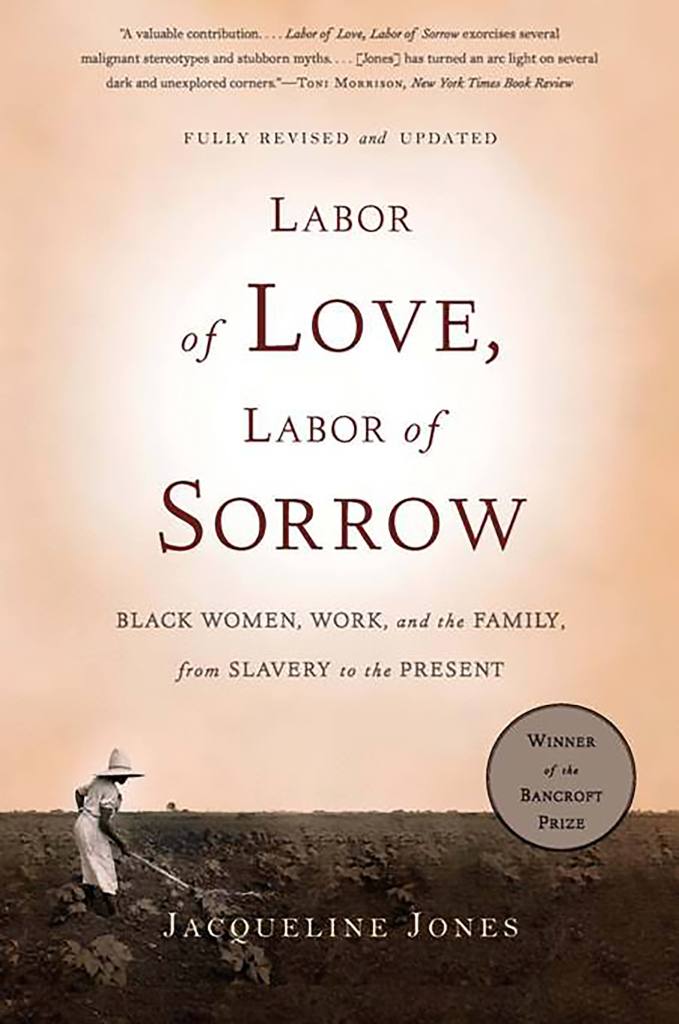
Jacqueline Jones
The forces that shaped the institution of slavery in the American South endured, albeit in altered form, long after slavery was abolished. Toiling in sweltering Virginia tobacco factories or in the kitchens of white families in Chicago, black women felt a stultifying combination of racial discrimination and sexual prejudice. And yet, in their efforts to sustain family ties, they shared a common purpose with wives and mothers of all classes. In Labor of Love, Labor of Sorrow, historian Jacqueline Jones offers a powerful account of the changing role of black women, lending a voice to an unsung struggle from the depths of slavery to the ongoing fight for civil rights
offers a powerful account of the changing role of black women, lending a voice to an unsung struggle from the depths of slavery to the ongoing fight for civil rights.
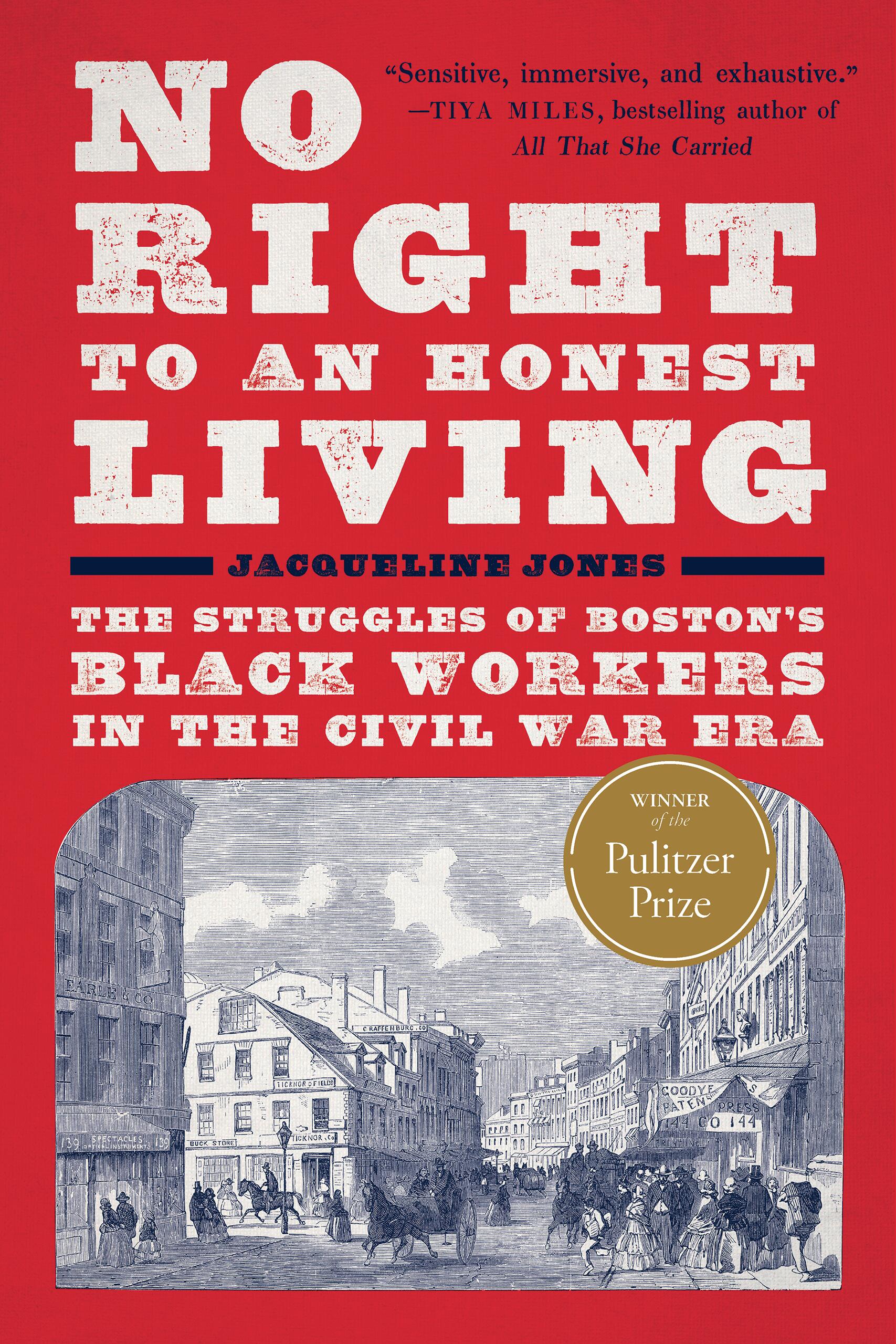
Jacqueline Jones
Impassioned antislavery activists, writers, and orators made antebellum Boston famous as the nation's hub of radical abolitionism. For its Black workers, however, Boston was far from a beacon of equality.
In No Right to an Honest Living, Jacqueline Jones offers a searing portrait of Black labor and white hypocrisy in nineteenth-century Boston. The city, she reveals, was the United States writ small: A place where the soaring rhetoric of egalitarianism was easy, but justice in the workplace was elusive. Before, during, and after the Civil War, white abolitionists, Republicans, and city officials refused to press for equal employment opportunity for Black Bostonians, condemning most of them to poverty.
Still, Jones finds, Black residents ingeniously created their own jobs and forged their own career paths. Whether as day laborers and domestics or as physicians and lawyers, they persisted in the face of monumental obstacles to make better lives for themselves and their families. Highlighting the everyday struggles of ordinary Black workers, No Right to an Honest Living vividly shows how injustice in the workplace prevented Boston -- and the United States -- from securing true equality for all." -- Jacket flap
ow injustice in the workplace prevented Boston -- and the United States -- from securing true equality for all."

Jacqueline Jones
The specter of the "underclass" haunts the American imagination. Many books focus on a piece of the problem: either the North or South, blacks or whites, industrial or agricultural workers. This chronicle of the roots of poverty reveals for the first time the full contours of this American tragedy. In an examination of what it has meant to be down and out in America, the author explores the wrenching displacement of millions of rural Americans, both blacks and whites, beginning with the Civil War, and follows their great trek into the industrial centers and urban ghettos of the North. Through the stories of ordinary families, this book systematically dismantles the myth of the "culture of poverty," challenging the central tenets of the underclass debate. The author shows how family members of both sexes and all ages struggled mightily on cotton plantations, in coal mining camps, and in factory towns to piece together a livelihood through wage work, farming, and foraging. These families were determined to resist enforced dependency at the hands of cotton farmers and agents of the welfare state. The book argues that poverty cannot be defined exclusively in racial or cultural terms. Poverty has a history encompassing political as much as economic forces. Place - not only a physical location but also a network of kin and neighbors - is a major theme in the history of poverty. In this text, the author integrates elements of labor, family, African-American, and political history. While many scholars and most politicians continue to relegate poor people to a position outside the "mainstream," this book examines America's dispossessed as a central piece in the country's history
A history of poverty in the U.S. across gender and racial lines.
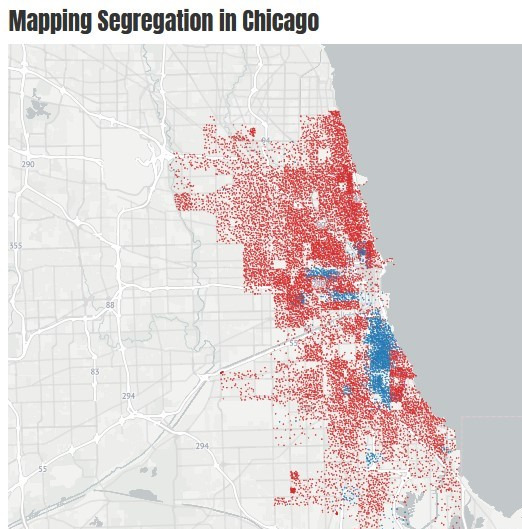
Jacqueline Serrato, Pat Sier, Charmaine Runes, Southside Weekly, WTTW
Through a century of discriminatory strategies from the city and the real estate industry, in addition to antiquated attitudes toward Black residents and people of color, Chicago continues to be a “city of neighborhoods” – highly segregated neighborhoods.
This is the best resource for visualizing race and ethnic divisions in Chicago and the long-term effects of redlining in working-class communities.
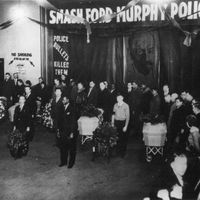
Jade Metzger, Reuther Library, Wayne State University
Radical politics favoring progressive change have a rich and dynamic history in the United States. The nation was born out of political movements that dared to challenge the authority of a government that lacked representation from consituents. Throughout the 19th and 20th centuries, radical politics continued to play an important role in the development of civil society across the country.
Too often, however, radical political groups are viewed as deviations from the more traditional US political norm of two mainstream parties. In doing so, we often blur the important differences between radical groups and instead depict them as a unified, homogenous whole.
Using primary sources, we can see how radical politics in the United States both deviate from the norm but also serve to emphasize specific social issues such as unemployment, racism, and social equality.
This document set will approach issues of radicalism through the lens of the 1932 US presidential election.
Written and selected by Joshua Morris as part of the NextGen scholars program.
This document set approaches issues of radicalism through the lens of the 1932 US presidential election.
Museum/Exhibits
Tours
Maps
Digital Projects
Organizations
Sites
Film/Video
Audio/Interview
Podcast/Program
Text/Document
Image
Graphs/Data
Timeline
Southwest
West
Midwest
Southeast
Northeast
Mexico
Canada
Global
Books
Teaching
Lectures
Digital Archives
Journals
Bibliographies
Topic Intro