


Collections
Library
Type
Region
Coverage:
-
Published:
-
James Gregory, Mapping American Social Movements
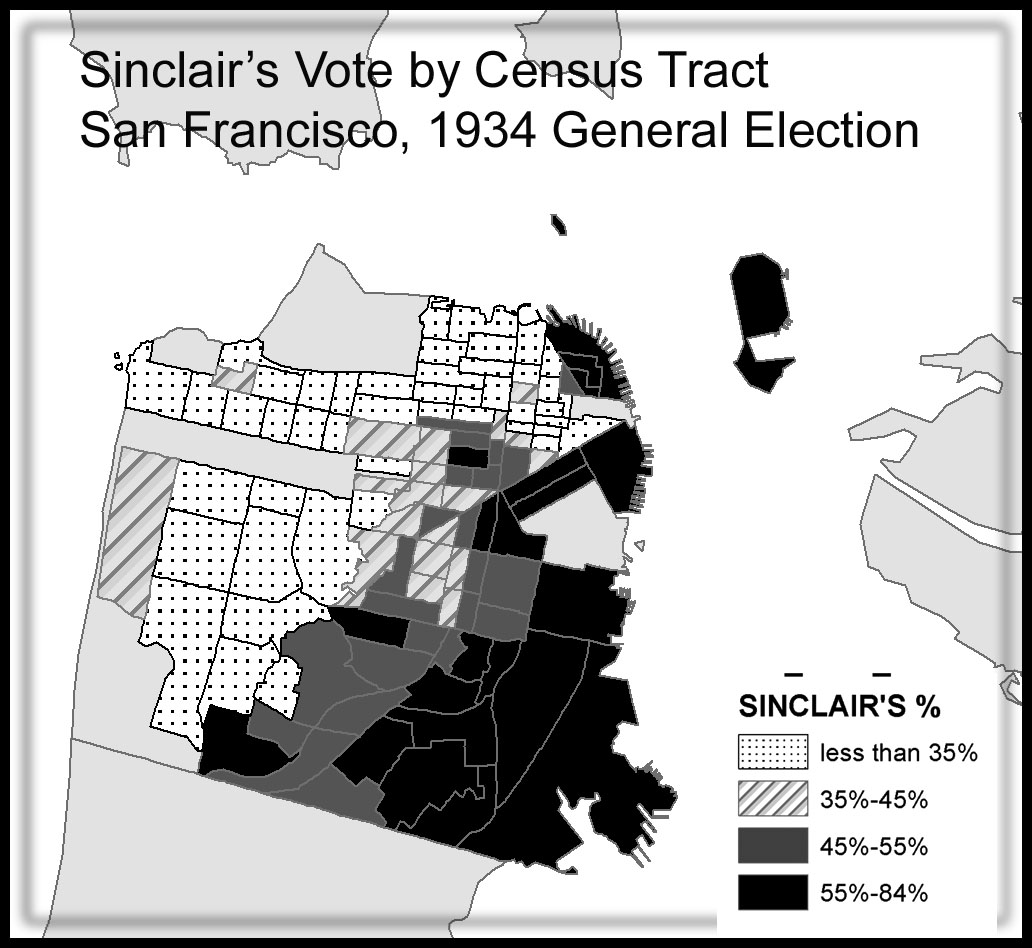
This essay is derived from “Upton Sinclair’s 1934 EPIC Campaign: Anatomy of a Political Movement,” by James N. Gregory, published in LABOR: Studies in Working-Class History (December, 2015), 51-81. That article is the first careful analysis of the inner workings of Upton Sinclair’s pivotal campaign using detailed election and census data.
An essay by EPIC Campaign Project director James Gregory which details the demographics of the nearly 1,000,000 Californians who voted for Upton Sinclair in the 1934 gubernatorial election.
James Gregory, Seattle General Strike Project
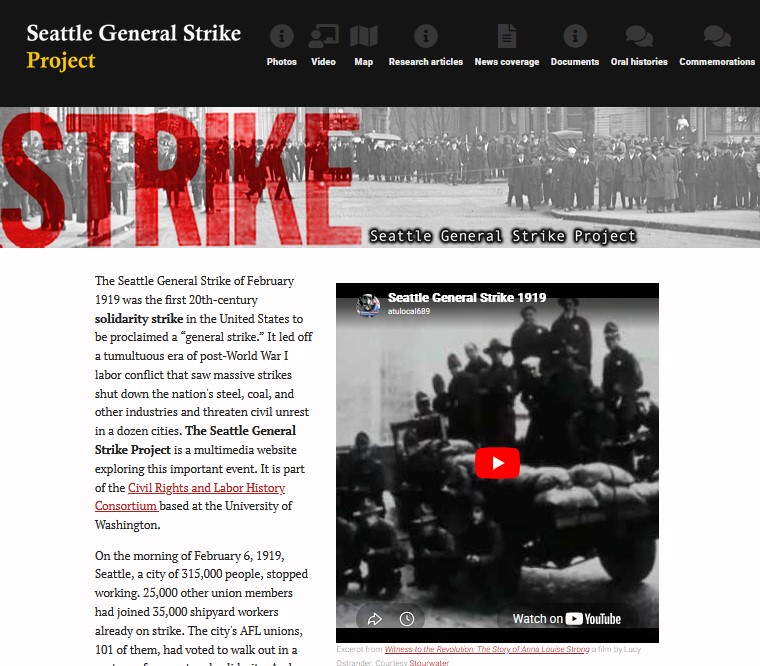
The Seattle General Strike of February 1919 was the first 20th-century solidarity strike in the United States to be proclaimed a “general strike.” It led off a tumultuous era of post-World War I labor conflict that saw massive strikes shut down the nation's steel, coal, and other industries and threaten civil unrest in a dozen cities. The Seattle General Strike Project is a multimedia website exploring this important event. It is part of the Civil Rights and Labor History Consortium based at the University of Washington.
This multimedia website explores the history and consequences of the Seattle General Strike of 1919. Below you will find original research articles, digitized newspaper articles and other important documents, photographs, and extensive bibliographic materials. Start by watching two short videos, one produced by KCTS, the other an excerpt from Witness to Revolution: The Story of Anna Louis Strong produced and directed by Lucy Ostrander. Then read Roberta Gold's article from the Encyclopedia of Labor History Worldwide and "An Account of What Happened in Seattle and Especially in the Seattle Labor Movement, During the General Strike, February 6 To 11, 1919" written by Anna Louise Strong and members of the General Strike Committee. Daren Salter has created a dramatic slide show that tells the story of the strike with photos and headlines illustrating key events. The most detailed account is the new centennial edition of the The Seattle General Strike by Robert L. Friedheim brought up to date with an introduction, photo essay, and afterword by James N. Gregory.
A webpage with several links to resources surrounding the Seatlle General Strike of 1919.
James Gregory, University of Washington, et. al.
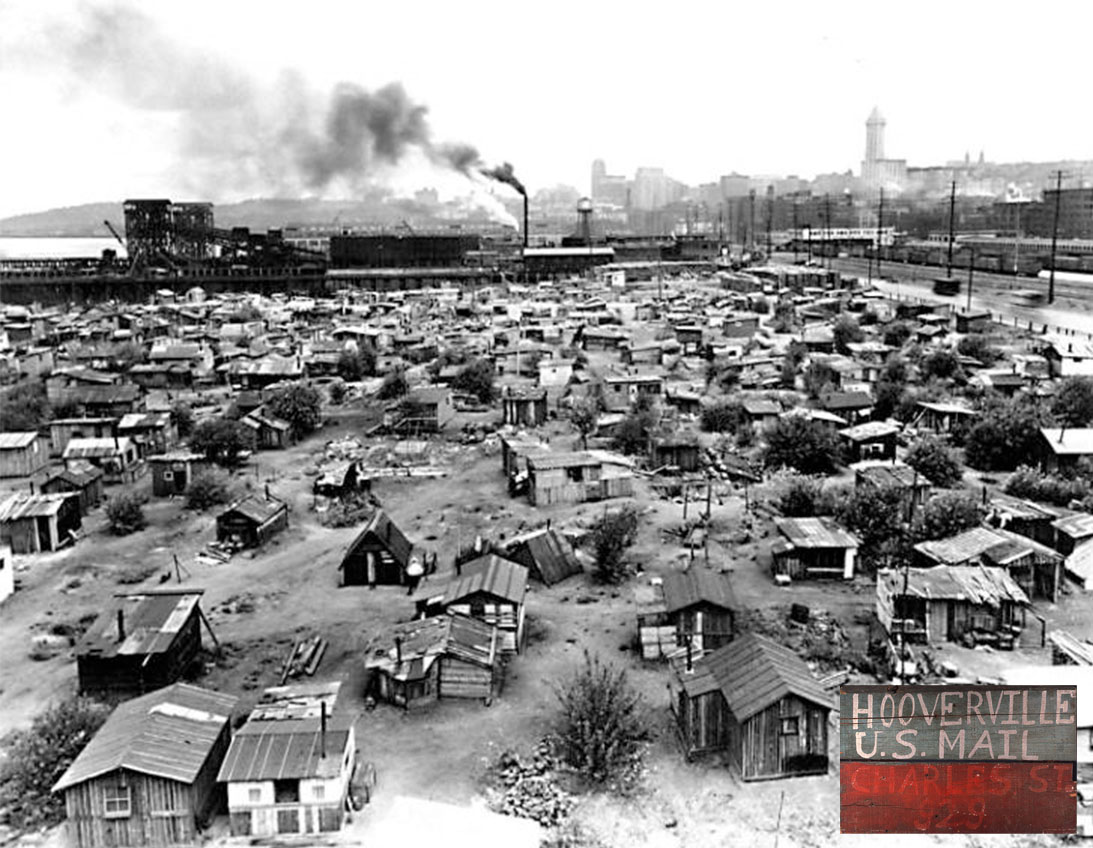
"Hooverville" became a common term for shacktowns and homeless encampments during the Great Depression. There were dozens in the state of Washington, hundreds throughout the country, each testifying to the housing crisis that accompanied the employment crisis of the early 1930s.
"Hooverville" was a deliberately politicized label, emphasizing that President Herbert Hoover and the Republican Party were to be held responsible for the economic crisis and its miseries.
Seattle's main Hooverville was one of the largest, longest-lasting, and best documented in the nation. It stood for ten years, 1931 to 1941. Covering nine acres of public land, it housed a population of up to 1,200, claimed its own community government including an unofficial mayor, and enjoyed the protection of leftwing groups and sympathetic public officials until the land was needed for shipping facilities on the eve of World War II.
Seattle is fortunate to have the kind of detailed documentation of its Hooverville that other cities lack, and we have compiled these unique resources here. Included are photographs, city documents, a 1934 sociological survey of residents, a short memoir written by the former "mayor" of Hooverville, and more. We are grateful to the Seattle Municipal Archives, King County Archives, and the University of Washington Library Special Collections for permission to incorporate materials in their collections.
Primary Sources include:
• Hooverville: A Study of a Community of Homeless Men in Seattle by Donald Francis Roy
•The Story of Seattle's Hooverville by Jesse Jackson, "Mayor" of Hooverville
• Seattle Municipal Archives Hooverville Documents
Essays:
Seattle’s “Hooverville”: The Failure of Effective Unemployment Relief in the Early 1930s by Magic Demirel
A Tarpaper Carthage: Interpreting Hooverville, by Joey Smith
"Nobody Paid any Attention": The Economic Marginalization of Seattle's Hooverville, by Dustin Neighly
Self-Help Activists: The Seattle Branches of the Unemployed Citizens League by Summer Kelly
Organizing the Unemployed: The Early 1930s by Gordon Black
an introductory essay, Hoovervilles and Homelessness, and several specific research essays, as well as primary source documents, memoirs, maps, and links to many photos
James J. Lorence
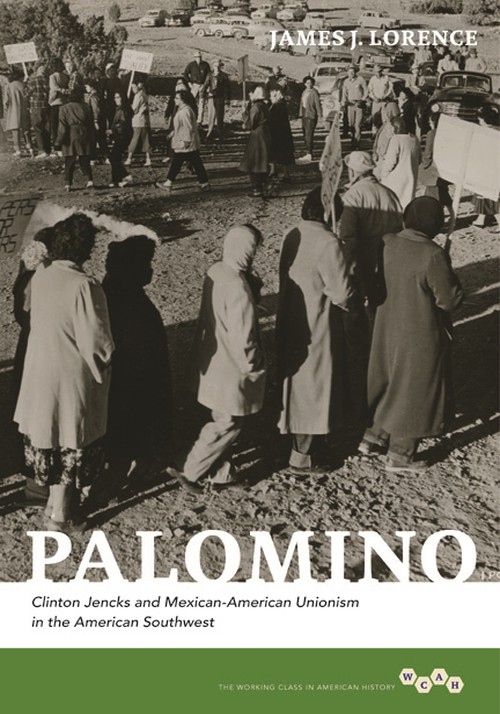
The first comprehensive biography of progressive labor organizer, peace worker, and economist Clinton Jencks (1918–2005), this book explores the life of one of the most important political and social activists to appear in the Southwestern United States in the twentieth century. A key figure in the radical International Union of Mine, Mill, and Smelter Workers (IUMMSW) Local 890 in Grant County, New Mexico, Jencks was involved in organizing not only the mine workers but also their wives in the 1951 strike against the Empire Zinc Company. He was active in the production of the 1954 landmark labor film dramatizing the Empire Zinc strike, Salt of the Earth, which was heavily suppressed during the McCarthy era and led to Jencks's persecution by the federal government.
Labor historian James J. Lorence examines the interaction between Jencks's personal experience and the broader forces that marked the world and society in which he worked and lived. Following the work of Jencks and his equally progressive wife, Virginia Derr Jencks, Lorence illuminates the roots and character of Southwestern unionism, the role of radicalism in the Mexican-American civil rights movement, the rise of working-class feminism within Local 890 and the Grant County Mexican-American community, and the development of Mexican-American identity in the Southwest. Chronicling Jencks's five-year-long legal battle against charges of perjury, this biography also illustrates how civil liberties and American labor were constrained by the specter of anticommunism during the Cold War.
Drawing from extensive research as well as interviews and correspondence, this volume highlights Clinton Jencks's dramatic influence on the history of labor culture in the Southwest through a lifetime devoted to progress and change for the social good.
a key mine mill organizer and featured actor in Salt of the Earth;

James M. Dennis
In 1886 the German American artist Robert Koehler painted a wide-angle depiction of an imagined confrontation between factory workers and their employer. HIs idea for this emanated from Great 1877 strikes. He called this oil painting The Strike. It has had a long international history as a symbol of class struggle and the cause of workers' rights. First exhibited just days before the tragic Chicago Haymarket riot, The Strike became an inspiration for the labor movement. In the midst of the campaign for an eight-hour workday, it gained international attention at expositions in Paris, Munich, and the 1893 Chicago World's Fair. Though the painting fell into obscurity for decades in the early twentieth century, The Strike lived on in wood-engraved reproductions in labor publications. Its purchase, restoration, and exhibition by New Left activist Lee Baxandall in the early 1970s launched it to international fame once more, and collectors and galleries around the world scrambled to acquire it. It is now housed in the Deutsches Historisches Museum in Berlin, Germany. The author has crafted a "biography" of Koehler{'s painting: its exhibitions, acclaim, neglect, and rediscovery. He introduces its German-born creator and politically diverse audiences and traces the painting's acceptance and rejection through the years, exploring how class and sociopolitical movements affected its reception. He explains why The Strike has earned its identity as the iconic painting of the industrial labor movement
introduces The Strike's creator and politically diverse audiences and traces the painting's acceptance and rejection through the years, exploring how class and sociopolitical movements affected its reception.

James M. Robert Dennis
In 1886 the German American artist Robert Koehler painted a wide-angle depiction of an imagined confrontation between factory workers and their employer. He called this oil painting The Strike. It has had a long international history as a symbol of class struggle and the cause of workers' rights. First exhibited just days before the tragic Chicago Haymarket riot, The Strike became an inspiration for the labor movement. In the midst of the campaign for an eight-hour workday, it gained international attention at expositions in Paris, Munich, and the 1893 Chicago World's Fair. Though the painting fell into obscurity for decades in the early twentieth century, The Strike lived on in wood-engraved reproductions in labor publications. Its purchase, restoration, and exhibition by New Left activist Lee Baxandall in the early 1970s launched it to international fame once more, and collectors and galleries around the world scrambled to acquire it. It is now housed in the Deutsches Historisches Museum in Berlin, Germany. The author has crafted a "biography" of Koehler{u2019}s painting: its exhibitions, acclaim, neglect, and rediscovery. He introduces its German-born creator and politically diverse audiences and traces the painting's acceptance and rejection through the years, exploring how class and sociopolitical movements affected its reception. He explains why The Strike has earned its identity as the iconic painting of the industrial labor movement
An art "biography" that traces the tumultuous international history of Robert Koehler's painting "The Strike"
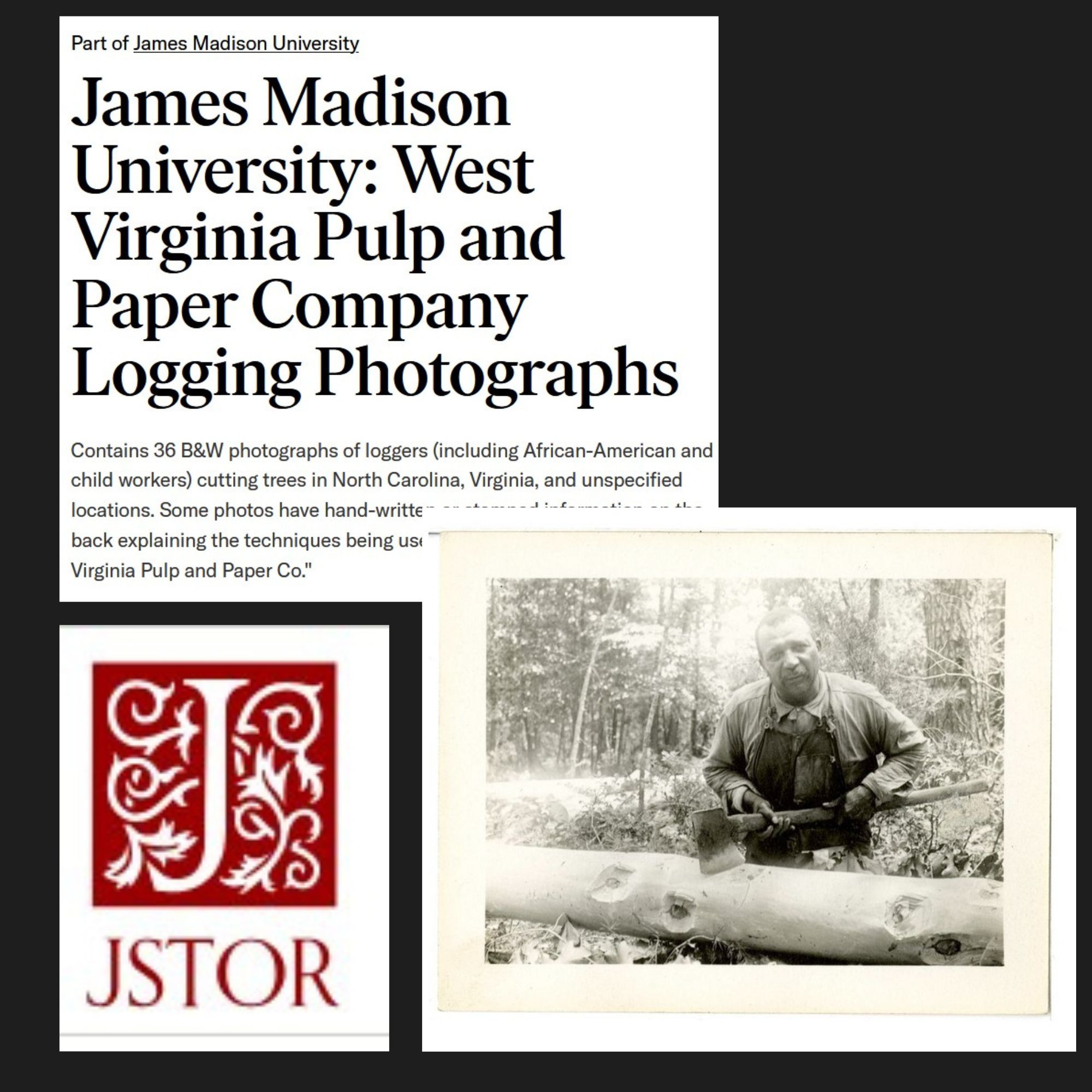
James Madison University, JSTOR
Contains 36 B&W photographs of loggers (including African-American and child workers) cutting trees in North Carolina, Virginia, and unspecified locations. Some photos have hand-written or stamped information on the back explaining the techniques being used and identifying them as "West Virginia Pulp and Paper Co."
36 B&W photographs of loggers (including African-American and child workers)
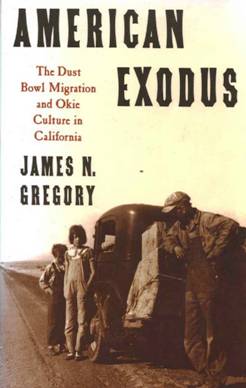
James N. Gregory
The Dust Bowl migration of the 1930s plays an important and complicated role in the way Americans talk about the history of poverty and public policy in their country. For almost seventy years the story of white families from Oklahoma and neighboring states making their way to California in the midst of the Great Depression has been kept alive by journalists and filmmakers, college teachers and museum curators, songwriters and novelists, and of course historians. Although it was but one episode out of many struggles with poverty during the 1930s, the Dust Bowl migration became something of synecdoche, the single most common image that later generations would use to memorialize the hardships of that decade. The continuing fascination with the Dust Bowl saga also has something to do with the way race and poverty have interacted over the generations since the 1930s. Here is one of the last great stories depicting white Americans as victims of severe poverty and social prejudice. It is a story that many Americans have needed to tell, for many different reasons.
James Gregory's essay on the Dust Bowl Migration of the 1930s.
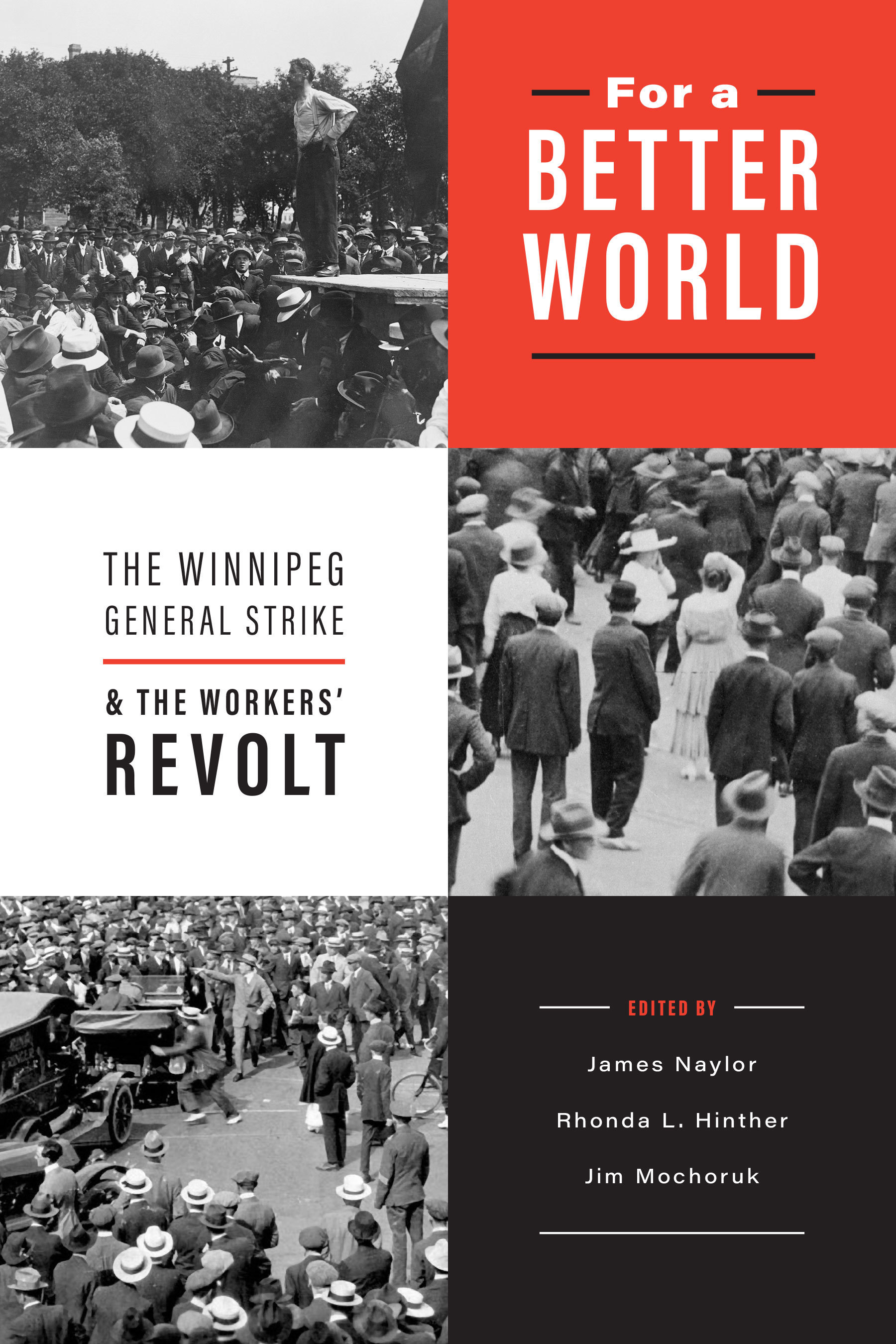
James Naylor, Rhonda L. Hinther, Jim Mochoruk
Canada's largest and most famous example of class conflict, the Winnipeg General Strike, redefined local, national, and international conversations around class, politics, region, ethnicity, and gender. The Strike's centenary occasioned a re-examination of this critical moment in working-class history, when 300 social justice activists, organizers, scholars, trade unionists, artists, and labour rights advocates gathered in Winnipeg in 2019. Probing the meaning of the General Strike in new and innovative ways, For a Better World includes a selection from the conference as well as others contributions. Editors Naylor, Hinther, and Mochoruk depict key events of 1919, detailing the dynamic and complex historiography of the Strike and the larger Workers' Revolt that reverberated around the world and shaped the century following the war. The chapters delve into intersections of race, class, and gender. Settler colonialism's impact on the conflict is also examined. Placing the struggle in Winnipeg within a broader national and international context, several contributors explore parallel strikes in Edmonton, Crowsnest Pass, Montreal, Kansas City, and Seattle. For a Better World interrogates types of commemoration and remembrance, current legacies of the Strike, and its ongoing influence. Together, the essays in this collection demonstrate that the Winnipeg General Strike continues to mobilize--revealing our radical past and helping us to think imaginatively about collective action in the future."-- Provided by publisher
depicts key events of 1919, detailing the dynamic and complex historiography of the Strike and the larger Workers' Revolt that reverberated around the world and shaped the century following the war.
James R. Barrett
James R. Barrett rethinks the boundaries of American social and labor history by investigating the ways in which working-class, radical, and immigrant people’s personal lives intersected with their activism and religious, racial, ethnic, and class identities.
Concerned with carving out space for individuals in the story of the working class, Barrett examines all aspects of individuals’ subjective experiences, from their personalities, relationships, and emotions to their health and intellectual pursuits. Barrett’s subjects include American communists, “blue-collar cosmopolitans”—such as well-read and well-traveled porters, sailors, and hoboes—and figures in early twentieth-century anarchist subculture. He also details the process of the Americanization of immigrant workers via popular culture and their development of class and racial identities, asking how immigrants learned to think of themselves as white. Throughout, Barrett enriches our understanding of working people’s lives, making it harder to objectify them as nameless cogs operating within social and political movements. In so doing, he works to redefine conceptions of work, migration, and radical politics.
Introduction: the subjective side of working-class history
The Blessed Virgin made me a socialist historian: an experiment in Catholic autobiography and the historical understanding of race and class
Was the personal political? reading the autobiography of American communism
Revolution and personal crisis : personal narrative and the subjective in the history of American Communism
Blue-collar cosmopolitans : toward a history of working-class sophistication in industrial America
The bohemian writer and the radical woodworker : a study in class relations
Americanization from the bottom up : immigration and the remaking of the working class in the United States, 1880-1930
Inbetween peoples : race, nationality, and the "new immigrant" working class / James R. Barrett and David R. Roediger
Irish americanization on stage : how Irish musicians, playwrights, and writers created a new urban American culture, 1880-1940
Making and unmaking the working class : E.P. Thompson, the making of the English working class, and the "new labor history" in the United States
collection of essays covering the intersections between race, nationality, culture, and radical organization
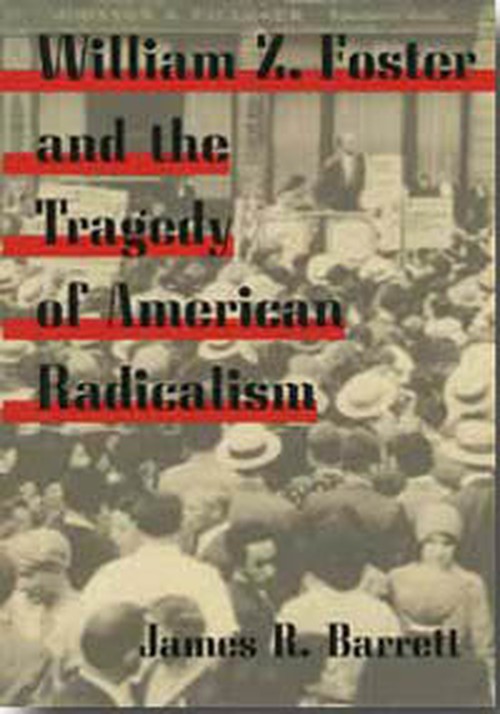
James R. Barrett
"William Z. Foster and the Tragedy of American Radicalism incorporates the indigenous and the international factors that determined the fate of American communism. By tracing the evolution of Foster's experiences and ideology and assaying the quality of his political commitment as a worker and organizer in the American West and Midwest, Barret provides foundation for understanding the basis for radicalism among twentieth-century American workers."--Jacket
incorporates the indigenous and the international factors that determined the fate of American communism by tracing the evolution of Foster's experiences and ideology.
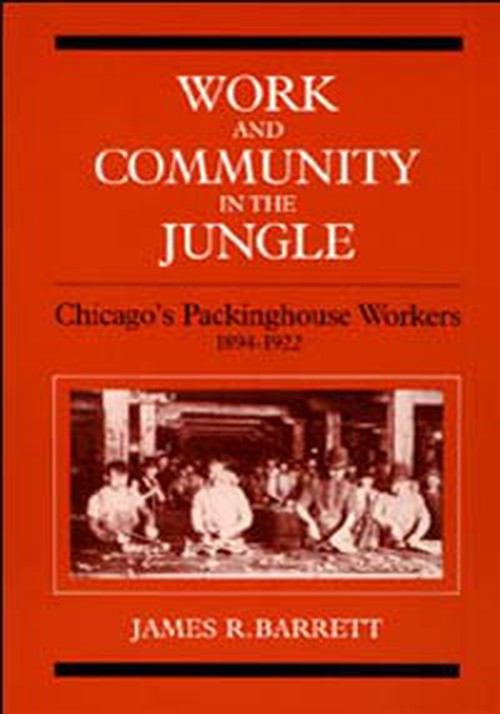
James R. Barrett
Mythologized by Upton Sinclair as hopeless, Chicago's packinghouse workers were in fact active agents in the early twentieth century transformation that swept urban industrial America. James R. Barrett's award-winning study explores how the lives and neighborhoods of packinghouse workers convey the experience of mass production work, the quality of working class life, the process of class formation and fragmentation, the effects of unionization, and the changing character of class relations. Merging history and analysis with contemporary social surveys and a computer-assisted analysis of census data, Barrett delves into a wide range of social, economic, and cultural factors that resulted in class cohesion and fragmentation.
Exploring the everyday lives of Chicago's meatpacking workers
James R. Green
On May 4, 1886, a bomb exploded at a Chicago labor rally, wounding dozens of policemen, seven of whom eventually died. Coming in the midst of the largest national strike Americans had ever seen, the bombing created mass hysteria and led to a sensational trial, which culminated in four controversial executions. The trial seized headlines across the country, created the nation's first Red scare and dealt a blow to the labor movement from which it would take decades to recover. Historian Green recounts the rise of the first great labor movement in the wake of the Civil War and brings to life the epic twenty-year battle for the eight-hour workday. He also gives us a portrait of Chicago, the Midwestern powerhouse of the Gilded Age. Throughout, we are reminded of the increasing power of newspapers as they stirred up popular fears of the immigrants and radicals who led the unions.--From publisher description
recounts the rise of the first great labor movement in the wake of the Civil War and brings to life the epic twenty-year battle for the eight-hour workday.
James R. Green
In Grass-Roots Socialism, James Green includes information about the party's propaganda techniques, especially those used in the lively newspapers that claimed fifty thousand subscribers in the Southwest by 1913, and information about the attractive summer camp meetings that drew thousands of poor white tenant farmers to week-long agitation and education sessions. In this broadly based study, Green examines such popular leaders as Oklahoma's Oscar Ameringer (the "Mark Twain of American Socialism"), "Red Tom" Hickey of Texas, and Kate Richards O'Hare, who was second only to Eugene Debs as a Socialist orator. - Back cover
The book is a good primer for considering the power of the socialist message in rural and agricultural areas of the US, noting that Oklahoma was the basis for a rich dissenting tradition. Texas, Oklahoma, Arkansas and Louisiana, southeastern Kansas is also there.
An early survey of the Southwest's radical labor and socialist movement, altering our image of the possibilities of radicalism among the rural poor
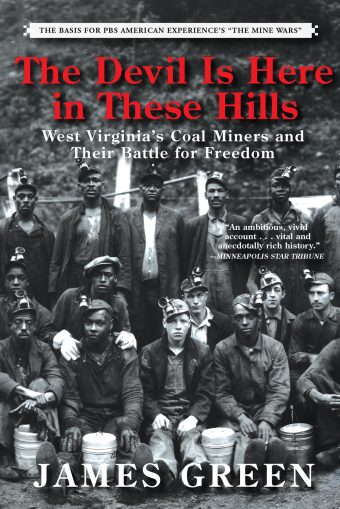
James R. Green
From before the dawn of the twentieth century until the arrival of the New Deal, one of the most protracted and deadly labor struggles in American history was waged in West Virginia. On one side were powerful corporations whose millions bought armed guards and political influence. On the other side were fifty thousand mine workers, the nation’s largest labor union, and the legendary “miners’ angel,” Mother Jones. The fight for unionization and civil rights sparked a political crisis that verged on civil war, stretching from the creeks and hollows to the courts and the U.S. Senate. In The Devil Is Here in These Hills, celebrated labor historian James Green tells the story of West Virginia and coal like never before.
The value of West Virginia’s coalfields had been known for decades, and after rail arrived in the 1870s, industrialists pushed fast into the wilderness, digging mines and building company towns where they wielded nearly complete control over everyday life. The state’s high-quality coal drove American expansion and industrialization, but for tens of thousands of laborers, including boys as young as ten, mining life showed the bitter irony of the state motto, “Mountaineers Are Always Free.” Attempts to unionize were met with stiff resistance. Fundamental rights were bent then broken, and the violence evolved from bloody skirmishes to open armed conflict, as an army of miners marched to an explosive showdown. Extensively researched and told in vibrant detail, The Devil Is Here in These Hills is the definitive book on an essential chapter in the history of American freedom.
Describes the labor struggle of 50,000 West Virginia coal miners, whose fight for unionization and civil rights in the late 1800s led to violent skirmishes and open armed conflict
James R. Kluger
Traces how the Clifton and Morenci strike during 1915-1916 affected working conditions, wages, and the cause of unionism in the district, and provides insight into feelings concerning the fears of management regarding unionism, and labour's manner of making itself heard during these years.
Traces how the Clifton and Morenci strike affected working conditions, wages, and the cause of unionism in the district.
James Tyner
A groundbreaking consideration of death from capitalism, from the seventeenth to the twenty-first century From a 2013 Texas fertilizer plant explosion that killed fifteen people and injured 252 to a 2017 chemical disaster in the wake of Hurricane Harvey, we are confronted all too often with industrial accidents that reflect the underlying attitude of corporations toward the lives of laborers and others who live and work in their companies' shadows.
Dead Labor takes seriously the myriad ways in which bodies are commodified and profits derived from premature death. In doing so it provides a unique perspective on our understanding how life and death drive the twenty-first-century global economy. James Tyner tracks a history from the 1600s through which premature death and mortality became something calculable, predictable, manageable, and even profitable.
Drawing on a range of examples, including the criminalization of migrant labor, medical tourism, life insurance, and health care, he explores how today we can no longer presume that all bodies undergo the same processes of life, death, fertility, and mortality. He goes on to develop the concept of shared mortality among vulnerable populations and examines forms of capital exploitation that have emerged around death and the reproduction of labor. Positioned at the intersection of two fields-the political economy of labor and the philosophy of mortality-Dead Labor builds on Marx's notion that death (and truncated life) is a constant factor in the processes of labor. Considering premature death also as a biopolitical and bioeconomic concept, Tyner shows how racialized and gendered bodies are exposed to it in unbalanced ways within capitalism, and how bodies are then commodified, made surplus and redundant, and even disassembled in order to accumulate capital
A groundbreaking consideration of death from capitalism

James W Byrkit
Bisbee, Arizona...July 12, 1917...6:30 a.m....Just after dawn, two thousand armed vigilantes took to the streets of this remote Arizona mining town to round up members and sympathizers of the radical Industrial Workers of the World. Before the morning was over, nearly twelve hundred alleged Wobblies had been herded onto waiting boxcars. By day's end, they had been hauled off to New Mexico.
While the Bisbee Deportation was the most notorious of many vigilante actions of its day, it was more than the climax of a labor-management war—it was the point at which Arizona donned the copper collar. That such an event could occur, James Byrkit contends, was not attributable so much to the marshaling of public sentiment against the I.W.W. as to the outright manipulation of the state's political and social climate by Eastern business interests.
In Forging the Copper Collar, Byrkit paints a vivid picture of Arizona in the early part of this century. He demonstrates how isolated mining communities were no more than mercantilistic colonies controlled by Eastern power, and how that power wielded control over all the Arizona's affairs—holding back unionism, creating a self-serving tax structure, and summarily expelling dissidents.
Because the years have obscured this incident and its background, the writing of Copper Collar involved extensive research and verification of facts. The result is a book that captures not only the turbulence of an era, but also the political heritage of a state. AVailable https://archive.org/details/forgingcoppercol0000byrk
Argues that Eastern capital wielded large amounts of control over Arizona's politics and economy, culminating in the Bisbee deportation of IWW agitators in 1917
James Walvin
A World Transformed explores how slavery thrived at the heart of the entire Western world for more than three centuries. Arguing that slavery can be fully understood only by stepping back from traditional national histories, this book collects the scattered accounts of the latest modern scholarship into a comprehensive history of slavery and its shaping of the world we know. Celebrated historian James Walvin tells a global story that covers everything from the capitalist economy, labor, and the environment, to social culture and ideas of family, beauty, and taste. This book underscores just how thoroughly slavery is responsible for the making of the modern world. The enforced transportation and labor of millions of Africans became a massive social and economic force, catalyzing the rapid development of multiple new and enormous trading systems with profound global consequences. The labor and products of enslaved people changed the consumption habits of millions--in India and Asia, Europe and Africa, in colonized and Indigenous American societies. Across time, slavery shaped many of the dominant features of Western taste: items and habits or rare and costly luxuries, some of which might seem, at first glance, utterly removed from the horrific reality of slavery. A World Transformed traces the global impacts of slavery over centuries, far beyond legal or historical endpoints, confirming that the world created by slave labor lives on today"-- From publisher's website
ollects the scattered accounts of the latest modern scholarship into a comprehensive history of slavery and its shaping of the world we know
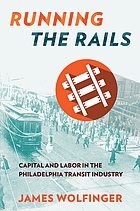
James Wolfinger
Philadelphia exploded in violence in 1910. The general strike that year was a notable point, but not a unique one, in a generations-long history of conflict between the workers and management at one of the nation's largest privately owned transit systems.
In Running the Rails, James Wolfinger uses the history of Philadelphia's sprawling public transportation system to explore how labor relations shifted from the 1880s to the 1960s. As transit workers adapted to fast-paced technological innovation to keep the city's people and commerce on the move, management sought to limit its employees' rights. Raw violence, welfare capitalism, race-baiting, and smear campaigns against unions were among the strategies managers used to control the company's labor force and enhance corporate profits, often at the expense of the workers' and the city's well-being.
Public service workers and their unions come under frequent attack for being a "special interest" or a hindrance to the smooth functioning of society. This book offers readers a different, historically grounded way of thinking about the people who keep their cities running. Working in public transit is a difficult job now, as it was a century ago.
The benefits and decent wages Philadelphia public transit workers secured--advances that were hard-won and well deserved--came as a result of fighting for decades against their exploitation. Given capital's great power in American society and management's enduring quest to control its workforce, it is remarkable to see how much Philadelphia's transit workers achieved
how labor relations shifted from the 1880s to the 1960s
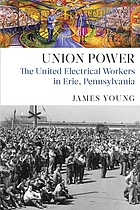
James Young
If you're lucky enough to be employed today in the United States, there's about a one-in-ten chance that you're in a labor union. And even if you're part of that unionized 10 percent, chances are your union doesn't carry much economic or political clout. But this was not always the case, as historian and activist James Young shows in this vibrant story of the United Electrical Workers Union. The UE, built by hundreds of rank-and-file worker-activists in the quintessentially industrial town of Erie, Pennsylvania, was able to transform the conditions of the working class largely because it went beyond the standard call for living wages to demand quantum leaps in worker control over workplaces, community institutions, and the policies of the federal government itself. James Young's book is a richly empowering history told from below, showing that the collective efforts of the many can challenge the supremacy of the few. Erie's two UE locals confronted a daunting array of obstacles: the corporate superpower General Electric; ferocious red baiting; and later, the debilitating impact of globalization. Yet, by working through and across ethnic, gender, and racial divides, communities of people built a viable working-class base powered by real democracy. While the union's victories could not be sustained completely, the UE is still alive and fighting in Erie. This book is an exuberant and eloquent testament to this fight, and a reminder to every worker--employed or unemployed; in a union or out--that an injury to one is an injury to all
Erie's two UE locals confronted a daunting array of obstacles: the corporate superpower General Electric; ferocious red baiting; and later, the debilitating impact of globalization
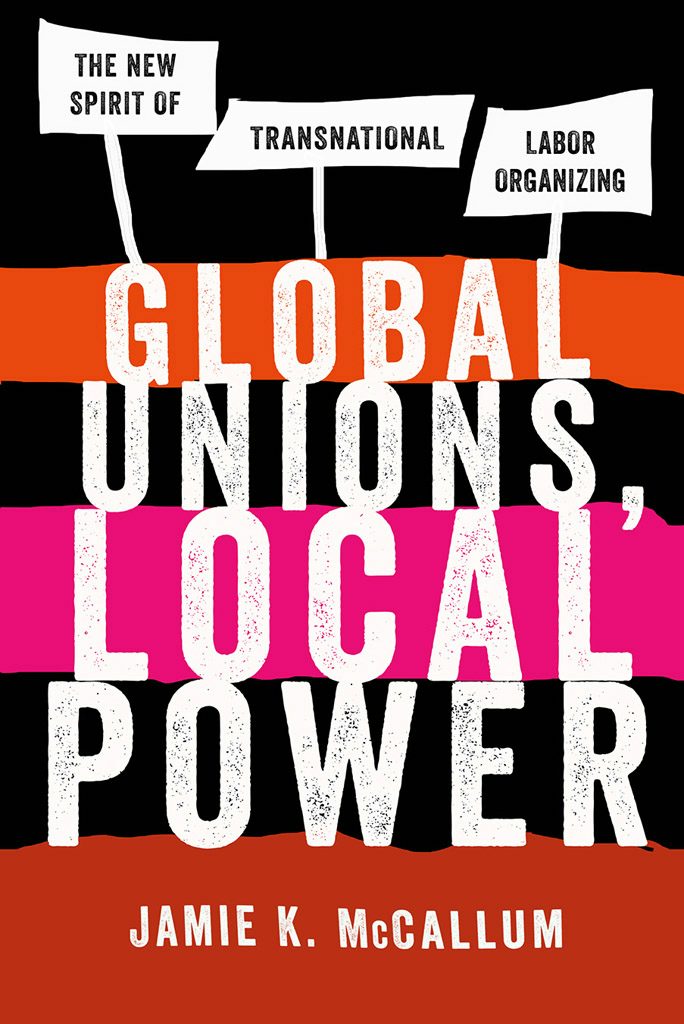
Jamie K. McCallum
News about labor unions is usually pessimistic, focusing on declining membership and failed campaigns. But there are encouraging signs that the labor movement is evolving its strategies to benefit workers in rapidly changing global economic conditions.
Global Unions, Local Power tells the story of the most successful and aggressive campaign ever waged by workers across national borders. It begins in the United States in 2007 as SEIU struggled to organize private security guards at G4S, a global security services company that is the second largest employer in the world.
Failing in its bid, SEIU changed course and sought allies in other countries in which G4S operated. Its efforts resulted in wage gains, benefits increases, new union formations, and an end to management reprisals in many countries throughout the Global South, though close attention is focused on developments in South Africa and India.
In this book, Jamie K. McCallum looks beyond these achievements to probe the meaning of some of the less visible aspects of the campaign. Based on more than two years of fieldwork in nine countries and historical research into labor movement trends since the late 1960s, McCallum's findings reveal several paradoxes.
Although global unionism is typically concerned with creating parity and universal standards across borders, local context can both undermine and empower the intentions of global actors, creating varied and uneven results. At the same time, despite being generally regarded as weaker than their European counterparts, U.S. unions are in the process of remaking the global labor movement in their own image. McCallum suggests that changes in political economy have encouraged unions to develop new ways to organize workers. He calls these "governance struggles," strategies that seek not to win worker rights but to make new rules of engagement with capital in order to establish a different terrain on which to organize
effort to organize global security guards
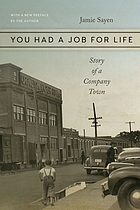
Jamie Sayen
Drawing on conversations with scores of former paper mill workers in Groveton, New Hampshire, Sayen reconstructs the mill's human history and the devastating impact of global capitalism on a small New England town. This is a heartbreaking story of the decimation of industrial America.
Introduction: Builders and Destroyers
Chapter One: The Life Of The Town
Chapter Two: Feeding The Mill
Chapter Three: Making Paper
Chapter Four: Prosperous Plant
Chapter Five: Ratville, NH
Chapter Six: Three Generations of Wemysses
Chapter Seven: Crown Prince
Chapter Eight: The Perfect Balance
Chapter Nine: The Dark Side
Chapter Ten: A Fateful Decision
Chapter Eleven: End of An Era
Chapter Twelve: The Worst Years
Chapter Thirteen: The Best Years
Chapter Fourteen: A Battle We Couldn’t Win
Chapter Fifteen: Controllables and Uncontrollables
Chapter Sixteen: F This
Epilogue: They Ruined This Town
Postscript: The Day When Corporate America Doesn’t Run Us
AcknowledgmentsNotesIndex
reconstructs a mill's human history and the devastating impact of global capitalism on a small New England town.

Jan Lucassen
We work because we have to, but also because we like it: from hunting-gathering more than 700,000 years ago to the present era of zoom meetings, humans have always worked to make the world around them serve their needs. Jan Lucassen provides an inclusive history of humanity’s busy labor throughout the ages. Spanning China, India, Africa, the Americas, and Europe, Lucassen looks at the ways in which humanity organizes work: in the household, the tribe, the city, and the state. He examines how labor is split between men, women, and children; the watershed moment of the invention of money; the collective action of workers; and the impact of migration, slavery, and the idea of leisure. From peasant farmers in the first agrarian societies to the precarious existence of today’s gig workers, this surprising account of both cooperation and subordination at work throws essential light on the opportunities we face today.
looks at the ways in which humanity organizes work: in the household, the tribe, the city, and the state.
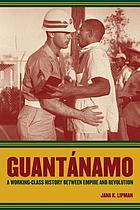
Jana K. Lipman
"Guantánamo has become a symbol of what has gone wrong in the War on Terror. Yet Guantánamo is more than a U.S. naval base and prison in Cuba, it is a town, and our military occupation there has required more than soldiers and sailors -- it has required workers. This revealing history of the women and men who worked on the U.S. naval base in Guantánamo Bay tells the story of U.S.-Cuban relations from a new perspective, and at the same time, shows how neocolonialism, empire, and revolution transformed the lives of everyday people. Drawing from rich oral histories and little-explored Cuban archives, Jana K. Lipman analyzes how the Cold War and the Cuban revolution made the naval base a place devoid of law and accountability. The result is a narrative filled with danger, intrigue, and exploitation throughout the twentieth century. Opening a new window onto the history of U.S. imperialism in the Caribbean and labor history in the region, her book tells how events in Guantánamo and the base created an ominous precedent likely to inform the functioning of U.S. military bases around the world."--pub. desc
Between Guantanamo and GTMO
Prologue: Regional Politics, 1898, and the Platt Amendment
1. The Case of Kid Chicle: Military Expansion and Labor Competition, 1939-1945
2. "We Are Real Democrats": Legal Debates and Cold War Unionism before Castro, 1940-1954
3. Good Neighbors, Good Revolutionaries, 1940-1958
4. A "Ticklish" Position: Revolution, Loyalty, and Crisis, 1959-1964
5. Contract Workers, Exiles, and Commuters: Neocolonial and Postmodern Labor Arrangements
Epilogue: Post 9/11: Empire and Labor Redux Appendix: Guantanamo Civil Registry, 1921-1958
Notes Selected Bibliography Acknowledgments Index
A revealing history of the women and men who worked on the U.S. naval base in Guantánamo Bay that tells the story of U.S.-Cuban relations from a new perspective,
Museum/Exhibits
Tours
Maps
Digital Projects
Organizations
Sites
Film/Video
Audio/Interview
Podcast/Program
Text/Document
Image
Graphs/Data
Timeline
Southwest
West
Midwest
Southeast
Northeast
Mexico
Canada
Global
Books
Teaching
Lectures
Digital Archives
Journals
Bibliographies
Topic Intro