


Collections
Library
Type
Region
Coverage:
-
Published:
-
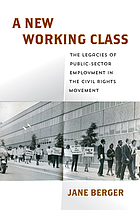
Jane Berger
This book traces efforts by Black public-sector workers and their unions to combat racial and economic injustice in Baltimore.
For decades, civil rights activists had been fighting against employment discrimination and for a greater role for African Americans in municipal decision-making. In the 1960s, activists seized the opportunity of the Great Society--and the government jobs it created on the local level--to advance their goals. They met with considerable success. The public sector became a critical job niche for Black workers, especially women, a largely unheralded achievement of the civil rights movement.
A vocal contingent of Black public-sector workers pursued the activists' goals from their government posts and sought to increase and improve public-service delivery. They also fought for their rights as workers and won union representation. During an era often associated with deindustrialization and union decline, Black government workers and their unions were just getting started"-- Provided by publisher
traces efforts by Black public-sector workers and their unions to combat racial and economic injustice in Baltimore.
Jane F. McAlevey
Labor unions now focus on the narrowest possible understanding of the interests of their members, and membership continues to decline in lockstep with the narrowing of their goals. Meanwhile, promising movements like Occupy Wall Street and Black Lives Matter have not accomplished meaningful change. Why do progressives in the United States keep losing on so many issues? In No Shortcuts, Jane McAlevey argues that progressives can win, but lack the organized power to enact significant change, to outlast their bosses in labor fights, and to hold elected leaders accountable. Drawing upon her experience as a scholar and longtime organizer in the student, environmental, and labor movements, McAlevey examines the case studies of recent social movements to pinpoint the factors that helped them succeed - or fail - to accomplish their intended goals. McAlevey makes a compelling case that the great social movements of previous eras gained their power from mass organizing, a strategy today's progressive have mostly abandoned in favor of mobilization or advocacy. She ultimately concludes that, in order to win, progressive movements must adopt bottom-up organizing strategies that place the power for change in the hands of workers and activists at the community level. Beyond the concrete examples in this book, McAlevey's arguments have direct implications for anyone involved in organizing for social change. Much more than just a cogent analysis, No Shortcuts explains exactly how progressives can go about rebuilding powerful movements at work, in our communities, and at the ballot box."
argues that progressives can win, but lack the organized power to enact significant change
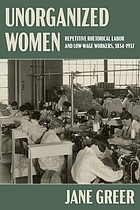
Jane Greer
Across a range of industrial, domestic, and agricultural sites, Greer shows how repetitive discursive performances served as rhetorical tools as women workers sought to rescript power relations in their workplaces and to resist narratives about their laboring lives. The case studies reveal noteworthy patterns in how these women's words helped to construct the complex web of class relations in which they were enmeshed.
Rather than a teleological narrative of economic empowerment over the course of a century, Unorganized Women speaks to the enduring obstacles low- and no-wage women face, their creativity and resilience in the face of adversity, and the challenges that impede the creation of meaningful coalitions. By focusing on repetitive rhetorical labor, this book affords a point of entry for analyzing the discursive productions of a range of women workers and for constructing a richer history of women's rhetoric in the United States
speaks to the enduring obstacles low- and no-wage women face, their creativity and resilience in the face of adversity
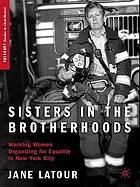
Jane LaTour
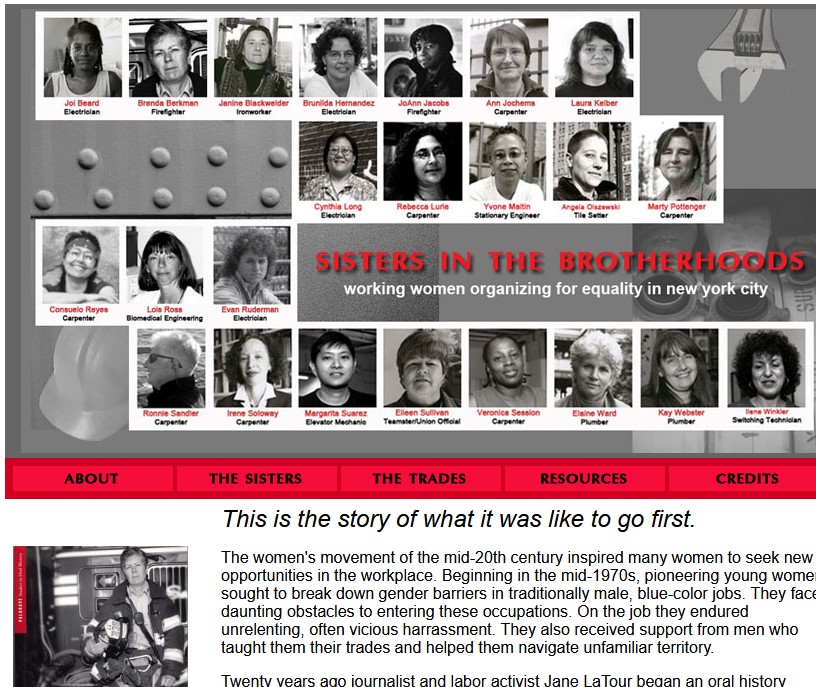
"Sisters in the Brotherhoods is an oral-history-based study of women who have, against considerable odds, broken the gender barrier to blue-collar employment in various trades in New York City beginning in the 1970s. It is a story of the fight against deeply ingrained cultural assumptions about what constitutes women's work, the middle-class bias of feminism, the daily grinding sexism of male co-workers, and the institutionalised discrimination of employers and unions. It is also the story of some gutsy women who, seeking the material rewards and personal satisfactions of skilled manual labour, have struggled to make a place for themselves among New York City's construction workers, stationary engineers, firefighters, electronic technicians, plumbers, and transit workers. Each story contributes to an important unifying theme: the way women confronted the enormous sexism embedded in union culture and developed new organisational forms to support their struggles, including and especially the United Tradeswomen."--Publisher's website
an oral-history-based study of women who have, broken the gender barrier to blue-collar employment in various trades in New York City.
Jane LaTour
Twenty years ago journalist and labor activist Jane LaTour began an oral history project dedicated to preserving their remarkable stories. The focus of her work is a group of women who entered the blue-collar workforce in New York City during the late 1970s and early 1980s. Sisters in the Brotherhoods is their story, told in their own words and voices. This website, produced by Talking History in partnership with LaTour, features audio and transcripts of the Sisters interviews as well as material from LaTour's book Sisters in the Brotherhoods: Working Women Organizing for Equality in New York City (2008).
Digital Project & Digital Archives, features audio and transcripts of the Sisters interviews as well as material from LaTour's book Sisters in the Brotherhoods.
Jane McAlevey
For decades, intractable social and economic problems have been eating away at the social fabric of the United States. The crisis is now so deep it's threatening democracy. Income inequality has reached epic proportions, resulting in a lopsided political system that bestows tax breaks on the rich while the rest of the country has been economically abandoned. There's a single, obvious solution to these problems, one with a long, successful history, but one that too many have forgotten: unions. In A Collective Bargain, longtime labor, environmental, and political organizer Jane McAlevey makes the case that unions are the only institution capable of fighting back against today's super-rich corporate class. Since the 1930s, when unions briefly flourished under New Deal protections, corporations have waged a stealthy and ruthless war against the labor movement. Today, McAlevey argues, it's time for unions to make a comeback. Want to reverse the nation's mounting wealth gap? Put an end to sexual harassment in the workplace? End racial disparities on the job? Negotiate climate justice? Bring back unions.
Alongside McAlevey, we travel from Pennsylvania hospitals, where we're thrust into a herculean fight in which nurses are building a new kind of patient-centered unionism; to Silicon Valley, where tech workers, fed up with the illusory promise of a better world, have turned to old-fashioned collective action; and inside the most promising anti-austerity rebellion in years, the one being waged by America's teachers. A rousing and electrifying call to arms, A Collective Bargain shows us why we must strengthen and defend the only force capable of fighting back against social injustice and the alarming right-wing shift in our politics: a strong, democratic union movement"-- Provided by the publisher
makes the case that unions are the only institution capable of fighting back against today's super-rich corporate class
Janet Floyd
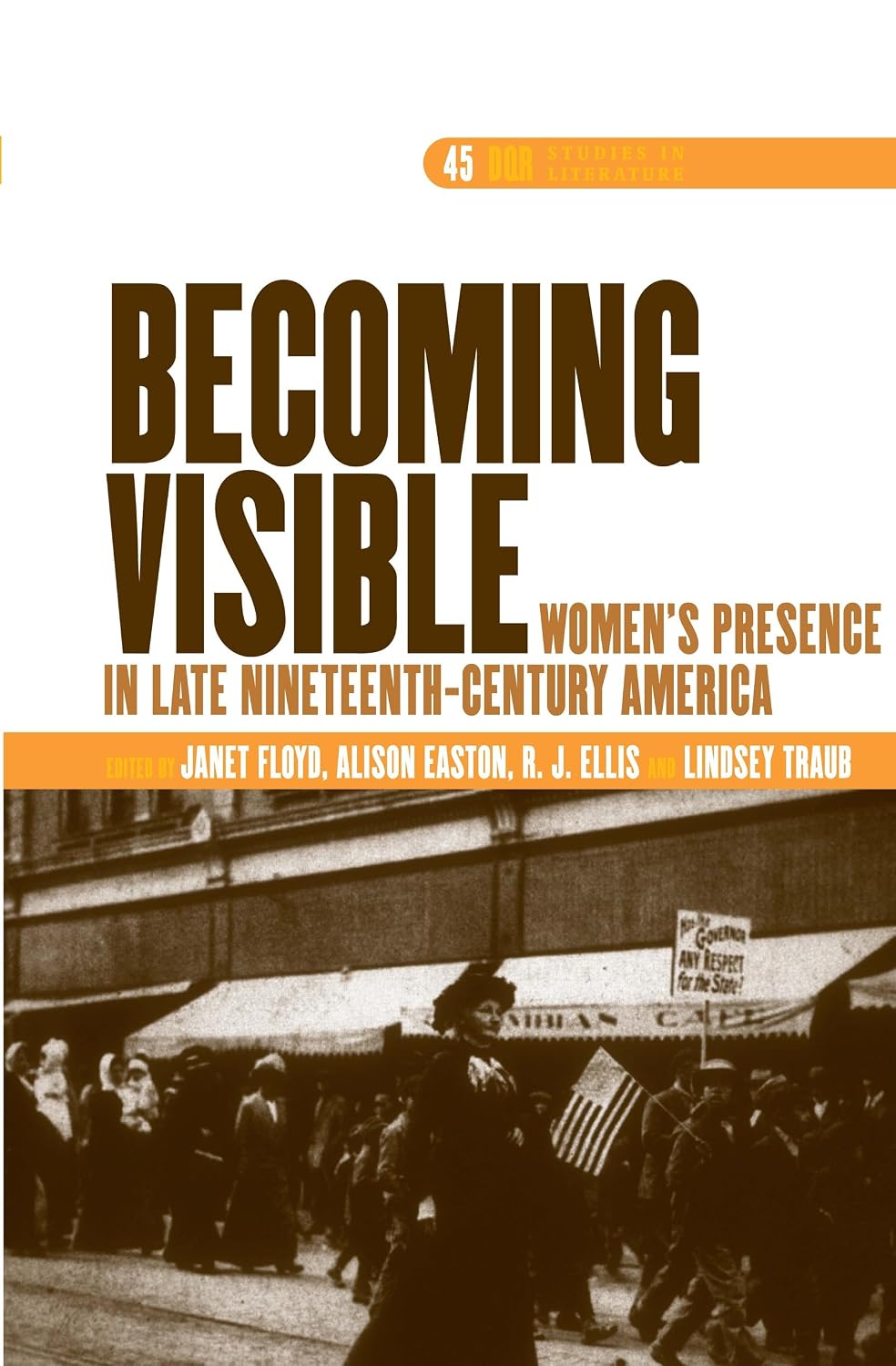
This exciting collection of interdisciplinary essays explores the later decades of the nineteenth century in America - the immediate postbellum period, the Gilded Age, and the Progressive Era - as a time of critical change in the cultural visibility of women, as they made new kinds of appearances throughout American society. The essays show how, across the USA, it was fundamentally women who drove changes in their visibility forward, in groups and as individuals. Their motivations, activities and understandings were essential to shaping the character of their present society and the nation's future. The book establishes that these women's engagement with American society and culture cannot be simply understood in terms of the traditional polarities of inside/outside and private/public, since these frames do not fit the complexities of what was happening, be it women's occupation of geographic space, their new patterns of employment, their advocacy of working-class or ethnic rights, or their literary or cultural engagement with their milieux. Such women as Ida B. Wells, Mother Jones, Jane Addams, Rebecca Harding Davis, Willa Cather, Sarah Orne Jewett, Louisa May Alcott and Kate Douglas Wiggin all come under consideration in the light of these radical changes
Alison Easton, R.J. Ellis, Janet Floyd, and Lindsey Traub: Introduction: Becoming Visible The Changing Geography of Public and Private
Anne M. Boylan: Claiming Visibility: Women in Public / Public Women in the United States, 1865-1910
Janet Zandy: Dangerous Working-class Women: Mother Jones, Lucy Parsons, and Elizabeth Gurley Flynn
Margaret Walsh: Visible Women in the Needle Trades: Revisiting the Clothing Industry in the Late Nineteenth and Early Twentieth Centuries
S.J. Kleinberg: Women’s Employment in the Public and Private Spheres, 1880-1920
Mia Bay: “If Iola Were a Man”: Gender, Jim Crow and Public Protest in the Work of Ida B. Wells
Alison Easton: “Outdoor Relief”: Sarah Orne Jewett, Annie Adams Fields and the Visit in Gilded Age America
Stepping Out: Bodies, Spaces and the Cultural Representation of Visibility
Lindsey Traub: Negotiating Visibility: Louisa May Alcott’s Narrative Experiments
R.J. Ellis: “People Will Think You Have Struck an Attitude”: Fashionable Space in Emma Dunham Kelley-Hawkins’ Novels
Janet Floyd: “Magnificent Equipment”: Body, Sound and Space in the Representation of the Female Singer
Peter Rawlings: The Painful Production of Verena Tarrant: John Locke and The Bostonians
Karen L. Kilcup: “The True American Woman”: Narcissa Owen’s Embodied National Narrative
Shirley Foster: American Women Travelers and the Material Feminine Becoming “Modern”
Timothy A. Hickman: Gendering Modernity: Frances E. Willard’s Politics of Technological Sentimentality
Susan K. Harris: Women, Anti-imperialism and America’s Christian Mission Abroad: The Impact of the Philippine-American War
This exciting collection of interdisciplinary essays explores the later decades of the nineteenth century in America as a time of critical change in the cultural visibility of women
Janet Greenlees
In When the Air Became Important, medical historian Janet Greenlees examines the working environments of the heartlands of the British and American cotton textile industries from the nineteenth to the late twentieth centuries. Greenlees contends that the air quality within these pioneering workplaces was a key contributor to the health of the wider communities of which they were a part. Such enclosed environments, where large numbers of people labored in close quarters, were ideal settings for the rapid spread of diseases including tuberculosis, bronchitis and pneumonia. When workers left the factories for home, these diseases were transmitted throughout the local population, yet operatives also brought diseases into the factory. Other aerial hazards common to both the community and workplace included poor ventilation and noise. Emphasizing the importance of the peculiarities of place as well as employers' balance of workers' health against manufacturing needs, Greenlees's pioneering book sheds light on the roots of contemporary environmentalism and occupational health reform. Her work highlights the complicated relationships among local business, local and national politics of health, and community priorities
working environments of the heartlands of the British and American cotton textile industries from the nineteenth to the late twentieth centuries
Janet L. Finn
This tale of two cities - Butte, Montana, and Chuquicamata, Chile - traces the relationship of capitalism and community across cultural, national, and geographic boundaries. Combining social history with ethnography, Janet Finn shows how the development of copper mining set in motion parallel processes involving distinctive constructions of community, class, and gender in the two widely separated but intimately related sites
Preface I. Tracing the Veins 2. Mining History: A Political Chronology 3· Mining Community 4· Mining Men and Designing Women 5· Crafting the Everyday 6. Miner's Consumption 7· Trust, Betrayal, and Transformation 8. Food for Thought and Action Appendix 1. Copper Production, 1920-1972 Appendix 2. Copper Production, 1934-1972 Notes Bibliography Index
This tale of two cities - Butte, Montana, and Chuquicamata, Chile - traces the relationship of capitalism and community across cultural, national, and geographic boundaries
Janet Ridgway, Larry Adelman
Women's Worth is the third in a continuing series of projects by California Newsreel exploring innovative and effective approaches to film use, an area of pedagogy which has been sorely neglected. Women's Worth was designed specifically to aid
teachers and facilitators develop programs to accompany screenings of the award win_x0002_ning film on working women. The Willmar 8. The various activities suggested in this
manual have been derived from non-formal adult teaching techniques. They are intended to create a context for The Willmar 8 in order to transform the film screening into an occasion to involve viewers more fully in challenging on-the-job sex discrimination and in shaping a more equitable workplace.
A 1982 study guide that accompanies the documentary, entitled The Willmar 8. Comparable worth and women's wages are part of this study

Janet Weaver, Migration is Beautiful, Iowa Women's Archives
The national League of United Latin American Citizens (LULAC) was founded in Corpus Christie, Texas, in February 1929 to advocate for the civil rights of Latinos in the United States. During its early years, LULAC built a strong base of councils in Texas through which it fought discrimination in education, housing, and employment by negotiating with local leaders and politicians and by pursuing legal cases. In the famous Mendez vs. Westminster case in 1946, LULAC successfully challenged the segregation of Mexican American students in the California education system.
In the 1950s, under the leadership of national president Felix Tijerina, LULAC expanded into the Midwest. Relatively little is known about these midwestern LULAC councils, many of which were short-lived. In Iowa, a handful not only survived, but developed as strong advocacy organizations that took a lead role in the civil rights movement at the state and local level in the 1960s and 1970s. Through early LULAC newsletters and administrative records, carefully preserved by founding members of Iowa councils, we gain insight into some of their activities.
Sections Include:
The First Councils in Iowa
Early Civil Rights Activism
Iowa Migrant Workers
Grape Boycott in Iowa
Chicanas in Iowa
Bibliography
Migration is Beautiful documents the arrival and role of LULAC, the League of United Latin American Citizens, in Iowa. Includes Bibliography

Janet Weaver, Migration is Beautiful, Iowa Women's Archives
Digital Essay The tradition of Latina activism, handed down through tight-knit neighborhoods and barrio communities in Iowa, became increasingly visible over time. In the 1950s and 1960s, Mexican American women in Iowa used the experience gained through their participation in LULAC and community-based advocacy groups to fight discrimination in housing, education, and employment.
Digital exhibit on working class Latina activism in Iowa, 1950s-present
Janet Zandy
"In linking forms of cultural expression to labor, occupational injuries, and deaths, Hands: Physical Labor, Class, and Cultural Work centers what is usually decentered - the complex culture of working-class people. Janet Zandy begins by examining the literal loss of lives to unsafe jobs and occupational hazards. She asks critical questions about worker representation - who speaks for employees when the mills, mines, factories, and even white-collar cubicles shut down? She presents the voices of working-class writers and artists, and discusses their contribution to knowledge and culture."--JacketPreface: The Epistemology of the Hand
Introduction
How much are two hands worth?
1. Loss: Circumstances and Choices
Trubeck Labs
Books of the Dead
Dialpainters
Audre Lorde, X-Rays, Acceptable Risks
Muriel Rukeyser, Hawk's Nest, Silicosis
God Job
Workers Memorial Day
2. Articulations: Culture is Not Negation
Worker Writers: Where Do You Keep Your Writing?
In the Skin of a Worker: What Makes a Text Working Class?
Worker Ghosts
Ghosted Work
Embodied Workers
3. Recoveries: Useable Pasts
Fire Poetry on the Triangle Shirtwaist Company Fire of March 28, 1911
Stillness, Motion, Bodies and Possibilities for Working-Class Studies
Ralph Fasanella: Epic Painter of the Working Class
4. Technologies: On Laboring Bodies
Preface: The Prison Tour
Zone 1: Technological Speed
Zone 2: Industrial Tours
Zone 3: The Amputation
Zone 4: Blind Spots
presents the voices of working-class writers and artists, and discusses their contribution to knowledge and culture.
Janine Giordano Drake
The Social Gospel movement is often seen as an altruistic effort of ministers to alleviate poverty among industrial workers in the late nineteenth and early twentieth centuries. Yet there were also other reasons church leaders were drawn to labor conflict. Socialists, particularly Christian Socialists, rivaled denominational churches for moral and spiritual leadership over the working classes. This book argues that white Protestant ministers’ mission to assert their own authority over industrial affairs undermined the public authority of the labor movement. By 1920, white Protestant members of the clergy used their national public authority, born of the Great War and their relationships with conservative labor leaders, to claim that they knew better than most rank and file workers about how to effect justice for the working classes. Protestant clergy’s mission to render the nation more Christian through the multiplicity of church plants directly undermined the labor movement’s mission to render the nation more Christian through significant changes to the social and economic system"--Publisher's description
Book argues that white Protestant ministers’ mission to assert their own authority over industrial affairs undermined the public authority of the left in the labor movement
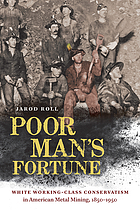
Jarod Roll
White working-class conservatives have played a decisive role in American history, particularly in their opposition to social justice movements, radical critiques of capitalism, and government help for the poor and sick. While this pattern is largely seen as a post-1960s development, 'Poor Man's Fortune' tells a different story, excavating the long history of white working-class conservatism in the century from the Civil War to World War II. With a close study of metal miners in the Tri-State district of Kansas, Missouri, and Oklahoma, Jarod Roll reveals why successive generations of white, native-born men willingly and repeatedly opposed labor unions and government-led health and safety reforms, even during the New Deal
reveals why successive generations of white, native-born men willingly and repeatedly opposed labor unions and government-led health and safety reforms, even during the New Deal.
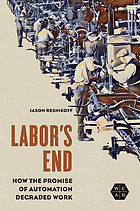
Jason Resnikoff
Labor's End traces the discourse around automation from its origins in the factory to its wide-ranging implications in political and social life. As Jason Resnikoff shows, the term automation expressed the conviction that industrial progress meant the inevitable abolition of manual labor from industry. But the real substance of the term reflected industry's desire to hide an intensification of human work--and labor's loss of power and protection--behind magnificent machinery and a starry-eyed faith in technological revolution. The rhetorical power of the automation ideology revealed and perpetuated a belief that the idea of freedom was incompatible with the activity of work. From there, political actors ruled out the workplace as a site of politics while some of labor's staunchest allies dismissed sped-up tasks, expanded workloads, and incipient deindustrialization in the name of technological progress. A forceful intellectual history, Labor's End challenges entrenched assumptions about automation's transformation of the American workplace"-- Provided by publisher
Detroit, Michigan, automation, speed-up, mechanization,
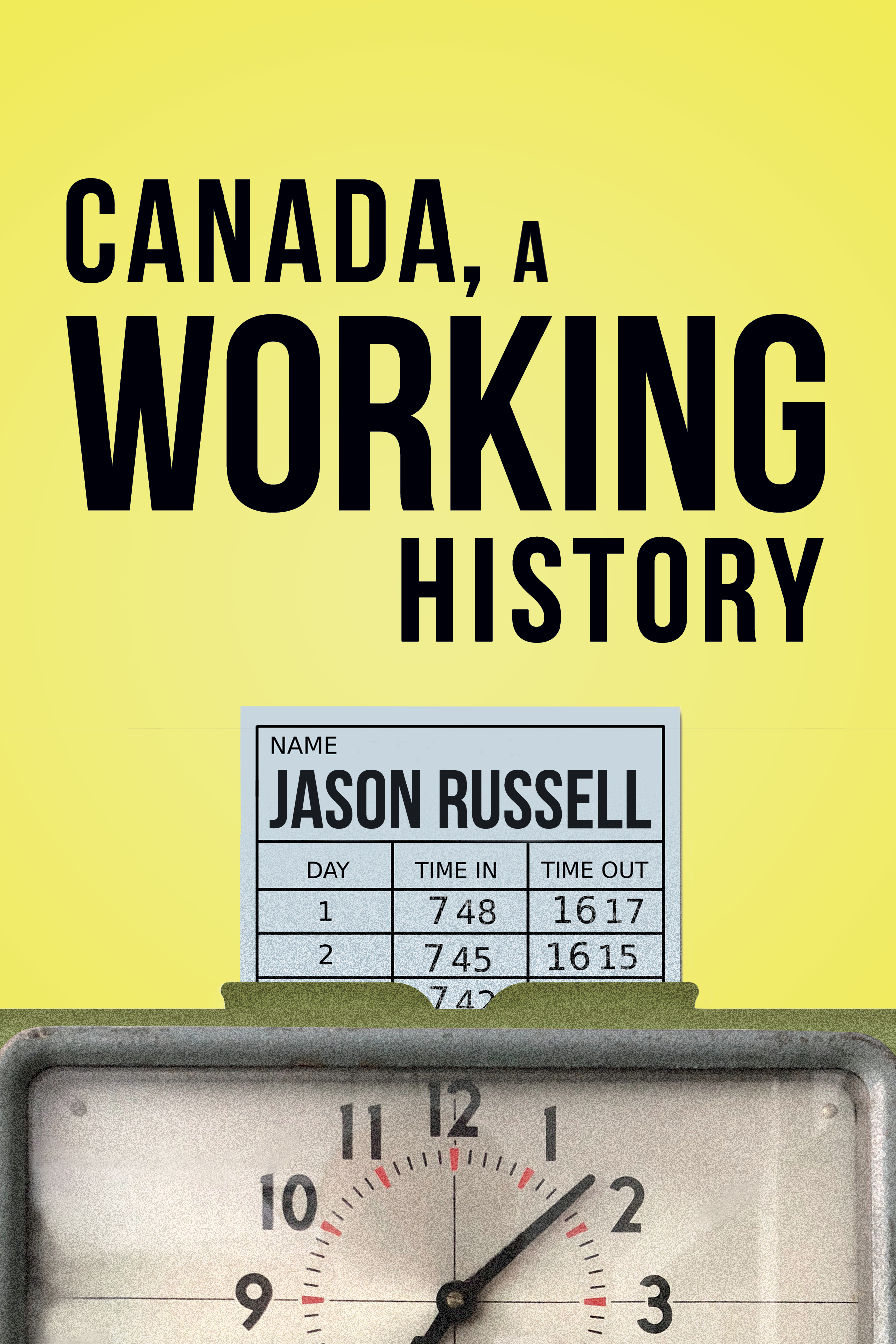
Jason Russell
A deep exploration of the experience of work in Canada, Canada, A Working History describes the ways in which work has been performed in Canada from the pre-Colonial period to the present day. Since the time of European colonization, the need to obtain and ensure a steady supply of workers to drive Canada's economic growth has been a key objective for policy makers. This book argues that there are key themes found in the history of work in Canada that persist to the present day. Work is shaped by a wide array of influences including gender, race, ethnicity, geography, economics, and politics. It in turn shapes us when we perform it. Work can be paid or unpaid, meaningful or alienating, and always essential. The work experience led people to form unions, aspire to management roles, pursue education, form professional associations, and seek self-employment. It has been the subject of much theoretical research and academic inquiry. Work is often in our cultural consciousness while being pondered in song, lamented in literature, celebrated in film, and preserved for posterity in other forms of art. It has been driven by technological change, governed by laws, been the cause of disputes, and the means by which people earn a living in Canada's capitalist economy. Engaging in work is common in all modern societies, and that there are distinct aspects to the history of work in Canada that will continue into the country's future. Ennobling, rewarding, exhausting, and sometimes frustrating, work has helped define who Canadians are as people.
describes the ways in which work has been performed in Canada from the pre-Colonial period to the present day. Since the time of European colonization, the need to obtain and ensure a steady supply of workers to drive Canada's economic growth has been a key objective for policy makers.
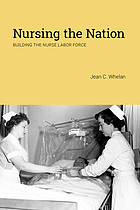
Jean C. Whelan
Modern health care cannot exist without professional nurses. Throughout the twentieth century, there was seldom a sustained period when the supply of nurses was equal to demand. Nursing the Nation offers a historical analysis of the relationship between the development of nurse employment arrangements with patients and institutions and the appearance of nurse shortages from 1890 to 1950. The response to nursing supply and demand problems by health care institutions and policy-making organizations failed to address nurse workforce issues adequately, and this failure resulted in, at times, profound and lengthy nurse shortages. Nurses also lost the ability to control their own destiny within health care institutions while nevertheless establishing themselves as the most critical part of health care provision today
offers a historical analysis of the relationship between the development of nurse employment arrangements with patients and institutions and the appearance of nurse shortages from 1890 to 1950.

Jean-Christian Vinel
In the age of temp work, telecommuting, and outsourcing, millions of workers in the United States find themselves excluded from the category of "employee" - a crucial distinction that would otherwise permit unionization and collective bargaining.
Tracing the history of the term since its entry into the public lexicon in the nineteenth century, the author demonstrates that the legal definition of "employee" has always been politically contested and deeply affected by competing claims on the part of business and labor.
Unique in the Western world, American labor law is premised on the notion that "no man can serve two masters" - workers owe loyalty to their employer, which in many cases is incompatible with union membership. This book historicizes this American exception to international standards of rights and liberties at work, revealing a little known part of the business struggle against the New Deal.
Early on, progressives and liberals developed a labor regime that, intending to restore amicable relations between employer and employee, sought to include as many workers as possible in the latter category. But in the 1940s, this language of social harmony met with increasing resistance from businessmen, who pressed their interests in Congress and the federal courts, pushing for an ever-narrower definition of "employee" that excluded groups such as foremen, supervisors, and knowledge workers.
A cultural and political history of American business and law, this book sheds historical light on contemporary struggles for economic democracy and political power in the workplace. -- Provided by publisher
Introduction : "A man can't serve two masters"
Part 1. The struggle for harmony
The "Employé"
Struggling against class
The sociology of harmony
Part II. The battle for loyalty
Is a foreman a worker?
The other side of industrial pluralism
Loyalty ascendant
The wages of textualism
Epilogue. Looking for respect
historicizes this American exception to international standards of rights and liberties at work, revealing a little known part of the business struggle against the New Deal.

Jeff Schuhrke
To subvert overseas unions, Washington found an enthusiastic partner in the AFL-CIO's anticommunist officials, who for decades expended incredible energy trying to block revolutionary ideologies and militant class consciousness from taking hold in the workers' movements of Europe, Latin America, Africa, and Asia. Jeff Schuhrke tells the sweeping story of the AFL-CIO's global anticommunist crusade-and the devastating consequences for workers at home and abroad"
Book argues that to subvert overseas left-wing unions, Washington found an enthusiastic partner in the AFL-CIO's anticommunist officials
Jeff Schuhrke
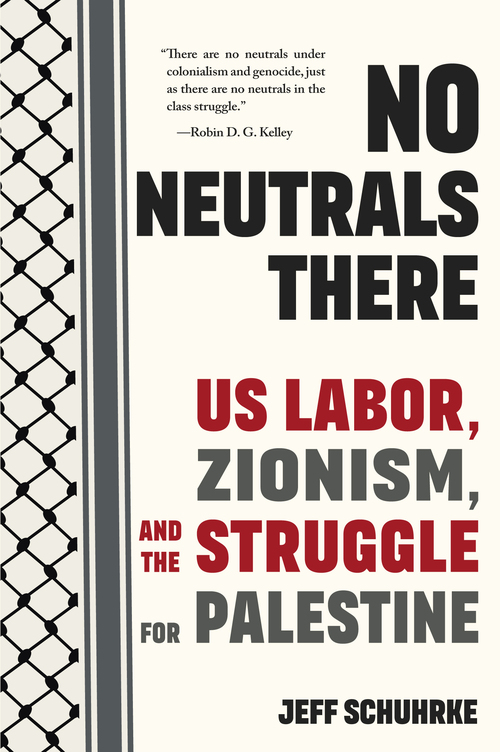
The definitive history of the US labor movement’s complicity in Zionist settler colonialism, and a call for today’s labor militants to organize in solidarity with Palestinians.
US trade unionists are often told to keep quiet and remain neutral on Palestine because “Palestine has nothing to do with unions” and “weighing in” only distracts from struggles for better working conditions.
No Neutrals There makes a timely and critical intervention against that pervasive sentiment by recounting the history of the US labor movement’s century-long involvement in the struggle for Palestine. Scholar Jeff Schuhrke convincingly demonstrates that unions in the United States have never been silent or neutral on the question of Palestine. In fact, they have played a key role—in the initial Zionist colonization of Palestine, the foundation of the Israeli state in 1948, supporting US commitments to Israel, and the ongoing suppression of the Palestinian liberation movement.
In his compelling telling of this history, Schuhrke conclusively shows that US unions helped build and maintain the state of Israel, and also shines a light on important exceptions to this rule: instances of US labor solidarity with the Palestinian freedom struggle that point the way forward for today’s labor movement.
The definitive history of the US labor movement’s complicity in Zionist settler colonialism, and a call for today’s labor militants to organize in solidarity with Palestinians.
Jeff Strickland
During the latter half of the nineteenth century, the complex interplay of race, ethnicity, and class shaped the political economy and society of seaport cities from New Orleans to New York to Boston. Immigrants, African Americans, and native-born whites lived and worked together and nowhere was this level of interethnic relations so pronounced as in Charleston, South Carolina, the South’s most economically and politically significant city.
Jeff Strickland examines how German and Irish immigrants in Charleston were both agents of change during the transition from slavery to freedom, as well as embodiments of that change. As fears of strengthening antislavery sentiments took root in Charleston, racial tensions became ever more pronounced. Immigrant artisans and entrepreneurs occupied a middle tier in the racial and ethnic hierarchy, acting as a buffer between the disparate white southerners and African Americans. While relations between European immigrants and black southerners were often positive during the Civil War era, reconstruction brought new opportunities for upward socioeconomic mobility to Charleston's immigrants. By the end of the nineteenth century, German and Irish immigrants were easily able to cross the permeable white boundaries and, through their assimilation as white southerners, effectively embraced the ideals of white supremacy.
Using an innovative framework, Jeff Strickland adds much to our knowledge about the ways European immigrant communities functioned in the South during the nineteenth century, and the significance of his research extends far beyond the geographic south.
race, ethnicity, and class shaped the political economy of this vital Southern city
Jefferson Cowie
Where does the New Deal fit in the big picture of American history? What does it mean for us today? What happened to the economic equality it once engendered? In The Great Exception, Jefferson Cowie provides new answers to these important questions. In the period between the Great Depression and the 1970s, he argues, the United States government achieved a unique level of equality, using its considerable resources on behalf of working Americans in ways that it had not before and has not since. If there is to be a comparable battle for collective economic rights today, Cowie argues, it needs to build on an understanding of the unique political foundation for the New Deal. Anyone who wants to come to terms with the politics of inequality in the United States will need to read The Great Exception."--Provided by publisher
A history of New Deal politics and the relative equality it provided working-class Americans that they never had before or since

Jeffrey A. Johnson
This book places the 1916 San Francisco Preparedness Day Bombing within the broader context of American radicalism and isolationism during the Progressive Era. A concise narrative and key primary documents offer readers an introduction to this episode of domestic violence and the subsequent, sensationalized trial that followed. The dubious conviction of a local labor organizer raised serious questions about political extremism, pluralistic ideals, and liberty in the United States that continue to resonate in the twenty-first century.
The dubious conviction of a local labor organizer raised serious questions
Jeffrey Haydu
Chapter One Factory Politics and Selective Mobilization
Chapter Two The Employers' Challenge to Craft Standards
Chapter Three In Defense of the Trade: From Local Struggles to National Settlements, 1890–1901.
Chapter Four The Transformation of Craft Militancy, 1900–1914
Chapter Five The Impact of World War I
Chapter Six Coventry: Workers' Control and Industrial Relations Reform
Chapter Seven Bridgeport: Craft Radicalism and Management Control
Chapter Eight Patterns of Factory Politics in Comparative Perspective
provides a new look at workers' responses to the economic changes surrounding them in the early years of the twentieth century.
Museum/Exhibits
Tours
Maps
Digital Projects
Organizations
Sites
Film/Video
Audio/Interview
Podcast/Program
Text/Document
Image
Graphs/Data
Timeline
Southwest
West
Midwest
Southeast
Northeast
Mexico
Canada
Global
Books
Teaching
Lectures
Digital Archives
Journals
Bibliographies
Topic Intro