


Collections
Library
Type
Region
Coverage:
-
Published:
-

Jeffrey Haydu
The exceptional weakness of the American labor movement has often been attributed to the successful resistance of American employers to unionization and collective bargaining. However, the ideology deployed against labor's efforts to organize at the grassroots level has received less attention. In Citizen Employers, Jeffrey Haydu compares the very different employer attitudes and experiences that guided labor-capital relations in two American cities, Cincinnati and San Francisco, in the period between the Civil War and World War I. His account puts these attitudes and experiences into the larger framework of capitalist class formation and businessmen's collective identities. Cincinnati and San Francisco saw dramatically different developments in businessmen's class alignments, civic identities, and approach to unions. In Cincinnati, manufacturing and commercial interests joined together in a variety of civic organizations and business clubs. These organizations helped members overcome their conflicts and identify their interests with the good of the municipal community. That pervasive ideology of "business citizenship" provided much of the rationale for opposing unions. In sharp contrast, San Francisco's businessmen remained divided among themselves, opted to side with white labor against the Chinese, and advocated treating both unions and business organizations as legitimate units of economic and municipal governance. Citizen Employers closely examines the reasons why these two bourgeoisies, located in comparable cities in the same country at the same time, differed so radically in their degree of unity and in their attitudes toward labor unions, and how their views would ultimately converge and harden against labor by the 1920s. With its nuanced depiction of civic ideology and class formation and its application of social movement theory to economic elites, this book offers a new way to look at employer attitudes toward unions and collective bargaining. That new approach, Haydu argues, is equally applicable to understanding challenges facing the American labor movement today
compares the very different employer attitudes and experiences that guided labor-capital relations in two American cities, in the period between the Civil War and World War I.
Jeffrey Haydu
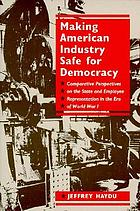
In Making American Industry Safe for Democracy, a work of historical sociology, Jeffrey Haydu explores how basic political and economic relationships were restabilized in the aftermath of the war. Haydu compares U.S. efforts to reconstruct an open-shop regime that excluded trade unions with the reform of industrial relations in Britain and Germany. Then he compares industries within the United States and traces the extraordinarily complex manner in which prewar class relations and wartime crisis led the state to restructure employee representation. In this important study of new strategies for managing work and conflict that were emerging by the 1920s, the author also forces us to reassess the role of organization in shaping working-class mobilization and protest
explores how basic political and economic relationships were restabilized in the aftermath of the World War I.
Jeffrey Helgeson
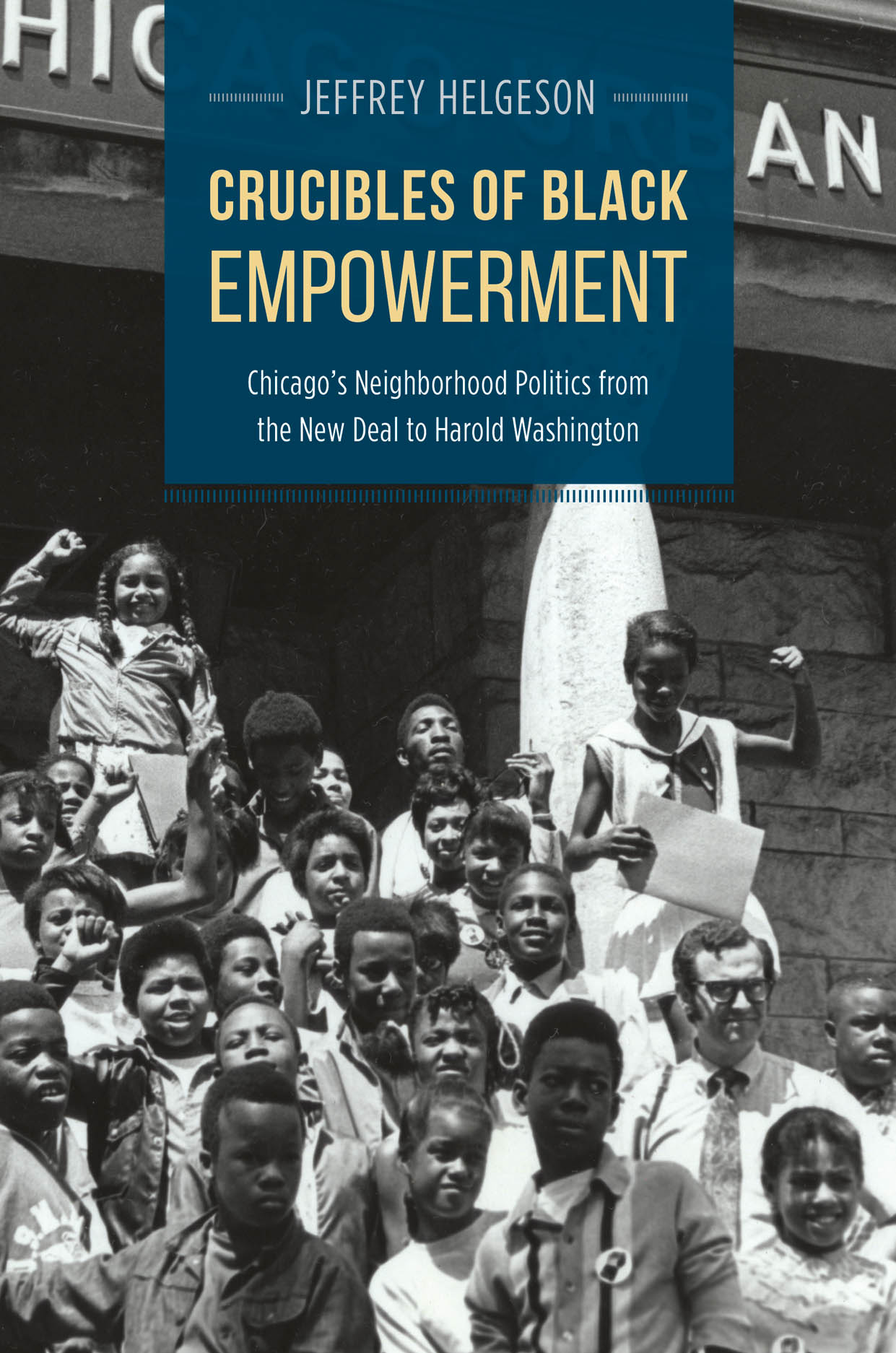
Helgeson recounts the rise of African American political power and activism from the 1930s onward, revealing how it was achieved through community building. His book tells stories of the housewives who organized their neighbors, building tradesmen who used connections with federal officials to create opportunities in a deeply discriminatory employment sector, and the social workers, personnel managers, and journalists who carved out positions in the white-collar workforce. Looking closely at black liberal politics at the neighborhood level in Chicago, Helgeson explains how black Chicagoans built the networks that eventually would overthrow the city’s seemingly invincible political machine
Introduction
1. The Politics of Home in Hard Times
2. Community Development in an Age of Protest, 1935-40
3. "Will 'Our People' Be Any Better Off after This War?"
4. A Decent Place to Live: The Postwar Housing Shortage
5. Capitalism without Capital: Postwar Employment Activism
6. Sources of Black Nationalism from the 1950s to the 1970s
7. Harold Washington: Black Power and the Resilience of Liberalism
Postscript: The Obamas and Black Chicago's Long Liberal Tradition
Acknowledgments
Notes
Index
tells stories of the housewives who organized their neighbors, building tradesmen who used connections with federal officials to create opportunities in a deeply discriminatory employment sector,
Jeffrey Steven Kahana
In the nation-building following independence, no challenge was more fraught than how to construct an American law of labor. The technical side of this question--the case-by-case transformation of an inherited common law of repression has been thoroughly studied, but no one has quite done what Jeffrey Kahana has accomplished in this fine book: he has captured the processes by which this Americanized common law came to reflect the values of a rapidly democratizing, economically free-wheeling nation. This is a major contribution, and Kahana is to be congratulated for it.
In this book, Kahana takes strong positions on two debates in the field of nineteenth-century labor law: (1) the extent to which American law in this area was largely based on English common law; and (2) the extent to which American legal rules were a product of class-bias and/or anti-union sentiment, as opposed to other principles and ideologies. On both issues, scholars have ranged considerably. As to the first, Karen Orren has insisted that U.S. law was not only based on English common law, but was essentially feudal, and Christopher Tomlins has argued that much of American law was at leastsignificantly based on English common law; on the other hand, Robert Steinfeld and Victoria Hattam found more differences between American law and English common law. On this issue, Kahana is the furthest away from Orren, arguing that post-revolutionary America engaged in an almost wholesale rejection of English common law. On the second issue, Kahana also stakes out a position on the far end of the spectrum, arguing not only that laws regulating workers and unions were driven by concerns much different than class bias but also that by 1840, unions had largely been liberated from the constraints of conspiracy law. Overall, one is unlikely to find a more positive, upbeat view of early American labor and employment law.--Joseph Slater
captures the processes by which Americanized common law came to reflect the values of a rapidly democratizing, economically free-wheeling nation.
Jeffrey T. Manuel
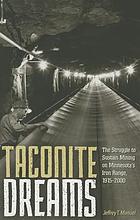
The Iron Range earned its name honestly: it was once among the world's richest iron ore mining districts. The Iron Range propelled the U.S. steel industry in the late nineteenth century, and iron mining sustained generations in the region with work and a strong economy. But long before most other parts of the country faced the realities of industrial decline, Minnesota's Iron Range was already striving to maintain its core industry. In Taconite Dreams: The Struggle to Sustain Mining on Minnesota's Iron Range, 1915-2000, Jeffrey T. Manuel examines how the region fought the dislocation that came with economic changes, technological advances, and global shifts in industrial production. On the Iron Range, efforts included the development of taconite mining as a technological fix for the drop in hematite mining. Manuel describes the Iron Range's modern history and how the downturn was opposed by individuals, civic groups, and commercial interests. The first book dedicated to thoroughly exploring this era on the Iron Range, Taconite Dreams demonstrates how the area fit into a larger story of regions wrestling with deindustrialization in the twentieth century. The 1964 taconite amendment to Minnesota's constitution, the bruising federal pollution lawsuit that closed a taconite plant, and the Iron Range Resources and Rehabilitation Board's economic development policy are all discussed. Ultimately, the resistance against economic decline is also a battle over mining's memory and legacy, one that continues today. Manuel's history sheds much-needed light on this important yet widely overlooked mining region as well as the impact of the past century's struggles on the people who call it home."
how the region fought the dislocation that came with economic changes, technological advances, and global shifts in industrial production
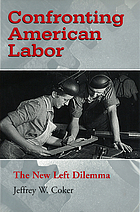
Jeffrey W. Coker
Traces the development of the American Left, from the depression era through the Cold War, by examining representative intellectuals who grappled with the difficult question of labor's role in society. One of the figures covered is Herbert Gutman, a founder of the field of labor hitory.
Since the time of Marx, leftist individuals in the West have raised time and again the question of how the intelligentsia might play a role in a movement carried out by the working class. Their modus operandi has been to champion those who suffer injustice at the hands of the powerful.
From the late nineteenth through much of the twentieth century, this meant a focus on the industrial worker. Jeffrey Coker examines the ways in which leftist intellectuals confronted the labor question after 1945 through the lives and works of four individuals who represent a cross section of postwar radicalism. Each came of age on the socialist Left, expecting that an anticapitalist movement would emerge from the ranks of labor. Seymour Martin Lipset and C. Wright Mills were professional sociologists. Sidney Lens spent his early life working within the labor movement, and then became a political commentator for a variety of leftist magazines and journals in the postwar era.
Historian Herbert Gutman created a "new labor history" that reflected broader transformations within the intellectual Left. In tracing their various approaches to the problem of labor, Confronting American Labor explores the diverse nature of the postwar Left in America.
This important work will be of value to anyone interested in labor, class, and American thought
traces the development of the American Left by examining representative intellectuals who grappled with the difficult question of labor's role in society.
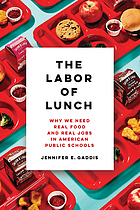
Jennifer E. Gaddis
Children, parents, and pundits agree that there's a problem with school lunch. Big Food companies have largely replaced the nation's school cooks by supplying cafeterias with cheap precooked hamburger patties and chicken nuggets chock-full of industrial fillers. Yet it's no secret that meals cooked from scratch with nutritious, locally sourced ingredients are better for children, workers, and the environment. So why not empower "lunch ladies" to do more than just reheat ready-made industrial food? And why not organize together to make healthy, ethically sourced, free school lunches a reality? The Labor of Lunch aims to spark a progressive movement that will transform food in American schools, and with it the lives of thousands of low-paid cafeteria workers and the millions of children they feed. By providing a feminist history of the National School Lunch Program, Jennifer Gaddis recasts the humble school lunch as an important and often overlooked form of public care. Through vivid narration and moral heft, The Labor of Lunch offers a stirring call to action and a blueprint for school lunch reforms capable of delivering a healthier, more equitable, caring, and sustainable future"--Provided by publisher
recasts the humble school lunch as an important and often overlooked form of public care.
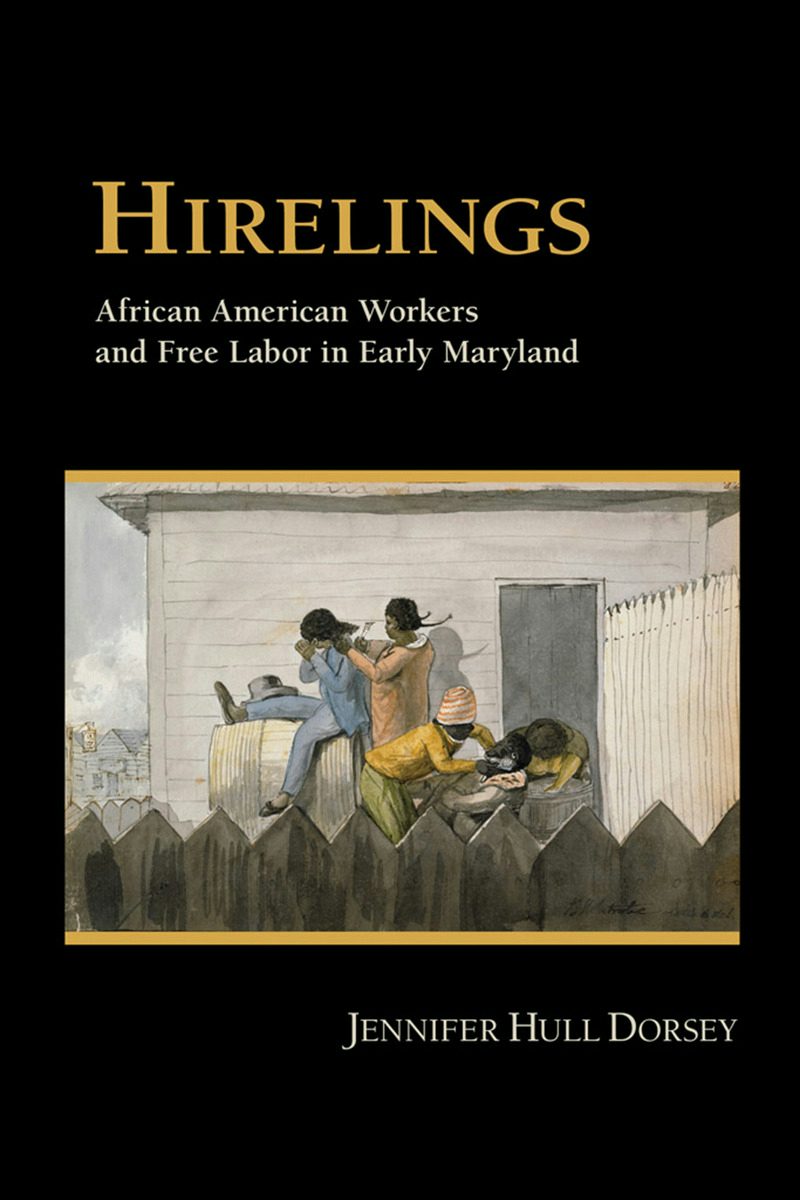
Jennifer Hull Dorsey
In Hirelings, Jennifer Dorsey recreates the social and economic milieu of Maryland's Eastern Shore at a time when black slavery and black freedom existed side by side. She follows a generation of manumitted African Americans and their freeborn children and grandchildren through the process of inventing new identities, associations, and communities in the early nineteenth century.
Free Africans and their descendants had lived in Maryland since the seventeenth century, but before the American Revolution they were always few in number and lacking in economic resources or political leverage. By contrast, manumitted and freeborn African Americans in the early republic refashioned the Eastern Shore's economy and society, earning their livings as wage laborers while establishing thriving African American communities.
As free workers in a slave society, these African Americans contested the legitimacy of the slave system even while they remained dependent laborers. They limited white planters' authority over their time and labor by reuniting their families in autonomous households, settling into free black neighborhoods, negotiating labor contracts that suited the needs of their households, and worshipping in the African Methodist Episcopal Church. Some moved to the cities, but many others migrated between employers as a strategy for meeting their needs and thwarting employers' control.
They demonstrated that independent and free African American communities could thrive on their own terms. In all of these actions the free black workers of the Eastern Shore played a pivotal role in ongoing debates about the merits of a free labor system
Recreates the social and economic milieu of Maryland's Eastern Shore at a time when black slavery and black freedom existed side by side.
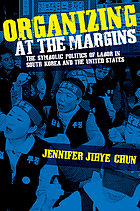
Jennifer Jihye Chun
The realities of globalization have produced a surprising reversal in the focus and strategies of labor movements around the world. After years of neglect and exclusion, labor organizers are recognizing both the needs and the importance of immigrants and women employed in the growing ranks of low-paid and insecure service jobs. In Organizing at the Margins, Jennifer Jihye Chun focuses on this shift as it takes place in two countries: South Korea and the United States. Using comparative historical inquiry and in-depth case studies, she shows how labor movements in countries with different histories and structures of economic development, class formation, and cultural politics embark on similar trajectories of change. Chun shows that as the base of worker power shifts from those who hold high-paying, industrial jobs to the formerly "unorganizable," labor movements in both countries are employing new strategies and vocabularies to challenge the assault of neoliberal globalization on workers' rights and livelihoods. Deftly combining theory and ethnography, she argues that by cultivating alternative sources of "symbolic leverage" that root workers' demands in the collective morality of broad-based communities, as opposed to the narrow confines of workplace disputes, workers in the lowest tiers are transforming the power relations that sustain downgraded forms of work. Her case studies of janitors and personal service workers in the United States and South Korea offer a surprising comparison between converging labor movements in two very different countries as they refashion their relation to historically disadvantaged sectors of the workforce and expand the moral and material boundaries of union membership in a globalizing world
1. The Symbolic Leverage of Labor
2. Employer and State Offensives against Unionized Workers
3. Reconstructing the Marginalized Workforce
4. Social Movement Legacies and Organizing the Marginalized
5. What Is an "Employer"? Organizing Subcontracted University Janitors
6. What Is a "Worker"? Organizing Independently Contracted Home Care Workers and Golf Caddies
7. Dilemmas of Organizing Workers at the MarginsNotes Bibliography Index
shows how labor movements in globalized countries with different histories and structures of economic development, class formation, and cultural politics embark on similar trajectories of change.
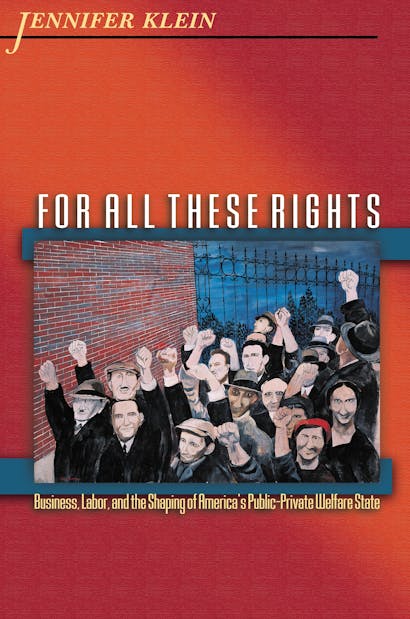
Jennifer Klein
The New Deal placed security at the center of American political and economic life by establishing an explicit partnership between the state, economy, and citizens. In America, unlike anywhere else in the world, most people depend overwhelmingly on private health insurance and employee benefits.
The astounding rise of this phenomenon from before World War II, however, has been largely overlooked. In this powerful history of the American reliance on employment-based benefits, Jennifer Klein examines the interwoven politics of social provision and labor relations from the 1910s to the 1960s.
Through a narrative that connects the commercial life insurance industry, the politics of Social Security, organized labor’s quest for economic security, and the evolution of modern health insurance, she shows how the firm-centered welfare system emerged. Moreover, the imperatives of industrial relations, Klein argues, shaped public and private social security.
Looking closely at unions and communities, Klein uncovers the wide range of alternative, community-based health plans that had begun to germinate in the 1930s and 1940s but that eventually succumbed to commercial health insurance and pensions. She also illuminates the contests to define “security”—job security, health security, and old age security—following World War II.
For All These Rights traces the fate of the New Deal emphasis on social entitlement as the private sector competed with and emulated Roosevelt’s Social Security program. Through the story of struggles over health security and old age security, social rights and the welfare state, it traces the fate of New Deal liberalism—as a set of ideas about the state, security, and labor rights—in the 1950s, the 1960s, and beyond.
explores the relationships and tensions between private and public social and health security programs.
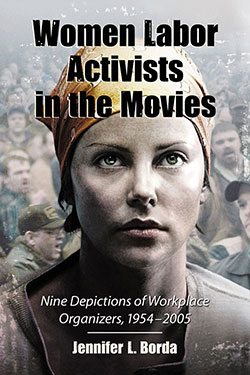
Jennifer L. Borda
Some of the most indelible images of women in recent American film have been of working women fighting for labor reform or to expose corporate corruption. This critical text explores films with female labor activists as main protagonists, illuminating issues of gender and class while depicting the challenges of working class women"
Explores films with female labor activists as main protagonists
Jennifer L. Morgan
"The history of the trans-Atlantic slave trade is deeply embedded in the emergence of early modern economic and political institutions. Reckoning with Slavery resituates the early modern as the space out of which race, racial hierarchies, notions of value and trade, and ideas of gender and reproduction are mutually constituted. Through a study of numeracy, trade, counting, and commerce, the lives and experiences of enslaved women in the sixteenth and seventeenth century English Atlantic world come into focus. Rather than treating economy and culture as distinct aspects of social history, Reckoning with Slavery asks what we can come to know about kinship, family, and race through the archives of trade and commerce."-- |c Provided by publisherPreface ix
Acknowledgments xi
Introduction. Refusing Demography 1
1. Producing Numbers: Reckoning with the Sex Ratio in the Transatlantic Slave Trade, 1500–1700 29
2. "Unfit Subjects of Trade": Demographic Logics and Colonial Encounters 55
3. "To Their Great Commoditie": Numeracy and the Production of African Difference 110
4. Accounting for the "Most Excruciating Torment": Transatlantic Passages 141
5. "The Division of the Captives": Commerce and Kinship in the English Americas 170
6. "Treacherous Rogues": Locating Women in Resistance and Revolt 207
Conclusion. Madness 245
Bibliography 257
Index 283
resituates the early modern as the space out of which race, racial hierarchies, notions of value and trade, and ideas of gender and reproduction are mutually constituted.

Jennifer Rhee
The word robot—introduced in Karel Čapek’s 1920 play R.U.R.—derives from rabota, the Czech word for servitude or forced labor. A century later, the play’s dystopian themes of dehumanization and exploited labor are being played out in factories, workplaces, and battlefields. In The Robotic Imaginary, Jennifer Rhee traces the provocative and productive connections of contemporary robots in technology, film, art, and literature. Centered around the twinned processes of anthropomorphization and dehumanization, she analyzes the coevolution of cultural and technological robots and artificial intelligence, arguing that it is through the conceptualization of the human and, more important, the dehumanized that these multiple spheres affect and transform each other.
Drawing on the writings of Alan Turing, Sara Ahmed, and Arlie Russell Hochschild; such films and novels as Her and The Stepford Wives; technologies like Kismet (the pioneering “emotional robot”); and contemporary drone art, this book explores anthropomorphic paradigms in robot design and imagery in ways that often challenge the very grounds on which those paradigms operate in robotics labs and industry. From disembodied, conversational AI and its entanglement with care labor; embodied mobile robots as they intersect with domestic labor; emotional robots impacting affective labor; and armed military drones and artistic responses to drone warfare, The Robotic Imaginary ultimately reveals how the human is made knowable through the design of and discourse on humanoid robots that are, paradoxically, dehumanized.
Introduction: All Too Dehumanized
1. Caring: Care Labor, Conversational Artificial Intelligence, and Disembodied Women
2. Thinking: Closed Worlds, Domestic Labor, and Situated Robotics
3. Feeling: Emotional Labor, Sociable Robots, and Shameless Androids
4. Dying: Drone Labor, War, and the Dehumanized
Epilogue. The Human: That Which We Have Yet to Know
Acknowledgments
Notes
Index
Related Books
Trending
Sign up: Newsletter
Stay connected about new releases, sales, events, and more.
SIGN UP
Connect
Browse:
Site Search
Subjects
Books
Journals
Test Division
Resources for:
Prospective Authors
Current Authors
Booksellers
Instructors
Librarians
Media
Orders and Shipping
Extras:
Podcast
Events
Awards
Catalogs
© 2025 University of Minnesota Press. All Rights Reserved.
Powered by Supadu
We are using cookies to give you the best experience on our website.
You can find out more about which cookies we are using or switch them off in
.
Tracing the connections between human-like robots and AI at the site of dehumanization and exploited labor
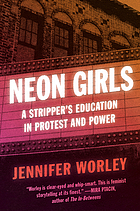
Jennifer Worley
A riveting true story of a young woman's days stripping in grunge-era San Francisco where a radical group of dancers banded together to unionize and run the club on their own terms.
When graduate student Jenny Worley needed a fast way to earn more money, she found herself at the door of the Lusty Lady Theater in San Francisco, auditioning on a stage surrounded by mirrors, in platform heels, and not much else. So began Jenny's career as a stripper strutting the peepshow stage as her alter-ego "Polly" alongside women called Octopussy and Amnesia. But this wasn't your run-of-the-mill strip club--it was a peepshow populated by free-thinking women who talked feminist theory and swapped radical zines like lipstick.
As management's discriminatory practices and the rise of hidden cameras stir up tension among the dancers, Jenny rallies them to demand change. Together, they organize the first strippers' union in the world and risk it all to take over the club and run it as a co-operative. Refusing to be treated as sex objects or disposable labor, they become instead the rulers of their kingdom. Jenny's elation over the Lusty Lady's revolution is tempered by her evolving understanding of the toll dancing has taken on her. When she finally hangs up her heels for good to finish her Ph. D., neither Jenny nor San Francisco are the same--but she and the cadre of wild, beautiful, brave women who run the Lusty Lady come out on top despite it all.
A first-hand account as only an insider could tell it, Neon Girls paints a vivid picture of a bygone San Francisco and a fiercely feminist world within the sex industry, asking sharp questions about what keeps women from fighting for their rights, who benefits from capitalizing on desire, and how we can change entrenched systems of power
paints a vivid picture of a bygone San Francisco and a fiercely feminist world within the sex industry.

Jenny Carson
This book addresses how a group of low-wage and primarily African American women workers found an industrial and interracial union in the 1930s and why their gender and race interests were subordinated within that union in the 1940s. Carson argues that race and gender explain, at every turn, the choices, challenges and opportunities for African American and White women laundry workers.
The women's relationship to the work and to the union movement was at all times mediated by race and gender. Job assignments were based on race and gender, and laundry employers exploited existing gender and racial tensions to create divisions among their workers. Yet while race and gender limited African American and White women's occupational mobility, they were also the axis around which they organized.
In the first two decades of the twentieth century, women laundry workers employed gender-conscious organizing strategies that included building alliances with the middle and upper-class leaders of the New York Women's Trade Union League (NY WTUL). In the 1920s, when large numbers of Black women entered the laundries, the workers and their allies employed race-conscious organizing strategies that included working with Black trade unionists in the short-lived Trade Union Committee for Organizing Negro Workers and with Black reform organizations.
In the 1930s, Harlem communists who were inspired by the Third Period's directive to organize Black workers and who were genuinely concerned about conditions in the laundries launched a grassroots union campaign to secure racial justice for laundry workers. This study assesses the efficacy of these gender- and race-based organizational strategies and of the successes and limitations of the interracial and cross-class coalitions that they produced. The heart of this story is how race and gender shaped the forms of activism that women laundry workers pursued and the collaborations that they forged"-- Provided by publisher
argues that race and gender explain, at every turn, the choices, challenges and opportunities for African American and White women laundry workers.
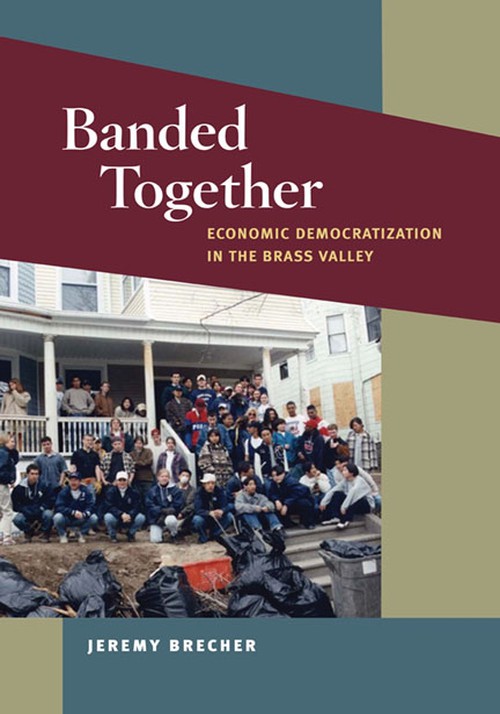
Jeremy Brecher
Free download https://www.jeremybrecher.org/banded-together/ Providing incisive commentary on the historical and contemporary American working class experience,_Banded Together: Economic Democratization in the Brass Valley_documents a community's efforts to rebuild and revitalize itself in the aftermath of deindustrialization. Through powerful oral histories and other primary sources, Jeremy Brecher tells the story of a group of average Americans--factory workers, housewives, parishioners, and organizers--who tried to create a democratic alternative to the economic powerlessness caused by the closing of factories in the Connecticut Naugatuck Valley region during the 1970s and 1980s.This volume focuses on grassroots organization, democratically controlled enterprises, and supportive public policies, providing examples from the Naugatuck Valley Project community-alliance that remain relevant to the economic problems of today and tomorrow. Drawing on more than a hundred interviews with Project leaders, staff, and other knowledgeable members of the local community, Brecher illustrates how the Naugatuck Valley Project served as a vehicle for community members to establish greater control over their economic lives.
tells the story of a group of average Americans who tried to create a democratic alternative to the economic powerlessness caused by the closing of factories in the Connecticut Naugatuck Valley region during the 1970s and 1980s.
Jeremy Brecher
updated edition. Strike! narrates the dramatic story of repeated, massive, and sometimes violent revolts by ordinary working people in America and tells this exciting hidden history from the point of view of the rank-and-file workers who lived it. In this expanded edition, Brecher brings the story up to date with revised chapters that cover the 40 years since the original edition, placing the problems faced by working people today in the context of 140 years of labor history. A new chapter, “Beyond One-Sided Class War” presents the American minirevolts of the 21st century from the Battle of Seattle to Occupy Wall Street and beyond. Essential reading for anyone interested in the historical or present-day situation of American workers, this updated classic serves as inspiration for organizers, activists, and educators working to revive the labor movement today.
narrates the dramatic story of repeated, massive, and sometimes violent revolts by ordinary working people in America and tells this history from the point of view of the rank-and-file workers who lived it.
Jeremy Milloy
Going postal. We think of the rogue employee who snaps. But in Blood, Sweat, and Fear, Jeremy Milloy demonstrates that workplace violence never occurs in isolation. Using violence as a lens, he provides fresh and original insights into the everyday workings of capitalism, class conflict, race, and gender in the United States and Canada of the late twentieth century, bringing historical perspective to contemporary debates about North American violence.
Blood, Sweat, and Fear is the first full-length historical exploration of the origins and effects of individual violence in the automotive industry. Milloy's gripping analysis spans 1960 to 1980, when North American auto plants were routinely the sites of fights, assaults, and even murders. He argues that the high levels of violence were primarily the result of workplace conditions - including on-the-job exploitation, racial tension, bureaucratization, and hypermasculinity - that made fear and loathing a shop-floor reality long before mass shootings attracted media attention in the 1980s. Workplace violence is typically the domain of management studies and psychology, but while we pass legislation and adopt best practices, the problem continues. Milloy's explosive book reveals that workplace violence has been a constant aspect of class conflict - and that our understanding needs to go deeper."-- Provided by publisher
Table of Contents:
1 Dripping with Blood and Dirt: Confronting the History of Workplace Violence under Capitalism
2 Fights and Knifings Are Becoming Quite Commonplace: Dodge Main, 1965–80
3 The Way Boys and Men Took Care of Business: Windsor Chrysler Plants
4 The Constant Companion of All That Earn Their Living Here: Workers, Unions, and Management Respond
5 Chrysler Pulled the Trigger: The Courts and the Press
6 Out of the Back Streets and into the Workplace: The Discovery of Workplace Violence in the 1980s and 1990s
reveals that workplace violence has been a constant aspect of class conflict
Jeremy Milloy, Joan Sangster
"From mining to sex work and from the classroom to the docks, violence has always been a part of work. This collection of essays highlights the many different forms and expressions of violence that have arisen under capitalism in the last two hundred years, as well as how historians of working-class life and labour have understood violence. The editors draw together diverse case studies, integrating analysis of class, age, gender, sexuality, and race into the scholarship. Essays span the United States and Canadian border, exploring gender violence, sexual harassment, the violent kidnapping of union organizers, the violence of inadequate health and safety protections, the culture of violence in state institutions, the mythology of working-class violence, and the changing nature of violence in extractive industries. The Violence of Work theorizes and historicizes violence as an integral part of working life, making it possible to understand the full scope and causes of workplace violence over time."-- Provided by publisher
Acknowledgments Introduction: Accounting for ViolenceJeremy Milloy
1. The Perils of Sex Work in Montreal: Seeking Security and Justice in the Face of Violence, 1810–1842Mary Ann Poutanen
2. The Rules of Discipline: Workers and the Culture of Violence in Progressive-Era Reform Schools James Schmidt
3. The “New Solution”: Anti-Labour Kidnapping, D.B. McKay, and the Legacy of the Second Seminole War Chad Pearson
4. Billy Gohl: Labour, Violence, and Myth in the Early Twentieth-Century Pacific North westAaron Goings
5. Slow Violence and Hidden Injuries: The Work of Strip Mining in the American WestRyan Driskell Tate
6. The Murder of Lori Dupont: Violence, Harassment, and Occupational Health and Safety in Ontario Sarah Jessup
7. "By the Numbers": Workers’ Compensation and the (Further) Conventionalization of Workplace Violence Robert Storey
8. Gender Violence in the Hospitality Industry: Panic Buttons, Pants, and Protest Emily E. LB. Twarog
Contributors
The Violence of Work demonstrates that violence has always been an important part of work under capitalism. The editors explore workplace violence in a diverse range of North American workplaces from the nineteenth through the twenty-first century
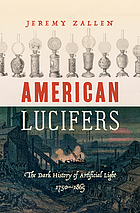
Jeremy Zallen
American Lucifers tracks how struggles to produce light transformed American history, beginning with the rise of the American whale fishery in the 1750s and culminating in the emergence, around the Civil War, of the petroleum industry and its primary product, kerosene. Between this shift from oil harvested from whales to oil extracted from rocks, American light was substantially derived from a substance called camphene, a highly explosive liquid mixture of spirits of turpentine and highly distilled alcohol, generally extracted from North Carolina pines by enslaved workers.
Over the course of this narrative, Jeremy Zallen reveals the centrality of slavery to labor in gasworks, coal mines, guano islands, and factories that made illumination possible. Moreover, though the lights they created may have offered a veneer of progress and convenience, they also made it possible for industry to extract workers' and slaves' labor around the clock. The availability of these illuminants extended men's working days to the point that women and children were expected to shoulder all domestic labor as a matter of course"-- Provided by publisher
places labor issues at the center of an examination of illumination

Jerome Scott
Motown and the Making of Working-Class Revolutionaries offers a fresh perspective on class, race, and revolution in the United States. Drawing on more than forty hours of interviews with former members of the League of Revolutionary Black Workers, Scott and katz-fishman share the rich story of the League, including the women and students. That story includes the history of the automotive industry in Detroit, the 1967 Detroit Rebellion, and the wildcat strike that sparked the Dodge Revolutionary Union Movement (DRUM). The authors describe the rise of the League from 1968 to 1971. They explore the centrality of struggle and political education as the League split and a section of League comrades moved into revolutionary organizations and social movement spaces, many of which remain active today. League comrades share their analysis of the current moment and staying the course of revolutionary struggle
.A companion site to the book is at https://www.motownrevolutionaries.org
This book is a sweeping history of the Detroit-based League Of Revolutionary Black Workers, It contains oral histories from members of the Leage as well as a history of the city's automobile industry.
Jerry M. Cooper
"Very useful in explaining the role of the military in a proclaimed 'a-military' nation....It contributes not only to military history but more especially to labor and social history. It focuses on a highly volatile period, provides balanced appraisal and succinct analysis, and should be utilized both in the classroom and the library as a major reading for studies in post-Civil War America."-Choice
contributes not only to military history but more especially to labor and social history, and focuses on a highly volatile period, provides balanced appraisal and succinct analysis
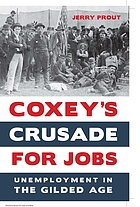
Jerry Prout
In the depths of a depression in 1894, a highly successful Gilded Age businessman named Jacob Coxey led a group of jobless men on a march from his hometown of Massillon, Ohio, to the steps of the nation's Capitol. Though a financial panic and the resulting widespread business failures caused millions of Americans to be without work at the time, the word unemployment was rarely used and generally misunderstood. In an era that worshipped the self-reliant individual who triumphed in a laissez-faire market, the out-of-work "tramp" was disparaged as weak or flawed, and undeserving of assistance. Private charities were unable to meet the needs of the jobless, and only a few communities experimented with public works programs. Despite these limitations, Coxey conceived a plan to put millions back to work building a nationwide system of roads and drew attention to his idea with the march to Washington. In Coxey's Crusade for Jobs, Jerry Prout recounts Coxey's story and adds depth and context by focusing on the reporters who were embedded in the march. Their fascinating depictions of life on the road occupied the headlines and front pages of America's newspapers for more than a month, turning the spectacle into a serialized drama. These accounts humanized the idea of unemployment and helped Americans realize that in a new industrial economy, unemployment was not going away and the unemployed deserved attention. This unique study will appeal to scholars and students interested in the Gilded Age and US and labor history"-- Provided by publisher
The unemployed army narrative with focusing on the reporters who were embedded in the march.
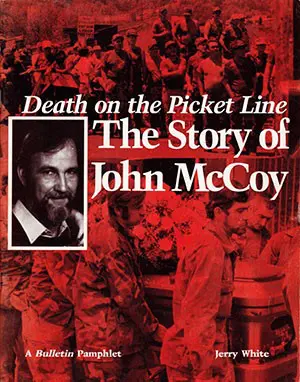
Jerry White
An account of the historic struggles of U.S. coal miners, from the mine wars of the early 20th century to the A.T. Massey and Pittston strikes of the 1980s. In this gripping narrative, names and events indelibly etched in the traditions of the American working class—Sid Hatfield, “bloody” Mingo County, Paint Creek, the armed march on Logan—are brought to life.
In 1990, A. T. Massey thugs gunned down John McCoy, a 42-year-old miner from West Virginia and the father of two children, while he picketed a nonunion mine near Welch, West Virginia. Through interviews with relatives, friends, and co-workers of John McCoy, this 68-page illustrated book provides valuable background information.
At the time, the United Mine Workers (UMW), joined with the media and state authorities in whitewashing the killing. As a consequence, no one was ever prosecuted for the murder. The response to McCoy’s shooting of then-UMW President Richard Trumka, later AFL-CIO head, enraged miners. It highlighted the degree to which the UMW had evolved into little more than an appendage of the coal operators and the state.
The political limitations of the militant traditions of the miners, however, were reflected in the failure of the American working class to break politically from the capitalist two-party system and advance a socialist alternative to the profit system. At the time of writing, the Workers League, forerunner of the Socialist Equality Party, called on miners to drive out the UMW bureaucracy and revive the union on the basis of a socialist and internationalist strategy and the fight for a Labor Party.
Given the degeneration of the unions and their transformation into direct tools of corporate management, it has become necessary for the working class to build new organizations of industrial and political struggle. For this fight the historical lessons contained in this pamphlet retain their full force today.
In 1990, A. T. Massey thugs gunned down John McCoy, a 42-year-old miner from West Virginia
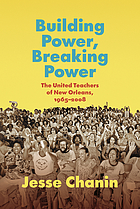
Jesse Chanin
From 1965 to 2005, the United Teachers of New Orleans (UTNO) defied the South's conservative anti-union efforts to become the largest local in Louisiana. Jesse Chanin argues that UTNO accomplished and maintained its strength through strong community support, addressing a Black middle-class political agenda, internal democracy, and drawing on the legacy and tactics of the civil rights movement by combining struggles for racial and economic justice, all under Black leadership and with a majority women and Black membership. However, the devastating effects of Hurricane Katrina provided the state government and local charter school advocates with the opportunity to remake the school system and dismantle the union. Authorities fired 7,500 educators, marking the largest dismissal of Black teaching staff since Brown v. Board of Education. Chanin highlights the significant staying power and political, social, and community impact of UTNO, as well as the damaging effects of the charter school movement on educators
United Teachers of New Orleans (UTNO) defied the South's conservative anti-union efforts to become the largest local in Louisiana.