


Collections
Library
Type
Region
Coverage:
-
Published:
-
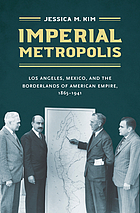
Jessica M. Kim
In this ... narrative of capitalist development and revolutionary response, Jessica Kim chronicles the imperial visions of the Los Angeles civic elites who fueled the city's phenomenal growth between the Civil War and World War II. Driven by the belief that an enterprising white-run city deserved to control a nonwhite periphery, wealthy Angelenos invested heavily in Mexican industries such as agriculture, petroleum, mining, and tourism, and transformed the countryside of northern Mexico, both to enrich themselves and to develop their home city as a new site of empire"-- Provided by publisher
chronicles the imperial visions of the Los Angeles civic elites who fueled the city's phenomenal growth between the Civil War and World War II.
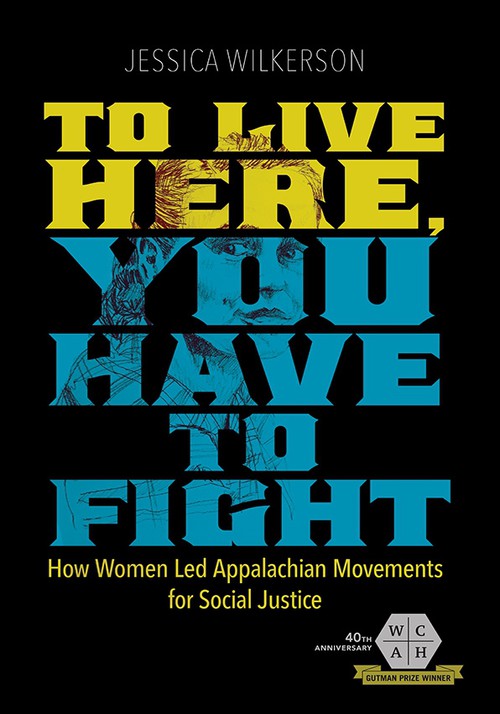
Jessica Wilkerson
Launched in 1964, the War on Poverty quickly took aim at the coalfields of southern Appalachia. There, the federal government found unexpected allies among working-class white women devoted to a local tradition of citizen caregiving and seasoned by decades of activism and community service.
Jessica Wilkerson tells their stories within the larger drama of efforts to enact change in the 1960s and 1970s. She shows white Appalachian women acting as leaders and soldiers in a grassroots war on poverty--shaping and sustaining programs, engaging in ideological debates, offering fresh visions of democratic participation, and facing personal political struggles. Their insistence that caregiving was valuable labor clashed with entrenched attitudes and rising criticisms of welfare. Their persistence, meanwhile, brought them into unlikely coalitions with black women, disabled miners, and others to fight for causes that ranged from poor people's rights to community health to unionization. Inspiring yet sobering, To Live Here, You Have to Fight reveals Appalachian women as the indomitable caregivers of a region--and overlooked actors in the movements that defined their time.
A book that tells the stories of Appalachian women within the larger drama of efforts to enact change in the 1960s and 1970s, arguing they played a pivotal leadership role
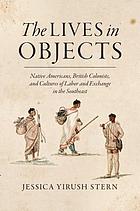
Jessica Yirush Stern
Jessica Stern presents a thoroughly researched and engaging study of the deerskin trade in the colonial Southeast, equally attentive to British American and Southeastern Indian cultures of production, distribution and consumption. Stern upends the long-standing assertion that Native Americans were solely gift givers and the British were modern commercial capitalists
Stern contends that for Natives, an influx of European goods did not lead to “the atrophy of skills needed to sustain a self-reliant society,” but actually led to “new avenues of creativity” (p. 5). In addition, she counters scholars who imply that the Atlantic trade led to the breakdown of “indigenous political structures” and an accompanying shift from communalism to individualism by arguing that “cultures are resilient” (p. 11). For the British, this study “argues that … settlers in South Carolina and Georgia shared and forged a cultural language about economic practices and policies” (p. 9) and “reveal[s] how traditional economic ideologies continued to influence government officials and merchants alike” (p. 7). Finally, Stern asserts that “the South based its conceptions of freedom on the right to control and exploit the labor of others, whether directly through slavery or indirectly through gifts and regulations” (p. 15). All of these arguments are plausible, but periodically disappear throughout the text.
deerskin trade in the colonial Southeast, equally attentive to British American and Southeastern Indian cultures of production, distribution and consumption
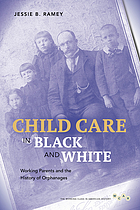
Jessie B. Ramey
This innovative study examines the development of institutional child care from 1878 to 1929, based on a comparison of two "sister" orphanages in Pittsburgh: the all-white United Presbyterian Orphan's Home and the all-black Home for Colored Children. Focusing on the agency of poor families who used these institutions in times of family crisis to meet their child care needs, Jessie B. Ramey explores the cooperation and conflict among working parents, children, orphanage managers, progressive reformers, staff members, and the broader community.
Drawing on quantitative analysis of the records of more than 1,500 children living at the two orphanages, as well as census data, city logs, and contemporary social science surveys, this study investigates the intertwined hierarchies of gender, race, and class at the foundation of orphanage care. Raising new questions about the role of child care in constructing and perpetrating social inequality in the United States, Child Care in Black and White: Working Parents and the History of Orphanages provides insight into the lives of working-class families struggling to balance their wage labor and parenting responsibilities in a modernizing industrial economy.
a comparison of two 'sister' orphanages in Pittsburgh: the all-white United Presbyterian Orphan's Home and the all-black Home for Colored Children
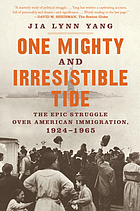
Jia Lynn Yang
The idea of the United States as a nation of immigrants is at the core of the American narrative. But in 1924, Congress instituted a system of ethnic quotas so stringent that it choked off large-scale immigration for decades, sharply curtailing arrivals from southern and eastern Europe and outright banning those from nearly all of Asia. In a riveting narrative filled with a fascinating cast of characters, from the indefatigable congressman Emanuel Celler and senator Herbert Lehman to the bull-headed Nevada senator Pat McCarran, Jia Lynn Yang recounts how lawmakers, activists, and presidents from Truman through LBJ worked relentlessly to abolish the 1924 law. Through a world war, a refugee crisis after the Holocaust, and a McCarthyist fever, a coalition of lawmakers and activists descended from Jewish, Irish, and Japanese immigrants fought to establish a new principle of equality in the American immigration system. Their crowning achievement, the 1965 Immigration and Nationality Act, proved to be one of the most transformative laws in the country's history, opening the door to nonwhite migration at levels never seen before--and changing America in ways that those who debated it could hardly have imagined. Framed movingly by her own family's story of immigration to America, Yang's One Mighty and Irresistible Tide is a deeply researched and illuminating work of history, one that shows how Americans have strived and struggled to live up to the ideal of a home for the "huddled masses," as promised in Emma Lazarus's famous poem."--Publisher's website
recounts how lawmakers, activists, and presidents from Truman through LBJ worked relentlessly to abolish the 1924 law.
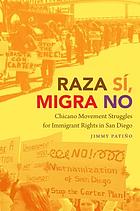
Jimmy Patiño
"As immigration from Mexico to the United States grew through the 1970s and 1980s, the Border Patrol, police, and other state agents exerted increasing violence against ethnic Mexicans in San Diego's volatile border region. In response, many San Diego activists rallied around the leadership of the small-scale print shop owner Herman Baca in the Chicano movement to empower Mexican Americans through Chicano self-determination. The combination of increasing repression and Chicano activism gradually produced a new conception of ethnic and racial community that included both established Mexican Americans and new Mexican immigrants. Here, Jimmy Patiño narrates the rise of this Chicano/Mexicano consciousness and the dawning awareness that Mexican Americans and Mexicans would have to work together to fight border enforcement policies that subjected Latinos of all statuses to legal violence. By placing the Chicano and Latino civil rights struggle on explicitly transnational terrain, Patiño fundamentally reorients the understanding of the Chicano movement. Ultimately, Patiño tells the story of how Chicano/Mexicano politics articulated an "abolitionist" position on immigration--going beyond the agreed upon assumptions shared by liberals and conservatives alike that deportations are inherent to any solutions to the still burgeoning immigration debate"--Publisher's website
Contents:
Introduction: We gotta get on this immigration issue
The Mexican American Left and Early Struggles Against the Deportation Regime, 1924-1968.
Historical rights in the territory : struggles for Mexican immigrant rights from el Congreso to la Hermandad
The Chicano Movement Confronts the Immigration Question, 1968-1976.
He had a uniform and authority : border patrol violence, women's agency, and Chicano/Mexicano resistance
For those families who are deported and have no place to land : building CASA Justicia
The first time I met César Chávez, I got into an argument with him : California employer sanctions and Chicano debates over undocumented workers
Delivering the Mexicano vote : immigration and the La Raza Unida party
The sheriff must be obsessed with racism! : the Committee on Chicano Rights battles police violence
A Chicano/Mexicano Movement : Power Concedes Nothing Without Demand, 1977-1986. Who's the illegal alien pilgrim? : the Carter Curtain, the KKK, and Chicano unity march
Abolishment of the INS/Border Patrol : the Chicano National Immigration Conference and Tribunal
Conclusion: The long walk for rights
narrates the rise of a Chicano/Mexicano consciousness and the dawning awareness that Mexican Americans and Mexicans have to work together to fight border enforcement policies.

JoAnna Poblete
"In the early 1900s, workers from new U.S. colonies in the Philippines and Puerto Rico held unusual legal status. Denied citizenship, they nonetheless had the right to move freely in and out of U.S. jurisdiction. As a result, Filipinos and Puerto Ricans could seek jobs in the United States and its territories despite the anti-immigration policies in place at the time. JoAnna Poblete's Islanders in the Empire: Filipino and Puerto Rican Laborers in Hawai'i takes an in-depth look at how the two groups fared in a third new colony, Hawai'i. Using plantation documents, missionary records, government documents, and oral histories, Poblete analyzes how the workers interacted with Hawaiian government structures and businesses, how U.S. policies for colonial workers differed from those for citizens or foreigners, and how policies aided corporate and imperial interests. A rare tandem study of two groups at work on foreign soil, Islanders in the Empire offers a new perspective on American imperialism and labor issues of the era"-- Provided by publisher
analyzes how workers interacted with Hawaiian government structures and businesses, how U.S. policies for colonial workers differed from those for citizens or foreigners, and how policies aided corporate and imperial interests.
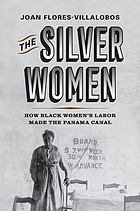
Joan Flores-Villalobos
The Panama Canal was realized as much through the exploitation of a racialized class of workers as it was by American ingenuity. What is less visible, and less understood, is the project's dependence on the domestic and care labor of Black migrant women, who were paid in silver rather than the gold that white workers received. The Silver Women shifts the focus of this monumental endeavor to the West Indian women who travelled to Panama, inviting readers to place women's intimate lives, choices, grief, and ambition at the center of the economic and geopolitical transformation created by the construction of the Panama Canal and U.S. imperial expansion. The Silver Women argues that Black West Indian women made the canal construction possible by providing the indispensable everyday labor of social reproduction. West Indian women built a provisioning economy that fed, housed, and cared for the segregated Black West Indian labor force, in effect subsidizing the construction effort and its racial calculus. But while also subject to racial discrimination and segregation, West Indian women mostly worked outside the umbrella of U.S. canal authorities. They did not hold contracts and had little access to official services and wages. From this position, they found ways to skirt, and at times subvert, the legal, moral, and economic parameters imperial authorities sought to impose on the racialized migrant workforce. West Indian women developed important strategies of claims-making, kinship, community building, and market adaptation that helped them navigate the contradictions and violence of U.S. empire. In the meantime, these strategies of social reproduction nurtured further West Indian migrations, linking Panama to places like Harlem and Santiago de Cuba. The book is thus a history of Black West Indian women's labor of social reproduction as integral to U.S. imperial infrastructure, the global Caribbean diaspora, and women's own survival"-- Provided by publisher
A history of Black West Indian women's labor of social reproduction as integral to U.S. imperial infrastructure, the global Caribbean diaspora, and women's own survival
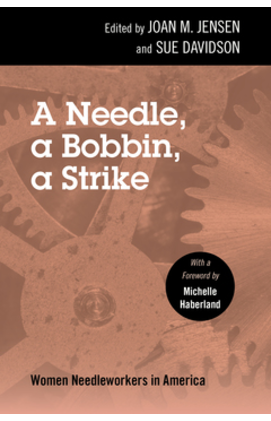
Joan M. Jensen
Almost exclusively considered "women's work," the sewing trades have a history of toil, exploitation, and unfinished protest. These essays trace the shift in needleworkers' environments-the home, sweatshop, department store, and factory-from the nineteenth into the twentieth century, and their adaptation to changes wrought by the sewing machine. The effects of unionization and the first landmark strikes in Cleveland, Rochester, Chicago, and New York City are compared to contemporary issues for clothing workers. The exploitation of foreign labor as well as minority workers in this country along with the re-emergence of sweatshops is the final focus. No other study of the apparel industry achieves the scope of A Needle, a Bobbin, a Strike. Published just as historians were eager to shed the trappings of Old Labor History, Jensen and Davidson's collection tells a different history about women clothing workers who were divided by race, region, ethnicity, and class, from the nineteenth throughout the twentieth century
CONTENTS
Needlework as art, craft, and livelihood before 1900 / Joan M. Jensen
"If I didn't have my sewing machine ..." : women and sewing-machine technology / Ava Baron and Susan E. Klepp
"A paradise of fashion" : A.T. Stewart's department store, 1862-1875 / Deborah S. Gardner
The great uprisings, 1900-1920 / Joan M. Jensen
The great uprising in Rochester / Joan M. Jensen
The uprising in Chicago : the men's garment workers strike, 1910-1911 / N. Sue Weiler
The great uprising in Cleveland : when sisterhood failed / Lois Scharf
The uprising of the 20,000 : the making of a labor legend / Ann Schofield
Inside and outside the unions, 1920-1980 / Joan M. Jensen
Dorothy Jacobs Bellanca : women clothing workers and the runaway shops / Nina Asher
Women at Farah : an unfinished story / Laurie Coyle, Gail Hershatter, and Emily Honig
A stitch in our time : New York's Hispanic garment workers in the 1980s / Elizabeth Weiner and Hardy Green
traces the shift in needleworkers' environments-the home, sweatshop, department store, and factory-from the nineteenth into the twentieth century, and their adaptation to changes wrought by the sewing machine.
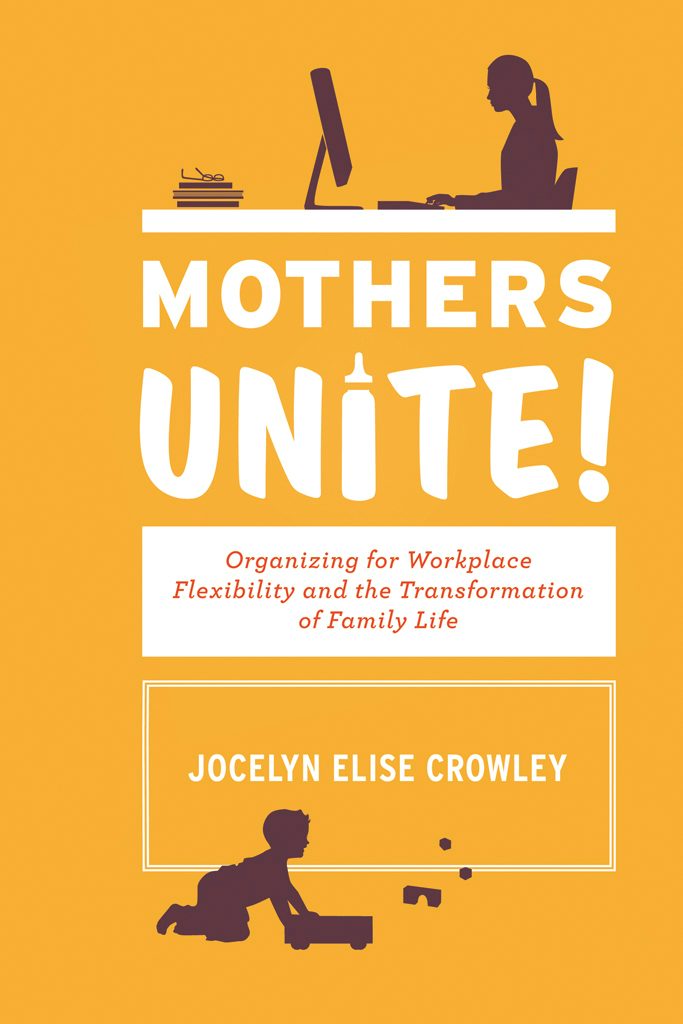
Jocelyn Elise Crowley
In Mothers Unite!, a bold and hopeful new rallying cry for changing the relationship between home and the workplace, the author envisions a genuine, universal world of workplace flexibility that helps mothers who stay at home, those who work part time, and those who work full time balance their commitments to their jobs and their families. Achieving this goal, she argues, will require a broad-based movement that harnesses the energy of existing organizations of mothers that already support workplace flexibility in their own ways.
Crowley examines the efforts of five diverse national mothers' organizations: Mocha Moms, which aims to assist mothers of color; Mothers of Preschoolers (MOPS), which stresses the promotion of Christian values; Mothers & More, which emphasizes support for those moving in and out of the paid workforce; MomsRising, which focuses on online political advocacy; and the National Association of Mothers' Centers (NAMC), which highlights community-based networking.
After providing an engaging and detailed account of the history, membership profiles, strategies, and successes of each of these organizations, Crowley suggests actions that will allow greater workplace flexibility to become a viable reality and points to many opportunities to promote intergroup mobilization and unite mothers once and for all."--Jacket
Examines the efforts of five diverse national mothers' organizations in creating a better future for mothers to balance their work and home lives

Jody Baxter Noll
In early 1968, more than 27,000 teachers across Florida mailed their resignation letters, initiating the country’s first statewide teachers’ strike. The striking teachers fought for and won a monumental victory, improving education in the state and gaining collective bargaining rights for all public sector employees. Even as the influence of industrial labor unions decreased across the country, the Florida teachers’ strike and the spirit of teacher militancy that swept the nation during the late 1960s and 1970s demonstrate that a vibrant labor movement remained. Jody Baxter Noll’s study challenges the prevailing view of these decades as a period of decline for the American labor movement by turning the spotlight on teachers and public sector unionism.
In his examination of the 1968 strike and its aftermath, Noll illuminates the vital role of teachers in shaping political and social policy in the United States. As a predominantly women-led workforce, teachers challenged notions of feminine passivity in their mobilization efforts and used their union to fight for gender equality. The strike also provides insight into how interracial unionism could be a potent weapon for labor movements, even in the Deep South.
In exploring the political and social factors that prompted the teachers’ strike, Noll considers Florida’s instrumental role in forming modern conservatism. Led by Republican governor Claude Kirk, the first Republican governor elected in the Deep South since Reconstruction, Florida helped to create a blueprint for Republicans to build a New Right powerhouse throughout the country. Though Florida has remained on the periphery of much scholarship on the ascendancy of the New Right, Noll demonstrates that the state more accurately reflects the nation’s political attitudes than much of the rest of the South because of its economic, racial, social, and political diversity.
This book explores the intersections between class and gender in a strike defined by teachers challenging notions of feminine passivity.

Joe Berry, Helena Worthen
A key organizing tool for casualized university faculty from longtime movement activists
Introduction
PART I – THE CASE OF THE LECTURERS IN THE CSU SYSTEM
1. Student Strikes and Union Battles
2. Layoffs and Hard Years for Organizing
3. Revolution in the Union
4. “They have nothing to teach us”
PART II – HIGHER ED WAS NEVER A LEVEL TERRAIN OF STRUGGLE
5. Four Transitions and How Casualization Served Managers
PART III – WHAT WE WANT AND WHAT THE CFA GOT
6. Blue Sky #1 Organizing and Economics
7. Blue Sky #2 Job Security, Academic Freedom and the Common Good
8. Beyond the Sausage-making: A Close Look at the CFA-CSU Contract
PART IV – THE DIFFICULTY OF THINKING STRATEGICALLY
9. Strategies Emerging From Practice
10. The Contingent Faculty Movement as a Social Movement
PART V – SEVEN TROUBLESOME QUESTIONS
11. What Gets People Moving?
12. Who is the Enemy? Who are Our Allies?
13. What is “Professionalism” for Us?
A key organizing tool for casualized university faculty from longtime movement activists
Joe Burns
An essential primer for rebuilding a militant labor movement centered on solidarity with all workers.
An essential primer for rebuilding a militant labor movement centered on solidarity with all workers.
Joe Burns
If the American labor movement is to rise again, it will not be as a result of electing Democrats, the passage of legislation, or improved methods of union organizing. Rather, workers will need to rediscover the power of the strike. Not the ineffectual strike of today, where employees meekly sit on picket lines waiting for scabs to take their jobs, but the type of strike capable of grinding industries to a halt-the kind employed up until the 1960s.
In Reviving the Strike, union negotiator Joe Burns draws on labor economics, history, and current analysis to show how only a campaign of civil disobedience can overcome an illegitimate system of labor control that has been specifically constructed over the past thirty years to reign in the power of the American worker.
The book challenges prevailing views within the labor movement that say that tactics such as organizing workers or amending labor law can resolve the crisis of the American worker. Instead, Reviving the Strike offers a fundamentally different solution to the current labor crisis, showing how collective bargaining backed by a strike capable of inflicting economic harm upon an employer is the only way for workers to break free of the repressive system that has been inflicted upon them for the past three decades. Joe Burns is a veteran union negotiator, labor lawyer, and a former local union president. For the past decade, he has negotiated labor contracts in the airline and health care industries. He has a law degree from the New York University School of Law"-- Provided by publisher https://files.libcom.org/files/Reviving%20the%20Strike%20-%20Joe%20Burns.pdf
Argues that labor disruption, rather than reliance on federal reform, can win laborers more power in the workplace
Joe Burns
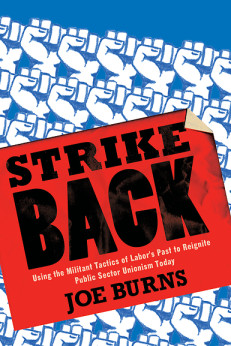
During the 1960s and 1970s, teachers, police, firefighters, sanitation workers and many other public employees rose up to demand collective bargaining rights in one of the greatest upsurges in labor history. These workers were able to transform the nature of public employment, winning union recognition for millions and ultimately forcing reluctant politicians to pass laws allowing for collective bargaining and even the right to strike. Strike Back uncovers this history of militancy to provide tactics for a new generation of public employees facing unprecedented attacks on their labor rights. This newly updated edition discusses many significant recent developments for public employee unions, including the Supreme Court decision in Janus and the 2018 teacher strike wave. Featuring a foreword by Eric Blanc, author of Red State Revolt: The Teachers' Strike Wave and Working-Class Politics
A history of public sector labor militancy, updated to include recent events like the 2018 teachers strikes
Joe Burns
During the 1960s and 1970s, hundreds of thousands of teachers, sanitation workers, and other public employees rose up to demand collective bargaining rights in one of the greatest upsurges. These workers were able to transform the nature of public employment, win union recognition for millions, and ultimately force reluctant politicians to pass laws allowing for collective bargaining and even the right to strike. Strike Back uncovers this history of militancy to provide tactics for a new generation of public employees facing unprecedented attacks on their collective bargaining rights. Joe Burns is the author of Reviving the Strike: How Working People Can Regain Power and Transform America. A veteran union negotiator and labor lawyer, he has negotiated contracts in the airline and health care industries. He has a law degree from New York University, and currently lives in Minneapolis, Minnesota."-- Provided by publisher
a history of hundreds of thousands of teachers, sanitation workers, and other public employees rising up to demand collective bargaining rights in the 60's and 70's
Joe Hill, Tom Morello
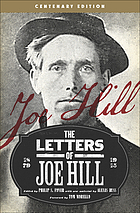
The legend of Joe Hill, brought to life through his letters, songs, and writings
letters, songs, and writings of Joe Hill
Joe Manning, Digital Public Library, Lawrence History Center
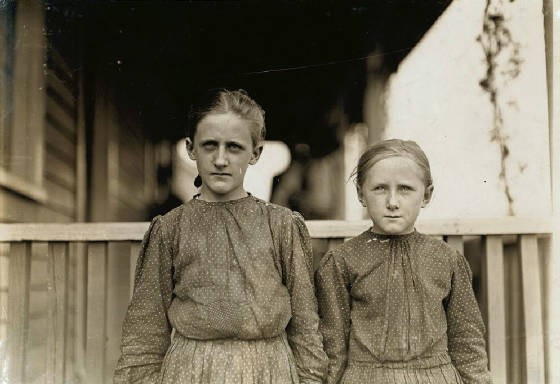
Excavating stories from the Lewis Hine child labor photographs. From 1908 until 1924, Lewis Hine took over 5,000 photographs of American child laborers. His compelling pictures helped to persuade legislators and the general public to support laws prohibiting child labor. All the photos, with Mr. Hine’s captions, are posted on the Library of Congress website.
Since 2005, I have been identifying the children, tracking down and interviewing living descendants, and writing stories about how the lives of these children turned out. You can see all those stories on this website. If this is your first visit, please see About Lewis Hine Project first (just click photo at left).The children and families depicted in the child labor photographs of Lewis Hine were unwittingly caught in the act of making history, but we know almost nothing about them. The pictures were taken for a noble purpose, but a century later, they have become an enormous photo album of the American family. By finding out what happened to some of them, and by revealing the photos to their descendants.
"The children and families depicted in the child labor photographs of Lewis Hine were unwittingly caught in the act of making history, but we know almost nothing about them. The pictures were taken for a noble purpose, but a century later, they have become an enormous photo album of the American Family. By finding out what happened to some of them, and by revealing the photos to their descendants (most descendants are unaware of them), we are dignifying their lives, and the lives of everyone that history has forgotten". ~ Joe Manning
To enhance our commemoration of the centennial of the 1912 Bread and Roses Strike in 2012, Joe Manning pieced together the lifetimes of ten children -- all subjects of 1911 Lewis Hine photographs taken in Lawrence, Massachusetts. Through detailed interviews with their extended families, Manning acquired many photographs and personal stories that bring Hine’s 1911 subjects to life.
We invite you into their lives below.
Leo Andreoli (1896-1967)
Jacob Black (1897—1972)
Michael Devine (1896—1974)
George Driscoll (1896 or 1897—1980)
John Endyke (1898—1975)
Thomas Levesque (1895—1943)
Anita Pothier (1899—1983) & Antoinette Pothier (1897—1979)
Eva Tanguay (1896—1982)
Leon Valcourt (1895—1918)
Wilfred Valliere (1896—1978)
Pacific Mill Girls
Hyman (six year old newsie) and Washington Mill Workers
The Lewis Hine Project, By Joe Manning
Lewis Hine and Child Labor, By Joe Manning
a collection of articles, stories, photographs, the Lewis Hine Project, and much more by Joe Manning

Joe Rudiak, History Matters
Though the Great Steel Strike of 1919 failed in its immediate aims, it left a legacy in the steel regions of the United States that lasted for decades. In 1974 when historian Peter Gotlieb asked former steelworker Joe Rudiak, the son of Polish immigrants, about his participation in unionization struggles in the 1930s, he started by recalling his memories of the 1919 steel strike as a young boy. Here, Rudiak told how his father was blacklisted for acknowledging his support of the union. From such experiences, he explained, unionism got “embedded in you.”
Transcribed interview with audio of Joe Rudiak over lasting effects of 1919 Steel Strike.

Joe Rudiak, History Matters
Tensions among industrial workers of different ethnic backgrounds often proved a barrier to unionization in the late nineteenth and early twentieth centuries. It was, for example, a key factor in the defeat of the 1919 steel strike. In the 1930s, however, that began to change, particularly under the auspices of the CIO. In this 1974 interview done by historian Peter Gotlieb in 1974, Polish-American steelworker Joe Rudiak recalled how ethnic hostility declined in the “CIO days,” particularly among the “young folks.” This decrease in suspicion between people of different nationalities fostered unionization in the 1930s.
Listen to Audio
Transcribed and audio interview of Joe Rudiak on warming ethnic relations in the CIO
Joe William Trotter
The transformation of rural blacks into a predominantly urban people is a relatively recent phenomenon. To illuminate the changes in African American urban life, this book brings together urban history; social, cultural and policy research; and comparative perspectives on race, ethnicity and nationality
Introduction PART I: HISTORICAL PERSPECTIVES
Urban Alliance: The Emergence of Race-Based Populism in the Age of Jackson; J.O.Horton
Industrial Slavery: Linking the Periphery and the Core; R.L.Lewis
Life on the Mississippi Reconsidered: African-American Steamboat Laborers and the Work Culture of the Antebellum Western Steamboats;T.Buchanan
The Nature of Slave Women's Work: A Working Paper on Slavery; B.Stevenson
The Brotherly Love for Which This City is Proverbial Should Extend to All; Tera Hunter
Urban Black Labor in the West, 1849-1940: Reconceptualizing the Image of a Region; Q.Taylor
PART II: SOCIAL, SCIENTIFIC, CULTURAL, AND POLICY PERSPECTIVES
Race, Class and Conceptual Exclusion: The Underclass Concept in Historical Perspective; A.O'Connor
Race, Economics and Education in the U.S.: Perspectives on Economic Thought and Methods; S.McElroy Evidence on Discrimination in Employment: Codes of Color, Codes of Gender; W.A.Darity & P.L.Mason
Race, Class and Space: An Examination of Underclass Notions in the Steel and Motor Cities; K.Gibson
The Black Community Building Process in Post-Urban Disorder Detroit, 1967-1997: Implications for Public Policy; R.W.Thomas
Race, Residence and Economic Vulnerability in a Multi-Ethnic Metropolis: The Case of the African American Male; J.H.Johnson, W.C.Farrell Jr. & J.A.Stalloff
PART III: COMPARATIVE PERSPECTIVES Asian American Labor and Historical Interpretation; C.Friday
Conversing Across Boundaries of Race, Ethnicity, Class, Gender and Region: Latino and Latina Labor History; C.Guerin-Gonzales
Race; E.Lewis
The Problem of the Twenty-first-Century; A.Dawley
illuminates the changes in African American urban life, with interdisciplinary methods of analysis.
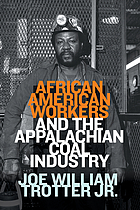
Joe William Trotter
This collection brings together nearly three decades of research on the African American experience, class, and race relations in the Appalachian coal industry. It shows how, with deep roots in the antebellum era of chattel slavery, West Virginia’s Black working class gradually picked up steam during the emancipation years following the Civil War and dramatically expanded during the late nineteenth and early twentieth centuries.
From there, African American Workers and the Appalachian Coal Industry highlights the decline of the region’s Black industrial proletariat under the impact of rapid technological, social, and political changes following World War II.
It underscores how all miners suffered unemployment and outmigration from the region as global transformations took their toll on the coal industry, but emphasizes the disproportionately painful impact of declining bituminous coal production on African American workers, their families, and their communities.
Joe Trotter not only reiterates the contributions of proletarianization to our knowledge of US labor and working-class history but also draws attention to the gender limits of studies of Black life that focus on class formation, while calling for new transnational perspectives on the subject. Equally important, this volume illuminates the intellectual journey of a noted labor historian with deep family roots in the southern Appalachian coalfields.
This collection brings together nearly three decades of research on the African American experience, class, and race relations in the Appalachian coal industry
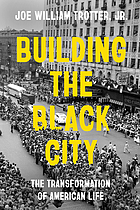
Joe William Trotter
"Building the Black City shows how African Americans built and rebuilt thriving cities for themselves, even as their unpaid and underpaid labor enriched the nation's economic, political, and cultural elites. Covering an incredible range of cities from the North to the South, the East to the West, Joe William Trotter, Jr., traces the growth of Black cities and political power from the preindustrial era to the present. Trotter defines the Black city as a complicated socioeconomic, spiritual, political, and spatial process, unfolding time and again as Black communities carved out urban space against the violent backdrop of recurring assaults on their civil and human rights-including the right to the city. As we illuminate the destructive depths of racial capitalism and how Black people have shaped American culture, politics, and democracy, Building the Black City reminds us that the case for reparations must also include a profound appreciation for the creativity and productivity of African Americans on their own behalf." -- Provided by publisher
Contents List of Illustrations Acknowledgments Introduction: Framing the Black City-Building Process
PART ONE SOUTH, SOUTHEAST, AND SOUTHWEST
1 • Majority and Near-Majority Black Cities
2 • City-Building on the Middle Ground
3 • Forging the New South City
4 • On the Edges of the Deep South
PART TWO NORTHEAST, MIDWEST, AND WEST
5 • Building Their Own “City on the Hill”
6 • Establishing the Industrial Metropolis
7 • Constructing the Black City under “That Open Sky”
Conclusion: Reflections on the Postindustrial Age Notes Selected Bibliography Index
hows how African Americans built and rebuilt thriving cities for themselves, even as their unpaid and underpaid labor enriched the nation's economic, political, and cultural elites.
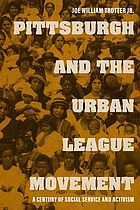
Joe William Trotter Jr
During the Great Migration, Pittsburgh, Pennsylvania, became a mecca for African Americans seeking better job opportunities, wages, and living conditions. The city's thriving economy and vibrant social and cultural scenes inspired dreams of prosperity and a new start, but this urban haven was not free of discrimination and despair. In the face of injustice, activists formed the Urban League of Pittsburgh (ULP) in 1918 to combat prejudice and support the city's growing African American population.
In this broad-ranging history, Joe William Trotter Jr. uses this noteworthy branch of the National Urban League to provide new insights into an organization that has often faced criticism for its social programs' deep class and gender limitations. Surveying issues including housing, healthcare, and occupational mobility, Trotter underscores how the ULP-often in concert with the Urban League's national headquarters-bridged social divisions to improve the lives of black citizens of every class.
He also sheds new light on the branch's nonviolent direct-action campaigns and places these powerful grassroots operations within the context of the modern Black Freedom Movement. The impact of the National Urban League is a hotly debated topic in African American social and political history. Trotter's study provides valuable new insights that demonstrate how the organization has relieved massive suffering and racial inequality in US cities for more than a century"-- Provided by publisher
sheds new light on the branch's nonviolent direct-action campaigns and places these powerful grassroots operations within the context of the modern Black Freedom Movement
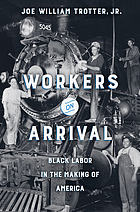
Joe William Trotter Jr.
From the ongoing issues of poverty, health, housing and employment to the recent upsurge of lethal police-community relations, the black working class stands at the center of perceptions of social and racial conflict today. Journalists and public policy analysts often discuss the black poor as 'consumers' rather than 'producers,' as 'takers' rather than 'givers,' and as 'liabilities' instead of 'assets.'
In his engrossing new history, Workers on Arrival, Joe William Trotter, Jr. refutes these perceptions by charting the black working class's vast contributions to the making of America. Covering the last four hundred years since Africans were first brought to Virginia in 1619, Trotter traces black workers' complicated journey from the transatlantic slave trade through the American Century to the demise of the industrial order in the 21st century.
At the center of this compelling, fast-paced narrative are the actual experiences of these African American men and women. A dynamic and vital history of remarkable contributions despite repeated setbacks, Workers on Arrival expands our understanding of America's economic and industrial growth, its cities, ideas, and institutions, and the real challenges confronting black urban communities today"--Provided by publisher
traces black workers' complicated journey from the transatlantic slave trade to the demise of the industrial order in the 21st century.