


Collections
Library
Type
Region
Coverage:
-
Published:
-

Joel Bakan, Harold Crooks, Mark Achbar, Jennifer Abbott; Youtube Contributor - "The Truth Archive"
The Corporation looks at the concept of the corporation throughout recent history up to its present-day dominance. Having acquired the legal rights and protections of a person through the 14th amendment, the question arises: What kind of person is the corporation? Corporations were given the rights of immortal persons, but a special kind of person. A person without moral conscience. Corporations are designed by law to be concerned only for their stockholders; the corporation is a psychopath.
A documentary film that analyzes corporations as psycopaths, given their status in the US as people through the 14th Amendment.
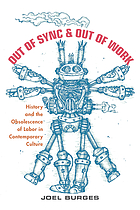
Joel Burges
Out of Sync & Out of Work explores the representation of obsolescence, particularly of labor, in film and literature during a historical moment in which automation has intensified in capitalist economies.
Joel Burges analyzes texts such as The Invention of Hugo Cabret, Wreck-It Ralph, Fantastic Mr. Fox, and Iron Council, and examines their "means" of production. Those means include a range of subjects and narrative techniques, including the "residual means" of including classic film stills in a text, the "obstinate means" of depicting machine breaking, the "dated means" of employing the largely defunct technique of stop-motion animation, and the "obsolete" means of celebrating a labor strike. In every case, the novels and films that Burges scrutinizes call on these means to activate the reader's/viewer's awareness of historical time. Out of Sync & Out of Work advances its readers' grasp of the complexities of historical time in contemporary culture, moving the study of temporality forward in film and media studies, literary studies, critical theory, and cultural critique"-- Provided by publisher
representation of obsolescence, particularly of labor, in film and literature during a historical moment in which automation has intensified in capitalist economies

Johann Martin Bolzius, History Matters
Wealthy planters from the Caribbean island of Barbados settled in Carolina in the late seventeenth century and turned Carolina’s farms into large plantations that concentrated on growing rice. This transformation was enabled by the many enslaved Africans in the colonies who had grown rice as free men and women in West Africa; scholars have traced the origins of Carolina and Georgia’s rice culture back to those African rice fields. In this letter, Johann Martin Bolzius described rice cultivation’s highly skilled but backbreaking labor, and the colonies’ task system of work. Each slave was assigned a particular duty and, after completing the day’s tasks, might have some time to him or herself. Bolzius had left Halle, Germany, in 1733 on route to the new colony of Georgia where he lived upriver from Savannah. He wrote this letter in the form of a questionnaire, providing a vivid description of agriculture and life in the new colony.
A letter from Johann Martin Bolzius, a German immigrant to colonial Carolina and Georgia who describes the labor conditions, practices, and systems common to the slave plantations there.
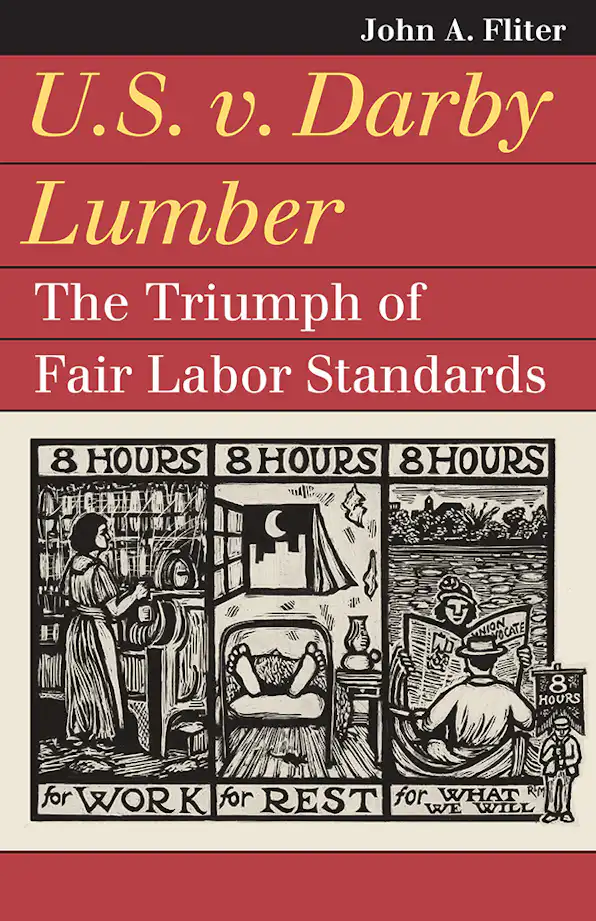
John A. Flighter
The story of how the advocacy of workers and labor unions and a monumental shift on the Supreme Court paved the way for fair labor standards in the United States.
The eight-hour day. The five-day work week. Minimum wage. Time-and-a-half overtime pay. Prohibition of oppressive child labor.
Today we take these features of employment for granted, but they are the result of a long, difficult, and often violent struggle for workplace protections that culminated in the Fair Labor Standards Act (FLSA) of 1938. But it was the landmark 1941 Supreme Court decision in U.S. v. Darby Lumber Company that secured those protections.
The social movement for fair labor standards in the United States began in the late 1700s when some of the first associations of working men demanded fair wages and maximum work hours. In advocating for national fair labor standards, workers and labor unions had to overcome not only opposition from powerful business groups but also entrenched legal doctrines that challenged the very idea of labor unions. They also had to overcome deeply held beliefs that workplace regulations were local economic issues reserved to the states under the Tenth Amendment of the Constitution.
Several groundbreaking decisions by the Supreme Court in the spring of 1937 changed the whole debate over government regulation of the market and opened the door for federal legislation on fair labor standards. In what is widely known as the Constitutional Revolution of 1937, Justice Owen Roberts switched to the liberal bloc, and with the support of Chief Justice Charles Evans Hughes, the Supreme Court in West Coast Hotel v. Parrish and NLRB v. Jones and Laughlin Steel Corp. abruptly shifted its view of economic regulation. Ultimately, this paved the way for the Supreme Court to confirm the constitutionality of the FLSA in 1941.
The Darby Lumber decision is a landmark case that affirmed the powers of Congress over labor standards and working conditions. Today the decision is as important as ever, with conservative groups seeking to undo these labor protections facing off against an insurgent labor movement aiming to regain lost ground.
The story of how the advocacy of workers and labor unions and a monumental shift on the Supreme Court paved the way for fair labor standards in the United States.
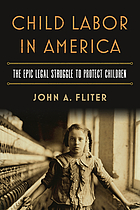
John A. Fliter
Child labor law strikes most Americans as a fixture of the country's legal landscape, involving issues settled in the distant past. But these laws, however self-evidently sensible they might seem, were the product of deeply divisive legal debates stretching over the past century and even now are subject to constitutional challenges. Child Labor in America tells the story of that historic legal struggle. The book offers the first full account of child labor law in America from the earliest state regulations to the most recent important Supreme Court decisions and the latest contemporary attacks on existing laws. Children had worked in America from the time the first settlers arrived on its shores, but public attitudes about working children underwent dramatic changes along with the nation's economy and culture. A close look at the origins of oppressive child labor clarifies these changing attitudes, providing context for the hard-won legal reforms that followed. Author John A. Fliter describes early attempts to regulate working children, beginning with haphazard and flawed state-level efforts in the 1840s and continuing in limited and ineffective ways as a consensus about the evils of child labor started to build. In the Progressive Era, the issue finally became a matter of national concern, resulting in several laws, four major Supreme Court decisions, an unsuccessful Child Labor Amendment, and the landmark Fair Labor Standards Act of 1938. Fliter offers a detailed overview of these events, introducing key figures, interest groups, and government officials on both sides of the debates and incorporating the latest legal and political science research on child labor reform. Unprecedented in its scope and depth, his work provides critical insight into the role child labor has played in the nation's social, political, and legal development. "-- Provided by publisher
provides critical insight into the role child labor has played in the nation's social, political, and legal development

John A. Tully
Akron, Ohio, is of special interest in the story of U.S. labor as it has a history of intense struggle, both between Capital and Labor and between conflicting forms of labor organization. This is the only full-length study of labor in Akron from the early 19th century to the end of the Second World War. It is both a narrative history and an examination of why neither a party of labor nor a social union movement took permanent root in the city, despite outbreaks of extraordinary militancy
This is the only full-length study of labor in Akron from the early 19th century to the end of the Second World War.

John Alden, The Gem Worker
The editor of the Gem Worker was John Alden, who frequently clashed with the American Federation of Labor. According to the Idaho State Historical Society, he believed “that as long as the laborers were provided good wages and safe working conditions, employers were free to pursue profits,” while the national network believed every Labor newspaper had the responsibility of painting employers as “‘nothing more than a flea on the laborer’s back.’”
A labor newspaper loosely affiliated with the American Federation of Labor

John Anderson, History Matters
In his testimony before the committee, John Anderson, a helper in the open-hearth furnace at the Homestead steelworks in Pennsylvania, maintains that the steelworkers were satisfied with conditions. Although born in Scotland, Anderson identified himself as an“American” in distinction from the (also) foreign-born laborers who are out on strike. Document shows divisions along ethnic lines in the workforce
Transcribed testimoney of John Anderson, a steelworker, as to the conditions of work before the 1919 Steel Strike.
John B. Jentz
Traditionally German immigrants to America have been noted for the skills and industrious character they brought with them, qualities which allowed them-as America's largest immigrant group in the 19th century-to both succeed and assimilate into the American mainstream with relative ease. This picture is a serious exaggeration which tends to obscure the experiences of a considerable portion of the German immigrant population. Although the German immigrants cer tainly had a much higher proportion of skilled workers than the Irish, for example, significant numbers of German workers were nevertheless unskilled laborersmore than a third by some calculations. 1 Just as important, many skilled Germans belonged to handicraft trades that were being eroded by industrialization in the late 19th and early 20th centuries, the highpoint of both German immigration
A history of poverty among German immigrants in Chicago.
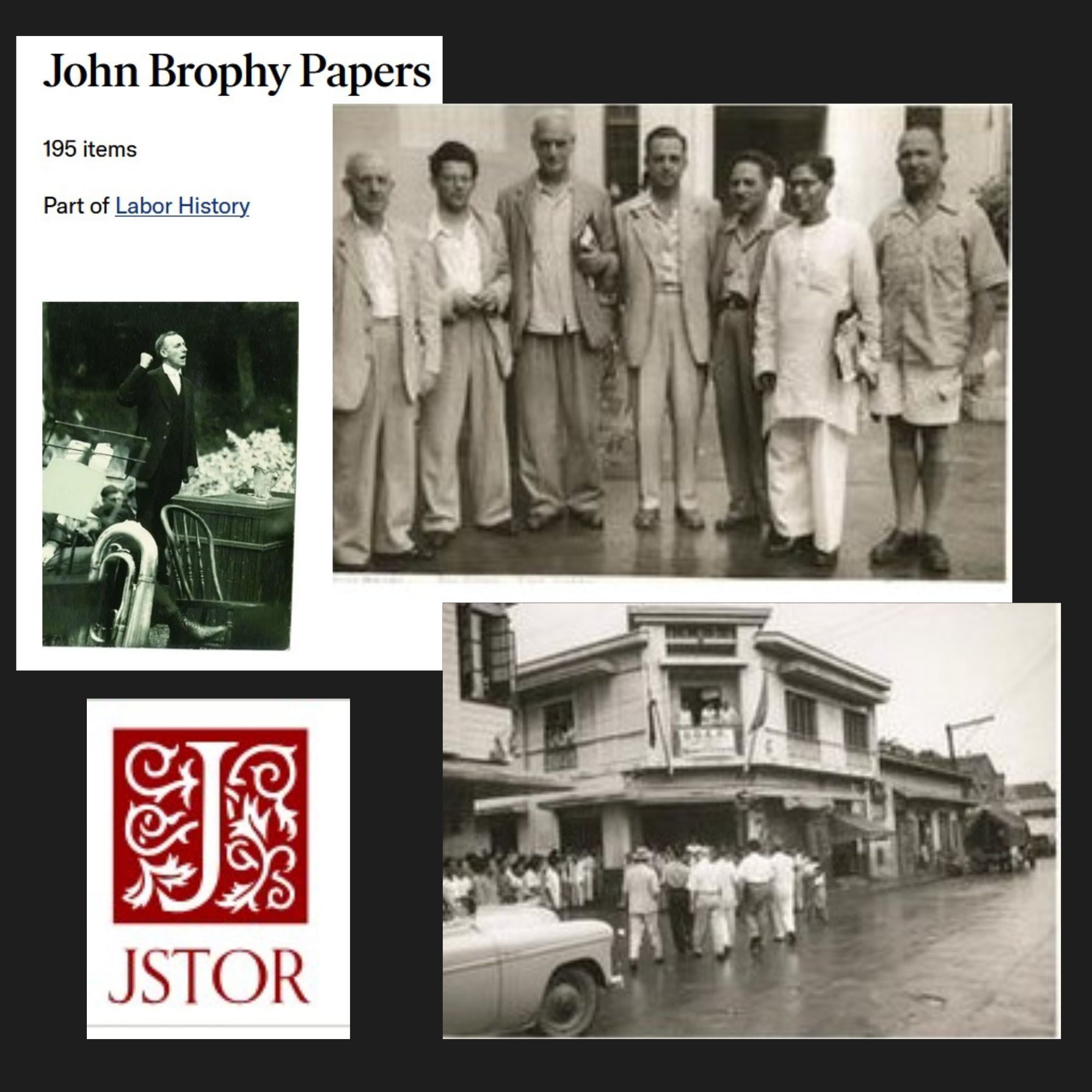
John Brophy, Catholic University of America, JSTOR
195 items Throughout his life John Brophy (1883-1963) supported organized labor as a miner, union activist, and union official. Born and reared by a union supporting coal miner, Brophy entered the mines with his father as a teenager in 1894 and joined the United Mine Workers of America (UMWA) in 1899. Brophy became an important figure in the national office of the Committee for Industrial Organizations (CIO) after the federation’s founding in 1935. He worked as the CIO's first National Director from 1935-1938 and as the Director of Industrial Union Councils and Director of Industrial Unions. After the merger of the AFL and CIO in 1955 Brophy continued to work in the national AFL-CIO office and served on the Advisory Committee on Civil Defense Administration for the United States Department of Labor.
digitized papers of John Brophy, president of District 2 of the UMWA and important labor leader in the CIO
John Bryan Grimes, History Matters
The issue of race divided the Southern Populist movement. In some ways, it can be seen as uniquely interracial for its time, yet in other respects it was critically limited by racial divisions. Even in the heyday of Populism, not all members of the Southern Farmers’ Alliance were equally committed to the interracial program that some leaders advocated. While white and Colored Farmers’ Alliances joined at times in cooperative purchasing and marketing arrangements, the tension between black and white agrarians remained strong. In the late 1880s, African Americans, who were suspicious of the white Alliance, joined the Knights of Labor. Many southern whites—including members of the Farmers’ Alliance—saw the growth of black locals of the Knights as a serious threat. This 1889 memorandum by white North Carolina plantation owner John Bryan Grimes recorded his efforts to infiltrate a Knights of Labor local that some of his black workers had joined. Although Grimes was himself a Populist, he viewed the Knights as a threat to his interests.
A recorded attempt to infiltrate a local Knights of Labor meeting, mostly made up of African Americans

John D. Hicks
Professor Hicks' chapter about the President Rutherford B. Hayes administration, published in 1937, detailed the railway strike of 1877, and the spreading labor disorders through West Virgina and Maryland. In July 1877, troops, breaking the strike in Pittsburgh, Pennsylvania, opened fire and killed several labor rioters. Federal troops, sent by President Hayes, arrived there July 23, and by July 29 had restored order. Nineteen rioters and several members of the militia were killed.
The Museum of the City of San Francisco's page on labor unrest in California related to the Railway Strike of 1877.
John D. Rockefeller, History Matters
The violent labor struggles of the early 20th century engendered concern at all levels of society and led to the appointment of a federal Commission on Industrial Relations in early 1913. Headed by Kansas City lawyer-reformer Frank Walsh, the commission was in the midst of taking testimony from owners, workers, and reformers in dozens of industrial communities around the country when the southern Colorado coal strike erupted late in 1913.
The killing of three women and eleven children at a mining encampment in Ludlow, Colorado, on Easter night, 1914, sent shock waves across the country. After the “Ludlow massacre,” as it came to be known, the commission held public hearings in Colorado where they heard horror stories about the brutality and rapacity of the Rockefeller-owned Colorado Fuel and Iron Company, the region’s largest operator of coal mines.
These articles from the New York Times described the testimony of John D. Rockefeller, Jr., before the commission, where he denied any knowledge of his company’s brutal actions against the Ludlow strikers.
These articles from the New York Times described the testimony of John D. Rockefeller, Jr., before the commission, where he denied any knowledge of his company’s brutal actions against the Ludlow strikers.
John Dos Passos
Passos brilliant account of the 1931 Harlan Coal Strike. John Dos Passos was born in 1896 in Chicago, Illinois. His wartime service as an ambulance driver and later work as a journalist led him to see the America as “two nations,” one for the rich and one for the poor. His reputation as social historian, radical critic of American life, and major novelist of the postwar “lost generation” rests primarily on his powerful U.S.A. trilogy."
1931 article about Harlan Kentucky mining strike by novelist John Dos Passos
John Dos Passos, History Matters
The Vagrant in Fiction: Emblematic American? (History Matters): Vagrancy was one of the most troubling signs of the Great Depression of the 1930s. Then, as now, those who had food and shelter were confronted by the sight and appeals of those who did not.
Shabby men sought food or work on the doorsteps of private homes while men, women, and children stood in the breadlines of municipal relief agencies. Vagrants gathered in “hobo jungles” on the outskirts of town as beggars on the streets appealed to more prosperous passersby. Middle-class observers viewed vagrants with suspicion, empathy, concern, fear, and sometimes even a twinge of envy. For some stolidly holding on to traditional values of work and success, the “bum” was suspect, potentially a con artist.In a very different response, novelist John Dos Passos made the vagrant a symbol of the derailed promise of the American dream in this vignette “Vag,” which ended his monumental U.S.A. trilogy.
Source: John Dos Passos, U.S.A. (Modern Library: New York, 1937), 559–561.
A reimagining of the vagrant in American culture
John F. Hogan
A violent period of American labor history reached its bloody apex in 1937 when rattled Chicago police shot, clubbed and gassed a group of men, women and children attempting to picket Republic Steel's South Chicago plant. Ten died and over one hundred were wounded in what became known as the Memorial Day Massacre. A newsreel camera captured about eight minutes of the confrontation, yet local and congressional investigations amazingly reached opposite conclusions about what happened and why. Hogan sifts through the conflicting reports of all those entangled in that fateful day, including union leaders, news reporters and an undercover National Guard observer revealed after seventy-six years
short narrative about this pivotal strike, which left 10 dead
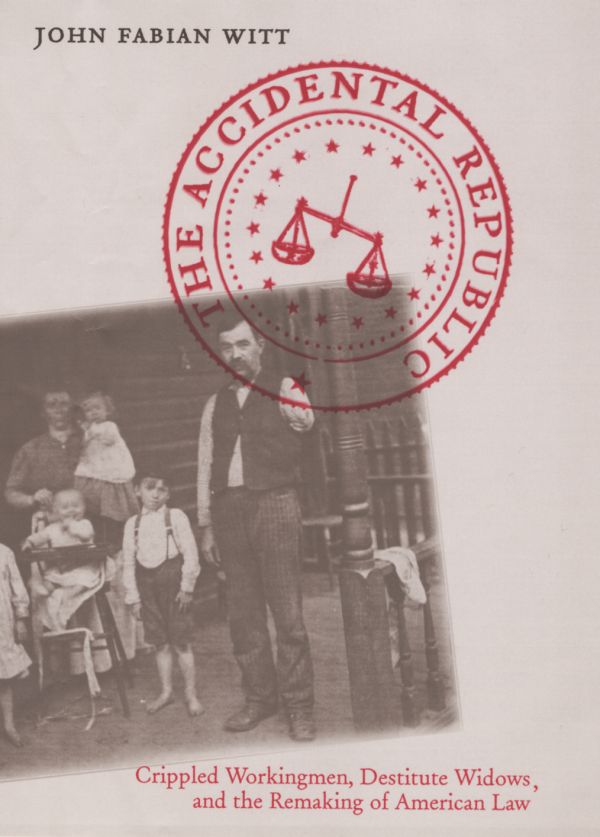
John Fabian Witt
In the five decades after the Civil War, the United States witnessed a profusion of legal institutions designed to cope with the nation’s exceptionally acute industrial accident crisis. Jurists elaborated the common law of torts. Workingmen’s organizations founded a widespread system of cooperative insurance. Leading employers instituted welfare-capitalist accident relief funds. And social reformers advocated compulsory insurance such as workmen’s compensation.
John Fabian Witt argues that experiments in accident law at the turn of the twentieth century arose out of competing views of the loose network of ideas and institutions that historians call the ideology of free labor. These experiments a century ago shaped twentieth- and twenty-first-century American accident law; they laid the foundations of the American administrative state; and they occasioned a still hotly contested legal transformation from the principles of free labor to the categories of insurance and risk. In this eclectic moment at the beginnings of the modern state, Witt describes American accident law as a contingent set of institutions that might plausibly have developed along a number of historical paths. In turn, he suggests, the making of American accident law is the story of the equally contingent remaking of our accidental republic.
hotly contested legal transformation from the principles of free labor to the categories of insurance and risk.
John Fitch, History Matters
In colonial America, apprenticeship was the usual means by which young men entered a trade and master craftsmen obtained the labor necessary to staff their workshops. A young man’s guardian signed an indenture (contract) for a period of time and the apprentice in turn was to receive food, lodging, and knowledge of “the mysteries of the trade,” or traditional craft practices. For young John Fitch of Connecticut in the 1760s, anxious “to learn a trade” and “subsist myself in a genteel way when I came for myself,” that exchange was no simple matter. The Cheney brothers, Connecticut clockmakers who were innovated in making moving wooden clocks that were far cheaper than the usual brass ones, were not eager to share either their dinner or their knowledge of clockmaking with Fitch. He found himself caught between his father’s and his master’s patriarchal expectations of receiving his labor, while he had to worry about how he would support himself when he came of age.
An excerpt from John Fitch's self-titled autobiography that demonstrates the economically precarious position many indentured apprentices faced despite contractual demands for their labor.
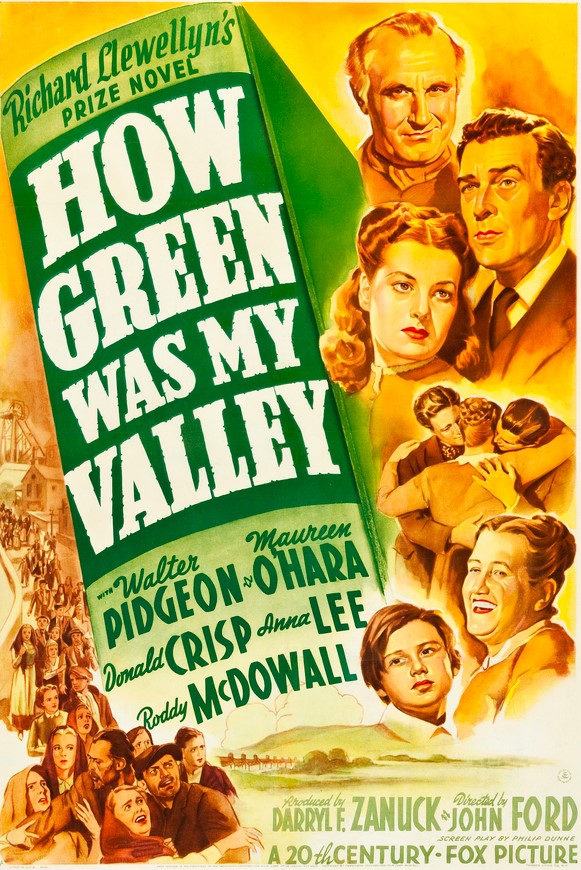
John Ford
A film (based on Richard Llewellyn's 1939 same-named novel) about a Welsh mining family in Victorian Britain, where life in South Wales' coalfields is portrayed through economic loss, family struggle, and other harsh working-class experiences.
A film about a Welsh mining family in Victorian Britain who face the harsh and unforgiving condition of being working-class

John Garrison Marks
Black Freedom in the Age of Slavery examines the intersection of race and identity among free people of African descent in the urban Americas during the late eighteenth and early nineteenth centuries. The manuscript uses the Atlantic port cities of Charleston and Cartagena as illustrative case studies in constructing a broad comparative framework that examines the experiences of free people of African descent in both the English and the Iberian Atlantic World. It argues that the efforts of free people of color throughout the urban Americas fought to improve their immediate social and material conditions, in the process challenging the logic of white racial hierarchies while also dividing communities of color along lines of class, color, and ancestry. The manuscript explores how free people of color across the urban Americas used labor, institutional ties, religious rites, and engagement with the intellectual and cultural currents of the broader Caribbean and Atlantic worlds to achieve social distinction and economic stability for themselves, their families, and their communities. As free people of African descent claimed rights and privileges not typically available to African-descended people, they revealed the complex relationship between race and rights in the early modern world. And yet, these efforts also defied any shared experience of black freedom, as class and complexion critically opened possibilities for some free people of African descent while closing them off for others. Indeed, as some free people of color at times directly confronted white authorities' formal and informal codes of racial supremacy, others accommodated them as necessary in order to improve their daily lives. By exploring the lives and communities of free people of color from across the African Americas, this manuscript reveals that efforts of free people of African descent to redefine their place in the socio-racial hierarchies of American society, even in very limited ways, made possible the more explicit contests of race and rights that would unfold throughout the hemisphere in the century following the abolition of slavery"--Provided by publisher
examines the intersection of race and identity among free people of African descent in the urban Americas during the late eighteenth and early nineteenth centuries.
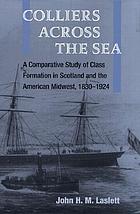
John H. M. Laslett
from publisher: "This masterful study charts both the common ground and the telling differences in development between two widely separated coal mining communities: one in Lanarkshire, in the Clyde valley of southwest Scotland, the other in northern Illinois, which became a prime destination for Lanarkshire colliers seeking a better life in the New World in the years following the Civil War. Challenging the prevailing exceptionalist paradigm of labor history, Laslett provides a thorough explanation of the American and Scottish miners' divergent approaches to collectivist solutions. He traces the progressive heightening of militancy and the rise of industrial unionism on both sides of the Atlantic as the coal mines became increasingly mechanized and as the interests of miners and mine-owners divided along class lines. Drawing on a profound knowledge of both communities, Laslett demonstrates that, with the exception of electoral politics, the process of class formation in Lanarkshire and northern Illinois was very much the same"
charts both the common ground and the telling differences in development between two widely separated coal mining communities.
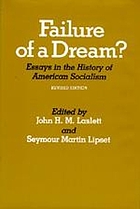
John H. M. Laslett
Anthology of essays on American exceptionalism and the labor question
The problem of ideological rigidity / Daniel Bell
Radicalism and the agrarian tradition / Theodore Saloutos
Catholic anti-socialism / Marc Karson
Socialism and American trade unionism / John H.M. Laslett
Socialism and syndicalism / Melvyn Dubofsky
Socialism and race / Sally Miller
Socialism and ethnicity / Charles Leinenweber
Socialism and women / Sally Miller
The liberal tradition / Louis Hartz
The relevance of Marxism / Clinton Rossiter
Socialism and social mobility / Stephan Thernstrom
American capitalism's economic rewards / Werner Sombart
The role of intellectuals / Adolph Sturmthal
Pluralism and political parties / Norman Thomas
Socialists and scholars voice their opinions on the reasons for the relative weakness of socialism in America.
John H. M. Laslett
Laslett’s six chapters cover the influence of the left in six unions: the United Brewery Workers, the Irish-led Boot and Shoe Workers, the New York City-based International Ladies' Garment Workers, the International Association of Machinists, the United Mine Workers of America, and the Western Federation of Miners, and argues that the combination of agitation to change working conditions and socialist organizing gave rise to the left-wing influence for a time. Laslett was among the first to suggest that it was not the immigrant character of American labor that gave rise to leftist influence, but the lousy conditions and a struggle to build political and economic power together in the face of mechanization, scientific management , and economic control of workers’ lives in the US. The labor activists did not or the most part arrive as socialists, but were transformed into advocates for socialism in the course of union struggles. There is no overarching conclusion to explain the detail based on these case studies, but the details for each organization remain a fine contribution, though it remains limited by the source of these views. Compare this with John Enyeart’s social history of the influence of socialism among the rank-and-file, for example.
argues that the combination of agitation to change working conditions and socialist organizing gave rise to the left-wing influence for a time
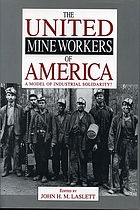
John H.M. Laslett, ed.
Developing initially out of a conference commemorating the hundredth anniversary of the United Mine Workers of America, this collection of essays evaluates the history of the union and its contribution to the labor movement. Founded by white, Anglo-Saxon pick miners in 1890, the UMWA had become by World War I the largest, most powerful, and in many ways the most progressive labor organization in the American Federation of Labor. Its critical influence is shown in its pioneering role in the development of industrial unionism, in its efforts at interracial and interethnic organizing, and in its indispensable role in founding and guiding the CIO between 1935 and 1955. The essays - most commissioned especially for this volume - also examine the impact of mechanization on the coal industry, issues of health, safety, and company control, ethnic and race relations among the miners, the long-neglected role of women in coal-mining communities, and the influence of the leadership of John Mitchell and John L. Lewis. The final section looks at the UMWA's efforts to renew itself as a democratic and dynamic organization in recent decades
this collection of essays evaluates the history of the United Mine Workers and its contribution to the labor movement.
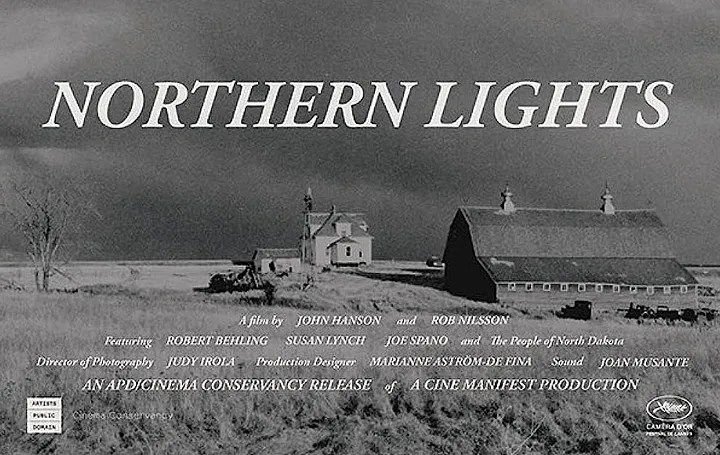
John Hanson, Rob Nilsson
important film about organizing. A fictionized but realistic account of the Non-Partisan League, about organizing farmers in the upper Midwest in the 1920s. Only 3 actors, the rest are actual farmers. Farmers worked against the predatory grain elevator/bank/railroad collusion. The story focuses on a young farmer influenced by socialism, goes on to become an organizer, and this socialist movement succeeds in gaining power, organizing around getting cooperative grain elevators set up, and to place limits on railroad freight charges that gouged the farmers. Resulted in the only state-owned flour mill and bank in the nation. Based on a true story. One of my favorites for thinking about organizing. As a companion, check out the last chapter of a book by Tom Alter, Toward a Cooperative Commonwealth: The Transplanted Roots of Farmer-Labor Radicalism in Texas
Northern Lights, one of the best films about organizing
Museum/Exhibits
Tours
Maps
Digital Projects
Organizations
Sites
Film/Video
Audio/Interview
Podcast/Program
Text/Document
Image
Graphs/Data
Timeline
Southwest
West
Midwest
Southeast
Northeast
Mexico
Canada
Global
Books
Teaching
Lectures
Digital Archives
Journals
Bibliographies
Topic Intro