


Collections
Library
Type
Region
Coverage:
-
Published:
-

John Harrower, History Matters
Migration across the Atlantic often involved a series of stages, drawing people to London before they embarked on their journey. John Harrower, a 40-year-old shopkeeper and tradesman, lived in the far north of the British Isles. Like many of the 40,000 residents of the Scottish Highlands who left after 1760, he faced poverty and little opportunity. Harrower initially planned to travel to the Netherlands but ended up in London. The great metropolis, the largest in the western world, swelled as thousands looked unsuccessfully for employment. After several weeks, Harrower signed an indenture to travel to Virginia as a schoolmaster. He sailed with 71 other male indentees, some from London, but many others from across England and Ireland. With his relatively privileged training, Harrower was fortunate and found a new life on a tidewater plantation. These excerpts from his journal tell of his time in London, journey across the Atlantic, and arrival in Virginia.
Excerpts from the journal of John Harrower, a Scottish migrant to Virginia who recounted his experiences settling on a tidewater plantation.
John Hawkins, History Matters
Great Britain recognized the lucrative possibilities of the Atlantic slave trade long before it permanently colonized North America. By the mid-sixteenth century, British ships followed Spanish and Portuguese vessels along the West African coast and familiarized themselves with the trade between the Portuguese and Africans. John Hawkins, an admiral with royal backing, inaugurated the British slave trade with three expeditions. On his 1562 voyage, he purchased slaves from the Portuguese in West Africa and sold them to the Spanish in Hispaniola at great profit, despite Spanish prohibitions. In 1567, he seized 500 Africans in Sierre Leone and set off across the ocean, but the Spanish fleet captured him in a Mexican port and destroyed many of his ships. Although he escaped, 100 of his men were left in the Bay of Mexico; only three eventually returned England. One of those was 17-year-old Job Hortop, who wrote this narrative after 23 years in Spanish captivity.
Job Hortop's 23-year narrative of Spanish captivity; Hortop was captured as one of British Admiral John Hawkins' men who accompanied him on his voyage from Sierra Leone, where he captured and enslaved African people.
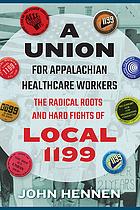
John Hennen
History at the intersection of healthcare, labor, and civil rights. The union of hospital workers usually referred to as the 1199 sits at the intersection of three of the most important topics in US history: organized labor, health care, and civil rights. John Hennen's book explores the union's history in Appalachia, a region that is generally associated with extractive industries but has seen health care grow as a share of the overall economy. With a multiracial, largely female, and notably militant membership, 1199 was at labor's vanguard in the 1970s, and Hennen traces its efforts in hospitals, nursing homes, and healthcare centers in West Virginia, eastern Kentucky, and Appalachian Ohio. He places these stories of mainly low-wage women workers within the framework of shake-ups in the late industrial and early postindustrial United States, relying in part on the words of Local 1199 workers and organizers themselves. Both a sophisticated account of an overlooked aspect of Appalachia's labor history and a key piece of context for Americans' current concern with the status of "essential workers," Hennen's book is a timely contribution to the fields of history and Appalachian studies and to the study of social movements
a history at the intersection of healthcare, labor, and civil rights.

John Hinde
The town of Ladysmith was one of the most important coal-mining communities on Vancouver Island during the early twentieth century. The Ladysmith miners had a reputation for radicalism and militancy and engaged in bitter struggles for union recognition and economic justice, most notably the Great Strike of 1912-14. This strike, one of the longest and most violent labour disputes in Canadian history, marked a watershed in the history of the town and the coal industry.
This book explains the origins of the 1912-14 strike by examining the development of the coal industry on Vancouver Island, the founding of Ladysmith, the experience of work and safety in the mines, the process of political and economic mobilization, and how these factors contributed to the development of identity and community. While the Vancouver Island coal industry and the strike have been the focus of a number of popular histories, this book goes beyond to emphasize the importance of class, ethnicity, gender, and community in creating the conditions for the emergence and mobilization of the working-class population. Informed by current academic debates on the matter and within the discipline, this readable history takes into account extensive archival research, and will appeal to historians and others interested in the history of Vancouver Island.
This book explains the origins of the 1912-14 Ladysmith coal strike

John J. Martin, History Matters
John J. Martin Testifies on the 1919 Steel Strike (History Matters): In the dramatic 1919 steel strike, 350,000 workers walked off their jobs and crippled the industry. The U.S. Senate Committee on Education and Labor set out to investigate the strike while it was still in progress. In his testimony before the committee, Youngstown steelworker John J. Martin expressed puzzlement over the grievances of the striking steelworkers and maintains that “the foreigners brought the strike on.”
This document is useful for showing how the workforce was divided along ethnic lines

John L. Lewis Memorial Museum of Mining and Labor
Explore the museum dedicated to the life of John Lewis and the United Mine Workers of America.Nestled in the historic coal mining town of Lucas, Iowa, the John L. Lewis Memorial Museum of Mining and Labor stands as a proud tribute to the working men and women who shaped the region’s identity. Founded by local volunteers and labor advocates, the museum opened its doors in 1990 with the mission to preserve and share the rich heritage of mining and organized labor in southern Iowa.
small Iowa museum dedicated to John L. Lewis, longtime President of the United Mine Workers of America
John L. Lewis, History Matters
John L. Lewis, President of the United Mine Workers of America, was instrumental in the organizing drive that transformed the coal fields in 1933. He had planned his campaign before the National Industrial Recovery Act (NRA) became law and even before President Franklin D. Roosevelt took office. (The National Industrial Recovery Act included a provision, section 7(a), that protected workers’ right to organize.) In February 1933 (prior to the passage of the NRA), Lewis spoke passionately to the Senate Finance Committee about the need for action to protect workers. In his Senate testimony, Lewis called for emergency action, including allowing workers to unionize and replacing corporate autocracy with union democracy. He warned that if action was not forthcoming, the nation might face grave consequences and promoted unionization as the answer.
Robert Koehler, immigration, artist,
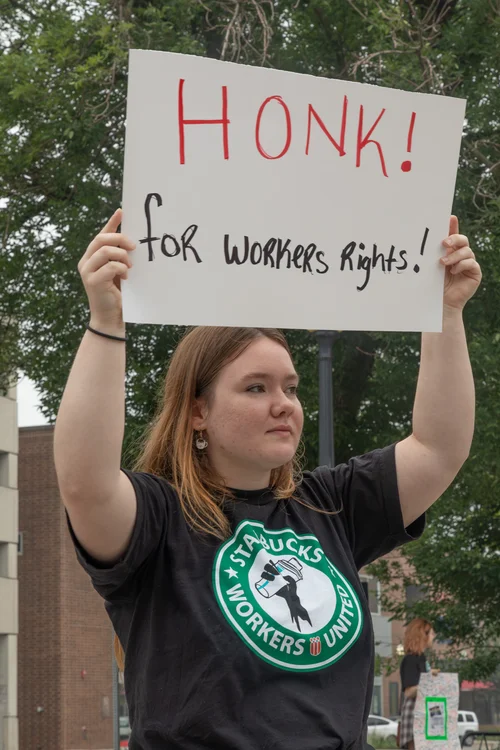
John McKerley
A Podcast Exploring the Everyday and Extraordinary Stories of Midwestern Workers, Past and Present
Iowa Labor History podcasts
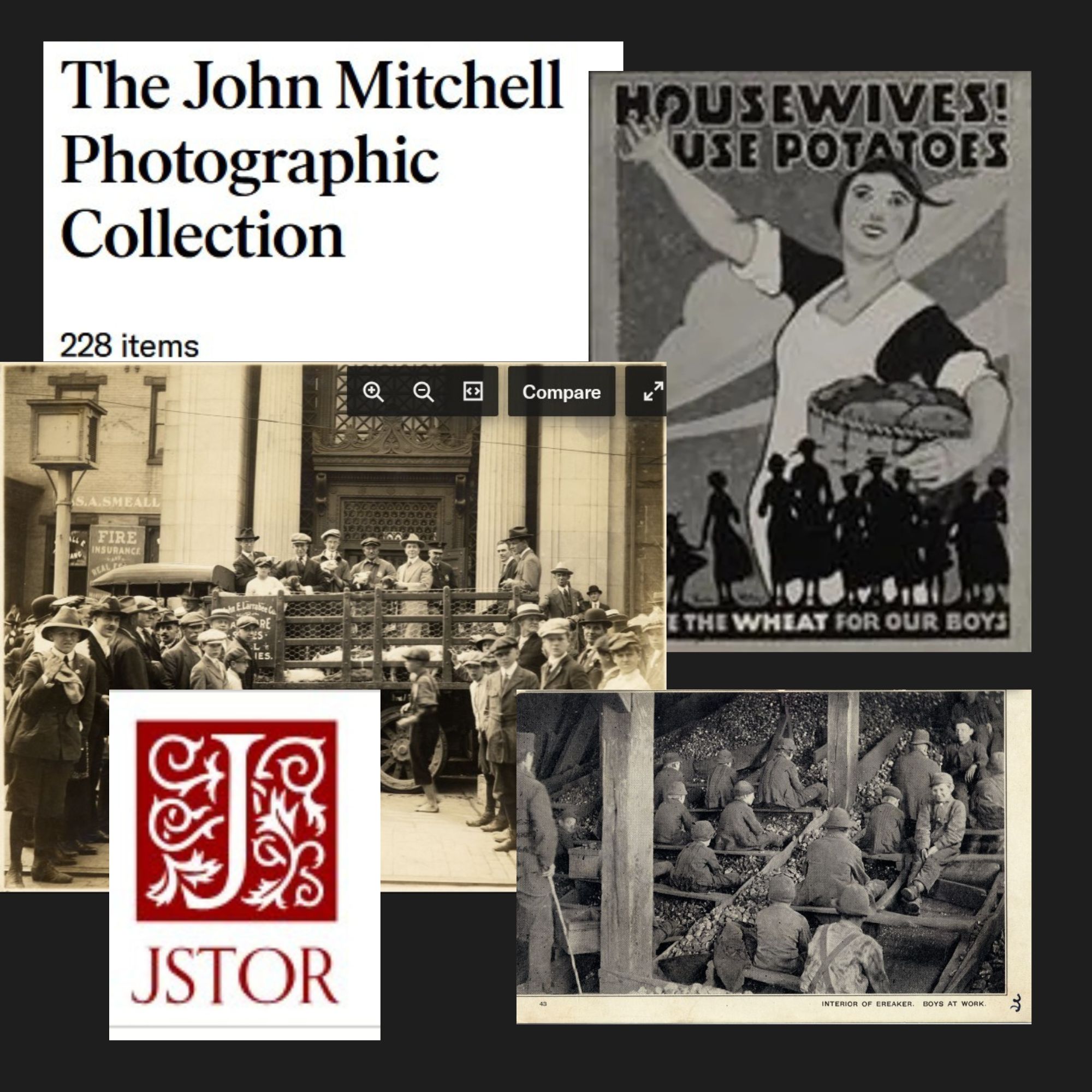
John Mitchell, Catholic University of America, JSTOR
Mitchell, leader of the United Mine Workers of America (UMWA)The photographs digitized here, 1898-1924, entail many portraits of important people, such as Clarence Darrow and Theodore Roosevelt, as well as significant events like the 1902 Anthracite Coal Strike. There are also photographs illustrating mining techniques of the time.
personal and labor photos of John Mitchell, UMWA president; JSTOR site-library access or free account registration needed.
John Murray, History Matters
Most historians who have written about the 1903 strike of Mexican and Japanese farm workers against the Oxnard, California, sugar beet growers have relied on John Murray’s first-hand account of the strike and its aftermath. Murray, a socialist union organizer, went to Oxnard after learning of the strike through newspaper accounts of strike-related violence and rioting. Along with fellow union organizer Fred C. Wheeler, Murray assisted the farm workers’ union, the Japanese-Mexican Labor Association (JMLA), in negotiations with the Western Agricultural Contracting Company, which contracted laborers for local sugar beet farmers. When the American Federation of Labor refused to grant a charter to the JMLA unless the union excluded all Asian workers, Murray wrote this article, “A Foretaste of the Orient,” as both a chronicle of the strike and as a biting criticism of the AFL’s refusal to accept Asian- and African-American workers as members.
(teaching document) John Murray's "A Foretaste of the Orient," a 1903 article that acts as a first-hand account of the 1903 farmworkers strike by Mexican and Japanese laborers, and also sharply critiques the AFL's refusal to grant a charter to their organization, the Japanese-Mexican Labor Association (JMLA).
John Murray, History Matters
Nineteenth-century laborers faced a variety of work-related ailments: from rheumatism and pneumonia to lead palsy and carbon monoxide poisoning. Yet governments rarely regulated workplace conditions and the United States lagged far behind industrialized European nations in such regulation. In the Progressive era, however, a movement to regulate dangerous industrial working conditions arose, and one of its most prominent leaders was a physician named Alice Hamilton. In this selection from her 1943 autobiography, Hamilton described her residency at Jane Addams’s Hull House in the late 1890s and her participation in the Illinois Occupational Disease Commission.
(teaching document) A selection from the autobiography of Alice Hamilton, the famed physician, scientist, and occupational health expert who was also a resident at the Hull House.
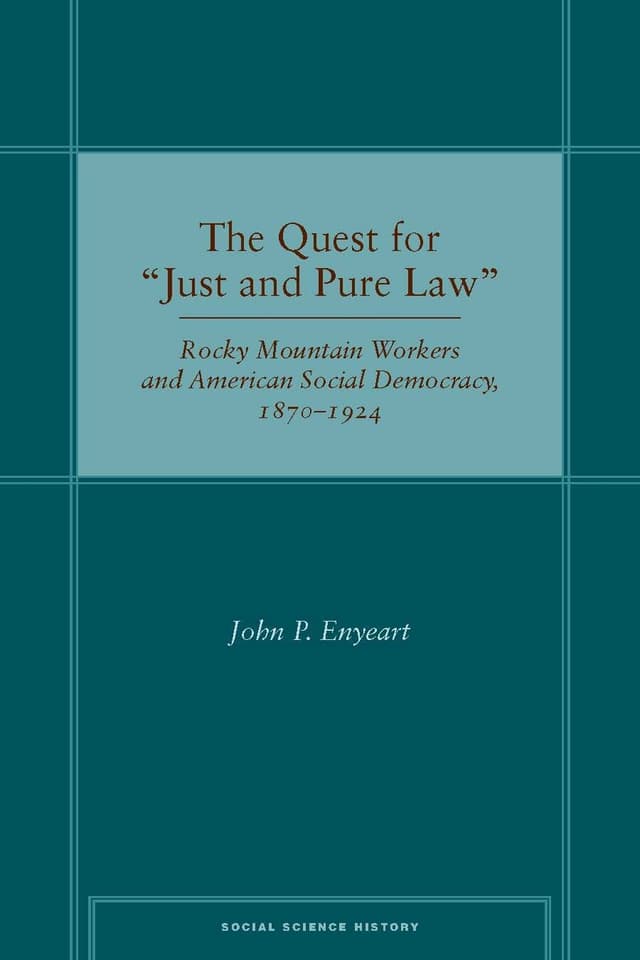
John P. Enyeart
Focusing on the political culture forged by Rocky Mountain workers from the 1870s through the 1920s, this book shows how the unique working-class politics of the region led to remarkable successes in securing progressive labor legislation. These successes—especially in improving workers' hours, wages, and safety—in turn played a central role in transforming the nation's attitudes toward workers' rights.
Examining political culture in the everyday lives of workers (from shop floors to union halls to recreation), the author uncovers a labor movement based as much on pragmatism as on ideology, and he traces how its members productively focused their efforts on political action at the local and state levels. In the process, they developed a genuinely social-democratic political culture.
Introduction
l. "He. Who Would Be. Free, Himself Must Strike. the. Blow": Joseph Buchanan, Rocky Mountain Knights, and Notions of
Working-Class Justice 25
2. To "Strike at the. Poll'': Local and State. Politics, Regional Unity, and Working-Class Political Action 71
3. The. "Militant, Progressive., Liberal Spirit of Western Unionism": Mutualism, Socialism, and Regional Activism 117
4. "Sabotage., 'Jackass Tactics' Indeed!": Progressive. Unionists,Syndicalists, and the. Advance. of Social Democracy 169
5. "There. Is a War Every Day for the Workers-There. Always Has Been": The. Persistence. of Progressive. Unionism
Conclusion
How a labor movement in the Western US productively focused their efforts on political action at the local and state levels. In the process, they developed a genuinely social-democratic political culture.

John P. Enyeart
the story, work, and influence of Slovenian immigrant and influential author Louis Adamic. Between the mid-1920s and his death in 1951, Adamic published thirteen books and over 500 articles in magazines such as The Nation, Harper's and the Saturday Evening Post.
Crowds filled venues across the U.S. to hear him speak. High school teachers and college professors assigned his work in their courses, he won major fellowships and book awards, he consulted with Presidents Roosevelt and Truman, and he even succeeded in shaping American through his activism for Slavic issues.
The story of Adamic points to and revives the many narratives that got overwritten as the grand narrative of the Cold War dominated history: resistance to fascism, transnationalism, and immigrant identity, to name a few.
And there's even a mystery surrounding Adamic's death--suicide or murder? Alas, it will remain unsolved, but it points to the importance of the man and his work. Adamic helps us make sense of the importance of transnationalism in a period of massive immigration, labor upheaval, and confrontations between entrenched political interests"-- Provided by publisher
A biography of Slovenian immigrant and influential author Louis Adamic and his fight against fascism in America
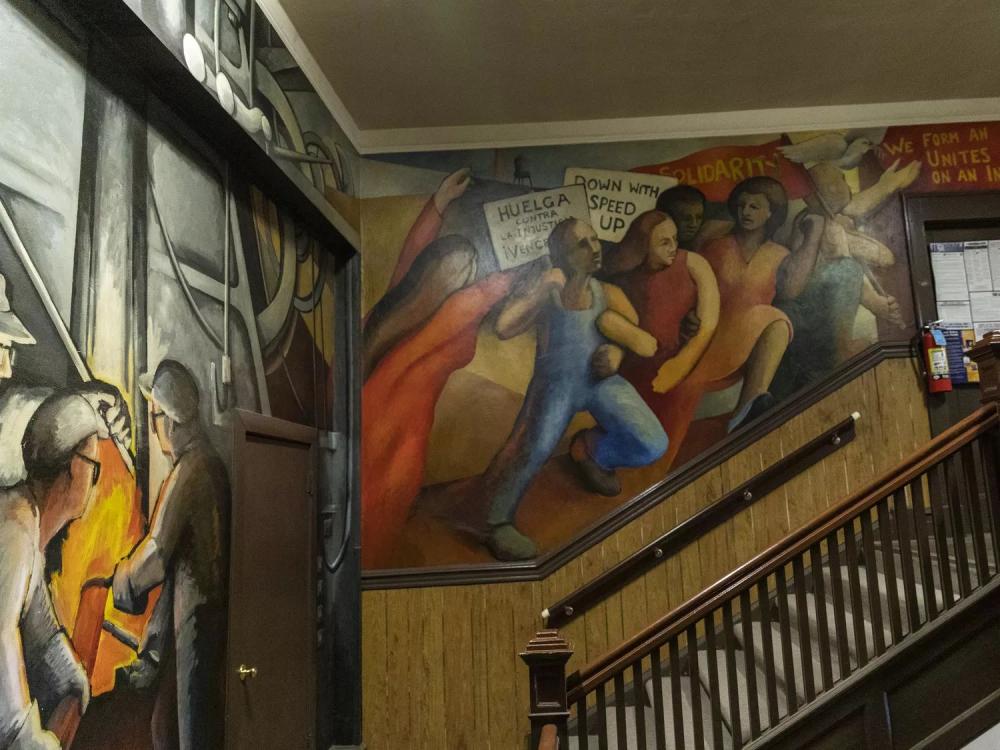
John Pitman Weber, Jose Guerrero, United Electrical Workers
There is an ongoing campaign to preserve this historic mural that was in the UE building in Chicago. Painted by working class radical artists in the 1970s, it depicts a broad history. The neighborhood of the union gentrified and the UE decided to sell the building but sought to preserve the murals. Learn more about them with this story and consider a contribution to the last effort to ensure that they remain with us.
A mural depicting the UE's history, but also a larger story of working class struggle
John Robert Gust, Jennifer P. Matthews
The story of sugarcane and rum production in the Caribbean has been told many times. But few know the bittersweet story of sugar and rum in the jungles of the Yucatán Peninsula during the nineteenth century. This is much more than history of a coveted commodity. Instead, this book offers a deeper understanding of the work and lives of the Maya laborers who toiled on the haciendas to harvest and produce"-- Provided by publisher
he bittersweet story of sugar and rum in the jungles of the Yucatán Peninsula during the nineteenth century.

John Rogers Commons
Multi-volume produced by John R. Commons, a classic of labor history, though of course bound by its time and his perspectives
all 10 volumes are available at archive.org
THE DOCUMENTARY HISTORY OF AMERICAN INDUSTRIAL SOCIETY COMPRISES—
Vol. I Plantation and Frontier, Volume 1,by Ulrich B. Phillips
Vol. II Plantation and Frontier, Volume 2,by Ulrich B. Phillips
Vol. Ill Labor Conspiracy Cases, 1806-1842, Volume 1,by John R. Commons and Eugene A. Gilmore
Vol. IV Labor Conspiracy Cases, 1806-1842, Volume 2,by John R. Commons and Eugene A. Gilmore
VOL. V Labor Movement, 1820rl840, Volume 1,by John R. Commons and Helen L. Sumner
Vol. VI Labor Movement, 1820-1840, Volume 2,by John R. Commons and Helen L. Sumner
Vol. VII Labor Movement, 1840-1860, Volume 1, by John R. Commons
Vol. VIII Labor Movement, 1840-1860, Volume 2, by John R. Commons
VOL. IX Labor Movement, 1860-1880, Volume 1,by John R. Commons and John B. Andrews
Vol. X Labor Movement, 1860-1880, Volume 2,by John R. Commons and John B. Andrews
A collection of significant primary source documents detailing a large span of labor history.
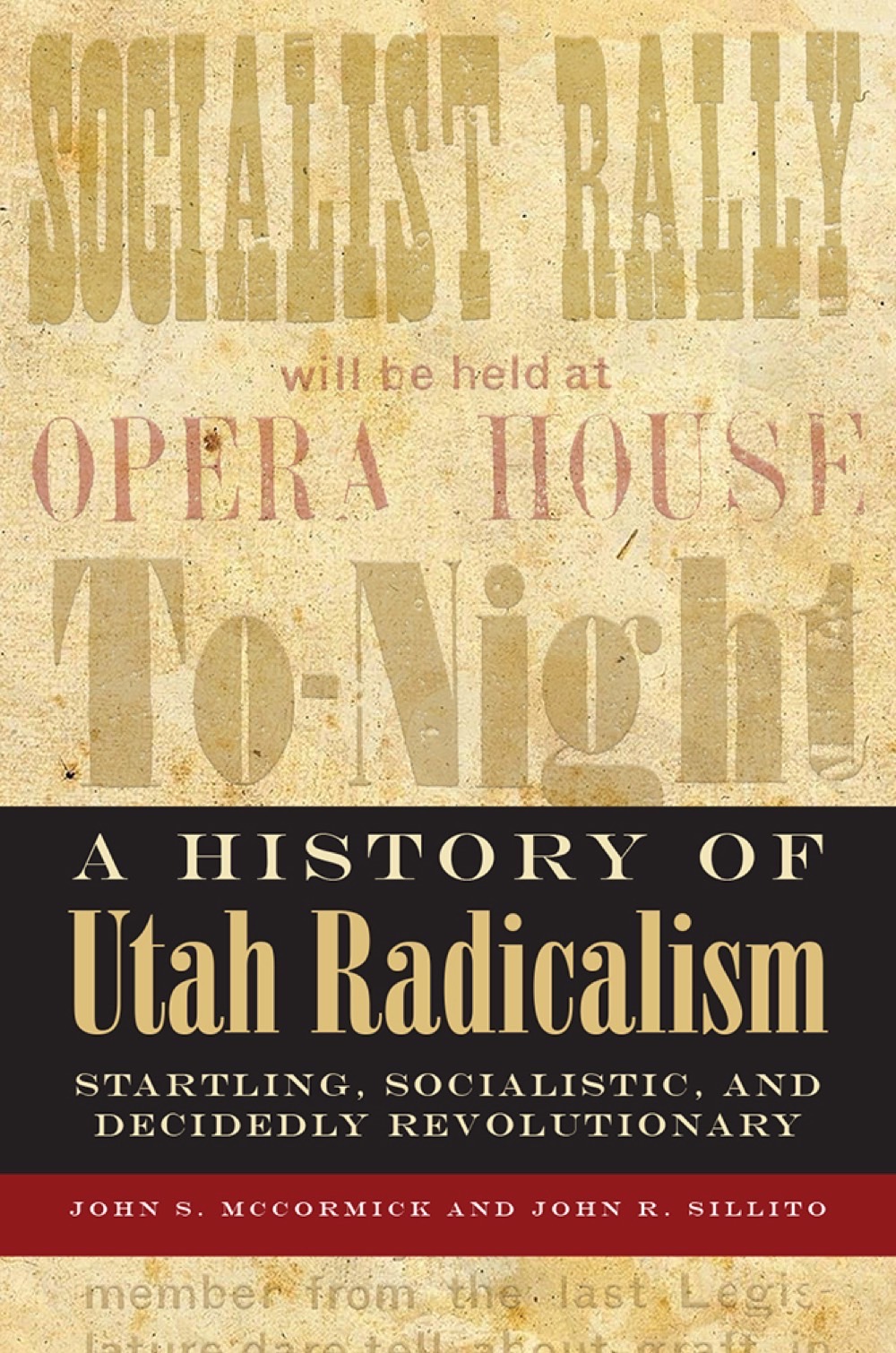
John S. McCormick, John R. Sillito
Utah, now one of the most conservative states, has a long tradition of left-wing radicalism. Early Mormon settlers set a precedent with the United Order and other experiments with a socialistic economy. The tradition continued into the more recent past with New Left, anti-apartheid, and other radicals. Throughout, Utah radicalism usually reflected national and international developments. Recounting its long history, McCormick and Sillito focus especially on the Socialist Party of America, which reached a peak of political influence in the first two decades of the twentieth century—in Utah and across the nation.
At least 115 Socialists in over two dozen Utah towns and cities were elected to office in that period, and on seven occasions they controlled governments of five different municipalities. This is a little-known story worth a closer look. Histories of Socialism in the United States have tended to forsake attention to specific, local cases and situations in favor of broader overviews of the movement. By looking closely at Utah's experience, this book helps unravel how American Socialism briefly flowered before rapidly withering in the early twentieth century. It also broadens the conventional understanding of Utah history.
The state of Utah has a surprising history in its early years, when the labor movement was left-leaning
John Spargo, History Matters
For early twentieth-century Progressive reformers committed to social justice, widespread child labor—especially in coal mines, textile mills, and department stores—was particularly disturbing. And as with other Progressive crusades, the exposé was a favorite tool. Probably the most influential and certainly the most widely read of the Progressive-era exposés of child labor was John Spargo’s The Bitter Cry of the Children (1906). Spargo was a British granite cutter who became a union organizer and socialist and gained his formal education through extension courses at Oxford and Cambridge. In 1901, he emigrated to the United States where he became a leader of the conservative wing of the American Socialist Party. In the following excerpt, Spargo described work at the coal breaker, the area outside the mine where coal was sorted and graded, mostly by young children.
(teaching document) An excerpt from John Spargo's The Bitter Cry of Children (1906), wherein he describes the lives many young children faced as coalbreakers in mines.
John Swinton, History Matters
To many in the labor movement, the year 1892 brought only a string of defeats, as labor editor John Swinton said in this speech to the December 1892 convention of the American Federation of Labor. But Swinton managed to rally union members with an optimistic message. Although defeated, the workers who struck at Homestead and elsewhere prevented further attacks on labor in other places. Swinton, a former abolitionist, drew an analogy from the North’s ultimate victory in the Civil War.
John Swinton, labor publisher on the Homestead strike of 1892, arguing that the workers struggles were not without meaning even if they lost the strike
John Swinton, Samuel Gompers, Eugene V. Debs, John W. Hayes
full text of 1894 book Striking for Life by John Swinton, Samuel Gompers, Eugene V. Debs, and John W. Hayes
"Google Books (full text): https://www.google.com/books/edition/Striking_for_Life/84oOAAAAYAAJ?hl=en&gbpv=1&dq=inauthor:Swinton%2Binauthor:John&printsec=frontcover#v=onepage&q&f=false
full text of the 1894 book Striking for Life by John Swinton, Samuel Gompers, Eugene V. Debs, and John W. Hayes.
John T. McNay
This book presents the story of "We Are Ohio," a coalition of unionized professors, firefighters, police, and janitors to defend higher education in Ohio when the state legislature passed Senate Bill 5 in 2011 that impeded the labor movement
presents the story of "We Are Ohio," a coalition of unionized professors, firefighters, police, and janitors to defend higher education in Ohio.

John W. Hevener
1978 book on the coal miners of Harlan County in the 1930s. John W. Hevener separates the fact from the legend in his Weatherford Award-winning investigation of Harlan's civil strife, now available for the first time in paperback. In Which Side Are You On? Hevener attributes the violence–-including the deaths of thirteen union miners–-to more than just labor conflict, viewing Harlan's troubles as sectional economic conflict stemming from the county's rapid industrialization and social disorganization in the preceding decade.
attributes the violence to more than just labor conflict, viewing Harlan Co.'s troubles as economic conflict stemming from the county's rapid industrialization and social disorganization in the preceding decade.
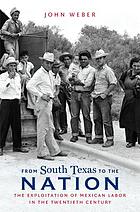
John Weber
In the early years of the twentieth century, newcomer farmers and migrant Mexicans forged a new world in South Texas. In just a decade, this vast region, previously considered too isolated and desolate for large-scale agriculture, became one of the United States' most lucrative farming regions and one of its worst places to work. By encouraging mass migration from Mexico, paying low wages, selectively enforcing immigration restrictions, toppling older political arrangements, and periodically immobilizing the workforce, growers created a system of labor controls unique in its levels of exploitation. Ethnic Mexican residents of South Texas fought back by organizing and by leaving, migrating to destinations around the United States where employers eagerly hired them--and continued to exploit them. In From South Texas to the Nation, John Weber reinterprets the United States' record on human and labor rights. This important book illuminates the way in which South Texas pioneered the low-wage, insecure, migration-dependent labor system on which so many industries continue to depend
South Texas pioneered the low-wage, insecure, migration-dependent labor system on which so many industries continue to depend

Johnny Tillmon
This testimonial by Johnnie Tillmon, published in 1972, forcefully points out that welfare is a women's issue. Tillmon was bom in 1928 in Arkansas and started to organize welfare mothers in Los Angeles in 1963 when her health forced her to quit working and go on welfare. She later served as the first chairwoman of the National Welfare Rights Organization (NWRO), an advocacy group founded by George Wiley that lobbied for a guaranteed annual income by arguing that welfare was a basic right of citizenship. Her testimony accentuates the demeaning aspects of going on welfare (the requirement that in order to receive aid, there must not be a man in the house was later modified) and how marginal an existence it provides. She reminds us that the majority of poor families are white, not black, and mocks the idea of 'the dignity of work" when the only work available keeps families stuck in poverty. And she punctures the commonly held view that black women have more babies in order to get more welfare money: 'Having babies for profit is a lie that only men could make up, and only men could believe." More than anything else, she argues for treating women’s work, both paid and unpaid, as worthy of support and respect. "If I were president, I would solve this so-called welfare crisis in a minute and go a long way toward
liberating every woman. I'd just issue a proclamation that "women's" work is real work."
a critique of welfare from a leader of the National Welfare Rights association
Jon Shelton
A wave of teacher strikes in the 1960s and 1970s roiled urban communities. Jon Shelton illuminates how this tumultuous era helped shatter the liberal-labor coalition and opened the door to the neoliberal challenge at the heart of urban education today.
Drawing on a wealth of research ranging from school board meetings to TV news reports, Shelton puts readers in the middle of fraught, intense strikes in Newark, St. Louis, and three other cities where these debates and shifting attitudes played out. He also demonstrates how the labor actions contributed to the growing public perception of unions as irrelevant or even detrimental to American prosperity. Foes of the labor movement, meanwhile, tapped into cultural and economic fears to undermine not just teacher unionism but the whole of liberalism"-- Provided by publisher
shattering of the liberal-labor coalition opened the door to the neoliberal challenge at the heart of urban education today
Museum/Exhibits
Tours
Maps
Digital Projects
Organizations
Sites
Film/Video
Audio/Interview
Podcast/Program
Text/Document
Image
Graphs/Data
Timeline
Southwest
West
Midwest
Southeast
Northeast
Mexico
Canada
Global
Books
Teaching
Lectures
Digital Archives
Journals
Bibliographies
Topic Intro