


Collections
Library
Type
Region
Coverage:
-
Published:
-

Jourdon Anderson, History Matters
As slavery collapsed at the close of the Civil War, former slaves quickly explored freedom’s possibilities by establishing churches that were independent of white control, seeking education in Freedmen’s Bureau schools, and even building and maintaining their own schools. Many took to the roads as they sought opportunities to work and to reconstitute their families. Securing their liberty meant finding the means of support to obtain land or otherwise benefit from their own labor, as Jourdon Anderson made clear in this letter to his former owner. He addressed Major Anderson from Ohio, where he had secured good wages for himself and schooling for his children. Many freedpeople argued that they were entitled to land in return for their years of unpaid labor and looked to the federal government to help achieve economic self-sufficiency. Black southerners understood the value of their own labor and looked for economic independence and a free labor market in their battle over the meaning of emancipation in post-Civil War America.
A famed letter from freedperson Jourdon Anderson to his former owner Major Anderson, where Jourdon speaks his mind about the conditions he and his family were once held in and demands back pay for the labor he performed as a slave.

Judith Hoegg Ryan
For almost 200 years, coal miners in Pictou County, Nova Scotia, worked the rich coal deposits in the region. Coal in Our Blood tells the story of the industry and the dedicated men who undertook this dangerous, demanding and dirty work.
Author Judith Hoegg Ryan, a historian and the daughter of a Pictou County miner, weaves together the stories of these men, chronicling the boom times of prosperity as well as the disasters that befell these tight-knit communities. Accompanying her text are photographs from miners’ family albums and archives.
Originally published just months after the Westray mine disaster that killed 26 miners in an underground explosion, Coal in Our Blood is being brought back into print with an updated layout and photos more than thirty years later.
A deeply personal history of the Pictou County coal mining community through its ups and downs.
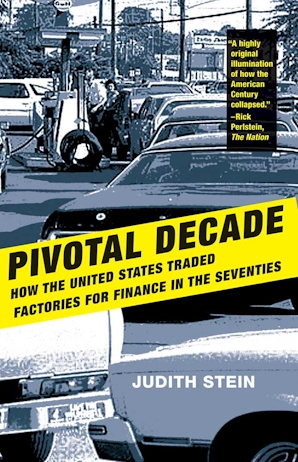
Judith Stein
Argues that in order to understand our current economic crisis we need to look back to the 1970s and the end of the age of the factory - the era of postwar liberalism, created by the New Deal, whose practices, high wages, and regulated capital produced both robust economic growth and greater income equality.
Argues that in order to understand our current economic crisis we need to look back to the 1970s and the end of the age of the factory/
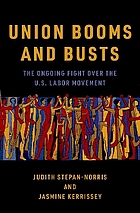
Judith Stepan-Norris, Jasmine Kerrissey
Union Booms and Busts takes a bird's-eye view of the shifting fortunes of U.S. workers and their unions, on the one hand, and employers and their organizations, on the other. Using newly assembled and detailed data, it analyses union density across eleven industries and 115 years, demonstrating that workers in some industries and some time periods were remarkably successful in forming and defending unions, while others were not. Union Booms and Busts traces the approaches that workers used, including organizing strategies, strikes, and union elections, as well as those of employers, including disrupting union organizing by using legal maneuvers, workforce-based strategies, and race and gender divisions. Chapters are organized around time periods--the early unregulated period where unions took hold in only a handful of industries; the mid-century regulated period where strikes, elections, and union density grew in many industries; and the later dis-regulated period where union trajectories diverged, with union density drastically declining in most industries and holding steady in a few. Each chapter begins with a depiction of the economic, legal, and political context of the time as well as important historical trajectories. The book concludes by suggesting what might come next for workers and unions in America"--Publisher's description
analyses union density across eleven industries and 115 year

Judy Ancel, Heartland Labor Forum
Heartland Labor Forum is Kansas City's only program about the workplace. It is produced by and for our working people. We have been agitating on the air since 1989. Find out who is busting unions and who is fighting back. We are a member of the Labor Radio Podcast Network #laborradiopod
Many shows include historical perspectives both national and local, this show is produced by renowned labor educator Judy Ancel since 1989

Judy Fudge, Eric Tucker
In this groundbreaking study of the relations between workers and the state, Judy Fudge and Eric Tucker examine the legal regulation of workers' collective action from 1900 to 1948. They analyze the strikes, violent confrontations, lockouts, union organizing drives, legislative initiatives, and major judicial decisions that transformed the labour relations regime of liberal voluntarism, which prevailed in the later part of the nineteenth century, into industrial voluntarism, whose centrepiece was Mackenzie King's Industrial Disputes Investigation Act of 1907. This period was marked by coercion and compromise, as workers organized and fought to extend their rights against the profit oriented owners of capital, while the state struggled to define a labour regime that contained industrial conflict. The authors then trace the conflicts that eventually produced the industrial pluralism that Canadians have known in more recent years.By 1948 a detailed set of legal rules and procedures had evolved and achieved a hegemonic status that no prior legal regime had even approached. This regime has become so central to our everyday thinking about labour relations that one might be forgiven for thinking that everything that came earlier was, truly, before the law. But, as Labour Before the Law demonstrates, workers who acted collectively prior to 1948 often found themselves before the law, whether appearing before a magistrate charged with causing a disturbance, facing a superior court judge to oppose an injunction, or in front of a board appointed pursuant to a statutory scheme that was investigating a labour dispute and making recommendations for its resolution.The book is simultaneously a history of law, aspects of the state, trade unions and labouring people, and their interaction within the broad and shifting terrain of political economy. The authors are attentive to regional differences and sectoral divergences, and they attempt to address the fragmentation of class experience
This study of the relations between workers and the state examines the legal regulation of workers' collective action from 1900 to 1948.
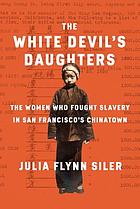
Julia Flynn Siler
A revelatory history of the trafficking of young Asian girls that flourished in San Francisco during the first century of Chinese immigration (1848-1943), and the "safe house" on the edge of Chinatown that became a refuge for those seeking their freedom. From 1874, a house on the edge of San Francisco's Chinatown served as a gateway to freedom for thousands of enslaved and vulnerable young Chinese women and girls. Known as the Occidental Mission Home, it survived earthquakes, fire, bubonic plague, and violence directed against its occupants and supporters-- a courageous group of female abolitionists who fought the slave trade in Chinese women, challenging the corrosive, anti-Chinese prejudices of the time. Siler relates how the women who ran the house defied contemporary convention, even occasionally broke the law, by physically rescuing children from the brothels where they worked, or snatching them off the ships smuggling them in, and helped bring the exploiters to justice. She has also uncovered the stories of many of the girls and young women who came to the Mission and the lives they later led, sometimes becoming part of the home's staff themselves. A remarkable story of an overlooked part of our history, told with sympathy and vigor.-- Provided by publisher
sex work, sex workers, sex violence, sexual violence, Asian, Asian American, Asian workers, Asian worker, Chinese, Chinese worker, anti-Chinese
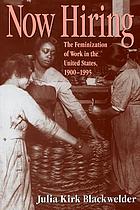
Julia Kirk Blackwelder
In Now Hiring, historian Julia Kirk Blackwelder adroitly traces the evolution of the American occupational structure, delineating the main lines of the development of the female work force and its interactions with education, family life, and social convention
traces the evolution of the American occupational structure, delineating the main lines of the development of the female work force and its interactions with education, family life, and social convention.
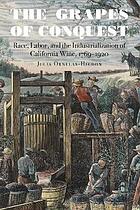
Julia Ornelas-Higdon
The Grapes of Conquest examines the origins of the wine industry at the California missions, as well as its subsequent commercialization in nineteenth-century California under Mexican and American governance.
California’s wine country conjures images of pastoral vineyards and cellars lined with oak barrels. As a mainstay of the state’s economy, California wines occupy the popular imagination like never before and drive tourism in famous viticultural regions across the state. Scholars know remarkably little, however, about the history of the wine industry and the diverse groups who built it. In fact, contemporary stereotypes belie how the state’s commercial wine industry was born amid social turmoil and racialized violence in eighteenth- and nineteenth-century California.
In The Grapes of Conquest Julia Ornelas-Higdon addresses these gaps in the historical narrative and popular imagination. Beginning with the industry’s inception at the California missions, Ornelas-Higdon examines the evolution of wine growing across three distinct political regimes—Spanish, Mexican, and American—through the industry’s demise after Prohibition. This interethnic study of race and labor in California examines how California Natives, Mexican Californios, Chinese immigrants, and Euro-Americans came together to build the industry. Ornelas-Higdon identifies the birth of the wine industry as a significant missing piece of California history—one that reshapes scholars’ understandings of how conquest played out, how race and citizenship were constructed, and how agribusiness emerged across the region. The Grapes of Conquest unearths the working-class, multiracial roots of the California wine industry, challenging its contemporary identity as the purview of elite populations.
Book examines how California Natives, Mexican Californios, Chinese immigrants, and Euro-Americans came together to build the industry.
Julia Rabig
Stories of Newark's postwar decline are easy to find. But in The Fixers, Julia Rabig supplements these tales of misery with the story of the many imaginative challenges to the city's decline mounted by Newark's residents and suburban neighbors.
In these pages, we meet the black nationalists whose dynamic organizing elected African American candidates in unprecedented numbers. There are tenants who mounted a historic rent strike to transform public housing and renegade white Catholic priests who joined black laywomen to pioneer the construction of low-income housing and influence housing policy. These are just a few of the "fixers" we meet--people who devised ways to work with limited resources and pull together the threads of a patchwork welfare state.
Rabig argues that fixers play dual roles. They support resistance, but also mediation; they fight for reform, but also more radical and far-reaching alternatives; they rally others to a collective cause, but sometimes they broker factions. Fixers reflect longer traditions of organizing while responding to the demands of their times. In so doing, they end up fixing (like a fixative) a new and enduring pattern of activist strategies, reforms, and institutional expectations--a pattern we continue to see today
Fixers reflect longer traditions of organizing while responding to the demands of their tim

Julia Reichert, Steven Bognar
When Dolly Parton sang “9 to 5,” she was doing more than just shining a light on the fate of American working women. Parton was singing the true story of a movement that started with 9to5, a group of Boston secretaries in the early 1970s. Their goals were simple—better pay, more advancement opportunities, and an end to sexual harassment—but their unconventional approach attracted the press and shamed their bosses into change. Featuring interviews with 9to5’s founders, as well as actor and activist Jane Fonda, 9to5: The Story of a Movement is the previously untold story of the fight that inspired a hit and changed the American workplace.
"They couldn’t kill their bosses, so they did the next best thing—they organized."
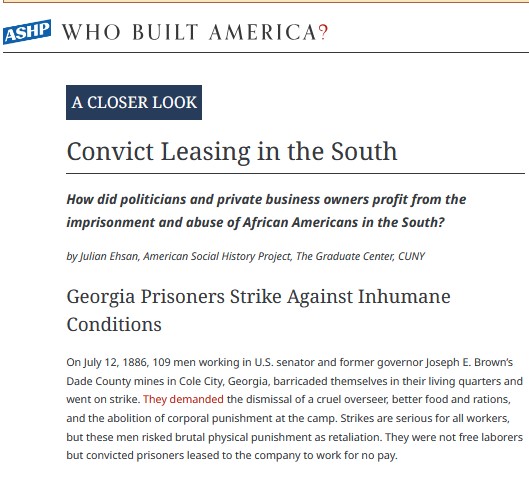
Julian Ehsan, Who Built America?, American Social History Project
Essay and linked Documents on a Georgia prison uprising, with accompanying questions. On July 12, 1886, 109 men working in U.S. senator and former governor Joseph E. Brown’s Dade County mines in Cole City, Georgia, barricaded themselves in their living quarters and went on strike. They demanded the dismissal of a cruel overseer, better food and rations, and the abolition of corporal punishment at the camp. Strikes are serious for all workers, but these men risked brutal physical punishment as retaliation. They were not free laborers but convicted prisoners leased to the company to work for no pay.
How did politicians and private business owners profit from the imprisonment and abuse of African Americans in the South?
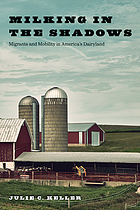
Julie C. Keller
Migrant workers live in a transnational world that spans the boundaries of nation-states. Yet for undocumented workers, this world is complicated by inflexible immigration policies and the ever-present threat of law enforcement. Workers labeled as "illegals" wrestle with restrictive immigration policies, evading border patrol and local police as they risk their lives to achieve economic stability for their families. The sacrifices they make to get ahead entail long periods of waiting, extended separation from family, and above all, tremendous uncertainty around a freedom that many of us take for granted - everyday mobility.
In Milking in the Shadows, Julie C. Keller takes an in-depth look at a population of undocumented migrants working in the American dairy industry to understand the components of this labor system. This book offers a framework for understanding the disjuncture between the labor desired by employers and life as an undocumented worker in America today.--COVER
intense look at a population of undocumented migrants working in the American dairy industry

Julie Greene
The Afro-Caribbean migrants who built the Panama Canal.
When acclaimed labor historian Julie Greene researched her book The Canal Builders, which went on to be nominated for a Pulitzer Prize in 2009, she explored a cache of first-person essays written in 1963 by the Afro-Caribbean people, mainly Jamaican and Barbadian, who migrated to the Isthmus of Panama to work as diggers, track shifters, or domestic servants in the Canal Zone. Held at the Library of Congress and stored in Box 25 of the Isthmian Historical Society Collection, the essays constitute the best primary source in existence on Caribbean workers' experiences during the construction project.
Now Greene returns to this fascinating archive, and in this book, shares what it was like to be a migrant laborer on the construction of the Panama Canal. Caribbean workers faced life-threatening illnesses, accidents, racial discrimination, and culture clashes as well as opportunities to materially improve their lives. Greene offers new details on the strategies of the people who built the canal and examines how colonialism, xenophobia, and racism shaped the process of writing and archiving the testimonies into Box 25.
A retelling of the experience of Afro-Caribbean workers in the Panama Canal, utilizing several primary source essays from those workers recounting their experiences.
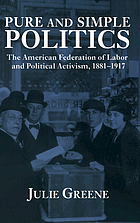
Julie Greene
Scholarship on American labor politics has been dominated by the view that the American Federation of Labor, the leading labor organization in the earliest twentieth century, rejected political action in favor of economic strategies.
Based on extensive research into labor and political party records, this study demonstrates that, in fact, the AFL devoted great attention to political activity.
The organization's main strategy, however, which Julie Greene calls "pure and simple politics," dictated that trade unionists alone should shape American labor politics.
Exploring the period from 1881 to 1917, Pure and Simple Politics focuses on the quandaries this approach generated for American trade unionists
Introduction;
Part I. The Rise of Pure and Simple Politics:
1. Building the federation;
2. The revolt against party slavery;
3. Labor's new century;
Part II. The Strike at the Ballot Box:
4. A popular uprising of honest men;
5. Delivering the labor vote;
6. Party politics and workers' discontent;
Part III. The Retreat from Popular Politics:
7. Quiet campaigns;
8. The making of labor's democracy;
Conclusion; Index
Exploring the period from 1881 to 1917, Pure and Simple Politics focuses on the quandaries this approach generated for American trade unionists

Julie Greene
A revelatory look at a momentous undertaking-from the workers' point of view The Panama Canal has long been celebrated as a triumph of American engineering and ingenuity.
In The Canal Builders, Julie Greene reveals that this emphasis has obscured a far more remarkable element of the historic enterprise: the tens of thousands of workingmen and workingwomen who traveled from all around the world to build it.
Greene looks past the mythology surrounding the canal to expose the difficult working conditions and discriminatory policies involved in its construction. Drawing extensively on letters, memoirs, and government documents, the book chronicles both the struggles and the triumphs of the workers and their fami'lies.
Prodigiously researched and vividly told, The Canal Builders explores the human dimensions of one of the world's greatest labor mobilizations, and reveals how it launched America's twentieth-century empire. --From the publisher
explores the human dimensions of one of the world's greatest labor mobilizations, and reveals how it launched America's twentieth-century empire/
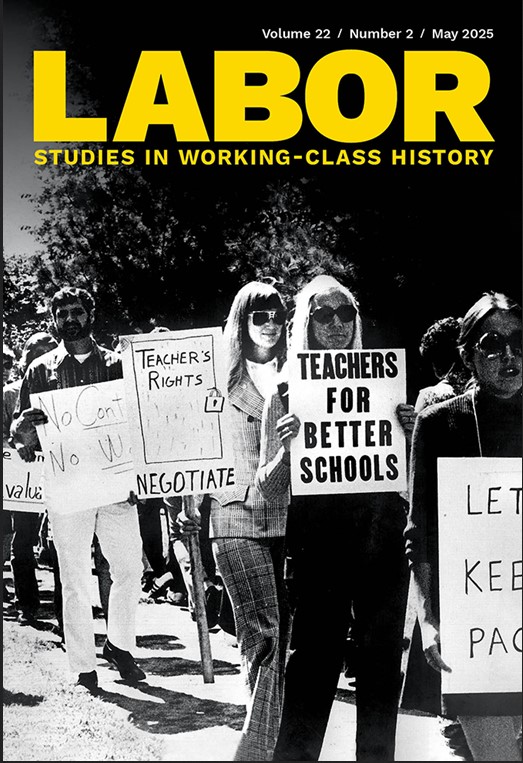
Julie Greene, editor, Duke University, LAWCHA
This is the leading academic journal in the field of labor history. There is at least one essay free per issue. The official journal for the Labor and Working-Class History Association (LAWCHA). A subscription to Labor is available through membership in LAWCHA.
--There is one open-access essay available for 3 months for each issue
The labor question—who will do the work and under what economic and political terms?—beckons today with renewed global urgency. As a site for both historical research and commentary, Labor: Studies in Working-Class History hopes to provide an intellectual scaffolding for understanding the roots of continuing social dilemmas. We invite submissions that explore the situation, subjectivity, or strategy of working men and women in any era. Although the tradition from which we emerge and to which we still pay critical homage has focused primarily on social movements and institutions based on “free” industrial labor, we mean to give equal attention to other labor systems and social contexts (e.g., slavery and other coercive labor forms, agricultural work, unpaid and domestic labor, the contingent or informal sector, the professions). While we begin with the US experience, we intend to extend our literacy not only across the American hemisphere but also, by way of transnational, international, and comparative themes, toward a truly global reach. To these ends, we look not only to academic historians but also to other scholars, journalists, labor educators, poets, and writer-activists for research articles, interpretive essays, notes and documents, and reviews.
The journal is endorsed by SPARC (the Scholarly Publishing and Academic Resources Coalition), an initiative of the Association of Research Libraries.
The leading journal in the field of labor history in the United States, formally associated with Labor and Working Class History Association.
Julie Guard
Radical Housewives is a history of the Canadas Housewives Consumers Association. This association was a community-based womens organization with ties to the communist and social democratic left that, from 1937 until the early 1950s, led a broadly based popular movement for state control of prices and made other far-reaching demands on the state. As radical consumer activists, the Housewives engaged in gender-transgressive political activism that challenged the government to protect consumers interests rather than just those of business while popularizing socialist solutions to the economic crises of the Great Depression and the immediate postwar years. Julia Guards exhaustive research, including archival research and interviews with twelve former Housewives, recovers a history of womens social justice activism in an era often considered dormant and adds a Canadian dimension to the history of politicized consumerism and of politicized materialism. Radical Housewives reinterprets the view of postwar Canada as economically prosperous and reveals the lefts role in the origins of the food security movement"-- Provided by publisher
istory of the Canadas Housewives Consumers Association
Julie Leininger Pycior
Mexican-American, Mexican American, Latino, Latinx, Jesse Jackson, politics,
traces the early origins of organizing in the decades following the US-Mexican War,
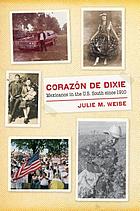
Julie M Weise
When Latino migration to the U.S. South became increasingly visible in the 1990s, observers and advocates grasped for ways to analyze "new" racial dramas in the absence of historical reference points. However, as this book is the first to comprehensively document, Mexicans and Mexican Americans have a long history of migration to the U.S. South. Corazón de Dixie recounts the untold histories of Mexicanos' migrations to New Orleans, Mississippi, Arkansas, Georgia, and North Carolina as far back as 1910. It follows Mexicanos into the heart of Dixie, where they navigated the Jim Crow system, cultivated community in the cotton fields, purposefully appealed for help to the Mexican government, shaped the southern conservative imagination in the wake of the civil rights movement, and embraced their own version of suburban living at the turn of the twenty-first century"
follows Mexicanos into the heart of Dixie, where they navigated the Jim Crow system, cultivated community in the cotton fields,
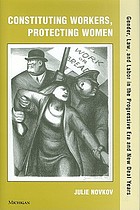
Julie Novkov
Constitutional considerations of protective laws for women were the analytical battlefield on which the legal community reworked the balance between private liberty and the state's authority to regulate.
Julie Novkov focuses on the importance of gender as an analytical category for the legal system. During the Progressive Era and New Deal, courts often invalidated generalized protective legislation, but frequently upheld measures that limited women's terms and conditions of labor.
The book explores the reasoning in such cases that were decided between 1873 and 1937. By analyzing all reported opinion on the state and federal level, as well as materials from the women's movement and briefs filed in the U.S. Supreme Court, the study demonstrates that considerations of cases involving women's measures ultimately came to drive the development of doctrine.
The study combines historical institutionalism and feminism to address constitutional interpretation, showing that an analysis of conflict over the meaning of legal categories provides a deeper understanding of constitutional development. In doing so, it rejects purely political interpretations of the so-called Lochner era, in which the courts invalidated many legislative efforts to ameliorate the worst effects of capitalism. By addressing the dynamic interactions among interested laypersons, attorneys, and judges, it demonstrates that no individuals or institutions have complete control over the generation of constitutional meaning.
demonstrates that considerations of cases involving women's measures ultimately came to drive the development of doctrine.
Juliet Schor
This pathbreaking book explains why, contrary to all expectations, Americans are working harder than ever. The author presents the astonishing news that over the past twenty years our working hours have increased by the equivalent of one month per year, a dramatic spurt that has hit everybody: men and women, professionals as well as low paid workers. Why are we, unlike every other industrialized Western nation, repeatedly choosing money over time? And what can we do to get off the treadmill?
explains why, contrary to all expectations, Americans are working harder than ever.

Juliette Charlie Maiorana
"In "The Mexican and American Mining Empire" Juliette Charlie Maiorana traces the long history of the expansion and contraction of industrial mining in the U.S. Southwest and Mexican North. Maiorana examines the history of ethnic Mexican, Native American, and mixed-race populations of middle- and working-class communities within the corporate hierarchies in the mining-intensive states of Arizona and Chihuahua from 1890 to 1965"--
history of ethnic Mexican, Native American, and mixed-race populations of middle- and working-class communities within the corporate hierarchies in the mining-intensive states of Arizona and Chihuahua from 1890 to 1965

Julius Jacobson
Table of contents:
Union conservatism : a barrier to racial equality / Julius Jacobson
-- Attitudes of Negro leaders toward the American labor movement from the Civil War to World War I / August Meier & Elliott Rudwick
-- The Negro and the United Mine Workers of America / Herbert G. Gutman
-- The Negro in Southern unions / Ray Marshall
-- The American Federation of Labor and the Negro worker, 1894-1949 / Marc Karson & Ronald Radosh
-- The CIO era, 1935-55 / Sumner M. Rosen
-- The economic situation of Negro labor / Sidney M. Peck
-- The Negro worker in the Chicago labor market / Harold M. Baron & Bennett Hymer
-- Two views on racial attitudes and practices of the contemporary labor movement : the racial practices of organized labor : the contemporary record / Herbert Hill. Contemporary labor's attitude toward the Negro / Gus Tyler
-- Trade union racial practices and the law / Robert L. Carter & Maria L. Marcus.
Book covering racial relations within the Labor movement.
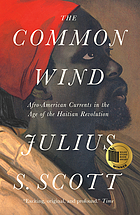
Julius Sherrard Scott
The Common Wind is a gripping and colorful account of the intercontinental networks that tied together the free and enslaved masses of the New World. Having delved deep into the gray obscurity of official eighteenth-century records in Spanish, English, and French, Julius S. Scott has written a powerful "history from below." Scott follows the spread of "rumors of emancipation" and the people behind them, bringing to life the protagonists in the slave revolution.
By tracking the colliding worlds of buccaneers, military deserters, and maroon communards from Venezuela to Virginia, Scott records the transmission of contagious mutinies and insurrections in unparalleled detail, providing readers with an intellectual history of the enslaved.
Though The Common Wind is credited with having "opened up the Black Atlantic with a rigor and a commitment to the power of written words," the manuscript remained unpublished for thirty-two years. Now, after receiving wide acclaim from leading historians of slavery and the New World, it has been published by Verso for the first time, with a foreword by the academic and author Marcus Rediker."-- Provided by publisher
narrates the contagious mutinies and insurrections in unparalleled detail, producing an intellectual history of the enslaved.
Museum/Exhibits
Tours
Maps
Digital Projects
Organizations
Sites
Film/Video
Audio/Interview
Podcast/Program
Text/Document
Image
Graphs/Data
Timeline
Southwest
West
Midwest
Southeast
Northeast
Mexico
Canada
Global
Books
Teaching
Lectures
Digital Archives
Journals
Bibliographies
Topic Intro