


Collections
Library
Type
Region
Coverage:
-
Published:
-
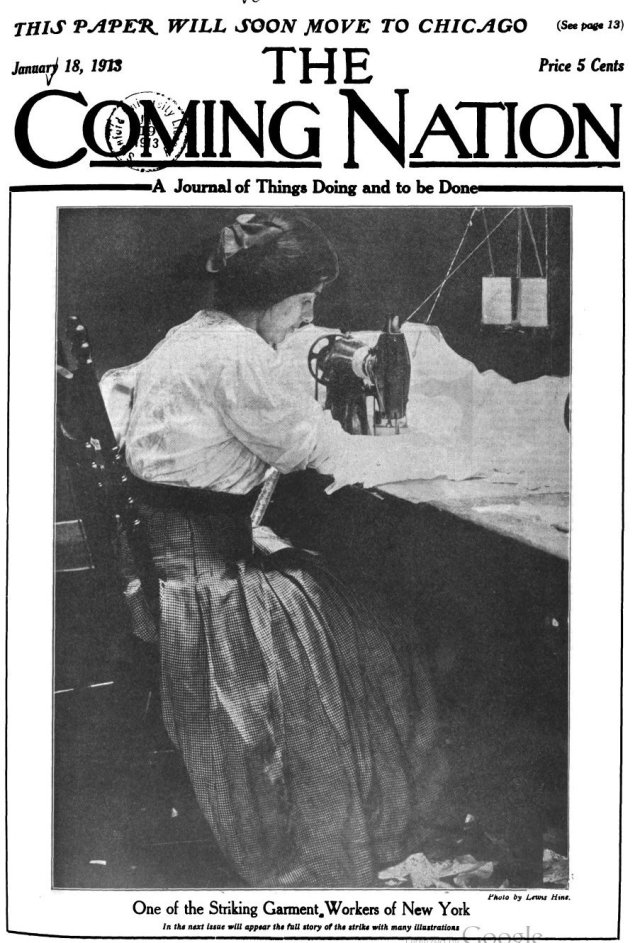
Julius Wayland, Marxists.org
published from 1893-1913, but only 1910-1913 is available digitally, the was a socialist newspaper
The Coming Nation was a weekly publication owned jointly by Appeal to Reason publisher Julius Wayland and editor Fred D. Warren and initially produced in Girard, Kansas in the Appeal’s state-of-the-art publishing facility. Edited by Algie Simons and Charles Edward Russell, the publication was heavily illustrated and had a decidedly artistic and literary bent, and included regular sections dedicated to women and to children. The paper featured the drawings of Appeal to Reason staff artist Ryan Walker and free lance Art Young.Beginning as an 8-page tabloid newspaper, the Coming Nation moved to a smaller size and a 16-page magazine format at the end of December 1910. In 1911 it updated its paper stock from newsprint to magazine paper for better reproduction of art. Production was moved to Chicago, likely in connection with this change of physical standards.Although it claimed to have originated in 1893 on its front page banner, this homage to J.A. Wayland's original socialist newspaper was more whimsical than factual; the two publications had no actual connection.The Coming Nation was terminated in 1913 due to an ongoing financial crisis at the Appeal to Reason, which had a massive circulation but which charged an insufficient subscription price to cover its cost. Wayland was no longer part of the picture, having committed suicide shortly after the election of 1912 and Warren terminated his own money-losing publication in an attempt to keep afloat the struggling Appeal — in which he had no ownership stake.
This respite proved to be short-lived, however, and Warren retired from the Appeal at the beginning of August 1914, having burned out on the project physically and mentally.—Tim Davenport
Socialist newspaper digitized
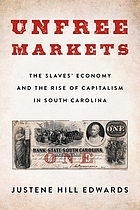
Justene Hill Edwards
"Centering the slaves' economy in the rapid growth of capitalist enterprise in the eighteenth- and nineteenth-century American South, Justene Hill Edwards explores the detrimental influence of capitalist innovation on slaves' economic pursuits in South Carolina, the most pro-slavery state in America.
Examining the strategies enslaved people used to make money and obtain goods for themselves, and one of the fullest accounts to date of slaves' market practices, Edwards argues that the slaves' economy helped to fuel South Carolina's economic growth--which meant a continuation of the violent and exploitative regime that shaped slave's lives. Enslaved peoples' slow loss of economic autonomy coincided with the capitalist evolution of slavery.
Edwards starts by looking at the economic activity of slaves during colonial era South Carolina, considering how they navigated the laws and institutions of slavery in trading with both free and enslaved people. She looks at how the social unrest of the American Revolution provided opportunity for increased trade, and explores the growing autonomy enslaved people saw in trade, often formalized through the courts.
However, as the plantations turned their attention to increased profitability, plantation owners increasingly looked to their slave's economic activity as an source of profit. So began the erosion of economic autonomy, as the gains from trade were increasingly captured by slave owners"-- Provided by publisherIntroduction: Capitalism in the Economic Lives of Enslaved People
"Negroes Publickly Cabaling in the Streets": The Enslaved Economy and the Culture of Slavery in Colonial South Carolina
"This Infamous Traffick": Revolution in the Economic Lives of the Enslaved
"A Dangerous and Growing Practice": Enslaved Entrepreneurship and the Cotton Economy in the Early-National Era
"The Facility of Obtaining Money": Violence, Fear, and Accumulation in the Vesey Era
"The Negroes' Accounts": Capitalist Influences in the Slaves' Economy
"A Monstrous Nuisance": Enslaved Enterprises, Class Anxieties, and the Coming of the Civil War
Conclusion: "Freedom Ain't Nothin": Capitalism and Freedom in the Shadow of Slavery
explores the detrimental influence of capitalist innovation on slaves' economic pursuits in South Carolina, the most pro-slavery state in America.
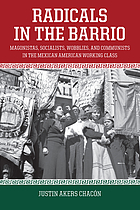
Justin Akers Chacón
Radicals in the Barrio uncovers a long and rich history of political radicalism within the Mexican and Chicano working class in the United States. Chacón clearly and sympathetically documents the ways that migratory workers carried with them radical political ideologies, new organizational models, and shared class experience, as they crossed the border into southwestern barrios during the first three decades of the twentieth-century." -- Provided by publisher
long and rich history of political radicalism within the Mexican and Chicano working class in the United States.
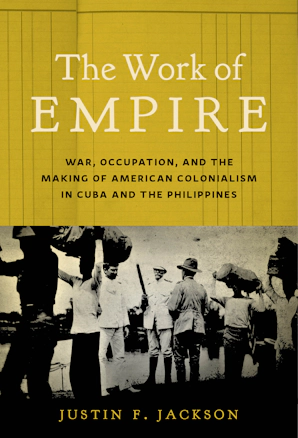
Justin F. Jackson
How workers in occupied Cuba and the Philippines enabled and resisted US imperialism
In 1898, on the eve of the Spanish-American War, the US Army seemed minuscule and ill-equipped for global conflict. Yet over the next fifteen years, its soldiers defeated Spain and pacified nationalist insurgencies in both Cuba and the Philippines. Despite their lack of experience in colonial administration, American troops also ruled and transformed the daily lives of the 8 million people who inhabited these tropical islands.
How was this relatively small and inexperienced army able to wage wars in Cuba and the Philippines and occupy them? American soldiers depended on tens of thousands of Cubans and Filipinos, both for military operations and civil government. Whether compelled to labor for free or voluntarily working for wages, Cubans and Filipinos, suspended between civilian and soldier status, enabled the making of a new US overseas empire by interpreting, guiding, building, selling sex, and many other kinds of work for American troops. In The Work of Empire, Justin Jackson reveals how their labor forged the politics, economics, and culture of American colonialism in Cuba and the Philippines and left an enduring imprint on these islands and the US Army itself. Jackson offers new ways to understand the rise of American military might and how it influenced a globalizing imperial world.
How workers in occupied Cuba and the Philippines enabled and resisted US imperialism

Justine Modica
Dr. Justine Modica discusses the Worthy Wages movement centered in Seattle from the 1980s through the 2000s. Affiliated with SEIU, daycare directors and childcare workers in childcare centers and home-based daycares joined together to raise public awareness of the underfunding of daycare and lobby for increased state childcare subsidies, hoping to increase the wages and retention of skilled workers in a lowly-paid but critical field.
Modica is a Klarman Postdoctoral Fellow in History at Cornell University. She authored the article, “Worthy Wages in the Emerald City: Worker- and Director-Led Childcare Movements in Seattle, 1984–2006,” and is writing a book examining how the government, employers, and families have shaped childcare as wage labor.
Childcare workers organize for equity in this podcast.

Kansas Agitator
The Kansas Agitator of Garnett, Kansas, was founded by William O. Champe in 1890. Champe was the sole proprietor of the newspaper until its end in 1905, with Joseph M. Alexander, William E. Alexander, William H. Ambrose, and wife Anna Champe serving as associate editors at various times throughout its run.
The Agitator was affiliated with the People’s Party and published four to eight pages once weekly. Circulation reached 1,000 subscriptions in 1895 and exceeded that number by 1897 when the population of Garnett was just under 2,200. The Agitator was published simultaneously in nearby Greeley until 1891, and in Topeka, Kansas, from September 21, 1894, to February 22, 1895. The paper featured illustrative mastheads, regional and national news, frequent mentions of socialism and prohibition, a large amount of genealogical information, and continued heavy support for Populist ideals.
The Kansas Agitator published its first issue on June 7, 1890, with the motto “Devoted to the Interests of the Masses: A Wide-Awake Advocate of All the Reforms of the Day”; this slogan was later adapted to “A Fearless, Aggressive, Progressive Advocate of all Reforms.” Champe was faithful to Populist ideals and strongly opposed the growing idea of fusionism with the Democratic Party: “If the Democratic party believed in People’s party principles, or did the Republican party, then the organization of the People’s party was folly to begin with, and to fuse with either party is virtually an admission that the People’s party is not needed, has no distinct principles, and would stamp it as being merely a political excrescence.” As far as elected officials were concerned, Champe was a staunch supporter of Kansas attorney William Alfred Peffer, the first Populist to be elected as United States Senator. When Peffer failed to be reelected in 1896 after six years in office (he was replaced by another Populist, one of only six ever to be elected to Senate), Champe stated that “His defeat was a mistake” and that Peffer was “the personification of honor, and he will return home loved and honored of all men.”
The Kansas Agitator was one of the last Populist papers active in Kansas when in May 1905 it changed to the Independent Review after 15 years of publication; the Champe’s continued to serve as editors and publishers. In the Review’s first issue, the editors stated that they “believe our duty to join in the independent movement,” and that “we do not abandon any of the principles for which we have been contending all these years, but, when we see Republicans and Democrats all over the country embracing those principles, we feel like giving them the glad hand.”
The paper featured illustrative mastheads, regional and national news, frequent mentions of socialism and prohibition, a large amount of genealogical information, and continued heavy support for Populist ideals.

Kansas Historical Society
Primary sources online from the Kansas Historical Society under the subject labor
documents and images from Kansas Memory on labor
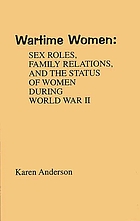
Karen Anderson
Wartime Women examines in detail the short-term changes of the war years; the jobs in war plants and support services; the effects of women's earnings on family finances; the response of trade unions. Anderson shows that the seeds of the postwar denial of women's equal participation were present in the ambivalence of wartime attitudes. Crammed with information perceptively interpreted1. World War II and the changing status of American women
2. "Woman's place is in the home-and in the factory, too"
3. The family in wartime
4. Child care in wartime
5. Postwar and postscript : the long-term consequences of the war
examines the short-term changes of the war years; the jobs in war plants and support services; the effects of women's earnings on family finances; the response of trade unions.
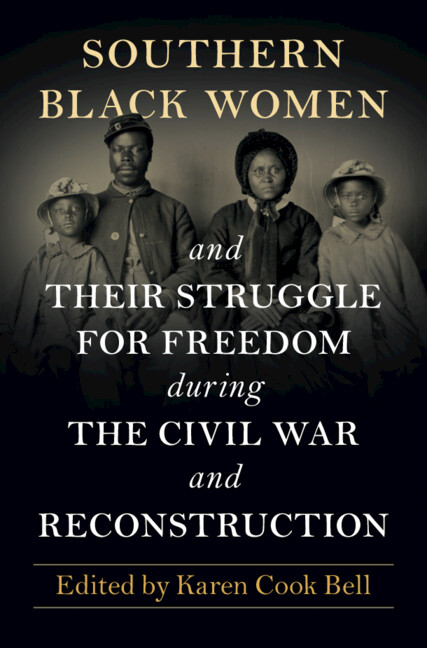
Karen Cook Bell, ed.
This volume examines how Black women across the American South employed various forms of resistance and survival strategies to navigate the tumultuous Civil War and Reconstruction era. It will appeal to scholars and students interested in African American history, gender studies, and the Civil War and Reconstruction era
examines how Black women across the American South employed various forms of resistance and survival strategies to navigate the Civil War and Reconstruction era.

Karen Lystra
Love and the Working Class' takes a unique look at the emotions of hard-living, nineteenth-century Americans who were often on the cusp of literacy. These labouring folk highly valued letters and, however difficult it was, wrote to stay connected to those they loved.
This book displays the personal expression of factory hands, manual labourers, peddlers, coopers, carpenters, lumbermen, miners, tanners, haulers, tailors, seamstresses, laundresses, domestics, sharecroppers, independent farmers, and common soldiers and their wives. Entering the 'anonymous corners' of these people's lives through letters, we can see their humour, grit, hope, heartache, and endurance, and grasp what they believed and felt about themselves, their kinfolk, and their friends
Overview
Description
Table of Contents
Author Information
Reviews and Awards
From Our Blog
Cover
Love and the Working Class
The Inner Worlds of Nineteenth Century Americans
Karen Lystra
Table of Contents
Introduction
Chapter 1: “Please Excuse All Mistakes”: Letter-Writing, Shame, and Social Connection
Chapter 2: Working-Class Americans Choose a Mate: Nonromantic Courtship and Tribal Intimacy
Chapter 3: The Love Continuum: Understanding Romantic and Nonromantic Attachment
Chapter 4: Sex Talk, Humor, and Fear of Ridicule: Desire and Self-Protection
Chapter 5: Love to All Inquiring Friends: Sustaining Communal Ties in Nonromantic Marriage
Chapter 6: Fighting to Stay Together: Unhappy Spouses and Their Struggles
Chapter 7: Roses Are Red/ Violets are Blue: Emotional History in Rhyme
Chapter 8: Imagining the Eternal Village: Death, Longing, and Loss
Presents significant new interpretations of working-class courtship and marriage based on numerous letters written by working-class nineteenth-century Americans
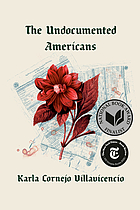
Karla Cornejo Villavicencio
Traveling across the country, journalist Karla Cornejo Villavicencio risked arrest at every turn to report the extraordinary stories of her fellow undocumented Americans. Her subjects have every reason to be wary around reporters, but Cornejo Villavicencio has unmatched access to their stories. Her work culminates in a stunning, essential read for our times.
Born in Ecuador and brought to the United States when she was five years old, Cornejo Villavicencio has lived the American Dream. Raised on her father's deliveryman income, she later became one of the first undocumented students admitted into Harvard. She is now a doctoral candidate at Yale University and has written for The New York Times. She weaves her own story among those of the eleven million undocumented who have been thrust into the national conversation today as never before.
Looking well beyond the flashpoints of the border or the activism of the DREAMERS, Cornejo Villavicencio explores the lives of the undocumented as rarely seen in our daily headlines. In New York, we meet the undocumented workers who were recruited in the federally funded Ground Zero cleanup after 9/11. In Miami we enter the hidden botanicas, which offer witchcraft and homeopathy to those whose status blocks them from any other healthcare options. In Flint, Michigan, we witness how many live in fear as the government issues raids at grocery stores and demands identification before offering life-saving clean water. In her book, Undocumented America, Cornejo Villavicencio powerfully reveals the hidden corners of our nation of immigrants. She brings to light remarkable stories of hope and resilience, and through them we come to understand what it truly means to be American
explores the lives of the undocumented as rarely seen in our daily headlines.

Kate Fortmueller, Luci Marzola
Hollywood Unions is a unique collection that tells the stories of the unions and guilds that have organized motion picture and television labor: IATSE, the DGA, SAG-AFTRA, and the WGA. The Hollywood unions represent a wide swath of the workers making media: from directors and stars to grips and makeup artists. People today know some of these organizations from their glitzy annual awards celebrations, but the unions’ actual importance is in bargaining with the Association of Motion Picture and Television Producers (AMPTP) on behalf of 331,000 workers in the motion picture and television industry. The Hollywood unions are not neutral institutions but rather have long histories of jurisdictional battles, competitions with rival unions, and industry-altering strikes. They have supported the industry’s workers through the Great Depression, World War II, the McCarthy era, the collapse of the studio system, the rise of television, runaway production, fights for gender parity, the digital revolution, and a global pandemic. The history of these unions has contributed to making media work sustainable in the long term and helped shape the conditions and production cultures of Hollywood.
Introduction: Unions in Hollywood
Kate Fortmueller and Luci Marzola
Section I. The Below-the-Line Unions: IATSE in Hollywood
Introduction
Luci Marzola and Katie Bird
Chapter 1 Feminized Production Roles: Uneven Progress, Enduring Inequality in Female
Dominated Locals
Erin Hill
Chapter 2 Backlot Work: The Working Class Backbone of Hollywood’s Unions
Katie Bird
Chapter 3 Sound and Camera: The Pacesetters on Set and in IATSE
Luci Marzola
Chapter 4 Post-Production: Working Behind the Scenes and At the Forefront of IATSE
Paul Monticone
Chapter 5 Art Direction: The Drive to Unite Hollywood’s Designers and Artists
Barbara Hall
Chapter 6 Makeup and Hair: Forgotten Folks and Famous Experts
Adrienne L. McLean
Chapter 7 Costumes and Wardrobe: Gender and the Invisible Labor of Costume Departments
Helen Warner
Chapter 8 Animation: Hollywood Outliers, Industry Firebrands
Dawn Fratini
Section II. The Guilds: Hollywood’s Creative Class
Introduction
Kate Fortmueller
Chapter 9 Writers: Scripting the Narrative of Hollywood Labor
Miranda Banks
Chapter 10 Actors: Balancing the Needs of Extras, Actors, and Stars
Kate Fortmueller
Chapter 11 Directors: Power, Prestige, and the Politics of Authorship
Maya Montañez Smukler
Coda: Hollywood on Strike
Kate Fortmueller
Appendix – Hollywood Unions Strike Timeline
This volume tells the stories of the unions and guilds that have organized motion picture and television labor: IATSE, the DGA, SAG-AFTRA, and the WGA
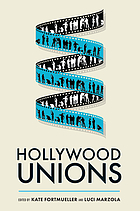
Kate Fortmueller, Luci Marzola, eds
Hollywood Unions is a unique collection that tells the stories of the unions and guilds that have organized motion picture and television labor: IATSE, the DGA, SAG-AFTRA, and the WGA. The Hollywood unions represent a wide swath of the workers making media: from directors and stars to grips and make-up artists. People today know some of these organizations from their glitzy annual awards celebrations, but the unions' actual importance is in bargaining with the Association of Motion Picture and Television Producers (AMPTP) on behalf of 331,000 workers in the motion picture and television industry. The Hollywood unions are not neutral institutions, but rather have long histories of jurisdictional battles, competitions with rival unions, and industry-altering strikes. They have supported the industry's workers through the Great Depression, World War II, the McCarthy era, the collapse of the studio system, the rise of television, runaway production, fights for gender parity, the digital revolution, and a global pandemic. The history of these unions has contributed to making media work sustainable in the long-term and helped shape the conditions and production cultures of Hollywood"-- Provided by publisher
a unique collection that tells the stories of the unions and guilds that have organized motion picture and television labor.
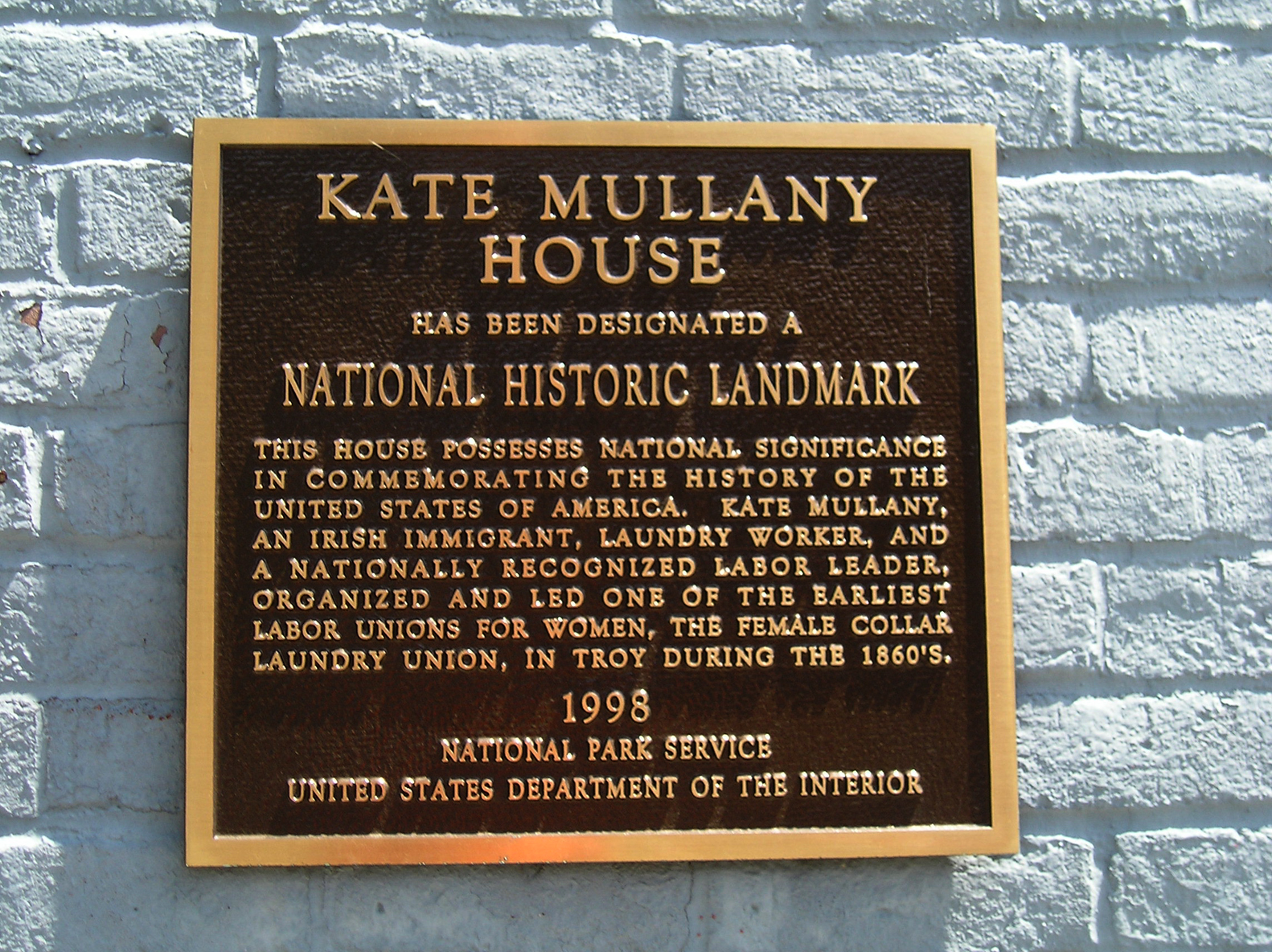
Kate Mullany House
Kate Mullany's former home in Troy, New York honors one of the earliest women's labor unions that sought fair pay and safe working conditions.
The Kate Mullany House was declared a National Historic Landmark by the Secretary of the Interior in 1998 and designated an affiliated unit with in the National Historic Site Congress on 2005.
It is located at 350 8th St. in Troy, NY. It is the home of the American Labor Studies Center.
The site is undergoing restoration and does not have regular visiting hours. For information on visiting the site, call the American Labor Studies Center at (518) 331-4474.
Kate Mullany's house explores her role and the history of women workers

Kate Richards O'HareHistory Matters
In her autobiographical essay, “How I Became a Socialist Agitator,” which was first published in Socialist Woman in October 1908, Socialist Party organizer Kate Richards O’Hare credited her career as a “Socialist agitator” to her youthful exposure to poverty and “sordid suffering.” As she explained in this essay, her disillusionment with the church and a talk by labor organizer “Mother”Jones further pushed her toward socialism.
Kate Richards O'Hare's 1908 essay on poverty, her disillusionment with the church, and how a talk by Mother Jones helped her become a socialist.
Katherine Eva Maich
The personal nature of domestic labor, and its location in the privacy of the employer's home, means that domestic workers have long struggled for equitable and consistent labor rights. The dominant discourse regards the home as separate from work, so envisioning what its legal regulation would look like is remarkably challenging. In Bringing Law Home, Katherine Eva Maich offers a uniquely comparative and historical study of labor struggles for domestic workers in New York City and Lima, Peru. She argues that if the home is to be a place of work then it must also be captured in the legal infrastructures that regulate work. Yet, even progressive labor laws for domestic workers in each city are stifled by historically entrenched patterns of gendered racialization and labor informality. Peruvian law extends to household workers only half of the labor protections afforded to other occupations. In New York City, the law grants negligible protections and deliberately eschews language around immigration. Maich finds that coloniality is deeply embedded in contemporary relations of service, revealing important distinctions in how we understand power, domination, and inequality in the home and the workplace.
List of Figures and Tables
Acknowledgments
1.Conceptualizing the Home as a Site of Work, as a Site of Law
2.Architecture of Access: Race, Space, the City, and the Peruvian Colonial Imaginary
3.Colonial Domesticity: Constructing Insider Vulnerability in Lima's Homes
4.From Slavery to Service: Continuing Struggles to Regulate Domestic Worker Rights in the United States
5.Immigrant Domesticity: Producing Outsider Vulnerability in New York City
6.Toward New Sites of Labor, Toward New Labor Rights Methodological Appendix
Comparative Law Appendix
A comparative and historical study of labor struggles for domestic workers in New York City and Lima, Peru. The author argues that if the home is to be a place of work then it must also be captured in the legal infrastructures that regulate work.
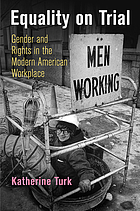
Katherine Turk
In 1964, as part of its landmark Civil Rights Act, Congress outlawed workplace discrimination on the basis of such personal attributes as sex, race, and religion. This provision, known as Title VII, laid a new legal foundation for women's rights at work. Though President Kennedy and other lawmakers expressed high hopes for Title VII, early attempts to enforce it were inconsistent. In the absence of a consensus definition of sex equality in the law or society, Title VII's practical meaning was far from certain.
The first history to foreground Title VII's sex provision, Equality on Trial examines how the law's initial promise inspired a generation of Americans to dispatch expansive notions of sex equality. Imagining new solidarities and building a broad class politics, these workers and activists engaged Title VII to generate a pivotal battle over the terms of democracy and the role of the state in all labor relationships.
But the law's ambiguity also allowed for narrow conceptions of sex equality to take hold. Conservatives found ways to bend Title VII's possible meanings to their benefit, discovering that a narrow definition of sex equality allowed businesses to comply with the law without transforming basic workplace structures or ceding power to workers. These contests to fix the meaning of sex equality ultimately laid the legal and cultural foundation for the neoliberal work regimes that enabled some women to break the glass ceiling as employers lowered the floor for everyone else. Synthesizing the histories of work, social movements, and civil rights in the postwar United States, Equality on Trial recovers the range of protagonists whose struggles forged the contemporary meanings of feminism, fairness, and labor rights"--Jacket
visionaries and conservatives interpretation of the Civil Rights Act's Title VII
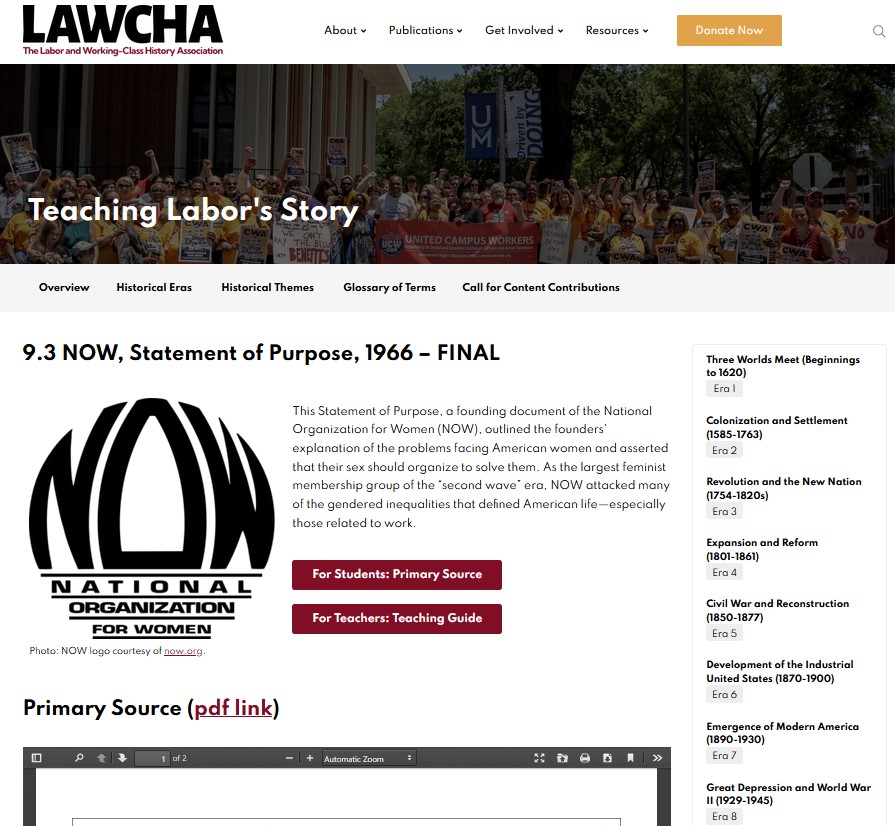
Katherine Turk, Teaching Labor's Story
Statement of Purpose,1966 -- National Organization for Women Teaching Document and Teaching Guide
The Statement of Purpose,adopted at NOW’s first National Conference in Washington, D.Con October 29, 1966,was the founding document of the National Organization for Women.It explained what the founders understood to be the problems facing American women, and asserted that their sex should organize to solve those problems. NOWbecame the largest feminist membership organization of the “second wave” era.
Scholarship and popular memory often contrast NOW with the self-described radical feminists who began to gather shortly after this Statement of Purpose was written. Those radicals sought to transform or abolish institutions: the nuclear family, capitalism,universities, and the medical system. NOW’s Statement of Purpose seems moderate by comparison. Still, its basic demands—that women deserve an equal hand in shaping American life and that society, rather than individuals, should shoulder the burdens of caring labor—both remain to be met
This Statement of Purpose, a founding document of the National Organization for Women (NOW), outlined the founders’ explanation of the problems facing American women and asserted that their sex should organize to solve them. As the largest feminist membership group of the “second wave” era, NOW attacked many of the gendered inequalities that defined American life—especially those related to work.
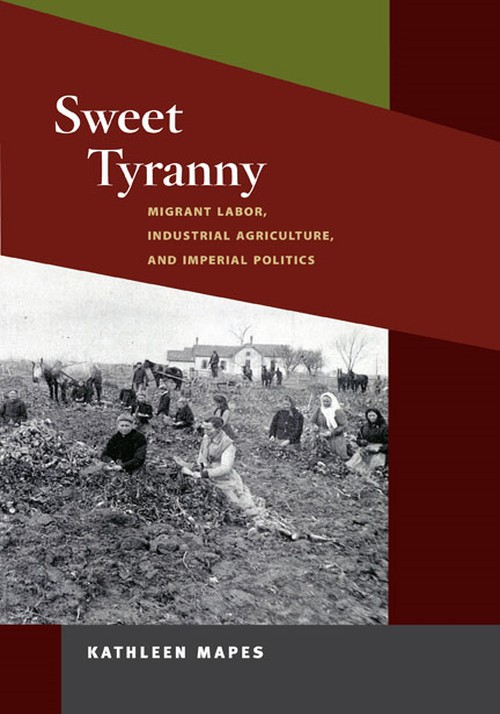
Kathleen Mapes
explores how the sugar beet industry transformed the rural Midwest by introducing large factories, contract farming, and foreign market labor
Rural industrialization and imperial politics
Contract farming in rural Michigan
Family farms, child labor, and migrant families
Farmers and the Great War
Immigrant labor and the guest worker program
Mexican immigrants and immigration debate
Child labor reformers and industrial agriculture
Remaking imperialism and the industrial countryside
The politics of migrant labor
explores how the sugar beet industry transformed the rural Midwest by introducing large factories, contract farming, and foreign market labour.
Kathryn S. Olmsted
In a major reassessment of modern conservatism, noted historian Kathryn S. Olmsted reexamines the explosive labor disputes in the agricultural fields of Depression-era California, the cauldron that inspired a generation of artists and writers and that triggered the intervention of FDR's New Deal. Right Out of California tells how this brief moment of upheaval terrified business leaders into rethinking their relationship to American politics--a narrative that pits a ruthless generation of growers against a passionate cast of reformers, writers, and revolutionaries. Olmsted reveals how California's businessmen learned the language of populism with the help of allies in the media and entertainment industries, and in the process created a new style of politics: corporate funding of grassroots groups, military-style intelligence gathering against political enemies, professional campaign consultants, and alliances between religious and economic conservatives. The business leaders who battled for the hearts and minds of Depression-era California, moreover, would go on to create the organizations that launched the careers of Richard Nixon and Ronald Reagan. A riveting history in its own right, Right Out of California is also a vital chapter in our nation's political transformation whose echoes are still felt today"-- Provided by publisher
the explosive labor disputes in the agricultural fields of Depression-era California spurred conservative organizing
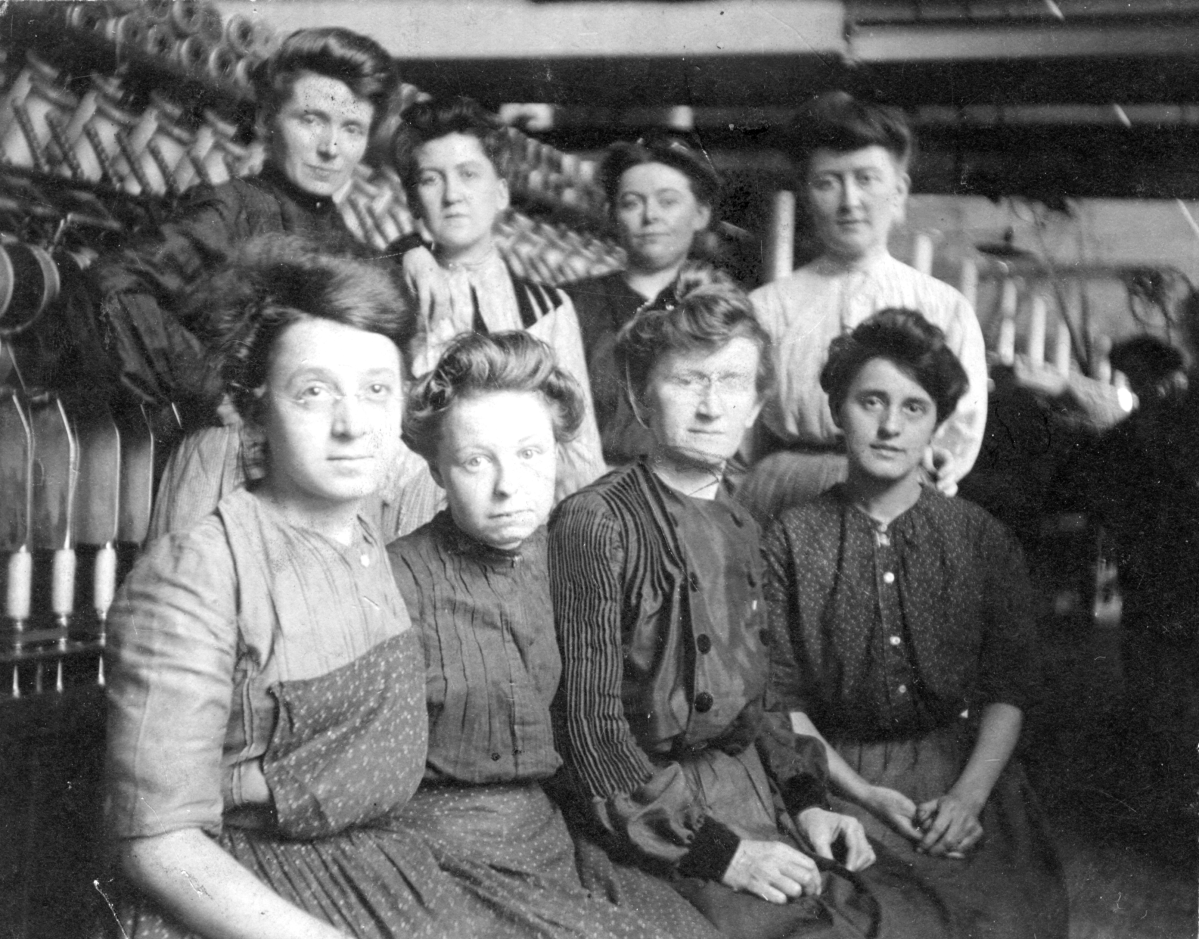
Katie Woods, Massachusetts Women’s History Center
Women in the Commonwealth have often led the way in the fight for just compensation and equal pay in the United States. From the 1830s Lowell mill girls "turn outs" to 140 years later with the 9to5 movement of organized office workers, learn how Massachusetts working women have advocated for their worth.
Exhibit Contents
"Equal Pay for Equal Work" Mill Girls "Turn Out" in Lowell (1834-1836)
"Give us a Fair Compensation": Women in the 1860 Lynn Shoeworkers’ Strike
The Lawrence Bread and Roses Strike (1912)
Disconnecting New England: The 1919 Telephone Operators Strike
"To be recognized with dignity": Rights for MA Domestic Workers
9to5: Demanding Raises, Rights, and Respect
The Fight Continues…closing the Gender Wage Gap in the 21st century
Credits
A digital exhibit with multiple photos, charts, maps. Covers Mill Girls "Turn Out" in Lowell (1834-1836)
Women in the 1860 Lynn Shoeworkers’ Strike; The Lawrence Bread and Roses Strike (1912); The 1919 Telephone Operators Strike
Domestic Workers Struggles for Rights; 9to5: Demanding Raises, Rights, and Respect; Gender Wage Gap in the 21st century
Katrina Navickas
This book is a wide-ranging survey of the rise of mass movements for democracy and workers' rights in northern England from 1789 to 1848. It is a provocative narrative of the closing down of public space and dispossession from place. It offers historical parallels for contemporary debates about protests in public space and democracy and anti-globalisation movements. In response to fears of revolution from 1789 to 1848, the British government and local authorities prohibited mass working-class political meetings and societies. Protesters faced the privatisation of public space. The 'Peterloo Massacre' of 1819 marked a turning point. Radicals, trade unions and the Chartists fought back by challenging their exclusion from public spaces, creating their own sites and eventually constructing their own buildings or emigrating to America. New evidence of protest in rural areas of northern England, including rural Luddism, is also uncovered.
from the first working-class radical societies in the 1790s to trade unions and Chartists in the 1840s
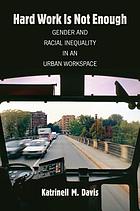
Katrinell Davis
"The Great Recession punished American workers, leaving many underemployed or trapped in jobs that did not provide the income or opportunities they needed. Moreover, the gap between the wealthy and the poor had widened in past decades as mobility remained stubbornly unchanged. Against this deepening economic divide, a dominant cultural narrative took root: immobility, especially for the working class, is driven by shifts in demand for labor. In this context, and with right-to-work policies proliferating nationwide, workers are encouraged to avoid government dependency by arming themselves with education and training.Drawing on archival material and interviews with African American women transit workers in the San Francisco Bay Area, Katrinell Davis grapples with our understanding of mobility as it intersects with race and gender in the postindustrial and post–civil rights United States. Considering the consequences of declining working conditions within the public transit workplace of Alameda County, Davis illustrates how worker experience--on and off the job--has been undermined by workplace norms and administrative practices designed to address flagging worker commitment and morale. Providing a comprehensive account of how political, social, and economic factors work together to shape the culture of opportunity in a postindustrial workplace, she shows how government manpower policies, administrative policies, and drastic shifts in unionization have influenced the prospects of low-skilled workers."
Concepts and methods: understanding opportunity shifts among transit operators in the post-affirmative action era
From exclusion to selective inclusion: pre-1975 employment trends in the transit industry
Open doors, segregated facilities: African American women's incorporation into AC Transit
A rough ride: how worker-centered reforms, ambivalence, and declining conditions create work-life conflicts
Drug tests and pencil whippings: the consequences of workplace discipline within AC Transit
A house divided: the impact of persistent bias on low-skilled workers
illustrates how worker experience has been undermined by workplace norms and administrative practices designed to address flagging worker commitment and morale.
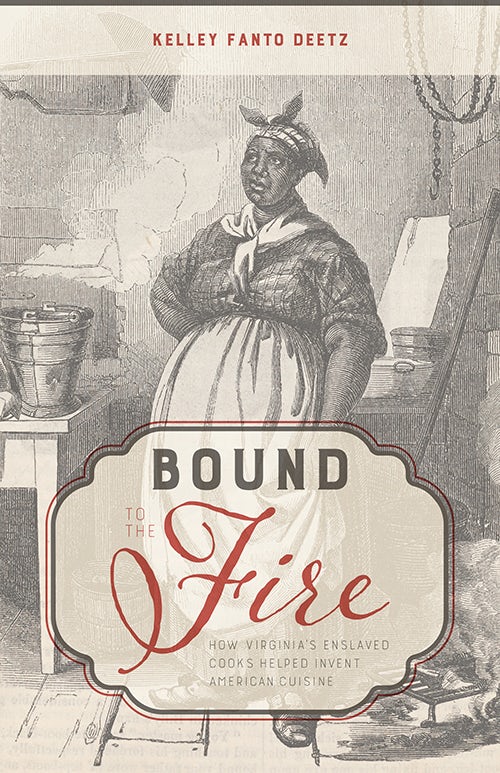
Kelley Fanto Deetz
In grocery store aisles and kitchens across the country, smiling images of 'Aunt Jemima' and other historical and fictional black cooks can be found on various food products and in advertising. Although these images are sanitized and romanticized in American popular culture, they represent the untold stories of enslaved men and women who had a significant impact on the nation's culinary and hospitality traditions even as they were forced to prepare food for their oppressors. Kelley Fanto Deetz draws upon archaeological evidence, cookbooks, plantation records, and folklore to present a nuanced study of the lives of enslaved plantation cooks from colonial times through emancipation and beyond. She reveals how these men and women were literally 'bound to the fire' as they lived and worked in the sweltering and often fetid conditions of plantation house kitchens. These highly skilled cooks drew upon skills and ingredients brought with them from their African homelands to create complex, labor-intensive dishes such as oyster stew, gumbo, and fried fish. However, their white owners overwhelmingly received the credit for their creations. Focusing on enslaved cooks at Virginia plantations including Thomas Jefferson's Monticello and George Washington's Mount Vernon, Deetz restores these forgotten figures to their rightful place in American and Southern history. Bound to the Fire not only uncovers their rich and complex stories and illuminates their role in plantation culture, but it celebrates their living legacy with the recipes that they created and passed down to future generations"--Provided by publisher
a nuanced study of the lives of enslaved plantation cooks from colonial times through emancipation and beyond.
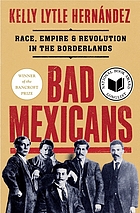
Kelly Lytle Hernández
Kelly Lytle Hernández reframes our understanding of U.S. history in this groundbreaking narrative of revolution in the borderlands. Bad Mexicans tells the dramatic story of the magonistas, the migrant rebels who sparked the 1910 Mexican Revolution from the United States. Led by a brilliant but ill-tempered radical named Ricardo Flores Magón, the magonistas were a motley band of journalists, miners, migrant workers, and more, who organized thousands of Mexican workers--and American dissidents--to their cause. Determined to oust Mexico's dictator, Porfirio Díaz, who encouraged the plunder of his country by U.S. imperialists such as Guggenheim and Rockefeller, the rebels had to outrun and outsmart the swarm of U. S. authorities vested in protecting the Diaz regime. The U.S. Departments of War, State, Treasury, and Justice as well as police, sheriffs, and spies, hunted the magonistas across the country. Capturing Ricardo Flores Magón was one of the FBI's first cases. But the magonistas persevered. They lived in hiding, wrote in secret code, and launched armed raids into Mexico until they ignited the world's first social revolution of the twentieth century. Taking readers to the frontlines of the magonista uprising and the counterinsurgency campaign that failed to stop them, Kelly Lytle Hernández puts the magonista revolt at the heart of U.S. history. Long ignored by textbooks, the magonistas threatened to undo the rise of Anglo-American power, on both sides of the border, and inspired a revolution that gave birth to the Mexican-American population, making the magonistas' story integral to modern American life--Provided by publisher
the dramatic story of migrant rebels who sparked the 1910 Mexican Revolution from the United States
Museum/Exhibits
Tours
Maps
Digital Projects
Organizations
Sites
Film/Video
Audio/Interview
Podcast/Program
Text/Document
Image
Graphs/Data
Timeline
Southwest
West
Midwest
Southeast
Northeast
Mexico
Canada
Global
Books
Teaching
Lectures
Digital Archives
Journals
Bibliographies
Topic Intro