


Collections
Library
Type
Region
Coverage:
-
Published:
-
Khayrallah Center for Lebanese Diaspora Studies
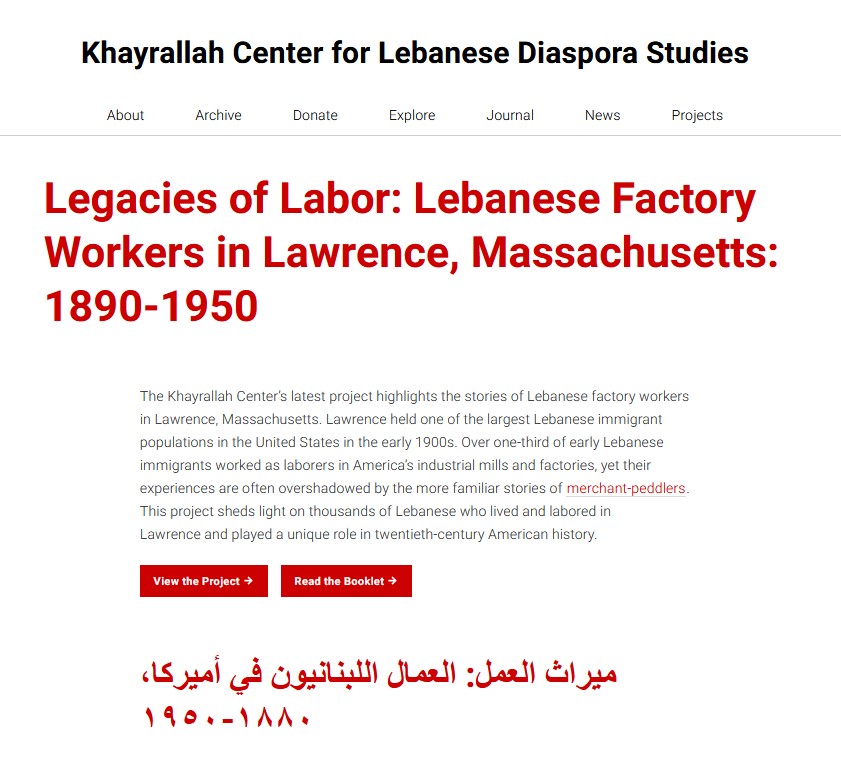
The Khayrallah Center’s latest project highlights the stories of Lebanese factory workers in Lawrence, Massachusetts. Lawrence held one of the largest Lebanese immigrant populations in the United States in the early 1900s. Over one-third of early Lebanese immigrants worked as laborers in America’s industrial mills and factories, yet their experiences are often overshadowed by the more familiar stories of merchant-peddlers. This project sheds light on thousands of Lebanese who lived and labored in Lawrence and played a unique role in twentieth-century American history.
The story of the role of Lebanese workers especially in the famous Lawrence Massachusetts Bread and Roses Strike of 1912, led by the IWW. This link opens to a page where the booklet can be downloaded as pdf
Khayrallah Center for Lebanese Diaspora Studies
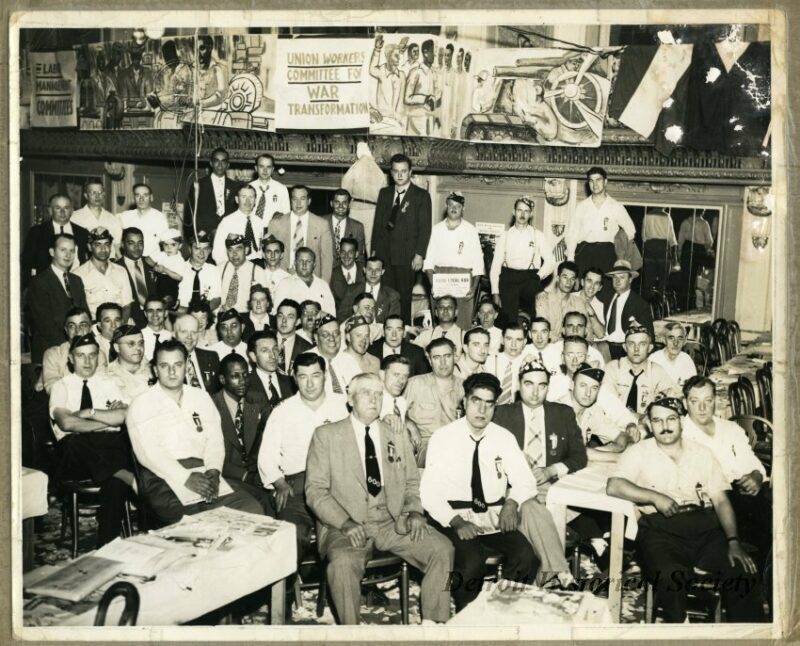
The Khayrallah Center for Lebanese Diaspora Studies is proud to share a suite of lesson plans based on the Arab American Labor project. Developed by Lindsey Payne, a PhD student in the NCSU College of Education, these lessons utilize the C3 Framework for Social Studies Standards. Each unit is designed for use by secondary social studies teachers and can be adapted to fit the needs of each individual classroom.
Lesson Plans list:
Overview
Miners Lesson Plan: How do you find stability in precarious situations?
Seamstresses Lesson Plan: Key Question: How did gender impact the ways in which Arab American women navigated labor?
Autoworkers Lesson Plan: Key Question: Can resistance lead to reform?
Performers What happens to art when it is commodified?
Yemeni Farmworkers Lesson Plan: Do the experiences and contributions of Yemeni farmworkers in the United States reflect broader patterns in society?
Spanning 1890-1970, these lesson plans consider precarious labor, health and safety, dangerous work, labor and immigration, women's labor and other interpretative analyses that connect labor and Arab-American history in the United States.
Kheel Center
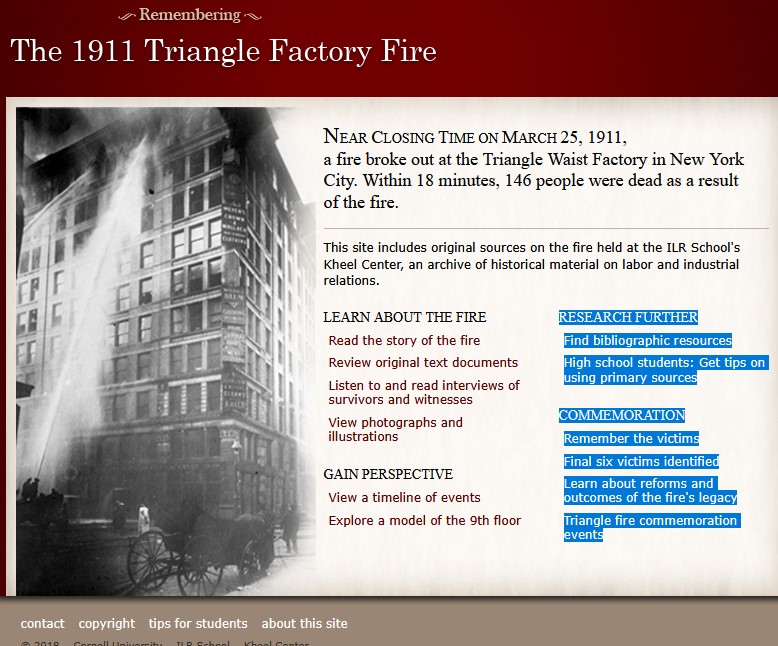
This site includes original sources on the fire held at the ILR School's Kheel Center, an archive of historical material on labor and industrial relations.
LEARN ABOUT THE FIRE
Read the story of the fire
Review original text documents
Listen to and read interviews of survivors and witnesses
View photographs and illustrations
GAIN PERSPECTIVE
View a timeline of events
Explore a model of the 9th floor
RESEARCH FURTHER
Find bibliographic resources
High school students: Get tips on using primary sources
COMMEMORATION
Remember the victims
Final six victims identified
Learn about reforms and outcomes of the fire's legacy
Triangle fire commemoration events
A valued resource from the archive that saved much of the material relating to the fire; includes teaching resources, photos, archival items.
Kheel Center collections, Cornell
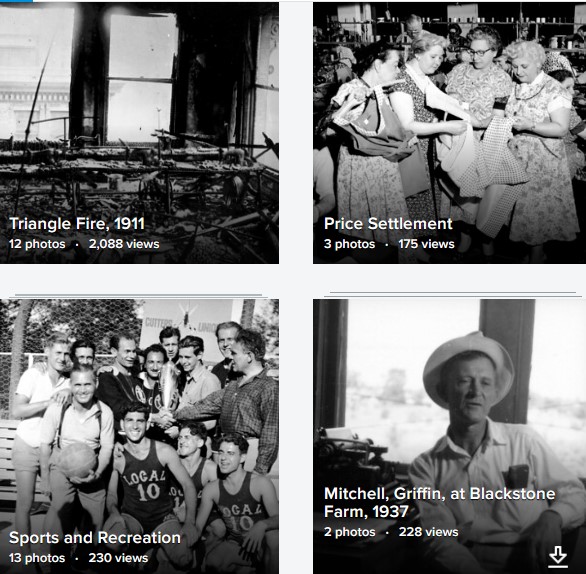
organized by album, hundreds of photos digitized from 1910 to 1980s
images covering large swaths of labor history from a major center for labor history research, available on Flickr
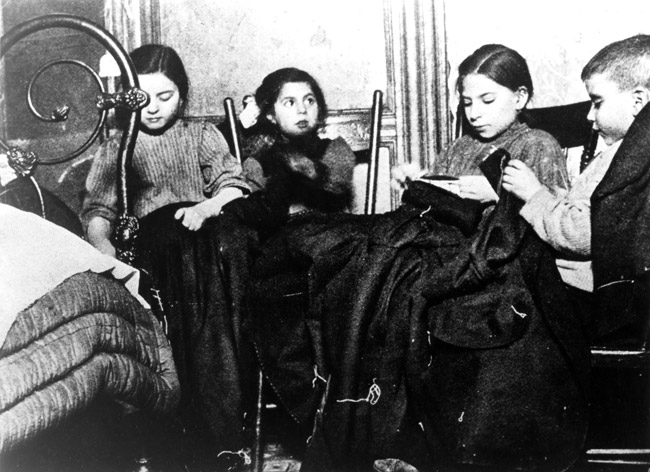
Kheel Center collections, Cornell
The Triangle Shirtwaist Factory Fire - This exhibit site includes original sources and information pertaining to the Triangle Shirtwaist Factory fire, an industrial fire that occurred in New York City in 1911 that took the lives of 146 people in 18 minutes. This pivotal moment in history led to the transformation of the labor code of New York State and to the adoption of fire safety measures that served as a model for the whole country. This site includes:
Survivor Interviews and Audio Recording featuring oral history interview recordings with Max Hochfield, Dora Maisler, and Pauline Pepe; transcripts derived from the survivor interviews; Frances Perkins’ lectures; and the Triangle Fire 50th Anniversary Commemoration.
Photos & Illustrations including topics including workers and working conditions, shirtwaist strikes, Triangle fire mourning and protest, victims and survivors, commemoration, and reporting and trial of Triangle factory owners. These images were digitized from photographic prints, negatives, newspaper accounts, lantern slides, and editorial cartoons. High resolution images can be found on the Kheel Center Flickr website.
Testimonials including selections from Leon Stein’s publications featuring Clara Lemlich, Rose Schneiderman, and other witnesses to the fire.
Newspaper & Magazine Articles including excerpts about the fire from The New York Times, Chicago Sunday Tribune, Outlook, The Ladies Garment Worker, Literary Digest, and American Federationist.
Reports including excerpts from the New York (State) Factory Investigating Commission, highlighting its creation, organization, scope, importance, and findings.
Letters including correspondence from sweatshop reform activist Pauline Newman and journalist Charles Willis Thompson.
Songs & Plays including "The Uprising of the Twenty Thousand"; the Ballad of the Triangle Fire; My Little Shirtwaist Fire; Episode V, The Triangle Fire from The Story of the ILGWU: A Radio Play in Six Episodes; and the Mournful Song of the Great Fire.
Transcripts of Criminal Trial Against Triangle Owners consisting of full-text transcripts of the 1911 criminal trial against the owners of the Triangle Shirtwaist factory.
--site lists all the dead, has timeline, resources for research papers, teaching materials
This exhibit site includes original sources and information pertaining to the Triangle Shirtwaist Factory fire
Kheel Center, Cornell University
These films and videos were produced by or for the ILGWU between 1935 and 1985. In addition to the ILGWU's well-known Union Label television commercials, included here are films made during two strikes, the union's Golden Jubilee Convention, and other notable events in the union's history. Incluees Look for the Union Label commercial and other gems like "Mother is On Strike" from Texas strike in 1958
Ten films and videos produced by or for the ILGWU between 1935 and 1985. Includes Look for the Union Label commercial , includes "Mother is On Strike" from Texas strike in 1958
Kheel Center, Cornell University
The International Ladies Garment Workers Union was formed in 1900 by merging smaller related craft unions which were later organized on local, regional, department, and international levels. This selection of images from a photo collection of approximately 20 cubic feet of material reflects the public face of this influential, women’s-clothing industry union as it was documented in photographs over a period of 100 years.
Photographs document everyday life and work at home, in garment shops, at the Union’s offices, in the streets and the courts, and abroad. While many individuals who shared the union’s struggle are pictured in these photos, relatively few have been identified.
selected images of the Intl. Ladies Garment Workers Union
Kheel Center, Cornell University
Stunning scenes from early strikes and working conditions, suffrage parades, New York, labor leaders, Rose Schneiderman, garment workers
Images from the set "Strike Scenes" in the collection, "New York Call Photographs, ca. 1908-1923"
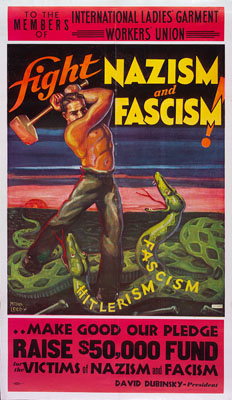
Kheel Center, Cornell University
This is an exhibit that highlights items from Kheel Center's archives. An introdcution to the union, biographies of every president, a timeline, bibliography of resources, Early history using visual culture and the famous "Look for the Union Label" commercials of the mid 20th century as well as the earlier ‘Pins and Needles’ highlights of issues like piece work, women of the union and the cooperative housing movement. The site also contains primary sources such as banners, broadsides, videos, television commercials, correspondence, minutes, oral histories, pamphlets, photos, and speeches.
Both digital Exhibit and digital archives, highlights women workers, use of media and banners, other artifacts; includes timelines and bibliography of books about the union and the union label.
Kheel Center, Cornell University Library
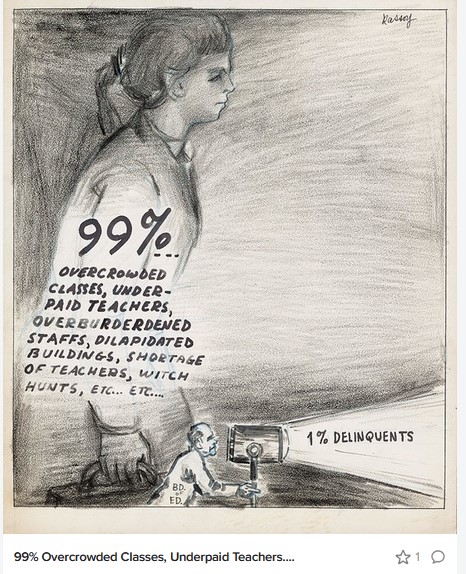
Bernard Kassoy (1914-2008) graduated from the City College of New York and Cooper Union Art School and worked in a wide range of media as a painter, printmaker, photographer, sculptor and cinematographer. As a young artist, Kassoy began his career in the WPA New York City Federal Art Project in 1936 and was arrested under the name “Michelangelo Buonarotti” at the first sit-down strike against the WPA by the Artists Union. He was also a US delegate to the 1983 International Association of Artists conference in Finland.
In 1939 Kassoy was hired as a New York City high school fine arts teacher where he taught until he retired in 1972. He also taught adult education classes on cinematography at the High School of Music and Art. As a member of the American Federation of Teachers Local 5, he created cartoons for their publication “The New York Teacher News,” directed the Teachers Union art gallery, and made stage sets for theatrical productions.
Bernard Kassoy’s 136 editorial cartoons preserved by the Kheel Center were largely created in the 1950s at a time when many US policy makers were enthralled by the search for Communist Party members and sympathizers. In pithy cartoons he portrayed the struggles of New York City students and teachers, as well as the Teachers Union's response to these hardships. He accused school, city, and state officials of turning their attention away from funding shortfalls, classroom overcrowding, outdated texts, dilapidated buildings, teacher turnover, increasing teacher workloads, and stagnant wages, to focus on the question of whether any teachers appeared to be advocating Communism. Though Kassoy repeatedly criticized these manifestations of McCarthyism, he was never blacklisted. His work can also be found in the collections of the Museum of Modern Art, The Metropolitan Museum of Art, New York Public Library, and Fennimore House Museum.
150+ cartoons about educational policy in New York
Kheel Center, Cornell University Library
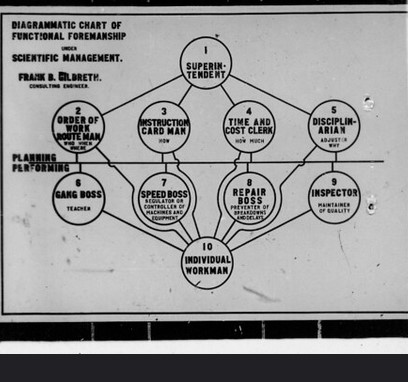
The images here document the research techniques for time and motion studies, which were mean to speed-up work, and create advantage through "scientific management." The science was supposed to be timing every motion so that the management could tell the worker how to produce at higher rates. There are many books in our collection that will help contextualize this and the reaction to it by workers across the globe. Best recommendation is David Montgomery's The Fall of the House of Labor
41 images of time and motion study materials from the 1910s
Kheel Center, Cornell University Library
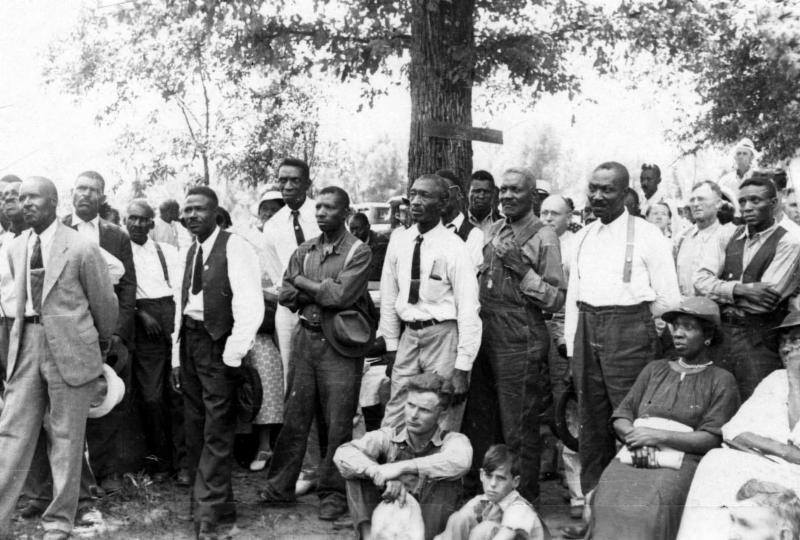
Photographer Louise Boyle figures prominently among those of her time whose penetrating images documented the devastating effects of the Great Depression on American workers. Struggling landless farmers organized the Southern Tenant Farmers Union (SFTU) in 1934 in response to displacement caused by long-term drought, agricultural mechanization, and pressures on landowners to reduce production. The union was notable for encouraging blacks and women to join and lead integrated union locals, for promoting non-violent tactics, and for using songs, prayers, and rituals at meetings, drawing on the inspirational power of the Christian faith to which the majority of its members adhered.
In 1937, at the height of a wave of labor militancy, Ms. Boyle was invited to photograph the living and working conditions of the SFTU members from several Arkansas communities. Her provocative recording courageous people linking their futures together despite devastating poverty, physical hardship, and brutal police-endorsed reprisals. Most portray African American farmers in their homes, at union meetings and rallies, or at work with their families picking cotton. Boyle returned in 1982 to rephotograph some of the people and places she had documented earlier.
Approximately 200 of images are available in Flickr.com, and twice that number are made available at the Kheel Center, Cornell University.
216 images of the Southern Tenant Farmers Union
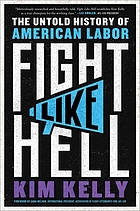
Kim Kelly
From the publisher: Freed Black women organizing for protection in the Reconstruction-era South. Jewish immigrant garment workers braving deadly conditions for a sliver of independence. Asian American fieldworkers rejecting government-sanctioned indentured servitude across the Pacific. Incarcerated workers advocating for basic human rights and fair wages. The queer Black labor leader who helped orchestrate America's civil rights movement. These are only some of the working-class heroes who propelled American labor's relentless push for fairness and equal protection under the law.
The names and faces of countless silenced, misrepresented, or forgotten leaders have been erased by time as a privileged few decide which stories get cut from the final copy: those of women, people of color, LGBTQIA people, disabled people, sex workers, prisoners, and the poor. In this volume, Kelly excavates that untold history and shows how the rights the American worker has today--the forty-hour workweek, workplace-safety standards, restrictions on child labor, protection from harassment and discrimination on the job--were earned with literal blood, sweat, and tears."-- Publisher's description
popular history of labor organizing
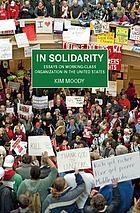
Kim Moody
In this expansive collection, labor writer Kim Moody explores the present state and the future possibilities of the US labor movement, as well as evaluating the forces working against it. These wide-ranging, accessible essays ask the key questions: What has happened to union organizing in the United States? Is there an alternative to the strike? How does the increased presence of immigrant and women workers change the balance of forces? What strategies can workers use to counteract company 'union avoidance' campaigns and bureaucratic 'business unionism'? What is the role of socialists in the labor movement? Drawing on his own background as a working-class radical, the works of Karl Marx, and the everyday experiences of nurses, miners, autoworkers, and more, Moody sketches a comprehensive picture of the state of US labor--and points the way forward for a rank-and-file union movement that can win real change"--Back cover
wide-ranging essays on labor and the left, from 2014
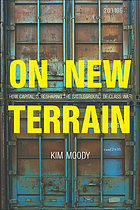
Kim Moody
Analyzes how recent changes in capitalism have altered both the composition of the working class and the economic and political ground on which it struggles. He challenges conventional wisdom about a disappearing working class and the inevitability of a two-party political structure as the only framework for struggle. Through in-depth study of the economic and political shifts at the top of society, Moody shows how recent developments in capitalist production impact the working class and its power to resist the status quo. He argues that this transformed industrial terrain offers new possibilities for organization in the workplace and opens doors for grassroots, independent political action strengthened by reemerging labor and social movements. --From publisher description
how recent changes in capitalism have altered both the composition of the working class and the economic and political ground on which it struggles
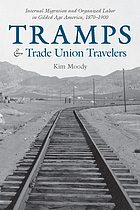
Kim Moody
Offering an analysis of how internal migration in Gilded Age America undermined collective organizing and workers' political power, Moody presents a detailed case for why there has been no viable, independent labor party in the United States. While the racial, ethnic, and gender divisions within the American working class have created organizational challenges for the working class, the author argues that despite their divisions, workers of all ethnic and racial groups in the Gilded Age often displayed high levels of class consciousness and political radicalism.
In place of "American exceptionalism," Moody contends that high levels of internal migration during the late 1800's created instability in the union and political organizations of workers, which undermined efforts by American workers to build independent labor-based parties in the 1880s and 1890s. Using detailed research and primary sources; Moody traces how it was that 'pure-and-simple' unionism would triumph by the end of the century despite the existence of a significant socialist minority in organized labor at that time. --Adapted from publisher description
how internal migration in Gilded Age America undermined collective organizing and workers' political powe
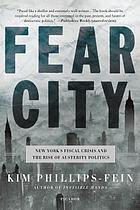
Kim Phillips-Fein
An epic and riveting history of New York City on the edge of disaster--and an anatomy of the politics of austerity that continues to shape the world today. When the news broke in 1975 that New York City was on the brink of fiscal collapse, few believed it was possible: how could the capital of the financial world go bankrupt? And yet the city was billions of dollars--maybe twelve, maybe fourteen, no one even really knew how much--in the red. Bankers and politicians alike seized upon the situation as evidence that social liberalism, which New York famously exemplified, was doomed to failure--and promised apocalyptic scenarios if the city didn't fire thousands of workers, freeze wages, and slash social services.
In this vivid, gripping account, historian Kim Phillips-Fein tells the remarkable story of the crisis that engulfed the city, forever transforming the largest metropolis in the United States and reshaping ideas about government throughout the country. In doing so, she brings to life a radically different New York, the legendarily decrepit city of the 1970s. Drawing on never-before-used archival sources as well as interviews with key players in the crisis, Phillips-Fein guides us through the hairpin turns and sudden reversals that brought New York City to the edge of bankruptcy--and kept it from going over. At once a sweeping history of some of the most tumultuous times in the city's past, a colorful portrait of the unwieldy mechanics of municipal government, and an origin story of the politics of austerity, Fear City is essential reading for anyone seeking to understand the resurgent fiscal conservatism of today."-- Provided by publisher
an origin story of the politics of austerity
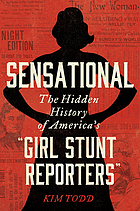
Kim Todd
In the waning years of the nineteenth century, women journalists across the United States risked reputation and their own safety to expose the hazardous conditions under which many Americans lived and worked. In various disguises, they stole into sewing factories to report on child labor, fainted in the streets to test public hospital treatment, posed as lobbyists to reveal corrupt politicians. Inventive writers whose in-depth narratives made headlines for weeks at a stretch, these “girl stunt reporters” changed laws, helped launch a labor movement, championed women’s rights, and redefined journalism for the modern age.
The 1880s and 1890s witnessed a revolution in journalism as publisher titans like Hearst and Pulitzer used weapons of innovation and scandal to battle it out for market share. As they sought new ways to draw readers in, they found their answer in young women flooding into cities to seek their fortunes. When Nellie Bly went undercover into Blackwell’s Insane Asylum for Women and emerged with a scathing indictment of what she found there, the resulting sensation created opportunity for a whole new wave of writers. In a time of few jobs and few rights for women, here was a path to lives of excitement and meaning.
After only a decade of headlines and fame, though, these trailblazers faced a vicious public backlash. Accused of practicing “yellow journalism,” their popularity waned until “stunt reporter” became a badge of shame. But their influence on the field of journalism would arc across a century, from the Progressive Era “muckraking” of the 1900s to the personal “New Journalism” of the 1960s and ’70s, to the “immersion journalism” and “creative nonfiction” of today. Bold and unconventional, these writers changed how people would tell stories forever.
Presents a social history of women journalists of the Gilded Age who went undercover to champion women's rights and expose corruption and abuse in America
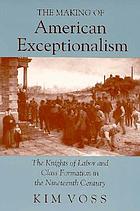
Kim Voss
"Why has the labor movement in the United States been so weak and politically conservative in comparison to movements in Western Europe? Kim Voss rejects traditional interpretations--theories of ?American exceptionalism?--which attribute this distinctiveness to inherent characteristics of American society. On the contrary, she demonstrates, the American labor movement had much in common with its English and French counterparts for most of the nineteenth century. Only with the collapse of the Knights of Labor, the largest American labor organization of the century, did the U.S. movement take a different path." -- Provided by publisher
demonstrates, the American labor movement had much in common with its English and French counterparts for most of the nineteenth century.
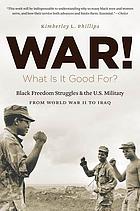
Kimberley L. Phillips
African Americans' long campaign for “the right to fight” forced Harry Truman to issue his 1948 executive order calling for equality of treatment and opportunity in the armed forces. In War! What Is It Good For?, Kimberley Phillips examines how blacks' participation in the nation’s wars after Truman’s order and their protracted struggles for equal citizenship galvanized a vibrant antiwar activism that reshaped their struggles for freedom. Using an array of sources ― from newspapers and government documents to literature, music, and film ― and tracing the period from World War II to the Iraq and Afghanistan wars, Phillips considers how federal policies that desegregated the military also maintained racial, gender, and economic inequalities. Since 1945, the nation’s need for military labor, blacks' unequal access to employment, and discriminatory draft policies have forced black men into the military at disproportionate rates. While mainstream civil rights leaders considered the integration of the military to be a civil rights success, many black soldiers, veterans, and antiwar activists perceived war as inimical to their struggles for economic and racial justice and sought to reshape the civil rights movement into an antiwar black freedom movement. Since the Vietnam War, Phillips argues, many African Americans have questioned linking militarism and war to their concepts of citizenship, equality, and freedom.
examines how Blacks' participation in the nation’s wars after Truman’s order and their protracted struggles for equal citizenship galvanized a vibrant antiwar activism that reshaped their struggles for freedom.
King Institute
primary source items from the King Institute. There is a search tab for more options.
primary source items from the King Institute.
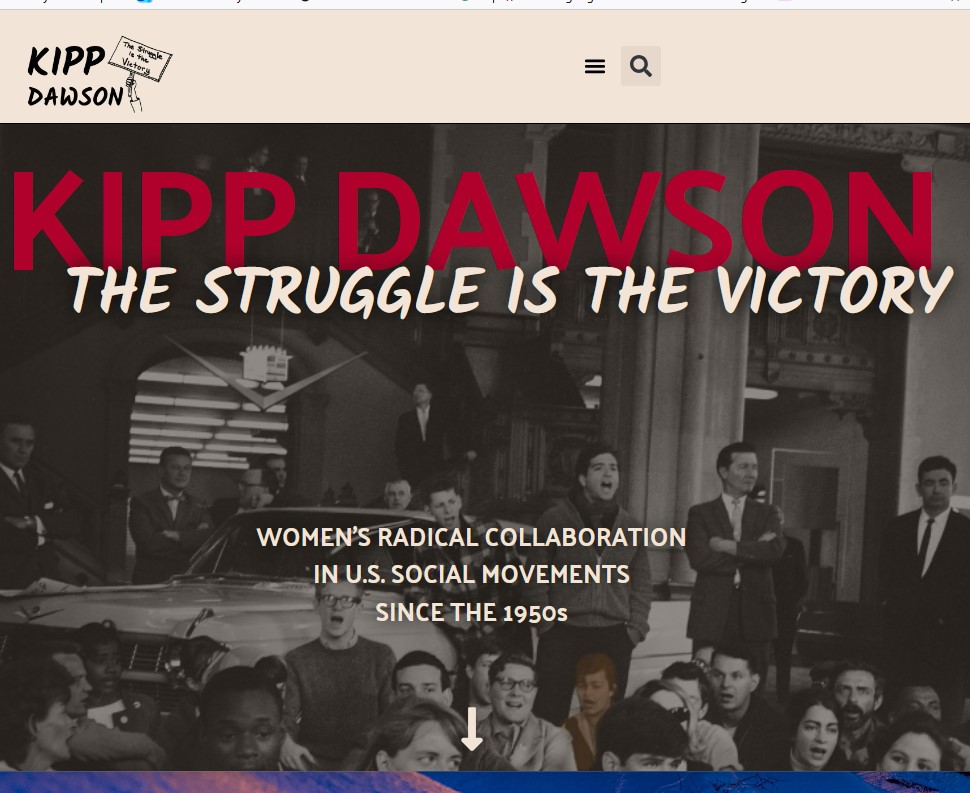
Kipp Dawson
An activist, coal miner, and educator, Kipp Dawson organized on the frontlines of nearly every major freedom struggle in the second half of the 20th century through the early 21st century. She participated in and helped to lead some of the largest and most well-known sit-ins, rallies, marches, and campaigns that led to crucial victories. Yet the movements sustained constant defeats and setbacks, and Dawson’s own social identities – as a lesbian, Jewish, working-class woman, from a multi-racial family – frequently meant she faced government surveillance, harassment, and intra-movement bigotry. Using peer-reviewed scholarship as well as interactive tools from the digital humanities, Kipp Dawson: The Struggle is the Victory documents her lifetime of work.
This public history site offers a multimedia, open educational resource authored by students, staff, and faculty at Carnegie Mellon University, Chatham University, Emory University, and West Virginia University. The collaboration brings together a group of researchers, independent scholars, and technologists across generations, institutions, and disciplinary backgrounds. Our goal is to provide access to Dawson’s story through her own words, writing, photographs, documents, and movement ephemera as well as historical context and analysis. Using an intersectional, feminist lens to view the remarkable breadth and depth of Dawson’s coalitional activism, we suggest a re-thinking of leadership within social movements.
digital exhibit--life story of radical labor activist, includes multimedia material and timeline
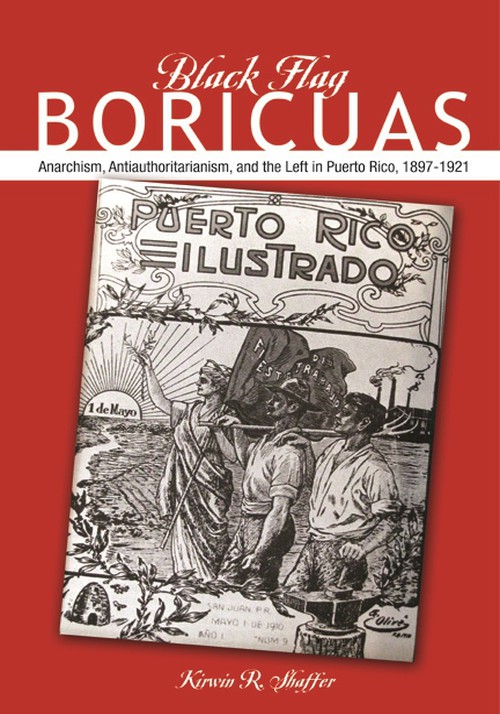
Kirwin R Shaffer
This pathbreaking study examines the radical Left in Puerto Rico from the final years of Spanish colonial rule into the 1920s. Positioning Puerto Rico within the context of a regional anarchist network that stretched from Puerto Rico and Cuba to Tampa, Florida, and New York City,
Kirwin R. Shaffer illustrates how anarchists linked their struggle to the broader international anarchist struggles against religion, governments, and industrial capitalism. Their groups, plays, fiction, speeches, and press accounts--as well as the newspapers that they published--were central in helping to develop an anarchist vision for Puerto Ricans at a time when the island was a political no-man's-land, neither an official U.S. colony or state nor an independent country. Exploring the rise of artisan and worker-based centers to develop class consciousness,
Shaffer follows the island's anarchists as they cautiously joined the AFL-linked Federación Libre de Trabajadores, the largest labor organization in Puerto Rico. Critiquing the union from within, anarchists worked with reformers while continuing to pursue a more radical agenda achieved by direct action rather than parliamentary politics. Shaffer also traces anarchists' alliances with freethinkers seeking to reform education, progressive factions engaged in attacking the Church and organized religion, and the emerging Socialist movement on the island in the 1910s.
The most successful anarchist organization to emerge in Puerto Rico--he Bayamón Bloc--ounded El Comunista, the longest-running, most financially successful anarchist newspaper in the island's history. Stridently attacking U.S. militarism and interventionism in the Caribbean Basin, the newspaper found growing distribution throughout and financial backing from Spanish-speaking anarchist groups in the United States.
Shaffer demonstrates how the U.S. government targeted the Bayamón anarchists during the Red Scare and forced the closure of their newspaper in 1921, effectively unraveling the anarchist movement on the island."--Publisher's website
radical Left in Puerto Rico from the final years of Spanish colonial rule into the 1920s
Kostis Karpozilos
Historians of immigration and ethnicity in the United States have typically devoted little attention to Greek Americans compared to the extensive historical literature produced about their Irish, Italian, and German counterparts. From acclaimed historian Kostis Karpozilos, Red America provides a deeply researched correction to Western perspectives on Greek American interaction with social, political, and economic change. Focusing on the history of the Greek American Left from the beginning of the twentieth century to the Cold War, this volume uncovers the threads that bound notions of radical social change to the everyday experiences of immigrants, tracing ethnic radicalism from the boundaries of a specific community to the epicenter of American social and political history"-- Provided by publisherContents
Acknowledgments
Abbreviations
Introduction
Chapter 1
Radicals of Two Worlds
Chapter 2
Americanizing Communism
Chapter 3
Crisis and Revolution
Chapter 4
Turmoil and Compromise
Chapter 5
Planning the Future
Chapter 6
Cold War Nation
Conclusion
Bibliography
Index
the Greek American Left from the beginning of the twentieth century to the Cold War
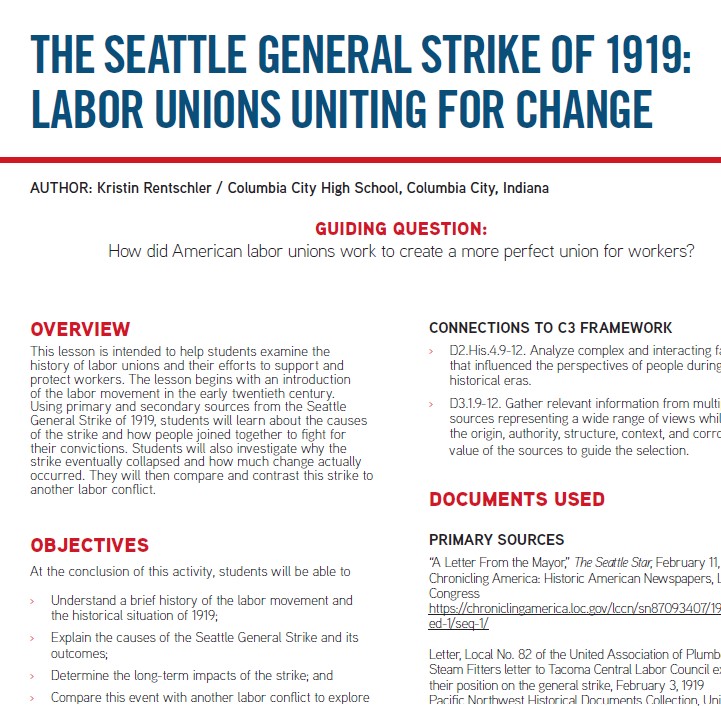
Kristin Rentschler
This lesson is intended to help students examine the history of labor unions and their efforts to support andprotect workers. The lesson begins with an introductionof the labor movement in the early twentieth century.
Using primary and secondary sources from the Seattle General Strike of 1919, students will learn about the causes of the strike and how people joined together to fight for their convictions. Students will also investigate why the strike eventually collapsed and how much change actuallyvoccurred. They will then compare and contrast this strike toanother labor conflict.
To access all documents and materials in one package go to https://nhd.org/en/by-topic/building-a-more-perfect-union/
OBJECTIVES
At the conclusion of this activity, students will be able to
› Understand a brief history of the labor movement and
the historical situation of 1919;
› Explain the causes of the Seattle General Strike and its
outcomes;
› Determine the long-term impacts of the strike; and
› Compare this event with another labor conflict to explore
patterns of continuity and change over time.
A multi=level lesson plan on Seattle General Strike of 1919 with many elements and approaches, linked to standards
Museum/Exhibits
Tours
Maps
Digital Projects
Organizations
Sites
Film/Video
Audio/Interview
Podcast/Program
Text/Document
Image
Graphs/Data
Timeline
Southwest
West
Midwest
Southeast
Northeast
Mexico
Canada
Global
Books
Teaching
Lectures
Digital Archives
Journals
Bibliographies
Topic Intro