


Collections
Library
Type
Region
Coverage:
-
Published:
-
Kristina Horton
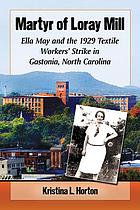
Union organizer and balladeer Ella May became a martyr for workers nationwide when she was murdered on her way to a union meeting in Gastonia, North Carolina, at age 28. A mother of nine and bookkeeper for the communist-led National Textile Workers Union, May worked to organize fellow mill workers in Gaston County. Her efforts to organize black workers--along with her brash, outspoken manner--incensed the local community and she was shot by an anti-union vigilante group on September 14, 1929. Written by her great-granddaughter, this book tells Ella May's story, including her involvement in the
Union organizer and balladeer Ella May became a martyr for workers nationwide

Kristy Nabhan-Warren
Kristy Nabhan-Warren spent more than seven years interviewing Iowans-native-born residents and recent migrants from Latin America, Africa, and Asia alike. In Meatpacking America, she portrays the gritty realities of a Midwest that is a global hub for migration and food production-and also for religion. Here, Protestants, Catholics, and Muslims share space every day as worshippers, employees, and employers. Speaking from the bloody floors of meatpacking plants, bustling places of worship, and modest homes across vast flatlands dotted with confined animal feeding operations and processing plants, both native born and newly arrived Iowans explain their passion for religious faith and desire to work hard for their families. At the same time, their stories reveal how faith-based aspirations for mutual understanding blend uneasily with rampant economic exploitation of migrants and common racial biases
both native born and newly arrived Iowans explain their passion for religious faith and desire to work hard for their families.
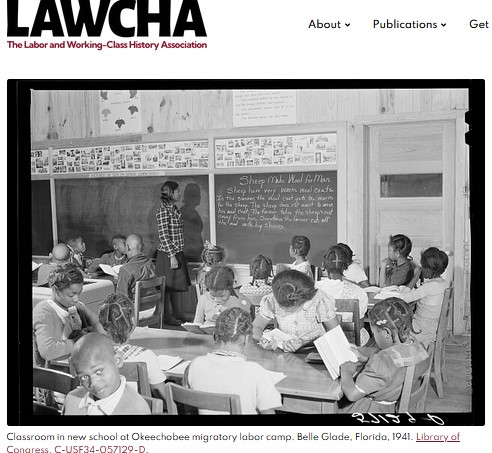
LAWCHA
We are historians, labor educators, and working-class activists who seek to promote public and scholarly awareness of labor and working-class history through research, writing, and organizing.
We are open to the widest possible variety of approaches to the subject of labor and working-class history.
We have a demographically, regionally, and internationally diverse membership and leadership. Our Members
We have developed mutually supportive relationships with existing regional, state, and local labor studies and labor history societies in the United States and other countries. We have developed equally important relationships with unions and community organizations.
We promote labor and working-class history within the history and social studies curricula in public schools as well as at community colleges, colleges, universities, and unions.
The leading labor history organization in the United States, founded in 2004. Association of historians, labor educators, and working-class activists who seek to promote public and scholarly awareness of labor and working-class history through research, writing, and organizing.

LAWCHA, Ahmed White
Conversation (2023) with Ahmed White about Under the Iron Heel: The Wobblies and the Capitalist War on Radical Workers
Ahmed White's book on the IWW and labor repression
LAWCHA, Margot Canaday
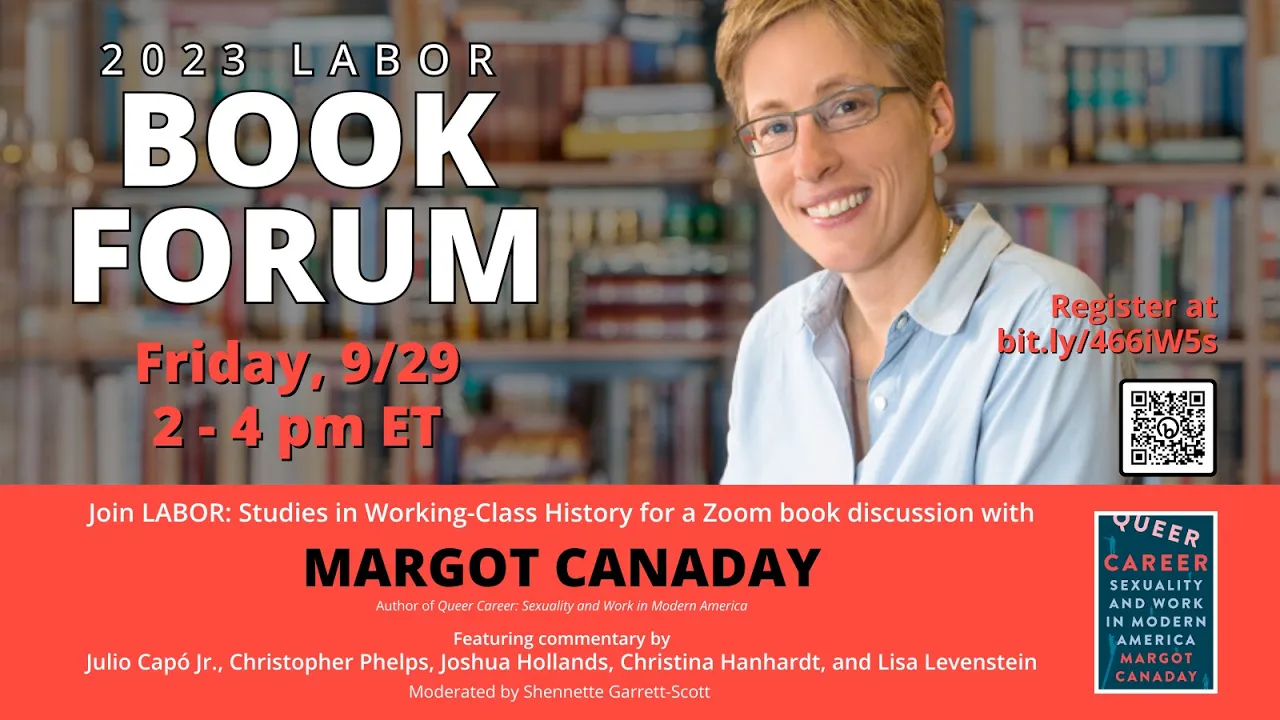
In 2023, Margot Canaday and her new book Queer Career: Sexuality and Work in Modern America (Princeton University Press, 2023) were featured for LABOR: Studies in Working-Class History's Big Book Forum. Queer Career is a groundbreaking study of how sexual minorities experienced and navigated the US workforce in the second half of the twentieth century. By combining LGBTQ history and labor history, Canaday rewrites our understanding of both and helps us better understand the recent history of capitalism and the queer past.
The 2023 Book Forum was be moderated by Shennette Garrett-Scott and commentaries provided by Julio Capó Jr., Christopher Phelps, Joshua Hollands, Christina Hanhardt, and Lisa Levenstein.
Margot Canaday discusses her book Queer Career, a study of how sexual minorities experienced and navigated the US workforce
LMapping American Social Movements Project, ove Karlsson
Many members of the Socialist Party of America (SPA) were immigrants. Some formed or joined English-speaking party locals, but others organized in their own language, creating what the SPA called Foreign Language Federations. Operating in parallel with the main party, the federations organized their own locals, held conventions, and supported their own newspapers. In 1914, the SPA counted 46 non-English newspapers in 17 different languages. Finnish comrades had created the largest federation with upwards of 10,000 dues paying members most years. Next in size were the German, Jewish, and South Slavic federations.
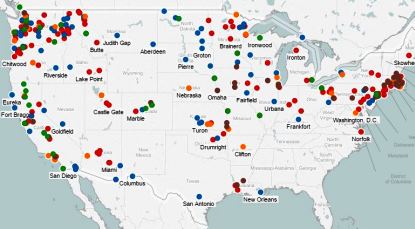
The Scandinavian Socialist Federation (SSF) formed in 1910, combining Swedish, Danish, and Norwegian socialists. Starting with local branches in 7 cities, the federation expanded steadily, counting 66 branches and more than 1,100 members in 1914, and 88 locals with 2,200 dues paying members in 1917. Swedes outnumbered Danes and Norwegians and dominated some of the branches. Norwegians and Danes joined together in other locals without Swedish members, while the three nationalities shared (sometimes awkwardly) other branches. Each national group published a weekly newspaper in their own language: Swedes supporting Svenska Socialisten, Danes reading Social Demokraten, both based in Chicago, while Norwegian socialists published Gaa Paa in Minneapolis. These maps display information collected from the Svenska Socialisten on the locations, membership, and activities of the Scandinavian branches in the key period 1914-1918.
Five maps and charts showing detailed information on the Scandinavian Socialist Federation, which operated in parallel with the Socialist Party of America, and was built around local branches membered by Swedish, Danish, and Norwegian socialist immigrants.

LaGuana Gray
The poultry processing industry in El Dorado, Arkansas, was an economic powerhouse in the latter half of the twentieth century. It was the largest employer in the interconnected region of South Arkansas and North Louisiana surrounding El Dorado, and the fates of many related companies and farms depended on its continued financial success. We Just Keep Running the Line is the story of the rise of the poultry processing industry in El Dorado and the labor force -- composed primarily of black women -- upon which it came to rely.
At a time when agricultural jobs were in decline and Louisiana stood at the forefront of rising anti-welfare sentiment, much of the work available in the area went to men, driving women into less attractive, labor-intensive jobs. LaGuana Gray argues that the justification for placing African American women in the lowest-paying and most dangerous of these jobs, like poultry processing, derives from longstanding mischaracterizations of black women by those in power. In evaluating the perception of black women as "less" than white women -- less feminine, less moral, less deserving of social assistance, and less invested in their families' and communities' well-being -- Gray illuminates the often-exploitative nature of southern labor, the growth of the agribusiness model of food production, and the role of women of color in such food industries.
Using collected oral histories to allow marginalized women of color to tell their own stories and to contest and reshape narratives commonly used against them, We Just Keep Running the Line explores the physical and psychological toll this work took on black women, analyzing their survival strategies and their fight to retain their humanity in an exploitative industry.
explores the physical and psychological toll this work took on black women, analyzing their survival strategies and their fight to retain their humanity in an exploitative industry.
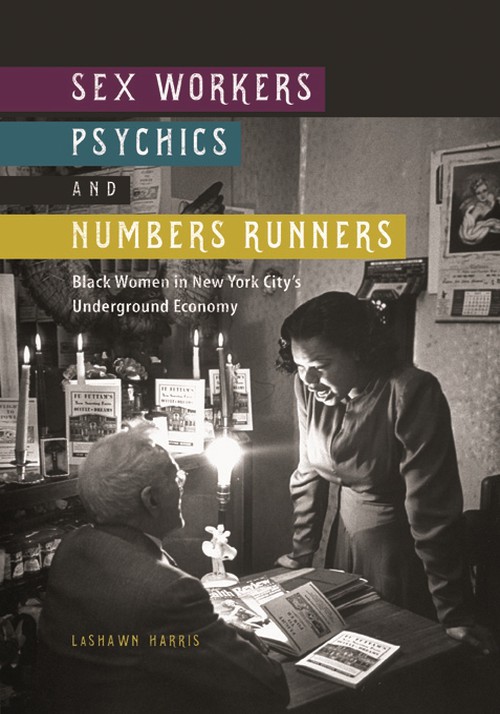
LaShawn Harris
During the early twentieth century, a diverse group of African American women carved out unique niches for themselves within New York City's expansive informal economy. LaShawn Harris illuminates the labor patterns and economic activity of three perennials within this kaleidoscope of underground industry: sex work, numbers running for gambling enterprises, and the supernatural consulting business. Mining police and prison records, newspaper accounts, and period literature, Harris teases out answers to essential questions about these women and their working lives. She also offers a surprising revelation, arguing that the burgeoning underground economy served as a catalyst in working-class black women (tm)s creation of the employment opportunities, occupational identities, and survival strategies that provided them with financial stability and a sense of labor autonomy and mobility. At the same time, urban black women, all striving for economic and social prospects and pleasures, experienced the conspicuous and hidden dangers associated with newfound labor opportunities."--Publisher description
e labor patterns and economic activity for African-American women
Labadie Collection, University of Michigan
canal workers, Ohio, music
An extensive collection featuring materials related to the history of anarchism in the United States.

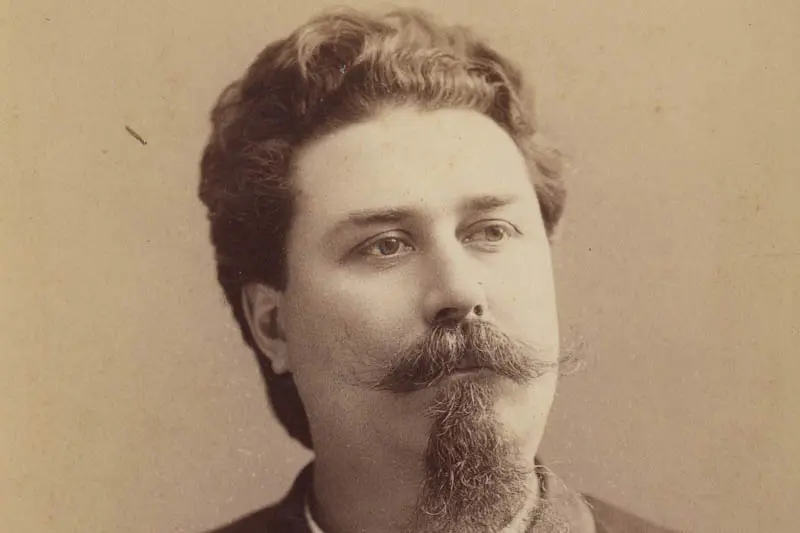
Labadie Collection, University of Michigan
The Labadie Collection is named for Detroit labor organizer and anarchist Jo Labadie, who donated his personal library of books, pamphlets, newspapers, magazines, and memorabilia to the university in 1911.There are over 1700 photos in this collection, searchable and organized alphabetically.
an array of material related to labor and radicalism
Labadie Collection, University of Michigan
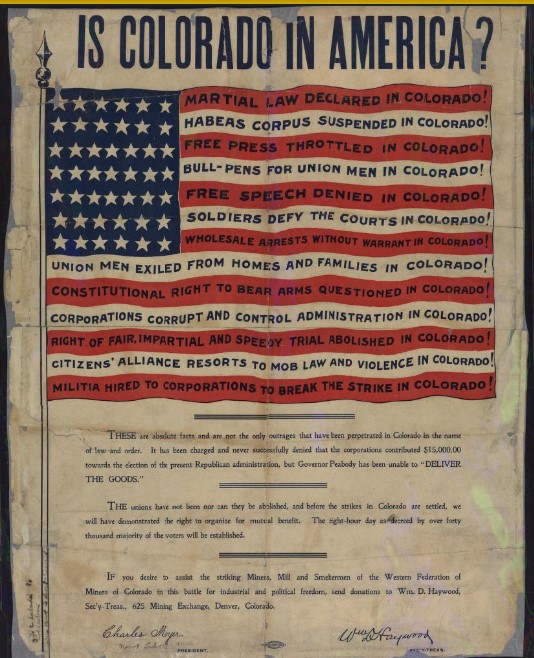
The Joseph A. Labadie Collection contains posters which have been acquired over the past 100 years. These 200 + linked as labor oriented are selected here. This larger database consists of images of those posters covering social protest movements such as Anarchism, Civil Liberties, Colonialism, Communism, Ecology, Labor, Pacifism, Sexual Freedom, Socialism, Women, and Youth/Student Protest. Some are from the first half of the 20th century, but the majority are from the 1960s and later. Many are undated. All originals are held in the Joseph A. Labadie Collection.
We are pleased to provide high resolution files for a selection of these posters in the public domain, that is posters for which there is no copyright. These files may be used for any purpose without permission of any sort though attribution is welcome and consistent with academic norms.
over 200 high resolution posters from the colletion of labor posters
Labor Age, Marxists.org
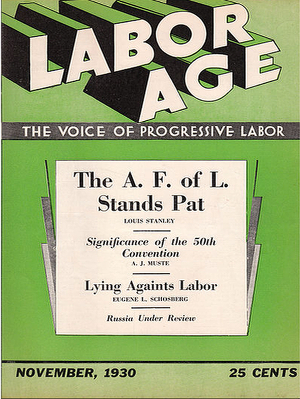
Labor Age was a left-labor monthly magazine published by the Labor Publication Society from 1921-1933. It succeeded the Socialist Review, journal of the Intercollegiate Socialist Society.
Labor Age aligned with the League for Industrial Democracy, and during 1929-33 the magazine was affiliated with the Conference for Progressive Labor Action (CPLA) with A. J. Muste playing a prominent role.
Other important figures associated with Labor Age were James Maurer, Harry W. Laidler, and Louis Budenz. The magazine advocated industrial unionism, economic planning and the nationalization of industries. It was also a major promoter of the workers education movement. As the CPLA radicalized with the deepening Depression, Labor Age radicalized to the left with it.
digitized left-labor monthly magazine published by the Labor Publication Society

Labor Archives
This directory updates work done in the early 1990s by the Wagner Labor Archives in New York City. A survey then conducted identified "archivists, librarians, and labor union staff who are collecting manuscripts, audio-visual materials, and artifacts that document the history of the trade union movement in the United States." Similarly, this directory includes repositories with partial holdings relating to labor and workers, as well as repositories whose entire holdings pertain to labor. Known updates were made in 2002, 2010 (James Quigel, editor), 2011 (Traci Drummond, editor), 2014, 2016, 2019 (Conor Casey, editor).
The directory is organized by state, then by repository, with Canadian repositories listed last. Please contact the Labor Archives Section Directory Working Group of the Society of American Archivists, if you have additions, comments, corrections, or questions at lasdirectory@gmail.com. You can also complete the directory entry request form, and the working group will draft a new entry for you based on the information you provide.
Keep updated on labor archives acquisitions through this site
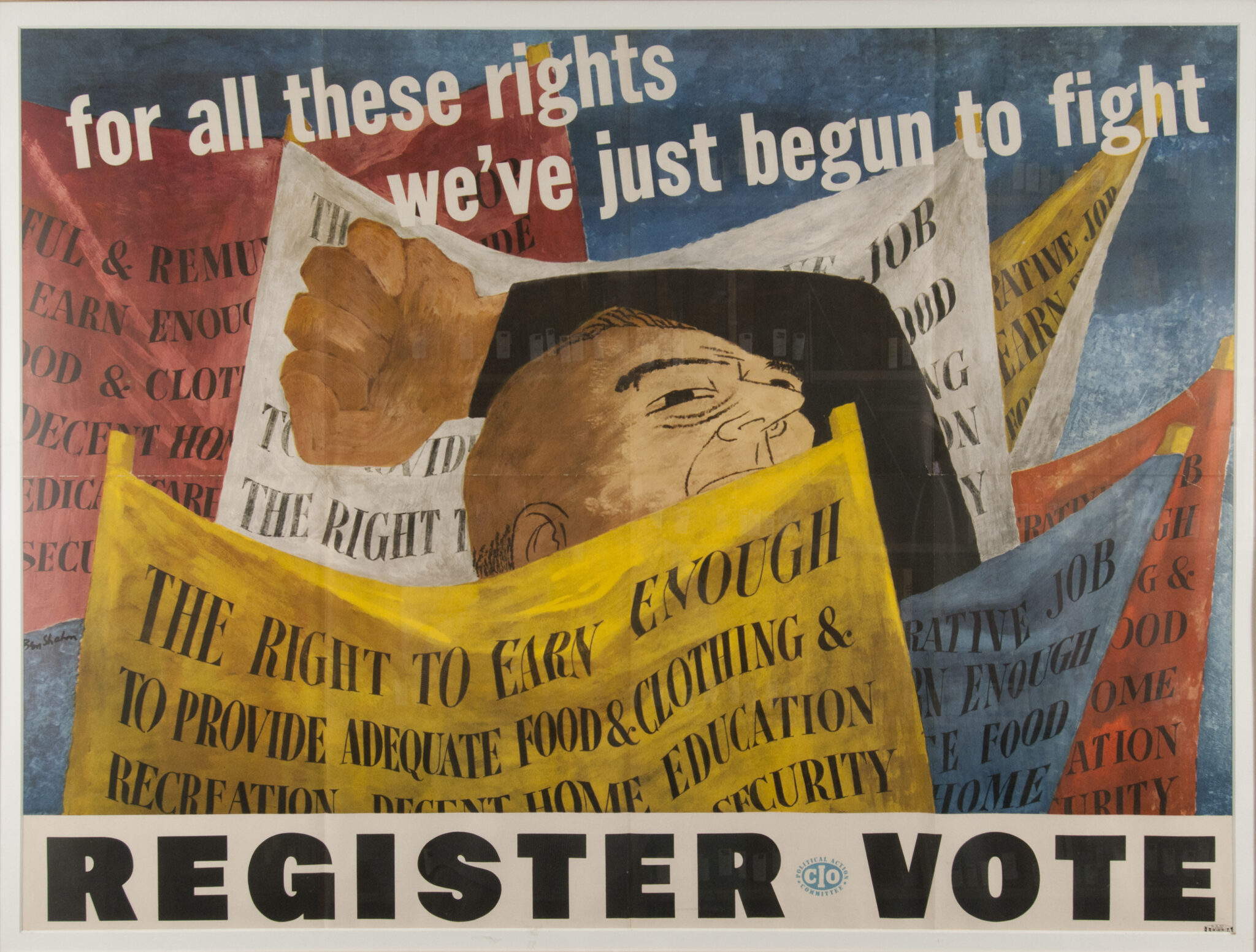
Labor Arts
143 items from obscure to well-known, posters, leaflets, art, photos and other ephemera
143 Posters, Photos, Cartoons on Labor
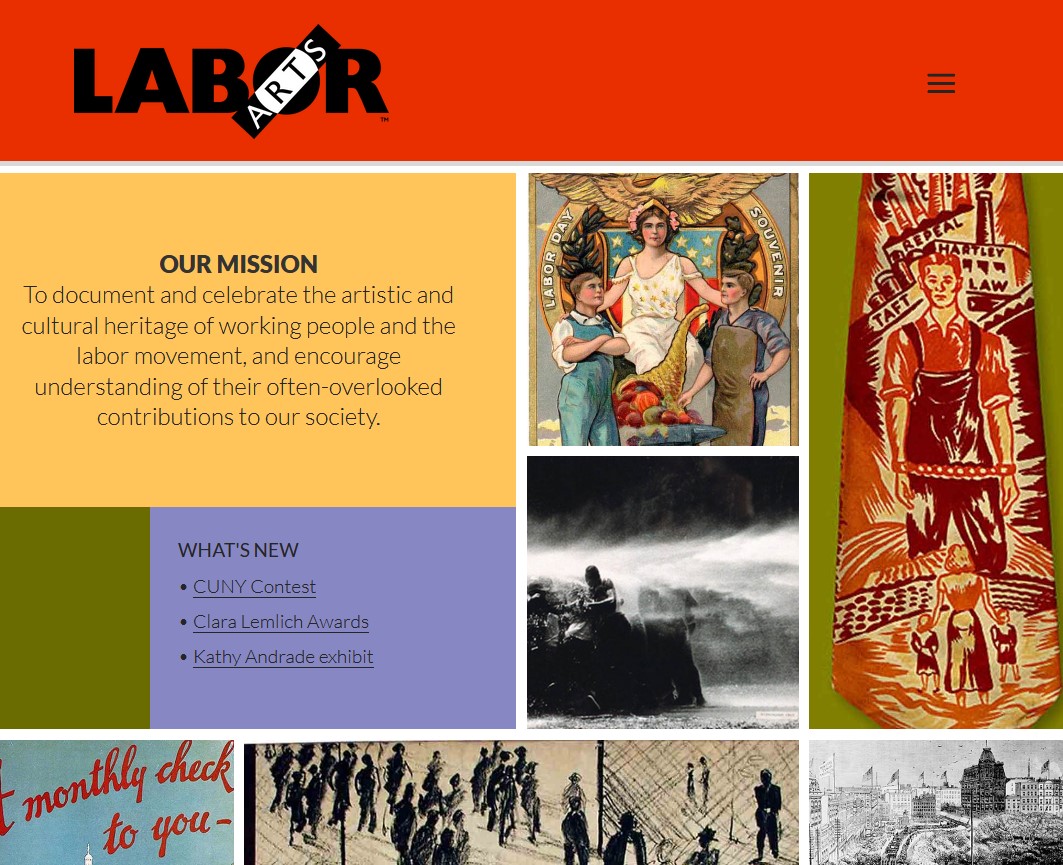
Labor Arts
LaborArts presents powerful images to further understanding of the past and present lives of working people. Our events and contests expand on this effort. The site includes curated Exhibits on particular subjects; the Collection, where one can search images from exhibits and other sources; and Events, a place for updates on talks in the “Art and Activism” series, the “Making Work Visible” writing contest for CUNY students, and the Clara Lemlich Awards (held every spring).
The range of images included in Labor Arts is broad:
photographs, posters, buttons, banners and flyers – images of artifacts that may not have been created as art but have artistic value
paintings, sculpture and other fine art that is about work and workers
art and artifacts that have been generated by working people
We gather, identify and display images of these cultural artifacts in order to encourage more people in this country and around the world to appreciate the history of work and working people. The labor movement is a critical part of the story – although not the whole story.
The exhibits each focus on a specific subject or theme; a full list can be found here. An alternative way to find images on this site browse or search the collection – which contains most of the images from the exhibits as well as a wealth of additional items. A small sample:
This digital project contains photographs, posters, buttons, banners, flyers, paintings, sculpture, and other fine art that furthers understanding of the past and present lives of working people.
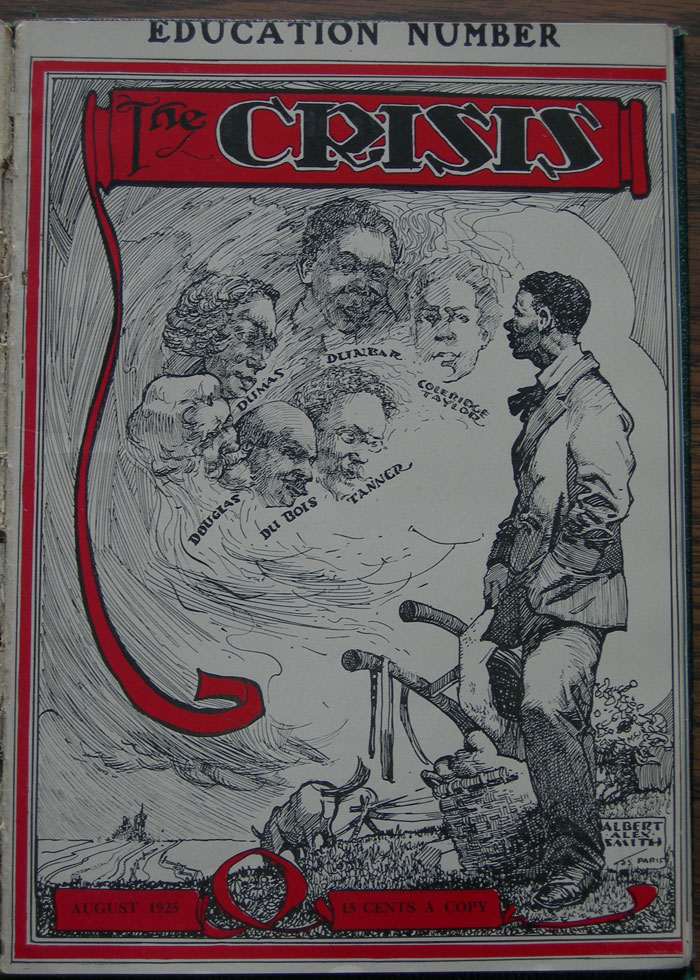
Labor Arts
When W.E.B. Du Bois founded The Crisis magazine in 1910 there was little discussion of visuals – but the monthly publication from the fledgling National Association for the Advancement of Colored People was rich with drawings, political cartoons, photographs and prints. These extraordinary images illustrate the central role art played in Du Bois’ and the NAACP’s struggle to change minds.
Unlike images of African Americans in other magazines, the visuals he published were generated from a black perspective. The artwork is almost always directly tied to important political and social issues of the day, yet it also reflects Du Bois’ attempt to help build a collective memory for black people beyond that shaped by the white-dominated culture they lived within.
Art in Crisis: W.E.B. Du Bois and the Struggle for African American Identity and Memory, by Amy Kirschke (Indiana University Press, 2007) provides an in depth discussion of the issues touched on here. We are grateful for the author’s work on this exhibit and her generous provision of the images to make this presentation possible. The exhibit selections include images from her book and beyond, some of them reproduced in color here for the first time. See Resources for more information.
reflects W.E.B. Du Bois’ attempt to help build a collective memory for Black people. This exhibit uses materials from Art in Crisis: W.E.B. Du Bois and the Struggle for African American Identity and Memory, by Amy Kirschke
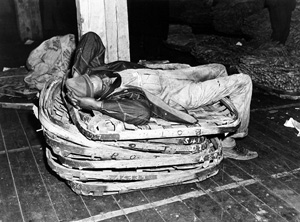
Labor Arts
Our exhibit depicts the relationship between photography and America's working population during the 1930s, 40s and early 50s -- a period of labor organization, strikes and turmoil in this country. The brief biographies of the photographers have clues about the political convictions many of them shared, at times revealed in the way they present the workers and their occupations
exhibit depicts the relationship between photography and America's working population during the 1930s, 40s and early 50s
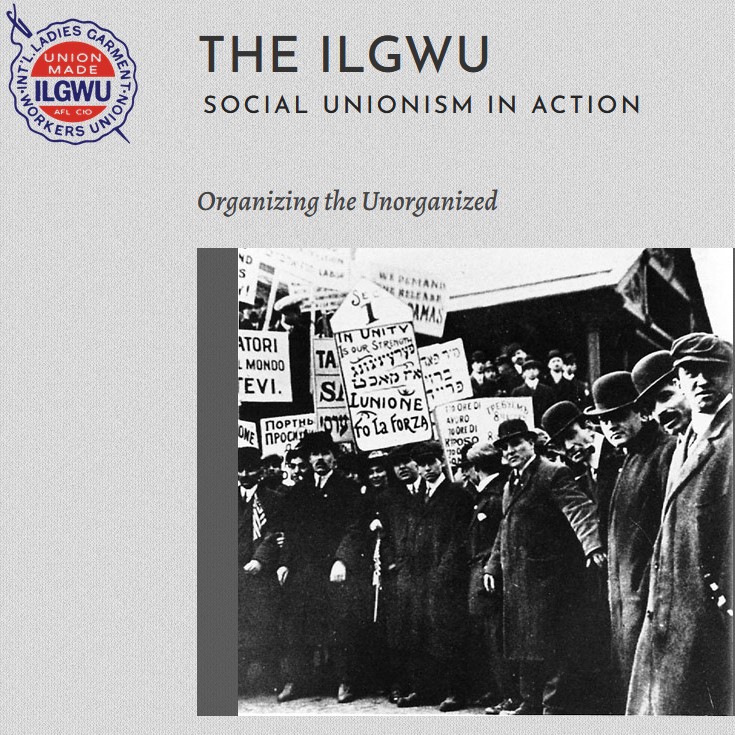
Labor Arts
this is a digital exhibit with a series of vignettes about the response of the ILGWU to five key issues that have engaged the efforts of America's working people and their representative organizations during the century just completed. While the ILGWU has not been in the forefront in responding to each of these issues, it has played a leading role in all of them, and in some instances it has distinguished itself as labor's chief organizational representative. The exhibit is divided into themes of organizing, immigration, civil rights, health care and culture.
We offer here a small sampling of critical moments from the well known New York City campaigns, together with two lesser-known examples of successful organizing drives in widely separated areas of the country. One is a campaign in 1966-67 that successfully crossed racial barriers in Little Rock, Arkansas. The other is from Los Angeles during the 1970s, when a remarkable group of women organizers, themselves immigrants, devised multi-lingual organizing materials that enabled them to organize the Spanish-speaking immigrants that the local county union leaders had considered unorganizable.
Drama, classical music and art are among the areas the ILGWU pioneered programs for its members. For example, beginning in the the 1930’s Labor Stage, a company of union workers, created the musical revue Pins and Needles, which ran for several years. The Union purchased large blocks of tickets which enabled members to hear outstanding artists including Leopold Stokowski of the American Symphony Orchestra. It also provided continuing opportunities for members to see great art such as the Raphael Soyer paintings of life around Union Square
themes of organizing, immigration, civil rights, health care and culture.
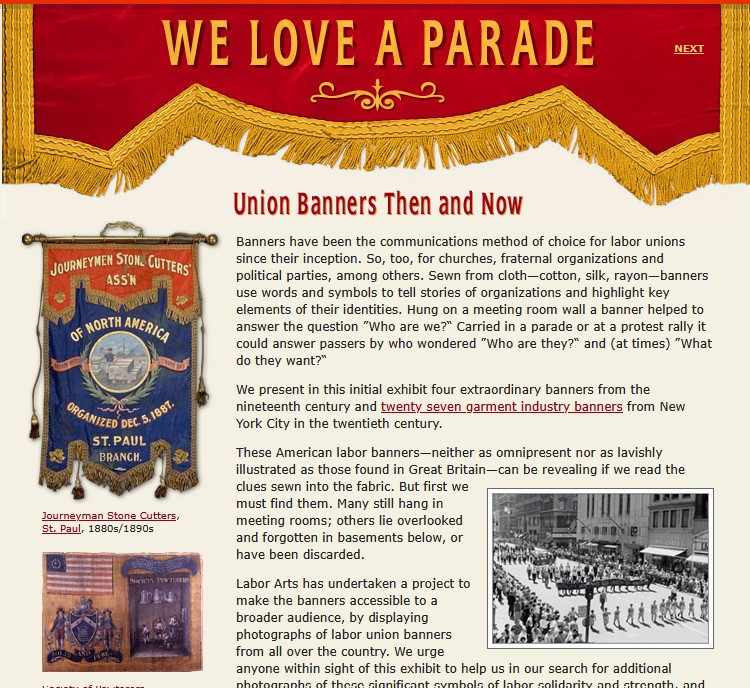
Labor Arts
Banners have been the communications method of choice for labor unions since their inception. So, too, for churches, fraternal organizations and political parties, among others. Sewn from cloth—cotton, silk, rayon—banners use words and symbols to tell stories of organizations and highlight key elements of their identities. Hung on a meeting room wall a banner helped to answer the question ”Who are we?“ Carried in a parade or at a protest rally it could answer passers by who wondered ”Who are they?“ and (at times) ”What do they want?“
We present in this initial exhibit four extraordinary banners from the nineteenth century and twenty seven garment industry banners from New York City in the twentieth century.
These American labor banners—neither as omnipresent nor as lavishly illustrated as those found in Great Britain—can be revealing if we read the clues sewn into the
Digital exhibit of union banners 1835-1950s, mostly of the garment industry
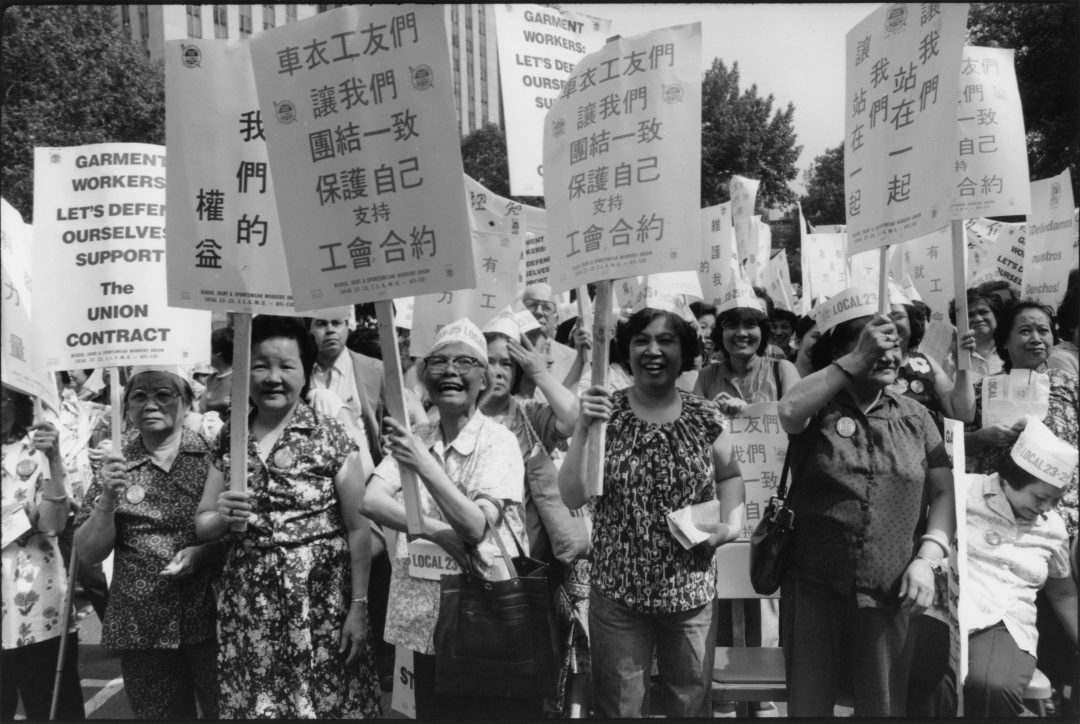
Labor Arts, ILGWU
17 minute video on the successful 1982 garment workers strike, when an estimated 20,000 members of Local 23-25 of the ILGWU—most of them Chinese immigrant women—walked off the job in protest.
short video of Chinese immigrant garment women strike 1982

Labor Citizen, Florida Federation of Labor
As the official organ of the Florida Federation of Labor, the Citizen also worked to unite local branches and strengthen labor at the state and national levels. It covered major news from labor organizations throughout Florida, especially in Tampa, and statewide legislation and elections with an emphasis on voter registration and voting initiatives. From late 1940 until early 1942, the Citizen also included a four-page once-monthly “Florida Industrial Forum” section edited by Walter Hoyt which offered deeper coverage of industry, labor, and legislation in Florida, as well as the effects of national trends and federal policies on labor and industry in Florida.
Miami Florida Labor Paper

Labor Department, History Matters
In 1898 the United States acquired Puerto Rico, a Caribbean island 1,000 miles southeast of Miami, after victory in the Spanish-Cuban-American War. After an initial military occupation, the United States granted Puerto Rico limited local autonomy. In 1917, the U.S. responded to local pressure for independence by declaring Puerto Ricans citizens of the United States—a “gift” that many Puerto Ricans resented. Large, corporate-financed sugar plantations transformed Puerto Rico’s agricultural economy and displaced thousands of subsistence farmers from their own land, forcing them into the rural wage labor force. These dramatic changes in the rural economy in the years before World War I pushed unemployment levels in Puerto Rico to crisis proportions. At the same time, American entry into the war created labor shortages in many industries on the mainland. This Labor Department bulletin from May 1918 set out plans for bringing more than 10,000 Puerto Rican laborers to the U.S. to work on war-related projects.
This Labor Department bulletin from May 1918 set out plans for bringing more than 10,000 Puerto Rican laborers to the U.S. to work on war-related projects.
Labor HIstory Resource Project
"We are a collaborative of labor and working-class historians, labor studies and labor relations scholars, labor activists, and supporters. We are dedicated to the preservation of the history of working people and their movements in all of their diversity from the era of slavery and colonialism down to the present day." -- Sponsored by Georgetown University and LAWCHA. Has 4 primary exhibits and many other resources. List of over 350 sites of importance
"Our goal is to make the history of U.S. workers and workers movements available to a broad contemporary audience that includes workers, students, teachers, organizers, labor educators, journalists, and others–to everyone who seeks a deeper understanding of the issues that confront working people in the 21st century and of the history that has shaped the world in which we live. Understanding this history, we believe, is a necessary prerequisite to building a more inclusive, human, equitable, and democratic future."
A digital project containing over 4 primary exhibits and links to 350 sources for used in a classroom

Labor HIstory, Taylor and Francis
Published since 1961, most issues until very recently were US history only, but in recent years it has published much more from other areas of the globe.
"Labor History is the pre-eminent journal for historical scholarship on labor. It is thoroughly ecumenical in its approach and showcases the work of labor historians, industrial relations scholars, labor economists, political scientists, sociologists, social movement theorists, business scholars and all others who write about labor issues. Labor History is also committed to geographical and chronological breadth. It publishes work on labor in the US and all other areas of the world. It is concerned with questions of labor in every time period, from the eighteenth century to contemporary events.
Labor History provides a forum for all labor scholars, thus helping to bind together a large but fragmented area of study. By embracing all disciplines, time frames and locales, Labor History is the flagship journal of the entire field. All research articles published in the journal have undergone rigorous peer review, based on initial editor screening and refereeing by at least two anonymous referees."
Publishes historical studies on labor worldwide, examining issues such as capitalism, labor rights, unionization, collective bargaining and occupational safety

Labor Heritage Foundation
If you like movies and are interested in the labor movement, hang out with Labor Heritage Foundation Executive Director Elise Bryant and DC Labor FilmFest Director Chris Garlock as they kick back and talk about their favorite films and chat with guests about work and workers on the silver screen.
a series on labor issues covered in motion picture industry movies
Museum/Exhibits
Tours
Maps
Digital Projects
Organizations
Sites
Film/Video
Audio/Interview
Podcast/Program
Text/Document
Image
Graphs/Data
Timeline
Southwest
West
Midwest
Southeast
Northeast
Mexico
Canada
Global
Books
Teaching
Lectures
Digital Archives
Journals
Bibliographies
Topic Intro