


Collections
Library
Type
Region
Coverage:
-
Published:
-

Labor Heritage Foundation
The Labor Heritage Foundation works to preserve and promote knowledge of the cultural heritage of the American worker through the arts, including music, poetry, written works, theatre, and artistic works; and conducts historical research through written and oral histories. Their mission is to strengthen the labor movement through the use of music and arts.
cultural heritage of the American worker through the arts
Labor Heritage Foundation
The Labor Heritage Foundation lists a series of events on a monthly and daily basis. Check it out for events around the US as well as media, virtual events, etc. List your event there.
The Labor Heritage Foundation lists a series of events on a monthly and daily basis
Labor History Today
Dr. Jay Cephas considers two Depression-era murals in Detroit and their contrasting messaging about workers, labor, and power. Diego Rivera’s famed Detroit Industry murals (top), commissioned by Edsel Ford for the Detroit Institute of Arts in 1932, champions industrial and technological progress and the factory workers who fueled it. In contrast, Walter Speck and Barbara Wilson’s 1937 untitled mural (bottom), which originally hung in the UAW Local 174 union hall and now hangs behind the reference desk at the Reuther Library, champions the progress those industrial workers made laboring for their own welfare via union action. Dr. Cephas is Assistant Professor of the History and Theory of Architecture at Princeton University. His essay “Detroit Industry and ‘The Mural’: Representing Labor and Reappropriating Care in the Museum and in the Union Hall,” was published in the 2023 volume, Architectures of Care: From the Intimate to the Common. Originally aired on the Tales from the Reuther Library podcast.
Podcast featuring Dr. Jay Cephas, who considers two Depression-era murals in Detroit and their contrasting messaging about workers, labor, and power.
Labor History Today
“The life and music of Barbara Dane,” from The Harry Bridges Project. The story of America told through its social upheaval, its achievements and, above all, its music. On this week’s Labor History in Two: The year was 1975; that was the day that the National Organization for Women, or NOW, called for a strike by women across the nation.
Podcast exploring “The life and music of Barbara Dane,” from The Harry Bridges Project.
Labor History Today
From On The Line, the story of Diana Kilmury, the bold and fearless truck driver who took on both sexist attitudes on the job and a corrupt union. On this week’s Labor History in Two: Big Bill Haywood Talks General Strike.
Podcast discussing the story of Diana Kilmury, the bold and fearless truck driver
Labor History Today
DIscussion about labor history. I could not put this novel on Matewan away. Once I saw what happened here: the orange Tug River from the strip mines…the strip mining, the desecration, the poverty. I owed it to the world to tell what happened.
William Trent Pancoast has worked as a construction laborer, gas station attendant, railroad section hand and brakeman, factory laborer, commercial laundry foreman, and machinist. He’s been an English teacher and a journeyman die-maker. In 1986 The Wall Street Journal dubbed Pancoast a "Blue collar writer" and that’s just fine with him, as he told the Journal, "The reason I write about work is that that's just about damn near all I've ever done." His working-class-flavored short stories and essays have appeared in many Midwestern and international magazines and newspapers.
Pancoast's novel Crashing was published in 1983. In 1986, his United Auto Worker's union history was published. Pancoast spent the next twenty years as the editor of a monthly union newspaper-the Union Forum-while continuing to publish his fiction, essays, and editorials not only in the Union Forum but also in the UAW's 1.2 million circulation Solidarity magazine.
A revised version of his novel The Road to Matewan has just been published and yesterday Bill Pancoast drove down from his home in Ohio to give a reading and talk at the West Virginia Mine Wars Museum so I figured the least I could do was make the 7-hour drive down – my own 300-mile Road to Matewan – to record it for you. By the way, as you’ll hear, the train still runs through town right across from the museum. On this week’s Labor History in Two: the year was 1965; that was the day acclaimed photojournalist Dorothea Lange died.
Podcast discussing Bill Pancoasts writings about the labor movement and the West Virginia Mine Wars
Labor History Today
For 150 years, Richmond's place in history has been as "the capital of the Confederacy." But this label hides a much richer and more complex history. On today’s show, originally aired on Feb. 20, 2022, we hear from Peter Rachleff, Co-Executive Director of the East Side Freedom Library, a retired professor of history at Macalester College in St. Paul, Minnesota, and author of "Black Labor in Richmond, 1865 -1890," as he reveals part of that hidden history, that of Black and White workers in the second half of the 19th century.
Note: Excerpted from Rachleff’s Feb. 2, 2022 talk for The Virginia Worker; click here for the complete talk.
On this week’s Labor History in Two: Yale Grad Students Strike (2/17/1992).
Questions, comments or suggestions welcome, and to find out how you can be a part of Labor History Today, email us at LaborHistoryToday@gmail.com
Labor History Today is produced by Union City Radio and the Kalmanovitz Initiative for Labor and the Working Poor. Editing this week by Patrick Dixon.
#LaborRadioPod #History #WorkingClass #ClassStruggle @GeorgetownKILWP #LaborHistory @UMDMLA @ILLaborHistory @AFLCIO @StrikeHistory #LaborHistory @wrkclasshistory @virginia_worker
Podcast featuring Peter Rachleff, author of "Black Labor in Richmond, 1865 -1890," as he reveals part of that hidden history, that of Black and White workers in the second half of the 19th century.
Labor History Today
Part 1 of our 2018 interview with Jeremy Brecher, the historian, documentary filmmaker, activist, and author of books on labor and social movements, including the classic book Strike! Plus: Patrick Dixon talks with history professor Sarah Rose about the Americans with Disabilities Act and the complex history of disability and work. Jordan Biscardo, communications director at the Seafarers Union, tells us about the 1946 general strike that shut down the U.S. maritime industry. And our labor history Object of the Week is the cover of the September 1949 edition of The American Federationist, depicting the first Labor Day march.
Podcast discussing the book "Strike!"
Labor History Today
Donora Smog Incident: was a deathly chemical toxicity from the steel and zinc works in the area. The site and museum highlights how the human and environmental costs of capitalist industrialization Donora Historical Society and Smog Museum was opened in 2008 and has been flourishing ever since.
Located in the heart of Donora, Pennsylvania, the museum has permanent exhibits related to the founding of the town, town life, steel mills, the 1948 Smog tragedy, Donora schools and sports, social clubs and organizations, and a 1948-time capsule room. There are also a couple of rotating exhibits whose content changes three to four times a year.
Podcast covering the 1948 Donora, PA, smog incident and the museum dedicated to it

Labor History Today
Before she turned 20, Emma Tenayuca led thousands of Mexican American pecan shellers into one of the largest strikes of the 1930s. A fearless young organizer from San Antonio, Texas, Tenayuca fought for workers’ rights, racial justice, and dignity—despite arrest, red-baiting, and death threats. Her story, largely left out of mainstream labor history, still resonates in today’s struggles for immigrant and worker justice. This episode features a segment from Solidarity Works, the podcast of the United Steelworkers
Podcast featuring the life of Emma Tenayuca, and her efforts to organize Pecan Shellers
Labor History Today
Ben Fletcher was one of the most important black labor leaders in American history. Yet he’s almost entirely unknown. In today’s show, from the Working Class History podcast, and in honor of Black History Month, we learn about this little-known dock worker and labor organizer, who helped organize thousands of workers on the Philadelphia docks into the most powerful multiracial union in the country.
Podcast discussing the life of Ben Fletcher, Black dock worker labor leader and organizer

Labor History Today
They had banners demanding "We want to go to school and not the mines!" and held rallies each night in a new town. This was the famous "March of the Mill Children" in June, 1903, led by Mother Jones, from Kensington, Philadelphia, to President Theodore Roosevelt’s Summer White House in Oyster Bay, New York. Gabe Christy of The Labor Jawn podcast reports. Harry Belafonte was not only an acclaimed actor and singer but an important fighter against racism and militarism. Work Week Radio’s Steve Zeltzer talks with Clarence Thomas, retired Secretary Treasurer of Local 10 of the ILWU, which had a longstanding connection to1 Belafonte. On this week’s Labor History in Two: The year was 1971; at 12:51 am Battalion 12 Chief Leo Najarian of Los Angeles heard that there had been a tunnel explosion.
Podcast discussing the march of the mill children and the life of Harry Belafonte
Labor History Today
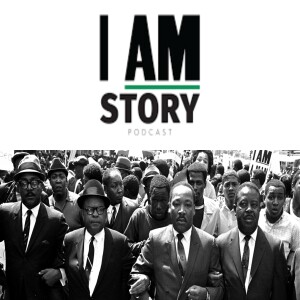
On this week's Labor Heritage Power Hour: MLK in Memphis; “We Will Not Be Turned Around”, Part 3 of AFSCME’s I AM STORY podcast about the 1968 sanitation workers’ strike.
Podcast covering the AFSCME sanitation strike in Memphis, and Martin Luther King Jr.'s place in it.
Labor History Today
Jeff Barnes was born and raised in Tazewell, Virginia, in the heart of coal country. He lives, writes, and practices law in Richmond. His novel “Mingo”, published in 2021, was inspired by his childhood fascination with the 1919 Matewan Massacre, which occurred during the bitter, brutal Coal Mine Wars and the stories his father told of growing up in Pocahontas, Virginia in the 1920’s with friends who were first generation Americans of Hungarian and Italian descent. Last month Jeff gave a talk on Mingo, Matewan and the Coal Wars of West Virginia to the Virginia chapter of the Labor and Employment Relations Association; today’s show features an excerpt from that talk. On this week’s Labor History in Two: the year was 1936. That was the day more rubber workers sat down in Akron, Ohio.
(Podcast) Jeff Barnes gave a talk to the Virginia chapter of the Labor and Employment Relations Association; today’s show features an excerpt from that talk.
Labor History Today
Contrary to the common belief that white activists were purged from the Black freedom movement in the mid-1960 and 1970s, Black-led organizations in Detroit – including the Northern Student Movement, the City-Wide Citizens Action Committee, and the League of Revolutionary Workers—actually called on white activists to organize within their own white networks to support Black self-determination in education, policing, employment, and labor unions, according to Dr. Say Burgin, author of Organizing Your Own: The White Fight for Black Power in Detroit. Today’s show comes to us from the Tales from the Reuther Library podcast; hear what really happened and why it matters today. On this week’s Labor History in Two: The year was 1947; that was the day the despised Taft-Hartley Act became law.
Podcast discussing the inclusion of white activists into black organizations
Labor History Today
Today’s show is excerpted from “Pride on the Line: The UAW and Queer-Labor Solidarity after Stonewall” by Jamie McQuaid, part of the Our Daily Work Our Daily Lives Brown Bag series from Michigan State University.
The talk took place in September 2022 and this originally aired on LHT on 10/30/22. On this week’s Labor History in Two: Wall Street Lays an Egg. Questions, comments, or suggestions are welcome, and to find out how you can be a part of Labor History Today, email us at LaborHistoryToday@gmail.com Labor History Today is produced by Union City Radio and the Kalmanovitz Initiative for Labor and the Working Poor. #LaborRadioPod #History #WorkingClass #ClassStruggle @GeorgetownKILWP #LaborHistory @UMDMLA @ILLaborHistory @AFLCIO @StrikeHistory #LaborHistory @wrkclasshistory
Podcast excerpted from “Pride on the Line: The UAW and Queer-Labor Solidarity after Stonewall” by Jamie McQuaid
Labor History Today
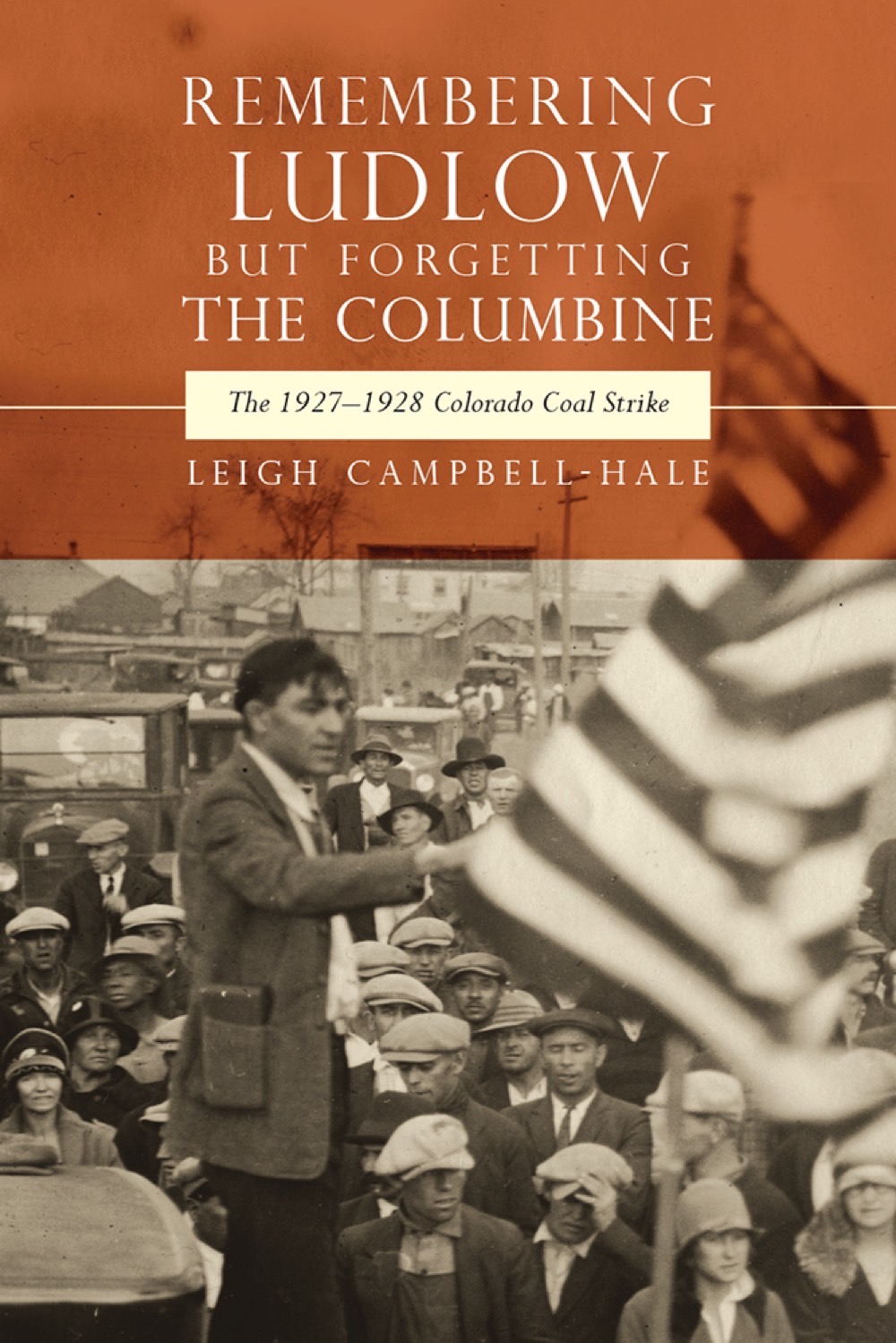
On this week’s Labor History Today: While historians have written prolifically about the 1914 Ludlow Massacre, there has been a lack of attention to the Columbine Massacre in which police shot and killed six striking coal miners and wounded sixty more protestors during the 1927–1928 Colorado Coal Strike, even though its aftermath exerted far more influence on subsequent national labor policies. In her 2023 book Remembering Ludlow but Forgetting the Columbine: The 1927–1928 Colorado Coal Strike, Leigh Campbell-Hale reorients understandings of labor history from the 1920s through the 1960s and the construction of public memory—and forgetting—surrounding those events. Our colleague Robert Lindgren, who hosts the Labor Exchange radio show on KGNU, Boulder, Denver, and Fort Collins, recently released a 3-part interview with Campbell-Hale; on today’s show, Part 1. Links to part one and 2 at the site.
Podcast addressing the difference in memory of Columbine and Ludlow in the labor movement
Labor History Today
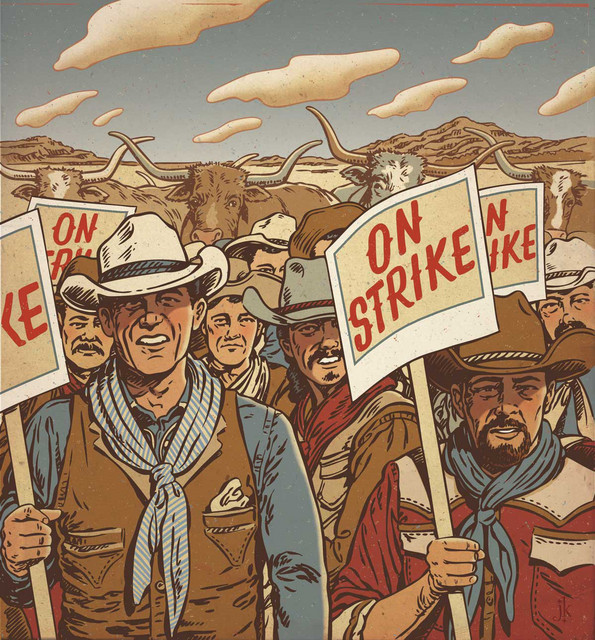
On Labor History Today: Joe McCartin, Leon Fink and Patrick Dixon discuss the 2002 U.S. Supreme Court ruling that undocumented workers don’t have the same rights under the National Labor Relations Board as Americans, Sam Walton’s anti-union legacy, and they remember dock union leader Harry Bridges and the Texas cowboys strike. PLUS: Saul Schniderman on Martin Luther King and striking sanitation workers in Memphis. Music this week includes “Glory,” with Common and John Legend, from the motion picture "Selma” and “A Change Is Gonna Come” by Sam Cooke. Originally released March 25, 2018.
Podcast discussing the 2002 U.S. Supreme Court ruling that undocumented workers don’t have the same rights as Americans, Sam Walton’s anti-union legacy, and remembers dock union leader Harry Bridges and the Texas cowboys strike.
Labor History Today
Before last Friday, to know about the 1938 crab pickers strike in Crisfield, Maryland, you had to know about it. This is the story of so many worker struggles in this country; hard-fought fights that unlike other battles – the Civil War, for example – have virtually no monuments or plaques, no visitor centers. But now, on Crisfield Highway, Maryland Route 413, there’s an official state historical marker that commemorates the 1938 strike by 600 crab pickers, mostly Black women. On today’s show we bring you an audio postcard from the marker’s unveiling. Next Saturday, May 18, there will be another unveiling, this one in Philadelphia, of a new mural celebrating Ben Fletcher, one of the most influential working-class unionists, revolutionaries, and organizers in all of U.S. history. We talk with historian Peter Cole, author of Ben Fletcher: The Life and Times of a Black Wobbly, whose work inspired the mural. On this week’s Labor History in Two: The first day of the 1894 Pullman Strike. Other links: Hurricane Hazel demonstrates her world-record crab-picking skills 1938 Crab Pickers Strike photos May 18 Ben Fletcher Mural Dedication
Podcast discussing the crab pickers strike
Labor History Today
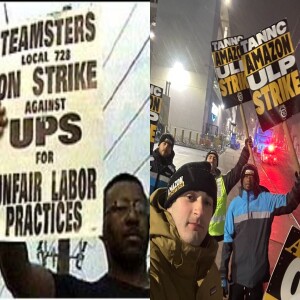
“This fight isn't just for the teamsters. This is for all American workers.” This weekend, Teamsters struck Amazon in New York City, Atlanta, Skokie, Southern California, San Bernardino and San Francisco. The union represents 10,000 Amazon workers at 10 warehouses and delivery stations. But that quote at the top is not from the Amazon strike; it’s about the Teamsters’ strike against the United Parcel Service in 1997. Today, our colleagues at the Labor Jawn podcast take us back to that pivotal strike twenty seven years ago when 185,000 workers stood up to one of the largest shipping companies in the United States. And won. On this week’s Labor History in Two: The Bucks Stove Boycott.
Podcast discussing the 1997 nationwide UPS strike
Labor History Today
A detailed account of coal bootlegging in the anthracite region of Pennsylvania in the Prohibition/Depression decades when unemployed miners took over unused mines, asserting and defending a right to mine and market the coal to support their families. Excerpted from his June 23, 2022 talk for The Battle of Homestead Foundation. On this week’s Labor History in Two: the year was 1785. That was the day the General Society of Mechanics and Tradesmen of the City of New York was founded.
Podcast covering the book, "The Bootleg Coal Rebellion," detailing how coal miners took over unused mines
Labor History Today
Chris visits the restored home of Kate Mullany, one of the least-known – and most interesting -- labor leaders in American history. Learn more here and check out the Don’t Iron While the Strike is Hot! musical here. On this week’s Labor History in Two: Labor leader Helen Marot was born to a wealthy Quaker family in Philadelphia.
Podcast which visits the restored home of Kate Mullany, one of the least-known – and most interesting -- labor leaders in American history.
Labor History Today
"In Ludlow, the workers were killed by bullets and kerosene; here they died from poverty. The names are illuminated at night. People are claiming the memorial. They're leaving items, artifacts, relics, coins, stones, gifts for the dead, telling them that we see them." The average age of the people in the pine boxes was 23 years old; half of them were children under 12. 70 percent were from Ireland. On today’s show we travel to the Evergreen Cemetery in Leadville, Colorado; where on September 16th a new memorial was unveiled commemorating the 1,100 unmarked graves of Irish workers and their families who fled the famine in their homeland to toil deep in the Colorado copper mines and who died penniless in the Promised Land. Today's show comes to us from the Labor Exchange radio show, Colorado's only labor focused radio show on KGNU Community Radio (88.5 FM / 1390 AM) On this week’s Labor History in Two: Newspaper Printers Quit!
Podcast which travels to the Evergreen Cemetery in Leadville, Colorado; where on September 16th a new memorial was unveiled commemorating the 1,100 unmarked graves of Irish workers
Labor History Today
Five stunning paintings depicting labor organizing, pickets and the violence directed at workers in the turbulent 1930s were almost lost to history. The story of Philip Tipperman and how a small group of people saved those paintings. On this week’s Labor History in Two: Massacre At Bogalusa.
Podcast featuring the story of Philip Tipperman and how a small group of people saved 5 important paintings.
Labor History Today
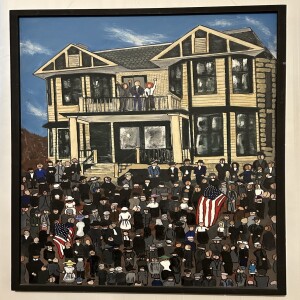
On this week's Labor History Today: Touring the American Labor Museum The American Labor Museum in Haledon, New Jersey, is also known as The Botto House, and that’s because for generations that’s what it was: the home of the Botto family. This unassuming house, sitting on an ordinary-looking street in a quiet residential neighborhood, played a key role in American labor history when it became the heart of the 1913 Patterson Silk Strike as tens of thousands of silk workers – most of them immigrants and many of them young children – demanded an eight-hour day and improved working conditions. They were supported by the IWW and the strike drew leaders like Bill Haywood and Elizabeth Gurley Flynn, who spoke from that balcony at the Botto House, and recently LHT host Chris Garlock finally had a chance to make his own pilgrimage to this iconic labor landmark, for a personal tour with Education Director Evelyn Hershey. And, on Labor History in Two: The year was 2005; that was the day the labor movement lost a man who was willing to go to jail to fight for the rights of working people.
Podcast featuring a tour of the Botto house
Museum/Exhibits
Tours
Maps
Digital Projects
Organizations
Sites
Film/Video
Audio/Interview
Podcast/Program
Text/Document
Image
Graphs/Data
Timeline
Southwest
West
Midwest
Southeast
Northeast
Mexico
Canada
Global
Books
Teaching
Lectures
Digital Archives
Journals
Bibliographies
Topic Intro