


Collections
Library
Type
Region
Coverage:
-
Published:
-
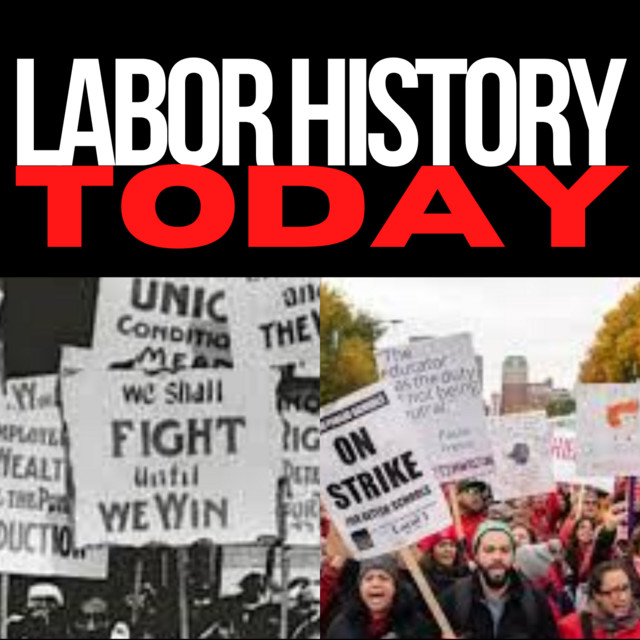
Labor History Today
Yesterday, the IWW -- the Industrial Workers of the World -- hosted a dedication ceremony for a new monument in Centralia, Washington. The Centralia Tragedy, also known as the Centralia Conspiracy and the Armistice Day Riot, was a violent and bloody incident that occurred in Centralia on November 11, 1919, during a parade celebrating the first anniversary of Armistice Day. The conflict between the American Legion and the IWW members resulted in six deaths, others being wounded, multiple prison terms, and an ongoing and especially bitter dispute over the motivations and events that precipitated the conflict. Both Centralia and the neighboring town of Chehalis had a large number of World War I veterans, with robust chapters of the Legion and many IWW members, some of whom were also war veterans. “For almost 100 years the Legion Statue, the Sentinel, has told one side of the story,” says the IWW. “It states that the four Legion members depicted were ‘slain while on peaceful parade’. The IWW memorial counters that narrative with the statement that the IWW victims were ‘Defending Their Union Hall’” Today’s show, which comes to us from the Tales from the Reuther Library podcast, also concerns the IWW. Ahmed White explains how American industrialists and government officials used violence and legal maneuverings to stultify the IWW and to silence its members in the early twentieth century. White teaches labor and criminal law at University of Colorado Boulder and is the author of Under the Iron Heel: The Wobblies and the Capitalist War on Radical Workers, which received the International Labor History Association Book of the Year Award in 2022. On this week’s Labor History in Two: The year was 1916; that was the day when what came to be known as the Everett Massacre took place in Washington State.
Podcast discussing Centralia and nationwide IWW repression
Labor History Today
Chris talks with labor historian Dana Frank; her new book is What Can We Learn From the Great Depression? Stories of Ordinary People and Collective Action in Hard Times. The book takes a new look at working-class activism during the 1930s from the perspective of our own time, examining mutual aid, eviction protests, the expulsion of a million Mexicans, a sit-down strike by African American women working as wet-nurses, and a white supremacist fascist organization in Ohio known as the Black Legion.
Podcast discussing the book, "What Can We Learn From the Great Depression?" including discussion of race, gender, and class during the period
Labor History Today
The Death In The West podcast re-opens the case of Frank Little, a union organizer whose brutal unsolved murder shocked the nation during the tumultuous summer of 1917. Features Frank Little, a brand-new song from the R.J. Phillips Band. On this week’s Labor History in Two: The year was 1970. That was the day the United Farm Workers, led by Cesar Chavez, signed their first union contract in California.
Podcast featuring a true crime episode covering the murder of Frank Little
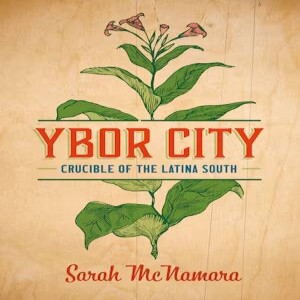
Labor History Today
On this week's Labor History Today: Decades before Miami became Havana USA, a wave of leftist, radical, working-class women and men from prerevolutionary Cuba crossed the Florida Straits, made Ybor City the global capital of the Cuban cigar industry, and established the foundation of latinidad in the Sunshine State. Located on the eastern edge of Tampa, Ybor City was a neighborhood of cigar workers and Caribbean revolutionaries who sought refuge against the shifting tides of international political turmoil during the early half of the twentieth century. Producer Patrick Dixon talks with historian Sarah McNamara about her book Ybor City, Crucible of the Latina South, which tells the story of immigrant and U.S.-born Latinas and Latinos who organized strikes, marched against fascism, and criticized U.S. . While many members of the immigrant generation maintained their dedication to progressive ideals for years to come, those who came of age in the wake of World War II distanced themselves from leftist politics amidst the Red Scare and the wrecking ball of urban renewal. This portrait of the political shifts that defined Ybor City highlights the underexplored role of women’s leadership within movements for social and economic justice as it illustrates how people, places, and politics become who and what they are. On this week’s Labor History in Two: The American Federation of Labor is founded.
Podcast discussing the book Ybor City, a Latin American haven near Miami,with author
Labor History Today
The Pittsburgh Labor Choir’s Tom Hoffman and Kira Yeversky lead a master class in the history of labor songs in their inspirational session at this year’s Reuther-Pollack Labor History Symposium, recorded with a live – and enthusiastically singing – audience. On this week’s Labor History in Two: The year was 1945; that was the day that Paul Robeson received the Spingarn Medal from the NAACP.
Podcast featuring the Pittsburgh Labor Choir’s Tom Hoffman and Kira Yeversky who lead a master class in the history of labor songs
Labor History Today
The story of Cleophas Williams, the first African American president of Local 10 of the ILWU, the International Longshore and Warehouse Union. Thanks to WBAI’s Building Bridges radio show, where a longer version of this originally appeared. On this week’s Labor History in Two: The Packers.
Podcast featuring the story of Cleophas Williams, the first African American president of Local 10 of the ILWU
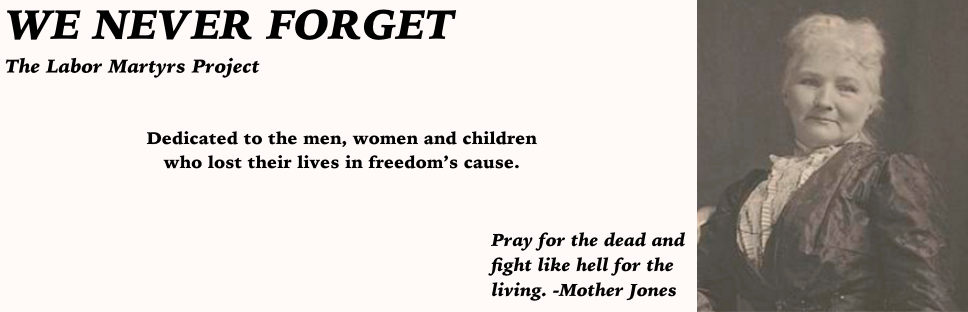
Labor Martyrs Project
This project has many digitized newspaper and other primary sources related to the life and times of Mother Jones and her cohorts.
The Labor Martyrs Project is a calendar "on this day" approach to the early twentieth century labor history
Labor Online
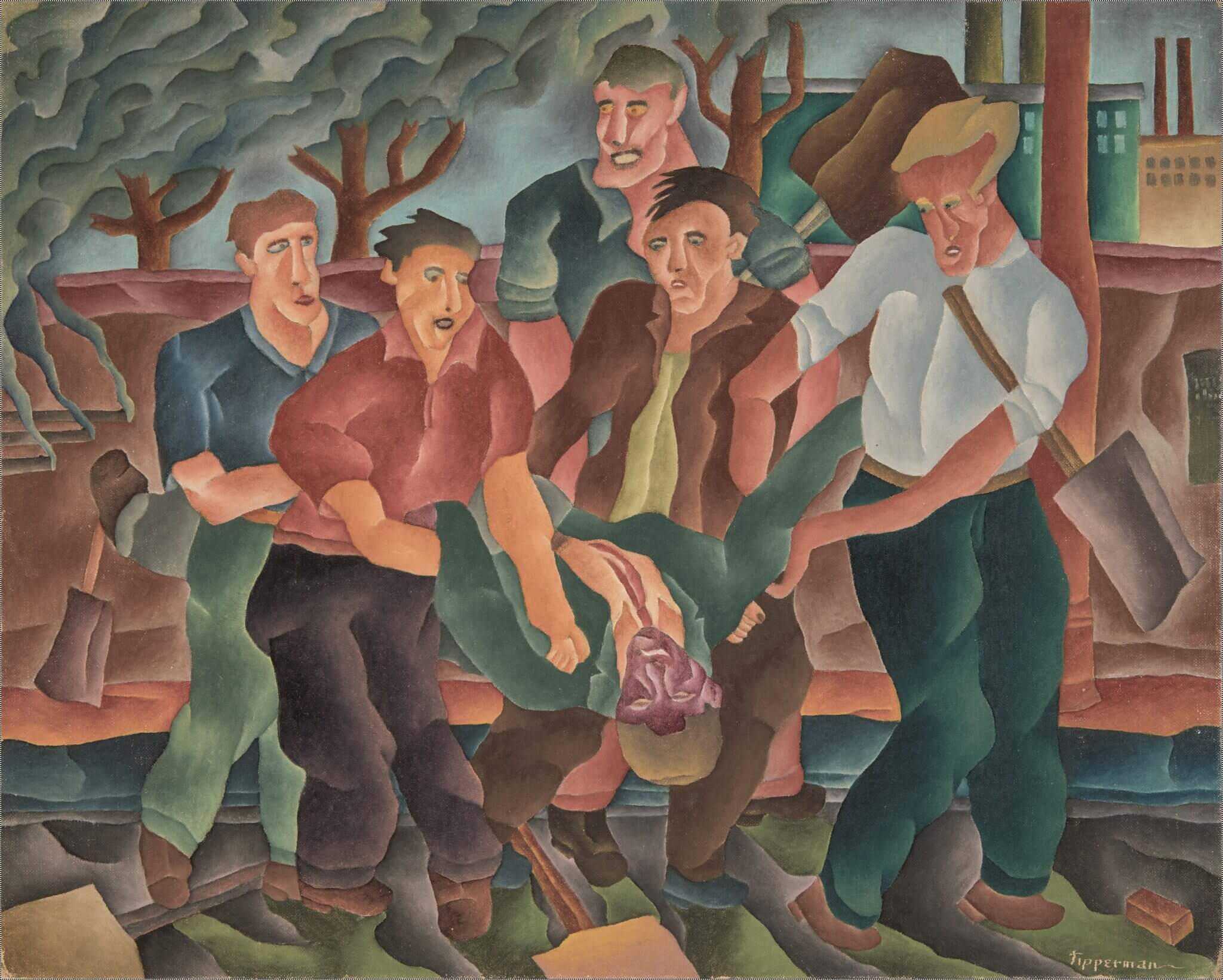
a blog post that introduces and includes links to a radio program about recovering the lost art of a 1930s painter of working class experience. "Tipperman’s style fuses social realism and modernist experimentation. In this way, his work seems to be in dialogue with better-known painters from the period, including Thomas Hart Benton, Philip Evergood, and Jacob Lawrence. Tipperman’s lively, colorful, hard-hitting images stand out—even against this turbulent decade’s rich cultural landscape."
an introduction to an artist of 1930s working class experience, link to program about Tipperman's art
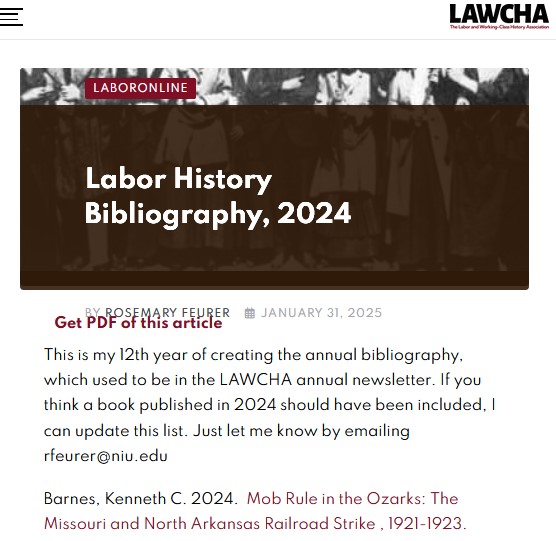
Labor Online, Rosemary Feurer, LAWCHA
Books on labor history, published in 2024
Bibliography of books on labor history, published in 2024
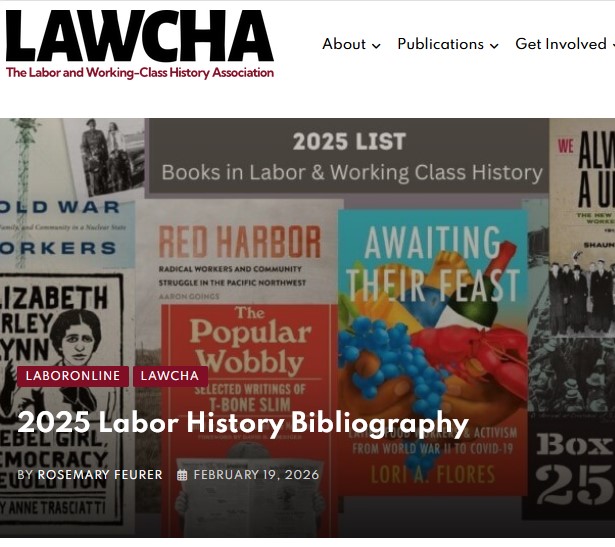
Labor Online, Rosemary Feurer, LAWCHA
Books on labor history, published in 2025.
Bibliography of books on labor history, published in 2025

Labor Radio Network
About the Labor Radio Podcast Network:
Working people are raising their voices more and more each day, demanding better treatment from their workplaces and their elected officials.
While labor columnists at daily newspapers have become a dying breed and union news has largely been sidelined within traditional print and televisual media, affordable and easy-to-use recording and editing technologies now allow workers, union members, leaders and activists to create their own alternative means of communication. These days, that often takes the form of either podcasts or radio shows (which often are also available via podcast).
a network of labor-oriented podcasts that often discuss labor history
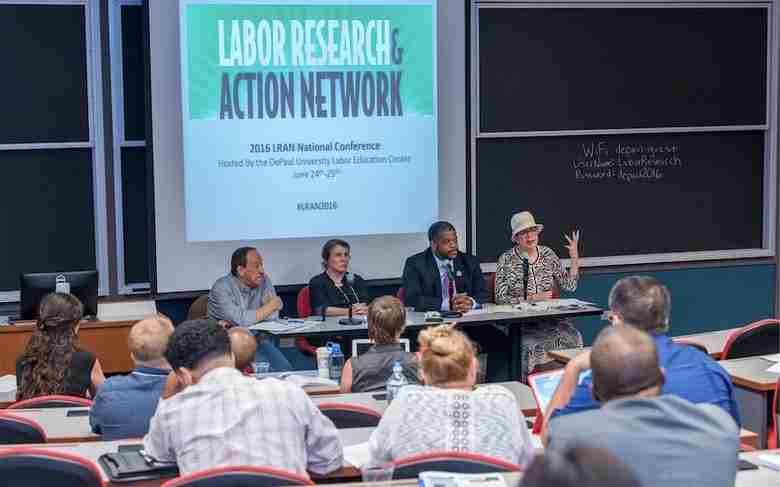
Labor Research Action Network
What LRAN does:
Connects experts to practitioners: LRAN connects practitioners employing innovative strategies with scholars from a variety of disciplines who are interested in strategic research and advocacy efforts that support workers. We are building a community of scholars interested in providing research, op-eds, legislative testimony or other forms of support.
Convenes a national conference: At our conferences, a diverse community of scholars, leaders and staff of unions, worker centers and allied organizations share lessons from historic and current campaigns, exchange big ideas, teach about innovative strategies and share best practices.
Supports new scholars in the field: LRAN holds an annual New Scholars Research Grant competition to fund vital labor research by non-tenured faculty and graduate students. Winners are provided with an opportunity to present their research at our national conference.
connect workers’ rights organizations, academics and students to build workplace and economic power for working people in this country. Site has access to sources including labor studies syllabi and sources
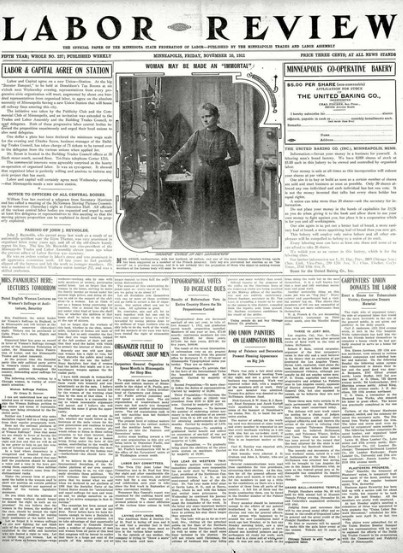
Labor Review
This searchable archive includes all issues of the Labor Review (MN) published from April 1907 through December 2016, thus collecting over a hundred years of labor history.
Created by the Minneapolis Regional Labor Federation (AFL-CIO), this archive contains one hudred years of the Labor Review.

Labor Sentinel
Labor Sentinel-from United Steel Workers Local 1010
I found five of these books in the basement of our old hall in East Chicago. They are dated: 1946,1947,1948,1949,1950. These are a collection of mainly Local 1010 newsletters, but they also include information and events about Local 1011 and local foundries and forging plants.
We photographed each page so they can be here on our website. Once completed, I will donate all books to the Calumet Archives IUNW.
Please use these books for research. They contain some great stuff with lots of historical value. Remember, this is right after World War II. Jim Crow is alive and well in the City of East Chicago and the 1010 Civil Rights Committee is working to integrate the bars and restaurants on Michigan Ave. The Red Scare is running full force. Local 1010 takes the company to the Supreme Court bargaining over issues with pensions. Taft Hartley is coming into being and much more. Enjoy!
Tom Hargrove
Thanks to Danny Walters, Jayson Culp, and German Vagner for their hard work getting this done.
Steelworkers East Chicago newspaper, digitized

Labor Standard, History Matters
One of the prime frustrations of labor organizers in the late 1800s was the powerful myth that every American could attain untold riches if sufficiently hardworking and ambitious. The faith that some workers had in this mythology of the “self-made man” inhibited unionization and the spread of radical ideology. The anonymous writer of this 1877 editorial in the Labor Standard took aim at the national obsession with making money at any cost.
(teaching document) 1877 editorial in the Labor Standard took aim at the national obsession with making money at any cost
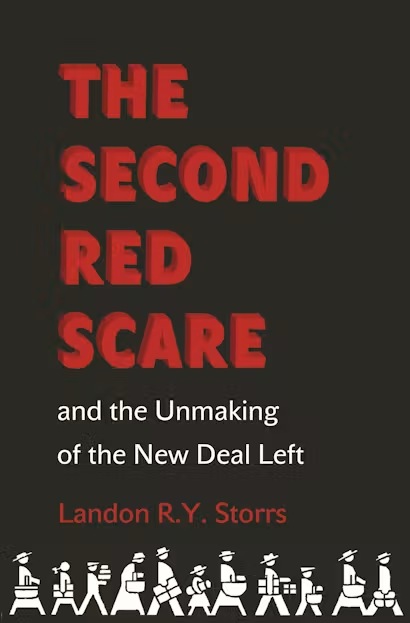
Landon R. Y. Storrs
The loyalty investigations triggered by the Red Scare of the 1940s and 1950s marginalized many talented women and men who had entered government service during the Great Depression seeking to promote social democracy as a means to economic reform. Their influence over New Deal policymaking and their alliances with progressive labor and consumer movements elicited a powerful reaction from conservatives, who accused them of being subversives. Landon Storrs draws on newly declassified records of the federal employee loyalty program--created in response to fears that Communists were infiltrating the U.S. government--to reveal how disloyalty charges were used to silence these New Dealers and discredit their policies. Because loyalty investigators rarely distinguished between Communists and other leftists, many noncommunist leftists were forced to leave government or deny their political views. Storrs finds that loyalty defendants were more numerous at higher ranks of the civil service than previously thought, and that many were women, or men with accomplished leftist wives. Uncovering a forceful left-feminist presence in the New Deal, she shows how opponents on the Right exploited popular hostility to powerful women and their "effeminate" spouses. The loyalty program not only destroyed many promising careers, it prohibited discussion of social democratic policy ideas in government circles, narrowing the scope of political discourse to this day. Through a gripping narrative based on remarkable new sources, Storrs demonstrates how the Second Red Scare undermined the reform potential of the New Deal and crippled the American welfare state
a forceful left-feminist presence in the New Deal, she shows how opponents on the Right exploited popular hostility to powerful women and their "effeminate" spouses.
Lane Windham
Highlighting the integral, often-overlooked contributions of women, people of color, young workers, and Southerners, Lane Windham reveals how in the 1970s workers combined old working-class tools - like unions and labour law - with legislative gains from the civil and women's rights movements to help shore up their prospects
in the 1970s workers combined old working-class tools - like unions and labour law - with legislative gains from the civil and women's rights movements to help shore up their prospects
Lara Langer Cohen
First popularized by newspaper coverage of the Underground Railroad in the 1840s, the underground serves as a metaphor for subversive activity that remains central to our political vocabulary. In Going Underground, Lara Langer Cohen excavates the long history of this now-familiar idea while seeking out versions of the underground that got left behind along the way. Outlining how the underground's figurative sense first took shape through the associations of literal subterranean spaces with racialized Blackness, she examines a vibrant world of nineteenth-century US subterranean literature that includes Black radical manifestos, anarchist periodicals, sensationalist exposés of the urban underworld, manuals for sex magic, and the initiation rites of secret societies. Cohen finds that the undergrounds in this literature offer sites of political possibility that exceed the familiar framework of resistance, suggesting that nineteenth-century undergrounds can inspire new modes of world-making and world-breaking for a time when this world feels increasingly untenable.
finds that the Underground Railroad in newspaper literature offer sites of political possibility that exceed the familiar framework of resistance, suggesting that nineteenth-century undergrounds can inspire new modes of world-making and world-breaking for a time when this world feels increasingly untenable.
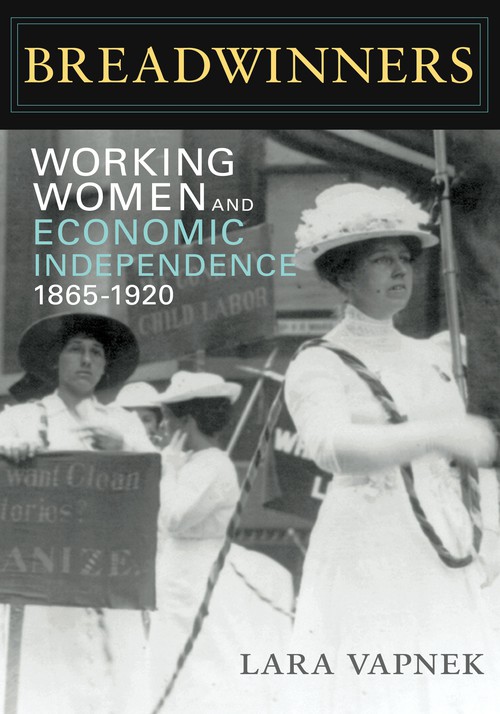
Lara Vapnek
Lara Vapnek tells the story of American labor feminism from the end of the Civil War through the winning of woman suffrage. During this period, working women in the nation's industrializing cities launched a series of campaigns to gain economic equality and political power. This book shows how working women pursued equality by claiming new identities as citizens and as breadwinners.
Analyzing disjunctions between middle-class and working-class women's ideas of independence, Vapnek highlights the agendas for change advanced by leaders such as Jennie Collins, Leonora O'Reilly, and Helen Campbell and organizations such as the National Consumers' League, the Women's Educational and Industrial Union, and the Women's Trade Union League. Locating households as important sites of class conflict, Breadwinners recovers the class and gender politics behind the marginalization of domestic workers from labor reform while documenting the ways in which working-class women raised their voices on their own behalf.
Recasting the meaning of women's work in the early fight for gender equality
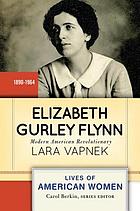
Lara Vapnek
In 1906, fifteen-year old Elizabeth Gurley Flynn mounted a soapbox in Times Square to denounce capitalism and proclaim a new era for women's freedom. Quickly recognized as an outstanding public speaker and formidable organizer, she devoted her life to creating a socialist America, "free from poverty, exploitation, greed and injustice." Flynn became the most important female leader of the Industrial Workers of the World and of the American Communist Party, fighting tirelessly for workers' rights to organize and to express dissenting ideas. Weaving together Flynn's personal and political life, this biography reveals previously unrecognized connections between feminism, socialism, free love, and free speech. Flynn's remarkable career casts new light on the long and varied history of radicalism in the United States. About the Lives of American Women series
a brief narrative of the life of a rebel radical
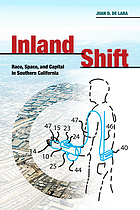
Lara, Juan De Lara
The subprime crash of 2008 revealed a fragile, unjust, and unsustainable economy built on retail consumption, low-wage jobs, and fictitious capital. Finance and global commodity chains transformed Southern California's Inland Empire just as Latinos and immigrants were turning California into a minority-majority state. In Inland Shift, Juan De Lara uses Southern California's logistics growth regime to examine how modern capitalism was shaped by and helped to transform the region's geographies of race and class. While logistics provided a roadmap for capital and the state to transform Southern California, it also created pockets of resistance among labor, community, and environmental groups who argued that commodity distribution exposed them to economic and environmental precarity."--Provided by publisher
logistics provided a roadmap for capital and the state to transform Southern California, it also created pockets of resistance among labor, community, and environmental groups who argued that commodity distribution exposed them to economic and environmental precarity.
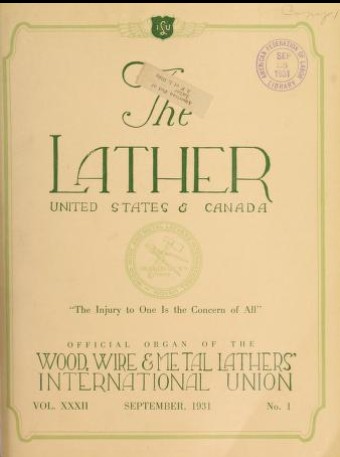
Lathers Union
Wood, Wire, and Metal Lathers’ International Union.
Magazine of the Lathers, wood trade
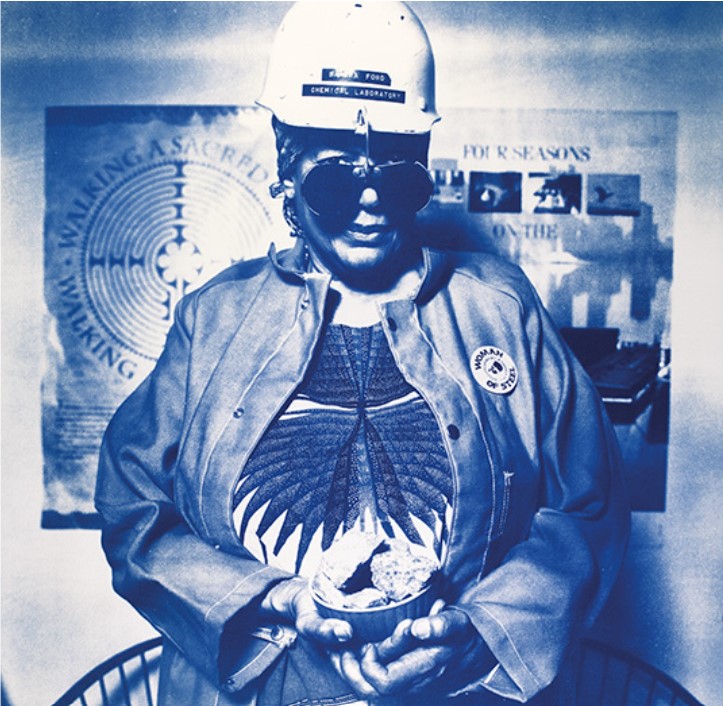
Latoya Ruby Frazier
Latoya Ruby Frazier is from Braddock, Pennsylvania. An artist who uses photography, video, performance, installation art and books. Frazier's subjects include industrialization, deindustrialization, Rust Belt revitalization. An artist committed to "the legacy of 1930s social documentary work and 1960s and 1970s conceptual photography that address urgent social policit issues of everyday life." --from the website website includes exhibits of some of Fraziers work.
limited exhibits of artist whose work includes working class experience in multiple formats and dimensions.
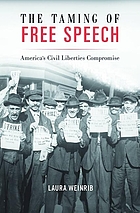
Laura Weinrib
In the early decades of the twentieth century, business leaders condemned civil liberties as masks for subversive activity, while labor sympathizers denounced the courts as shills for industrial interests. But by the Second World War, prominent figures in both camps celebrated the judiciary for protecting freedom of speech. In this strikingly original history, Laura Weinrib illustrates how a surprising coalition of lawyers and activists made judicial enforcement of the Bill of Rights a defining feature of American democracy. The Taming of Free Speech traces our understanding of civil liberties to conflict between 1910 and 1940 over workers' right to strike. As self-proclaimed partisans in the class war, the founders of the American Civil Liberties Union promoted a bold vision of free speech that encompassed unrestricted picketing and boycotts. Over time, however, they subdued their rhetoric to attract adherents and prevail in court. At the height of the New Deal, many liberals opposed the ACLU's litigation strategy, fearing it would legitimize a judiciary they deemed too friendly to corporations and too hostile to the administrative state. Conversely, conservatives eager to insulate industry from government regulation pivoted to embrace civil liberties, despite their radical roots. The resulting transformation in constitutional jurisprudence--often understood as a triumph for the Left--was in fact a calculated bargain. America's civil liberties compromise saved the courts from New Deal attack and secured free speech for labor radicals and businesses alike. Ever since, competing groups have clashed in the arena of ideas, shielded by the First Amendment
traces our understanding of civil liberties to conflict between 1910 and 1940 over workers' right to strike.

Lauren Kirschner
Sex Work in Popular Culture delves into provocative movies, TV shows, and documentaries about sex work produced in the last decade - a period of debate and change around the meaning of sex work in North American society. From Oscar-winning films to viral YouTube videos, and from indie documentaries to hit series - many of which are made by women - the book reveals how sex work is being recognized as real work and an issue of human rights. Lauren Kirshner shares how popular culture has responded by producing the dynamic new figure of a sex worker who challenges tropes and promotes understanding of the key issues shaping sex work. The book draws on labour and feminist theory, film history, current news, and popular culture, all within the context of neoliberal capitalism and the rise of transactional intimate labour. Kirshner takes us from erotic dance clubs to porn sets, illuminating the professional lives of erotic dancers, massage parlour workers, webcam models, call girls, sex surrogates, and porn performers. Probing how progressive popular culture challenges stereotypes, Sex Work in Popular Culture tells the story of sex work as labour and how the screen can show us the world's oldest profession in a new light."-- Provided by publisher
provocative movies, TV shows, and documentaries about sex work produced in the last decade
Museum/Exhibits
Tours
Maps
Digital Projects
Organizations
Sites
Film/Video
Audio/Interview
Podcast/Program
Text/Document
Image
Graphs/Data
Timeline
Southwest
West
Midwest
Southeast
Northeast
Mexico
Canada
Global
Books
Teaching
Lectures
Digital Archives
Journals
Bibliographies
Topic Intro