


Collections
Library
Type
Region
Coverage:
-
Published:
-

Leonora M. Barry, Women’s Project of New Jersey
This is an excerpt from the 1887 report of Lenora M. Barry, the national women’s organizer for the Knights of Labor, in which she describes her work in New Jersey. With 4,400 women members of the Knights of Labor in New Jersey at the time, it was important for Barry to visit the state. In 1886 and 1887 she inspected working conditions for women and girls at Trenton’s woolen mills and potters, at garment factories in Newark, and at the notorious linen mills of Paterson, where she found evidence of illegal contract labor practices.
A report by Irish American labor activist Leonora Barry, submitted to the Knights of Labor, 1887. Source, Tenth Annual Report of the Bureau of Statistics of Labor and Industries of New Jersey (Somerville, 1888), pp. 202-204.
Leopold H. Haimson
The contributions to this 1989 volume are concerned with the patterns of continuity and change in industrial labour conflicts in major industrialized countries before, during, and in the immediate aftermath of the First World War. https://catdir.loc.gov/catdir/samples/ cam031/87030958.pdf
A collection of articles with a focus on comparative evaluation of radical labor conflict.
Leroy Chatfield, University of California, San Diego
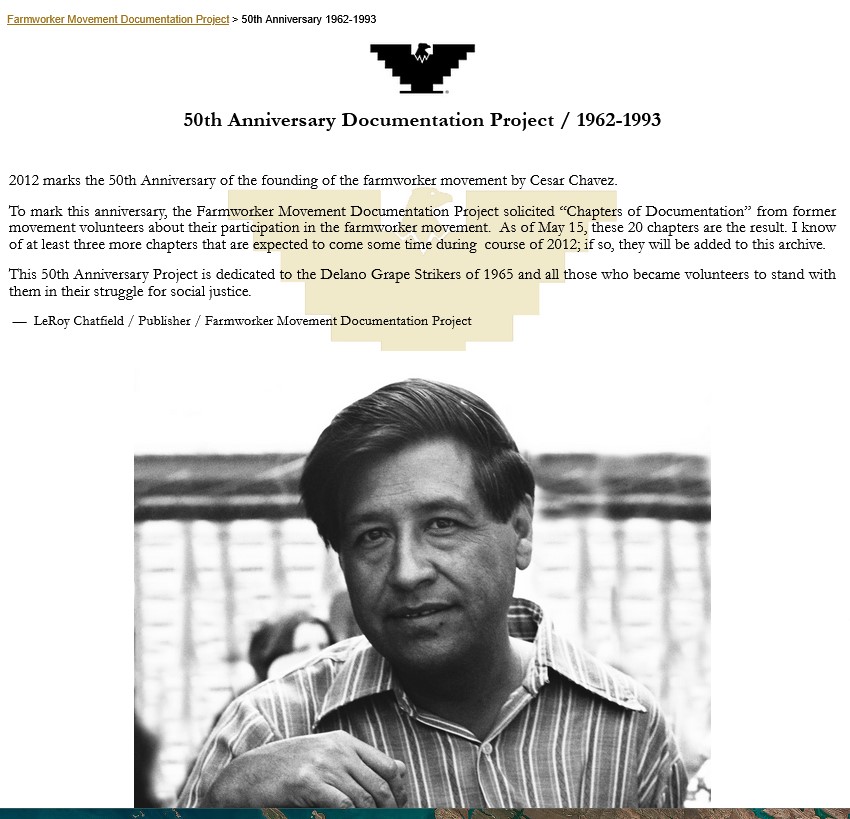
Primary source accounts: photographs, oral histories, era videos, essays and historical documents from the United Farm Worker Delano Grape Strikers and the UFW Volunteers who worked with Cesar Chavez to build his farmworker movement.
Primary source accounts from the United Farm Worker Movement 1962-1993 including videos, text, photos, art,
Les Leopold
Layoffs upend people's lives, cause enormous stress, and lead to debilitating personal debt. The societal harm caused by mass layoffs has been known for decades. Yet, we do little to stop them. Why? Why do we allow whole communities to be destroyed by corporate decision-makers? Why do we consider mass layoffs a natural, baked-in feature of modern financialized capitalism? In Wall Street's War on Workers, Les Leopold, co-founder of the Labor Institute, provides a clear lens with which we can see how healthy corporations in the United States have used mass layoffs and stock buybacks to enrich shareholders at the expense of employees. With detailed research and concise language, Leopold explains why mass layoffs occur and how our current laws and regulations allow companies to turn these layoffs into short-term financial gains. Original and insightful, Wall Street's War on Workers places US labor practices in the broader context of our social and political life, examining the impact financial strip-mining and legalized looting are having on party politics, destroying the integrity of democratic institutions. Leopold expertly lays out how the proliferation of opioids coupled with Wall Street's destruction of jobs in West Virginia, Pennsylvania, Michigan, and Wisconsin have led to widespread mass layoff fatalism. Democrats have unarguably lost the longstanding support of millions of urban and rural workers, and Leopold points out how party leaders have been wrong about the assumption that the white working class is becoming less progressive and motivated to abandon the Democratic Party by reactionary positions on divisive social issues. With deep analyses, stark examples, and surprisingly simple proactive steps forward, Leopold also asserts that: -Surviving and thriving in a competitive global economy does not require mass layoffs. -A new virulent, financialized version of American capitalism is policy driven. -To end mass layoffs, Wall Street's domination of our economy must end. -The accepted "wisdom" about white working-class populism is wrong. -Ending stock buybacks and changing corporate officers' pay structures could eliminate mass layoffs. -Mass layoffs are not the result of inevitable economic "laws" or new technologies like artificial intelligence. Both groundbreaking and urgent, Wall Street's War on Workers not only offers solutions that could halt mass layoffs but also offers new hope for workers everywhere"--Provided by publisher
provides a clear lens with which we can see how healthy corporations in the United States have used mass layoffs and stock buybacks to enrich shareholders at the expense of employees.
Leslie M. Harris
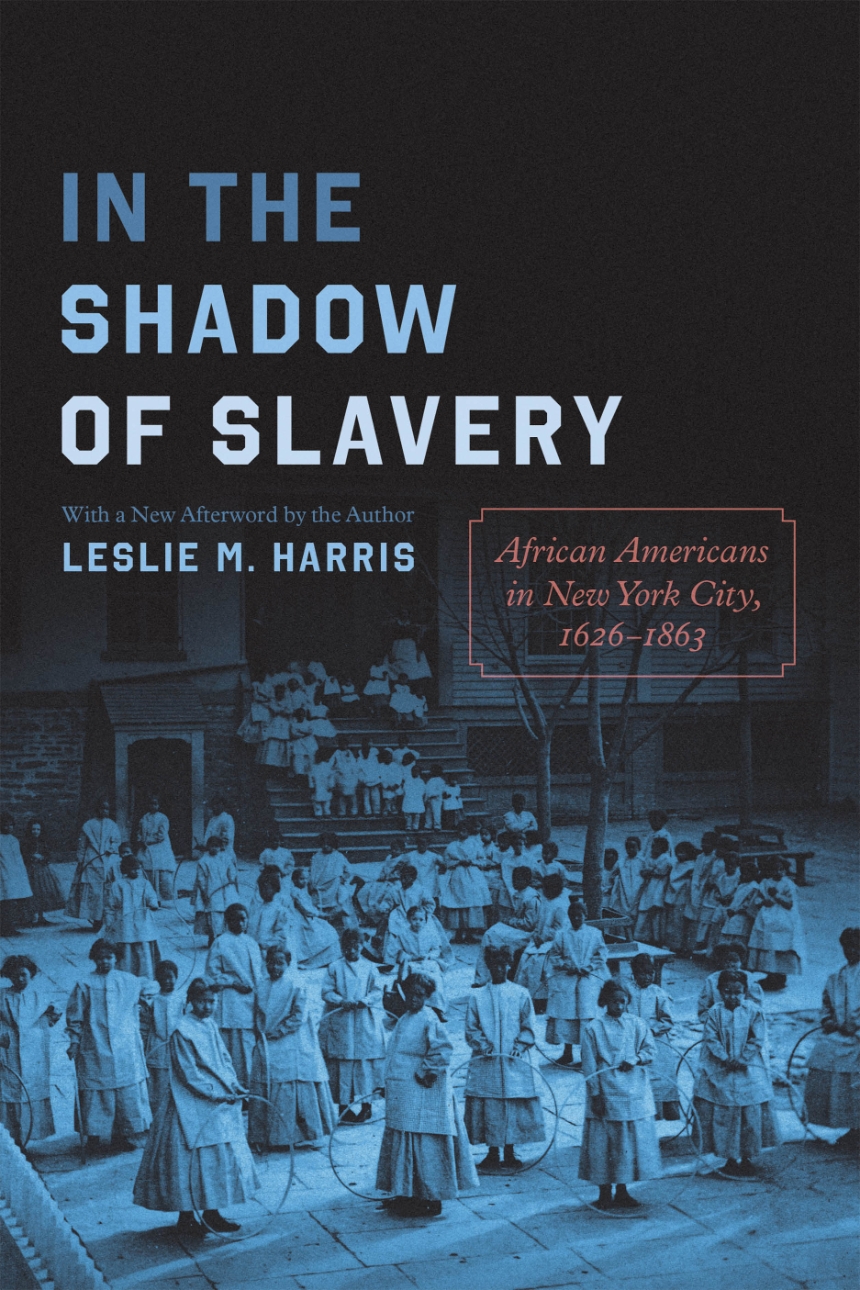
The first edition of Leslie Harris's book was pathbreaking in arguing for the centrality of African Americans' contributions to the formation of New York City, including the slave labor that helped build it.
From the first Dutch settlement up to the Civil War Draft Riots, Harris captures in rich detail how Black New Yorkers fought racist laws and practices, argued for better working and living conditions, and advocated for abolition. Her narrative of community formation encompasses people of all classes and professions, from ministers and businessmen to chimney sweeps and stevedores. Today, her depiction of Black New Yorkers' strivings is vital for understanding resistance and solidarity against today's oppressions"
Table of Contents
List of Illustrations
Acknowledgments
Introduction
Chapter 1. Slavery in Colonial New York
Chapter 2. The Struggle against Slavery in Revolutionary and Early National New York
Chapter 3. Creating a Free Black Community in New York City during the Era of Emancipation
Chapter 4. Free but Unequal: The Limits of Emancipation
Chapter 5. Keeping Body and Soul Together: Charity Workers and Black Activism in Post-emancipation New York City
Chapter 6. The Long Shadow of Southern Slavery: Radical Abolitionists and Black Political Activism against Slavery and Racism
Chapter 7. “Pressing Forward to Greater Perfection”: Radical Abolitionists, Black Labor, and Black Working-Class Activism after 1840
Chapter 8. “Rulers of the Five Points”: Blacks, Irish Immigrants, and Amalgamation
Chapter 9. The Failures of the City
Afterword (2024)
Notes
Works Consulted
Index
Book argues for the centrality of African Americans' contributions to the formation of New York City, including the slave labor that helped build it
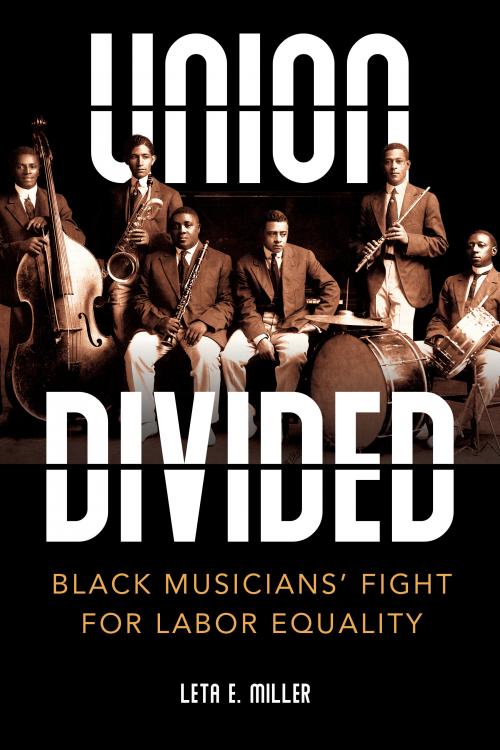
Leta E. Miller
In the 1910s and 1920s, Black musicians organized more than fifty locals within the American Federation of Musicians (AFM). Leta Miller follows the AFM's Black locals from their origins and successes in the 1920s through Depression-era challenges and the postwar dismantling of segregated AFM organizations. As Miller shows, the decision by whites to organize along racial lines was hidden behind factors like genre-based audition requirements and varying approaches to musical creation.
Like any union, Black AFM locals sought to ensure employment and competitive wages for members with always-evolving approaches and solutions to problems. Miller's account of these efforts includes the voices of the musicians themselves and interviews with former union members who took part in the difficult integration of Black and white locals. She also analyzes the fundamental question of how musicians benefitted from membership in the AFM. Broad in scope and rich in detail, 'Union divided' illuminates the complex working world of unionized Black musicians and the AFM's journey to racial inclusion."-- Provided by publisher
follows the American Federation of Musicians Black locals in the 1910s and 1920
Lewis Hine
By the early 1900s many Americans were calling child labor "child slavery" and were demanding an end to it. They argued that long hours of work deprived children of the opportunity of an education to prepare themselves for a better future. Instead, child labor condemmed them to a future of illiteracy, poverty, and continuing misery. In 1904 a group of progressive reformers founded the National Child Labor Committee, an organization whose goal was the abolition of child labor. The organization received a charter from Congress in 1907. It hired teams of investigators to gather evidence of children working in harsh conditions and then organized exhibitions with photographs and statistics to dramatize the plight of these children. These efforts resulted in the establishment in 1912 of the Children's Bureau as a federal information clearinghouse. In 1913 the Children's Bureau was transferred to the Department of Labor.
Lewis Hine, a New York City schoolteacher and photographer, believed that a picture could tell a powerful story. He felt so strongly about the abuse of children as workers that he quit his teaching job and became an investigative photographer for the National Child Labor Committee. Hine traveled around the country photographing the working conditions of children in all types of industries. He photographed children in coal mines, in meatpacking houses, in textile mills, and in canneries. He took pictures of children working in the streets as shoe shiners, newsboys, and hawkers. In many instances he tricked his way into factories to take the pictures that factory managers did not want the public to see. He was careful to document every photograph with precise facts and figures. To obtain captions for his pictures, he interviewed the children on some pretext and then scribbled his notes with his hand hidden inside his pocket. Because he used subterfuge to take his photographs, he believed that he had to be "double-sure that my photo data was 100% pure--no retouching or fakery of any kind." Hine defined a good photograph as "a reproduction of impressions made upon the photographer which he desires to repeat to others." Because he realized his photographs were subjective, he described his work as "photo-interpretation."
Hine believed that if people could see for themselves the abuses and injustice of child labor, they would demand laws to end those evils. By 1916, Congress passed the Keating-Owens Act that established the following child labor standards: a minimum age of 14 for workers in manufacturing and 16 for workers in mining; a maximum workday of 8 hours; prohibition of night work for workers under age 16; and a documentary proof of age. Unfortunately, this law was later ruled unconstitutional on the ground that congressional power to regulate interstate commerce did not extend to the conditions of labor. Effective action against child labor had to await the New Deal. Reformers, however, did succeed in forcing legislation at the state level banning child labor and setting maximum hours. By 1920 the number of child laborers was cut to nearly half of what it had been in 1910.
Lewis Hine died in poverty, neglected by all but a few. His reputation continued to grow, however, and now he is recognized as a master American photographer. His photographs remind us what it was like to be a child and to labor like an adult at a time when labor was harsher than it is now. Hine's images of working children stirred America's conscience and helped change the nation's labor laws. Through his exercise of free speech and freedom of the press, Lewis Hine made a difference in the lives of American workers and, most importantly, American children. Hundreds of his photographs are available online from the National Archives through the National Archives Catalog .
A National Archives teaching guide for interpreting the photos of child labor and exploitation taken by photographer Lewis Hine between 1908 and 1912 for the National Child Labor Committee.
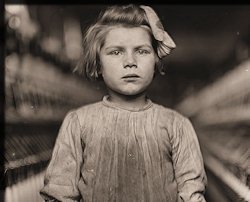
Lewis Hine, History Place
The History Place is a private, independent, Internet-only publication based in the Boston area that is not affiliated with any political group or organization. The Web site presents a fact-based, common sense approach in the presentation of the history of humanity, with great care given to accuracy.
The site was founded and is owned and published by Philip Gavin, who has earned a Bachelor of Arts degree from Northeastern University and a Master of Science degree from Boston University. Except where noted, the articles and text appearing throughout The History Place Web site were written by Mr. Gavin.
The History Place (where noted) also includes materials from other writers. Some, such as those listed in Points of View, have PhDs in their fields of study, and in a few cases, are well known celebrities. Other writers, such as Michael Tougias, may not necessarily have an advanced degree, but have proven knowledge resulting from extensive research on a particular historical topic.
The History Place is advertiser supported, although Mr. Gavin has chosen to keep over fifty percent of the Web site commercial free.
The History Place contains many examples of man's inhumanity to man as well as notable examples of humans rising to the occasion to fight tyranny and preserve freedom, and overall, reaffirms, in the words of the American Declaration of Independence, that all human beings have "certain unalienable Rights, that among these are Life, Liberty, and the pursuit of Happiness."
A visual online exhibit of Lewis W. Hine's photography of early-twentieth-century child labor in America, with the original captions by Hine.
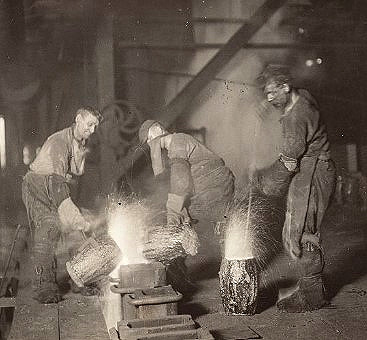
Lewis Hine, New York Public Library
729 items tagged with Lewis Hine credit for images of work and life. Lewis HIne is a photographer most associated with exposing child labor, but these photos are of a range of subjects
729 items tagged with Lewis Hine, the notable photographer of working class life in the early 20th century

Lewis Hine, Russell Sage
Collection consists of five units of photographs (one with two parts), each separately cataloged. Units I-IV consist primarily of images of immigrants, children and workers that Lewis Hine printed in 1939 for the Russell Sage Foundation Library. Unit V contains images made in Europe for the Red Cross, images of Hine and his family, and images that supplement or duplicate images in units I-IV. Accompanying the photographs are manuscript and published materials, including original mounts and captions, a typescript text describing Hine's photography of immigrants, tear sheets from publications containing Hine's images, and later publications about Hine and his work.
Hundreds of photos of immigration experience and child labor digital collection NY PL
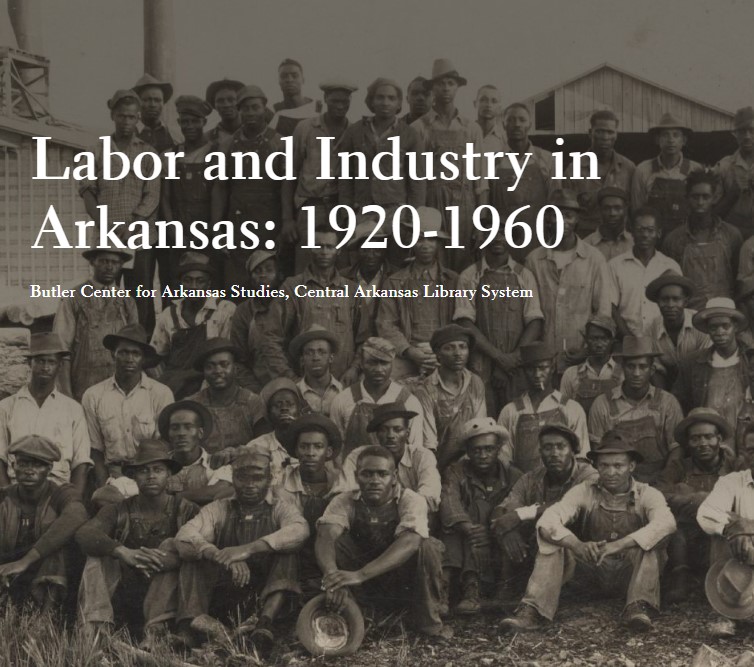
Liam Carey, Butler Center for Arkansas Studies, Central Arkansas Library System
excellent immersive storymap of some pivotal events with use of digitized documents and photos. There are minimal number of maps, but terrific use of images and photos in this storymap, with a detailed bibliography, timelines, and 5 main mid-20th century sections: See the author's reflections on the storymap https://robertslibrary.org/blog/snapshots-of-struggle-documenting-the-arkansas-labor-movement/
The sections:
The Missouri and North Arkansas Railroad Strike of 1922
The sudden expansion of wartime industry during World War I sparked a series of high-profile strikes that were met with a violent backlash from employers and the state. One of these strikes played out along the path of the Missouri and North Arkansas Railroad, or M&NA, which ran from Helena, Arkansas to Joplin, Missouri.
Coal Mining
In 1903, every miner in Arkansas was a member of the United Mine Workers of America (UMWA). By the late 1920s, these historic gains in union participation were all but lost. The UMWA still had a presence in Arkansas coal fields, but the days of the statewide union shop were over.
The War at Home
World War II brought millions of American workers into heavy industry. Many of these workers also joined unions belonging to the CIO, which doubled in size during the war. Labor shortages in northern industrial centers led many Arkansas residents—especially Black Arkansans—to leave their home state in search of higher wages. The introduction of the mechanical cotton picker and the Bracero Program further accelerated this process by displacing Black communities in the Arkansas Delta.
The CIO and the Arkansas Lumber Industry
As the nation entered a period of “reconversion,” CIO leaders tried to capitalize on their wartime successes by expanding the federation into the American South. One of the key southern industries targeted by CIO organizers was lumber.
Legal Backlash and Political Reform
As the Arkansas labor movement continued to grow in size and political influence, an alliance of business organizations, conservative politicians, and segregationists mobilized to limit its power. Conservative lobbyists from the Christian American Association (CAA) along with influential Arkansans lobbied for the addition of a so-called right to work amendment to the Arkansas Constitution. In 1944, Amendment 34 codified this policy. The passage of the Taft-Hartley Act in 1947 gave federal sanction to the law—and ensured that the union shop would remain illegal in Arkansas.
An immersive storymap of pivotal mid-20th century events, locations, and more labor-related items; bibliography and timeline as well

Liberty Bell and Workingmen’s Advocate
The first issue of the weekly Liberty Bell and Workingmen’s Advocate, published in Norwich, Connecticut, appeared on March 7, 1867. The editor spelled out its mission: advocacy of labor reform; shorter hours of work for men, women, and children; and protection for home industry against foreign capital and labor. Encouraging no conflict between capital and labor, the Liberty Bell also stood for “liberty for all men everywhere,” and argued that this would be most easily achieved under the banner of the “great Union party,” as the Republican Party was called for a brief time. The Liberty Bell expressed great disdain for the outcome of the New Haven Workingmen’s Convention of 1867, whose delegates nominated James E. English, identified as a “copperhead” candidate of the Democratic Party, for Connecticut governor. The Liberty Bell’s own Workingmen’s and Union state ticket promoted, instead, John R. Hawley of Hartford. The Liberty Bell did not remain in business for long, apparently ceasing publication within a few years.
1 issue of this workers newspaper, advocate of shorter hours

Library of Congress
The Paris Exposition of 1900 (Exposition universelle internationale de 1900) devoted a building to matters of "social economy." The United States section of the building featured an exhibit that, according to W. E. B. Du Bois, attempted to show "(a) The history of the American Negro. (b) His present condition. (c) His education. (d) His literature."
Du Bois and Thomas J. Calloway, who was named special agent for the Exposition, spearheaded the planning, collection and installation of the exhibit materials, which included 500 photographs, as well as 32 charts, numerous maps, and a display of 200 books written by African Americans.
A large, Library of Congress-held photograph collection on W.E.B. Du Bois' exhibit at the Paris Exposition of 1900.

Library of Congress
America at Work, America at Leisure: Motion Pictures from 1894-1915 consists of 150 motion pictures, 62 of which also appear in other online collections. The majority of the films are from the Paper Print Collection, while the remainder are from the George Kleine Collection, both residing in the Motion Picture, Broadcasting and Recorded Sound Division (M/B/RS) of the Library of Congress. Both of these collections have printed catalogs available in the Motion Picture and Television Reading Room at the Library. The films were selected from these two collections on the basis of the activities pictured in the films and the quality of the available prints. As many different types of work, school, and leisure activities as could be found were sought in order to show the broadest possible representation of activities at the turn of the century. The selection is limited, however, by what is available from these collections; not every possible occupation or leisure activity from the turn of the century is represented.
A collection of primary source films and motion pictures derived from the Library of Congress' M/B/RS division, but specifically from the Paper Print Collection and the George Kleine Collection.

Library of Congress
The records of the American Federation of Labor (AFL) span the years 1883-1925 and consist of letterpress volumes of correspondence of Samuel Gompers (1850-1924) and William Green (1870-1952), presidents of the organization, and by other officials including James Duncan, Gabriel Edmonston, Frank Keyes Foster, and John McBride. Comprising approximately 172,300 items (328,445 images) digitized from previously produced microfilm, the collection relates to the formation of local unions, meetings, charters, bylaws, ethics, publicity, arbitration, AFL's political principles, communism, socialism, anthracite coal strikes of 1897 and 1902, fund-raising, boycotts, and the United Mine Workers, American Railway Union, International Association of Machinists, International Brotherhood of Teamsters, and American Federationist, the AFL's magazine.The collection is arranged, filed, and numbered as received. Volumes 251, 310, and 313 were not received by the Library. Each volume contains an index of correspondents. Prominent names include Susan B. Anthony, Grover Cleveland, William Hugh Johnston, John L. Lewis, L. J. McGruder, P. J. McGuire, John Mitchell, John Morrison, Herman Robinson, Theodore Roosevelt (1858-1919), Daniel Joseph Tobin, Henry White, and Woodrow Wilson.
A finding aid (PDF and HTML) to the American Federation of Labor records is available online. https://findingaids.loc.gov/exist_collections/ead3pdf/mss/2011/ms011070.pdf You can also read a blog about the collection here https://blogs.loc.gov/loc/2020/01/american-federation-of-labor-history-now-digital/
The Library of Congress' collection documenting the history of the American Federation of Labor (AFL) through over 300,000 images and roughly 172,300 other materials.

Library of Congress
This collection of life histories consists of approximately 2,900 documents, compiled and transcribed by more than 300 writers from 24 states, working on the Folklore Project of the Federal Writers’ Project, a New Deal jobs program that was part of the U.S. Works Progress (later Work Projects) Administration (WPA) from 1936 to 1940. Typically 2,000-15,000 words in length, the documents vary in form from narratives to dialogues to reports to case histories. They chronicle vivid life stories of Americans who lived at the turn of the century and include tales of meeting Billy the Kid, surviving the 1871 Chicago fire, pioneer journeys out West, grueling factory work, and the immigrant experience. Writers hired by this Depression-era work project included Ralph Ellison, Nelson Algren, May Swenson, and many others. The documents often describe the informant’s physical appearance, family, education, income, occupation, political views, religion and mores. Pseudonyms are often substituted for individuals and places named in the narrative texts. The life histories comprise a small part of the larger Manuscript Division collection titled United States Work Projects Administration Records.
A Library of Congress collection of Work Projects-generated life histories, mostly in written form.
Library of Congress
Captain Pearl R. Nye: Life on the Ohio and Erie Canal captures the culture and music of the men, women, and children who worked and lived along the Ohio and Erie Canal. Nye, who was born and raised on a canal boat, never lost his love of the "Big Ditch." After the canal closed permanently in 1913, he devoted considerable time and energy to preserving its songs and stories. This online presentation includes 22 audio discs containing 75 songs performed by Nye, 74 manuscripts of correspondence and song texts, and 7 photographs. The recordings were made by John Lomax, Alan Lomax, Elizabeth Lomax, and Ivan Walton between June 1937 and September 1938.
The Library of Congress' collection containing the music and culture of the working-class folks of the Ohio and Erie Canal.
Library of Congress
The collection consists of approximately 344 sound recordings, 14,141 photographs, 269 folders of manuscript materials, 2 video recordings, publications, ephemera, administrative files, and field notes produced and collected during the 1977 Chicago Ethnic Arts Project field survey from 1976-1981; but primarily during fieldwork conducted by fourteen folklorists directed by the American Folklife Center in 1977.
The Chicago Ethnic Arts Project survey was conducted in 1977 by the American Folklife Center at the request of the Illinois Arts Council to assess and document the status of ethnic art traditions in more than twenty ethnic communities in Chicago, and was jointly sponsored by both organizations.
Library of Congress
On May 12, 2009, the U. S. Congress authorized a national initiative by passing The Civil Rights History Project Act of 2009 (Public Law 111-19). The law directed the Library of Congress (LOC) and the Smithsonian Institution's National Museum of African American History and Culture (NMAAHC) to conduct a national survey of existing oral history collections with relevance to the Civil Rights movement to obtain justice, freedom and equality for African Americans and to record and make widely accessible new interviews with people who participated in the struggle. The project was initiated in 2010 with the survey and with interviews beginning in 2011. This site guides researchers to collections in several Library divisions that specifically focus on the movement as well as the broader topic of African American history and culture. The Civil Rights History Project Collection (AFC 2010/039) contains more than 1200 items consisting of born-digital video files, digitized videocassettes, digital photographs and full-text transcripts for all interviews. The interviews are also accessible through the Library's YouTube site and the NMAAHC website.
A Library of Congress collection generated by the Civil Rights History Project, which saw activists generate oral histories with lawyers, judges, doctors, farmers, journalists, professors, musicians, and others who were active in the movement.
Library of Congress
Between 1939 and 1944, government photography units within the Farm Security Administration (FSA) and later the Office of War Information (OWI) produced the approximately 1,600 color photographs shown here, along with about 171,000 black-and-white photographs. The 965 color photographs from the OWI contained in the collection are color transparencies in sizes up to 4x5-inches. The photographs depicted life and culture in the U.S., with a focus on factories and women employees, railroads, aviation training, and other aspects of World War II mobilization
A Library of Congress collection of color and black-and-white photographs that depcit life in the U.S., Puerto Rico, and Virgin Islands.
Library of Congress
This online presentation includes items selected from the Federal Theatre Project Collection at the Library of Congress. Featured here are stage and costume designs, photographs, posters, playbills, programs, and playscripts, including productions of Macbeth and The Tragical History of Dr. Faustus as staged by Orson Welles, and Power, a topical drama of the period. Selected administrative documents from the project are also available.
An online Library of Congress presentation and collection of 5,000 playscipts and 2,500 titles ranging several different genres.
Library of Congress
Puerto Rico at the Dawn of the Modern Age encompasses historically important writings by prominent Puerto Rican political activists and historians dating from approximately seventy years before the Spanish-American war (1898) until some thirty years after it (1929). Texts from the postwar period include the only English-language works in the collection. Among these are soldiers' reminiscences about the conflict and short histories designed to acquaint an American audience with Puerto Rico in the earliest years of its affiliation with the United States.
A Library of Congress collection on the writings of Puerto Rican political activists and historians from 1831 to 1929.
Library of Congress
This lesson introduces students to primary sources — what they are, their great variety, and how they can be analyzed. The lesson begins with an activity that helps students understand the historical record. Students then learn techniques for analyzing primary sources. Finally, students apply these techniques to analyze documents about slavery in the United States.
A lesson plan developed for the Library of Congress that introduces students to primary sources by having them investigate the Slavery in the United States, 1790-1865 collection.

Library of Congress
Songs became a major means of creating solidarity among workers uniting to improve their lot. Early examples of the use of popular songs to carry the labor message are "Eight Hour Strike," by Billy Pastor, intended to spread the idea of the eight hour work day (1872), and "The Worker's Anvil," with lyrics by Laura M. Griffing, celebrating "the cause of labor" (1878).
a brief selection about songs in labor history
Library of Congress
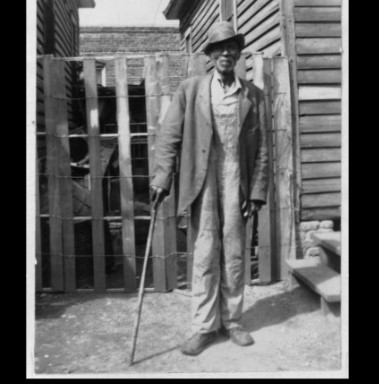
Slave Narratives from the Federal Writers' Project, 1936 to 1938 Born in Slavery: Slave Narratives from the Federal Writers' Project, 1936-1938 contains more than 2,300 first-person accounts of slavery and 500 black-and-white photographs of former slaves. These narratives were collected in the 1930s as part of the Federal Writers' Project (FWP) of the Works Progress Administration, later renamed Work Projects Administration (WPA). At the conclusion of the Slave Narrative project, a set of edited transcripts was assembled and microfilmed in 1941 as the seventeen-volume Slave Narratives: A Folk History of Slavery in the United States from Interviews with Former Slaves. In 2000-2001, with major support from the Citigroup Foundation, the Library digitized the narratives from the microfilm edition and scanned from the originals 500 photographs, including more than 200 that had never been microfilmed or made publicly available. This online collection is a joint presentation of the Manuscript and Prints and Photographs divisions of the Library of Congress.
oral histories of the enslaved, from 1930s
Museum/Exhibits
Tours
Maps
Digital Projects
Organizations
Sites
Film/Video
Audio/Interview
Podcast/Program
Text/Document
Image
Graphs/Data
Timeline
Southwest
West
Midwest
Southeast
Northeast
Mexico
Canada
Global
Books
Teaching
Lectures
Digital Archives
Journals
Bibliographies
Topic Intro