


Collections
Library
Type
Region
Coverage:
-
Published:
-

Library of Congress
This collection presents parts of the 470 interview excerpts and 3882 photographs from the Working in Paterson Folklife Project of the American Folklife Center at the Library of Congress. The four-month 1994 study of occupational culture in Paterson, New Jersey, was conducted in 1994. The documentary materials presented in this online collection explore how Paterson's industrial heritage expresses itself in Paterson: in its work sites, work processes, and memories of workers. Included are interpretive essays exploring such topics as work in the African American community, local foodways, the ethnography of a single work place (Watson Machine International), business life along a single street in Paterson (21st Avenue), and narratives told by retired workers. occupational culture in Paterson, New Jersey in 1994. Subjects include the textile industry, industrial architecture, machine shops, labor unions, family owned businesses, dressmaking, and ethnic restaurants. A single manufacturing firm, Watson
Machine International, was the focus of an in-depth study. The project focused on the ways in which community life and values are shaped by work and how the theme of work intersects with other themes, namely family, ethnicity, gender, neighborhood, religion, and change over time.
interview excerpts and photographs from the 1994 Working in Paterson Folklife Project of the American Folklife Center at the Library of Congress.

Library of Congress
This bibliography contains a number of titles dealing with ”workers,” the “world of work” generally, and “labor law” in particular, so as to account for some of the more compelling reasons we should assiduously attend to the complex economic and moral questions (the former often including some of the latter) regarding the labor, working conditions, and leisure time of working people.
bibliography on labor law

Library of Congress, National Child Labor Committee
Working as an investigative photographer for the National Child Labor Committee (NCLC), Lewis Hine (1874-1940) documented working and living conditions of children in the United States between 1908 and 1924. The NCLC photos are useful for the study of labor, reform movements, children, working class families, education, public health, urban and rural housing conditions, industrial and agricultural sites, and other aspects of urban and rural life in America in the early twentieth century. see https://www.loc.gov/collections/national-child-labor-committee/ for the collection items and https://www.loc.gov/collections/national-child-labor-committee/articles-and-essays/ for essays
The collection consists of more than 5,100 photographic prints and 355 glass negatives, given to the Library of Congress, along with the NCLC records, in 1954 by Mrs. Gertrude Folks Zimand, acting for the NCLC in her capacity as chief executive.
Lewis Hine (1874-1940) documented working and living conditions of children in the United States between 1908 and 1924
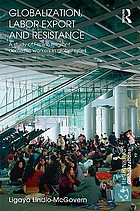
Ligaya Lindio-McGovern
Examines international labour export of Filipino migrant workers and forms of resistance to globalization.
Globalization, labor export and resistance: rethinking neoliberal globalization from below
Circuits of the commodifcation of Filipino domestic workers in the labor export web of globalization
Circuits of resistance to labor export in the context of globalization
Resistance in Hong Kong
Resistance in Taiwan
Resistance in Vancouver
Resistance in Rome
Resistance and non-resistance in Chicago
Resistance in the homefront: the labor-sending country
Conclusion: from retrospect to prospects, from theory to policy
Examines international labour export of Filipino migrant workers and forms of resistance to globalization.
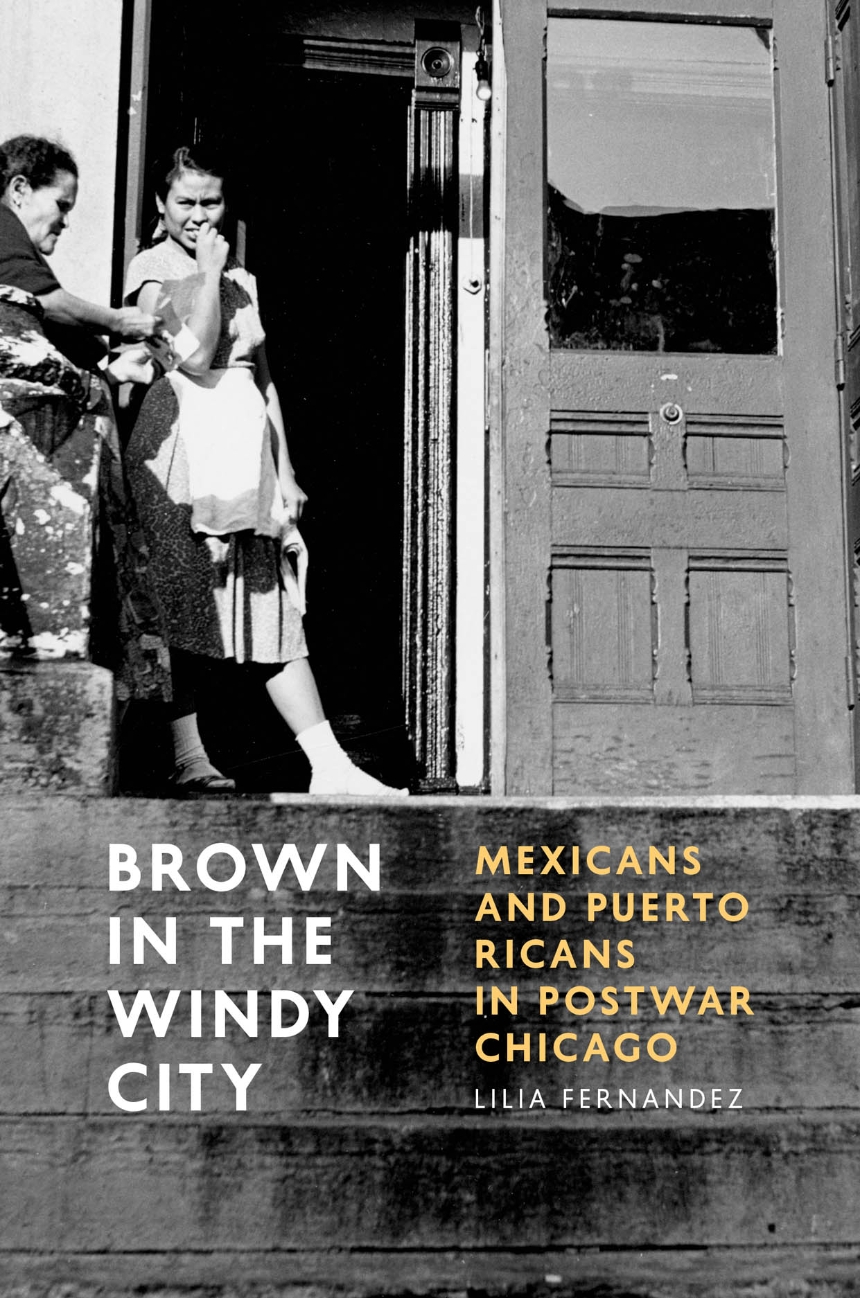
Lilia Fernandez
The book chronicles what happened to Latino neighborhoods from the 1940s to 1970s and examines the roles of migration, labor markets, urban renewal, and racial segregation in building Latino neighborhoods. Fernández examines housing discrimination, patterns of employment, schooling, policing, and community growth as a means to show how Latinos made their way through a city marked by industrial restructuring and white ethnic politics.
From the publisher: "Brown in the Windy City is the first history to examine the migration and settlement of Mexicans and Puerto Ricans in postwar Chicago. Lilia Fernández reveals how the two populations arrived in Chicago in the midst of tremendous social and economic change and, in spite of declining industrial employment and massive urban renewal projects, managed to carve out a geographic and racial place in one of America’s great cities. Through their experiences in the city’s central neighborhoods over the course of these three decades, Fernández demonstrates how Mexicans and Puerto Ricans collectively articulated a distinct racial position in Chicago, one that was flexible and fluid, neither black nor white."
Table of Contents
Introduction
Chapter 1 Mexican and Puerto Rican Labor Migration to Chicago
Chapter 2 Putting Down Roots: Mexican and Puerto Rican Settlement on the Near West Side, 1940–60
Chapter 3 Race, Class, Housing, and Urban Renewal: Dismantling the Near West Side
Chapter 4 Pushing Puerto Ricans Around: Urban Renewal, Race, and Neighborhood Change
Chapter 5 The Evolution of the Young Lords Organization: From Street Gang to Revolutionaries
Chapter 6 From Eighteenth Street to La Dieciocho: Neighborhood Transformation in the Age of the Chicano Movement
Chapter 7 The Limits of Nationalism: Women’s Activism and the Founding of Mujeres Latinas en Acción
Conclusion
the first history to examine the migration and settlement of Mexicans and Puerto Ricans in postwar Chicago

Lillian Roberts History Matters
Municipal workers led a wave of strikes that made the 1960s and early 1970s a highpoint for organized labor militancy in New York City. Teachers, social workers, sanitation workers, and parks employees all fought to improve work conditions, low-paying wage scales, and to reform the city's social services.
Lillian Roberts arrived in New York in 1965 to organize low-paid and often disrespected hospital workers for American Federation of State, County, and Municipal Employees (AFSCME). At the time, AFSCME was competing with the Teamsters to represent the health workers, and the struggle was intense enough for Roberts to carry a brick in her purse.
An African-American woman who had grown up on welfare in Chicago, Roberts proved adept at organizing hospital workers, many of whom were African-American women. She and AFSCME prevailed, paving the way for their local D.C. 37 to become the dominant New York municipal union.
Lilian Roberts remembers the struggle to organize municipal workers for the AFSCME
Linda J. Lumsden
Hundreds of newspapers and magazines published by socialists, anarchists, and the Industrial Workers of the World in the years before World War I offered sharp critiques of the emerging corporate state that remain relevant in light of gaping twenty-first-century social inequity. Black, White, and Red All Over offers the first comprehensive narrative to explore the central role that a broad swathe of social movement media played in radical movements, stirring millions of Americans a century ago. Author Linda J. Lumsden mines more than a dozen diverse radical periodicals--including Progressive Woman, Industrial Worker, Wilshire's, the Messenger, Mother Earth, Appeal to Reason, New York Call, and International Socialist Review--to demonstrate how they served anarchists, socialists, and industrial unionists in their quest to topple capitalism and create their varied visions of a cooperative commonwealth. The book argues that these subversive periodicals were quintessentially American: individualist, independent, socialminded, egalitarian, defiant, and celebratory of freedom. Even their call for revolution resounded from the roots of the American experience. Black, White, and Red All Over explores socialist periodicals in the agrarian heartland; views socialists' attempts to provide alternatives to urban dailies; explores the radical press crusade to champion workers; analyzes the role anarchist periodicals played in their pioneering battles for a free press, free speech, and free love; surveys socialism in the black press; and details the federal government's wartime campaign to suppress the radical press. It draws parallels with Occupy Wall Street's social media movement. Despite the distance from the typewriter to Twitter, Lumsden concludes that twenty-first-century social movement media perform nearly the same function as did their nearly forgotten predecessors
The role and impact of the radical press of early 20th century
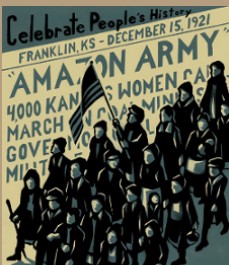
Linda O'Nelio Knoll
multiple digital links to materials about this 1921 march of women in the coalfields
Welcome to Amazon Army a website dedicated to the Southeast Kansas women’s march of 1921.
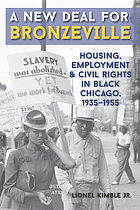
Lionel Kimble
Black belts insult us : equal housing and contested liberalism during the depression
Poor but not poverty stricken : equal employment campaigns in 1930s Chicago
Housing the soldiers of the home front
The greatest Negro victory since the Civil War : fair employment policy during World War II
From foxholes to ratholes : struggles for postwar housing
Picket lines were the front lines for democracy : Black veterans' labor activism in post-World War II Chicago
demonstrates how working class and housing equality struggles led to much of the civil rights activism that occurred in Chicago.
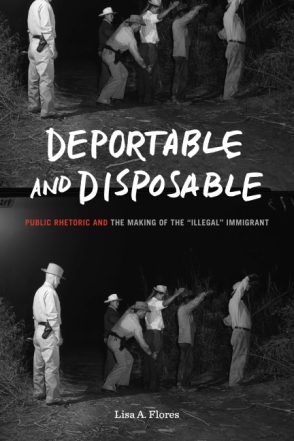
Lisa A. Flores
In the 1920s, the US government passed legislation against undocumented entry into the country, and as a result the figure of the "illegal alien" took form in the national discourse.
In this book, Lisa A. Flores explores the history of our language about Mexican immigrants and exposes how our words made these migrants "illegal."Deportable and Disposable brings a rhetorical lens to a question that has predominantly concerned historians: how do differently situated immigrant populations come to belong within the national space of whiteness, and thus of American-ness?
Flores presents a genealogy of our immigration discourse through four stereotypes: the "illegal alien," a foreigner and criminal who quickly became associated with Mexican migrants; the "bracero," a docile Mexican contract laborer; the "zoot suiter," a delinquent Mexican American youth engaged in gang culture; and the "wetback," an unwanted migrant who entered the country by swimming across the Rio Grande.
By showing how these figures were constructed, Flores provides insight into the ways in which we racialize language and how we can transform our political rhetoric to ensure immigrant populations come to belong as part of the country, as Americans.Timely, thoughtful, and eye-opening, Deportable and Disposable initiates a necessary conversation about the relationship between racial rhetoric and the literal and figurative borders of the nation. This powerful book will inform policy makers, scholars, activists, and anyone else interested in race, rhetoric, and immigration in the United States
explores the history of our language about Mexican immigrants and exposes how our words made these migrants "illegal."
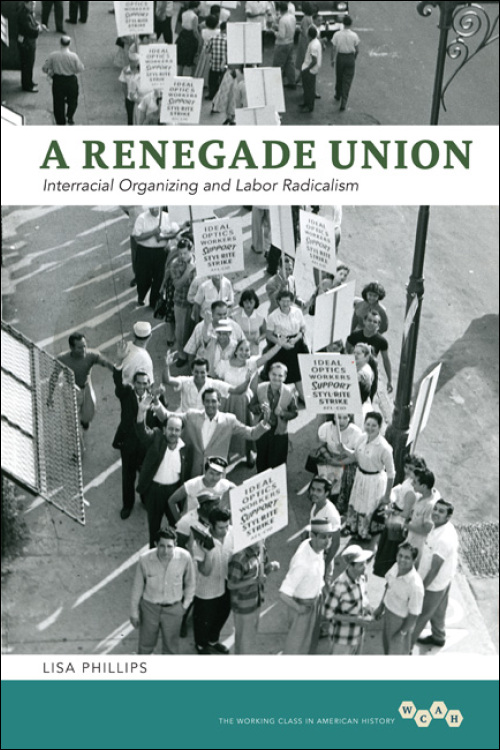
Lisa Ann Wunderlich Phillips
Dedicated to organizing workers from diverse racial, ethnic, and religious backgrounds, many of whom were considered "unorganizable" by other unions, the progressive New York City-based labor union District 65 counted among its 30,000 members retail clerks, office workers, warehouse workers, and wholesale workers.
In this book, the author presents a distinctive study of District 65 and its efforts to secure economic equality for minority workers in sales and processing jobs in small, low-end shops and warehouses throughout the city. This book shows how organizers fought tirelessly to achieve better hours and higher wages for "unskilled," unrepresented workers and to destigmatize the kind of work they performed.
Closely examining the strategies employed by District 65 from the 1930s through the early Cold War years, the author assesses the impact of the McCarthy era on the union's quest for economic equality across divisions of race, ethnicity, and skill. Though their stories have been overshadowed by those of auto, steel, and electrical workers who forced American manufacturing giants to unionize, the District 65 workers believed their union provided them with an opportunity to re-value their work, the result of an economy inclining toward fewer manufacturing jobs and more low-wage service and processing jobs. The author recounts how District 65 first broke with the CIO over the latter's hostility to left-oriented politics and organizing agendas, then rejoined to facilitate alliances with the NAACP. In telling the story of District 65 and detailing community organizing efforts during the first part of the Cold War and under the AFL-CIO umbrella, this book reexamines the history of the left-led unions of the Congress of Industrial Organizations. -- Adapted from publisher's website
study of District 65 and its efforts to secure economic equality for minority workers in sales and processing jobs in small, low-end shops and warehouses throughout the city.
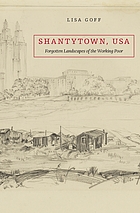
Lisa Goff
Mostly focuses on New York, Atlanta and Washington D.C. From the Publisher: Mention 'shantytowns' today and the universal assumption is that you'll be talking about exploding slums in a developing nation in Africa, South Asia, or South America. This book adds the United States to the international discourse on shantytowns, tracing their appearance on both the western and urban frontiers of the young nation starting in the 1820s, and tracking them through the urbanization and industrialization that convulsed the country in the decades leading up to and following the Civil War. Drawing on a wealth of unexamined texts, images, popular music, and films, filtered through the lens of scholarship on everyday landscapes, Shantytown USA restores shantytowns to the central place they once occupied in the nation's imagination, and on its landscape."
A history of American shantytowns in the leadup to, and aftermath of, the civil war
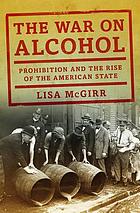
Lisa McGirr
Prohibition has long been portrayed as a 'noble experiment' that failed, a newsreel story of glamorous gangsters, flappers, and speakeasies. Now at last Lisa McGirr dismantles this cherished myth to reveal a much more significant history. Prohibition was the seedbed for a pivotal expansion of the federal government, the genesis of our contemporary penal state. Her deeply researched, eye-opening account uncovers patterns of enforcement still familiar today: the war on alcohol was waged disproportionately in African American, immigrant, and poor white communities. Alongside Jim Crow and other discriminatory laws, Prohibition brought coercion into everyday life and even into private homes. Its targets coalesced into an electoral base of urban, working-class voters that propelled FDR to the White House. This outstanding history also reveals a new genome for the activist American state, one that shows the DNA of the right as well as the left. It was Herbert Hoover who built the extensive penal apparatus used by the federal government to combat the crime spawned by Prohibition. The subsequent federal wars on crime, on drugs, and on terror all display the inheritances of the war on alcohol. McGirr shows the powerful American state to be a bipartisan creation, a legacy not only of the New Deal and the Great Society but also of Prohibition and its progeny."-- Dust jacket
some attention to class issues in this book focused on state power

Lisa Schoblasky, Newberry Library
This is a document-based-inquiry set for high school level on the issues of women and work. Women have always worked outside of the home. They have done so for a variety of reasons, such as to maintain their own independence, have a comfortable life, contribute to society, assist in providing for their families, and support their families as the sole provider. Some women have had a variety of choices in their work lives, while others had very little to no choice at all. By the mid-twentieth century, female employees had become common enough in the United States that people started to comment on, congratulate, and criticize them for seeking outside employment. Some employers, employees, and members of society did not approve of or feel comfortable with women working outside of the home, which led to discrimination in the workplace. While every woman’s experience was unique, many were exposed to sexism, racism, and ageism—terms for treating someone differently because of their sex, race, and age—as working women. Characteristics such as the color of a woman’s skin, her outward appearance, level of education, skill, marital status, and economic status played a role in whether a woman worked at all, and if so, where she worked and what type of job she had. Social and economic factors, especially during wartime, had the greatest effect on the opportunities available to women in the workforce. The twentieth century saw yearly fluctuations among the numbers of working women; however, from 1920 to 1950, those numbers continued to rise steadily with each decade.
An online exhibit and collection from the Newberry Library that contains an introductory essay, a primary source bibliography with twenty-seven documents or images, and a bibliography.

Lise Vogel
Women's increasing demands for protection and benefits in the workplace, especially with regard to maternity leave, have sparked more than a century of controversy among feminists on how best to serve the needs of working women. This debate continues to divide the feminist community. One side believes women are better served by emphasizing equality with men--pregnancy should be treated like any other "disability." The other side wants to recognize difference--special provisions should apply only to pregnant women.
Lise Vogel examines the evolution of this debate on pregnant women in the workplace, looking at theoretical as well as practical implications. Vogel begins by assessing the history of the contemporary debate on pregnancy policy in the U.S. Since the middle of the nineteenth-century, American women have been torn by the contradictory demands of motherhood and the workplace. Pregnancy was grounds for dismissal from work and few employers took action to protect pregnant workers.
To counter this, early twentieth-century feminists and reformers emphasized female specificity and women's special role. In the 1960s activists adopted a strategy framed on equality, which moved away from the earlier emphasis on differences. The use of equality strategies to cover the female-specific phenomenon of pregnancy turned out to have problems. Now women's special needs were denied and ignored. These difficulties and a series of court cases in the 1980s triggered debates in the feminist legal community. Vogel looks at the litigation and debates, which pitted advocates of gender-neutral strategies against critics who called for female-specific policies. Vogel argues that, in terms of practical benefits, women will be served best by a gender-neutral approach to pregnancy policy. She encourages equality advocates to recognize the inherent diversity of individuals, and points out the need to be sensitive to individual factors of race and class, as well as sex.
examines the evolution of the pregnancy policy debate in the workplace, looking at theoretical as well as practical implications.

Little Rock Central Trades and Labor Council
"Indorsed as organ of Central Trades and Labor Council."
Little Rock Arkansas labor paper

Lixin Fan
A couple embarks on a journey home for Chinese new year along with 130 million other migrant workers, to reunite with their children and struggle for a future. Their unseen story plays out as China soars towards being a world superpower.
A film portraying the story of Chinese migrant workers travelling home.
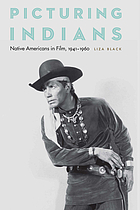
Liza Black
Standing at the intersection of Native history, labor, and representation, Picturing Indians presents a vivid portrait of the complicated experiences of Native actors on the sets of midcentury Hollywood Westerns. This behind-the-scenes look at costuming, makeup, contract negotiations, and union disparities uncovers an all-too-familiar narrative of racism and further complicates filmmakers' choices to follow mainstream representations of "Indianness." Liza Black offers a rare and overlooked perspective on American cinema history by giving voice to creators of movie Indians--the stylists, public relations workers, and the actors themselves. In exploring the inherent racism in sensationalizing Native culture for profit, Black also chronicles the little-known attempts of studios to generate cultural authenticity and historical accuracy in their films. She discusses the studios' need for actual Indians to participate in, legitimate, and populate such filmic narratives. But studios also told stories that made Indians sound less than Indian because of their skin color, clothing, and inability to do functions and tasks considered authentically Indian by non-Indians. In the ongoing territorial dispossession of Native America, Native people worked in film as an economic strategy toward survival. Consulting new primary sources, Black has crafted an interdisciplinary experience showcasing what it meant to "play Indian" in post-World War II Hollywood"--Publisher's description
presents a vivid portrait of the complicated experiences of Native actors on the sets of midcentury Hollywood Westerns, defined by their labor, popular understandings of "Indian-ness," and racial discrimination
Locomotive Engineers Journal
Official journal of the Brotherhood of Locomotive Engineers. Locomotive Engineers was founded in 1863. Attempted conciliatory approach and opposed strikes generally. A break on industrial unions, and exclusionary in respect to admissions This is a long run of one craft union newspaper. It still exists, but merged into the International Brotherhood of Teamsters.
Brotherhood of Locomotive Engineers Official Journal

Logan Sander
"The nationwide protests spurred by the death of George Floyd in Minneapolis have brought a magnifying glass on the Midwestern city—its people, its politics and its problems. And so it was with the 2017 acquittal of the officer charged with the murder of Anthony Lamar Smith in St. Louis. And so it was with the death of Sylville Smith in Milwaukee in 2016. And so it was with the killing of Michael Brown in Ferguson in 2014. And so it was…"
A Midstory article that explores the relationship between Midwestern identity and civil rights.

Lois Rita Helmbold
"Making Choices, Making Do is a comparative study of Black and White working class women's survival strategies during the Great Depression.
Based primarily on analysis of employment histories and Depression-era interviews of 1,340 women in Chicago, Cleveland, Philadelphia, and South Bend, Lois Helmbold discovered that while going through the Depression, both Black and White women lost work fairly equally, but the benefits that White women accrued because of structural racism meant that they avoided utter destitution that more commonly swallowed their Black peers. For example, when let go from a job, a White woman was more successful in securing a less prestigious job, which allowed her continuous employment, while Black women, especially older Black women, were pushed out of the labor force entirely.
Helmbold found other ways that Black and White working class women's lives intertwined, sometimes positively, sometimes not. She found that overall, working class women were less racially segregated than men in their jobs. Making Choices, Making Do strives to fill the gap in the labor history of women, both Black and White, during the Depression. The book will challenge the limits of segregated histories and encourage more comparative analysis.
A Depression-era history of structural racism within the lives of laboring women.
Lora Albright, History Matters
Lending a Hand: A Woman Remembers Hoboes of the 1930s (History Matters): Vagrants were one of the most troubling—and most obvious—signs of the Great Depression. Lora Albright remembered the many hungry men who came to her door in Idaho during the depression. She responded with compassion and help. In Albright’s oral account, she recalled that she even let one hobo use her husband’s razor.
Remembers the many hungry men who came to the door in Idaho during the depression
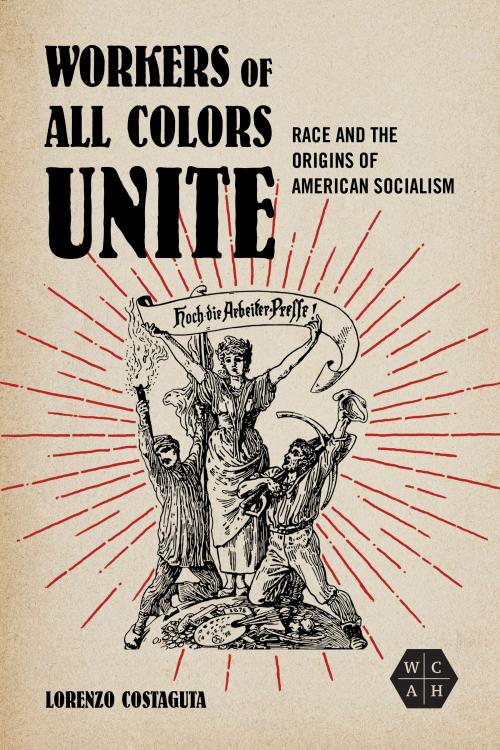
Lorenzo Costaguta
As the United States transformed into an industrial superpower, American socialists faced the vexing question of how to approach race. Lorenzo Costaguta balances intellectual and institutional history to illuminate the clash between two major points of view. On one side, white supremacists believed labor should accept and apply the ascendant tenets of scientific racism. But others stood with Workingmen's Party leader J. P. McDonnel in rejecting the idea that racial and ethnic division influenced worker-employer relations, arguing instead that class played the preeminent role. Costaguta charts the socialist movement's journey through the conflict and down a path that ultimately abandoned scientific racism in favor of an internationalist class-focused and racial-conscious American socialism. As he shows, the shift relied on a strong immigrant influence personified by Curacaoan migrant and future IWW cofounder Daniel De Leon. The racial-conscious movement that emerged became American socialism's most common approach to race in the twentieth century and beyond"-- Provided by publisher
This book tracks how an internationalist class-focused and racial-conscious American socialism grew from Reconstruction era to the early 20th century

Lori A. Flores
The many hungers of Latinx food workers.
Though Latinx foodways are eagerly embraced and consumed by people across the United States, the nation exhibits a much more fraught relationship with Latinx people, including the largely underpaid and migrant workers who harvest, process, cook, and sell this desirable food. Lori A. Flores traces how our dual appetite for Latinx food and Latinx food labor has evolved from the World War II era to the COVID-19 pandemic, using the US Northeast as an unexpected microcosm of this national history.
Spanning the experiences of food workers with roots in Mexico, Puerto Rico, Cuba, the Dominican Republic, Haiti, and Central America, Flores’s narrative travels from New Jersey to Maine and examines different links in the food chain, from farming to restaurants to seafood processing to the deliverista rights movement. What unites this eclectic material is Flores’s contention that as our appetite for Latinx food has grown exponentially, the visibility of Latinx food workers has demonstrably decreased. This precariat is anything but passive, however, and has historically fought—and is still fighting—against low wages and exploitation, medical neglect, criminalization, and deeply ironic food insecurity.
Traces how our dual appetite for Latinx food and Latinx food labor has evolved from the World War II era to the COVID-19 pandemic, using the US Northeast as an unexpected microcosm of this national history.
Lori A. Flores
Known as 'The Salad Bowl of the World,' California's Salinas Valley became an agricultural empire due to the toil of diverse farmworkers, including Latinos. A sweeping critical history of how Mexican Americans and Mexican immigrants organized for their rights in the decades leading up to the seminal strikes led by Cesar Chavez, this important work also looks closely at how different groups of Mexicans--U.S. born, bracero, and undocumented--confronted and interacted with one another during this period. An incisive study of labor, migration, race, gender, citizenship, and class, Lori Flores's first book offers crucial insights for today's ever-growing U.S. Latino demographic, the farmworker rights movement, and future immigration policy"--Publisher's web site
Contents: The racial and labor landscapes of the Salinas Valley before World War II -- Racial meeting grounds and battlegrounds during wartime, 1941-1947 -- Bound in tension : Mexican Americans, braceros, and undocumented migrants, 1947-1960 -- The community service organization, 1953-1963 -- A town full of dead Mexicans : the Salinas Valley bracero tragedy of 1963 -- The farmworker movement in the post-bracero era -- A blossoming of red flags : the Salinas UFWOC strike of 1970 -- Conclusion : the farmworker justice movement, 1970 to the present
A sweeping critical history of how Mexican Americans and Mexican immigrants organized for their rights in the decades leading up to the seminal strikes led by Cesar Chavez
Museum/Exhibits
Tours
Maps
Digital Projects
Organizations
Sites
Film/Video
Audio/Interview
Podcast/Program
Text/Document
Image
Graphs/Data
Timeline
Southwest
West
Midwest
Southeast
Northeast
Mexico
Canada
Global
Books
Teaching
Lectures
Digital Archives
Journals
Bibliographies
Topic Intro