


Collections
Library
Type
Region
Coverage:
-
Published:
-
Mapping American Social Movements Project, Jack Ross
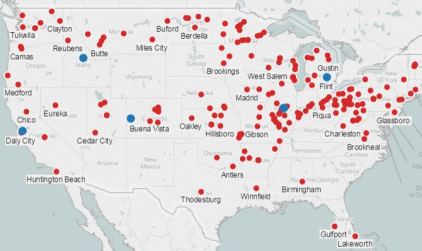
More than 1,000 Socialist candidates were elected to public office in the first two decades of the 20th century. They included two members of Congress, dozens of state legislators, and more than 130 mayors. These interactive maps identify 353 cities and towns that elected Socialist Party candidates, showing the offices held and identifying important office holders. Most of the information comes from The Socialist Party of America: A Complete History by Jack Ross supplement with contributions by Errol Wayne Stevens based on his dissertation: "Heartland Socialism: The Socialist Party of America in Four Midwestern Communities, 1898-1920," Indiana University, 1978.
Five maps and charts showing cities and towns across the U.S. that elected Socialist Party candidates between 1901 and 1960, with population and economic information about town and cities, and also filterable by population level and state.
Mapping American Social Movements Project, James Gregory
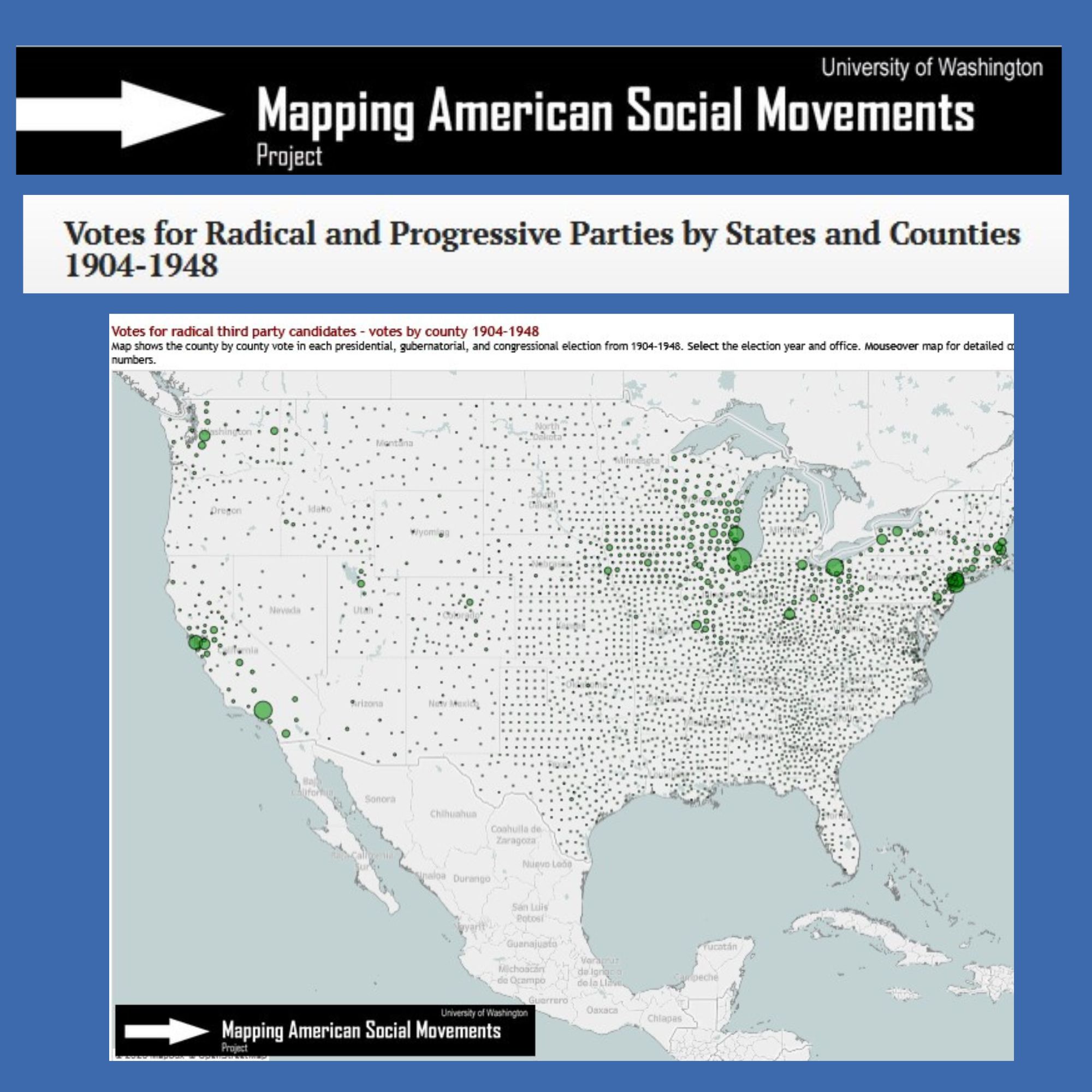
It was not until the mid 1930s that Democratic and Republican Parties became so dominant that radicals began to abandon third party strategies. The Populist Party had briefly broken the monopoly in the 1890s. Founded in 1901, the Socialist Party soon developed an ambitious electoral strategy, winning more than 900,000 votes in 1912 and 1920 while electing hundreds of candidates to local offices. In 1912, Teddy Roosevelt's Bull Moose Progressive Party made the presidential election a four-way race. Beginning in the 1920s, the Communist Party often fielded slates of candidates. Meanwhile, other disaffected Socialists launched Farmer-Labor parties in several states. In 1924, Robert LaFollette won 4.8 million votes running as a candidate of the Socialist, Farmer-Labor, and Progressive Parties. In 1932, at the depths of the Great Depression, both the SP and CP expected to do well. Neither did. That defeat marked a turn in leftwing political strategies as many radicals began working within the Democratic Party. Henry Wallace's Progressive Party campaign in 1948, the Peace and Freedom Party campaign in 1968, and Green Party campaigns since 1996 retested third party strategies -- with little success. These maps and charts show the rise and fall of independent leftwing parties from 1904 to 1948.
This resource includes nine maps and charts that show the development and decline of independent left-wing parties before and through the beginnings of Democratic and Republican dominance in the 1930s.
Mapping American Social Movements Project, James Gregory
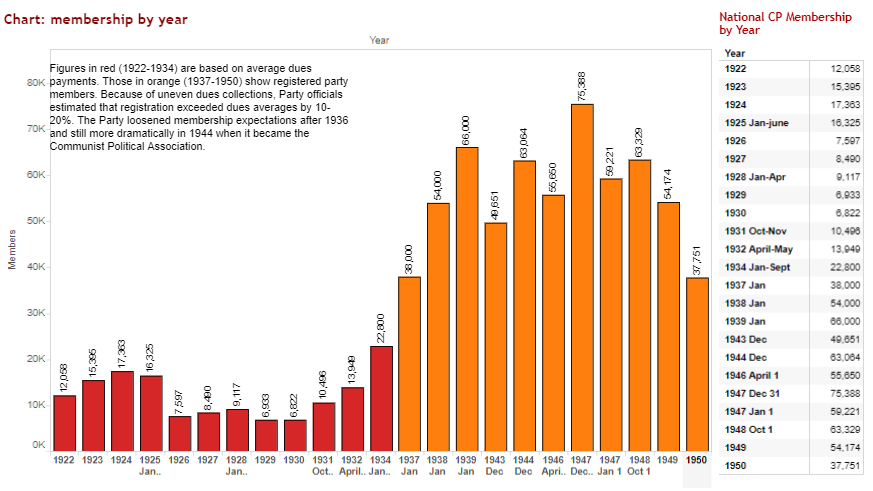
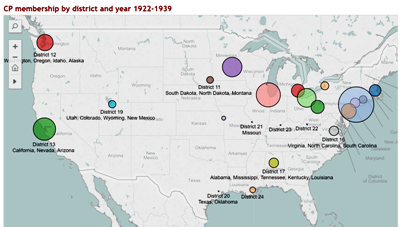
A disciplined organization that demanded strenuous commitments and frequently expelled members, the CP was not an open mass organization in the manner of the Socialist Party or the NAACP. Membership levels remained below 20,000 until 1933 and then surged upward in the late 1930s, reaching 66,000 in 1939, falling off during the Nazi-Soviet detente, then rebuilding after 1941 as the US and the Soviet Union joined in a World War II alliance. Party membership surpassed 75,000 at the start of 1947 before starting its Cold War decline. The CP developed a unique geography, centered in big cities of the North and Pacific West. New York (District 2) at some points accounted for 40-50% of party members.
Four maps and charts visualizing Communist Party membership across the U.S. according to membership by district and year, national membership by year, district boundary changes, and membership by district.
Mapping American Social Movements Project, James Gregory
The Communist Party devoted energy and resources to electoral campaigns starting in 1922. Party leaders did not expect to win, but they expected members and followers to support the ticket. Election tallies thus provide an indication of how many voting age citizens were loyal Party supporters in any year and place. Communist candidates were able to win about 100,000 votes in several elections during the 1930s and in Senate races in 1940 topped 115,000. These figures may serve as best estimates of the numbers of CP loyalists during party's heyday. The maps and charts show the geography of party strength, detailing the number of votes for Communist Party candidates for each county and every electoral contest from 1922 to 1946. Sources are explained below along with brief notes about CP electoral strategies and challenges.
Six maps and charts visualizing the geographic focus of Communist Party activity as it conducted electoral campaigns across the continental U.S. in the first half of the twentieth century.
Mapping American Social Movements Project, James Gregory
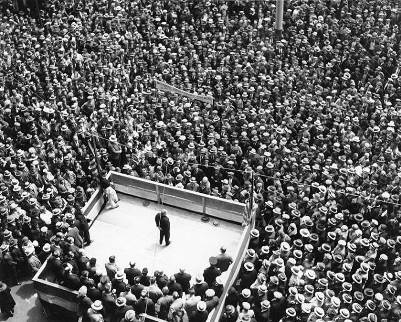
As the Great Depression took hold and unemployment surged in the early 1930s, protests followed. The Communist Party took the lead in organizing actions, launching a subsidiary organization called the Unemployed Councils in 1930. The Socialist Party also organized unemployed protests in New York, Chicago, and a few other cities. Unaffiliated movements emerged in other locations, some like the Unemployed Citizens League of Seattle and movements in Los Angeles and Oakland attracting thousands of members while establishing self-help cooperatives and lobbying for relief funds to help those facing homelessness and hunger. The Communists chose direct action, concentrated on protests of several kinds, including noisy confrontrations with relief agency officials, massive hunger marches, and eviction protests aimed at forestalling the loss of housing. Police closely monitored Unemployed Council demonstrations and arrests and beatings were common.
Here there is a map, two lists, and a database describing more than 700 protests that took place in the years 1930, 1931, and 1932, nearly all of them involving the Communist Party. The descriptions are based on articles that appeared in the Daily Worker, the Communist Party newspaper, and have not been verified. Be skeptical of claimed crowd sizes and other descriptions. And the database is by no means complete. The Daily Worker typically ignored or disparaged actions led by other groups.
A map, two lists, a timeline, and a database showing nearly 700 Communist Party-affiliated protests that took place in the early 1930s.
Mapping American Social Movements Project, James Gregory, Rebecca Flores
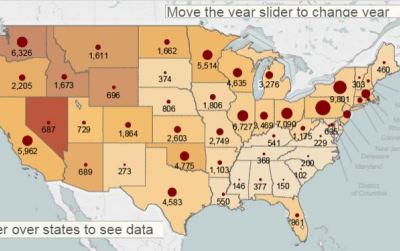
The Socialist Party grew dramatically in the early 20th century, reaching a peak dues-paying membership of 113,000 in 1912. Based on party records, this map and accompanying charts show the reported membership numbers for each state for most years from 1904 to 1940. Notice that membership as a percent of population was strongest in the West until 1917 when the US entered World War I. At that point, party membership increased in New York, Illinois, Wisconsin, Ohio and some other states. After 1919, membership declined precipitously as many left the SP to join the Communist Party and others drifted away as the Red Scare undercut all radical movements.
Six maps and charts showing the reported membership numbers for each state during the Socialist Party's most intense period of growth.
Mapping American Social Movements Project, James Gregory, Rebecca Flores
These maps and charts show the number and percentage of votes for Socialist candidates for each state and county. They include presidential, gubernatorial, and congressional elections. The SP secured over 900,000 votes in 1912 and large totals in other races as late as 1938. These maps show the shifting geography of support.
Six maps and charts showing the percentage of votes for Socialist candidates, broken down by state and county between 1904 and 1948.
Mapping American Social Movements Project, James Gregory, Rebecca Flores
These introductory maps provide a glimpse of what is available in more detail in the map sets for the Socialist Party. These seven visualizations show the vote for Socialist candidates by county and year, SP membership by state and year, the locations of 380 party linked newspapers, and the 353 towns and cities that elected Socialists to public office.
Seven maps and charts visualizing the Socialist Party's growth and impact on the U.S. political system through voting, party membership, election to public office, and party-affiliated newspapers.
Mapping American Social Movements Project, Jonathan Garlock
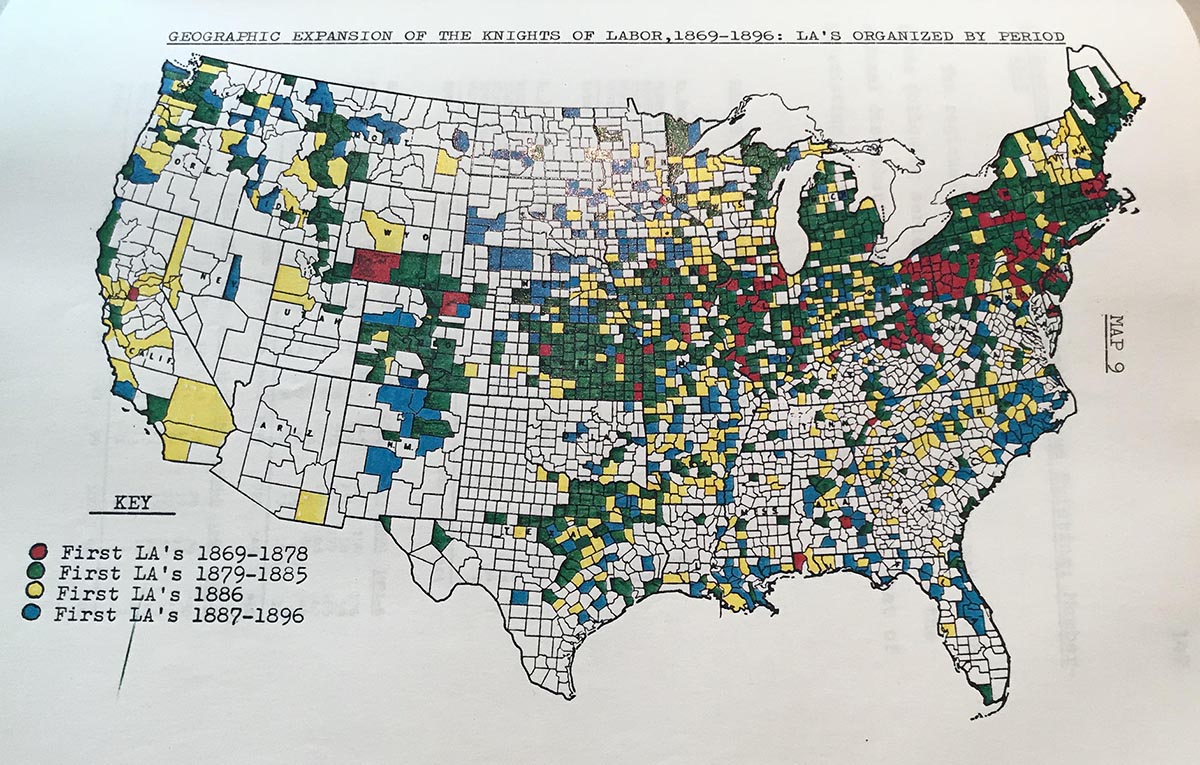
These maps and charts locate nearly 12,000 Local Assemblies of the Knights of Labor. They are based on data gathered by Jonathan Garlock and published in Guide to the Local Assemblies of the Knights of Labor (Greenwood Press, 1982). The Knights of Labor was the largest and most extensive association of workers in 19th century America. Organized in 1869, the movement grew slowly in the 1870s, then surged in the 1880s, reaching a peak membership approaching one million in 1886-1887 with Local Assemblies spread across the country in more than 5,600 cities and towns. Its spectacular growth owed much to a bold agenda and flexible organizational plan. The Knights operated as both a trade union federation and a political movement. Envisioning a "Cooperative Commonwealth" in which producer cooperatives and nationalized railroads would replace monopolistic capitalism, the Knights launched dozens of local and state labor parties and hundreds of worker-owned cooperatives. Meanwhile, thousands of Local Assemblies represented members in their work places, bargaining with employers, threatening and conducting strikes. Inclusivity was the other hallmark of the KOL (especially in comparison to the American Federation of Labor unions that followed). The Knights included African American workers and counted 246 local assemblies organized by women workers. There are seven total maps, each one highlighting specific spatial realities of the Knights, including: New Knights assemblies by year (map); race, gender, and founding period (map); Number by state and year (charts); number by occupation and population (charts); state by state closeup maps; Local Assemblies outside of the United States (map); and list of assemblies by state/country.
Interactive and layerable maps locating nearly 12,000 Local Assemblies of the Knights of Labor mostly in the United States, with some brances in Canada, Europe, and Australia.
Mapping American Social Movements Project, Josue Estrada
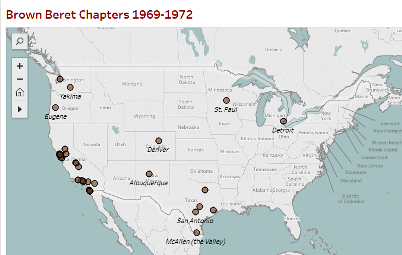
In the barrios of Los Angeles, Chicano youth founded the Brown Berets in 1967, modeled after the Black Panther Party. The organization concentrated on combatting police brutality and fighting racism but some chapters also demanded education, job, and housing equality. By 1969, there were 29 chapters mostly in California but units also formed in Colorado, Michigan, Minnesota, New Mexico, Texas, and Washington. When the Brown Berets were disbanded by Prime Minister David Sanchez in 1972, a total of 36 chapters had been established primarily near college and university campuses.
Two maps showing both the national and California-specific growth of Brown Beret chapters in the late 1960s and early 1970s.
Mapping American Social Movements Project, Josue Estrada
For those inside and outside academic institutions, the Chicano press served as a medium to learn Chicano history, literature, and be informed of current news.
We have located and mapped more than 300 publications. Many were tiny, printing only a few issues and folding in a year or less. Others were much more influential, like El Macriado, the monthly published by the United Farm Workers union or El Grito del Norte from Denver and Caracol from San Antonio. Notice how many communities, large and small, hosted Chicano periodicals (155). Notice that 1970-1972 were peak years and that over half were published in California.
Two maps, a chart, and a list visualizing and detailing the development of America's Chicano/a/x press in the 1960s and 1970s.
Mapping American Social Movements Project, Josue Estrada
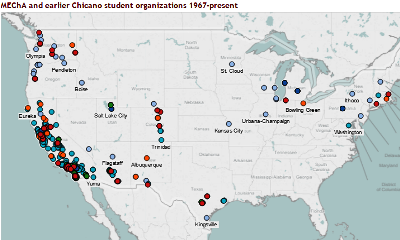
Most social movement organizations last only a few years and that is especially true for student run organizations. But MEChA has been active on some campuses for nearly fifty years and the organization continues to grow, with more than 500 chapters as of 2012. MEChA was founded at a conference in Santa Barbara, California, in 1969 when students from a dozen campuses adopted “El Plan de Santa Barbara.” The manifesto called for the unification of all student organizations into one umbrella organization, Movimiento Estudiantil Chicana/o de Aztlan which would become known by the acronym MEChA. By consolidating student’s political power, MEChA became and has continued to be a significant on-campus political force for change. From 1969 to 1971, MEChA grew rapidly in California with major centers of activism on campuses in southern California, and a few chapters opened along the East coast at Ivy League schools. By the 1980s, MEChA’s growth occurred predominately in California where community college chapters joined those that had previously started on university campuses. During the 1990s, MEChA experienced a decade of slow growth yet in the 2000s the organization saw an incredible upsurge of new chapters particularly at the high school level.
Seven maps and charts showing the growth and development of MEChA and Chicano Student Organizations from the adoption of "El Plan de Santa Barbara" to having nearly 500 chapters nationwide.
Mapping American Social Movements Project, Josue Estrada
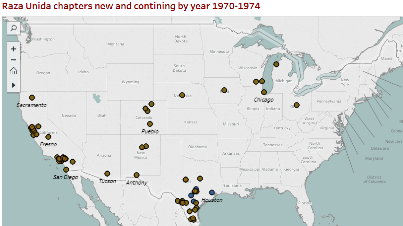
When the Mexican American Youth Organization (MAYO) organized the so-called “Chicano takeover” of Crystal City’s school board and city council in 1970, Tejano activists launched Raza Unida Party to compete in elections in Texas. The party soon spread to Colorado, Arizona, New Mexico, and California, helped by an alliance with Crusade for Justice, Corky Gonzalez's Denver-based organiztion. Over the next four years, RUP ran campaigns in 40 different communities involving 176 candidates for local and state offices. Some were successful, especially in south Texas. But RUP’s electoral accomplishments outside of Texas were few. In California, the RUP organized 93 chapters between 1971 and 1973 but elected only one city council person and two school board members. Only in Texas did RUP secure official party status for statewide races. In 1972, Ramsey Muniz won 219,127 running for Texas governor on the Raza Unida Party ticket, not enough to win but an impressive showing for a third party.
Four maps showing Raza Unida Party activity through electoral campaigns and the establishment of party chapters across the American West, Midwest, South.
Mapping American Social Movements Project, Josue Estrada, James Gregory
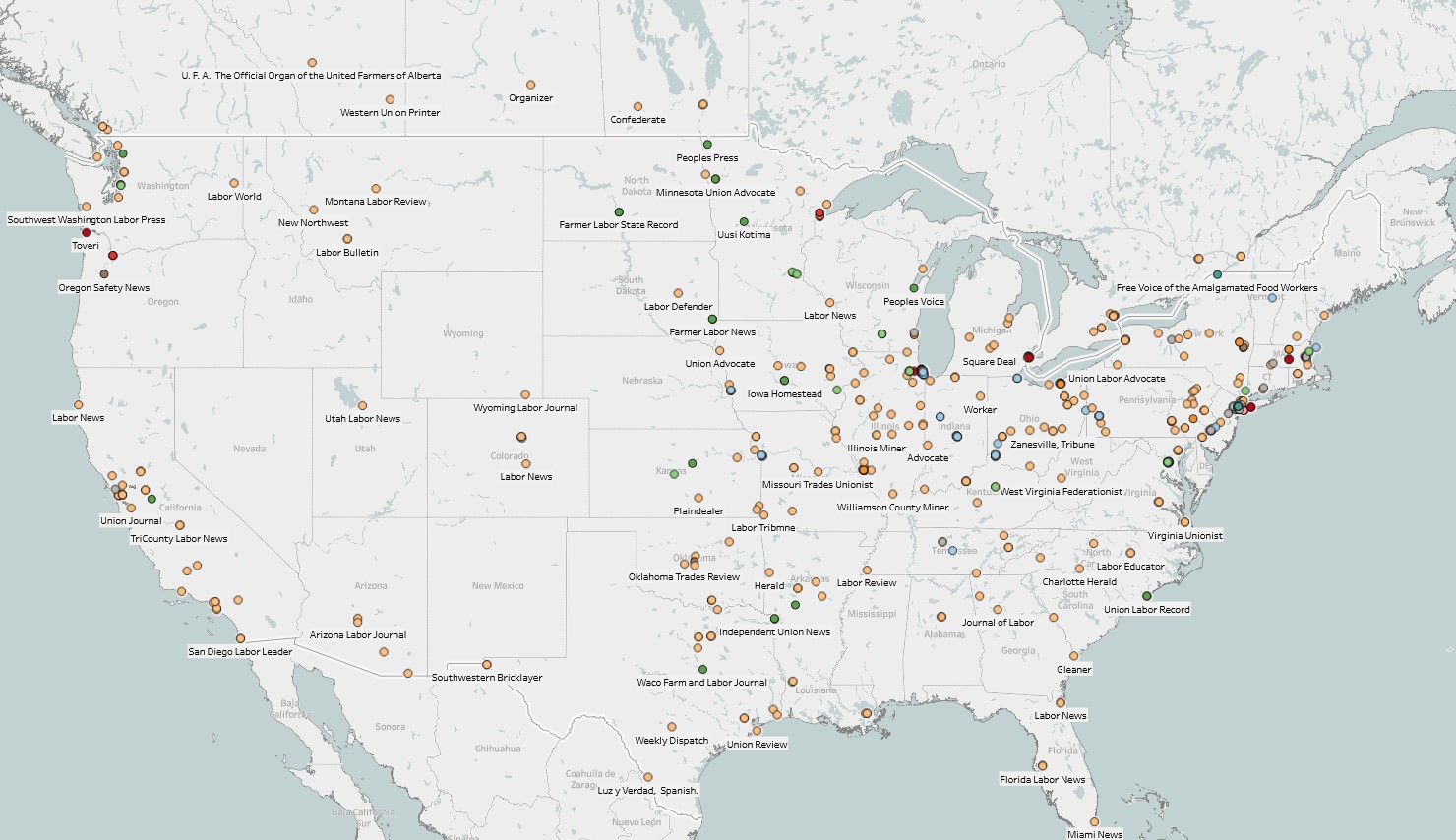
In 1925, researchers at the Rand School of Social Science compiled and published The American Labor Press Directory, listing 629 newspapers and periodicals. Mostly weeklies and monthlies, the majority were affiliated with local labor councils or were owned by publishers who proclaimed their commitment to the labor movement. Next in number were national publications owned by AFL international unions like the International Moulders Union. The once massive Socialist press had been decimated in the Red Scare and by 1925 claimed only 31 periodicals, while the IWW had 15, nearly all published out of the Chicago headquarters. The Directory also counted periodicals published by religious groups and other organizations deemed friendly to the cause of labor. The UCLA based Networked Labor Project has been working with these data to explore personal connections between labor activists in the 1920s and presents more detail than is available here.
A map, a chart, and a list visualizing and detailing the geography of labor-oriented press outlets across the U.S. in 1925.
Mapping American Social Movements Project, Katie Anastas
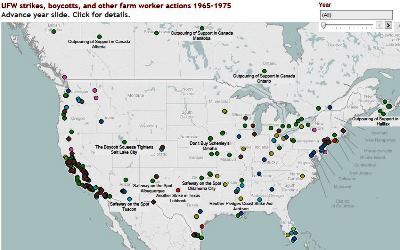
"When ethnic Mexican farm workers led by Cesar Chavez joined with Filipino American workers led by Larry Itliong in 1965 to strike grape growers in Delano, California, the modern farm workers movement was born. Operating initially as the United Farm Workers Organizing Committee and later as the UFW, the union spread beyond California as it launched a national grape boycott and inspired farm worker organizing in other states. Researched by Katie Anastas, these maps show the geography of UFW activism, locating more than 1,000 farm worker strikes, boycotts, and other actions.
Four maps and a timeline showing the geography of UFW activism across the U.S. through 1,000 union actions.
Mapping American Social Movements Project, Katie Anastas
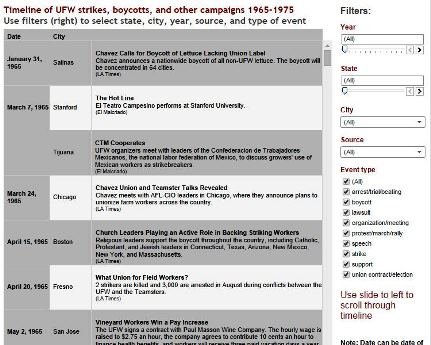
When ethnic Mexican farm workers led by Cesar Chavez joined with Filipino American workers led by Larry Itliong in 1965 to strike grape growers in Delano, California, the modern farm workers movement was born. Operating initially as the United Farm Workers Organizing Committee and later as the UFW, the union spread beyond California as it launched a national grape boycott and inspired farm worker organizing in other states. Here is a timeline of more than 1000 UFW actions as reported in El Macriado, Los Angeles Times, New York Times, and Seattle Times.
A timeline chronologically visualizing 1,000 UFW actions from the union's inception as a small organizing committee in Delano, California, to becoming a national labor union.

Mapping American Social Movements Project, Katie Anastas
In 1965, Filipino farm workers in the Agricultural Workers Organizing Committee, led by Larry Itliong, began a series of strikes in Delano, California, demanding a minimum hourly wage of $1.40. Mexican-American farm workers in the National Farm Workers Association, led by Cesar Chavez, also joined the strike. By March 1965, Chavez was meeting with leaders of the American Federation of Labor and Congress of Industrial Organizations (AFL-CIO) in Chicago, discussing plans to organize agricultural workers across the country. The NFWA and the AWOC merged into one union, the United Farm Workers Association (UFW), in 1966, beginning a movement that would garner support from politicians, civil rights groups, students, and religious leaders worldwide.
A brief article by Katie Anastas detailing the geographic history of the UFW from 1965-1977, when the union expanded onto the national stage and experienced success boycotting grapes, lettuce, and Gallo products.
Mapping American Social Movements Project, Kenyon Zimmer
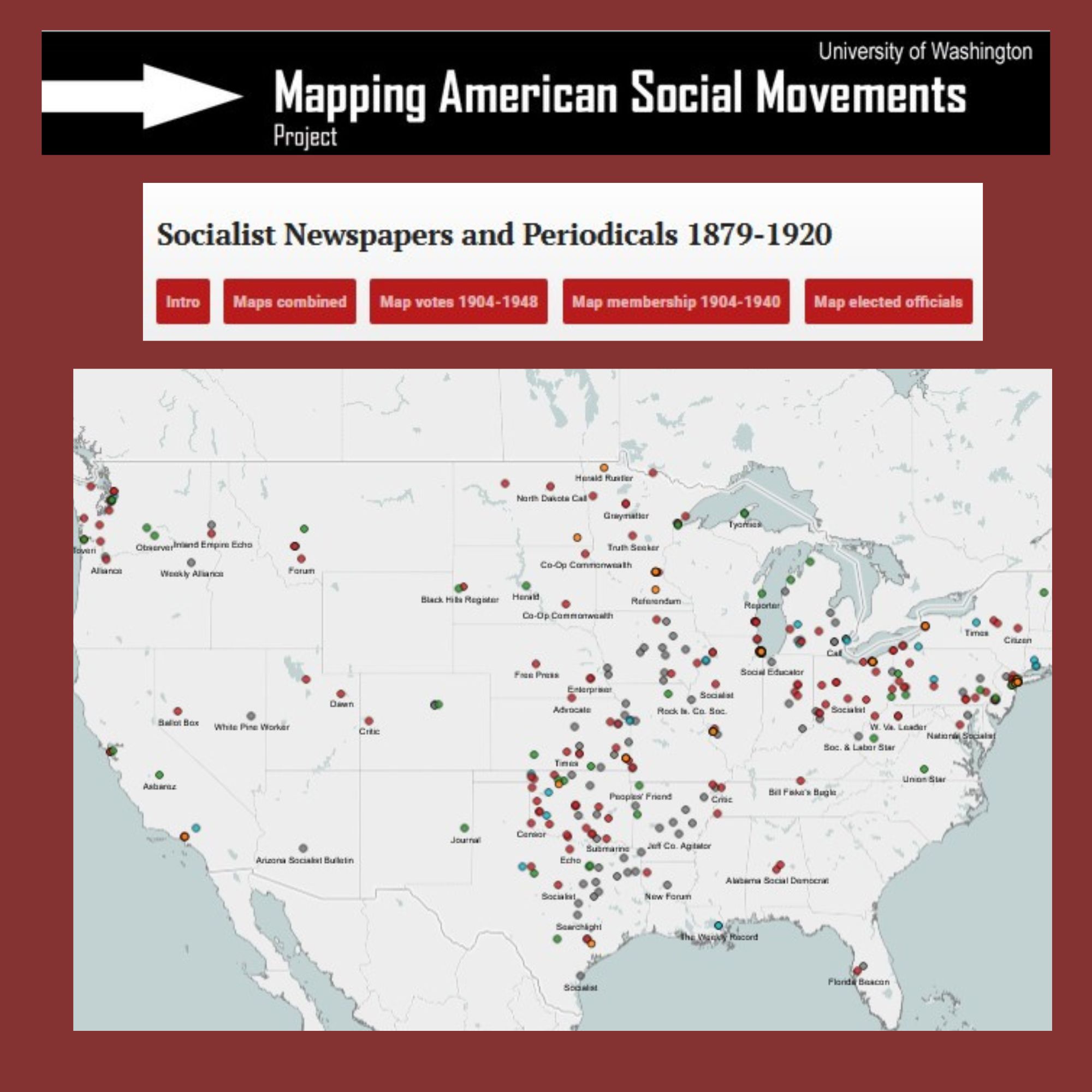
These maps and tables locate 274 periodicals affiliated with anarchist groups or ideas from 1872 to 1940. (Single-issue publications, and those that lasted fewer than four issues, are not included.) The press played a particularly important role in disseminating information, coordinating action, and providing cohesion within the anarchist movement, which rejected the hierarchical structure of political parties and generally avoided formal organizations at the local, national, and global levels. Anarchists published periodicals in 18 different languages, reflecting the immigrant majority and transnational nature of the American movement. They were based in 20 states and 63 different cities, but New York, Chicago, and San Francisco were the main centers of anarchist publishing. New York hosted 95 newspapers, Chicago 37, and 19 were based in San Francisco. The vast majority were weeklies and monthlies; only two daily anarchist newspapers appeared, the German Chicagoer Arbeiter-Zeitung (Chicago) and the Yiddish Abend Tsaytung (New York). Most titles were short lived--only 35 lasted longer than four years--and claimed modest circulations, typically around one or two thousand copies. However, the Yiddish Fraye Arbayter Shtime (New York) appeared from 1890 to 1977 and claimed a peak circulation of 30,000, and the German Die Fackel (Chicago) and Spanish language Regeneración (Los Angeles) both exceeded 20,000 copies.
Four maps and tables locating periodicals that were associated with anarchist groups active from the mid-nineteenth century to the mid-twentieth.
Mapping American Social Movements Project, Randi Storch
This article presents maps and data that could not be displayed in the book Red Chicago. Maps show party offices and places used in demonstrations and mass meetings. Accompanying this is a timeline of more than 300 demonstrations, mass meetings, organizing campaigns, recreational events, and other actions staged by the Party and its auxilliaries from 1929-1934.
An article accompanied by five maps and charts that show the Communist Party-affiliated offices and places that were used in the movement's various political activities.

Mapping American Social Movements Project, Susan A. Glenn
We Charge Genocide, which was produced by William Patterson and the Civil Rights Congress, charged that under the legal rubric laid out by the United Nations, the United States, which failed to enforce its own Constitution, must be punished under international law for its genocidal acts against African Americans. In his Introduction to the petition, Patterson emphasized the relationship between Hitler’s crimes against the Jews and America’s crimes against African Americans. “Out of the inhuman Black ghettos of American cities, out of the cotton plantations of the South, comes this record of mass slayings on the basis of race, of lives deliberately warped and distorted by the willful creation of conditions making for premature death, poverty and disease. It is a record that calls aloud for condemnation, for an end to these terrible injustices that constitute a daily and ever-increasing violation of the United Nations Convention on the Prevention and Punishment of the Crime of Genocide.”
A brief article accompanied by an interactive map and an extensive annotated timeline showing the development of the famed "We Charge Genocide" petition, which was produced by William Patterson and the Civil Rights Congress and ultimately went before the United Nations Genocide Convention.
Mapping American Social Movements Project, University of Washington
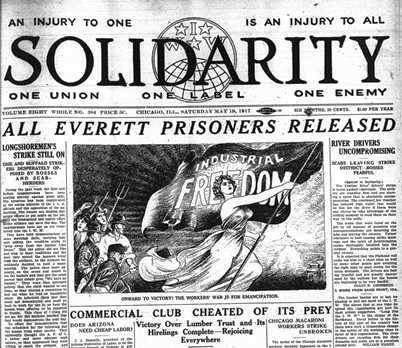
Social movements need ways to educate and communicate. Until recently that meant newspapers and other periodicals. Denied access to major media, labor and radical movements have published thousands of periodicals, constituting an alternative press that is vital to these movements and important to the history of American journalism. The decades from the 1880s through the 1940s were the golden age for labor journalism while radical journalism enjoyed an extraordinary renaissance with the underground press movement of the 1960s and 1970s.
An introduction to the history and geography of labor and radical press outlets collected by the Mapping American Social Movements Project, complete with links to resources such as maps, charts, and databases.
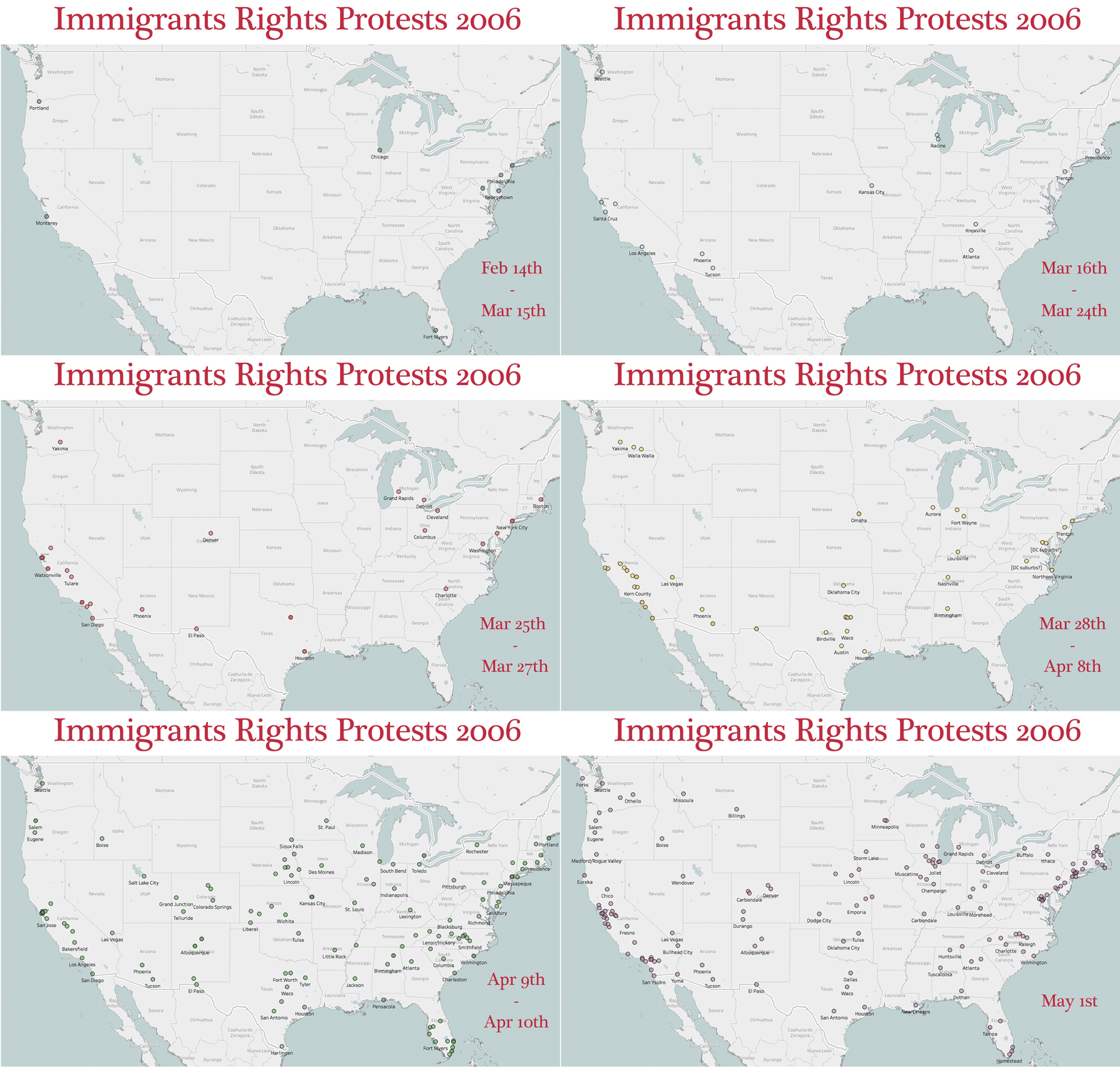
Mapping American Social Movements Project, Xóchitl Bada, Jonathan Fox, Jane Guskin
Between February 14 and May 1, 2006, some four hundred protest actions in defense of immigrant rights took place in more than two hundred U.S. cities and towns, involving an estimated six million participants.[1] These events were part of a mass mobilization in response to a draconian immigration bill, the "Border Protection, Antiterrorism, and Illegal Immigration Control Act" (HR 4437) that passed the House of Representatives in December 2005. Catching journalists by surprise, demonstrations rolled across the country.
Six maps and charts that visualizing reactions to HR 4437 as they developed across two hundred U.S. cities and towns in 2006. A useful introductory essay by Jane Guskin also accompanies these resources.
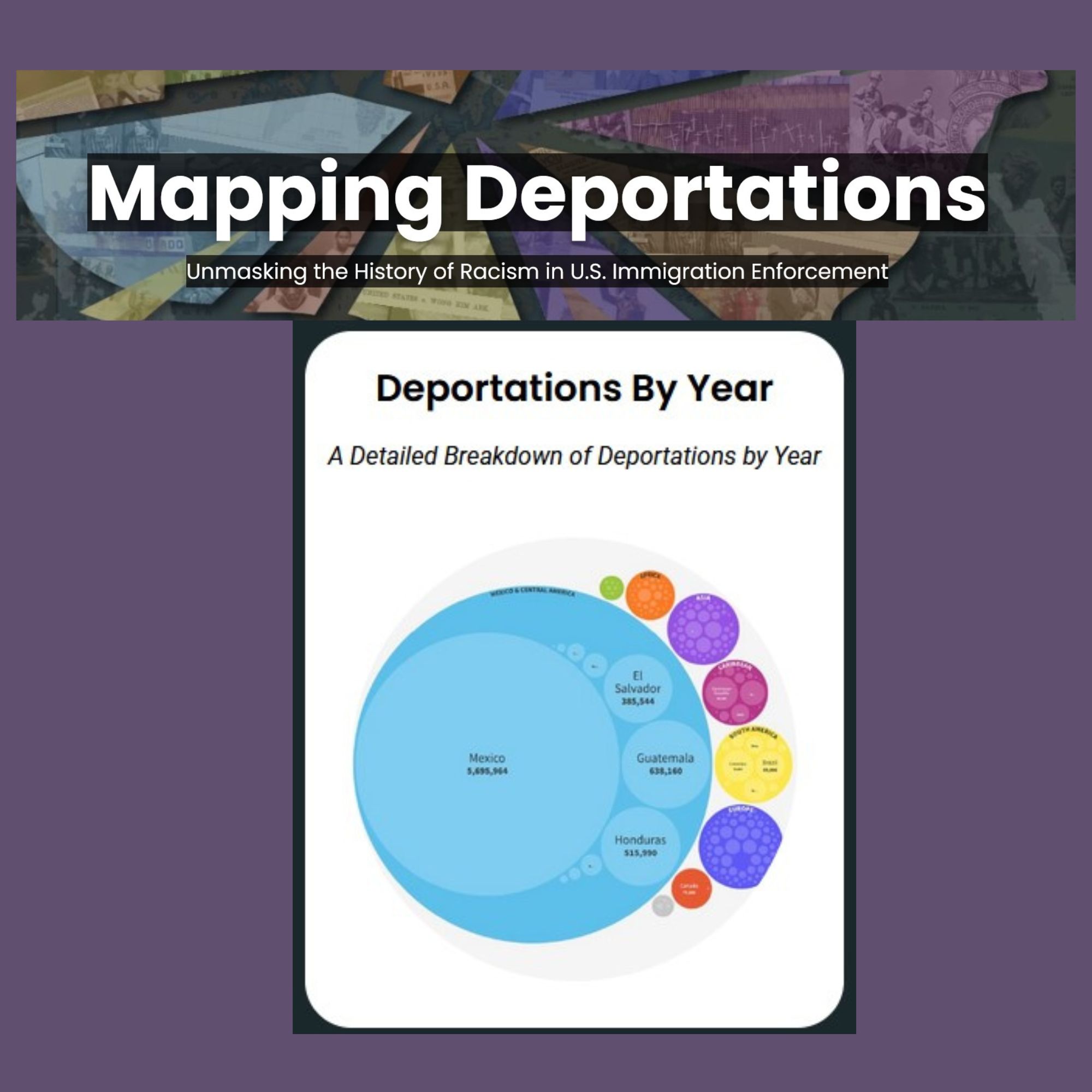
Mapping Deportations
Mapping deportations invites you to see the history of U.S. immigration enforcement not as a series of disconnected events, but as a pattern. For more than two centuries, U.S. immigration enforcement has favored Europeans and their descendants while targeting non-white migrants for exclusion, removal, and punishment. Although U.S. immigration law and policy have shifted over time, the nation’s immigration enforcement regime has consistently produced this result.
multiple maps and data visualizations, charts of deportations across time, chronology/timeline visualization
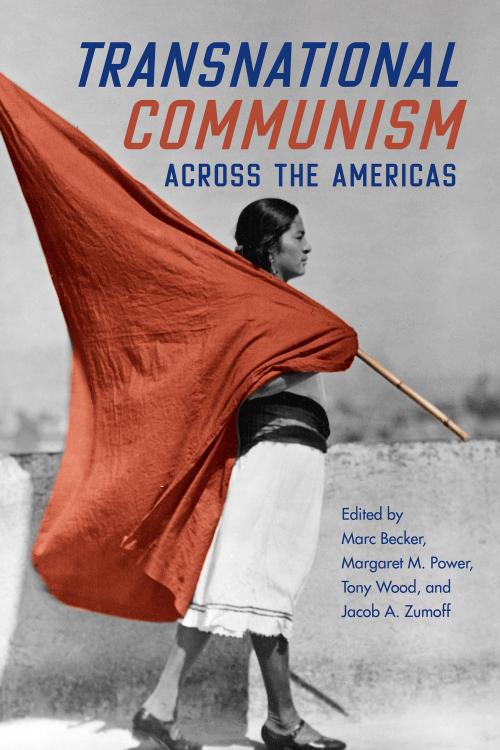
Marc Becker, Margaret Power, Tony Wood, Jacob A Zumoff
Did Latin American communists have stronger roots in the worldwide movement or in the historical developments of their own countries? This collection uses a transnational lens to examine the relationships of the region's local parties with each other, international counterparts, and outside groups dedicated to anti-imperialism, women's rights, and other causes.
Part One's essays explore the era from the Bolshevik Revolution through 1943. Topics include the failed connection between Mexican communists and the Comintern, Black migrant workers and the Caribbean labor movement, race relations in Cuba, Latin American communists in the USSR, and Luís Carlos Prestes and the Brazilian Communist Party.
Part Two focuses on the Cold War years to look at Soviet peace activism networks in Latin America, Guatemala's communist women before the 1954 coup, Puerto Rico's communist party, transnational student groups, and international influences on Salvadoran guerrillas. Insightful and expert, Transnational Communism across the Americas illuminates the various Latin American communist parties and their milieus, programs, and policies"-- Provided by publisher
illuminates the various Latin American communist parties and their milieus, programs, and policies
Marc Dixon
Heartland Blues provides a new perspective on union decline by revisiting the labor movement at its historical peak in the 1950s and analyzing campaigns over right-to-work laws and public sector collective bargaining rights in the industrial Midwest.
The focus on 1950's labor conflicts, including union failures, departs from popular and academic treatments of the period that emphasize consensus, an accord between capital and labor in collective bargaining, or the conservative drift and bureaucratization of the labor movement. The state campaigns examined in Heartland Blues instead reveal a labor movement often beset by dysfunctional divisions, ambivalent political allies, and substantial employer opposition.
Drawing on social movement theories, the book shows how many of the key ingredients necessary for less powerful groups to succeed, including effective organization and influential political allies, were not a given for labor at its historical peak but instead varied in important ways across the industrial heartland. These limits slowed unions in the 1950s. Not only did labor fail to crack the Sunbelt, it never really conquered the industrial Midwest where most union members resided in the mid-twentieth century. This diminished union influence within the Democratic Party and in society. The 1950s are far more than an interesting side story. Indeed, the labor movement never solved many of these basic problems. The labor movement's social and political isolation and their limited responses to employer mobilization became a death knell in the coming decades as unions sought organizational and legislative remedies to industrial decline and the rising anti-union tide"-- Provided by publisher
new perspective on union decline by revisiting the labor movement at its historical peak in the 1950s
Museum/Exhibits
Tours
Maps
Digital Projects
Organizations
Sites
Film/Video
Audio/Interview
Podcast/Program
Text/Document
Image
Graphs/Data
Timeline
Southwest
West
Midwest
Southeast
Northeast
Mexico
Canada
Global
Books
Teaching
Lectures
Digital Archives
Journals
Bibliographies
Topic Intro