


Collections
Library
Type
Region
Coverage:
-
Published:
-

Marc Linder
"Although federal and state regulations require employers to provide toilets, government agencies, incredibly, do not require employers to permit workers to use them. Marc Linder, a labor lawyer and political economist, and Ingrid Nygaard, a physician specializing in urogynecology, place this regulatory breakdown in the wider context of the history of labor-management struggles over rest periods. They emphasize the physiological consequences that workers suffer when they are not allowed to interrupt work to rest or urinate." "Linder and Nygaard explain how protective rest period legislation has shrunk over time. Ironically, because most statutes singled out women for rest breaks, they were invalidated by Title VII's ban on sex discrimination. The authors explain other countries' regulations and conclude with a recommendation for legislation to mandate rest and bathroom breaks for all workers."--Jacket
Introduction : From "let them eat cake" to "let them pee in their pants"
From Taylorism to ergonomics : a managerial basis for rest periods
Bringing incontinence out of the (water) closet
Women at rest : the legal status of rest periods before Title VII
Sexual equality or "the equality of having no protective laws whatsoever"?
Judicial and legislative struggles : repeal or extension of gendered rest periods?
How the other half rests : how many modern workers have rest periods?
Rest in the rest of the world
"Go to the bathroom, please ... we'll wait for you" : from at-will employment to at-will voiding
Appendix 1. State rest- and meal-period laws
Appendix 2. Percentage of employees not receiving paid rest periods, 1979-1993
places workplace bathroom regulation in the wider context of the history of labor-management struggles over rest periods and explains how protective rest period legislation has shrunk over time.

Marc Linder
Against the background of the depletion of the industrial reserve army during the Vietnam War, Wars of Attrition explains how the complex interaction between the invisible hand of the labor market and the visible hands of large industrial customers, the Federal Government, and construction employer organizations inflicted a series of defeats on the building trades unions-the most entrenched segment of the labor movement in the United States-culminating in the vast expansion of the "union-free" sector of the construction industry. Based on thirty years of research, Wars of Attrition is the first study to have access to the archives of the Business Roundtable, which spearheaded and bankrolled the forces that carried out the first major successful deunionization campaign of the 1970s. MARC LINDER, who also wrote Projecting Capitalism: A History of the Internationalization of the Construction industry (Greenwood Press, 1994), is Professor of Law at the University of Iowa. Author of fifteen books on industrial relations, labor history, labor Law, economics, economic history, and legal history, he has also worked for Texas Rural Legal Aid representing migrant farm workers. His most recent book is "Moments Are the Elements of Profit" Overtime and the Deregulation of Working Hours Under the Fair Labor Standards Act (Fanpihua Press, 2000).
explains how the complex interaction between the labor market and construction employer organizations inflicted a series of defeats on the building trades unions culminating in the vast expansion of a "union-free" sector.
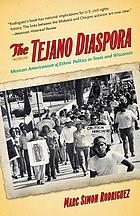
Marc Simon Rodriguez
Each spring during the 1960s and 1970s, a quarter million farm workers left Texas to travel across the nation, from the Midwest to California, to harvest America's agricultural products. During this migration of people, labor, and ideas, Tejanos established settlements in nearly all the places they traveled to for work, influencing concepts of Mexican Americanism in Texas, California, Wisconsin, Michigan, and elsewhere. In The Tejano Diaspora, Marc Simon Rodriguez examines how Chicano political and social movements developed at both ends of the migratory labor network that flowed between Crystal City, Texas, and Wisconsin during this period.
Rodriguez argues that translocal Mexican American activism gained ground as young people, activists, and politicians united across the migrant stream. Crystal City, well known as a flash point of 1960s-era Mexican Americanism, was a classic migrant sending community, with over 80 percent of the population migrating each year in pursuit of farm work. Wisconsin, which had a long tradition of progressive labor politics, provided a testing ground for activism and ideas for young movement leaders. By providing a view of the Chicano movement beyond the Southwest, Rodriguez reveals an emergent ethnic identity, discovers an overlooked youth movement, and interrogates the meanings of American citizenship.
how Chicano political and social movements developed at both ends of the migratory labor network that flowed between Crystal City, Texas, and Wisconsin during this period

Marcella Bencivenni
Maligned by modern media and often stereotyped, Italian Americans possess a vibrant, if largely forgotten, radical past. In Italian Immigrant Radical Culture, Marcella Bencivenni delves into the history of the sovversivi, a transnational generation of social rebels, and offers a fascinating portrait of their political struggle as well as their milieu, beliefs, and artistic creativity in the United States. As early as 1882, the sovversivi founded a socialist club in Brooklyn. Radical organizations then multiplied and spread across the country, from large urban cities to smaller industrial mining areas. By 1900, thirty official Italian sections of the Socialist Party along the East Coast and countless independent anarchist and revolutionary circles sprang up throughout the nation. Forming their own alternative press, institutions, and working class organizations, these groups created a vigorous movement and counterculture that constituted a significant part of the American Left until World War II. Italian Immigrant Radical Culture compellingly documents the wide spectrum of this oppositional culture and examines the many cultural and artistic forms it took, from newspapers to literature and poetry to theater and visual art. As the first cultural history of Italian American activism, it provides a richer understanding of the Italian immigrant experience while also deepening historical perceptions of radical politics and culture.
This cultural history delves into the history of radical Italians and offers a fascinating portrait of their political struggle
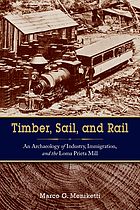
Marco Meniketti
While taking a critical look at the labor and social issues related to timber, the story of labor, immigration, and development around the San Francisco Bay region is told through the lens of an archaeological case study of a major player of the timber industry between 1885 and 1920. Timber, Sail, and Rail recounts the mill operations and broadly examines its intersections with other industries, such as shipping, brick manufacture, rail companies, lime production, and other lesser enterprises. Three seasons of archaeological fieldwork, as well as ethnography and regional archival work, are examined to emphasize technological and labor components at the historic Loma Prieta mill
recounts timber mill operations and broadly examines its intersections with other industries, such as shipping, brick manufacture, rail companies, lime production, and other lesser enterprises.

Marcus Rediker
By Marcus Rediker at the University of Pittsburgh
“History from Below” – also called “Peoples’ History” and “Radical History” – has been an important part of the appearance and spectacular growth of social history over the past half century and one of the most important developments in the discipline and profession of history. This course is designed to introduce graduate students in a broad variety of disciplines, departments, and programs to the key theories, methods, and issues in history from below, from its origin in the 1930s, through the New Left of the 1960s and 1970s, to the present. The course will concentrate on four major themes: race, class, gender, and capitalism. We will read classic and newer works to demonstrate how historical practice has changed over time. Special emphasis will also be given to sources, especially archival research, and to writing.
graduate level readings on methodology of writing history from below
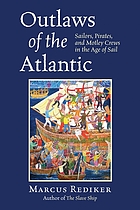
Marcus Rediker
Rediker turns maritime history upside down, exploring the dramatic world of maritime adventure not from the perspective of admirals, merchants, and nation-states but from the viewpoint of commoners: sailors, slaves, indentured servants, pirates, and other outlaws from the late seventeenth to the early nineteenth century. He reveals how the "motley" (i.e. multiethnic) crews were a driving force behind the American Revolution; that pirates, enslaved Africans, and other outlaws worked together to subvert capitalism; and that, in the era of the tall ship, outlaws challenged authority from below deck
sailors, slaves, indentured servants, pirates, and other outlaws from the late seventeenth to the early nineteenth century
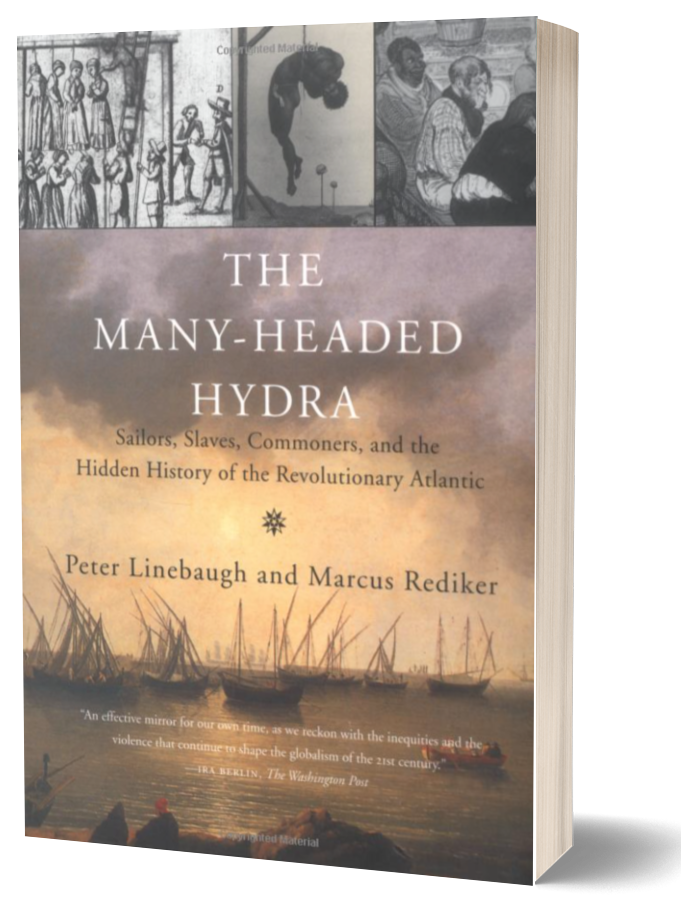
Marcus Rediker
Lectures on how ordinary working people led dozens of rebellions on both sides of the North Atlantic. The rulers of the day called the multiethnic rebels a “hydra” and brutally suppressed their risings, yet some of their ideas fueled the age of revolution. Others, hidden from history and recovered here, have much to teach us about our common humanity. “Marcus Rediker en Bueno Aires: The Many-Headed Hydra,” lecture, Tinta Limón Ediciones, CaZona de Flores, Buenos Aires, May 16, 2024.
La Hidra de la Revolución (The Hydra of Revolution), lecture, Traficantes de Sueñosm Bookstore, Madrid, September 11, 2023.
Lecture based on The Many-Headed Hydra
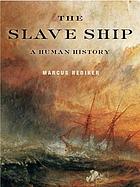
Marcus Rediker
In this widely praised history of an infamous institution, award-winning scholar Marcus Rediker shines a light into the darkest corners of the British and American slave ships of the eighteenth century. Drawing on thirty years of research in maritime archives, court records, diaries, and firsthand accounts, The Slave Ship is riveting and sobering in its revelations, reconstructing in chilling detail a world nearly lost to history: the 'floating dungeons' at the forefront of the birth of African American culture
Table of Contents
Introduction
Chapter One: Life, Death, and Terror in the Slave Trade
Chapter Two: The Evolution of the Slave Ship
Chapter Three: African Paths to the Middle Passage
Chapter Four: Olaudah Equiano: “Astonishment and Terror”
Chapter Five: James Field Stanfield and the Floating Dungeon
Chapter Six: John Newton and the Peaceful Kingdom
Chapter Seven: The Captain’s Own Hell
Chapter Eight: The Sailor’s Vast Machine
Chapter Nine: From Captives to Shipmates
Chapter Ten: The Long Journey of the Slave Ship Brookes
Conclusion: Endless Passage
shines a light into the darkest corners of the British and American slave ships of the eighteenth century.
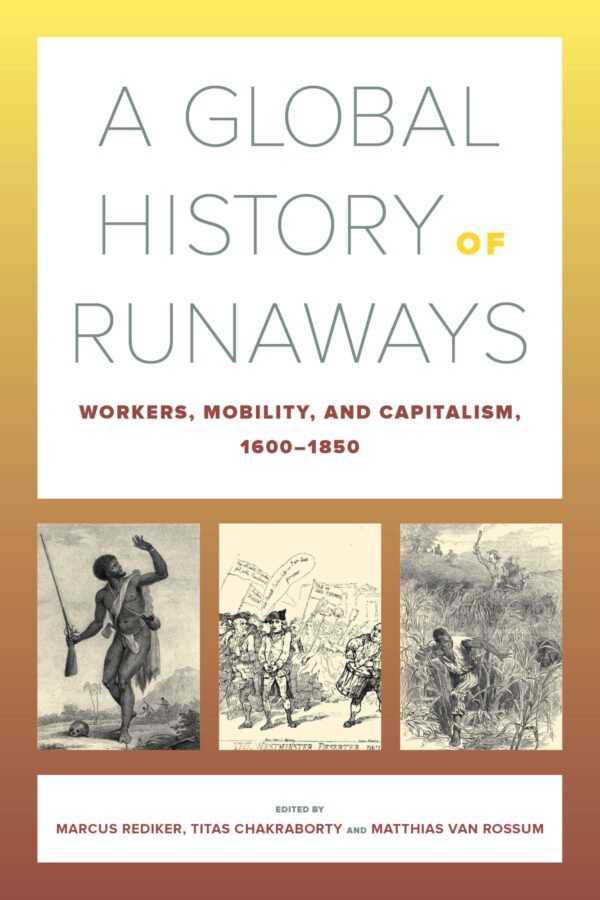
Marcus Rediker, Titas Chakraborty, Matthias van Rossum, eds
During global capitalism's long ascent from 1600-1850, workers of all kinds--slaves, indentured servants, convicts, domestic workers, soldiers, and sailors--repeatedly ran away from their masters and bosses, with profound effects. A Global History of Runaways, edited by Marcus Rediker, Titas Chakraborty, and Matthias van Rossum, compares and connects runaways in the British, Danish, Dutch, French, Mughal, Portuguese, and American empires. Together these essays show how capitalism required vast numbers of mobile workers who would build the foundations of a new economic order. At the same time, these laborers challenged that order--from the undermining of Danish colonization in the seventeenth century to the igniting of civil war in the United States in the nineteenth"--Provided by publisher
compares and connects runaways in the British, Danish, Dutch, French, Mughal, Portuguese, and American empires

Margaret Byington, History Matters
In 1892, Homestead, Pennsylvania, was the site of one of the most dramatic strikes in U.S. history. The Carnegie Steel Company’s ultimate victory resulted in the destruction of a once-powerful union of skilled iron and steel workers. By 1907, almost 7,000 workers toiled at the Homestead plant for the U.S. Steel Corporation. In 1907–1908, the Russell Sage Foundation undertook an intensive study that attempted to understand the dramatic changes that had reshaped Homestead and other industrial communities. The resulting six-volume report, written by progressive social reformers, included Margaret Byington’s Homestead: The Households of a Mill Town, first published in 1910.
This excerpt from Byington’s study depicted work and home life for the immigrant women of Homestead. Byington’s account, while sympathetic to the immigrants who comprised the bulk of the steel town’s labor force, was written from the perspective of an outsider. She emphasized women’s limited participation in the paid labor force in steel mill towns like Homestead, yet she provided repeated testimony regarding the multiple economic and social roles of women in Homestead as managers of family finances and family relationships.
Margaret Byington discusses the 1892 Homestead strike, focusing on the role of women
Margaret Byington, History Matters
Homestead, Pennsylvania, was in many ways the prototypical early twentieth-century mill town. Located seven miles up the Monongahela River from Pittsburgh, the first steel mill was built in Homestead in 1881. In 1892, Homestead was the site of one of the most dramatic strikes in U.S. history. The Carnegie Steel Company’s ultimate victory resulted in the destruction of a once-powerful union of skilled iron and steel workers. By 1907, almost 7,000 workers toiled at the Homestead plant for the U.S. Steel Corporation. In 1907–1908, the Russell Sage Foundation undertook an intensive study that attempted to understand the dramatic changes that had reshaped Homestead and other industrial communities. Written by progressive social reformers, the six-volume Pittsburgh Survey emphasized the devastating impact of industrial life on those who labored in the nation’s factories. The following excerpt is from Margaret Byington’s Pittsburgh Survey volume, Homestead: The Households of a Mill Town, first published in 1910. In the spirit of the Progressive-era effort to scientifically document conditions, the book also included photographs (by the famous documentary photographer Lewis Hine) and detailed family budgets.
Margaret Byington discusses the 1892 Homestead strike in 1910
Margaret Ellen Newell
In Brethren by Nature, Margaret Ellen Newell reveals a little-known aspect of American history: English colonists in New England enslaved thousands of Indians. Massachusetts became the first English colony to legalize slavery in 1641, and the colonists' desire for slaves shaped the major New England Indian wars, including the Pequot War of 1637, King Philip's War of 1675-76, and the northeastern Wabanaki conflicts of 1676-1749.
When the wartime conquest of Indians ceased, New Englanders turned to the courts to get control of their labor, or imported Indians from Florida and the Carolinas, or simply claimed free Indians as slaves. Drawing on letters, diaries, newspapers, and court records, Newell recovers the slaves' own stories and shows how they influenced New England society in crucial ways. Indians lived in English homes, raised English children, and manned colonial armies, farms, and fleets, exposing their captors to Native religion, foods, and technology. Some achieved freedom and power in this new colonial culture, but others experienced violence, surveillance, and family separations.
Newell also explains how slavery linked the fate of Africans and Indians. The trade in Indian captives connected New England to Caribbean and Atlantic slave economies. Indians labored on sugar plantations in Jamaica, tended fields in the Azores, and rowed English naval galleys in Tangier. Indian slaves outnumbered Africans within New England before 1700, but the balance soon shifted. Fearful of the growing African population, local governments stripped Indian and African servants and slaves of legal rights and personal freedoms. Nevertheless, because Indians remained a significant part of the slave population, the New England colonies did not adopt all of the rigid racial laws typical of slave societies in Virginia and Barbados
how slavery linked the fate of Africans and Indians.
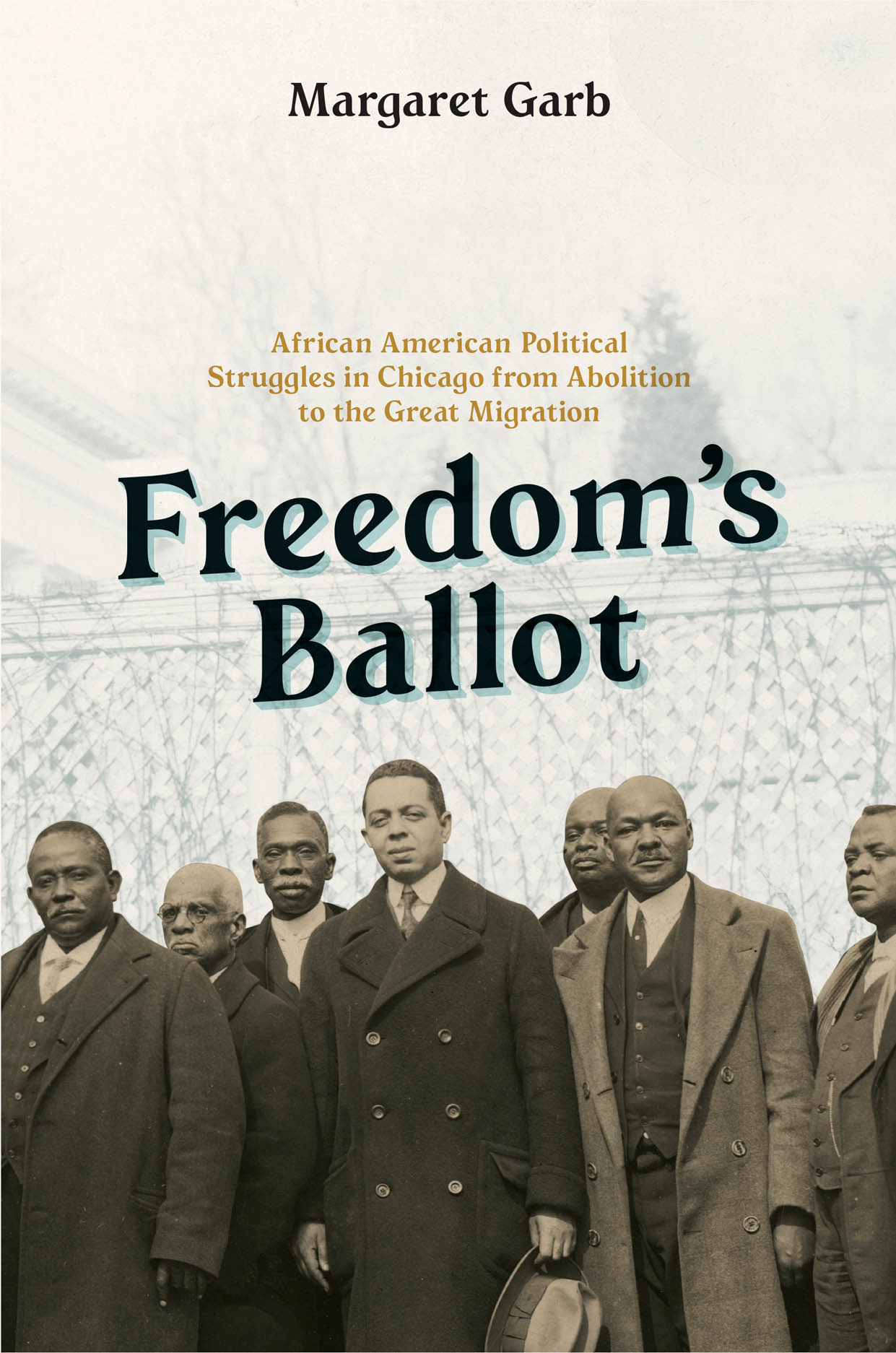
Margaret Garb
In the spring of 1915, Chicagoans elected the city's first black alderman, Oscar De Priest. In a city where African Americans made up less than five percent of the voting population, and in a nation that dismissed and denied black political participation, De Priest's victory was astonishing. It did not, however, surprise the unruly group of black activists who had been working for several decades to win representation on the city council. This book presents the history of three generations of African American activists - the ministers, professionals, labour leaders, clubwomen, and entrepreneurs - who transformed twentieth-century urban politics
presents the history of three generations of African American activists - the ministers, professionals, labour leaders, clubwomen, and entrepreneurs - who transformed twentieth-century urban politics
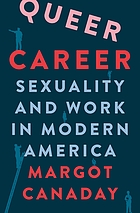
Margot Canaday
Historians have noted that gay identity is central to the history of capitalism, but because of an assumption that workplaces were "straight spaces" in which queer people passed, historians of sexuality have had almost nothing to say about work, instead directing their attention to the street and to the bar.
This book presents employment and the accompanying fear of job loss as one of the most salient features of queer life for most of the twentieth century, and looks at the political and legal developments of gay labor in the workplace, alongside the histories of women's, minorities', and immigrants' labor.
Starting midcentury with the Lavender Scare-the federal government's massive purge of gay people from the Civil Service-the book traces how workplaces opened to gay workers, albeit unevenly, over the second half of the twentieth century. Drawing on a number of archival sources and interviews, this is a history of the workplace that shows larger structural change while also giving voice to many underrepresented individuals.
Throughout, Margot Canaday emphasizes the concept of precariousness, a commonly deployed category within labor studies to designate that expanding category of workers in industrial societies who are detached from permanent, standardized, secure, and protected employment. While women and racial minorities also share this longer history of precarious work, the LGBT experience was a particularly powerful precedent for the changing character of economic life at the end of the 20th century.
Despite that, the book shows that workplaces were surprisingly responsive to demands from gay employees for protection and benefits. Canaday shows that business was out ahead of both the government and labor unions in offering antidiscrimination protection and domestic partner benefits to gay workers. The final part of the book traces how gay rights came to be the most marketized/privatized civil rights social movement and how we should consider the gay experience in the workplace not as marginal or atypical but as central and predictive for all workers"-- Provided by publisher
This book presents employment and the accompanying fear of job loss as one of the most salient features of queer life
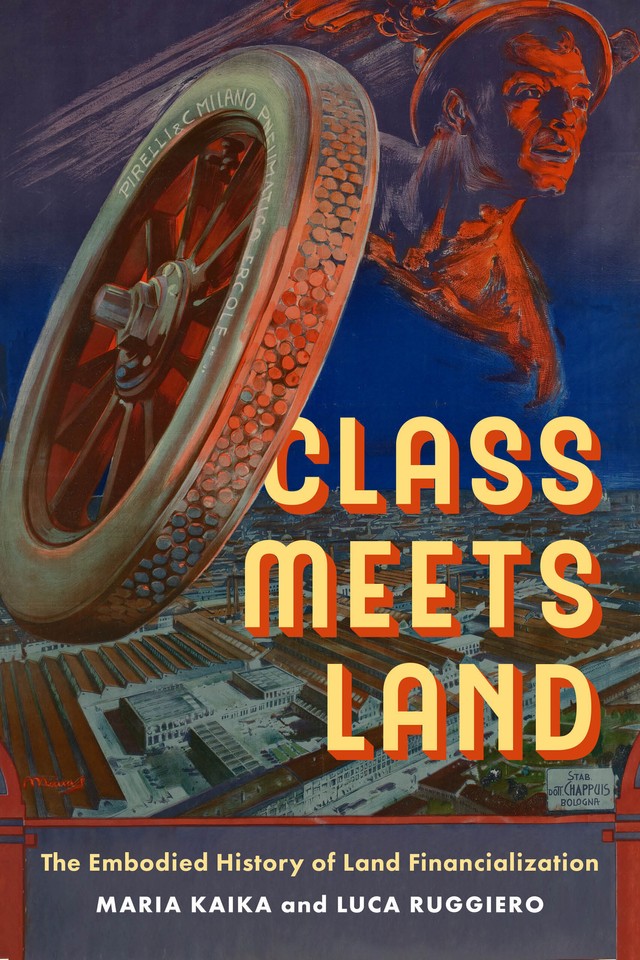
Maria Kaika, Luca Ruggerio
Class Meets Land reveals something seemingly counterintuitive: that nineteenth-century class struggles over land are deeply implicated in the transition to twenty-first-century financial capitalism. Challenging our understanding of land financialization as a recent phenomenon propelled by high finance, Maria Kaika and Luca Ruggiero foreground 150 years of class struggle over land as a catalyst for assembling the global financial constellation. Narrating the close-knit histories of industrial land, industrial elites, and the working class, the authors offer a novel understanding of land financialization as a “lived” process: the outcome of a relentless, socially embodied historical unfolding, in which shifts in land’s material, economic, and symbolic roles impact both local everyday lives and global capital flows.
Introduction: A Timeful Analysis of Class Struggle as a Force of Spatial Production
PART I. CITY OF INDUSTRY: LAND AS THE MEANS TO FORGE A NEW ANTHROPOLOGICAL TYPE OF WORKING
MEN AND WOMEN (1880–1939)
1. Class Meets Land: Turning Flexible Peasantry into Disciplined Industrial Labor (1880–1922)
2. Land as Catalyst for Forging Class Consciousness (1922–1939)
PART II. CITY OF WORKERS: LAND AS SPACE FOR COMMONING AND RADICAL POLITICAL ACTION
(1939–EARLY 1970s)
3. Land as Citadel of Workers’ Anti-Fascist Resistance (1939–1945)
4. “Italy’s Stalingrad” and the “Years of Lead”: Radicalizing Social Claims over
Industrial Land (1945–Early 1970s)
PART III. CITY OF TECHNOLOGY: LAND REVANCHISM AS A MEANS OF TRANSITIONING TO HIGH-TECH
CAPITALISM (EARLY 1970s–early 1990s)
5. Land Revanchism and the Unmaking of the Working Class (Early 1970s–1985)
6. The Eureka Moment: “Discovering” Industrial Land as Asset (1985–Early 1990s)
PART IV. CITY OF FINANCE: LAND AS PURE FINANCIAL ASSET (EARLY 1990s–2020)
7. Land Financialization as a “Lived” Process: From Industrial Commodity Production to
the Production of Land as Financialized Asset (Early 1990s–2000)
8. Decaffeinated Urbanity: Financialized Land as No-Man’s-Land (2000–2020)
Epilogue: Financialization as “Lived” Process: Moving the Field Forward
This book argues that 19th century class struggle over land was the catalyst for assembling our modern global financial constellation, placing battles over land rights as an important factor in the transition to 20th century capitalism.
Maria L.Quintana
This book represents the first scholarly attempt to examine the broad geographical dimensions of the World War II U.S. contract farm labor programs together and in sweeping detail. It views these labor programs relationally and in tandem to reveal how they were co-constituted and mutually understood across time and multiple places, producing a liberal consensus during this period that lives on today. By examining debates among government officials, labor leaders, civil rights activists, and agribusiness employers, it explores how the contractual consent and freedom of 1940s guestworker programs legitimated and extended U.S. racial and imperial domination abroad in the post-World War II period. More broadly, Contracting Freedom pursues the argument that liberalism, as a normative political idea and practice in the modern world, cannot be divorced from empire. In comparing the labor programs across geographic regions, it demonstrates that a global shift in the ideology of liberalism nurtured race and empire both before and after World War II, as numerous states sought to expand control over laborers through anti-imperial and race-neutral measures"
explores how the contractual consent and freedom of 1940s guestworker programs legitimated and extended U.S. racial and imperial domination abroad.
Marianne Debouzy
In 1886, two events occurred that illuminated a dichotomy in the immigrant experience in America: the dedication of the Statue of Liberty, symbol of American freedom, and the Haymarket riot, a landmark in the history of repression in the labor movement. This collection, which grew out of a colloquium commemorating both events, is organized around four broad themes: the changing representation of America as a model republic in the eyes of European workers, the actual experiences of immigrants working in America, immigrant radicalism, and the evolution of republicanism form the 1880s to the 1920s. In this first English language edition, Marianned Debouzy presents essays that look at European immigration to America from a transatlantic perspective. The contributors see immigrants not as uprooted but as vital, interactive links between the old and new worlds.
Comprises essays on European immigration to the United States from the immigrants' point of view
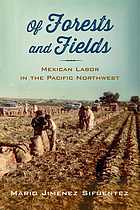
Mario Jimenez Sifuentez
Of Forest and Fields tells the story of the ethnic Mexicans that toiled in the fields, canneries, packing sheds, and forests who helped turn the Pacific Northwest into one of the most productive agricultural regions in the country. The book explores the struggle of Braceros, Tejanos, and Mexican immigrants, to contest their exploitation in various ways. The history of their resistance culminated in the creation of one of the most important farm worker's unions in the country, the Pineros y Campesinos Unidos Noreste (PCUN)"--Provided by publisher
Mexicans that toiled in the fields, canneries, packing sheds, and forests who helped turn the Pacific Northwest into one of the most productive agricultural regions in the country
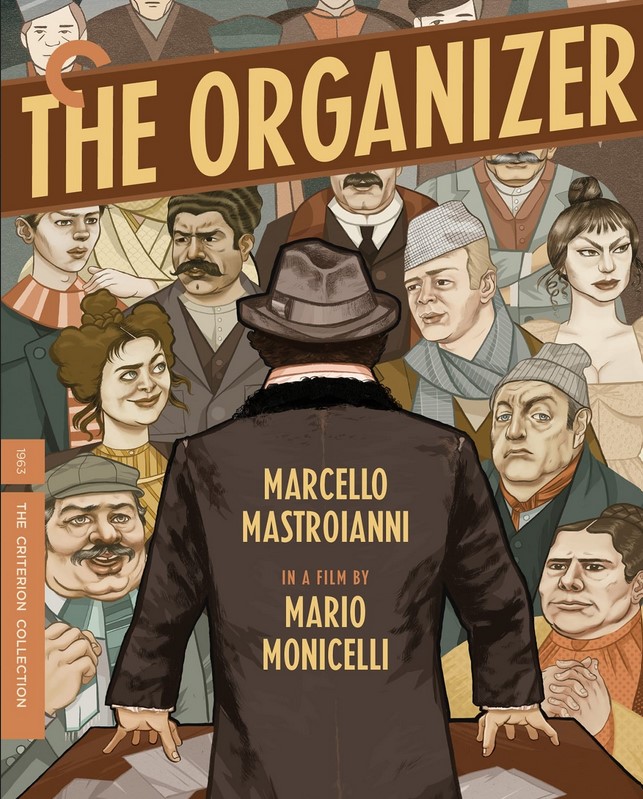
Mario Monicelli
In turn-of-the-twentieth-century Turin, an accident in a textile factory incites workers to stage a walkout. But it’s not until they receive unexpected aid from a traveling professor (Marcello Mastroianni) that they find their voice, unite, and stand up for themselves. This historical drama by Mario Monicelli, brimming with humor and honesty, is a beautiful and moving ode to the power of the people, and features engaging, naturalistic performances; cinematography by the great Giuseppe Rotunno; and a multilayered, Oscar-nominated screenplay by Monicelli, Agenore Incrocci, and Furio Scarpelli.
Consider pairing The Organizer with the following reading about the film’s connection with labor and comparisons with I'm All Right Jack: "I’m All Right Jack and The Organizer: Bread and Roses and a Lot of Laughs" by Michael Sragow.
For longer review see https://laborfilms.org/the-organizer/
Marcello Mastroianni is a traveling professor directing striking textile workers in early 20th century Turin, Italy. Criterion Collecgtion writes: “A moving ode to the power of the people” and the humanity of those trying to overcome inhumane labor conditions, the film highlights the challenge of building social justice coalitions.
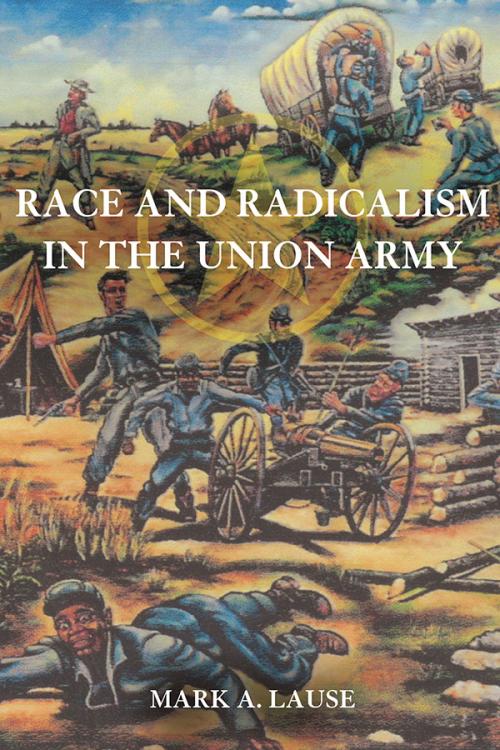
Mark A Lause
In this compelling portrait of interracial activism, Mark A. Lause documents the efforts of radical followers of John Brown to construct a triracial portion of the Federal Army of the Frontier. Mobilized and inspired by the idea of a Union that would benefit all, black, Indian, and white soldiers fought side by side, achieving remarkable successes in the field. Against a backdrop of idealism, racism, greed, and the agonies and deprivations of combat, Lause examines links between radicalism and reform, on the one hand, and racialized interactions among blacks, Indians, and whites, on the other.
Lause examines how this multiracial vision of American society developed on the Western frontier. Focusing on the men and women who supported Brown in territorial Kansas, Lause examines the impact of abolitionist sentiment on relations with Indians and the crucial role of nonwhites in the conflict. Through this experience, Indians, blacks, and whites began to see their destinies as interdependent, and Lause discusses the radicalizing impact of this triracial Unionism upon the military course of the war in the upper Trans-Mississippi.
The aftermath of the Civil War destroyed much of the memory of the war in the West, particularly in the Indian Territory (now Oklahoma). The opportunity for an interracial society was quashed by the government's willingness to redefine the lucrative field of Indian exploitation for military and civilian officials and contractors.
Assessing the social interrelations, ramifications, and military impact of nonwhites in the Union forces, Race and Radicalism in the Union Army explores the extent of interracial thought and activity among Americans in this period and greatly expands the historical narrative on the Civil War in the West.
John Brown's followers; Indians, blacks, and whites began to see their destinies as interdependent, and the radicalizing impact of this triracial Unionism upon the military course of the Civil War in the upper Trans-Mississippi.
Mark A. Bradley
The shocking assassination of a major rival to UMWA president Tony Boyle catalyzed groundbreaking reform in the coal mining industry. In the early hours of New Year's Eve 1969, in the small soft-coal mining borough of Clarksville, Pennsylvania, longtime trade union insider Joseph "Jock" Yablonski and his wife and daughter were brutally murdered in their old stone farmhouse. Seven months earlier, Yablonski had announced his campaign to oust the corrupt president of the United Mine Workers of America (UMWA), Tony Boyle. Boyle had long embezzled UMWA funds, silenced intra-union dissent, and served the interests of Big Coal companies. He was enraged about his opponent's bid to take over. An extraordinary portrait of one of the nation's major unions on the brink of historical change, Blood Runs Coal comes at a time of resurgent labor movements in the United States and the current administration's attempts to bolster the fossil fuel industry. Brilliantly researched and compellingly written, it sheds light on the far-reaching effects of industrial and socioeconomic change that unfold across America to this day"-- Provided by publisher
The shocking assassination of Joseph Yablonski and how it affected reform and organization in the coal industry
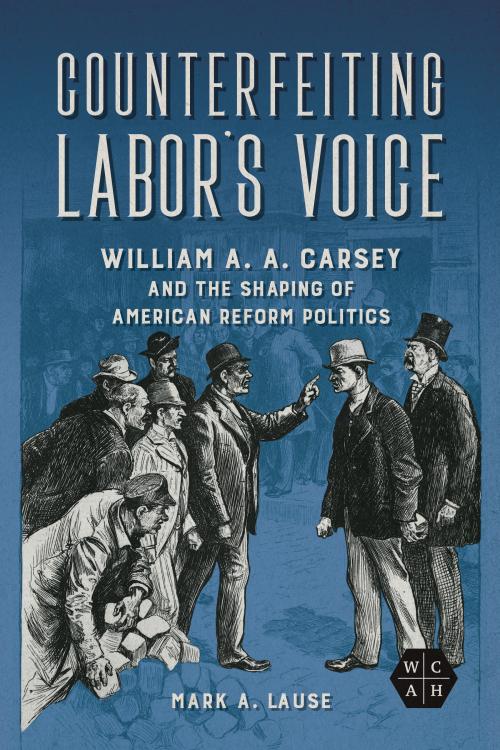
Mark A. Lause
Confidence man and canny operative, charlatan and manipulator--William A. A. Carsey emerged from the shadow of Tammany Hall to build a career undermining working-class political organizations on behalf of the Democratic Party.
Mark A. Lause's biography of Carsey takes readers inside the bare-knuckle era of Gilded Age politics. An astroturfing trailblazer and master of dirty tricks, Carsey fit perfectly into a Democratic Party that based much of its post-Civil War revival on shattering third parties and gathering up the pieces. Lause provides an in-depth look at Carsey's tactics and successes against the backdrop of enormous changes in political life. As Carsey used a carefully crafted public persona to burrow into unsuspecting organizations, the forces he represented worked to create a political system that turned voters into disengaged civic consumers and cemented America's ever-fractious two-party system"-- Provided by publisher
akes readers inside the bare-knuckle era of Gilded Age politics
Mark A. Lause
Monumental and revelatory, Free Labor explores labor activism throughout the country during a period of incredible diversity and fluidity: the American Civil War.
Mark A. Lause describes how the working class radicalized during the war as a response to economic crisis, the political opportunity created by the election of Abraham Lincoln, and the ideology of free labor and abolition. His account moves from battlefield and picket line to the negotiating table, as he discusses how leaders and the rank-and-file alike adapted tactics and modes of operation to specific circumstances. His close attention to women and African Americans, meanwhile, dismantles notions of the working class as synonymous with whiteness and maleness.
In addition, Lause offers a nuanced consideration of race's role in the politics of national labor organizations, in segregated industries in the border North and South, and in black resistance in the secessionist South, creatively reading self-emancipation as the largest general strike in U.S. history.
A major interpretation of the Civil War as shaping the US working class

Mark A. Lause
Enlisting the dead to change the world of the living. Often dismissed as a nineteenth-century curiosity, spiritualism influenced the radical social and political movements of its time. Believers filled the ranks of the Free Democrats, agitated for land and monetary reform, fought for abolition, and held egalitarian leanings that found powerful expression in campaigns for gender and racial equality. In Free Spirits , Mark A. Lause considers spiritualism as a political and cultural force in Civil War-era America. Lause reveals the scope, spread, and influence of the movement, both in its links to reformist causes and its ability to amplify previously marginalized voices. Rooting spiritualism's appeal in the crises of the time, Lause considers how spiritualist influences, through the distillation of the war, forced reassessments of the question of Radical Republicanism and radicalism in general. He also delves into unexplored areas such as the movement's role in Lincoln's reelection and the relationship between Native Americans and spiritualists.
Civil War era worker radicals
Museum/Exhibits
Tours
Maps
Digital Projects
Organizations
Sites
Film/Video
Audio/Interview
Podcast/Program
Text/Document
Image
Graphs/Data
Timeline
Southwest
West
Midwest
Southeast
Northeast
Mexico
Canada
Global
Books
Teaching
Lectures
Digital Archives
Journals
Bibliographies
Topic Intro