


Collections
Library
Type
Region
Coverage:
-
Published:
-

Mark A. Lause
Lause argues that the printers, who organized to combat their immediate concerns, were also part of a larger network connecting other skilled workers into associations that not only supported their societies but also helped to shape their ideology.
argues that the printers, who organized to combat their immediate concerns, were also part of a larger network connecting other skilled workers.

Mark Aldrich
In 1907, American coal mines killed 3,242 men in occupational accidents, probably an all-time high both for the industry and for all laboring accidents in this country. In December alone, two mines at Monongah, West Virginia, blew up, killing 362 men. Railroad accidents that same year killed another 4,534. At a single South Chicago steel plant, 46 workers died on the job. In mines and mills and on railroads, work in America had become more dangerous than in any other advanced nation. Ninety years later, such numbers and events seem extraordinary. Although serious accidents do still occur, industrial jobs in the United States have become vastly and dramatically safer.
In Safety First, Mark Aldrich offers the first full account of why the American workplace became so dangerous, and why it is now so much safer. Aldrich, an economist who once served as an OSHA investigator, first describes the increasing dangers of industrial work in late-nineteenth-century America as a result of technological change, careless work practices, and a legal system that minimized employers' responsibility for industrial accidents. He then explores the developments that led to improved safety--government regulation, corporate publicizing of safety measures, and legislation that raised the costs of accidents by requiring employers to pay workmen's compensation. At the heart of these changes, Aldrich contends, was the emergence of a safety ideology that stressed both worker and management responsibility for work accidents--a stunning reversal of earlier attitudes.
1. Perilous Business: The Beginnings of Railroad Work Safety, 1850-1900 --
2. Needless Perils: Toward the Regulation of Coal Mine Safety, 1870-1910 --
3. Manufacturing Dangers: The Development of the Work Safety Movement, 1880-1925 --
4. A Management Responsibility: The Business of Manufacturing Safety, 1906-1939 --
5. Combating Collisions and Other Horrors Railroad Safety, 1900-1939 --
6. Less Blood on the Coal, More Despair in the Homes of the Miners: Safety in the Coal Fields, 1910-1940 --
7. Conclusion: Economic Change and Work Safety, 1870-1939 --
App. 1. Steam Railroad Injury and Fatality Rates, 1880-1939 --
App. 2. Coal and Metal Mine Injury and Fatality Rates, 1870-1939 --
App. 3. Manufacturing and Economywide Injury and Fatality Rates, 1870-1939.
first full account of why the American workplace became so dangerous, and why it is now so much safer.

Mark Bessinger
Beissinger traces the rise and decline of administrative strategies throughout Soviet history, focusing on the roles of managerial technique and disciplinary coercion. He argues that over-bureaucratization leads to a succession of national crises of effectiveness, which political leaders use to challenge the power of entrenched elites and to consolidate their rule. It also encourages leaders to resort to radical administrative strategies—technocratic utopias, mass mobilization, and discipline campaigns—and gives rise to a cycling syndrome, as similar problems and solutions reappear over time. Beissinger gives a new perspective and interpretation of Soviet history through the prism of organizational theory. He also provides a comprehensive history of the Soviet rationalization movement from Lenin to Gorbachev that describes the recurring attractions and tensions between politicians and management experts, as well as the reception accorded Western management techniques in the Soviet factory and management-training classroom.
Traces the rise and decline of administrative strategies inspired by capitalist management science throughout Soviet history
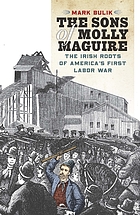
Mark Bulik
Traces the rise of the Molly Maguires from Ireland's devastating potato famine to the turbulent dawn of the American labor movement. With a heavy emphasis on the folk culture that underpinned the Mollies, the book documents the group's Civil War rebirth in Pennsylvania, and its lasting influence" --
how a thoroughly industrialized forest was created out of a degraded landscape, uncovers the ways in which firms tapped into informal labor markets and existing inequalities of race and class to fashion a system for delivering wood to the mills,
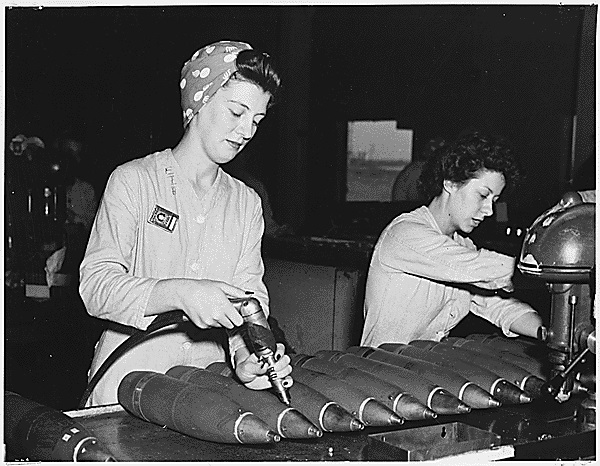
Mark D. Caitlin
This US Government informational film advising male supervisors on how best to enforce safety rules for female workers, focusing on "Mary's" failure to wear a mandated safety cap near a drill press. Consider pairing this film with lesson plans surrounding gendered labor, such as the readings and documents provided by Alexander Street's "Women and Social Movements in the United States, 1600-2000".
A brief clip from the U.S. Government film Supervising Women Workers.

Mark Erlich
The construction trades once provided unionized craftsmen a route to the middle class and a sense of pride and dignity often denied other blue-collar workers. Today, union members still earn wages and benefits that compare favorably to those of college graduates. But as union strength has declined over the last fifty years, a growing non-union sector offers lower compensation and more hazardous conditions, undermining the earlier tradition of upward mobility. Revitalization of the industry depends on unions shedding past racial and gender discriminatory practices, embracing organizing, diversity, and the new immigrant workforce, and preparing for technological changes. Mark Erlich blends long-view history with his personal experience inside the building trades to explain one of our economy's least understood sectors. Erlich's multifaceted account includes the dynamics of the industry, the backdrop of union policies, and powerful stories of everyday life inside the trades. He offers a much-needed overview of construction's past and present while exploring roads to the future"-- Provided by publisher
A sweeping study of the past and present of the construction industry, with special attention paid to how recent developments have affected workers
Mark Fallon, Battle of Homestead Foundation
The Mark Fallon Collection is a labor related collection held by the Battle of Homestead Foundation Archives. The collection focuses primarily on the Mon Valley area with specific interest in local history. The collection includes photograph slides, newspapers, research material, projectors, and photographs. The collection is primarily made up of photographs and slides.
Mark Fallon is a life-long resident of the Steel Valley and an avid archivist of labor history. He graduated from University of Pittsburgh, is a U.S. Army veteran and worked at U.S. Steel’s Clairton plant for 14 years. He retired in 2018 from the Steel Valley School District where he taught middle school history for 14 years. Mark currently serves on boards of the Homestead Cemetery Committee, The Dragons Den and the Munhall Parks and Recreation Board. He is a member of the Council for Munhall Borough.
Mark Fallon Collection-archives and artifacts -digital
Mark Kagan
Free download at site. The fifty-year long neoliberal era has been marked by working-class reverses and moribund unions. Grounded in the author’s own experiences as a transit worker participating in a decades-long effort to fight management and austerity economics, Take Back the Power presents a new perspective on what activists can do to revitalize the labor movement. Marc Kagan uses his union’s story to illuminate key dilemmas their efforts face, among them: fight the boss or fight the union to fight the boss; the tension between leadership and participatory democracy; and the costs and benefits of risk aversion. This book encourages us to think introspectively about the choices we make as we attempt to build a better world.
Grounded in the author’s own experiences as a transit worker, this book presents a new perspective on what activists can do to revitalize the labor movement
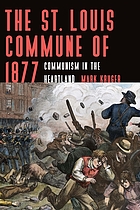
Mark Kruger
Following the Civil War, large corporations emerged in the United States and became intent on maximizing their power and profits at all costs. Political corruption permeated American society as those corporate entities grew and spread across the country, leaving bribery and exploitation in their wake. This alliance between corporate America and the political class came to a screeching halt during the Great Railroad Strike of 1877, when the U.S. workers in the railroad, mining, canal, and manufacturing industries called a general strike against monopoly capitalism and brought the country to an economic standstill. In The St. Louis Commune of 1877 Mark Kruger tells the riveting story of how workers assumed political control in St. Louis, Missouri. Kruger examines the roots of the St. Louis Commune-focusing on the 1848 German revolution, the Paris Commune, and the First International. Not only was 1877 the first instance of a general strike in U.S. history; it was also the first time workers took control of a major American city and the first time a city was ruled by a communist party"-- Provided by publisher
examines the roots of the St. Louis Commune-focusing on the 1848 German revolution, the Paris Commune, and the First International.
Mark Larson
From nurses and teachers to wildland firefighters and funeral directors--an intimate, honest, and illuminating collection of interviews that reveal what it's like to work in America at this historic and volatile moment in time"-- Provided by publisher
what it's like to work in America at this historic and volatile moment in time
Mark Lause
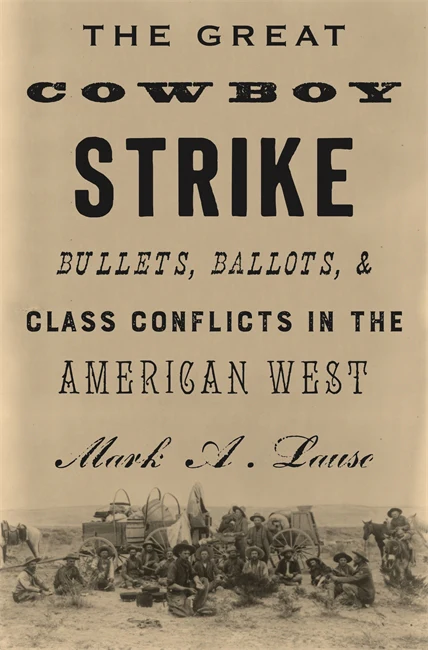
Although later made an icon of “rugged individualism,” the American cowboy was a grossly exploited and underpaid seasonal worker, who waged a series of militant strikes in the generally isolated and neglected corners of the Old West. Mark Lause examines those neglected labour conflicts, couching them in the context of the bitter and violent “range wars” that broke out periodically across the region, and locating both among the political insurgencies endemic to the American West in the so-called Gilded Age.
"Focusing on industrial workers in the Northeast and Chicago, U.S. labor history largely ignores the rural proletariat, leaving the impression that none such existed in the vast expanse of the cattle and agribusiness industries west of the Mississippi. Historian Mark Lause has turned that erasure upside down with this meticulously researched and beautifully written history of the of cattle worker's militancy and organizing. Although the 1880s cowboy strikes are at the heart of the story, Lause takes the history from the Civil War's Missouri Confederate guerrillas and ethic-cleansing Texas Rangers and the genocidal campaigns of the Army of the West against the Plains peoples of the bison and the Apaches, into the 20th century and the organized revolt of tenant farmers in Indian Territory in opposition to conscription for World War I, the 1917 Green Corn Rebellion. Both these proletarian actors, cowboys and landless farmers, were made up of not only the white cowboys-as-gunslingers of Hollywood imagination, but Black, Indian, Mexican, and Anglo."---Roxanne Dunbar-Ortiz
An analysis of the American cowboy as an exploited laborer, couched in the context of the bitter and violent “range wars” that broke out periodically across the West
Mark Lause
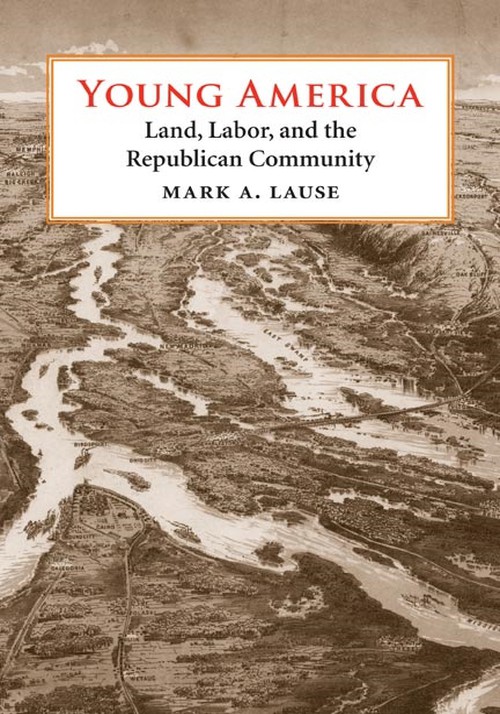
The National Reform Association (NRA) was an antebellum land reform movement inspired by the shared dream of a future shaped by egalitarian homesteads. Mark A. Lause's Young America argues that it was these working people's interest in equitable access to the country's most obvious asset--land--that led them to advocate a federal homestead act granting land to the landless, state legislation to prohibit the foreclosure of family farms, and antimonopolistic limitations on land ownership. Rooting the movement in contemporary economic structures and social ideology, Young America examines this urban and working-class "agrarianism," demonstrating how the political preoccupations of this movement transformed socialism by drawing its adherents from communitarian preoccupations into political action. The alliance of the NRA's land reformers and radical abolitionists led unprecedented numbers to petition Congress and established the foundations of what became the new Republican Party, promising "Free Soil, Free Labor, Free Men."
This history of antebellum America examines urban and working class agrarianism
Mark W. Robbins
Middle Class Union" argues that the period following World War I was a pivotal moment in the development of middle-class consumer politics in the 20th century. At this time, middle-class Americans politically mobilized to define for society what was fair in the growing consumer marketplace. They projected themselves as guardians of the producerist values of hard work, honesty, and thrift, and called for greater adherence to them among the working and elite classes. In this era and in later periods, they flexed their muscles as consumers, and claimed to defend the values of the nation. Combining social history with interdisciplinary approaches to the study of consumption and symbolic space, Middle Class Union illustrates how acts of consumption, representations of the middle class in literary, journalistic, and artistic discourses, and ground-level organizing combined to enable white-collar activists to establish themselves as both the middle class and the backbone of the nation. This book contributes to labor history by examining the nexus of class and consumption to show how many white-collar workers drew on their consumer identity to express an anti-labor politics, later facilitating the struggles of unions throughout the post-World War I years. It also contributes to political history by emphasizing how these middle-class activists laid important groundwork for both 1920s business conservatism and New Deal liberalism. They exerted their political influence well before the post-World War II period, when a self-interested and powerful middle-class consumer identity is more widely acknowledged to have taken hold
middle-class consumer politics in the 20th century

Mark W. Weber, Stephen H. Paschen
Alice and Staughton Lynd have devoted their lives to the struggle for social justice. Carl Mirra began the history of the Lynds with his biography, Admirable Radical: Staughton Lynd and Cold War Dissent, 1945--1970 (The Kent State University Press, 2010). Side by Side picks up the Lynds' story as they move to Youngstown, Ohio, to begin a new chapter in their lives. Throughout their narrative, authors Mark Weber and Stephen Paschen examine the idea of accompaniment, a form of political activism that differs from the traditional strategies used by labor and community organizers. Rather than moving from fight to fight, the Lynds lived within the community in need, helping steelworkers and residents cope with the devastating closures of the major steel mills in Youngstown and the Mahoning Valley.
Working with clergy, laborers, and civic leaders, Staughton Lynd advanced the idea of a worker-community-owned steel mill that would provide employment for some of the thousands of workers whose jobs had been lost. The dramatic if unsuccessful attempt to launch a cooperatively owned manufacturing enterprise was the first of a number of efforts by the Lynds to put their knowledge and experience at the service of those who have no voice. Quakers Alice and Staughton Lynd worked in Central America and Israel, where they championed the rights of Palestinian Arabs living in the West Bank. They took up the cause of prisoners' rights following the April 1993 Lucasville, Ohio, prison uprising--the longest such rebellion in American history--working to improve the living conditions of the five inmates who were convicted of leading the rebellion. Together with Jules Lobel of the Center for Constitutional Rights, the Lynds filed suit on behalf of death row inmates who were kept in solitary confinement in Ohio's prisons. Their lawsuit contributed to a landmark decision that improved living conditions for inmates in solitary confinement and established that prisoners have due process rights that have to be observed before they can be sent to solitary confinement
a couple who took up the causes of worker rights
Marla Andrea Ramirez
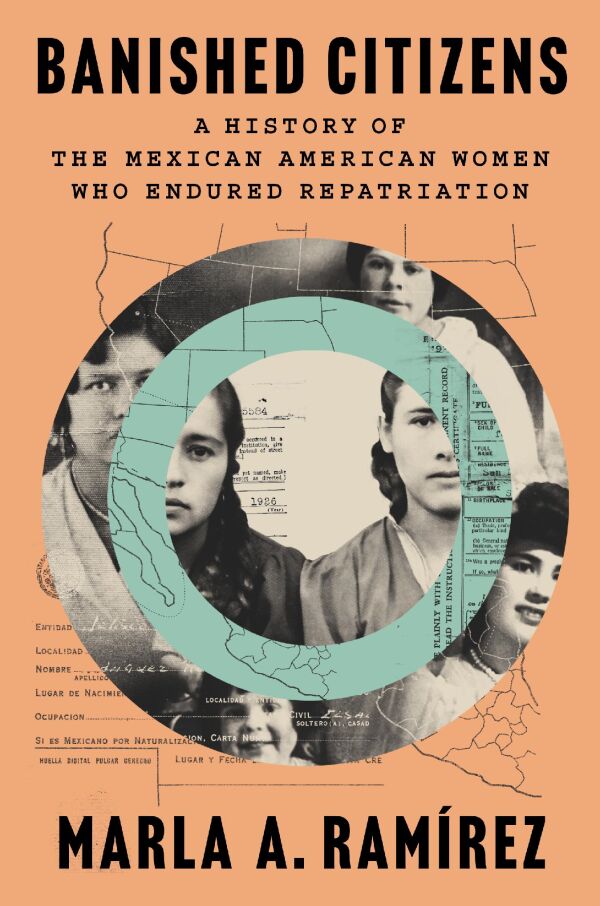
From 1921 to 1944, approximately one million ethnic Mexicans living in the United States were removed across the border to Mexico. What officials called “repatriation” was in fact banishment: 60 percent of those expelled were US citizens, mainly working-class women and children whose husbands and fathers were Mexican immigrants. Drawing on oral histories, transnational archival sources, and private collections, Marla A. Ramírez illuminates the lasting effects of coerced mass removal on three generations of ethnic Mexicans.
Ramírez argues that banishment served interests on both sides of the border. In the United States, the government accused ethnic Mexicans of dependence on social services in order to justify removal, thereby scapegoating them for post–World War I and Depression-era economic woes. In Mexico, meanwhile, officials welcomed returnees for their potential to bolster the labor force. In the process, all Mexicans in the United States—citizens and undocumented immigrants alike—were cast as financially burdensome and culturally foreign. Shedding particular light on the experiences of banished women, Ramírez depicts the courage and resilience of their efforts to reclaim US citizenship and return home. Nevertheless, banishment often interrupted their ability to pass on US citizenship to their children, robbed their families of generational wealth, and drastically slowed upward mobility. Today, their descendants continue to confront and resist the impact of these injustices—and are breaking the silence to ensure that this history is not forgotten.
A wrenching account of expulsion and its afterlives, Banished Citizens illuminates the continuing social, legal, and economic consequences of a removal campaign still barely acknowledged in either Mexico or the United States.
A wrenching account of expulsion and its afterlives, Banished Citizens illuminates the continuing social, legal, and economic consequences of a removal campaign still barely acknowledged in either Mexico or the United States.
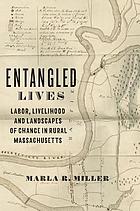
Marla Miller
What was women's work truly like in late eighteenth-century America, and what does it tell us about the gendered social relations of labor in the early republic? In Entangled Lives, Marla R. Miller examines the lives of Anglo-, African, and Native American women in one rural New England community-Hadley, Massachusetts-during the town's slow transformation following the Revolutionary War. Peering into the homes, taverns, and farmyards of Hadley, Miller offers readers an intimate history of the working lives of these women and their vital role in the local economy.
Miller, a longtime resident of Hadley, follows a handful of eighteenth-century women working in a variety of occupations: domestic service, cloth making, health and healing, and hospitality. She asks about the social openings and opportunities this work created-and the limitations it placed on ordinary lives. Her compelling stories about women's everyday work, grounded in the material culture, built environment, and landscapes of rural western Massachusetts, reveal the larger economic networks in which Hadley operated and the subtle shifts that accompanied the emergence of the middle class in that rural community. Ultimately, this book shows how work differentiated not only men and woman but also race and class as Miller follows young, mostly white women working in domestic service, African American women negotiating labor in enslavement and freedom, and women of the rural gentry acting as both producers and employers
how work differentiated not only men and woman but also race and class
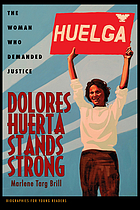
Marlene Targ Brill
Dolores Huerta Stands Strong follows Huerta's life from the mining communities of the Southwest where her father toiled, to the vineyards and fields of California, to the present day. As she advocated for farmworkers, Mexican American immigrants, women, and LGBTQ population rights, Dolores earned the nation's highest honors and found her voice
follows Huerta's life from the mining communities of the Southwest to the vineyards and fields of California
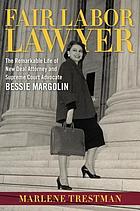
Marlene Trestman
Fair Labor Lawyer is an engaging and insightful narrative of the extraordinary life of Bessie Margolin - the self-styled reluctant feminist who became the architect of the U.S. Labor Department's Equal Pay Act enforcement and a founder of the National Organization for Women. Thanks to Marlene Trestman's vivid retelling of the relationships and circumstances that shaped Bessie's life, readers will come away feeling they knew her well, cheering her successes and mourning her losses right along with her. This book is a welcome addition to the body of knowledge we have (which is still far too small) about all of the women who created the successes and advances of the second wave of the U.S. women's movement."--Jacket
architect of the U.S. Labor Department's Equal Pay Act enforcement and a founder of the National Organization for Women
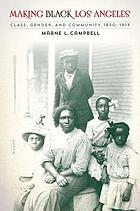
Marne L. Campbell
Black Los Angeles started small. The first census of the newly formed Los Angeles County in 1850 recorded only 12 Americans of African descent alongside a population of more than 3,500 Anglo Americans. Over the following 70 years, however, the African American founding families of Los Angeles forged a vibrant community within the increasingly segregatedand stratified city. In this book, historian Marne L. Campbell examines the intersections of race, class, and gender to produce a social history of community formation and cultural expression in Los Angeles
intersections of race, class, and gender to produce a social history of community formation and cultural expression in Los Angeles
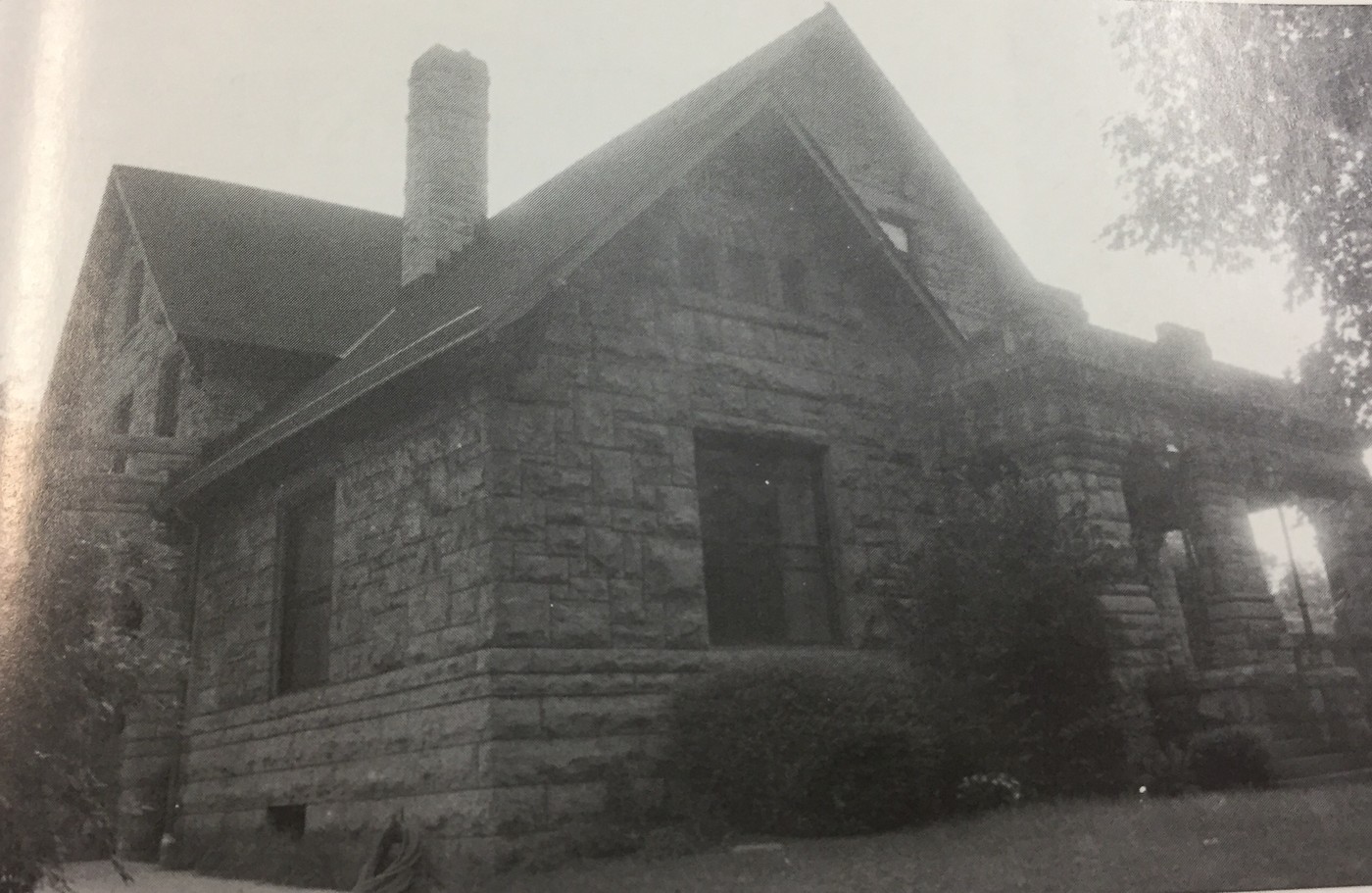
Marshall University, The CLIO
This tour will lead you to several sites of the Hanging Rock iron region of the late 19th century. This region was the most productive for the United States at that time and produced iron for the civil war.
The tour will first take you to the Lawrence County Historical Society and Museum, where you can see artifacts and information on the history of the iron industry of Lawrence County.
You will then go to the Nannie Kelly Wright house, which was home to the second richest woman in the world at the time, Nannie Kelly Wright.
After the Nannie Kelly Wright house, you will be guided to four different iron ore furnaces of the region. Each site and entry will have their own history and backstory, with the Olive Furnace entry containing an interview with the son of a local historian that worked to get the Olive Furnace its historical marker.
This Tour is a Driving or Biking Tour.This tour will lead you to several sites of the Hanging Rock iron region of the late 19th century. This region was the most productive for the United States at that time and produced iron for the civil war.
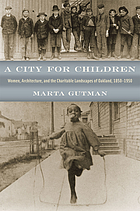
Marta Gutman
American cities are constantly being built and rebuilt, resulting in ever-changing skylines and neighborhoods. While the dynamic urban landscapes of New York, Boston, and Chicago have been widely studied, there is much to be gleaned from west coast cities, especially in California, where the migration boom at the end of the nineteenth century permanently changed the urban fabric of these newly diverse, plural metropolises. In A City for Children, Marta Gutman focuses on the use and adaptive reuse of everyday buildings in Oakland, California, to make the city a better place for children. She introduces us to the women who were determined to mitigate the burdens placed on working-class families by an indifferent industrial capitalist economy. Often without the financial means to build from scratch, women did not tend to conceive of urban land as a blank slate to be wiped clean for development. Instead, Gutman shows how, over and over, women turned private houses in Oakland into orphanages, kindergartens, settlement houses, and day care centers, and in the process built the charitable landscape--a network of places that was critical for the betterment of children, families, and public life. The industrial landscape of Oakland, riddled with the effects of social inequalities and racial prejudices, is not a neutral backdrop in Gutman's story but an active player. Spanning one hundred years of history, A City for Children provides a compelling model for building urban institutions and demonstrates that children, women, charity, and incremental construction, renovations, alterations, additions, and repurposed structures are central to the understanding of modern cities
introduces the women who were determined to mitigate the burdens placed on working-class families by an indifferent industrial capitalist economy.
Martha Gonzalez
Gonzalez's manuscript uses the theoretical underpinnings of Chicana and African-American feminist intellectual history and epistemology to create a new understanding of the work done by Chicana artists and activists (or artivistas) from East Los Angeles from 1995 to the present. Gonzalez is a well-known musician from this community herself and, with this background, is especially focused on the ways the arts, particularly music, have created community engagement. Gonzalez blends her own story as a Mexican immigrant's daughter in California who went on to become a Grammy Award-winning musician (as part of the band Quetzal) into her work as an activist and her career as a scholar"-- Provided by publisher
a new understanding of the work done by Chicana artists and activists (or artivistas) from East Los Angeles from 1995 to the present
Martin J. Sklar
Through an examination of the judicial, legislative, and political aspects of the antitrust debates in 1890 to 1916, Sklar shows that arguments were not only over competition versus combination, but also over the question of the relations between government and the market and the state and societyPreface
List of abbreviations used in the footnotes
1. Introduction: corporate capitalism and corporate liberalism
Part I. The Market and the Law:
2. Metamorphosis in property and thought
3. The corporate reconstruction and the antitrust law
Part II. Politics: 4. The politics of antitrust
5. Two progressive presidents
6. Woodrow Wilson and the corporate-liberal ascendancy
7. Conclusion: fathers and prophets
Bibliography
antitrusts debates did not arise because of competition versus combination, but because of the larger question of the proper relations between government and the market.
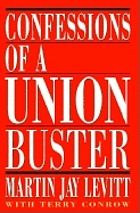
Martin Jay Levitt
"A former union buster exposes the dirty tricks that elevated him to the top of his profession and that have transformed the war on organized labor into a billion-dollars-per-year industry. This book is the story of a man who has decided to come in out of the cold, to clear his conscience, and to share the hard lessons he has learned." -- Amazon
A former union buster exposes the dirty tricks that elevated him to the top of his profession.
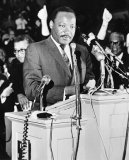
Martin Luther King Jr.
Dr. Martin Luther King, Jr. speaking in support of striking AFSCME sanitation workers at Mason Temple, Memphis, 4/3/68
MLK speaking in support of striking AFSCME sanitation workers
Museum/Exhibits
Tours
Maps
Digital Projects
Organizations
Sites
Film/Video
Audio/Interview
Podcast/Program
Text/Document
Image
Graphs/Data
Timeline
Southwest
West
Midwest
Southeast
Northeast
Mexico
Canada
Global
Books
Teaching
Lectures
Digital Archives
Journals
Bibliographies
Topic Intro