


Collections
Library
Type
Region
Coverage:
-
Published:
-
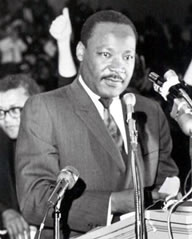
Martin Luther King Jr.
Dr. Martin Luther King, Jr. delivered this speech in support of the striking sanitation workers at Mason Temple in Memphis, TN on April 3, 1968 — the day before he was assassinated. License to reproduce this speech granted by Intellectual Properties Management, 1579-F Monroe Drive, Suite 235, Atlanta, Georgia 30324, as manager for the King Estate. Write to IPM re: copyright permission for use of words and images of Martin Luther King, Jr.
a speech delivered in support of striking sanitation workers in Memphis

Martin Ritt
Fed up with the conditions where she works, Norma Rae (Sally Field, in an Academy Award-winning performance) takes a stand against the owners of a textile mill. Having worked long hours for little pay in an unsafe factory, when a union representative named Reuben Warshowsky (Ron Leibman) arrives on the scene, Norma Rae soon joins his cause. From inside the factory, Norma Rae pushes for unionization, but her efforts lead to tension at work and at home. Having recently married a former co-worker, Sonny Webster (Beau Bridges), Norma Rae’s dedication to the union takes a toll on their entire family and they all fear her efforts may be in vain. Watch as one woman tries to improve not only her own situation, but also that of her co-workers and the community at large. Consider pairing this film with Pam McDonald's Leadership in Cinema viewing guide entitled "Norma Rae."
A film based on the story of Crystal Lee Sutton, a union organizer who became famous for her role in the J.P. Stevens controversy when she was fired from the company's plant in Roanoke Rapids, North Carolina and began working with Amalgamated Clothing and Textile Workers Union (ACTWU) organizers.

Martin Ritt, Director
Set in late 19th century Carbon County, Pennsylvania, this social drama tells the story of an undercover detective sent to a coal mining community to expose a secret society of Irish-American miners battling exploitation at the hand of the owners. Partly inspired by a true story, the film portrays the rebellious leader of the Molly Maguires and his will to achieve social justice. -Wikipedia
Hollywood depiction of the Irish immigrant miners known as Molly Maguires, fighitng the cruely of the mining company with sabotage and murder. Pinkerton detective story.
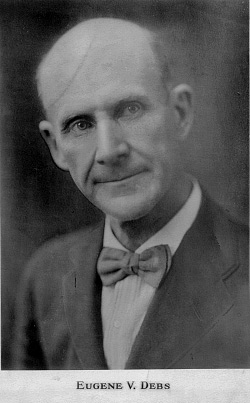
Marxists.org
Table of Contents organized chronologically, with primary source items organized this way.
Digital archive of printed writings, organized chronologically
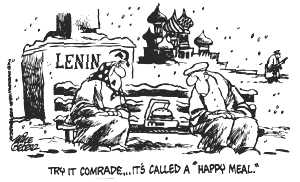
Marxists.org
This compilation contains editorial cartoons listed alphabetically by artist. It contains major cartoonists from early in the 20th century such as Art Young, William Gropper, and Robert Minor as well as lesser known artists and contemporary cartoonists.
ditorial cartoons listed alphabetically by artist.
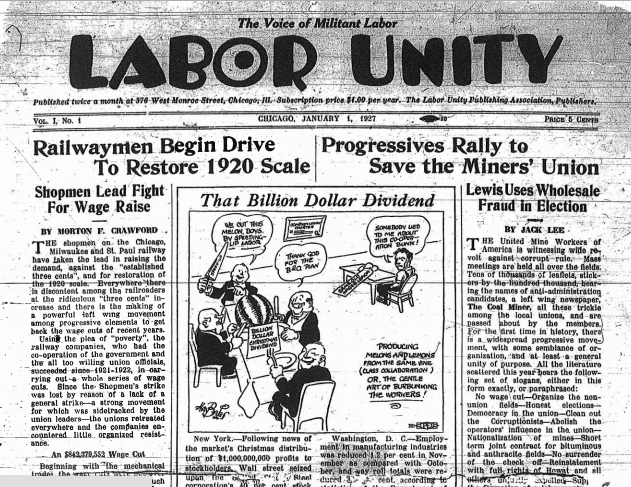
Marxists.org
Trade Union Unity League's publication, 1928-1935; this is 2 years of the publication, from 1927-1928; the rest is not yet digitzed. The TUUL was an industrial union umbrella organization of the Communist Party of the United States (CPUSA) between 1929 and 1935. The group was the American affiliate to the Red International of Labor Unions. It was the result of the Communist International’s Third Period policy, which dictated that affiliated Communist Parties pursue a strategy of dual unionism and thus abandon attempts to “bore from within” existing trade unions.
The TUUL had its roots in an earlier Communist Party foray into the trade union movement, the Trade Union Educational League (1920-1929), headed by William Z. Foster. This earlier organization sought to pursue a “boring from within” tactic inside the previously existing unions, inside and outside of the American Federation of Labor — seeking to organize left wing “militants” within these unions with a view to transforming the unions themselves into revolutionary instruments.
Despite his lifelong enmity towards dual unionism, Foster remained at the helm of the TUEL organization when it changed its name and tactics at its 1929 convention. This change of line was externally driven, Foster explained to his associate from the United Mine Workers of America, Powers Hapgood at the time of the change, declaring “Powers, the Communist Party decided that policy. As a good Communist I just have to go along."
a publication of the Communist Party's Trade Union Unity League
Marxists.org
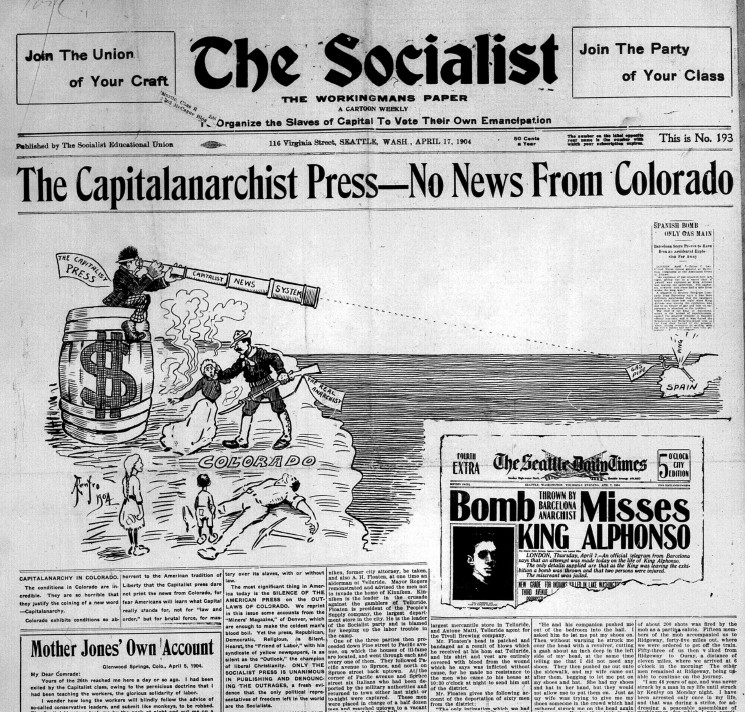
Editor was the radical Hermon Titus, who started the paper in connection with the Debs campaign of 1900 and kept it rolling until 1910, moving at one point to Toledo, Ohio and back home again. Micro-filmed by University of Washington (complete for early issues) and State Historical Society of Wisconsin (complete for later issues) — complete run when the filmings are considered together. First several years have been digitized, later years have not. After formation of the SPA, became the more or less official organ of the left wing. --from Marxist.org
digitized Seattle, Washington socialist paper, labor stories covered

Mary Anne Trasciatti
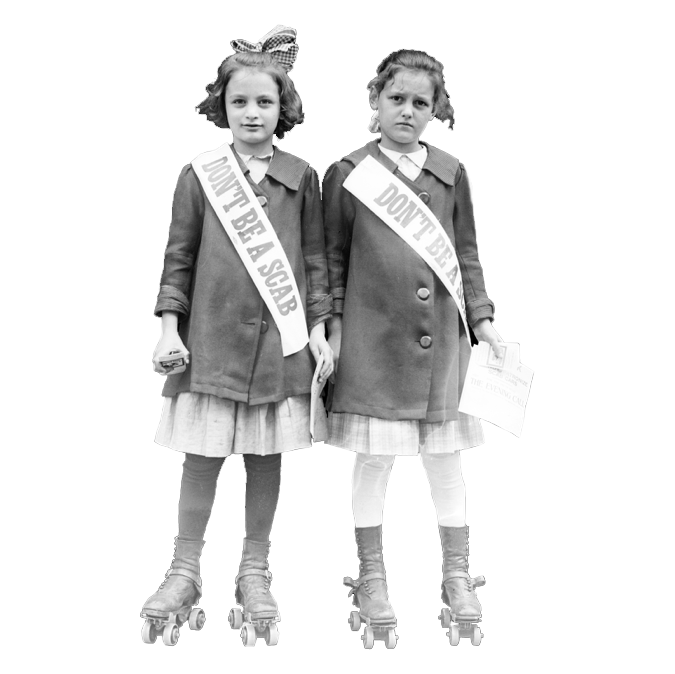
Elizabeth Gurley Flynn was involved in almost every major campaign of the U.S. Left in the first two thirds of the twentieth century. An outstanding orator, writer, and tactician, Flynn is one of the most important figures in the history of the American labor movement. Inspired by the Irish freedom struggle and appalled by the exploitation and grinding poverty she saw around her, she devoted her life to the advancement of civil liberties. Here, Mary Anne Trasciatti traces Flynn’s personal and political life to explore the broader social issues of a fraught era.
Born in 1890, Flynn began her activist career by joining the Industrial Workers of the World (IWW) when she was just sixteen, and she ended it as the first female chair of the American Communist Party, a position she held from 1961 until her death in 1964. In the intervening years she organized workers into unions, led strikes, championed women’s rights, supported anti-imperialist movements around the globe, protested deportation, advocated for prison reform, and fought for Black liberation. Above all, she showed absolute devotion to workers and their struggles.
Slandered as an “un-American” in the anticommunist fervor of the 1940s and 1950s, Flynn was eventually ousted from the very organization she helped found, the American Civil Liberties Union, and imprisoned for two years. Though her own movement abandoned her, her commitment to the cause never wavered. This stirring biography illuminates Flynn’s inspiring life and worldview and returns her to her rightful place at the heart of labor and civil liberties history.
Introduction
1 Strategizing from the Soapbox: Free Speech Fights in Missoula and Spokane
2 The Fight for Free Speech in Paterson, New Jersey
3 War and Civil Liberties: An Oxymoron?
4 From Civil Liberties Icon to Communist Menace
5 From the Little Red Scare to the Big Red Scare
6 The Smith Act Trials of Communists in New York
7 The Struggle Continues: Flynn’s Final Years
Epilogue
Acknowledgments
Notes
Index
A biography of IWW organizer and ACLU founder Elizabeth Gurley Flynn which uses her life to explore the broader social issues of a fraught era
Mary Anne Trasciatti
“Lots of hard work, lots of collaboration, and a long horizon.” These, according to Mary Anne Trasciatti, Professor of Writing and Rhetoric at Hofstra University, are the keys to erecting a public art memorial from the ground up in New York City. In this episode, Trasciatti speaks about the Reframing the Skymemorial for the Triangle Shirtwaist Factory Fire of 1911.
As president of the Remember the Triangle Fire Coalition, Trasciatti and her colleagues—all volunteers—dialogued with government and outside organizations to secure grants, donations, and permits. Her detailed and comprehensive summary offers a window into the public memorial creation process in New York City.
This episode features audio from the program “Who Decides? The History and Future of Monument Creation in New York City,” held on October 9, 2018, in the Segal Theatre at the CUNY Graduate Center. This program was the second event in the series “Difficult Histories/Public Spaces: The Challenge of Monuments in New York City and the Nation,” sponsored by the American Social History Project/Center for Media and Learning, The Gotham Center for New York City History, and the CUNY Public History Collective. The series is supported by a grant from Humanities New York and the National Endowment for the Humanities.
explores the keys to erecting a public art memorial from the ground up in New York City

Mary Battle, Slave Voyages
An online exhibition series about the history of slavery, plantations, and the trans-Atlantic slave trade from the Atlantic World to Charleston and the South Carolina Lowcountry. Exhibitions include: Atlantic World Context and Establishing Slavery in the Carolina Lowcountry. Published 2013. African Passages, Lowcountry Adaptations (APLA) is an online exhibition about the systems of chattel slavery and plantation agriculture that developed in the Atlantic World, and that would come to define race, class, and labor experiences in Charleston and the surrouding South Carolina Lowcountry region from the seventeenth to the nineteenth centuries. After Emancipation, legacies of race and class inequalities that stemmed from slavery continue to be a struggle into the present.
Sections include:
Atlantic World Context
Slavery before the Trans-Atlantic Trade
European Christianity and Slavery
Freedom, Slavery, and Race in the New World
New World Racism
Plantations and the Trans-Atlantic Trade
New World Labor Systems: American Indians
New World Labor Systems: European Indentured Servants
New World Labor Systems: African Slavery
The Trans-Atlantic Slave Trade
African Participation and Resistance to the Trade
The Middle Passage
Conclusion
Establishing Slavery in the Lowcountry
North American Context
Contrasting Beginnings of Slavery in North America
English North America: Slave Societies vs. Societies with Slaves
Regional Labor Experiences: Sugar and Tobacco
Rice in the Lowcountry
Early Carolina Settlement: Barbados Influence
Barbadians in Carolina
American Indian Slavery in Carolina
Africans in Carolina
Conclusion
exhibit on slavery in South Carolina

New England Textile Mills
Mary Blewett
Basic map of New England Textile Mills from Constant Turmoil By Mary Blewett
map of key textile towns in New Englad

Mary Doria Russell
In July 1913, twenty-five-year-old Annie Clements has seen enough of the world to know that it’s unfair. She’s spent her whole life in the mining town of Calumet, Michigan, where men risk their lives for meager salaries—and have barely enough to put food on the table for their families. The women labor in the houses of the elite, and send their husbands and sons deep underground each day, dreading the fateful call of the company man telling them their loved ones aren’t coming home. So, when Annie decides to stand up for the entire town of Calumet, nearly everyone believes she may have taken on more than she is prepared to handle.
Yet as Annie struggles to improve the future of her town, her husband becomes increasingly frustrated with her growing independence. She faces the threat of prison while also discovering a forbidden love. On her fierce quest for justice, Annie will see just how much she is willing to sacrifice for the families of Calumet.
From one of the most versatile writers in contemporary fiction, this novel is an authentic and moving historical portrait of the lives of the crucial men and women of the early labor movement “with an important message that will resonate with contemporary readers” (Booklist).
the courageous woman who started a rebellion by leading a strike against the largest copper mining company in the world.
Mary E. Frederickson
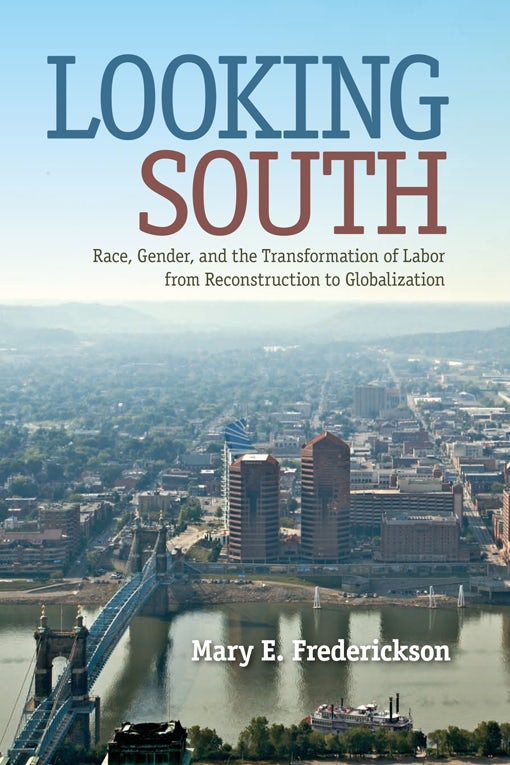
In the United States, cheap products made by cheap labor are in especially high demand, purchased by men and women who have watched their own wages decline and jobs disappear. 'Looking South' examines the effects of race, class, and gender in the development of the low-wage, anti-union, and state-supported industries that marked the creation of the New South and now the Global South
examines the effects of race, class, and gender in the development of the unorganized industries that marked the creation of the New South and now the Global South

Mary Gale, History Matters
The Communist-led Unemployed Councils were the first and the most active of the radical movements that sought to mobilize the jobless during the Great Depression.
In this audio interview, which is taken from the radio series “Grandma Was an Activist,” relief worker Mary Gale, who was sympathetic to radicals and the jobless, described how she worked behind the scenes to encourage her clients to organize and demand better treatment. The jobless and the poor had few advocates for them, and radicals like Gale not only became their champions but also pushed them to organize themselves.
Source: Interview done by the Oral History of the American Left, Tamiment Library, NYU for the public radio program Grandma Was An Activist, producers Charlie Potter and Beth Friend.
A desctiption of depression-era unemployment councils
Mary H. Blewett
The author examines the history of the New England textile industry during the nineteenth century from the perspective of the growth of industrialization and the struggle between labor and management. Fall River, Lowell, and Lawrence. Identifies Lancashire, England immigrant men as instigators of militancy of late nineteenth militancy. ... Also,"the importance of gender in industrial history. She devotes whole sections to historical debates and controversies over this issue. Her thoughtful considerations of the liter- ature of nineteenth-century industrialization support what the narra- tive itself clearly revealed: that gender issues are present at every union meeting, demonstration, and riot, around every kitchen table, at every work station, and in every boardroom. By interweaving these various types of stories, Blewett demonstrates her profound local knowledge and facility with current historical debates. Her work creates a densely woven, beautiful, and useful fabric." Although it is centered on the history of labor struggles in the textile mills of Fall River, Massachusetts, her tale ranges across southern New England to take inConstant Turmoil: The Politics of Industrial Life in Nineteenth-Century New England unfolding events from the cotton mills of Rhode Island’s Blackstone Valley to the meeting rooms of Boston labor activists, such as Ira Steward, who led the nineteenth-century campaign for the eight-hour work day. Prologue: Unlikely Acquaintances t
1 The Fall River Patrimony: Those Legendary Bordens, i799-t865 18
2 Gender Politics and Labor Reform in the Protest Heritages of Antebellum New England 45
3 British Immigrant Textile Workers and Their Class Conscious Legacies, 1820-1865 7®
4 Wait, Agitate, Work, and Wait: Gender Politics and Ten-Hour Reform, 1865-1874 102
5 To Dominate the National Market, 1866-1878 141
6 They Have Brought Their Horns with Them: Deference and Defiance, 1868-1875 177
7 A New Lancashire for the Northeast, 1876-1878 225
8 Struggling over Amalgamations or Trade Unions, 1879-1884 260
9 Piecing Up the Fall River System, 1885-1897 307
10. The Ascendancy of Trade Unions and Combinations, 1898-1906 338
Epilogue: The Escape ofA1 Priddy, the Death of M. C. D. Borden, and the Burnley Reunion
Critical Assessment of Primary Sources
examines the history of the New England textile industry from the perspective of the growth of industrialization and the struggle between labor and management.
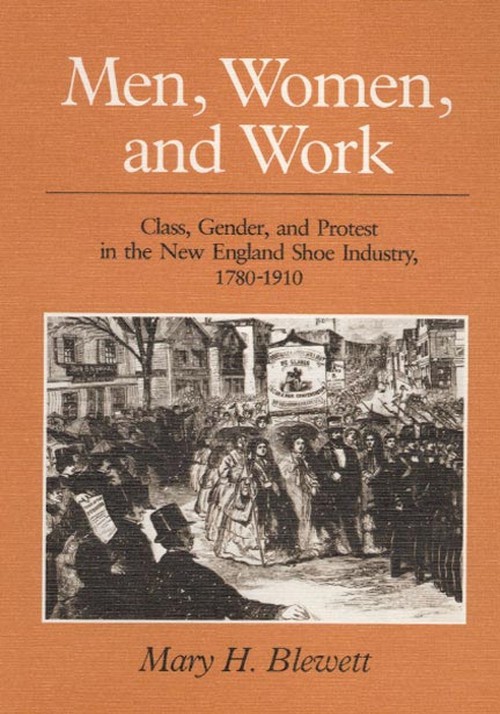
Mary H. Blewett
Mary H. Blewett's award-winning look at the men and women working in the shoe factories of Lynn, Massachusetts, explores the sexual division of labor and gender relationships in the workplace.
explores the sexual division of labor and gender relationships in the workplace.
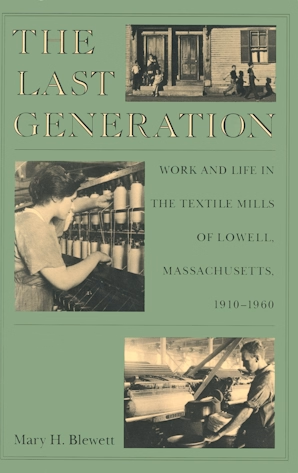
Mary H. Blewett
Oral histories of many of the last generation of Lowell, MA, textile mill workers preceded by two introductory sections. The first presents the historic setting of economic development and subsequent decline of the textile industry in Lowell. The second is a brief explanation of the production process wherin the last generation of mill workers expended so many of their skills and so much of their energy.
Oral histories of many of the last generation of Lowell, MA, textile mill workers preceded by two introductory sections.
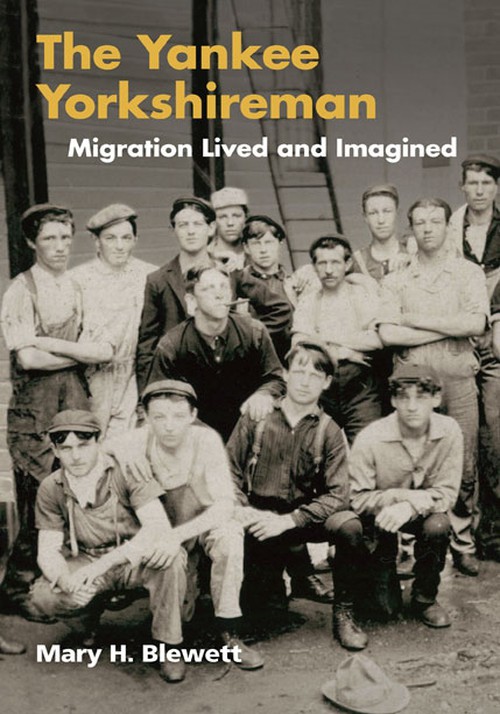
Mary H. Blewett
This study is a textual and contextual appraisal of the writings of Yorkshire-born Hedley Smith (1909-94) whose depiction of the fictional mill village of Briardale, Rhode Island, captures an early 20th-century labour diaspora peopled with textile workers
Mary H. Blewett offers a textual and contextual appraisal of the writings of Yorkshire-born Hedley Smith (1909–94). Smith's depiction of the fictional mill village of Briardale, Rhode Island, captures an early twentieth-century labor diaspora peopled with textile workers. Enraged and embittered at the transformatory experience of his own emigration, Smith used fiction to explore Yorkshire immigrants' culture and stubborn refusal to assimilate. As Smith's writings reveal, emigration involves grief and anger, and he meant for his rich panoply of characters to convey the superiority of Yorkshire life and culture. Smith came to take pride in his writings and, to a degree, accepted his new life in America. He never returned to Yorkshire.
Adopting a transnational perspective, Blewett links Smith's Briardale to empirical data on the substance of working-class lives both in Yorkshire and in New England's worsted textile industries. Demonstrating clearly that English immigrants often resisted and sometimes refused assimilation into American society, The Yankee Yorkshireman offers a deepened understanding of migration, ethnicity, gender, and class as both lived and imagined experiences in a transnational culture.
A region of movement and change, 1650-1923
Migrations of capital, industry, and people, 1891-1922
Working, writing, loving, enduring, 1923-1994
Transatlantic perspectives, strong women, and sexual politics in fiction
Conclusion : the inner world of emigration and migration
Understanding migration through the lives and fiction of migrant workers in New England

Mary H. Blewett
We Will Rise in Our Might reprints the private writings, public documents, and published memoirs -essentially the primary resources-that the author used in the 1988 history of the shoe industry. The book is organized chronologically, tracing the shoe industry from its beginnings as a putting-out process in which all the manufacturing was done in homes and small shops to the formation of large factories driven by steam in which a largely female work force drew cash wages. Unlike workers in the textile towns patterned on the Lowell model, the women of Lynn lived in private boardinghouses and apartments. Lynn did not have company boardinghouses and the associated company- produced moral atmosphere. However, the self-monitoring and social monitoring of the lives of these workers were no less stringent. Some of the most interesting primary material comes from the diaries of women who first used treadle-powered sewing machines to stitch leather shoes together. For instance, Martha Osbourne Barrett of Salem wrote in her diary: "Uuly 29, 1855] Work, hard and almost unremitting has made me necessarily very negligent of my pen. ...Some pursuit [other] than what I am at present engaged in would be more congenial to my taste-but mere taste cannot be always consulted. It is absolutely necessary for me to do something to earn money and this work seems to be the most available just now. So I am steadily at work" (pp. 71-72). These personal observations, not intended as measured public critiques, remind us that, while mechanization and organization of labor were choices made by owners, the drudgery of putting in time at the factory was often the only option for many people, especially women, who wanted to earn cash wa
Reprints several primary sources of the shoe industry organized chronologically, tracing the shoe industry from its small beginnings to the formation of large factories driven by steam
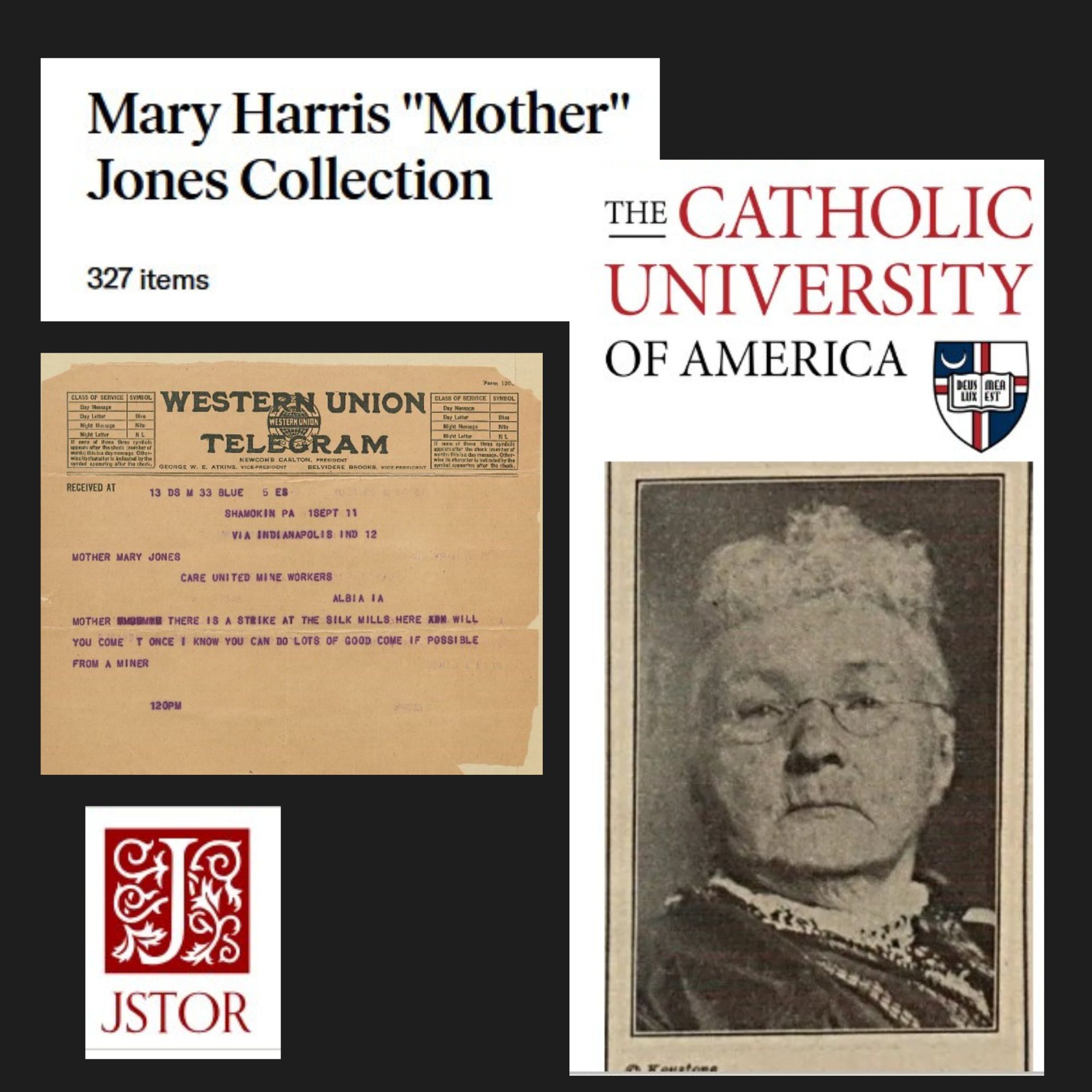
Mary Harris Jones, Mother Jones, Catholic University of America, JSTOR
The digitized Mother Jones Collection consists of an assortment of letters, articles, newspaper clippings, and pamphlets gathered together from a variety of sources including the John Mitchell and Terence V. Powderly papers.
digital papers of Mary "Mother" Jones, prominant labor organizer and socialist agitator
Mary Heaton Vorse
"Lawrence Strike," by Mary Heaton Vorse, from her book, Footnote to Folly (1935). A classic retrospective account of the famous 1912 strike which was led by the Industrial Workers of the World, this account is from a journalist supporter of the struggle. What is Vorse's point of view? Do you see how her account is influenced by her middle-class status? How else is Vorse different from the strikers? What is her attitude toward the strikers? Toward police? Toward mill-owners? Do you find this account credible, trustworthy?
A sense of the dramatic urgency and antagonisms of the strike
Mary Jane Logan McCallum
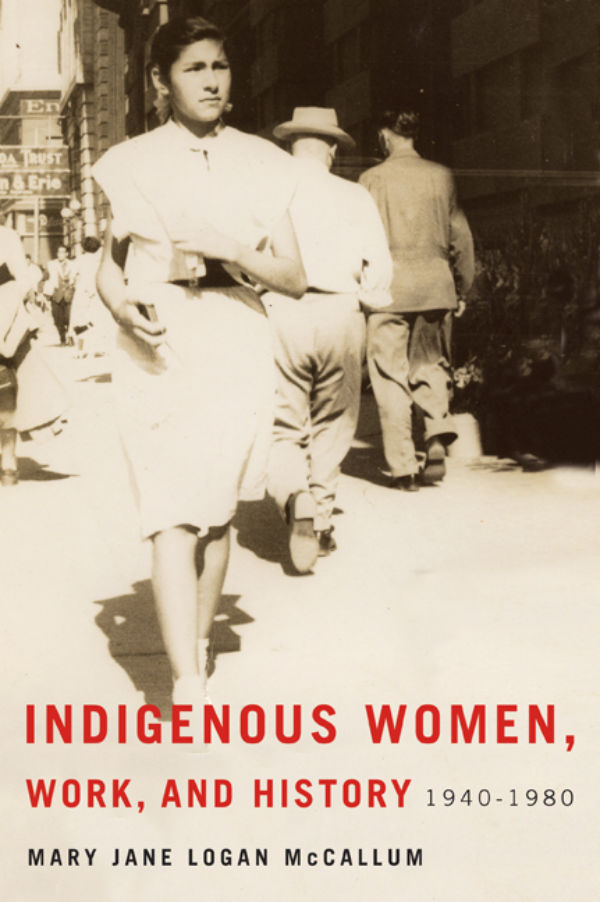
When dealing with Indigenous women’s history we are conditioned to think about women as private-sphere figures, circumscribed by the home, the reserve, and the community. Moreover, in many ways Indigenous men and women have been cast in static, pre-modern, and one-dimensional identities, and their twentieth century experiences reduced to a singular story of decline and loss.
In Indigenous Women, Work, and History, historian Mary Jane Logan McCallum rejects both of these long-standing conventions by presenting case studies of Indigenous domestic servants, hairdressers, community health representatives, and nurses working in “modern Native ways” between 1940 and 1980.
Based on a range of sources, including the records of the Departments of Indian Affairs and National Health and Welfare, interviews, and print and audio-visual media, McCallum shows how state-run education and placement programs were part of Canada’s larger vision of assimilation and extinguishment of treaty obligations. Conversely, she also shows how Indigenous women link these same programs to their social and cultural responsibilities of community building and state resistance. By placing the history of these modern workers within a broader historical context of Aboriginal education and health, federal labour programs, post-war Aboriginal economic and political developments, and Aboriginal professional organizations, McCallum challenges us to think about Indigenous women’s history in entirely new ways.
This book analyzes the public working lives of indigenous women in relation larger systems of assimilation, community organization, and cultural heritage

Mary Jane Treacy
A title in the Flashpoints series from Reacting to the Past, Paterson, 1913: A Labor Strike in the Progressive Era is designed to be played during the time typically devoted to teaching the Progressive Era in U.S. History II. Set in America's "Silk City," Paterson, New Jersey, the game pits manufacturers, who try to keep Paterson's key economic engine running, against labor leaders, who demand a general strike to achieve better working conditions across the silk industry. In the middle of this conflict are townspeople, who must decide whom to support and how to survive a labor struggle that seems to have no end in sight
designed to be played during the time typically devoted to teaching the Progressive Era in U.S. History.
Mary Lease, History Matters
In 1892 the possibility of a Labor-Populist alliance circulated. Populist orators like Mary Lease sought to build ties between the Farmer’s Alliance and the labor movement by mobilizing farmers to send wheat and corn to striking workers at Carnegie’s Homestead steel mill outside Pittsburgh. Despite the support for such an alliance among many in the labor movement, American Federation of Labor leader Samuel Gompers opposed such political action. Gompers insured that the A.F.L maintained, in his words, “a masterly inactivity” on political involvements. In this appeal to Kansas farmers, published as a letter to the editor in the Topeka Advocate, Lease attacked the “misrepresentations” of those who claimed that farmers did not understand and sympathize with workers.
Populist Mary Lease appeals to farmer to support Homestead workers
Mary Margaret Fonow
focus begins with the 1974 consent decree which required 20% of all new hires in production and maintenance had to be female."
Women in the workshop of vulcan: gender and the making of steelad
Bread, roses, and rights: gender equity and the law
What's a nice girl like you doing in a place like this? life on the shop floor
Mobilizing women steelworkers for their rights
Making waves: the calumet district 31 women's caucus
Women of steel crossing the border: union feminism in canada
Building feminist international solidarity in the age of globalization
Forging union feminism and the fight for social justice
focuses on woman steelworkers who used their developing power in the union to challenge sex discrimination and to advocate for women’s rights.
Museum/Exhibits
Tours
Maps
Digital Projects
Organizations
Sites
Film/Video
Audio/Interview
Podcast/Program
Text/Document
Image
Graphs/Data
Timeline
Southwest
West
Midwest
Southeast
Northeast
Mexico
Canada
Global
Books
Teaching
Lectures
Digital Archives
Journals
Bibliographies
Topic Intro