


Collections
Library
Type
Region
Coverage:
-
Published:
-

McAlister Coleman, History Matters
In 1909, the predominantly immigrant and female workers in New York City’s garment industry staged a series of job walkouts that led to a massive general strike involving more than 20,000 workers.
Clara Lemlich, a Jewish immigrant from the Ukraine and a shirtwaist worker, emerged as a key organizer and speaker. In 1909, Lemlich was in her early 20s, but the press continually referred to her as a teenager, reflecting the ages of many of the female shirtwaist workers. An unprovoked attack on Lemlich and her fellow female strikers by anti-union thugs was recorded by New York Sun correspondent McAlister Coleman.
He retold the story years later in his article, “All of Which I Saw,” published in the Progressive in 1950.
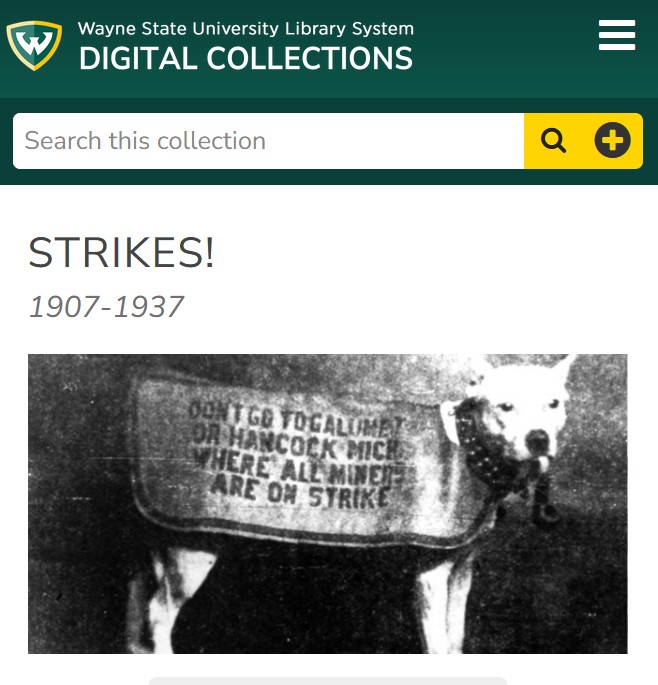
A brief 1950 excerpt from New York Sun correspondent McAlister Coleman, who recalls an unprovoked attack on garment union organizer Clara Lemlich.
Meg Fancher
A collaboration between Georgia State University (GSU) and the University of Maryland (UMD), “Advancing Workers’ Rights in the American South: Digitizing the Records of the AFL-CIO’s Civil Rights Division” makes accessible a robust array of texts, photographs and films that provides insight into the historical intersection of civil rights and labor movements nationally and in the South. The records include speeches, correspondence, protest flyers, newsletters, telegrams, radio program transcripts, case files, clippings, candid photographs, documentary films, and more chronicling AFL-CIO civil rights work between 1943 and 1999. Explore the links below to discover Advancing Workers Rights in the American South materials across UMD and GSU’s digital repositories.
Records of the AFL-CIO’s Civil Rights Division

Megan Birk
By the early 1900s, the poor farm had become a ubiquitous part of America's social welfare system. Megan Birk's history of this foundational but forgotten institution focuses on the connection between agriculture, provisions for the disadvantaged, and the daily realities of life at poor farms. Conceived as an inexpensive way to provide care for the indigent, poor farms in fact attracted wards that ranged from abused wives and the elderly to orphans, the disabled, and disaster victims. Most people arrived unable rather than unwilling to work, some because of physical problems, others due to a lack of skills or because a changing labor market had left them behind. Birk blends the personal stories of participants with institutional histories to reveal a loose-knit system that provided a measure of care to everyone without an overarching philosophy of reform or rehabilitation. In-depth and innovative, The Fundamental Institution offers an overdue portrait of rural social welfare in the United States"-- Provided by publisher
A history of poor farms, a forgotten institution of social welfare in the US, focuses on the connection between agriculture, provisions for the disadvantaged, and the daily realities of life at poor farms.

Megan Geigner
Between July 27th and August 4th, 1919, Chicago erupted in violence. The moment that caused this violence was when a white beachgoer threw a rock at a black teenager in Lake Michigan, after the teenager had floated over the invisible segregation line separating the white beach from the black beach. Legally, all beaches were open to all Chicagoans, but in practice, Chicago beaches were segregated. The teenager drowned. Witnesses identified the man who threw the rock, but the Chicago police officer on the scene refused to make an arrest. A group of African Americans from the community gathered at the beach to demand justice. Soon, mobs of white and black Chicagoans were throwing punches, committing arson, pulling one another off of streetcars, and shooting at each on the lakefront and all over the city. Thirty-eight people died, hundreds of Chicagoans were injured, and the city sustained thousands of dollars’ worth of property damage. Most of this damage occurred in the Black Belt, the area of town in which white property owners permitted black renters and businesses. Several groups—including the National Association for the Advancement of Colored People (NAACP)—demanded a formal investigation into these incidences of violence, which were deemed “race riots.”
A Newberry Library collection essay focusing on the 1919 Race Riots in Chicago, focusing on "racist housing and labor policies, incendiary newspaper articles, roving bands of violent white youths, and a pivotal moment when black Chicagoans demanded equal protection under the law."
Mel Escobar
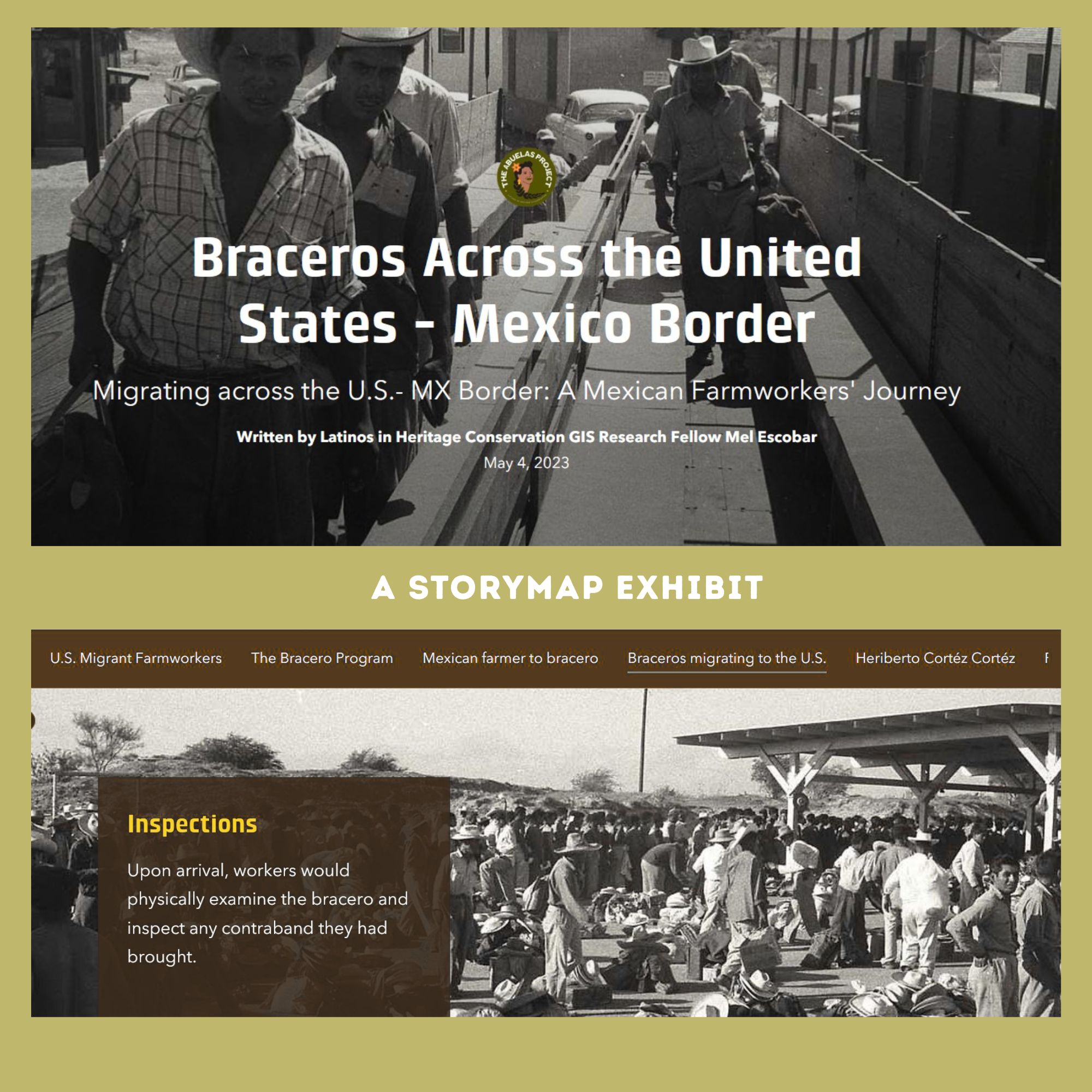
Migrating across the U.S.- MX Border: A Mexican Farmworkers' Journey; a 6 part storymap that explains the bracero experience using photos documents and mapping, Latinx,
Written by Latinos in Heritage Conservation GIS Research Fellow Mel Escobar
A 6 part storymap that explains the bracero experience using photos documents and mapping
Mel Van Elteren
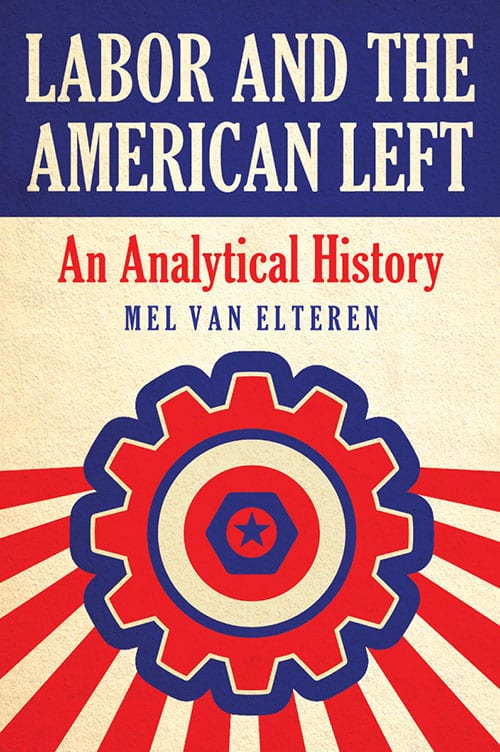
According to public opinion data over the past decade, most Americans hold center-left attitudes regarding key economic and social policy issues. Recent polls even show significant support of "socialism" among American adults, especially self-identified Democrats and the "millennial generation." At the same time, the focus of the mass media has been on a widespread right-wing "populism," while movements on the left seem to lack political clout. In order to better understand this dichotomy, this book explores relations between organized labor and left-wing parties
1. The U.S. Political System and Institutional Constraints on Labor- Based Politics 9
2. Organized Labor, Socialist Parties, and Early Efforts to Establish a Labor Party 36
3. Labor and the Left during the New Deal and the Onset of the Cold War 73
4. Corporate Assaults on the Labor Left and the Limits of Postwar Liberalism 103
5. Labor Renewal and the Issues of Immigration, Globalized Production and Erosion of Workers’ Rights 130
6. The Legacy of U.S. Labor Politics and Challenges Facing the Left 163
explores relations between organized labor and left-wing parties and movements in America at crucial junctures from the 1870s to the present
Melanie Reynolds
Infant Mortality and Working-Class Child Care, 1850-1899 unlocks the hidden history of northern working-class child care in the nineteenth century, investigating the child care models of working-class women in industrial and domestic arenas who have traditionally been cast by historians as the villains of infant life
northern working-class child care in the nineteenth century
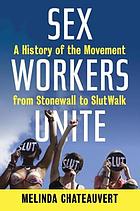
Melinda Chateauvert
Documenting five decades of sex-worker activism, Sex Workers Unite is a fresh history that places prostitutes, hustlers, escorts, call girls, strippers, and porn stars in the center of America's major civil rights struggles. Although their presence has largely been ignored and obscured, in this provocative history Melinda Chateauvert recasts sex workers as savvy political organizers - not as helpless victims in need of rescue
a fresh history that places prostitutes, hustlers, escorts, call girls, strippers, and porn stars in the center of America's major civil rights struggles.
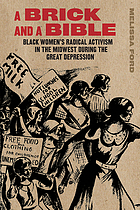
Melissa Ford
open-shop , Cleveland, Ohio
highlights Black labor struggles and brings them to the forefront of Black radicalism during the Great Depression, focusing on the cities of Chicago, Cleveland, Detroit, and St. Louis.
Melissa Gira Grant
Sex work and conditions within the sex industry are frequent topics of discussion in mainstream culture and media, but rarely do these discussions include sex workers themselves, and rarely do they deviate from the position that sex workers must be saved from their evil industry's position that New York Times columnist Nicholas Kristof repeatedly advocates.
This work turns this position on its head, arguing that sex work is fundamentally a form of work, and as in other industries, it is not the labor of sex work that is illegitimate, but rather the working conditions within the sex sector that are abominable. Based on ten years of writing and reporting on the sex trade, and grounded in the author's personal experience as a sex worker, community organizer, and health educator, 'Playing the Whore' dismantles pervasive myths of prostitution, criticizes conditions within the sex industry, and argues that separating sex work from the "legitimate" economy only harms those who perform sexual labor--Jacket
argues that sex work is fundamentally a form of work, and that working conditions within the sex sector that are abominable
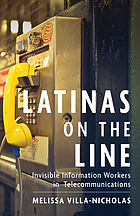
Melissa Villa-Nicholas
Latinas on the Line provides a compelling analysis and historical and theoretical grounding of the oral histories, never before seen, of Latina information workers in the Bell System from their entrance in 1973 to their retirements by 2015. Author Melissa Villa-Nicholas demonstrates the importance of Latinas of the field of telecommunications through their own words and uses supporting archival research to provide an overview of how Latinas engage and remember a critical analysis of their work place, information technologies, and the larger globalized economy and shifting borderlands through their intersectional identities as information workers. The book offers a rich and engaging portrait of the critical history of Latinas in telecommunications, from their manual to automated to digitized labor"-- Provided by publisher
demonstrates the importance of Latinas of the field of telecommunications through their own words and
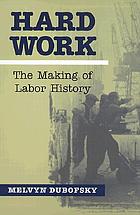
Melvyn Dubofsky
An exploration of some of American labor's central themes by a giant in the field, this book is also a narrative of how one scholar was drawn to labor history as a subject of study and how his approach to it changed over time.
Introduction: starting out in the fifties: true confessions of a labor historian
pt. 1. Labor radicalism, culture, and comparative history
The origins of western working-class radicalism, 1890-1905
The IWW, the culture of poverty, and the concept of power
Tom Mann and William D. Haywood: culture, personality, and comparative history
pt. 2. Workers, politics, and the state
Abortive reform: the Wilson administration and organized labor, 1913-20
Not so "Turbulent years" : another look at America in the 1930s
American industrial workers and political parties from Roosevelt to Reagan: a comparative perspective
Technological change and American worker movements, 1870-1970
A new look at the original case: to what extent was the United States fordist?
If all the world were Paterson: Herbert Gutman, the American working class, and the future of labor history
A historiographical reflection on the development, and main themes, of labor history
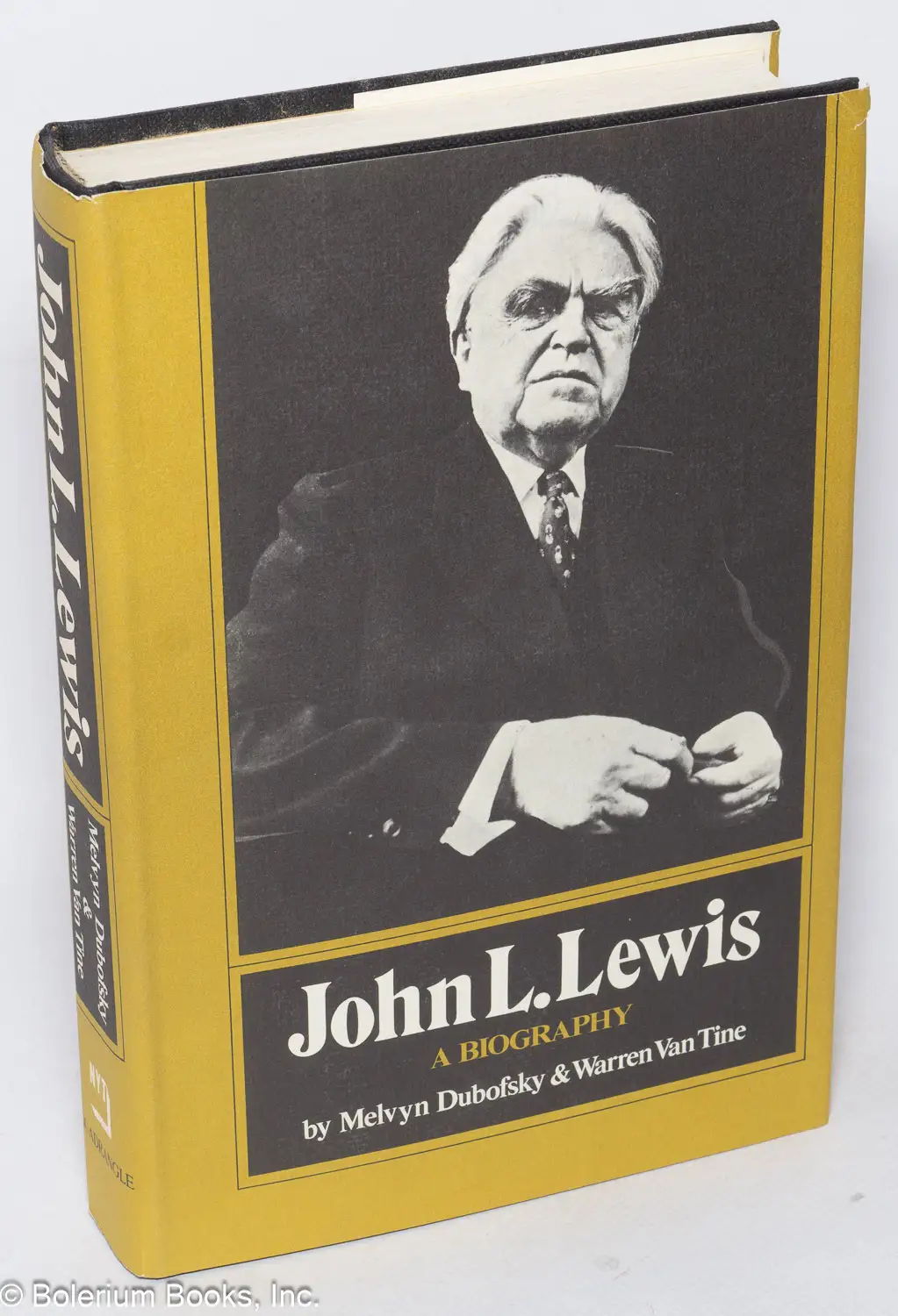
Melvyn Dubofsky
John L. Lewis (1880-1969), who ruled the United Mine Workers for four decades beginning in 1919, defied presidents, challenged Congress, and kept American political life in an uproar. Drawing upon previously untapped resources in the UMW archives and upon oral histories by major figures of the 1930s and 1940s, the authors have created a remarkable portrait of this 'self-made man' and his times.
A biography of UMW president John L. Lewis.
Melvyn Dubofsky
As the global economic crisis that developed in the year 2008 makes clear, it is essential for educated individuals to understand the history that underlies contemporary economic developments. This Encyclopedia offers students and scholars access to information about the concepts, institutions/organizations, events, and individuals that have shaped the history of economics, business, and labor from the origins of what became the United States in an earlier age of globalization and the expansion of capitalism to the present. It includes entries that explore the changing character of capitalism from the seventeenth century to the present; the evolution of business practices and organizations; describe changes in the labor force as legally free workers replaced a labor force dominated by slaves and indentures; treat the means by which workers sought to better their lives; and that deal with government policies and practices that affected economic activities, business developments, and the lives of working people." -- Amazon.com viewed August 7, 2020
offers students and scholars access to information about the concepts, institutions/organizations, events, and individuals that have shaped the history of economics, business, and labor.
Melvyn Dubofsky
In this important new book, Melvyn Dubofsky traces the relationship between the American labor movement and the federal government from the 1870's until the present. His is the only book to focus specifically on the "labor questions" as a lens through which to view more clearly the basic political, economic, and social forces that have divided citizens throughout the industrial era. Dubofsky integrates archival and other traditional historical sources with the best of recent scholarship in history and the social sciences to show that the government has had an exceptional influence on workers and their movements in the United States. Many scholars contend that the state has acted to suppress trade union autonomy and democracy, as well as rank-and-file militancy, in the interests of social stability and conclude that the law has rendered unions the servants of capital and the state. In contrast, Dubofsky argues that the relationship between the state and labor is far more complex and that workers and their unions have gained from positive state intervention at particular junctures in American history. He focuses on six such periods: the turn of the century, when trade unions nearly quintupled in size; the World War I years, when they nearly doubled their memberships; the New Deal period, when organizers rebuilt a moribund labor movement; the World War II years, when mass production matured and the so-called modern industrial relations system developed: the Korean War period, when unionism reached its maximum strength among American workers; and the years of Lyndon B. Johnson's Great Society, the last period when union membership increased in size. Dubofsky argues that these were eras when, in varying combinations, popular politics, administrative policy formation, and union influence on the legislative and executive branches operated to promote stability by furthering the interests of workers and their organizations
traces the relationship between the American labor movement and the federal government from the 1870's until the present.
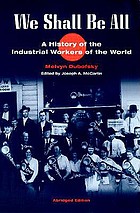
Melvyn Dubofsky
Dubofsky's careful historical treatment does not support or deny the ideology of the "Wobblies", but rather he attempts to understand the leadership and motivation of the early twentieth-century labor movement
A vast historical account of the IWW with special attention paid to their motivations, ideology, and actions

Melvyn Dubofsky
Full copy available at link. Before W.W. I they were spreading the gospel of Poor Power, "teaching society's orphans and outcasts that power -- society's native force -- comes through organization, and that the poor must organize to help themselves." Dubofsky traces the IWW from its origins in the class war on the "industrial frontier" and the development from "pure and simple unionism" to revolutionary radicalism to its prewar heyday which culminated in the 1917 government raids and arrests that broke the back of the "Wobbly menace" and heralded its decline into a pale ghost of an organization disappearing into the "Haunted Halls" of American labor history. With its deliberate focus upon the revolutionary, aspects of Wobblyism, the book reveals much about the strengths and weaknesses of native radicalism and the ultimate tragedy for all humane revolutionaires in advanced societies who accept betterment for their followers today "at the expense of utopia tomorrow." Though Dubofsky approaches his material with a decided eye for the radical and the contemporarily relevant, he balances his sympathies with sufficient objectivity to make his book a worthy contribution.--Kirkus reviews.
traces the IWW from its origins to its prewar heyday and decline into a pale ghost of an organization.
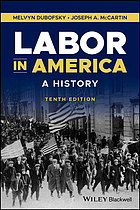
Melvyn Dubofsky, Joseph A. McCartin
A Labor History Reader, documents with wrap around essay. "The history of labor is inextricably linked with the history of the United States, and today, undergraduate students are seeing a new chapter in labor history unfold before them, with wages stagnating, inequality growing, and unions taking on renewed importance in the workplace. While labor unions and the demand for workers' rights have had a dramatic effect on the shape of modern American life, students coming to this topic for the first time may be surprised to learn how many things they take for granted, like health and safety protections in the workplace or the standard 40-hour work week, are due to the work of workers and unions. Labor in America, Tenth Edition, is a market-leading textbook on the role played by workers, unions, and organizers in the development of American history from colonial times to the present. First written by Foster Rhea Dulles for publication in 1949, it has become the standard of education in university courses in labor history in America. Updates for each edition have brought coverage up to speed with the most recent changes in labor history. New in the tenth edition, coverage has been reorganized to condense historical material, bringing the work from 23 to 17 chapters and making the book more suitable for typical university course structures. New material has been added throughout, with special attention paid to the role of the courts and law in frustrating worker advancement over the 19th- and 20th-centuries. Throughout, chapters have been heavily updated to provide deeper attention to the relationships of race, gender, and immigration status with the history of worker organizations and to shine a light on the role of the labor movement as a force in favor of democracy. The book features an almost wholly new final chapter which brings coverage up to date and accounts for the impact of the election of Donald Trump on American workers, the Great Recession, and the rise of Amazon, Uber, and the Platform Economy"-- Provided by publisher
Laboring a Nation into Being
Labor in the New Republic, 1790 to 1830
The Protean Power of Organization, 1828 to 1840
Irrepressible Conflicts, 1840 to 1860
The Incomplete Triumphs of Free Labor, 1861 to 1877
The Great Upheaval, 1877 to 1887
The Rise of the American Federation of Labor, 1886 to 1896
Labor at the Dawn of the Progressive Era, 1896 to 1908
Winds of Change, 1908 to 1916
War, Reform, and Reaction, 1914 to 1922
The 1920s
The New Deal and the Rebirth of Labor Militancy
The CIO and the New Deal Order
World War II
15 Workers and Unions in the Postwar Era
Labor's long sixties, 1960 to 1973
The Great Reversal, 1974 to 1990s
Renewal and Setback, 1990s to 2009
Resiliency and Disruption, 2009 to 2020
Making the Road by Walking: Labor in the 1920s
textbook on the role played by workers, unions, and organizers in the development of American history from colonial times to the present
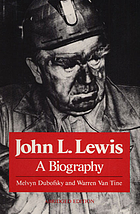
Melvyn Dubofsky, Warren A. Van Tine
John L. Lewis (1880-1969), who ruled the United Mine Workers for four decades beginning in 1919, defied presidents, challenged Congress, and kept American political life in an uproar. Drawing upon previously untapped resources in the UMW archives and upon oral histories by major figures of the 1930s and 1940s, the authors have created a remarkable portrait of this 'self-made man' and his times.
A biography of UMW president John L. Lewis.
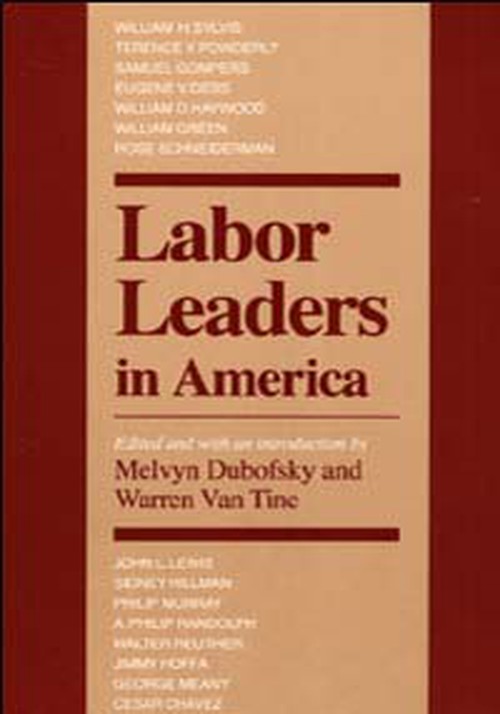
Melvyn Dubofsky, Warren A. Van Tine
Here are the life stories of the men and women who led the labor movement in America from Reconstruction to recent times, from William H. Sylvis, the first major labor leader, to Cesar Chavez, who organized California's farm workers in the 1960s. In each profile, a leading authority provides a profile of the figure's life and work. Taken together, these short biographies provide a broad overview of the American labor movement that will appeal to students, interested readers, and specialists.Profiles include: William H. Sylvis, Terence V. Powderly, Samuel Gompers, Eugene V. Debs, William D. "Big Bill" Haywood, William Green, Rose Schneiderman, John L. Lewis, Sidney Hillman, Philip Murray, A. Philip Randolph, Walter Reuther, Jimmy Hoffa, George Meany, and Cesar Chavez
William H. Sylvis and the Search for Working-Class Citizenship
Terence V. Powderly, the Knights of Labor, and Artisanal Republicanism
Samuel Gompers and the Rise of American Business Unionism
Eugene V. Debs: From Trade Unionist to Socialist
William D. "Big Bill" Haywood: The Westerner as Labor Radical
William Green and the Ideal of Christian Cooperation
Rose Schneiderman and the Limits of Women's Trade Unionism
John L. Lewis and the Triumph of Mass-Production Unionism
Sidney Hillman: Labor's Machiavelli
Philip Murray and the Subordination of the Industrial Unions to the United States Government
A. Philip Randolph, Black Workers, and the Labor Movement
Walter Reuther and the Rise of Labor-Liberalism
Jimmy Hoffa: Labor Hero or Labor's Own Foe?
George Meany: Labor's Organization Man
Cesar Chavez and the Unionization of California Farm Workers
A collection of biographical accounts of several important labor leaders from Reconstruction to the Cold War
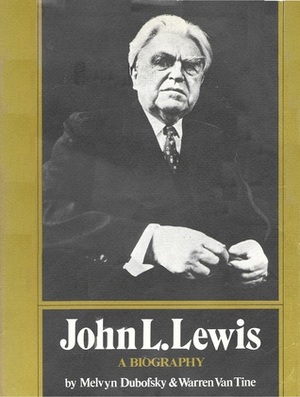
Melvyn Dubofsky, Warren Van Tine
biography of major labor figure; this version is 200 pages longer and has footnotes; the abridged version at University of Illinois Press is without citations
this is the unabridged and footnoted version of the leading biography of Lewis, a leading figure of the early and mid-20th century labor movement.

Memorial University - Archives and Special Collections
The International Labour and Radical History Pamphlet Collection in the Queen Elizabeth II Library consists of more than 2200 pamphlets, representing a broad spectrum of leftist opinion that includes communists of various stripes, socialists, liberal reformers, trade unionists, civil libertarians and antiwar activists.
Published for the most part between the years 1920 and 1970 (the collection also includes a number of Fabian Society publications that predate this period), the majority of the pamphlets are English-language publications from the United States, the Soviet Union, Great Britain, Canada and China. Among the topics and issues dealt with are socialist theory and practice, critiques of capitalism, war and peace, labour and the role of unions, international communism, the Vietnam war, racism and Third World liberation. Authors include Daniel DeLeon, Earl Browder, William Z Foster, Elizabeth Gurley Flynn, Georgi Dimitrov, James Cannon, Howard Fast, Anna Louise Strong, Paul Robeson, Harry Pollitt, Jacques Duclos, Vyacheslav Molotov, Sergei Eisenstein, as well as Lenin, Trotsky, Stalin and Mao.
A digital archive of over 2000 pamphlets from around the world, many from the US and CanadaA
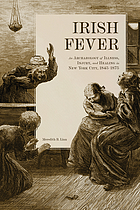
Meredith B. Linn
During the Potato Famine of the nineteenth century, about one million Irish people perished from starvation and disease, while more than two million fled the country in fear and desperation, with some 850,000 landing in New York City. After a difficult journey, many found themselves impoverished, taking dangerous jobs, and battling miserable living conditions in an unfamiliar urban landscape. These circumstances resulted in high rates of illness, injury, and death compared with other immigrant groups and native-born Americans.
In this profound study, Meredith B. Linn explores three kinds of afflictions—typhus fever, tuberculosis, and work-related injuries—that disproportionately affected Irish immigrants, tracing how existing medical ideas and technologies intersected with American prejudices to further conspire against this once culturally distinct group. Linn makes a compelling case for how Americans’ interpretations of the visible bodily changes wrought by typhus fever and injuries contributed to essentializing and dehumanizing biases against these new immigrants, while tuberculosis—with its symptoms of fatigue, pallor, and emaciation—enabled Americans to see individuals beyond stereotypes and to recognize the equal humanity of the Irish.
Drawing upon extensive archaeological records, folkloric sources, and historical documents, Linn presents what she terms a “visceral historical archaeology”—a perspective rooted in historical archaeology and medical anthropology—to illuminate the experiences of these immigrants. She investigates their health-related ideas and practices and reveals their efforts to heal themselves using popular remedies from Ireland and several new American commodities. Laden with heartrending stories from real working-class Irish and their American doctors, this richly illustrated book provides new perspectives about urban experience in the context of the Irish diaspora and invites contemplation about how illness, injury, and healing have affected the lives and reception of newcomers to the US.
new perspectives about urban labor, housing, community building, and consumption of commodities in a context of Irish diaspora
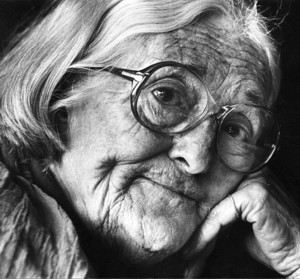
Meridel Le Seuer
dramatic account of 1934 battles with women featured
A published writing covering the use of police violence against strikers in Minneapolis.
Metal Polishers Union
Magazine published by this AFL union.
Organized in Syracuse, N. Y., on July 2, 1896. Metal polishers and brass workers were fairly well organized under the Knights of Labor, and in October, 1888, they formed National Trades Assembly No. 252, Knights of Labor, with jurisdiction over all branches of the brass industry. At the convention of the National Trades Assembly held in New Haven, Conn., in 1890, 80 local organizations were represented. A movement toward trade autonomy and identification with the American Federation of Labor movement split the convention. All the representatives from cities from Pennsylvania westward withdrew and organized the International Brotherhood of Brass Workers. This organization joined the American Federation of Labor. The unions on the seaboard and the Canadian locals remained with the Knights of Labor. Both organizations functioned successfully for several years.
In the meantime the metal polishers, buffers, and electroplaters in several western cities, members of the International Brotherhood of Brass Workers,
determined to subdivide into closer craft unions, and meeting in Toledo, Ohio, in 1892, they organized the Metal Polishers, Buffers and Platers* International
Union of North America, thus forming a third international union in the industry.
Magazine of the Metal Polishers, Buffers, Platers, Brass and Silver Workers' International Union of North America.
Museum/Exhibits
Tours
Maps
Digital Projects
Organizations
Sites
Film/Video
Audio/Interview
Podcast/Program
Text/Document
Image
Graphs/Data
Timeline
Southwest
West
Midwest
Southeast
Northeast
Mexico
Canada
Global
Books
Teaching
Lectures
Digital Archives
Journals
Bibliographies
Topic Intro