


Collections
Library
Type
Region
Coverage:
-
Published:
-

Migration is Beautiful, Mujeres Latinas Project, Iowa Women's Archives
Between 250,000 and 750,000 Latinos and Latinas across the United States served in the armed forces during World War II. They formed the largest nonwhite group both in military service and in military honors received. Lando Valadez of Des Moines was one of the few Iowans to receive the Silver Star during World War II. It is difficult to obtain precise figures for their service because at that time the military categorized Latinos as "White," "Mexican," or "NA" in its official documents. As a result, historians, educators, film producers, and members of the public have often overlooked their significant contributions to the war effort. By drawing on oral history interviews, letters, and photographs carefully preserved by World War II veterans and their families from Iowa and western Illinois, these pages offer a glimpse into their extraordinary contributions at home and abroad.
There are several sections about these subjects in this section of the Migration is Beautiful website.
War Years
Home Front
Sacrifice
Hero Street U.S.A.
Postwar activism
Bibliography
Digital exhibit with resources for exploring the impact of WWII on migration flows into, out of, and across the Midwest.
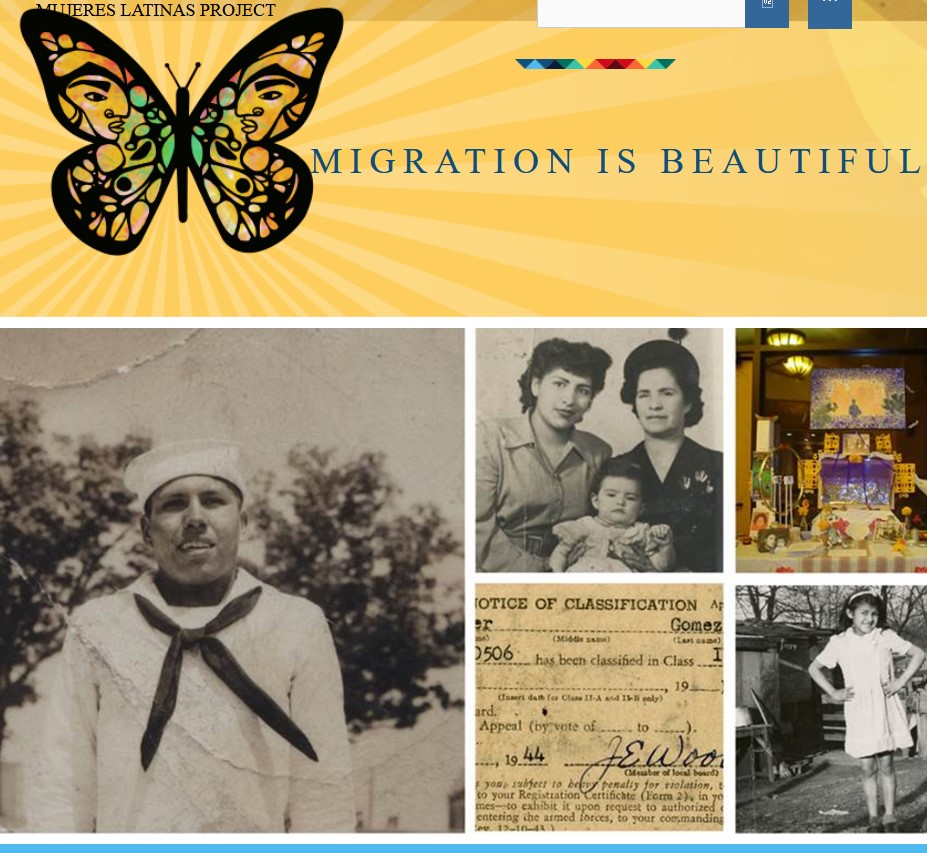
Migration is Beautiful, University of Iowa,
Migration is Beautiful is a significant digital project that highlights the contributions Latinas and Latinos have made to Iowa history. Migration is central to understanding and interpreting the past, shaped first by Native Americans, and later by immigrants from around the world. A public history resource for Iowa Latina/o history, it includes maps, digitized archives, digital essays and oral histories. It draws on hundreds of items in collections gathered through the Mujeres Latinas project of the Iowa Women’s Archives that are preserved in the IWA, University of Iowa Libraries. Many of the original documents--over 500- have been digitized and are available on the website in a robust database. To search for exhibits in this collection, see the website, but they are also listed under the author Migration is Beautiful in this database.
A robust digital project that uses an array of elements, from mapping to exhibits and digital essays to bring the migrant stream history and human dimension to life.
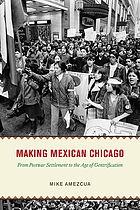
Mike Amezcua
Includes important connections between communiites, workplace and urban redevelopment. The stories of targeting Chicago immigrants in the 1950s. "An exploration of how the Windy City became a postwar Latinx metropolis in the face of white resistance. Though Chicago is often popularly defined by its Polish, Black, and Irish populations, Cook County is home to the third-largest Mexican-American population in the United States.
The story of Mexican immigration and integration into the city is one of complex political struggles, deeply entwined with issues of housing and neighborhood control. In Making Mexican Chicago, Mike Amezcua explores how the Windy City became a Latinx metropolis in the second half of the twentieth century.
In the decades after World War II, working-class Chicago neighborhoods like Pilsen and Little Village became sites of upheaval and renewal as Mexican Americans attempted to build new communities in the face of white resistance that cast them as perpetual aliens. Amezcua charts the diverse strategies used by Mexican Chicagoans to fight the forces of segregation, economic predation, and gentrification, focusing on how unlikely combinations of social conservatism and real estate market savvy paved new paths for Latinx assimilation. Making Mexican Chicago offers a powerful multiracial history of Chicago that sheds new light on the origins and endurance of urban inequality." -- Publisher description
how the Windy City became a Latinx working class metropolis
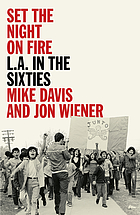
Mike David, Jon Wiener
Los Angeles in the sixties was a hotbed of political and social upheaval. The city was a launchpad for Black Power where Malcolm X and Angela Davis first came to prominence and the Watts uprising shook the nation. The city was home to the Chicano Blowouts and Chicano Moratorium, as well as being the birthplace of Asian American as a political identity. It was a locus of the antiwar movement, gay liberation movement, and womens movement, and, of course, the capital of California counterculture.
Davis and Wiener provide a comprehensive movement history of L.A. in the sixties, drawing on extensive archival research and dozens of interviews with principal figures, as well as the authors storied personal histories as activists. --From publisher description
Provides a comprehensive history of LA-based movements in the sixties
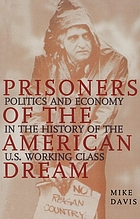
Mike Davis
"Mike Davis’s brilliant exegesis of a persistent and major analytical problem for Marxist historians and political economists: Why has the world’s most industrially advanced nation never spawned a mass party of the working class? This series of essays surveys the history of the American bourgeois democratic revolution from its Jacksonian beginnings to the rise of the New Right and the re-election of Ronald Reagan, concluding with some bracing thoughts on the prospects for progressive politics in the United States. A brilliant and comprehensive study of class struggle in the United States" -publisher blurb https://jacobin.com/2022/10/mike-davis-labor-movement-history-prisoners-american-dream-book-the-dig "The book was written in the mid-1980s. It was an attempt to address that particular moment, just after Reagan’s reelection, at the beginning of a massive US intervention in Central America and sweeping changes in the American economy, including the beginning of plant closures.
The book has two parts. The first part looks at the question of American labor’s failure to obtain independent representation of its interests via a socialist or labor party. That’s a very traditional question that quite a few books have tried to address. The second part is an anatomy of Reaganism, and the deep transformations of the social structure and the economy at that time."
surveys the history of the American bourgeois democratic revolution from its Jacksonian beginnings to the rise of the New Right.

Mike Davis
In his book, The Monster at Our Door, Mike Davis warned of a coming global threat of viral catastrophes. Now in this expanded edition of that 2005 book, Davis explains how the problems he warned of remain, and he sets the Covid-19 pandemic in the context of previous disastrous outbreaks, notably the 1918 influenza disaster that killed at least forty million people in three months and the Avian flu of a decade and a half ago. The author surveys the scientific and political roots of today's viral apocalypse. In doing so Davis exposes the key roles of agribusiness and the fast-food industries, abetted by corrupt governments and a capitalist global system careening out of control, in creating the ecological preconditions for a plague that has brought much of human existence to a juddering halt. --From publisher description
exposes the key roles of agribusiness and the fast-food industries, in creating the ecological preconditions for a plague

Mike Nichols
The story of Karen Silkwood, a metallurgy worker at a plutonium processing plant who was purposefully contaminated, psychologically tortured and possibly murdered to prevent her from exposing blatant worker safety violations at the plant.
A biographical drama portraying the life of Karen Silkwood, a whistleblower and labor activist who worked at the Kerr-McGee plutonium plant and worked to raise awareness about the poor health, safety, and labor conditions there.

Mike Quin
On May 9, 1934, International Labor Association (ILA) leaders called a strike of all dockworkers on the West Coast who were joined a few days later by seamen and teamsters, effectively stopping all shipping from San Diego to Seattle. San Francisco would become the scene of the strike’s most dramatic and widely known incidents, aptly described in one headline as “War in San Francisco!” On Bloody Thursday, July 5, 1934, two strikers were killed by the San Francisco police. A mass funeral march of tens of thousands of strikers and sympathizers four days later and the general strike that followed effectively shut down both San Francisco and Oakland (across the bay). Mike Quin, a self-described “rank-and-file journalist,” offered a sympathetic picture of the striking workers actions in The Big Strike, a collection of his published articles. Here, Quin described the events leading up to Bloody Thursday, and what happened in its aftermath.
A journalist's description of the 1934 San Francisco Strike, a critical turning point in US labor history
Mike Stout, Battle of Homestead
The Mike Stout collection spans from 1937 to 2020. The collection contains a variety of materials from political marching banners, to local union newspapers, to clothing, to paper material, to CDs, and more. The bulk of the collection covers labor history, with a particular interest in union activities in Homestead, Pennsylvania and around the Pittsburgh, Pennsylvania region. Much of the material has to do with the steel industry in the region as well. The collection also contains a good sampling of music in relation to unionism and big business. The collection was donated by Mike Stout in 2020 and digitized in 2023.
Homestead, steel and music ephemera -digital, Edward Sadlowski, rank-and-file, politics, buttons
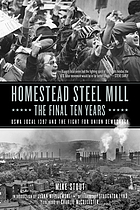
Mike Stout, JoAnn Wypijewski, Staughton Lynd
Spanning the famous Homestead steel strike of 1892 through the century-long fight for a union and union democracy, Homestead Steel Mill-the Final Ten Years is a case history on the vitality of organized labor.
Written by fellow worker and musician Mike Stout, the book is an insider's portrait of the union at the U.S. Steel's Homestead Works, specifically the workers, activists, and insurgents that made up the radically democratic Rank and File Caucus from 1977 to 1987. Developing its own "inside-outside" approach to unionism, the Rank and File Caucus drastically expanded their sphere of influence so that, in addition to fighting for their own rights as workers, they fought to prevent the closures of other steel plants, opposed U.S. imperialism in Central America, fought for civil rights, and built strategic coalitions with local environmental groups. Mike Stout skillfully chronicles his experience in the takeover and restructuring of the union's grievance procedure at Homestead by regular workers and put at the service of its thousands of members. Stout writes with raw honesty and pulls no punches when recounting the many foibles and setbacks he experienced along the way. The Rank and File Caucus was a profound experiment in democracy that was aided by the 1397 Rank and File newspaper, an ultimate expression of truth, democracy, and free speech that guaranteed every union member a valuable voice. Profusely illustrated with dozens of photographs, Homestead Steel Mill, the Final Ten Years is labor history at its best, providing a vivid account of how ordinary workers can radicalize their unions.
Stout chronicles his experience in the takeover and restructuring of the union's grievance procedure at Homestead by regular workers and put at the service of its thousands of members.

Milagros Denis, Rachel Pooley
In December 1898, at the close of the Spanish-American War, Spain surrendered control of Cuba, Puerto Rico, and Guam to the United States. Though Cuba achieved nominal independence in 1902, in 1917 Puerto Rico assumed the status of an American territory, which afforded Puerto Ricans U.S. citizenship and the right to elect their own legislature, but not the full benefits of statehood. When American forces occupied the island in 1898, the Puerto Rican economy and politics underwent a shift that had implications for labor relations. For instance, the introduction of large-scale agriculture produced opportunities for some women to work as cigar strippers. Indeed, women’s participation in this new economic order gave them the same economic opportunities as men. As changes in the economy took place, women joined their male partners in the struggle to improve working conditions. Thus, women were active participants in and key members of the labor movement from the very beginning. However, as their role in the economy became more prominent, working women became targets of gender and racial discrimination, and their struggle in many instances was interwoven with issues of race, gender, and class. Viewing women solely as workers in the agricultural economy, some industrial managers attempted to limit and control Puerto Rican women’s reproductive choices in order to increase the efficiency of the economic system.
This long teaching module includes an informational essay, objectives, activities, discussion questions, guidance on engaging with the sources, and essay prompts relating to the twelve primary sources.
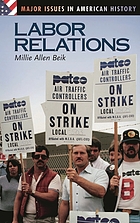
Mildred A. Beik
"Over one hundred annotated primary documents present compelling and informative snapshots of the shifting and often contentious role played by workers and organized labor in American politics, economics, and history. Shaped by wars, depressions, government policies, judicial rulings, and global competition, the history of worker's rights and labor relations often offers a grim picture of the pursuit of the American Dream. A narrative overview of each event, expert analysis, the text of primary sources contemporary to the time of the event, and ready reference materials will help students understand the conflicting issues behind these events and apply critical thinking skills to their evaluations of those issues
he uneven emergence of a labor movement, 1827-1837
The New England Shoemakers' Strike of 1860
The Railroad Strikes of 1877
The Pullman Strike and boycott of 1894
The Lawrence Strike of 1912
The miners' program, 1919-1923
The General Textile Strike of 1934
The General Motors sit-down strike of 1936-1937
The Labor Management Relations (Taft-Hartley) Act of 1947
The Memphis Sanitation Strike of 1968
The Professional Air Traffic Controllers Organization (PATCO) strike of 1981
Over one hundred annotated primary documents present compelling and informative snapshots of the shifting and often contentious role played by workers and organized labor in American history
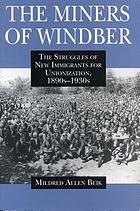
Mildred A. Beik
"In 1897 the Berwind-White Coal Mining Company founded Windber as a company town for its miners in the bituminous coal country of Pennsylvania. The Miners of Windber chronicles the coming of unionization to Windber, from the 1890s, when thousands of new immigrants flooded Pennsylvania in search of work, through the New Deal era of the 1930s, when the miners' rights to organize, to join the United Mine Workers of America, and to bargain collectively were recognized after years of bitter struggle." "Mildred Allen Beik, a Windber native whose father entered the coal mines at age eleven in 1914, explores the struggle of miners and their families against the company, whose repressive policies encroached on every part of their lives. That Windber's population represented twenty-five different nationalities, including Slovaks, Hungarians, Poles, Italians, and Carpatho-Russians, was a potential obstacle to the solidarity of miners. Beik, however, shows how the immigrants overcame ethnic fragmentation by banding together as a class to unionize the mines. Work, family, church, fraternal societies, and civic institutions all proved critical as men and women alike adapted to new working conditions and to a new culture." "Beik draws on a wide variety of sources, including oral histories gathered from thirty-five of the oldest living immigrants in Windber, foreign-language newspapers, fraternal society collections, church manuscripts, public documents, union records, and census materials. The struggles of Windber's diverse working class undeniably mirror the efforts of working people everywhere to democratize the undemocratic America they knew."--Jacket
explores the struggle of miners and their families against the Berwind-White Coal Company, whose repressive policies encroached on every part of their lives.
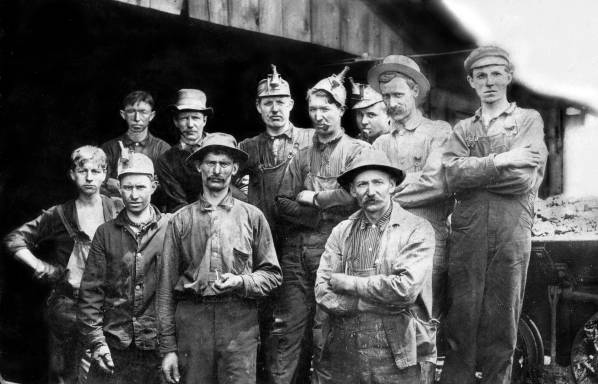
Mildred Allen Beik
The historical record about mining accidents is instructive and sobering. Coal miners and other industrial workers built the United States and made it a great industrial world power, but, in the process, paid a heavy price in terms of human life and suffering that resulted from needless accidents. The first decades of the twentieth century, when coal was king and the industry basically unregulated, were more lethal than later ones for miners, but fatal and non-fatal accidents have occurred throughout the industry's history. Over 100,000 coal miners were killed in mining accidents in the United States during the period from 1900 to 1970 alone, and more than 1,500,000 were injured in non-fatal accidents in the period from 1930, when the federal government began to collect such statistics, to 1970
A short essay explaining the dangers at Berwin-White Coal company, showing the material life of dangerous occupation, and a list of companion primary sources

Mildred Allen Beik
Historians, including many labor historians, have emphasized the economic and political conservatism of the 1920s, including the American labor movement. While this characterization has much validity in assessing the top leadership of the American Federation of Labor and of many of its affiliates, it also masks more complexity.
A brief examination of the history of the United Mine Workers of America (UMWA) in this era reveals the duality of the labor movement. On the one hand, John L. Lewis, president of the UMWA, was a business unionist. On the other hand, many rank and file coal miners, local union leaders, and district level officials and organizers were activists of a progressive bent. UMWA District 2, led by John Brophy, provides an excellent illustration of an alternative to the "master narrative."
UMWA District 2 played an essential role in the development of labor education and contributed to the achievements of the "golden age" of workers education. John Brophy developed the "miners program" that included demands for nationalization of its coal mines, a six hour day to spread the work, and the creation of a labor party. These reforms won widespread support from both coal miners and delegates to national UMWA Conventions, but John L. Lewis rejected these proposals.
Brophy also played a crucial role in the coal strike of 1922-23 in which unionized miners struck in opposition to the efforts of the coal operators to reduce their wages and undermine their working conditions. These miners were joined by nonunion miners who sought to organize and bargain collectively in order to obtain an "industrial democracy."
Primary Sources about the Windber Miners' Strike in 1922-23
Mining Accidents in Berwind-White Coal Mining Company Mines
Photographs of Windber, Pennsylvania
Map of Eureka Mine No. 37 at Windber, Pennsylvania
Remembering the 1906 Strike for Union in Windber, Pennsylvania.
Manuscript Group 52: United Mine Workers of America (UMWA) District 2
Manuscript Group 127: Dr. Mildred Beik Collection
Documents and images of the devastating coal miners srike at Berwind-White coal company including Select Readings Compiled by Mildred Allen Beik, who wrote the book about the miners of this area.
Miles V. Rodríguez
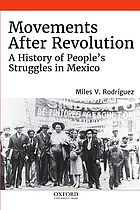
Movements After Revolution is a history of how and why people's movements organized and struggled in the aftermath of the Mexican Revolution of 1910-20. Focusing on the first decade after the Revolution in 1920-30, it explains the rise of an unprecedented variety of organizations among industrial workers and rural communities, and how they fought for a vast array of demands and diverse forms of justice. The most independent and strategic parts of the labor movement and the agrarian movement grew in relation to Communist organizers who sought to create a national revolutionary alliance against capitalism and the state, as part of an international revolutionary movement for socialism. In response to national crises and changes in global revolutionary strategy, these parts of the labor movement and the agrarian movement formed unique allied organizations and prepared for ultimately ruinous struggles with companies, landlords, and the state. By examining the roles of activists, their antagonists, divisive contexts, and complex consequences, this work offers original insights into the influences and limits of the Revolution on people's movements in Mexico"-- Provided by publisher
explains the rise of a variety of organizations among Mexican industrial workers and rural communities, and how they fought for an array of demands and forms of justice.
Milkman Ruth, Joshue Bloom, Victor Narro
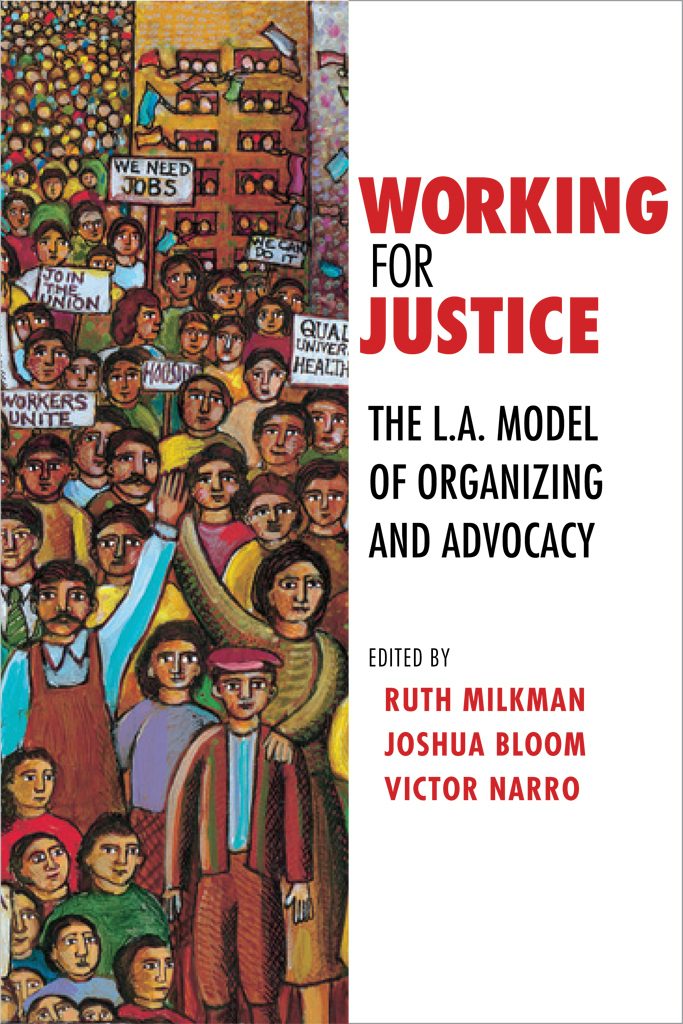
Working for Justice, which includes eleven case studies of recent low-wage worker organizing campaigns in Los Angeles, makes the case for a distinctive "L.A. Model" of union and worker center organizing. Networks linking advocates in worker centers and labor unions facilitate mutual learning and synergy and have generated a shared repertoire of economic justice strategies.
The organized labor movement in Los Angeles has weathered the effects of deindustrialization and deregulation better than unions in other parts of the United States, and this has helped to anchor the city's wider low-wage worker movement. Los Angeles is also home to the nation's highest concentration of undocumented immigrants, making it especially fertile territory for low-wage worker organizing. The case studies in Working for Justice are all based on original field research on organizing campaigns among L.A. day laborers, garment workers, car wash workers, security officers, janitors, taxi drivers, hotel workers as well as the efforts of ethnically focused worker centers and immigrant rights organizations. The authors interviewed key organizers, gained access to primary documents, and conducted participant observation. Working for Justice is a valuable resource for sociologists and other scholars in the interdisciplinary field of labor studies, as well as for advocates and policymakers
distinctive "L.A. Model" of union and worker center organizing
Milton Rogovin, JSTOR
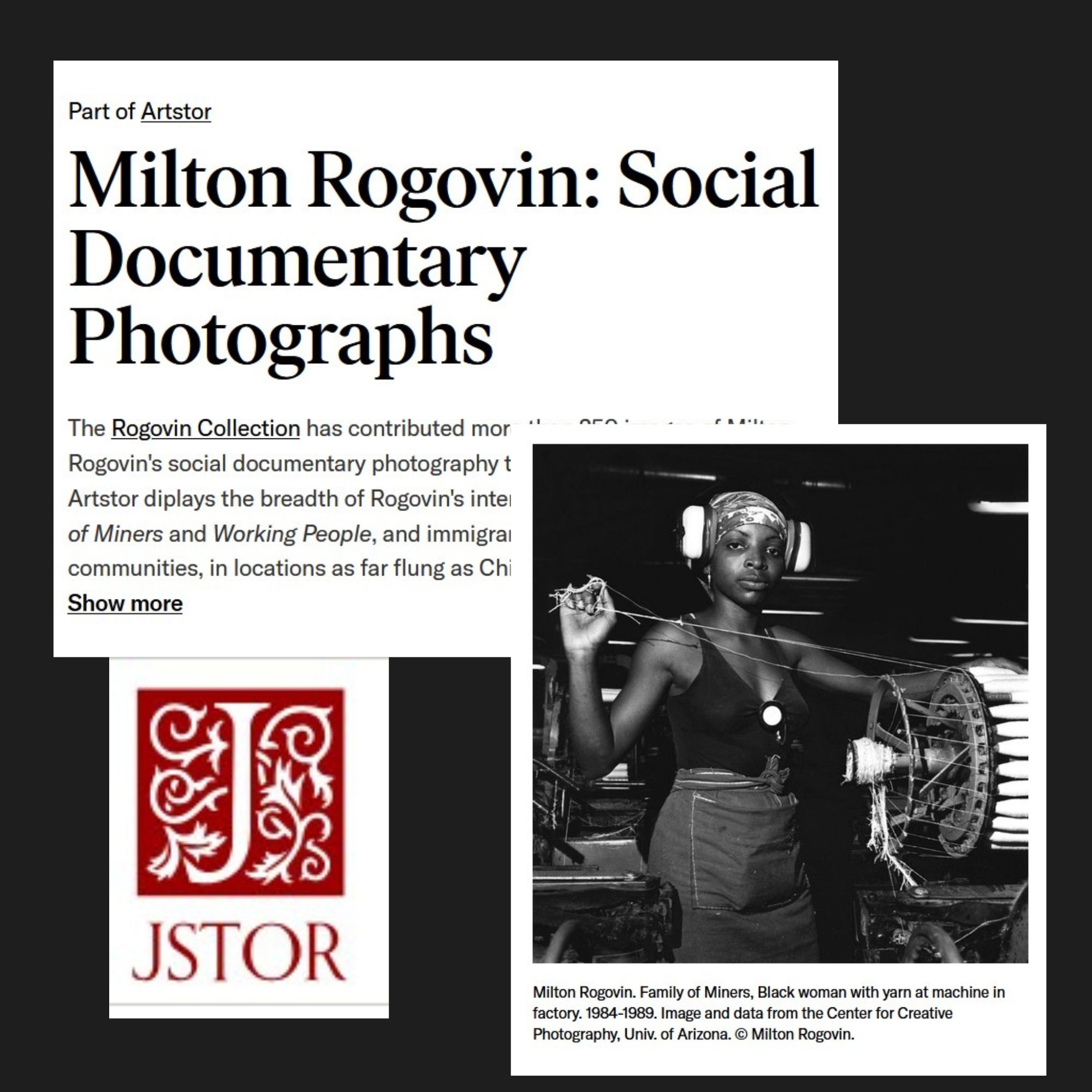
The Rogovin Collection has contributed more than 250 images of Milton Rogovin's social documentary photography to Artstor. The selection in Artstor diplays the breadth of Rogovin's interests from subjects like Family of Miners and Working People, and immigrant and Native American communities, in locations as far flung as Chile, Mexico, Appalachia and Buffalo.
A documentary photographer and political activist, Milton Rogovin (1909-2011) is best known for his portraits of the poor and working class, often considered "the forgotten ones." Trained as an optometrist, Rogovin turned to photography when his political activism drew the attention of the House Committee on Un-American Activities in 1957 and negatively impacted his practice in Buffalo, NY. In 1958, Rogovin began his first series, documenting storefront churches in the African-American community in Buffalo's East Side. He continued to photograph the working people and ethnic communities in the Buffalo area. Starting in 1972, Rogovin photographed families living near his optometry office in Buffalo's Lower West Side, the city's poorest and ethnically-diverse neighborhood. Over the course of three decades, he would return to his subjects, in some cases tracing a family's history in a series of triptychs and quartets. Further afield, Rogovin explored the plight of workers, particularly miners, in the small towns of Appalachia. In 1983, he received the W. Eugene Smith Grant in Humanistic Photography, which allowed him to expand his "Family of Miners" series to include workers in Scotland, France, Spain, Germany, Czechoslovakia, Cuba, Mexico, China, and Zimbabwe.
250 images of Milton Rogovin's social documentary photography
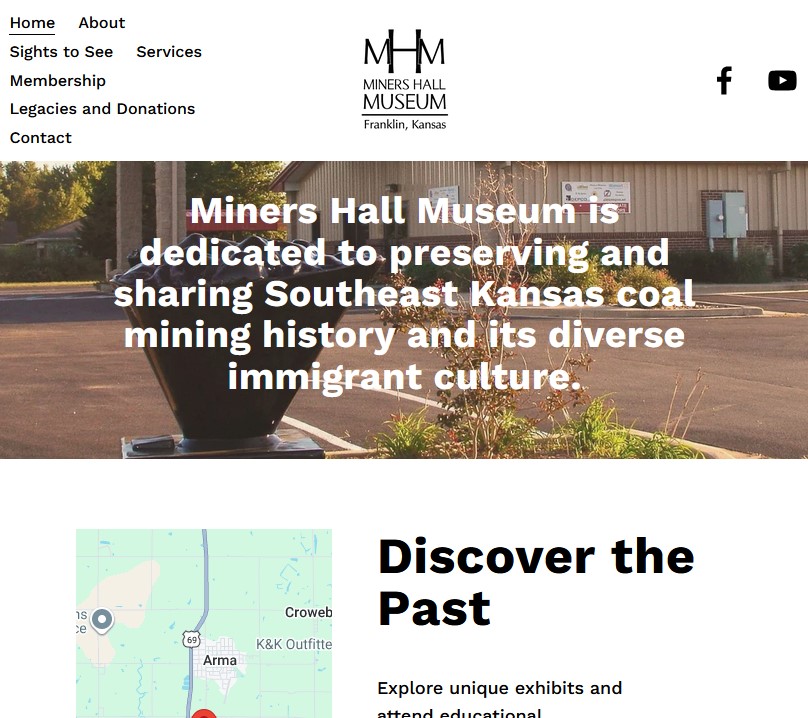
Miners Hall Museum
Between 1880 and 1940, the growth of Cherokee and Crawford counties was remarkable with an influx of people coming not only from eastern states, but also from European countries. Trying to find a better life, the intrigue of coal enticed thousands to move here to become coal miners. “The Little Balkans'' name is associated with Crawford County as the majority of European immigrants came from the Balkan Peninsula region of southeastern Europe, making this a land of unique heritage.
A museum of the Kansas district of the United Mine Workers centered in Crawford and Cherokee counties
Minnie Whitney, Charlie Hardy, History Matters
The emergence of the sharecropping system in the South in the last three decades of the 19th century rested on an uneasy compromise between black farming families and the white landowners on whose land they labored. Sharecropping was an oppressive system but the experience of sharecropping families varied. In this interview done by historian Charles Hardy in 1984, Minnie Whitney, born in 1902, described the determined efforts of more progressive farmers like her father, who along with her mother struggled to maintain some self-sufficiency in the face of white determination to enforce African-American dependence on the sharecropping system.
A 1983 oral history recording of Minnie Whitney by Charles Hardy, where Minnie describes her family's experiences resisting white exploitation of their labor.
Miranda J. Banks
The Writers is the only comprehensive qualitative analysis of the history of writers and writing in the film, television, and streaming media industries in America. Featuring in-depth interviews with over fifty writers--including Mel Brooks, Norman Lear, Carl Reiner, and Frank Pierson--The Writers delivers a compelling, behind-the-scenes look at the role and rights of writers in Hollywood and New York over the past century. Granted unprecedented access to the archives of the Writers Guild Foundation, Miranda J. Banks also mines over 100 never-before-published oral histories with legends such as Nora Ephron and Ring Lardner Jr., whose insight and humor provide a window onto the enduring priorities, policies, and practices of the Writers Guild. With an ear for the language of storytellers, Banks deftly analyzes watershed moments in the industry: the advent of sound, the Second World War, the blacklist, the ascension of television, the American New Wave, the rise and fall of VHS and DVD, and the boom of streaming media. The Writers spans historical and contemporary moments, drawing upon American cultural history, film and television scholarship, and the passionate politics of labor and management. -- Publisher
rontmatter -- Contents -- Acknowledgments -- Abbreviations Used in the Text -- Introduction -- 1. The Artist Employee -- 2. Two Front Lines -- 3. The Infant Prodigy -- 4. Mavericks -- 5. Confederation -- Conclusion -- Appendix A: Screenwriters and Selected Credits -- Appendix B: Methodology --
A comprehensive qualitative analysis of the history of writers and writing in the film, television, and streaming media industries in America.
Mireya Loza
In this book, Mireya Loza sheds new light on the history of the Bracero Program (1942-1964), the binational agreement between the United States and Mexico that allowed hundreds of thousands of male Mexican workers to enter this country on temporary work permits. While this program and the issue of temporary workers has long been politicized on both sides of the border, Loza argues that the prevailing romanticized image of braceros as a family-oriented, productive, legal workforce has obscured the real, diverse experiences of the workers themselves. Focusing on underexplored aspects of workers' lives such as their transnational union organizing efforts, the sexual economies of both gay and straight workers, and the ethno-racial boundaries among Mexican Indigenous braceros, Loza reveals how these men defied perceived political, sexual, and racial norms. Basing her work on an archive of more than 800 oral histories from the United States and Mexico, Loza is the first scholar to carefully differentiate between the experiences of Spanish-speaking guest workers and the many Mixtec, Zapotec, Purhepecha, and Mayan laborers. In doing so, she demonstrates how these transnational workers were able to forge new identities in the face of intense discrimination and exploitation"-- Provided by publisher
new light on the history of the Bracero Program

Miriam Frank
Out in the Union tells the continuous story of queer American workers from the mid-1960s through 2013. Miriam Frank shrewdly chronicles the evolution of labor politics with queer activism and identity formation, showing how unions began affirming the rights of lesbian, gay, bisexual, and transgender workers in the 1970s and 1980s. She documents coming out on the job and in the union as well as issues of discrimination and harassment, and the creation of alliances between unions and LGBT communities. Featuring in-depth interviews with LGBT and labor activists, Frank provides an inclusive history of the convergence of labor and LGBT interests. She carefully details how queer caucuses in local unions introduced domestic partner benefits and union-based AIDS education for health care workers-innovations that have been influential across the U.S. workforce. Out in the Union also examines organizing drives at queer workplaces, campaigns for marriage equality, and other gay civil rights issues to show the enduring power of LGBT workers."
A brief chronology of LGBT labor history, 1965-2013
Prologue: Love and work and queer survival
From construction to couture: coming out in unionized workplaces
Outsiders as insiders: sexual diversity and union leadership
From common enemies to common causes: the labor movement and the gay movement in action and coalition
The heart of the matter: union politics, queer issues, and the life of the local
Organizing the gay unorganized: talking union, talking queer
Epilogue: When Connie married Phyllis
chronicles the evolution of labor politics with queer activism
Miriam Michelle Robinson
Dreams of Dead Bodies: Blackness, Labor, and Detective Fiction in American Literature argues that the detective genre's lineage lies in unexpected texts: experimental works on the margins of what we recognize as classical detective fiction today. It shows that authors like Edgar Allan Poe, Mark Twain, Pauline Hopkins, and Rudolph Fisher drew on detective fiction's puzzle-elements to wrestle with complicated questions about race and labor in the United States, such that the emergence of detective fiction is itself bound to a history of interracial conflicts and labor struggles. Unlike previous studies of detective fiction, this book foregrounds an interracial genealogy of detective fiction, building a nuanced picture of the ways that both black and white American authors appropriated and cultivated literary conventions that finally coalesced in a recognizable genre at the turn of the twentieth century. These authors tinkered with detective fiction's puzzle-elements to address a variety of historical contexts, including the exigencies of chattel slavery, the erosion of working class solidarities by racial and ethnic competition, and accelerated mass production. Dreams for Dead Bodies demonstrates that nineteenth- and early twentieth-century American literature was broadly engaged with detective fiction, and that authors rehearsed and refined its formal elements in literary works typically relegated to the margins of the genre. By looking at these margins, the book argues, we can better understand the origins and cultural functions of American detective fiction
complicated questions about race and labor in the United States, such that the emergence of detective fiction is itself bound to a history of interracial conflicts and labor struggles
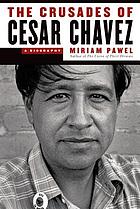
Miriam Pawel
The author draws on thousands of documents and interviews to examine the myths and achievements marking the life of the iconic Latino labor leader and civil rights activist, portraying him as a flawed but brilliant strategist who was often at odds with himself. Cesar Chavez founded a labor union, launched a movement, and inspired a generation. He rose from migrant worker to national icon, becoming one of the great charismatic leaders of the 20th century. Two decades after his death, Chavez remains the most significant Latino leader in U.S. history. Yet his life story has been told only in hagiography, until now. In this biography of Chavez, the author offers a searching yet empathetic portrayal. Chavez emerges here as a visionary figure with tragic flaws; a brilliant strategist who sometimes stumbled; and a canny, streetwise organizer whose pragmatism was often at odds with his elusive, soaring dreams. He was an experimental thinker with eclectic passions, an avid, self-educated historian and a disciple of Gandhian non-violent protest. This biography deepens our understanding of one of Chavez's most salient qualities: his profound humanity. The author traces Chavez's remarkable career as he conceived strategies that empowered the poor and vanquished California's powerful agriculture industry, and his later shift from inspirational leadership to a cult of personality, with tragic consequences for the union he had built. This book reveals how this most unlikely American hero ignited one of the great social movements of our time--Publisher information
Part I. March 1927-April 1962. Home
Sal si puedes
The priest, the organizer, and the lumber handler
Cesar finds his calling
Staying organized
The first disciples
David vs. Goliath, round one
No hay mal que por bien no venga
Part II. April 1962-July 1970. Viva La Causa
Chavez in command
The strike
Beyond Delano
The first big test
Chavez the leader
The fast
The celebrity
The boycott
Contracts
Part III. July 1970-June 1975. A very different strike
Nuestra Señora Reina de la Paz
Staking a national claim
Brother against brother
The perfect villain
The seeds are sown
The saint and the sinner
The end of the nonviolent Viet Cong
Part IV. June 1975-November 1978. Elections in the fields
The Crosby era
The cultural revolution
Slough off the old
Mecca
Trapped
The end game
Part V. November 1978-April 1993. From dream to nightmare
Una sola union
Playing defense
Chicano power
Selling the brand
The last fast
Three funerals
the myths and achievements marking the life of the iconic Latino labor leader
Museum/Exhibits
Tours
Maps
Digital Projects
Organizations
Sites
Film/Video
Audio/Interview
Podcast/Program
Text/Document
Image
Graphs/Data
Timeline
Southwest
West
Midwest
Southeast
Northeast
Mexico
Canada
Global
Books
Teaching
Lectures
Digital Archives
Journals
Bibliographies
Topic Intro