


Collections
Library
Type
Region
Coverage:
-
Published:
-
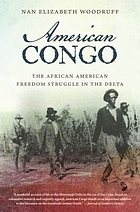
Nan Elizabeth Woodruff
This is the story of how rural black people struggled against the oppressive sharecropping system of the Arkansas and Mississippi Delta during the first half of the twentieth century. Delta planters, aided by local law enforcement, engaged in peonage, murder, theft, and disfranchisement. As individuals and through collective struggle, black men and women fought back, demanding a just return for their crops and laying claim to a democratic vision of citizenship. Nan Woodruff shows how the freedom fighters of the 1960s would draw on this half-century tradition of protest, thus expanding our standard notions of the civil rights movement and illuminating a neglected but significant slice of the American black experience
Highlights the struggle of Black sharecroppers in the Mississippi Delta and incorporates it into the larger civil rights movement.
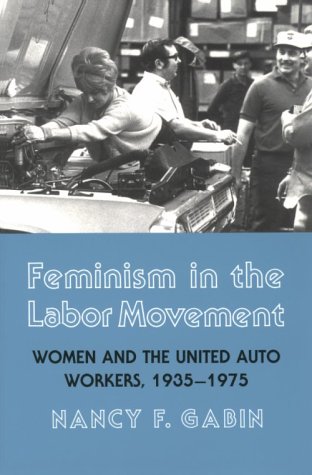
Nancy Felice Gabin
Gabin documents the struggles of United Auto Workers (UAW) women to achieve greater opportunity in the union, on the job, and ultimately in American society. Although the women never overcame segregated work and union hierarchies, they made considerable inroads from the 1940s forward.
Contrasting the ideology of the union with the reality of their place in the auto industry, women pressed for recognition through the formation of a Women's Bureau in the UAW.
This book addresses important issues in women's and labor history, and explores the complex and contingent character of the mediation process between feminism and unionism within the UAW.
documents the struggles of United Auto Workers (UAW) women to achieve greater opportunity in the union, on the job, and ultimately in American society
Nancy Folbre
"As women moved into the formal labor force in large numbers over the last forty years, care work – traditionally provided primarily by women – has increasingly shifted from the family arena to the market. Child care, elder care, care for the disabled, and home care now account for a growing segment of low-wage work in the United States, and demand for such work will only increase as the baby boom generation ages. But the expanding market provision of care has created new economic anxieties and raised pointed questions: Why do women continue to do most care work, both paid and unpaid? Why does care work remain low paid when the quality of care is so highly valued? How effective and equitable are public policies toward dependents in the United States? In For Love and Money, an interdisciplinary team of experts explores the theoretical dilemmas of care provision and provides an unprecedented empirical overview of the looming problems for the care sector in the United States. Drawing on diverse disciplines and areas of expertise, For Love and Money develops an innovative framework to analyze existing care policies and suggest potential directions for care policy and future research. Contributors Paula England, Nancy Folbre, and Carrie Leana explore the range of motivations for caregiving, such as familial responsibility or limited job prospects, and why both love and money can be efficient motivators. They also examine why women tend to specialize in the provision of care, citing factors like job discrimination, social pressure, or the personal motivation to provide care reported by many women. Suzanne Bianchi, Nancy Folbre, and Douglas Wolf estimate how much unpaid care is being provided in the United States and show that low-income families rely more on unpaid family members for their child and for elder care than do affluent families. With low wages and little savings, these families often find it difficult to provide care and earn enough money to stay afloat. Candace Howes, Carrie Leana and Kristin Smith investigate the dynamics within the paid care sector and find problematic wages and working conditions, including high turnover, inadequate training and a “pay penalty” for workers who enter care jobs. These conditions have consequences: poor job quality in child care and adult care also leads to poor care quality. In their chapters, Janet Gornick, Candace Howes and Laura Braslow provide a systematic inventory of public policies that directly shape the provision of care for children or for adults who need personal assistance, such as family leave, child care tax credits and Medicaid-funded long-term care. They conclude that income and variations in states’ policies are the greatest factors determining how well, and for whom, the current system works. Despite the demand for care work, very little public policy attention has been devoted to it. Only three states, for example, have enacted paid family leave programs. Paid or unpaid, care costs those who provide it. At the heart of For Love and Money is the understanding that the quality of care work in the United States matters not only for those who receive care but also for society at large, which benefits from the nurturance and maintenance of human capabilities. As care work gravitates from the family to the formal economy, this volume clarifies the pressing need for America to fundamentally rethink its care policies and increase public investment in this increasingly crucial sector."--Publisher
an interdisciplinary team of experts explores the theoretical dilemmas of care provision and provides an unprecedented empirical overview of the looming problems for the care sector in the United States.

Nancy Folbre
The history of Western economic ideas shows that men have given themselves more cultural permission than women for the pursuit of both economic and sexual self-interest. This book brings women's work, their sexuality, and their ideas, into the center of the dialectic between economic history and the history of economic ideas.--[book jacket]
The eye of the needle : Liberation ; Damnation ; Patriarchal feudalism ; The growth of markets ; Patriarchal ideology ; Markets and mentalités ; Regulation
The springs of desire : The commonwealth of fathers ; Patriarchy defended ; Patriarchy modified ; A supremacy to themselves ; (Re)production ; Sexual efficiency ; Contractual power
Defining virtues : The ancient regime ; Age and gender, love and sex ; The rebellion of the harem ; The climate of reason ; Self, love, God, and nature ; Commerce and virtue ; Human nature
Free trade but not free love. Humanism ; Selfishness celebrated ; Sexual regulation ; Love thyself ; The butcher, the baker, and the wife ; The balance
The limits of affection : Sweet commerce ; The fraternal compromise ; Slavery and evil ; Feminism and abolition ; Observers from abroad ; Democracy in America
The perfectibility of man : Progress? ; Of bread and cake ; Interests and the revolution ; Malevolence theorized ; Timid egoism
The greatest happiness : Chivalry versus calculation ; The vindication ; Godwin's enquiry ; The greatest good ; Gendered virtues
Self-love, triumphant : Poor relief ; The essay on population ; Against benevolence ; The improper arts ; Malthus and women ; Enlightenment redux
Production and reproduction : Patriarchal capitalism ; The rise of individual occupations ; The labor theory of value ; Child labor and the poor laws ; Fertility and out-of-wedlock births ; The wages of virtue ; Family disruptions
Whose wealth? : Wealth demoralized ; The limits to growth ; Collective interests ; The corn laws ; Free trade ; Protectionism ; Selfish classes
The social family : The social father ; The great dream ; Class and gender ; Owen's economics ; The appeal of one-half the human race ; Feminist socialism ; Utopian and scientific
Equal opportunities : Napoleonic code ; Secular humanism ; The sexual radicals ; Le tribune des femmes ; The calculus of harmony ; The sexual welfare state ; Brook Farm ; Crazy attempts
The subjection of women : The partnership ; The subjection of women ; Political activism ; A fundamental question
Declaring independence : Peculiar institutions ; Equality and difference ; Collective interests ; The economic significance of family work ; Divorce and reproductive rights ; Balancing acts
The icy waters : Revolutions ; Scientific self-interest ; The holy family ; The response to Bebel ; Bebel and social democracy ; The survival of the altruistic ; The free development of all
The sacred sphere : Domestic advice ; The meaning of motherhood ; Neoclassical altruism ; Women's duties ; Virtue and consequences
The unproductive housewife : Counting workers ; The U.S. and Massachusetts censuses ; A double bind ; Home economics and household production ; National income and the value of labor services ; The meaning of the adjectives
The nanny state : Fear of fertility decline ; The family wage ; The Fabians ; The endowment of motherhood ; Minimum wages for women in the U.S. ; Birth control ; Sleeping Beauty awakes ; The glorious unfolding ; Public support and reproductive rights
Human capitalism : Social welfare ; The opposite reaction ; Everyone a capitalist ; Capitalizing humans ; The altruistic family ; Families, gender inequality, and the state ; The third realm
Beyond economic man : The waves ; Feminist economics ; Motivations ; Markets and non-markets ; The costs of care ; Gender norms ; Fairness, reciprocity, and care ; Gross national happiness ; Rational and caring people
brings women's work, their sexuality, and their ideas, into the center of the dialectic between economic history and the history of economic ideas.

Nancy Folbre
THE INVISIBLE HEART addresses an often-neglected yet basic problem in our society: balancing economic pursuits with care for others, particularly children, the elderly, and the infirm. THE INVISIBLE HEART reinterprets policy issues such as welfare reform, school finance, and progresive taxation, and confronts the challenges of globalization, outlining strategies for developing an economic system that rewards both individual achievment and care for others
addresses a problem in our society: balancing economic pursuits with care for others, particularly children, the elderly, and the infirm.

Nancy Folbre
--a primer on reproductive labor, a subject that challenges our understanding of capitalist systems. " Nancy Folbre challenges the conventional economist's assumption that parents have children for the same reason that they acquire pets--primarily for the pleasure of their company. Children become the workers and taxpayers of the next generation, and "investments" in them offer a significant payback to other participants in the economy. Yet parents, especially mothers, pay most of the costs. The high price of childrearing pushes many families into poverty, often with adverse consequences for children themselves. Parents spend time as well as money on children. Yet most estimates of the "cost" of children ignore the value of this time. Folbre provides a startlingly high but entirely credible estimate of the value of parental time per child by asking what it would cost to purchase a comparable substitute for it. She also emphasizes the need for better accounting of public expenditure on children over the life cycle and describes the need to rethink the very structure and logic of the welfare state. A new institutional structure could promote more cooperative, sustainable, and efficient commitments to the next generation."
Contents
Acknowledgments vii
Introduction 1
I Conceptualizing the Costs of Children
1 Children and the Economy 11
2 Commitments and Capabilities 27
II Private Spending on Children in the United States
3 Defining the Costs of Children 45
4 Children and Family Budgets 65
5 Children outside the Household 79
with Tamara Ohler
6 Accounting for Family Time 96
with Jayoung Yoon
7 Valuing Family Work 121
III Public Spending on Children in the United States
8 Subsidizing Parents 139
provides a startlingly high but entirely credible estimate of the value of parental time per child by asking what it would cost to purchase a comparable substitute for it.

Nancy Isenberg
A history of the class system in America from the colonial era to the present illuminates the crucial legacy of the underprivileged white demographic, citing the pivotal contributions of lower-class white workers in wartime, social policy, and the rise of the Republican Party, "-
crucial legacy of the underprivileged white demographic
Nancy Quam-Wickham, Ben Tyler Elliott, eds
A Day in the Life of an American Worker: 200 Trades and Professions through History in 2 volumes allows readers to imagine the daily lives of ordinary workers, from the beginnings of colonial America to the present. It presents the stories of millions of Americans—from the enslaved field hands in antebellum America to the astronauts of the modern "space age"—as they contributed to the formation of the modern and culturally diverse United States.
Readers will learn about individual occupations and discover the untold histories of those women and men who too often have remained anonymous to historians but whose stories are just as important as those of leaders whose lives we study in our classrooms. This book provides specific details to enable comprehensive understanding of the benefits and downsides of each trade and profession discussed. Selected accompanying documents further bring history to life by offering vivid testimonies from people who actually worked in these occupations or interacted with those in that field. VOLUME 1
607–1775: The Colonial Period,
Introduction,
Apothecary, Baker, Basket Maker, Blacksmith, Cabinetmaker, Cartwright and Wainwright, Cooper, Farmer,Farrier,Fisherman,Governor,Gunsmith,Harness Maker and Saddler,Husbander,Indentured Servant,Midwife,Miller,Minister,Potter,Rigger,Scrivener,Sexton,Shipwright,Shopkeeper,Silversmith,Translator,Watchman,Weaver and Spinner,Wigmaker,
1776–1860: The Revolutionary Period to the Antebellum Era,
Introduction,
Actor/Actress (Stage)Barber,Bargeman,Cartographer,Customs Collector,Diplomat,Explorer,Factory Operative,Field Hand,Fur Trader,Fur Trapper,Ginner,Gold Miner,
Harpooner,Huckster,Intelligencer,Inventor,Joiner,Journalist,Judge,Laborer,Land Speculator,Laundress,Militiaman,Milliner,Missionary,Pamphleteer,Physician,Planter,
Politician,Printer,Ranchero,Sailor,Slave Driver,Surveyor,Tallow Chandler,Tobacconist,Turpentiner,Wharfinger,
1861–1914: The Civil War, Reconstruction, and the Gilded Age,
Introduction,Banker, Bookkeeper, Cigarmaker,Coal Miner,Cook,Cowboy,Currier,Haberdasher,Logger,Mason,Meat Packinghouse Worker,Mechanic,Nurse,Painter, Commercial,Patternmaker, Pension Bureau Clerk,Photographer,Police Officer,Prison Guard,Puddler,Railroad Conductor,Railroad Construction Worker,Railroad Station Agent, Seamstress,Sharecropper,Soldier,Surgeon,Teacher,Teamster,Telegraph Operator,Tribal Representative,Waste Collector
VOLUME 2
1915–1945: World War I to World War II,
Introduction,Actuary,Animator,Autoworker,Cannery Worker,Draftsman,Farmworker,Firefighter,Garment Worker,Geologist,Glazier,Grocer,Infantryman,Ironworker,
Longshoreman,Mechanical Engineer,Newspaper Seller,Oil Driller,Radio Announcer,Retail Clerk,Screenwriter,Sleeping Car Porter,Steelworker,Stenographer,Streetcar Operator,Telephone Exchange Operator,Textile Worker,Truck Driver,Waiter/Waitress,Warehouse Worker,
1946–1991: Post–World War II America,Introduction,Accountant,Actor/Actress (Film and Television),Advertising Account Executive,Aeronautical and Aerospace Engineer,Anesthesiologist,Architect,Artist,Astronaut,Attorney,Baseball Player,Beautician,Broadcast Journalist,College Professor,Community Organizer,Construction Worker,Dentist,Dietitian,Economist,Fashion Designer and Model,Flight Attendant,Foreign Service Officer,Forester,Hotelier,Industrial Hygienist,Interior and Industrial Designer,Janitor,Librarian,Machine Operator,Oceanographer,Office Clerk,Pharmacist,Pilot,Radiologist and Radiology Technician,Registrar,Salesperson,Scientist,
Singer,Social Worker,Statistician,Travel Agent,Urban Planner,Veterinarian,
1992–2019: Post–Cold War and the Twenty-First Century,
Introduction,Campaign Manager,Casino Worker,Clergyperson,Combat Engineer,Computer Programmer,Correctional Officer,Data Analyst,Early Childhood Educator,
E-Commerce Specialist,Emergency Medical Technician,Epidemiologist,Forensic Scientist,Home Health Aide,Housekeeper,Information Technology Architect,
Landscaper,Machinist,Museum Curator,Navigator,Package Handler,Physical Therapist,Postal Worker,Project Manager,Psychologist,Scientific Illustrator,
Social Media Coordinator,Sound Engineer,Spy,Supply Chain Logistician
allows readers to imagine the daily lives of ordinary workers, from the beginnings of colonial America to the present
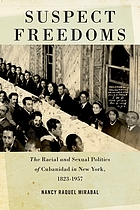
Nancy Raquel Mirabal
Beginning in the early nineteenth century, Cubans migrated to New York City to organize and protest against Spanish colonial rule. While revolutionary wars raged in Cuba, expatriates envisioned, dissected, and redefined meanings of independence and nationhood. An underlying element was the concept of Cubanidad, a shared sense of what it meant to be Cuban. Deeply influenced by discussions of slavery, freedom, masculinity, and United States imperialism, the question of what and who constituted 'being Cuban' remained in flux and often, suspect. The first book to explore Cuban racial and sexual politics in New York during the nineteenth and twentieth centuries, Suspect Freedoms chronicles the largely unexamined and often forgotten history of more than a hundred years of Cuban exile, migration, diaspora, and community formation. Nancy Raquel Mirabal delves into the rich cache of primary sources, archival documents, literary texts, club records, newspapers, photographs, and oral histories to write what Michel Rolph Trouillot has termed an 'unthinkable history.' Situating this pivotal era within larger theoretical discussions of potential, future, visibility, and belonging, Mirabal shows how these transformations complicated meanings of territoriality, gender, race, power, and labor. She argues that slavery, nation, and the fear that Cuba would become 'another Haiti' were critical in the making of early diasporic Cubanidades, and documents how, by the late nineteenth and early twentieth centuries, Afro-Cubans were authors of their own experiences; organizing movements, publishing texts, and establishing important political, revolutionary, and social clubs. Meticulously documented and deftly crafted, Suspect Freedoms unravels a nuanced and vital history"--Publisher's website
slavery, nation, and the fear that Cuba would become 'another Haiti' were critical in the making of early diasporic Cubanidades,
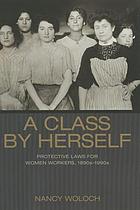
Nancy Woloch
A Class by Herself explores the historical role and influence of protective legislation for American women workers, both as a step toward modern labor standards and as a barrier to equal rights. Spanning the twentieth century, the book tracks the rise and fall of women-only state protective laws--such as maximum hour laws, minimum wage laws, and night work laws--from their roots in progressive reform through the passage of New Deal labor law to the feminist attack on single-sex protective laws in the 1960s and 1970s. Nancy Woloch considers the network of institutions that promoted women-only protective laws, such as the National Consumers' League and the federal Women's Bureau; the global context in which the laws arose; the challenges that proponents faced; the rationales they espoused; the opposition that evolved; the impact of protective laws in ever-changing circumstances; and their dismantling in the wake of Title VII of the Civil Rights Act of 1964. Above all, Woloch examines the constitutional conversation that the laws provoked--the debates that arose in the courts and in the women's movement. Protective laws set precedents that led to the Fair Labor Standards Act of 1938 and to current labor law; they also sustained a tradition of gendered law that abridged citizenship and impeded equality for much of the century. Drawing on decades of scholarship, institutional and legal records, and personal accounts, A Class by Herself sets forth a new narrative about the tensions inherent in women-only protective labor laws and their consequences."-- Provided by publisher
historical role and influence of protective legislation for American women workers
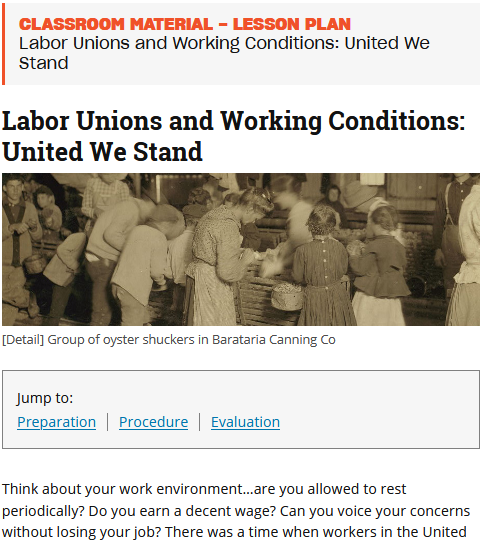
Nancy Woodward, Trish Shoemaker, Library of Congress
Think about your work environment…are you allowed to rest periodically? Do you earn a decent wage? Can you voice your concerns without losing your job? There was a time when workers in the United States did not have basic rights such as a minimum wage or time for a break. Work with primary source documents from the Library of Congress online collections to study the working conditions of U.S. laborers at the turn of the century. Answer the question, "Was there a need for organized labor unions?"
A lesson plan that guides educators to help students conduct primary source research, describe U.S. working conditions at the turn of the twentieth century and how they contributed to the rise of the labor union movement, and understand justifications for organized labor unions.
Naomi R Williams
Like many Midwestern factory towns, deindustrialization damaged Racine in the 1970s and 1980s. But the Wisconsin city differed from others like it in one important way: workers maintained their homegrown working-class economy and political culture.
Even as labor declined across the country, Racine’s workers successfully fought for fair housing and education, held politicians accountable, and allied with racial and gender justice organizations.
Naomi R Williams traces the journeys of two local activists to highlight how people can support democracy and economic freedom in the twenty-first century. In Racine, ideas of class and race shifted but remained strong. The broad-based class politics that emerged drew on racial analysis, vigilant organizing, and agile labor leadership that organized more people. Unionized workers in turn won political power while uniting to resist conservative and corporate attacks. Charting Racine’s transition, Williams breaks down how worker solidarity persevered and presents lessons that can provide valuable guidance for today’s generation of activists.
Racine’s workers successfully fought for fair housing and education, held politicians accountable, and allied with racial and gender justice organizations
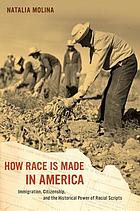
Natalia Molina
How Race Is Made in America examines Mexican Americans--from 1924, when American law drastically reduced immigration into the United States, to 1965, when many quotas were abolished--to understand how broad themes of race and citizenship are constructed. These years shaped the emergence of what Natalia Molina describes as an immigration regime, which defined the racial categories that continue to influence perceptions in the United States about Mexican Americans, race, and ethnicity. Molina demonstrates that despite the multiplicity of influences that help shape our concept of race, common themes prevail. Examining legal, political, social, and cultural sources related to immigration, she advances the theory that our understanding of race is socially constructed in relational ways--that is, in correspondence to other groups. Molina introduces and explains her central theory, racial scripts, which highlights the ways in which the lives of racialized groups are linked across time and space and thereby affect one another. How Race Is Made in America also shows that these racial scripts are easily adopted and adapted to apply to different racial groups"--Provided by publisher
Part I. Immigration Regimes I : Mapping Race and Citizenship --
Placing Mexican Immigration within the Larger Landscape of Race Relations in the U.S. --
"What is a White Man?" : The Quest to Make Mexicans Ineligible for U.S. Citizenship
-- Birthright Citizenship Beyond Black and White --
Part II. Immigration Regimes II : Making Mexicans Deportable -- Mexicans Suspended in a State of Deportability : Medical Racialization and Immigration Policy in the 1940s -- Deportations in the Urban Landscape -- Epilogue: Making Race in the Twenty-First Century.
understanding of race is socially constructed in relational ways
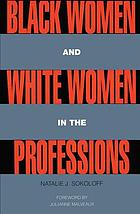
Natalie J. Sokoloff
Women of all racial\ethnic backrounds and minority men have been hailed as the major beneficiaries of the expansion in political, economic, and employment opportunities of the 1960s and 1970s. The author uses data derived from a twenty year span of census material to provide a thorough analysis of gender and race segregation throughout the professional occupations in the U.S. during this period of massive social change.
She makes clear the advances achieved by all groups-men and women, black and white-during this period of economic expansion, as well as insightfully evaluating the differential advantage of white men against all other race/gender groups. At the same time, Professor Sokoloff provides compelling evidence challenging several myths, such as that of the two-fer myth, whereby black women are said to benefit two-fold from their race and gender statuses from affirmative action.
provides a thorough analysis of gender and race segregation throughout the professional occupations in the U.S. during this period of massive social change.
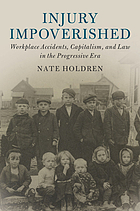
Nate Holdren
The late nineteenth and early twentieth century U.S. economy maimed and killed employees at an astronomically high rate, while the legal system left the injured and their loved ones with little recourse. In the 1910s, U.S. states enacted workers' compensation laws, which required employers to pay a portion of the financial costs of workplace injuries. This book uses a range of archival materials, interdisciplinary theoretical perspectives, and compelling narration to criticize the shortcomings of these laws. While compensation laws were a limited improvement in economic terms for employees, this book argues that these laws created new forms of inequality, by causing people with disabilities to lose their jobs, as well as new forms of inhumanity, by treating deeply personal suffering losses in an impersonal and economic manner. Ultimately the book raises questions about law and class, and about when and whether our economy and our legal system produce justice or injustice"-- Provided by publisher See roundtable at https://lawcha.org/2020/08/10/a-roundtable-nate-holdrens-injury-impoverished-workplace-accidents-capitalism-and-law-in-the-progressive-era/
A seering introduction to workplace injury that raises questions about law and class, and about when and whether our economy and our legal system produce justice or injustice

National Advisory Commission on Civil Disorders, History Matters
President Lyndon Johnson formed an 11-member National Advisory Commission on Civil Disorders in July 1967 to explain the riots that plagued cities each summer since 1964 and to provide recommendations for the future. The Commission’s 1968 report, informally known as the Kerner Report, concluded that the nation was “moving toward two societies, one black, one white—separate and unequal.” Unless conditions were remedied, the Commission warned, the country faced a “system of ’apartheid’” in its major cities. The Kerner report delivered an indictment of “white society” for isolating and neglecting African Americans and urged legislation to promote racial integration and to enrich slums—primarily through the creation of jobs, job training programs, and decent housing. President Johnson, however, rejected the recommendations. In April 1968, one month after the release of the Kerner report, rioting broke out in more than 100 cities following the assassination of civil rights leader Martin Luther King, Jr. In the following excerpts from the Kerner Report summary, the Commission analyzed patterns in the riots and offered explanations for the disturbances. In 1998, 30 years after the issuance of the Report, former Senator and Commission member Fred R. Harris co-authored a study that found the racial divide had grown in the ensuing years with inner-city unemployment at crisis levels. Opposing voices argued that the Commission’s prediction of separate societies had failed to materialize due to a marked increase in the number of African Americans living in suburbs.
Excerpts from the 1968 Kerner Report, which details one perspective on the state of U.S. race relations.
National Archives
The lesson plan includes guidance to analyze the documents, to conduct a courtroom simulation, to place this in the context of immigration patterns, to understand the legislation, and to do comparisons with other points of repression of immigrants
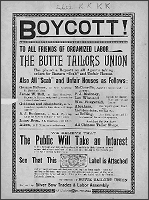
As Chinese workers who remained in the United States after the 1882 Chinese Exclusion Act migrated eastward for work, discriminatory legislation and a poor economic climate accompanied them. Thus, they continued to be scapegoats for anti-immigrant labor organizations. The featured documents, an affidavit by two Chinese merchants in Butte, Montana, and the corresponding trade union flyers calling for a boycott of Chinese businesses in Butte, are evidence of the existence of this activity outside of California.
The featured documents, an affidavit by two Chinese merchants in Butte, Montana, and the corresponding trade union flyers calling for a boycott of Chinese businesses in Butte, are evidence of the existence of this activity outside of California.
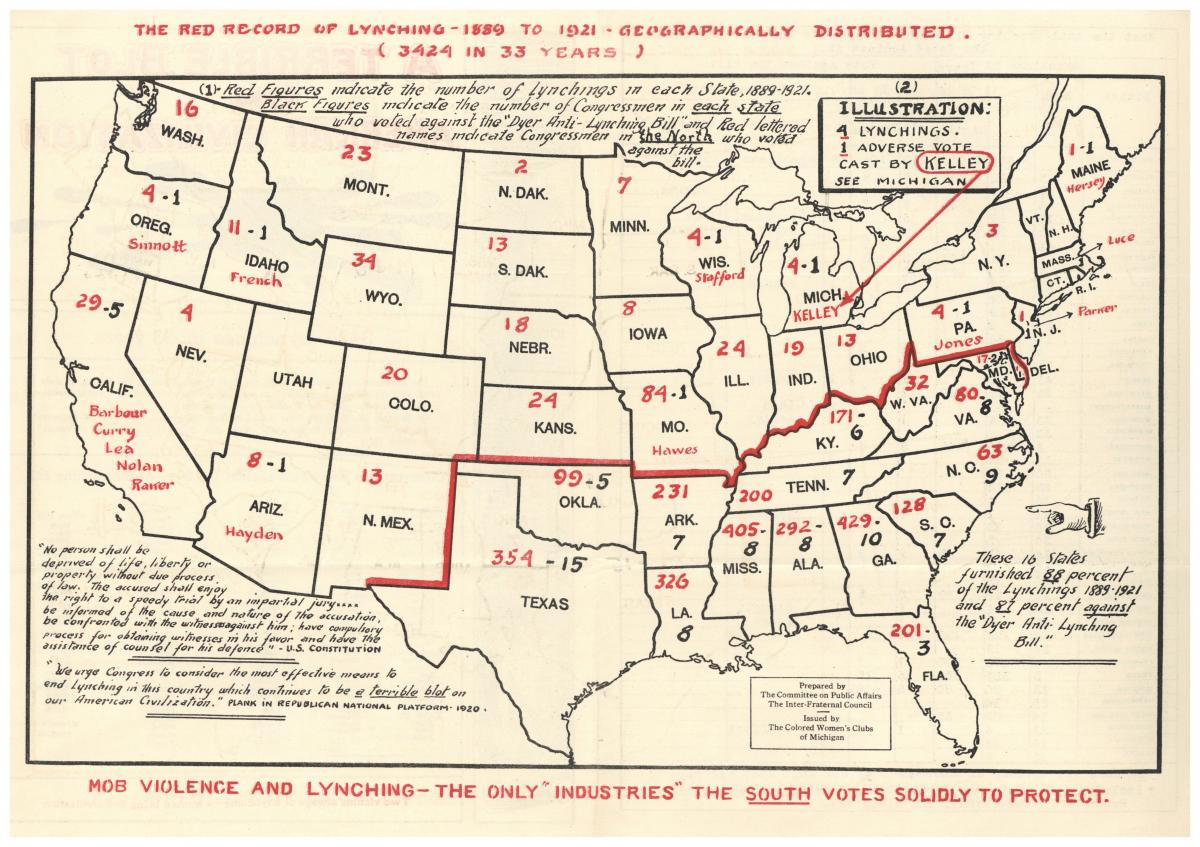
National Archives
The Red Summer was a pattern of white-on-black violence that occurred in 1919 throughout the United States. The post World War I period was marked by a spike in racial violence, much of it directed toward African American veterans returning from Europe, where they were often treated much better there than by white Americans, despite their brave service to the country. The bloodiest incident occurred in Elaine, Arkansas, where it is estimated that over 100 African Americans were killed. The racial violence of the Red Summer erupted in many other Southern locations as well as in the North, most notably in Chicago. The presence of racial hostility in the North was partly a reaction of Northern whites to the large influx of African Americans into Northern cities during the Great Migration, though this hostility did not prevent large numbers of African Americans from heading North.
A National Archives research primer for records relevant to the Red Summer of 1919 and the racial violence it caused against people of color.
National Archives, History Matters
The Bonus March was one of several grassroots movements of the unemployed during the Great Depression that galvanized thousands of men and women and helped focus attention on the role of the federal government in alleviating economic hardship. Twenty thousand World War I veterans marched to Washington to demand the immediate release of promised cash bonuses and set up camp until their demands were met. With President Herbert Hoover’s authorization, federal troops, armed with tanks and cavalry, attacked the homeless veterans and burned their encampment. When images like this photograph, which shows the Bonus Marchers’ shantytown burning down in sight of the Capitol on the afternoon of July 28, 1932, reached the public, Hoover’s image was permanently tarnished.
shows the Bonus Marchers’ shantytown burning down in sight of the Capitol on the afternoon of July 28, 1932,

National Association of Letter Carriers
This monument, created by artist Elliot Offner, was dedicated to mailworkers on the hundreth anniversary of the NALC
This monument, created by artist Elliot Offner, was dedicated to mailworkers on the hundreth anniversary of the NALC
National Association of Letter Carriers
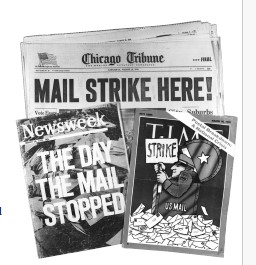
tells the story of the 1970 general strike of postal workers, told mostly from the perspective of the letter carriers involved. The wildcat Postal strike that began on March 18, 1970 signaled the end of collective begging and the beginning of collective bargaining that raised hundreds of thousands of postal workers, craft and management, from poverty level wages to middle class wage earners.The members of each NALC Branch that made the decision to engage in the illegal strike against the United States Government, since the USPS was a government agency at that lime, reached a final decision with great trepidation following a serious and difficult debate between senior and junior union members.
On that faithful day in March NALC Branch 36 NY, Branch 41 Brooklyn, Long Island Branch 6000 as well as branches In New Jersey, supported by APWU postal clerks, staged an illegal work stoppage. At its peak over 200,000 letter carriers went on strike that included letter carriers from throughout the country --from Paul Daniels, Union Courier, March 2014
the dramatic story of the 1970 postal workers general strike, an illegal strike that won dramatic gains.
National Association of Machinists
Digitial labor journal of this major AFL union from 1890-1891
Digitized newspapers from the International Association of Machinists

National Brotherhood of Operative Potters
Located on the Ohio River near West Virginia. East Liverpool was a small trade post that soon gained a reputation for its many potteries. The deposits of yellow clay nearby attracted James Bennett, the first of East Liverpool’s potters, and many others in the trade, primarily English immigrants. Rather than compete with the other major group of unionized potters in Trenton, New Jersey, the potters of East Liverpool withdrew from the Knights of Labor in 1890 to begin a new organization, the National Brotherhood of Operative Potters. By 1938, the National Brotherhood of Operative Potters had seen a steady increase in membership in East Liverpool and its surrounding locale, and would eventually become the center of unionized potters in the United States and Canada. Even as tastes in pottery shifted away from the nearby yellow clay to white clay that had to be shipped in from out of state, East Liverpool’s numerous historically important potteries and convenient waterway access enabled it to retain enough notoriety to be known as the “Pottery Capital of the World,” or simply “Crockery City.”
The Potters Herald probably began publishing on April 19, 1899 under A. S. Hughes and T. J. Duffy, president and secretary of the National Brotherhood of Operative Potters to cover the interests of professional potters. Soon after, it was adopted as the official organ of the Brotherhood. Eventually the East Liverpool Trades and Labor Council joined as a sponsor, of which potters were likely already a large component. The Potters Herald appears to have maintained its name throughout the years and had no known competitors. A Thursday weekly comprised of a regular six pages, the Potters Herald published news related to union and labor. Many of its articles were based in Chicago or Washington D.C., although it regularly announced local events too. The Potters Herald also reported on War Labor Board policies and unionists’ reactions to those policies during World War II. The War Labor Board imposed restrictions on unions’ abilities to strike during a time when boosted production was necessary to supply war materials. After these restrictions were lifted and many workers were laid off, strikes resumed. Due to membership declines following these struggles, the Potters Herald downsized to a monthly in the 1970s, and finally closed in 1982.
Issues from 1938-1951 of this newspaper of the National Brotherhood of Operative Potters, , which often covered Chicago and Washington stories.

National Child Labor Committee
13 minute film dramatizing child labor, Children Who Labor was directed by the openly radical Ashley Miller and written by his wife, the actress Ethel Browning. Its political argument is hung on a credibility-straining family melodrama featuring an industrialist who shuns photographic evidence put before him by an NCLC investigator (who is unobtrusively gathering information at the far left in the opening shot). The industrialist’s wife, by contrast, is shocked and sympathetic.
When their young daughter gets lost during a train trip through a factory town (the location was Paterson, New Jersey), she’s taken in by an immigrant family—probably meant to be Italian—that has found mill work only for their elder daughter. The lost child too joins the workforce, and “fate” leads the industrialist, after he buys the mill, to unknowingly become his daughter’s employer.
13 minute film about child labor, 1912

National Civil Rights Museum
This gallery expands the story of the 1968 Memphis sanitation strike. New videos feature Rev. James Lawson and T.O. Jones, who courageously waged the battle on behalf of striking sanitation workers. The iconic strikers with the "I Am a Man" signs and the garbage truck from the original exhibition are here. Film documenting the sanitation strike is projected upon the garbage truck. New to the exhibit is the Mountaintop Theatre, showing the powerful "Mountaintop" speech, the last one Dr. King gave the evening before he died.
A National Civil Rights Museum gallery that contextualizes the 1968 Memphis Sanitation Strike within the broader history of the U.S. civil rights movement.
Museum/Exhibits
Tours
Maps
Digital Projects
Organizations
Sites
Film/Video
Audio/Interview
Podcast/Program
Text/Document
Image
Graphs/Data
Timeline
Southwest
West
Midwest
Southeast
Northeast
Mexico
Canada
Global
Books
Teaching
Lectures
Digital Archives
Journals
Bibliographies
Topic Intro