


Collections
Library
Type
Region
Coverage:
-
Published:
-

National Civil Rights Museum
Noted as one of the nation's premier heritage and cultural museums, the National Civil Rights Museum in Memphis, Tennessee, is steadfast in its mission to share the culture and lessons from the American Civil Rights Movement and explore how this significant era continues to shape equality and freedom globally.
its mission is to share the culture and lessons from the American Civil Rights Movement
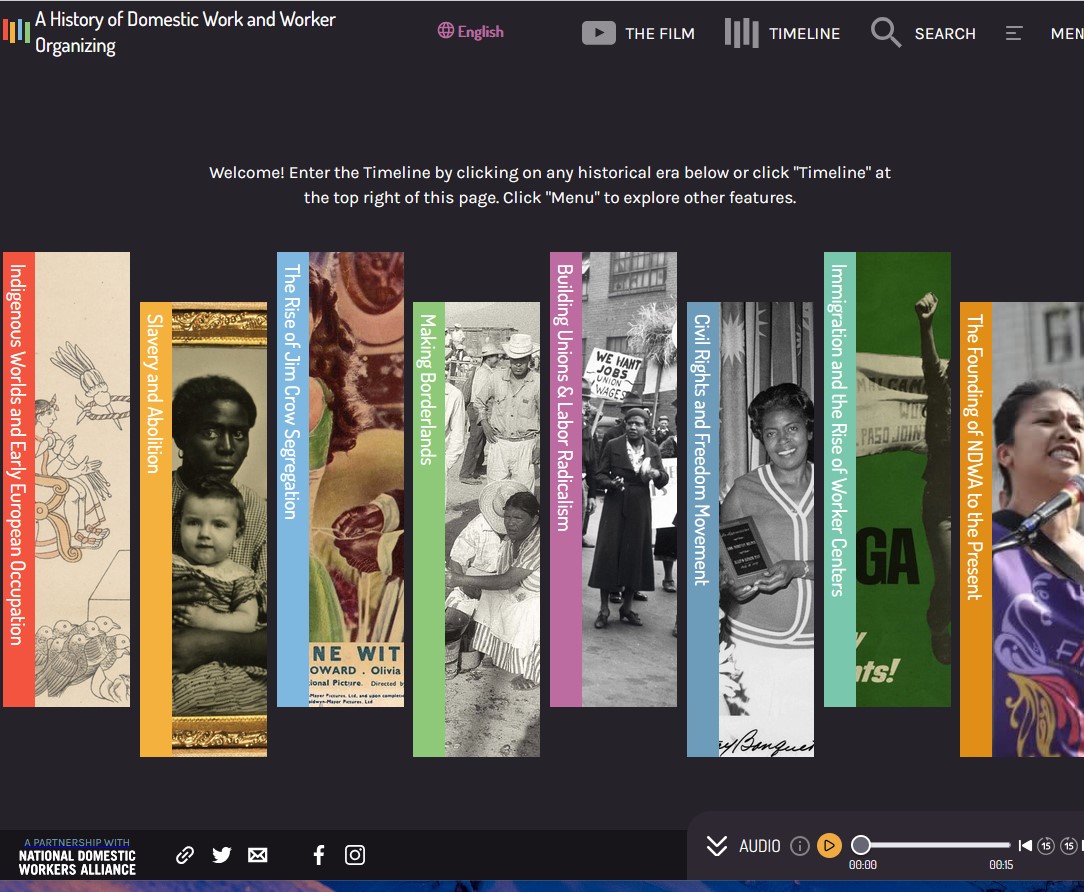
National Domestic Workers Alliance
This timeline is the central tool for the National Domestic Workers Alliance (NDWA) “We Make History” political education curriculum. History helps us to understand current conditions, learn from the courage and resilience of our movement ancestors, and continue to build a powerful, multiracial alliance grounded in a shared commitment to combating all forms of oppression.
A timeline-based digital history exhibit on the history of domestic workers, from enslaved workers to the present
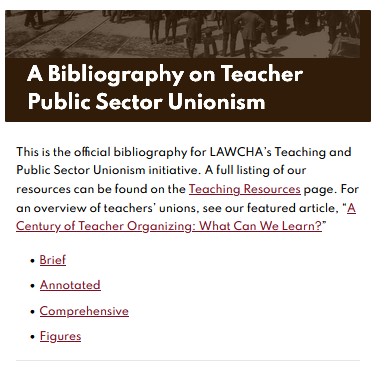
National Education Association
This is the official bibliography for LAWCHA’s Teaching and Public Sector Unionism initiative. A full listing of our resources can be found on the Teaching Resources page. For an overview of teachers’ unions, see our featured
Bibliography on teachers unionism
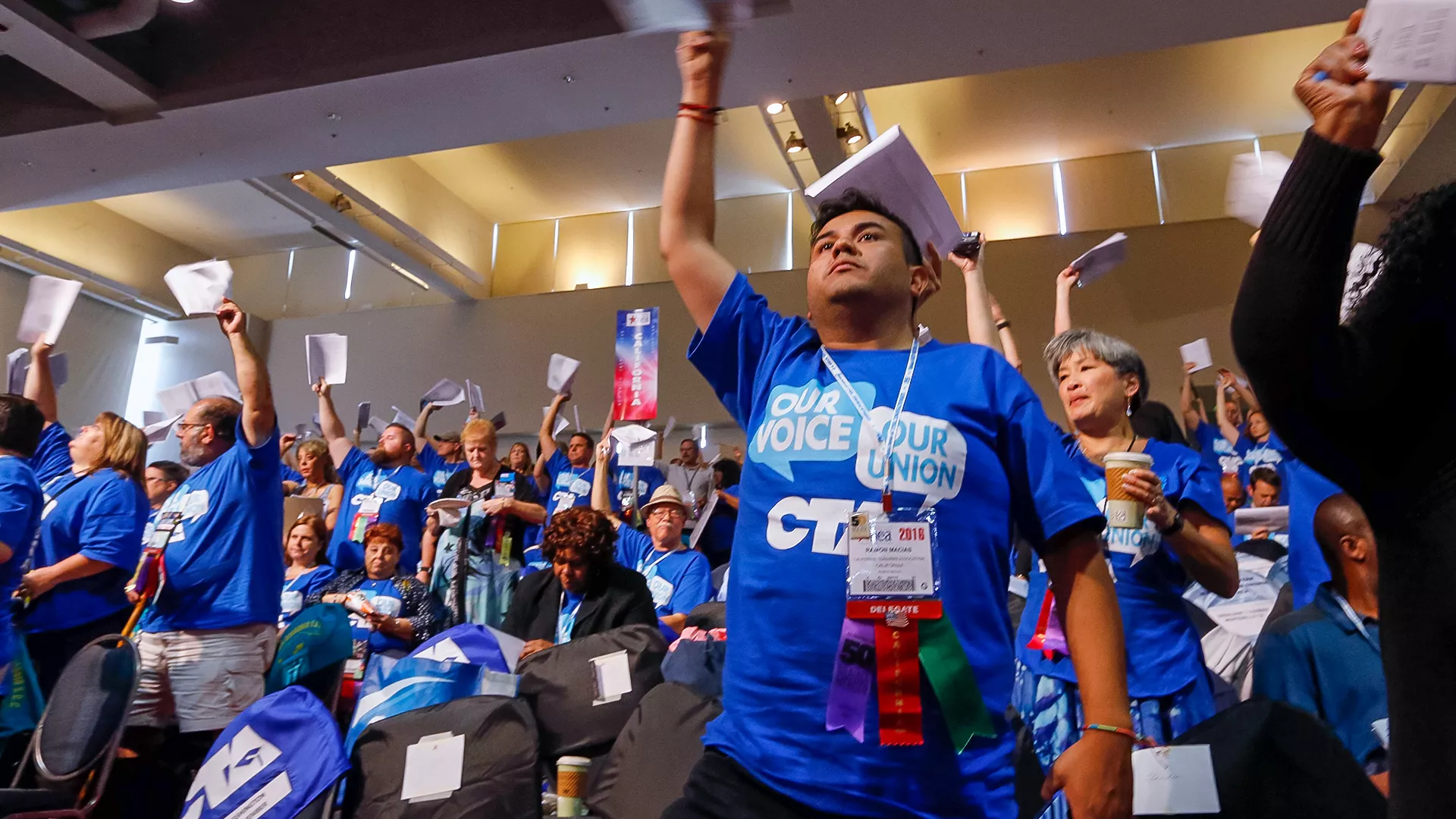
National Education Association
4 NEA Oral histories conducted by Vakil Smallen, archivist for the NEA, between January 19th and May 5th, 2017. Interviewees include: John Dunlop was elected president of the Birmingham Education Association (BEA) in 1967 and hired by the National Education Association (NEA) in 1970. He began his career at NEA by doing field work before he joined the Office of Negotiation. He worked directly with local NEA affiliates who were involved in negotiations, bargaining, and strikes. Dale Lestina worked for the National Education Association (NEA) from 1968 through 1999, mostly with the Legislative Department. For most of his career, he was the NEA's Chief Lobbyist. Richard Nuanes worked at the National Education Association from 1976 through 2010, splitting his time between Legal Services and Conference and Facilities Management. Ken Melley worked at the National Education Association (NEA) from 1968 through 1997. His career began as an organizer of teachers to support collective bargaining initiatives. In 1979, he became the Political Director of NEA. He was also the founder of the Uniserv program and oversaw the NEA's Political Action Committee (NEAPAC). See https://searcharchives.library.gwu.edu/repositories/2/archival_objects/430211 for citation information.
4 transcribed oral history interviews of staff members of the teachers union, the National Education Association
National Labor Tribune, Googlenews
National Labor Tribune was published in Pittsburgh, Pennsylvania, beginning in 1874.
It is available here on google newspapers, but the interface takes some effort. 1876-1883, 1887-1889, 1899-1906 are available at this site.
Founded by Thomas A. Armstrong of Pittsburg in 1874, Greenback candidate for governor of Pennyslvania. Credited with 10,000 subscribers in the 1870s, there is much coverage of miners and steel workers in this newspaper.
A significant digitized labor paper from Pittsburgh, Pennsylvania in the 1870s through 1890s.

National Park Foundation, National Park Service
National Park Foundation and National Park Service are working together to expand storytelling at parks to share a more comprehensive history of the U.S., including the contributions and stories of forced laborers, enslaved people, and advocates of the labor movement. The histories of work and working people help us explore the lives of a broader range of individuals – each with their own labor history to share – and invite us to imagine a better future.
The history of the labor movement and the fight for better working conditions is preserved in the stories of our national parks.
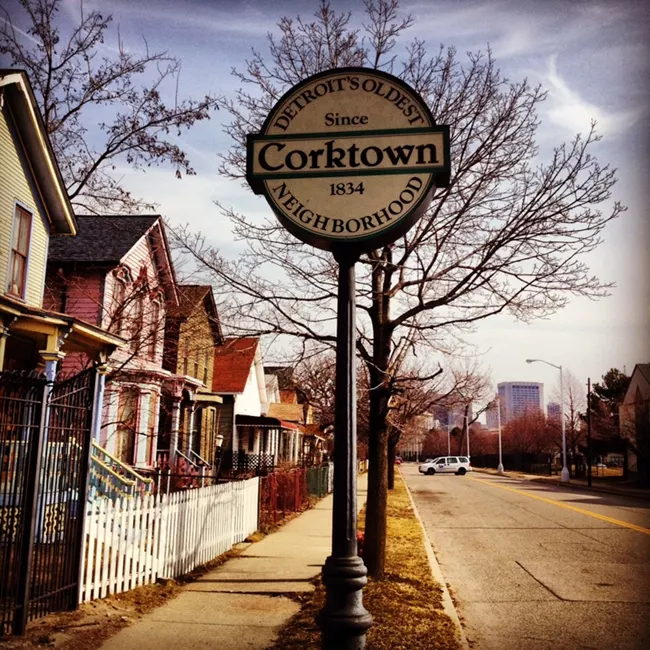
National Park Service
National Park Service highlights only
a handful of labor sites in Detroit, mapped
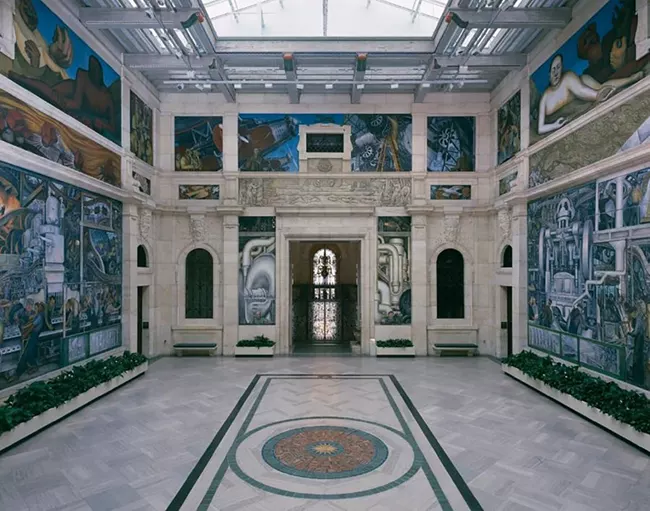
National Park Service
The history of the labor movement and the fight for better working conditions is preserved in the stories of our national parks.
Learn about labor history at national parks in the US
National Park Service, Dickinson College
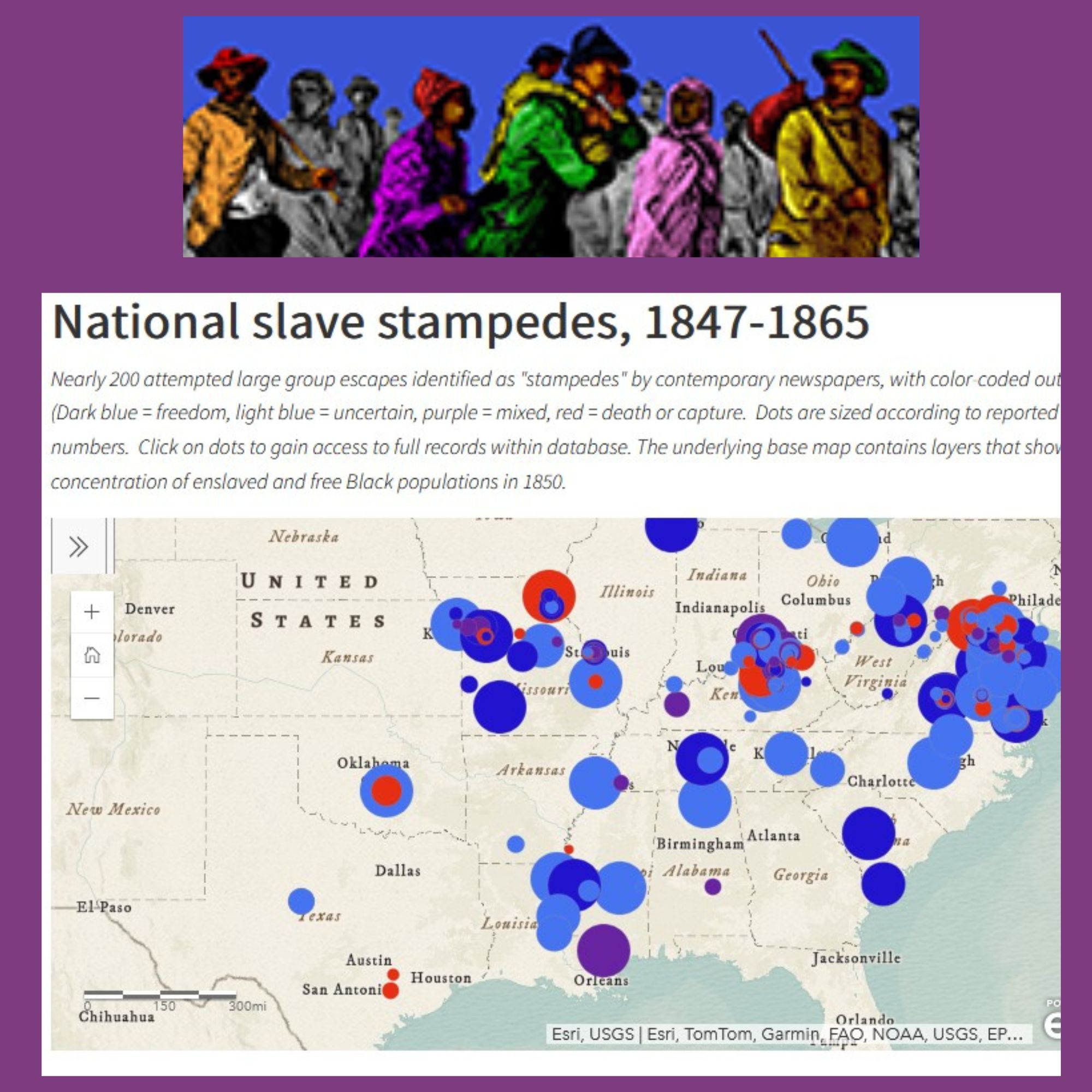
Terms like “slave stampede” or “stampede of slaves” began appearing in American newspapers in the late 1840s, as a way to describe larger groups of Black freedom seekers moving together toward liberation, sometimes armed and ready to defend themselves.
Both Northern and Southern newspapers tended to portray these group escapes as powerful forms of mobile insurrections. The term spread quickly during the fugitive crisis of the 1850s, and eventually became a staple of the sectional debate.
This website contains over 1,000 newspaper articles and hundreds of other primary sources detailing nearly 200 attempted stampedes mainly from across the Upper South between 1847 and 1865.
Our initial focus (2018-23) has been on eastern Missouri and the numerous group escapes that occurred across the Missouri borderlands. In our second phase (2022-25), we will be focusing on similar antebellum era and wartime stampedes from across Kentucky and its borderlands. Slave stampedes are not well known today and clearly have been underestimated as a concept for classroom study and historic preservation. Yet the recurring specter of large group escapes should be regarded as one of the more potent Black-led contributions to the destruction of American slavery.. Contains a useful timeline, and other materials
Terms like “slave stampede” or “stampede of slaves” began appearing in American newspapers in the late 1840s, as a way to describe larger groups of Black freedom seekers moving together toward liberation,
National Park Service, Jeffrey Johnson
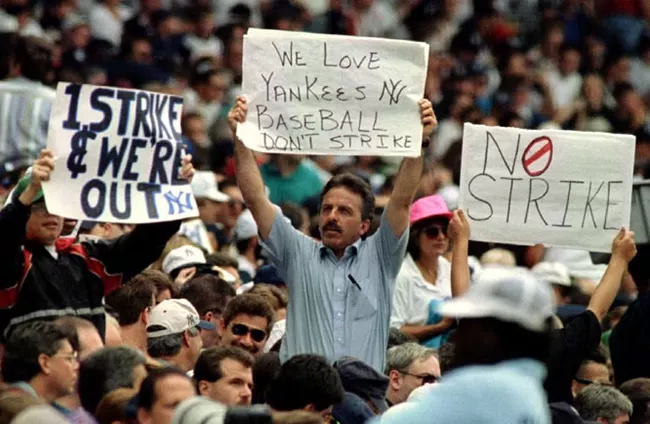
200 events on the Timeline with brief notes about each event, compiled by labor historian Jeffrey Johnson
200 events in labor history in chronological order, with brief notes
National Parks Service
Link to NPS site that depicts their efforts toward telling the labor history story in National Parks. THe sites profiled are Cesar Chavez Monument, Pullman, West Virginia Mine Wars,
Links to the list of stories that include Labor HIstory in the Nation's parks
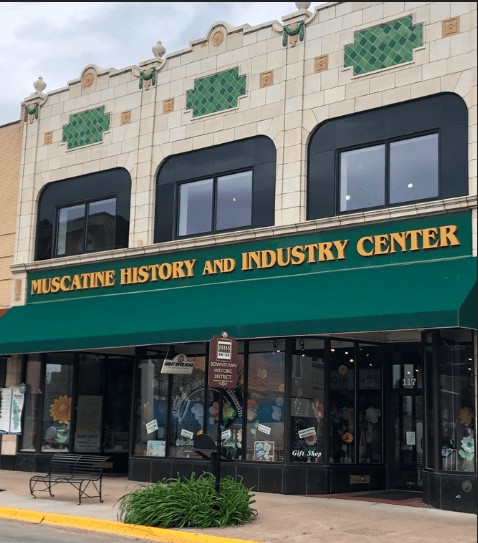
National Pearl Button Museum
The NPBM preserves and interprets the history of pearl button manufacturing in the United States, focusing on the contribution of the workers, entrepreneurs, and mussels of Muscatine, Iowa.
labor history elements at this pearl button museum in Muscatine Iowa

National Police GazetteHistory Matters
In 1892, owner Andrew Carnegie and his plant manager Henry Clay Frick decided to break the steelworkers union at the Carnegie Steel Company plant in Homestead, Pennsylvania. Frick locked out the steelworkers and hired 300 armed guards from the Pinkerton National Detective Agency to protect non-union strikebreakers. When the Pinkertons arrived on barges, armed steelworkers defeated them in a bloody pitched battle. Later, however, the state militia supported Carnegie, and the strike—along with the union—was broken. The National Police Gazette portrayed the July 6, 1892, fight between striking workers and Pinkerton strike-breakers on the Monongahela River. A national weekly directed to male readers, many of whom were workers, the Police Gazette occasionally covered labor conflict, expressing sympathy toward strikers while also exploiting the more sensational aspects of the events.
portrays the July 6, 1892, fight between striking workers and Pinkerton strike-breakers on the Monongahela River
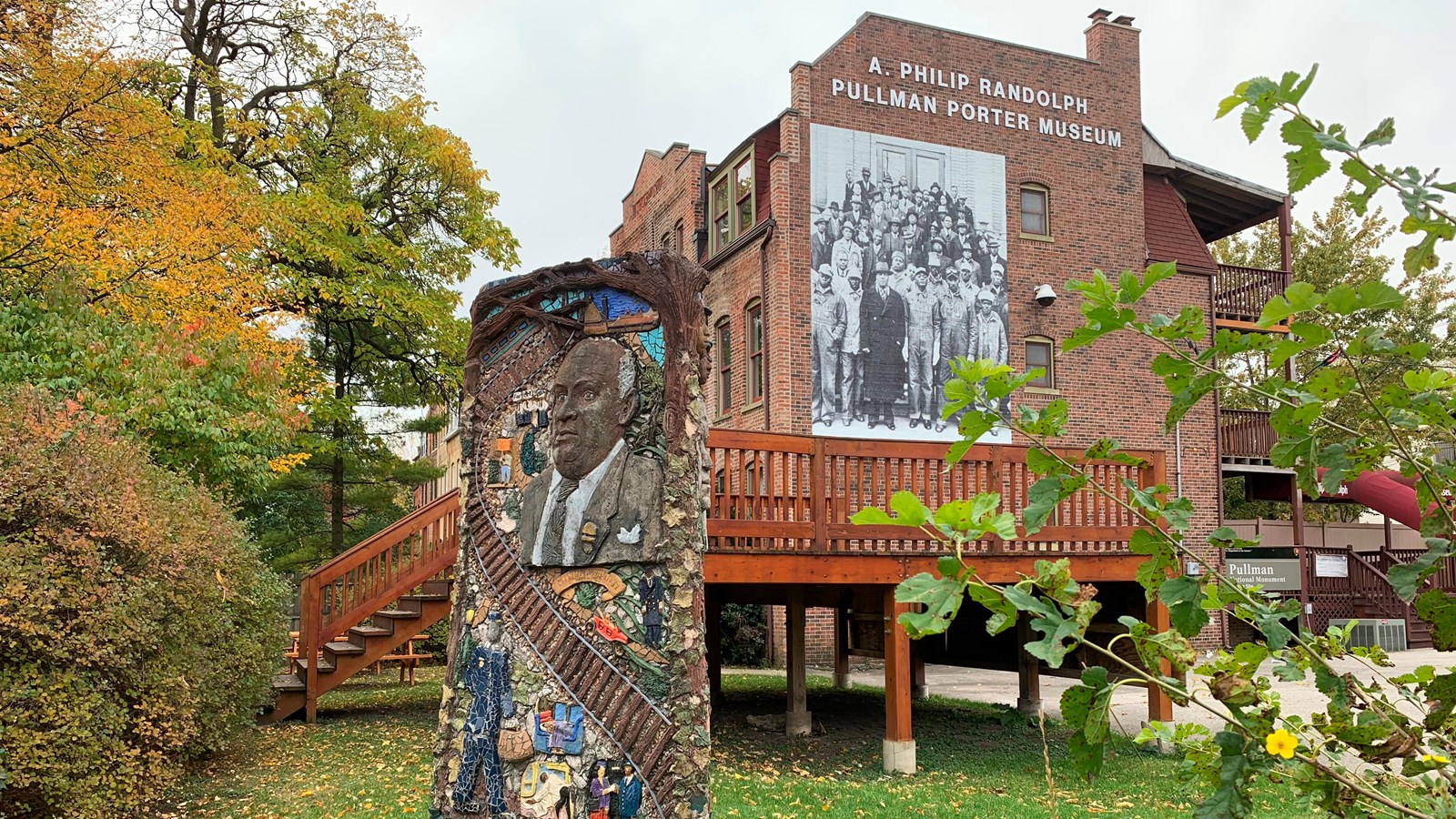
National Pullman Porters Museum
Museum also features virtual tours. Since Pullman was declared a National Park Service site, this museum is being enhanced. see multiple links, online through menu. Located at 10406 S. Maryland Ave. Chicago, IL 60628 <strong>MUSEUM ENTRANCE: 817 E. 104th Street </strong>104th Street (Between Corliss and Maryland)The museum exists for the purpose of providing educational and cultural enrichment for all of mankind. All activities, past, present and future are for the purposes and objectives of facilitating study, through the preservation,multimedia programming interpretation,the enjoyment of African-American history and culture.
"Celebrating African Americans in History"
National Women's Trade Union League
National Women's Trade Union League journal, full run.
The National Women’s Trade Union League of America (NWTUL) was established in Boston, MA in 1903, at the convention of the American Federation of Labor.
It was organized as a coalition of working-class women, professional reformers, and women from wealthy and prominent families. Its purpose was to “assist in the organization of women wage workers into trade unions and thereby to help them secure conditions necessary for healthful and efficient work and to obtain a just reward for such work.”
The League grew from 1907 and 1922. Let by Margaret Dreier Robins it organized secured protective legislation, and educated the public on labor rights.
The full run of the National Women's Trade Union League
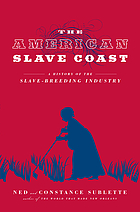
Ned Sublette, Constance Sublette
A wide-ranging, powerful, alternative vision of the history of the United States and how the slave-breeding industry shaped it. The American Slave Coast tells the horrific story of how the slavery business in the United States made the reproductive labor of "breeding women" essential to the expansion of the nation. The book shows how slaves' children, and their children's children, were human savings accounts that were the basis of money and credit. This was so deeply embedded in the economy of the slave states that it could only be decommissioned by Emancipation, achieved through the bloodiest war in the history of the United States. The American Slave Coast is an alternative history of the United States that presents the slavery business, as well as familiar historical figures and events, in a revealing new light"
how the slavery business in the United States made the reproductive labor of "breeding women" essential to the expansion of the nation
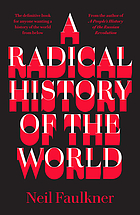
Neil Faulkner
"This is a history of struggle, revolution and social change: of hominins, hunters and herders; of emperors and slaves; of patriarchs and women; of rich and poor; of dictators and revolutionaries. From the ancient empires of Persia and Rome to the Russian Revolution, the Vietnam War, and the 2008 crash, this is a history of greed and violence, but also of solidarity and resistance.
Hunters and farmers, c. 7 million-3000 BP
The first class societies, c. 3000-1000 BC
Ancient empires, c. 1000-30 BC
The end of antiquity, c 30 BC-AD 650
The medieval world, c. AD 650-1500
European feudalism, c. AD 650-1500
The first wave of bourgeois revolutions 1517-1660
Absolutist Europe and capitalist globalisation 1660-1775
The second wave of bourgeois revolutions, 1775-1815
The rise of industrial capitalism, c. 1750-1850
The age of blood and iron 1848-1873
Imperialism and war, 1873-1918
The revolutionary wave, 1917-1928
The Great Depression and the rise of fascism, 1929-1939
World War and Cold War, 1939-1967
The world on fire 1968-1975
The new world disorder, 1975-2008
Capitalism's greatest crisis? The early twenty-first century
Conclusion: Making the future
Rejecting the top-down approach of conventional history, this book contends that it is the mass action of ordinary people that drives the transformative events of our many histories.
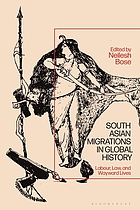
Neilesh Bose
This collection explores how migrations across South Asia have shaped key aspects of globalization since the 1830s. With original research from colonial India, Fiji, Mexico, South Africa, North America and the Middle East, the essays explore indentured labour and its legacies, law as a site of regulation and historical biography. Showcasing a world history outside empire and nation, this book presents histories from below with global implications"-- Provided by publisher
explores how migrations across South Asia and indentured labor have shaped key aspects of globalization since the 1830s
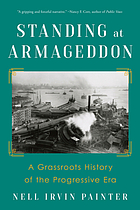
Nell Irvin Painter
The period of American history between 1877 and 1919 is often misunderstood as a boring time when nothing really happened. This is not indirectly brought about through excessively complex and abstract economic theory about money supply, sometimes bland political theater, and the gravity of the Civil War/Reconstruction and World War One have upon our national consciousness. Plus, how much of this period weighs upon the lives of us today? This last point is often brought up by students, and my answer to that is both: "a helluva lot!" and "does that really matter?" A diverse nation of people struggling with massive political, technological, and economic changes is not unworthy of study, and the various purposes of history to both instruct us about what it means to be a human being and guide us in times when our innate thoughts do little in that regard hold true here. I would highly recommend this work to anyone interested in this period of history and to anyone who is interested in history in general. A fascinating look at how politics, economic theory, racial theory, technological change, diversity, political and economic self-determination, empowerment, cultural definitions, definition of citizenship, and the effects and causes of major military conflicts affect people in their own time and place is hardly simple to compress into a readable book, but it reads fluidly and has a argumentative force to dispel any confusion that this this period could ever be "boring". For my students in high school, it may not be effective as a textbook, but could easily be more compelling than any simplification provided by their standard text.
account of America’s shift from a rural and agrarian society to an urban and industrial society.

Nelson Lichtenstein
"A Contest of Ideas collects and updates many of Lichtenstein's most provocative and controversial essays and reviews. These incisive writings link the fate of the labor movement to the transformations in the shape of world capitalism, to the rise of the civil rights movement, and to the activists and intellectuals who have played such important roles. Tracing broad patterns of political thought, Lichtenstein offers important perspectives on the relationship of labor and the state, the tensions that sometimes exist between a culture of rights and the idea of solidarity, and the rise of conservatism in politics, law, and intellectual life. The volume closes with portraits of five activist intellectuals whose work has been vital to the conflicts that engage the labor movement, public policy, and political culture."--Publisher's website
I. Shaping Myself, Shaping History 13
1. Writing and Rewriting Labor’s Narrative 15
2. Supply-Chain Tourist; or, How Globalization Has
Transformed the Labor Question 29
3. Historians as Public Intellectuals 38
II. Capital, Labor, and the State 45
4. Tribunes of the Shareholder Class 47
5. “The Man in the Middle”: A Social History of Automobile Industry Foremen 56
6. From Corporatism to Collective Bargaining: Organized Labor and the Eclipse of Social Democracy in the Postwar Era 79
7. Communism On the Shop Floor and Off 100
III. The Rights Revolution 107
8. Opportunities Found and Lost: Labor, Radicals, and the Early Civil Rights Movement 109
9. The Lost Promise of the Long Civil Rights Movement 129
10. A New Era of Global Human Rights: Good for the Trade Unions? 144
anthology of a leading labor historian's essays and an update on his perspectives

Nelson Lichtenstein
Industrial Democracy in America begins its close examination of what came to be known among collars of any colours as "the labour problem" with the railroad strikes of the 1870s. It contemplates America's industrial decline & provokes questions
Introduction : a century of industrial democracy in America / Nelson Lichtenstein and Howell John Harris
Industrial democracy or democracy in industry? : the theory and practice of the labor movement, 1870-1925 / David Montgomery
Industrial democracy and liberal capitalism, 1890-1925 / Howell John Harris
"An American feeling" : workers, managers, and the struggle over industrial democracy in the World War I era / Joseph A. McCartin
From Commons to Dunlop : rethinking the field and theory of industrial relations / Ronald W. Schatz
Great expectations : the promise of industrial jurisprudence and its demise, 1930-1960 / Nelson Lichtenstein
Wartime labor regulation, the industrial pluralists, and the law of collective bargaining / James B. Atleson
Workplace contractualism in comparative perspective / David Brody. Pacific ties : industrial relations and employment systems in Japan and the United States since 1900 / Sanford M. Jacoby
Industrial relations myth and shop-floor reality : the "team concept" in the auto industry / Mike Parker
Epilogue : toward a new century / Nelson Lichtenstein
cover the theory and practice of the American labor movement, and compare these with employment systems in Japan.
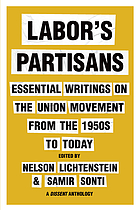
Nelson Lichtenstein
Anthology of Essays collected from Dissent magazine. a socialist magazine founded in 1954. Ordered chronologically, the selections track organized labor from its peak in the ’50s—when one third of workers were unionized—through the setbacks wrought by NAFTA in the ’90s and today’s more promising upswings among, for example, grad students and Starbucks employees. Novelist and autoworker Harvey Swados’s 1963 article “The UAW: Over the top of Over the Hill” seems to presage labor’s late-20th-century decline by questioning whether the “typically American” United Auto Workers are still the “vanguards” they once were. Dissent cofounder Irving Howe’s “Images for Labor,” from 1981, has an almost elegiac feel as it considers how organized labor fits into America’s cultural myths. In later sections, there is a broadening of scope beyond the book’s earlier focus on the white male factory worker, reflecting changing values as well as the decline of American manufacturing. For example, journalist E. Tammy Kim’s entry from 2015, “Organizing the Unorganizable,” is a powerful account of how vulnerable, nonunionized laborers such as nannies and taxi drivers form grassroots support groups, and 2012’s “Frontline Caregivers: Still Struggling” by Eileen Boris and Jennifer Klein considers how the Great Recession has impacted low-wage home care workers.
"Writings on the American union movement from the 1950s to today selected from Dissent magazine
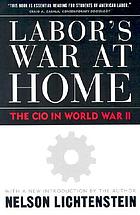
Nelson Lichtenstein
Labor's War at Home examines a critical period in American politics and labor history, beginning with the outbreak of war in Europe in 1939 through the wave of major industrial strikes that followed the war and accompanied the reconversion to a peacetime economy. Nelson Lichtenstein is concerned both with the internal organizations and social dynamics of the labor movement—especially the Congress of Industrial Organizations—and with the relationship between the CIO, as well as other bodies of organized labor, and the Roosevelt administration. He argues that tensions within the labor movement and within the ranks of American business profoundly affected government policy during the war and the nature of organized labor's political relations with Roosevelt and the Democratic Party. Moreover, the political arrangements worked out during the war established the foundations of social stability and labor politics that came to characterize the postwar world--Publisher's description
argues that tensions within the labor movement and within the ranks of American business profoundly affected government policy during the World War II.
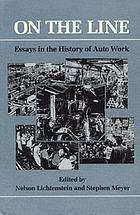
Nelson Lichtenstein
Nine essays detailing issues in labor management of auto work.
Introduction : the American automobile industry and its workers / Nelson Lichtenstein
Fordism and the moving assembly line : the British and American experience, 1895-1930 / Wayne Lewchuk
Employers' strategies in the Detroit labor market, 1900-1929 / Thomas Klug
The persistence of Fordism : workers and technology in the American automobile industry, 1900-1960 / Stephen Meyer
"Matters of mutual interest" : the unionization process at Dodge main, 1933-1939 / Steve Jefferys
Rosie the riveter revisited : management's postwar purge of women automobile workers / Ruth Milkman
"The man in the middle" : a social history of automobile industry foremen / Nelson Lichtenstein
The triumph of industrial orthodoxy : the collapse of Studebaker-Packard / Stephen Amberg. Shop floor bargaining, contract unionism, and job control : an Anglo-American comparison / Steven Tolliday and Jonathan Zeitlin
Nine essays detailing issues in labor management of auto work.
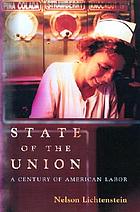
Nelson Lichtenstein
The "labor question" became a burning issue during the Progressive Era because its solution seemed essential to the survival of American democracy itself. Beginning there, Lichtenstein takes us all the way to the organizing fever of contemporary Los Angeles, where the labor movement stands at the center of the effort to transform millions of new immigrants into alert citizen unionists. He offers an expansive survey of labor's upsurge during the 1930s, when the New Deal put a white, male version of industrial democracy at the heart of U.S. political culture. He debunks the myth of a postwar "management-labor accord" by showing that there was (at most) a limited, unstable truce. Lichtenstein argues that the ideas that had once sustained solidarity and citizenship in the world of work underwent a radical transformation when the rights-centered social movements of the 1960s and 1970s captured the nation's moral imagination. The labor movement was therefore tragically unprepared for the years of Reagan and Clinton: although technological change and a new era of global economics battered the unions, their real failure was one of ideas and political will. Throughout, Lichtenstein argues that labor's most important function, in theory if not always in practice, has been the vitalization of a democratic ethos, at work and in the larger society. To the extent that the unions fuse their purpose with that impulse, they can once again become central to the fate of the republic. State of the Union is an incisive history that tells the story of one of America's defining aspirations
argues that the ideas that had once sustained solidarity and citizenship in the world of work underwent a radical transformation when the rights-centered social movements of the 1960s and 1970s captured the nation's moral imagination.