


Collections
Library
Type
Region
Coverage:
-
Published:
-
Our Daily Work/Our Daily Lives, Jamie McQuaid
The UAW and Queer-Labor Solidarity after Stonewall
podcast covers the relationship between labor and the LGBTQ movement
Our Daily Work/Our Daily Lives, Jeremy Milloy
Jeremy Milloy of Wayne State Universities' History Department delivers the presentation "'superworkers in the Rat Race': Addiction, Neoliberalism, and the Debut of the Workaholic" September 4th, 2024.
cover the developent of workaholics and the need to constantly work
Our Daily Work/Our Daily Lives, Joshua Duchan & Eric Freedman
Joshua Duchan of Wayne State' Music department and Eric Freedman of MSUs School of Journalism present "'Please Buy My Last Paper, I Want to Go Home': Portrayal of Newsboys and Newsgirls in 19th and 20th Century Music". 11/14/2023
discusses how newsboys are portrayed in media
Our Daily Work/Our Daily Lives, Kyle Mays
Kyle Mays, from the African American Studies, American Indian Studies, and Department of History at UCLA presents "Black Labor and Indigenous Sovereignty In Detroit". A zoom presentation Co-Sponsored by MSU African American and African Studies. Part of Our Daily Work/Our Daily Lives brown bag series and co-sponsored by MSU African American and African Studies and MSU Center for Gender in Global Context.
covers race relations and the struggle for cultural identity in Detroit
Our Daily Work/Our Daily Lives, Lisa Fine
Lisa Fine of the MSU Department of History presents " 'We are going to save McLouth once again---only this time for ourselves,": Economic nationalism, Environmental blackmail, and workers' ownership at McLouth Steel during the Downriver Disaster of the late 20th Century" in March 20th, 2024.
discusses labor action against environmental pollution
Our Daily Work/Our Daily Lives, Matt Watroba
"A Job Of Work to Do': The Folk Songs and Stories Of Working People" Folk performer Matt Watroba speaks and performs in the MSU Green Room to kick off the 2023/2024 season of "Our Daily Work Our Daily Lives" Brown Bag series.
covers the folk songs of the labor movement
Our Daily Work/Our Daily Lives, Melissa Ford
Melissa Ford from Slippery Rock Universities Department of History, delivers the Zoom presentation "Food, Not Bullets: Race and Gender in Detroit Auto Unions during the Depression" . Presented as part of the Our Daily Work/Our Daily Lives brown bag series.
discusses the conections between class, race, and gender in Auto work
Our Daily Work/Our Daily Lives, Paul D'Ambrosio
Exhibit curator Paul D'Ambrosio, President and CEO of Fenimore Art Museum in Cooperstown, NY, presents a virtual tour of the exhibit "Ralph Fasanella: Americans Unseen".
A virtual tour of the exhibit "Ralph Fasanella: Americans Unseen".
Our Daily Work/Our Daily Lives, Steve Babson
“Forgotten Populists: When Farmers and Workers Transformed American Politics” presented by Steve Babson, Professor Emeritus in Labor Studies at Wayne State University.
Discusses the rural populist movement
Our Daily Work/Our Daily Lives, Tom Kastle
Performer and labor troubadour Tom Kastle presents "Joe Hill: Alive as You and Me" in the MSU Library and on Zoom on Tuesday, April 9th.
discusses IWW folk singer Joe Hill
Our Daily Work/Our Daily Lives, Tom Klug
Historian Tom Klug presents "'Race and Disaster in the American Auto Industry: The Explosion at Briggs Manufacturing in Detroit (April 23rd, 1927)" on Zoom and in the MSU Library Green Room on Wednesday February 7th, 2024.
discusses workplace disaster, and how it relates to race

Over the Rhine Museum
"Think going to work is a drag today? Come take a deep dive into working conditions and labor organizing efforts in Over-the-Rhine around the turn of the 20th century. Participants will learn about workplaces including breweries, tailor shops, and cigar factories and nationally innovative and influential labor organizing. We explore labor conditions, including labor organizing and strikes, and how race, class and gender shaped opportunities for work. This tour begins at the NW corner of 12th and Elm Street."*
A walking tour of labor history sites in Cincinnati, Ohio
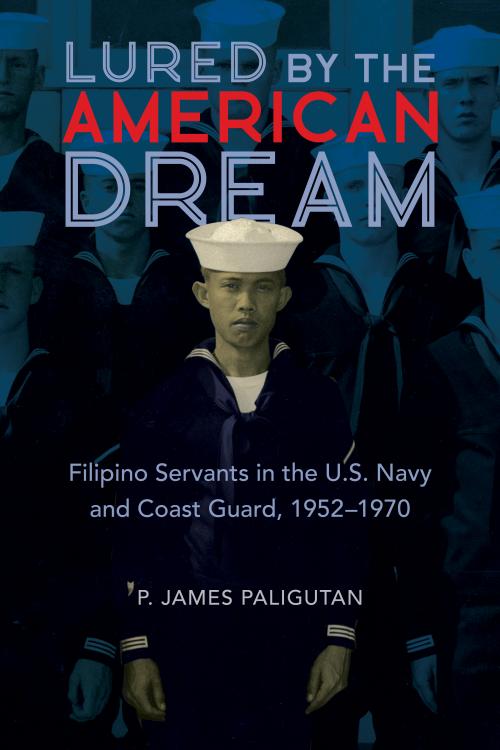
P James Paligutan
Starting in 1952, the United States Navy and Coast Guard actively recruited Filipino men to serve as stewards--domestic servants for officers. Oral histories and detailed archival research inform P. James Paligutan's story of the critical role played by Filipino sailors in putting an end to race-based military policies. Constrained by systemic exploitation, Filipino stewards responded with direct complaints to flag officers and chaplains, rating transfer requests that flooded the bureaucracy, and refusals to work. Their actions had a decisive impact on seagoing military's elimination of the antiquated steward position. Paligutan looks at these Filipino sailors as agents of change while examining the military system through the lens of white supremacy, racist perceptions of Asian males, and the motives of Filipinos who joined the armed forces of the power that had colonized their nation. Insightful and dramatic, Lured by the American Dream is the untold story of how Filipino servicepersons overcame tradition and hierarchy in their quest for dignity.
Lured by the American Dream is the untold story of how Filipino servicepersons overcame tradition and hierarchy in their quest for dignity.

Pacific Northwest Labor History Association
The Pacific Northwest Labor History Association (PNLHA) is a non-profit association dedicated to preserving the history and heritage of workers in the Pacific Northwest. We consider the “Pacific Northwest” to be British Columbia, Oregon and Washington.
Our members are trade unionists, students, academics, and others who share an interest in the history and heritage of workers in this region. We believe the labor movement must know where it’s been to know where it’s going. We depend exclusively on memberships to sustain our activities.
Pacific Northwest labor history organization

Padma Rubiales, The Bancroft Library
The Oil Industry in California collection consists of 383 photographs taken from 1911-1914. The photographer is unknown. Every aspect of the industry is depicted: choosing and clearing the site, hauling the pipes, line, and equipment; drilling water wells; building derricks; constructing offices, camps, housing, and facilities for workers; pumping stations; boilers; sluicing; equipment and tools; men working; and accidents and fires. The collection includes scenes of Casitas, Kettleman Hills, Coyote Creek, and La Belle Oil Company lands and wells. The collection is arranged chronologically. Captions are typewritten on the snapshots, presumably by the photographer.
383 black and white photographs in 3 albums 229 digital objects

Pam MacDonald, Bill Miller
Students will review and understand local sexual harassment policies and discuss leadership lessons learned from the film North Country. A fictionalized account of events that led to the nation’s first-ever class action lawsuit for sexual harassment. The film follows the trials and tribulations of Josey Aimes, a woman miner in a male-dominated profession, and the hostile work environment that women of the mine endured. Aimes stands up for that she believes in—even if it means she must stand up alone.
A viewing guide for the 2005 film North Country, which emphasizes the importance of understanding sexual harassment policies and how they impact female workers.
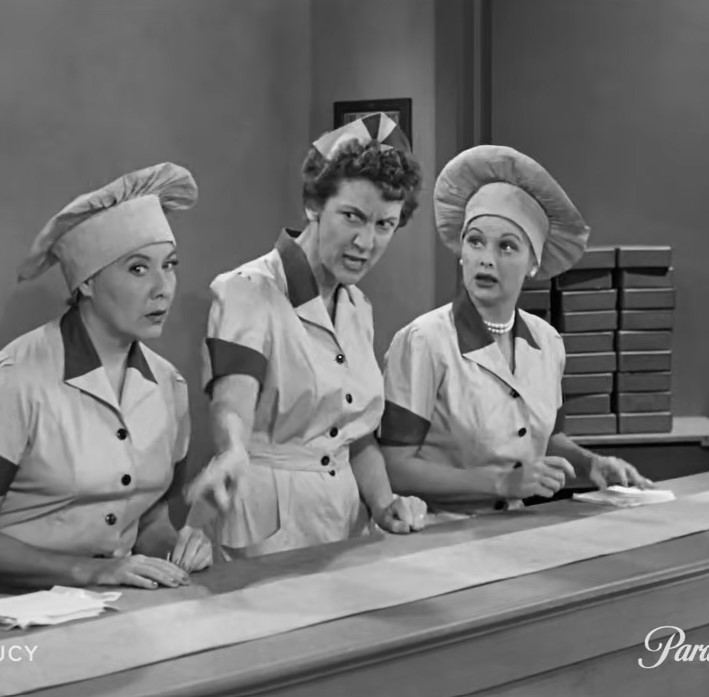
Paramount, Lucille Ball
Lucy (Lucille Ball) and Ethel (Vivian Vance) take on a job at the chocolate factory in the classic I Love Lucy episode, "Job Switching," but they soon get more than they bargained for when put on the high speed assembly line. This is a great way to discuss how machines are designed to control the worker, the ability of managers to control workers remotely (as when the supervisor has no interest in watching them, because the line and directive controls the worker). The machine enables managers to get more out of the worker through the technology. Marx wrote that machine works on behalf of the capitalist: "not only an automaton but an autocrat." This film is great to think about the ways that machines are social controllers, deployed intentionally not neutrally. In capitalism, the goal of "automation" is to substitute direct control with machine control, but many jobs are not susceptible to this kind of control. This would be great to use with the short clip from Modern Times (Charlie Chaplin) where the manager tries to get a machine to feed the worker.
3 minute clip of a classic example of assembly line control and speed-up
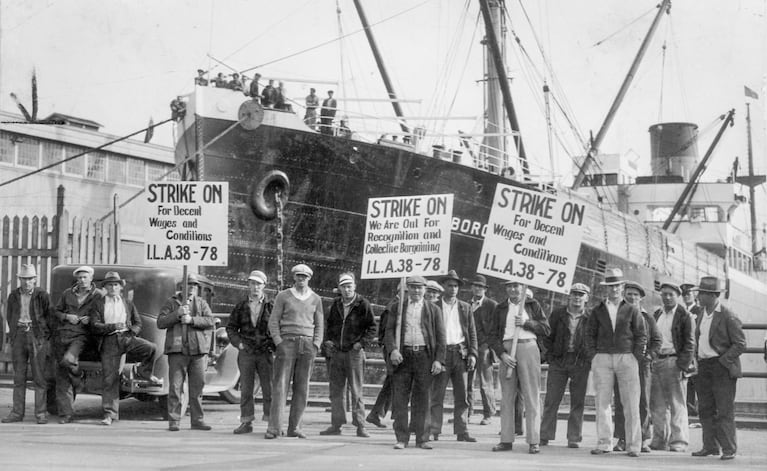
Pathe News
A film displaying a gunfight between strikers and police containing voiceover.
A film displaying a gunfight between strikers and police containing voiceover.
Pathe News
A film displaying state of San Francisco during strike containing voiceover.
A film displaying state of San Francisco during strike containing voiceover.

Pathé News
"'Frisco Strike Riots!" - here one can see strikers and police in combat, marching California National Guardsmen, and a breif interview.
A forty second clip of original Pathé newsreel film that shows the beginning of the 1934 San Francisco General Strike.

Patricia A. Adler
Resorts have become important to American society and its economy; one in eight Americans is now employed by the tourism industry. Yet despite the ubiquity of hotels, little has been written about those who labor there. Drawing on eight years of participant observation and in-depth interviews, the renowned ethnographers Patricia A. Adler and Peter Adler reveal the occupational culture and lifestyles of workers at five luxury Hawaiian resorts.These resorts employ a workforce that is diverse in gender, class, ethnicity, and nationality. Hawaiian resort workers, like those in nearly all resorts, consist of four groups. New immigrants hold difficult and dirty low-status jobs for little pay. Locals provide an authentic Polynesian flavor for guests, a ready pool of youthful high-turnover employees, and a population trapped in a place that offers few occupational alternatives. Managers tend to be middle-class, college-educated young and middle-aged men from the mainland whose lifestyles are occupationally transient. Seekers, mostly young, white, and from the mainland as well, escape to paradise seeking adventure, warmth, extreme sports, or some alternate life experiences.The Adlers describe the work, lives, and careers of these four groups that labor in organizations that never close, with shifts scheduled around the clock and around the year. Paradise Laborers adds to the growing interest in the global flow of labor, as these immigrant workers display different trends in gendered opportunities and mobility than those exhibited by other groups. The authors propose a political economy of tourist labor in which they compare the different expectations and rewards of organizations, employees, and local labor markets
A study of resort laborers, proposes a political economy of tourist labor in which they compare the different expectations and rewards of organizations, employees, and local labor markets
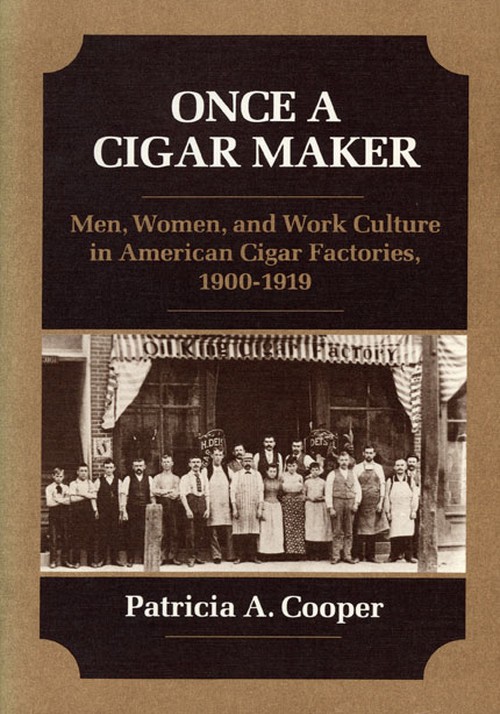
Patricia A. Cooper
Patricia A. Cooper charts the course of competition, conflict, and camaraderie among American cigar makers during the two decades that preceded mechanization of their work. In the process, she reconstructs the work culture, traditions, and daily lives of the male cigar makers who were members of the Cigar Makers' International Union of America (CMIU) and of the nonunion women who made cigars under a division of labor called the "team system." But Cooper not only examines the work lives of these men and women, she also analyzes their relationship to each other and to their employers during these critical years of the industry's transition from handcraft to mass production.
charts the course of competition, conflict, and camaraderie among American cigar makers.
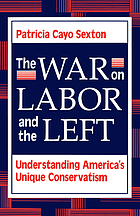
Patricia Cayo Sexton
In many countries, labour has "war stories" to tell, but possibly none are so violent as those of American labour. Although much of the violence occurred decades ago, the author argues that this rich history sheds light on questions that still plague observers of the American political system
pt. 1. Conservatism and union decline. Conservatism and the war on labor
Consensus, constraints, conflict
Unions and leaders.
pt. 2. Unionism: strategies of repression. Employers, mercenaries, and the armed force
The legal system: "We are the law"
Steel: 1892 and 1919
Critical conflicts: railway, craft, and industrial unionism.
pt. 3. Labor-left politics: strategies of repression. Socialists and sedition: the World War I era
Un-Americanism: World War II and Cold War eras
Peculiarities of the American political system
Labor-left politics.
pt. 4. Strategies of economic manipulation and violence. Subtler technologies of subjection: managing workers
Labor law, the NLRB, and gentrified union busters
Macroeconomic and political manipulations.
pt. 5. The power to repress. That peculiar institution, American capitalism
The media monopoly
Reprise and prospects
explores a neglected explanation of American conservatism, that of a literal war on labor, waged by unusually powerful economic entities.
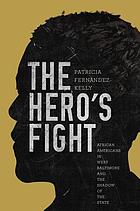
Patricia Fernández-Kelly
Baltimore was once a vibrant manufacturing town, but today, with factory closings and steady job loss since the 1970s, it is home to some of the most impoverished neighborhoods in America. The Hero's Fight provides an intimate look at the effects of deindustrialization on the lives of Baltimore's urban poor, and sheds critical light on the unintended consequences of welfare policy on our most vulnerable communities. Drawing on her own uniquely immersive brand of fieldwork, conducted over the course of a decade in the neighborhoods of West Baltimore, Patricia Fernández-Kelly tells the stories of people like D.B. Wilson, Big Floyd, Towanda, and others whom the American welfare state treats with a mixture of contempt and pity--what Fernández-Kelly calls "ambivalent benevolence." She shows how growing up poor in the richest nation in the world involves daily interactions with agents of the state, an experience that differs significantly from that of more affluent populations. While ordinary Americans are treated as citizens and consumers, deprived and racially segregated populations are seen as objects of surveillance, containment, and punishment. Fernández-Kelly provides new insights into such topics as globalization and its effects on industrial decline and employment, the changing meanings of masculinity and femininity among the poor, social and cultural capital in poor neighborhoods, and the unique roles played by religion and entrepreneurship in destitute communities. Blending compelling portraits with in-depth scholarly analysis, The Hero's Fight explores how the welfare state contributes to the perpetuation of urban poverty in America
explores how the welfare state contributes to the perpetuation of urban poverty in America
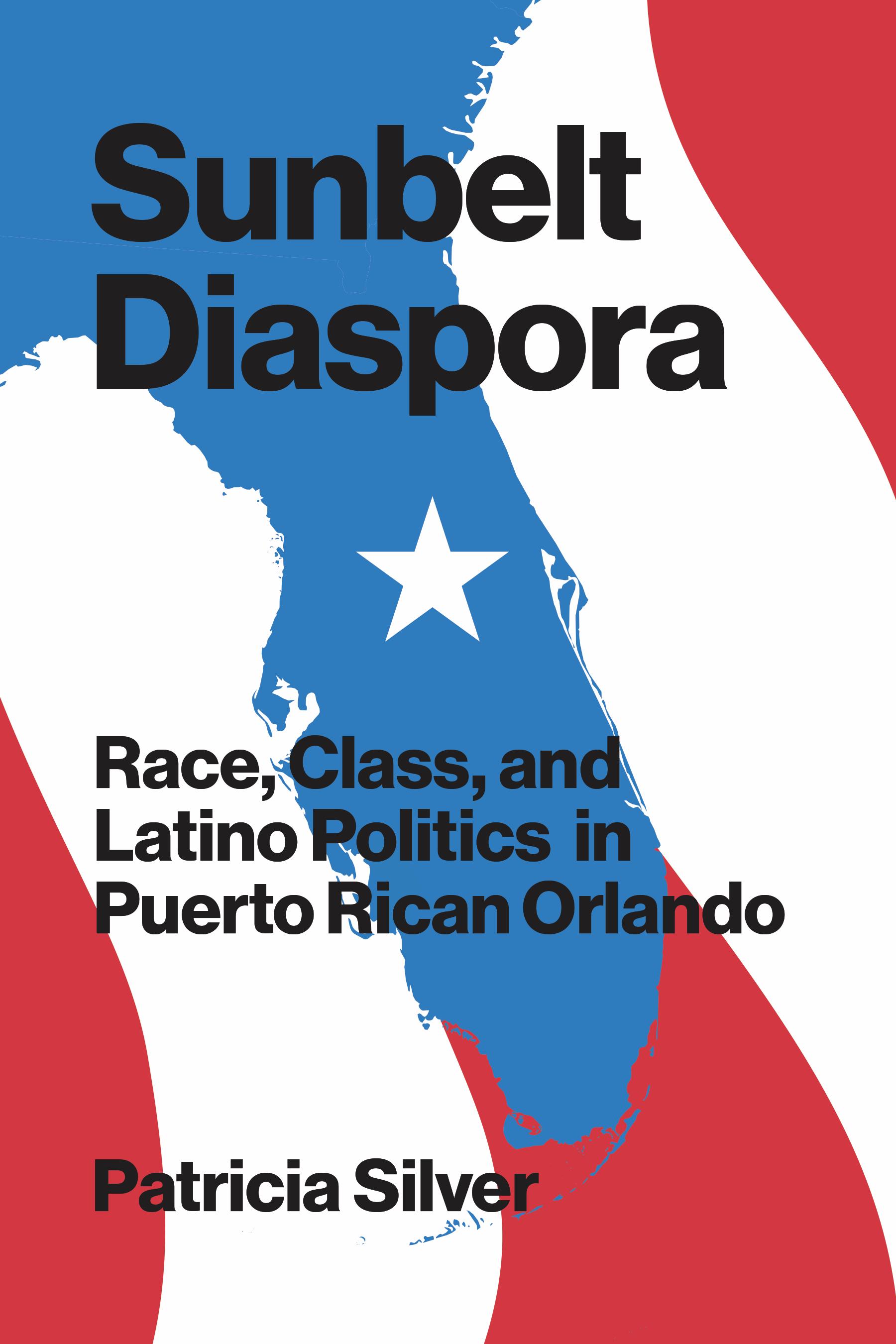
Patricia Silver
Tracing the emergence of the Puerto Rican and Latino presence in Orlando from the 1940s through an ethnographic moment of twenty-first-century electoral redistricting, Sunbelt Diaspora provides a timely prism for viewing how differences of race, class, and place play out in struggles to claim political, social, and economic ground for Latinos.
provides a timely prism for viewing how differences of race, class, and place play out in struggles to claim political, social, and economic ground for Latinos.
Museum/Exhibits
Tours
Maps
Digital Projects
Organizations
Sites
Film/Video
Audio/Interview
Podcast/Program
Text/Document
Image
Graphs/Data
Timeline
Books
Teaching
Lectures
Digital Archives
Journals
Bibliographies
Topic Intro