


Collections
Library
Type
Region
Coverage:
-
Published:
-

Patrick Kelly, University of Washington
Here are the locations of eight shack towns that housed homeless people in the Seattle area in the 1930s. The largest, known as "Hooverville," was on Elliot Bay near the present site of Qwest stadium. Click the markers to see photos and descriptions of each site. Click again to enlarge photos.
A map of Seattle Hoovervilles, 1934
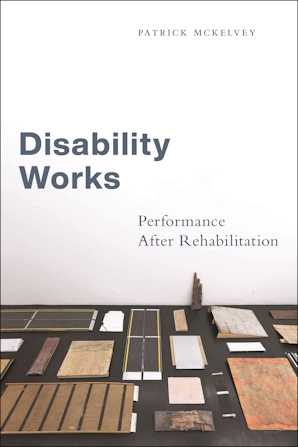
Patrick McKelvey
In 1967, the US government funded the National Theatre of the Deaf, a groundbreaking rehabilitation initiative employing deaf actors. This project aligned with the postwar belief that transforming bodies, minds, aesthetics, and institutions could liberate disabled Americans from economic reliance on the state, and demonstrated the growing optimism that performance could provide job opportunities for people with disabilities.
Disability Works offers an original cultural history of disability and performance in modern America, exploring rehabilitation’s competing legacies. The book highlights an unexpected alliance of rehabilitation professionals, deaf teachers, policy makers, disability activists, queer artists, and religious leaders who championed performance’s rehabilitative potential. At the same time, some disabled artists imagined a different political itinerary for theatrical practice. Rather than acquiescing to the terms of productive citizenship, these artists recuperated rehabilitation as a creative resource for imagining and building a world beyond work. Using previously unexplored archives, Disability Works portrays the history of disabled Americans’ performance labor as both a national aspiration and a national problem. The book reveals how disabled artists and activists ingeniously used rehabilitative resources to fuel their performance practices, breaking free from the grasp of rehabilitation and fostering more just institutions.
From state-funded “sign-mime” to Black modern dance, community theatre to Stanislavskian actor training, speculative activism to epistolary performance, Disability Works recovers an expansive repertoire of aesthetic and infrastructural investigations into the terms of how disability works in modern American culture.
A cultural history of disability, performance, and work in the modern United States
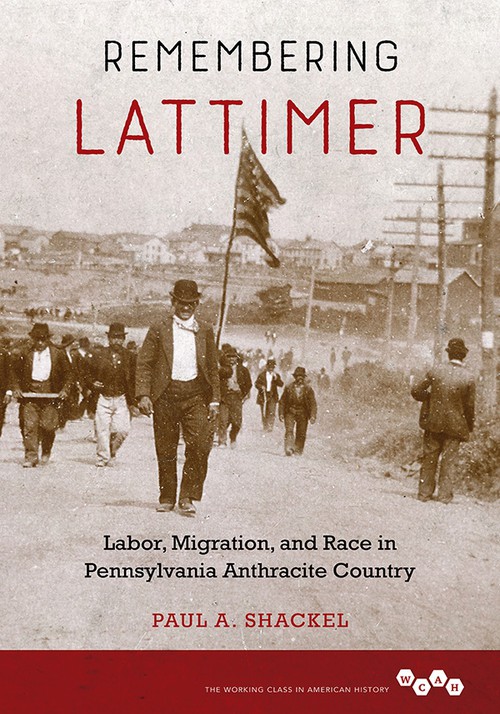
Paul A. Shackel
Lattimer, Pennsylvania, is the location for one of labor's forgotten massacres, a result of the xenophobic fears prevalent during the turn of the 20th century. On September 10, 1897, about 400 strikers of eastern & southern European descent marched to close the Lattimer colliery. Without warning, the men were fired upon by the local sheriff & his posse. The shooters stood trial for the killing of the protestors & were acquitted. Though Lattimer is one of the largest tragedies in US labor history, a type of amnesia attached to the event, & the massacre has been largely forgotten in the national public memory. Many attempts to memorialize the Lattimer massacre failed, as labor & capital struggled to control memory of the event. Eventually, in 1972, the town erected a monument at the site. While Lattimer is a lesson about past labor & immigration practices, it is also about the ways in which communities perceive new immigrants. Podcast with author: https://www.youtube.com/watch?v=dUdy3_AiWp8
Beginning with a dramatic retelling of the incident, Shackel traces how the violence, and the acquittal of the deputies who perpetrated it, spurred membership in the United Mine Workers.
Paul A. Shackel
"Once a busy if impoverished center for the anthracite coal industry, northeastern Pennsylvania exists today as a region suffering inexorable decline--racked by economic hardship and rampant opioid abuse, abandoned by young people, and steeped in xenophobic fear. Paul A. Shackel merges analysis with oral history to document the devastating effects of a lifetime of structural violence on the people who have stayed behind. Heroic stories of workers facing the dangers of underground mining stand beside accounts of people living their lives in a toxic environment and battling deprivation and starvation by foraging, bartering, and relying on the good will of neighbors. As Shackel reveals the effects of these long-term traumas, he sheds light on people's poor health and lack of well-being. The result is a valuable on-the-ground perspective that expands our understanding of the social fracturing, economic decay, and anger afflicting many communities across the United States. Insightful and dramatic, The Ruined Anthracite combines archaeology, documentary research, and oral history to render the ongoing human cost of environmental devastation and unchecked capitalism.
merges analysis with oral history to document the devastating effects of a lifetime of structural violence on the people who live in northeastern Pennsylvania
Paul Blanshard
"In August 1920, when Tennessee became the 36th state to ratify the 19th amendment to the U.S. constitution, assuring that it became law in time for women to vote in the presidential election, many feminists predicted great advances for women. “We are no longer petitioners,” declared suffrage leader Carrie Chapman Catt, “we are not wards of the nation, but free and equal citizens.”
The promised gains proved elusive, however, especially in the crucial realm of employment. Among working women, all but a tiny number of well-paid professionals faced the burdens of a double shift of both paid jobs and unpaid household labor.
In a 1929 story for the Nation, Paul Blanshard recorded the daily routine of a South Carolina cotton mill worker. Her narrative intertwined her home duties with her work in the mill, as her long day at the mill was punctuated by equally burdensome domestic chores."
daily routine of a South Carolina cotton mill worker intertwined her home duties with her work in the mill,
Paul Boyer
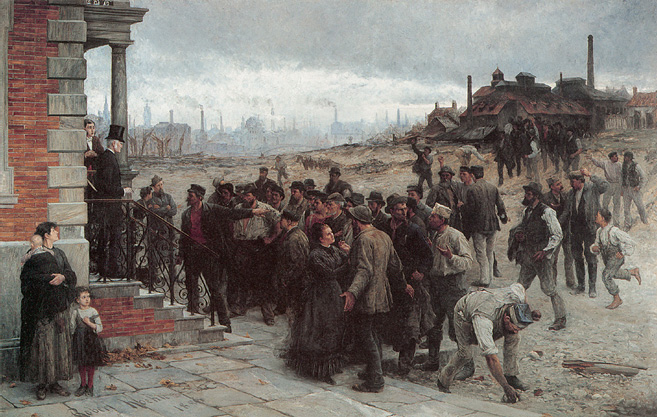
A 35 minute lecture on the meaning of the art of labor in Robert Koehler's, The Strike, 1886, examining elements, and adding to the book on the subject, with Wisconsin history inflections. Likely based at least in part on 1877 general strikes, according to author.
A lecture by Paul Boyer on James M. Dennis book on Robert Koehler's art, the Strike
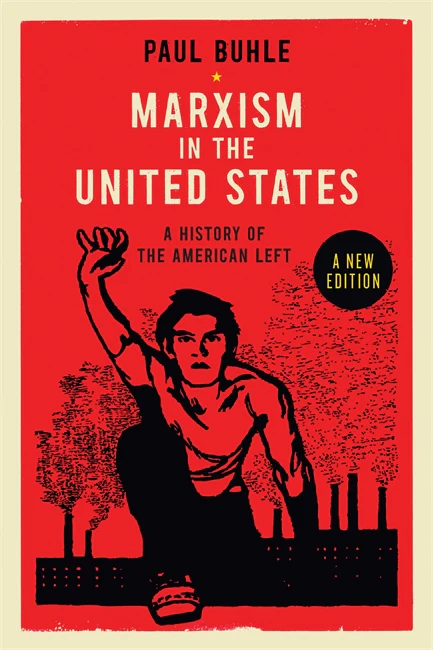
Paul Buhle
A crown jewel of New Left historiography, this overview of U.S. Marxism was hailed on its first publication for its nuanced storytelling, balance and incredible sweep. Brimming over with archival finds and buoyed by the recollections of witnesses and participants in the radical movements of decades past, Marxism in the United States includes fascinating accounts of the immigrant socialism of the nineteenth century, the formation of the CPUSA in the wake of the Bolshevik Revolution, the rise of American communism and of the hugely influential Popular Front in the 1920s and '30s, the crisis and split of the '50s, and the revival of Marxism in the '60s and '70s.
This revised and updated edition also takes into account the last quartercentury of life in the U.S., bringing the story of American Marxism up to the present. With today's resurgent interest in radicalism, this new edition provides an unparalleled guide to 150 years of American left history
guide to 150 years of American left history, though very little on labor
Paul Buhle
Written by some of our nation's top historians, Working for Democracy is the first book to examine the politics of American workers from the revolution to the present in terms of broad struggles for power in society at large. In more than a dozen chapters, the topics range from the committees of artisan "republicans" at the time of the American Revolution to the League of Revolutionary Black Workers. Whether the subject is the anti-slavery movement, the New Deal coalition, the Wobblies, or women workers, Working For Democracy is a testament to the struggles of workers everywhere in America.
Of the fourteen chapters in the anthology, three focus on black workers, two on women workers, and the remainder on labor militancy.
Alfred R Young's opening account of revolutionary mechanics is an ex-cellent overview, including demographic information, job classifications, forms of political resistance, and the legacy of artisan republi-
canism.
The Workingmen's parties of the late 1820s and early 1830sreceive the attention of Franklin Rosemont.
Eric Foner explores th eoften strained relations between abolitionists and labor leaders. In sur-veying working-class women from the 1830s to 1920,
Mari Jo Buhle states that the often tense coalitions between middle-class activists and working women generally operated outside the mainstream labor movement.
Alan Dawley's essay on politically self-conscious labor after the Civil War offers a cogent analysis of anarchism but only cursory comments about independent and nonpartisan politics. In a simi-lar fashion,
Paul Buhle's piece on the Socialists and Wobblies capturesthe vision of the latter in a spirited way while providing only a desul-tory treatment of the former.
A creditable portrayal of black labor from 1865 to the 1930s is authored by Nell Irvin Painter.
David Montgomery describes left-wing politics under the banner of the Minnesota Farmer-Labor Party from 1922 to 1944. While recognizing labor's gains under the presidency of Franklin D. Roosevelt,
James R. Green holds that when workers joined the New Deal coalition they traded political independence for Democratic party loyalty.
The book's last five essays probe more recent labor history.
Richard Thomas analyzes blacks and the CIO from the mid-1930s to1960, explaining how blacks used their own independent labor organi-zations as a vehicle to combat racism and to organize workers. mass radical activism evident in the 1945-1946 strikes was defused, says George Lipsitz, by the Taft-Hartley Act, the Cold War, and the ex-
pulsion of Communists from the CIO. Barbara Mayer Wertheimer, to whose memory the book is dedicated, summarizes the organizational efforts of women workers in the 1970s. Manning Marable identifies the crisis among black workers since the mid-1970s as a result of thenacceleration of joblessness and underemployment, the demise of mili-tant labor groups, the continuation of racial antipathies, and the shift to the right of a number of middle-class black leaders. The concluding essay by Sidney Lens discusses the contemporary weaknesses of or-ganized labor and awaits the emergence of a new labor left
the first book to examine the politics of American workers from the revolution to the present in terms of broad struggles for power in society at large.
Paul Buhle, Sabrina Jones, Gary Dumm, Thorkelson
Offers a fresh and inspiring look at basic Christian concepts and social justice themes from the life of Jesus onward, [with] stories from scripture, the Radical Reformation, and peacemaking efforts today in Iraq and Colombia, among others
inspiring look at basic Christian concepts and social justice themes from the life of Jesus onward
Paul Cockshott
In "The Robbery of Nature," John Bellamy Foster and Brett Clark, working within a system begun by Karl Marx and German chemist Justus von Liebig, examine capitalism's plundering of nature via commodity production, and how it has led to the current anthropogenic rift in the Earth System. Departing from much previous scholarship, Foster and Clark adopt a materialist and dialectical approach, bridging the gap between social and environmental critiques of capitalism. The ecological crisis, they explain, extends beyond questions of traditional class struggle to a corporeal rift in the physical organization of living beings themselves, raising critical issues of social reproduction, racial capitalism, alienated speciesism, and ecological imperialism"-- Provided by publisher
An examination of capitalism's plundering of nature via commodity production, and how it has led to the current anthropogenic rift in the Earth System.

Paul F. Clark, Peter Gottlieb, and Donald Kennedy
More than any other labor victory of the 1930s, the emergence of the Steel Workers' Organizing Committee symbolized the rise of organized labor to a position of power in the United States. Yet, as the contributors to this volume demonstrate, the unionization of the steel industry, and most notably the role of SWOC and Philip Murray in that process, has received far less attention than it deserves.
Beginning with a discussion of why the unionization of steel has been relatively neglected by labor historians, the contributors to this volume analyze early organizing efforts in steel, the major transformations wrought and felt by the union, and the character of the union members and leaders. Critical throughout is discussion of the role of Philip Murray in shaping the United Steelworkers of America into one of the premier economic, social, and political institution of the war years and beyond.
Preface
The History Is Missing, Almost: Philip Murray, the Steelworkers, and the Historians Ronald L. Filippelli p1
The Origins of Modern Steel Unionism: The SWOC Era David Brody 13
Labor's Odd Couple: Philip Murray and John L. Lewis Melvyn Dubofsky 30
Consolidating Industrial Citizenship: The USWA at War and Peace, 1939-46 Mark McColloch 45
Battling over Government's Role Ronald W. Schatz 87
Comments:
I. W. Abel
Walter Burke
Abe Raskin
John Hoerr
Harold]. Ruttenberg
Bibliography
Major Events in the History of the Steelworkers
Contributors
Editors
Index
an assessment of the scholarship from the year 1987. Issues of why steel unionism was so conservative, centered on the figure of Murray
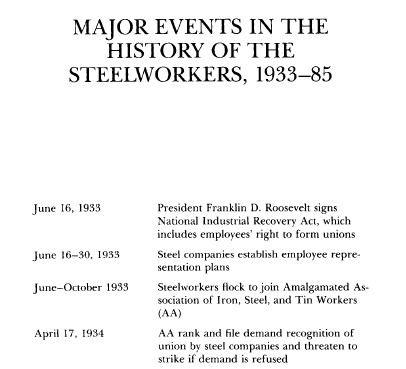
Paul F. Clark, Peter Gottlieb, and Donald Kennedy
appendix to Forging a Union of Steel (1987)
Timeline for union organizing drives and strikes, union conflicts, pdf will download if you click title
Paul Frymer
"In the 1930s, fewer than one in one hundred U.S. labor union members were African American. By 1980, the figure was more than one in five. Black and Blue explores the politics and history that led to this dramatic integration of organized labor. In the process, the book tells a broader story about how the Democratic Party unintentionally sowed the seeds of labor's decline." "The labor and civil rights movements are the cornerstones of the Democratic Party, but for much of the twentieth century these movements worked independently of one another. Paul Frymer argues that as Democrats passed separate legislation to promote labor rights and racial equality they split the issues of class and race into two sets of institutions, neither of which had enough authority to integrate the labor movement." "From this division, the courts became the leading enforcers of workplace civil rights, threatening unions with bankruptcy if they resisted integration. The courts' previously unappreciated power, however, was also a problem: in diversifying unions, judges and lawyers enfeebled them financially, thus democratizing through destruction. Sharply delineating the double-edged sword of state and legal power, Black and Blue chronicles an achievement that was as problematic as it was remarkable, and that demonstrates the deficiencies of race- and class-based understandings of labor, equality, and power in America."--Jacket
explores the politics and history that led to racial integration of organized labor, tells a broader story about how the Democratic Party unintentionally sowed the seeds of labor's decline.
Paul Gagliardi
Many of the Federal Theatre Project (FTP) plays Paul Gagliardi analyzes in All Play and No Work feature complex portrayals of labor and work relief at a time when access to work was difficult. Gagliardi asks, what does it mean that many plays produced by the FTP celebrated forms of labor like speculation and swindling? All Play and No Work directly contradicts the promoted ideals of work found in American society, culture, and within the broader New Deal itself. Gagliardi shows how comedies of the Great Depression engaged questions of labor, labor history, and labor ethics. He considers the breadth of the FTP's production history, staging plays including Ah, Wilderness!, Help Yourself, and Mississippi Rainbow. Gagliardi examines backstage comedies, middle-class comedies, comedies of chance, and con-artist comedies that employed diverse casts and crew and contained radical economic and labor ideas. He contextualizes these plays within the ideologically complicated New Deal, showing how programs like the Social Security Act straddled progressive ideals and conservative, capitalist norms. Addressing topics including the politicization of theatrical labor and the real dangers of unchecked economic con artists, the comic plays of the FTP reveal acts of political resistance and inequality that reflected the concerns of their audiences"-- Provided by publisher
feature complex portrayals of labor and work relief at a time when access to work was difficult
Paul Heideman
As Black oppression moves again to the forefront of American public life, the history of radical approaches to combating racism has acquired renewed relevance. Collecting, for the first time, source materials from a diverse array of writers and organizers, this reader provides a new perspective on the complex history of revolutionary debates about fighting anti-Black racism. Contextual material from the editor places each contribution in its historical and political setting, making this volume ideal for both scholars and activists.
"Paul Heideman's book reconstructs for us the long flowering of anti-racist thought and organizing on the American Left and the central role played by Black Socialists in advancing a theory and practice of human liberation. Class struggle and anti-racism are two sides of the same coin in this powerful collection. At a time when the emancipation of oppressed and working-class people remain goals of progressives everywhere, Heideman's book provides us a map to a past that can help us get free."--Bill V. Mullen, Professor of American Studies, Purdue University
"Should white workers pursue racial supremacy to make America great again' Ignore race by practicing color-blindness and dwelling on labor and economic issues alone' Or challenge oppression, bigotry, and exploitation in all their forms, wherever and whenever they appear' These strategies may sound like ones from our own time, but they were live options for the left a century ago. We are all in Paul Heideman's debt for compiling Class Struggle and the Color Line, a set of rare original sources that remind us of this: In the absence of sound social theory, disgusting racism can be passed off as populist rebellion. Don't let it happen again."-Christopher Phelps, co-author, Radicals in America: The U.S. Left since the Second World War
source materials from a diverse array of writers and organizers,
Paul Kahan
On July 6, 1892, three hundred armed Pinkerton agents arrived in Homestead, Pennsylvania to retake the Carnegie Steelworks from the company's striking workers. As the agents tried to leave their boats, shots rang out and a violent skirmish began. The confrontation at Homestead was a turning point in the history of American unionism, beginning a rapid process of decline for America's steel unions that lasted until the Great Depression. Examining the strike's origins, events, and legacy, The Homestead Strike illuminates the tense relationship between labor, capital, and government in the pivotal moment between Reconstruction and the Progressive Era. In a concise narrative, bolstered by statements from steelworkers, court testimony, and excerpts from Carnegie's writings, Paul Kahan introduces students to one of the most dramatic and influential episodes in the history of American labor."--Publisher's description
narrative of the famous 1892 strike at Homestead
Paul Le Blanc
"His aim is to make the history of labor in the U.S. more accessible to students and the general reader. He succeeds" (Booklist). In a blend of economic, social, and political history, Paul Le Blanc shows how important labor issues have been, and continue to be, in the forging of our nation. Within a broad analytical framework, he highlights issues of class, gender, race, and ethnicity, and includes the views of key figures of United States labor. The result is a thought-provoking look at centuries of American history from a perspective that is too often ignored or forgotten. "An excellent overview, enhanced by a valuable glossary." --Elaine Bernard, director of the Harvard Trade Union Program
Noting that standard accounts of U.S. history often pay little attention to the working class, labor historian Paul Le Blanc presents a colorful, fact-filled history that concentrates on the struggles and achievements of that often-neglected laboring majority. Employing a blend of economic, social, and political history, Le Blanc shows how important labor issues have been and continue to be in the forging of our nation’s history. Within a broad analytical framework he highlights issues of class, gender, race, and ethnicity, and includes the views of key figures of U.S. labor, including Cesar Chavez, Eugene V. Debs, Elizabeth Gurley Flynn, Samuel Gompers, Woody Guthrie, Big Bill” Haywood, Langston Hughes, Mary Mother” Jones, Martin Luther King Jr., George Meany, A. Philip Randolph, and Carl Sandburg.
a blend of economic, social, and political history, this book shows how important labor issues have been, and continue to be, in the forging of our nation.

Paul Le Blanc
Essays highlighting socialist and left-wing traditions that helped shape US history in the direction of liberty and justice for all". Preface: engaging with history
1. Socialism in the United States: absent and latent
2. Haymarket revolutionaries: Albert Parsons and his comrades
3. Brookwood Labor College
4. US labor vanguards in the 1930s
5. Remembering Ruth Querio
6. The Marxism of C. L. R. James
7. Martin Luther King: Christian core, socialist bedrock
8. Revolutionary road, partial victory: the March on Washington for jobs and freedom
9. A reluctant memoir of the 1950s and 1960s
10. The triumphant arc of US conservatism
11. The new left and beyond
12. Making sense of Trotskyism in the United States
13. Revolutionary redemption
14. Ancestors and descendants of the Occupy movement
Essays highlighting socialist and left-wing traditions that helped shape US history.
Paul Le Blanc
Work and Struggle: Voices from U.S. Labor Radicalism focuses on the history of U.S. labor with an emphasis on radical currents, which have been essential elements in the working-class movement from the mid nineteenth century to the late twentieth century. After two chapters that frame the history of the relationship between labor and radicalism, Contents: The meaning and reality of labor radicalism -- Understanding labor radicalism -- Revolutionary currents in the U.S. labor movement -- Voices of U.S. labor radicalism -- Thomas Paine -- Frances Wright -- Frederick Douglass -- William Sylvis -- Terrence V. Powderly -- Albert R. Parsons -- Mary Harris Jones -- Eugene V. Debs -- Fannia Cohn -- John L. Lewis -- A. Philip Randolph -- Genora Johnson Dollinger -- Cesar Chavez -- James Matles.
offers students and instructors a variety of voices to learn from -- each telling their story through their own words -- through writings, memoirs and speeches.
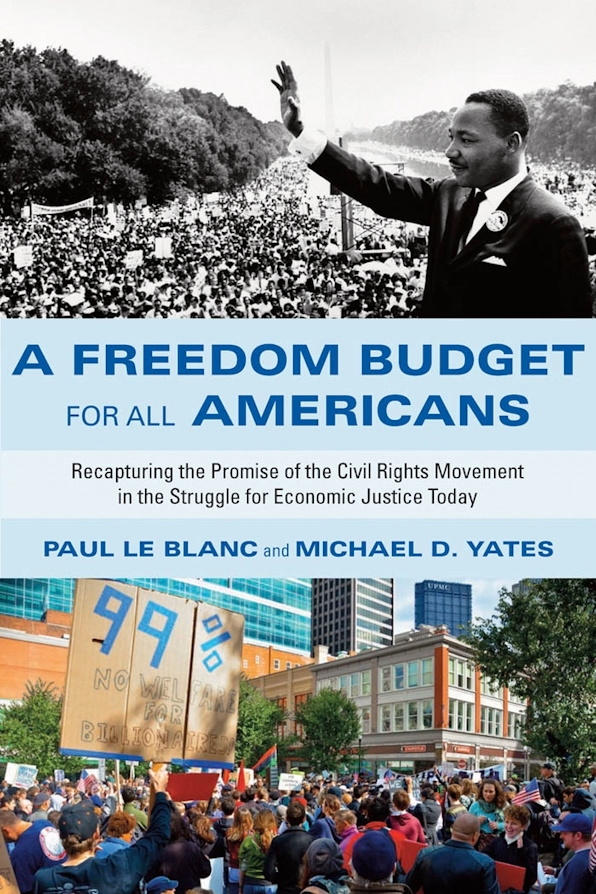
Paul Le Blanc, Michael D. Yates
While the Civil Rights Movement is remembered for efforts to end segregation and secure the rights of African Americans, the larger economic vision that animated much of the movement is often overlooked today. That vision sought economic justice for every person in the United States, regardless of race. It favored production for social use instead of profit; social ownership; and democratic control over major economic decisions. The document that best captured this vision was the Freedom Budget for All Americans: Budgeting Our Resources, 1966-1975, To Achieve Freedom from Want published by the A. Philip Randolph Institute and endorsed by a virtual ‘who’s who’ of U.S. left liberalism and radicalism.
Now, two of today’s leading socialist thinkers return to the Freedom Budget and its program for economic justice. Paul Le Blanc and Michael D. Yates explain the origins of the Freedom Budget, how it sought to achieve “freedom from want” for all people, and how it might be reimagined for our current moment. Combining historical perspective with clear-sighted economic proposals, the authors make a concrete case for reviving the spirit of the Civil Rights Movement and building the society of economic security and democratic control envisioned by the movement’s leaders―a struggle that continues to this day.
Two socialist leaders critically reexamine FDR's freedom budget
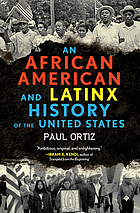
Paul Ortiz
An intersectional history of the shared struggle for African American and Latinx civil rights Spanning more than two hundred years, An African American and Latinx History of the United States is a revolutionary, politically charged narrative history arguing that the "Global South" was crucial to the development of America as we know it. Ortiz challenges the notion of westward progress, as exalted by widely taught formulations such as "manifest destiny" and "Jacksonian democracy," and shows how placing African American, Latinx, and Indigenous voices unapologetically front and center transforms American history into the story of the working class organizing against imperialism. In precise detail, Ortiz traces this untold history from the Jim Crow-esque racial segregation of the Southwest, the rise and violent fall of a powerful tradition of Mexican labor organizing in the twentieth century, to May 1, 2006, International Workers' Day, when migrant laborers-Chicana/os, Afro-Cubanos, and immigrants from nearly every continent on earth-united in resistance on the first "Day Without Immigrants." Incisive and timely, An African American and Latinx History of the United States is a bottom-up history told from the viewpoint of African American and Latinx activists and revealing the radically different ways people of the diaspora addressed issues still plaguing the United States today
narrative history arguing that the "Global South" was crucial to the development of America as we know it.
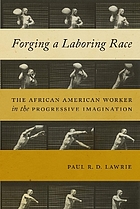
Paul R.D. Lawrie
For many thinkers across the colour line, the 'negro problem' was inextricably linked to the concurrent 'labour problem, ' occasioning debates regarding blacks' role in the nation's industrial past, present and future. This volume charts the history of an idea-race management-building on recent work in African American, labour and disability history to analyse how ideas of race, work, and the 'fit' or 'unfit' body informed the political economy of early 20th century industrial America
how ideas of race, work, and the 'fit' or 'unfit' body informed the political economy of early 20th century industrial America
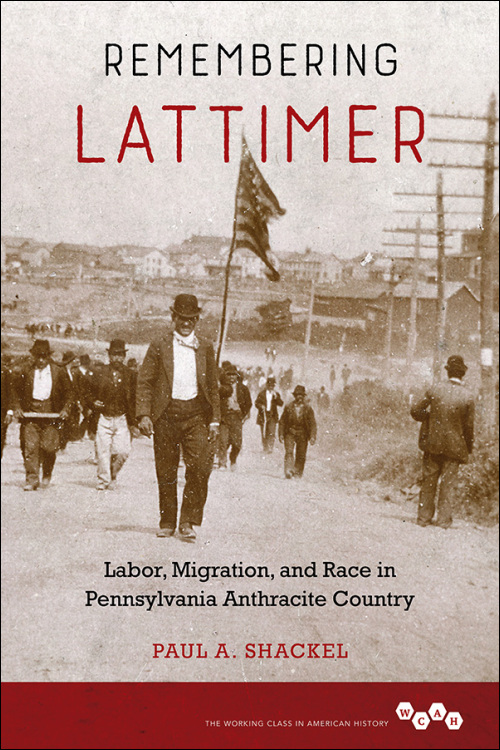
Paul Shackel, PA Books podcast
On September 10, 1897, a group of 400 striking coal miners--workers of Polish, Slovak, and Lithuanian descent or origin--marched on Lattimer, Pennsylvania. There, law enforcement officers fired without warning into the protesters, killing nineteen miners and wounding thirty-eight others. The bloody day quickly faded into history. Paul Shackel confronts the legacies and lessons of the Lattimer event. Beginning with a dramatic retelling of the incident, Shackel traces how the violence, and the acquittal of the deputies who perpetrated it, spurred membership in the United Mine Workers. By blending archival and archaeological research with interviews, he weighs how the people living in the region remember--and forget--what happened.
Paul Shackel is a professor in the Department of Anthropology at the University of Maryland-College Park.
podcast about the legacy of the Lattimer Massacre, 1897

Pauli Murray, History Matters
During World War II, a number of states passed legislation to combat salary inequities suffered by female workers. Many unions also adopted standards to insure that female employees received the same salaries as males who performed similar jobs.
The Equal Pay Act of 1963, the first Federal legislation guaranteeing equal pay for equal work, prohibited firms engaged in interstate commerce from paying workers according to wage rates determined by sex. It did not, however, prevent companies from hiring only men for higher paying jobs.
Despite the fact that Title VII of the landmark Civil Rights Act of 1964 further prevented sex discrimination in employment, African-American women as a class remained “at the bottom of the economic totem pole” because of “their dual victimization by race and sex-based discrimination,” in the words of Dr. Pauli Murray, whose testimony to Congress appears below. Dr. Murray, an African-American professor of American studies specializing in law and social change expressed concern that despite previous antidiscrimination legislation, “we are holding on very definitely to the patriarchal aspect of white America.” Murray advocated the position that all antidiscrimination legislation should explicitly prohibit sex descrimination.
Source: Congress, House, Committee on Education and Labor, Discrimination Against Women, 91st Congress, 2d Session (Washington, DC: U.S. Government Printing Office, 1970).
advocated the position that all antidiscrimination legislation should explicitly prohibit sex descrimination.
Pauline Newman, History Matters
In this oral history interview conducted by historian Joan Morrison, Pauline Newman told of getting a job at the Triangle Company as a child, soon after arriving in the United States from Lithuania in 1901. Newman described her life as an immigrant and factory worker. Like many other young immigrant workers, she chafed at the strict regulations imposed by the garment manufacturers. One of the greatest industrial tragedies in U.S. history occurred on March 25, 1911, when 146 workers, mostly young women, died in a fire at the Triangle Shirtwaist Company. Although she was not working in the factory at the time of the fire, many of her friends perished. Newman later became an organizer and leader of the International Ladies Garment Workers’ Union.
(teaching document) Oral history conducted with Triangle Fire worker Pauline Newman
Film/Video
Audio/Interview
Podcast/Program
Text/Document
Image
Graphs/Data
Timeline
Southwest
West
Midwest
Southeast
Northeast
Mexico
Canada
Global
Books
Teaching
Lectures
Digital Archives
Journals
Bibliographies
Topic Intro