


Collections
Library
Type
Region
Coverage:
-
Published:
-
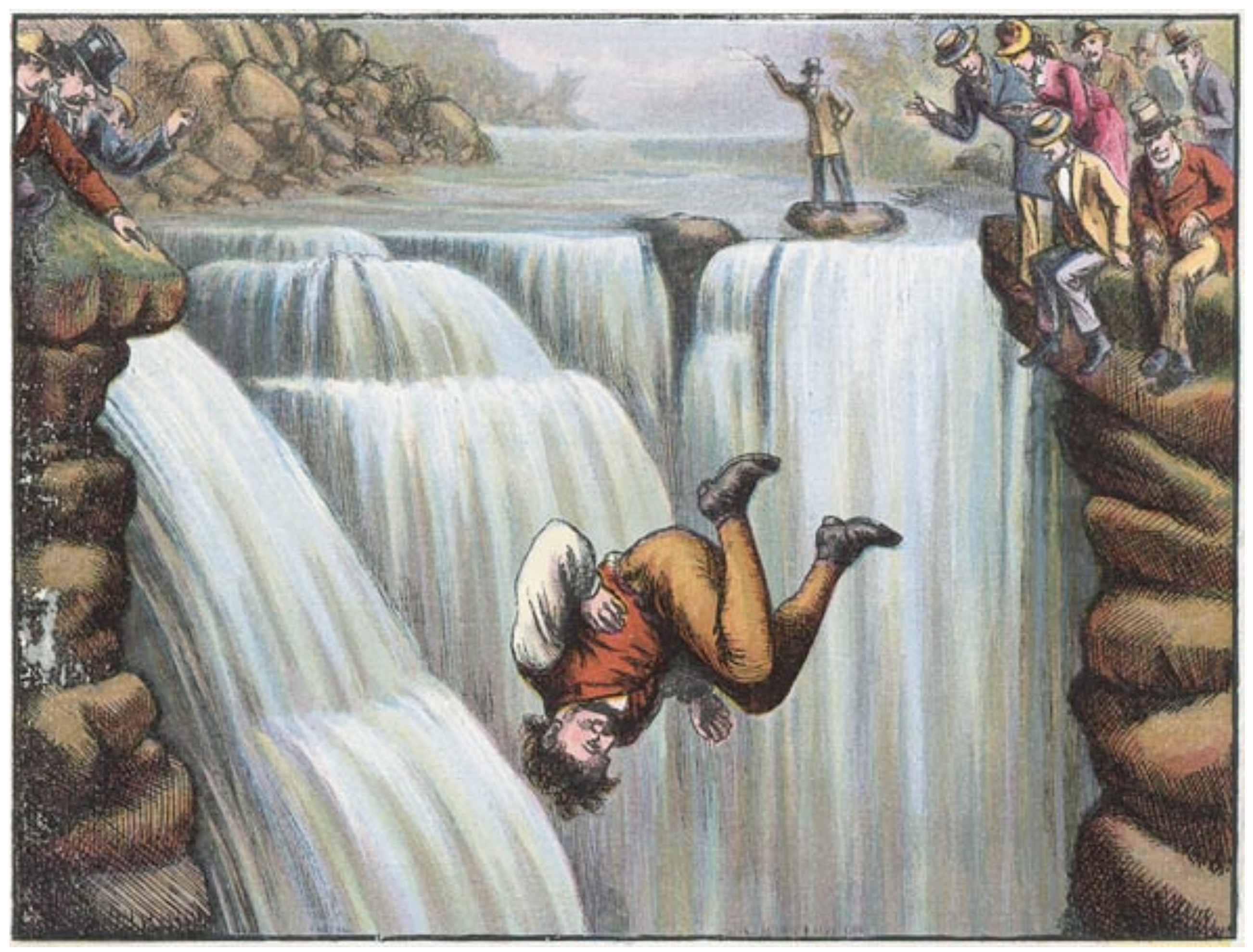
Peter Mabli, Who Built America?, American Social History Project
In the context of early industrial society, Patch’s daredevil leaps in Paterson New Jersey, a textile town, were actions associated with and symbolic of the growing class differences and labor disputes of the era. The feats were remembered, but the class content erased from most account.
A teaching module focusing on early industrial development in the Northeast

Peter Nekola
There are labor elements in this teaching activity. A plateau of granite peaks known as the Black Hills has towered over the high plains west of the Missouri River and east of the Rocky Mountains for millions of years.
The Hills are covered with pine forests, which have thrived in the wetter conditions of elevations higher than the arid grasslands surrounding them. Their forested slopes appear dark when viewed from the surrounding plains, and have long offered refuge to humans and other species.
Over centuries the Hills became central to the cultural, economic, and spiritual life of Lakota (Sioux), Cheyenne, and other Indigenous peoples in the area, who refused to cede them to the expanding United States or to private interests, which sought to claim and colonize as much of the high plains and Black Hills as seemed economically and militarily feasible.
Despite the expansionist “Manifest Destiny” ideology promulgated by US politicians like Andrew Jackson and Henry Clay, and newspapermen like John L. O’Sullivan, who had coined the term, federal authorities recognized the local authority of “Indian Nations” in the 1851 Treaty of Fort Laramie, which delineated a “Great Sioux Reservation” west of the Missouri River.
How can old maps help us understand the complexities of colonization in North America? What sorts of evidence do they offer? Does their distinct styling, framing, and content change how a particular landscape can be represented? Might these elements have in fact aided colonization in the Black Hills?
Peter Rachleff
In August 1985, a local union went on strike in a small town in southern Minnesota. Members of United Food and Commercial Workers (UFCW) Local P-9 at the Austin, Minnesota, Hormel meatpacking plant could not have known then what was in store for them: A strike lasting over one and one-half years, the creation of mass picket lines at Hormel, the deployment of National Guard troops to break the pickets, the arrest of hundreds of strikers, and job loss for more than a thousand. --written in 2000
a history of a recent strike of the United Food Workers in Minnesota
Peter Shapiro
On September 9, 1985, one thousand mainly Mexican women workers in Watsonville, California, the "frozen food capital of the world," were forced out on strike in response to an attempt by Watsonville Canning owner, Mort Console, to break their union. They returned to work eighteen months later. Not one had crossed the picket line.
A moribund union has been revitalized, and Watsonville's Latino majority emerged as a major force in local politics. At a time when organized labor was in headlong retreat, the Watsonville Canning strike was a dramatic show of the power of women workers, whose struggle became a rallying point for the Chicano movement.
Apart from its sheer drama, the strikers' story illuminates the challenges facing a group of ordinary working people who waged a protracted and ultimately successful struggle against seemingly insurmountable odds
Watsonville Canning strike was a dramatic show of the power of women workers
Pew Trusts
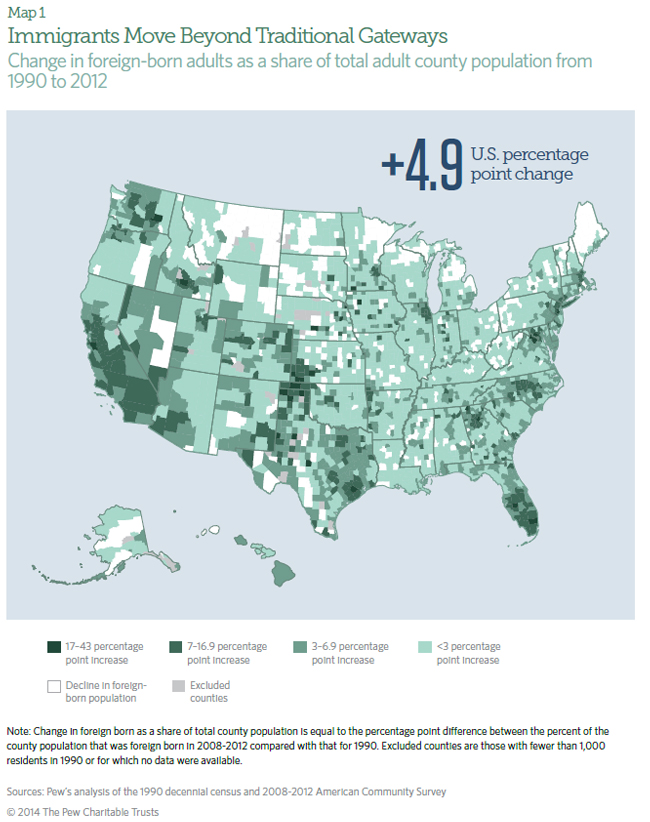
The U.S. Census Bureau projects that net international migration to the United States will become the primary driver of the nation’s population growth between 2027 and 2038.1 This brief examines current population trends among the foreign- and native-born at the county level, and highlights the role that immigrants play in contributing to population growth and slowing population loss. This analysis does not examine the merits of population change, but instead focuses on where it is occurring geographically. The Pew Charitable Trusts takes no position on federal, state, local laws or policies related to immigration.
A set of immigration statistics with visualizations and maps that break down by state.

Pew Trusts
Although the federal government has been largely responsible for the admission of immigrants into the country and the enforcement of immigration laws, states and localities have played a critical role in the integration of new arrivals into local communities.
The magnitude, nature, and challenges of immigration have transformed the political and policy landscape, and the roles of the federal government and of the states have evolved in response, spurring cooperation and friction. Pew examined the intersection of federal, state, and local immigration laws and policies and their potential effects on all levels of government.
A portal leading users to PEW reports, data visualizations, and articles relevant to U.S. immigration.
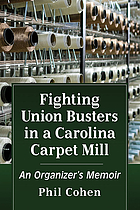
Phil Cohen
In 2017, Workers United/SEIU called veteran organizer Phil Cohen out of retirement to investigate and expose a union-busting plot by Mohawk Industries at a North Carolina carpet mill. His hard-hitting account chronicles the resulting labor dispute that rocked a Fortune 500 company. The organizer had to prove management was behind an illegal decertification petition and forced workers to sign using strong-arm tactics. Though terrified of retaliation, witnesses gradually agreed to testify before federal agents. Mohawk retained a high-powered union-busting attorney who appealed directly to ultra-conservative heads of the National Labor Relations Board, while Right to Work Committee lawyers framed the issue as a test case to revoke laws protecting employee rights. The union's only hope rested on presenting evidence too formidable for political bias to surmount. This memoir, infused with dry wit and insights into human nature, blows the lid off the nation's union-busting epidemic, thrusting readers into the tumultuous environment of a union hall in crisis"-- Provided by publisher
A memoir of Phil Cohen and the institutional hurdles he had to jump in the era of Right to Work
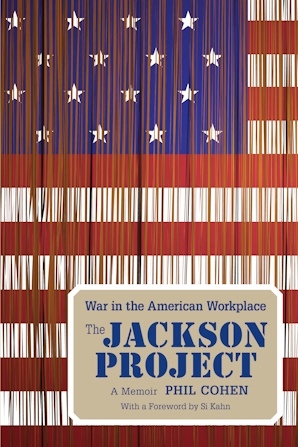
Phil Cohen
The Jackson Project is a dramatic, hard-hitting account of a brutal labour dispute at a West Tennessee textile mill. A historically accurate page turner, this is one of the few books about unions written by a frontline participant. "When it comes to the issues confronting working people and their unions today, Phil Cohen knows what he's talking about as few people do...through knowledge born og bare-knuckle-experience."-Si Kahn
In the spring of 1989, union organizer Phil Cohen journeyed to Jackson, Tennessee, to sort out the troubled situation at a historic cotton mill. His task as a representative of the Amalgamated Clothing and Textile Workers Union was to rebuild a failing local and the problems were daunting; an anti-union company in financial disarray, sharply declining union membership, and myriad workplace grievances. In the tumultuous months ahead, ownership of the plant twice switched hands, and he would come to fear for his life and consider desperate measures to salvage the union's cause. In this riveting memoir,
Cohen takes the reader from the union hall and factory gates to the bargaining table and courtroom, and ultimately to the picket line. We see him winning the trust of disillusioned union members, negotiating with a hostile employer and its high-powered legal counsel, and hitting the pavement with leaflets and union cards in hand. We get to know the millworkers with whom he formed close bonds, including a stormy romance with a young woman at the plant. His up-close account of the struggle brims with telling descriptions of the negotiating process, the grinding work at the textile mill, the lives of its employees outside the workplace, and the grim realities of union busting in America.
When the organizer's four-year-old daughter accompanies him to the field, a unique an unexpected dimension is added to the chronicle. A compelling, dramatic story that alternated between major triumphs and frustrating setbacks, The Jackson Project provides a rare look at the labor movement in the American South from an insider's perspective.
PHIL COHEN left home at sixteen, managed a skid-row hotel and drove taxis in New York City before moving to Chapel Hill, North Carolina, where he became a union activist while working as a municipal bus driver. In 1988 he joined the staff of ACTWU (now known as Workers United), from which he has since retired. An accomplished singer-songwriter, he has recorded four albums with vocalist Patricia Ford
A memoir which the author recounts his experience reorganizing a local union.

Phil Wallace, Hornbake Library
This film, from the AFL-CIO Labor FIlms collection, shows South African workers striking during apartheid to obtain better wages and improved working conditions, and U.S. trade unionists demonstrating outside the South African Embassy. It includes interviews and dramatic footage of the struggle in South Africa, and the importance of US labor movement support and international solidarity. Produced by Phil Wallace and the Labor Institute of Public Affairs.
A documentary on the history of Black Trade Unions in South Africa.
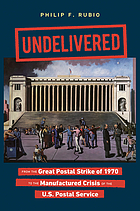
Philip F. Rubio
For eight days in March 1970, over 200,000 postal workers staged an illegal "wildcat" strike--the largest in United States history--for better wages and working conditions. Picket lines started in New York and spread across the country like wildfire. Strikers defied court injunctions, threats of termination, and their own union leaders. In the negotiated aftermath, the U.S. Post Office became the U.S. Postal Service, and postal workers received full collective bargaining rights and wage increases, all the while continuing to fight for greater democracy within their unions. Using archives, periodicals, and oral histories, Philip Rubio shows how this strike, born of frustration and rising expectations and emerging as part of a larger 1960s-1970s global rank-and-file labor upsurge, transformed the post office and postal unions. It also led to fifty years of clashes between postal unions and management over wages, speedup, privatization, automation, and service. Rubio revives the 1970 strike story and connects it to today's postal financial crisis that threatens the future of a vital 245-year-old public communications institution and its labor unions
revives the 1970 strike story and connects it to today's postal financial crisis that threatens the future of a vital 245-year-old public communications institution and its labor unions.
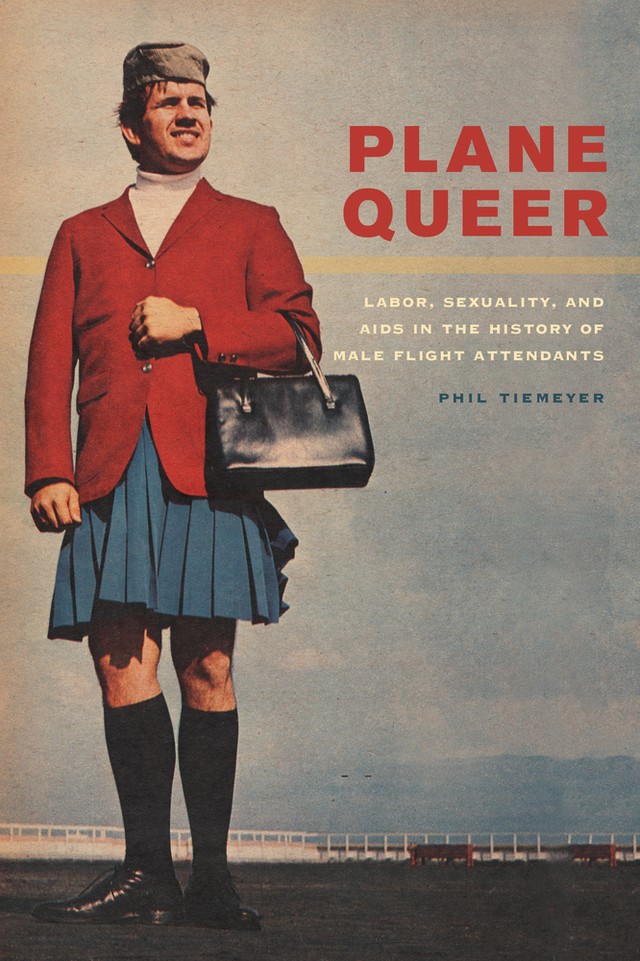
Philip James Tiemeyer
In this vibrant new history, Phil Tiemeyer details the history of men working as flight attendants. Beginning with the founding of the profession in the late 1920s and continuing into the post-September 11 era, Plane Queer examines the history of men who joined workplaces customarily identified as female-oriented. It examines the various hardships these men faced at work, paying particular attention to the conflation of gender-based, sexuality-based, and AIDS-based discrimination. Tiemeyer also examines how this heavily gay-identified group of workers created an important place for gay men to come out, garner acceptance from their fellow workers, fight homophobia and AIDS phobia, and advocate for LGBT civil rights. All the while, male flight attendants facilitated key breakthroughs in gender-based civil rights law, including an important expansion of the ways that Title VII of the 1964 Civil Rights Act would protect workers from sex discrimination. Throughout their history, men working as flight attendants helped evolve an industry often identified with American adventuring, technological innovation, and economic power into a queer space."--Publisher's website
A history of male flight attendants, examining the gender and sexuality based discrimination they faces
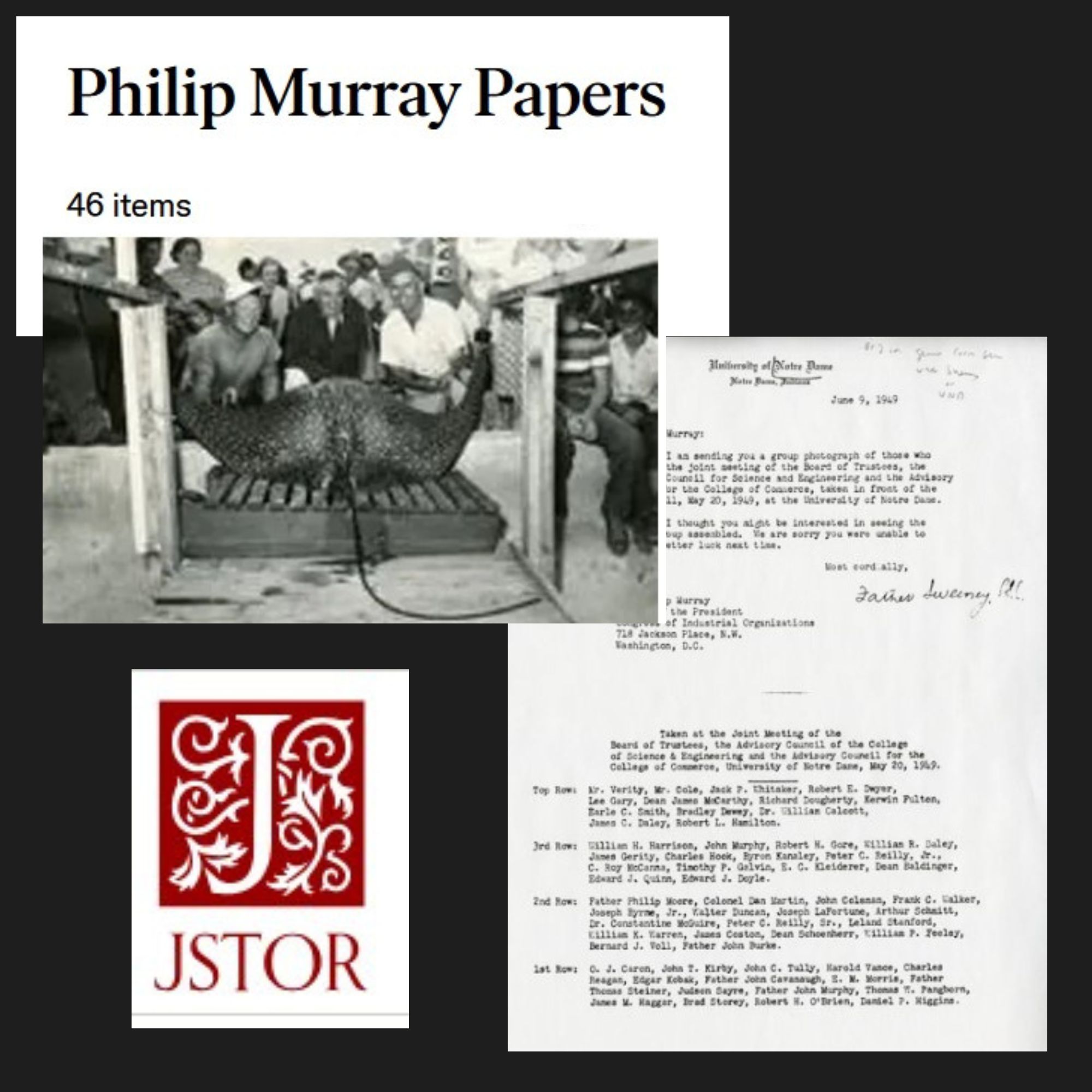
Philip Murray, Catholic University of America, JSTOR
46 Items Philip Murray was born in Blantyre, Scotland, on May 25, 1886. He began working in the mines at age 10 and immigrated to the United States with his father, also a miner, in 1902. Murray's long career as a union official began soon after entering the mines in the United States. In 1905 he was elected president of his United Mine Workers of America Union (UMWA) local in Horning, Pennsylvania. Murray subsequently went on to become one of the most important American labor leaders of the twentieth century. As president of the Steelworkers Organizing Committee (SWOC), the United Steelworkers of America (USWA), and the Congress of Industrial Organizations (CIO), he played a pivotal role in the creation of industrial unions as well as the utilization of federal government support in the growth of unions in the United States. The Murray materials digitized here include a range of photographs and selected documents related to his labor activities and relationship with the National Association for the Advancement of Colored People (NAACP).
Philip Murray miners and steelworkers official, small collection

Philip S. Foner
classic work about the topic
History of merchants in New York attempting to steer the country away from a Civil War over slavery.

Philip S. Foner
The story of the powerful rank-and-file revolt of the fur workers in the 1920's and early 1930's. Until 1914, Socialist Party leaders like Eugene V. Debs led the resistance to the stagnating policies of the AFL bureaucrats. The The battle of the fur workers for a free union, told in this book, was a revolt against the shackles of control by terrorism. It was an eruption against the misery imposed by employers-against unscrupulous misleaders of labor-against sordid betrayals by AFL and Socialist Party officials.
In heroic battles that resounded throughout the nation, the fur workers gave expression to the struggles and hopes of all workers for a clean, democratic and progressive labor movement. Their struggle aroused a storm in the AFL and its allied Socialist Party. It opened the floodgates for revolts by workers in other trades and pointed the way for the great mass movement out of which was born the CIO. The militant progressive policies of the left wing exposed the complete bankruptcy of the AFL bureaucrats and subsequently were adopted as the policies of the CIO. It is the purpose of this book to fill this important gap in the litera-ture of bitter struggles to organize, the repeated defeats, failures and betrayals bthey suffered, and the victories that followed after the fur workers added their experience and organizing genius to the courage and militancy of
the leather workers.
the story of the powerful rank-and-file revolt of the fur workers in the 1920's and early 1930's. This union became one of the founding organizations of the Congress of Industrial Organizations and was heavily involved in Socialist Party politics

Philip S. Foner
THE POLICIES AND PRACTICES OF THE A.F. OF L., 1900-1909. Labor at the turn of the Century; Open-shop drive; National Civic Federation; The church and labor; business unionism; Craft vs industrial unions; Women, Black and immigrant workers; AFL political policies; the Socialists; Western Federation of Miners; the American Labor Union, more.
Part of a multivolume series, this volume coversTHE POLICIES AND PRACTICES OF THE A.F. OF L., 1900-1909
Philip S. Foner
Labor and City government; Labor independent political action; Philadelphia general strike, 1910; Railroad Shopmen’s strike; Miners’ strikes in W. Va., Colo., Michigan; Revolt of the Garment Workers, and more.
Part of a multivolume series, this volume covers the actions of the American Federation of Labor during its meteoric rise to prominence

Philip S. Foner
The TUEL (Trade Union Educational League) 1925-1929. Adds significant new facts to these TUEL years and their import. More on the miners, Ladies’ Garment workers, Fur workers, Amalgamated Clothing, Auto, Textile, Maritime and Agricultural workers; Labor and Fascism; Sacco-Vanzetti frameup; Black Workers; American T.U. delegation to Soviet Union; Changes in trade union policy.
Part of a multivolume series, this volume covers the Trade Union Education League 1925-1929

Philip S. Foner
The fourth book in Philip Foner’s expansive history of the U.S. labor movement. This volume, as indicated by the subtitle, is dedicated to the Industrial Workers of the World in the pre-World War I era.
focuses on Denver's organized workers, showing that all of the IWW's key features had deep roots in the city's craft union and labor reform movements.
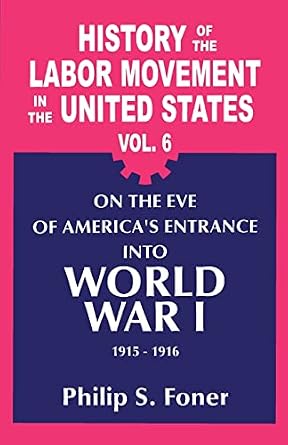
Philip S. Foner
History of the Labor Movement in the United States: On the Eve of America's Entrance into World War 1, 1915-1916 Henry Ford’s $5.00 day; strikes in Arizona mines, Youngstown OH; Bayonne NJ; NY City Transit strike, 1916; Garment workers; Women workers; Railroad workers and the eight-hour day; Black workers on the eve of WWI, and more.
Part of a multivolume series, this volume covers the eve of America's involvement in WWI.

Philip S. Foner
Labor and World War I, 1914- 1918. Socialist Party, organized labor, the IWW during WWI; Mooney-Billings frameup; Women and Black workers during WWI; struggles in mining and lumber, Wartime repression of the IWW, Socialists, more.
Part of a multivolume series, this volume covers all of World War I.

Philip S. Foner
Postwar Struggles, 1918-1920. Labor and the Red Scare; Seattle and Winnipeg general strikes; Boston telephone and police strikes; Streetcar strikes in Chicago, Denver, Knoxville, Kansas City; strikes in clothing, textile, coal and steel; The open-shop drive; Strikes and Black-white relationships; the AFL and the Black worker; the IWW; Communist Party founded; Political action 1918-1920.
Part of a multivolume series, this volume covers the aftermath of WWI and the height of the first Red Scare
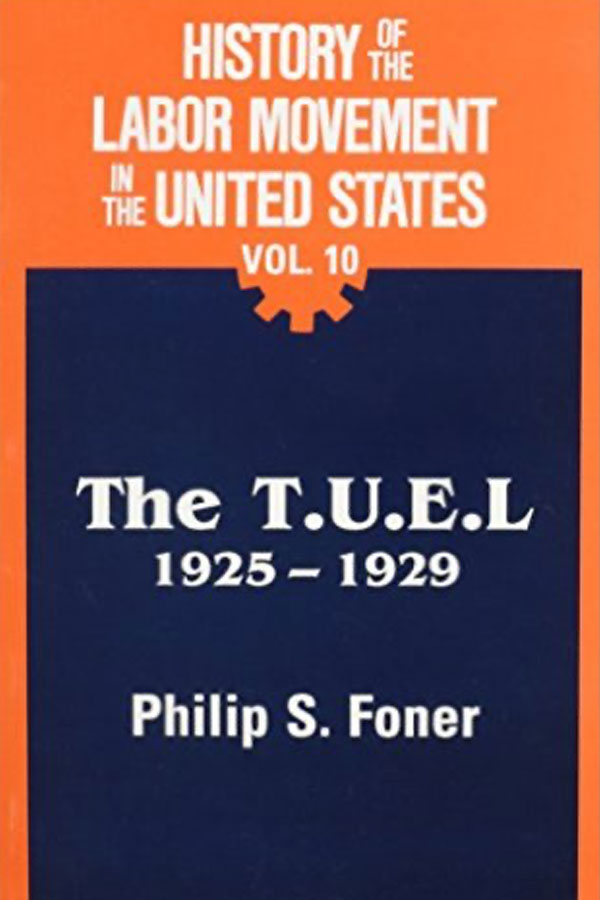
Philip S. Foner
The TUEL (Trade Union Educational League) 1925-1929. Adds significant new facts to these TUEL years and their import. More on the miners, Ladies’ Garment workers, Fur workers, Amalgamated Clothing, Auto, Textile, Maritime and Agricultural workers; Labor and Fascism; Sacco-Vanzetti frameup; Black Workers; American T.U. delegation to Soviet Union; Changes in trade union policy.
Part of a multivolume series, this volume covers the Communist-affiliated Trade Union Education League.

Philip S. Foner
Traces the history of labor unions and the labor movement from America's colonial era, through the Industrial Revolution, to the present
Traces the history of labor unions and the labor movement from America's colonial era, through the Industrial Revolution, to the present

Philip S. Foner
In this classic account, historian Philip Foner traces the radical history of Black workers’ contribution to the American labor movement.Originally published in 1974 by Praeger Publishers. Second edition published in 1981 by International Publishers. 2017 edition published by Haymarket Books with new forward by Robin D. G. Kelly and errata page. Includes bibliographical references (pages 468-471) and index. Agency of Black workers in fighting union discrimination links much of the work.
oreword / by Robin D.G. Kelley -- Preface -- From Slavery to Freedom -- The Reconstruction Period -- The Colored National Labor Union -- The Knights of Labor and the Black Worker -- The AF of L and the Black Worker, 1881-1915 -- The AF of L and the Black Worker (cont.) -- The Railroad Brotherhoods and the IWW, 1890-1915 -- The Black Worker on the Eve of World War I -- The Rise of the Black Industrial Working Class, 1915-18 -- The AF of L and the Black Worker During World War I -- Postwar Black Militancy -- The AF of L and the Black Worker, 1921-29 -- The Brotherhood of Sleeping Car Porters -- Black Workers During the Great Depression -- The AF of L and the Black Worker, 1934-35 -- The CIO and the Black Worker, 1935-39 -- World War II -- The Economic Status of the Black Worker, 1945-55 -- The Cold War Witch Hunts and the Black Worker -- The National Negro Labor Council, 1951-55 -- The AFL-CIO and the Black Worker: The First Five Years -- The Negro-Labor Alliance, 1960-65 -- The Negro-Labor Alliance, 1965-68 -- Memphis and Charleston: Triumph of the Negro-Labor Alliance -- Black Power in the Unions -- The Black Worker, 1970-1981.
A long history of Black-American radicalism within the labor movement.
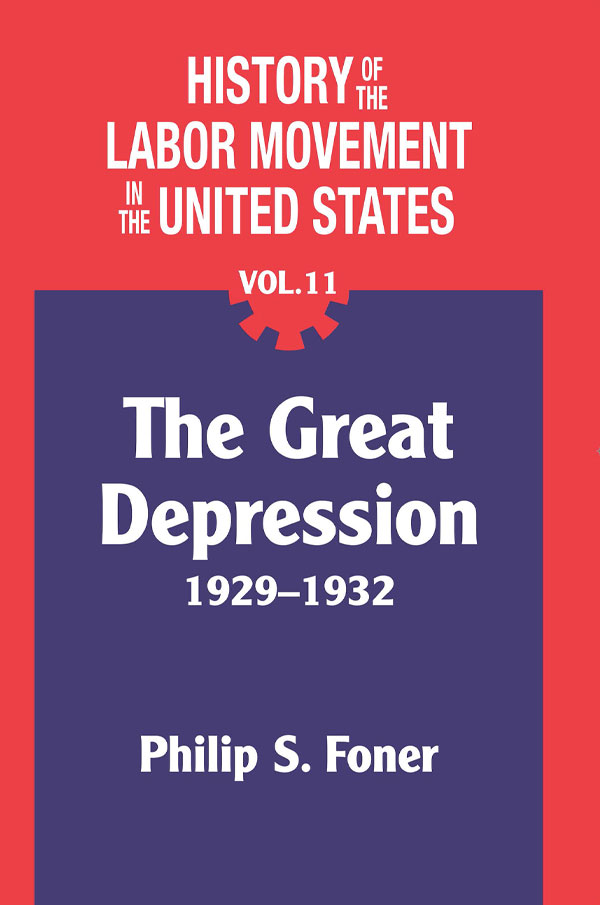
Philip S. Foner
A Marxist analysis of labor during the Great Depression, this book radiates enlightenment for current struggles and encouragement for those fighting for a socialist future.
Part of a multivolume series, this volume covers the Great Depression
Museum/Exhibits
Tours
Maps
Digital Projects
Organizations
Sites
Film/Video
Audio/Interview
Podcast/Program
Text/Document
Image
Graphs/Data
Timeline
Southwest
West
Midwest
Southeast
Northeast
Mexico
Canada
Global
Books
Teaching
Lectures
Digital Archives
Journals
Bibliographies
Topic Intro