


Collections
Library
Type
Region
Coverage:
-
Published:
-
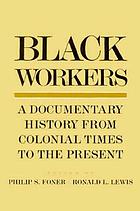
Philip Sheldon Foner
Includes documents with contextual information on free Black workers. This work draws together a range of materials from newspapers, census reports, testimonies, speeches, letters, and many other sources to tell the story of the long-neglected side of Black life.
A collection of primary source documents which tell the long-neglected history of work from the Black perspective
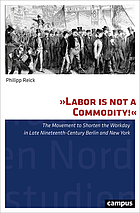
Philipp Reick
Analyzing the history of the movement to shorten the workday in late nineteenth-century New York City and Berlin, this book explores what Karl Polanyi has termed the “fictitious commodification” of labor. Despite the concept’s significance for present-day social movements, European and North American historiography has largely ignored the impact of free-market rhetoric on the formation of organized labor. Filling this gap, Philipp Reick provides both a contribution to the current reevaluation of Polanyian thought and theory and an interdisciplinary investigation of the trans-Atlantic transmission of ideas.
As Reick demonstrates, while on both sides of the Atlantic workers opposed the unchecked commodification of labor power as a violation of their political, social, and economic rights, the emerging movements for protection from commodification did not promote a universalist concept of rights. By showing that American and German workers drew upon a strikingly similar rationality when formulating demands, this book reveals that we cannot label either the US labor movement as a deviation from the supposed norm of industrial contestation or its German counterpart as the embodiment of that norm.
how organized workers in two metropolises of the late nineteenth century responded to the commodification of labor
Phillipine-American
newspaper source for Filipino cannery worker experience
newspaper Seattle based covering cannery workers

Pinkerton Detective Agency
By the early 1890s, the 2,000 active agents and 30,000 reserves of the Pinkerton National Detective Agency were larger than the standing army of the United States. In the 1880s, the Pinkertons provided services for management in 70 different labor disputes. The agency’s success depended on both armed guards and the clandestine efforts of secret operatives like James McParlan, who had infiltrated Irish anthracite miners’ organizations in the mid 1870s. McParlan’s testimony (which historians have largely dismissed as fabricated) at the sensational “Molly Maguire” trial of 1876 helped send ten men to the gallows and broke the miners’ union for a generation. This advertisement from the 1890s touted the prowess of the Pinkerton detective agency in maintaining law and order and played on corporate fears of “dissatisfaction among the laboring classes” to build business.Advertisement reprinted in Senate Report 1280, 52nd Congress, 2nd Session: Investigation of Labor Trouble (Washington D.C.: Government Printing Office, 1892).
(teaching document) The likely-fabricated trial testimony of Pinkerton operative James McParlan, who was reponsible for infiltrating Irish coal miners' organizations, including both union-oriented ones and the Molly Maguires.
Pinkerton Detective Agency, History Matters
In the winter of 1876, testimony from a Pinkerton Detective Agency operative was used to destroy the Pennsylvania miners union, as 20 miners were accused of membership in a militant Irish organization called the Molly Maguires, convicted of murder, and hanged. The negative publicity from the trial effectively killed unionism in Pennsylvania mining for twenty years. This picture illustrated The Mollie Maguires and the Detectives, Allan Pinkerton’s self-serving account of his detective agency�s infiltration of the secret society of miners. Pinkerton’s work in the service of the Reading Railroad typified the widespread use of private police and organized violence by railroads and other businesses to suppress unions.
(teaching document/image) An illustration from Allan Pinkerton's 1877 The Mollie Maguires and the Detectives, which offers a perspective on the Pinkerton detective agency and its efforts to prevent unionizing and labor militancy in 1870s Pennsylvania.
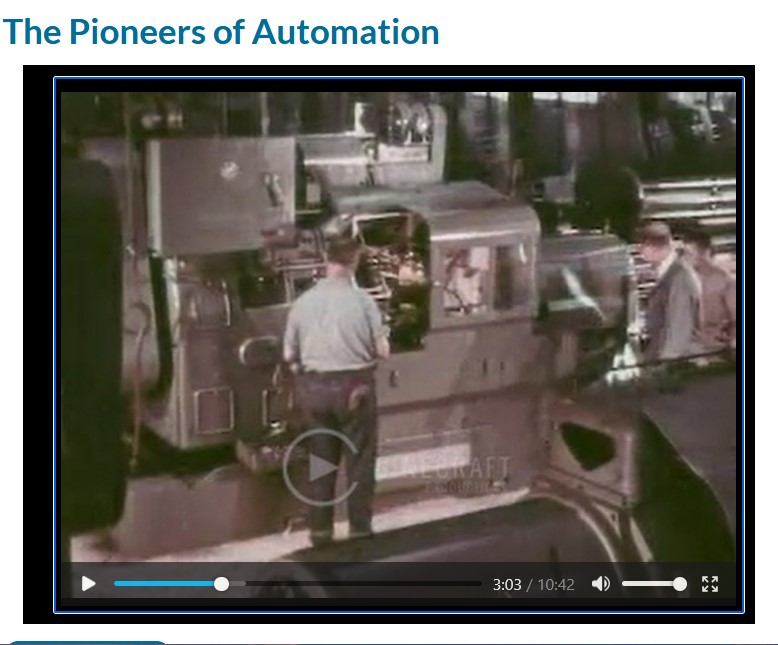
Pioneer Screw Company, Hagley Library
Film lauding the screw machine products industry and its pioneering tool, the automatic screw machine. Details how these machines, in partnership with the humans who program and operate them, can mass-produce ultra-precision parts used in items essential to American life, such as automobiles, razors, cameras, and calculators.Producer: Cinecraft, Inc. Sponsor: National Screw Machine Products Association
The film actually shows that there is no such thing as automation, that this is just another phase of the mechanization, which had been ongoing. See some of the books in our collection on automation to place the film in context.
Film lauding the screw machine products industry and its pioneering tool, the automatic screw machine.
Pittsburgh State University (Kansas)
In 1919, socialist newspaperman Emanuel Haldeman-Julius (1889-1951) purchased the Appeal to Reason, which had been the nation’s leading socialist newspaper in the early 20th century. He renamed the paper The Haldeman-Julius Weekly, and used the Girard, Kansas location to build his own publishing empire. His many publications would include his most popular and best-known: The “Little Blue Books.” These were small, pocket sized pamphlets on myriad subjects, many written by professionals in their fields. These sold for five cents each, and the majority of them were printed in the 1920s and 1930s. In all, over 2000 different titles were published. The success of the “Little Blue Books” led Haldeman-Julius to start another series, called the “Big Blue Books.” These were slightly larger in size, and would also cover a variety of subjects. Haldeman-Julius insisted on providing information to his readers he felt was being suppressed, including sex education, birth control, anarchistic writings, socialism, and atheistic literature. Over one thousand different titles of the “Big Blue Books” were released during the 1920s, 1930s, and 1940s. Frequently in the crosshairs of the government, Haldeman-Julius was convicted of tax evasion in the early 1950s but died at his Girard, Kansas home before serving his sentence. The digital exhibit features covers and title pages of a sampling of “Big Blue Books” published by Haldeman-Julius.
Blue Books (Short arguments and narratives) of the socialist movement were renowned for their influence in building a movement
Pittsburgh State University (Kansas)
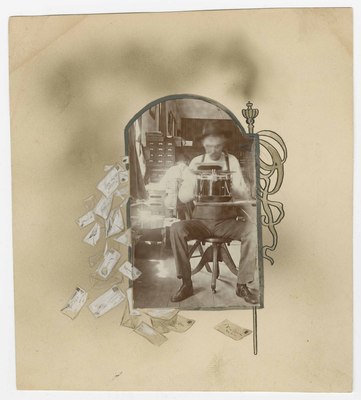
The Julius A. Wayland Collection includes personal, family, and professional records, photographs, and files of Socialist newspaperman, Julius A. Wayland (1854-1912). Wayland was the founder and publisher of the Appeal to Reason, America’s largest Socialist newspaper in the first two decades of the 20th century. Wayland had first started up The Coming Nation, also a Socialist newspaper, in the 1890s. Wayland, originally from Indiana, had been successful in real estate before turning to journalism. He moved to Girard, Kansas in 1897, bringing with him the Appeal to Reason, which he started in Kansas City in 1895. Wayland built the newspaper up into a major weekly, with circulation numbers exceeding 150,000. Upon his death in 1912 the Appeal to Reason was continued by his son and staff members for several years before selling it to Emanuel Haldeman-Julius, who turned it into his own publishing empire, most notably his Little Blue Book series.
Collection from Julius Wayland, who was an important figure in Midwest and national socialist project
Pittsburgh State University (Kansas)
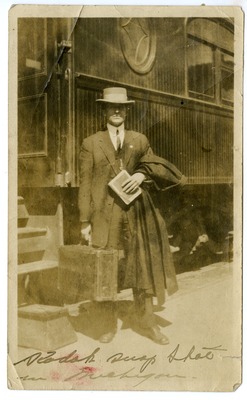
The collection is comprised of the papers and collected materials of Philip Henry Callery (1880-1954) and Ida Hayman Callery (1886-1917), lawyers for the United Mine Workers of America, and Socialist lecturers and organizers. The collection consists of biographical materials, photographs, correspondence, and Socialist Party materials.
attorneys for the United Mine Workers- small collection of materials

Polly Reed Myers
Though best known for aircraft and aerospace technology, Boeing has invested significant time and money in the construction and promotion of its corporate culture. Boeing's leaders, in keeping with the standard of traditional American social norms, began to promote a workplace culture of a white, heterosexual family model in the 1930s in an attempt to provide a sense of stability for their labor force during a series of enormous political, social, and economic disruptions. For both managers and workers, the construction of a masculine culture solved problems that technological innovation and profit could not. For managers it offered a way to govern employees and check the power of unions. For male employees, it offered a sense of stability that higher wages and the uncertainties of the airline market could not. For scholar Polly Reed Myers, Boeing's corporate culture offers a case study for understanding how labor and the workplace have evolved over the course of the twentieth century and into the present day amid the rise of neoliberal capitalism, globalization, and women's rights. Capitalist Family Values places the stories of Boeing's women at the center of the company's history, illuminating the policy shifts and economic changes, global events and modern controversies that have defined policy and workplace culture at Boeing. Using archival documents that include company newspapers, interviews, and historic court cases, Capitalist Family Values illustrates the changing concepts of corporate culture and the rhetoric of a "workplace family" in connection with economic, political, and social changes, providing insight into the operations of one of America's most powerful and influential firms.
changing concepts of corporate culture and the rhetoric of a "workplace family"
Portage Station Museum
Two floors of historic railroading and coal mining artifacts/memorabilia. The building that houses the museum was originally the main train station for Portage and the old ticket office, with all the original features, is available to explore on the first floor. The main area you enter at the museum is home to a period-accurate kitchen display, wall-to-wall memorabilia related to the mainline railroad, and of course items important to the history of Portage, PA. There is also a vast collection of lanterns that were used on the railroad in its prime.
On the back wall of the main room, you will notice a painting hanging prominently above the other museum pieces. This painting is one of the only visual representations of what the mainline railroad would have looked like, and the details for the painting were provided by someone who had been alive during that period!
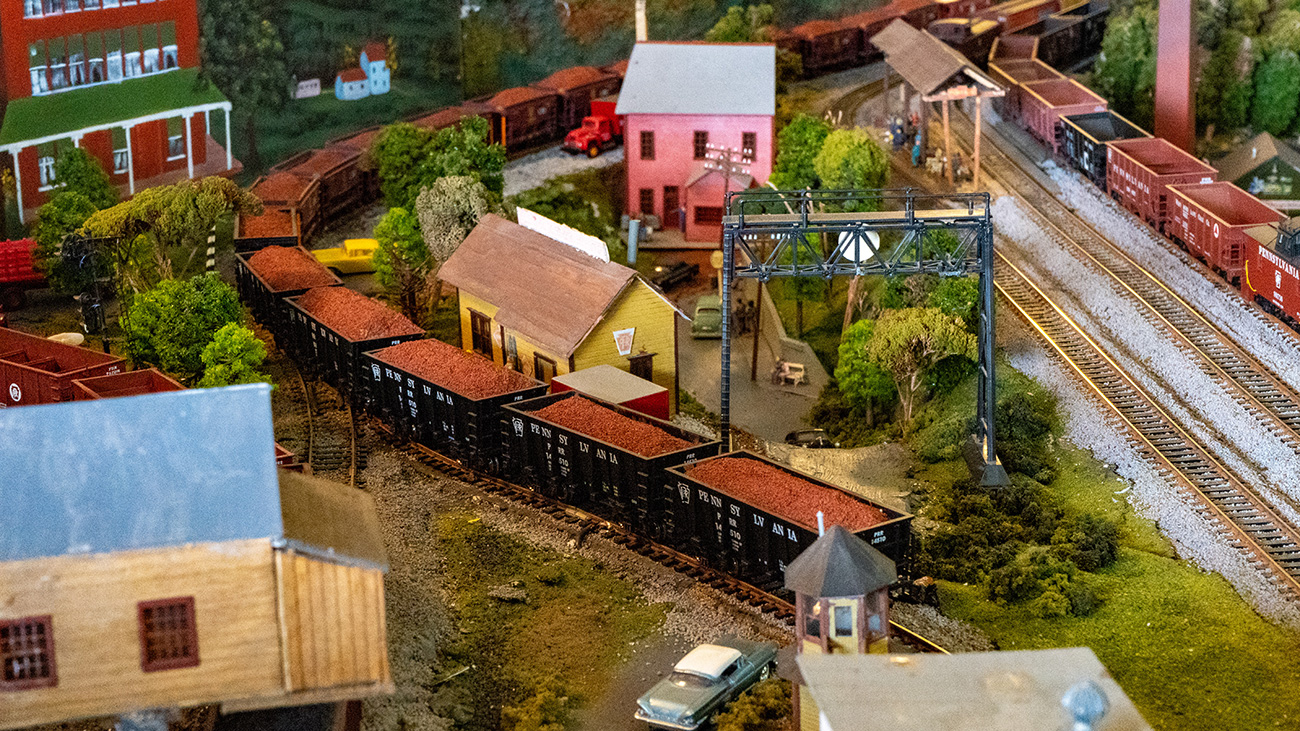
The upstairs portion of the museum is home to a large model train layout of the Mainline Railway system, you can even make out the individual towns and landmarks that are present in real life! The 2nd floor also primarily highlights the coal industry, featuring a variety of related historic pieces.
There are also train tracks that run directly adjacent to the museum, with a viewing platform for those who wish to get the full train-lovers experience!
oused in a restored 1926 train station, the museum features exhibits on the Pennsylvania Railroad, the Allegheny Portage Railroad, coal mining, and the industrial heritage that shaped the community.
Portal to Texas HIstory
502 items related to labor in Texas during World War II, including some oral histories
more than 500 items related to labor issues in World War II, in Texas and in the War

Portal to Texas History
4200 items The Texas Labor Newspaper Collection represents labor unions and organizations from 1901 to 1950. With a variety of titles all currently focused in Galveston, these newspapers chronicle the national and international labor reform movements that shaped the work of labor unions. The primary mission of these newspapers was to keep union members abreast of current events and debates that would affect their working lives. These titles include content from such labor leaders as Samuel Gompers, publishing stories that sought to agitate, educate, and organize subscribers into labor activism.
Includes. Includes newspapers from other states as well
he Dallas Craftsman 1,622
The Union Review 1,609
Labor Messenger 296
Galveston Journal 264
The Labor Dispatch 123
The National Co-operator and Farm Journal 84
The Houston Labor Journal 61
Galveston Labor Dispatch 58
Galveston Labor Journal 57
The Farm-Labor Union News 47
Galveston Labor Herald 28
Personal Papers (MS 80-0002) 1
The Labor Federationist
digitized newspapers 1901-1950, 4200+ pages from Texas and other Southern region
Powell Harmon, History Matters
Coal mining and railroad work were the two most dangerous trades in the United States in the early 20th century. Coal miners frequently died in spectacular explosions and cave-ins that could kill dozens or even hundreds at a time. Although most testimony about coal mining disasters came from survivors and observers, the men who suffocated to death in the Fraterville, Tennessee mines in May 1902 left behind their own grim account. Trapped in the mine after an explosion and with their air rapidly depleting, they wrote letters to their loved ones describing their final moments.
(teaching document) Letters detailing the final moments of the miners who died in a Fraterville, Tennessee mine after it collapsed and trapped them.
Prelinger Archive
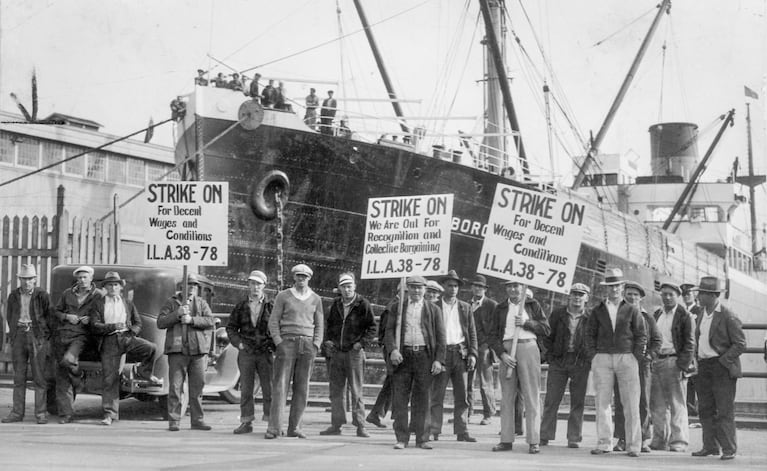
Silent video of strikers marching with police on horseback watching at Waterfront.
Silent video of strikers marching with police on horseback watching at Waterfront.

Prelinger Archive
"San Francisco in the Grip of Strike!" - shows empty streets, barren storefronts, idle transport vehicles, marching strikers, and strike supporters.
A one-minute clip of original Pathé newsreel film that shows the beginning of the 1934 San Francisco General Strike.
Prelinger Archive
Silent footage of strikers marching, parading along waterfront, police on horseback, and other scenes of the "Embarcadero."
A forty second clip of silent footage from the early weeks of the 1934 Waterfront Strike in San Francisco.

Premilla Nadasen
Provides an eye-opening reckoning with the care economy, from its roots in racial capitalism to its exponential growth as a new site of profit and extraction. Nadasen traces the rise of the care economy, from its roots in slavery, where there was no clear division between production and social reproduction, to the present care crisis, experienced acutely by more and more Americans.
Today's care economy, Nadasen shows, is an institutionalized, hierarchical system in which some people's pain translates into other people's profit. Yet this is also a story of resistance. Low-wage workers, immigrants, and women of color in movements from Wages for Housework and Welfare Rights to the Movement for Black Lives have continued to fight for and practice collective care. These groups help us envision how, given the challenges before us, we can create a caring world as part of a radical future. -- Provided by publisher
Introduction
Chapter 1: “One of the Family”: Gender, Labor, and the Care Work Discourse
Chapter 2: The Labors of Life: Care Work, Social Reproduction, and Capitalism
Chapter 3: Social Reproduction, Coercion, and Care
Chapter 4: “Tell ‘Dem Slavery Done’”: Social Reproduction and the Politics of Resistance
Chapter 5. Who Cares? Caring (or Not Caring) for the Poor
Chapter 6: In Bed with Capitalism: The State, Capital, and Profiting Off Those in Need
Chapter 7. Radical CareConclusion
rise of the care economy, from its roots in slavery, where there was no clear division between production and social reproduction, to the present care crisis
Premilla Nadasen
Premilla Nadasen recounts in this powerful book a little-known history of organizing among African American household workers. She uses the stories of a handful of women to illuminate the broader politics of labor, organizing, race, and gender in late 20th-century America. At the crossroads of the emerging civil rights movement, a deindustrializing economy, a burgeoning women's movement, and increasing immigration, household worker activists, who were excluded from both labor rights and mainstream labor organizing, developed distinctive strategies for political mobilization and social change. We learn about their complicated relationship with their employers, who were a source of much of their anguish, but, also, potentially important allies. And equally important they articulated a profound challenge to unequal state policy. Household Workers Unite offers a window into this occupation from a perspective that is rarely seen. At a moment when the labor movement is in decline; as capital increasingly treats workers as interchangeable or dispensable; as the number of manufacturing jobs continues to dwindle and the number of service sector jobs expands; as workers in industrialized countries find themselves in an precarious situation and struggle hard to make ends meet without state support or protection--the lessons of domestic worker organizing recounted here might prove to be more important than just a correction of the historical record. The women in this book, as Nadasen demonstrates, were innovative labor organizers. As a history of poor women workers, it shatters countless myths and assumptions about the labor movement and proposes a very different vision."--Publisher information
hatters countless myths and assumptions about the labor movement and proposes a very different vision

Priscilla Long
Traces the history of coal mining in the United States from early times until 1920 and assesses the impact of working conditions on the miners' militant labor movement. Publishers weekly: In a competent study of the coal-mining industry, from its origins in 13th-century England to John L. Lewis's rise to power at the United Mine Workers union in 1920, Long ( Mother Jones ) observes the role of coal in American history: the mineral's impact on the growth of industrial capitalism in the East; the developing interdependency of mining and railroads that was responsible for opening the West to settlement. Following the vicissitudes of the union movement and the economic consequences, the author also discusses the ethnic and political conflicts that regularly seized union members, resulting in violence and prolonged strikes. She conveys vividly the perilous, filthy, exhausting work of miners, often in their own words. Her account ends with the bitter and costly 1913-1914 Colorado miners' strike, terminated by federal troops, which led to the establishment of unions, government involvement in labor relations and, under Lewis, the founding of a capital-labor partnership. Integrates women into the stories at many points,
Traces the history of coal mining in the United States and assesses the impact of working conditions on the miners' militant labor movement.
Priscilla Murolo, A. B. Chitty
"From the folks Who Brought You the Weekend is an history of labor in the United States, capturing the full range of working people's struggles, from indentured servants and slaves in the seventeenth-century Chesapeake to high-tech workers in contemporary Silicon Valley."--Jacket
An unparalled achievement that manages to be readable even as it synthesizes labor history into capitalism's history in the US, and keeps a global frame while moving beyond strikes to give the texture of workers lived experience.
The breadth can be seen from the chapter titles, which manages to integrate stories of labor struggles in the context of capitalist development
Labor in Colonial America;
The American Revolution;
Slavery and Freedom in the New Republic; Civil War and Reconstruction;
Labor versus Monopoly in the Gilded Age;
Labor and Empire;
America, Inc.;
Labor on the March;
Hot war, Cold War;
The Sixties;
Hard Times;
Brave New World.
captures the full range of working people's struggles, a brief, general history of Labor in the United States.
Priya Satia
For generations, British thinkers told the history of an empire whose story was still very much in the making. While they wrote of conquest, imperial rule in India, the Middle East, Africa, and the Caribbean was consolidated. While they described the development of imperial governance, rebellions were brutally crushed. As they reimagined empire during the two world wars, decolonization was compromised. Priya Satia shows how these historians not only interpreted the major political events of their time but also shaped the future that followed. Satia makes clear that historical imagination played a significant role in the unfolding of empire. History emerged as a mode of ethics in the modern period, endowing historians from John Stuart Mill to Winston Churchill with outsized policymaking power. Braided with this story is an account of alternative visions articulated by anticolonial thinkers such as William Blake, Mahatma Gandhi, and E. P. Thompson. By the mid-twentieth century, their approaches had reshaped the discipline of history and the ethics that came with it. Also features discussion of E.P. Thompson's role in easing British conscience after the collapse of the British Empire.
Discovers the role which historians played in reinforcing imperial imagination
Pullman Foundation
enter maps in box at url, and find 2 key maps of Industrial Heritage Archives of Chicago's Calumet Region
Historical maps and images of buildings as represented in maps, 1850-present
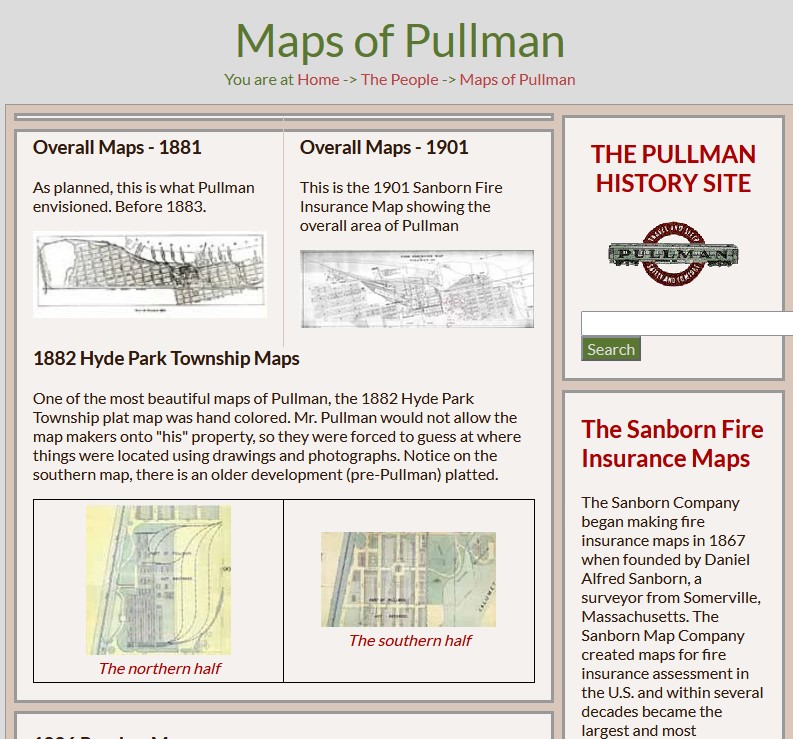
Pullman Foundation
multiple maps of the town of Pullman and street name changes
1882-One of the most beautiful maps of Pullman, the 1882 Hyde Park Township plat map was hand colored. Mr. Pullman would not allow the map makers onto "his" property, so they were forced to guess at where things were located using drawings and photographs. Notice on the southern map, there is an older development (pre-Pullman) platted.
1886 Rascher Maps
Charles Rascher was a German surveyor who immigrated to Chicago sometime after 1871. He first established a surveying business after the 1871 Chicago Fire. By the 1880's he had developed his surveying company into a map making company and published maps of the developing city. Rascher's Map of Chicago and other parts of the Midwest were published between 1880 and 1892 (from the Edgewater Historical Society).
Maps of Pullman, IL, 1881-1901, a major company town

Pullman Foundation
Site can help determine the historical significance of your trip as well as offer links to helpful tour information.
Site is useful for understanding the Pullman sites
Museum/Exhibits
Tours
Maps
Digital Projects
Organizations
Sites
Film/Video
Audio/Interview
Podcast/Program
Text/Document
Image
Graphs/Data
Timeline
Books
Teaching
Lectures
Digital Archives
Journals
Bibliographies
Topic Intro